World on fire

I had to dig deep into the New York Times, my usual go-to source for “all the news that’s fit to print,” to find any mention of this weekend’s train explosion in the province of Quebec, not far from the Maine border.

canada-floater-articleLarge

Lac-Megantic on fire July 6, 2013

I knew about it only because here in Canada it’s at the top of the headlines, with Prime Minister Stephen Harper taking the time this Sunday to journey to the small town of Lac-Megantic, where the disaster occurred, to size up the situation and offer his condolences.

Officially, so far, five have been confirmed dead, with scores still missing; Lac-Megantic, pop. 6,000, is said to look like a war zone, with black fumes rising from the burning crude oil carried by the 73-car train.

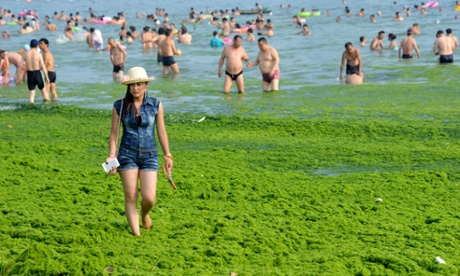
This on a weekend when temperatures in the Canadian Maritimes soared to record-breaking heights, and harmful algal blooms worldwide choked out marine life along all the coasts.

91fb3c94-086c-4470-a98e-23ec4ff993d8-460x276

Algae bloom on the Yellow Sea in China, July 2013

Astoundingly, at least one Canadian pundit responded to the burning crude and the smoldering township by calling for increased building of pipelines!

Another columnist, in the very same newspaper that reported on Nova Scotia’s unprecedented heat wave, had the nerve to call for more drilling and fracking for oil and natural gas on land and sea in the province.

If there are no more fish in the sea, we can at least extract the last of the fossil fuels, eh?

It’s time to get a grip, people.

What we need is not more oil and gas, but more wind and solar.

We need clean sources of energy, and we need to lower our consumption dramatically.

The window of possibility is smaller and tighter than most of us care to realize.

The tipping point is upon us.

This is not another action movie, a “White House Down”-style disaster flick, ending with the good guys reliably saving the day.

As we saw with the Arizona fires the other day, even the most hot-shot of heroes can go down in a blaze of glory when the fires burn out of control.

Do we really want to wait until the entire world is going up in flames, literally and figuratively speaking, before we act?

This is not a rhetorical question.  And the answer, I believe, is NO.  We can’t afford to sit on our hands any longer.

The time to act is NOW.

You can run but you can’t hide

As the heat and humidity of summer bore down on my home turf of New England last week, I made a run for it, spending two days traveling northeast at breakneck speed towards the normally cool coast of Nova Scotia.

I arrived just in time for a rare heat spell here on these windy islands sticking out into the north Atlantic.

Today it was up in the 90s Farenheit, the sun golden-bright and merciless.  Too hot to go out to the beach—a day for staying in the shade and drinking lots and lots of water.

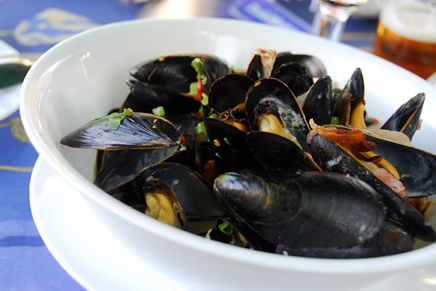
musselsThinking of having something light and cool for dinner, my son and I drove down to the store to get some mussels.

The Canadian Maritimes are a prime source of farmed mussels, and I was eagerly picturing a pot full of the glistening blue-black beauties, steamed in a fragrant shallot and wine sauce.

Ignoring the sad, dried-up looking fish at the Atlantic Superstore fish counter, I confidently asked for a 5-pound net bag of mussels, and placed it in my shopping cart.

I started walking around the store briskly, revived by the freezing air conditioning.  But I kept getting whiffs of a strange smell, like something rotten.  After a few minutes, I realized it was coming from my cart.  It was the mussels.

I returned the bag to the fish counter, where the server took it back without argument.

So much for my fantasy of a mussel dinner.

***

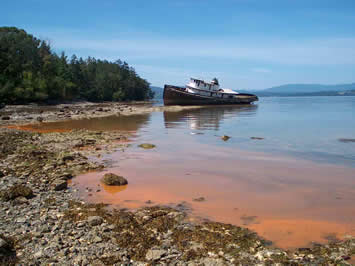
warnsignOn the way home, we stopped to pick up a local newspaper, and while waiting in a long hot road construction line, I noticed a small headline tucked on the inside pages: “Shellfish Harvesting Suspended Due to Red Tide.”

My son and I looked at each other in dismay.  We had already noticed, on our first walk on our normally pristine local beach, that the water was a strange rusty-red color.

We had noticed too that there seemed to be fewer seabirds around, and that when we went down to the rocks to look for the normally numerous crabs, we could hardly find any.

We had been planning to go clamming over the weekend, out on the mud flats at low tide.

That plan would have to go the way of the mussel dinner.

When we got home, we went to the Internet to look up Red Tide, learning that it was more properly known as Harmful Algal Bloom (HAB), and that it was almost ubiquitous along the Atlantic and Pacific coastlines, especially during the summer.

We learned that eating shellfish that have been harvested from HAB water can cause “paralytic toxic poisoning” in humans, characterized by gastrointestinal and respiratory distress.  Good thing I left those stinking mussels at the Superstore!

HABs have disastrous effects on other species like fish, waterfowl, dolphins, whales, and seals.

If I can’t eat mussels I may be piqued, but I can find something else just as good to eat on land.

Ocean denizens have no such options. I began to picture cormorants and seagulls with bad tummy aches.  No wonder we’d seen very few of the big blue herons that used to be so numerous in the salt marshes.

 ***

Red Tide - Mary Mackin 2My admittedly superficial Internet search did not bother to mention the cause of harmful algae blooms, speaking of them as an inconvenient fact of life, like a rip tide or a thunderstorm.

While HABs are sometimes natural, there is nothing normal about the dramatic spike in coastal red tides we’ve been seeing for the past 25 years or so.  They are part of the same phenomenon that causes the dead zones around the mouths of rivers that run through densely populated agricultural regions.  This summer, scientists are forecasting the largest dead zone ever recorded in the Gulf of Mexico—some 8,500 square miles.

It’s human and animal sewage and fertilizer run-off that upsets the natural chemical balance of the coastal waters, feeding the destructive algae at the expense of everything else.

What we humans break, we can also fix.  We could fix this problem if we wanted to.  But I found mention only of closing shellfish beds to harvesting, not of trying to turn the entire problem around by reducing the amount of shit we allow to run off into the sea.

***

I thought that up here in Nova Scotia I might be able to escape from the relentless, depressing awareness of the cascading, ever-quickening destabilization of the natural world.

That’s just another little fantasy I’ll have to give up.  There’s nowhere to run, much less to hide.

Which side are you on?

This past week was a perfect illustration of how many compelling distractions there are to the main business at hand.

After all, it’s much more interesting to focus on the good news of a Supreme Court blessing for gay marriage, or to follow the spy-novel intrigue of the Edward Snowden case, or to watch President Obama set foot in the tiny prison cell that kept Nelson Mandela captive for 18 years—much more fun than thinking seriously about the elephant in the room, climate change.

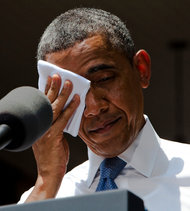
I was happy, and somewhat astonished, to see Obama finally seize that elephant by the tusks and deliver a speech that acknowledged how important climate change will be to our collective, planetary future.

Christopher Gregory/The New York Times

Christopher Gregory/The New York Times

In the speech, Obama declared that “the question is not whether we need to act. The overwhelming judgment of science — of chemistry and physics and millions of measurements — has put all that to rest. Ninety-seven percent of scientists…have now…acknowledged the planet is warming and human activity is contributing to it.

“So the question now is whether we will have the courage to act before it’s too late. And how we answer will have a profound impact on the world that we leave behind not just to you, but to your children and to your grandchildren.

“As a President, as a father, and as an American, I’m here to say we need to act.

“I refuse to condemn your generation and future generations to a planet that’s beyond fixing. And that’s why, today, I’m announcing a new national climate action plan, and I’m here to enlist your generation’s help in keeping the United States of America a leader — a global leader — in the fight against climate change.”

To me what’s most important in this speech is that way that the President is appealing to the country as a father. 

Those of us who are parents know that there is no higher priority for us than the welfare of our children.

We practically kill ourselves to provide for our children.  We go into debt to buy them high-quality food, medical care and education.  We go without so that they can have whatever it is that they need.

We would never knowingly feed them poison.  We would never knowingly do something that would undermine their future.

And yet, let’s be honest: most of us are doing just that, all the time, every day.

If you buy your kid a fast-food meal, you are contributing to the Monsantification of the world.

If you drive your car, heat your house with fossil fuels, or run your air conditioner, you are contributing to the super-heating of the atmosphere.

The vaunted American lifestyle is the problem.  President Obama didn’t quite come out and say so in his speech, but it’s not hard to read between his carefully calibrated lines and see what he is implying.

“Someday, our children, and our children’s children, will look at us in the eye and they’ll ask us, did we do all that we could when we had the chance to deal with this problem and leave them a cleaner, safer, more stable world? And I want to be able to say, yes, we did. Don’t you want that?”

Yes, of course we all want that.

We don’t want to end up shivering and starving in a blighted, devastated world, knowing that it was our own greed and short-sighted stupidity that brought us to this point of no return.

If we care about our own dear children, we need to make improving our relationship with the planet a priority.

That means no more poisons, no more GMO food, no more fossil fuel extraction at the expense of the natural environment, no more heedless burning our way to kingdom come.

As the President said, “those of us in positions of responsibility, we’ll need to be less concerned with the judgment of special interests and well-connected donors, and more concerned with the judgment of posterity. Because you and your children, and your children’s children, will have to live with the consequences of our decisions.”

Will have to live or die with the consequences of our decisions, that is.

Are you willing to condemn your grandson or granddaughter to a short, miserable existence on Earth, brought to a rapid end by climate-induced super-storms or famine?

I’m sorry to be so bald about it, but these are the stakes.

Which side are you on?  And what are you willing to do to ensure that future generations on this planet have a chance to enjoy the abundance and beauty that we and our parents have taken for granted?

100_2435

Talking Union with my Dad: A Father’s Day Tribute

I got my love of narrative and my awareness of social justice very early in life, from my father’s vast repertory of American folk songs.

My dad, Joe Browdy, learned guitar as a teenager in the 1950s, taking his inspiration from the great folk singers of the time, like Woody Guthrie, Pete Seeger, Odetta, Cisco Houston, The Weavers and the New Lost City Ramblers.  He developed his repertoire while working as the music counselor at the camp where he and my mother met, and he continued to sing and play guitar for audiences while he earned his B.A. in history at Oberlin, and his law degree at NYU.

Joe Browdy and Alan Chartock

Joe Browdy and Alan Chartock

Some of my earliest memories are sitting with a group of relaxed, happy people by a crackling bonfire listening to my dad belting out his signature songs, with everyone joining in on the chorus.  Although there were some special children’s songs in his repertoire, he didn’t censor his songbook for me and my brother: we learned about the tragedies and the murders, the drunkenness and the fighting, wars, poverty and injustice, making sense of it as best we could over years of repetition.

Although he got busy with his law practice around the time that I was born, my dad  never stopped singing.  On Friday nights we’d get into the car around 8 p.m. for the two and a half hour ride to our country house in Hillsdale, N.Y., and to keep himself awake my dad would start singing, my mom adding her sweet tones in harmony on the chorus, my brother and I joining in sleepily when we knew the words.  On Saturday nights all through my childhood, our entertainment was to build a fire after dinner—outside in the summer, in the living room in the winter—and sit around it for a few hours, my dad leading us in the familiar songs that took us traveling far and wide in time, space, and experience.

The folk song tradition is a living oral history, passed from one generation to the next.  As soon as we could, my brother and I learned how to play guitar, and the words and tunes of those old songs now live on in us, and in our children who are learning them too.  With folk music, it’s not about the perfection of the sound, or the accuracy of the lyrics: it’s about the interest of the stories being told through music, and the emotion with which they’re conveyed.

My father has the ability to make the songs he loves come alive through the heartfelt nature of his singing and playing—getting slow and quiet for the tragic love songs, letting it rip and roar on the fighting union songs, modulating into a plaintive tone for his signature delivery of “One Meatball,” about a poor man who is sneered at by the waiter because all he can afford to buy is a single meatball for his dinner.  When my dad plays guitar, he’s not just singing some songs, he’s taking us on a journey through the American spirit.

Live at the Linda Norris Auditorium, Albany NY

Live at the Linda Norris Auditorium, Albany NY

Dad’s repertoire includes cowboy songs, songs about the laying of the train tracks across the West, and songs about the building of dams across mighty American rivers. There are feisty union songs from the 1920s and 30s; songs inveighing against the greed of bankers and bosses, and lamenting the hardships faced by miners, factory workers and farm hands. There are stirring political songs, about the founding of the United Nations, or the dream of world peace.

There are work songs from the African American South, about picking cotton or working on a train line, and older songs from the slave times, about dreaming of freedom, and making a break for it.  There are songs—some sad, some funny—about traveling around the country during the Dust Bowl refugee time.

There are many love songs, most of them mournful, bluesy songs about loves lost to drowning, train accidents, or just never heard from again.  But there are also some sweet romantic ballads about lifelong happiness spent by the side of one’s beloved.  The songs never fail to come alive when my dad adds his voice and driving guitar to the mix.

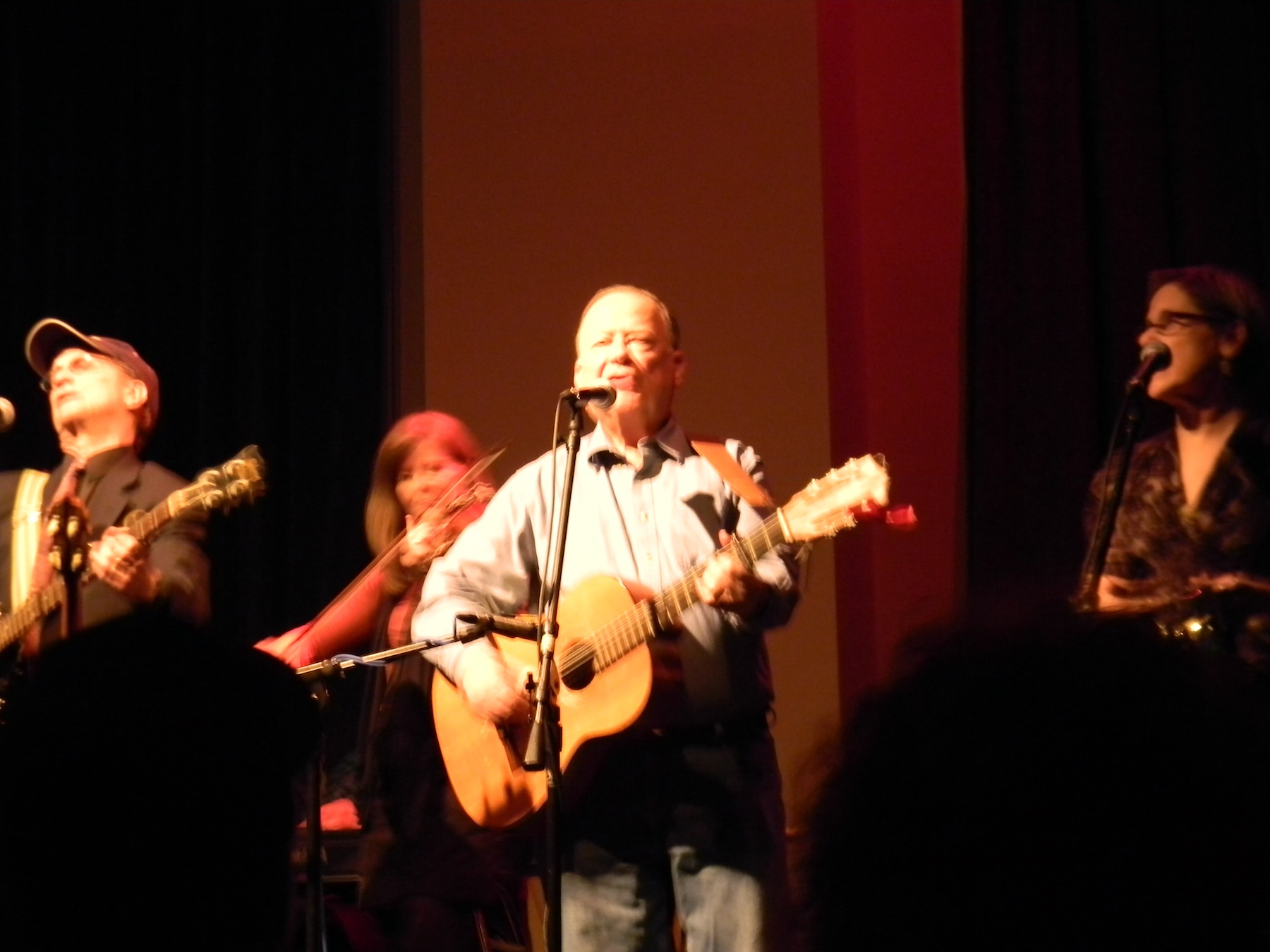
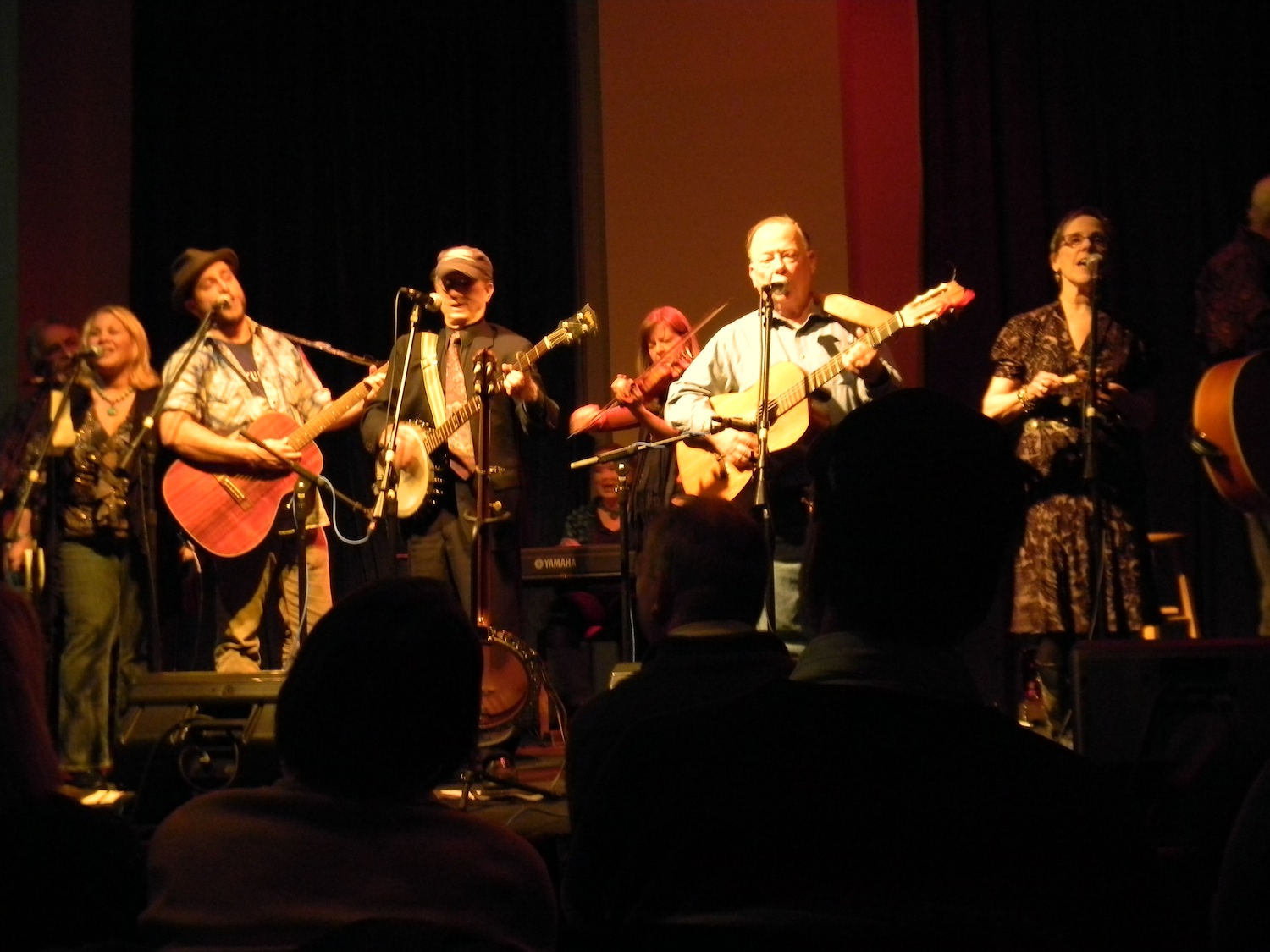
These days, my dad sings for the public most often with the Berkshire Ramblers, led by his old friends Alan and Roselle Chartock, and joined by a varying cast of other folk musicians.  But I still like it best when we sing together around a fire, not for an audience but just for our own amusement and delight.  This Father’s Day, I want to thank my dad for sharing this powerful, inspiring musical legacy with me, and so many others.  May the circle be unbroken!

DSCN2248 copy


When the union’s inspiration through the workers’ blood shall run

There can be no power greater anywhere beneath the sun

Yet what force on earth is weaker than the feeble strength of one

For the union makes us strong.


Solidarity forever, solidarity forever, solidarity forever

For the union makes us strong.

No more fish in the sea?

Last summer when I was in Nova Scotia, I wrote about how startled I was to struggle, in the local supermarket, to find anything but frozen fish with origin stamps of China and Southeast Asia.  The fresh fish offerings were meager, taking up just a small portion of the case allotted to them, and besides the lobsters, only the ocean trout and small haddock filets were wild caught.

product-lg-seafoodLast week, in a Puerto Rican supermarket, I had an unhappy feeling of déjà vu as I searched in vain for any locally caught seafood at all.  There was no fresh fish counter there, just a case of packaged frozen filets and shellfish, every one of them with their label pointing to China or India.

When I asked the locals about whether it was possible to get fresh fish on the island, they shook their heads.  “Maybe if you meet the fishing boats at the dock, they might sell you something,” one man told me.  “But it all goes to the restaurants and resorts.”

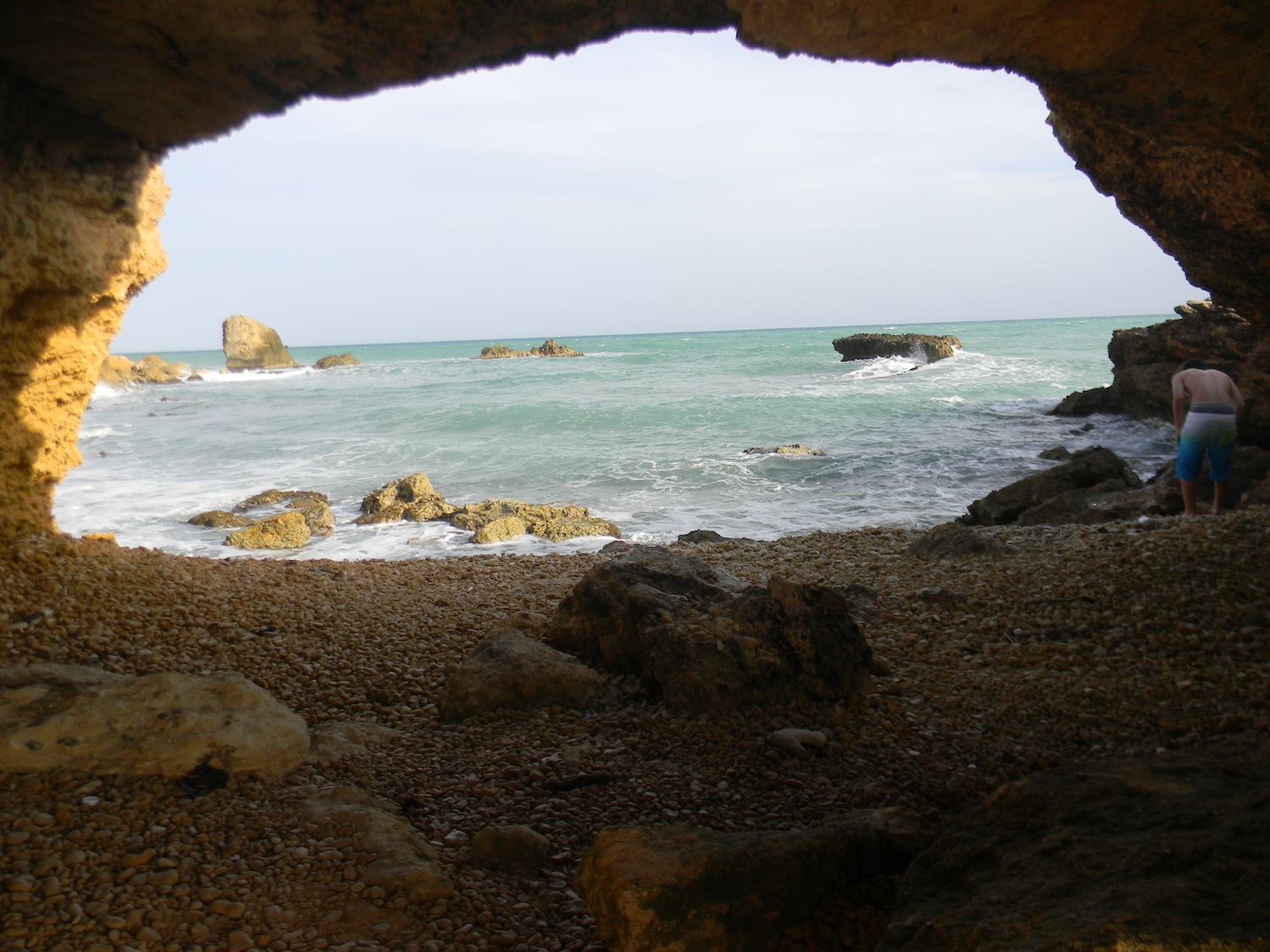
Other than crabs, there were few sea creatures to be seen on the beach, either.  One morning we watched a local man with snorkel gear and a fishing spear go back and forth in front of the beach collecting lobsters—undoubtedly illegally.

The only coral we saw was bleached and dead.

The amount of plastic garbage on the beach and in the coastal waters was depressing.

And although there was some bird life, it was thin, even in the beautiful coastal land designated as a “national wildlife refuge”: a single frigate bird, a couple of pelicans, a handful of herons and sandpipers.

DSCN3856

What frightens me is how quickly we normalize whatever situation we live in.

It’s normal now to live on an island surrounded by magnificent turquoise waters and not be able to find fresh local seafood to eat.

DSCN3895

It’s normal to buy water in plastic bottles and throw them casually away, without any clue of what happens to them once they’re deposited on the curb for the garbage men to pick up, and it’s normal to find those bottles washing up at the beach.

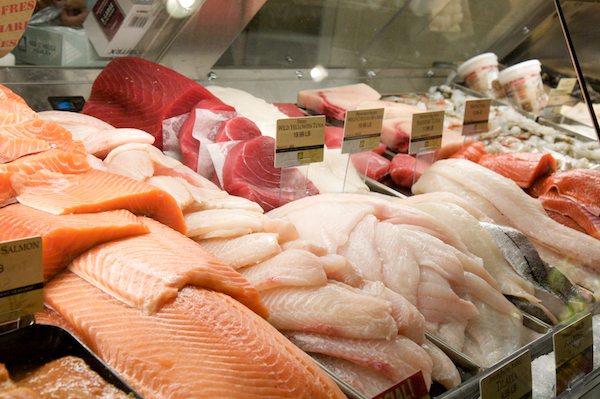
I_Fresh_Market_FishIt’s normal to return to the U.S. and find, in the local gourmet food store, a big gleaming fresh fish counter, with huge slabs of “sustainably farmed” salmon, leaner wild-caught Alaskan salmon ($25 a pound!), swordfish steaks, flounder filets, sea bass from Chile, fresh shellfish of every description.

Here in the heart of Empire, it’s normal to remain ignorant of the fact that this kind of abundance is rare, and carefully manufactured.

And when those who can afford that $25 a pound fish go abroad, they travel in bubbles of luxury that keep them cushioned in the comfortable delusion that all is well.

After all, in the restaurants at the resorts, there’s fresh salmon on the menu.  Never mind that it arrived on this Caribbean island packed in ice, on a flight from a fish farm in New Brunswick, New Zealand, or Scotland.

It’s normal, now, to feel sad but resigned to the fact that fish and seafood is becoming a rarity.

As omnivorous human beings, we have other choices. No seafood available?  Eat chicken then, or vegetables.

But what about the shorebirds and the ocean food chains that have evolved in tight symbiosis over millions of years?

Try telling a pelican or a seal to go eat some chicken.

DSCN3836

On the southern California coast this spring, there has been a wave of emaciated, starving sea lion pups washing up on the beaches.

baby-sea-lion-2edit

Starving sea lion pup being transferred to a rescue center for rehabilitation.

They’re starving because the fish their parents and grandparents caught so easily have been trawled up by factory fish vessels, frozen in plastic pouches and sent around the world on ice.

This is the new normal.

I am not resigned, and I will never get used to it.

Which Side Are You On?

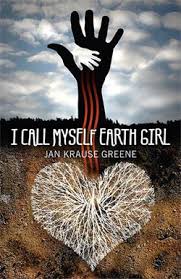
imagesFor the past few nights I have been putting myself to sleep by reading an advance copy of my friend Jan Krause Greene’s new novel, I Call Myself Earth Girl.

It’s not exactly a feel-good bedtime story, dealing as it does with rape, environmental disaster, death and bereavement.

But it’s also about empathy and love, between family members and also on a worldwide scale.

In Greene’s vision, the Earth and its denizens can be saved from catastrophe by mindful attention to what really matters: affirming life, both our own and that of the unborn generations to come.

Not since Starhawk’s 1994 masterpiece The Fifth Sacred Thing have I come across a book that so clearly matches my own waking nightmare of the terrible times that await us in the future, if we do not succeed in changing our ways now.

Let’s face it: it is possible that the kind of violence afflicting resource-starved places like Afghanistan, Syria and Somalia will become the norm in much more of the world, as climate instability creates food shortages and accelerates the pace of natural disasters beyond our capacity to recover.

America is a tinderbox just waiting to go off.  Imagine what would happen if suddenly it was not possible to go down to the supermarket and get your week’s worth of groceries?

Such a scenario is more or less unthinkable to people like me, who have grown up cradled by the richest breadbasket in the world.

We are only beginning to realize the costs that have come with our cornucopia: the destruction of the virgin prairies in the Midwest, the poisoning of the earth, water and air with chemical fertilizers, pesticides and herbicides; the grotesque factory farms of livestock and fish; the genetic alteration of seeds; the destruction of local farming by the huge predatory monster of American-style factory farms.

We have grown fat on these practices.  And now it’s time for us to accept responsibility for the outcomes of our heedlessness.

Those of us alive today have the privilege, and the responsibility, of presiding over what could very well be the end times for human civilization.

It’s somewhat analogous to the end times of specific human cultures, like the Greeks, the Romans, the Egyptians, the Ottomans, the great Chinese dynasties….except that this time, we’re not just talking about the end of a single culture, we’re talking about the demise of humanity as a species.

It is possible to imagine, as Jan Krause Greene did, that our lush green planet could turn brown from environmental disaster, provoking a culture of armed militias surviving by means of ruthless violence—with women, as always, at the bottom of the heap.

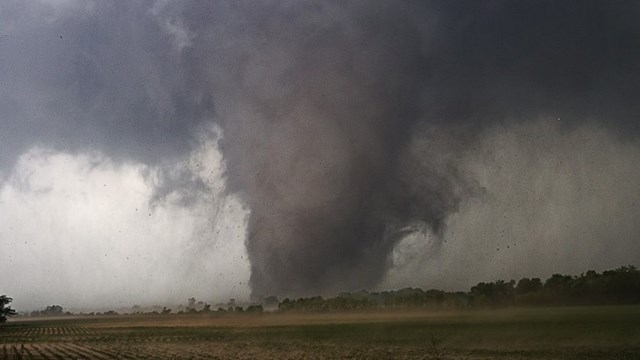
Tornado bearing down on Moore, OK; May 21, 2013

Tornado bearing down on Moore, OK; May 21, 2013

It is already happening—just not yet here, in the gated community we call America.

Can we wake up in time to forestall total, worldwide environmental melt-down?

In the past week we had a deadly two-mile-wide tornado in Oklahoma, and the Russian science station in the Arctic Circle had to be evacuated because the ice was melting at an unprecedented rate.

Here in New England we are expecting temperatures in the 30s Farenheit this weekend—way below normal for what should be the start of the growing season.

What’s next?

We don’t know.  But I take heart from local initiatives like the rehabilitation of the long-dormant Great Barrington Fairgrounds into a vibrant community-supported agriculture site.

We are going to have to re-localize agriculture if we want to survive the shocks of the 21st century.  We need to re-imagine not just agriculture, but community along with it.

As I Call Myself Earth Girl shows well, the antidote to violence and fear is love and empathy.

We still have a choice. Which way will you turn?  Which side are you on?  How far will you go to protect the planet and the generations to come?

fifth-sacred-thing

Commencement 2013: Questions for Ben Bernanke

Tis the season of college Commencement ceremonies, where speakers are invited to address the graduates, giving them some advice and words of wisdom for this major transition time in their lives.

Ben Bernanke

Ben Bernanke

At my institution, Bard College at Simon’s Rock, the Class of 2013 will be addressed by none other than Ben Bernanke, chairman of the Federal Reserve, whose son and daughter-in-law met as Simon’s Rock students.

Of course I am curious to hear what Mr. Bernanke will tell these spanking-new A.A. and B.A. graduates.

I wonder if he will mention the touchy issue of student debt, which the eminent economist Joseph Stiglitz just called a contemporary crisis on the same order of magnitude as the housing bubble crisis of 2008.

Stiglitz doesn’t mince his words in responding to the news that “total student debt, around $1 trillion, surpassed total credit-card debt last year.”  While it’s possible to learn to control credit card spending, he says, “curbing student debt is tantamount to curbing social and economic opportunity. College graduates earn $12,000 more per year than those without college degrees; the gap has almost tripled just since 1980. Our economy is increasingly reliant on knowledge-related industries.”

In other words, young Americans and their families can’t afford not to do whatever it takes—including going into debt—to get that college degree, and beyond that graduate degrees as well.

The students I know are increasingly aware of their place in the big picture of American society.

Those who must take out loans to afford their college educations do so with eyes open, knowing that these loans will form a ball and chain around their ankles for many years to come.

I wonder if Ben Bernanke will talk about this?

Will he talk to this year’s graduating class about how, unlike with credit card or mortgage debt, it is almost impossible to discharge a student loan in bankruptcy court?

Will he explain why interest rates on Federal student loans are so much higher than the interest rates on the loans the Federal Reserve has made to the banks that caused the financial crisis of 2008?

As Mr. Stiglitz observes, “if the Federal Reserve is willing to lend to the banks that caused the crisis at just 0.75 percent, shouldn’t it be willing to lend to students, who will be crucial to our long-term recovery, at an appropriately low rate? The government shouldn’t be profiting from our poorest while subsidizing our richest.”

Besides the $1 trillion in student debt, there have been other major records broken in the past few weeks that Mr. Bernanke could address.  The Dow Jones has climbed above 15,000 this spring, a benchmark many thought would never be reached; and the carbon emissions rate has climbed above 400 parts per million, causing polar sea ice melt at rates and levels not seen in human history.

Will Mr. Bernanke talk about how and why it is that in a time when wealth disparity between the 1% and the rest is growing ever vaster, while the planet heats up and becomes ever more unstable and vulnerable, the stock market is soaring as never before?

I would be quite interested to hear his take on that.

Generally Commencement addresses are exhortatory in style.  Go forth, ye graduates, and conquer the world!  Or make it a better place!  Or do well for yourselves at least!

Today’s graduates need all the encouragement they can get as they make their way out into a society, a world and a planet where only the richest can feel secure—and even for those folks, climate change may make a mockery of that sense of stability.

The qualities most needed today are collaboration, creativity and resilience, along with a willingness to think outside the box and go for the roads less traveled.

Students at Simon’s Rock, a non-traditional early college for brilliant non-conformists, have all of these qualities and more.

I am proud to have accompanied some of them on a piece of their journey, and look to them to lead the way into the future we must all confront.

I hope that Ben Bernanke, who well knows the school and the type of students it attracts, will speak to them frankly and in good faith about the challenges ahead and how best to be not part of the problem, but cutting-edge leaders in the quest for solutions.

Mother’s Day Salute to my Mom

Throughout my childhood, my mother always spent a lot of time and energy tending and shaping the land around the house, following her own instincts of landscaping and working almost entirely with hand tools.

The little house; I am standing where the big thicket was

The little house; I am standing where the big thicket was

She started just outside the sliding glass doors in the living room, where she planted a small lawn, beyond which was an expansive swamp dogwood thicket, laced with black raspberries and bordered by a young maple forest on one side, and a few barely visible pine trees on the other.  Armed only with loppers, my mother began cutting down the thicket stalk by stalk, a project that took a couple of years of slow, patient labor.

Once the thicket was gone, and grass had been seeded in its place, my mom turned her attention to the huge limestone ledge that ran down alongside the house, part of it visible as mossy, grassy outcroppings, but most of it underground.  She set to work with her shovel, hand rake and trowel, her intention to create a rock garden out of that long, sloping rock ledge.  That project provided a focus for the long summers she spent with me and my brother in the country while my father went back to the city to work during the weeks.

The rock garden runs up the whole length of the lawn beside the house.  It's hard to see the rocks here, as they've been covered with plants, which my mom regularly scrapes off to reveal the contours of the rock again.   This big rock garden took years to accomplish.

The rock garden runs up the whole length of the lawn beside the house. It’s hard to see the rocks here, as they’ve been covered with plants, which my mom regularly scrapes off to reveal the contours of the rock again. This big rock garden took years to accomplish.

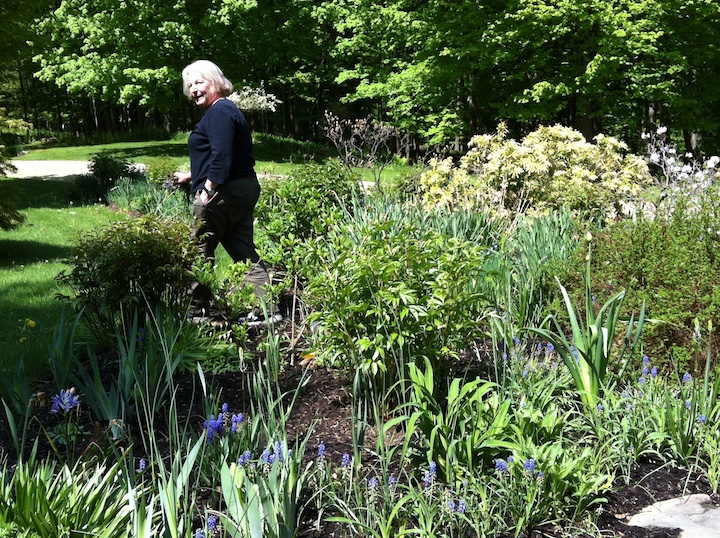
I can see her standing, sweaty and red-faced at the end of a hot morning’s work, with a fine layer of black earth coating her bare shoulders, drinking iced tea out of a tall green glass and surveying the ledge with a squinted sculptor’s eye.  She would be quietly exultant as her shovel and trowel gradually revealed new curves or deep, smooth walls of rock, a small, determined woman with a strong back and great patience, tracing out the rock with hand tools and as much love as if she were carving out the sweet, benevolent face and voluptuous body of the Earth Mother herself.

IMG_2168 copy

She also dug out a vegetable garden, in which she planted her morning coffee grounds and eggshells, which yielded crunchy sugar snap peas and big shiny zucchinis and a tangle of tomato plants loaded down with plum, cherry and huge oxheart tomatoes.  In time, every contour of the ten acres or so around the houses on the property had felt the gentle touch of her hands, and yielded to the influence of her spades and trowels.  Every young maple or oak grew there because she had judiciously allowed it to advance past sapling-hood.

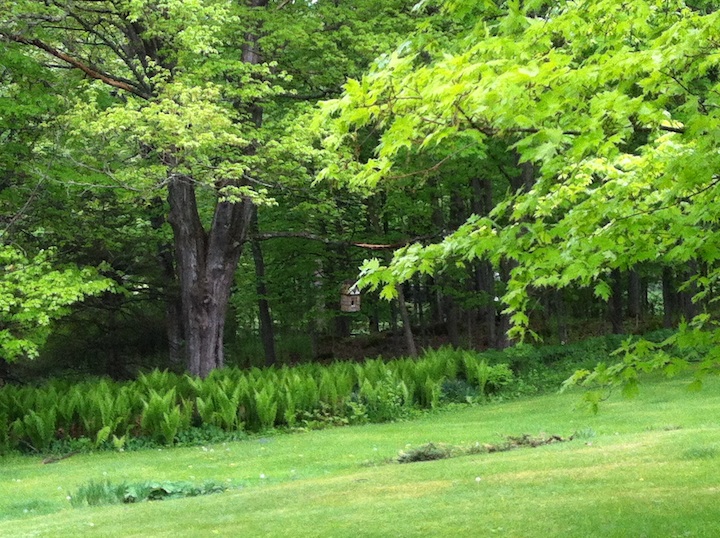
This was my favorite climbing tree in childhood; a sugar maple named Cricket

This was my favorite climbing tree in childhood; a sugar maple named Cricket

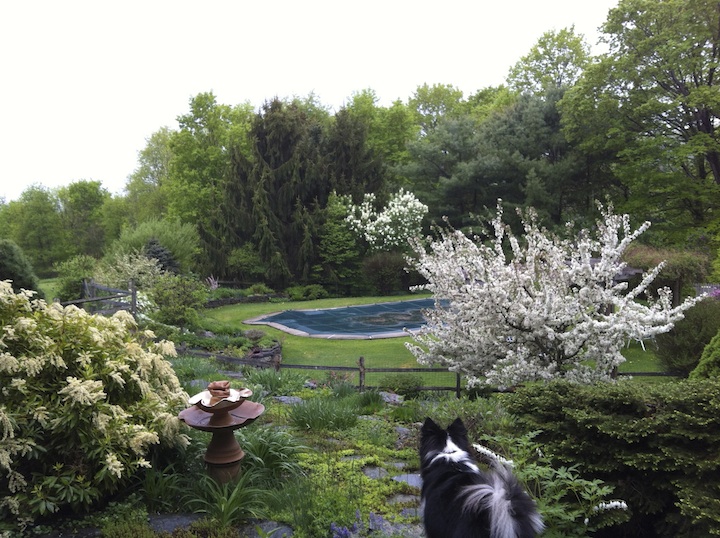
What had once been a rocky, harum-scarum cow pasture became, over the course of many years, an orderly oasis of verdant green lawns, perennial flower beds and raised vegetable gardens, with the long ridge of the rock garden sloping down through the middle of it all to the elegantly landscaped pool.  Now, more than forty years later, she’s still out there with her shovel, trowel and hand tools, tending and stroking her gardens into ever more radiant beauty.

The view from the "new" house (c. 1989), down towards the pool

The view from the “new” house (c. 1989), down towards the pool

This Mother’s Day, I salute my mother, whose outstanding gardening talents I have admired and learned from all my life.  I can only hope that in some small way her greenest of thumbs has rubbed off on me.

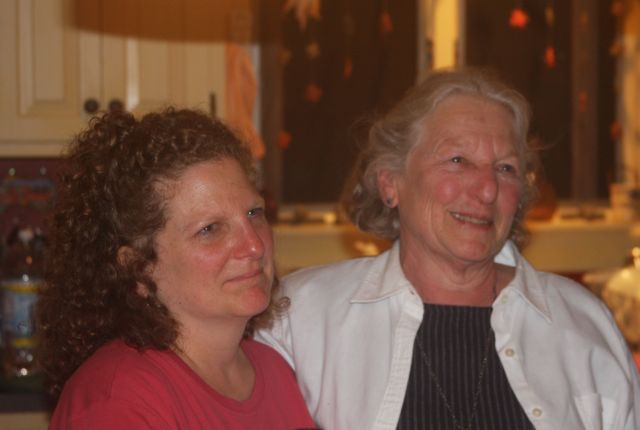
Jenny and Sue 1

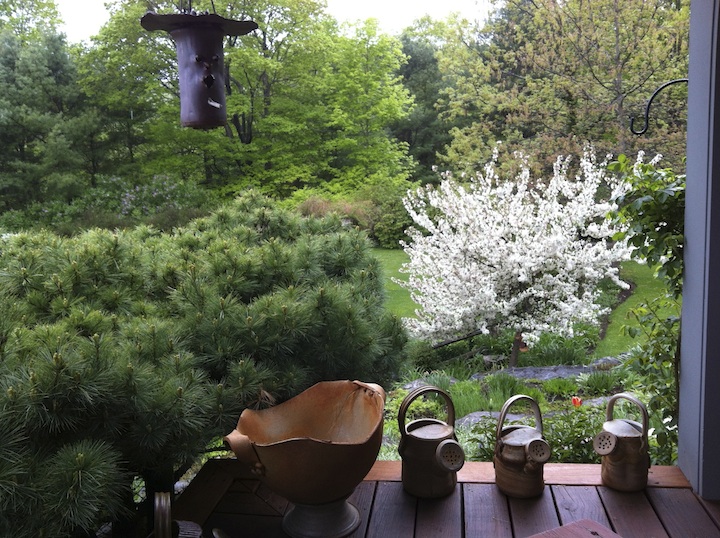
Did I mention that my mom is an outstanding potter?

Did I mention that my mom is an outstanding potter?

She is as talented at architectural design as she is at landscape design

She is as talented at architectural design as she is at landscape design


IMG_2148 copy


IMG_2144 copy

Innumerable shrubs, trees and fruit trees have been planted over the years, most often by my mom and her trusty spade.


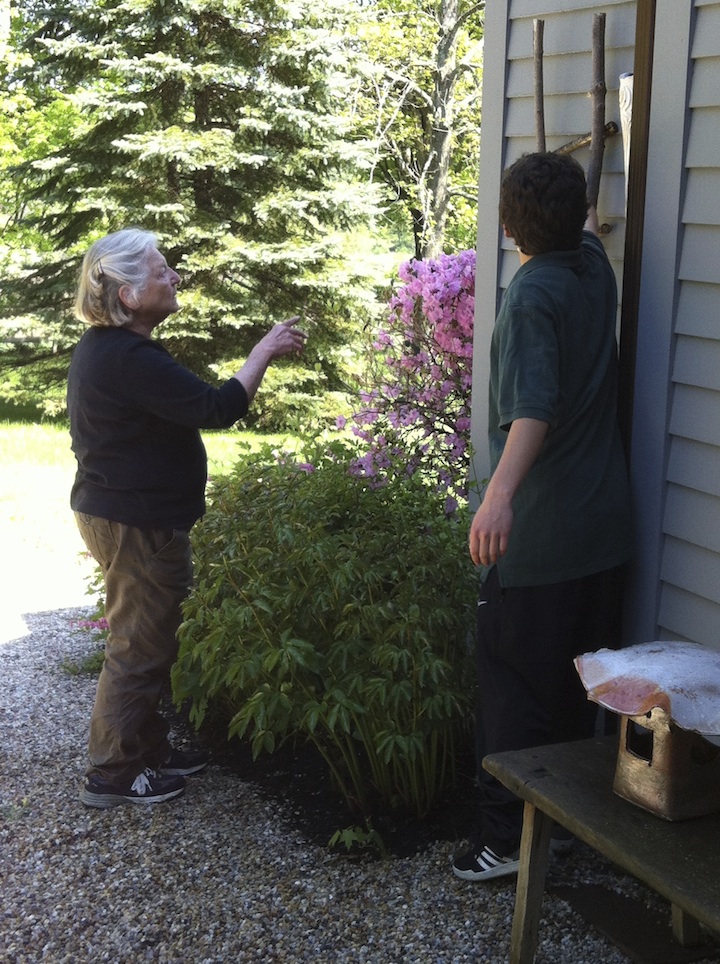
Making plans for the next project with grandson Eric.  The work of a gardener is never done....

Making plans for the next project with grandson Eric. The work of a gardener is never done….


This is one of the most recent gardens, just outside the pottery studio, next to the oldest tree on the property, a venerable sugar maple

This is one of the most recent gardens, just outside the pottery studio, next to the oldest tree on the property, a venerable sugar maple


The jig is up for military sexual assault

No fewer than 26,000 sexual assaults were reported by U.S. military service men and women in the year 2012 alone.

You read that right.

According to The New York Times, “Pentagon officials said nearly 26,000 active-duty men and women had responded to the sexual assault survey. Of those, 6.1 percent of women and 1.2 percent of men said they had experienced sexual assault in the past year, which the survey defined as everything from rape to “unwanted sexual touching” of genitalia, breasts, buttocks or inner thighs.

“From those percentages, the Pentagon extrapolated that 12,100 of the 203,000 women on active duty and 13,900 of the 1.2 million men on active duty had experienced some form of sexual assault.”

These numbers are simply unacceptable, especially when contrasted with the small number of sexual assault cases that were officially reported (ie, not via anonymous survey)–3,374—and the abysmal rate of actual conviction: only 238 assailants were convicted in 2012.

Lt. Col. Krusinski; booking photo

Lt. Col. Krusinski; booking photo

Most embarrassing for the military brass was the arrest last Sunday of the officer in charge of sexual assault prevention programs for the Air Force, Lt. Col. Jeffrey Krusinski, who was accused of having sexually assaulted a woman he did not know in a parking lot.

Way to lead, Air Force!  Just when we thought the Tailhook scandal was becoming a distant memory.

I’m glad to see that some members of Congress—especially the women—are hopping mad and on the case, as today’s column from Maureen Dowd details.

Women who put their lives on the line to serve in the U.S. military deserve nothing but respect from their superiors and peers.

The question is, how is the military going to re-program its entire culture, from raw recruit to brigadier general, who have been raised to believe that “all women (and all gay men) want it,” that might makes right, and that superior officers can act with impunity towards those under their command?

How is the military—and, indeed, American culture at large—going to counter the billion-dollar American porn industry, that thrives on presenting women as objects of desire, yes, but also as objects of violence?

The truth is that what we’re seeing in military culture is just the tip of the iceberg of a much more deeply-rooted cultural problem.

Just as the military stood up to become the model for racial integration in the 1970s, it must now trailblaze the path to gender equality for us in the second decade of the 21st century.

Women who are now going to serve in combat, just the same as men, should not have to worry about “friendly fire” from male supervisors and peers.

To be honest, the idea of women breaking glass ceilings in the military does not thrill me.

I’d rather women work to create and broker non-violent institutions and solutions to problems.

But there is no excuse, ever, for sexualized violence against women or men.

The Lt. Col. Krusinskis of the world need to get their rocks off some other way, and the old-boy networks that have stood in the way of change on this issue have got to go.

Senator Kirsten Gillibrand, Democrat of New York, plans to introduce legislation that would take the adjudication of sexual assault cases outside of a victim’s chain of command. According to the New York Times editorial board, which supports the measure, “It would end the power of senior officers with no legal training but lots of conflicts of interest to decide whether courts-martial can be brought against subordinates and to toss out a jury verdict once it is rendered.”

President Obama said the right thing in response to the Krusinski arrest scandal, but it remains to be seen whether he can follow up his words with actions.

“If we find out somebody’s engaging in this stuff, they’ve got to be held accountable, prosecuted, stripped of their positions, court-martialed, fired, dishonorably discharged — period,” Mr. Obama said.

Got that, all 26,000 of you who committed sexual assault last year?

The jig is up.

Playing hardball with the fossil fuel industry: if not now, when? if not us, who?

Bittersweet sadness fills me this morning as I read an excerpt at Women’s E-News from Eve Ensler’s new memoir, In the Body of the World, about her long, determined, agonizing battle with uterine cancer.

Eve Ensler

Eve Ensler

Her TED talk, “Suddenly, My Body” is one that I have returned to watch several times over, and have recommended to many friends as a pulsating, powerful performance that makes perfectly clear what many of us are coming to realize: that there is no separation between our bodies and the world around us.
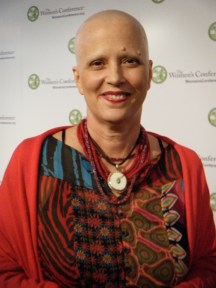
Eve Ensler

Eve Ensler

Not only is it true, as Joanna Macy and Brian Swimme tell us, that we are the most recent emanations of the stardust that created the life on our planet eons ago, it is also true that our fragile bodies are porous and open, made of the air, earth and water that we move through each day.

If we poison our environment, we poison ourselves.

So many of us are learning that the hard way.

Warrior lionesses like Rachel Carson, Audre Lorde, Wangari Maathai and Eve Ensler—each one snared by her own body’s encounter with the internal malignancy of cancer.

How many powerful, active, full-of-life people do you know who are no longer with us, felled by cancer?

A quick look at the cancer statistics kept by the Centers for Disease Control shows cancer rates soaring, especially for Americans 50 and older, and especially in the South, Midwest and Northeast of the country.

In the South and Midwest, they make and use those toxic chemicals—the ones that lace our food supply and flow into our waters, creating a dead zone the size of the state of New Jersey at the mouth of the Mississippi River; the ones that ride the prevailing winds east to fill the skies of the eastern United States and Canada with sooty particulates and airborne toxins.

None of us is immune from this.  No matter how careful we are to buy organic produce or grow our own, to keep BPA plastics out of our kitchens, even to pull up stakes and move to an area of the country that appears to be cleaner—we cannot hide from the reality that we live in a contaminated country, on a planet that is crazily out of balance and on the verge of a major correction.

When the colonizers came to the Americas, they were careful to try to pick off the leaders among the native peoples they encountered, knowing that if you deprive people of their most charismatic, powerful leaders, you will demoralize them and leave them open to takeover.

Although there is no devilish intelligence at work in the cancer epidemic, this dynamic still applies: when cancer takes from us leaders like Rachel Carson, Audre Lorde, Eve Ensler or Wangari Maathai, it leaves the rest of us stricken and reeling, spinning like a rudderless boat.

Sandra Steingraber

Sandra Steingraber

There are those, like Sandra Steingraber, who have been fighting cancer for a long, long time, and using it as a spur to work harder to save our planet/ourselves.

Steingraber was recently put behind bars for two weeks as punishment for her protest of the fossil fuel companies’ plan to hydrofrack for gas in her home territory of upstate New York.

She wrote from prison that it was her love, for her children and for all livings beings on the planet, that drove her to civil disobedience:

“It was love that brought me to this jail cell.

“My children need a world with pollinators and plankton stocks and a stable climate. “They need lake shores that do not have explosive hydrocarbon gases buried underneath.

“The fossil fuel party must come to an end. I am shouting at an iron door. Can you hear me now?”

Yes, we hear you Sandra, and we’re with you!

And yet, so many of us do not act on what we hear and know.

A low-level depression seems to afflict a great swath of the American public, and I would wager that the feelings of powerlessness that come with being unable to control the health of our environment or our selves may have something to do with it.

No matter how many times we go down to Washington D.C. to protest, it seems that the fossil fuel and chemical industries have the U.S. Congress sewn up tight.

Even someone like me, living in what appears to be a clean, leafy rural place, has to contend with farmers who still spray Roundup on their cornfields every spring, or rivers, including the Housatonic, just blocks from my home, heavily contaminated with PCBs from the upstream General Electric plant.

Since there is no way to play it safe, what we need to do is forget about safety now, in these end times, and play hard.

It’s time to give everything we’ve got to the fight to preserve the capacity of our planet to support life on down the generations into the future.

If humans are to be part of that future, we have to rise to the challenges we face now.

Like Eve Ensler, wracked with cancer and yet still leading the charge of One Billion Rising to fight violence against women this spring, we cannot afford to take time out.

Wangari Maathai

Wangari Maathai

Like Kenyan Wangari Maathai, felled so quickly by cancer even as she received the Nobel Peace Prize for her work in preventing the desertification of her country by teaching ordinary women to raise and plant trees, we have to be creative in our approaches, working at the grassroots when those at the top won’t listen.

Like Sandra Steingraber and so many other activists, we have to be willing to face the consequences of our disobedience to those in power.

Playing nice, following the rules, being polite—where has that gotten us?  When the polluters of the planet are playing hardball, we have to respond in kind—although our life-affirming version of hardball might involve planting trees, or raising flash mobs of dancers, or forming human chains of resistance at the boundaries of old-growth forests.

Rachel, Audre, Wangari, Eve, Sandra…we’re right behind you.  Fighting all the way.