Women in Combat: Honoring the Androgynous in Human Nature

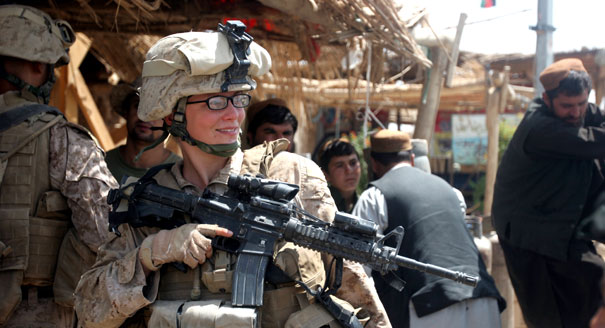
U.S. Marine Corps soldier

U.S. Marine Corps soldier

Hearing that the U.S. military is finally going to allow women in combat is something akin to hearing that the Berlin Wall came down.  Something that had seemed so fixed and immovable is all of a sudden just…not…there.

The military led the way in racial integration back in the 1970s, and it is finally showing its willingness to get with the times and become a leader on gender equality as well.

That’s good!

So why don’t I feel like celebrating?

It’s true that women were already on the frontlines, doing dangerous work without the training or the equipment, and, importantly, without earning the credit.

And it’s no secret that the quickest way to advance in the military is to be recognized as a brilliant combat veteran.

Women who never officially saw combat were always held back at promotion time.

So in that regard, this is going to be very positive change that will help put many more fine women soldiers into the promotion pipeline.

In terms of wanting to do everything possible to generally increase women’s equality of opportunity and compensation, the broad example of the military, with its huge payroll, will make a difference.

So why am I feeling ambivalent?

I guess this just feels like one more example of women joining the male-dominated status quo and living up to patriarchal models and expectations, rather than women being able to bring our own different-but-equal perspectives to bear on the playing field.

Does “equality” mean that women have to conform to the social structures into which we were born and bred, which have always been, at least as far as any of us can remember, male-dominated?

This question has been the subject of extensive, impassioned debate among feminists over the past 20 years or so, ever since I entered the fray in the late 1980s.

Are women “essentially” different from men, or are we all humans, the same inside, just with different bodily accessories?

It is dangerous, assert many feminists, to argue that there is something essentially different about men and women, especially if you want to argue that men are essentially more aggressive and competitive, while women are essentially more nurturing and collaborative.

To assert this puts us just one step away from saying that women make better teachers and nurses and mothers, while men make better soldiers and stockbrokers and lawyers.

No feminist would want to say that, at least not while we live in a patriarchal society that puts a much greater value on soldiers, stockbrokers and lawyers than on people in the caretaking, nurturing professions.

Having pondered this long and hard over many years, I am convinced that gender identity is not an either/or proposition, but rather a spectrum.

That is, we are not 100% women or 100% men, but have some of the characteristics of both, to differing degrees. Depending on our social context, we move ourselves along the spectrum, seeking approval and rewards.

We all have it in us to call on whichever side of our nature, the masculine or the feminine, is most needed in the moment.

Women can be socialized to become tough soldiers, just as men can be socialized to become tender, loving fathers.

It’s no accident that mama bears have the reputation of being the most fearsome creature on earth if their cubs are endangered; I know as a mother I have felt an incredible level of aggression rising in me when I’ve felt my little ones threatened.

Yes, women can fight.

We can kill.

We can take orders, and we can dish them out, too.

But I hope that by fully integrating the military, from top to bottom, we will begin to have a subtle effect on the culture.

I hope that just as women in the military are encouraged to cultivate their masculine sides, they may also begin to allow and encourage men to let their feminine sides show up for duty a little more often.

We are learning slowly that winning wars is not just about overwhelming force, shock and awe; it’s more importantly about winning hearts and minds, about making a lasting positive impact in a territory that we are forced to occupy militarily.

Without this crucial component to war-making, the peace will never last.

As someone who is deeply non-violent, I believe that the purpose of war should  always be to create the conditions for long-lasting and productive peace.

Women and men in military service who honor the full spectrum of their gendered natures, from masculine warrior to feminine peacemaker, will best be able to make this vision a reality.
Time to grow up, America: from the quest for independence to the recognition of interdependence

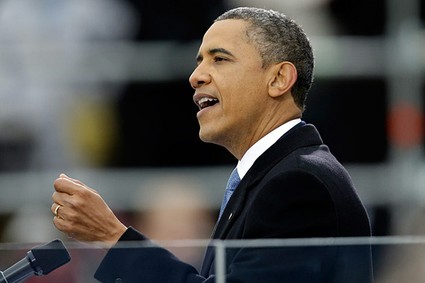
FE_DA_130121obama-inaug425x283In his second Inaugural speech, President Obama gestured back to other great and trying times in American history—“Seneca Falls, Selma and Stonewall”—and even further back, to the Civil War period and the War of Independence.

In all of these historical eras, freedom was the watchword, and first slavery, then inequality, the great evil that had to be eradicated in order for us to move forward as a nation.

Now we’re in a different period, unlike any we have yet lived through as Americans or as global citizens.

What we need now is not more freedom, but more connection.  If there are battles to be fought today—and there are!—they must be in the name not of liberty, but of interdependence.

It is hard to make a stirring speech out of complex concepts like interconnection, collaboration and sustainability, and President Obama’s gestures in this direction were, at best, oblique.

He spent a lot of his time echoing many of the enduring pieties of American history, including the Declaration of Independence, those famous lines that every American schoolchild studies: “We hold these truths to be self-evident, that all men are created equal, that they are endowed by their Creator with certain unalienable Rights, that among these are Life, Liberty and the pursuit of Happiness.”

This is “our generation’s task,” Obama said;  “to make these words, these rights, these values – of Life, and Liberty, and the Pursuit of Happiness – real for every American.”

There is a fundamental dilemma built into this founding creed, because of course one person’s pursuit of happiness may very well impede or encroach upon another person’s life and liberty.

For instance, is it OK that corporate “persons,” in their single-minded pursuit of short-term gains, ie, financial happiness, cut short people’s lives by poisoning our air, water and food supply with toxic chemicals?

Is it OK that your friendly neighborhood billionaire pays a lower tax rate than his secretary, considering that fact that this makes him very, very happy?

President Obama made no secret of his progressive agenda for social equality, ticking off social issues such as equal pay for women, gay marriage, and a more generous immigration approach as “our generation’s task to carry on.”

It was a surprise to many to find him also taking up the hot-button issue of climate change in this speech.

Echoing the Preamble to the Constitution, he insisted that “We, the people, still believe that our obligations as Americans are not just to ourselves, but to all posterity.  We will respond to the threat of climate change, knowing that the failure to do so would betray our children and future generations.  Some may still deny the overwhelming judgment of science, but none can avoid the devastating impact of raging fires, and crippling drought, and more powerful storms.

“The path towards sustainable energy sources will be long and sometimes difficult.  But America cannot resist this transition; we must lead it.  We cannot cede to other nations the technology that will power new jobs and new industries – we must claim its promise.  That is how we will maintain our economic vitality and our national treasure – our forests and waterways; our croplands and snowcapped peaks.  That is how we will preserve our planet, commanded to our care by God.  That’s what will lend meaning to the creed our fathers once declared.”

In the days of Wilberforce and Lincoln, a political leader who dared to speak out against slavery risked the wrath of the richest, most powerful men on Earth.

Today, a politician who dares to speak out against climate change runs the same kind of risk.

We know that the pockets of the huge energy conglomerates like Exxon-Mobil, Shell, Chevron and the rest are way deeper than the puny resources of the American government.

Those guys can buy themselves the best lawyers, the best lobbyists, the best media workers, the best researchers and scientists…and if short-term profit is their only motive, then they have no incentive to desist from continuing their pell-mell push to extract every last ounce of usable oil, gas and coal from the Earth’s crust.

President Obama indicated in his speech that he understands the ethical and scientific implications of allowing the fossil fuel industry to ride roughshod over the possibility of a sustainable future for our children and future generations.

“We, the people, still believe that our obligations as Americans are not just to ourselves, but to all posterity,” he said.

As a parent, I know that my responsibility to my children is greater than any claim I could make to personal freedom.

I cannot blindly pursue my own happiness at the expense of theirs.

No more can we as a nation and as a human civilization continue to pretend that we don’t understand how our permissiveness towards corporate freedom, with its myopic focus on next-quarter profits, is undermining our obligation to future generations—and not just future generations of humans, but of all the creatures and plants who grew up with us on this planet.

If the President truly believes what he said, that “our obligations as Americans are not just to ourselves, but to all posterity,” then he must act boldly to uphold a new creed for the 21st century, based not on freedom and liberty, but on responsibility and interdependence.  And we need to be right by his side, giving him the courage to act on his best convictions.

President Obama ended his speech by affirming that “You and I, as citizens, have the power to set this country’s course.

“You and I, as citizens, have the obligation to shape the debates of our time – not only with the votes we cast, but with the voices we lift,” he said, concluding:

“Let each of us now embrace, with solemn duty and awesome joy, what is our lasting birthright. With common effort and common purpose, with passion and dedication, let us answer the call of history, and carry into an uncertain future that precious light of freedom.”

Wait! No, that’s not right!  It’s not “that precious light of freedom” we need to embrace now; it’s “that precious recognition of interdependence.”

What he should have said in closing was this:

“With common effort and common purpose, with passion and dedication, let us answer the call of history, and work together to create a sustainable, global socio-economic framework, manifested on the local level by caring, collaborative communities who understand that now is no longer the time of independence, or of freedom, but the dawn of a new era of responsibility and interdependence.”

In short, it’s time for us humans to grow up.

If you need more convincing, check out Tiffany Schlain’s marvelous 10-minute “cloud film” INTERDEPENDENCE and read her “Declaration of Interdependence.

For a heartbreaking take on  the urgency of our mission to shift to renewable energy and put a lid on global warming, watch Nikki Craft’s film RESIST DO NOT COMPLY, made with Derrick Jensen and Lierre Keith.

And then join your fellow grown-up citizens in doing the work that it is, as the president said, our generation’s greatest task.

I have a dream…for President Obama and our nation

There is a fair amount of speculation today over what President Obama will say at tomorrow’s Inauguration speech, which coincides with Martin Luther King Jr. Day.

Obama, like King, is a great orator, especially when he allows himself to lose his cool and display the inner fire that animates him.

President Obama arriving in Newtown last month

President Obama arriving in Newtown last month

I hope that tomorrow he will allow us to see his human, emotional side, as he did when he shed unscripted tears the night he visited the bereaved parents in Newtown last month.

It’s true that many of his followers have lost the starry-eyed sense of possibility that made his first Inauguration such a joyful affair.

The romance of our first Black president, an outsider who dodged all the slings and arrows lobbed at him by his opponents to sprint his way to victory, has settled into a more realistic relationship.

We know he’s not superhuman.  He’s not infallible, and he cannot please all of us all the time.

But I hope that in this second term he will be bolder in his governance of the country.  Now that he doesn’t have to worry about running for office again, he can afford to take more risks to get his agenda through.

We’re seeing him do this with gun control, as—to give him due credit—he did in the first term with the Affordable Health Care Act.

It looks like he’s poised to make a positive move on immigration.

These are all important issues.

But they pale by contrast with the single most important issue of our time, restabilizing our climate.

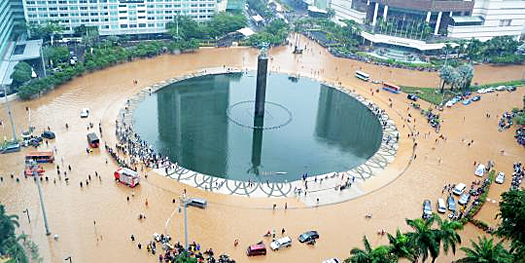
Severe flooding in Jakarta this week from unusually heavy monsoon rains

Severe flooding in Jakarta this week from unusually heavy monsoon rains

An image shot in Jakarta this week gives a snapshot into what is ahead for us, as a nation and as a global human civilization, as the oceans warm, the glaciers and poles melt and release trapped methane and the climate becomes more extreme and erratic.

Scientists tell us that the die has already been cast; the planet is set on a warming course that cannot be reversed.  But it can be mitigated.  We can still keep the average rise in temperature to 4C rather than the 10C that is the current worst-case scenario for the next hundred years.

I have a dream that President Obama surprises the nation and the world on Inauguration Day by announcing a plan to divert current government subsidies to the fossil fuel industry into a new federal fund to promote:

  • a shift to distributed energy (rooftop solar arrays, town wind turbines, local geothermal, etc);
  • new incentives for the manufacturers and installers of renewable energy components;
  • a new R&D push to improve batteries and design data centers and other industrial plants that use less energy;
  • an initiative in urban planning and architectural design to begin the arduous, expensive but necessary process of refitting our cities, towns and individual dwellings for our new climate reality;
  • a strong push to improve the environmental component of our education at every level and in every subject—not just science and technology, but medicine, philosophy, history, sociology, literature and of course economics and business.

This is my dream for the Inauguration speech, but I will not be holding my breath waiting for it.

tumblr_mguif6Qltd1qzsjkco1_400I won’t be in Washington for the Inauguration, but I want to be there for the Presidents’ Day (Feb. 17) climate change rally in DC, sponsored by 350.org and the Sierra Club, to pressure our politicians to do the right thing for us and for our children.

President Obama, I know the tears you shed in Newtown were real—I know you are a feeling, caring human being who does not like to see innocent people suffer.

You have an opportunity in this second term to make a historic difference in our nation’s stance on climate change.

Instead of being one of the world’s biggest polluters and consumers of energy, we can become one of the world’s biggest innovators in renewable energy and energy conservation.

We can once again resume our historic position in the world as a moral and practical leader, doing what’s right for our planet and its beleaguered denizens.

The people elected you, Mr. President, not the corporations.

Do it for us.  Now.

Don’t be fooled…now is no time to relax

Usually there is one image every week that burns itself into my memory and won’t let go.  That’s the one I have to write about.

This week, this is it:

Beijing, January 17, 2013

Beijing, January 17, 2013

It’s coupled with a small, unheralded story, which I’m sure many people missed, about how soot is a much more dangerous contributor to the greenhouse effect than had previously been estimated.

I paid attention to this because I remember soot well.

In the luxurious enclaves in Manhattan where I lived as a child and young adult, soot was omnipresent.

It lay, black and unrepentant, on the white painted windowsills of our apartments.  It got into your eyes when the wind blew.  It came off black on the cotton balls I’d use to clean my face at night.  It gradually turned the white starched window curtains and the elegant rugs and carpets a dingy gray.

Looking at the images from Beijing this week, I can hardly bear to imagine how heavily besmirched with soot everything in that city must be.

air pollution in Beijing, China

I have vivid memories of standing on the corner of 86th Street and Park Avenue in Manhattan as a child, and being totally engulfed with the hot black diesel smoke belching out of one of the public buses that ran the crosstown route.

It happened on a daily basis, and never failed to disgust me.  I felt some small, inner part of myself wilting, just like I saw the spindly trees planted in iron cages on 86th street gradually giving up and dying, a little more each day.

I also had to contend with cigarette smoke at home.  I remember long winter car rides in which my parents would pass a lighted cigarette back and forth between them in the front seat.  I detested the smell of cigarette smoke, it made me feel like I was going to either faint or explode.  I did neither, of course; just cracked my window in the back seat and sat there miserably with my nose to the wind, grateful for the short periods between cigarettes, when I could relax.

I’m in one of those short periods now.

Hurricane Sandy did not hit us here in the interior Northeast, and the weather has been relatively mild so far this winter.

Food prices are going up, for sure, but there are no shortages, no bread lines as of yet.

IMG_1160When I look around me the air is clear, the sun is bright, and everything still seems rather “normal.”

Except that every year there are fewer and fewer songbirds at my bird feeder.

Every summer fewer butterflies make it to the butterfly bush in my garden.

Every fall the leaves on the sugar maples get a little smaller and less shapely.

It’s a slow, steady decline that many people, less tuned into the natural world, probably don’t see at all.

But it’s there.

I don’t know if we in the US will ever get to the dramatic, disgusting air pollution levels of Beijing.  But there will come a time when we can no longer count on the kind of abundance we’ve become accustomed to in the supermarkets.

Floods, droughts, lack of pollinators and an increase of superbugs will take their toll.

The climate thermometer will creep ever higher.

It will all accelerate—don’t think that we won’t see the beginnings of destabilization in our lifetimes.  We are seeing them now.

Chris Hedges recently interviewed Ronald Wright, the author of A Short History of Progress and other books, and here is what he had to say about the juncture at which we find ourselves:

“If we continue to refuse to deal with things in an orderly and rational way, we will head into some sort of major catastrophe, sooner or later,” Wright said. “If we are lucky it will be big enough to wake us up worldwide but not big enough to wipe us out. That is the best we can hope for.

“We must transcend our evolutionary history. We’re Ice Age hunters with a shave and a suit. We are not good long-term thinkers. We would much rather gorge ourselves on dead mammoths by driving a herd over a cliff than figure out how to conserve the herd so it can feed us and our children forever. That is the transition our civilization has to make. And we’re not doing that.”

What we need now is a rapid evolutionary acceleration of consciousness, so that we become the kind of long-term thinkers that can size up the terrible circumstances in which we find ourselves now, and do what needs to be done to successfully solve the problems.

We have the technology, we have the know-how, we have the ethical framework.  We just need the will and determination to make it happen.

I am happy to see President Obama forging ahead on the gun control issue in the US.  That is important work.

But it will be irrelevant and forgotten when climate destabilization leads to deprivation and social chaos.

I’ve said it before and I’ll say it again til I’m blue in the face: there is no more important issue to work on now than shifting to renewable energy and ending our cultural addiction to fossil fuels.

Not later.  Now.

Rapists deserve a taste of their own medicine

If I have been silent about the horrific rape and murder of the as-yet unnamed Indian medical student in New Delhi, it’s not because I don’t care, but rather because I care so much I can hardly bear to think about it.

We seem to be living through a time of tipping points: when thresholds are crossed that are so outrageous that they provoke long-overdue reaction from a generally compliant, inured and zoned out populace.

India, and indeed most of southeast Asia, is well-known for its misogyny and callous brutality towards its women.  From female infanticide, neglect of girls, dowry deaths, domestic violence and tribal justice in which female victims of sexual assault are blamed and punished, often with death, this is not a region that treats its women kindly.

This is old news to global human rights activists.  But suddenly, thanks to the martyrdom of that one tipping-point rape victim, it is front-page news in India and around the world, and men and women are out in the streets demanding a sea change in the way sex crimes are punished and in the discriminatory attitudes towards women, not just in India, but all over the world.

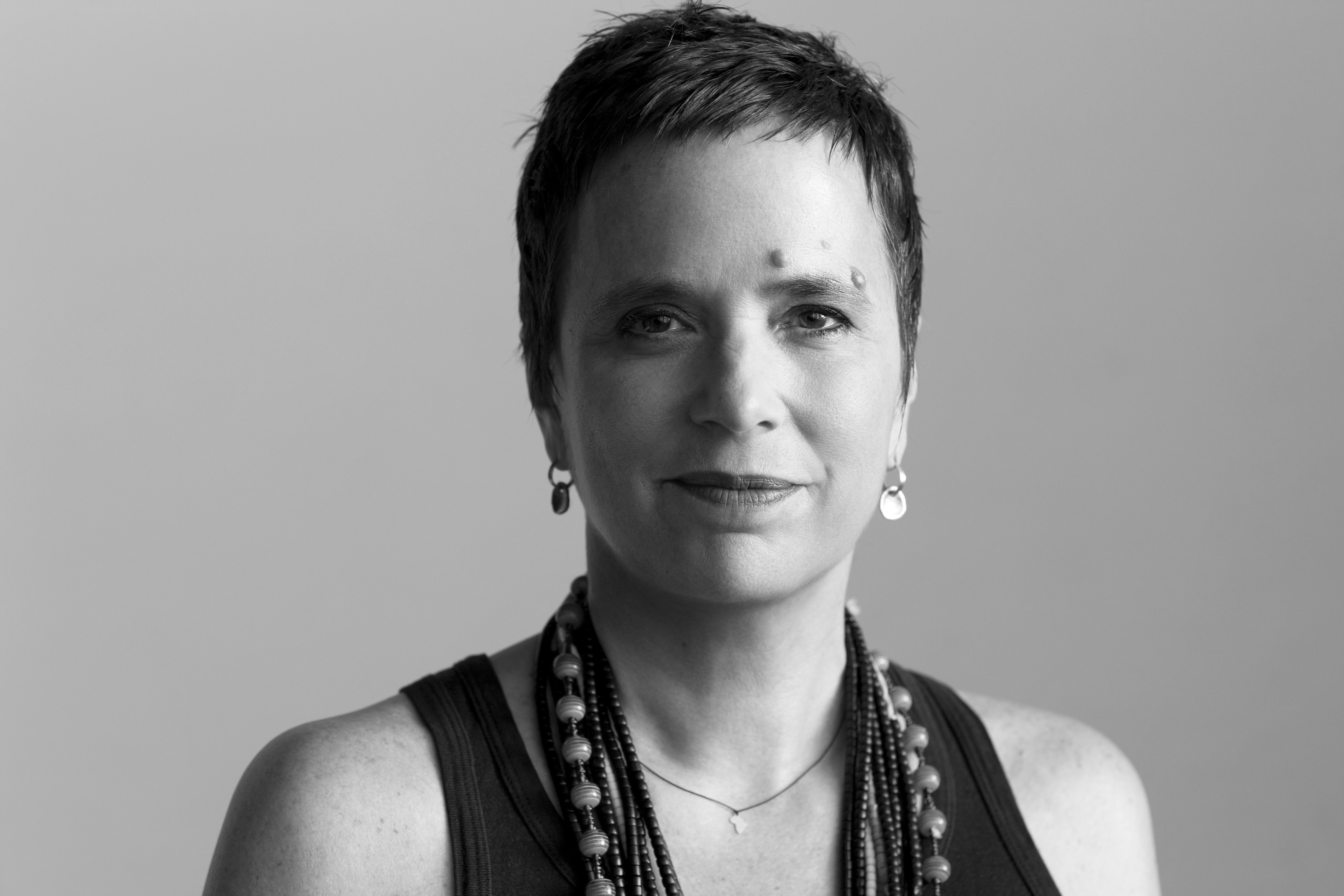
eve-lacombe

Eve Ensler

Eve Ensler, long a tireless advocate of women’s right to live free of violence, observes in a recent article in the Guardian/UK that we live in a global “rape culture,” in which “a girl can be purchased for less than the cost of a mobile phone.”

Or simply taken for nothing, as happened on the bus in India, and then thrown away.

Ensler’s website for her One Billion Rising movement, which will reach its peak on February 14, tells us that “one in three women on the planet will be raped or beaten in her lifetime.”

“One billion women violated is an atrocity.  One billion women dancing is a revolution,” the website continues, urging viewers to “strike, dance and rise in your community to demand an end to violence against women.”

I’m sorry, but I have a hard time getting very enthusiastic about the idea of “dancing” to end violence against women.

I think it’s time for a stronger response.

I’d like to see rapists and assailants of women get a taste of the kind of retributive justice so many of the patriarchal cultures and religions like to mete out to women accused of sexual crimes.

images

Stoning to death.  Cutting off of body parts—noses are popular, but how about we try penises this time?

This is probably why I didn’t want to write about this issue.  I’m too angry.  I can’t sit around and talk rationally about it anymore, like Nick Kristof did in his column today.

Just once, I’d like to indulge my own rage and seriously entertain that favorite approach of the patriarchy: an-eye-for-an-eye retribution.

Touch that woman violently, young man, and you will feel the edge of this razor, right between your legs.

Throw acid in the face of that young bride, kiddo, and you will be ceremoniously dumped in a vat of acid yourself.

Like to jam iron rods up women’s vaginas, Mr. Bus Driver?  How do you like the feel of this one up your ass?

And no, don’t tell me to calm down!  Don’t tell me I’m hysterical!

Women’s rights advocates have been trying for years—for centuries!—to get the leaders of our male-dominated world to treat us with the respect we surely deserve.

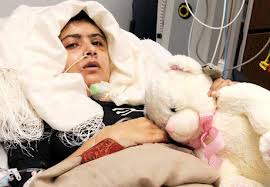
And yet still a brave little Pakistani girl who dares to speak out for the right to education gets shot in the head.

Malala Yousafzai

Malala Yousafzai

High school and college sports stars still think it’s fine and dandy to gang-rape unconscious female classmates.

Women are pushed into the workforce and expected to still do the second shift of housework and childcare at home—and by the way, we’re paid less, too!

The list goes on and on, and sometimes it’s just too much.

Maybe the only way to get real change to happen in short order—in my lifetime, please!—is to give the men responsible for these crimes and inequities a nice taste of their own medicine.

Seeking solidarity in the environmental justice movement

Source: BBC

Source: BBC

It’s hard to wrap my mind around 129 degrees Farenheit, a temperature so hot that meteorologists have had to add a new color to the heat spectrum to represent it.

The pictures coming out of Australia this week have been nightmarish.

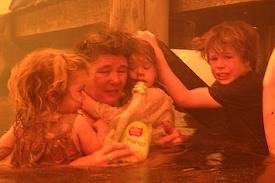
You’ve probably seen them too: the charred sheep, the family taking desperate shelter under a dock while ash and sparks fly around them, the huge red sandstorm wall looming over the ocean.

This is the push-back of Mother Earth.

There is only so far you can push her, and 2012 seems to have been the threshold beyond which there can be no further illusion of business as usual continuing.


Family in Tasmania seek shelter from wildfires

Family in Tasmania seek shelter from wildfires

Even some of the most hard-nose politicians are getting it now: I was heartened to hear Governor Andrew Cuomo of New York speak of the urgent need to plan for climate change disasters in his State of the State speech this week.

But he is still on the fence as far as fracking New York goes, which shows he has yet to fully put two and two together.

Two and two cannot equal two, Mr. Cuomo.

In other words, you can’t continue to expand the fossil fuel industry and not expect the blowback of climate change to worsen.

A lot of people are getting this now.

Not the ones who have their heads so deeply buried in the technology sands that all they can think about is the excitement of the next app, MOOC or tablet.

Not the ones who are riding the current stock market wave to scary new heights, buoyed by who knows what fictitious understanding of the relationships between real people and real goods—referred to in finance-speak as “market shares” and “bundled securities.”

Not the 1%, still sitting comfortably above it all, looking down on the disturbances below like vultures surveying the activities of scurrying mice.

But down here at ground level, people are starting to look at each other and know, even without speaking, not only that things are wrong, but that we cannot rely on others to make it right.

Wildfires are killing thousands of sheep in Australia

Wildfires are killing thousands of sheep in Australia

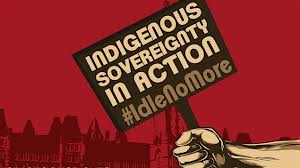
That can be the only explanation for the sudden groundswell of support for the Idle No More movement, which, just like Occupy, tapped into the resistance of ordinary people to the bulldozers of global capitalism, now coming to a forest or a farm field near you.

The lure of short-term gains has led many a politician, businessman, landowner or Native tribe down the daisy path of signing off on legislation and leases giving Big Fossil Fuel the right to do whatever the hell they want.

But we’re wising up now.

Toxic wastes from Texaco-Chevron are poisoning people and animals alike in Ecuador

Toxic wastes from Texaco-Chevron are poisoning people and animals alike in Ecuador

We look at the way Chevron left Ecuador when it was done extracting all the oil it could, and we listen to the story of how relentlessly their lawyers fought against giving even the least amount of their vast profits towards reparations for the toxic environment they created, and we know we could be next.

Now they’re coming right here in the Northeast—in the watersheds of New York and Pennsylvania, buying up those fallow farm fields and bringing in their huge fracking drills.

They’re down in Texas, building the first leg of the proposed transAmerican oil pipeline that will bring the dirty sludge of tar sands oil down to the Gulf of Mexico refineries, crossing over aquifers and farmland, by cities and pristine national parks.

And they’re up in Alberta with their giant bulldozers and dump trucks, razing the fragile boreal forest to get at the oozing tar underneath.

But in all these places, people are stirring.  People are rising in protest.  People are seeing that the short-term gains from these destructive fossil-fuel driven industries are going to quickly burn up, driving the stock market temporarily higher only to set up an even bigger crash in the future; keeping our homes warm and light today, only to set up bigger and worse climate-related disasters down the road.

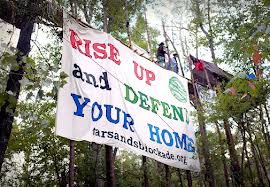
Tree-sitters in Texas

Tree-sitters in Texas

A few brave souls have been sitting in the trees in Texas to block the pipeline, a resistance strategy pioneered in the 1990s when Julia Butterfly Hill sat in Luna, a giant California redwood, for more than a year to keep the loggers from cutting her and her neighbors down.

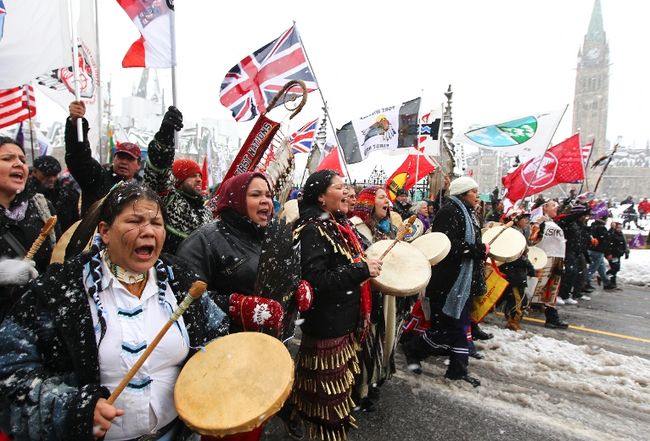
The First Nations are on the march in Canada in a movement that is spreading like wildfire across the world, protesting the poisoning of the environment by the fat cats in boardrooms who arrogantly believe that they exist on another plane, a modern-day Mount Olympus that is impervious to the environmental destabilization they are wreaking on the world.

Students are rolling out an urgent campaign to get their college and university trustees to divest their portfolios from the fossil fuel industry.

Thanks to the World Wide Web, these efforts can be beamed across the globe instantly, refracted and amplified through the networks of hundreds of millions of kindred spirits worldwide.

The dissenting power of the many that Hannah Arendt wrote of back in the late 20th century has never been more powerful, in part because resistance can now take place virtually.

We don’t have to go out and brave the guns and tear-gas, although probably in the end it will have to come to that.

We can build our networks at home, working quietly but steadily until they are so big that to arrest us all would be, as Marx predicted, to undermine the capitalist structure itself—throw all the workers in jail, and who’s going to do the work?

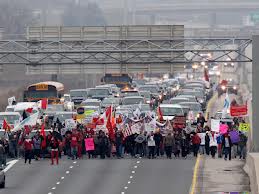
Idle No More protesters on Highway 401 in London, Ont., in December.  THE CANADIAN PRESS/Dave Chidley

Idle No More protesters on Highway 401 in London, Ont., in December.
THE CANADIAN PRESS/Dave Chidley

Right now all of these protest movements are disparate, each working on their own perceived goals.  What I hope to see in the coming year is more solidarity, more recognition that we’re all really fighting the same grand battle to keep our planet from being so devastated that it can no longer support life as we know it.

Life will continue on Earth, there is no doubt of that.  But whether humans, elephants, songbirds and frogs will be able to persist on a super-heated planet is quite uncertain.

It is imperative that we build an unstoppable grassroots movement to prevail on our elected representatives to represent the people rather than the corporations, and do what’s right.

How many catastrophic hurricanes, out-of-control wildfires, drought-stricken fields, bleached out corals will it take before we make use of our power as denizens of the world and say NO MORE?

images-1

Idle No More: Exposing the Suicidal Cult of Global Capitalism

Once again we are seeing how the democratic power of social media can thwart the efforts of the state political apparatus to keep the people in line.

This time it’s happening in Indian Country, beginning in northernmost Canada and spreading like wildfire through social media networks down south and out into the broader world.

The movement is called Idle No More, and it was started by a coalition of four indigenous and non-indigenous women from Saskatchewan—Sylvia McAdam, Jess Gordon, Nina Wilson and Sheelah Mclean—who decided last fall that enough was enough with the steady assault on the environment and protections for First Nations lands in Canada.

Idle No More Founders

Idle No More Founders

Taking specific aim at an omnibus bill in the Canadian Parliament, known as Bill C45, the women began teach-ins and protests around their homes in northern Canada.  Word spread quickly across North America and beyond via social media channels, and a global solidarity movement was born.

Idle No More protest in Toronto last month

Idle No More protest in Toronto last month

According to the Idle No More website, this is what happened:

 Bill C45 brings forward changes specifically to the Indian Act that will lower the threshold of community consent in the designation and surrender process of Indian Reserve Lands. 

Sheelah McLean reminds us that the bill is about everyone.  She says “the changes they are making to the environmental legislation is stunning in terms of the protections it will take away from the bodies of water – rivers and lakes, across the country.”  She further adds, “ how can we not all be concerned about that?”

The Idle No More efforts continued in Alberta with an informational meeting held at the Louis Bull Cree Nation.  The organizer for that event, Tanya Kappo, took to Twitter and Facebook to help generate awareness on the matter as the passage of Bill C45 was imminent. 

Kappo says, “the people in our communities had absolutely no idea what we were facing, no idea what plans Stephen Harper had in store for us.”  The events leading up to the National Day of Action have been focused on bringing awareness to people in First Nations communities and the rest of Canada. 

Jess Gordon says, “The essence of the work we are doing and have been doing will remain a grassroots effort, and will continue to give a forum to the voices of our people.”

When Bill C45 was brought to the House of Commons for a vote, First Nations leaders demonstrated that they are hearing these voices loud and clear.  They joined the efforts against Bill C 45 and went to Parliament Hill where they were invited into the House of Commons by the New Democratic Party. 

However, they were refused entry.  This refusal to allow First Nations leadership to respectfully enter the House of Commons triggered an even greater mobilization of First Nation people across the country. 

Nina Wilson says, “what we saw on Parliament Hill was a true reflection of what the outright disregard the Harper Government has towards First Nation people.”

With the passage of Bill C45, Idle No More has come to symbolize and be the platform to voice the refusal of First Nations people to be ignored any further by any other Canadian government.

Unknown

Yesterday I happened to catch a call-in program on the CBC (Canadian Broadcasting Co.) on the Idle No More protests, which have apparently taken most Canadians by surprise.  The host interviewed a representative of the Canadian environmental protection agency, and it was shameful to listen to the way he sputtered when asking whether the bill in question really would result in damaged waters and fisheries.

Although he refused to come out and say it, the short answer was clearly, “Yes.”

As always, for mainstream politicians and businessmen the lure of short-term profits outweighs longterm planning for the health and welfare of the planet and her denizens.

Some of the callers on the CBC program displayed evident racism in their attitudes towards the Native peoples behind the Idle No More protests, which have blockaded railways and highways in recent weeks, in an effort to gain the attention of the Canadian prime minister, Stephen Harper.

Attawapiskat Chief Theresa Spence

Attawapiskat Chief Theresa Spence

One Native Chief, Theresa Spence, has been on a hunger strike for nearly a month now, her immediate goal simply being an audience with Mr. Harper and a chance to present the First Nations case.  Harper has finally agreed to meet with Spence and other chiefs, on January 11, 2013, one month after she started her hunger strike.

Spence is a controversial figure in this movement, which began with a grassroots coalition and has displayed some reluctance to let the indigenous chiefs steal the thunder.

There have been rumors of corruption among the chiefs, including Spence herself, who has just now, conveniently enough, been subjected to a humiliating government audit of her finances.

It’s not clear whether all the chiefs are truly after the protection of the environment, or if they just want to have their fair share of the economic action when it comes to the rapid development of Canada’s northern territories.

What is clear is that the immense land and resource grab in the Americas, which began with the colonial conquests and has continued to the present day, provides short-term financial gains for the few—mostly non-indigenous corporations and financiers—while the majority of Native peoples languish in poverty, sitting on environmentally devastated lands.

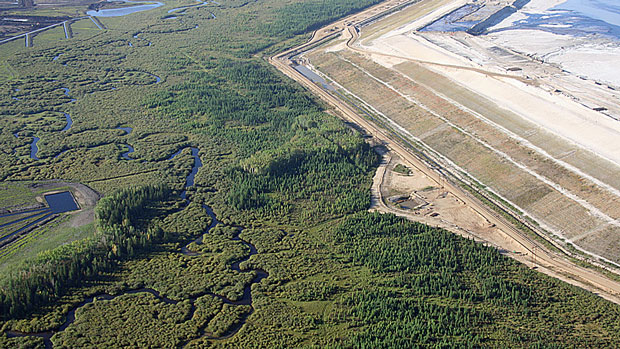
Aerial view of Alberta tar sands development, aka the destruction of the Alberta boreal forest. (Global Forest Watch Canada)

Aerial view of Alberta tar sands development, aka the destruction of the Alberta boreal forest. (Global Forest Watch Canada)

In case after case worldwide, rapacious corporations sweep in, negotiate favorable leases on the land, extract the resources and move on, leaving behind a toxic, degraded landscape and a broken people.

Now we have finally come to the time when it is becoming obvious that the damage that is being wreaked on people and their environments in specific parts of the world is not just “their own problem.”

As the founders of the Idle No More movement correctly perceived, if the waters of Canada are not protected, it will affect all Canadians, not just the First Nations folk who sit closest to those waterways.

If the boreal forests of northern Canada are razed, it will affect the entire planet, just as the steady destruction of the rainforests in the southern latitudes is inexorably destabilizing our climate worldwide.

It appears that our politicians only understand the language of dollars and cents.  In New York and New Jersey now, a serious discussion is underway about how to pay for the cost of adapting to the climate change that almost everyone sees now as inevitable.

Yes, we have to adapt, we have to mitigate the damage by changing the way we develop our coastlines.

But we also have to adapt our mindsets when it comes to “development of natural resources”—a green-washed euphemism for what has really been “the wholesale destruction of the planet.”

This is as true for the destruction of the boreal forests of Canada as it is for the fracking of the Marcellus Shale in the U.S.

If the real costs of this kind of destructive “development” were added up, no sane financier or politician would be able to support such a suicidal undertaking.

If our politicians and business leaders want to commit hari-kari by reckless short-term myopic thinking, good riddance to them.

But they have no right to take the rest of us along with them.

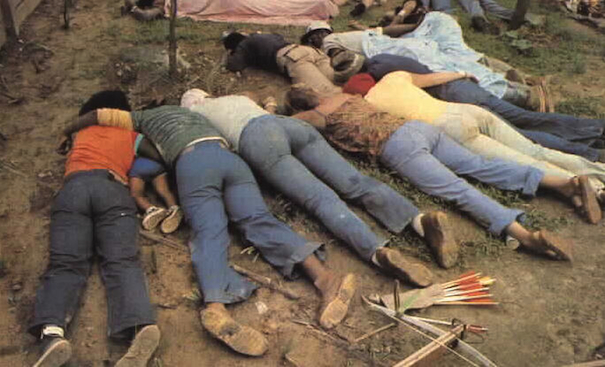
It reminds me of suicide cults like the infamous one in Jonestown, Guyana, in the 1970s.  A whole group of people was so taken in by the charismatic leadership of their guru, Jim Jones, that they obeyed his order to commit ritual suicide.

Victims of the Jonestown suicide cult

Victims of the Jonestown suicide cult

In our case, it’s the entire global capitalist leadership that has us all in thrall. We have been seduced, charmed and entranced by the siren call of “development,” which has given mainstream North Americans—the ones who agree to play by the rules—the benefits of a comfortable lifestyle.

The hidden underbelly of this lifestyle—the environmental destruction, the extermination of thousands of species annually, the annihilation of entire groups of indigenous peoples worldwide, the irrevocable destabilization of our climate—is now coming into view, thanks in large part to the democratization of the media through the World Wide Web.

I continue to believe that when ordinary, good-hearted people understand their own role in this planetary destruction, they will stand up and insist, like the four women who founded Idle No More, that enough is enough.

The question is, how far will we be willing to go to insist that our leaders respect our values and stop dragging us down the road to ruin?

How far will we have to go?

“Never doubt that a small group of thoughtful, committed citizens can change the world. Indeed, it is the only thing that ever has.”

–Margaret Mead

What should we do with our one wild and precious lifetime?

It is the last Full Moon of 2012, but the sky is overcast here, with snow on the way for tomorrow.

Having the moon obscured feels appropriate, as I am searching for a clarity that continually eludes me.

One thing for sure: this is the new normal, me alone with my dog by my side, sipping a quiet glass of wine by the fire, while my sons are out with their girlfriends.

Get used to it, honey!

After 20 years of hardly ever being alone, now it is coming around again, the long quiet hours I remember from my twenties, when I had seemingly endless time to think and read and write.

It saddens me to think of how I spent those hours, poring over the dry tomes of literary critics and deconstructionists, writing my own oh-so-alienated prose in a weak attempt at mimicry.

I wish I had instead been traveling the world in those years, voyaging and adventuring, meeting interesting people and learning new things.

I went as far as Paris and came home attached to a Mexican.

Married to him, I found myself locked into an endless loop of returning to his home in Mexico City year after year.  There I learned first hand about the power of internal colonization; the subtle and not-so-subtle debasement of women in Mexican society; and how to dance, drink and have a superficially good time.

I spent the past 20 years in what seems in retrospect like hard labor, being the primary caretaker in my home as well as—for nine of those years—working two demanding academic jobs.

Now my second job is gone, eliminated by state budget cuts, and one of my sons is almost launched, having gotten his B.A. last spring and moved to Florida for a job.

I am at the threshold of a new period in my life, and this time, knowing how short and precious a lifetime really is, I want to be more intentional–to make the best use of my time.

That is where I am seeking clarity.  What do I want to be doing with my one wild and precious life?

Where should I be putting my energies? What do I have to give? What do I want to be doing with my time?

In the current issue of Orion Magazine, the environmental writer Paul Kingsnorth asks this question too, and provides some answers that I find useful as pointers for myself.

After discussing how likely it is that we are on the cusp of civilizational and ecological collapse, he asks, “what, at this moment in history, would not be a waste of my time?”

His answers are fivefold: 1) Withdraw; 2) Preserve nonhuman life; 3) Insist that nature has a value beyond human utility, and proclaim this loudly to all and sundry; 4) Build refuges; 5) Get your hands into the earth.

This sounds like tremendously good advice to me.  I am especially glad to be reassured that my current retreat into solitary, meditative reflection is not a cop-out, but a necessary stage in the life-cycle of the bodhisattva for the planet that I want to become.

“Withdraw not with cynicism, but with a questing mind.  Withdraw so that you can allow yourself to sit back quietly and feel, intuit, work out what is right for you and what nature might need from you….Withdraw because action is not always more effective than inaction.  Withdraw to examine your worldview: the cosmology, the paradigm, the assumptions, the direction of travel.  All real change starts with withdrawal,” Kingsnorth says.

Preserving non-human life, and proclaiming its inherent value…well, I can try, within my sphere, but let’s face it, the very fact that I type these words on an Apple laptop with my refrigerator whirring quietly in the background means that I am part of the problem.

As Paul Kingsnorth knows and has expressed eloquently, there is nothing any one of us can do that will change the fate of the 200 species that go extinct every day on our planet.

Even if we come together collectively, it will be very hard, maybe impossible, to stop the juggernaut of climate change now.

That’s why the idea of building refuges and relearning off-the-grid skills makes a lot of sense to me.

UnknownI have a persistent vision of building a kind of hobbit-house in the side of a hill, off the grid and sheltered from the coming storms, in the company of others who share my dream of resilience.

It is not for nothing that JRR Tolkien’s classic The Hobbit and The Lord of the Rings are more popular than ever in these opening years of the 21st century.

We are engaged in an epic struggle once again, faced with the spread of a Mordor-esque wasteland over the entire planet.

Will those of us who share the ethos of hobbits, elves and dwarfs be able to save the day?

Will enough of our contemporary wizards—scientists, they call themselves now—weigh in on the side of life and health rather than the oppressive bondage of the capitalist technocracy?

In Tolkien’s novel, Evil comes even to the sheltered little Shire, but is vanquished in the end by the forces of Good.

That is how the stories we like to tell each other go.  It remains to be seen whether reality, this time, will follow this “happily-ever-after” fairytale motif.

I don’t know how it will all end. But I do know that in these dark months of winter, when even the bright full moon is obscured, it feels right to be retreating within to reflect on how best to pursue the struggle in the coming years.

Unknown-2

Be the change 2012

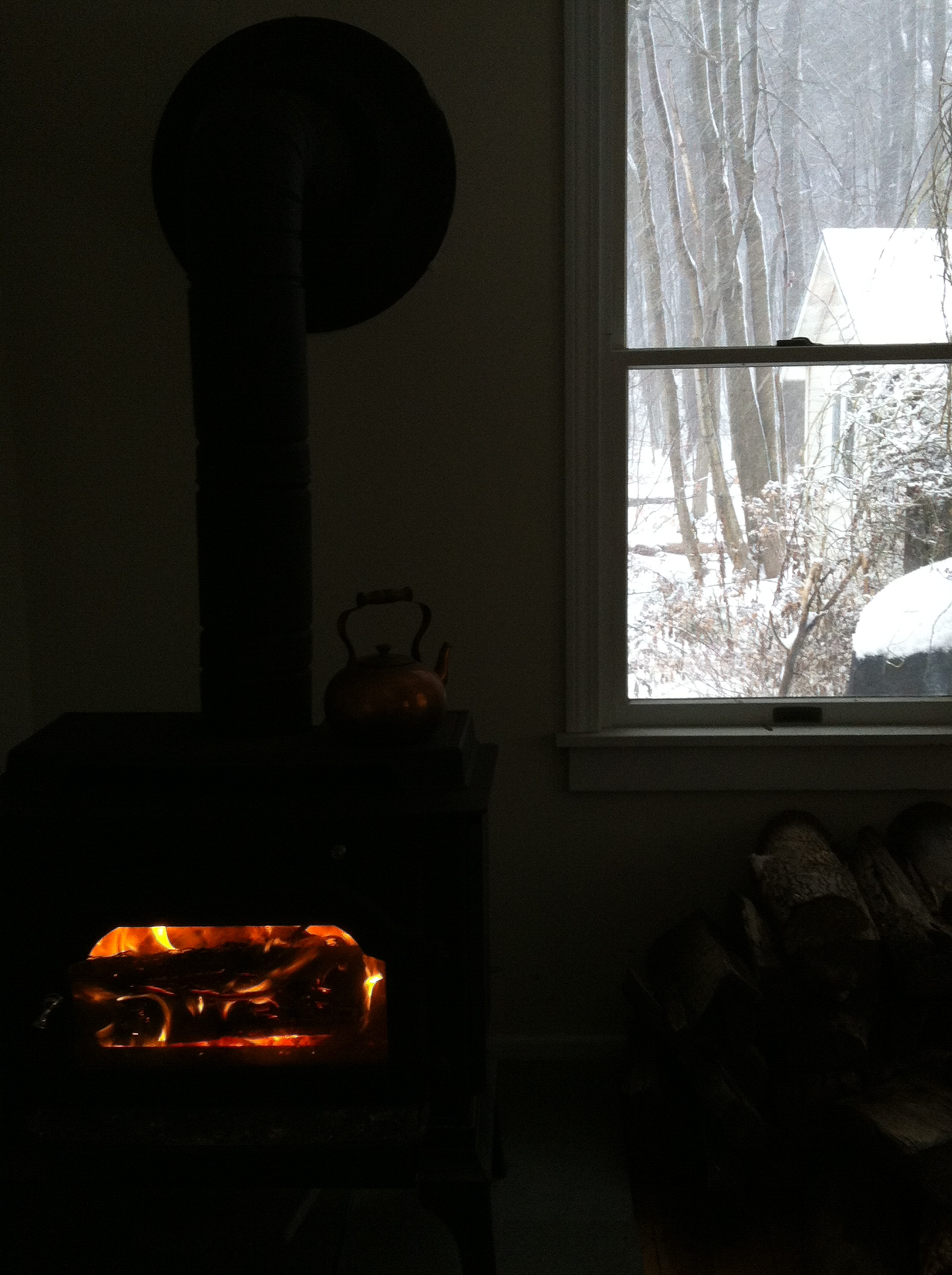
IMG_1102It is a dark, cold, winter’s morning, gray with a pelting mixture of sleet and freezing rain that has even the birds huddling for shelter in the thickest fir trees they can find.

I’ve just gotten up, lit the fire and the lights on the Christmas tree, made myself a cup of strong coffee, and thought to myself: where do I put my focus?

If I focus on the warmth and coziness inside the house right now, this seems like a wonderful morning, a perfect opportunity to curl up on the couch and make some progress on grading the papers students turned in to me before they left for the holidays.

If I focus on the sleet and wind outside, and begin to fixate on the way the trees are blowing around the icy power wires, I feel threatened, rather than protected, and start to worry in advance about whether or not I’ll be losing power later today.  Should I rush to take my shower and do some cooking before the power goes out?

Small dilemmas, and yet in the daily crucible of making these choices w of how to focus our attention, a lifelong habit is born of seeing the glass half-empty or half-full.

I must recognize that I have a tendency to see the glass half-empty.

I was a fearful, cautious, worrying sort of child, and I have not changed much as an adult.

In today’s age of aggravated climate change, random violence and the immediate potential for it all getting a whole lot worse in the near future, this attitude can make for a great deal of depression and anxiety.

But does it have to be that way?

Back in the 1980s, I spent a fair amount of time listening to recordings of Esther Hicks channeling the group of spiritual beings who called themselves Abraham.  The crux of their advice for us humans is to focus on what you want, with as much intensity and lavish detail as you can muster, and watch the Universe deliver it to you.

“You can have anything you want, if you exercise the Law of Attraction and call it to you,” Abraham would say over and over and over.

This idea has been picked up and popularized by others as well, and it is guaranteed to appeal to our can-do, feel-good American society.

We want to believe that we have the power to improve our lives, and it seems to happen often enough to keep the belief going.

But I always wondered, and wanted to ask Abraham, what about the people who were having terrible life experiences?  Did they “attract” these horrible situations to themselves too?

Did the 20 children who died in Newtown “attract” their destiny?

I cannot believe that they did.

It could be, however, that the killer’s vision was so strong that he was able to enact it, to make it come true.  Maybe he did what Abraham suggests, and replayed over and over again in his mind the details of what he wanted to do, until it was so well-thought-out and planned that he was able to unroll it in reality with no problem at all.

We need to pay more attention to the power of the human mind to affect reality.

It happens on an individual level, as when I can transform this gray, nasty morning into a warm, cozy one just by focusing on the peaceful interior of my house rather than the storm raging outside.

Focus on the outside

Focus on the outside

Focus on the inside

Focus on the inside

And it happens on a societal level, as when so many of us feel unsafe that we all start buying handguns and assault weapons, with the result that our feeling of peril becomes a self-fulfilling prophecy: with all those weapons circulating among our neighbors, we really are unsafe.

If we all settle into the mindset, amply seeded by the steady beat of the sci fi/disaster movies that have come out in the past decade, that the Earth is doomed and we are doomed with her, we will collectively give in to despair and simply go about business as usual while waiting passively for the end to come.

On the other hand, if we begin to collectively dream an alternative future, one based on respect for the Earth and respectful stewardship of her life systems, it is still possible that we may be able to manifest this positive vision.

The popular author Don Miguel Ruiz, whose book The Four Agreements has sold millions of copies worldwide, ends a recent interview by asserting that “We all came into this beautiful planet with a mission. The only mission, and it’s the same for every single human that we have on this beautiful planet earth, is to make ourselves happy.”

The only way I could agree with that principle of the human mission on Earth is if it is understood that we cannot be happy on an unhappy planet.

In other words, it is impossible for us to achieve real happiness when the dominant paradigm of human existence on the planet is based on oppression, suffering and violent destruction.

We may be able to achieve temporary “highs,” shelters in the storms of our lives, but real abiding happiness will elude us, at least those of us with enough sensitivity to be aware of the suffering always going on beneath the surface.

Events like the Newtown massacre break through the veneer of our superficially happy existence, here in the comfortable USA, and send many of us spiraling into depression.

And not just folks like me, who are habitually attuned to the malheur of life, but many more of us, who suddenly wake up and ask Why?

Why did this senseless massacre happen?

Perhaps it happened to remind us of the daily massacres of innocent wild creatures and feedlot animals, lab animals and vast flocks of birds, tons of fish in the sea and endless miles of coral and forest, all going down in a relentless bloodbath of human making.

Perhaps it happened to remind us of the children who are being trafficked into sex slavery or forced labor every day, of the children dying daily of hunger and preventable diseases, of the wasted lives of children whose poor-quality early education dooms them to lives of struggle and want.

When great tragedy strikes, survivors have a tendency to affirm to each other, Let their sacrifice not have been in vain. Let us learn from what happened and vow never to let it happen again.

Hence, in the wake of Newtown, the great outcry for better gun control laws, which may indeed, finally, be enacted in the coming year.

Abraham would say that you have to know what you don’t want in order to get clear on what you do want.

But the emphasis has to be on the positive; on building the vision, both personal and collective, of what we want for our society and our future.

We do not want an America where any random psychopath can get ahold of an assault weapon and wreak havoc in the neighborhood school or mall.

We do not want a lifestyle based on unsustainable consumption, oppression and callous disregard for the welfare of other living beings.

Now: what do we want?

We must get clear on our positive vision for a just and sustainable human civilization on our beloved planet, and then do the work of dreaming it into reality, day by day.

We must be intentional in where we focus our attention, not to ignore negative realities, but in order to put the power of our creative energies to work in manifesting the world we want to see.

In other words, as Gandhi said, be the change you want to see in the world, starting with your own thoughts and radiating outward.

Be the change.

IMG_1083

Dancing in the end times

And so here we find ourselves, finally, on the cusp of a great turning in solar time, the fabled 12-21-12.  It is a dark, wet, windy, wild morning here in the hills of western Massachusetts.

Since I started this blog back in the summer of 2011, with the optimistic URL “bethechange2012,” I have found many others who have beckoned to me like beacons of strength and inspiration on my somewhat lonely path of inquiry and discovery.

In the early days of Transition Times my own light was quite tentative and often overwhelmed with fear and distress, the product of my dawning realization of the tremendous gravity of the situation in which we find ourselves.

We cannot pretend to each other that the news is good for humanity, any more than for the rest of the living beings on the planet.

These are the transition times: the end of a long era of existence, as the ancient Mayan shamans rightly foresaw, and the beginning of something new.

I cannot and will not shy away from diving into the heart of the wreck that is our human civilization on this planet in the early 21st century.  Exposing what I find there is part of my mission with this blog.

However, it is also my purpose to be a channel and a beacon of hope for others who are searching for  meaning in these troubled times we live in.

We are all caught up in a vortex much greater than any individuals among us could produce, an accelerating forward surge that is hurtling humanity, and the planet we share with so many other life forms, towards a new era.

We cannot know what this means for each of us as individuals.  But I am coming to realize that the most important thing we can be doing in these transition times is to serve each other, and the other beings on the planet, as a form of shelter and anchor in the storm.

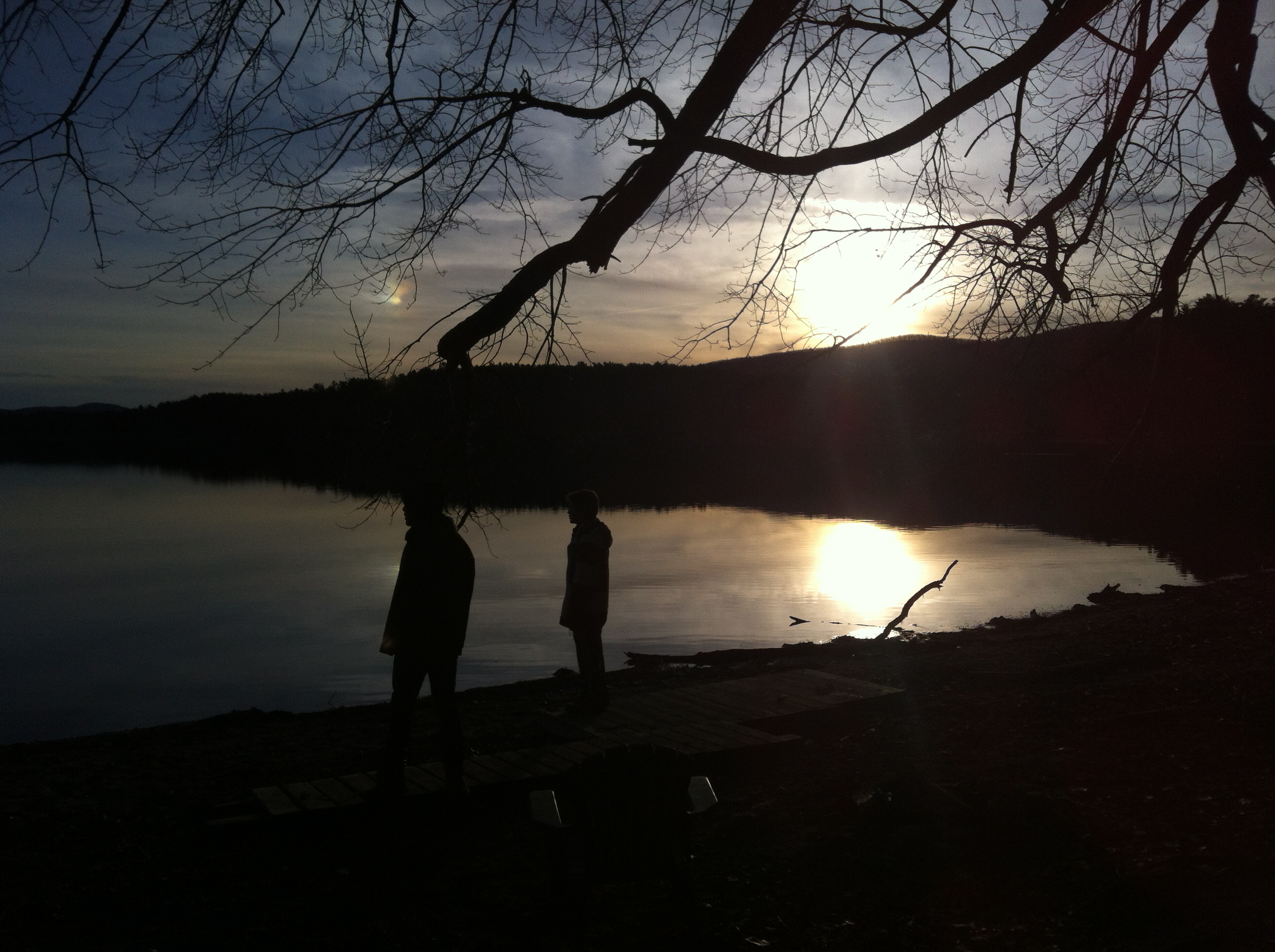
I will close with an image taken on one of my many thoughtful rambles over the past few months.  To me it represents the planet calling to me, and to all of us who love her, to continue to push back against the forces that would despoil and blight her.

The rocks, earth and waters of the Earth remind us that geological time is slow and very, very long.  Our dance on the planet as humans is so brief.  Let us enjoy our time here passionately, and turn our dancing to good works.

Benedict Pond, Monterey, November 2012

Benedict Pond, Monterey MA, November 2012