Looking Forward with Orion Magazine

The spirit of Henry David Thoreau was in the air last week at a gathering at his old stomping grounds at the top of Mount Greylock, the tallest mountain in Massachusetts, hosted by Orion Magazine to celebrate the launch of its new anthology, The Thirty Year Plan.

Keynote speakers at the event were Orion contributing writers Ginger Strand, Elizabeth Kolbert and Bill McKibben, all of whom seemed to have a common concern on their minds as they looked into the future: climate change.

Thoreau’s legacy of using writing as a vehicle for civil disobedience is a mantle that all three writers have already assumed, particularly McKibben, who is very much following in Thoreau’s footsteps in going beyond simply writing about activism to actually standing at the forefront of a growing activist movement.

Characteristically, McKibben wasted no time in reminding his listeners that it’s high time for decisive action in the quest to transition our global economy off fossil fuels.

“It’s not enough to go around changing lightbulbs or even buying hybrid vehicles,” he said.  “Individual change won’t do it, the math doesn’t add up.  We have to change the price of carbon to reflect its true cost to our environment.

“We will never be able to match ExxonMobil and the other fossil fuel corporations in money, but we do have people power, and we have to use it.  A lot of you are going to have to come down to Washington DC and get arrested with me!” he said to applause.

McKibben also suggested using the shareholder pressure that was successfully applied against apartheid in South Africa back in the 1980s, but this time putting pressure on the fossil fuel industry to reinvent itself as a renewable energy industry based on wind, solar, hydropower and geothermal.
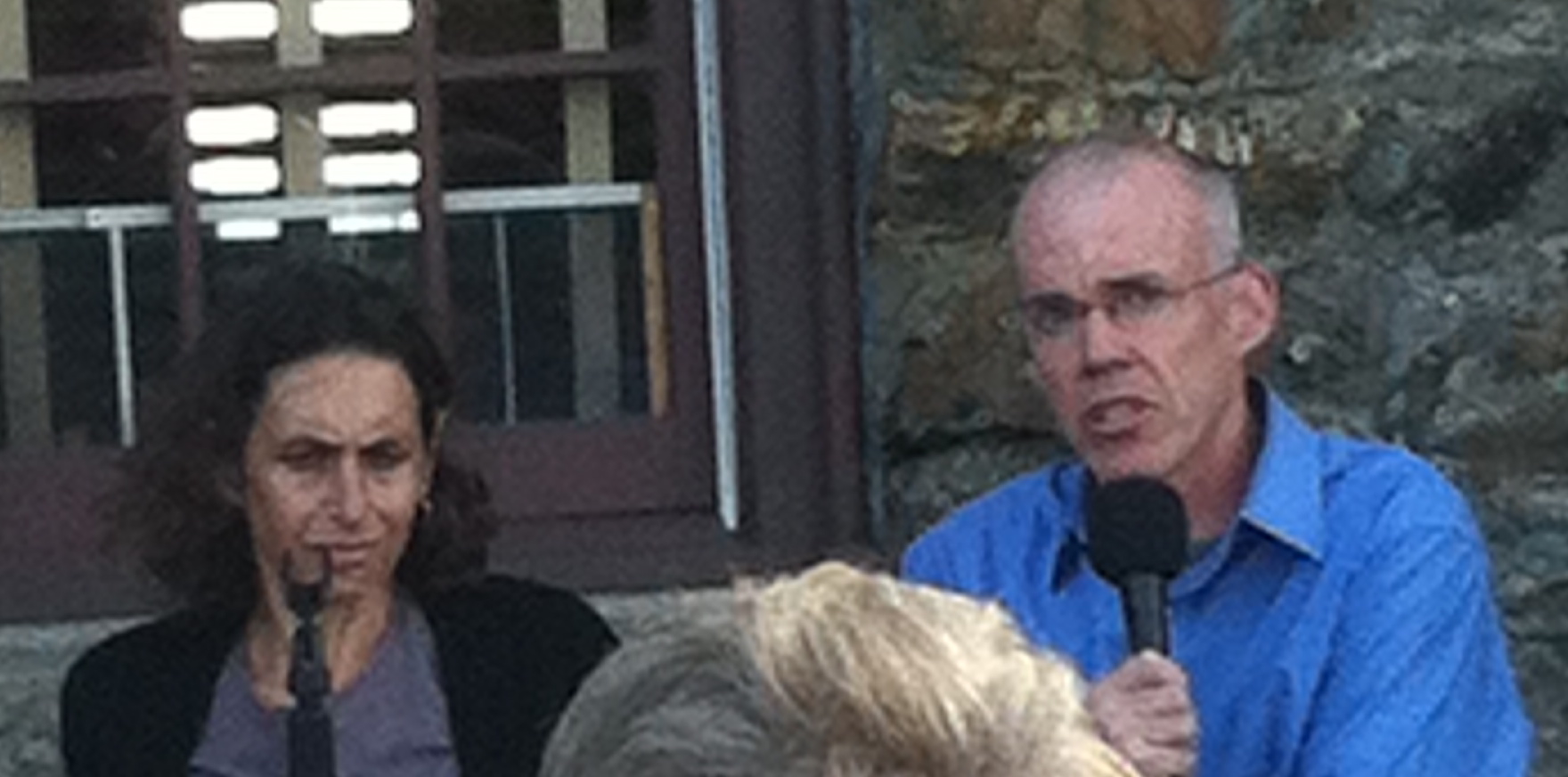
Elizabeth Kolbert and Bill McKibben speaking at Bascom Lodge, Mount Greylock, mA

The Beauty of Renewable Power

 From the top of Mount Greylock there is a striking view of eight huge spinning wind turbines on a ridge not far away, over by Jiminy Peak.  Wind power has become controversial in New England, with some towns and neighborhoods arguing vociferously against the location of wind turbines in their backyards.

In Massachusetts there has been great opposition to the proposal to build a windfarm out in Nantucket Sound, and here in the Berkshire hills we have also had many people of the NIMBY mindset.

When asked to comment on the prospect of wind turbines being set up on mountaintops in wilderness areas, Bill McKibben was unequivocal.

“I love the wilderness as much as anyone, and I’ve spent a lot of time out in the Adirondacks, as far away from it all as you can get.  But I’d have absolutely no problem with a wind turbine being set up overlooking my favorite patch of forest,” he said.

“The real threat to the places we love is fossil fuels, not wind towers,” McKibben said, adding that he has little sympathy for Americans who complain about wind towers being unattractive.

“Our sense of what’s beautiful is going to have to change,” he said.  Wind turbines located in Vermont or Massachusetts force people living in these exclusive areas to see the results of our impact on the climate, McKibben said, unlike our usual practice of making people in other parts of the planet—the Maldives, or Bangladesh, or the mountaintops of Virginia, for example—do all the suffering.

Emphasizing that the technology already exists to shift to renewable energy, McKibben pointed to the fact that Germany is already breaking records with its distributed solar energy model.

In May, German solar plants produced a record 22 gigawatts of electricity in two days, equal to the output of 20 nuclear power plants.

According to a recent Reuters article, “Germany has nearly as much installed solar power generation capacity as the rest of the world combined and gets about four percent of its overall annual electricity needs from the sun alone. It aims to cut its greenhouse gas emissions by 40 percent from 1990 levels by 2020.”
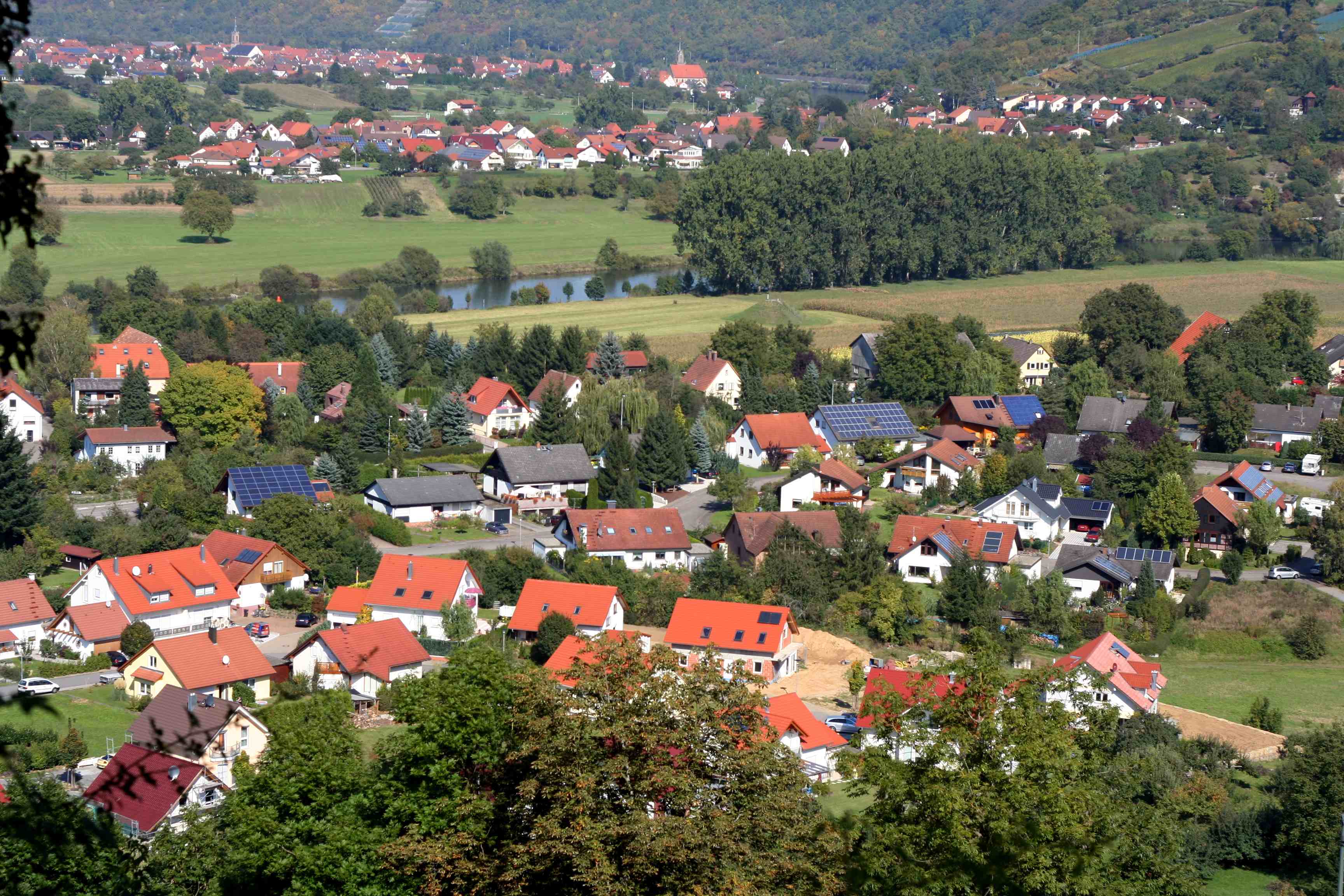
Solar panels sprout on roofs in Heidelberg, Germany

The Challenge of Getting People’s Attention

The contributors to the Orion Thirty Year Plan vision agree that the challenges we face in getting off fossil fuels are much more socio-political than they are technical.

One of the questions that remains intractable is how to get the public fully engaged with the issue of climate change, so that more people are willing to try Thoreau-style civil disobedience to force the politicians to do the right thing when it comes to regulating Big Oil—ending the subsidies on fossil fuels and giving incentives for the shift to renewable energy sources.

Elizabeth Kolbert said she was perplexed at the fact that she got a far greater response to a recent New Yorker article on child rearing than she generally gets on her much longer, more meticulously researched pieces on global heating.

“It’s something I think about a lot,” Kolbert said; “how to get people as interested in climate change as they are in raising their kids.”

Kolbert agreed with writers like Mark Hertsgaard, who suggested in his book Hot: Living Through the Next Fifty Years on Earth that it’s pathological to do the kind of intensive parenting Americans are known for while at the same time ignoring the biggest danger of all looming over our kids and grandkids: anthropogenic global warming.

Sunset from Mount Greylock

As the sun began its spectacular descent towards the west side of the Greylock summit, and the assembled group went in to dinner and animated discussion at Bascom Lodge, it seemed to me that our charge was clear: to join leaders like Kolbert and McKibben in becoming change agents in our own spheres and out in the public eye.  We need to build a movement with a broad enough base of committed supporters to seriously challenge the entrenched power of the fossil fuel industry, as well as the massive inertia of the American public, which still has a tendency to imagine that life as we knew it growing up can go on for the next thirty years virtually unchanged.

Life will go on, with or without us humans.  But the story of our species does not have to end in disaster.  There is still time to write a new ending to our 10,000-year adventure on this planet, if we get up the courage and the dedication to get moving now.

Governor Deval Patrick of MA Gives Exclusive Interview on WBCR-LP

How cool is it to have the Governor of Massachusetts stop by the small offices of WBCR-LP, Berkshire Community Radio in Great Barrington to give a one-on-two interview with local amateur radio show hosts Graham and Barbara Dean?

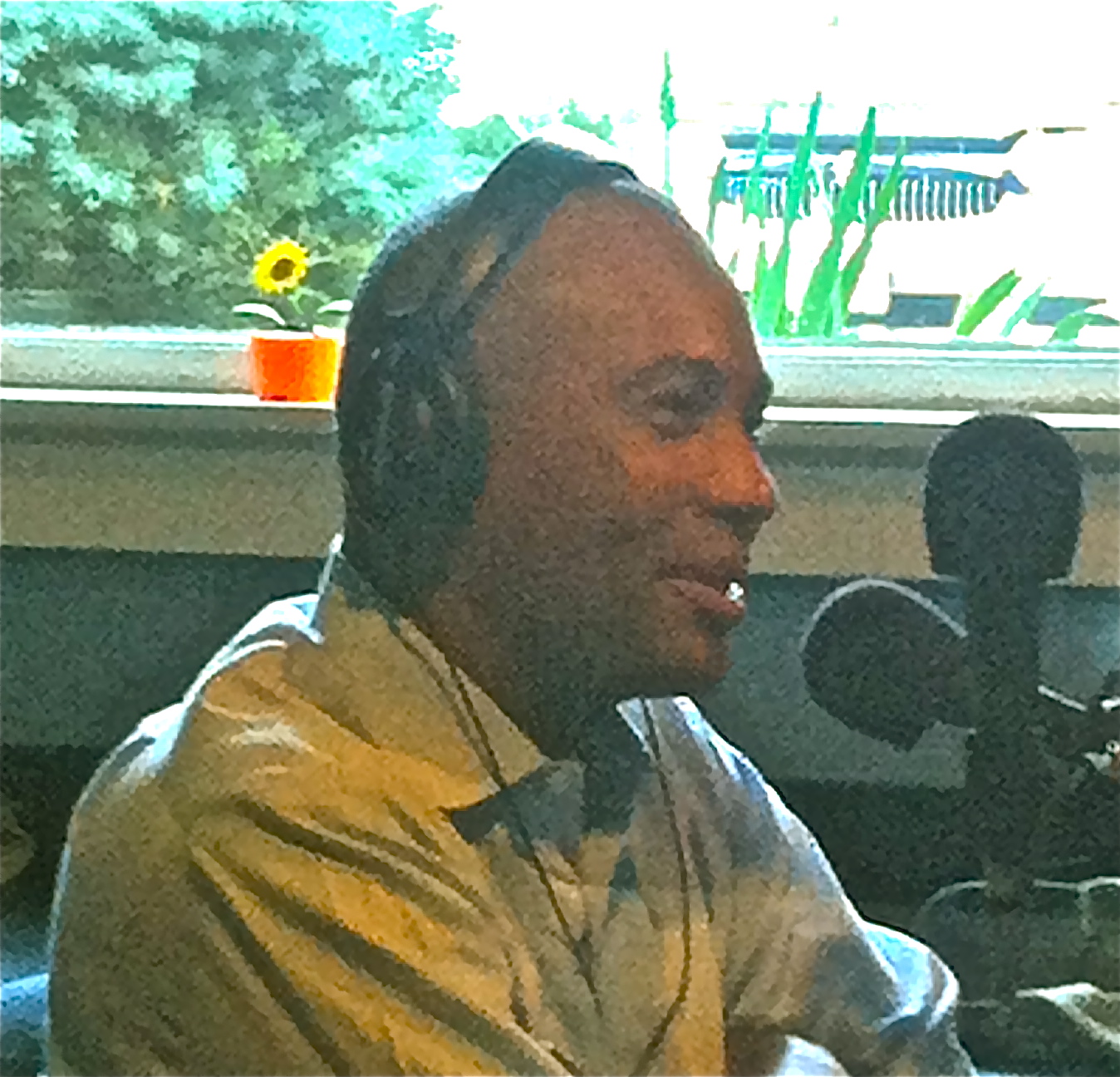
Governor Deval Patrick takes questions from Graham and Barbara Dean in the studio of WBCR-LP FM on July 3, 2012

It was citizen journalism at its finest.  Barbara, having met Governor Deval Patrick at another event, simply asked him if he would be a guest on her radio show.

He said sure, she followed up with his staff, and the rest is history!

The half-hour interview will be rebroadcast and streamed on July 11 on the Deans’ show, Common Sense Songs, between 8 and 10 p.m.

The Governor had a lot to say about the hot topics of health care affordability, education, and labor relations.

Calling himself a “labor man,” because of his childhood experience of how his mother’s life improved dramatically when she got a job at the U.S. Postal Service and joined the union, the Governor was also positive about teachers and their union, saying that the secret to an effective partnership with teachers is “respect.”

Lots of politicians talk about respecting teachers, but their actions say otherwise.

Massachusetts Governor Deval Patrick at WBCR-LP, Great Barrington

Governor Patrick seems to be different.

Under his leadership, new emphasis has been put on “bringing a culture of innovation into every school” by empowering and supporting teachers who have new ideas about how best to meet the needs of their students.

“The question is, how do we tailor education to meet kids where they are,” the Governor said, recalling his own “great public education on the South Side of Chicago.  I had inspiring teachers, who loved me and loved teaching and were thinking about educating the whole child.”

He also talked about the importance of focusing on the “whole person” when it comes to health care, and he was justifiably proud of his record in making Massachusetts one of the most progressive states in the country in terms of health care reform.

“Rather than limiting ourselves to the usual choice between doing nothing and going all the way to a single payer system, we made a decision here in Massachusetts to pick a third option, a hybrid, private, market-focused solution in which we require everyone to buy insurance, but we subsidize them if they can’t afford it,” he said.

Under the Governor’s leadership, premium growth in the state has gone from 16% per year to less than 1% increase in the past year.

It made me proud to be a citizen of Massachusetts to watch Governor Deval Patrick taking the time to give a serious, thoughtful interview on our hometown low-power radio station.

As Barbara Dean reminded the Governor at the outset of the interview, he is only the fourth African American to be elected Governor of an American state.

I am glad to be among the many who gave him my vote, and I rest easier knowing he is on the job in Boston, working for ordinary people like me.

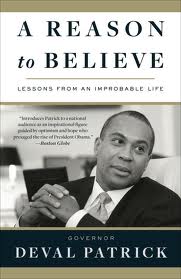
Deval Patrick just published a memoir, Reason to Believe: Lessons from an Improbable Life, and an e-book, Faith in the Dream: A Call to the Nation to Reclaim American Values.  Youthful politicians who publish memoirs often have their eye on moving up the political ladder.

I hope that Patrick has the stamina and courage to keep moving on and up in American politics.  We need more strong men like him to come forward and stand for integrity and social justice in American politics.


What Good is a Higgs Boson When the Planet is Burning?

Call me sour, but I really can’t find much to get excited about by the news that physicists have moved one step closer to figuring out how the universe began.

Yes, the Higgs Boson is an amazing phenomenon.  “Without it,” writes Dennis Overbye in The New York Times, “all the elementary forms of matter would zoom around at the speed of light, flowing through our hands like moonlight. There would be neither atoms nor life.”

Yes, it’s an amazing feat, to which hundreds of scientists have dedicated their lives, to have actually nailed the elusive Higgs Boson in the giant particle accelerator built for that purpose.

But while the champagne corks are popping at the physicists’ convention in Melbourne Australia today, all the myriad problems confronting us physical beings still fester unchecked.

What good will it do us to understand how matter formed back at the beginning of the universe while we are succumbing to drought, wildfires, violent storms and floods?

What good will that marvelous particle accelerator do us when the climate is so disrupted that we can no longer rely on a steady stream of electricity, or a steady food supply to keep us going?

We really need all those super-smart people to pull their heads out of the air and start focusing much closer to our own time and place.

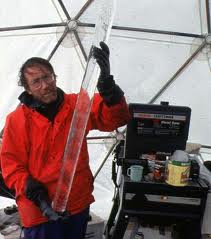
We need more scientists like Lonnie Thompson, who has spent the past forty years traveling to remote glaciers and mountain peaks all over the world to collect ice core samples that give us insight into climate change in the much more recent past—the last 10,000 years or so.

“Dr. Thompson,” writes Justin Gillis in The New York Times, “became one of the first scientists to witness and record a broad global melting of land ice. And his ice cores proved that this sudden, coordinated melting had no parallel, at least not in the last several thousand years.

“To some climate scientists, the Thompson ice core record became the most convincing piece of evidence that the rapid planetary warming now going on was a result of a rise in greenhouse gases caused by human activity.”

Do we really need any more convincing?

The latest storms to hit the U.S. struck the wealthy suburbs of Washington D.C., and surprise surprise, those Beltway folks were just as susceptible to power loss as the rest of us out in the hinterlands.  Forced to cope with triple-digit heat with no air conditioners, their sweat smells no sweeter than ours.

Likewise, the wildfires out West are burning up the homes of the wealthy as fast as they’re burning the millions of acres of dead trees decimated by the surge in the pine bark beetle population, another gift of warmer weather.

Wealth is not going to protect us from climate change.

Abstract particle physics is not going to mean a damn once the extreme weather really sets in, just a few short years from now at our current pace of greenhouse gas emissions.

We have the technology now to engineer a rapid shift to renewable energy sources that will immediately curb the pace of global heating to keep our planet livable.

If the greatest minds of our time trained their attention on this fundamental issue, I have absolutely no doubt that we could solve it.

And if the rest of us not only went along with the technological changes, but actively pressured our political representatives to enact policies that would force big business to do the same, worldwide, we could make sure that the new technology was broadly implemented, quickly.

Hell, it will be good for business! We are potentially at the start of a whole new age, where demand for brand new products like solar panels and geothermal pumps could keep factories running for decades.

We don’t need any more oil rigs or gas wells.  That way lies suicide, on a species-wide scale.

We cannot afford to waste any more time, or to allow ourselves to be distracted by anything less important than the urgent question of survival—our own, and that of all the beautiful life forms on this planet we love.

Having it all: my own story

Jennifer Browdy de Hernandez

Today marks a milestone for me professionally: 18 years after earning my doctorate in Comparative Literature, after a demanding year-long evaluation process, I have finally been granted a ten-year contract, the closest thing to tenure at my institution.

Why did it take me so long, despite the fact that I had all the requisite publishing and service work and teaching excellence?

Two reasons.

One, I stepped off the tenure track right out of grad school to prioritize the needs of my two sons, the first born two years before I finished my Ph.D., the second six years later.   I chose to work part-time in those early parenting years, not realizing how hard it would be to get back on the fulltime track.

Two, once it became apparent to me that simply moving from part-time to fulltime at my home institution would be difficult, I accepted a lucrative lecturer position at a nearby state university, and did both—two-thirds time at the small liberal arts college, half time at the university—for nine years, while also raising my sons, publishing two edited collections, and directing various major conferences.

Last year the state funding dried up so I lost my second job; and at the same time I finally got a green light to go for that ten-year contract at my primary institution.

It’s still officially only two-thirds time, a fact that may surprise many who work with me, as I have actually taught fulltime every semester for the past three years, and often in the years before that, in addition to carrying a more than full load of committee and service work of all kinds.

If I were a man, would things be different?

Yes, I think so. I would probably have let my kids’ mother make the professional sacrifices, allowing me to go full throttle towards a tenure track position right out of grad school.  As a man, I would probably have been a better negotiator, able to make a persuasive case for why I should be earning a fulltime salary for the important work I put in for my institution.  I might have spent less time cooking dinners and reading bedtime stories, and more time writing that Important Book.

I don’t want this to be true.  I want parents of both genders to be equally likely to intensively parent, write great books or play the cut-throat negotiator.

But in my own case, I know that my gender did matter.  I was raised by a mother who put her parenting role first, and a father who focused primarily on professional success.  Put together, they made for a stellar parenting team.  But I certainly did absorb the gendered messages from them: a mother’s first obligation is to her children, while fathers are out bringing home the bacon.

The problem is that I have needed to be both mother and father to my children, in the sense of parenting AND bringing home the bacon, and there are only so many hours in the day, only so much of me to go around.

I feel fortunate to have chosen a field that gave me enough flex-time to approach something like “having it all”: doing a good job at home as well as at work.  I do not take it for granted, and firmly believe that this precious scenario should be the norm rather than the exception–for the health of our kids, their parents and our society as a whole.

Work-life balance is not just a women’s issue

Anne Marie Slaughter

I decided to bite my tongue and wait to see the reaction to the recent Atlantic Monthly cover story by Anne Marie Slaughter on women and the work-life balance—I knew as soon as I started reading it that it would set off a firestorm of commentary, and I have not been disappointed.

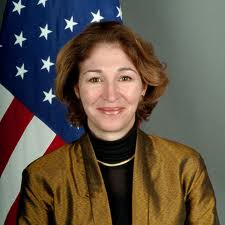
Slaughter, in case you have not been following this story, is a Princeton University professor and dean, who was drafted into the State Department by Hillary Clinton and worked there for two stressful years.  She wrote the article after returning to the snug harbor of Princeton, where, thanks to the flex time allowed by the higher ranks of academia, she is far better able to manage her professional and family commitments.

Slaughter’s main point in writing seems to be that our society needs to adapt itself better to the needs of working women. She calls for more women to get into leadership positions in business and government, and make workplace and policy changes that will make parenting and working outside the home more manageable.

Lori Gottleib, in a blog post on the Atlantic site, has little patience for Slaughter’s hand-wringing over the travails of long hours outside the home.

“The real problem here isn’t about women and their options,” she says. “The real problem is that technology has made it possible to work 24/7, so that the boundary between work and our personal lives has disappeared. Our cubicles are in our pockets, at the dinner table, next to our beds and even next to our children’s beds as we’re tucking them in. In many households, one income isn’t enough, and both men and women have to work long hours — longer hours than ever before — to make ends meet…. The problem here is that many people work too much — not just women, and not just parents.”

Hallelujah and amen to that, Lori!

For myself, I know the only way I can give myself some true down time is to get myself to a place where there is no wireless and no way to plug in my computer—ie, camping, hiking or at the beach—although even there I’ve caught myself using my iPhone to check messages or text people on the fly.  It’s been years—YEARS—since I’ve been unplugged for more than a day.

I can imagine a scenario where our society benevolently decides to use technology to allow more people to work from home, which will make things easier for parents in some ways, but will result in all of us becoming wired-in cogs in the capitalist machine, never really getting any time to ourselves unless we are able to set our own firm boundaries, something that most of us have trouble doing.

I agree with Professor Slaughter that family-friendly workplace policies are needed. I especially appreciated her anecdote about how when she was Dean at Princeton she always made a point of announcing at faculty meetings that she had to go home to have dinner with her family, to give other women permission to do the same without guilt or embarrassment.

But I share Lori Gottlieb’s sense that for most of us parents, the pressures of making a living are simply getting to be inhuman.

At the Strategies for a New Economy conference I attended a few weeks ago, several sessions dealt with the possibility of transitioning to a shorter work week.  This was the focus of a 2010 report by the New Economics Foundation, which argues for a 21-hour work week.  “There is nothing natural or inevitable about what’s considered ‘normal’” working hours today,” the authors write. “Time, like work, has become commodified – a recent legacy of industrial capitalism. Yet the logic of industrial time is out of step with today’s conditions, where instant communications and mobile technologies bring new risks and pressures, as well as opportunities. The challenge is to break the power of the old industrial clock without adding new pressures, and to free up time to live sustainable lives.”

The report’s authors suggest that “to meet the challenge, we must change the way we value paid and unpaid work. For example, if the average time devoted to unpaid housework and childcare in Britain in 2005 were valued in terms of the minimum wage, it would be worth the equivalent of 21 per cent of the UK’s gross domestic product.”

Imagine if we could invent a society where housework and childcare actually “counted” for something in real economic terms?

Imagine if parents were actually rewarded for spending quality time with their children, for doing all the time-intensive work it takes to raise healthy, productive, happy kids who will become healthy, productive, happy adults?

What if we spent less money on anti-depressants, stimulants and treadmills, and instead gave ourselves room to breathe, and time to relax?

No society can hope to survive without the good work being done by mothers and fathers, unpaid and unsung, day and after day and year after year.

This should not be just a women’s issue.  If more fathers got involved in the day-to-day nitty-gritty of parenting—unglamorous and tedious as it sometimes can be—there would be twice as much impetus to make the changes Slaughter is calling for.

How about it, Dads?

Let them eat crude!

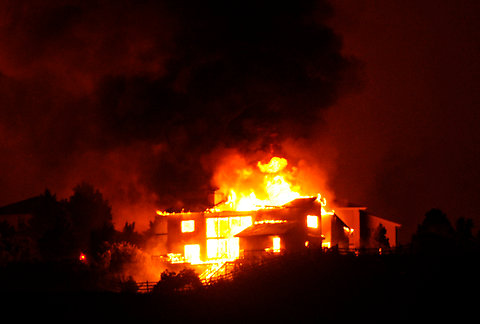
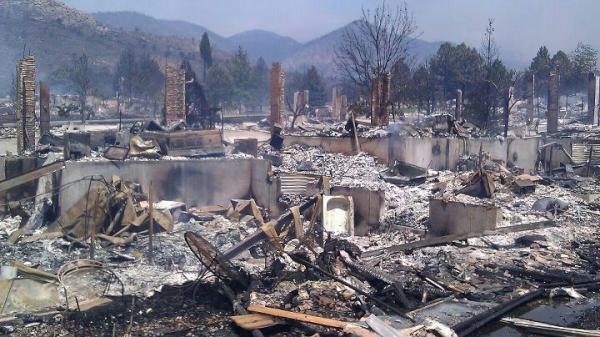
The wildfires burning through densely populated neighborhoods in Colorado this week are on my mind.

Fire burning in Colorado Springs June 26, 2012

I clicked a link about “how to help,” and found the familiar call for financial contributions to aid the dispossessed, as well as the firefighters.

No mention of the underlying cause of these fires—drought brought on by climate disruption.

No mention of how the real way to help would be to insist that our country start converting to renewable energy, immediately, to slow the relentless buildup of greenhouse gases and show international leadership that could be emulated by other nations.

Just send donations, so we can get back to business as usual ASAP.


***

Yesterday I was thinking about going cherry-picking at the local farm where I’ve been picking cherries every summer since I was a little girl.

Going on the website to check the orchard hours, I was aghast to discover that the entire crop had been ruined by a hailstorm last Friday—part of the cold front that broke the excessive heat we were sweltering under last week.

This week it’s been delightfully chilly here in Massachusetts. I love the cool weather, but my tomato plants sure don’t.

***

Is it so far-fetched to imagine a time when it’s impossible to rely on the steady, rhythmic progression of the seasons to bring us just the right sun and rain to grow our crops?

What will we do when the food shortages begin?

Let them eat crude!  ExxonMobil, Shell, BP and the rest will cry, as the climate guillotine puts our entire human civilization on the block.

We’ll be frackin’ whacked then, won’t we.

Help Wanted: Change Agents in Academe

The stars seem to be aligning behind a strong push towards online learning in the world of American higher education.  Today’s lead op-ed piece in The New York Times, by Jeff Selingo, editorial director of the Chronicle of Higher Education, echoes the Chronicle’s recent interview with educational philanthropist Bill Gates, who has been funding innovative approaches to maximizing the potential of technology in higher ed, without sacrificing educational quality.

Bill Gates

Both Gates and Selingo are focused on interventions that can improve outcomes for students, and thus for American employers down the line.  Even the best universities, Gates says, “often only have a 60-percent completion rate. And the average university will have something like a 30-percent completion rate. So you have an immense amount of wasted resource, and students who end up with a big loan and sort of a negative experience in terms of their own self-confidence.”

Gates wants to see how technology can be used to improve completion rates for students, as well as to improve their academic experience while going through the educational process, and his foundation is searching for “change agents” to accomplish this mission.

Innovators are sorely needed, because it certainly is true, as Selingo points out, that “higher education is a conservative, risk-averse industry,” which has been putting far more attention into capital campaigns for physical improvements than into serious efforts to develop and integrate new technologies.  Even my own graduate alma mater, New York University, known in many ways as an innovator, is persisting in its focus on bricks and mortar expansion with its hotly debated NYU2031 plan.

“We bet on the change agents within the universities,” Gates says. “And so, various universities come to us and say, We have some ideas about completion rates, here are some things we want to try out, it’s actually budget that holds us back from being able to do that. People come to us and say, We want to try a hybrid course where some piece is online, some piece is not, and we’re aiming this at the students that are in the most need, not just the most elite. So that’s who we’re giving grants to, people who are trying out new things in universities.”

I hope the Gates Foundation is also interested in supporting smaller liberal arts colleges like my current employer, Bard College at Simon’s Rock, which was founded as an innovative early college for high school students ready to accelerate past the last two years of high school, right into the college experience.

As someone who did just that myself, leaving the prestigious Hunter College High School in Manhattan after 10th grade to earn my B.A. in four years at Simon’s Rock, I know this is a model that works. It also worked for my son, who also earned his B.A. in four years at Simon’s Rock after completing 10th grade at our local high school.

It was good to hear Gates affirm the continuing importance of small-group discussions as a method of learning, because that is the pedagogical style we value highly and do so well at Simon’s Rock.

“Having a lot of kids sit in the lecture class will be viewed at some point as an antiquated thing,” he said. “On the other hand, having a bunch of kids come into a small study group where peers help each other, where you can explain why you’re learning these various topics, that will be even more important.”

With the advent of giant open-source lectures made widely available by the most prominent universities, Gates predicts that higher education will have to form consortia to consolidate lecture offerings, rather than having the same courses taught hundreds of times across the country (and the world) by different professors, some of whom may not be the greatest of lecturers.

But I don’t believe we will ever find a substitute for the excitement of small group learning, sitting in a circle and sharing ideas with a skilled, knowledgeable and enthusiastic facilitator.

It’s possible that some of that small-group learning may be able to transition to online video chat rooms, and this is something I’d love the Gates Foundation to fund me and other collaborators to explore!

I can imagine a hybrid learning environment, in the not-too-distant future, in which a student living at home can take a lecture from a Harvard professor in the morning, meet in an online chat room with another instructor in the afternoon to discuss the lecture topic (as I used to do in person with undergraduates when I worked as a graduate teaching assistant at NYU), and perhaps come to campus twice a semester for intensive face-to-face classes culminating in final projects that would be shared and evaluated, leading to the awarding of course credit.

Already there are consortia forming to discuss how to begin to allow students to earn degrees by patching together courses from various institutions, something most colleges and universities currently permit in a limited way.

Gates is right that this kind of innovation is threatening to the status quo of higher ed, where each college and university sees itself in competition with the others for the best students, and administrators tend to be more focused on admissions and tuition than on completion rates and outcomes.

Collaboration and sharing of resources may mean that some of the weaker institutions will fall by the wayside—but this is already happening as it becomes increasingly apparent that the old residential, four-year, very expensive approach is unsustainable for any but the most heavily endowed institutions, who continue to attract students from the wealthiest families in the world.

I agree with Bill Gates that if we faculty and administrators dig in our heels and refuse to roll with the oncoming waves of technological innovation, we’ll be bowled over and blown away.

But the techies can’t make this educational revolution work without the expertise of seasoned faculty and administrators, so it’s our responsibility to insist on pedagogical quality while encouraging innovation, in order to accomplish our mission of giving the most possible students the best possible education at the lowest possible cost, in a sustainable model that will allow our students—and our institutions—to thrive and grow into the 21st century.

Time to Meet Your Maker

OK, I admit it.  I love my air conditioners.  I have two window units, one upstairs and one downstairs, and they cool my whole house to a comfortable 70 degrees, no problem.

On a day like today, 95 degrees Farenheit and humid, you’ll find me huddled around the AC, whether it’s in my home, car or office, or out to the movies or a restaurant.

Even though I know full well that my AC addiction is part of the problem of global warming, am I going to go without?

Hell no!

Why should I swelter while everyone else who can afford it, and especially the fat cats who got us into this global warming mess, are sitting cool as cucumbers and pretty as you please?!

Thus you have the tragedy of the commons playing out all over again, all the time.

It will take a crash—a blackout, a total system collapse—to make us give up our creature comforts here in the heart of Empire.

Some people say that crash can’t come soon enough, and I guess I agree with them.

Certainly for the rest of the life forms on the planet, the sooner human beings get lost, and take our asphalt and our AC and our combustion engines with us, the more chance there will be for the planet to recover without turning back the clocks to zero and starting all over again with bacteria and plankton and the other very basic building blocks of life.

But am I going to commit hari-kari right now to speed this process along, playing martyr for the benefit of the songbirds and the orangutans?

No, I am not.

I am going to keep living, keep cranking up my AC and bopping around in my car, until there’s no juice in the wires and no gas in the tank.

***

Trying to keep cool, I just went to see PROMETHEUS, a bizarre movie if there ever was one.

In it, human beings go to meet their Maker, and discover that their alien progenitor is an impatient, violent, sadistic psychopath—at least by human standards—who, immediately upon being revived from an eons-long sleep, greets his human rescuers  with murderous fury and sets course for Earth with a full payload of biological weapons.

As I complained to my son afterwards, why is the human imagination always so dark and destructive?

Why couldn’t the screenwriters have imagined a happier scene, where the Maker showers the Earthlings with stardust and thanks them for waking him up?

No.

We are, it seems, an irredeemably violent species.

We deserve whatever violent end awaits us.

When it comes, we should bow our heads and acknowledge that we totally brought it upon ourselves.

In the meantime, it’s getting hot in here.  Time to crank up the AC.

Scheherezades of the 21st Century

I have been following the progress of the Rio+20 UN Conference on Sustainable Development from a distance, feeling jaded about the process and the possibility of positive outcomes resulting from this gathering of diplomats and social engineers.  It’s good to see the lively and vibrant displays of people passion outside the gates of the conference, but the real question is, when will those gates come down?

Gar Alperovitz

At the Strategies for a New Economy conference earlier this month, veteran progressive economist Gar Alperovitz pointed to our time as the moment when enough people wake up and notice that something is wrong.

“This is a critical moment in history,” he said; “the moment when people realize something is gravely wrong and are willing to think outside the box to find solutions.”

Alperovitz suggested that we are currently in “the prehistory of a major shift,” and that now is the time for those of us who are aware of what’s happening to “lay the foundations for new institutions and new systems” that are tailored to meet the coming challenges.

Who would have thought, a decade ago, that the cell phone would take Africa by storm, Alperovitz reminded us.  In the same way, it could be that distributed solar-generated power—each home and business hosting its own power generator on the roof–will become the standard in the decade to come, particularly if the real costs of fossil fuels are brought home to industries and consumers.

Yesterday in the course of a desultory lunchtime conversation about changing weather patterns, one of the people around the table, a bigtime financial executive, mentioned that he’d heard the Arctic ice was melting at an unprecedented rate.

I took his comment to be about the negative impact of climate change on the environment, and began talking about the methane bubbles that have been rising up out of the deepwater beneath the ice pack, suddenly and disastrously finding access to the open air.

But no—his point was quite different. To him, what was interesting about the melting of the ice was that it put previously inaccessible oil beds suddenly within range of development.

Groan.

What difference will all the UN treaties in the world make to the health of our planet if the power brokers sitting in their comfortable climate-controlled glass towers in New York don’t understand the urgency of moving away from fossil fuels?  My financier friend was actually planning to fly down to Rio this week on business, but it was news to him that the Rio+20 conference was going on at all.

Gar Alperovitz described our current economic system as “stalemated, stagnating and in decay—neither reforming nor collapsing,” and this sounds like an accurate description to me of our tightly intertwined political, financial and industrial sectors.

All of us ordinary people are held like flies in the sticky web of corporate capitalism, which is squeezing us ever more tightly in the bonds of rising prices, scarce jobs and inescapable debt.

Where will it end?  Alperovitz called on the conference attendees to become the historical change agents within our communities—to go home and seize every opportunity to develop the frameworks for the transition to a different kind of future.

To me, as a writer and teacher of literature, it was interesting to hear him calling in particular for an emphasis on new kinds of narrative.  In order to imagine new solutions to what seem like insurmountable problems, he said, “we need to tell new stories.”

Maybe 350.org’s Twitterstorm yesterday, in which hundreds of thousands of people from all over the world besieged Twitter with messages in support of ending the fossil fuel subsidies, is the start of a new story—a global story, authored collectively by kindred spirits worldwide.

It remains to be seen whether we will be able to figure out a way to preserve and extend our current technological sophistication while moving into a sustainable, harmonious relation with our planetary home.  Many who are currently trying to read the future predict a violent collapse of our human civilization, with a dramatic loss of human population and a return to a much simpler, low-tech kind of life for those who survive.

The only way the latter scenario will be avoided is if the technocrats and the bureaucrats and the financiers start listening to the ordinary people outside the gates, and understanding the full implications of their dependence on a capitalist economic system of endless growth fueled by destructive fossil fuels and the despoiling of the environment.

So yes, let’s start telling those new stories by every means possible—by Twitter, by blog, by radio, TV and film—around the lunch table and across the backyard fence.

Tell new stories as though your life depended on it. As in fact, it does.

Hocus, Pocus, Focus

I don’t know if it’s that I’m moving ever nearer to that psychologically significant boundary line between my forties and my fifties (I’ll turn 50 in November), or that summer is upon us here in the Northeast, or that I am on circuit overload, but this week I just haven’t been able to get up a good head of steam for a substantial blog post, and thus have stayed silent.

It’s been quite a while since a whole five days have gone by without my posting a single word.

It’s not that I’m not thinking.  And I am certainly keeping abreast of events out in the wide world.

But instead of the steady churning of thoughts and the relentless input of news raising my hackles and prompting me to send another blog-post-bottle out into the high internet seas, I just feel like pulling the covers over my head and rolling over for another hour of sleep.

I find myself longing for a silent weekend retreat, in which I had no access to the internet or phone, and no one around who expected me to speak or respond.

If I could have some good quiet time, maybe I could focus my thoughts, ideas and projects, and figure out which of them are worth carrying with me, and which can be jettisoned.

Perhaps that goes with the time of life I’m in, where every moment seems precious and limited, and you know that you really don’t have that much time to accomplish everything you came here to do in this lifetime.

If I could just figure out where to pour my energies and talents, I have no doubt that I could be very successful—with my success measured not necessarily in money or goods, but in positive impact on the planet.

That is what I am most trying to figure out right now.  Where should I be funneling my limited time and energy?

Generally speaking, there seem to be four spheres in which I am operating at all times, simultaneously:

  • the very up-close-and-personal realm, where my thoughts revolve around such mundane but important matters as my responsibilities to my two sons and the rest of my family, endless house and garden maintenance issues, and how I’d like to reconnect with such-and-such friend next week;
  •  the professional realm, where I am wondering what the outcome will be of my current contract review, feeling guilty because I am months behind in the essay I promised an anthology editor a year ago, pondering how to teach my classes scheduled for the fall, and wishing that I had the drive to get up at 5 a.m. and work on my book project;
  • the broader community, regional and national realm, where I am thinking about how to encourage the adoption of solar panels in my town, wondering about the impact of the new immigration legislation on friends and students, and concerned about the prospect of rabid Republicans gaining control of all three centers of power in Washington, and wondering how I can support both the Democrats and their more radical critics, whose platform is much closer to my heart;
  •  and then there’s the planetary realm, where I see with such pain the big picture of how destructive human beings are to every other life form on Earth, and ask myself how long it will be before the planet gives a big methane burp and sends us all to over-heated hell.

Is it any wonder, with all this (and much more!) churning through my mind day after day, that I end up just wanting to tune out and sit on my porch with a glass of wine on a summer evening and CHILL OUT?

I envy people who can focus all their energy in any one of these spheres.

I seem to be an incorrigible multitasker, and I know it’s not particularly healthy for me, or productive for my goals.

If there is one thing I really want to work on in the coming decade of my fifties, it’s learning how to prioritize tasks, concentrate my energy and GO!