America, land of the brain-damaged and debt-enslaved

Is it any surprise that we Americans treat animals and the natural world so badly, given the way we treat even our own cherished children?

This week there were two grim news stories illustrating the callousness of American society towards its young adults.

The first was a disturbing column by Nicholas Kristof revealing to the public what research scientists have known for a while: the skyrocketing rates of PTSD and suicide among young veterans returning from the Iraq and Afghanistan wars are due not to mental instability, but to the physical effects of repeated exposure to shock waves caused by bomb detonations.

The military is in the process of performing autopsies on veterans who committed suicide, and so far an alarming number of them have shown evidence of chronic traumatic encephalopathy (C.T.E.), a degenerative disease of the brain best known for affecting boxers and football players who endure repeated concussions.

“In people with C.T.E.,” writes Kristof, “an abnormal form of a protein accumulates and eventually destroys cells throughout the brain, including the frontal and temporal lobes. Those are areas that regulate impulse control, judgment, multitasking, memory and emotions.”

In other words, even young soldiers who return home physically intact may in fact be suffering from the hidden effects of shock wave concussions, which will destroy their lives over time; apparently the disease “typically develops in midlife, decades after exposure. If we are seeing C.T.E. now in war veterans, we may see much more in the coming years,” says Kristof.

***

Number two, we learned yesterday that the combined student debt in the United States reached $1 trillion. 

Occupy Wall Street demonstrators participating in a street-theater production wear signs around their neck representing their student debt during a protest against the rising national student debt in Union Square, in New York, April 25, 2012. The protest eventually marched to Wall Street; two people were arrested during the protest. REUTERS/Andrew Burton

I can’t even wrap my mind around a number that big, but one thing I can understand is that this is an egregious example of how we as a society are condemning our best and brightest young people to spending the best years of their lives in debt bondage to the banks.

For the wealthy, college and graduate school continue to serve as playgrounds for the young, a place to have fun, learn a few things and pair up before joining the family business.

For the rest of us, college is an essential step along the road to personal and professional success.  It’s not optional, and the price tag just keeps rising, while the ability of parents to pay for their children’s higher education keeps falling.

And so we find kids still in their teens signing loans for tens of thousands of dollars.  It is not uncommon for these kids to find themselves, just a few years later, with a B.A. and $200,000 worth of debt.

If you have ever tried to pay the interest on that much debt on a typical entry-level salary, you know that it’s nearly impossible.  Certainly it’s daunting to try to achieve the American dream—the car, the house, the spouse and two kids—with that kind of stranglehold of debt around your neck.

***

So this is the way we treat our precious children in America.

In a new twist on “friendly fire,” we send them to war without even realizing the longterm effects that our fancy new bombs will have on them.

And we blithely tell them that a) a college education is the only way to get ahead; and b) if you want one, you have to get in line at the loan office and spend the first 20 years of your working life paying off that interest.

There is something deeply, hauntingly wrong with this picture.

And you know what the worst thing is?  There is no widespread outrage about it!

If you are a young person, a parent, or any person with a conscience, you should be working furiously to end war and to end debt bondage for students.

How?

Well, start by standing up and saying NO MORE!!!!
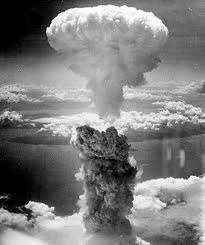
Nuclear famine: the future that must never happen

“I am convinced that nuclear weapons must be abolished. Their use in a military conflict is unthinkable; using them to achieve political objectives is immoral.”

Who said this?  Not your average peacenik hippie.  Not even a pie-in-the-sky anti-war activist.

No, it was Mikhail Gorbachev who called for the total abolishment of nuclear weapons, in a recently released report by the renowned International Physicians for the Prevention of Nuclear War (IPPNW) and its US affiliate, Physicians for Social Responsibility (PSR).

A-bomb on Nagasaki

The report is grimly entitled “Nuclear Famine: A Billion People at Risk—Global Impacts of Limited Nuclear War on Agriculture, Food Supplies, and Human Nutrition.” Its lead author, Dr. Ira Helfand, draws upon new modeling evidence showing that  “even the relatively small nuclear arsenals of countries such as India and Pakistan could cause long lasting, global damage to the Earth’s ecosystems andthreaten hundreds of millions of people….It would not cause the extinction of the human race, but it would bring an end to modern civilization as we know it.”

Even a limited nuclear exchange would affect the production of staple foods like corn and rice worldwide. “Significant agricultural shortfalls over an extended period would almost certainly lead to panic and hoarding on an international scale, further reducing accessible food,” the report says.

It is hard to get a handle on how to stop the steam roller of global carbon consumption, which in itself is a recipe for disaster.

Nuclear weapons, by contrast, are controlled by nation states, and can be precisely counted.

Nuclear weapons can be disabled and destroyed.

There is no sane reason for the U.S. and the U.S.S.R. to maintain hundreds of nuclear warheads ready to go at a moment’s notice.

That 20th century Cold War mentality has to be consigned to the dustbin of a very dangerous, outmoded and counterproductive history.

Imagine what would be possible if instead of investing billions of dollars in nuclear weapons each year, those funds were invested in renewable energy sources, sustainable agriculture, and devising methods of increasing human health and welfare while also creating a sustainable human footprint on the planet.

There is so much to protest these days, and nuclear weapons seem beyond the ken of most ordinary citizens.

But these are our lives the generals are gambling with.

We need a concerted people’s movement to insist that the time of nuclear weaponry has come and gone.

We vote for peace and life. Tell me, Mr. Politician, are you going to vote against us?

Let a million local media outlets and citizen journalists bloom

As we head into the 10-day countdown to May Day, once again the mainstream media is snoozing its way into irrelevance.

Check out today’s New York Times and you will find nary a mention of the busy preparations going on now for the day of action in New York and around the country on May 1.

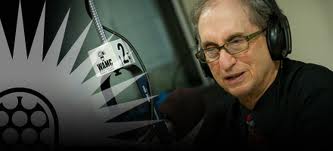
This seems to just prove the point of media pundit Dr. Alan Chartock, founding president and CEO of the 20-station, seven-state Northeast Public Radio Network here in my neck of the woods.

Speaking last Sunday at Bard College at Simon’s Rock, Dr. Chartock depicted a coming media landscape dominated by a few big national and international players, reaching audiences principally through the World Wide Web.

Progressive media analysts have long been concerned about the homogenization of the news that comes as a result of corporate conglomerates controlling vast swaths of the airwaves, as well as almost all print news outlets.

The good news is that at least so far, it has been impossible to impose corporate control over the internet.  Witness the huge outcry over the proposed PIPA and SOPA legislation last winter, which critics said would have limited free speech on the Web.  Millions of signatures were collected on petitions against the legislation, and the proponents backed down—at least for now.

Dr. Alan Chartock

Dr. Chartock is worried about the wholesale media move to the internet for two good reasons.

One, accuracy: it is often impossible to know for sure that the information on a given blog or even larger online media outlet has been carefully and objectively reported.

Two, money: Where is the business model that will support the reporters and editors needed to continue to perform the traditional watchdog role of the press?

It seems to me that his own Northeast Public Radio Network provides a good answer to these issues.  It is supported by local listeners and underwriters who put their dollars behind the station because they recognize a good thing when they see one.  They would start to withdraw their support if the quality of the programming went down.

To counter the drift to a globalized corporate media desert, let’s let a million local radio stations, blogs, vlogs, livestreams, tweets and You-Tube videos bloom!

Let’s not only support our locally owned, locally produced media, let’s start producing it too!

Here in the Berkshires, we not only have WAMC and other Northeast Public Radio affiliate stations, we also have WBCR-LP, which is not only 100% listener-supported but also all-volunteer and open to any citizen journalist who takes the trouble to get trained as a programmer.

We have the Berkshire Record, our hometown print newspaper in Great Barrington, and we also have iBerkshires and various locally produced blogs and small websites.

And let’s not forget the countless Facebook pages, Twitter accounts and You-Tube channels devoted to getting us localized news we can use.

The truth is that the Occupy movement doesn’t need the New York Times to reach its target audience.  The fact that the mainstream media is ignoring the upcoming May Day protests is just one more example of how dominated by the 1% these big media corporations are.

Whose media?  Our media!  Mainstream media?  Who needs’em?

The question your grandchildren will ask: Where were you on May Day 2012?

Although you’d never know it from following the mainstream media, there are big plans afoot for this year’s May Day.

The global General Strike of the 99% called for May 1 is gaining steam as we move into the final days of preparation.

It’s going to be big.  It’s going to be loud.  It is meant to be an unsettling reminder to the 1% of how much their privilege depends on the cooperation and docility of the 99%.

What if everyone just decided to go on strike with their credit card interest payments?  Their student loan interest payments?  Their mortgage interest payments?

What if everyone decided to redirect their energies to revitalizing local economies, forming their own credit cooperatives, issuing their own currencies, reinstating barter and time banks, growing their own food?

What if everyone just opted out of the huge, unwieldy and oppressive structures that corporate globalization has imposed on us?


I am reminded of the Leo Lionni story about the snail who was so entranced with his creative power to build an ever bigger and more intricate shell that eventually he was pinned down by the enormous, gaudy fruits of his labors and had to abandon that monster shell and start anew, humbly admitting that bigger was not better.

Collectively, and with Americans in the lead, human civilization has created a monster that now holds us captive.

Collectively, we can work together to shift course and rebuild a more humane society where the wealth we generate with our creativity and hard work is shared fairly and is not used to destroy our beautiful planetary home.

It is true that the Obama administration has tried to move things in this direction, in important areas like health care and finance reform.  I believe Obama’s heart is in the right place, but he is held captive like all the rest of us by a rigid system created by the 1% to pander to the 1%.

When even our Supreme Court has been coopted to represent the super-elite above the vast majority of Americans, as was quite evident in the Citizens United decision, it becomes clear that working through the system is like swimming in place, swimming against an overwhelming tide.

So we need to try something different.  We are essentially at the same breaking point our American founding fathers were at back in the 1770s, when they knew that the only way they could move forward was to get the King’s boot off their necks—and the only way to do that was to fight.

I don’t want to see another armed revolution or civil war on American soil.  I am a pacifist through and through.

That’s why I support the concept of the General Strike as a peaceful way to withdraw from the system and remind the elites that the gears of their privilege won’t turn without the grease of our labor and cooperation.

This May Day, wherever you are, whatever you’re doing, take up the gauntlet Thoreau threw down back in 1849 in his famous essay on civil disobedience: “Let your life be a counter-friction to stop the machine.”

Loving Earth

To save the Earth, we must fall in love with her, writes Robert Koehler, taking his inspiration from the work of Charles Eisenstein, author of Sacred Economics.

Koehler and Eisenstein say that in the trajectory of human evolution, we have been locked in the selfish adolescent phase for a long, long time, just seeking to take what we need from our Earth mother, without thought of giving much in return, or of the reality of finite limits.

When we fall in love, Eisenstein says, “perfect selfishness falls apart as the self expands to include the beloved within its bounds.”

I remember falling in love like that as an adolescent, and as a young adult too.

It’s true that when you’re in love, the boundaries between the self and other dissolve, and you exist in a harmonious utopia of mutual beneficence.

But at least for most of us fallen humans, that kind of all-encompassing love doesn’t last forever.

It can’t.  It’s too intense.  Eventually the first ecstatic glow fades and the angelic beloved assumes normal, human proportions, with all the associated warts and odors and quirks of behavior and thought that our human bodies and minds possess.

What happens to love then?

If we are compatible for the longterm, the initial heady crush transforms into a much more solid platform of respect, shared interests, and deep concern for each other.  We care about each other, we enjoy being together no matter what we’re doing, and we respect each other’s views, goals, and talents.

We become partners in the truest sense of the word.

Is it necessary to go through the romantic, boundary-dissolving “falling in love” stage to get to the mature relationship of partnership?

In our culture, we believe it to be.  Our young people, tutored by every aspect of media and pop culture, assume that being swept away with love is a pre-requisite to successful marriage.

And yet how many of their parents, who followed that same script, ended up in bitter divorce fights?

Although I understand the intent behind Koehler’s and Eisenstein’s valorization of “falling in love” as a model for the depth of passion needed to fuel successful environmental action on behalf of the Earth, I am not convinced that this is the right message to be sending.

Young people today may still harbor romantic dreams, but they live day-to-day in a casual hook-up culture that prides itself on separating sexual enjoyment from commitment.

Fifty percent of their parents have made the journey from early romance to disillusioned divorce.

Another 25% or so of adults are either unhappily married, or unhappily single.

The “falling in love” model thus hits home with too few Americans to be effective as a rallying call for environmental action, and it is too limited a metaphor for the depth and breadth of passion that we must summon now to be effective Earth stewards and activists.

Instead we must love with the unconditional devotion of a mother for her child, with the sincere, selfless wish to see that new life grow and prosper and move forward beyond us.

We must love the Earth with the intensity of devotion that recognizes that for her to thrive, it may be necessary for us to part.

Earth has loved us with this kind of pure altruism all these many years of human emergence.  Now, as in the terrifying story of The Giving Tree, she has given so much that she has practically sacrificed herself entirely.

Nothing we can do to the Earth will wreck her forever.  Forever is a long, long time, in geologic terms.

But there is still time to shift from heedless destruction to the kind of loving tending that the Earth herself has modeled for us all these years.

There is still time to develop the kind of deeply caring reciprocal partnership that will last a lifetime, and beyond.

Who’s Afraid of Distance Learning?

It used to be that a smart, motivated young person could work hard, earn a doctorate, do a good job as a junior professor, and live happily ever after as a tenured professor.

It also used to be that a smart young person could work hard, get into a good college, and expect to be taught with passion and enthusiasm by a corps of dedicated professors.

Despite the ever-increasing cost of college tuition, neither of these expectations holds water any more.

Academia, as a profession and as a social landscape, is deeply troubled right now, in ways that are profoundly connected to wider social and economic problems in our society.

In today’s New York Times, pundit David Brooks suggests that colleges need to do more to ensure that their high sticker price is delivering measurable value. However, his solution—standardized exit testing of college seniors—shows how out of touch he is with the real issues and problems facing academia today.

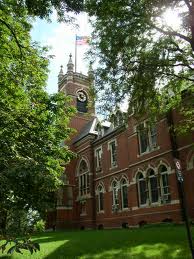
At a recent high-level conference hosted by Lafayette College, ponderously titled “The Future of the Liberal Arts College in America and its Leadership in Education Around the World,” “Lafayette President Daniel H. Weiss laid out four major challenges facing liberal arts colleges — affordability, public skepticism about the value of a liberal arts degree and college in general, decline in the share of U.S population who fit the demographic patterns of students who traditionally attend liberal arts colleges, and questions about how to incorporate technology into the college and serve a generation of students that is increasingly networked.”

Smith College

At small liberal arts colleges like Bard College at Simon’s Rock, where I teach, we pride ourselves on a low student-faculty ratio. At Simon’s Rock the ratio is only 9 students to each professor.  But of course that’s a big part of why our tuition is so high, to pay for the one-on-one, intensive engagement with each student.

From the perspective of college presidents and administrators trying to make ends meet, this educational model may not be sustainable.

Certainly that was the case at the University at Albany, SUNY, where I taught for nine years in an interdisciplinary first-year seminar program designed to “give a small college experience in the big university.”  The program, which had just received an enthusiastic external review that trumpeted its successes in retention and learning outcomes for the roughly 800 students we served each year, was axed in 2011.

Now those 800 students are sitting in the big lecture halls with 500 others at a time—or, just as likely, not bothering to go to class at all.  It was a common complaint among my SUNY students that the professor wouldn’t know or care if you showed up or not—all it took to pass the course was cramming for the exam with the textbook.

Given this scenario, it’s not surprising that more and more of our large universities are shifting to distance learning.  Why go through the trouble of housing thousands of undergraduates, when you can deliver the lecture and the exam to them in their own bedrooms at home?

There is truth to this, and I have no doubt that networked, globalized distance learning is going to be the standard form of higher education delivery in the years to come.  It’s already happening incredibly fast, and even small liberal arts colleges need to be thinking about how to jump on that train before they miss it entirely.

As someone who teaches media studies, with a special interest in new media, I am in many ways delighted and intrigued by the potential of distance learning in higher education.  I have even been trying to persuade the administrators at my college to give it a try.

While it is never going to be the same as the old-fashioned model of nine students sitting around a seminar table with a professor, with current video capabilities it can come pretty close, as anyone who has tried a Google “hang-out” can attest.

And wouldn’t it be exciting to “hang out” in a seminar classroom with students from around the world?  We higher ed folks like to trumpet the value of diversity and international education—well, distance learning provides the platform to make the dream of a truly diverse and globalized classroom a reality.

However, there is a catch, and it is the same catch that has dogged other American industries as they have leaped on to the globalization bandwagon.

U.S. higher ed is already troubled from within by the shift from stable, tenured fulltime faculty to legions of roving part-time adjunct faculty.  With distance learning, the adjunct model gains even more steam, and goes global.

Why not outsource that first year Calculus course to a professor in India, who will teach 1,000 students for a fraction of what even an adjunct in the U.S. would earn?

Welcome to the knowledge sweatshop of the future.

According to the Inside Higher Ed article on the Lafayette conference, “Williams College President Adam F. Falk argued that the principal reason for adopting technological innovation should be for educational improvement, not just productivity gains. ‘College education isn’t simply about most efficient or innovative means of delivering content,’ he said, arguing that the engagement component of what colleges like his do was over all more important. ‘It’s hard for even the best students to learn on their own.’ Falk’s presentation was warmly received by the crowd.”

But Williams College is one of the richest liberal arts colleges in the nation, with an endowment of nearly $2 billion even after the economic downturn of 2008.

The social stratification that is affecting every aspect of American society is no less marked in higher education.

In the near future, we will be looking at an academic landscape where there will be a few highly paid tenured research professors and a vast majority of poorly paid adjunct professors all over the world, working mostly from their home offices via distance learning networks.  While there will always be a few lucky students who will be able to gain access to ivied classrooms through scholarships, those classrooms will increasingly be reserved for the children of the super-elites of the world.  Ordinary kids who have the motivation and discipline to go to college will do it from home, a financial decision their parents will have no choice but to support.

Distance learning is often lauded as a way to level the playing field, since it makes higher education accessible to kids who would not otherwise be able to go to college.

This may be so.  But it is also going to be yet another way to divide our society into Alphas, Betas, Gammas, Deltas and Epsilons—in other words, to harden the de facto caste walls that are already making the old rags-to-riches, pull-yourself-up-by-the-bootstraps American dream a quaint memory.

Love Letter to Great Barrington MA

Just this morning in the shower, I was mulling over what I would like to write about for my submission to this year’s Made in the Berkshires Festival, and it came to me that I want to write a kind of love letter to Great Barrington, the dear little town that I call home.

What a surprise to get to my media studies class today and learn from my students that dear little Great Barrington was just named the number one small town in America by no less than Smithsonian Magazine!

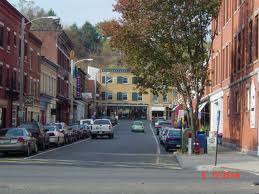
Railroad Street, Great Barrington MA

In justifying their choice, Smithsonian writers Susan Spano and Aviva Shen cite the town’s hip cultural scene, its local foodie economy, complete with CSAs and farmers’ markets, denizens of note like W.E.B. DuBois, Arlo Guthrie and Alan Chartock, and the fact that we have our own printed currency, the BerkShare.

Even my own alma mater and current employer, Bard College at Simon’s Rock, gets a mention!  We are, after all, the first and still the only residential four-year college dedicated exclusively to highly motivated students who choose to leave high school early, after 10th or 11th grade, to begin their undergraduate studies.

In my dreamy early-morning shower reflections, I was thinking about celebrating other aspects of Great Barrington.

For instance, the incredible camaraderie of the cultural community here, especially, in my experience, the community of women artists.

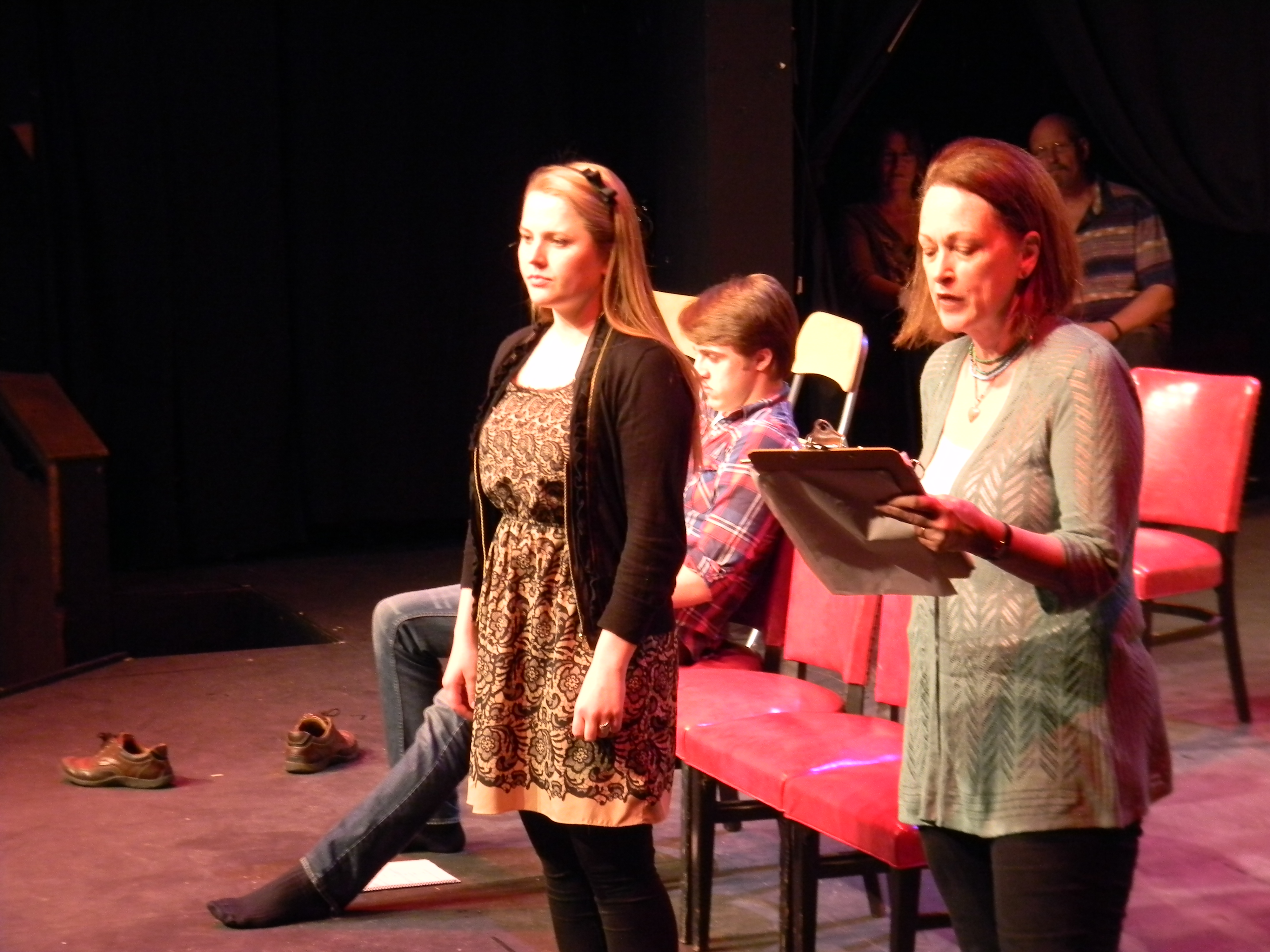
Berkshire Festival of Women Writers special presentation of Made in the Berkshires, co-curated by Hilary Somers Deely and Barbara Sims

I have led, participated in and witnessed so many outstanding cultural events here in the Berkshires, many of them centered in Great Barrington, where artists, writers and other creative types have collaborated with such grace and panache, with such incredible generosity and unusual willingness to leave their own personal ego at home.

This doesn’t happen everywhere.  In fact, I’d venture to guess it’s pretty rare.

For instance, almost everyone who participated in this year’s Second Annual Berkshire Festival of Women Writers did so pro bono, offering free events at which they shared their passions and talents with all comers.

As one of nearly 100 women who gave a Festival workshop for free, I can tell you that there is tremendous satisfaction to be gained from simply sharing one’s talents and knowledge with an appreciative, receptive audience, without expecting financial reward.

That spirit of generosity is one of the many reasons I love living in Great Barrington.

The Smithsonian article also failed to mention a few other aspects of Great Barrington that I really love.

One: having town leaders, our elected Select Board, who are vibrant creative folks in their own right.  Check out Selectperson Alana Chernila, who just published a wonderful cookbook, or Selectperson Andrew Blechman, editor at our homegrown national environmental publication Orion Magazine, or Selectperson Sean Stanton, part of an extraordinary local family of sustainable farmers and foodie entrepreneurs—and you will see what I mean.

Atop Monument Mountain

Two: the wonderful natural resources at our doorstep in Great Barrington.  The Housatonic River winds through the town, and polluted with PCBs as it may be (thank you General Electric), the Housatonic is still visually beautiful and a lovely, peaceful river to walk beside on our very own Riverwalk.  The town is shadowed by East Mountain, the north side of which houses our ski area, Butternut Basin.  On the north side we are bounded by Monument Mountain, a steep, wooded reserve that got its name from the Mohicans who used to live here, who left their signature on the mountain in piles of stones.  All over town there are beautiful places to walk, hike and meditate.  This kind of open space is quickly vanishing in so much of our country, and should not be taken for granted.

Three: Having a community that truly cares about its young people, and its disadvantaged folks.  The support for wonderful local organizations like Railroad Street Youth ProjectCommunity Access to the Arts, and Volunteers in Medicine is truly heartwarming.  We also have a lively Senior Center, and a weekly Occupy Great Barrington protest and meet-up.  A town that doesn’t forget its kids, its old folks, its most vulnerable citizens and its radical fringe is the kind of town I want to live in.

And not only that, but we have our very own community radio station, WBCR-LP, 97.7 FM, where anyone who makes the effort to get the requisite training can become an autonomous radio broadcaster, subject only to FCC regulations as to what they can or cannot announce.  This year I started a new Citizen Journalism Project, seeking to get local teens involved in producing news for the radio–and it’s been a great success.  We also still have a homegrown local weekly newspaper in Great Barrington, the Berkshire Record–which is pretty rare in the US, as more and more local newspapers are swallowed up by big media clones.

The Smithsonian Magazine description of Great Barrington was right on target, but there is also so much more that goes into being part of a truly outstanding small town.

I will write a longer love letter to Great Barrington in the future, but for today, let me just end with a big smacking kiss.  GB, I am proud to call you home.

Who, me? Depressed?

Sometimes you just have to wonder if there will ever be good news again.

I mean, really good news.  The kind that makes you want to just lift up your face to the sun and grin like a sunflower.

Lately I cringe inwardly every time I open the newspaper.

In my local paper, drunk driving routinely kills kids and people fight endlessly about town budgets and whose backyard should get the wind turbines or the PCB dredging from the contaminated river.

The national news is warning darkly of a coming “Taxmageddon” in January 2013, when, according to The New York Times, “the federal tax bill for a typical middle-class household — making in the neighborhood of $50,000 — is scheduled to rise by about $1,750. This increase, which would come from the expiration of both the Bush tax cuts and the Obama stimulus, would follow a decade of little to no income growth for many people. As a result, inflation-adjusted, after-tax income for the median household could fall next year to its 1998 level.”

And then there’s international news, where we learn that suicides are up sharply in Europe as a result of the economic downturn, while over in Afghanistan suicide bombers have just struck hard in a coordinated attack on supposedly secure neighborhoods in Kabul—a taste of the summer fighting season to come.

April 14, 2012. Photo: Reuters

Never mind the weather, which is showing no signs of getting back to normal.  Did you hear about the massive hailstorm in Texas last week?  Or the tornadoes whipping across the Midwest?  Or the fact that there is a fire watch almost every day now here in Massachusetts, because of the extremely unusual springtime drought conditions?

A motorist sits in a truck partially buried in slushy hail near Amarillo, Texas. The Texas Panhandle storm dumped several feet of nickel-sized hail, stranded motorists in muddy, hail drifts and closed a highway for several hours.
(AP Photo/Courtesy of Amarillo/Potter/Randall Office of Emergency Management)

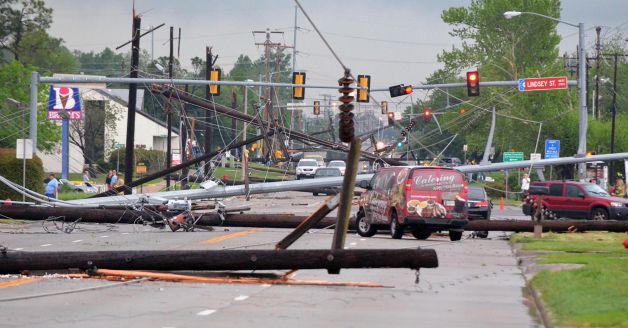
Downed power lines litter 24th Avenue Southwest at the Lindsey Street intersection after a tornado hit Friday afternoon April 13, 2012 in Norman, Okla. Photo: The Norman Transcript, Kyle Phillips / AP

I have been squinting at all this out of the corner of my eye as I rush off to teach, to meet with students and colleagues, to bring my younger son to soccer practice or piano lesson, to cram in some exercise for myself…all the various commitments that make my days and weeks a blur of action.

Today for the first time, and by design, I did not schedule a single appointment.  I left the day wide open so I could finally get out into my garden to fertilize and prepare the beds and plant the spring greens and herbs.

I spent most of the day doing just that, all the while worrying to myself about what will happen if the rains don’t come at all this spring. Already the river is as low as I’ve ever seen it; the ground is so dry it’s dusty.  In April!

Between the bad news and the scary weather, it’s enough to drive anyone to anti-depressants.

According to the U.S. Center for Disease Control (CDC), today one in 10 Americans over age 12 is taking an antidepressant.  Twenty-three percent of American women between the ages of 40 and 59 are on anti-depressants. That’s nearly one in four middle-aged women.

Do I need an anti-depressant?

I do feel depressed when I think about what’s going on in the world around me.

I am not happy to look ahead to 2013 and foresee a tax increase that, together with the double-digit health insurance premium increase my employer anticipates, is going to mean yet another year where my real income goes down, while the cost of living just goes up and up and up.

I feel depressed when I read that Rick Santorum just took out a lifetime NRA membership for his 3-year-old daughter (who, by the way, suffers from a generally fatal chromosomal disorder), while Mitt Romney is courting assault weapons fans at the 2012 NRA convention.

There’s just so much to be depressed about!

But it’s a legitimate depression.  If I were to get on the anti-depressant bandwagon and dull the edge of my depression with drugs, I would fear losing my grip on reality and becoming just another Brave New World-type soma addict.  What kind of life is that?

Allowing the full scope of the world’s problems to sink in to my psyche is painful, but hiding from it would be cowardly and useless.

On this quiet Sunday I will take the measure of my own melancholy.  And then I will rise again on Monday, determined to keep fighting the good fight for a better world.

Give mothers the respect–and the financial compensation–they deserve

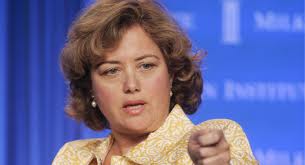
Hilary Rosen

It truly is disheartening to hear a supposedly progressive woman proclaim that a fulltime mother “never worked a day in her life.” Democratic strategist Hilary Rosen deserves all the flack she’s been getting since she made that statement yesterday on national media.

On the other hand, it’s also disheartening to see how the male-dominated Democratic and Republican campaigns have wasted no time in turning Motherhood into a political football.

The truth is that American motherhood has never been more demanding, or more complicated.

Romney married a rich man and settled in to raise five sons. She had the enormous privilege of not also having the responsibility of earning money to put food on the table.

Today there are fewer and fewer women who can afford to stay at home as fulltime moms, especially if they have big families.

More kids mean more housework—but also mean more mouths to feed, shoes to buy, college tuitions to pay for.

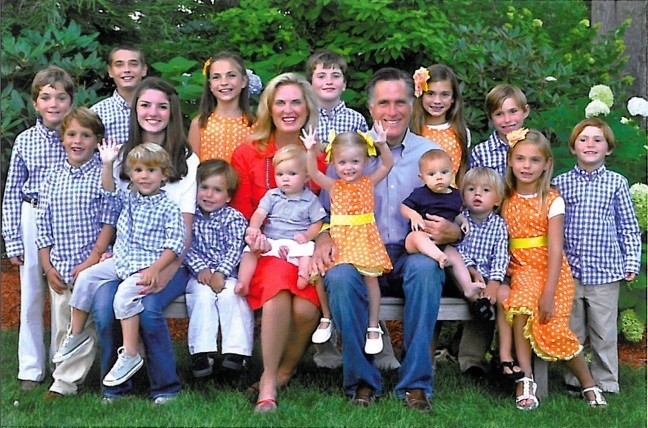
Mitt and Ann Romney with their 16 grandchildren

As part of the 1%, Ann Romney got to choose to stay home with her children.  For the rest of us, this is just not an option.

Especially the many of us who are single moms, or whose husbands have been out of work for months and years.

But the firestorm over Hilary Rosen’s miscalculated remark speaks to an even deeper issue that remains unaddressed in our society.

Mothers still do more housework and child care than fathers.  Housework and childcare still remains not only unpaid labor, but labor that is not recognized as having any monetary value in our very commercially oriented society.

A recent NY Times article interviewed some nannies who work for the 1%, whose labor is valued in the high six figures.

But the labor of a mother who stays home is not even deemed worthy of accruing social security.

At minimum, all mothers, whether they stay at home fulltime or struggle doing the second shift at home after the day job, should be entitled to accrue social security and expect some retirement compensation from the nation in their old age.

At minimum, all mothers should have the right to subsidized maternal health care.

At minimum, in a rich country like ours, no mother should have to worry about whether her children are going to have enough to eat.

Instead, our country is going in the opposite direction.

We are making it harder and harder for mothers to qualify for welfare assistance.  We are cutting back on public education, and failing to create incentives for doctors to work in public health clinics.

And many, many states are actively working to curb women’s access to contraception, while at the same time demonizing abortion.

So what’s a poor woman to do?

The media controversy over the non-issue of whether Ann Romney’s “work” as a fulltime mother qualifies as such is entirely misplaced.

What we need to get worked up about are the circumstances of the millions of American mothers who work hard, both in and out of the home, without the household help that the Romneys undoubtedly enjoyed, and who are not fairly compensated or recognized for their efforts.

It may sound corny, but it’s true: without the hard work of mothers to bear and care for children, our great nation would simply cease to be.

We need to cut the political chicanery and not only give Motherhood the respect it deserves, but put our money where our mouths are, too.

Bill McKibben, our environmental Pied Piper, is at it again

Bill McKibben

You gotta admire Bill McKibben. And you gotta wonder, where the frack does the guy get his indefatigable energy??

Off he goes again this week, starting a new campaign to protest hydraulic fracking in Ohio—you know, the state where natural gas drill rigs caused manmade earthquakes.

I think we all have a pretty good idea of how bad it is to have flammable toxic fumes coming out of your water faucets, earthquakes rumbling in your backyard, and tons of toxic waste building up above and below ground level.

Fracking sucks and we know it. It must be stopped. The question is, are we going to follow Pied Piper Bill to Ohio to occupy the Statehouse and make our demands known?

No doubt there will be plenty of Ohioans and even ardent out-of-state environmentalists who rally to the call, just as they did last summer when Bill led them down to Washington DC for sit-ins to protest the Keystone XL.

That battle did score some points, although more recently it seems that the southern portion of the titanic pipeline is going to be built after all, another huge investment in 20th century thinking and technology that can lead us in one direction only: over the nearest cliff.

***

In the Grimm fairytale, “The Pied Piper of Hamelin,” the town suffers from a plague of rats, which only the Pied Piper can solve.  When the town councilmen refuse to give the Piper his just reward for destroying all the rats, he takes his revenge, leading all the children of the town into a mountain cave, from which they are never recovered.  The moral of the story: don’t cheat the Piper!

Today the rats we suffer from are precisely the fossil fuel industry and their military-industrial, Big Ag, Big Finance brethren, which are, as in the Grimm story, destroying our homeland and eating us alive.

Even if Bill McKibben could lead all those rats into the river, we would still be left with the greedy councilmen, our politicians, who would very likely continue playing by the old rules, and would bring further disasters upon us.

When the Piper wanted to punish the town fathers, he did so not by attacking them directly, but by attacking their children.

Truly, there can be nothing worse than being forced to watch your children suffer and die.

Sometimes I think that the only way the rich and privileged are going to listen to reason and stop their destructive, world-killing ways is if they are forced to confront the reality of what their children will have to live with in the future, because of the lifestyles they themselves are living now.

I say “they” but I should be saying “we,” because I certainly have participated in this destructive lifestyle my whole life.  We humans, especially privileged Americans and Europeans, have been the rats that have been destroying the global village for decades now.

Unlike rats, though, we humans generally respond to reason.  We can be persuaded to change our ways, especially if we can be made to understand that the future survival of our precious children is at stake.

What sort of tune would the Piper need to play to change the hearts and minds of the frackers, for example?  Or the loggers, or the tar sands extractors, or the nuclear power plant engineers?

Bill McKibben has been tireless in his efforts to hit the right notes to attract enough people to follow him—not over a cliff or into a mountain tomb, but into a sustainable future.

You gotta admire the guy.  You gotta think—maybe I should get on that bus for Ohio.