Moving beyond fear and denial, or: Whither Environmentalism?

I have been hearing two forms of gentle criticism from some of my readers.

One is: omigod, this is so depressing, can’t you write about something else???

The other is: okay, we get it, enough with the exhortations, start telling us WHAT TO DO about all this scary stuff you’re laying on us.

I have been pondering both these responses, wondering how use my time and energy in this blog most effectively.

My major goal is to awaken more people to:

a) the realities of climate change bearing down on us all;

b) the incredibly fast, harsh and irrevocable impact that human over-population and careless industry has been having on the flora & fauna of our world–the real 99%;

c) the way big corporate interests have a stranglehold on crucial areas of our political system, our media, and our food supply, and thus on our political, mental and physical health, as well as the ability to control what we see, what we think and how we think it;

d) the way our education system is falling into line and failing to rise to the challenges of educating young citizens who will be forces for positive change in this dismal scenario;

e) and yes, depressing as it may be to contemplate, the dire consequences that will ensue if enough of us fail to wake up and act now to shift human society and our interactions with the natural world (of which we are a part) in a very different, more life-enhancing direction.

So that brings us back around to this key question: what should we do?

Believe you me, if I knew, I’d be trumpeting it loud and clear on this blog.  I wish I could claim to be the next Messiah!

Times have changed since the Biblical days when Moses could part the waters and lead everyone to safety–although I do find myself thinking more, as the sea levels rise worldwide, about good old Noah and his ark.

Moses drew on metaphysical powers to help him through dark times, while Noah got out his hammer and used technology to weather the storm.

In our own time and place, we are busy looking for technological fixes; those who believe in divine intervention seem to be resigned to Apocalypse, preparing themselves for Armageddon and the ascent to another, nonphysical realm of existence.

I think I am beginning to get glimmers of a middle path.

Yes, we need to be applying ourselves to the collective task of using technology to enable us to survive climate change, but our technological efforts need to be driven by a new reverence for all life on this planet, out of which a new ethics can grow that will replace greed and selfishness as the driving forces of human industry.

***

In the latest issue of Orion Magazine, environmental activists Derrick Jensen and Paul Kingsnorth both express their frustrations with the current environmental movement.

Jensen takes movement organizers to task for their drift towards actions that are “fun and sexy.”  “The fact that so many people routinely call for environmentalism to be more fun and more sexy reveals not only the weakness of our movement but also the utter lack of seriousness with which even many activists approach the problems we face.  When it comes to stopping the murder of the planet, too many environmentalists act more like they’re planning a party than building a movement,” Jensen says bitterly.

This criticism speaks to the first category of comments about my blog–the “oh it’s too depressing to think about” crowd.  Let’s face it, this is a big crowd!  The environmentalist party-planners are trying to reach these folks, who were suckled from birth on cheery feel-good media, by presenting environmental action as fun and sexy, rather than as scary and angst-ridden.  It’s environmentalism on anti-depressants, and it fits a big swath of our population, who don’t want to dwell on anything sad or depressing, unless maybe it’s a movie that you know will ultimately have a happy ending.
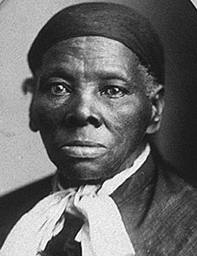
Harriet Tubman

Jensen ends his column by invoking the spirits of Harriet Tubman, Tecumseh and the Jews of the Warsaw Ghetto, who were deadly serious in their resistance, and willing to do whatever it took to succeed.

People like to be inspired by memories of heroes past; one of my most popular blog posts has been “Let Your Life Be a Counter-Friction to Stop the Machine,” which recalled Thoreau’s famous refusal to pay taxes to support a government whose policies he did not believe in.

In all these cases individuals were inspired by moral outrage to stand up and resist the powers that be in order to change the status quo.

That is certainly what each of us needs to be doing, in our own spheres, in our daily lives.  We need to become more aware of what is going on around us; of our place in the ecological web, and how the small actions we take each day contribute to a huge assault on the natural world that will soon lead to a climate crisis that will force us, willy-nilly, to change.

***

It is January, 2012, and when I look out my window I see brown grass, not a speck of snow.  It was 54 degrees Fahrenheit yesterday, for crying out loud!  You won’t find this story in the New York Times, but Brad Johnson’s recent report in  Alternet paints an unmistakeable portrait of serious climate change, not in the future, but right now:

“Fueled by billions of tons of greenhouse pollution, a surge of record warmth has flooded the United States, shattering records from southern California to North Dakota. “Temperatures have reached up to 40 degrees above early January averages in North Dakota,” the Weather Channel reports. Cities are seeing late-April temperatures at the start of January — Minot, ND hit 61 degrees, Aberdeen, SD hit 63 degrees, and Williston, ND hit 58 degrees, all-time record highs for the month of January.”

All very nice in midwinter, but what happens next summer, when temperatures are suddenly 40 degrees above average?  We won’t be laughing then, will we?

Which brings us back to the second criticism of my blog, that I only talk endlessly about the bad news, and exhort people to act, without giving any concrete suggestions for what to do.
Paul Kingsnorth

It also brings me to Paul Kingsnorth, whose long article in Orion, “Confessions of Recovering Environmentalist,” will be the subject of an open conference phone call on January 18.

Like Jensen, Kingsnorth is critical of the environmental movement–not for being too party-oriented, but for being too “utilitarian.”  Kingsnorth deplores environmentalists who have happily jumped on the technological fix bandwagon–the solar farm, wind farm, sustainable energy crowd–who are fixated on finding new ways to continue our same old depredation of the environment–just more sustainably.

“Today’s environmentalism,” he says,  “is…an adjunct to hypercapitalism: the catalytic converter on the silver SUV of the global economy. It is an engineering challenge: a problem-solving device for people to whom the sight of a wild Pennine hilltop on a clear winter day brings not feelings of transcendence but thoughts about the wasted potential for renewable energy. It is about saving civilization from the results of its own actions: a desperate attempt to prevent Gaia from hiccupping and wiping out our coffee shops and broadband connections. It is our last hope.”

Kingsnorth declares he wants nothing of this “soulless” form of environmentalism.  “What is to be done about this? Probably nothing. It was, perhaps, inevitable that a utilitarian society would generate a utilitarian environmentalism….But for me—well, this is no longer mine, that’s all. I can’t make my peace with people who cannibalize the land in the name of saving it. I can’t speak the language of science without a corresponding poetry. I can’t speak with a straight face about saving the planet when what I really mean is saving myself from what is coming.”

Disturbingly, Kingsnorth ends his article by telling us he’s turning his back on the environmental movement, and striking off on his own.  “I am leaving. I am going to go out walking.”

What he means is that he’s going to go and quietly reconnect with the land herself.  That’s important for all of us to do.  But I can’t advocate “going out walking” as a strategy for the urgent task of changing human relations with our planet.

More positively, Kingsnorth calls for a renewed “ecocentrism,” as opposed to the environmentalism that he sees as having become hollow and “plastic.”

“The “environment”—that distancing word, that empty concept—does not exist. It is the air, the waters, the creatures we make homeless or lifeless in flocks and legions, and it is us too. We are it; we are in it and of it, we make it and live it, we are fruit and soil and tree, and the things done to the roots and the leaves come back to us.”

That is indeed the central message I have been trying to send in my blog posts about “the environment.”  We are part of the web of life on this planet, and every tree that falls, every bird that is poisoned, every tree frog that goes extinct, is a leaf on the great tree of life that includes us humans too.  Kill all the leaves, and the great tree will die.

Tree of Life--Guadalupe, by Jane Lafazio

***

What to do?  Don’t stand there asking what to do!  Look around, roll up your sleeves and get busy!  Offer your talents to the task.  If you can write, start writing and share your thoughts with ever wider circles of readers.  If you can farm, start an organic CSA.  If you are an engineer, you should be focusing on renewable energy.  If you are a chemical engineer, you should be calling out the Monsantos and the Dows, even if it costs you your job.

We all need to be working on overcoming our media addictions and our socially reinforced tendencies to pull the covers over our heads.  We need to be engaging, Occupy-style, with our political system, and sending a clear message that business as usual is no longer acceptable.

There is so much to do, and so little time.  Let’s get out there, each bearing our own gifts and energies, and turn this earthship around.
Parents, listen up! You need to know, and you need to act–now.

We raise our children so carefully, so thoughtfully.  We make them eat their vegetables, organic if possible.  We send them to the best schools we can find and afford.  We screen their friends and text them anxiously if they’re late coming home.  We worry about their careers, their futures. Will there be any jobs for our precious children when we finally, with great effort and care, get them through high school and college?

Jobs are important, sure.  But why is it easier for us to think about the economy than about the biggest issue confronting our children, and all of us, in the next few years?  I’m talking about the climate crisis and the degradation of the environment. The loss of species, the toxifying of the air, soil and water.  The fact that the planet our children are inheriting is not the planet we were born on to.

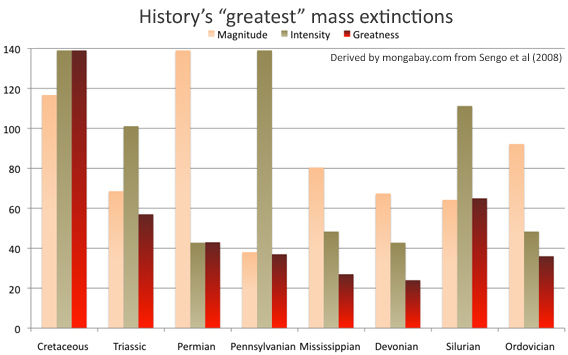
Of course, that’s always been true.  The planet has always been changing, evolving, sometimes in violent increments.  But it’s different now.  It’s different because never before, in the history of homo sapiens, have we been so close to the brink of a major, fast shift in our climate.  Never before, at least since we humans have been on the planetary stage, have we come so close to a global extinction event.

Global extinction event.  Where did I get a phrase like that?  It’s surely not my own language.  It’s one of those memes making the rounds of the Web.  But it’s not part of the lexicon of any of the parents I know.  They don’t want to think about it.  They don’t want to talk about it.  They don’t want to know.

How irresponsible is that, and how surprising, for parents who have been so conscientious, so completely invested in their role as primary caretakers and nurturers of their children.

It’s the privileged parents to whom I address myself most fervently. Parents who put so much time, energy and money into the task of raising their children, and do so with all their intelligence, responsibility and good will.  Parents who often have extra money to put towards a winter vacation someplace warm, or a summertime break by the beach.  Parents who are happy to send their kids to specialty camps in the summer, and who come up with the cash for school trips, afterschool lessons, an educational weekend in the city, a junior year abroad.

Privileged parents, listen up!  If you continue to turn a blind eye to the intertwined issues of environmental degradation and climate change, both of which are caused above all by enforced, ruthless economic growth based on the heedless consumption of fossil fuels and distribution of chemicals in the water, earth and air, your beloved children will face a future in which they cannot thrive.

A future in which none of us can thrive, unless it be perhaps the cockroaches, the ants and—for a while at least—scavengers like vultures and crows.

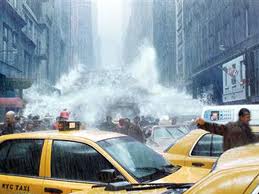
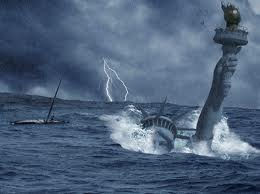
There have been so many disaster movies produced in the past few years—The Day After Tomorrow, 2012, WALL-E—putting out on the big screen our fears about what kind of future awaits us in an age of climate crisis and ecological collapse.  These movies represent our collective unconscious talking to us, presenting worse-case scenarios so that we can prepare ourselves for what may come.

We seem to like these movies because they give us the pleasure of stepping back afterwards and reassuring ourselves that it was just fantasy, not real.

The reports of the International Panel on Climate Change have none of the glamour of the big screen.  But they are saying the same thing as those disaster pictures.  They paint the same picture in different language.

It turns out that those disaster scenarios are real.

Sit with that knowledge for a bit, and then check in with yourself as a parent.  Once you accept that the looming environmental crisis is real, how can you continue to live your life blithely as though everything is OK?

Parents above all have a responsibility not just to take this knowledge seriously, but to act on what we know.  And parents of privilege–the 10%, the 25%–most of all.

We should be vehemently protesting the poisoning of our food, air and water.  We should be doing our utmost to stop the corporations who are wreaking this havoc, to change our own participation in the system, and to envision and manifest a better society that engages sustainably with the planetary ecological systems upon which we all depend.

Never before have we stood at such a juncture as a species.  Now is the tipping point.  Now is the time for us to stand up and be counted.  Now is the time for us to dare to take a path less traveled, to think for ourselves, to do what’s right for us and our children and the world we live in, before it’s too late.

It will not be easy, the road ahead.  There is so much to be done to turn this environmental train wreck around, and so little time.  We may not succeed.

But we cannot continue to play dumb any more.  We cannot continue to keep playing the game as if nothing were wrong, as if the biggest crisis of the past 10,000 years of human history were not on the horizon.  We cannot keep dancing to the band on deck as the iceberg looms before us.

There is too much at stake, for ourselves and especially for our children, whose lives—with any luck, and a lot of hard work—will reach further into the 21st century than ours.  If we care about our world—if we care about our children—we must act decisively, do whatever it takes.  Now.

The power of words for a world in crisis

So what am I, a Ph.D. in comparative literature with years of teaching experience in global women’s literature, gender studies and media studies, doing writing and thinking so much about the environment?

Why am I spending time blogging rather than diligently writing research-based articles for peer-reviewed academic journals?

I entered grad school part-time in 1984, first in English, and then in Comparative Literature.  Why those fields?

As an undergraduate, I started out wanting to major in environmental studies, but was soon turned off by the level of statistical empiricism required by my biology professors.  Having always loved to read and write, I gravitated towards English, and ended up interning for the local newspaper and becoming somewhat of a prodigy cub reporter.  I went on to work as a reporter for a daily newspaper, then a staff writer and editor for trade publications in New York City.

After a while, I missed the excitement of the classroom, began taking a class or two at night, and was soon drawn into the orbit of the comparative literature department at NYU, where things were really hopping in the late 1980s and early ’90s.  It was the time of the culture wars; of deconstruction and post-structuralist theory; of post-colonialism and eco-criticism and Marxist feminism.  It was an exciting time to be a budding scholar, learning to talk the talk and walk the walk.

And now here I am at mid-career, looking back and wishing that I hadn’t allowed myself to be discouraged from environmental studies so easily.

These reflections are spurred by the lead article in today’s Chronicle of Higher Education, about the Modern Language Association convention, which starts today in Seattle.  I’ve already written about why I’m not there, and reading today’s Chronicle article, I don’t feel too sorry to be missing this year’s conference.

The article, by Stacey Patton, presents a pretty bleak picture of the field of languages and literature–a picture I recognize only too well.  Enrollments in literature classes are at record lows, and many leading voices in the field are being called upon to explain just why an education in the humanities is of continued value in the 21st century.

The Chronicle article quotes James Donelan, a lecturer in English at the University of California at Santa Barbara: “We have been going about our business as if the study of literature were self-justifying, and that making an overt case for its relevance to society was somehow too mundane a task for us….The immediate consequence of this attitude is that we’re losing undergraduate majors and financial support at a terrifying rate, and the far-reaching consequence is that anti-intellectualism and a general lack of empathy are running rampant in civic life.”

Meanwhile, as many as 70% of English department faculty nationwide are so-called “contingent” faculty–hired as adjuncts, on a semester-to-semester basis, often earning minimum wage or less despite their doctorates and their publications.  As one angry commenter (evidently an adjunct English teacher) put it, “I for one will not encourage ANYONE to be an English major.  I will teach them their required composition classes for their OTHER majors because I know those majors will actually change their financial lives and allow them to support their families and move out of poverty.  This IS an elitist profession filled with elitist ivory tower ‘folks.’  Everybody knows it; that’s why the numbers in this field are dropping so much.  Get real.  Stop b.s.ing and face what is really going on.”

Yeah.  So we have an anti-intellectual student body, most of whom are highly resistant to reading books at all; combined with a demoralized and exploited faculty.  Although things are somewhat different at my college, it’s impossible to ignore what’s going on in the field as a whole.

And although some literature professors may be willing to put time and energy into justifying why it’s essential that we continue to study so-called “high literature,” like Shakespeare, Milton, Dante,  and Joyce–or even Pynchon, Rushdie, and Roth–I am not.

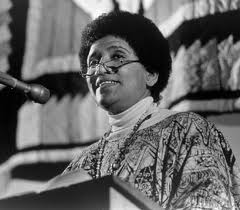
Egyptian author, doctor and activist Nawal El Saadawi

My whole career has been dedicated to the kind of literature that provides windows into the real material conditions of people living on the margins of society–people outside of the ivory tower, whose voices are rarely heard in the American classroom.  My own personal canon includes Rigoberta Menchu, Wangari Maathai, Buchi Emecheta, Gloria Anzaldua, Audre Lorde, Paula Gunn Allen, Shirin Ebadi, Nawal El Saadawi, Mahasweta Devi, Malalai Joya, Vandana Shiva, and many others, few of whom would be familiar to most of the scholars gathered at the MLA this year.

These writers have taught me, above all, to listen.  They’ve taught me to be aware of the intractability of my own privileged social conditioning, and to work hard at overcoming the elitist worldview into which I was born and raised.  And many of them have shown me again and again how in a patriarchal culture women are lumped together with Nature as commodified resources to be managed and controlled.

I never wanted to be a scientist.  My interest in environmental studies sprang from my love and reverence for the natural world, which was so strong in me as a child, and my horror at learning what human beings were doing to the flora and fauna of our planet.

Knowing what I know now about the dire urgency of the manmade threats to our ecological systems on Earth, I cannot sit by and write yet another academic essay on literary theory and disembodied “texts.”

Yes, I care about the sad state of English and literary studies in the academy.  But we’ve doomed ourselves, each of us, by the short-sighted and self-centered decisions we’ve made as individuals and as institutions.  If students today see reading books as irrelevant, and if administrators see English professors as expendable, well…who should we blame but ourselves?

As we hurtle into the 21st century with its multiple crises of climate, ecology and economics, I find myself  still reading, still writing, and circling back around to where I began, in environmental studies, where I will do all I can to use the power of the written word to ignite the social changes we so desperately need.

In narratives of women and the natural world, I have found my home–and my voice.

Shaking the crystal ball: the future is what we make it

As I slept on my last post, the ominous words “civil war” kept resounding discordantly in my mind.

Am I really advocating for civil war?  Me?  I’m so non-violent I won’t even let my kids bring an x-box or a Wii into the house, for fear they might play violent video games.  I’m so non-confrontational that when I get angry I get quiet, not loud.  I find violence of all kinds so abhorrent that probably the only thing that would get me enraged enough to fight back is, precisely, violence, especially if visited on the defenseless: animals, children, trees.

But leavergirl‘s comment this morning has got me thinking again.

She says: “We don’t have to toughen up, but we do have to get more cunning. No street demonstrations will bring a better world. Such things force surface changes with more or less the same problems underneath. The system knows how to coopt, and knows it very well. What will bring about a better world? Living the changes at the local level.

“It’s mindboggling that people think they can “force” changes via demonstrations and protests. After all, the people in power don’t know how, even if they wanted to. We all have to invent it as we go!”

Just as it doesn’t make sense to try to fight big money with more money, it doesn’t make sense to fight violence with more violence.  And she’s right that change has to happen at the local level–that is the whole “be the change” idea.

But can we afford, in this age of globalized capital and planetary climate change, to focus locally and ignore what’s happening on the national and global scale?

It seems to me that we have to do both.  We have to do our utmost in our own homes and backyards and town centers to push for the principles we believe in.  But we also have to keep an eye on the big picture, and add our voices to the chorus calling for a change in the grand narratives that drive social policy in boardrooms and legislative chambers.

Standing up and being counted in a protest does matter.  Voicing public dissent to master narratives, as I’ve been doing in this blog, also matters.  Practicing non-violence and respect in one’s home and community is also important.  That’s what the fourth point in my Manifesto is about:

4. Model egalitarian, collaborative, respectful social relations in the private sphere of the family as well as the public spheres of education, the profession, government and law.

Thoreau’s model of civil disobedience, like Gandhi’s and Martin Luther King’s high-minded non-violence, were effective tactics of resistance that had real, tangible results.

So no, I am not advocating for civil war.  I don’t want to see it come to that.  I am, however, saying that we cannot afford to sit back and hope for the best, or wait and see, or let others worry about it.  We just don’t have that luxury anymore.

I look around me and see so many of my friends who are parents investing so much time, energy, thought and care in the raising of their children.  We worry over every test score, we make sure they eat their organic vegetables, we carefully shield them from violence and pain.

How can we be so focused on the local care of our children that we miss the big picture, which is that the world we will soon be sending them out into is in crisis? How can we not take it as part of our parental duty to do all we can to ensure that when our children grow up, their planet will be intact and able to support them?

On New Year’s Day I had a conversation with my son that keeps ringing in my ears this week.  He expressed his anger at previous generations (including me, of course) who have so degraded our environment that as he now looks out into his own future, he cannot be sure that he will have any chance of realizing his dreams.

We talked about possible future scenarios, including one that seems to be coming up in various conversations lately: conditions of scarcity leading to armed gangs marauding in the streets and taking whatever they can find.  “We would be fucked,” he said bitterly.  “We don’t even have a gun in the house!”

There it is again.  Would having a gun in the house make us any safer?  Isn’t the problem precisely that there are too many guns in too many houses?

And is it inevitable that conditions of scarcity would lead to violence? Maybe it’s likely, but are there steps we can take now to promote a different outcome?

Back to the importance of the local.  Strengthening local communities can head off a dog-eat-dog mentality.  We are all in this together.  Together, we created the present moment we now stand on; and together we will create the future.

What future do we want?  We all want abundance; peace; stability; security.  I don’t think anyone in the world would argue with those general goals.

We have the knowledge and the technology, right now, to achieve these goals, worldwide.

We do!  If we turned our best and brightest minds to the task, we could drastically reduce our carbon emissions within a decade, while still enjoying electricity and heat through solar, geothermal and wind.  We could drastically improve energy efficiency and get rid of our wasteful consumerist mindset.  We could stop making bombs and missiles, and instead refocus those trillions of dollars into education and social welfare, including intensive sustainability efforts on all fronts.

We could do this.  But again, we need that unstoppable groundswell of demand for change. Locally and globally.  NOW.


They don’t play nice. Should we?

So manifestoes are all very well, in the visionary department, but things get harder when you get down into the nitty-gritty of making transformative change happen.  I thought I might take some time this New Year’s season, 2012, to reflect more deeply on what it would mean to turn my dreams into reality.

Let’s start with the first point in my recently penned Manifesto for a Sustainable Future, which is:

1. Move from a top-down hierarchical system to a horizontal, egalitarian model of social relations based on inclusivity across all of the traditional boundaries used to keep different groups apart, and also opening up the possibility for cross-species collaboration based on respect and stewardship.

People have been talking about coalition across artificial differences between humans for a long, long time, and in some cases it has worked: for instance, the privileged white folks who believed in “equality, fraternity and liberty for all” played a huge role in freeing the enslaved Africans during the 19th century, and then a later generation of freedom-loving people from various heritages worked together again in the 1960s to extend the earlier gains through civil rights, women’s rights, decolonization, etc.

It’s not that hard to get people to agree in principle that all human beings deserve equal treatment before the law, or that children should have equal access to quality education, good food and health care.  The Universal Declaration of Human Rights is based on just such agreement.  The problem is that principles and declarations are one thing–like manifestoes–while actions on the ground are quite another.

In practice, we know full well that people of color, poor people and immigrants are not treated equally before the law in the U.S. We also know that there are millions of children in this country whose public schooling is inadequate, sometimes terribly so, and who do not have access to healthy food or good quality health care.

We know this, and yet we choose to ignore what we know.

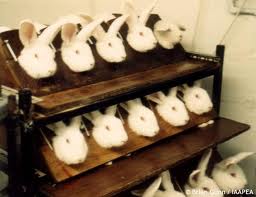
It’s the same thing with what is happening to animals in this country.  We know that scientific research, aka torture, is conducted on thousands, if not millions of defenseless animals every year.  We know that millions of pigs, cows and poultry are treated with total disregard for their well-being, as if they were machines being assembled for market, instead of living, sentient beings.  We know that millions of wild mammals, birds and marine life are relentlessly being pushed into extinction by the pitiless advances of human “civilization.”

We know this, but we choose to pretend we don’t know it.

Maybe that’s because if we really took this information in, the knowledge would be unbearable.  How could we live with ourselves, knowing that just by conforming to the status quo, we are responsible for so much suffering of others on this planet?

But we need to stop pretending and closing our eyes and turning away.

Because it is out of this deep knowledge of our connection with other living beings on this planet, and the inescapable awareness of the suffering we humans are causing, that a movement of solidarity, resistance and change will grow.

To bring up the term “movement” is to be clear that the kind of transformative change I’m envisioning could not possibly be the work of one person, or even a few people.  It has to be an unstoppable wave, demanding change and taking nothing less for an answer.

In the 19th century, the abolition movement ended up sparking a civil war in the United States.

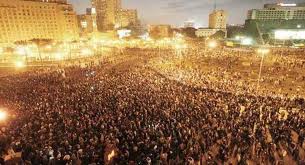
A second American civil war seems rather unthinkable to most of us now, even as we watch with amazement as regimes fall to enraged mobs all across the Middle East and North Africa.

In the US, free expression is tolerated far more widely than, say, in China, where journalists and bloggers are regularly beaten up and thrown in prison for daring to speak an unpopular truth.  The U.S. was shocked–shocked!–when the government called out the military and tanks began firing into the crowds at Tiananmen Square back in 1989.

But you have to wonder, watching the ruthless way city police are now trained to deal with street protests, how much it would take to provoke a similarly harsh response from our federal government.

What if there were a real movement of people united in their demands for “equality, liberty and justice for all,” as schoolchildren in the US are still trained to recite piously every morning, hands over hearts, when the Pledge of Allegiance is played over the PA system?

What if people got fed up enough with our bungling and corrupt national leaders, our deeply unfair and wildly overpriced medical system, the outrageous skewing of entitlements of all kinds to the wealthy, the militarization of our relations with other countries, the poisoning of our environment, the killing off of the natural world–fed up enough that we were willing to take to the streets and demand change, and not back down even when they brought out the tear gas, the tanks and the guns?

Then we might just have a Civil War II on our hands.  And like the first Civil War, it would be bloody, chaotic and uncertain in outcome.  But if the vision that guided it was sure and true, it might just lead to a whole new country arising out of the ashes of the old.

In this globalized age, such a civil war might easily turn into a global war, as the 99% the world over rose up against the tyranny of the rich corporate interests that are ruining the welfare of humans and the planet as a whole.

And here’s where I need to get back to the Manifesto, where I imagined a new social order based on a horizontal, inclusive, respectful, egalitarian model of social relations, with the welfare of the poor as important as the welfare of the rich; the welfare of the coral reef as valued as the welfare of the watershed feeding a city; the welfare of a livestock animal as important as the welfare of a cherished pet.

Not to say that everyone would necessarily be treated exactly the same–a cow wouldn’t want the same treatment as a dog, after all.  But whatever it takes to give a cow a comfortable, dignified life, should be undertaken.  Whatever it takes to give every child access to a high-quality education, should be done.  Decisions should be made in truly representative fashion, with no possibility of wealthy interests buying votes, no PAC lobbies or media manipulation allowed.

The devil is in the details in putting such a new world order in place, I know.  Many smart people maintain that human beings are irredeemably aggressive, competitive and greedy, and so we are incapable of creating such an ideal world.

But many other smart people say the opposite: that human beings are naturally empathic creatures, whose first instinct as infants is to love, not to hate.  Very few children are instinctively cruel to others.  The majority of us seem to be naturally good-natured, though easily swayed and corrupted by our social conditioning.

As Jeremy Rifkin has argued, “What is required now is nothing less than a leap to global empathic consciousness and in less than a generation if we are to resurrect the global economy and revitalize the biosphere. The question becomes this: what is the mechanism that allows empathic sensitivity to mature and consciousness to expand through history?”

Rifkin’s own answer to this question has to do with what he calls the “distributed Internet revolution,” which is “changing human consciousness” by “extending the central nervous system of billions of human beings and connecting the human race across time and space, allowing empathy to flourish on a global scale, for the first time in history.”

Rifkin envisions just the kind of transformation in social relations that I have also been dreaming of.  His description of a new human relation to what he calls our “biosphere” is worth quoting in full:

“The biosphere is the narrow band that extends some forty miles from the ocean floor to outer space where living creatures and the Earth’s geochemical processes interact to sustain each other. We are learning that the biosphere functions like an indivisible organism. It is the continuous symbiotic relationships between every living creature and between living creatures and the geochemical processes that ensure the survival of the planetary organism and the individual species that live within its biospheric envelope. If every human life, the species as a whole, and all other life-forms are entwined with one another and with the geochemistry of the planet in a rich and complex choreography that sustains life itself, then we are all dependent on and responsible for the health of the whole organism. Carrying out that responsibility means living out our individual lives in our neighborhoods and communities in ways that promote the general well-being of the larger biosphere within which we dwell.”

It would be nice if we could simply persuade the 1% corporate types of the necessity of this shift in human consciousness. But these people don’t play nice.

That’s why we dreamers who share this kind of transformative vision may have to toughen up, if we want to achieve our goals.

As Derrick Jensen keeps saying, how long will we wait until we realize that action is necessary to avoid annihilation?  It’s the birds, the bees and the bats who are dying now, but these creatures form the base of the pyramid on which current hierarchical human society rests.  If their populations crash, can ours be far behind?

Can we afford to wait and see?

A “Be the Change” Manifesto for the 21st Century

On New Year’s Day, 2012, I reaffirm my commitment to dedicate my talents and energies towards shifting our destructive global human society in a direction that values the ecological health of the entire web of life on Earth over the short-term gains of a minority of human beings.

I invite you to join me, and you would cheer me very much if you expressed your solidarity by responding to this post, if only with a “like.”

Manifesto for a Sustainable Future

Whereas human beings have acted in a dominating fashion towards each other and towards other living species on this planet, using the excuse of difference to justify aggressive and destructive behavior;

Whereas competition has been used as a rationale for economic systems based on hierarchical systems of power;

Whereas social exclusion and systematic discrimination has been seen as the normative right of dominant groups;

Whereas privileged groups have felt entitled to take more than their fair share from the environmental commons, and to deprive less powerful groups, whether human or of other species, of the resources necessary for well-being;

Whereas it is quickly becoming apparent, in the age of climate change, that the dominant paradigm of capitalist patriarchal social relations is resulting in the dangerous destabilization of the entire natural ecosystem;

The time has come to take action to change this paradigm in the following ways:

1. Move from a top-down hierarchical system to a horizontal, egalitarian model of social relations based on inclusivity across all of the traditional boundaries used to keep different groups apart, and also opening up the possibility for cross-species collaboration based on respect and stewardship;

2. Shift the worldwide economic system to a model of global cooperation and collaboration, with the focus of human industry and government on providing a baseline of well-being for all life forms on this planet, regardless of geographic origin or antiquated ideas of relative importance (ie, who is to say that a human being is more important than a songbird, or a sardine?);

3. Tailor the education system to teaching the history of the destructive cultural practices of homo sapiens up to the 21st century, and opening up constructive conversations across disciplines, where alternatives to these traditions can be envisioned and developed;

4. Model egalitarian, collaborative, respectful social relations in the private sphere of the family as well as the public spheres of education, the profession, government and law;

5. Shift from a violent conflict and punishment model of resolving disagreements to a peaceful persuasive model, with the goal always being the well-being of the community as a whole first, and secondly each member of it.

6. Destroy all weapons of mass destruction, as well as all bio and chemical weapons, and their blueprints.

7. Disallow any one person’s or minority group’s interests (with rich people and businesses or industries rightly being considered minorities)  to take precedence over the interests of the majority, including the non-human majority on this planet.

8. Develop an appropriate representative global governing council to administer these principles.

In the name of Mother Earth and ALL of her children, I call on the peoples of the world to act without delay to become the stewards of the planet and the collaborative, respectful individuals we were always meant to be.

Talking ’bout revolution on New Year’s Eve

New Year’s Eve puts some people in a rah-rah kind of mood, and others get pensive and reflective.  Although I’ve done my share of partying in the past, this year I’m feeling pretty subdued.

The rainy weather outside doesn’t help matters.  Yes, we’ve got a cold nasty rain going on this year in New England–not a snowflake in sight on December 31.

And it’s depressing to open my email inbox and find hordes of outstretched hands from excellent NGOs, begging for last-minute donations.

As someone who has often been in the position of asking for donations to fund various initiatives I’ve worked on, I know that these end-of-year gifts can literally make or break a small organization.  They’re the lifeblood that keeps so many worthy causes alive.

Of course, we all know that if we give to these organizations we can write down our taxable income and give less to the federal government, and many people take satisfaction in being able to direct their giving, instead of sending it into the amorphous federal pool to be redistributed according to the whim of our so-called representatives in Congress.

So why am I resisting giving this year?

I am just irritated with the system that starves worthy social and environmental causes while lavishly feeding the maw of the military industrial complex.

I am irritated that the Democratic Party keeps asking me for small donations of $15 or $25, sums that actually matter to me, sad to say–while at the same time courting the big corporate interests whose millions of campaign spending will control the election.

I am irritated that no matter how much each of us gives, it’s never enough to solve the problems that face us.

And I’m beginning to think that money is not the answer.

It’s such a revolutionary thought, and yet once out of the box it seems so clear.

Just as giving a dollar to a beggar on the street may help that poor guy get through one more night, but does nothing to solve the bigger problems that landed him on the street in the first place, throwing money at the dozens of worthy charities that are hunting us all down today is simply not going to effect the kind of deep systemic change our society and our world needs.

It’s not about money.

Yes, it’s true that corporate money has corrupted our political system.  But just as fighting violence with more violence only escalates the conflict, trying to fight big money with more money will accomplish nothing because we’re still allowing the guys with the deep pockets to set the agenda.  We’re being reactionary, and our thinking, along with our dollars, stay inside the established sociopolitical framework.

In the coming year, we need to quiet down the ambient noise in our minds–the shouting, the screams, the piteous begging, the brash hawking of wares, the political sloganeering–and do some deep thinking about the ways in which we have been limited by the system we grew up in.

It’s time to re-establish our priorities, as individuals, as a nation, and as a global society.  Throwing good money after bad accomplishes nothing when the values that drive the system are warped and destructive.  We’ve got to go deeper in our approach to change.

Yes, I’m talking about revolution this New Year’s Eve.  Not reform.  I’m talking about going all the way, because we’re at an economic and ecological breaking point now.

We have little to lose, and so much to gain by decisive action.  Think about it.

“Let your life be a counter-friction to stop the machine”

I believe that we are coming to a crossroads as a nation.

Since 9/11, we’ve been traveling down a road bristling with guns, military technology, paranoia and fear.  Though most of our aggressive energy has been aimed outside our borders, there has also been a steady preparation for mass violence within the U.S. as well.  In the decade since 9/11, our national police forces have been armed with military hardware, and have trained extensively in riot control, with the results that we saw for the first time during the recent Occupy protests.

In the peaceful town of Fargo, North Dakota, report Andrew Becker and G.W. Schulz of the Center for Investigative Reporting, “Every city squad car is equipped today with a military-style assault rifle, and officers can don Kevlar helmets able to withstand incoming fire from battlefield-grade ammunition. And for that epic confrontation—if it ever occurs—officers can now summon a new $256,643 armored truck, complete with a rotating turret.”

Billions of federal tax dollars have been spent nationwide on this kind of military hardware for police, in the name of Homeland Security.

Security from what?  Security for whom?

Short of an all-out military invasion by a foreign force, which seems hugely unlikely, these weapons can only be meant to confront an insurgency within our own borders.

Are we thinking about a civil war, then?

Are these police being armed and trained to protect the interests of the 1% against the raging anger of the 99%?

A year ago it would not have occurred to me to ask these questions.  But obviously the Homeland Security crowd was already thinking ahead and planning for a time when such armor and weapons would be necessary to “maintain security” and “uphold law and order” on the home front.

Yes, they must have been aware, even as they were cashing in on our ignorance, that there would come a time when no more could be squeezed from the bottom two-thirds of American society.  When there would be so many homeless, so many poor, so many disenfranchised, that these people would feel they had no other recourse than violence, and nothing left to lose.


A new report by the National Center on Family Homelessness found that “more than 1.6 million children – or one in 45 children – are homeless annually in America. This represents an increase of 38% during the years impacted by the economic recession.”

I’m sorry, but that is just unacceptable in this country, which likes to think of itself as the wealthiest and most enlightened society on earth.

When you add up all the trials and tribulations being visited on the poor in this country–and “the poor” is a vast category that gets bigger day by day–and you weigh billions in Homeland Security anti-terrorism outfits for police against dwindling food and shelter for children–well, something just isn’t right here.  There’s something rotten in the state of America.

And yes, we are at a crossroads.

It may seem to some that I am over-reacting, but this is the way it feels to me: if we continue following along docilely on this daisy path that we’ve been led down by the architects of corporate capitalism, we are like the Jews of Germany in 1940, peacefully gathering our belongings and getting on that train to Auschwitz, or marching cooperatively out to the forest to be mowed down by machine guns into the mass grave.

We know enough now to know that the powers that be do not have our best interests at heart.

We’ve been sickened by their chemicals, and our health care system seems geared to treat sickness (at a profit) rather than to promote wellness.  Our oceans, air, soils and drinking water have been contaminated and rendered toxic. Our taxes have been used for guns and landmines instead of schools and social welfare.  Those who have gotten rich in this system have done so on the backs of the poor and those who cannot defend themselves: the natural world above all.

Are we going to continue down this path?

Or are we going to gather our courage at this crossroads, and strike off in a new direction?

A lot of people are asking this question now.  Over on the New Clear Vision blog, Charles Imboden suggests that the Occupy movement has ignited a renewed “commitment to direct democracy and shunning of ‘representative,’ republican forms of decision-making (so often susceptible to corruption and corporate influence) [which] can be further strengthened as the foundation of the egalitarian, ecological society.”

As one of my readers commented today, what would happen if they held an election and we just didn’t show up?

I don’t know if there is a way to cut ourselves loose from the federal government and its taxpayer-supported state terror apparatus.  Thoreau tried, back in the 19th century, and was promptly thrown in jail.

His letter from prison is worth re-reading today.

“Unjust laws exist: shall we be content to obey them, or shall we endeavor to amend them, and obey them until we have succeeded, or shall we transgress them at once? Men, generally, under such a government as this, think that they ought to wait until they have persuaded the majority to alter them. They think that, if they should resist, the remedy would be worse than the evil. But it is the fault of the government itself that the remedy is worse than the evil. It makes it worse. Why is it not more apt to anticipate and provide for reform? Why does it not cherish its wise minority?

“If the injustice is part of the necessary friction of the machine of government, let it go, let it go: perchance it will wear smooth—certainly the machine will wear out. If the injustice …is of such a nature that it requires you to be the agent of injustice to another, then I say, break the law. Let your life be a counter-friction to stop the machine. What I have to do is to see, at any rate, that I do not lend myself to the wrong which I condemn.”

Let your life be a counter-friction to stop the machine.

As we gear up for next year’s Presidential elections, we must take these wise words of Thoreau’s to heart.

But we must also be aware, as Thoreau certainly was, that there are other paths to take, outside of the machine.

We stand at a crossroads.  Each of us must make up our own minds, in our own time.

How much longer will we continue to docilely feed the machine our tax dollars, and march peacefully where they lead us?

Methane Burps and Political Disenfranchisement: People, Wake Up!

There are two pieces of news that have me really worried today, one environmental, the other political.

The environmental news, predictably, is about global warming.  I suppose most people have heard by now about the giant methane plumes being released into the atmosphere from the melting Arctic permafrost, but did you realize the scale of what is going on?  Here is a quote from the scientist who has spent more time than anyone else actually observing this issue in the Arctic, Dr. Igor Semiletov:

“In a very small area, less than 10,000 square miles, we have counted more than 100 fountains, or torch-like structures, bubbling through the water column and injected directly into the atmosphere from the seabed,” Dr Semiletov said. “We carried out checks at about 115 stationary points and discovered methane fields of a fantastic scale – I think on a scale not seen before. Some plumes were a kilometre or more wide and the emissions went directly into the atmosphere – the concentration was a hundred times higher than normal.”

As Andrew Revkin notes in his excellent Dot Earth NY Times blog, ““Given that methane, molecule for molecule, has at least 20 times the heat-trapping properties of carbon dioxide, it’s important to get a handle on whether these are new releases, the first foretaste of some great outburst from thawing sea-bed stores of the gas, or simply a longstanding phenomenon newly observed.”

Dr. Semiletov and his team caution that it’s too soon in their research to answer this question definitively.  But it stands to reason that melting permafrost and sea ice would provide an escape hatch for methane that had previously remained sequestered for millennia.  It seems likely that this trend will continue and worsen in the coming years.  Global warming, here we come.

The other news I’m fretting over this morning is the massive Republican attack on voter franchise in the U.S.–also on a vast scale, and with potentially disastrous results.  As Amy Goodman spells out in a column today on Truthdig,  “Across the country, state legislatures and governors are pushing laws that seek to restrict access to the voting booth, laws that will disproportionately harm people of color, low-income people, and young and elderly voters.”

This has been going on for at least a year now, and only last week did Attorney General Eric Holder finally act to declare one such state action, in South Carolina, unconstitutional.  The Democratic Party is finally waking up to the sinister plot afoot by the Republicans to steal the election they are unlikely to win in a fair fight.

We know what right-wing Republicans stand for: unfettered big business, dismantling of social safety net programs, Boss Tweed-style oligarchy of the wealthy, and an “are there no workhouses” Scrooge mentality towards everyone else.

Is this the country we want to become?

The United States needs to regain its stature as a beacon of hope in dark and dangerous times.  The stakes are so high now; the danger is so real and so close.  Although I have been writing about the importance of strengthening local “transition town” resources, we cannot afford to ignore big politics, because of the undeniable power possessed by federal and state governments, which can be used for good or for ill.

Although we can’t do anything to control those methane burps, we can work to shape and direct our political systems towards moving full steam ahead to transition to renewable energy and prepare for the systemic climate change that is already upon us, whether we want to admit it or not.

As the Occupy movements regroup in the New Year, I want to see the young people of this country stand up for their rights and the sane governance of our country and our planet.

Occupy the Elections must become a rallying cry for the coming months.

Survival is not an academic skill

Yesterday I wrote that I intend to devote my second half of life (OK, let’s be real, we’re talking about  more like my last third of life at this point) to parenting and trying to change our global social systems to be sustainable and non-exploitative.  That intention rolled around in my head overnight, and I began to wonder how my role as a college teacher fits into this scenario.

Can I use my vocation as a teacher of comparative literature, media studies & gender studies/human rights to change the world?

As if in response to my unvoiced question, the inimitable professor Stanley Fish published an op-ed on the NY Times website last night, in which he used the occasion of the upcoming Modern Language Association annual convention to reflect on the state of the higher-ed humanities profession.

I’ve participated in many an MLA convention in my 25 years or so of professional involvement in the field of comparative literature, but this year I am not attending because my panel proposal, entitled “Strategies of Resistance: Women’s Writing and Social Activism in Iran, South Africa and the United States,” was not accepted.

Professor Fish’s analysis of the 2012 conference Program gave me a good insight into why my proposal, which I thought was comprised of excellent papers by well-qualified scholars, was rejected.

“Absent or sparsely represented,” he says, “are the topics that in previous years dominated the meeting and identified the avant garde — multiculturalism, postmodernism, deconstruction, post-colonialism, neo-colonialism, racism, racialism, feminism, queer theory, theory in general.”  My panel would have fit nicely into at least three or four of these categories.

The new hot topics at the convention this year, says Prof. Fish, can be lumped under the umbrella term “digital humanities,” which covers “new and fast-moving developments across a range of topics: the organization and administration of libraries, the rethinking of peer review, the study of social networks, the expansion of digital archives, the refining of search engines, the production of scholarly editions, the restructuring of undergraduate instruction, the transformation of scholarly publishing, the re-conception of the doctoral dissertation, the teaching of foreign languages, the proliferation of online journals, the redefinition of what it means to be a text, the changing face of tenure — in short, everything.”

Everything?

The problem with this brave new direction in literary studies is that even while it reaches out to the world through digital portals, it seems to have lost all interest in the real world beyond its own narrow and insular ivory halls.  Other than “the changing face of tenure,” which is certainly a meaningful labor issue for the small percentage of Americans who are college/university professors, there is no indication that the young literary Turks all fired up about the digital humanities care at all about material conditions for people, animals or the environment.  Politics becomes cyber-politics; people become avatars; electricity simply flows, and food appears like magic in supermarkets or restaurant dishes.

Let me be clear: I am no Luddite when it comes to digital technologies.  I’m writing a blog, after all, and I regularly teach a class in digital media studies, which changes radically every time I offer it because I try to keep up with the rapidly transforming media landscape.

But to me, digital technology is a vehicle, not an end in itself.  I want to involve myself in digital media and the digital humanities to further my material, political goals of remaking the world.  Otherwise it’s just so much more mental masturbation.  We don’t have time for that now, if indeed we ever did.

And here’s where I come back around to my starting question of whether my role as a teacher will be useful to my larger political goals of transitioning to a safer, kinder, happier human and inter-species landscape.

It depends what I teach, doesn’t it?

For years now I have been teaching a series of classes on “women writing resistance” in various areas of the world–Latin America, the Caribbean, Africa, the Middle East, the U.S.  The political writings of strong women who have successfully resisted both private and public oppression have taught me and my students so much about what it takes to stand up for one’s principles and put one’s visions of positive social change into action.  We’ve also learned a lot about the price activists often pay.

In the years ahead, I want to continue to use my vocation as a teacher to explore literature that is not afraid to speak truth to power.  I want to seek out visionary texts that look ahead fearlessly into the future and light the way for those who are following more slowly and cautiously down the path.  I want to amplify the voices of authors who advocate for those who do not have the same privileged access to the literary stage.  I want to become one of those authors myself.

I should not be surprised that this direction is of little interest to the crowd inside the insular tower represented by the MLA.  What was it that Audre Lorde said at another academic conference, long ago?

Survival is not an academic skill. It is learning how to stand alone, unpopular and sometimes reviled, and how to make common cause with others identified as outside the established structures in order to define and seek a world in which we can all flourish.”

Yes, Audre.  I’m with you.