Idle No More: Exposing the Suicidal Cult of Global Capitalism

Once again we are seeing how the democratic power of social media can thwart the efforts of the state political apparatus to keep the people in line.

This time it’s happening in Indian Country, beginning in northernmost Canada and spreading like wildfire through social media networks down south and out into the broader world.

The movement is called Idle No More, and it was started by a coalition of four indigenous and non-indigenous women from Saskatchewan—Sylvia McAdam, Jess Gordon, Nina Wilson and Sheelah Mclean—who decided last fall that enough was enough with the steady assault on the environment and protections for First Nations lands in Canada.

Idle No More Founders

Idle No More Founders

Taking specific aim at an omnibus bill in the Canadian Parliament, known as Bill C45, the women began teach-ins and protests around their homes in northern Canada.  Word spread quickly across North America and beyond via social media channels, and a global solidarity movement was born.
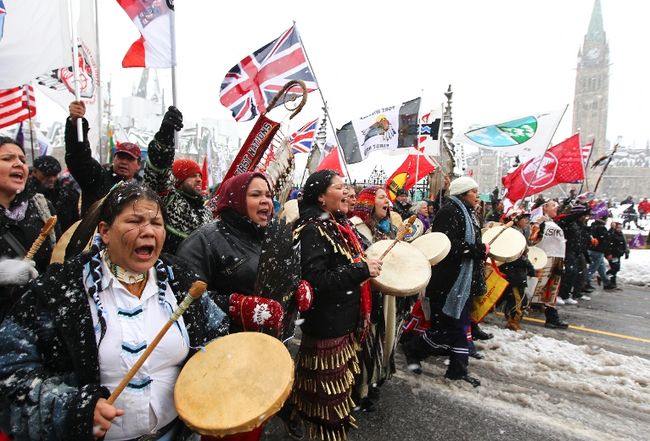
Idle No More protest in Toronto last month

Idle No More protest in Toronto last month

According to the Idle No More website, this is what happened:

 Bill C45 brings forward changes specifically to the Indian Act that will lower the threshold of community consent in the designation and surrender process of Indian Reserve Lands. 

Sheelah McLean reminds us that the bill is about everyone.  She says “the changes they are making to the environmental legislation is stunning in terms of the protections it will take away from the bodies of water – rivers and lakes, across the country.”  She further adds, “ how can we not all be concerned about that?”

The Idle No More efforts continued in Alberta with an informational meeting held at the Louis Bull Cree Nation.  The organizer for that event, Tanya Kappo, took to Twitter and Facebook to help generate awareness on the matter as the passage of Bill C45 was imminent. 

Kappo says, “the people in our communities had absolutely no idea what we were facing, no idea what plans Stephen Harper had in store for us.”  The events leading up to the National Day of Action have been focused on bringing awareness to people in First Nations communities and the rest of Canada. 

Jess Gordon says, “The essence of the work we are doing and have been doing will remain a grassroots effort, and will continue to give a forum to the voices of our people.”

When Bill C45 was brought to the House of Commons for a vote, First Nations leaders demonstrated that they are hearing these voices loud and clear.  They joined the efforts against Bill C 45 and went to Parliament Hill where they were invited into the House of Commons by the New Democratic Party. 

However, they were refused entry.  This refusal to allow First Nations leadership to respectfully enter the House of Commons triggered an even greater mobilization of First Nation people across the country. 

Nina Wilson says, “what we saw on Parliament Hill was a true reflection of what the outright disregard the Harper Government has towards First Nation people.”

With the passage of Bill C45, Idle No More has come to symbolize and be the platform to voice the refusal of First Nations people to be ignored any further by any other Canadian government.
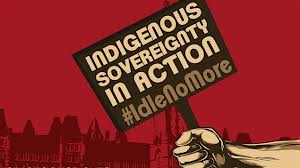
Unknown

Yesterday I happened to catch a call-in program on the CBC (Canadian Broadcasting Co.) on the Idle No More protests, which have apparently taken most Canadians by surprise.  The host interviewed a representative of the Canadian environmental protection agency, and it was shameful to listen to the way he sputtered when asking whether the bill in question really would result in damaged waters and fisheries.

Although he refused to come out and say it, the short answer was clearly, “Yes.”

As always, for mainstream politicians and businessmen the lure of short-term profits outweighs longterm planning for the health and welfare of the planet and her denizens.

Some of the callers on the CBC program displayed evident racism in their attitudes towards the Native peoples behind the Idle No More protests, which have blockaded railways and highways in recent weeks, in an effort to gain the attention of the Canadian prime minister, Stephen Harper.

Attawapiskat Chief Theresa Spence

Attawapiskat Chief Theresa Spence

One Native Chief, Theresa Spence, has been on a hunger strike for nearly a month now, her immediate goal simply being an audience with Mr. Harper and a chance to present the First Nations case.  Harper has finally agreed to meet with Spence and other chiefs, on January 11, 2013, one month after she started her hunger strike.

Spence is a controversial figure in this movement, which began with a grassroots coalition and has displayed some reluctance to let the indigenous chiefs steal the thunder.

There have been rumors of corruption among the chiefs, including Spence herself, who has just now, conveniently enough, been subjected to a humiliating government audit of her finances.

It’s not clear whether all the chiefs are truly after the protection of the environment, or if they just want to have their fair share of the economic action when it comes to the rapid development of Canada’s northern territories.

What is clear is that the immense land and resource grab in the Americas, which began with the colonial conquests and has continued to the present day, provides short-term financial gains for the few—mostly non-indigenous corporations and financiers—while the majority of Native peoples languish in poverty, sitting on environmentally devastated lands.
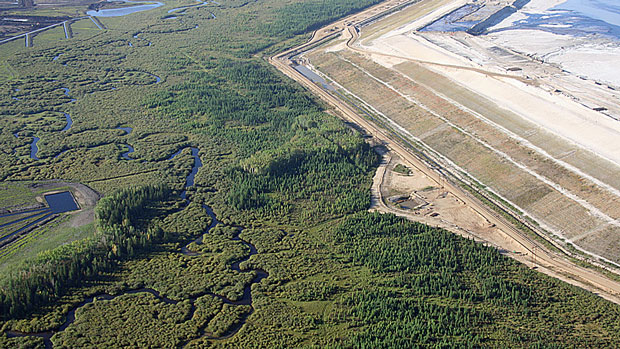
Aerial view of Alberta tar sands development, aka the destruction of the Alberta boreal forest. (Global Forest Watch Canada)

Aerial view of Alberta tar sands development, aka the destruction of the Alberta boreal forest. (Global Forest Watch Canada)

In case after case worldwide, rapacious corporations sweep in, negotiate favorable leases on the land, extract the resources and move on, leaving behind a toxic, degraded landscape and a broken people.

Now we have finally come to the time when it is becoming obvious that the damage that is being wreaked on people and their environments in specific parts of the world is not just “their own problem.”

As the founders of the Idle No More movement correctly perceived, if the waters of Canada are not protected, it will affect all Canadians, not just the First Nations folk who sit closest to those waterways.

If the boreal forests of northern Canada are razed, it will affect the entire planet, just as the steady destruction of the rainforests in the southern latitudes is inexorably destabilizing our climate worldwide.

It appears that our politicians only understand the language of dollars and cents.  In New York and New Jersey now, a serious discussion is underway about how to pay for the cost of adapting to the climate change that almost everyone sees now as inevitable.

Yes, we have to adapt, we have to mitigate the damage by changing the way we develop our coastlines.

But we also have to adapt our mindsets when it comes to “development of natural resources”—a green-washed euphemism for what has really been “the wholesale destruction of the planet.”

This is as true for the destruction of the boreal forests of Canada as it is for the fracking of the Marcellus Shale in the U.S.

If the real costs of this kind of destructive “development” were added up, no sane financier or politician would be able to support such a suicidal undertaking.

If our politicians and business leaders want to commit hari-kari by reckless short-term myopic thinking, good riddance to them.

But they have no right to take the rest of us along with them.

It reminds me of suicide cults like the infamous one in Jonestown, Guyana, in the 1970s.  A whole group of people was so taken in by the charismatic leadership of their guru, Jim Jones, that they obeyed his order to commit ritual suicide.
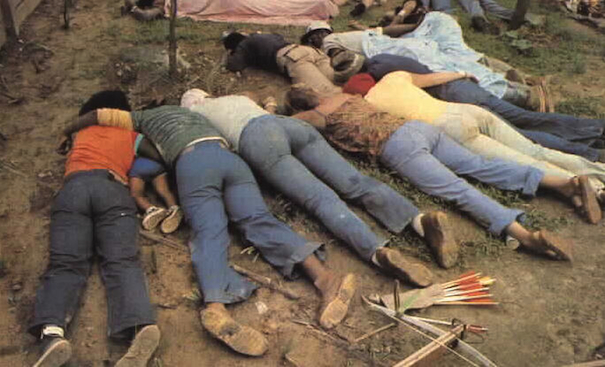
Victims of the Jonestown suicide cult

Victims of the Jonestown suicide cult

In our case, it’s the entire global capitalist leadership that has us all in thrall. We have been seduced, charmed and entranced by the siren call of “development,” which has given mainstream North Americans—the ones who agree to play by the rules—the benefits of a comfortable lifestyle.

The hidden underbelly of this lifestyle—the environmental destruction, the extermination of thousands of species annually, the annihilation of entire groups of indigenous peoples worldwide, the irrevocable destabilization of our climate—is now coming into view, thanks in large part to the democratization of the media through the World Wide Web.

I continue to believe that when ordinary, good-hearted people understand their own role in this planetary destruction, they will stand up and insist, like the four women who founded Idle No More, that enough is enough.

The question is, how far will we be willing to go to insist that our leaders respect our values and stop dragging us down the road to ruin?

How far will we have to go?

“Never doubt that a small group of thoughtful, committed citizens can change the world. Indeed, it is the only thing that ever has.”

–Margaret Mead

American Mothers Must Unite Against the Culture of Violence

A couple of weeks ago, when I heard that my 14-year-old son and his friend had been playing with the other boy’s air-soft pistols by shooting each other at close range, I saw red.

“But it just stings like a bee-sting, Mom,” my son protested.  “It just leaves a welt.  Why are you getting so upset?”

At the time, I wasn’t sure why I was getting so upset—after all, these were only toy guns.

My answer to my son was that a “bullet” could ricochet and end up hitting him in the eye, which is true and a rational explanation for why I flatly forbid him to engage in that kind of behavior any more with those guns.

“Target practice only!” I insisted. But of course, what he and his friends do when I’m not around is impossible to predict or monitor.

Nancy Lanza

Nancy Lanza

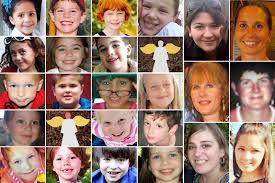
Now, after the Newtown massacre, I am thinking more deeply about the issue of guns, violence and kids.  I’m also thinking more about Nancy Lanza, the gunman’s mother, who he savagely shot in the face, leaving her dead in her pajamas in bed while he went out on his mission of mass murder.

I’m far from the only one who is asking what Nancy Lanza could have been thinking to make her home into an arsenal, complete with assault weapons and major ammunition, especially with a son living there who she knew to have social adjustment problems.

I hear that the good people of Newtown are shunning Nancy in death, focusing on the “26 victims” of Adam Lanza and refusing to light a candle in her memory.

This seems like a classic case of blaming the victim, and yet of course Nancy does bear responsibility for the horrific massacre of the 26 innocent victims.

If she hadn’t armed her son, he could not have carried out this crime.

So this begs the question of our responsibility as parents, especially, in this context, as parents to sons.

I have two sons, and like Nancy I am divorced, with my sons’ father very distant from their day-to-day lives.

It is my responsibility to raise them to be kind, good-hearted men, who use their warrior strength to protect and strengthen their communities, not to destroy.

But what a battle it is to keep the tremendously destructive tsunami of media and cultural violence at bay in our home!

I don’t have TV in my house, and my kids don’t own a Wii or Playstation.  But we do have computers, tablets and smartphones; we watch Netflix and go to the movies and have friends who are more casually accepting of (toy) guns than I am.

Unknown-1I have tried to hold the line on violent video games that the boys may have access to through the computer, and for the most part I think I’ve been successful.  Even if they may sneak a violent game or two when I’m not around, at least they don’t play these games obsessively, with impunity, the way most teenage boys do in America.

We’ve talked at length about my objections to media violence, and I know they understand, even if they occasionally express the wish that they could just join the crowd and go on a good virtual shooting rampage like all the other boys they know.

I’ve gotten into arguments with my older son, age 20, and some of my college students, who insist that there is no way they’d ever do in real life what they have so much fun doing in video games.

I hope they’re right.

But I want to know why, as Americans, we tolerate and indeed seem to relish representations of violence, while at the same time we’re so fearful of actual violence that some of us are stockpiling weapons in our homes to prepare ourselves for the worst.

In the old days—not that long ago, in the scale of human history—a whole town used to turn out for a festive viewing of a hanging.

Today in places where conservative Islam reigns, women are stoned to death in public spectacles of participatory violence.

But how different is that, really, from the great American past-time of engaging in virtual violence of the most vicious sort?

America is the most violent, militarized society on Earth and Americans are the greatest exporters of violence, both physical and virtual, to the rest of the world.

Most perpetrators of violence—again, both real and virtual—are men.  Men are the greatest victims of violence too, though women and children bear a disproportionate share, given that they are far less likely to be pulling the triggers.

We need to start looking much harder at the way our culture encourages violence by selling us the story that real men enjoy violence and can handle it with insouciance.

I don’t want my teenage son shooting an airsoft gun at his friend, and I don’t want him going on virtual “special ops” missions armed with a Bushmaster assault rifle.

I wish his father were on hand to back me up in this, and I think my situation as a mother trying to keep violence out of my home is probably far more common than we realize as a nation.

We know that half of marriages end in divorce, and I wouldn’t be surprised to learn that of the remaining married couples, half include men who enjoy guns, violent video games and violent movies, and teach their sons to do the same.

So that leaves a lot of us women either on our own trying to fight the prevailing winds of culture and raise peace-loving men, or tolerating or going along with the culture of violence within our most intimate relationships and the private sphere of our homes.

Yes, some women may themselves be violent.  We still don’t know why Nancy Lanza felt the need to arm herself with such terribly potent weapons.

But the fact remains that of the steadily mounting toll of mass shootings in this country, not one has been committed by a woman.

Women are way more likely to be victims of violence than perpetrators, and even as perpetrators they are generally acting in self-defense.

American women, I call on you to look deeply at this issue, and find the strength to stand up collectively against the violence.

Mothers, we need to support each other on this!

Just as the Mothers Against Drunk Driving took a stand and changed the pattern of teenagers driving drunk and killing themselves and others year after year, by forcing legislators, schools, merchants and other parents to take collective responsibility for raising responsible kids, we need to start a new movement against the culture of violence in our country, both virtual and physical.

Then perhaps we could say that the 27 victims of Adam Lanza did not die in vain.

Unknown

Standing strong against the Furies

AUDIO OF THIS PIECE READ BY JBH ON WAMC-NORTHEAST PUBLIC RADIO, DECEMBER 21, 2012

Just as people in places like the Maldives, Bangladesh and Japan shook their heads at the cluelessness of Americans who suddenly woke up to climate change when Sandy came to town, people living in hot spots of violence around the world now have every right to be shaking their heads at the collective American refusal to see and understand how, in the wake of the Newtown massacre, we are the cause of our own misery.

t1larg.pakistandronerally.giThe U.S. is the largest arms manufacturer and exporter in the world.  We have by far the largest military.  We are also by far the most heavily armed civilian population in the world, with some 300 million guns circulating among our population of about 300 million people.  Americans, we need to acknowledge that collectively, as a nation, we have been responsible for hundreds, and probably thousands of deaths of children worldwide through the weapons we sell abroad.

There is not a conflict in the world today that has not been fueled by American weaponry.

It is hypocritical to weep crocodile tears for the slaughter of innocent children in a kindergarten in Connecticut but to callously ignore the slaughter of innocent children by American drone fire in places like Afghanistan and Pakistan.

We need to start connecting the dots and realizing that the violence we mete out to the world will come back to haunt us a thousand-fold.

I’m not just talking about gun violence or missiles. I’m talking about the violence of inhuman labor practices and poverty, leading to rage that is sometimes turned inward, as in the spikes of farmer suicides due to heavy-handed Monsanto tactics in places like India and Asia, and sometimes outward, as in the terrorist strikes against targets inside the U.S. (9/11, anyone) or at our representatives abroad (did someone say Benghazi?).

I’m talking about the violence Western-style “development” has wreaked on the natural world, which is now boomeranging back to slam us against the wall of a destabilized climate.

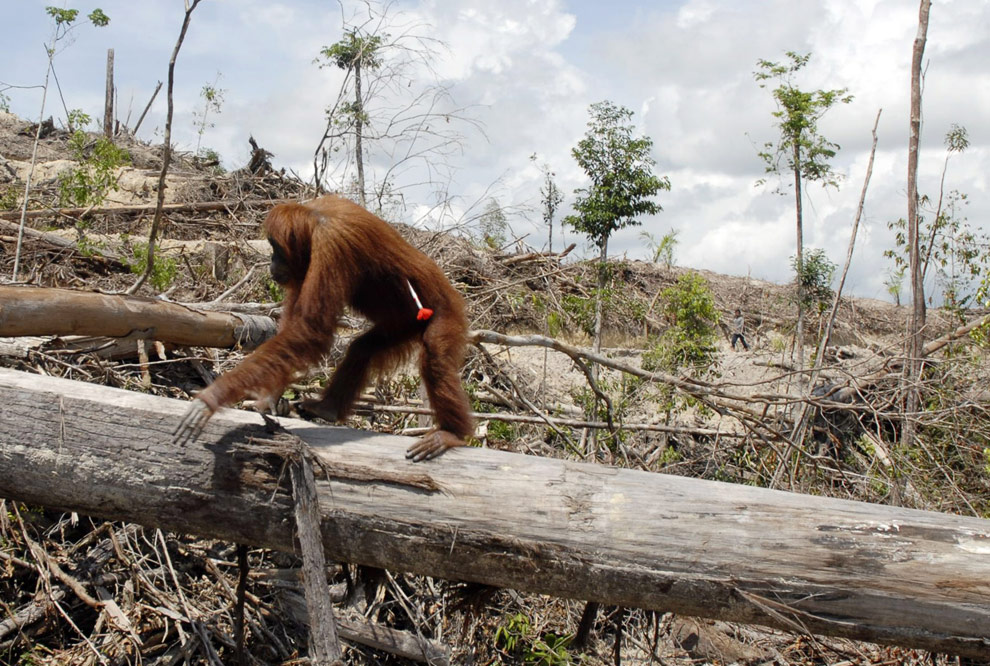
Orangutan with a tranquilizer dart in his side; will be relocated away from palm oil plantation site

Orangutan with a tranquilizer dart in his side; will be relocated away from palm oil plantation site

If you create lethal weapons and spread them widely among the populace, you should not be surprised when they discharge and kill people.

If you overheat the climate and bulldoze all the trees, you should not be surprised at the deadly droughts, wildfires, storms and temperature swings that result.

Back in the 19th century, Charles Darwin taught us to understand that competition is good, that the strongest and fittest will survive, and that if the weak perish it’s all for the best.  It was a perfect rationale for the capitalist/imperialist narrative of the past 500 years, domination as evolution, at gunpoint and bulldozer blade.

Would Darwin look out at today’s dangerous world and proclaim serenely that the coming population drop of humans, due to violence of our own making, is simply part of the grand scheme of Evolution?

If the answer is “yes,” does this mean we should just sit back and watch it all unfold with detachment?

I don’t think so.  I believe it’s the great task of our generation to meet the violence of our time with unwavering, clear-eyed resistance.

To a large extent, the damage has already been done.  The guns are circulating out there in the world; the nuclear power plants are whirring; the oil and gas rigs are pumping; the myriad plants and creatures with whom we grew up in our era on the planet are disappearing.

Pandora’s box is wide open, and the Furies have been released in the world.

We may not be able to get them back, but we can continue to insist that they do not represent us.  We can continue to stand as beacons to another mode of living, based not on competition and aggressiveness, but on collaboration and respect.

As we move into the darkest week of the year, let us not give up hope that as the planet swings back towards the Sun on December 22, we can collectively climb up out of the abyss of violence and pain and unite around the finest human values of life, peace and love, for our fellow human beings, and for the planet as a whole.

Building a Tsunami of a Climate Change Movement: What Will it Take?

In the seething, saturated media environment we live in, victory is measured in whether or not you’re able to get people to slow down and pay attention.

It’s getting harder and harder, especially for young people, to sustain attention for more than a few minutes.

Life is a restless prowl for something new, and in a manmade environment where we’re seen it all before, it’s got to be pretty damned new and exciting to get us to pause for even a moment.

As a teacher, I find myself adapting to this in ways that I would never have predicted when I first started teaching undergraduates, nearly a quarter-century ago.

I know I have to be more exaggerated in my classroom presence.  She who drones is lost.

I also don’t expect the level of reading comprehension these days that I used to take for granted among my students.

I know I’m going to have to excerpt and digest for them, and I’d better do it in an enthusiastic, engaging way, or they’ll be surfing away, in their heads if not literally, on their screens.

I have to do constant daily battle with those screens, too—even when I outright forbid them, they creep back in with all the force of a compulsion, or an addiction.

In this kind of environment, why should we be surprised that it seems to be impossible to get people to pay attention to a big, remote problem like climate change for more time than it takes to say “Hurricane Sandy”?

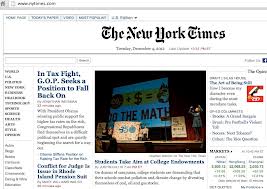
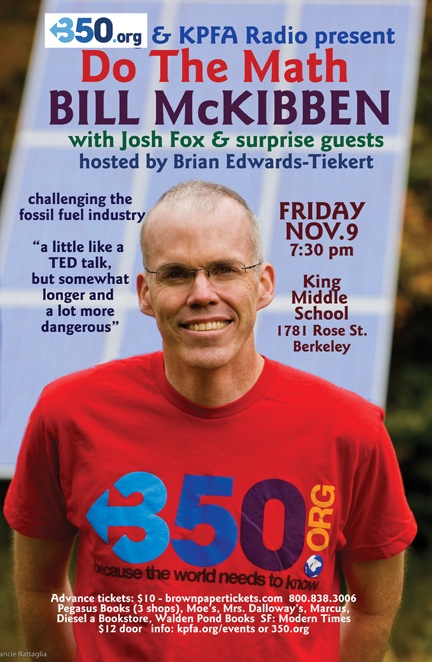
The other night I was overjoyed when I stopped by the New York Times site and saw Bill McKibben’s “Do the Math” tour foregrounded front and center on the homepage.

Unknown

Bill had the same reaction: he forwarded a screenshot of the page to his email list, trumpeting victory.

But what kind of victory is it, really?

Yes, McKibben’s Do the Math tour succeeded in finally penetrating the security perimeter of that gated community known as Mainstream Public Opinion.  If the Times prints an article, we can assume that at least a few of the sheltered, august heads within the insular circle of elite readers will pay attention.

Note that the article was ultimately filed in the Business section of the newspaper, by the way.  Evidently the Times thought its business-minded readers ought to know that those pesky students might be causing trouble for stockholders in major fossil fuel companies in the coming months.

This is the same way that the Times reported the Occupy Wall Street movement: as an annoying inconvenience, a public nuisance that our good police force is working to clear away ASAP.

It’s the same way they’ve reported on Hurricane Sandy, hitting right in their own backyard.  What a colossal inconvenience!  Let’s clear it away so we can get back down to business as usual.

What is it going to take to get through to the Times and its readers that there is not going to be any more business as usual?

The game is up.  Things are going to get much worse, and the only chance of avoiding total disaster is through immediate decisive action to curb carbon emissions and build up a massive supply of carbon sinks—ie, more forests, more seaweed and algae, more grasslands and croplands.

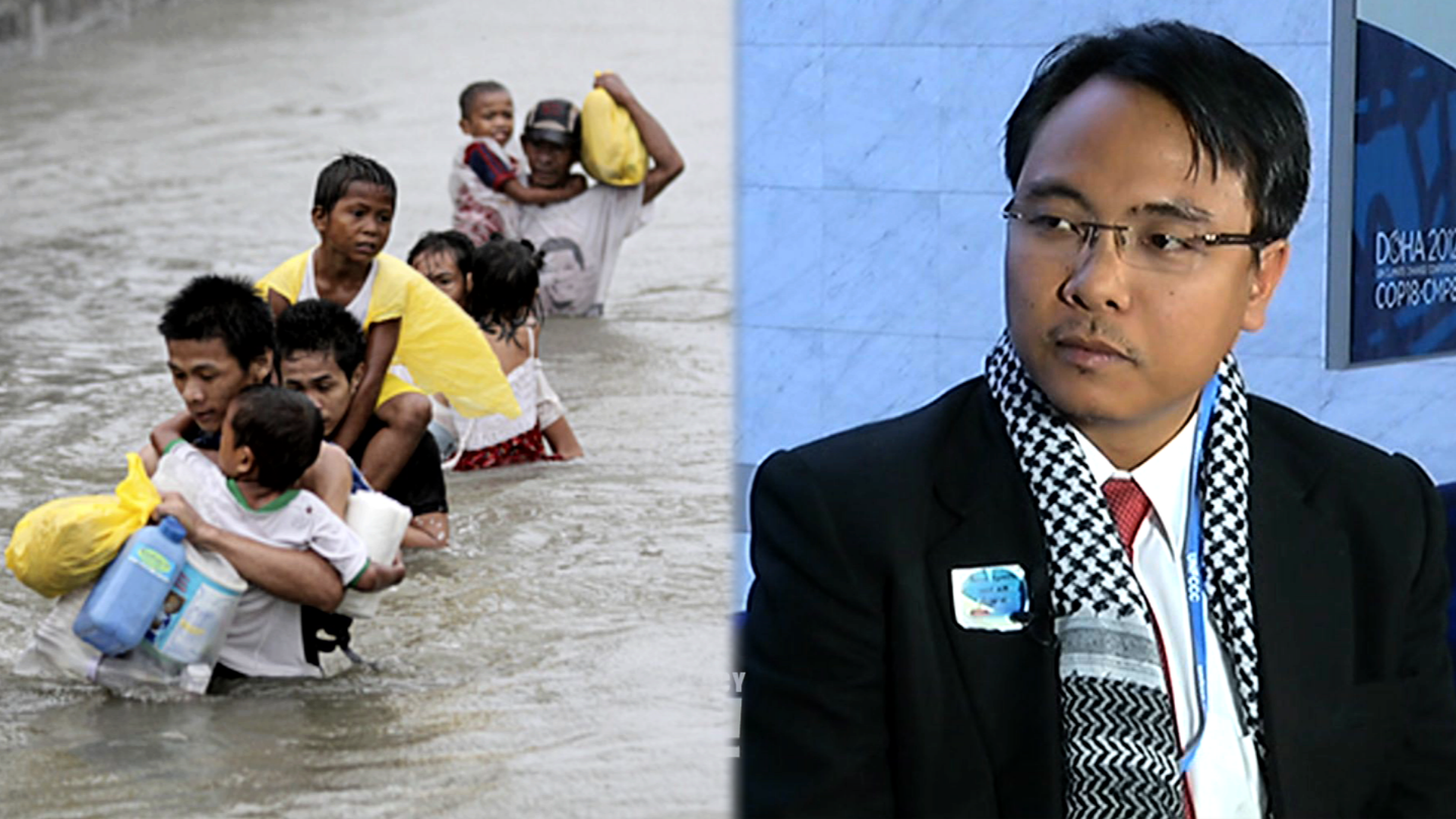
I was heartened, in a very melancholy sort of way, to see the chief negotiator for the Philippines, Naderev Saño, get all choked up as he made an impassioned speech to his comrades at COP18 this week to stop dilly-dallying and get down to the business of real change.

typhoon_yeb_sano

Referring to Typhoon Bopha, he said:

“As we sit here in these negotiations, even as we vacillate and procrastinate here, the death toll is rising. There is massive and widespread devastation. Hundreds of thousands of people have been rendered without homes. And the ordeal is far from over, as typhoon Bopha has regained some strength as it approaches another populated area in the western part of the Philippines.

“I appeal to the whole world, I appeal to leaders from all over the world, to open our eyes to the stark reality that we face. I appeal to ministers. The outcome of our work is not about what our political masters want. It is about what is demanded of us by 7 billion people.

“I appeal to all, please, no more delays, no more excuses. Please, let Doha be remembered as the place where we found the political will to turn things around. Please, let 2012 be remembered as the year the world found the courage to find the will to take responsibility for the future we want. I ask of all of us here, if not us, then who? If not now, then when? If not here, then where?”

Those are the right questions to be asking, and Saño is on the right track when he says that the work of stopping runaway climate change is not about what the “political masters” want.  It will only be possible if a sufficient number of people, all over the world, focus their attention and insist on the policy changes that will lead to real change.

The poor are the ones being disproportionately swept away by the floods and storms of climate change.  The problem may have their attention, but they’re not in much of a position to do anything about it.

I believe it is up to us, citizens of the so-called “developed” countries, to come out in force to demand change.

That is the kind of tsunami of U.S. public opinion that McKibben is trying to create with the Do the Math tour.

If we can succeed in catching the attention of young people, and getting them to understand how crucial this issue is to their futures, they can become a powerful force for change.

But in the end, this must be a multigenerational, multinational, multiethnic movement, of men and women from all walks of life, because if there’s one thing for sure, it’s that climate change does not play favorites.

It will blow away the fanciest palace just as soon as the flimsiest shanty (though the shanties will undoubtedly go first).

Ultimately, it will not be possible to build walls high enough to keep out the floodtides of a destabilized climate.

Does that get your attention?  No?  How about this: if we don’t get our act together on this issue now—I mean, NOW—we might as well just give it up and resign ourselves to roll with whatever punches are in store for us.  There will be many, and they will get progressively worse until our entire human civilization grinds to a halt.

Is that a risk you’re prepared to take?

I hope not.

So what can you do?

If you own stock, consider divesting your portfolio from fossil fuel companies until they shape up and get seriously green.

If you own a home, consider investing in alternative energy sources like solar or geothermal, and make your home as energy-efficient as possible.

Consider pressuring your town or city to do the same.

Start writing letters and emails to your elected representatives and the President of the United States and the fossil fuel barons and anyone else who might have influence, insisting that they think about our long-term welfare, not next quarter profits.

Talk to people about this.  You can never tell where ripples will go as the word goes out.

Do you want to go down fighting and active, or zoned out in front of your screen?

I echo the emotional words of the Filipino negotiator:

“Please, let 2012 be remembered as the year the world found the courage to find the will to take responsibility for the future we want. I ask of all of us here, if not us, then who? If not now, then when? If not here, then where?”

Telling the story of climate change: a call to action

You probably didn’t notice, but this past week another round of major international climate talks were held in Doha, Qatar, surely one of the least “green” locations on the globe.

The mainstream press barely bothered to give a nod to what has come to be a mind-numbing ritual of bait, switch and dodge.

The alternative press knew better than to look to the assembled ministers in Doha for any real news, focusing instead on the grim report released early last week by the Potsdam Institute for Climate Impact Research and Climate Analytics.

The 84-page report, titled “Turn Down the Heat” and funded by that radical fringe group known as the World Bank, demonstrates that if we continue our reckless heating of the planet at the present rate, all the scenarios of which readers of this blog are well aware—sea level rise, droughts and floods leading to severe food shortages, more frequent and more severe storms, loss of biodiversity and loss of human life on a biblical scale—will come to pass.

The executive summary of the report concludes with a measure of urgency:

“A 4C world is likely to be in which communities, cities and countries would experience severe disruptions, damage and dislocation, with many of these risks spread unequally.  It is likely that the poor will suffer most and the global community could become more fractured and unequal than today.  The projected 4C warming simply must not be allowed to occur–the heat must be turned down.  Only early, cooperative, international actions can make that happen.”

But this takes us in circular fashion back to Doha, where as we know, nothing substantive is going on.

Those of us who are aware of what’s happening on the climate front—and let’s face it, there aren’t that many of us, we probably form our own little 1% club—find it frustrating and frightening to have to sit by and watch as our beloved planet goes into drastic human-induced traumatic shock while our leaders bicker and fiddle and run down the clock.

I find myself constantly pulled between A) wanting to support political efforts like Bill McKibben’s “Do the Math” tour, which aims to educate and inspire action (specifically, divestment from fossil fuel companies to pressure them to reinvent themselves as bonafide green energy companies) and B) wanting to simply hunker down and build resilience at the local level, perhaps enrolling myself and my sons in a crash course in how to survive a disaster.

For the moment, I am focusing on doing what I can within my purview as a teacher to help the upcoming generation of young adults get a handle on what’s happening to our climate, and do their own productive thinking about how to engage in the struggle to turn things around.

Yesterday I was fortunate to have had a chance to participate in a small way in my colleague Eban Goodstein’s C2C Fellows Workshop, a national program based at Bard College that seeks to give young people the skills and understanding to become successful leaders in the global effort to stabilize our climate and create a sustainable economy.

Eban Goodstein

Eban Goodstein

This is an ambitious undertaking, and Goodstein is going at it full tilt, holding weekend workshops several times a year at college campuses across the country, and bringing graduate students to Bard, with generous funding, to undertake Master’s degree programs in environmental policy with a special emphasis on climate-related policy and advocacy.

As Goodstein puts it, “Stabilizing the climate is not the work of a year, of a presidential term, or of a decade. It is the work of a generation.”

I see it as an essential commitment and responsibility to use my skills as a writer, scholar and teacher to help equip the upcoming generation for this great work we must all undertake now.

Goodstein is a unique blend of science policy wonk and communications guru, and I’m convinced that it’s at this very nexus that real change on the climate front will be forged.

All the dire scientific reports in the world won’t get people to wake up and change their daily habits, or insist that policy changes are made at the local, state, national and international levels, if the information is not presented in clear, compelling language.

A significant portion of the C2C Workshop, therefore, is spent in developing students’ storytelling skills.

It was interesting, and somewhat disheartening, to watch the students’ puzzled reaction when asked by Goodstein to talk about a favorite storyteller in their family.  Very few hands went up.

This is because most Americans today are reared listening to the TV tell us stories, not cherished individuals in our actual lives.  We are avid but passive consumers of prepackaged stories, and as a result most of us—unless we have the ambition to become stand-up comedians—don’t see storytelling as a skill we need to master.

Goodstein’s important insight is that storytelling is key to getting people’s attention, and telling a good story is essential to success in environmental advocacy and politics.

Good persuasive communication, he said, starts with a personal story, and then moves into the political.  Hook your audience with a personal anecdote, keep their attention with a strong narrative, and then finish up with a call to action.  And once you’ve got a strong story developed, practice telling it, over and over again, until you can do it in your sleep.

Armed with this advice, the group of some 80 students broke into smaller groups of five, each accompanied by a faculty or graduate student facilitator, for a two-hour intensive storytelling workshop.  Our task was to each come up with a short story about an inspiring person or event, write it up and tell it three times, to three different partners, then refine it and tell it again to the whole group.

The stories would be refined further the next day, told again to new audiences, and several would be singled out for telling to the entire big group, and given awards.

This is the kind of work for which I have been preparing my whole life.  There is nothing I would rather do than facilitate a writing workshop on inspiring stories!  And it gives me special joy to do it as part of a program aimed at giving young people the skills and mojo to tell the climate change story in a way that galvanizes action.

It may be that in the end, I would have been better served by spending my time learning survival tactics in the woods, but the truth is that even in the most dire circumstances, human beings have always needed their storytellers.  A good story well told can keep us warm in ways that may not be measurable, but that are profound nevertheless.

Here is the story that I wrote and told the students yesterday in our workshop.  I offered it to them—and now to you—with love and an earnest desire that it may inspire us all to each get to work on the climate change issue—in our own ways and spheres—before it’s too late.

My friend Pauline tells the story of how she came home from work one day and discovered that a civil war had started in her country, Congo-Brazzaville.  Suddenly she had ten people, mostly women and children, sheltering in her house as gunfire and bombs shook the streets of the city. 

When a bomb hit the house, she and her family and friends knew they needed to make a run for it.  They gathered what food and supplies they could carry, and left the house in the middle of the night, heading for the countryside. 

What followed was weeks of deprivation and terror as they huddled in the forest waiting for the conflict to die down so that it would be safe to return home.

I tell this story because it is emblematic of the many stories I have studied over the years, in which women and children are disproportionately affected as victims of social conflict and war. 

I tell it because I fear that in the age of climate change this is a story that will be repeated over and over again. Whether the violence is human—men with guns—or natural—hurricanes or droughts—the effects will be the same: women and children on the run, vulnerable and afraid.

Recent studies indicate that hundreds of millions of people will become climate refugees in the next half-century.  And they won’t all be in Bangladesh or the Maldives, either.  Just ask a former resident of Breezy Point in New York City, devastated by Hurricane Sandy, how it feels.

In our lifetimes we will all witness–and many of us will likely experience—the kind of fear and hardship that Pauline lived through, when the social order disintegrated and violence became the norm. 

There are many, many guns in America.  It would not take much in the way of food and energy shortages to trigger violence.

Sometimes I find myself wondering whether I should be learning and then teaching others survival skills, instead of critical thinking and writing. 

What good will my PhD in literature do me in an age of relentless, recurring Hurricane Sandys?  What good will a vaunted college degree do my students?

But I do continue to believe that the stories of survivors like Pauline matter, and increasingly these are the stories I offer students in my classes on human rights, environmental justice, politics and literature.

We all need to learn from Pauline and other survivors about the amazing resilience of the human spirit.  Even in the face of terror and chaos, people can choose to be compassionate, generous and respectful of one another. We don’t all choose the violent path. 

It will not help any of us to focus on fear right now, as the climate change crisis gains momentum and threatens to engulf us.  What we must concentrate on instead is hope, resilience and solidarity.  That’s what the world needs from us now.

The Audacity of Hope, c. 2012

For those of us who supported President Obama, the last 24 hours or so have been positively giddy.

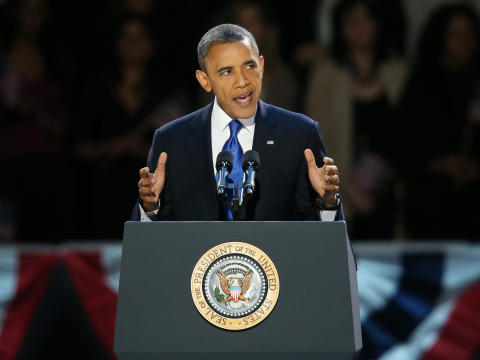
There were the nail-biting first few hours of the election results…followed by the glad tidings of more and more of the big electoral states turning a glorious blue…capped by the wonderful thrill of seeing the President stride out onto the stage in Chicago to give the most rousing acceptance speech most of us have ever heard.

What a big heart this man has, to include in his acceptance speech itself the invitation to his opponents to meet him in the aisle and try to seek common ground!

In the very first words of his speech, before he even thanked his running mate, he reached out to Mitt Romney, offering to work with him to move the country forward onto a better, firmer footing:

I just spoke with Governor Romney and I congratulated him and Paul Ryan on a hard-fought campaign. 

We may have battled fiercely, but it’s only because we love this country deeply and we care so strongly about its future. From George to Lenore to their son Mitt, the Romney family has chosen to give back to America through public service and that is the legacy that we honor and applaud tonight.

In the weeks ahead, I also look forward to sitting down with Governor Romney to talk about where we can work together to move this country forward.

And then, towards the end of the speech, he said so memorably:

America, I believe we can build on the progress we’ve made and continue to fight for new jobs and new opportunity and new security for the middle class. I believe we can keep the promise of our founders, the idea that if you’re willing to work hard, it doesn’t matter who you are or where you come from or what you look like or where you love. It doesn’t matter whether you’re black or white or Hispanic or Asian or Native American or young or old or rich or poor, able, disabled, gay or straight, you can make it here in America if you’re willing to try.

I believe we can seize this future together because we are not as divided as our politics suggests. We’re not as cynical as the pundits believe. We are greater than the sum of our individual ambitions, and we remain more than a collection of red states and blue states. We are and forever will be the United States of America.

This audacity of optimism is why we elected Barack Obama back in 2008, and why we continue to love him.

Whatever his personal or political failings, Barack Obama stands for the best hope of the USA: the raw immigrant passion and drive that founded this country and still makes it great.

He also represents, in his very skin, the polyglot future of the USA, the inexorable movement away from the European aristocracy of our founders to the broad multicultural diversity of our descendants.

Mitt Romney’s concession speech 2012

The Republicans are still stuck back in the good old days of the good old guys’ party.  As one commentator aptly noted, Republican political rallies look suspiciously like Ku Klux Klan rallies of the early 20th century.

For those who might rather not recall, let us remember that the Klan not only hated and lynched African Americans; they also hated and lynched Jews.  And they didn’t liked the Irish or the Italians much either!

Let’s not even talk about gay folk.  And women?  For the Klan and many contemporary conservatives, they belong in the kitchen or in the bed.

This is not the country we want to be as we move into the 21st century.

Although I thought the Obama campaign’s slogan “Forward, not back” was a little hokey when I heard it trotted out at various rallies, it does have the ring of truth to it.

We do not want to go back to the intolerance and violent hatred of our past.

We need to move forward, and we will need all hands on deck to confront the deeply unstable, uncertain future that awaits us in the age of climate change.

I want to see Barack Obama rise to the challenges of our time with all the power of his big heart.

I want to see him not just think about jobs, but think about green jobs, about jobs that will move our country forward into a longterm, sustainable future.

Enough kow-towing to Big Oil, Big Agriculture and Big Chemical.  It’s time to force these industries to bend to the winds of change, to adapt to the new paradigm of sustainability sweeping our country and our planet.

I applaud Bill McKibben for waiting until the election was over to come out swinging—and I applaud his continuing efforts to get the climate change issue into the center of political discourse.

Those who are still suffering from the after-effects of Hurricane Sandy, along with their insurers, should be his best allies.

We need to face the truth that all the matters of social justice that concern us will be moot if we don’t face the pressing need to get our planetary civilization onto a sustainable footing.

We need to convince our President of this, post-haste.

But let’s take a moment to breathe a big sigh of relief that it is Barack Obama we’re dealing with, and not Mitt Romney!

This election proves that Big Money is not infallible.

Democracy still matters; individual votes still matter; as a country, we are not as corrupt as many of us feared.

Now is the time for all of us to embrace the President’s big heart and let it reach out even further to encompass our entire beautiful planet and all of her creatures.

This is the task we humans were born to undertake: to become the thoughtful, compassionate stewards of our planet, and the collaborative leaders of our own multifarious tribes.

It is so good to see more and more women stepping up to the plate now.  We are sorely needed, but we can’t do it alone.

Men and women of all heritages must work together as never before to reestablish the equilibrium needed to move our civilization forward sustainably into the 21st century.

These are not just words.  This is our urgent reality.

Barack Obama has answered the call.

Will you?

Lessons of the Wreck of the Bounty

Although it is a small tragedy compared with the multifarious disasters occurring in the New York region in the wake of Hurricane Sandy, I can’t get the wreck of the tall ship Bounty out of my mind.

As someone who has written about 18th century pirates quite a bit over the past decade, I have an abiding fascination with sailing ships of that era.

HMS Bounty at Lunenburg, NS, August 2012

Last summer, when I heard the Bounty was docked for a few days at the Maritime Museum wharf in Lunenburg, Nova Scotia, I made sure I was at the head of the line at the gangplank.

The crew welcomed us aboard, and we had the vessel nearly to ourselves to explore at leisure.

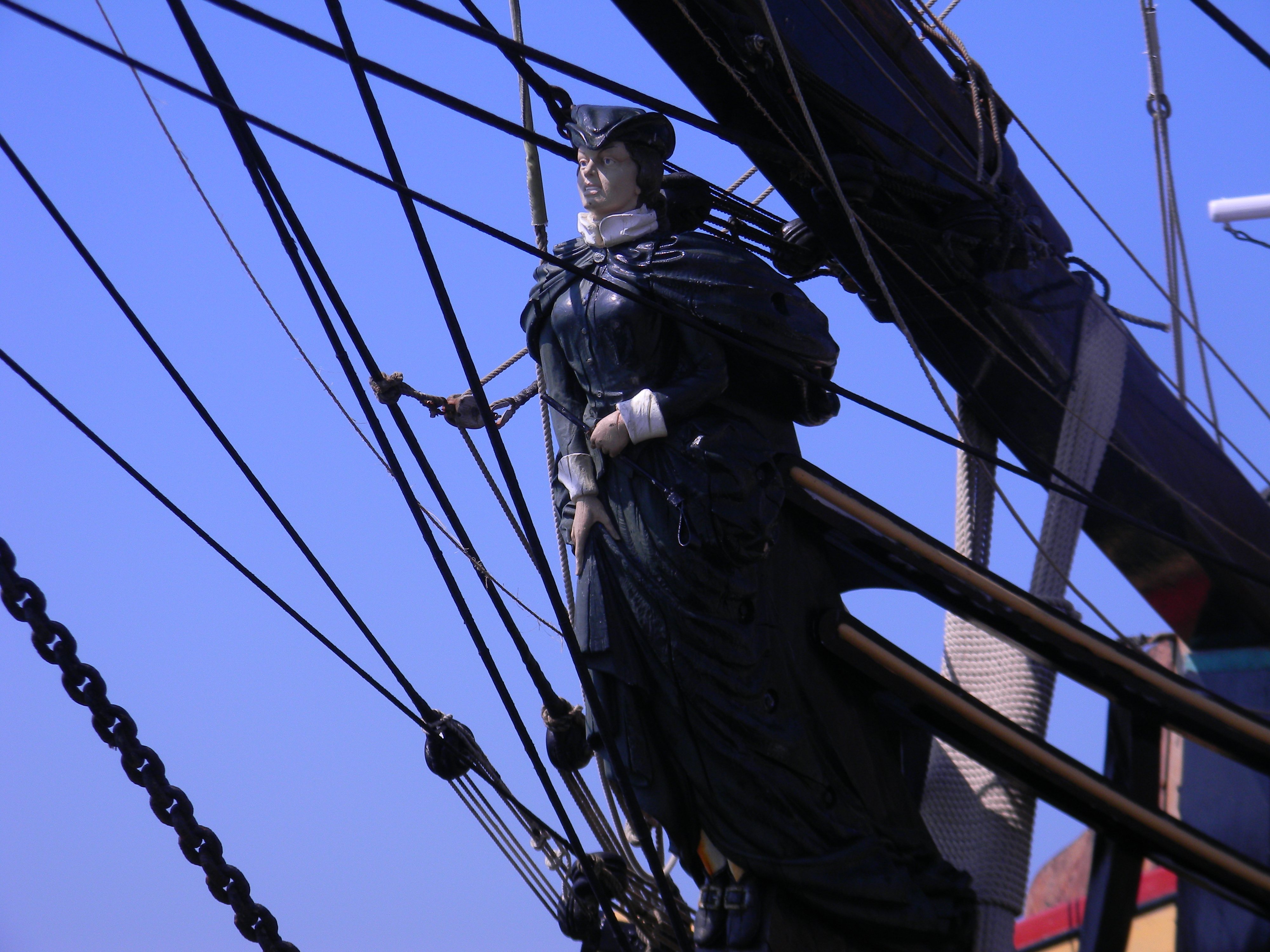
The Bounty, a 1962 replica of the original 18th century British ship, was obviously built with great attention to authenticity of detail.  The timbers above and below looked rough-hewn and weathered, the sails dingy and hardworking, the masthead newly painted and resolute.

She was a solid piece of work, and her captain, Robin Walbridge, had steered her well for 17 years.


But last week something went badly awry in his thinking.

Lunenburg photos by Eric Hernandez

He decided to take the Bounty out to sea knowing full well that Hurricane Sandy was making directly for his route from New London, CT to St. Petersburg, Fla.

Bounty masthead on a clear day

It seems that Captain Walbridge decided to try to “skirt” the storm, heading far out to sea in an effort to miss the brunt of it.

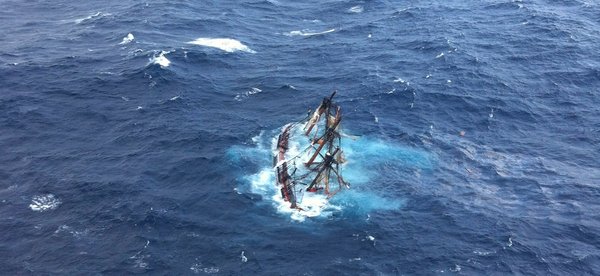
Sandy proved far to big to avoid, and by the night of Sunday, Oct. 28, the Bounty was facing 10 to 30-foot seas about 90 miles off the coast of North Carolina.  A first distress call put out to the Coast Guard at about sundown that evening was rescinded, as the crew must have been frantically working the pumps and still hoping to save the ship.

Not until 4 a.m. did the crew receive the order to abandon ship, and by then the deck was awash.

Fourteen of the fifteen crew members made it into the life rafts and were rescued by the Coast Guard  within a few hours.  A fifteenth crew member, Claudene Christian, was found floating nearby, and was pronounced dead at the scene.

Claudene Christian

Captain Walbridge’s body has not been recovered as of this writing.  The last one to abandon ship, he may simply have not made it out in time.

Captain Robin Walbridge

Here is a tragedy that could easily have been avoided if the captain had been more respectful of the forces of nature.  Apparently he thought the ship would be safer out at sea than docked during the hurricane; but in trying to save the ship he endangered the crew, and two lives were lost, one of them his own.

The story reminds me of the tale of Moby Dick, where the recklessness of the captain resulted, ultimately, in his being dragged to his death by the great white whale.

There is a lesson here for all of us.

We cannot underestimate the forces of nature.  We cannot “skirt” the climate change disaster that is staring us in the face.  We cannot outrun the storm, and we cannot hide from her.

As people in the wealthy enclaves of New Jersey and Long Island are finding out now, we are all equal before the awesome might of the natural world.

True, the plight of New Yorkers in dark, cold public housing is far more serious than that of coastal Long Islanders who have had to seek shelter with inland friends and family.

Class still matters.

But on the Bounty, the captain’s quarters were swamped just like those of the sailors.

So it will be with us all, if we fail to heed Sandy’s warning.

The Bounty sinking on Oct 29; Coast Guard photo

This is not a movie, and it’s not child’s play.  It’s real, and we’d better be paying attention, because next time it could be my turn, or yours.

We need to be taking measures now to make sure that the next time the winds start to blow, we will be prepared.

First things first: we need to go to the polls to defeat Mitt Romney and his fossil fuel masters on Tuesday.

And then on Wednesday, it will be time to start making plans to pressure President Obama to do the right thing when it comes to climate change.

Some say he’ll be a lame duck in his second term, but I think he’ll have more leeway to be his own man.  We have to prevail on his intelligence and good sense to use the power of the executive office to stand up to Big Oil on behalf of ordinary folks the world over, who trust their leaders to make the right decisions to keep them out of harm’s way.

And if he can’t or won’t do the right thing, well…there may have to be yet another “mutiny on the Bounty….”

Barefoot and pregnant in the kitchen? Hell no!

Parsing the memes dealing with women in this election season is almost dizzying.

From “binders full of women” to the insinuation that if women get pregnant from a rape, it’s “something that God intended,” Republicans seem determined to put their feet their mouths over and over again.

There are signs now that women are getting the message, and getting more politically active as a result.

Yesterday I received the new Lesley Gore video, “You Don’t Own Me,” from several sources; if you have’t seen it yet, it’s worth a look: it’s a composite of many different women (most of them young) telling the politicians to get their f**king hands off our bodies (emphasis mine).

The specter of Roe v. Wade being reversed has a lot of women frightened.

We seem to be heading eerily towards the scenario imagined by Margaret Atwood some thirty years ago in The Handmaid’s Tale: a nightmare landscape of environmental devastation and societal breakdown, where the elite, safe in their gated communities, feel righteously justified in considering forced childbearing the only function of fertile young women.

I am still trying to wrap my head around the reality of the fact that we live in a country where Viagra is fully covered by insurance, but contraception often is not.

We live in a world where powerful men can get away with assaulting women and boys repeatedly, with the collusion of those around them. Sandusky and DSK, I’m looking at YOU—but these just the most scandalous recent cases, there are so many more in their club.

And if we move over to the virtual world, the violence against women’s bodies grows exponentially.  People always tell me that there’s all kinds of porn out there, from the soft & cuddly to the whips and chains, but from what I know, there are an awful lot of men jerking off to women’s pain.

I really don’t like calling men out like this.  I believe that many–probably most—men are fine upstanding citizens who would never hurt a woman.

But the truth is that we women need all those fine upstanding men to stand up for us now.

I was shocked at the statistics released last week showing that if only men voted in the Presidential election, Romney would win.

That means that an awful lot men support the kind of patriarchal social structure Romney indisputably stands for.

When is the last time you heard of a Mormon woman running a big company, or holding political office, or doing much of anything outside of doing the admittedly fulltime work of raising a big brood of children?

And then there’s the other half of the ticket, Paul Ryan—a Roman Catholic who seems to be Scrooge re-issued in a virile young package.

These two are the front men for a huge back-to-the-future wave of religious conservatism that employs much more subtle means than the Islamic Brotherhood, but with the same ends: to uphold male privilege and keep women securely ensconced in the private sphere.

A Romney might take a look at those “binders of women,” but in the end he’ll choose a nice young white man as the “most qualified” of the lot.

A Ryan might approve of a married woman leaving the home to earn some extra bread for her husband’s table, but if her daughter was raped while mom was out and got pregnant, too bad—suck it up, have the child, life goes on, and it’s just too bad that rapists are so rarely punished.  After all, boys will be boys, and girls ask for it.

If all American women voted in this election, President Obama would win by a landslide.

Obama has been good to women where it counts: he’s drastically improved health care and fought off the insurance dragons who want to label even pregnancy a “re-existing condition”; he’s stood up for women’s ownership of our reproductive health; the stimulus he put into place in his first year has kept our economy limping along,despite the repeated and concerted efforts of Republican Congressmen to sabotage it; and his government showcases a number of powerful, strong women who provide excellent leadership models for all Americans.

Shortly after he was sworn in as President of the United States, Barack Obama wrote a public letter to his two daughters, Malia and Sasha, in which he says:

“These are the things I want for you—to grow up in a world with no limits on your dreams and no achievements beyond your reach, and to grow into compassionate, committed women who will help build that world. And I want every child to have the same chances to learn and dream and grow and thrive that you girls have. That’s why I’ve taken our family on this great adventure.”

The historic election of the nation’s first African American President represented a giant step forward for this country.  A racial barrier that had seemed insurmountable fell, just as suddenly as the Berlin Wall fell two decades ago, ending what had seemed to be an everlasting Cold War.

We need the gender barriers to fall too. I know there are young women in the political pipeline today who have the dream of breaking through all the glass ceilings and reaching the sky, and we should be doing all we can to support them.

Today, what we need to do is prevent the takeover of this nation by rightwing religious conservatives.  We need to vote President Obama back into office.

And then we need to keep going, to make this a nation where all our children—no matter their gender, their race, their class, their religion or their ethnicity—can soar.

Surmounting the challenges facing us not just as a country, but as a planet, will take every ounce of creative, innovation and intelligence we can muster.

We need all our children to turn their minds to this task.  We can’t afford to leave half the population—our women—barefoot and pregnant in the kitchen.

The Cabal Behind the Curtain

It’s hard to understand the kind of person who would be taken in by Mitt Romney’s absolutely unsubstantiated claims that he’ll be able to magically produce 23 million new jobs in the next four years, and raise take-home pay while he’s at it.

Do people really think Mitt is a magician?

Watching him struggle to appear mild-mannered and fangless during the debates—an effort that translated into a zombie-like smirk—I began to understand him as the puppet he is, a marionette whose strings are pulled by the cabal behind the curtain: the Koch brothers and their ilk, along with Big Fossil Fuel, Big Pharma, Big Chemical, Big Ag, Big Free Trade, Big Finance, you name it.

Now, it’s true that that gang has their tentacles in Obama too.  You can see the strain the President is under, trying to please his popular base while also keeping his pockets open for the big under-the-table donations that keep his campaign afloat.

Guys like the Kochs hedge their bets.  Whichever of the two parties wins, they’ll carry on just fine.

But if it’s Romney/Ryan, their agenda will take a great leap forward.

We’ll automate and outsource jobs like crazy, to satisfy Wall Street—the hell with Main Street.

We’ll drill and frack and mine and bulldoze our way to oblivion, and call it Kingdom Come.

We’ll appoint more social conservatives to the Supreme Court, and put women back where they belong: barefoot and pregnant in the kitchen.

We’ll drastically increase our military spending, at the expense of social welfare programs.  Those who dare to ask for help with affording health care, education, or retirement, not to mention simply being able to eat regularly and keep a roof overhead, will be asked coldly: Can’t you borrow from your parents?  Or, are there no workhouses?

Not only that, but the first thing we’ll do in office—day one!—is pick a fight with the Chinese over currency manipulation.

Yes, Obama is the better of the two choices, for all the reasons he has laid out himself during the Presidential debates.

We must re-elect him, and continue to work to strengthen the progressive movement over the next four years, so we don’t backslide in 2016.

But part of this work must be to stand up for true democracy in our supposedly democratic nation.

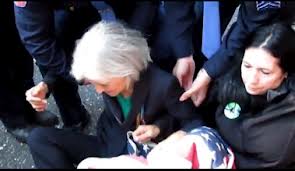
Stein and Honkala arrested outside Hofstra U on Oct 16

The detention of Jill Stein and Cheri Honkala last week was reprehensible, and I am glad to see they are filing suit—at least that way more people will know what happened to them when they tried to enter Hofstra University to participate in the presidential debate there.

You wouldn’t know from reading the mainstream media that Stein and Honkala were taken by police to a secret detention facility and handcuffed tightly to metal chairs for eight hours, without being allowed to consult their lawyers or staff.

Thank goodness for Amy Goodman, who broke this story and has refused to let it die, broadcasting “alternative debates” on Democracy Now that give the other three candidates on the November ballot a chance to have their views heard on national television.

Goodman is a model for the kind of alert, engaged and impassioned citizenry we desperately need in the coming decade, when the economic and environmental challenges we face are going to be increasingly dire.

We don’t need more goon cops in riot gear to maintain order, we need more ordinary people taking the time and energy and yes, the risk, to stand up for our rights to a safe, sustainable future.

After we re-elect Obama, those of us who understand what is at stake need to get to work with redoubled energy on building a broad coalition of people who care about our future and are willing to lead the way in making the necessary changes to ensure that human civilization survives on this planet.

This is a struggle that concerns all of us: we need to work across ethnicities, across gender, and across nationalities to engage the young and the old, the faith-based groups, centrists and leftists, the elites and the working class.

We can’t let a few shortsighted, greedy, impossibly foolish billionaires hijack our future.  It’s ours to save—or to lose.

Earth to Obama: Come in please! Or do we have to take to the trees to get your attention?

Of course I knew it would be too much to expect President Obama, during the second Presidential debate on Tuesday, to actually break the great taboo of contemporary American politics and mention—Shhhh—climate change.

But I didn’t expect him to come out pandering so shamelessly to Big Fossil Fuel.

Yes, he managed to create a mild distinction between his position and his opponent’s.

Romney is 100% for exploiting fossil fuels as fast as we can possibly get them up out of the ground.

Obama, on the other hand, is 100% for exploiting fossil fuels as fast as we can possibly get them up out of the ground.

And oh yeah, he’s not against throwing a little money at solar, wind and biofuels (let’s not even talk about how destructive existing biofuels like ethanol have actually been on multiple levels—let’s give the guy a break).

While Romney just wants to hammer home the assertion that his Administration will bring us lower gas prices (no doubt as a result of all the frantic drilling he intends to support), Obama is interested in encouraging conservation by raising fuel economy standards, an idea right out of the late 1970s if I ever heard one.

A 21st century idea would be to get rid of oil subsidies and insist that the price of gas and oil reflect the true costs of its production and consumption, which are actually way higher than whatever the current price of a gallon of crude might be.

Then there’s coal, which both of these guys are apparently in favor of continuing to exploit.  Did someone say “mountaintop removal”?  Just point Romney/Obama at the mountain, and let’s go!

The nadir of the whole energy discussion of the second Presidential debate came when, in response to a little goading from Romney, Obama said he was “all for pipelines.”

In nearly the same breath, he proudly proclaimed that his Administration has supported lots of oil and gas drilling on public lands—how many leases, and what percentage of increase or decrease they may represent from the Bush years, may be a bit fuzzy, but the gist is clear: both Romney and Obama are all for opening up our public lands to drilling, in the name of energy independence from foreign fuel sources.

Oh Lord. The truth is that our dependence on so-called foreign fuel suppliers (who are mostly multinational corporations anyway) is the least of our worries.

The one thing we most need to be focusing on is the one thing that no one wants to deal with at all.

The effect of global heating, caused by the ever-escalating burning of fossil fuels worldwide.

And instead of working soberly and swiftly to turn the climate juggernaut around, our politicians are acting like easy-going traffic cops, just waving those bulldozers and oil rigs right on through.

***

Take the Keystone pipeline, which both Romney and Obama were unabashed in supporting.

Did you know that right at this moment, there are dedicated Earth defenders sitting in trees in Texas, trying to block the construction of the southern leg of the Keystone XL Pipeline?

Daryl Hannah at Keystone XL Pipeline protest, October 2012

Why?

Well, you probably realize that the bitumen that pipeline is designed to carry is so thick and sludgy that it has to be mixed with toxic chemicals in order to make it flow.

You’ve probably heard about the damage that could be caused by a spill from a pipeline like this, if the chemicals leaked into the major aquifers that are along the way.

This on top of the destruction of the forests that is already happening on a vast scale to get those “tar sands” out.

On top of the chemical contamination of our aquifers from hydro-fracking for gas.

On top of mountain-top removal and strip-mining for coal.

On top of the whole lousy cap and trade system, by which dirty Northern-hemisphere commercial polluters can continue to pollute as long as they buy credits in Southern hemisphere forest preserves—except that what’s actually been happening is that first they buy the preserves, then they log them, then they replant with palm oil trees, heavily sprayed with pesticide, herbicide and fungicide to keep the rainforest from returning, and then they proudly collect their credits for having maintained some semblance of soylent green!

All this is the reality behind the puffery that passed for politics at the debate last night.

What is our national energy policy?  For both the Republicans and the Democrats, it’s drill faster!  Drill harder!  Drill everywhere possible!

President Obama chided his opponent at one point for thinking only of short-term prospects.

“We have to think about what’s coming in 10, 20, 30 years,” he said, the implication being that we shouldn’t entirely neglect the prospects of wind and solar energy.

But the truth is that if we continue drilling at the rate both candidates support, there won’t be a stable environment left to build an alternative energy future for our grandchildren and future generations.

They won’t be building wind turbines and solar panels in 2050, they’ll be building underground shelters and modern-day Noah’s arks.

***

Still, yes, I am going to go grumbling to the polls on Nov. 6 and pull the lever for Obama.  There is no question in my mind that he is the better man.

I understand that right now he is trying to walk the centrist line and please as many American constituencies as he can.

But once re-elected, he must be pushed to take a stronger stand on environmental policy, including energy policy.

If that means that more of us have to take to the trees in protest, well, so be it.  I always did love climbing trees!