Wangari Maathai’s Canopy of Hope: remembering a warrior woman for the planet and role model for us all

Kenyan Wangari Maathai, who died last night of ovarian cancer, was a woman who took everything she learned and used it for the benefit of her local community and the planetary community as a whole.

As a girl, she used to sit by a certain fig tree that grew near her family village.  Beside the fig tree a clear, sparkling stream flowed, planted with arrowroots and hopping with small frogs.  Her mother told her that this was a “tree of God,” which wasn’t to be harvested for firewood.

Later, Wangari realized that “there was a connection between the fig tree’s root system and the underground water reservoirs.  The roots burrowed deep into the ground, breaking through the rocks beneath the surface soil and diving into the underground water table.  The water traveled up along the roots until it hit a depression or weak place in the ground and fushed out as a spring.  Indeed, wherever these trees stood, there were likely to be streams.  The reverence the community had for the fig tree helped preserve the stream and the tadpoles that so captivated me.  The trees also held the soil together, reducing erosion and landslides.  In such ways, without conscious or deliberate effort, these cultural and spiritual practices contributed to the conservation of biodiversity” (Unbowed, 46).

Wangari came of age as the traditional wisdom of the village people was giving way before the onslaught of Western epistemologies.  A girl who excelled in her schooling, she educated by Catholic nuns, and was fortunate enough to be chosen for the so-called Kennedy airlift of 1960, under which the Joseph P. Kennedy Foundation provided scholarships for promising young African students to study in America—the same program that brought Barack Obama’s father to the U.S. to study.

Wangari ended up at Mount St. Scholastica, a Benedictine women’s college in Kansas, where she majored in science, and she went on to earn a Master’s in biology at the University of Pittsburgh. She continued her studies in Germany, and in 1971 earned a Ph.D. in biology from the University College of Nairobi—the first women in East and Central Africa to earn a doctoral degree.

Like so many other highly educated women who join the workforce, Wangari experienced plenty of gender discrimination as she tried to advance her career. Frustrated with her lack of advancement within the university, she joined the National Council of Women of Kenya, which was a group of educated women who sought to improve the living conditions of all Kenyan women.

“We could either sit in an ivory tower wondering how so many people could be so poor and not be working to change their situation, or we could try to help them escape the vicious cycle they found themselves in,” she said.  “This was not a remote problem for us.  The rural areas were where our mothers and sisters still lived.  We owed it to them to do all we could” (124).

For Wangari, the problems were clear:

“The connection between the symptoms of environmental degradation and their causes—deforestation, devegetation, unsustainable agriculture and soil loss—were self-evident.  Something had to be done.  We could not just deal with the manifestations of the problems.  We had to get to the root causes of those problems.

“Now, it is one thing to understand the issues.  It is quite another to do something about them.  But I have always been interested in finding solutions.  This is, I believe, the result of my education as well as my time in America: to think of what can be done rather than worrying about what cannot.  I didn’t sit down and ask myself, ‘Now let me see, what shall I do?’ It just came to me: Why not plant trees?’ The trees would provide a supply of wood that would enable women to cook nutritious foods.  They would also have wood for fencing and fodder for cattle and goals.  The trees would offer shade for humans and animals, protect watersheds and bind the soil, and, if they were fruit trees, provide food.  They would also heal the land by bringing back birds and small animals and regenerate the vitality of the earth.

“That is how the Green Belt Movement began” (125).

 The Green Belt Movement mobilized thousands of ordinary women in Kenya to start tree nurseries, and to plant trees near their homes.  It also became a forest conservation movement, with Wangari leading women in protecting Kenya’s remaining forests against the loggers hired by giant transnational conglomerates.  She made plenty of enemies in the government when her agenda threw a wrench in their greedy plans, and she was often afraid for her life.  She was thrown in jail many times, and frequently confronted violence at the hands of police and goon squads.
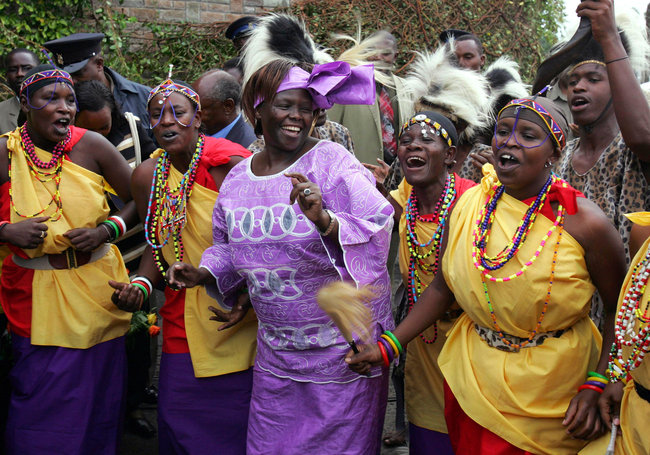

 Through it all, she remained, as the title of her memoir suggests, UNBOWED. She would not be browbeaten into submission to authority.  She knew that her cause was not only righteous but right for Kenyans and for the planet she loved, and this gave her the courage to stand firm against intimidation.

Wangari’s activism cost her her marriage: her husband, a Kenyan Member of Parliament, divorced her after she earned her Ph.D. and became more financially successful.  She could have chosen the easy way and lived a very privileged, comfortable existence in Nairobi, if she had been willing to bow her head and put her husband’s needs and career before her own.  Instead, she went through a humiliating public divorce trial:

“It became clear that I was being turned into a sacrificial lamb.  Anybody who had a grudge against modern, educated and independent women was being given an opportunity to spit on me.  I decided to hold my head up high, put my shoulders back, and suffer with dignity: I would give every woman and girl reasons to be proud and never regret being educated, successful and talented.  ‘What I have,’ I told myself, ‘is something to celebrate and not to ridicule or dishonor’” (146).

The divorce trial ended, incredibly enough, with Wangari being sentenced to six months in prison for “contempt of court”; she was hauled off to prison without even having the time to say goodbye to her children. It was clearly an attempt to put this uppity woman in her place, but it did not work: Wangari would not be intimidated, and emerged from prison determined to put her talents to work for her people, come what might for herself personally.

Her Green Belt Movement became a model for sustainable, grassroots-driven development throughout Africa and beyond, which worked not only for environmental sustainability, but also for women’s rights, human rights and participatory democracy.  Wangari consistently provided an upright model of honest, steadfast leadership, leading by example in speaking truth to power and and refusing to be cowed.

“What I have learned over the years,” she said, “is that we must be patient, persistent and committed.  When we are planting trees sometimes people will say to me, “I don’t want to plant this tree, because it will not grow fast enough.” I have to keep reminding them that the trees they are cutting today were not planted by them, but by those who came before.  So they must plant the trees that will benefit communities in the future.  I remind them that like a seedling, with sun, good soil, and abundant rain, the roots of our future will bury themselves in the ground and a canopy of hope will reach into the sky” (289).

Wangari Maathai herself grew that “canopy of hope” for all of us.  May the seedlings she planted be nourished with care by those of us who aspire to walk in her footsteps, for all those who deserve a better world in the future here on our precious planetary home.

Wangari Maathai, Nobel Peace Prize Laureate, Dies at 71 – NYTimes.com

Wangari Maathai, Nobel Peace Prize Laureate, Dies at 71 – NYTimes.com.

Truly a great leader, I can’t believe she is gone.  So fast!  I can’t help but think that had she been living in the West, the cancer would have been caught earlier and she would still be with us.  A great loss for the world.  More later.

Songs of Freedom in New York

I can hardly bear to watch this video, but I feel compelled to share it.  You need to know what is being done in your name.

The right to peaceful protest?  The right to dissent?  Right.

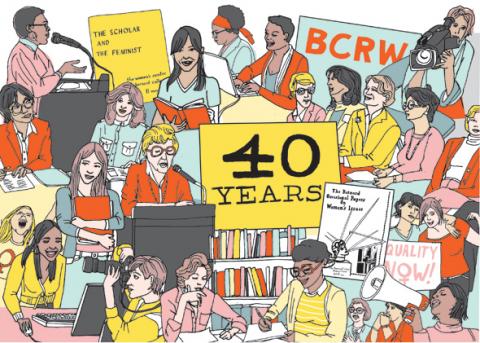
Meanwhile, up in another part of New York, I was at a conference this weekend celebrating “40 Years of Feminist Activism and Scholarship” at the Barnard Center for Research on Women.  Here all was decorous and polite–no protesters, no cops, no tight handcuffs or people being pulled down the sidewalk by their feet.

Instead we discussed “issues of translocation” in the Latino diaspora, and how there is a need for social theorists to serve as translators, transcultural workers, and border-crossers of all kinds.  Unfortunately, this information was presented in a kind of high-level theoretical drone that sucked the lifeblood out of the topic. When the presenter began to read us the annotated table of contents of her new anthology, I had to get up and leave.

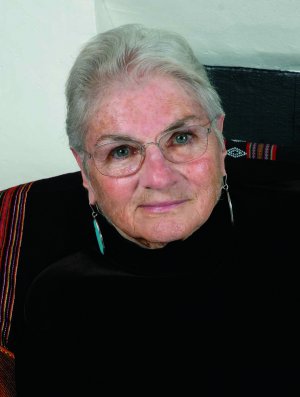
Fortunately, the panel I had organized, on “Living and Working in the Borderlands,” was up next, and it kicked us in to a whole different register.  Margaret Randall read poetry that wrenched us into the heart of the dangerous, shifting borders between past and present, safety and terror, life and death.

“They say you are not at home/until you have lived in a house/through all four seasons./What they don’t say is/you are never at home/when a part of that home/has been taken.” —As If the Empty Chair: Poems for the Disappeared, p. 20

Ruth Irupe Sanabria followed, reading her powerful poems about growing up in the long, sick shadow of the terror that marred her childhood in Argentina during the Dirty War.  Reading a poem about how the violence visited on her parents, political prisoners during the war, was reenacted in her own childhood, Ruth choked up, and I could not help but think of the first-trimester fetus curled in her womb, choking as well in this legacy of pain.

Finally the youngest of us spoke, my current B.A. student Michelle Gonzalez, who described her struggles to come to turns with all the jagged fault lines that mark her own identity.  Her honest self-exploration led us into a thoughtful, engaged discussion with the audience on how one’s location in the borderlands, whether chosen or imposed, can be both a spur and a hindrance to creative freedom.

There is a temptation to see a continuum in this, a continuum of creative protest going from the poet who writes in the blood of her own passion to the passionate young protester who is not afraid to put her body on the line and submit to the manhandling of the police.

One thing for sure is that the kind of jargon-laden social theory expressed in the keynote speech seems more and more clearly to be completely beside the point.  What is the good of talking about people’s struggles for freedom, self-determination and dignity in words they would not understand, on a platform to which they will never have access?

There is a reason that song lyrics continue to resonate with the young.  We may not all read poetry, but most of us do listen to music.  Simple, direct, powerful words are the ones that will stay with us, and perhaps even move us to action.

What songs do you hum to give yourself the courage to go on?  What songs might break through the spell of the men in blue and remind them who they are supposed to be working for?

I’ll end with the voice of a martyr for political freedom, Victor Jara, savagely murdered by the Chilean goon squad while still valiantly trying to sing his songs of peace:

It’s up to us now to keep his song alive.

Peace Day Travesties

Last night my son reminded me that it was Peace Day yesterday, and my heart sank even lower.  How could it be that on the day dedicated to world peace, the U.S. allowed an improperly tried man to be put to death by lethal injection?

Perhaps even worse, how could it be that our President chose this day to appear before the United Nations opposing the Palestinian government’s efforts to negotiate a two-state resolution with Israel?

Obama’s speech was laden with bitter irony for those who could hear between the lines.  How could he laud the people of other Middle Eastern states like Egypt, Libya and Yemen for taking matters in their own hands and violently overthrowing oppressive rulers, while at the same time telling the Palestinians that they should wait, be patient and let others decide their fate?

What difference is there, really, between an oppressive dictator like Qaddafi and an oppressive state dictatorship like the one Israel exercises over Palestine?  In both cases it’s a matter of people’s basic human rights being violated.  In neither case do the people have the “democracy” that Obama praised in his speech yesterday.  Why is it OK for the Libyans to rise up and throw out the oppressors, but not for the Palestinians?

Of course, we know the answer.  Because American Jews have too much invested in the success of the state of Israel, and are too afraid of the Palestinians to see them as anything other than potential terrorists.  Because American Jews wield considerable power in the U.S. government, and their support can make or break a political candidate here at home.

Under these circumstances, I am not proud to be an American of Jewish descent (I can’t call myself a Jew because I have never practiced the religion and am largely unfamiliar with it).

I’m not happy to be a white American either, given the clear racialization of the American criminal justice system, with people of color receiving much harsher treatment, from the police on the streets to the courts and the prisons, than people of European descent.

What do I do with my guilt over the way “my people” are treating others?  I can “pass” as a non-Jew and distance myself from that community, but I can’t exactly “pass” as a person of color.

What I have to do, and what all of us who deplore the oppression that was blazoned across the headlines on World Peace Day should do, is to ally myself firmly with those who stand for freedom.  In many cases, sad to say, this would mean opposing the policies of the U.S. government and many of its cronies, like the state of Israel.

Dissent from majority opinion has a long and proud history in our country and we should not be afraid to stand up for what we believe, even if we appear to be opposing the powers that be.

Yesterday the Supreme Court of the United States declined to step in and save the life of Troy Davis even though it was plain to hundreds of thousands of onlookers that he did not deserve execution.  Yesterday President Obama went on record as opposing the efforts of President Abbas of Palestine to finally take his rightful place among the league of nations at the U.N.

Justices and President, I respectfully disagree with you.  A lot of us disagree with you, a lot of the time.  You need to start listening to us ordinary folks again, and give us a government we can be proud of.

Otherwise, you might just wake up one morning and find the Arab Spring has come to America–with you, or at least the oppressive establishment you represent–as the targets this time.


Justice for Troy Davis?

9/21/11, 8:59 p.m. He’s not dead yet.

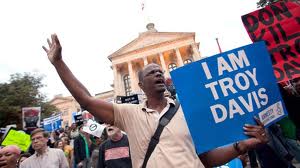
There are thousands of people trying to save his life, this Black man in a Georgia penitentiary, who has already served more than 20 years in prison.  Troy Davis is a symbol of something much greater, a magnet for a deep rage, a deep and inchoate sorrow–the rage and despair of all those who rail against injustice.  He is neither the first, nor will he be the last to be snared in the U.S. “justice” system and ground to a pulp.

Clearly, his trial was a travesty of justice.  Whether or not he killed a man in 1989 (a white man who happened to be an off-duty cop), certainly he has served his time, and just from looking at him you can see that he would not be the same man who walked through those prison doors 20 years ago.

Isn’t the purpose of the criminal justice system rehabilitation?

Or is it revenge, the vengeful inflicting of an eye for an eye?

I would like to believe that if we go to the expense and trouble of housing, feeding and caring for a prisoner for 20 years, we’ve done it to accomplish more than simply warehousing him for his execution date.  What is the point of that?

As Bob Roberts showed so movingly in his memoir My Soul Said to Me, just about every convict has it in him (or her) to be rehabilitated.  All it takes is someone who is focused on seeing the good, rather than insisting on the irredeemable.

The Bard Prison Initiative, for example, is predicated on the assumption that every man behind bars is capable of learning, and will benefit from education.  So many of the young men and women behind bars never had the benefit of a decent education–which might have put them on quite a different path.

The Bard Prison Initiative, like Bob Roberts’ Project Return program for released ex-cons, demonstrates that justice does not have to wear an executioner’s hood.

Sure, those who do wrong should be punished.  But not forever.  Very few criminals deserve capital punishment–and sadly, those who most deserve it often manage to escape (for instance, the masterminds of genocide in places like Guatemala, Rwanda, Bosnia….).

What good does it do anyone to put Troy Davis, or many others like him, to death?  What good does it do to hold Leonard Peltier or Mumia Albu-Jamal in prison for decades?  Doesn’t the criminal justice system want to do good?

Doesn’t it?

The Problem of the Color Line Persists

A Grievous Wrong on Georgia’s Death Row – NYTimes.com.

A moment of silence this morning for Troy Davis, unjustly sentenced to be executed today in Georgia for the alleged killing of a police officer in 1989.  There is no doubt in my mind that if Mr. Davis were white, he would be in a very different place in his life right now.

His predicament hangs over me as I prepare to discuss W.E.B. DuBois this morning with my students–The Souls of Black Folk (1903), which is where DuBois famously and prophetically announced not only that “the problem of the 20th century is the problem of the color line,” but also formulated his theory of double-consciousness, the idea that the African American has to look at him/herself through white eyes.

“It is a peculiar sensation, this double-consciousness, this sense of always looking at one’s self through the eyes of others, of measuring one’s soul by the tape of a world that looks on in amused contempt and pity.  One ever feels his two-ness–an American, a Negro; two souls, two thoughts, two unreconciled strivings; two warring ideals in one dark body, whose dogged strength alone keeps it from being torn asunder.”

DuBois goes on to say that he wants neither to “Africanize America,” nor to “bleach his Negro soul in a flood of white Americanism,” but to “make it possible for a man to be both a Negro and an American, without being cursed and spit upon by his fellows, without having the doors of Opportunity closed roughly in his face.”

These words were written at the turn of the 20th century.  How sad it is that after a century of struggle for equality and full citizenship for African Americans, DuBois’s insights still ring true today!

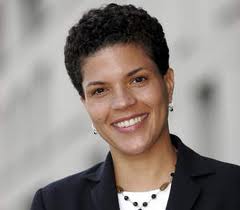
According to legal scholar Michelle Alexander, “More African American men are in prison or jail, on probation or parole than were enslaved in 1850, before the Civil War began.”  In her book on this topic, Alexander calls this “the new Jim Crow,” in which racial segregation and increased police presence in African American communities, combined with poorer schools and lack of economic opportunities have led to a straighter road to prison for young African Americans than to college.

Yes, things have improved since the time of THE HELP, but the road to equality still runs uphill–the playing field is hardly level for blacks and whites in our society, or anywhere in the world.

Troy Davis is yet another victim in the on-going low-level war against people of color in this country.  When are we going to stand up against racial discrimination?  When are we going to say no to the unjust tying of school funding to property taxes, a holdover from colonial times that is holding so many in our nation back? When are we going to insist that the prison-industrial complex stop profiting on the broken lives of young people who never had any chances in life, and start do the job it should be all about: rehabilitation?

Let’s not let the problem of the color line be the problem of the 21st century too.  We have too many other problems to deal with, and we need the creativity and energy of every citizen to remake our civilization into the just and sustainable global society it has always dimly aspired to be.

Activist strategies for the times we live in: Flying under the radar

Josh Haner/The New York Times)

Some good old-fashioned protesting went on in lower Manhattan today, with folks coming out to tell the Wall Street tycoons and corporate elite that they do not rule unopposed.

Protests like these are a good thing, like online petitions and letters to Congressmen or to the editor.  But they’d have to get a lot bigger and fiercer to really create change–as they did in Egypt and other parts of the Middle East in the past year.  Things have to get ugly.  People have to get hurt.  It’s so much easier to just stay home and try to make the best of it.

I am really doing a lot of puzzling lately over what kind of protest movement would be most effective for the times we live in.  On a spectrum from the riots in London to the dignified sitdowns in front of the White House this fall, it seems like something inbetween is likely to get the most attention.

But it has to be a BIG movement.  The powers that be will not listen to a few hundred protesters, or even a few thousand.  It has to be big and national and coordinated, like the Civil Rights protests were.  Although there are a few movements going on now that are national, or even international–for example, Moving Planet, scheduled for next Saturday–there’s still nothing on the horizon that has anywhere near the draw power of, say, Monday night football.

So maybe protests are not the way to go, at least not until people are really hungry and desperate, at which point it might be much too late for any kind of harmonious transition to a new planetary paradigm.

Margaret Wheatley, whose work with the Berkana Institute I admire greatly, thinks that we need to think about leadership in a different way than we’re used to.  Instead of waiting for a charismatic leader–say, the next Martin Luther King Jr.–to step up and lead us all to sweeping changes, we need to think smaller and more locally, focusing on what we ourselves can accomplish within our own spheres.

“The process that creates change in the world is quite straightforward,” she says. “We notice something that needs to be changed. We keep noticing it. The problem keeps getting our attention, even though most people don’t notice that there’s even a problem. We start to act, we try something. If that doesn’t work, we try a different approach. We learn as we go. We become very engaged with the issue, spending more and more time on it. We become exhausted by our efforts, but still we keep going. The issue keeps calling to us. Any time we succeed, no matter how small the success, we gain new energy and resolve. We become smarter as we learn more about the issue and understand it better. We become more skillful at tactics and strategies. As we persevere, and if we are successful, more people join us. Sometimes we remain as just a small group, sometimes we give birth to a movement that involves tens of thousands, perhaps millions, of people.

“This is how the world always changes. Even great and famous change initiatives begin this way, with the actions of just a few people, when “some friends and I started talking.” Including those efforts that win the Nobel Peace Prize.”

So maybe each of the few hundred protesters gathered in New York City should go home to their own communities and continue to agitate locally against corporate monopolies and the stranglehold of Wall Street on Main Street.

Maybe someone decides to find out more about local currencies like BerkShares, and starts a movement to create a local currency or a time bank in her town.

Someone else decides to work with young people in his town to create a community garden that will bring fresh produce into the elementary school cafeteria.  Another group goes home and decides to file for a license for a low-power radio station, like WBCR-LP here in the Berkshires.

What we need now are a million local actions, all animated by the desire for community resilience, collaboration and service to the common good.  Put together, they’d make up a mighty movement for change.  But for now, I think they’ll be more effective staying small, local and under the radar.

Who needs those riot police coming around anyway?

On Becoming a Statistic

I have never felt like such a statistic as I do now.

As of the past few months, I have lost a job, and the health insurance that went with it; gotten divorced and become a single mom; and so suddenly found myself the proud possessor of a mortgage I can no longer afford.

The full catastrophe.

I take some small measure of comfort from the knowledge that it is not just me.  Women have been hit harder in this recession than men, and single women, especially single moms, worst of all.

“In today’s economic and political climate, women are being dealt a triple blow,” says Anika Rahman, President and CEO of the Ms. Foundation for Women. “Indeed, what was once termed a ‘mancession’ is now a ‘womancession.’ Women are losing jobs faster than men because of drastic cuts in areas like education and health care where they make up the majority of the workforce. As the majority of state and local public-sector workers, women are affected most by attacks on public-sector unions. And women suffer most from cuts to social services because they’re more likely to be poor and care for children and the elderly.”

As a matter of fact, the job I lost was in the public education sector. I taught for nine years at SUNY Albany as a Lecturer in Humanities (ie, a salaried professor on a three-year renewable contract), and I was a member of the union, United University Professionals (UUP).  Because it is very difficult for the university to fire individual union members who have been performing well in their jobs, the administration decided, in the interests of saving money, to terminate my entire program, an innovative first year “living & learning” community that had just been shown by external reviewers to have positively impacted students’ success rate at the university.

The administrators I talked with about the program termination made no bones about the fact that it made better financial sense for them to fire a salaried worker like me and hire a few adjunct professors instead.  Why would you pay someone a living wage and benefits when you can get away with paying someone else a pittance with no benefits?

Sadly this is the state of our higher education system these days.  At least 50% of college and university teachers are now adjunct; at many places, including Harvard and my alma mater, New York University, some 70% of the professors are employed on an adjunct basis.

And we’re not talking about graduate students; we’re talking about people with doctorates, who have worked very hard and spent a lot of time and money to attain the highest degree in their discipline, now reduced to working on a semester-to-semester contract, generally for about $4,000 a course (much less at community colleges), with no benefits.  And no end in sight.

So here I am, living in a house I love bought just before the housing bubble burst, when I was married to a man with a decent job, and working two jobs myself–a house that my current income will not cover.  I am lucky that I have the other job to fall back on; but because I worked two jobs all those years, I am still only part-time at Bard College at Simon’s Rock.  I have two teenage children to support, financially and emotionally, at a time when I myself feel like the one needing support.

There is no doubt that I am one of the lucky ones.  Coming even this close to the edge makes me empathize all the more with the millions of Americans, especially women, who are having to roll with the punches of unemployment and economic contraction.

The stresses on the family are huge.  How many men and women are turning up at the doctors’ office begging for anti-depressants to help them get through the day, or drinking too much, or simply zoning out in front of the TV set in order to escape a crushing reality?  Domestic violence is on the rise; so is suicide.

Listening to the political debate over jobs infuriates me because the whole discussion is so superficial.  We need more than a “stimulus” in our society.  We need more than “shovel-ready” jobs.  We need more than an extension of unemployment benefits, or even a restructuring of our tax system.

What we need is to put the soul back into our social relations.  We need to think deeply, as a society, about our priorities and goals.  Do we really want to become a society where the elite managers live in luxury and ease behind heavily guarded gates, while the masses toil miserably on the edge of ruin, and the prison populations grow ever larger, serving the function of Scrooge’s infamous “workhouses”?

We live in a country, and a world, that is rich in natural resources and talented people.  With proper stewardship, there could be enough for everyone to enjoy a decent existence on this planet, a life lived in dignity, with meaning and reward found in service to the common good.

Where is the social movement that will mobilize people like me to stand up and insist on a better future?  Who will throw the spark that ignites the fire for change?

Counter-Memory and the Politics of Loss After 9/11 | Truthout

Counter-Memory and the Politics of Loss After 9/11 | Truthout.

Excellent analysis by social critic Henry Giroux.  At least he still has the heart to end his tirade on a positive note!

“Within the last decade, America has taken a dire turn to the dark side and embraced a ruthless kind of moral Darwinism in which a survival-of-the-fittest logic and a cult-of-the-winner mentality legitimate a war of all against all and pernicious cynicism as the prevailing attitude toward everyday life.  We now live in a society driven by a hyped-up market fundamentalism that thrives on a culture of hardness to the point of cruelty. How else to explain the lack of public response over a Republican Congress that wants to tax the poor while refusing to raise taxes on the exorbitantly rich and hedge fund millionaires?”

9/11–Let’s Get Real!

All right, I have to say it.  I find the coverage of the 9/11 10-year anniversary nauseating.

The way we are collectively wallowing in our victimhood, while at the same time celebrating our oh-so-macho response to being attacked.

The way so few voices are talking about the reasons for the anger that launched those pilots at the US; the money that funded them; the horrendous aftermath of the attack, in which we rattled our sabers, swore vengeance against the “axis of evil,” and started a war in Iraq that cost hundreds of thousands of people their lives.

The way we aren’t talking about the corporate capitalist policies of exploitation and greed that led to widespread misery in the places where Al Qaeda operatives like to hide, places where starving parents opt to send their sons to the madrassa so they can eat, not knowing or caring what kind of indoctrination may be occurring between bites.

The way we aren’t talking about the indoctrination our children are getting here in our schools, through the sanitized version of the 9/11 story, in which the U.S. is always the good cop, policing the rest of the world in a superior and politically correct manner.

No one ever mentions anything about our status as the largest military operation in the world and the largest exporter of guns and military hardware—the biggest fomenter, therefore of violence on the planet.  How could we naively expect that this violence would not come home to roost?

And now those same policies of profit-seeking callousness have reached their limit in the natural world, and the violence we have wreaked on our environment can and will return to bite us—in fact, it is already visible in the erratic weather patterns of global warming, leading to natural disasters and food instability even here in the heart of Empire.

Instead of the obsessive repetition of schizophrenic patriotic self-congratulation alongside whining victimhood, we aren’t we talking about what really matters: moving forward in a way that radically changes the culture, both national and international, that produced 9/11?

Until we begin to have this forward-looking conversation, in which all the cards are put on the table and no credible way out of the morass of violence, greed and destructive exploitation is ignored, we will be stuck in a sick Groundhog Day of our own making, with no way to stop the repetitive madness.

I don’t know about you, but I want to wake up to a new day.