Be the change 2012

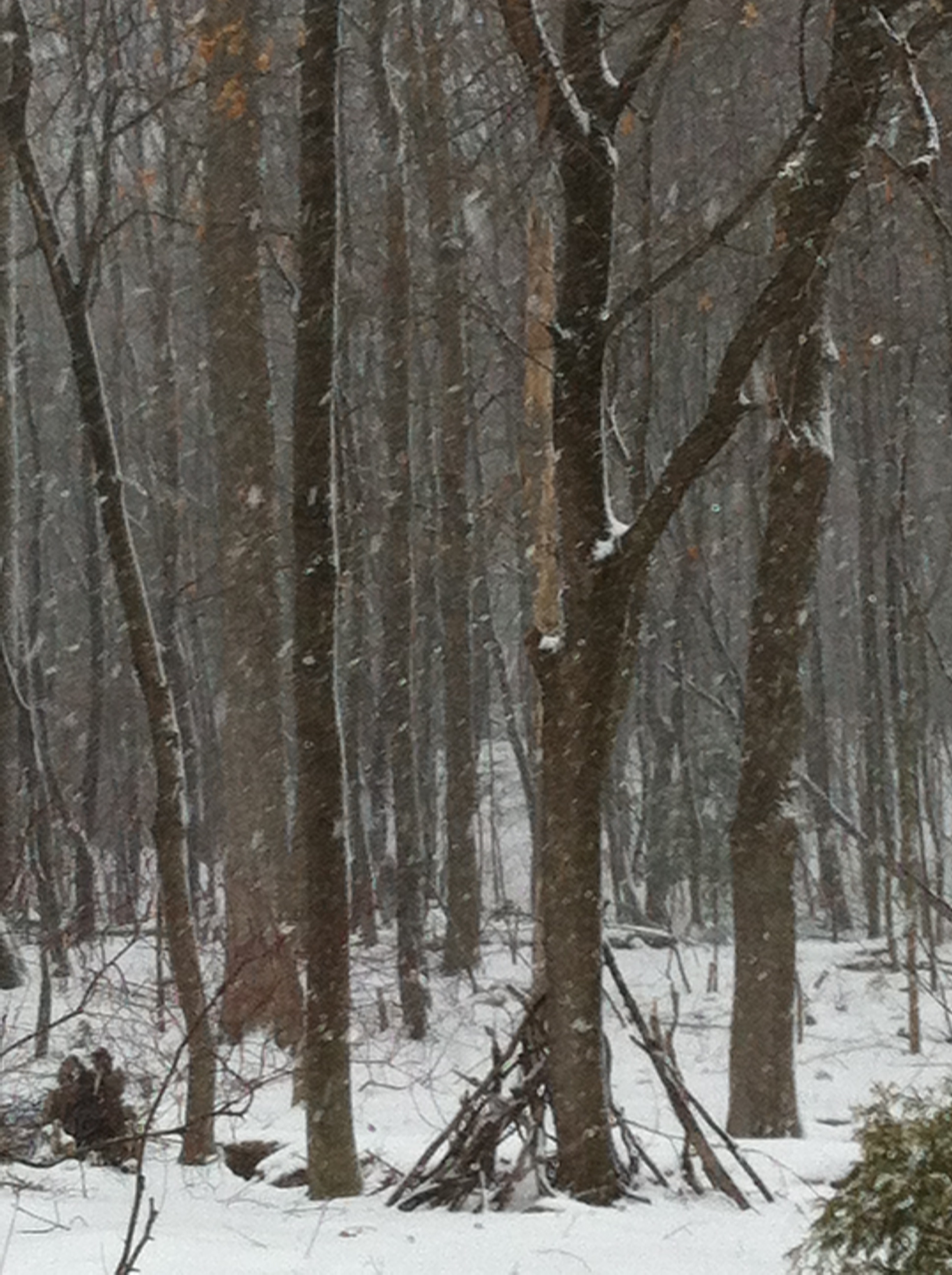
IMG_1102It is a dark, cold, winter’s morning, gray with a pelting mixture of sleet and freezing rain that has even the birds huddling for shelter in the thickest fir trees they can find.

I’ve just gotten up, lit the fire and the lights on the Christmas tree, made myself a cup of strong coffee, and thought to myself: where do I put my focus?

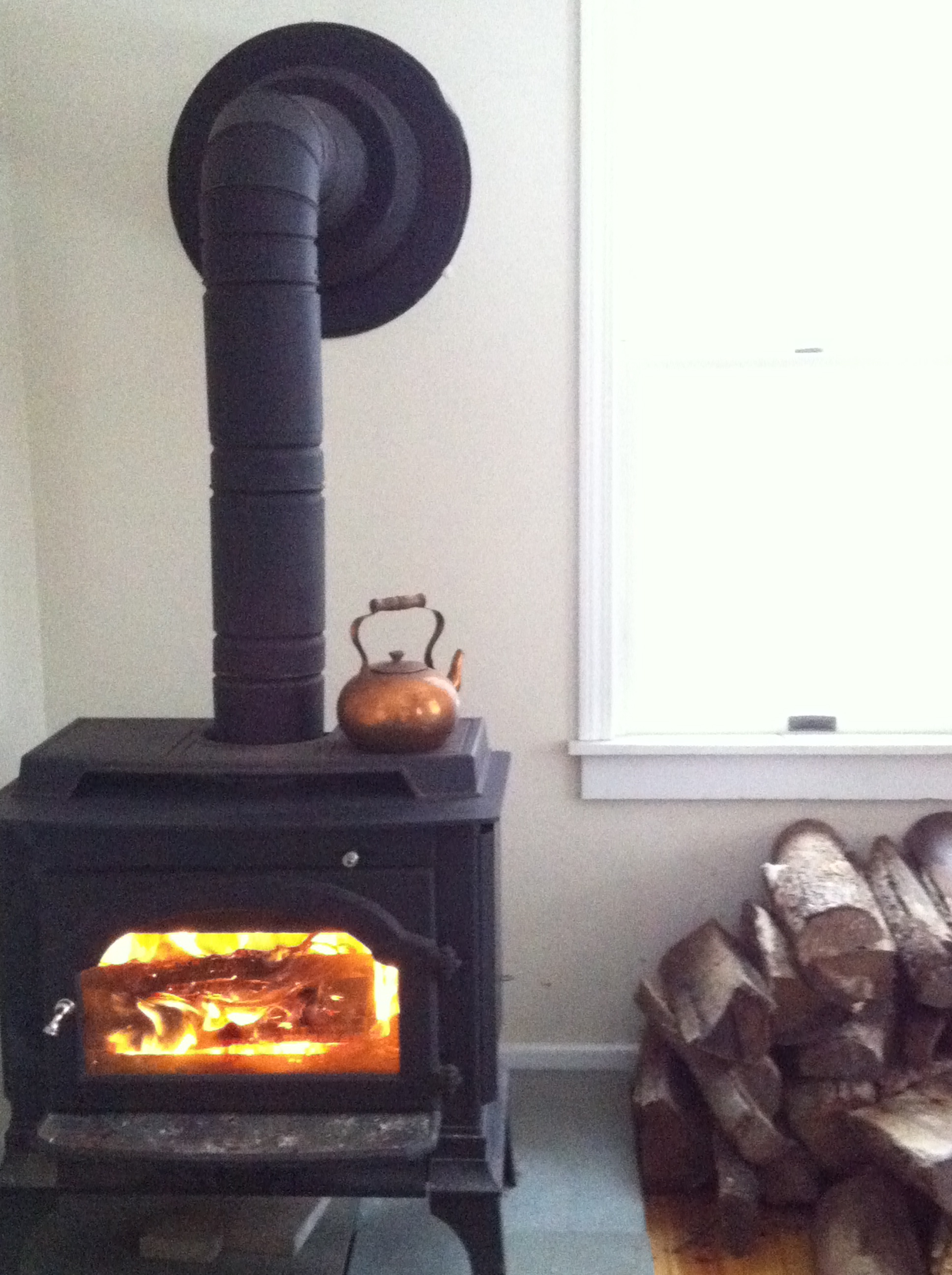
If I focus on the warmth and coziness inside the house right now, this seems like a wonderful morning, a perfect opportunity to curl up on the couch and make some progress on grading the papers students turned in to me before they left for the holidays.

If I focus on the sleet and wind outside, and begin to fixate on the way the trees are blowing around the icy power wires, I feel threatened, rather than protected, and start to worry in advance about whether or not I’ll be losing power later today.  Should I rush to take my shower and do some cooking before the power goes out?

Small dilemmas, and yet in the daily crucible of making these choices w of how to focus our attention, a lifelong habit is born of seeing the glass half-empty or half-full.

I must recognize that I have a tendency to see the glass half-empty.

I was a fearful, cautious, worrying sort of child, and I have not changed much as an adult.

In today’s age of aggravated climate change, random violence and the immediate potential for it all getting a whole lot worse in the near future, this attitude can make for a great deal of depression and anxiety.

But does it have to be that way?

Back in the 1980s, I spent a fair amount of time listening to recordings of Esther Hicks channeling the group of spiritual beings who called themselves Abraham.  The crux of their advice for us humans is to focus on what you want, with as much intensity and lavish detail as you can muster, and watch the Universe deliver it to you.

“You can have anything you want, if you exercise the Law of Attraction and call it to you,” Abraham would say over and over and over.

This idea has been picked up and popularized by others as well, and it is guaranteed to appeal to our can-do, feel-good American society.

We want to believe that we have the power to improve our lives, and it seems to happen often enough to keep the belief going.

But I always wondered, and wanted to ask Abraham, what about the people who were having terrible life experiences?  Did they “attract” these horrible situations to themselves too?

Did the 20 children who died in Newtown “attract” their destiny?

I cannot believe that they did.

It could be, however, that the killer’s vision was so strong that he was able to enact it, to make it come true.  Maybe he did what Abraham suggests, and replayed over and over again in his mind the details of what he wanted to do, until it was so well-thought-out and planned that he was able to unroll it in reality with no problem at all.

We need to pay more attention to the power of the human mind to affect reality.

It happens on an individual level, as when I can transform this gray, nasty morning into a warm, cozy one just by focusing on the peaceful interior of my house rather than the storm raging outside.
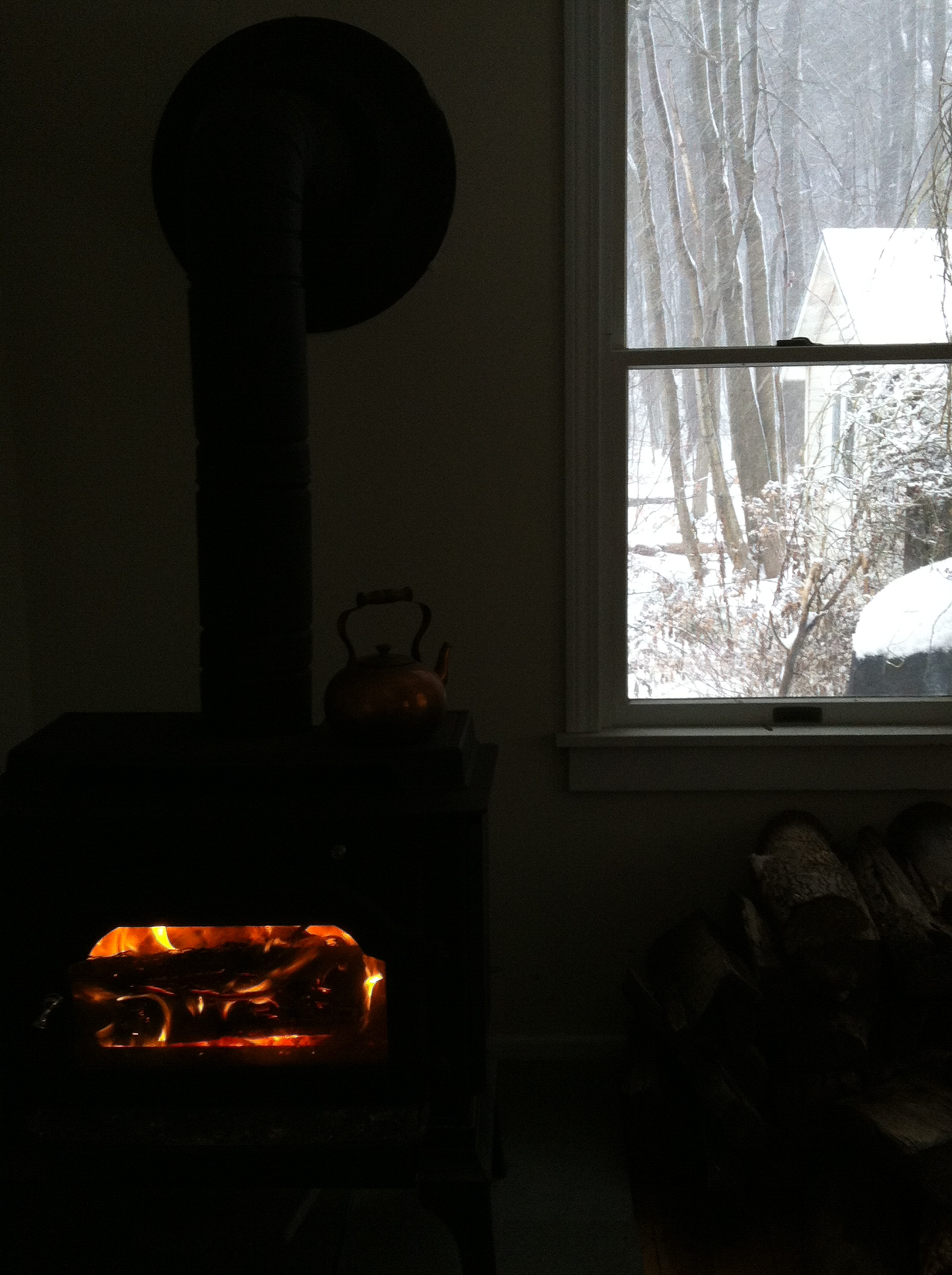
Focus on the outside
Focus on the outside

Focus on the inside

Focus on the inside

And it happens on a societal level, as when so many of us feel unsafe that we all start buying handguns and assault weapons, with the result that our feeling of peril becomes a self-fulfilling prophecy: with all those weapons circulating among our neighbors, we really are unsafe.

If we all settle into the mindset, amply seeded by the steady beat of the sci fi/disaster movies that have come out in the past decade, that the Earth is doomed and we are doomed with her, we will collectively give in to despair and simply go about business as usual while waiting passively for the end to come.

On the other hand, if we begin to collectively dream an alternative future, one based on respect for the Earth and respectful stewardship of her life systems, it is still possible that we may be able to manifest this positive vision.

The popular author Don Miguel Ruiz, whose book The Four Agreements has sold millions of copies worldwide, ends a recent interview by asserting that “We all came into this beautiful planet with a mission. The only mission, and it’s the same for every single human that we have on this beautiful planet earth, is to make ourselves happy.”

The only way I could agree with that principle of the human mission on Earth is if it is understood that we cannot be happy on an unhappy planet.

In other words, it is impossible for us to achieve real happiness when the dominant paradigm of human existence on the planet is based on oppression, suffering and violent destruction.

We may be able to achieve temporary “highs,” shelters in the storms of our lives, but real abiding happiness will elude us, at least those of us with enough sensitivity to be aware of the suffering always going on beneath the surface.

Events like the Newtown massacre break through the veneer of our superficially happy existence, here in the comfortable USA, and send many of us spiraling into depression.

And not just folks like me, who are habitually attuned to the malheur of life, but many more of us, who suddenly wake up and ask Why?

Why did this senseless massacre happen?

Perhaps it happened to remind us of the daily massacres of innocent wild creatures and feedlot animals, lab animals and vast flocks of birds, tons of fish in the sea and endless miles of coral and forest, all going down in a relentless bloodbath of human making.

Perhaps it happened to remind us of the children who are being trafficked into sex slavery or forced labor every day, of the children dying daily of hunger and preventable diseases, of the wasted lives of children whose poor-quality early education dooms them to lives of struggle and want.

When great tragedy strikes, survivors have a tendency to affirm to each other, Let their sacrifice not have been in vain. Let us learn from what happened and vow never to let it happen again.

Hence, in the wake of Newtown, the great outcry for better gun control laws, which may indeed, finally, be enacted in the coming year.

Abraham would say that you have to know what you don’t want in order to get clear on what you do want.

But the emphasis has to be on the positive; on building the vision, both personal and collective, of what we want for our society and our future.

We do not want an America where any random psychopath can get ahold of an assault weapon and wreak havoc in the neighborhood school or mall.

We do not want a lifestyle based on unsustainable consumption, oppression and callous disregard for the welfare of other living beings.

Now: what do we want?

We must get clear on our positive vision for a just and sustainable human civilization on our beloved planet, and then do the work of dreaming it into reality, day by day.

We must be intentional in where we focus our attention, not to ignore negative realities, but in order to put the power of our creative energies to work in manifesting the world we want to see.

In other words, as Gandhi said, be the change you want to see in the world, starting with your own thoughts and radiating outward.

Be the change.
IMG_1083

Dancing in the end times

And so here we find ourselves, finally, on the cusp of a great turning in solar time, the fabled 12-21-12.  It is a dark, wet, windy, wild morning here in the hills of western Massachusetts.

Since I started this blog back in the summer of 2011, with the optimistic URL “bethechange2012,” I have found many others who have beckoned to me like beacons of strength and inspiration on my somewhat lonely path of inquiry and discovery.

In the early days of Transition Times my own light was quite tentative and often overwhelmed with fear and distress, the product of my dawning realization of the tremendous gravity of the situation in which we find ourselves.

We cannot pretend to each other that the news is good for humanity, any more than for the rest of the living beings on the planet.

These are the transition times: the end of a long era of existence, as the ancient Mayan shamans rightly foresaw, and the beginning of something new.

I cannot and will not shy away from diving into the heart of the wreck that is our human civilization on this planet in the early 21st century.  Exposing what I find there is part of my mission with this blog.

However, it is also my purpose to be a channel and a beacon of hope for others who are searching for  meaning in these troubled times we live in.

We are all caught up in a vortex much greater than any individuals among us could produce, an accelerating forward surge that is hurtling humanity, and the planet we share with so many other life forms, towards a new era.

We cannot know what this means for each of us as individuals.  But I am coming to realize that the most important thing we can be doing in these transition times is to serve each other, and the other beings on the planet, as a form of shelter and anchor in the storm.

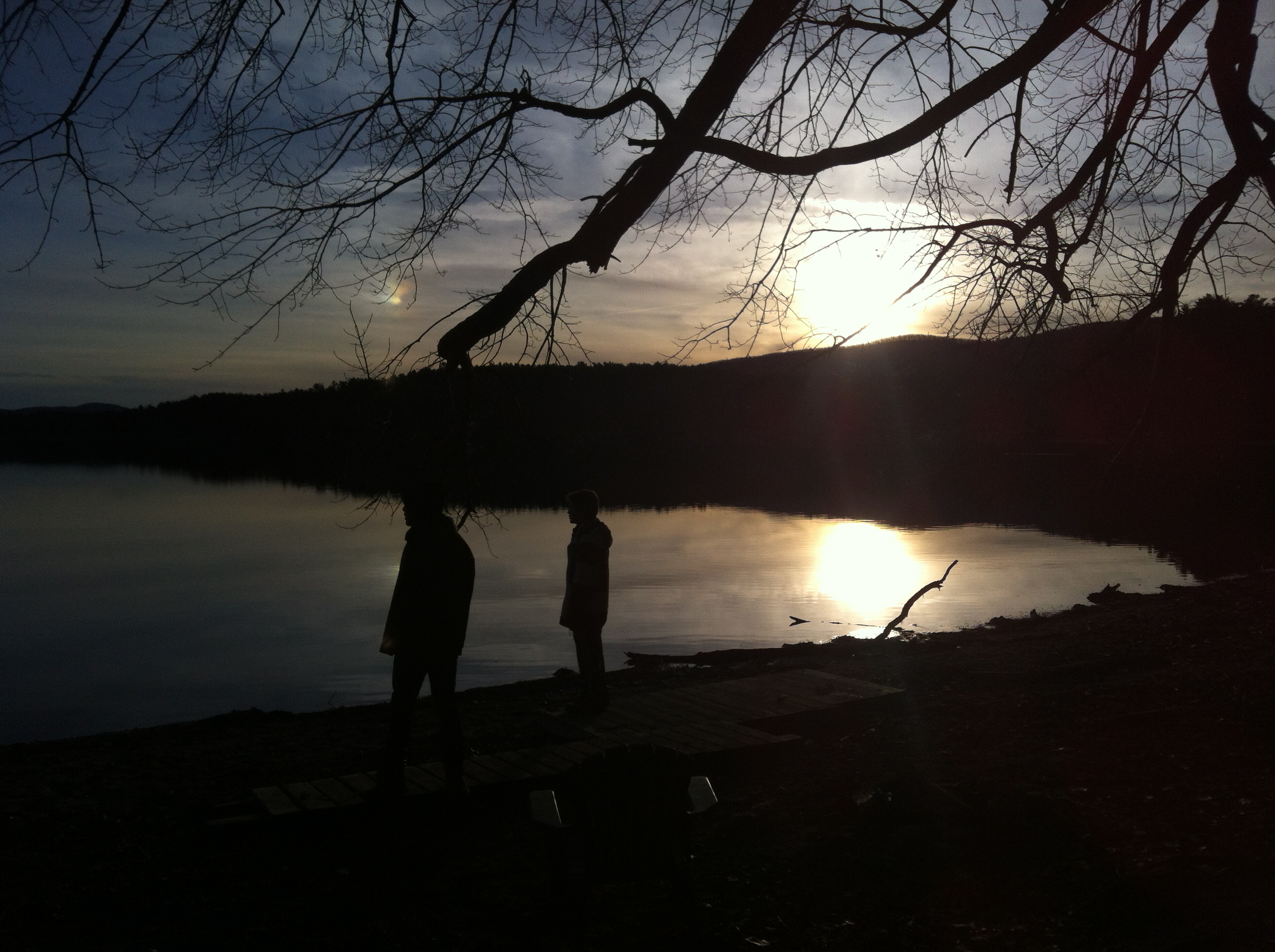
I will close with an image taken on one of my many thoughtful rambles over the past few months.  To me it represents the planet calling to me, and to all of us who love her, to continue to push back against the forces that would despoil and blight her.

The rocks, earth and waters of the Earth remind us that geological time is slow and very, very long.  Our dance on the planet as humans is so brief.  Let us enjoy our time here passionately, and turn our dancing to good works.

Benedict Pond, Monterey, November 2012

Benedict Pond, Monterey MA, November 2012

Standing strong against the Furies

AUDIO OF THIS PIECE READ BY JBH ON WAMC-NORTHEAST PUBLIC RADIO, DECEMBER 21, 2012

Just as people in places like the Maldives, Bangladesh and Japan shook their heads at the cluelessness of Americans who suddenly woke up to climate change when Sandy came to town, people living in hot spots of violence around the world now have every right to be shaking their heads at the collective American refusal to see and understand how, in the wake of the Newtown massacre, we are the cause of our own misery.

t1larg.pakistandronerally.giThe U.S. is the largest arms manufacturer and exporter in the world.  We have by far the largest military.  We are also by far the most heavily armed civilian population in the world, with some 300 million guns circulating among our population of about 300 million people.  Americans, we need to acknowledge that collectively, as a nation, we have been responsible for hundreds, and probably thousands of deaths of children worldwide through the weapons we sell abroad.

There is not a conflict in the world today that has not been fueled by American weaponry.

It is hypocritical to weep crocodile tears for the slaughter of innocent children in a kindergarten in Connecticut but to callously ignore the slaughter of innocent children by American drone fire in places like Afghanistan and Pakistan.

We need to start connecting the dots and realizing that the violence we mete out to the world will come back to haunt us a thousand-fold.

I’m not just talking about gun violence or missiles. I’m talking about the violence of inhuman labor practices and poverty, leading to rage that is sometimes turned inward, as in the spikes of farmer suicides due to heavy-handed Monsanto tactics in places like India and Asia, and sometimes outward, as in the terrorist strikes against targets inside the U.S. (9/11, anyone) or at our representatives abroad (did someone say Benghazi?).

I’m talking about the violence Western-style “development” has wreaked on the natural world, which is now boomeranging back to slam us against the wall of a destabilized climate.

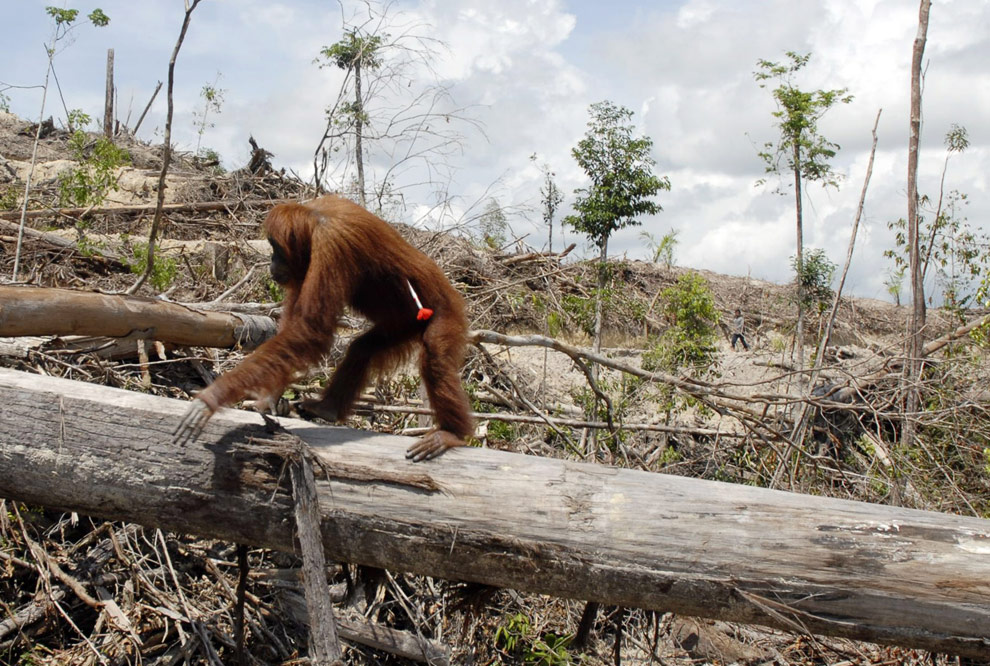
Orangutan with a tranquilizer dart in his side; will be relocated away from palm oil plantation site

Orangutan with a tranquilizer dart in his side; will be relocated away from palm oil plantation site

If you create lethal weapons and spread them widely among the populace, you should not be surprised when they discharge and kill people.

If you overheat the climate and bulldoze all the trees, you should not be surprised at the deadly droughts, wildfires, storms and temperature swings that result.

Back in the 19th century, Charles Darwin taught us to understand that competition is good, that the strongest and fittest will survive, and that if the weak perish it’s all for the best.  It was a perfect rationale for the capitalist/imperialist narrative of the past 500 years, domination as evolution, at gunpoint and bulldozer blade.

Would Darwin look out at today’s dangerous world and proclaim serenely that the coming population drop of humans, due to violence of our own making, is simply part of the grand scheme of Evolution?

If the answer is “yes,” does this mean we should just sit back and watch it all unfold with detachment?

I don’t think so.  I believe it’s the great task of our generation to meet the violence of our time with unwavering, clear-eyed resistance.

To a large extent, the damage has already been done.  The guns are circulating out there in the world; the nuclear power plants are whirring; the oil and gas rigs are pumping; the myriad plants and creatures with whom we grew up in our era on the planet are disappearing.

Pandora’s box is wide open, and the Furies have been released in the world.

We may not be able to get them back, but we can continue to insist that they do not represent us.  We can continue to stand as beacons to another mode of living, based not on competition and aggressiveness, but on collaboration and respect.

As we move into the darkest week of the year, let us not give up hope that as the planet swings back towards the Sun on December 22, we can collectively climb up out of the abyss of violence and pain and unite around the finest human values of life, peace and love, for our fellow human beings, and for the planet as a whole.

Time to end the slaughter of innocents!

Newtown School children right after shooting.  Photo by Shannon Hicks, The Newtown Bee

Newtown School children right after shooting. Photo by Shannon Hicks, The Newtown Bee

And so, once again, we all play the role of passive, horrified bystanders as yet another mass murder erupts into the news headlines.

Last week it was three dead in a shooting in a crowded mall, with police saying it was remarkably fortunate that “only” two were shot before the gunman took his own life.

This time it’s 20 Connecticut elementary school children gunned down in their classrooms, along with seven adults.  Again, the shooter himself is dead, so it will be hard to ever know for sure what in the world led him to commit such a wanton act of violence.

And let’s not forget about last summer’s shooting in a crowded cinema in Aurora, Colorado.  The violence just goes on and on, and no one seems to have the will to put a stop to it.

What would it take?

It would take politicians with the gumption to stand up to the gun lobby and bring the “right to bear arms” code up to 21st century standards.

Back in 1776, citizens were encouraged to bear arms in territorial wars against the French, British and the Native tribes.   That’s the context in which the Second Amendment should be read.

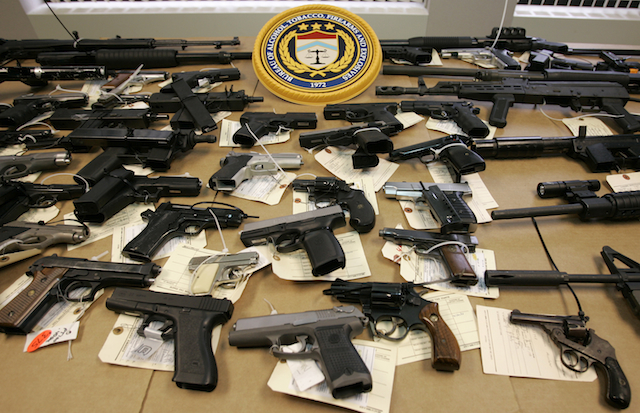
Today there is no reason why anyone who is not a soldier or a law enforcement officer should be bearing the kinds of handguns used by today’s school shooter.

Hunters can keep their shotguns, provided they receive adequate training in how to use them, and maybe some small, simple handguns could be allowed for personal defense, although those tend too often to backfire—just last week two small boys, ages 7 and 11, were taken into custody for threatening a woman with a cocked, loaded gun that they must have taken from their father’s desk drawer.

AP A OH USA 501 Guns

But the semi-automatic assault weapons like the one used by the cinema shooter, or the high-powered pistols used by today’s school shooter should not be casually floating around in civil society.

It is just too easy for a kid undergoing a psychotic break, as today’s 20-year-old shooter must have been—to grab these weapons and go crazy with them, slaughtering innocent people.

It is also too easy to imagine what could happen in situations of shortages and crises brought on by climate-change-induced storms, if men with guns are calling the shots in neighborhoods and villages cut off from law enforcement.

Unknown-1We’ve seen it happen in places in Africa and the Middle East, when the toxic mix of desperate civilians and power-hungry men with guns erupts on to the streets.  Does anyone really think we’d be immune to these kinds of scenarios here?

It’s past time for peace-loving Americans to stand up to the NRA and insist that the long-awaited gun control laws be enacted.

How many more children have to die unnecessarily before we stop being silent witnesses and start taking action?

Something is rotten in the state of higher education: time for change!

Higher education today is like a feudal castle, with the King living in opulence, his knights doing well as long as they serve the king faithfully, and the servants toiling away in perpetual bondage.

President Shirley Ann Jackson of Rensselaer Polytechnic Institute in Troy, NY, is the highest paid private college president in the land

President Shirley Ann Jackson of Rensselaer Polytechnic Institute in Troy, NY, is the highest paid private college president in the land

Thoughts of Elsinore are rising to mind today because of a new report detailing just how wealthy those academic Kings are: The Chronicle of Higher Education reports that “In 2010, 36 private-college presidents earned more than $1 million,” and among the 493 presidents surveyed at private American colleges with budgets exceeding $50 million, the median compensation was $396,649.”

In contrast, a recent American Association of University Professors survey found the average faculty salary at American institutions of higher education to be $82,000—but this average is pulled way down by the inclusion of “instructors” in the mix, for whom the average salary was $47,000.

Tenured faculty, in the Elsinore analogy, would be the nobles of the realm, the knighted vassals who serve the King in the castle, and are richly rewarded for their allegiance.

They are supported by a legion of staff, including graduate teaching assistants and adjunct faculty, whose salary falls behind the cost of living a little more each year.

And then there are the serfs in the system, whose labor supports it all: the students and their parents, many of whom are forced into a new kind of debt bondage to attain the gold ring of that vaunted college degree—paying ever-increasing tuition, and ever-increasing taxes as well.

What would make young Hamlet really moody these days is the growing recognition that the college degree just isn’t worth what it used to be.

Kevin Carey, director of the education policy program at the New America Foundation, cites Academically Adrift, the damning study by Richard Arum and Josipa Ruksa, which “found that many students at traditional colleges showed no improvement in critical thinking, complex reasoning and writing, and spent their time socializing, working or wasting time instead of studying.”  And then, he adds, there are all the students who enter college but never end up graduating, often because the price is too high or the academic work too dull.

At the graduate level, too, there is a sense of crisis.

According to Chronicle of Higher Education reporter Stacey Patton, “The student-debt problem, coupled with the dearth of jobs, has sparked a national conversation about whether going to graduate school is worth it.”

At the Council on Graduate Schools annual meeting this month, Patton reports, the buzz was about whether it’s “unethical to keep admitting students to programs and training them for jobs that don’t exist while they are racking up piles of debt only to risk finding university employment as just an adjunct, or obtaining some other low-wage job for which a graduate degree is not necessary, or ending up on food stamps.

Poor Hamlet, who just wanted to go back to Wittenberg and bury himself in philosophy!

These days, the humanities are particularly beleaguered, with leaders among the humanities professoriate having to constantly deliver pep talks to the rank and file on why what we’re doing matters.

“We should keep telling our students (and their parents) that ‘doing the humanities’ prepares them generally in a way no narrow occupational degree can,” says Rosemary Feal, Executive Director of the Modern Language Association.

“When we say the word research,” she continues, “most people don’t think of the humanities, and they have trouble recognizing the product as useful. It’s true that “doing the humanities” doesn’t produce scientific knowledge that can, say, cure cancer. But it can yield imaginative works on cancer like Susan Gubar’s Memoir of a Debulked Woman and Mary Cappello’s Called Back: My Reply to Cancer, My Return to Life that change people’s lives.”

It’s interesting that when pressed to think of humanities work that “changes people’s lives,” Feal points to two memoirs as examples.

As someone who is currently writing a memoir, and who has studied personal narrative since my dissertation (entitled Hybrid Encounters: Postcolonial Autobiographies of the Americas), I have to agree with Feal that personal narratives have great educational value.

Human beings have been sitting around campfires telling stories since we first began to use language.

We have always learned by listening to our elders hand down traditional stories, and inventing new ones.

The tragedy of Hamlet, for example, was Shakespeare’s reworking of the older Scandinavian tale, and it illustrates vividly the dangers of puffed up pride, greed and ruthless ambition.

The desire of Claudius for wealth and power blinds his moral sense, and in killing his brother, marrying his sister-in-law, and plotting to kill his nephew, he sets the stage for the total destruction of the royal house of Elsinore, leaving it ripe for the plucking of the neighboring Prince, Fortinbras, who is as decisive and aggressive as Hamlet is moody and tentative.

In our current educational landscape, the Fortinbras army waiting in the wings might be robotic: the legions of online courses that are swiftly breeching the walls of Castle Academe.

Online learning has the potential to be as revolutionary as the rise of industrial capitalism back in the 19th century.  Suddenly the educational territory cannot be entirely controlled by the King in his castle, although to be sure he is dispatching his Knights left and right to try to secure his boundaries—every day brings word of new online learning consortiums or treaties being signed in the scramble to lock down the goldmines of higher learning.

But what kind of educational model are those Kings of Academe trying so hard to protect and secure?

The kinds of subjects that lend themselves best to MOOC virtual classrooms (that’s Massive Open Online Courses, for those new to the territory) are those that can be taught by lecture and multiple-choice exams.

But does young Hamlet, or any other thoughtful, creative young person, really want to be lectured to and tested on canned, pre-recorded knowledge?

Wouldn’t he rather be engaged in a dialogue with his elders, or a dynamic, free-ranging conversation among his peers and their mentors?

Online technology does have the power to help open up multiple conversational platforms.  Since the advent of the internet, we humans are conversing globally in ever-expanding ways, and the price of admission to the conversation is fairly low: a computer and an internet connection is all you need, for starters, to get into the game.

But to succeed in this brave new social landscape, you do need competence with those familiar old tools of the humanities trade: the ability to read and analyze critically; the ability to write and speak with precision and thoughtfulness; the ability to sort through, understand and analyze the massive amounts of complex data that are thrown at us every day through the media.

The Kings of Academe must not lose sight of this bedrock mission of higher education in their rush to consolidate their hold on the online learning market.

The old model of having students physically living on a campus with their professors on the outskirts may not hold up in the 21st century, other than at a few of the most fabulously wealthy castles like Harvard, Yale and Princeton.

Is it worth having students and their parents bury themselves in debt to afford the tuitions that keep brick-and-mortar campuses running?

Maybe not.

But in this transition time, let’s make sure we hold on to what’s best in the old system, while getting rid of what no longer works.

I am all for increasing the horizontal democratization of learning, which is the promise of online education, as long as it doesn’t lead to the pauperization of the professoriate, the students and their parents, all toiling beneath bloated administrators.

It’s possible that we may be able to transition to what is now being called “blended learning” environments, rather like today’s distance MFA programs, which convene students for intensive sessions four times a year, but otherwise have them working in small online learning groups facilitated by a professor.

But it’s also possible that it may be time for some really profound change.  What if, instead of having to choose between Elsinore and Wittenberg, young Hamlet could reject both these traditional poles and instead strike off on his own, relying just on his own creativity, wits and drive?

What if he could access the maps, equipment and tools he needed to succeed from other entrepreneurs like himself, free agents circulating their skills in the grand market of online ideas?

Maybe massive fortunes wouldn’t be made this way, but isn’t it becoming painfully clear that the growth and accumulation model of economics is crashing and burning these days, going down like Claudius under the weight of its own greed?

A new kind of barter system might work just as well or better, if the goal were happiness and productivity, rather than frantically making enough cash to stay ahead of the debt collectors.

Joi Ito

Joi Ito

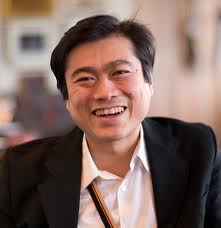
I am excited by the vision of Joi Ito, the dynamic new director of MIT’s influential Media Lab program.  Ito, profiled in a recent issue of WiredUK magazine, wants to break down the castle walls of academe, and get students and their professors out into the streets where the action is.

“In the old days,” he told WiredUK,  “being relevant was writing academic papers. Today, if people can’t find you on the internet, if they’re not talking about you in Rwanda, you’re irrelevant. That’s the worst thing in the world for any researcher.”

At the Media Lab, it’s not about students passively sitting and taking in a professor’s canned words of wisdom.  Instead, posses of students and professors work together in the labs and out on the streets to find creative solutions to real-world problems.

“By opening up the Media Lab,” WiredUK reports, “Ito hopes to move closer towards his goal of  ‘a world with seven billion teachers,’ where smart crowds, adopting a resilient approach and a rebellious spirit, solve some of the world’s great problems.

“His is a world of networks and ecosystems, in which unconstrained creativity can tackle everything from infant mortality to climate change.

“‘We want to take the DNA [of the lab], the secret sauce, and drop it into communities, into companies, into governments,’ he says. ‘It’s my mission, our mission, to spread that DNA. You can’t actually tell people to think for themselves, or be creative. You have to work with them and have them learn it themselves.’”

Ito has just placed his finger on the prime value of education at any level: helping young people learn how to think for themselves and be creative.

Young Hamlet had that gift, which is why he was able to escape the clutches of Claudius and maintain his own principles in even the poisonous atmosphere of Elsinore.

Laertes, whose poisoned sword kills both Hamlet and himself, is the other kind of student: the kind easily influenced by a corrupt mentor like Claudius into playing foul in the quest for personal gain.

In this day and age, we need to be teaching our young people not only to be creative problem-solvers, but also to be ethical, principled human beings who are willing to take risks and stand up for what is right and just—even if this means foregoing easily attainable blood money.

The Media Lab’s Ito has observed that “a lot of the kids at the Media Lab today don’t want to make more money, don’t want to become immortal, they just want to figure out how to fix this unhealthy system we have. There are lots of kids who are not happy with this massive consumerism, this unsustainable growth, but who have really smart science and technology values. That’s a type of person we can draw into what I think will become a movement.”

What kind of movement? A creative commons movement (Ito, by the way, was one of the founders of Creative Commons and the Mozilla Foundation), in which some of the key principles would be, in Ito’s words: “Encourage rebellion instead of compliance”; “Practice instead of theory”; ” Constant learning instead of education”; “Compass over map.”

Exactly the kind of principles that Hamlet employed to successfully navigate Elsinore—until he was undone by the treachery of Claudius and Laertes.

But get a billion young Hamlets–and Ophelias!–going, and there will be no stopping them.

“In the old days,” Ito told WiredUK,  “you needed hundreds of millions of dollars and armies of people to do anything that mattered. Today a couple of kids using open-source software, a generic PC and the internet can create a Google, a Yahoo! and a Facebook in their dorm room, and plug it in and it’s working even before they’ve raised money.

“That takes all the innovation from the centre and pushes it to the edges — into the little labs inside the Media Lab; inside dorm rooms; even inside terrorist cells. Suddenly the world is out of control — the people innovating, disrupting, creating these tools, they’re not scholars. They don’t care about disciplines. They’re antidisciplinary.”

This kind of talk, as Duke University professor Cathy N. Davidson observes, has many traditional educator-types quaking in their boots.

Tenured faculty tend to be rather complacent as a group, since their jobs are assured for life—unless, that is, their institutions fail.  The truth is that we are in a sea-change time when many of the weaker institutions of higher learning are likely to be weeded out.

We have, right now, a fantastic opportunity now to break out of what Davidson calls the “Fordist, production-line compartmentalizations and hierarchies of knowledge,” including ossified disciplines and stifling pedagogical models.

Those of us within the profession now need to be tunneling from within towards the freedom of creative expression that we and our students so desperately need.

Every discipline has a role to play, but only to the extent that we allow the disciplinary walls to become permeable, fostering the free germination of potent new ideas.

In the fresh air that will then begin to circulate in the musty corridors of academe, we will be able to hear rumors of the coming of a better world.

Building a Tsunami of a Climate Change Movement: What Will it Take?

In the seething, saturated media environment we live in, victory is measured in whether or not you’re able to get people to slow down and pay attention.

It’s getting harder and harder, especially for young people, to sustain attention for more than a few minutes.

Life is a restless prowl for something new, and in a manmade environment where we’re seen it all before, it’s got to be pretty damned new and exciting to get us to pause for even a moment.

As a teacher, I find myself adapting to this in ways that I would never have predicted when I first started teaching undergraduates, nearly a quarter-century ago.

I know I have to be more exaggerated in my classroom presence.  She who drones is lost.

I also don’t expect the level of reading comprehension these days that I used to take for granted among my students.

I know I’m going to have to excerpt and digest for them, and I’d better do it in an enthusiastic, engaging way, or they’ll be surfing away, in their heads if not literally, on their screens.

I have to do constant daily battle with those screens, too—even when I outright forbid them, they creep back in with all the force of a compulsion, or an addiction.

In this kind of environment, why should we be surprised that it seems to be impossible to get people to pay attention to a big, remote problem like climate change for more time than it takes to say “Hurricane Sandy”?

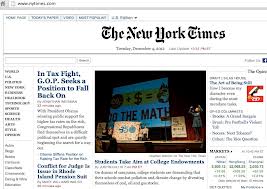
The other night I was overjoyed when I stopped by the New York Times site and saw Bill McKibben’s “Do the Math” tour foregrounded front and center on the homepage.

Unknown

Bill had the same reaction: he forwarded a screenshot of the page to his email list, trumpeting victory.

But what kind of victory is it, really?

Yes, McKibben’s Do the Math tour succeeded in finally penetrating the security perimeter of that gated community known as Mainstream Public Opinion.  If the Times prints an article, we can assume that at least a few of the sheltered, august heads within the insular circle of elite readers will pay attention.

Note that the article was ultimately filed in the Business section of the newspaper, by the way.  Evidently the Times thought its business-minded readers ought to know that those pesky students might be causing trouble for stockholders in major fossil fuel companies in the coming months.

This is the same way that the Times reported the Occupy Wall Street movement: as an annoying inconvenience, a public nuisance that our good police force is working to clear away ASAP.

It’s the same way they’ve reported on Hurricane Sandy, hitting right in their own backyard.  What a colossal inconvenience!  Let’s clear it away so we can get back down to business as usual.

What is it going to take to get through to the Times and its readers that there is not going to be any more business as usual?

The game is up.  Things are going to get much worse, and the only chance of avoiding total disaster is through immediate decisive action to curb carbon emissions and build up a massive supply of carbon sinks—ie, more forests, more seaweed and algae, more grasslands and croplands.

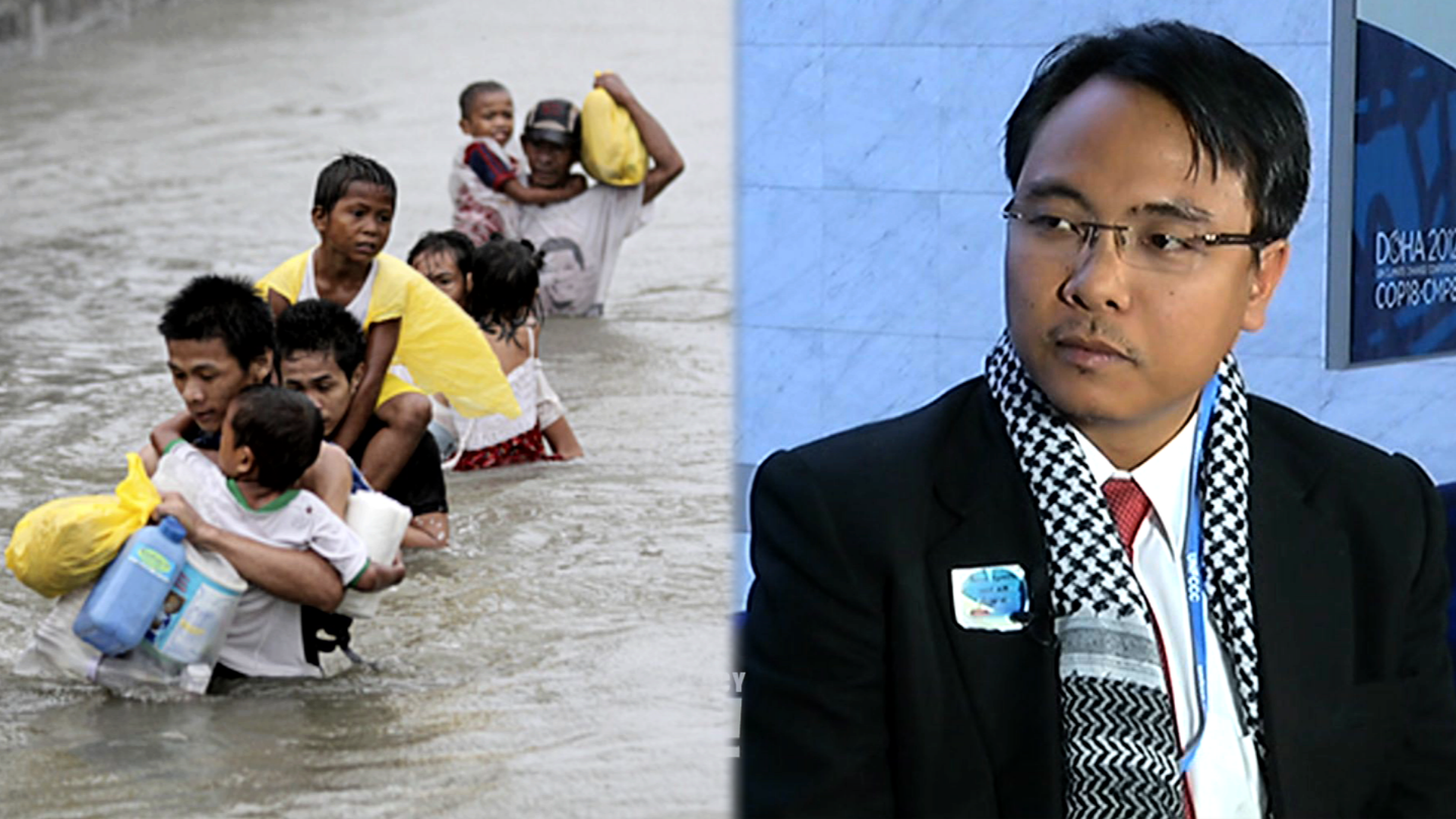
I was heartened, in a very melancholy sort of way, to see the chief negotiator for the Philippines, Naderev Saño, get all choked up as he made an impassioned speech to his comrades at COP18 this week to stop dilly-dallying and get down to the business of real change.

typhoon_yeb_sano

Referring to Typhoon Bopha, he said:

“As we sit here in these negotiations, even as we vacillate and procrastinate here, the death toll is rising. There is massive and widespread devastation. Hundreds of thousands of people have been rendered without homes. And the ordeal is far from over, as typhoon Bopha has regained some strength as it approaches another populated area in the western part of the Philippines.

“I appeal to the whole world, I appeal to leaders from all over the world, to open our eyes to the stark reality that we face. I appeal to ministers. The outcome of our work is not about what our political masters want. It is about what is demanded of us by 7 billion people.

“I appeal to all, please, no more delays, no more excuses. Please, let Doha be remembered as the place where we found the political will to turn things around. Please, let 2012 be remembered as the year the world found the courage to find the will to take responsibility for the future we want. I ask of all of us here, if not us, then who? If not now, then when? If not here, then where?”

Those are the right questions to be asking, and Saño is on the right track when he says that the work of stopping runaway climate change is not about what the “political masters” want.  It will only be possible if a sufficient number of people, all over the world, focus their attention and insist on the policy changes that will lead to real change.

The poor are the ones being disproportionately swept away by the floods and storms of climate change.  The problem may have their attention, but they’re not in much of a position to do anything about it.

I believe it is up to us, citizens of the so-called “developed” countries, to come out in force to demand change.

That is the kind of tsunami of U.S. public opinion that McKibben is trying to create with the Do the Math tour.

If we can succeed in catching the attention of young people, and getting them to understand how crucial this issue is to their futures, they can become a powerful force for change.

But in the end, this must be a multigenerational, multinational, multiethnic movement, of men and women from all walks of life, because if there’s one thing for sure, it’s that climate change does not play favorites.

It will blow away the fanciest palace just as soon as the flimsiest shanty (though the shanties will undoubtedly go first).

Ultimately, it will not be possible to build walls high enough to keep out the floodtides of a destabilized climate.

Does that get your attention?  No?  How about this: if we don’t get our act together on this issue now—I mean, NOW—we might as well just give it up and resign ourselves to roll with whatever punches are in store for us.  There will be many, and they will get progressively worse until our entire human civilization grinds to a halt.

Is that a risk you’re prepared to take?

I hope not.

So what can you do?

If you own stock, consider divesting your portfolio from fossil fuel companies until they shape up and get seriously green.

If you own a home, consider investing in alternative energy sources like solar or geothermal, and make your home as energy-efficient as possible.

Consider pressuring your town or city to do the same.

Start writing letters and emails to your elected representatives and the President of the United States and the fossil fuel barons and anyone else who might have influence, insisting that they think about our long-term welfare, not next quarter profits.

Talk to people about this.  You can never tell where ripples will go as the word goes out.

Do you want to go down fighting and active, or zoned out in front of your screen?

I echo the emotional words of the Filipino negotiator:

“Please, let 2012 be remembered as the year the world found the courage to find the will to take responsibility for the future we want. I ask of all of us here, if not us, then who? If not now, then when? If not here, then where?”

Telling the story of climate change: a call to action

You probably didn’t notice, but this past week another round of major international climate talks were held in Doha, Qatar, surely one of the least “green” locations on the globe.

The mainstream press barely bothered to give a nod to what has come to be a mind-numbing ritual of bait, switch and dodge.

The alternative press knew better than to look to the assembled ministers in Doha for any real news, focusing instead on the grim report released early last week by the Potsdam Institute for Climate Impact Research and Climate Analytics.

The 84-page report, titled “Turn Down the Heat” and funded by that radical fringe group known as the World Bank, demonstrates that if we continue our reckless heating of the planet at the present rate, all the scenarios of which readers of this blog are well aware—sea level rise, droughts and floods leading to severe food shortages, more frequent and more severe storms, loss of biodiversity and loss of human life on a biblical scale—will come to pass.

The executive summary of the report concludes with a measure of urgency:

“A 4C world is likely to be in which communities, cities and countries would experience severe disruptions, damage and dislocation, with many of these risks spread unequally.  It is likely that the poor will suffer most and the global community could become more fractured and unequal than today.  The projected 4C warming simply must not be allowed to occur–the heat must be turned down.  Only early, cooperative, international actions can make that happen.”

But this takes us in circular fashion back to Doha, where as we know, nothing substantive is going on.

Those of us who are aware of what’s happening on the climate front—and let’s face it, there aren’t that many of us, we probably form our own little 1% club—find it frustrating and frightening to have to sit by and watch as our beloved planet goes into drastic human-induced traumatic shock while our leaders bicker and fiddle and run down the clock.

I find myself constantly pulled between A) wanting to support political efforts like Bill McKibben’s “Do the Math” tour, which aims to educate and inspire action (specifically, divestment from fossil fuel companies to pressure them to reinvent themselves as bonafide green energy companies) and B) wanting to simply hunker down and build resilience at the local level, perhaps enrolling myself and my sons in a crash course in how to survive a disaster.

For the moment, I am focusing on doing what I can within my purview as a teacher to help the upcoming generation of young adults get a handle on what’s happening to our climate, and do their own productive thinking about how to engage in the struggle to turn things around.

Yesterday I was fortunate to have had a chance to participate in a small way in my colleague Eban Goodstein’s C2C Fellows Workshop, a national program based at Bard College that seeks to give young people the skills and understanding to become successful leaders in the global effort to stabilize our climate and create a sustainable economy.

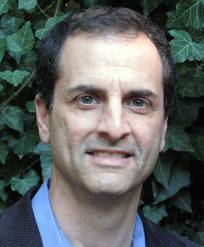
Eban Goodstein

Eban Goodstein

This is an ambitious undertaking, and Goodstein is going at it full tilt, holding weekend workshops several times a year at college campuses across the country, and bringing graduate students to Bard, with generous funding, to undertake Master’s degree programs in environmental policy with a special emphasis on climate-related policy and advocacy.

As Goodstein puts it, “Stabilizing the climate is not the work of a year, of a presidential term, or of a decade. It is the work of a generation.”

I see it as an essential commitment and responsibility to use my skills as a writer, scholar and teacher to help equip the upcoming generation for this great work we must all undertake now.

Goodstein is a unique blend of science policy wonk and communications guru, and I’m convinced that it’s at this very nexus that real change on the climate front will be forged.

All the dire scientific reports in the world won’t get people to wake up and change their daily habits, or insist that policy changes are made at the local, state, national and international levels, if the information is not presented in clear, compelling language.

A significant portion of the C2C Workshop, therefore, is spent in developing students’ storytelling skills.

It was interesting, and somewhat disheartening, to watch the students’ puzzled reaction when asked by Goodstein to talk about a favorite storyteller in their family.  Very few hands went up.

This is because most Americans today are reared listening to the TV tell us stories, not cherished individuals in our actual lives.  We are avid but passive consumers of prepackaged stories, and as a result most of us—unless we have the ambition to become stand-up comedians—don’t see storytelling as a skill we need to master.

Goodstein’s important insight is that storytelling is key to getting people’s attention, and telling a good story is essential to success in environmental advocacy and politics.

Good persuasive communication, he said, starts with a personal story, and then moves into the political.  Hook your audience with a personal anecdote, keep their attention with a strong narrative, and then finish up with a call to action.  And once you’ve got a strong story developed, practice telling it, over and over again, until you can do it in your sleep.

Armed with this advice, the group of some 80 students broke into smaller groups of five, each accompanied by a faculty or graduate student facilitator, for a two-hour intensive storytelling workshop.  Our task was to each come up with a short story about an inspiring person or event, write it up and tell it three times, to three different partners, then refine it and tell it again to the whole group.

The stories would be refined further the next day, told again to new audiences, and several would be singled out for telling to the entire big group, and given awards.

This is the kind of work for which I have been preparing my whole life.  There is nothing I would rather do than facilitate a writing workshop on inspiring stories!  And it gives me special joy to do it as part of a program aimed at giving young people the skills and mojo to tell the climate change story in a way that galvanizes action.

It may be that in the end, I would have been better served by spending my time learning survival tactics in the woods, but the truth is that even in the most dire circumstances, human beings have always needed their storytellers.  A good story well told can keep us warm in ways that may not be measurable, but that are profound nevertheless.

Here is the story that I wrote and told the students yesterday in our workshop.  I offered it to them—and now to you—with love and an earnest desire that it may inspire us all to each get to work on the climate change issue—in our own ways and spheres—before it’s too late.

My friend Pauline tells the story of how she came home from work one day and discovered that a civil war had started in her country, Congo-Brazzaville.  Suddenly she had ten people, mostly women and children, sheltering in her house as gunfire and bombs shook the streets of the city. 

When a bomb hit the house, she and her family and friends knew they needed to make a run for it.  They gathered what food and supplies they could carry, and left the house in the middle of the night, heading for the countryside. 

What followed was weeks of deprivation and terror as they huddled in the forest waiting for the conflict to die down so that it would be safe to return home.

I tell this story because it is emblematic of the many stories I have studied over the years, in which women and children are disproportionately affected as victims of social conflict and war. 

I tell it because I fear that in the age of climate change this is a story that will be repeated over and over again. Whether the violence is human—men with guns—or natural—hurricanes or droughts—the effects will be the same: women and children on the run, vulnerable and afraid.

Recent studies indicate that hundreds of millions of people will become climate refugees in the next half-century.  And they won’t all be in Bangladesh or the Maldives, either.  Just ask a former resident of Breezy Point in New York City, devastated by Hurricane Sandy, how it feels.

In our lifetimes we will all witness–and many of us will likely experience—the kind of fear and hardship that Pauline lived through, when the social order disintegrated and violence became the norm. 

There are many, many guns in America.  It would not take much in the way of food and energy shortages to trigger violence.

Sometimes I find myself wondering whether I should be learning and then teaching others survival skills, instead of critical thinking and writing. 

What good will my PhD in literature do me in an age of relentless, recurring Hurricane Sandys?  What good will a vaunted college degree do my students?

But I do continue to believe that the stories of survivors like Pauline matter, and increasingly these are the stories I offer students in my classes on human rights, environmental justice, politics and literature.

We all need to learn from Pauline and other survivors about the amazing resilience of the human spirit.  Even in the face of terror and chaos, people can choose to be compassionate, generous and respectful of one another. We don’t all choose the violent path. 

It will not help any of us to focus on fear right now, as the climate change crisis gains momentum and threatens to engulf us.  What we must concentrate on instead is hope, resilience and solidarity.  That’s what the world needs from us now.

Honoring the wisdom of Native Americans on Thanksgiving

Before I understood the real history behind the American tradition of Thanksgiving, I used to just innocently enjoy the chance to gather with family and friends to share a delicious meal.

I believed the story taught to me in grade school, about how the Pilgrims and their Native hosts sat down to a feast together, and lived happily ever after.

Such innocence, once lost, is impossible to recapture.

Now I know that the same Pilgrims who gave thanks for their delivery from starvation by the generous Native people of the region that would come to be known as New England would be the ones to turn on their benefactors and do their utmost to exterminate them.

My own ancestors were still fighting their own battles back in Europe at this time, but as an American, this is a shameful legacy that I need to confront and acknowledge.

As I wrote in my Thanksgiving post last year, the holiday of Thanksgiving should really be more of a day of atonement than a celebration of abundance, especially as we begin to realize that the abundance of food and natural resources that Americans have enjoyed over the past 500 years is not endless.

As we hit up against the limits to growth predicted years ago by Donella Meadows and others, we must recognize that the Native peoples who were so unceremoniously shoved aside during the Conquest of the Americas had so much more to offer Europeans than corn, squash, beans and turkey.

Indigenous worldviews, the world over, privilege balance over growth and accumulation, and this is the wisdom we need to pay attention to now.

Some argue that such a conservative position would not support the kind of technological innovation in which Europeans have excelled.

But I would ask whether our technological innovations have succeeded in making us happy as a culture, or as individuals within our culture?

Isn’t it true that the vast majority of our technological inventions have been used to foment and practice ever-more violent warfare?

Even our vaunted advances in medicine are primarily used, these days, to try to heal us from the sicknesses and imbalances our own technological inventions have afflicted upon us, by the poisoning of our food, air, water and earth with toxic chemicals and the byproducts of burning fossil fuels.

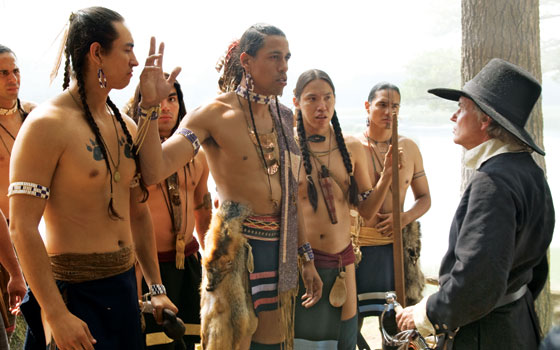
This image, from the PBS series “American Experience,” depicts members of the Wampanoag tribe meeting a white settler.

Before the Pilgrims landed in Massachusetts and started their inexorable push west, the indigenous people living here were happy, healthy, strong and long-lived.  They enjoyed the abundant food stocks of the ocean, rivers and forests, and lived in harmony with the land.

Yes, there were territorial skirmishes, but there were also strong intertribal councils and confederations, in many cases led by matriarchs who valued peace and did not want to lose their sons and grandsons to needless warfare.

This Thanksgiving, I give thanks that the Native peoples of this continent are still with us, despite all the brutality visited upon them by the European conquerors.

This Thanksgiving, I pray that all Americans begin to honor indigenous people as they deserve to be honored, by giving credence to the Native value of harmony with the Earth, and actually trying to live it.

Privilege, Difference and the Challenge of Creating a “Beloved Community”

The recent Presidential election showed in concrete terms that the demograhics of the United States are shifting quickly.  The old majority of people of European descent (“Caucasians”) is rapidly shrinking to minority status in numerical terms, although white folks retain a lock on the gears of power and privilege so far in this country.

How do white folks continue to maintain dominance?

The key is still education.

When my Eastern European Jewish forebears came to the US through Ellis Island back at the turn of the 20th century, the adults in the family spoke no English, but they were hardworking and ambitious for their children to assimilate and succeed.

One of my great-grandfathers fixed sewing machines on the Lower East Side; another great-grandmother sold fish wrapped in newspaper on the street to support her children.

Within a generation, the children of these immigrants were living the middle-class American dream, and their children did even better, becoming doctors, lawyers, teachers and professionals.

My grandmother, a first-generation American whose mother tongue, before entering kindergarten, was Yiddish, got her B.A. and Masters in biology from Hunter College, and became a high school biology teacher.  Her son, my father, graduated from Oberlin and NYU and became a successful professional.  I followed the pattern and got my Ph.D.

This is what’s known in Americanese as pulling oneself up by the bootstraps.

What is too often unacknowledged is how the privilege accorded to whiteness in America has helped families like mine succeed.

It starts with where you are able to live, because property taxes still determine the quality of the primary and secondary education you’ll receive.

In the first half of the 20th century, there were a lot of places in the U.S. where Jews weren’t welcome, including many selective colleges and universities.

But just like the Irish and the Italians, soon enough Jews became “white,” and that was all that mattered—they were welcome in all but the snootiest bastions of American WASP-dom, and their privileges were helped along by the exclusion of others.

The color of one’s skin still matters in this country.  We still live in largely segregated neighborhoods, and thus most of our children attend largely segregated schools.

And they’re not “separate but equal” schools either.  They are, as Jonathan Kozol so eloquently documented, deeply unequal schools, where children with darker skin tones—who are often the most in need of support–are given less, financially and  intellectually.

The fight over “race-blind” college admissions is so fraught because what tends to happen without any affirmative action policy for Americans of color is that the people with the best “grooming” win out, and the best-groomed high school seniors tend to be those from affluent families, living in affluent neighborhoods, going to affluent schools.

As The New York Times noted in a recent editorial, “Those from the top fifth of households in income are at least seven times as likely to go to selective colleges as those in the bottom fifth. The achievement gap between high- and low-income groups is almost twice as wide as between whites and blacks,” and “blacks and Hispanics are also substantially underrepresented at selective colleges and universities. In 2004, they were 14.5 percent and 16 percent, respectively, of those graduating from high schools, but only 3.5 percent and 7 percent of those enrolling in selective colleges and universities. The underrepresentation has gotten worse over the past generation.”

***

All this is on my mind today because of a recent stir at the college where I teach, which has made a strong effort over the past decade to recruit more students from under-represented groups.

We have more people of color on the campus today than we’ve ever had, which should be a cause for celebration.

But this semester has brought some simmering tensions to the surface, showing how difficult it can be to put a group of passionate young people together on a campus and expect them to “just get along.”

The flashpoint this semester was Diversity Day, a day started several years ago by a group of disgruntled students who felt that not enough time was spent during regular classes focusing on issues of social diversity.

Students, staff and faculty organized workshop classes on a range of topics related to the experience of marginalized groups in America, and theories and praxes of social justice.

The day was so successful that it was subsequently institutionalized, with regular classes cancelled and all students required to attend at least three workshops.

This year, an influential group of students decided they were going to “boycott” Diversity Day.  Many of them were the student leaders of workshops, which meant that they were actually sabotaging their own event.

They took this extreme measure because they were angry at what they perceived as a lack of strong response from the college administration to the provocation of a student who questioned not just the value of diversity day, but the value of diversity itself in American society.

This student distributed posters on campus asking students to “Take the Diversity Challenge” by answering the following question: “Name 5 benefits of Diversity (besides ethnic food and music).”

His challenge was taken as a white supremacist assault on students who wear the mantle of diversity with pride, and he did not do much to dispel that perception, according to students who said he also sent them a link to a You-Tube talk by Jared Taylor, the controversial founder of the New Century Foundation and editor of its American Renaissance magazine.

The anti-discrimination watchdog organization Southern Poverty Law Center, which keeps tabs on Taylor, says that he “regularly publishes proponents of eugenics and blatant anti-black and anti-Latino racists,” and also “hosts a conference every other year where racist intellectuals rub shoulders with Klansmen, neo-Nazis and other white supremacists.”

In the video link shared on our campus, Taylor argues that because there is often friction when you put different social groups into close proximity (and he’s especially attentive to different racial groups)—say, in neighborhoods or schools or college campuses—the better thing to do is to back away and re-segregate, thereby eliminating the sources of tension.

This attitude is wrong on so many levels that I find it hard to know where to start.

Besides the obvious truth that race is just an illusion, as far as a real biological marker of human difference, it’s also true that ghetto-izing certain individuals, for whatever reason, has never been a good social strategy in the past, and it won’t work now.

We don’t want a balkanized, fearful, hateful America any more than we want a bland, homogenized America.

We want a society where, as Audre Lorde put it, “difference [is] not merely tolerated, but seen as a fund of necessary polarities between which our creativity can spark like a dialectic.”

In her famous essay “The Master’s Tools Will Never Dismantle the Master’s House,” Lorde continued: “Within the interdependence of mutual (nondominant) differences lies that security which enables us to descend into the chaos of knowledge and return with true visions of our future, along with the concomitant power to effect those changes which can bring that future into being” (Sister Outsider, 111-12).

***

Audre Lorde

At my college, we like to say that we teach “critical thinking skills,” by which we mean that we encourage students to question authority and think for themselves.

We shouldn’t be surprised or upset, then, when they do just that by questioning our own institutional authority.

The students who organized the Diversity Day boycott this year—many of them women of color–were angry that a student advocating white supremacy was allowed to remain in our campus community.

While the administration deliberated over whether this student presented any danger to the community, and whether his words had crossed the line into hate speech, they said, they felt unsafe and unheard.

So they staged a protest, quite in keeping with Audre Lorde’s injunction to “transform silence into language and action.”

“I have come to believe,” Lorde says, “that what is most important to me must be spoken, made verbal and shared, even at the risk of having it bruised or misunderstood.”  She urges her readers to ask themselves “What do you need to say?  What are the tyrannies you swallow day by day and attempt to make your own, until you will sicken and die of them, still in silence? ….We can sit in our corners mute forever while our sisters and our selves are wasted, while our children are distorted and destroyed, while our earth is poisoned; we can sit in our safe corners mute as bottles, and we will still be no less afraid” of speaking out.

But, she continues, “We can learn to work and speak when we are afraid in the same way we have learned to work and speak when we are tired.  For we have been socialized to respect fear more than our own needs for language and definition, and while we wait in silence for that final luxury of fearlessness, the weight of that silence will choke us….

“It is not difference that immobilizes us, but silence.  And there are so many silences to be broken” (“The Transformation of Silence into Language and Action,” Sister Outsider, 4144).

On our campus, Diversity Day originated as an attempt to break the silences between different social groups, including students, faculty and administration, in the cause of mutual understanding and communication.

But this year, it was the boycott that spoke loudest, and what it said, loud and clear, was that there are still so many silences to be broken.

Speaking as a faculty member who teaches classes in human rights and social justice, and who has organized many Diversity Day workshops over the years, the problem is that it’s often too little, too late.

By the time Diversity Day rolls around in November, tensions between social groups on campus have often already come to the fore, and the workshops provide opportunities to let off steam that can end up sparking further conflagrations that take place in the dorms or on social media sites, without the mediating influence of faculty and staff present to help channel discussions productively.

One day out of the school year is not enough to create the social bonds necessary to establish a cohesive, harmonious diverse student body.

We are going to have to try harder, to do better.

***

An opening has been created for us by the students this year. From my perspective as a faculty member, this is a prime teachable moment, an opportunity to advance our ideals of social justice and strengthen the ties of community on our campus.

Those with more privilege, on whatever grounds, must stand as firm allies with the less privileged.

Every class, every conversation, every interaction is an opportunity for respectful communication that encourages the breaking of the deep-seated silences that separate us.

The truth is that every college campus is a microcosm of the larger society from which our students are drawn.  In the small, sheltered community we create—a kind of Beloved Community, in Martin Luther King Jr.’s terms—we have an opportunity to envision and manifest new frameworks and understandings that our students will then carry with them out into the broader world.

In this struggle, as in all others, we are the ones we’ve been waiting for, and the time for thoughtful action is now.

Fossil Fuels R Us–but we can change, and so can they!

I am in one of those periods where I feel quite inadequate to comment on the events that dash across the world and national stages with madcap intensity.

What was it Shakespeare said? Life’s but a shadow, a poor player who struts and frets his hour upon the stage and then is heard no more…it is a tale told by an idiot, full of sound and fury, signifying nothing….

And yet for those of us who are caught up in the moment, our hour upon the stage, what happens does matter, it does signify something—even if we can’t always tell what that something is.

The General and his lover

What does it mean that a much-decorated general, Director of the CIA, abruptly resigns after being investigated for adultery by the FBI?

Is this scandal really just about a simple affair with a younger woman, or do the General’s neocon tendencies, which had him presiding over the escalation of the disastrous war in Afghanistan and advocating open hostility with Iran, have anything to do with the alacrity with which President Obama accepted his resignation?

We’ll find out when the blockbuster film comes out, a couple of years from now!

Meanwhile, the drumbeats of war are booming in Israel/Palestine, right on cue after the American elections ground to their quadrennial conclusion.

Once again photos of bloody children pop up on our computer and TV screens.  Once again passionate voices on both sides of this eternal conflict are raised.  This is a pageant that has taken place so many times it has become predictable and stale, like the Christmas pageants that will soon take their places on local church stages throughout Christendom.

Scenes from Gaza, November 2012

Why can’t those people just get along? Americans wonder before flipping the channel.  Few of us are aware of the extent to which the Israeli/Palestinian conflict continues to be fueled and armed by the taxpayers of the United States.

This is our conflict; we are responsible.  But as long as we dispassionately wait for someone else to stop it, it will continue to grind on.

The same is true with so many issues, from climate change to income disparity.  It’s time to stop waiting for someone else to step in and solve the problems, make the changes for us.  We have to do it ourselves.

There are a few encouraging signs that this is beginning to happen.

The 350.0rg “Do the Math” tour with Bill McKibben, Naomi Klein and many, many friends is making its historic way across the country, urging Americans to consider ways they can pressure the institutions with which they’re involved to divest from fossil fuel companies.

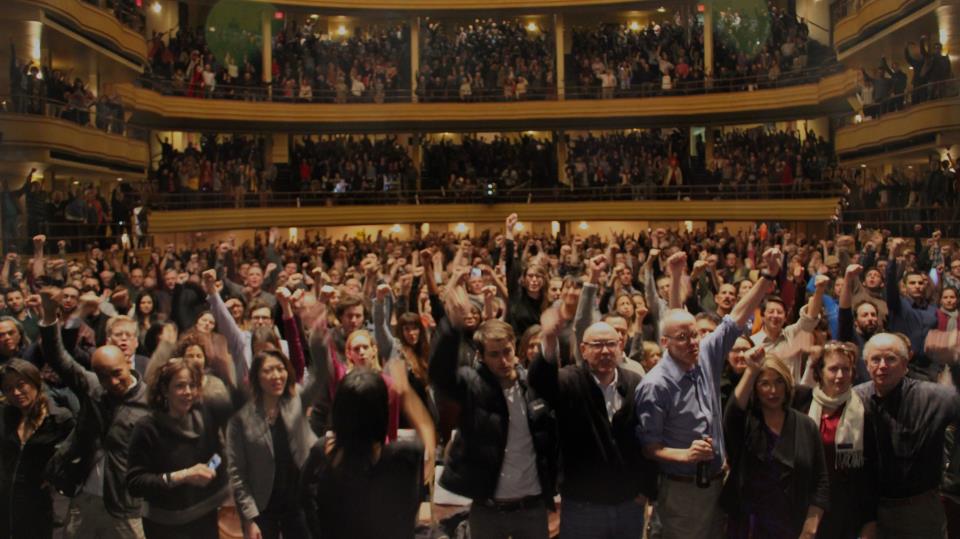
Scene from the Do the Math tour in New York City, 11/12

McKibben was talking about this last summer when I went to listen to him up at the top of Mount Greylock here in western Massachusetts, courtesy of Orion Magazine.  He invoked the successful divestiture movement of the international anti-apartheid struggle, which put enough pressure on the racist South African government that it eventually had to back down from its untenable position and begin working with the Black South Africans.

The sins of the fossil fuel companies are much bigger than those of the Boers: we’re not just talking about bigoted social policies in one country here, we’re talking about a mindset, policy brief and massive engineering effort that is inexorably endangering the entirety of human civilization on this planet, and indeed the well-being of all current life forms, perhaps excepting algae, bacteria and cockroaches.

And yet, it’s impossible to externalize the blame here, because the fossil fuel companies have only been trying to give us what we want: cheap and plentiful oil and gas.

It’s not their fault that we love their products so much we’re willing to do anything—including fight endless wars—to get it.

It’s incumbent on us to look inward and interrogate our own desires and dependencies in order to move forward.

Pressuring the fossil fuel companies to change is a good thing, as long as we’re willing to change with them.

Shifting to renewable energy is going to take a commitment from every player on the world stage today, from government leaders to manufacturers to the financial sector to ordinary consumers like you and me.

Let’s not allow the gloom of Shakespeare’s tragedies to engulf us and sap us of energy.  This play isn’t over yet and it doesn’t have to come to a bloody end.

Enough playing the handwringing Hamlet role!  Let’s roll up our sleeves and get to work to solve our problems and write ourselves a better script.