An Eco-Humynist Manifesto for the 21st Century

Having watched with dismay as the Durban climate talks sputtered to a disappointing conclusion, with all parties knowing that every day that goes by without concerted international effort to address climate change means the inexorable shifting of life as we know it on Earth, I was moved yesterday to put fingers to keyboard and come up with a Manifesto for change.

Even as I was writing it, I was thinking that such radical changes would not be possible to put into place without resistance from the status quo powers that be; therefore bloodshed, which is specifically antithetical to the principles I lay out, would be inevitable.

But if a World War III must commence, I would rather it be for a good cause like this one, than for the petty greed, bigotry and hatred that have propelled humanity into previous wars.

If we want not only ourselves, but our entire eco-system to survive, do we have any other choice but to take decisive action now?

An Eco-Humynist Manifesto for the 21st Century

Whereas human beings have acted in a dominating fashion towards each other and towards other living species on this planet, using the excuse of difference to justify aggressive and destructive behavior;

Whereas competition has been used as a rationale for economic systems based on hierarchical systems of power;

Whereas social exclusion and systematic discrimination has been seen as the normative right of dominant groups;

Whereas privileged groups have felt entitled to take more than their fair share from the environmental commons, and to deprive less powerful groups, whether human or of other species, of the resources necessary for well-being;

Whereas it is quickly becoming apparent, in the age of climate change, that the dominant paradigm of capitalist patriarchal social relations is resulting in the dangerous destabilization of the entire natural ecosystem;

The time has come to take action to change this paradigm in the following ways:

1. Move from a top-down hierarchical system to a horizontal, egalitarian model of social relations based on inclusivity across all of the traditional boundaries used to keep different groups apart, including race, class, gender, sex, nationality, ethnicity, religion, and also opening up the possibility for cross-species collaboration based on respect and stewardship;

2. Shift the worldwide economic system to a model of global cooperation and collaboration, with the focus of human industry and government on providing a baseline of well-being for all life forms on this planet, regardless of geographic origin or antiquated ideas of relative importance (ie, who is to say that a human being is more important than a songbird, or a sardine?);

3. Tailor the education system to teaching the history of the destructive cultural practices of homo sapiens up to the 21st century, and opening up constructive conversations across disciplines, where alternatives to these traditions can be envisioned and developed;

4. Model egalitarian, collaborative, respectful social relations in the private sphere of the family as well as the public spheres of education, the profession, government and law;

5. Shift from a violent conflict and punishment model of resolving disagreements to a peaceful persuasive model, with the goal always being the well-being of the community as a whole first, and secondly each member of it.

6. Destroy all weapons of mass destruction, as well as all bio and chemical weapons, and their blueprints.

7. Disallow any one person’s or minority group’s interests (with rich people and businesses or industries rightly being considered minorities)  to take precedence over the interests of the majority, including the non-human majority on this planet.

8. Develop an appropriate representative global governing council to administer these principles.

In the name of Mother Earth and ALL of her children, I call on the peoples of the world to act without delay to become the stewards of the planet and the collaborative, respectful individuals we were always meant to be.

Thanks to the students of Gender, Culture & Society, Fall 2011, for the inspiration to write this Manifesto.

On Human Rights Day, Calling the Next ‘Greatest Generation’

Today, Human Rights Day, I call upon the peoples of the world to understand that if we don’t focus on reducing human impact on the global environment in this new century, all the other more isolated issues will be moot.

Issues from the militarization of the police, to the use of rape as a weapon of war, to the stifling of free speech and democracy, are important—but they’re just minor skirmishes.

The real battle for human rights is taking place in the realm of energy politics.

It’s taking place on the thousands of oil rigs out in the Gulf of Mexico.

It’s taking place in the hundreds of new hydro-fracking wells being dug in upstate New York and Pennsylvania.

It’s taking place in the coal mines of China and the tar sands of Canada.

All of us are players in this deadly game.  Every time we turn the key in the ignition of our car, or buy food produced by a factory farm, or pay our electric bill.  We participate as consumers, and as consumers, we have more power than we realize.

On Human Rights Day, we need to remember three things:

•   The Universal Declaration of Human Rights guarantees the human right to health

•   A healthy environment, including healthy food, water and air, is essential to human health

•   Corporations, not being people, must not be allowed to trample on human rights.

Indeed, corporations, being human creations, should be serving human rights.

If a healthy environment is essential to human rights, then corporations should be working on making our environment as healthy as possible.  Corporations work for us.  They need to meet our needs, and uphold our rights.

There is a new movement afoot to define and uphold the Rights of Nature, which is a totally laudable goal. But in my view, the rights of the natural world and the rights of human beings are inextricably intertwined.

To truly uphold human rights would be to truly uphold the rights of Nature.

We are animals.  We are part of the natural environment of this planet.  If we foul and destroy our environment, we will die, along with countless other living beings: animals, insects, marine life, birds and plants.

This is a big battle; these are momentous times. We need to step up and be the new “greatest generation.”  We need to hold corporations accountable for their destructive, life-threatening actions.  We need to insist on change.

If we don’t, will anyone be left to lament our failure?

Swept away for the holidays? C’mon, Occupy, Let’s Go!

Looking back over the week, it seems like we’ve settled into some kind of holding pattern. The Occupy protests keep spinning, including a jubilant rally in Boston last night, but there is a feeling that we’re all waiting for the next shoe to drop…the next big push, the next new thing.

This week saw Occupy Foreclosures; next Monday there is a plan afoot to shut down the West Coast ports. The student protests are still sputtering; there is a group of hunger strikers in New York demanding a home for OWS;  and a stalwart group of climate activists has been braving relentless hostility to protest in at the COP 17 talks in Durban.

I’m glad to see all this stirring of outrage and energy.  I’m just starting to get confused by all the different tangents the movement is taking, and wishing for more focus and concentrated action.

I want the 99% to be like a biblical flood that will wash all the corruption and evil away, leaving a sparkling new world ready for re-occupation.

I know full well that’s unrealistic.  It’s not meant to be taken literally.  It’s just the kind of mood I’m in: impatient, restless, tired of the same old same old.

I have that same feeling about the holidays this year.

Are we really going to go through those motions again?  Are we going to fool our little children into believing in Santa Claus?  Are we going to laugh and clink glasses at innumerable holiday parties?  Are we going to go on shopping sprees for presents at the malls?

Again I’m reminded of the band that was ordered to keep playing as the Titanic sank.  There’s a new 3-D version of the Leo DiCaprio/Kate Winslett Titanic coming out soon–as if what we really needed was to watch that horrible tragedy again, in 3-D.

Folks, I hate to be the bearer of bad tidings, but we need to stop fooling ourselves, we need to get real. If we don’t profoundly change our ways NOW, Mother Earth will do it for us, and she won’t be pussy-footing around.

I was listening to a news report today about how many billions of dollars in damage Hurricane Irene caused back in late August. Then there was the October snowstorm, knocking down trees and powerlines for millions of people in the Northeast.

What’s next?  How bad does it have to get before we stop pouring good money after bad, cleaning up after natural disasters that could perfectly well have been avoided if we focused on prevention rather than on damage control?

We do the same thing with health issues.  We spend billions looking for the “cure” for cancer, when the real issue is lurking upstream, in all the toxic chemicals we’re dumping into the environment and our own bodies.

We know what makes us sick. We know what is making our climate “sick” and out of balance.  We know how to fix it too–we need to start converting to renewable energy as fast as we can, immediately!  All systems go!

And it’s the same with the sociopolitical system.  We know where it’s broken.  Campaign finance reform is not a new idea.  Bank and finance regulation is nothing new.  Social policies that bolster the middle class are obvious.

WHY AREN’T WE DOING THESE THINGS?

The Occupy movement has the potential to fire up enough people to get out there and demand change.  The movement just needs to articulate a few clear, incontestably worthy goals, and pour all the creativity of the 99% into finding ways to pressure the ruling class to get the job done–or be swept away.

I don’t know about you, but I don’t much feel like celebrating this holiday season.  I feel like rolling up my sleeves, joining forces with my neighbors, and getting to work.  There is so much to be done, and so little time.

Challenging rape culture

In my Gender Studies class this week, we’ve been talking about “rape culture.”  It’s a term that’s bandied about somewhat cavalierly on college campuses, and is probably much less familiar out in the ordinary workaday world.

Well, wake up world.  Rape culture is here.  And it doesn’t need the ironic scare quotes.  It’s real, and it’s not funny at all.

You know you’re living in a rape culture when women’s bodies are suggestively displayed, commodified, in sexually enticing poses obviously intended for the male gaze.

In the culture of rape, “no” means “try harder” and it’s always the woman’s fault if she doesn’t like what’s going on.  Stupid bitch, if she didn’t want it, she shouldn’t have worn those heels/had that drink/come to the party.

Rape culture sanctions violence when necessary to overcome resistance.  She was asking for it, anyway.

Rape culture oppresses dissenting men, too.  Men who fail to conform to the code of dominant masculinity are “faggots,” and being called out as anything akin to feminine–pussy, for example–is the worst insult you can throw at a guy.

Lately I’ve been realizing that rape culture extends a lot further than women’s bodies.  It’s also responsible for the prevailing attitudes towards our environment–our Mother Earth.

Not for nothing are both Mother Earth and Mother Nature gendered female.

Some patriarchal cultures manage to respect Mother Nature while still maintaining a stranglehold on her female children.  For instance, in Chinua Achebe’s Things Fall Apart, which I’m re-reading now for another class, the all-powerful Oracle of the Hills, a goddess, is interpreted by a priestess whose pronouncements no men dare question.  This doesn’t stop the protagonist, Okonkwo, from beating up his wives on a regular basis.

In Judeo-Christian and Islamic cultures, the patriarchy dispenses with goddesses.  Or at least, goddesses of the truly powerful, fearsome kind.

In Euramerican cultures, we have sex goddesses, who exist to pleasure their men.  Islamic cultures shroud their women in veils, but towards the same end: women exist to please their men.

The explosive growth of the international pornography industry, in which it is still rare for women’s pleasure to be of any interest at all, bears testimony to the extent to which rape culture rules.

In 2006, the pornography industry had larger revenues than Microsoft, Google, Amazon, eBay, Yahoo, Apple and Netflix combined–and it’s only grown in the past five years.

Porn is a vast unregulated jungle.  It’s not all bad.  But some of it is really terrible.  Some of it is sexualized violence–rape–thinly veiled as entertainment.

Yes, the girls get paid.  But many studies have shown that female porn stars often come from sexually abusive childhoods, or are teen runaways, or are lured into the trade through drug addiction and prostitution.

In Euramerican porn, women exist to give men pleasure.  Doesn’t matter if they get fucked over in the process.  Doesn’t matter if all that’s left in the end is a hollow shell.  There’s always another slut waiting in line.

Yeah.  It hurts me to talk like this, but I want to convey the mind-set of this industry.

And then I want you to think about how this mind-set translates to the Euramerican assault on the environment, our Mother Earth.

Or the sub-prime loan scandal (it’s Occupy Foreclosures Day, after all).  Fuck’em over, make a profit and move on.  All that matters is the bottom line, baby.

Sometimes it seems as though the more powerful actual women become in real life–ie, successful at playing the formerly all-male games of education and career–the more frantically obsessive men’s consumption of pornography becomes.  The power they miss in real life, they can find acted out for them in porn fantasies.

But the environment is another story.  Mother Earth is not going to play men’s games–that is, she doesn’t care to beat them at their own game.  When she starts to resist, the game will be over.

In porn, women go along with the game for a variety of reasons.  Generally speaking, women do it to survive.

Likewise, women collude with the patriarchy in the rape of the Earth because it’s just easier to go along than to resist.  And the lifestyle has been pretty comfortable over the last 50 years, hasn’t it.

I would like to see a frank discussion of the connections between rape culture as played out in porn and rape culture as played out between humans and the environment.

We need to acknowledge that there is a serious problem in both the private and the public realms (along these lines, we are just beginning to see confessions of “sex addiction” hit the media.  How about “fossil fuel addiction”?).

The problem is a symptom of much deeper ills in human social relations, which transgress the usual boundaries of race, class, gender & nation.

Why are porn and energy extraction biggest, the fastest growing industries in the world?

What does it mean to live in a rape culture?  Who benefits, and who loses?

Most importantly, how can a rape culture be transformed?  And what is our alternative vision?

My vision is this:

The one-sided model of domination and extraction (“getting some”) needs to shift to a dialogic model of sustainable mutual pleasure.

Human beings should serve in a steward relation to our Mother Earth, tending and enriching her in exchange for the nourishment and pleasure she can afford us.

Likewise, sex should not be about domination and debasement, but about mutual pleasure and uplift.

In these transition times, such a transformative shift should be possible, if each of us begins with our own selves, our own backyards, and lets the ripples of range move outward.

Let it be so.

From occupations to manifestations: Arundhati Roy imagines another world

I was excited to find in my inbox today an interview with one of my favorite women writers of resistance, Arundhati Roy.

Roy may be most famous for her novel, The God of Small Things, but I am most moved by her political writings.  She is the one who coined that very popular saying, which became a motto of the World Social Forum in the 1990s: “Another world is not only possible, she is on her way.  On a quiet day, I can hear her breathing.”

She has been a shrewd and no-holds-barred critic of transnational corporate capitalism for decades now, long before it became a trendy position to take.

As she wrote in An Ordinary Person’s Guide to Empire, “So much of what I write, fiction as well as non-fiction, is about the relationship between power and powerlessness and the endless, circular conflict they’re engaged in.”

Since she’s been thinking about these issues for so long, it’s not surprising that the comments she made to Arun Gupta, published today in The Guardian,” are right on target.

“I don’t think the whole protest is only about occupying physical territory, but about reigniting a new political imagination.

“I don’t think the state will allow people to occupy a particular space unless it feels that allowing that will end up in a kind of complacency, and the effectiveness and urgency of the protest will be lost.

“The fact that in New York and other places where people are being beaten and evicted suggests nervousness and confusion in the ruling establishment.

“I think the movement will, or at least should, become a protean movement of ideas, as well as action, where the element of surprise remains with the protesters.

“We need to preserve the element of an intellectual ambush and a physical manifestation that takes the government and the police by surprise.

It has to keep re-imagining itself, because holding territory may not be something the movement will be allowed to do in a state as powerful and violent as the United States.”

This certainly speaks to the question that has been worrying at me all day today, as news spread of the violent evictions of Occupy encampments in L.A. and Philadelphia.
Once the physical encampments are gone, will the movement die away?
Or can it keep bubbling up in guerilla fashion, as I advocated in an earlier piece on this blog, like the spontaneous street parties of European cities, that materialize, stage an intervention, and then vanish before they can be contained?
Also, what role will the internet continue to play over the winter?  Perhaps we should be moving from a stage of “occupations” to a new stage of “manifestations,” where the focus will be not on resistantly occupying a physical territory, but on proactively gathering, both virtually and actually, to manifest a new vision of social relations.
In the Guardian interview, Roy ends by pointing to indigenous people, and people who live close to the land, as key mentors in the days and months and years ahead.
As climate change and environmental degradation accelerates,  Roy says, “we are going to confront a crisis from which we cannot return. The people who created the crisis in the first place will not be the ones that come up with a solution.
“That is why we must pay close attention to those with another imagination: an imagination outside of capitalism, as well as communism. We will soon have to admit that those people, like the millions of indigenous people fighting to prevent the takeover of their lands and the destruction of their environment – the people who still know the secrets of sustainable living – are not relics of the past, but the guides to our future.”
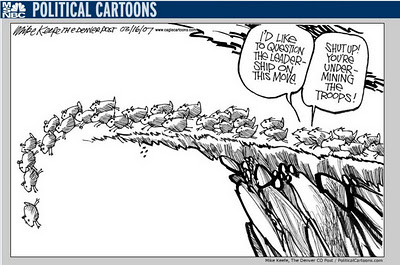
There are many of us who are now waking up to the certain knowledge that the leaders we thought were our trusty guides have been taking us on a joy ride to nowhere, ending up barreling towards a cliff.
There have been those all along who have refused to go along for the ride, who have maintained their independent imaginations and worldviews despite intense efforts by the corporate capitalist world to beat them down.
Those are the people we need to heed now–if, as Roy says, we want to learn “the secrets of sustainable living” and survive.  And if, of course, they’ll have us.

Occupy the Climate Talks in Durban–Virtually

If you lived on a small island nation that was losing precious feet of shoreline every year due to rising seas and storm erosion, you might be forgiven for having high expectations for the current international climate change negotiations going on in Durban, SA.

In the the heart of the developed world, meanwhile, you’d have a hard time finding any news about the climate talks.  You have to search the Web pretty carefully to even find a mention.

That goes to show how it’s all about location, location, location.

I learned yesterday, by careful Web search, that Canada is planning to pull out of the Kyoto treaty, just like the U.S.

Canadians want developing countries like China and India to also agree to reduced emissions.

But meanwhile, Canada’s government is pushing the extraction of oil from the Alberta boreal forests.

As Tom Zeller of the Huffington Post reports,””What’s astonishing is watching Canada emerge as a rogue among developed countries,” said Bill McKibben, the author and activist who has spearheaded a grassroots movement aimed at combatting a pipeline proposal designed to deliver some 700,000 barrels of oil each day from the tar sands to refineries and ports on the Texas Gulf Coast. “Of course, they have no choice but to ditch serious climate policy if they want to develop the tar sands in a big way — and that pool of gunky oil is clearly the tail wagging the dog up there.”

We’re all the dog that’s being wagged by powerful oil extraction companies.  If we don’t watch out, we’re going to be wagged right into extinction.

Notice how the climate talks are always held in inaccessible places where it’s hard for activists to congregate.  Who can afford a ticket to Durban, SA?

But now, with the World Wide Web, we can all hold ring seats to the climate talks, and we need to make our voices heard.

Read the Climate Connections blog, produced in Durban by the Global Justice Ecology Project, for up-to-the-minute information about what’s going on in Durban.

Check out the results of the General Assembly held there today under the Occupy Durban banner: #OccupyCop17

The climate talks may be far away, but they are one of the most crucial sites for “occupation” as we move into the 21st century.  We can’t let the big oil companies, with their deep pockets created from our dependence on an oil-based economy, dominate the agenda.

If you care about leaving a healthy planet to the next generation, the time to speak up is NOW.

Occupying the Climate Talks & College Campuses–Full Speed Ahead!

Could be an interesting day today.  Word has it that the less-developed nations are threatening to “occupy” the climate talks at Durban if the big polluters–that’s us, America, and you too, Europe and China–won’t get serious about limiting emissions and working for systemic change.

Meanwhile, a student movement begun at UC Davis is calling for a General Strike today–no classes, no work–to create a space for student-run General Assemblies to discuss issues like police violence against peaceful protesters, as well as sky-rocketing tuition and debt-funded education that is putting college out of reach for more and more Americans.

I continue to be amazed at the speed with which awareness now spreads, thanks to how many of us are now plugged into what is coming to seem more and more like a collective brain.

Could the collective consciousness represented by the World Wide Web be an evolutionary leap forward?  Or could it at least be speeding up our evolutionary progression as a species?

Of course, it’s all dependent on electricity.  If the lights go out, our collective brain goes dead.

Or maybe not?  The General Assemblies, with their human microphones and patient face-to-face discussions give me hope that the new connections that are being forged in this time of transition are real and could stand alone, without the crutch of the Web.

In fact, maybe that’s what this is all about.  Building the human connections, virtual and real, to withstand the great shocks that are coming our way as the climate shifts and the Earth seeks to return to a steady state.

In Durban, South Africa and on college campuses and public parks across the country, people are turning out to be the change we want to see.

It’s an exciting time to be alive.


Human beings are not lemmings–so let’s get organized and get away from that cliff!

This happens to be my 100th post on Transition Times, and to mark the occasion I want to reflect on where I’ve come with this blog project, and what themes have emerged along the way.

When I started Transition Times, back in mid-July, I was away in Nova Scotia, trying not to think about the crazy shenanigans going on back home, where the Republicans were threatening to shut down the U.S. government and destroy our credit rating in the world, rather than negotiate reasonably towards consensus with the Democrats (otherwise known as “the debt-ceiling crisis”).

I was also reading Mark Hertsgaard’s Hot: Living Through the Next Fifty Years On Earth, along with Bill McKibben’s Eaarth: Making a Life on a Tough New Planet, both of which paint a stark portrait of how the climate change crisis will be affecting our lives in the foreseeable future.

All in all, I was in a pretty gloomy state of mind.

But then surprising things started to happen.

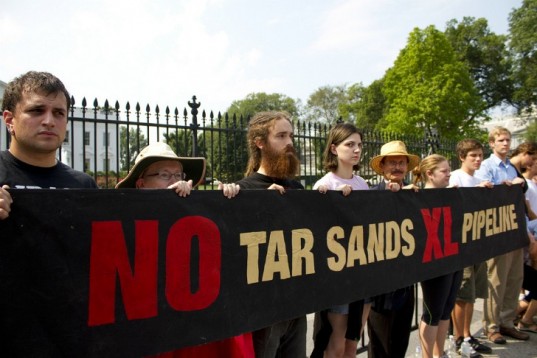
In the middle of the dog days of August, Bill McKibben and 350.org began a sit-in next to the White House, protesting the Keystone XL Pipeline and the development of the boreal forests of Alberta (otherwise known as “the tar sands”).

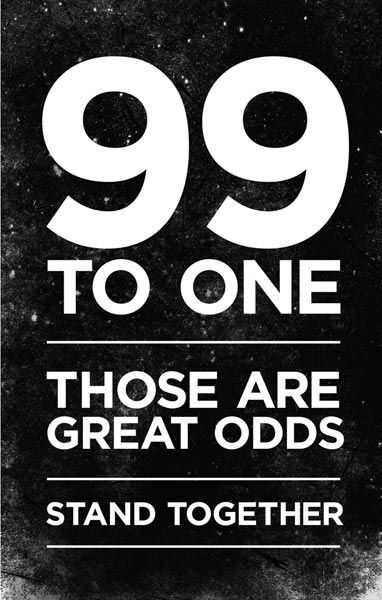
A month later, the Occupy Wall Street movement sprang up seemingly out of nowhere, protesting the government’s collusion with the super-wealthy (otherwise known as “the 1%”) and abandonment of ordinary Americans (otherwise known as “the 99%”).

The Occupy movement spread like wildfire, and the Keystone XL protest succeeded in at least postponing the pipeline and American support of Alberta tar sands extraction, giving the nascent climate change movement a boost and more of a chance to grow.

Along the way a historic hurricane ripped across the Eastern Seaboard, and a freak snowstorm dumped a good two feet of heavy wet snow on leafy trees in southern New England, knocking out power for some folks for days, and even weeks, and reinforcing the unavoidable reality of climate change.

Most recently, public awareness of the militarization of American policing has suddenly taken a giant leap forward, thanks to images of police brutality inflicted on old and young white people of the well-dressed, college-educated variety.  Over in Europe, the debt crisis threatens the dissolution of the euro zone, something unthinkable just a few months ago.

All in all, it’s been a dramatic few months, and blogging my reactions to and thoughts about all this has been a rewarding experience.

I’ve been struck by the power of the World Wide Web as a vehicle for social communication and movement-building.  Just as the Arab Spring showed us how cell phone texting technology could be used to ignite and build, at lightening speed, an effective resistance movement, the Occupy movement has demonstrated the extent to which Americans are plugged into the vast collective consciousness we call the Web.

While the captains of industry sold us smart phones and tablet computers intending to make us more agile shoppers and financial traders, they unwittingly put into our hands the tools of our liberation from the capitalist machine that has dominated us for the past 50 years or so.

Marx predicted long ago that the very instruments that enabled capitalism–globalization and technological prowess–would also be the instruments with which the bourgeoisie would dig their own graves.

In the age of global warming and climate change, this has never seemed more prescient.

But Marx also imagined that out of the ashes of the old world a new order would arise.  He believed that it would be possible for the proletariat, the working class, to create a better world, based on collaboration and compassion rather than ruthless competition.

It seems like Americans are finally awakening out of a long, dark sleep of obliviousness to the ways in which our corporate capitalist economic and governmental system has been leading us down a blind alley, at the end of which, it turns out, is a steep cliff.

Are we waking up in time to back ourselves out of that alley, away from that fearsome cliff?

It is too soon to tell. But those of us who are aware of the gravity of the situation today not just for our society, but for our species and the planet as a whole, need to be out there on the frontlines, both physical and virtual, making the connections that may enable us to successfully build a movement for change and avert disaster.

Human beings are not lemmings, but we are indeed susceptible to being led.  We want to believe that our leaders are competent and have our best interests at heart.  We hold on to this belief even when all evidence points to the contrary.

It’s time now to stop putting our faith in our elected officials and their paid enforcers, and listen instead to our own hearts and minds.  We know what needs to be done to bring the ecological web of life on this planet back into balance.  It is time to reach out to each other and find the determination to get the job done.

This Thanksgiving, Imagine Another World…

The idea of Occupying the Malls on Black Friday, which I first posted about here, is gaining momentum day by day.

Occupy Seattle and other Occupations in various cities will be protesting WalMart this Friday, and I have a feeling that between now and Nov. 25, Black Friday, the idea will continue to gain traction.

The movement is not just protesting against what it objects to (in this case, excessive consumerism); it’s also offering positive alternatives, like the massive Occupy Thanksgiving that will take place in Liberty Square tomorrow, offering free Thanksgiving meals to all comers.

On Thanksgiving, it’s traditional for the privileged to donate food to the needy, so that they can celebrate this foodie holiday too.

This Thanksgiving we need to be thinking about more than turkey, stuffing and cranberry sauce, and simply extending charity is not going to make the grade.

We should be asking why it is that some people have so much, and others nothing at all.  It’s not about laziness or inherent intelligence, as some social analysts have tried to suggest.  It’s about a society in which the playing field is sharply tilted from the beginning in the favor of those who already have certain characteristics.

People who are tall, thin, fair-skinned, attractive, Judeo-Christian, male and born into educated families are far more likely to succeed in America than anyone else (with attractive white women a close second).

For these privileged people, extending charity on Thanksgiving or Christmas may make make them feel better about themselves, but it does nothing to change the circumstances for those born on the other side of the playing field–the other side of the tracks.

In 2010, 46.9 million people were in poverty, up from 37.3 million in 2007 — the fourth consecutive annual increase in the number of people in poverty .  This is the largest number in the 52 years for which poverty rates have been published (USDA Economic Research Service, 2011). 

In 2010, 17.2 million households, 14.5 percent of households (approximately one in seven), were food insecure, the highest number ever recorded in the United States (US Census, 2010). 

These numbers are unconscionable for the wealthiest nation on earth.

We’re often reminded that the U.S. spends more on its military than the next FOURTEEN military powers combined–seven times more than China, the nearest competitor.

Imagine if even a portion of those billions of dollars being spent on bombs, mines, drones, fighter planes and tanks were redirected to civil society.

Imagine if we thought not in terms of charity and “food aid” but restructuring social systems so as to stitch together a global safety net.

Imagine if the U.S. really got behind the United Nations Millennium Development Goals, announced in 2000, calling for an end to world poverty by 2015.

This Thanksgiving, let’s usher in a new era, in which competition and consumerism give way to collaboration and a focus on using the wealth of our nation–and our planet–for positive, life-enhancing purposes.

Whether we occupy the malls this holiday season or serve soup in a food kitchen, we should be thinking seriously about how to reshape our society to bring our national spending in line with our ideals.

Occupy Democracy! Reich is listening….