Did someone say young people are apathetic?

Well, not in Chile!  We Americans could learn a thing from the student movement there, which has been pressuring the right-wing government to move in a more social-democratic direction.

What are their tactics?

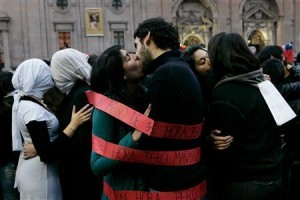
How about a kiss-in, for example?

Or a mass “suicide” to make the point that young people are “dead” without accessible education?

Or a downtown dance-in, complete with super-hero costumes?

Others are jogging in relays around the presidential palace, carrying flags that proclaim “Free Education Now.”  They’re trying to complete 1,800 laps to symbolize the $1.8 billion a year that protesters are demanding for Chile’s public education system.

The students are protesting the neo-liberal policies of the government, which are, as they do everywhere, creating greater income disparity and putting good education beyond the reach of big sectors of the society.

Remember, this is Chile we’re talking about, where many of the parents of these students were imprisoned and tortured by the Pinochet government for daring to speak out.

This new generation is taking a creative approach to protest, and it will be interesting to watch how it plays out.  Will the government actually stoop to breaking up those kiss-ins with water guns and tanks?

Or will they do the smart thing, which would be to learn a thing or two from these courageous student leaders?

Some good news, for a change….

In a week when everyone seemed mesmerized by the spectacle of the USS Congress ramming right up against that proverbial iceberg, there was actually some good news for the planet.

1. American car-makers backed the new federally mandated emissions standards, requiring cars to get 54 mpg by 2025.  Of course, 2025 seems very far away, but given that longterm target, car manufacturers may very well start tooling up to reach that goal even sooner.  We could still do better, but it’s certainly a step in the right direction.

2. Mark Bittman, the chef and food writer, publishing in the very mainstream New York Times, advocated that Americans skip meat and cheese one day a week, which would be “the equivalent of taking 7.6 million cars off the road.”  He made this suggestion based on a new report released by the Environmental Working Group, entitled “Meat-eater’s Guide to Climate Change and Health.”

Among many other points that document makes, Bittman pointed to one that made me sit up and take note: “A 2009 National Cancer Institute study of 500,000 Americans found that the people who ate the most red meat were 20 percent more likely to die of cancer and at least 27 percent more likely to die of heart disease than those who ate the least.”

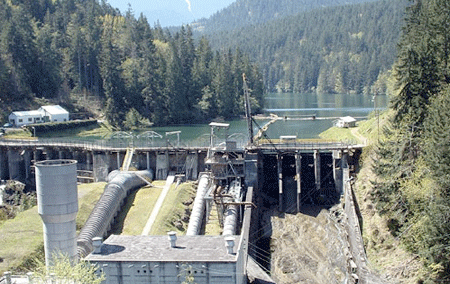
3. Dam removal to restore river habitat for spawning salmon has begun in Washington State on the Elwha River!  Hopefully the Klamath River in Oregon will be next. When I read Derrick Jensen’s Endgame earlier this summer, I was struck by how fervently he talked about taking out dams as an environmental goal (along with felling cell towers).

I didn’t think American agricultural interests in the West would ever allow this willingly, making Derrick’s proposal to actually go out and blow up dams seem entirely reasonable as a strategy for getting the job done.  But lo and behold, it is happening this summer on the Elwha River, and maybe once people see those salmon heading upstream again, they’ll open their eyes to what needs to be done on other, larger rivers as well.

It’s not easy to sit by helplessly as the Tea Party makes a mockery of the American bedrock of bipartisan government.  So much is at stake; so many lives, my own included, will be negatively impacted by the economic ripples that come of this summer’s political gamesmanship.  But it does help to remember that it was America in boom mode that wreaked such havoc on our environment to begin with.

Maybe America in bust mode will become more sober, more efficient, less wasteful, and more focused on what really matters: strengthening our connections with each other, and with the natural world.  I don’t think that’s what the Tea Party has in mind for a moment, but who ever said they knew what they were doing?

Being the change….

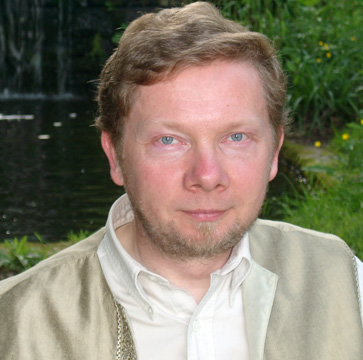
In many thoughtful circles around the world, Eckhart Tolle is a familiar figure.  His philosophy is encapsulated in the title of his first book, The Power of Now: it’s about the importance of living in the present, as opposed to the future and the past.  Having gotten that far in his thinking, it seemed simple enough, and I didn’t bother to read the book; nor did I pick up his latest book, A New Earth: Awakening to Your Life’s Purpose, although I was intrigued by the connection in the title between individual realization and changing the world.  Was he giving us a new version of the old adage “Be the change you want to see?”

Still, I gave it a miss until my brother, a businessman who generally has had little use for mystical reflection, began talking it up and telling me it was a must-read, that it had really made him think and act in new and positive ways.  So I brought A New Earth with me to Nova Scotia, and read it immediately following Mark Hertsgaard’s Hot.

No two books could be more different.  Hertsgaard is also talking about “a new Earth,” but his focus is on changing external reality: shifting from fossil fuels to renewables, building dykes and levees against rising waters, winning over hearts and minds so that more people commit to the struggle to keep global warming from getting to the catastrophe point, which, Hertsgaard reminds us constantly, is not far away.

Tolle, on the other hand, is entirely focused on changing internal reality: changing the way we human beings think and experience our lives.  He believes that collectively, human thought patterns can affect the external world.

“The dysfunction of the egoic human mind, recognized 2,500 years by the ancient wisdom teachers and now magnified through science and technology, is for the first time threatening the survival of the planet….A significant portion of the earth’s population will soon recognize, if they haven’t already done so, that humanity is now faced with a stark choice: evolve or die” (21).

Tolle spends a lot of time in the book explaining what he means by “the egoic mind.”  Basically, it’s the competitive, material, greedy, selfish human mindset: the mindset that gave rise to brutal colonialism and exploitative capitalism; that corrupted Marx’s concept of communism into Stalinism, Maoism and Castroism; the mindset that has categorized, subordinated and persecuted people based on their skin color, religion or ethnicity; that has made the last 5,000 years a non-stop series of wars, and has steadily exterminated millions of species on this planet.

For Tolle, it’s not a matter of shifting to some new ideology—it goes much deeper than that.  “What is arising now is not a new belief system, a new religion, spiritual ideology or mythology.  We are coming to the end not only of mythologies but also of ideologies and belief systems.  The change goes deeper than the content of your mind, deeper than your thoughts.  In fact, at the heart of the new consciousness lies the transcendence of thought, the newfound ability of rising above thought, of realizing a dimension within yourself that is infinitely more vast than thought” (21).

This dimension within us seems to be what mystics throughout the ages have tried to name—it has gone by names like “the soul,” “the spirit,” “the divine,” representing our connection to something greater than our limited human bodies.  Tolle’s methods of accessing this “new consciousness” are familiar to anyone who has even a passing knowledge of Buddhism, and indeed he draws frequently on references from Buddhist thinkers, from Siddhartha on down.  Meditate; focus on the present moment, using the breath as an anchor; when your thoughts wander to past or present, bring them back gently but firmly to the present.  Be comfortable with uncertainty; don’t insist on limiting self-definitions; drop the habitual role-playing and be authentic with everyone you meet.  Stop focusing on negative emotions, pain and violence.  Recognize your fundamental connection with all-that-is, and stop trying to control everything.

Tolle calls unhappiness “a disease on our planet” (213).  The only way for us to become happier as a species, which will automatically translate into a more balanced and sustainable future for our planet as a whole, is for humans to come to “accept the present moment and find the perfection that is deeper than any form and untouched by time.  The joy of Being, which is the only true happiness, cannot come to you through any form, possession, achievement, person or event—through anything that happens.  That joy cannot come to you—ever.  It emanates from the formless dimension within you, from consciousness itself and thus is one with who you are” (214).

OK, the skeptic in me says—sounds good, Eckhart, but do you really want me to believe that if all 7 billion of us were to start meditating and finding our inner Being, which is to say our connection with the source energy that animates our planet and our universe, we could undo the millennia of human destructiveness, including the current climate challenges?

On the other hand, isn’t that what materialists like Hertsgaard and McKibben are talking about too—recognizing how humans are an integral part of the ecological web of our planet, and acting out of this awareness?  We are not here to dominate and exploit the planet, we are here to play our parts in the great dance of life.

Cruelty, hatred and willful, excessive destruction are uniquely human—we are the only beings on this planet that engage in this kind of negative behavior.  Eckhart Tolle is right that there are more and more people arising now who recognize this behavior for the sickness it is, and are changing—starting with themselves, and moving out into the world.

Tolle’s great insight is that if we were to allow ourselves to connect with the source energy of the planet—the divine spark, the soul, the spirit that animates us and our world—we would become incapable of cruelty and brutality.  We would have evolved to another level of consciousness.  Tolle is clear about this: we must evolve, or die out as a species. 

On an individual level, there do seem to be growing numbers of people out there who recognize our fundamental connection to the web of life, and the need to change our ways of living to bring ourselves into a harmonious relationship with our environment.  However, on a larger societal level, we remain imprisoned by old structures that arose in the 18th and 19th centuries, and keep us treading the same old destructive rut.  Property rights, human superiority over animals, human comfort and consumption as an unquestioned priority, the profit imperative, the recourse to violence as a response to any challenge…all these old structures (Tolle would call them “thought-forms”) are then supported and strengthened by laws and political systems developed ages ago, that keep us knotted firmly into place.

We may be able to change individually, but how will these structures change?  History has shown that major changes like constitutional amendments, national boundaries and systemic political overhauls have come about only through violence and upheaval.  Can it really be that this time the collective power of enough of us sitting around focusing on the present and finding our inner connection to Being will do the trick?

Certainly I agree with Tolle that we would be happier if we lived more in the present moment, and were motivated by the joy of Being, rather than the egoistic desire for fame and fortune.  I just wonder whether we might get so lost in meditating that we fail to notice the tsunami that’s about to sweep us away.  Or maybe that is still being too old-school: worrying about the future, and failing to realize that the end of our human body is not a cause for grief, but rather a return to the energetic source of our planet, a cause for celebration.

Hmmm.

A great example of ordinary heroism at work….

It can be as simple as this: a group of Israeli women making the effort–and taking the risk–of taking a group of Palestinian women to the beach.

How sad is it that these Palestinian women, living so close yet so far from the coast, had never tasted the salty delight of the ocean before?

And how wonderful that their more privileged Israeli sisters broke ranks to make it happen….

This story is worth the read–


Let a billion ordinary heroes bloom!

Mark Hertsgaard dedicates his book Hot: Living Through the Next Fifty Years on Earth to his young daughter, Chiara, born in 2005 as the snowball of climate change began picking up momentum.  Perhaps because he has her constantly in mind as he’s working on the book, he does something science writers rarely do: he begins his book by invoking fairy tales, and returns to them several times as he goes along.

Science writers are usually at great pains to be empirical—that is, to convince us, by their impeccable sources and detailed documentation, that what they’re telling us is true.  Hertsgaard does this, of course: there are the usual obligatory paragraphs of statistics, drawn from unimpeachable sources like the Intergovernmental Panel on Climate Change, or the various climate experts he interviews.  But for me some of the strongest, most memorable passages in the book are the ones where he relies on the imaginative power of fairy tales to get his message across.

In his very first chapter, he goes back to the psychologist Bruno Bettelheim, who analyzed fairy tales in his book The Uses of Enchantment, concluding that children learn from fairy tales that “’a struggle against severe difficulties in life is unavoidable, is an intrinsic part of human existence.’ But, Bettelheim  continues, ‘if one does not shy away, but steadfastly meets unexpected and often unjust hardships, one masters all obstacles and at the end emerges victorious’” (Hertsgaard, 16).

The first fairy tale Hertsgaard writes about is E.T.A. Hoffman’s “The Nutcracker,” with which his daughter Chiara fell in love as a young toddler.  “After seeing The Nutcracker ballet onstage, Chaira began acting out the story at home.  She invariably cast herself as Clara; her mother or I was assigned to play the godfather, the prince, or both.  One day, after she and I had played the game for about the three hundreth time, I got distracted.  To my half-listening ears, the music seemed to indicate the start of the battle scene, so as the prince I began to brandish my sword.  A puzzled look appeared on Chiara’s face.  It took her a moment to realize that her father was confused.  She looked up and carefully explained, ‘No, Daddy.  It is still the party.  The danger is not here yet.’”

Hertsgaard tells this charming personal story to illustrate his point that “the party, so long and pleasurable, that gave rise to global warming is…still underway.”  For most of us, the danger does not yet seem real, so it’s hard to feel the urgency to change our lifestyles, which are after all so comfortable, familiar and, let’s face it, fun, at least for the upper crust.  Hertsgaard goes back again to the fairy tale model some pages later to put out a call for “thousands of ordinary heroes to step forward and fight for our future,” to tame the many-headed hydra of climate change.

This call echoes that of Philip Zimbardo, the Stanford psychologist who gained prominence as a young professor in the 1970s by conducting the infamous Stanford prison experiment, where he showed that if put into the right circumstances, the most ordinary young men will become fascist torturers.  After the Abu Ghraib scandal broke, Zimbardo was called upon to explain how those ordinary American soldiers could have engaged in such horrific sadistic acts.  But by then his own focus had shifted.  Zimbardo is now much more interested in examining how it is that ordinary folks step up and become heroes, because he too is convinced that our society is gravely in need of “thousands of ordinary heroes” to turn things around.

When I was about eight years old, a very powerful revelation of the destructiveness of humanity prompted me to start writing my first story.  It happened like this. We always arrived at our country house at night, and the next morning I would always get up around sunrise and go out, with great excitement, to see what was happening in the natural landscape I loved so much.

On this May morning, I was shocked to see, at the bottom of the driveway, piles of maple branches, their small, bright green, new leaves withering on the ground, sap oozing out of the cut branches—a holocaust of new life.  Shocked and upset, I raced back home to tell my mother what had happened.  I expected that she would be upset too, but instead she calmly explained, “The power company must have come to trim branches along the lines.” That was all there was to it; there was nothing to be done and it wasn’t worth getting upset over.  Her response just infuriated me more, and out of that fury my first story was born.

It was about a wood nymph named Estrella, who set out on a quest to save her forest from human destruction.  I wrote about the council of animals and forest spirits that decided that such a quest must be undertaken, and I wrote about Estrella setting off with two animal companions.  But beyond that the story petered out, because I could not imagine a solution to the problem; I couldn’t think of how a wood nymph and some animals could stop humans with chain saws.  At that age I was reading my way through all of the Lang fairytale collection, so you’d think I would have been able to invent some powerful magic to do the trick.  But I wanted a “real” solution.  I knew that the problem I was dealing with was no fairytale, it was very much of this world, and I wanted to solve it…I just didn’t know how.

Now I am realizing that in order to accomplish the deep changes necessary to create a human society that values life and harmony more than domination and destruction, the old heroic quest model will not suffice.  Like Hertsgaard and Zimbardo, I know now that we can’t wait for a hero or a charismatic leader to take up the challenge and make everything right.  We need the kind of small-scale, unheralded acts, made daily by people all over the world, not because they expect to become famous and marry into royalty at the end, but because they are committed to living harmoniously with the ecological world of which we humans are a part; because they value life, and want to live their values.

Towards the end of Hot, Hertsgaard invents his own fairytale, which I hope he actually produces as an illustrated children’s book—it’s wonderful!  I won’t give it away here, other than to observe that it’s about how a whole village worked together to throw off tyranny and create a more sustainable, joyful place to live.  There is no clever young boy outwitting the giant; no princess standing fast in the face of a dragon.  Just ordinary people—in this case, ordinary young people, since  the children lead the way—standing up to do what’s right.

Fairytales may be fiction, but as Bettelheim and so many other analysts have realized, they point the way to deep truths.  I’ll have more to say on the importance of telling new stories in future posts.  For now, let a billion ordinary heroes bloom!

Paradigm Shift: From Competition and Destruction to Nurturance & Collaboration

I am almost 50 years old, and in my current lifetime I have lived through one of the most intense, rapidly changing periods of human civilization on this planet.  The technological discoveries of the 19th and 20th centuries were steadily gaining steam when I was born in the early 1960s; “progress” seemed infinite, and infinitely exciting.  Advances in medical understanding and treatment, the speed of computing, the mechanization of every aspect of our economic systems, and the explosion in information technologies, all made our civilization seem powerful—even invincible.  The blip of failure that registered when we “lost” the Vietnam War was quickly swallowed up in a huge wave of optimism as the economy surged in the 1980s, and the collapse of Soviet Communism, as well as the softening of Chinese Communism, made Euramerican Capitalism seem like a global Manifest Destiny.

And yet there was always the dark underbelly of the beast, clear to anyone who had the will to see it.  Rachel Carson sounded the first alarm on the dangers of synthetic chemicals, released haphazardly into the environment.  Chernobyl was the first major indicator of the serious dangers of “clean” nuclear power.  The slow epidemic of cancers (in the wealthy countries) and AIDS (in the poorer countries), and a myriad of antibiotic-resistant bacterial infections, have begun to make clear how we have poisoned our environment even for ourselves.  And now, in the first decade of the 21st century, it has finally become apparent even to the most resolute deniers that climate change is a dangerous reality to which we must adapt or perish.

So these are the transition times we live in.  I don’t think it’s too dramatic to compare our times to the last years of other great human civilizations in the past: the Romans, the Mayans, the Inca, the Ming.  All of these civilizations were based on the possibility of exploiting resources—human and natural—to such a great extent that tremendous wealth could be amassed for the rulers.  This was the same model followed by the English, French and Spanish during their colonial periods (16th-19th centuries, roughly), and the U.S. is playing by the same rules with the rise of corporate capitalism backed by the biggest, most deadly military the world has ever known.  The U.S. has become the political center of a global Empire that any feudal European would recognize, the only difference being the advantages that the contemporary wizards of technology afford our leaders.  King Arthur would have been lost without Merlin, and our leaders today would be lost without the magic of electricity.  Truly, our civilization would entirely grind to a halt were we to lose power for even a short period of time.

This is why the frantic quest for energy sources has turned so ugly in recent years.  To the average household, losing power is an inconvenience—but we know the power company will come out and fix it sooner or later, we don’t get too bent out of shape about it.  As worldwide demand for electric power grows, along with demand for easy, cheap means of moving people and goods through space, the question becomes one of supply.  Our scientists are telling us that the Earth is finite, that she has reached her carrying capacity in terms of sustainable growth.  And yet the human population keeps growing exponentially, and the global reach of corporate capitalism keeps creating more and more demand for modern conveniences: cars, refrigerators, air conditioning, computers.

Clever leaders manipulate the demand of the populace for the luxuries on display through every TV set.  We have become familiar, in the late 20th, early 21st century, with the term “debt bondage,” now not just applying to serfs in feudal Asia, but common in any American suburb, where it takes two adults working more than fulltime to support the average mortgage, car loans and consumer loans, not to mention the school loans and home equity loans.

In the 1960s and ‘70s, when I was a kid, people who opted out of all this, who chose a simpler life, perhaps even living “off the grid,” without running water, were derogatively termed “hippies,” weird fringe folks who spent their time smoking too much dope and having too much sex.  Some joined cults, and some of these cults were headed up by dangerous psychotics who led entire communities into suicide.  The media effectively demonized anyone who tried to resist the prevailing forces of modernity.  The most powerful dissenters were silenced by the oldest method in the book: assassination.  Since the 1960s, there has been an ever-growing list of charismatic leaders, educators and journalists who have been assassinated by the political elites, all over the world.  In the old days, the colonists would come into an indigenous community and immediately pick out the smartest ones, the ones who looked like the leaders.  Those who proved incorruptible would be enslaved or simply killed.

This is still going on, but now, in addition to the old-fashioned methods of violence, there are subtler ways to neutralize dissent and channel resistance.  Antidepressants, anyone?  Addictive media games?  Above all, educational systems that teach obedience to authority from earliest childhood, backed by drug therapy (think Ritalin or Adderall) and indoctrination into an acceptance of inequality and environmental destruction.

There are still pockets of clear thinking and resistance to be found, even in the heart of Empire where I live.  I don’t claim to have answers or to know the “right” way forward.  But I do have a fierce desire to explore our present reality in all its dimensions, even some of those that many people would find too “out there” for comfort—the spiritual realms, the astrological and the psychic.  Nothing should be off limits to inquiry; in many ways I still feel as curious as a young child, open to every nuance the world has to show me.

Just before a baby is born, the laboring mother is said to be “in transition.”  This is what happens when the birth canal is dilating enough to allow the child’s big head to drop down into the free air.  Our world is in transition now.  Something new and different is about to be born.  Whether we humans will still have a role to play remains to be seen.  But it certainly is an interesting time to observe, and I believe there is still time to try to intervene and create a more positive outcome, not just for us but for all the species we will take with us if there is a major environmental cataclysm.

We must be both the midwife and the laboring mother, in this case.  And the baby about to be born.  Our job above all is to nurture, to love, to stroke, to build a deep resilience so that we can survive whatever may be thrown at us.  This is the work of my second half of life.  And this is what I’ll be exploring and documenting in this blog.

Welcome to Transition Times

In my two previous blogs, each of which lasted about a year, I found myself eventually running out of steam because it became clear to me that every time I sat down to write, I was doing nothing but complaining.  I would be spurred to write by something I’d seen or read or thought that upset me, and out of that anger or frustration would come a new post.

I want this blog to be different.  I’ve realized that focusing on the negative does not make things better, and can make things worse.  There is, of course, a time and place for criticism, and heaven knows there is a lot to criticize in our world today.  It’s not that I am going to be some kind of Stepford woman in this blog (ie, relentlessly upbeat, no matter what).  Rather, I am going to try, as much as possible, to shift my emphasis on to–as my tagline says–looking for positive change, and working to make it happen.  So if I do criticize (and I’m sure I will), it will be constructive, looking for alternatives, and pointing the way towards something better.

This blog will be personal and political, seeing the personal as political, and interrogating the politics of everyday life. Several themes will run through it, which I’ll identify in my Categories.  I am interested in the politics of gender, human rights advocacy, analyzing the media, education, parenting and mentoring young people, and above all, human civilization’s relationship to the natural world.  I believe that each of these areas of focus is in crisis right now, or at least in a time of profound transition: hence the title of this blog.

Is it purely incidental that the drumbeat of natural and manmade shocks is picking up speed as we move towards the fateful year 2012, identified so long ago by the Mayan seers as the great time of transition?  How fortunate we are that we cannot see the future, and so, like the dog who sleeps peacefully at my feet as I write, can simply enjoy each day as it comes, without awareness of any approaching cataclysm.

I am no Doomsday scenarist, I don’t believe in the “rapture” or some kind of Armageddon.  Neither am I a total empiricist, taking stock of the staggering statistics of climate change and predicting a Holocene extinction event.  But it has to be clear to anyone who has the courage to open their eyes and see that we are living in dangerously unstable times.  Transition times.  This blog will both chronicle our journey and try to provide some signposts towards safety as we move through the turbulent times ahead.

I invite and welcome your companionship.  Come now, let’s go.