Moving from Anger and Cynicism to Gratitude: Thanksgiving in Dark Times

It’s Thanksgiving time, the time when we’re supposed to be counting our blessings and giving thanks. Given the current bombardment of bad news, it’s hard not to feel cynical.

Do I give thanks for the American justice system, which once again has valued the rights of a white man over the rights of a (dead) Black man?

Should I give thanks that a growing roster of universities are finally being pushed to take fraternity gang rape seriously, after years of turning a blind eye?

Maybe I should be giving thanks that the Kinder Morgan fossil fuel group, responding to public outcry, is thinking about routing its gas pipeline through “an existing utility corridor” rather than through backyards and recreational areas in the heart of Berkshire County, the tourist-friendly resort area where I live.

It’s easy to get angry about the injustice and casual brutality of our world. And one of the problems of modern existence is that when something bad happens, we know about it almost instantaneously, and have to grapple in our own hearts and minds with its disturbing reverberations.

Any wonder why so many people in media-saturated modern societies turn to drugs (prescription and recreational) or alcohol to get some relief?

I don’t think we should insulate ourselves from the reality of what’s happening in our world, even when the news is very bad. But we do need to find ways to retain our own sense of balance and inner resilience in the face of the constant heartbreak that characterizes contemporary life.

I try to remind myself, at Thanksgiving time and all year round, of all the things I do truly have to be thankful for.

I give thanks for the protesters who have been standing up to the fracking and drilling industry giants all over North America, and indeed all over the world. I am thankful that Sandra Steingraber has been released early from jail, so she can spend Thanksgiving with her family.

Sandra Steingraber by Seneca Lake

Sandra Steingraber by Seneca Lake

I give thanks for the many innovative scientists who are working hard to develop viable alternative forms of energy, from better solar panels to clean battery cells to geothermal, tidal and wind generators. I am thankful for entrepreneurs like Elon Musk of Tesla, leading the way towards a clean-energy future.

I give thanks for the health workers who are at this very moment risking their own lives in order to bring the Ebola epidemic under control. I thank all the health workers, worldwide, who give so much to others day in and day out.

I give thanks for my family, friends and comrades—for all the good people who are working in their own spheres to be sources of love and compassion.

On dark days like this one, it can be hard to feel confident that the human capacity for love and empathy will prevail over the less admirable side of our nature; that our ethical intelligence and social creativity will succeed in tempering our greedy self-interest and destructiveness.

Every day presents opportunities to live in ways that elevate the human condition and spirit. Even the greatest events in human history always depend on the actions of individuals, each within our own sphere. All we can do, as human beings alive on the planet in these frightening transition times, is strive to embody love.

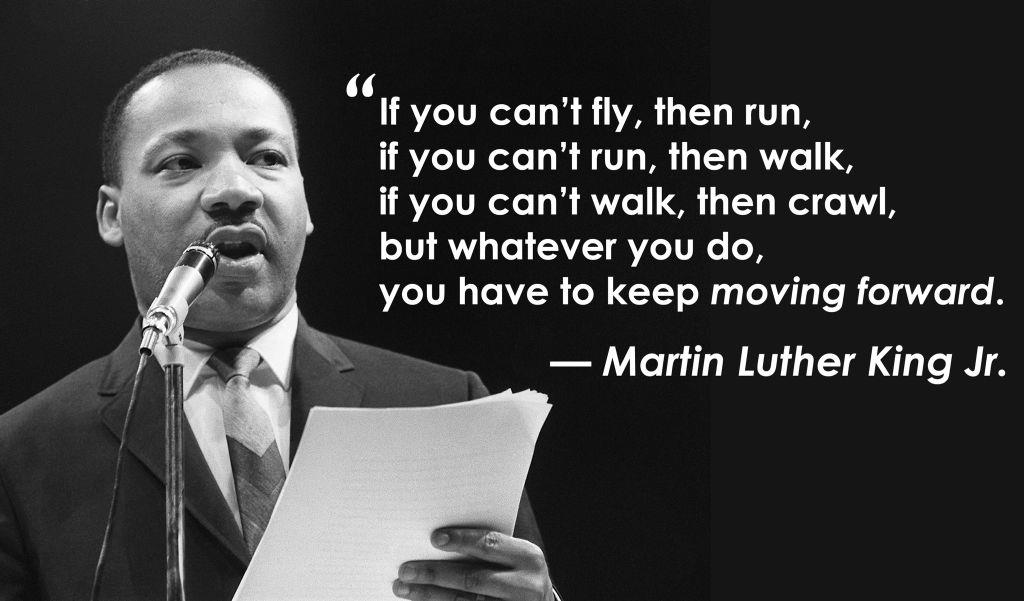
We won’t always succeed; no one of us is perfect. But as Martin Luther King Jr. famously said, “The arc of the moral universe is long, but it bends towards justice.” Let us place ourselves on that arc, with gratitude for being able to help it bend towards justice now, in our own time.

martinlutherkingjr

Envisioning a Cosmic Religion, Rooted in Mother Earth: Homage to Thich Nhat Hanh

It must have something to do with reaching midlife. The beat of elders moving on out of this lifetime has picked up for me, and it’s so hard to let them go, knowing that as each life ends, those of us remaining are called ever more strongly to step into their shoes and become the elders leading our society.

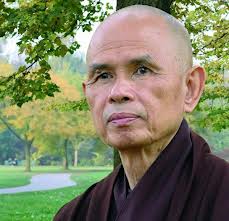
Thich Nhat Hanh

Thich Nhat Hanh

Few people alive today could step easily into the humble, powerful shoes of Thich Nhat Hanh. Like the Dalai Lama, he is a Buddhist monk who has been so generous and warm in inviting others into his orbit. Whether or not you practice Buddhism, whether or not you follow any religious tradition at all, there is so much wisdom and guidance in Thich Nhat Hanh’s writings, so much to learn and gain from listening to him.

I regret that I never had the chance to be physically in his presence, but as with so many of the other great leaders I admire, I know him through the writings he has shared and through his public persona and the good works he has accomplished.

At 88 years old, Thich Nhat Hanh is in the hospital with a brain hemorrhage from which he may still recover. He is still with us today but even after he is gone, I know his spirit will be showering us with the lovingkindness he knows we need to overcome the negativity that besets so many of us as individuals and as societies.

Today, in homage to Thay (as his students call him lovingly), I want to quote at some length from one of his last books, the beautiful Love Letter to the Earth. I urge you to buy a copy of this small bright gem of a book, and use it as a guide and inspiration—maybe you will be moved to write some love letters of your own to our dear battered planet.

“Dear Mother Earth,

“The human species is but one of your many children. Unfortunately, many of us have been blinded by greed, pride, and delusion, and only a few of us have been able to recognize you as our Mother. Not realizing this, we have done you great harm, compromising both your health and your beauty. Our deluded minds push us to exploit you and create more and more discord, putting you and all your forms of life under stress and strain. Looking deeply, we also recognize that you have enough patience, endurance and energy to embrace and transform all the damage we have caused, even if it takes you hundreds of millions of years.

“When greed and pride overtake our basic survival needs, the result is always violence and unnecessary devastation. We know that whenever one species develops too rapidly, exceeding its natural limit, there is great loss and damage, and the lives of other species are endangered. For equilibrium to be restored, causes and conditions naturally arise to bring about the destruction and annihilation of that species. Often these causes and conditions originate from within the destructive species itself. We have learned that when we perpetrate violence toward our own and other species, we are violent toward ourselves. When we know how to protect all beings, we are protecting ourselves.

“We understand that all things are impermanent and without a separate self-nature. You and Father Sun, like everything else in the cosmos, are constantly changing, and you are only made of non-you elements. That is why we know that, in the ultimate dimension, you transcend birth and death, being and nonbeing. Nonetheless, we need to protect you and restore balance, so that you can continue for a long time in this beautiful and precious form, not just for our children and their children but for five hundred million years and beyond. We want to protect you so you can remain a glorious jewel within our solar system for eons to come.

Northern lights, photographed from space

Northern lights, photographed from space

We know that you want us to live in such a way that in each moment of our daily lives we can cherish life and generate the energies of mindfulness, peace, solidity, compassion and love. We vow to fulfill your wish and respond to your love. We have the deep conviction that generating these wholesome energies, we will help reduce the suffering on Earth and contribute to alleviating the suffering caused by violence, war, hunger and illness. In alleviating our suffering, we alleviate yours.

“Dear Mother, there have been times when we suffered greatly as a result of natural disasters. We know that whenever we suffer, you suffer through us. The floods, tornadoes, earthquakes and tsunamis aren’t punishments or manifestations of your anger, but are phenomena that must occur on occasion, so that balance can be restored. The same is true of a shooting star. For balance in nature to be achieved, at times some species have to endure loss. In those moments, we have turned to you, dear Mother, and asked whether or not we could count on you, on your stability and compassion. You didn’t answer us right away. Then, beholding us with great compassion, you replied, “Yes, of course you can count on your Mother. I will always be here for you.” But then you said, “Dear children, you must ask yourselves, can your Mother Earth count on you?”

“Dear Mother, today we offer you our solemn reply, “Yes, Mother, you can count on us.””

Love Letter to the Earth concludes on a vision of a new kind of spirituality, a new kind of religion, founded on the Buddhist principle of interbeing—which, like deep ecology, understands that every form of life on earth, and indeed every element of our planetary biosphere is profoundly interconnected and interdependent, not in a hierarchy but in a rhizomatic web. Every strand in that web must be honored and tended, and this is the work that human beings, especially, are called upon to take up.

If Thich Nhat Hanh’s vision of a new religion for the 21st century could be realized, what a wonderful world it could be. Listen:

“We can build a deep spiritual practice based not on dogmas or beliefs in things we can’t verify, but entirely on evidence. To say that the Earth is a great being is not just an idea; each of us can see this for ourselves. Each of us can see that the Earth has the qualities of endurance, stability and inclusiveness. We can observe the Earth embracing everyone and everything without discrimination. When we say that the Earth has given birth to many great beings, including buddhas, bodhisattvas and saints, we are not exaggerating. The Buddha, Jesus Christ, Moses and Mohammed are all children of the Earth. How can we describe the Earth as mere matter when she has given birth to so many great beings?

“When we say the Earth has created life, we know it’s only possible because she contains within herself the whole cosmos. Just as the Earth is not only the Earth, so too are we not only humans. We have the Earth and the whole cosmos within us. We are made of the sun. We are made of stars. Touching the true nature of reality, we can transcend the dualistic view that the cosmos is something greater than ourselves or different from ourselves. Getting deeply in touch with the phenomenal realm, the historical dimension, we can realize our true nature of no-birth and no-death. We can transcend all fear and touch eternity.

Orionid-shooting-star

“Every advance in our understanding of ourselves, our nature and our place in the cosmos deepens our reverence and love. To understand and to love are fundamental desires. Understanding has some kind of connection with love. Understanding can take us in the direction of love. When we understand and become aware of the great harmony, elegance and beauty of the cosmos, we may feel great admiration and love. This is the most basic kind of religious feeling: it is based on evidence and our own experience. Humanity needs a kind of spirituality that we can all practice together.

“Dogmatism and fanaticism have been the cause of great separation and war. Misunderstanding and irreverence have been the cause of enormous injustice and destruction. In the twenty-first century it should be possible for us to come together and offer ourselves the kind of religion that can help unite all peoples and all nations, and remove all separation and discrimination. If existing religions and philosophies, as well as science, can make an effort to go in this direction, it will be possible to establish a cosmic religion based not on myth, belief or dogma, but on evidence and the insights of interbeing. And that would be a giant leap for humankind.”

Amen, Thay. Go lightly.  We will carry on.

Quotes from Thich Nhat Hanh, Love Letter to the Earth

Parallax Press, 2013

As We Dance the Spiral Dance of Life, Death and Rebirth, We Build Bridges to the Future Every Step of the Way; What Future Do You Choose?

We’re now going into the darkest time of the year, the time when many cultural traditions contend that the veils between the living and the dead grow thinnest, most penetrable.

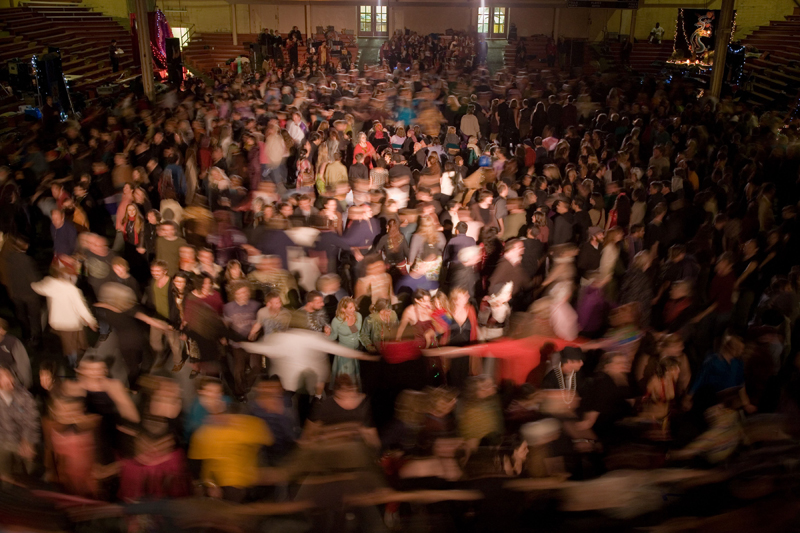
In San Francisco tonight, Starhawk and her Reclaiming coven will be dancing a grand spiral dance with thousands of people, all united under this banner: “2014 Intention: With the help of ancestors, descendants, and the great powers of nature, we weave magic and action to save our home! A ritual to honor our beloved dead and dance the spiral of rebirth.”

M_R_spiral_126800x800

Having participated in one of Starhawk’s circle dances, focused on raising energy through the power of collective intention, I can begin to imagine what a spiral dance on this scale will accomplish.

We Americans too often ignore the significance of energetics in our lives.

We imagine that it doesn’t matter that we spend more and more of our time bathed in low-level radiation from all our electronic devices, from computers to cell phones to electric meters and on.

We don’t pay attention to the way we are similarly taking in steady doses of negative information day after day, from Ebola and cancer to corruption, violence and poverty.

In these dark days of the year, at least in my gloomy northern corner of the world, I can feel my own energy levels sinking, my will to rise and dance on behalf of my ancestors, descendants and Nature wavering.

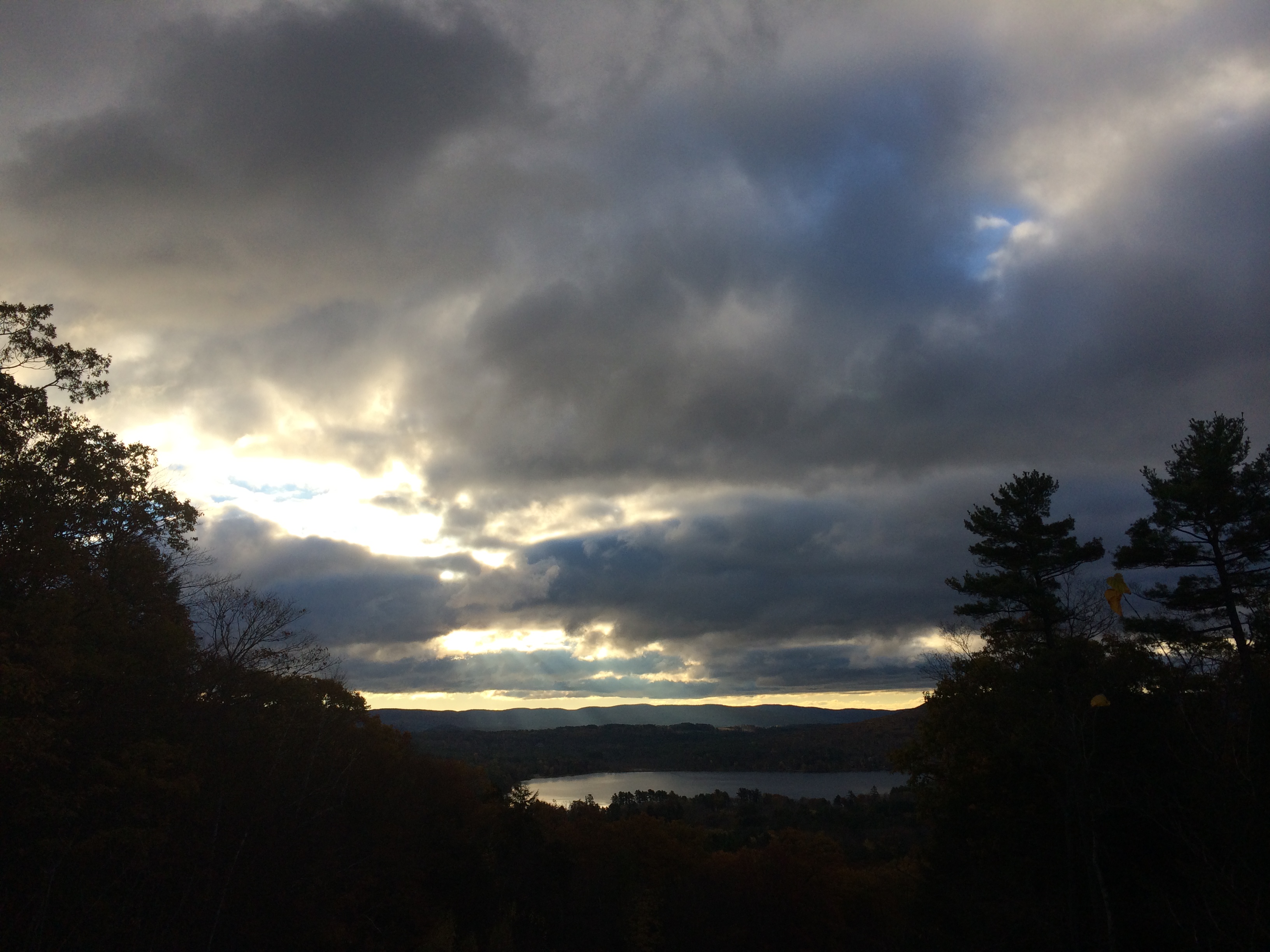
Morning clouds over Stockbridge Bowl. Photo J. Browdy, 2014

Morning clouds over Stockbridge Bowl. Photo J. Browdy, 2014

So I give myself pep talks. I remind myself that the dark days of the year are among the most powerful times for focusing inward and setting new intentions for what will be accomplished with the return of the light.

I get out the photos of my grandparents and my children and remind myself that I must be a strong link on the hereditary chain that stretches back untold generations, if my descendants are to have the good fortune of enjoying the kind of safe, happy, fulfilled lives on Earth that I have had.

Fannie Ashe Browdy and Philip Browdy, my paternal grandparents, around the time of their marriage.

Fannie Ashe Browdy and Philip Browdy, my paternal grandparents, around the time of their marriage.

I remember that I came to this lifetime full of the rising sap of positive energy, loving nothing more than to rise early to watch the dawn, and stay up late to look for shooting stars.

Rooted like the trees that shelter and inspire me

Rooted like the trees that shelter and inspire me

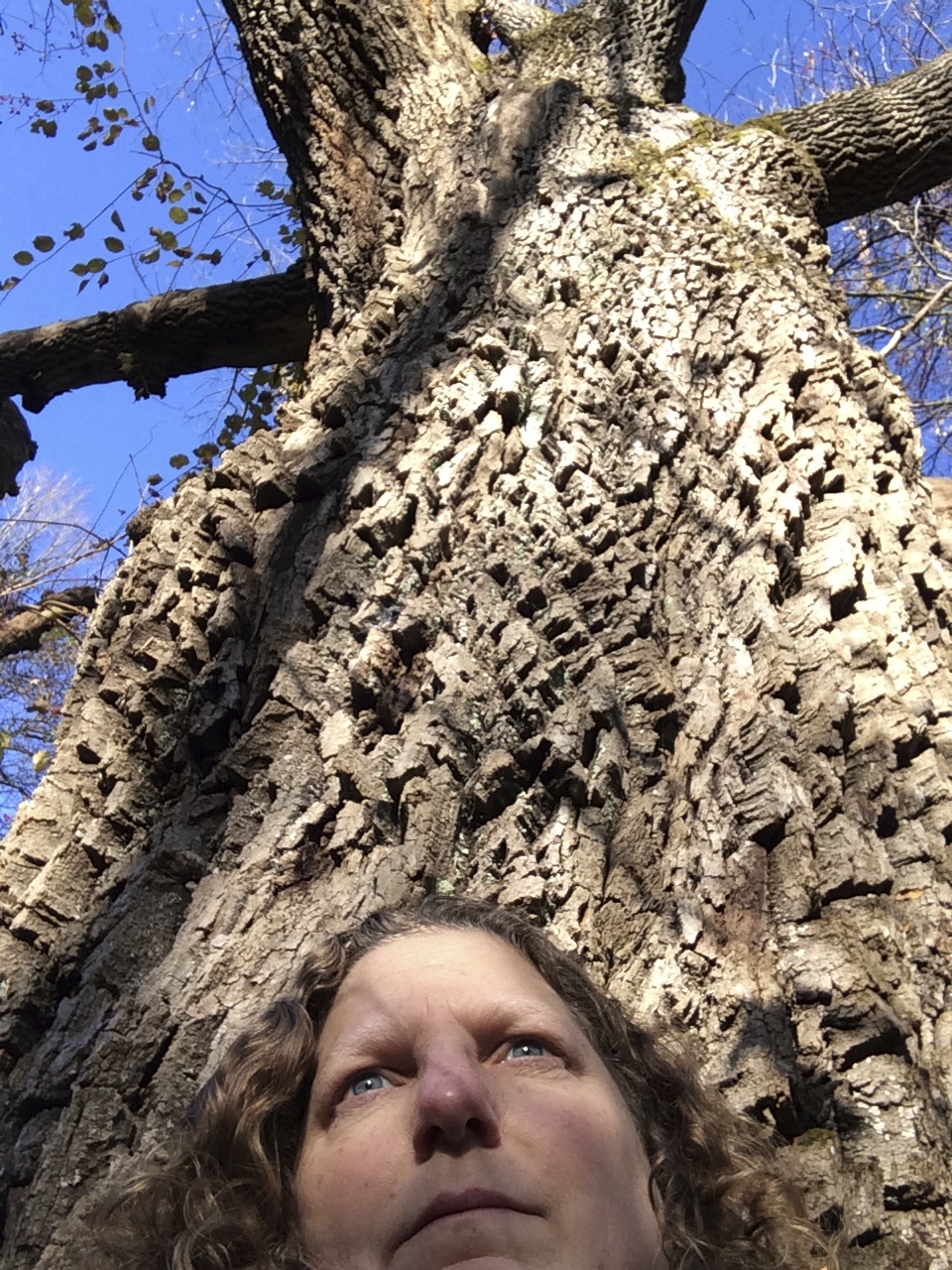
Like the great old trees I love, I have rooted myself deeply in the glacial rocks and rich soil of my life, and now have a wide network of students, friends, colleagues and relatives that I help to nourish with my ideas and initiatives.

And I am not only connected to human friends and relatives, but also to the intricately woven biosphere, with which I interact on a cellular level with every breath I take, every ray of sunshine I absorb, every drop of water I drink.

We are all dancing a great spiral dance together on this planet, weaving our intentions and our gifts into the actions that will build a bridge into our collective future.

Every step we take matters. Will we work day by day towards aligning our love for the planet with our individual actions?

For example, will we invest in fossil fuels or solar panels this year? Will we support local farmers, or buy packaged food that’s trucked in from far away? Will we take a break from eating fish to allow the wild fish stocks to recover? Will we lend our political and financial support to those working to make the human relationship to the planet life-enhancing, rather than destructive?

Reminding ourselves that literally or metaphorically speaking, our ancestors and descendants are relying on us to do the best we can to keep the chain of life strong and unbroken into the future, can help us to make decisions that are forward-looking and mature.

My maternal grandmother, Mildred Louis Rubenstein, with my younger son, Eric

My maternal grandmother, Mildred Louis Rubenstein, with my younger son, Eric

The dance we weave today and every day is about much more than just our own individual lives. We can be and do much more than we imagine, if we resist the downward pressures of negative thinking, and keep the channels of positive energy open to the cosmic flow.

Remember that the Earth and the Cosmos are one and the same, and we humans are just another manifestation of that endlessly circulating energy.  Photo J. Browdy 2014

Remember that the Earth and the Cosmos are one and the same, and we humans are just another manifestation of that endlessly circulating energy. Photo J. Browdy 2014

Finding Hope in Hard Times

Amid all the darkness and chaos overtaking our world—the beheadings of journalists and the enslavement of women, the bloody flux of Ebola, the melting of the poles and the relentless advance of the bulldozers and chain saws into the forests—amid and despite all that, I am still seeing the frail but determined light of hope burning.

And the best thing is, I see this light growing in places that surprise me.

In recent weeks some huge financial players have announced their intention to fight the stranglehold of fossil fuel companies over our political economy.

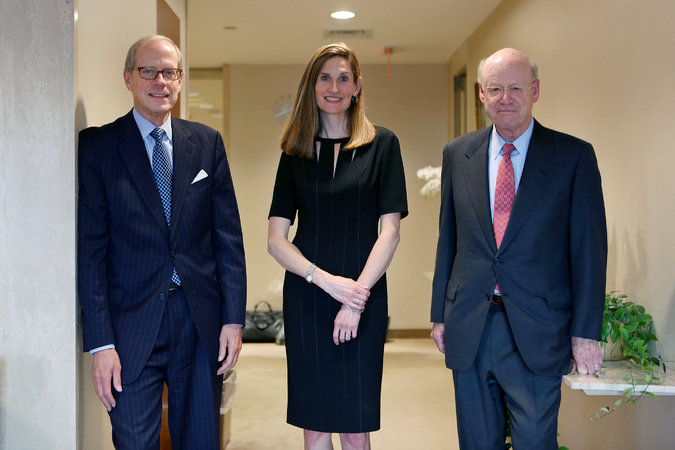
Stephen Heintz, left, with Valerie Rockefeller Wayne and Steven Rockefeller.  Photo: Hiroko Masuike/The New York Times

Stephen Heintz, left, with Valerie Rockefeller Wayne and Steven Rockefeller. Photo: Hiroko Masuike/The New York Times

Right after the dramatically successful People’s Climate March in September 2014, the Rockefeller family declared it would join forces with the nascent fossil fuel divestment movement. John D. Rockefeller built a vast fortune on oil. Now his heirs are abandoning fossil fuels,” trumpeted the lede in the New York Times article by John Schwartz.

“The family whose legendary wealth flowed from Standard Oil… [announced] that its $860 million philanthropic organization, the Rockefeller Brothers Fund, is joining the divestment movement that began a couple years ago on college campuses.”

This is big news indeed! In a society where money rules, the people with the most privilege are the ones with the most social power to create change, and the Rockefeller family can catalyze other wealthy philanthropists to start to think outside their parents’ box.

Not that the rest of us have no power. It’s only because college students and their adult mentors dreamed up the divestment movement and pushed vigorously for it that the Rockefellers made this move.

Student divestment activists at Tufts University

Student divestment activists at Tufts University

We ordinary folks—those of us who are awake to the critical state of our planet and human civilization today—can and must apply pressure to the rich and powerful in our society to shift their resources from our current death-dealing economic model to a life-giving, ecologically sound human relationship to the planet that sustains us.

timthumb.phpWhen current economic top dogs start to pay attention at last, we know we’re making progress. It was heartening to hear that the Women Donors Network is focusing its 2014 annual conference on strategic visioning of future scenarios for the year 2030.

At this year’s annual conference, the organizers state, “we will get the chance to step out of the urgent demands of the present to think big and strategize for the long term. What kind of future do we want to create? How can we work with the major trends we know are going to shape the future? And what can a powerful group of progressive women philanthropists do together to make the most of this critical moment?”

I find hope in the fact that this big group of wealthy women will be spending their valuable time not at a spa or a vacation in Paris, but at a conference where they’ll be, according to the conference Program, “’transported’ to 2030 to experience what our collective future could look like based on the decisions we make now, in this critical moment….We will participate in three “future scenarios” that are designed to help us clarify the role we hope WDN and all of us as individual philanthropists can play in helping strengthen the progressive social change movement.”

Go women go! The more of us become aware of the extent to which our choices today affect the futures that await us, the more we can act to create the green and glowing future we want.

Chief Oren Lyons

Chief Oren Lyons

I find hope too in the news that Chief Oren Lyons of the Onondaga Nation will be making a special visit to the Bioneers conference this month to talk about the new international initiative, the Plantagon urban agriculture system. A joint venture of the Onondaga Nation, Sweden and several East Asian investors, the Plantagon aims to revolutionize urban agriculture by making it possible for cities to feed themselves locally—a shift that will have enormous benefits in relieving pressure on rural water and land, reducing dependence on fossil-fuel transportation of produce, and also reducing or eliminating the need for harmful chemical inputs.

Artists' rendering of the Plantagon

Artists’ rendering of the Plantagon

To me, the word “Plantagon” summons up a word that has very different connotations, “Pentagon.” When we Americans hear the word Pentagon, we think immediately of military force and the way American military might has most often been called upon to defend “American interests”—politico-speak for access to resources, principally oil and precious minerals, often at great cost to local people and environments.

The U.S. Pentagon

The U.S. Pentagon

Although it may seem counter-intuitive, I find hope in the recent announcement that the Pentagon is now taking climate change into account in its strategic planning, not just for the distant future, but for next week.

In a new report, the Pentagon asserts unequivocally that “climate change poses an immediate threat to national security, with increased risks from terrorism, infectious disease, global poverty and food shortages,” reported Coral Davenport in The New York Times. Whereas “before, the Pentagon’s response to climate change focused chiefly on preparing military installations to adapt to its effects, like protecting coastal naval bases from rising sea levels,” Davenport writes, “the new report…calls on the military to incorporate climate change into broader strategic thinking about high-risk regions — for example, the ways in which drought and food shortages might set off political unrest in the Middle East and Africa.

“Experts said that the broadened approach would include considering the role that climate change might have played in contributing to the rise of extremist groups like the Islamic State.”

Well hallelujah! At last the most powerful force in the world is recognizing that climate change is here, it’s real, and it’s already a major destabilizing factor in world politics.

The challenge now will be to see if civil society can exert enough pressure on the military to get them thinking in proactive ways, rather than being a reactionary, often highly destabilizing force in the world.

Why can’t we use the wealth and resources of the U.S. military-industrial complex to support and sustain life on the planet?

Let’s get those military planners, along with the big boys at the World Bank, IMF and the U.S. Congress to understand that building schools and investing in sustainable agriculture and distributed energy networks is a far smarter and saner use of funds than blowing things up and rebuilding them (which has been our strategy in the Middle East over the past decade).

I see glimmers of hopeful light behind many of the dire stories in the news right now. We need to focus on those flickers of consciousness, blow on them gently and encourage them to grow brighter and stronger.

Hope is a verb, and we do it together. I’m working on it; how about you?

images-1

Reconnecting with the Earth…with Joanna Macy

images

Joanna Macy

At 85, Joanna Macy is still a beautiful tiger of a woman: fierce, focused, passionate. At a recent weekend workshop at Rowe on her signature Work That Reconnects, she was a keen and generous leader, with an impeccable sense of when to speak and when to be silent, when to share the microphone with younger leaders, when to get out in front and show the way.

Joanna has been refining the Work That Reconnects since the 1980s, when it grew out of her engaged Buddhist practice and her anti-nuclear activism. Its premise is simple: that we are integral parts of the Earth, having emerged out of carbon and water billions of years ago just like everything else on the planet; but we humans, having caused the near-collapse of the current epoch with our fixation on industrial growth run on chemicals and fossil fuels, have a special role to play in shifting our civilization to a sustainable footing.

To step into our power as change agents, we must first undo the social conditioning that has alienated us from our primary relationship with the Earth. The Work That Reconnects accomplishes this through a series of exercises and meditations, which can take a day or a week or much longer to accomplish, depending on how much time you have and how deep you want to go.

In the weekend version of the workshop, we spent a three-hour session on each of the three stations on Joanna’s Spiral of the Great Turning, led through a series of interactive activities designed to get us thinking about ourselves as bodhisattvas, awakened ones willing to give our lives in service to the higher good of all life.

tree

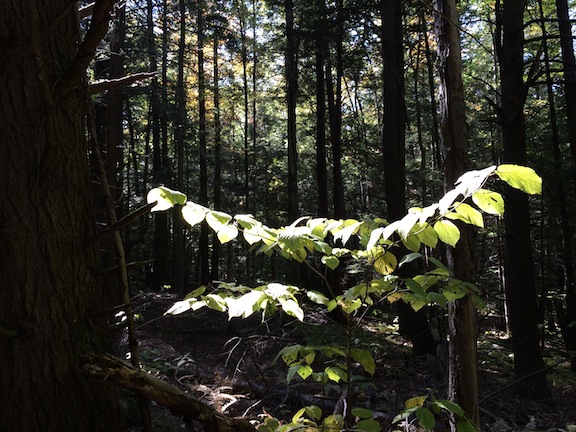
In the forest at Rowe. Photo by J. Browdy

First came Gratitude: appreciating and giving thanks for being alive in this beautiful place, alongside myriad other complex and beautiful creatures who call the Earth home; and also giving thanks for our own strengths and capacities to become active warriors on behalf of the planet.

Then there was the grief and despair work for which Joanna is justly famous: she calls it Honoring Our Pain for the World, and it is a radical, counter-cultural push to sit with and confront all the sadness, despair, anger and pain we feel when we allow ourselves to become fully conscious of the destruction and devastation human beings are wreaking on the planet. Grief for individual loved ones lost to cancer mingles with grief and anger at the loss of the Great Blue Herons and the paved-over forests, in a powerful and galvanizing outpouring of rage and pain.

After an evening break that featured song and dance around the warmth of community, we turned the next morning to the last two stations on the spiral: Seeing with New Eyes and Going Forth.

Joanna talked about the necessary shift from the alienated form of seeing our relationship to the Earth as “our supply house and our sewer” to a new form of seeing, an understanding that we are embedded in the sacred living body of the Earth, and what we do to her we do to ourselves.

leaves

A closer look. Photo by J. Browdy

One of the reasons I love Joanna’s approach to activism is because she is unafraid to call on the imagination as one of our primary tools for social change. In a powerful closing exercise, she arranged us in pairs and asked one person to take the role of a descendant seven generations in the future—about 200 years hence, in 2214. The other person remained herself, in 2014.

The future being, prompted by Joanna, asked a series of questions of the ancestor, and then listened to the answers—this was not a conversation or a dialogue, but a witnessing of the struggles of this ancestor—you and me, in our time—to bequeath a livable world to our children, grandchildren, and on down the line.

After listening to three different present-day people talk about their work for the planet—what makes it hard, what makes it rewarding, what keeps them going day to day—the future being had a chance to respond, and it was an incredibly powerful experience to imaginatively inhabit the spirit of the future encouraging us embattled ones in today’s world to find the strength to persevere.

Joanna at Rowe

Joanna signs books and talks with workshop participants. Photo by J. Browdy

In the call to Go Forth, the final turn on the spiral, Joanna reminded the gathering that this work is impossible to do alone—“it’s impossible to even take it in alone,” she said. We need to create communities of “Shambala warriors for the planet,” who can function like “the immune system of the Earth,” a potent metaphor she attributed to Paul Hawken.

In the Shambala prophecy that Joanna has been sharing ever since she heard it from one of her Tibetan Buddhist teachers back in the 1970s, it is said that great courage is required of those who work for the good of the world, because we must go right to the heart of the “barbarian empire,” armed only with two critical weapons: compassion for all living beings, and the radical insight of interbeing—that everything in this biosphere is intricately and integrally interdependent and connected.

And of course the truth is that the “barbarians” who inhabit this destructive empire are not strangers. They are, quite simply, us.

At the very end of the workshop, Joanna led us through a series of affirmations honoring our perceived enemies as our most important teachers.

Through our awareness of what we don’t want, we learn what we care about most. And through our caring—what Joanna calls the awakening of our “heart-mind”—we find the courage, passion and commitment to do the most important work of our time: transitioning from our current dead-end, greed-based, exploitative society to a society that honors the sacred in all life and works respectfully for the well-being of each participant in the dance of planetary life.

old tree

An elder maple in the forest at Rowe. Photo by J. Browdy

As I walked out under the ancient maples and hemlocks in the forests around Rowe, lit up in all their autumnal glory on this beautiful September weekend, I could feel the warrior spirit rising in me and in all of us who came from near and far to learn from Joanna.

Now is our time, and time is precious: there is none to waste as the forces unleashed by the industrial growth of the past 300 years threaten so many life forms on the planet with extinction.

Will we succeed in transitioning to a sustainable future? Will we humans grow into our potential as stewards and nurturers of our beautiful garden, this Earth? Or will we all slip away into the history of the planet, as the march of evolution and transformation continues on to the next era?

All we can do is go forth with good heart and brave spirit into our own communities and carry on the work that reconnects in our own spheres. I am so grateful to Joanna Macy for continuing to lead the way and for so generously sharing the powerful tools and practices she has developed over a lifetime, for others to take up and carry forward into the Great Turning.

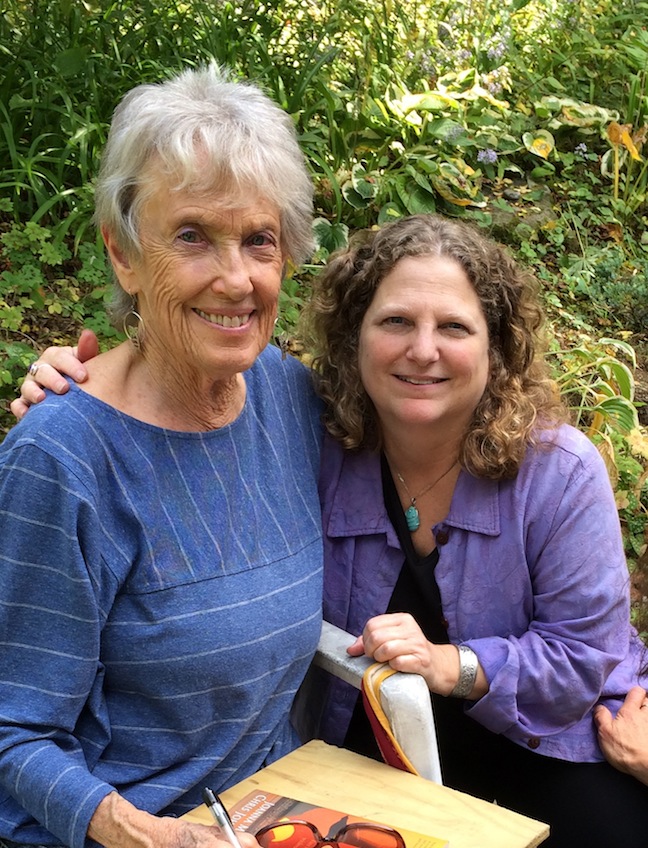
JB & Joanna Macy

Joanna and Jennifer

N.B. Joanna’s classic book Coming Back to Life, a guidebook for doing the Work That Reconects by yourself or (preferably) with groups, has just been re-issued by New Society Publishers in a revised and updated edition. Joanna is hoping that people will gather in schools and church basements, in Transition Towns and activist organizations, to do the inner work that can sustain and fuel the outer work we must all undertake to transition to a life-enhancing human relationship to Earth.

Communing with Grasshoppers: An Elemental Prayer

There’s nothing like an out-of-control fatal virus to make you stop and give thanks for each day of your still-unfolding life.

Every year when I teach the five-day Writing & Thinking orientation workshop at Bard College/Simon’s Rock, I end by leading the students on a slow, silent, meditative walk in the woods, and before we set out we read Mary Oliver’s wonderful poem “The Summer Day,” which ends with these lines:

I don’t know exactly what a prayer is.


I do know how to pay attention,


how to fall down into the grass,


how to kneel down in the grass,


how to be idle and blessed,


how to stroll through the fields,


which is what I have been doing all day.


Tell me, what else should I have done?


Doesn’t everything die at last, and too soon?


Tell me, what is it you plan to do


with your one wild and precious life?

The students think and write and share their responses to that final question, which is the part of the poem that leaps out at them—understandably, as they are poised on the threshold of an exciting new chapter in their lives, starting college two years earlier than most of their peers.

The more I read this poem, the more drawn I am to the earlier lines, though. I love Oliver’s humility in admitting, “I don’t know exactly what a prayer is,” followed by the suggestion that prayer can take the form of communing wordlessly with the unmown fields and the grasshopper that Oliver observes “gazing around with her enormous and complicated eyes.”

Unknown

Fewer and fewer of us humans have the chance, these days, to simply relax into the natural world around us.

Fewer and fewer of us are even aware that we inhabit a natural world—or if we do think about it, it’s more in terms of annoyance (“the mosquitoes are so bad this year!”) or fear (“the seas are rising! What are we going to do?!”) or utility (“the Arctic ice is melting, let’s get an oil rig up there and start drilling!”).

Oliver’s insight that prayer can take the form of “blessed idleness” in nature seems key to me now. That’s the kind of religion we need more of today.

Not the hysterical fanaticism of the pseudo-religious Islamic State, which, like the Queen in Alice in Wonderland screaming “Off with their heads!” at every opportunity, is turning the beheading of civilians into a spectator sport.

Not the Cain-and-Abel warring of the Israeli Jews and the Palestinian Muslims; not the Christian capitalist posturing of “do unto others” while simultaneously creating wealth disparities just as vast as back in the days of feudalism, with inherited misery for the masses and inherited luxury for the few.

In creating a society that sees and understands itself through the mediation of computer screens, we have, in a few short generations, succeeded in cutting ourselves off from what we once knew: that we are an integral part of our planet, and indeed of our universe.

IMG_6007

Unmowed field off the Appalachian Trail, South Egremont MA. Photo c. J. Browdy

Humans are not that different from grasshoppers, or birds, or maple trees. Everything alive on Earth is made out of the same basic building blocks of oxygen, hydrogen and carbon, fueled by the intense energy of our sun.

Without sun, water and oxygen-rich air, all of us will die.

It makes perfect sense to me that we humans should make our everyday lives into a prayer in honor of the Elemental Nature that sustains us.

IMG_6024

Humans are the consciousness of the planet; we are the one species that can weigh actions in the present based on our knowledge of the past, our calculated predictions of the future, and our elaborate system of ethics.

If we could just pull our eyes away from our hypnotic screens more often and remember our kinship with every precious manifestation of life on our beautiful planet, it would become inconceivable that we could allow ourselves to destroy it all.

Wildflowers, Nova Scotia.  Photo c. Jennifer Browdy, 2014

Wildflowers, Nova Scotia. Photo c. Jennifer Browdy, 2014

The quest to restore balance to our natural systems should become the Holy Grail of our time, with all the best and brightest on the planet dedicating themselves to the grand collective effort.

I wish every young person on the planet, but especially the brilliant, pampered, over-stimulated, often-jaded young people of privilege, could have the chance to sit in a field in blessed idleness on a lovely summer day and commune with a grasshopper.

If we would only pay attention, we would see in “her enormous and complicated eyes” the reflection of our own human souls.

IMG_7497

Michael Brown and the Dream of Radical Equality

 If Michael Brown had been Michael White, would the still-unfolding tragedy of Ferguson have occurred? When was the last time you heard of a white college student being shot down in cold blood by a police officer? Kent State, maybe? Yeah, it’s been that long.

10547712_1453135431613983_6655587389963374312_nThere is no excuse for the police officers hired to protect the peace using their weapons to kill unarmed citizens on the street.

There is no excuse for the kind of racial profiling that has spawned the bitter joke among Black men that they were stopped for DWB—driving while Black.

For a naturally empathic species, we humans can be remarkably insensitive to the well-being of others. I have realized, through examining my own experience closely, that this is due to cultural conditioning that enjoins us to put ourselves first—as individuals, as members of families and cultures, and as human beings.

We are not encouraged to think of ourselves in relationship to others. And without that sense of relationship, it’s hard to get worked up about what happens to others. It’s their business, their concern, not ours. Michael Brown? He must have been causing trouble.

The riots that came down in the wake of Brown’s killing show us that people of color knew otherwise. They took this murder personally because it could have been any one of them shot down by police. They are standing up for their rights in the way that people without power do: putting their own bodies on the line and raising a ruckus too loud to be ignored by the authorities.

Sometimes smashing storefront windows and setting cars on fire is necessary. It’s the last resort of people pushed beyond the bounds of civility.

There is a song that keeps running around in my head lately, from the Civil Rights Era, called “It Isn’t Nice.” It goes like this:

It isn’t nice to block the doorway

It isn’t nice to go to jail

There are nicer ways to do it

But the nice ways always fail

It isn’t nice, it isn’t nice if you told us once you told us twice

But if that’s freedom’s price

We don’t mind.

Well we tried negotiation

And the token picket line

Mr. Charlie wouldn’t see us

And he might as well be blind

When you deal with men of ice

You can’t deal with ways so nice

But if that’s freedom’s price

We don’t mind.

What about the years of lynchings

And the shot in Evers’ back?

Did you say it wasn’t proper

Did you step out on the track?

You were quiet just like mice

And now you say that we’re not nice.

But if that’s freedom’s price

We don’t mind!

 When yet another unarmed black boy is shot by police for no apparent reason…well, it isn’t nice, and the authorities can’t expect a nice calm response. Further curtailing civil rights by imposing a night curfew won’t help matters either.

What’s needed is first of all an apology; and secondly a real sit-down between the Black and the white communities, a sincere and prolonged effort to come to terms with reasons behind the continuing segregation and impoverishment on the Black side of the tracks, and strategies for making things better.

10600474_1445994419015603_795058456781638434_nBarack Obama’s rhetoric from early in his presidency—we are not Black Americans and white Americans, red Americans or blue Americans, we are all Americans—comes back to haunt me as I think about the killing of Michael Brown. For too long we humans have seen the world in terms of differences and separations, rather than recognizing the ways we are all the same and connected.

One day I hope humans will look back on this period of history and shake their heads, wondering how their ancestors could have been so misguided as to imagine that people with dark skin were any different than people with pale skin. I hope that in this future time, it will be inconceivable that a life could be snuffed out for no reason.

We humans are blessed with incredible powers of creative imagination, and the ability to manifest what we dream. We need to focus our imaginations now on envisioning a safer, saner world, where respect and mutual aid are the highest values—and not just respect for humans, but for all the life forms on the planet.

If we can use the situation in Ferguson as a catalyst for moving forward in the dream of radical equality, then Michael Brown’s tragic death will not have been in vain.

Unplugged

I’m now in the middle of my annual summer retreat to the LaHave Islands in Nova Scotia, Canada, and it’s no exaggeration to say I feel like a different person than the harried, exhausted woman who packed up and headed north on the highway three weeks ago.

I am sleeping better—my dreams are lucid and intriguing, with elaborate narrative plots that I enjoy following even if I lose the thread when I wake up.

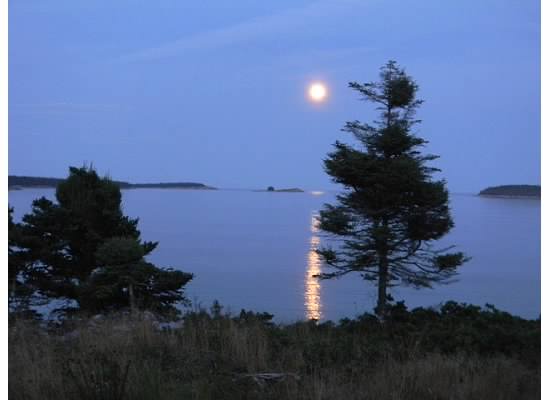
moonrise

I am writing again—going back to the manuscript of my memoir with fresh eyes and tightening, tweaking, reworking the introduction over and over until (I think) I get it right.

I am reading for pleasure—yes, you heard right! After a long school year in which, as a professor of literature and media studies, I could read only to prep classes, I am indulging in the guilty pleasure of reading mystery novels—Donna Leon’s Brunetti series, with their wonderful descriptions of Venice and Italian food.

I am spending long hours walking the empty beaches and cliffside trails, drinking in the natural beauty and letting the soothing sound of the waves banish all my worries and cares.

Gaff Point

I am enjoying adapting to the rhythm of my parents’ life, which takes me right back to my peaceful childhood, where each day was spent in a judicious measure of work, conversation, meal preparation and relaxed eating. My parents sit together at their lovely dining room table—here in Nova Scotia, with the dramatic view of the bay outside their windows, and the constant sound of the waves on the rocks in their ears—and eat three beautifully prepared and served meals a day, a routine few Americans still maintain.

frittataWhen I first arrived here three weeks ago, I thought this focus on meals took an awful lot of time and effort. But once I slowed down enough, I remembered something that my own grab-and-go existence had made me forget—just how worthwhile it is to take the time to prepare delicious meals, set a lovely table and eat in leisurely fashion, talking quietly over the day’s events. My entire body, aching and stressed when I arrived in Nova Scotia three weeks ago, is grateful.

Here on the island, where the most important questions are whether the tide is up or down and whether the fog is expected to blow out by lunchtime, life returns to its elemental rhythm, and it’s possible to feel how much is lost by the speed of our technology-dominated 21st century existence.

It’s possible to take a deep breath and remember that only 20 years ago, there was no Internet. There was no email. There were no cell phones, no smart phones, no texting. There were no digital music or video files, no VCRs or ipods, let alone streaming capabilities.

Remember what that was like? Everything moved a heck of a lot slower, that much is for sure. We wrote letters on paper and mailed them. We read books and big print newspapers that we had to schlep around with us in knapsacks. When we needed to look up a fact, we had to go to the library and look in the—get ready for it—card catalogue.

This was only twenty years ago, a mere flicker of time in the scale of human history. Imagine what a strain it is on our poor homo sapiens brains and bodies to keep up with the breakneck pace of modern digitized life, especially for those of us born and bred before the Great Digital Coming of the 1990s.

gorgeous NS copy

The brains of children born into this brave new technologized world are being wired differently. For many it is pure torture to slow down to ordinary time. Life without a screen and a wifi connection is unthinkable.

As we advance into the 21st century, I can see in my students the signs of smartphone addiction—the same nervousness and agitation, halfway through a 90-minute class, that smokers used to display in a previous generation. They have to get up and wander off to the bathroom as a pretext for checking in with the virtual world they crave.

I too get addicted during the course of the school year. I check email constantly and Facebook several times a day; I spend more time on the screen than I do out in the garden or walking in the woods or preparing meals and eating them with friends and family.
Only now, when I’m on a media holiday with my email vacation message set, can I appreciate the toll this society-wide digital addiction takes on each of us as individuals, and on human society writ large.

Yes, I love the power and reach of the Internet as much as the next person. I love being able to write my blog, send it out over wifi and have people all across the world reading it in a moment’s time. When my blog readership surpassed 100,000 visitors from more than 200 countries last month, I was thrilled.

But for deep thinking and sustained writing, I need to get away from that kaleidoscopic virtual reality and get in tune with the more primal rhythms of sunset and moonrise, tides flowing in and out again, seagulls soaring over the mermaid dive of a seal fishing quietly by the rocks.

eye of the hurricane 2014

Even if the closest thing to nature you can get is a city park, try spending a couple of hours there without your smart phone, and see what you notice. Watch how your breathing slows down and your tired, overworked brain relaxes when all it has to focus on is trees and bushes, maybe a sparrow or pigeon or two.

We don’t need expensive meditation retreats, yoga classes or far-flung vacations. We just need to give ourselves permission to unplug for a while.

Will All The Good Fathers Please Stand Up?!

It’s Father’s Day 2014, and I am distraught when I look out into the world and see the ascendancy of the kind of distorted, testosterone-driven style of masculinity that is antithetical to good fatherhood.

A good father, in my book, uses his strength, wisdom and social capital to protect and empower his own and others’ children. He is rational and clear-thinking, but also not afraid to own his emotional side, to display his loving, nurturing nature. He is constructive in his social engagements, and tries to think ahead to ensure that his family, and by extension his society, will be as safe and prosperous in the future as they are currently, under his wing.

A good father uses his physical strength, or picks up weapons, only in defense of himself and his loved ones.

A good father would never harm a defenseless child, or send one deliberately into harm’s way.

So who are these men and boys who are gang-raping innocent women in Egypt; gang-raping and then lynching teen girls in India; going on mass-murder sprees in the United States; and sending yet another generation of boys into ideologically driven wars in the Middle East?

Who are these men who are kidnapping and brutalizing whole schools full of young girls in Nigeria; shooting in the head girls whose only crime is to want an education; kidnapping and holding as sex slaves innocent teenagers who comply out of terror?

I know, and you know, that there are a lot of good men out there. We all know many good fathers, brothers, husbands, friends.

These good men are the ones who, as New York Times columnist Charles Blow wrote recently, need to stand up and insist that the aggressive, punishing, domineering style of masculinity has no place in the 21st century.

Masculine strength, absolutely. But it should be the strength of a benevolent patriarch, using his power to nourish and strengthen others.

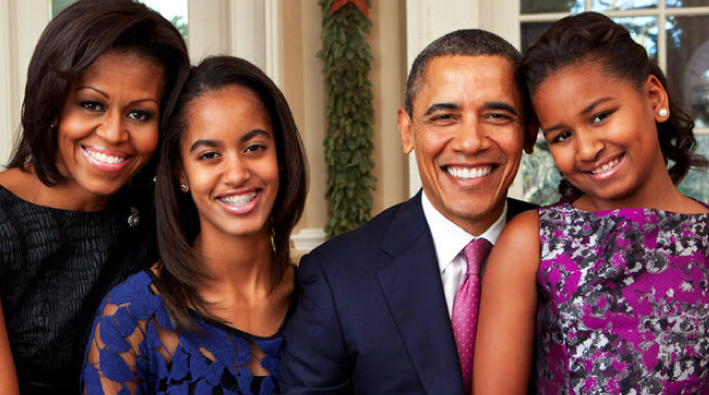
Screen-shot-2013-12-16-at-4.18.49-PMAlthough I know President Obama has disappointed many, I still hold him up as an example of a good man: a good father, who works tirelessly to improve the world that his young daughters will be entering in the coming years, and a good leader, who has been doing the best he can to reach out a helping hand to those who need it—students, the elderly, immigrants, women. I doubt any one of us who landed in his shoes in Washington D.C. could do it better, so who are we to criticize?

On this Father’s Day, I salute all the good dads out there, including my own, and I implore you: use your social capital and power to condemn violence and destructiveness; to model and promote the peaceful, nurturing, kind human relations that the world needs now.

With Starhawk: Dreaming the Dark and the Light

The night I returned home from an intense weekend workshop at Rowe with Starhawk, I had a disturbing dream.

A little girl, dressed in a pink jumper, was crying that she was lost, she had to find her father. So I took her by the hand and we started looking for her father in an urban landscape—first on the street, then in an apartment hallway with many doors. I said to her, do you remember what the floor of your home looked like? Was it wooden? Black and white tile? We stopped at several doors but they weren’t the right one. Then we came to the one with the blue-green patterned tiles, and her father was in the doorway.

As soon as I saw him I was afraid…he seemed like a devil, a mean, cruel man, although he smiled (leered, more like) as he came forward in the doorway to receive her. And she went to him, whimpering. There were people gathered in the apartment behind him, all dressed creepily in black, watching something on a screen in a darkened room. He thanked me for bringing her back, and I turned away, with a sick feeling, thinking she was going to be hurt or punished for “running away.”

As I turned away I heard her whimpering turn to full-out crying, a terrible keening sound, and I felt paralyzed—what should I do? Should I call Child Protective Services? Clearly this little child needed my help, but I was afraid that if I called the police or other authorities, the “father” would know who called and would come after me.

So I did what any dreamer does when paralyzed by fear—I woke up.

I haven’t been able to stop thinking about this dream, especially as it seems to be a kind of psychological bridge between Starhawk’s remarkable rituals honoring Mother Earth, and my own upcoming writing workshop on “purposeful memoir,” which uses the elements as a way to frame and explore parts of one’s life journey.

I feel sure that I was both the small child in the dream, and the adult who was trying to help her find her way “home.” The problem was that “home” was a dangerous, confusing, love-and-hate kind of place, ruled over by a “father” who was punitive, frightening and loving in a controlling kind of way. The adults sitting in the dark background passively watching the screen are human society writ large, especially our Western, technology-obsessed society. The little child with her bright pink outfit and fearful, wanting-to-trust eyes, stood out here as a wholly other kind of being, but one which would, in the pinching hands of her “father,” be formed and molded into just another one of these pale, eerie, zombified adults.

We talked a lot last weekend about how frightening it is that we Westernized humans have become so very disconnected from the natural world. As Starhawk gathered us in circles to ritually salute the four elements and the four directions (Earth/North, Fire/South, Water/West, Air/East), as well as the Center/Spirit, it seemed like a dream of an older way of being that I dimly remembered, from a time before I had taken my seat among all the other adults sitting before screens in darkened rooms.
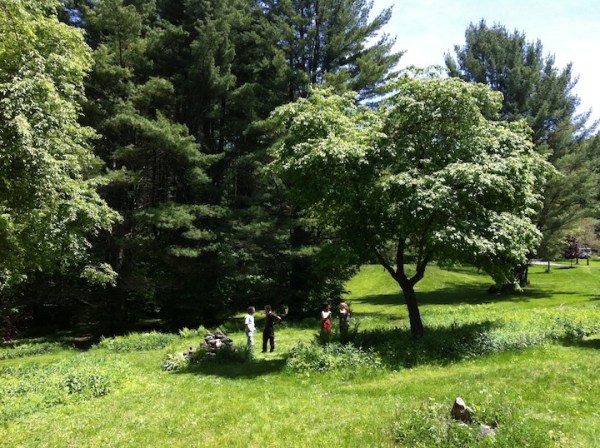
After the last circle

After the last circle

We listened to the birds singing and the wind blowing through the new spring leaves; marveled at how the veins of the leaves mirrored the veins in our own bodies and the bigger veins of river waters on the body of the Earth; and let our combined voices, chanting around a sparking fire in praise of the elemental unity of all Life, blur together into a wordless ringing sound that cast our intention to be of service to Mother Earth high up into the starry sky.

Following Starhawk along a labyrinth made of stones lined with vivid purple violets, I thought about my desire to help others explore their own lives in elemental terms, looking back at where we’ve come from in order to see more clearly who we are and who we wish to become. In writing my own memoir, the elemental structure emerged organically from the trajectory of my life: Earth the childhood ground of my being; Water the stream of culture I’d been sucked into as an adolescent and young adult; Fire the years of adulthood, being tested on many fronts; and Air running through it all as reflections from my current perch, back on the Earth of middle age, trying to recover my grounding in order to move more intentionally into the next stage of my life.
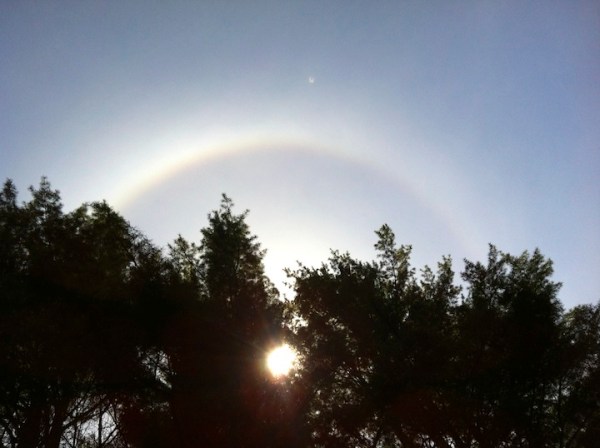
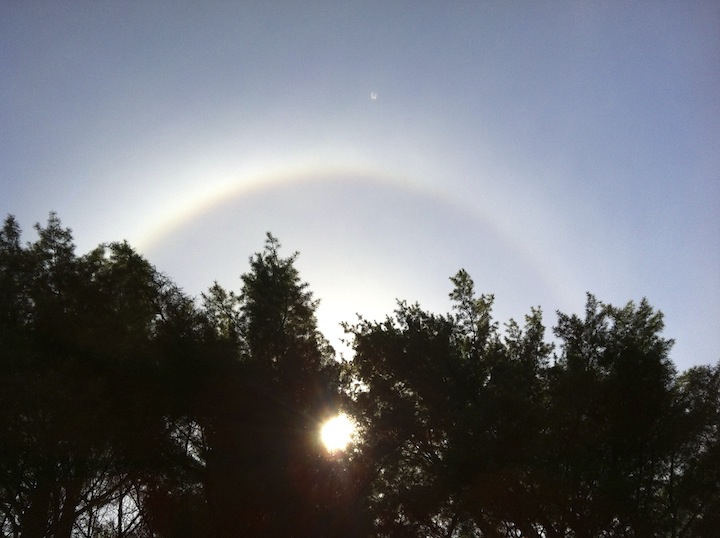
A rainbow halo around the sun, right over our circle

A rainbow halo around the sun, right over our circle

My dream, in which I was both the crying little girl who felt compelled to find her way back “home” and the concerned adult who could see just how damaging and hostile that “home” was, seems to represent my awareness these past few years of how destructive our American “home culture” is to the sweet, sensitive Earth-centered children who are born into this harsh, techno-dominated world and cleave to it with innocent fidelity.

We are instinctively loyal to our families and our birth cultures, even when on some level we are aware that they are not always healthy for us. And the adult “me” in my dream, anguished about handing over the child to this destructive “father” figure, was like any bystander in a negative scenario, desperately choosing to remain silent out of fear of retribution, fear of bringing the hostility down on myself.

In my memoir workshop next week, I want to guide others to explore how thinking about our lives in elemental terms can help us make sense of our past, and give us a firm footing from which to overcome our conditioning and our fears and take the full measure of our life’s purpose.
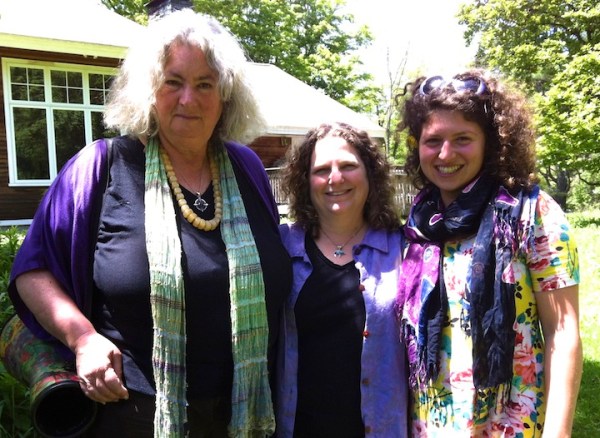
Three generations

Three generations

We all came into this life wide-eyed and open-hearted, looking for love and warmth. It’s fascinating to explore what happens as we are received by our families and our home cultures, and swept along into the fast-moving currents of life, heading towards the fires of adulthood.

But what really matters is what comes next. What will we do with our one precious life, as Mary Oliver put it so poignantly? Can we step back from our loyalties and conditioning and figure out what it is we care about enough to stand up for and give our lives to?
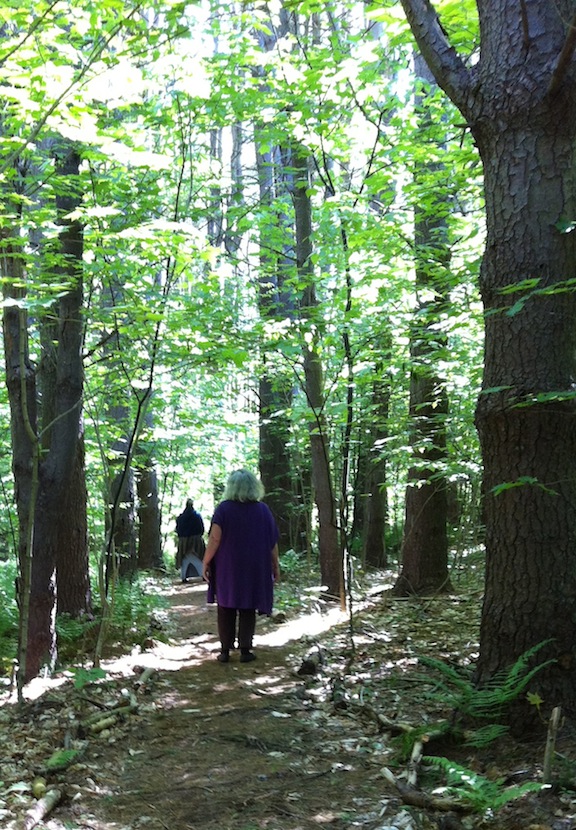
Starhawk on the path

Starhawk on the path

Starhawk has moved in the past decade or so from a focus on a largely metaphorical, feminine-inflected Earth-based spirituality to a much more grounded practice in permaculture, “a multi-disciplinary art form, drawing from the physical sciences, architecture, nutrition, the healing arts, traditional ecological knowledge, and spirituality. The ethical underpinnings that guide permaculture are simple yet powerful: take care of earth, take care of the people, and share the surplus.”

In her Earth Activist Trainings, she seeks to help us reimagine a new kind of culture, one in which nature and human society are seamlessly intertwined. “EAT is practical earth healing with a magical base of ritual and nature awareness, teaching you to integrate mind and heart, with lots of hands-on practice and plenty of time to laugh,” she says on her website.

We need to create a new kind of culture that will comfort and nourish both the caring adult and the crying child in my dream. Our culture has to be supported by a sustainable relationship to our Mother Earth, a relationship in which we give back as much as we take, in an endlessly regenerative circle of life.
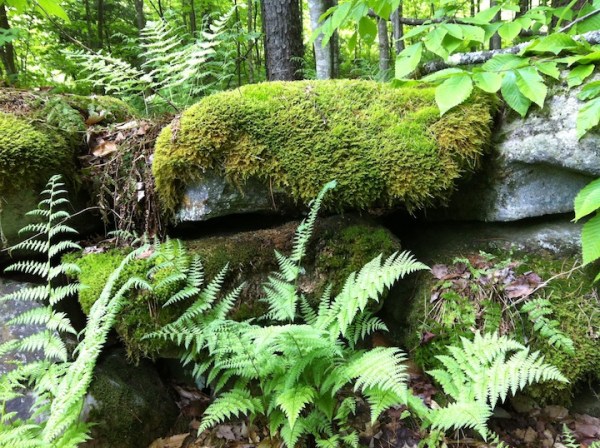
mossy rockAs I look ahead purposefully in my life, I hope that the adult I want to become would not leave the innocent child I was in the treacherous hands of a culture that has forgotten how to love. If I could replay that dream, I would guide that small, pink-clad child away from her malevolent “father” and his techno-obsessed tribe. I would take her away from that urban landscape, out into the warm green gloom of the forest, where we would sit together on a mossy rock and listen to the wind in the leaves and the birds in the sky. Together we would look up to see Starhawk approaching along the path, roots sprouting from her feet and branches from the top of her head.
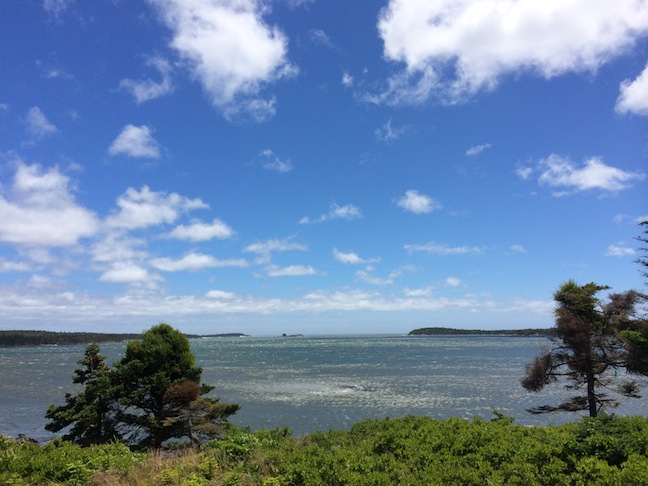
We would sing together, in the words of poet Kristin Knowles, with whom I shared the Starhawk weekend:

Our mother,

in art and nature,

passionate burns thy flame.
Thy strength is one

with moon and sun

on Earth as up in the heavens.
Teach us the way to lightly tread

And relieve us our distress as

we receive those who would prefer our silence.

And lead us not into frustration

but deliver us from ill will.

For thine is the freedom, power and glory,

her story,

now and forever.

Blessed be.