Is there an “American Spring” around the corner?

You have to admit my blog is aptly named.  Each day brings new evidence that we are living through a speeded-up period of rapid change.

Was it only a few short months ago that we were stuck in the August doldrums of Congressional gridlock, in which the Republicans seemed to have a total stranglehold on the nation’s very lifeblood, our Treasury?

Was it only a few short weeks ago that the first Occupy Wall Street protesters arrived on the scene, the vanguard of what has now become an international political movement that just might have the power to challenge the two-party American oligarchy?

The deep distrust and disappointment Americans feel in our government is represented in a new NY Times/CBS News poll published tonight.

Get this: only 9% of those polled approve of the way Congress is doing its job.

Only 10% say they trust the American government to do what’s right for its people.

 These are dreadful numbers, especially when compared with the 46% of those polled who said they believe the views of the Occupy Wall Street protesters reflect the views of most Americans.

The urgent question becomes, will this dissatisfaction with our government and strong identification with the protest movement lead to actual sociopolitical change?

In one of my classes we are reading Allan G. Johnson’s book Privilege, Power & Difference, which seeks to understand why those with social privilege so rarely lend their support to any movement that might upset the status quo, even when they profess to be sympathetic with the goals of social equality.

Johnson says that all of us, but especially the privileged, tend to follow the path of least resistance.  Our society is set up in such a way that the paths of least resistance all favor the privileged, making it very hard for anyone to rock the boat.

But, he says, if we are aware of the ills of social inequality and do nothing about it, we will become “like the person who loses the ability to feel pain and risks bleeding to death from a thousand tiny cuts that go unnoticed, untreated and unhealed” (124).

I think that many of us privileged folks have indeed become numb to the harsh realities of our social system, which we have come to accept as natural, like the weather or the usual background noise of civilization.

That this callousness is wounding in ways we are hardly aware of is less obvious, but it comes out in the deep malaise of privileged American society: our tendency to depression, self-destructive behaviors, and underlying rage.

We are living through a moment in time when it is just possible that the privileged will wake up and decide that enough is enough.  That is the hope and the lure of the 99% movement.

There are a lot of privileged people in that 99%: educated, wealthy people, who have a lot to gain, in material terms, by not rocking the boat–but who, it seems, are doing some real soul-searching right now about taking the right path, instead of the path of least resistance.

Think about it: only 10% of Americans think Congress is doing a good job.  If that isn’t a mandate for change, I don’t know what would be.

Everything is speeded up these days.  Even last night’s solar storm, which caused spectacular aurora borealis displays all over North America, apparently hit Earth eight hours faster than predicted, and spread out much further over the U.S. than usual–visible all the way down in the Deep South.

Could it be that we will have our own “American Spring” in 2012?

WHY NOT???

But what can we DO?

It’s not enough to simply lament the disappearance of species, or the poisoning of the air, water and soil of the planet.  The urgent question of our time is WHAT TO DO ABOUT IT?  How can any of us–how can I–act to staunch the hemorrhage and resuscitate this dying patient, our planet, before it’s too late?

Let’s review the options.

There is political reform, through various channels: appealing to our duly elected representatives and/or supporting environmental groups that lobby these politicians and try to pressure the relevant federal and state agencies charged with protecting the “natural resources” of our country.

I have to say that I am quite skeptical of this approach, which doesn’t seem to have worked at all in the 40 years or so since I first became a Ranger Rick reader and aware of the environmental movement.

Things have gotten much worse for the natural world in my lifetime, despite all the efforts of big, well-funded groups like the National Wildlife Federation, the Sierra Club, the Nature Conservancy, or even Greenpeace, the most radical of them all. Greenpeace is the most willing to go out on a limb to protect species and habitat, but its actions have failed to make the kind of global difference we need.

There is international peer pressure to do the right thing–conventions, treaties and protocols.  Even as I type these words, I inwardly despair.  From Kyoto onward, the U.S. has been the bully who refused to play nice in the community of nations whenever it’s come to putting the common good before the holy Free Market.

There is actually going around the blowing up the worst aspects of civilization, like dams, power plants, cell towers and chemical plants, as the proponents of Deep Green Resistance advocate.  Eco-terrorism, anyone?

Or there’s crowd power of the Occupy Wall Street variety, which certainly seems right now to hold the most promise.  ‘Never doubt that a small group of thoughtful, committed citizens can change the world. Indeed, it is the only thing that ever has,” Margaret Mead said.

But how to convince those crowds that the fate of seals, bees and goldfinches–not to mention the oceans and the boreal forests of North America–is actually more important than the injustices of economic inequality here in the U.S.?

Of course, it’s all important.  I have several friends who are on unemployment now and having serious trouble finding jobs.  If the Tea Party had their way, unemployment itself would be a thing of the past, a quaint relic of the old New Deal.  We can’t let these radical conservatives shred our social safety net, and we do need to start creating jobs again–green jobs, of course.

But there is no single issue more urgent than climate and environmental health, because if our climate goes haywire and our life support systems here on Earth fail, folks, we are all going down with the ship.

How to convey this to the crowds who are willing to turn out to protest economic injustice, but give it a miss when the issue is global warming?  How to convince people that what we should be demanding as we flood the squares and Main Streets of our country are well- subsidized options to reduce our energy consumption?

Doesn’t sound very glamorous, but the truth is that there’s nothing more important to be fighting for right now than subsidies to install solar roof tiles, like they’ve been doing in Europe for a decade already; and solar hot water heaters; and geothermal ducts for large buildings; and affordable green tech cars.

As Mark Hertsgaard and others have been saying, it’s not enough to make individual green lifestyle decisions, like recycling or composting or turning out the lights when you leave the room.  These individual actions are all well and good, but they’re not going to make the dramatic change we need to get our climate back into shape.

For the kind of change that will save the polar bears and the walruses and the coral, we need our government to step up and protect the interests of its people.  Not the interests of the corporations which have collectively driven our planet to the brink of ruin with their shortsighted greedy ethos of extraction and exploitation.

Government by the people, for the people.  And for the environment that sustains these people in a web of life that includes all living beings on this planet.

How to say this in a way that will light up the imaginations of the 99% and ignite an unstoppable movement for change?

I will keep trying.  What more can I do?

Our planet, ourselves: we must wake up to the destruction, before it’s too late

First the honey bee population crashed.  Then it was the bats, dying by the millions in their caves during the winter hibernation, of a strange white fungal infection.

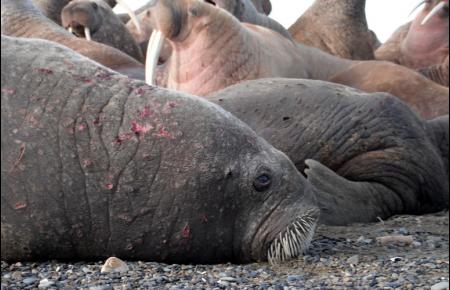
Now marine mammals, including walruses and ringed seals, are turning up dying on the beaches of Alaska and the far north.  Unidentified skin lesions and sores are the visible evidence of an unknown disease that is ravaging them.

Meanwhile, climate change is causing unprecedented surges in the populations of destructive insects like pine borers, which are killing off millions of acres of forests around the world.

I could go on, and on, and on.

Truly, Derrick Jensen is not exaggerating when he says that human civilization is killing our planet.

Last weekend I watched the new film “End:Civ,” by Franklin Lopez, based on Jensen’s book Endgame.  I had put off watching it for several weeks, because I knew it how upsetting it would be, and sure enough, it was disturbing, to say the least.

For me the hardest-hitting part of the film was about human beings’ casual tolerance of cruelty; our willingness to stand by, indifferent, as our fellow travelers on this planet are systematically hunted or poisoned or displaced to extinction.

Part of this detachment of ours may be rooted in the way we tell the stories of how these deaths occur.  We talk about “colony collapse disorder,” for example, rather than narrating the way that entire hives of bees–which are highly evolved, communicative insects–fail to return to the hive one day.

They get lost out there–maybe due to cell phone waves or other forms of chemical interference, we don’t really know–and never come home.  Imagine this happening on a global scale, a whole species of productive, social insects lost, one by one, by the million.

In the same way, it’s far easier to talk about “cancer victims” en masse than to live through the suffering death of your own loved one.  How many vibrant, creative, hardworking people have we lost to cancer the last ten years?  In the last year?  In the last month?  Wangari Maathai and Steve Jobs, to name two famous, very recent cancer victims.  The list goes on and on and on.

But still we remain passive.  We may mourn the disappearance of the honeybees or the songbirds, but we don’t make the effort to connect the dots and come to a true understanding of the extent to which our way of life has been poisoning our planet since the advent of industrialization, and especially since the beginning of the 20th century, which is when synthetic chemical production really took off.

Before she died of cancer, Rachel Carson managed to break through the wall of indifference and make the case against DDT.  Thanks to her efforts, the bald eagle and many other birds have rallied and come back from the brink of extinction.

It’s amazing how resilient life is.  If human civilization would just back off and give our natural systems on the planet a chance, they would heal themselves, and go back to providing the healthy ecological web that made our success as a species possible.

Our planet, ourselves.  We need to understand, in the deepest and most urgent possible terms, that we cannot dissociate ourselves from the poisoning and destruction that is being visited on the forests, oceans, swamps and grasslands of this planet.

The “Wall Street Awakening” cannot be only about jobs, about fixing a broken economy and continuing on our merry path of global domination and “resource extraction.”  The analysis has to go deeper than that, and the change has to be much more dramatic.

All the jobs in the world won’t bring back the walruses or the ringed seals or the polar bears.  What use will jobs be when the ocean is a giant dead zone, and industrial agriculture collapses?  Will we be worrying about jobs when the forests that provide our oxygen are all gone?

We need to focus on what’s important and go all the way this time.  As I keep saying, our future depends on it.  And I am not exaggerating.

Much to protest…and much work to be done to make it right

Riots in Rome, a huge protest in Times Square, New York, and rolling protests from New Zealand to London to L.A. Things haven’t been this globally lively since the 2003 protests against the imminent U.S. invasion of Iraq.  Where is it all leading?

None of us know.  But the police are getting out their riot gear, and it is very possible that there are going to be more violent clashes, as there were in Rome today.

As the protests gain momentum, it’s important to keep our eye on just what all the anger is about.

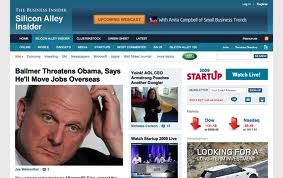
Business Insider, of all sites, published a very interesting set of charts and commentary last week promising to explain just what all the fuss was about down in Liberty Plaza.  Check it out, you won’t be disappointed.

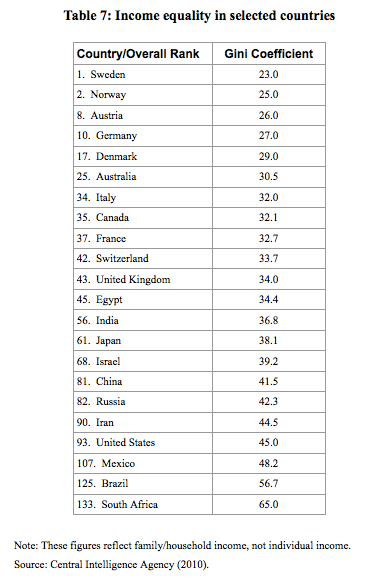
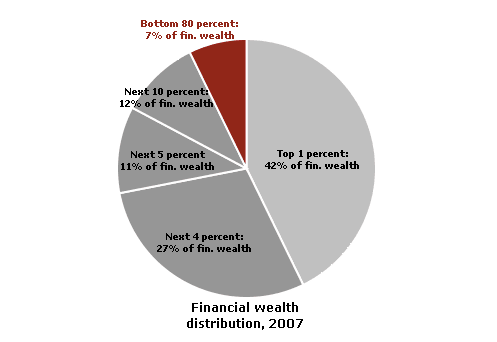
Here are a few of the most damning charts:

The U.S. ranks below China, Iran and India in terms of income INEQUALITY.

Five percent of Americans own 69% of financial wealth.  The top 1% own 42% of this country’s financial wealth.

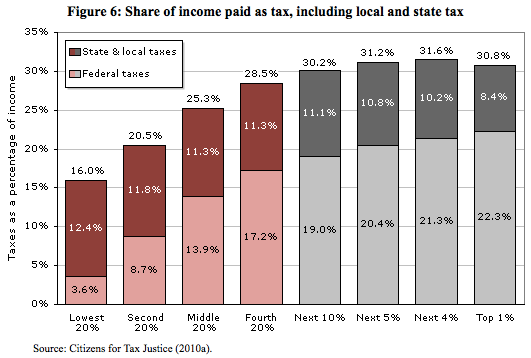
And the tax rate of these fabulously wealthy people is about the same as everyone else’s. That’s why they continue to get richer and richer, and everyone else slides inexorably downward.

While CEO pay is up nearly 300% since 1990, average workers’ pay is up 4%.  I don’t know about you, but the modest increases in my salary over the past decade have been totally absorbed by higher expenses, from food to gas to health insurance premiums and everything else.

So hell yes, there is something to be angry about!  There is a lot to protest!  There is a lot of work to be done to turn this country and this world around. The question is, how far will we go to rock the comfortable cruise ship of the one percenters?  And how far will they go to keep the status quo the way it is?

Police forces have always done the bidding of the wealthy in capitalist societies; is there any chance this could change?  The police are workers just like the protesters; is there any chance they will break their indoctrination and side with their own class interest?

Seems unlikely, but let’s not underestimate the forces of change.  Who would have believed, even six weeks ago, that people would be turning out in the thousands across the world to protest corporate greed and social inequality?

Look at this crowd.  It’s pretty clean cut, isn’t it?  This doesn’t look like a case for the riot police.  By and large, these people don’t want revolution. They just want to be able to live decent lives in a country they can be proud of.

Is this too much to ask?

No.  But, and this is a BIG BUT: what we’ve come to consider “a decent life” is going to have to change in the 21st century, given peak oil, the impending collapse of industrial agriculture, and the climate crisis.

So much will depend on our being smart enough to put these pieces together with the economic injustice we perceive so clearly, and see our way clear to a new, sustainably grounded society.

This is not too much to ask either.  But it will be a challenge to move from the fist-in-the-air stage to the creative visioning, and most of all to the implementation of a more just and sustainable economic system.

We have no choice but to meet this challenge.  Our global future as a species depends on it. This is the central task of our time.

Occupy Wall Street: Finally, the New York Times Gets It!! Now, how about Obama?

Protesters Against Wall Street – NYTimes.com.

This is a big victory for the Occupy Wall Street movement.  To move the staid NY Times from complete indifference to disdainful incomprehension to vigorous approval in the space of just three weeks is truly remarkable!

Haven’t I been saying that the young people today are the sleeping giant that needs to awaken, stretch and roar?  Any subordinate class (and make no mistake, the young ARE a subordinate class) is only kept down through ignorance of the true extent of their power.

In the past, it’s usually been a charismatic leader who has seized the microphone and shaken the masses out of their beaten-down stupor.  Think Frederick Douglass or Martin Luther King Jr., for example.

With Occupy Wall Street, we’re onto something new: a “leaderless movement,” without microphones, but with the extraordinary amplifying power of the World Wide Web.

Social media couldn’t have done it alone–we need the resolute presence of those flesh and blood people down at Liberty Square and in parks and street corners all across America.  But their resistance is exponentially strengthened by the social network around them, spreading like wildfire throughout the country and the world.

President Obama responded at least obliquely in last week’s press conference, showing at least a glimmer of understanding of what the movement is about.

If he had a shred of political sense, he’d be looking for ways to harness the intelligence, social commitment and determination of these young people to stand up to the Tea Party crowd and the drill-and-kill Republicans who have shown themselves again and again to be against social equality in any way, shape or form.

This could turn into the political juggernaut needed to push the Republicans back into their holes, and give the Democrats some much-needed backbone.

One thing is certain: these kids are not backing down, and they’re not going to be fobbed off with half-hearted gestures of appeasement.  They are after real social change, from the ground up.

What was it Arundhati Roy used to say?   “Another world is not only possible, she is on her way.  On a quiet day, I can hear her breathing.”

Yes.

Let’s take back Black Friday, and change history!

I have a suggestion for the Occupy America folks all over this country.  Let’s take back Black Friday.  You know, the Black Friday after Thanksgiving Day, supposed to be one of the biggest shopping days of the American year?

It’s a great day for a decentralized national protest, because nearly everybody, including all those college students, is on holiday.  It’s also a great day for an anti-Big Money protest, because it will hit the corporations where it hurts most: retail sales.

What if instead of swiping those credit cards and running up our consumer debt on Black Friday–making it a black day for consumers, but a golden day for corporations and financiers–we deliberately boycotted the malls?  Instead, let’s declare a day of participatory democracy in action, a chance to meet with our neighbors and fellow citizens out on the public square, in cities and towns all across this country, to collectively envision a new society based on the true ideals of Thanksgiving: joining together as human beings across superficial differences like ethnicity, nationality and creed, nourishing each other with the bounty of our natural world and helping each other through lean times.

We live on a rich and abundant planet where there are sufficient resources for all of us to live well–the problem is the inequitable distribution of those resources.  On the original Thanksgiving, the native hosts were kind enough to give their Puritan guests a helping hand.  The rest is history, and it’s not a happy history at all.

We are standing at a crossroads where we have a chance to step off the path we began as a nation when the Europeans colonized this country and the capitalist machine began to roar.  We may not get another chance, given the precarious state of our global climate.

Now is our time.  Let’s step up and change history together.  Black Friday organizers, let’s get busy!

American-style debt bondage–how much longer can we go on this way?

A propos of this question of what the Occupy Wall Street protest is all about, I would like to raise the issue of debt bondage.

Usually when someone says “debt bondage,” we flash to images of Indian rice farmers or child brick carriers or trafficked women from Southeast Asia.

There is horrendous debt slavery in South and Southeast Asia, and the conditions under which men, women and children labor there are far worse than anything we face here in the U.S.

But at the same time, I don’t think it’s far-fetched to call the average American middle-class lifestyle a form of debt bondage.

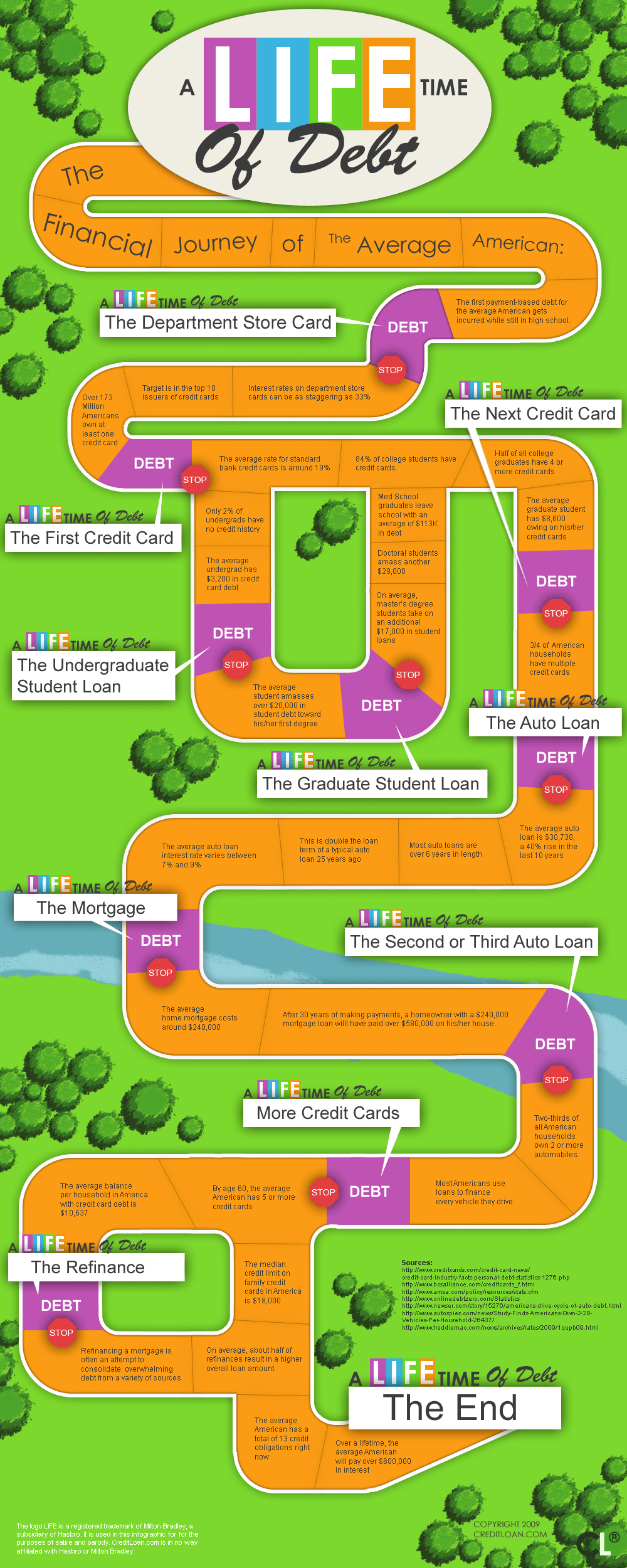
This graphic does a good job at giving us the picture:

In case you can’t read the fine print, the end of the “game” shows that Americans will pay about $600,000 in interest alone during their lifetimes.  [Source: Visual Economics.]

Working to pay off debt has become so commonplace that we scarcely even notice it anymore.  But it’s a relatively new phenomenon.  And all that interest, plus all those fees, are among the prime ways that the Wall Street bankers have gotten so phenomenally rich in the past 50 years or so.

What can be done about this?  For starters, a quality education should not so expensive that a middle-class student has to go into debt to attain it.

And we have to think much more deeply as a society about the job question.  We should not make it so easy for corporations to outsource jobs to cheaper labor markets.  Just as we are beginning to think about localizing agriculture and energy, we need to think about localizing jobs.

That’s the way human beings have made their livings for the past millennia, after all.  Only in the last 30 years or so has the world become so small (thanks to cheap fossil fuels) that it was conceivable to export manufacturing and other basic services to the other side of the globe.

Is outsourcing really more cost-effective, when you add in the costs of social welfare for all these displaced workers?  And the costs of millions of foreclosed homes?  And the costs of warehousing millions of poorly educated young people in jail? Not to mention the costs of global climate change?

Well, it depends on who is footing the bill, doesn’t it.  The Occupy Wall Street protesters are speaking for all American taxpayers in declaring that we should not have to pay for the greedy, short-sighted mistakes of the global corporate elite.

If they had to pay the true costs of the agendas they’ve pursued since World War II, well–it would be quite a different world we were living in, friends.  Maybe we would still be able to make a living that didn’t involve constantly adding more links to the chains of our debt bondage.

Unthinkable, you say?

Think again!

Facebook vs. Dead Space 2: which 21st century geo-political model will win?

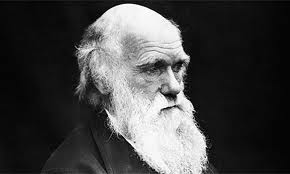
This week I am teaching Darwin again, Darwin being a staple of the Simon’s Rock Sophomore Seminar, required of all students.  I have always found The Origin of Species difficult to read, but lately I am realizing why: because Darwin seems so sure that aggressive competition, the infamous “survival of the fittest,” is THE biological paradigm on our planet. All species are locked in a relentless “battle for life,” from which only the strongest and best adapted (which often means the most ruthless) will emerge evolutionarily victorious.

However, there have been some persistent voices in the past few years arguing that Darwin understated the case for altruism and empathy as an evolutionary advantage for human beings.  Jeremy Rifkin, in The Empathic Civilization, argues that cognitive neuroscience is now proving that we are in fact at least as empathetic, as a species, as we are aggressive.  He believes that the linking potential of the internet age has the power to help us overcome the divisiveness that marred the past 500 years or so of human history, and make a great leap forward in our social evolution.

“The information communication technologies (ICT) revolution is quickly extending the central nervous system of billions of human beings and connecting the human race across time and space, allowing empathy to flourish on a global scale, for the first time in history,” he says.

“If we can harness our empathic sensibility to establish a new global ethic that recognizes and acts to harmonize the many relationships that make up the life-sustaining forces of the planet, we will have moved beyond the detached, self-interested and utilitarian philosophical assumptions that accompanied national markets and nation state governance and into a new era of biosphere consciousness. We leave the old world of geopolitics behind and enter into a new world of biosphere politics, with new forms of governance emerging to accompany our new biosphere awareness.”

Human beings’ amazing use of technology has always been both our blessing and our curse.  Technology is enabling me to send these ideas out into the ocean of the Web, a digital message in a bottle that could potentially reach millions of people across the globe.  Amazing!

But my reliance on electricity generated by oil and coal to perform this technological wonder is the Achilles heel of the whole enterprise, since collectively we as a species are overloading the biosphere with our wastes and driving the planet to the brink of what Darwin would call an “extinction event.”  Our own.

Will we make that great leap forward that Rifkin is foretelling, waking up to the necessity of moving from global competition to global collaboration in a new, more localized model?

Rifkin imagines a future global society based on the localization of energy sources like solar, wind, tidal and geo-thermal, as well as the re-localization of agricultural and manufacturing economies.

“In this new era of distributed energy,” he says, “governing institutions will more resemble the workings of the ecosystems they manage. Just as habitats function within ecosystems, and ecosystems within the biosphere in a web of interrelationships, governing institutions will similarly function in a collaborative network of relationships with localities, regions, and nations all embedded within the continent as a whole. This new complex political organism operates like the biosphere it attends, synergistically and reciprocally. This is biosphere politics.”

I believe that this rosy vision is theoretically possible, but I sure don’t see anything like it on the horizon today.  Rifkin puts his faith in the upcoming generation, who have grown up as “digital natives” and are more likely, he thinks, to be collaborative across traditional national and political boundaries. Facebook Nation!

Maybe so, if the young can be roused from their entertainment media trance and made to see the urgency of the mission.

I read with dismay yesterday that the U.S. video-game industry is one of the most highly subsidized sectors of our economy, rewarding, for example, the makers of “Dead Space 2, which challenges players to advance through an apocalyptic battlefield by killing space zombies.”  Dead Space 2 shipped 2 million copies in its first week of sales.

How can we expect young people to focus on serious, urgent issues like global climate change when they’re so busy chatting with friends on Facebook and killing zombies on Wii?

If this is the best we can do as a society, then I’m sorry, folks, but maybe an extinction event is not only on the horizon, but, as Darwin would say, “for the good of all.”


California Black-out: Eco-terrorist Strike? Wake-up Call?

Last night, while all the pundits and news editors were focused on President Obama’s jobs speech to Congress, a small news item at the bottom of the page caught my eye: blackout in southern California.  1.4 million without power, from Arizona to Baja California, including San Diego and Tijuana. No explanation.

This morning, the blackout is still on, and there is still no explanation.

With a strange blend of fear and hope, I find myself wondering whether it could possibly be the result of a Deep Green Resistance strike.  According to the DGR website, the mission of the underground resistance movement is to “dismantle the strategic infrastructure of power” that has brought our planet to “the brink of complete biotic collapse.”

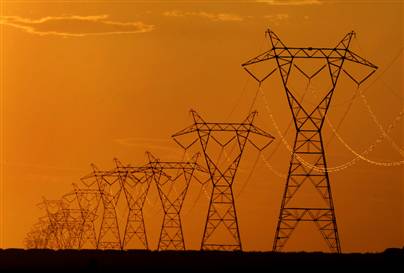
What could be more critical to the continued functioning of industrial civilization than electricity?

Really, folks, all of this dithering about tax cuts, monetary policy and jobs creation would instantly be totally beside the point if the energy that fuels our society were to sputter and die.  To say this is not to be alarmist, it’s simply to be real.

As anyone who has had to go through a power blackout of more than a few hours knows, we 20th-21st century Americans are uber-dependent on our electric juice.  We are so addicted that we no longer know how to live without it, in a literal sense: our food and water supplies are almost completely reliant on fossil fuel-based energy.

No gas, no ATMs, no refrigeration, no supermarkets, no water pumps, and for many of us, no heat in the winter, never mind AC in the summer.  Oh, and did I mention no internet?  No video games?  No email, voice mail or cell service?

Science fiction has tried to imagine what the collapse of civilization as we know it would look like.  We have all seen films like The Day After Tomorrow, or read books like Margaret Atwood’s chilling Handmaid’s Tale.  Mostly, our imagination of this kind of future seems pretty grim.

But it doesn’t have to be that way.

Just as there is already a guerilla movement bent on taking down industrial civilization, there is also an aboveground movement looking to put in place the building blocks for a new, sustainable civilization.  It’s called the Transition Town movement.  It started in the UK, and is now gathering steam in the US as well as around the world.

While the Deep Green Resistance folks seek an aggressive approach to dismantling what is, the Transition Town movement is more about working with what is to create something better.

It’s a bit tamer, but will be far more digestible to the majority of Americans.  It has a role for everyone, and a focus on the positive: on what can be done if we work together in the service of a strong vision of positive change to a sustainable future.

There is no doubt that the climate crisis is upon us.  The signs are apparent on a daily basis.  Wildfires out of control in Texas; flooding in the Northeast; blackouts in California; droughts in the Midwest.

Fear, panic or depression will get us nowhere.  Anger is useless unless channelled into positive action.

The most important thing you can do to prepare for what’s coming is to strengthen your relationships with your local friends, neighbors and community.  We are going to need each other in the months and years ahead.  We’re going to need all the love, resilience and solidarity we can muster.

The time to start is now.


Labor Day 2011: in which we watch capitalism dig its own grave, and plant the seeds for a better world

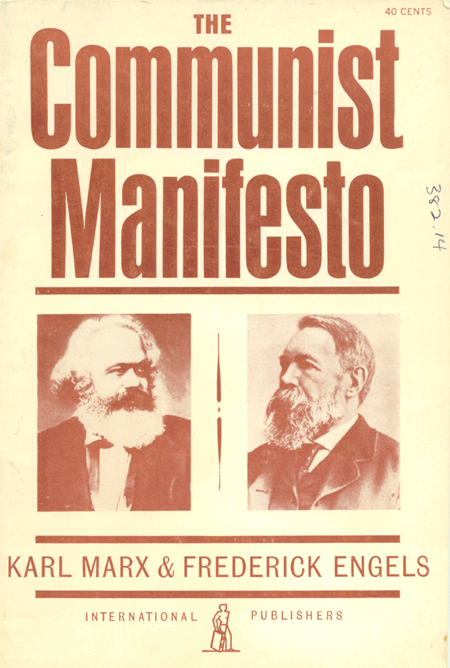
On Labor Day, my students and I discussed “The Communist Manifesto” by Marx & Engels.  We found the Manifesto remarkably prophetic, describing corporate globalization to a T long before either word had been invented, as well as the recurring, ever-more-destructive cycles of boom and bust that Marx predicted would cause capitalism to “dig its own grave.”

We talked about how Marx didn’t envision the final limit to growth being the carrying capacity of our planet, and how the climate crisis may be what finally does the job of sending capitalism over the edge.

But no one could muster much enthusiasm for Marx’s conviction that the proletariat–ie, working folks–would then rise, take over, and make the world a better place.

Looking at the disastrous social experiments in the USSR, China and Cuba, it’s hard to put much credence in Communism as a viable alternative.

It’s also hard to imagine that a social system led by the working class would automatically be any better than the one we have now, dominated by the technocrats and financiers. We’re all human, after all.

Human in our failings–but also human in our creative power to envision new possibilities.

We finished off Labor Day at Simon’s Rock yesterday by having the whole Sophomore class gather to watch “Metropolis,” a visionary film that shows how a young man from the ruling elite is moved by love to become the “heart” that joins the “head”–the technocratic elite–and the “hands,” the workers who actually do the physical labor that makes the vision a reality.

In the allegory of the film, this young, well-educated man provides the missing link, compassion, that can heal a society that has become terribly unhappy in its alienation–the coddled rulers as unhappy, apparently, as the oppressed workers.

It has always been the case that the educated elite have a powerful role to play in social change, if our action springs from the heart.  To survive the coming cataclysms of the 21st century, humanity is going to need all its technological prowess, joined with the age-old wisdom of the peoples who have never embraced western “civilization,” who still know how to make subsistence a happy and healthy way of life.

Head, hands and heart, joining in the common goal of survival.

There are groups now who are forming these kinds of alliances and working actively to create the path towards a sustainable future.  For instance, the Pachamama Alliance, and all the groups who worked on creating the Earth Charter.

The only way capitalism is likely to survive climate change is if the economic elites crack down on the masses with military power–mind controlling hands in heartless fashion. We’re seeing that happen now in various smaller countries in the world.

As a strategy for global domination, I don’t think it will work–it just takes too much in the way of resources.

How much better it would be to have a blueprint for planetary survival based on heart, growing out of our deep love for the natural world that created us and continues to sustain us, despite all we have done and continue to do to destabilize and destroy her.

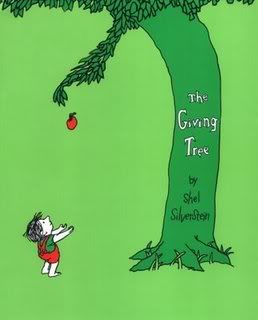
The Giving Tree is my least favorite book in the world, and I can’t imagine why parents continue to buy it for their children.  Let’s write a new book in which instead of destroying our giving tree, our planet, we nourish her and watch her grow with delight.

Let capitalism step off into the grave.  And let a new world be born, in love, light and laughter.