Sexual harassment, from 7th grade to Herman Cain

Observing my total lack of interest in Herman Cain’s sexual peccadilloes, I find myself amused, in a sad, resigned sort of way.  Another wanna-be politician trips himself up in his own boxer shorts.  Ho hum. What’s for dinner?

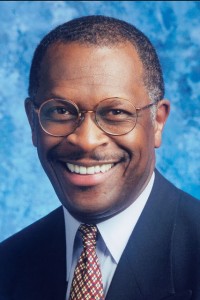
Something far more upsetting than the image of Herman Cain groping under a woman’s skirt while forcing her head in his lap was the recent report that more than half of American girls in 7th to 12th grades were sexually harassed in person–as opposed to online–in the past school year.

“The report documents many forms of harassment. The most common was unwelcome sexual comments, gestures or jokes, which was experienced by 46 percent of girls and 22 percent of boys. Separately, 13 percent of girls reported being touched in an unwelcome way, compared with 3 percent of boys; 3.5 percent of girls said they were forced to do something sexual, as did 0.2 percent of boys. About 18 percent of both boys and girls reported being called gay or lesbian in a negative way.”

Should it surprise anyone that a culture that tolerates these kinds of conditions in public schools gives rise to politicians, from Bill Clinton to Elliot Spitzer to Herman Cain, who feel entitled by their power and success to indulge themselves sexually with subordinate women?

Sexual harassment of women by men is remarkably constant across cultures–it varies only in degree.  Some cultures deal with it by demanding that women cover themselves from head to toe; others pressure women to go around half-naked and inure themselves to the catcalls and feel-ups.

What few, if any, cultures do is demand that men be accountable for their own behavior and keep their hands and their whistles to themselves.

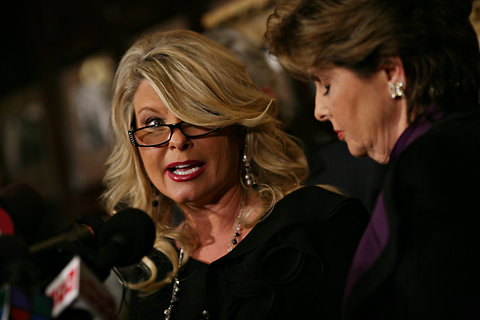
I admire women like the defendant in the DSK incident, or the Cain accuser who had the guts today to come forward on the record and in front of the cameras to tell her story.

Why should women make it easy for men to get away with blatant sexist bullying?

More to the point, why does our society make it so easy for men–all men, not just the rich and powerful, though those are the ones we hear about most frequently–to shrug off incidents of sexual harassment, or even assault, as minor, unimportant issues, hardly worthy of mention?

That was certainly Herman Cain’s position, until the tenacity of the women he had abused made it impossible for him to continue to play innocent.  The same playbook was used by countless politicians before him–which is why it’s so hard to get excited about any of it today.

I’m just relieved that the swampy pit of Republican contenders for President will almost certainly be shrinking by the end of tomorrow’s news cycle.

Or maybe I shouldn’t take that for granted.  Look at Clarence Thomas, after all–our Supreme Court Justice, for crying out loud!

Women of the world, unite!  Our silence on sexual harassment and assault will get us absolutely nowhere.  If you care about the mental and physical well-being of your daughters, your sisters, and yourselves, you need to condemn this destructive social norm in the strongest possible terms.

And then let’s get on with that dinner.

Sweet stirrings of a new world: fringe politics overturning the barricades

The venerable social critic Hendrik Hertzberg of The New Yorker contrasts the Tea Party with the Occupy movement in this week’s magazine, and finds the Occupy movement lacking in precisely what has made the Tea Party so strong: a willingness to get involved in (and take money from) the established American political parties.

“Occupy Wall Street and the Tea Party are both protest movements, not interest groups,” Hertzberg says, “and while both are wary, or claim to be, of established political figures and organizations, each welcomes their praise, if not their direction. Both have already earned places in the long, raucous history of American populism. But only one, so far, has earned a place in the history of American government.”

Are we supposed to be proud that the Tea Party has “earned” an infamous place as the launching pad for the new cadre of rightwing Republican zealots who have spent their time in Congress obstinately shooting down and stampeding every effort by President Obama and the Democrats to steer this nation towards a more compassionate and forward-looking political stance?

In its few years of existence, the Tea Party has happily wormed its way into the main arteries of American political power.  Hertzberg offers an apt metaphor of this tea as a new wonder drug, “injected into the scarred veins” of the GOP, which has quickly become addicted to this mainlined source of entranced, stupified frenzy.

“Now the Democrats are hoping the drug might be available as a generic,” Hertzberg continues, eying the Occupy movement as a way to enliven its own moribund political base.

I firmly hope that the Occupy movement does not allow itself to be used in this way by the political establishment, and I think it’s a reasonable, if remarkable, hope.

Remarkable because for so long Americans have been asleep, indifferent or unaware of what Hertzberg calls “the astounding growth of what can fairly be called plutocracy.”

Why it took so long for the sleeping giant of American popular opinion to wake up is a question for historians of the turn of the 21st century to ponder.

Why is it that Americans have been voting against their own class interests so long?  Why is the persistent myth of American equality, liberty and justice for all so teflon-coated?

We all want to believe that our country represents the moral high ground in the world, and that our leaders in government are as invested in upholding our idealism as we are.

Our public education system, which is responsible for the education of a great portion of the 99%, aids and abets this self-delusion by giving students the most doctrinaire and uncritical version of American history and civics, and teaching docility and proficiency at standardized testing above all.

Our media doesn’t help much; with the exception of a few poorly funded but stalwart independent outlets, the vast social landscape of contemporary media is focused at best on distraction, and very often on outright deception.

Under the pressures of this kind of social conditioning, it’s remarkable that the young idealists in the Occupy movement have had such success in galvanizing the country to wake up, shake ourselves, and stare around us with new eyes.

Hertzberg obviously intends his column as a signpost for the Occupy movement, pointing towards Washington D.C. as a more important battleground than Wall Street.  “Ultimately, inevitably, the route to real change has to run through politics,” he concludes; “the politics of America’s broken, god-awful, immutably two-party electoral system, the only one we have.”

Here is a glaring example of the kind of civics mis-education that has made our country so hard to reform over the years.

Who says our political system is limited to two parties?  Or at least, to the two parties we have now?

The Republicans and the Democrats have shown themselves to be chronically unable to lead this country out of the morass of special interests and ruthless corporate-driven capitalism that has bulldozed right over our cherished ideals of equality, not to mention the sacred ecological web that forms the real foundation of all our wealth and prosperity.

The Occupy movements are showing their intelligence in shying away from engagement with the established political system.  If anything, their political allies are more likely to be found in those perennial political organizations that have always camped out on the fringes of our electoral parks: the Green Parties or the Rainbow Coalitions.

Remember Ralph Nader, for example?  Remember how Big Media colluded with the established parties in denying so-called “outside” candidates a seat at the table at the televised Presidential debates?

This year the Ralph Naders of the political world have suddenly swelled their ranks dramatically, but without the figurehead of a single leader at the head of the crowd.  As Nader knows only too well, one man at the head of a true opposition movement is open to all the slings and arrows that the establishment can muster.  Even Gore and Kerry have felt the force of the muddy vomit pitched their way out of the far-right Republican swampland.

Far better for the Occupy movements to stay plural and collective, strong in the anonymity of the multitudes.  Those of us who are serious about doing more than simply rearranging the deck chairs on the great hulking Titanic of American politics realize that “America’s broken, god-awful, immutably two-party electoral system” is exactly what has to go.

OK, Hendrik, it may be the only one we HAVE HAD, but now the veil has been torn down, the people are awake, and we realize that another world is possible.  As Arundhati Roy famously put it, “on a clear day, I can hear her breathing.”

That clear day has dawned.

Fighting for Change with Hearts Wide Open

The environmental philosopher Kathleen Dean Moore looks out at the Occupied social landscape and sees “The Big One”–a movement that will bring all the disparate struggles of our society together on common ground, and effect deep, lasting, structural changes.

“The lines that connect climate change to jobs to the environment to education to health to justice are strong and undeniable,” she says. “The time has passed for an environmental movement. The time has passed for a climate change movement. The time has passed for isolated grassroots movements. We stand on ground that trembles with tectonic movement. Along the straining fault lines of our civilization, we feel the forces building for justice, sanity, and lasting ecological and cultural thriving.”

She’s certainly right that isolated movements are not going to change the world. That’s what’s been so great about the Occupy movements–they’ve been widespread and inclusive,a big big tent spread out over a lot of ground, coast to coast.

As Moore says, the moral ground of the Occupy movements is quite simple and clear: “it’s wrong to wreck the world.”

That’s something I knew instinctively as a child, as most children do.  Part of the great tragedy of our society has been the way we slowly deaden and numb the compassionate, empathic instinct of our children, teaching them to ignore pain and injustice, to just keep walking and mind their own business.

I know that’s what I was taught as a privileged young American growing up in a deeply unequal, unjust and exploitative society.  I know now that it was wrong.

And thanks to Occupy Wall Street and the other Occupy movements, I am beginning to know what to do about it.

We need to stop going about our business as usual, and relearn how to see and feel suffering and inequity.

We need to think outside the box of our normalized capitalist assumptions, making well-being rather than profit the goal of human effort.

We need to make protecting our planetary home our highest priority, because without a healthy environment, we will never build a healthy society, and things are so far gone that bringing back ecological balance will take everything we’ve got.

One of the reasons that revolutions are almost always carried out by the young is because they are closer to the instinctual compassion of their childhoods.

If only the stuffed shirts in Congress and in corporate office buildings all over America could remember what it was like to live with their hearts wide open, we might start to see the great boulder of social change really start to pick up steam.

Scary Halloween Statistic: 7 Billion People on the Earth by Oct 31, 2011

If you’ve never seen the Worldomters clock ticking, it’s worth a click.

Watching those numbers spin by brings home how very fast the human species is multiplying, especially when you consider the following chart, which shows how recent this population explosion really is.

No wonder we’ve got a sustainability problem!

Population control has gotten a bad name in recent years, and justifiably so.  It cannot and should not be imposed upon women by force, as it has too often in the past.

But study after study has shown that when women are educated and respected in society, birth rates go down.

Want to slow down that worldometer population clock?  Start by educating girls and opening up career opportunities for them after graduation.

Educate a girl and save the planet?  Might not be hyperbole after all.

Resisting the Vampires

This morning in class we were talking about the third essay in Nietzsche’s The Genealogy of Morals, in which one of the dominant metaphors is that of sickness and health.

Nietzsche argues that an “ascetic priest”, who tends the masses through religion, science, politics or any kind of dogmatism, acts as physician to the sufferer, but “he first has to wound; when he then stills the pain of the wound he at the same time infects the wound–for that is what he knows to do best of all, this sorcerer and animal-tamer, in whose presence everything healthy necessarily grows sick, and everything sick tame” (Kaufman, 1989, 126).

In other words, those who try to manipulate the masses (or the herd, in Nietzsche’s terminology), do so by wounding, and then claiming to have the cure–but the cure perpetuates the wound.

As with so much of Nietzsche, this seems remarkably prescient to me.  Take cancer, for example.  I have received many requests from people who are “walking for the cure” or “running for the cure.”  I never support these efforts, because I don’t believe we should be looking to cure to cancer through technological research.  The cure for most cancers lies upstream, as Sandra Steingraber pointed out more than a decade ago in her book Living Downstream.  In other words, we should be looking for ways to prevent cancer, not to cure it.

Preventing cancer doesn’t require a sorcerer or a physician.  It requires resisting the agro-industrial complex, which has saturated our food supply with synthetic chemicals.

The makers of chemical fertilizers, pesticides, fungicides and GMO seeds, all of which make us sick, are in cahoots with the medical industrial complex that now seeks our help in funding “the cure.”  Not to mention the pharmaceutical industry and the insurance companies, which have also been making out like bandits on the sickness of the masses.

Nietzsche wasn’t necessarily talking about literal sickness, but his model can be applied to our contemporary situation, in which social leaders, be they in advertising or the food industry, first lead us into sickness, and then claim (through pharmaceuticals and technology) to have the cure–but the cure is only a further sickness (radiation or chemotherapy, anyone?) that continues to make us dependent on the master, the physician/scientist, for life itself.

There is a way out of this.  Call it biodynamic farming, or permaculture, or localized organic farming, or what have you…the idea is to liberate ourselves from the tyranny of industrial agriculture, and go back to a simpler time, not very long ago, when the journey from farm to table did not involve chemical additives, feedlots or genetic modification.

Standing up for the cure may seem like a noble endeavor, but I’d like to propose something even better: standing up for health.  If we look further upstream and get at the root problems of the sickness, we won’t need to be looking for a cure.

Sad news for the pharmaceutical industry, but too bad!  Those vampires have fed on our blood long enough.

The minefield of unearned privilege: tread carefully!

It was not surprising when in a discussion of privilege in class the other day, we spent more time talking about affirmative action in higher education than we did about, say, white or male privilege.

When I paused the conversation to point this out, some students suggested it might be due to their firsthand knowledge of the inequities of the affirmative action system.  Many in the room had conflicted feelings and ideas about the question of merit vs. need-based scholarships.  Why should a student who can afford to pay for college, they asked, be granted a scholarship on the basis of merit, thus denying a place and funds to a student who may be less well-prepared, but is far more needy?

One can argue these issues for a long time without coming anywhere near the deeper issues that lie buried under the surface, like mines just waiting to go off.

Why are white students more likely to be both better-prepared and less needy than students of color?

WHITE PRIVILEGE.  It’s the elephant in the room that no one really wants to deal with, because it doesn’t feel good to admit that if your skin is pinkish beige in color, it’s given you systematic unearned advantages your whole life long.

There are also students—generally white male–who will complain that women now get unfair preferential treatment in higher education admissions.  This may have been true a decade ago, but in fact what’s happened of late is that affirmative action for women has been so successful that now it is men, especially men of color but white men too, who are sought after by college recruiters.

Does this mean that MALE PRVILEGE is all over and done with?  Hell no.  Men still earn at least 20% more than women doing the same job, whether blue collar, white collar or CEO.  Women still have a tougher time rising to leadership positions, and are judged much more harshly if and when they do succeed.  Women still have disproportionate responsibility for keeping the home fires burning and the children taken care of, even when they’re happily married and earning the same as or more than their husbands.

Male privilege is alive and well—but no one really wants to talk about it, not even women.

At least at the college level, students seem more comfortable talking about HETEROSEXUAL PRIVILEGE than about race/class/gender privilege.  It seems trendy to be aware of how queer folk are bullied and discriminated against, and to be sympathetic about it.  But there’s a lot less sympathy when it comes to women who point to male privilege, or people of color pointing to white privilege, or poor folks pointing to elite privilege.

Why is that?

For one thing, if the complaint comes from someone who belongs to the subordinate group, there is an immediate perception that they are speaking in self-interest, and overt action on behalf of one’s self-interest is never well-received by dominant groups when it comes from subordinates, particularly from women.  It’s labeled as “strident” or “whining.”

All the while, dominant groups–say, men, or white people–may be acting in their own self-interest, but it’s just accepted as normal striving, part of the great American way.

For people in subordinate groups and their allies, it can be a difficult challenge to raise the issue of dominant groups’ unearned privilege without setting off all kinds of defensive reactions or tricky deflections, as when a whole class is spent talking about affirmative action instead of about unearned privilege.

If I knew the answer to this conundrum, I would be a much better teacher than I am.  All I can do is keep trying to pull students’ attention back to that minefield of privilege and oppression, and tread carefully–but without turning back.

SlutWalk, Occupy Wall Street and other sparks of resistance: let’s fan the flames!

Finally this morning The NYTimes.com is paying some attention to the Occupy Wall Street protests.  But the tone is still highbrow and dismissive–Charles Blow, who really should know better, labels the protesters “hippies and hipsters” and the movement overall as “a spark set down on wet grass,” with “no where to go.”

He also finds space to inform us that “a New York Times/CBS News poll released two weeks ago found that a third of those who make $30,000 a year or less don’t believe that the government should raise taxes on the wealthy to lower the budget deficit.”

Could that be because those who are living on the edge are so beaten down by a variety of forces, including lousy education and the constant scorn this country shows the poor, that they could care less about “lowering the budget deficit”?

I bet that the pollsters would get quite a different response if the question were worded more directly, as in: Should the government raise taxes on the wealthy to help the poor get a better education, promote job growth and tighten the social safety net?  Hell yes! they’d say.

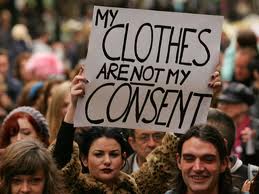
Meanwhile, up in Union Square, another protest is brewing today: SlutWalk, a new, international protest movement against “rape culture.”  In a rape culture like ours, the SlutWalkNYC site informs us, “sexual violence is made to be both invisible and inevitable; and these two practices are what normalizes rape, harassment and assault….The forces that normalize rape culture are not examined; rape is not seen as a culture or “practice” and if it is ever discussed, sexual violence is seen as an isolated act that occurs between individuals.”

SlutWalk began in Toronto last year, in response to an incident where a police officer told a rape victim that she had been “asking for it” because of the way she was dressed.  That the movement has caught on so quickly, especially among young women, is testament to the validity of its argument that no woman, no matter how she is dressed, is ever “asking” to be raped.

Both Occupy Wall Street and SlutWalk are driven by young people who are frustrated with the status quo and know that a better world is possible.  Their elders should know better than to dismiss these young folks as idealistic dreamers.  Hasn’t all change in human society, both positive and negative, been driven by those who dare to dream differently?

Lately I’ve been reading Derrick Jensen‘s latest book, a huge tome called simply, Dreams.  In it he argues that one of Western civilization’s crucial fallacies is our collective tendency to ignore and dismiss our dreams, as well as the possibility that through our dreams we may connect with “supernatural” forces that we don’t understand and cannot control.

Derrick sides with indigenous cultures who believe that the natural world is alive (“animism”) and can communicate with us.  His big question in Dreams is a weighty one: why hasn’t the natural world fought back harder in the face of the sustained murderous onslaught of humanity?

I would not presume to speak for the natural world.  But this question can be applied to a lot of other contexts today.

Why has it taken so long for Americans to get out and protest the takeover of our country by the corporate elite?  Why has it taken two weeks for the New York Times to deign to notice this gadfly protest on the flanks of the giant Wall Street bull?  The New York unions are finally stirring and considering joining the protesters–why has it taken so long for the American working class to awaken?

I think it might have something to do with the way we in the U.S. are caught up in a media-induced waking dream/nightmare, with a storyline that repeats over and over the following all-pervasive mantra: c’est la vie, there’s nothing to be done about it.  No fundamental change is possible.  The contamination of our environment is inevitable, and necessary if we want to maintain our comfortable fossil-fuel-driven lifestyle. The ever-growing gap between rich and poor is inevitable, as natural and normal as rape culture–boys will be boys, and you can’t expect rich boys to care about the poor.

Etc.

Someday analysts may look back on this period as one of remarkably successful mass indoctrination.  That is, if there are any shreds and shards left of our culture to examine after climate change is done with us.

To answer Derrick’s question, climate change is Nature fighting back.  Has anyone noticed that it’s been raining practically non-stop in New England for weeks now?  Here we are almost in leaf season, and our once-glorious maple trees are barely able to muster some mustardy brown color.  If this rain were snow, we’d be buried.  It may be an interesting winter season, to say the least.

However, resistance movements, both human and natural, are stirring all over the planet.  Like Occupy Wall Street, they may seem small, fragmented and disorganized to people who are accustomed to watching the huge, well-funded, tightly organized spectacles of mainstream political parties, or even mainstream-funded resistance movements like the Tea Party.

But it’s possible that dispersed, small-scale resistance may just what is called for under the present circumstances, when anything more obvious would simply be crushed by the iron fist of the corporate capitalist ruling class.

Resistance is happening when people take the time to relearn ancient human practices like small-scale biodynamic agriculture, bee-keeping, and storing food for the winter.  Resistance is happening when people refuse to let the dominant narratives ride rough-shod over their dreams of positive change.

Resistance is happening!  Let’s prove Charles Blow and the other naysayers wrong. It may be a rainy season, but let’s be the dry tinder for the spark of protest to fall on. It just takes one spark to start a wildfire, after all.

American-style debt bondage–how much longer can we go on this way?

A propos of this question of what the Occupy Wall Street protest is all about, I would like to raise the issue of debt bondage.

Usually when someone says “debt bondage,” we flash to images of Indian rice farmers or child brick carriers or trafficked women from Southeast Asia.

There is horrendous debt slavery in South and Southeast Asia, and the conditions under which men, women and children labor there are far worse than anything we face here in the U.S.

But at the same time, I don’t think it’s far-fetched to call the average American middle-class lifestyle a form of debt bondage.

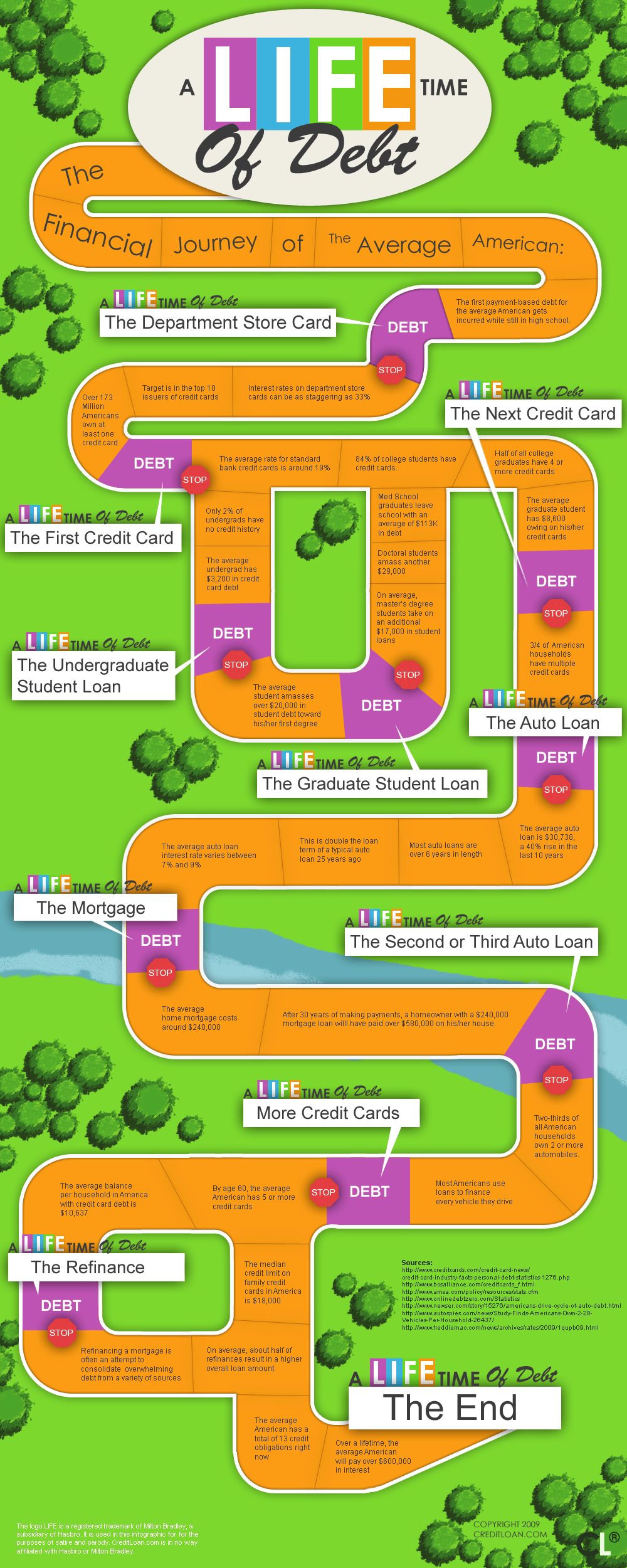
This graphic does a good job at giving us the picture:

In case you can’t read the fine print, the end of the “game” shows that Americans will pay about $600,000 in interest alone during their lifetimes.  [Source: Visual Economics.]

Working to pay off debt has become so commonplace that we scarcely even notice it anymore.  But it’s a relatively new phenomenon.  And all that interest, plus all those fees, are among the prime ways that the Wall Street bankers have gotten so phenomenally rich in the past 50 years or so.

What can be done about this?  For starters, a quality education should not so expensive that a middle-class student has to go into debt to attain it.

And we have to think much more deeply as a society about the job question.  We should not make it so easy for corporations to outsource jobs to cheaper labor markets.  Just as we are beginning to think about localizing agriculture and energy, we need to think about localizing jobs.

That’s the way human beings have made their livings for the past millennia, after all.  Only in the last 30 years or so has the world become so small (thanks to cheap fossil fuels) that it was conceivable to export manufacturing and other basic services to the other side of the globe.

Is outsourcing really more cost-effective, when you add in the costs of social welfare for all these displaced workers?  And the costs of millions of foreclosed homes?  And the costs of warehousing millions of poorly educated young people in jail? Not to mention the costs of global climate change?

Well, it depends on who is footing the bill, doesn’t it.  The Occupy Wall Street protesters are speaking for all American taxpayers in declaring that we should not have to pay for the greedy, short-sighted mistakes of the global corporate elite.

If they had to pay the true costs of the agendas they’ve pursued since World War II, well–it would be quite a different world we were living in, friends.  Maybe we would still be able to make a living that didn’t involve constantly adding more links to the chains of our debt bondage.

Unthinkable, you say?

Think again!

Wangari Maathai’s Canopy of Hope: remembering a warrior woman for the planet and role model for us all

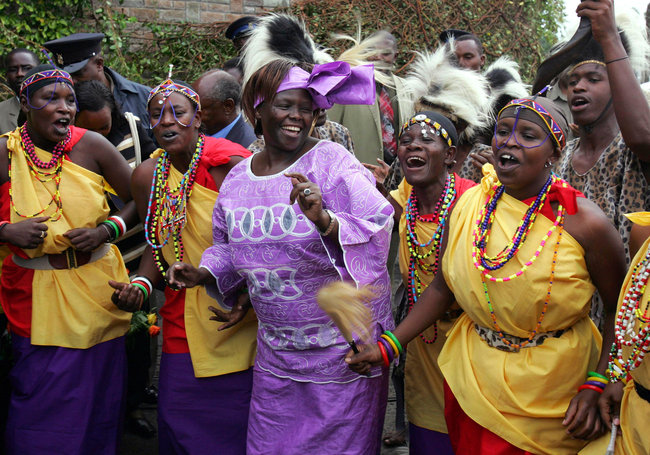
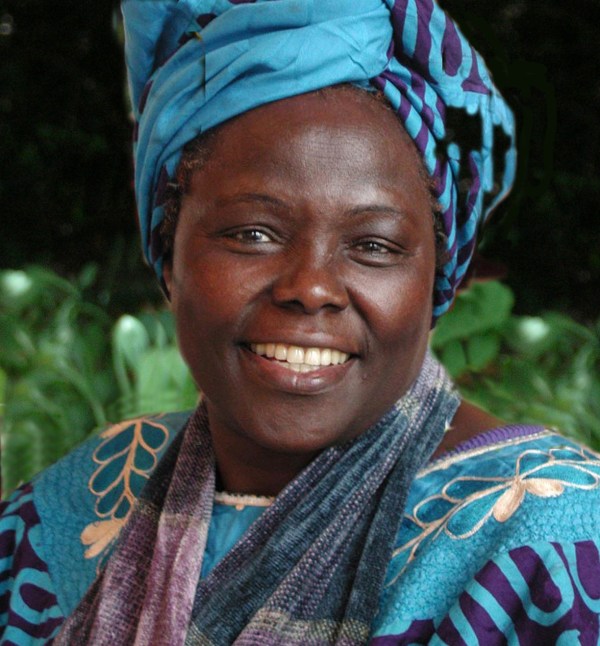
Kenyan Wangari Maathai, who died last night of ovarian cancer, was a woman who took everything she learned and used it for the benefit of her local community and the planetary community as a whole.

As a girl, she used to sit by a certain fig tree that grew near her family village.  Beside the fig tree a clear, sparkling stream flowed, planted with arrowroots and hopping with small frogs.  Her mother told her that this was a “tree of God,” which wasn’t to be harvested for firewood.

Later, Wangari realized that “there was a connection between the fig tree’s root system and the underground water reservoirs.  The roots burrowed deep into the ground, breaking through the rocks beneath the surface soil and diving into the underground water table.  The water traveled up along the roots until it hit a depression or weak place in the ground and fushed out as a spring.  Indeed, wherever these trees stood, there were likely to be streams.  The reverence the community had for the fig tree helped preserve the stream and the tadpoles that so captivated me.  The trees also held the soil together, reducing erosion and landslides.  In such ways, without conscious or deliberate effort, these cultural and spiritual practices contributed to the conservation of biodiversity” (Unbowed, 46).

Wangari came of age as the traditional wisdom of the village people was giving way before the onslaught of Western epistemologies.  A girl who excelled in her schooling, she educated by Catholic nuns, and was fortunate enough to be chosen for the so-called Kennedy airlift of 1960, under which the Joseph P. Kennedy Foundation provided scholarships for promising young African students to study in America—the same program that brought Barack Obama’s father to the U.S. to study.

Wangari ended up at Mount St. Scholastica, a Benedictine women’s college in Kansas, where she majored in science, and she went on to earn a Master’s in biology at the University of Pittsburgh. She continued her studies in Germany, and in 1971 earned a Ph.D. in biology from the University College of Nairobi—the first women in East and Central Africa to earn a doctoral degree.

Like so many other highly educated women who join the workforce, Wangari experienced plenty of gender discrimination as she tried to advance her career. Frustrated with her lack of advancement within the university, she joined the National Council of Women of Kenya, which was a group of educated women who sought to improve the living conditions of all Kenyan women.

“We could either sit in an ivory tower wondering how so many people could be so poor and not be working to change their situation, or we could try to help them escape the vicious cycle they found themselves in,” she said.  “This was not a remote problem for us.  The rural areas were where our mothers and sisters still lived.  We owed it to them to do all we could” (124).

For Wangari, the problems were clear:

“The connection between the symptoms of environmental degradation and their causes—deforestation, devegetation, unsustainable agriculture and soil loss—were self-evident.  Something had to be done.  We could not just deal with the manifestations of the problems.  We had to get to the root causes of those problems.

“Now, it is one thing to understand the issues.  It is quite another to do something about them.  But I have always been interested in finding solutions.  This is, I believe, the result of my education as well as my time in America: to think of what can be done rather than worrying about what cannot.  I didn’t sit down and ask myself, ‘Now let me see, what shall I do?’ It just came to me: Why not plant trees?’ The trees would provide a supply of wood that would enable women to cook nutritious foods.  They would also have wood for fencing and fodder for cattle and goals.  The trees would offer shade for humans and animals, protect watersheds and bind the soil, and, if they were fruit trees, provide food.  They would also heal the land by bringing back birds and small animals and regenerate the vitality of the earth.

“That is how the Green Belt Movement began” (125).

 The Green Belt Movement mobilized thousands of ordinary women in Kenya to start tree nurseries, and to plant trees near their homes.  It also became a forest conservation movement, with Wangari leading women in protecting Kenya’s remaining forests against the loggers hired by giant transnational conglomerates.  She made plenty of enemies in the government when her agenda threw a wrench in their greedy plans, and she was often afraid for her life.  She was thrown in jail many times, and frequently confronted violence at the hands of police and goon squads.


 Through it all, she remained, as the title of her memoir suggests, UNBOWED. She would not be browbeaten into submission to authority.  She knew that her cause was not only righteous but right for Kenyans and for the planet she loved, and this gave her the courage to stand firm against intimidation.

Wangari’s activism cost her her marriage: her husband, a Kenyan Member of Parliament, divorced her after she earned her Ph.D. and became more financially successful.  She could have chosen the easy way and lived a very privileged, comfortable existence in Nairobi, if she had been willing to bow her head and put her husband’s needs and career before her own.  Instead, she went through a humiliating public divorce trial:

“It became clear that I was being turned into a sacrificial lamb.  Anybody who had a grudge against modern, educated and independent women was being given an opportunity to spit on me.  I decided to hold my head up high, put my shoulders back, and suffer with dignity: I would give every woman and girl reasons to be proud and never regret being educated, successful and talented.  ‘What I have,’ I told myself, ‘is something to celebrate and not to ridicule or dishonor’” (146).

The divorce trial ended, incredibly enough, with Wangari being sentenced to six months in prison for “contempt of court”; she was hauled off to prison without even having the time to say goodbye to her children. It was clearly an attempt to put this uppity woman in her place, but it did not work: Wangari would not be intimidated, and emerged from prison determined to put her talents to work for her people, come what might for herself personally.

Her Green Belt Movement became a model for sustainable, grassroots-driven development throughout Africa and beyond, which worked not only for environmental sustainability, but also for women’s rights, human rights and participatory democracy.  Wangari consistently provided an upright model of honest, steadfast leadership, leading by example in speaking truth to power and and refusing to be cowed.

“What I have learned over the years,” she said, “is that we must be patient, persistent and committed.  When we are planting trees sometimes people will say to me, “I don’t want to plant this tree, because it will not grow fast enough.” I have to keep reminding them that the trees they are cutting today were not planted by them, but by those who came before.  So they must plant the trees that will benefit communities in the future.  I remind them that like a seedling, with sun, good soil, and abundant rain, the roots of our future will bury themselves in the ground and a canopy of hope will reach into the sky” (289).

Wangari Maathai herself grew that “canopy of hope” for all of us.  May the seedlings she planted be nourished with care by those of us who aspire to walk in her footsteps, for all those who deserve a better world in the future here on our precious planetary home.
Justice for Troy Davis?

9/21/11, 8:59 p.m. He’s not dead yet.

There are thousands of people trying to save his life, this Black man in a Georgia penitentiary, who has already served more than 20 years in prison.  Troy Davis is a symbol of something much greater, a magnet for a deep rage, a deep and inchoate sorrow–the rage and despair of all those who rail against injustice.  He is neither the first, nor will he be the last to be snared in the U.S. “justice” system and ground to a pulp.

Clearly, his trial was a travesty of justice.  Whether or not he killed a man in 1989 (a white man who happened to be an off-duty cop), certainly he has served his time, and just from looking at him you can see that he would not be the same man who walked through those prison doors 20 years ago.

Isn’t the purpose of the criminal justice system rehabilitation?

Or is it revenge, the vengeful inflicting of an eye for an eye?

I would like to believe that if we go to the expense and trouble of housing, feeding and caring for a prisoner for 20 years, we’ve done it to accomplish more than simply warehousing him for his execution date.  What is the point of that?

As Bob Roberts showed so movingly in his memoir My Soul Said to Me, just about every convict has it in him (or her) to be rehabilitated.  All it takes is someone who is focused on seeing the good, rather than insisting on the irredeemable.

The Bard Prison Initiative, for example, is predicated on the assumption that every man behind bars is capable of learning, and will benefit from education.  So many of the young men and women behind bars never had the benefit of a decent education–which might have put them on quite a different path.

The Bard Prison Initiative, like Bob Roberts’ Project Return program for released ex-cons, demonstrates that justice does not have to wear an executioner’s hood.

Sure, those who do wrong should be punished.  But not forever.  Very few criminals deserve capital punishment–and sadly, those who most deserve it often manage to escape (for instance, the masterminds of genocide in places like Guatemala, Rwanda, Bosnia….).

What good does it do anyone to put Troy Davis, or many others like him, to death?  What good does it do to hold Leonard Peltier or Mumia Albu-Jamal in prison for decades?  Doesn’t the criminal justice system want to do good?

Doesn’t it?