A teachable moment at Penn State?

What is most shocking to me about the current scandal at Penn State (sports and sexual abuse of boys, in case you hadn’t heard) is the response of the students to the announcement last night that longtime head football coach Joe Paterno was fired.

Do the hundreds of students who poured into the streets to smash car windows and pull down lamp posts believe that it was OK that the coach turned a blind eye to the repeated rape of boys, some as young as 10 years old, in the university’s football locker room showers?

Do they want to be part of an institution that condones this kind of behavior?
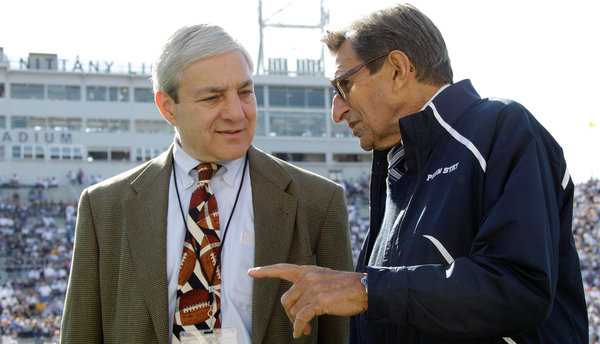
If anything, the students should have taken to the streets to demand Paterno’s resignation, along with that of his boss, Penn State president Graham Spanier.

But no.  To these rampaging students, what happened in those showers with the pedophile assistant coach Jerry Sandusky was less important than hanging on to their beloved head coach.

This is reminiscent of so many other, similar scandals, in which men’s loyalty to social groups, whether it’s the military, a fraternity, a gang, or a football team, is so strong that it completely skews their independent moral compasses.

If you presented a group of unaffiliated students with a scenario like what we’ve just witnessed at Penn State, and asked them whether assistant coach Mike McQueary was right to blow the whistle on Sandusky after witnessing him rape a 10-year-old boy in the football locker room shower late one night in 2002, I think most of those students would say McQueary was in the right.  They would also most likely come to the conclusion that it was the duty of McQueary and Sandusky’s boss, Joe Paterno, to report the crime.
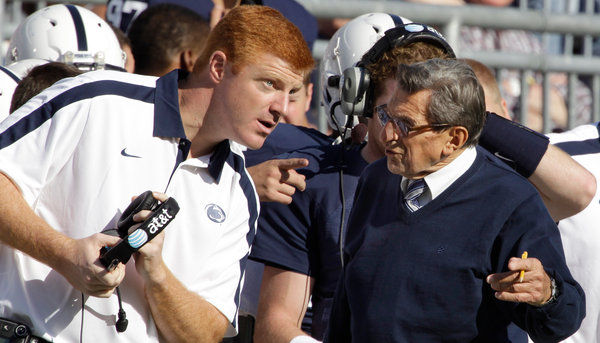
But obviously things don’t look so clearcut when various conflicting loyalties come into play.  When McQueary realized that Paterno and other school officials were not going to report Sandusky, should he have pursued the matter independently–even when it might very well have cost him his job?

Of course, the answer is yes.  How could McQueary and Paterno sleep at night knowing that Sandusky was using university facilities to lure in boys?  Boys, who, by the way, he met through a charity he belonged to, the Second Mile Foundation, which purports to help disadvantaged children in Pennsylvania.

It saddens but does not surprise me that the students at Penn State who protested the firing of Coach Paterno are willing to put their team loyalty ahead of the pursuit of justice and integrity in this case.

It’s very similar to the loyalty of the Catholic priesthood, which chose to protect its own rather than stand up for the rights of the young children, mostly boys, who were being molested by pedophile priests for years and years.

Or like the loyalty of fraternity boys who would never rat out a “brother” who raped a girl during a party.

I’m sorry, guys, but this is not brotherhood.  It’s bullying: one person taking advantage of someone with less social power or physical strength, and a whole bunch of bystanders letting it happen.

This is what the Penn State students are proud of?  They should be ashamed.

At least Joe Paterno, at 84, does seem to be showing some signs of moral rectitude.  “This is a tragedy,” he said yesterday. “It is one of the great sorrows of my life. With the benefit of hindsight, I wish I had done more.”

Yeah, Joe.  You may have had more football game victories than any other college coach, but you sure could have done more.

Sweet stirrings of a new world: fringe politics overturning the barricades

The venerable social critic Hendrik Hertzberg of The New Yorker contrasts the Tea Party with the Occupy movement in this week’s magazine, and finds the Occupy movement lacking in precisely what has made the Tea Party so strong: a willingness to get involved in (and take money from) the established American political parties.

“Occupy Wall Street and the Tea Party are both protest movements, not interest groups,” Hertzberg says, “and while both are wary, or claim to be, of established political figures and organizations, each welcomes their praise, if not their direction. Both have already earned places in the long, raucous history of American populism. But only one, so far, has earned a place in the history of American government.”

Are we supposed to be proud that the Tea Party has “earned” an infamous place as the launching pad for the new cadre of rightwing Republican zealots who have spent their time in Congress obstinately shooting down and stampeding every effort by President Obama and the Democrats to steer this nation towards a more compassionate and forward-looking political stance?

In its few years of existence, the Tea Party has happily wormed its way into the main arteries of American political power.  Hertzberg offers an apt metaphor of this tea as a new wonder drug, “injected into the scarred veins” of the GOP, which has quickly become addicted to this mainlined source of entranced, stupified frenzy.

“Now the Democrats are hoping the drug might be available as a generic,” Hertzberg continues, eying the Occupy movement as a way to enliven its own moribund political base.

I firmly hope that the Occupy movement does not allow itself to be used in this way by the political establishment, and I think it’s a reasonable, if remarkable, hope.

Remarkable because for so long Americans have been asleep, indifferent or unaware of what Hertzberg calls “the astounding growth of what can fairly be called plutocracy.”

Why it took so long for the sleeping giant of American popular opinion to wake up is a question for historians of the turn of the 21st century to ponder.

Why is it that Americans have been voting against their own class interests so long?  Why is the persistent myth of American equality, liberty and justice for all so teflon-coated?

We all want to believe that our country represents the moral high ground in the world, and that our leaders in government are as invested in upholding our idealism as we are.

Our public education system, which is responsible for the education of a great portion of the 99%, aids and abets this self-delusion by giving students the most doctrinaire and uncritical version of American history and civics, and teaching docility and proficiency at standardized testing above all.

Our media doesn’t help much; with the exception of a few poorly funded but stalwart independent outlets, the vast social landscape of contemporary media is focused at best on distraction, and very often on outright deception.

Under the pressures of this kind of social conditioning, it’s remarkable that the young idealists in the Occupy movement have had such success in galvanizing the country to wake up, shake ourselves, and stare around us with new eyes.

Hertzberg obviously intends his column as a signpost for the Occupy movement, pointing towards Washington D.C. as a more important battleground than Wall Street.  “Ultimately, inevitably, the route to real change has to run through politics,” he concludes; “the politics of America’s broken, god-awful, immutably two-party electoral system, the only one we have.”

Here is a glaring example of the kind of civics mis-education that has made our country so hard to reform over the years.

Who says our political system is limited to two parties?  Or at least, to the two parties we have now?

The Republicans and the Democrats have shown themselves to be chronically unable to lead this country out of the morass of special interests and ruthless corporate-driven capitalism that has bulldozed right over our cherished ideals of equality, not to mention the sacred ecological web that forms the real foundation of all our wealth and prosperity.

The Occupy movements are showing their intelligence in shying away from engagement with the established political system.  If anything, their political allies are more likely to be found in those perennial political organizations that have always camped out on the fringes of our electoral parks: the Green Parties or the Rainbow Coalitions.

Remember Ralph Nader, for example?  Remember how Big Media colluded with the established parties in denying so-called “outside” candidates a seat at the table at the televised Presidential debates?

This year the Ralph Naders of the political world have suddenly swelled their ranks dramatically, but without the figurehead of a single leader at the head of the crowd.  As Nader knows only too well, one man at the head of a true opposition movement is open to all the slings and arrows that the establishment can muster.  Even Gore and Kerry have felt the force of the muddy vomit pitched their way out of the far-right Republican swampland.

Far better for the Occupy movements to stay plural and collective, strong in the anonymity of the multitudes.  Those of us who are serious about doing more than simply rearranging the deck chairs on the great hulking Titanic of American politics realize that “America’s broken, god-awful, immutably two-party electoral system” is exactly what has to go.

OK, Hendrik, it may be the only one we HAVE HAD, but now the veil has been torn down, the people are awake, and we realize that another world is possible.  As Arundhati Roy famously put it, “on a clear day, I can hear her breathing.”

That clear day has dawned.

Fighting for Change with Hearts Wide Open

The environmental philosopher Kathleen Dean Moore looks out at the Occupied social landscape and sees “The Big One”–a movement that will bring all the disparate struggles of our society together on common ground, and effect deep, lasting, structural changes.

“The lines that connect climate change to jobs to the environment to education to health to justice are strong and undeniable,” she says. “The time has passed for an environmental movement. The time has passed for a climate change movement. The time has passed for isolated grassroots movements. We stand on ground that trembles with tectonic movement. Along the straining fault lines of our civilization, we feel the forces building for justice, sanity, and lasting ecological and cultural thriving.”

She’s certainly right that isolated movements are not going to change the world. That’s what’s been so great about the Occupy movements–they’ve been widespread and inclusive,a big big tent spread out over a lot of ground, coast to coast.

As Moore says, the moral ground of the Occupy movements is quite simple and clear: “it’s wrong to wreck the world.”

That’s something I knew instinctively as a child, as most children do.  Part of the great tragedy of our society has been the way we slowly deaden and numb the compassionate, empathic instinct of our children, teaching them to ignore pain and injustice, to just keep walking and mind their own business.

I know that’s what I was taught as a privileged young American growing up in a deeply unequal, unjust and exploitative society.  I know now that it was wrong.

And thanks to Occupy Wall Street and the other Occupy movements, I am beginning to know what to do about it.

We need to stop going about our business as usual, and relearn how to see and feel suffering and inequity.

We need to think outside the box of our normalized capitalist assumptions, making well-being rather than profit the goal of human effort.

We need to make protecting our planetary home our highest priority, because without a healthy environment, we will never build a healthy society, and things are so far gone that bringing back ecological balance will take everything we’ve got.

One of the reasons that revolutions are almost always carried out by the young is because they are closer to the instinctual compassion of their childhoods.

If only the stuffed shirts in Congress and in corporate office buildings all over America could remember what it was like to live with their hearts wide open, we might start to see the great boulder of social change really start to pick up steam.

Is there an “American Spring” around the corner?

You have to admit my blog is aptly named.  Each day brings new evidence that we are living through a speeded-up period of rapid change.

Was it only a few short months ago that we were stuck in the August doldrums of Congressional gridlock, in which the Republicans seemed to have a total stranglehold on the nation’s very lifeblood, our Treasury?

Was it only a few short weeks ago that the first Occupy Wall Street protesters arrived on the scene, the vanguard of what has now become an international political movement that just might have the power to challenge the two-party American oligarchy?

The deep distrust and disappointment Americans feel in our government is represented in a new NY Times/CBS News poll published tonight.

Get this: only 9% of those polled approve of the way Congress is doing its job.

Only 10% say they trust the American government to do what’s right for its people.

 These are dreadful numbers, especially when compared with the 46% of those polled who said they believe the views of the Occupy Wall Street protesters reflect the views of most Americans.

The urgent question becomes, will this dissatisfaction with our government and strong identification with the protest movement lead to actual sociopolitical change?

In one of my classes we are reading Allan G. Johnson’s book Privilege, Power & Difference, which seeks to understand why those with social privilege so rarely lend their support to any movement that might upset the status quo, even when they profess to be sympathetic with the goals of social equality.

Johnson says that all of us, but especially the privileged, tend to follow the path of least resistance.  Our society is set up in such a way that the paths of least resistance all favor the privileged, making it very hard for anyone to rock the boat.

But, he says, if we are aware of the ills of social inequality and do nothing about it, we will become “like the person who loses the ability to feel pain and risks bleeding to death from a thousand tiny cuts that go unnoticed, untreated and unhealed” (124).

I think that many of us privileged folks have indeed become numb to the harsh realities of our social system, which we have come to accept as natural, like the weather or the usual background noise of civilization.

That this callousness is wounding in ways we are hardly aware of is less obvious, but it comes out in the deep malaise of privileged American society: our tendency to depression, self-destructive behaviors, and underlying rage.

We are living through a moment in time when it is just possible that the privileged will wake up and decide that enough is enough.  That is the hope and the lure of the 99% movement.

There are a lot of privileged people in that 99%: educated, wealthy people, who have a lot to gain, in material terms, by not rocking the boat–but who, it seems, are doing some real soul-searching right now about taking the right path, instead of the path of least resistance.

Think about it: only 10% of Americans think Congress is doing a good job.  If that isn’t a mandate for change, I don’t know what would be.

Everything is speeded up these days.  Even last night’s solar storm, which caused spectacular aurora borealis displays all over North America, apparently hit Earth eight hours faster than predicted, and spread out much further over the U.S. than usual–visible all the way down in the Deep South.

Could it be that we will have our own “American Spring” in 2012?

WHY NOT???

What President Obama and Eve Ensler have in common

President Obama did something really, really good this week.  He sent 100 Special Ops military “advisors” to Central Africa to help local government forces get rid of the Lord’s Resistance Army, a group of crazed, vicious thugs who have been terrorizing people in four countries for as long as many in the region can remember.

The New York Times reports: “For more than two decades, the Lord’s Resistance Army (LRA) has murdered, raped and kidnapped tens of thousands of men, women and children in central Africa,” Mr. Obama wrote in a letter to Congress announcing the military deployment. “The LRA continues to commit atrocities across the Central African Republic, the Democratic Republic of the Congo and South Sudan that have a disproportionate impact on regional security.”

You don’t even want to know what kind of atrocities he’s talking about.  Joseph Kony and his men are depraved, sick torturers, rapists and murderers who have been at it so long that I doubt they can ever be rehabilitated.  They are part of a long cycle of violence in Africa that begins with the kidnapping or luring in of young children, boys and girls, who are then drugged, beaten and raped into total submission to the authority of the adults, and grow up indoctrinated into the lifestyle of terror.

For an inside story, read Ismael Beah’s memoir A Long Way Gone, or the chapter in my anthology African Women Writing Resistance by former girl child soldier China Keitetsi, whose memoir Child Soldier is available in an e-book edition.

I can’t help but think that there is an element of racism in the fact that it’s taken so long for the international community to unite behind the mission of bringing true security to Central Africa (including the Democratic Republic of Congo, where some of the worst human rights violations in the world are taking place daily, with women and girls disproportionately targeted.)

When Bosnian men were massacred, people thrown out of their homes, and women and girls imprisoned in rape camps by the Serbs, the Clinton Administration waged an all-out war to stop it.  All that and more has been happening in the DRC and neighboring countries for decades.  Decades.

Eve Ensler has done a tremendous amount to get the word out about the impact of all this violence on women, not just in Africa but throughout the world.  I particularly admire her because she has used art as the medium for her outspoken calls for solidarity and resistance with victims of rape and violence–starting with “The Vagina Monologues,” and moving on through a host of books and plays.

She’s also used digital media to get her word out and build a global movement to end violence against women, and I don’t think anyone does it better–check out her website, vday.org, to see for yourself.

Eve Ensler is a great example of a woman of privilege who has used all of her talents and gifts to reach out and help others–and not through begging, cajoling or guilt-tripping, either, but through the sheer power of her spoken and written word.

President Obama has the power to send in the military, and it’s good he’s at least taken the first step in that direction.

We ordinary people have power too, more than we often realize.  We can open our eyes to what’s really happening in our towns, our country and our world, and then allow our hearts to show us the way to action for positive social change.

There is no more urgent task for each of us in our lifetimes.  This is what we came here to do.

Confessions from Park Avenue: Ignorance, Privilege and Change

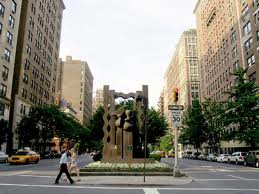
This week the Occupy Wall Street protest ventured uptown, to the Upper East Side of Manhattan–where I grew up.

I have always been reluctant to admit that for a good portion of my life I called Park Avenue home.  I knew what kinds of stereotypes would instantly leap to my interlocuters’ minds upon hearing these gilded signifiers: “Upper East Side,” “Park Avenue,” even “Manhattan.”  And indeed, I have known many neighbors who fit the model of the wealthy socialite snob.  But there are also thinking, feeling, compassionate people living on Park Avenue.  They are guilty, above all, of the privilege of ignorance.  They truly don’t know how the other half lives.

I can just hear the scornful snickers and groans that greet this statement.  But it’s true.  I know it because I lived it.  And to some extent, you’ve lived it too.  All of us Americans have this privilege relative to people living in desperate material circumstances in other parts of the world.  At least our society pays lip service to the ideal of equality.

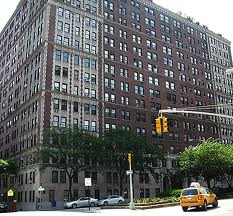
The tony apartment buildings lining Park Avenue are urban gated communities.  Most are co-ops, and it is difficult to buy your way into them–money alone won’t do the trick, you also have to be thoroughly vetted by the co-op board, and depending on the building, you may or may not pass muster.  The people living inside tend to be very reserved with one another.  You might not get to know your neighbors even if you live in the building for twenty years or more.  You might know your daytime and nighttime doorman better than the person who lives on the other side of your bedroom wall.

As for knowing more of the world, and how ordinary people live, well–there is television. There is the internet.  But in terms of flesh and blood, there is very little connection.  Back at the turn of the 20th century, Jacob Riis captured the lives of the less fortunate in his sensational book How the Other Half Lives, which shocked the nation and inspired some excellent reforms.  That kind of documentary expose has become much more commonplace in our time, to the point where even the most shocking revelations–sex slaves in Westchester, sweatshop labor in Chinatown, human organ thieves in Brazil–have lost their power to shock.

A crowd of people chanting, holding up signs and making merry through the hushed, tranquil streets of the Upper East Side, though–now that is shocking!  In my 20+ years of living in that august quartier, I can only remember a few times when anything like this happened.

Once was on a long-ago St. Patrick’s Day, when the Fifth Avenue parade-goers got a little too drunk, a little too rowdy, and the police had to step in and reimpose order.  My mom, brother and I watched in amazement from our the 9th floor window overlooking Park Avenue.  Quiet was soon restored.

Another time was when the lights went out back in 1977, and there was some looting over on Lexington Avenue.  We heard the shouting and sounds of glass breaking, but of course nothing could touch us, secure behind the gates and under the watchful eyes of our uniformed doormen.

This is the central fact of privileged existence, Park Avenue-style.  Nothing can touch you.  The red carpet of privilege rolls out in front of you effortlessly; you live in an enchanted bubble, from which the distant rumors of unrest are just that–distant rumors, which you don’t understand, and don’t care about enough to investigate.

I say this now to underscore the success of the Occupy Wall Street protesters in breaking through that bubble, at least a little bit.  The tight membrane of privilege surrounding the NY Times popped after three weeks of pressure.  It will take a lot longer to penetrate the hearts and minds of the men and women who work on Wall Street and live up on Park and Fifth Avenues.  But just because it will take a while to get through is absolutely no reason to be discouraged.  It can be done!  And it should be done.

I have a feeling that there are probably a lot of people like me living on Park and Fifth Avenues today.  Privileged by birth, but with the same hearts, minds and sense of compassion as any other American.  Just ignorant of what’s up with the 99%.

For instance, one observer of the “Millionaire’s March” noticed “a chic young mother,” who “turned to a puzzled daughter in a tony school uniform, “People don’t have jobs right now,” she explained. Whether Mom connected this fact to the actions of any of her neighbors was anyone’s guess.”

Did Mom connect this fact to her own actions, is more to the point.  For the privileged, it’s too easy to pass the buck.

I am currently working on a book, which I call a “political memoir,” in which I try to understand the social dynamics of privilege, and how and why some people become “privilege traitors” and go against their own class interests.  Judging from this week’s events in New York, I am going to have a lot of interesting material to study, beyond my own story.  Stay tuned.

Empathy: Igniting Force for Social Action

Now that the mainstream media has finally caught on to the importance of the Occupy Wall Street protests, I feel like I can go back to using this space to explore some other questions that have been niggling at me lately.

Last week there were not one but TWO op-ed pieces in the NY Times about empathy–both responding to Harvard Professor of Psychology Steven Pinker’s new book The Better Angels of Our Nature: Why Violence Has Declined.  I haven’t read Pinker’s book yet, but I gather that he argues that humans have become more empathetic of late, and thus less violently aggressive towards one another.

Honestly, I haven’t noticed any decline in violence recently, have you? We still haven’t had a year go by without war erupting somewhere on the planet, and usually in many places at once. Men are still raping and battering women in alarming numbers all over the globe.  Suicides are up, and that deadly malaise I’ve talked about before subjects many of us to a constant low-level form of self-directed aggression.

But what I really want to think about are the two reactions to Pinker’s book, published last week in the Times by columnists David Brooks (conservative political pundit) and Benedict Carey (science reporter).  Both were extremely negative about the potential for empathy to be a positive force for social change.

Brooks argues that “Empathy makes you more aware of other people’s suffering, but it’s not clear that it actually motivates you to take moral action or prevents you from taking immoral action….

“Nobody is against empathy,” he says. “Nonetheless, it’s insufficient. These days empathy has become a shortcut. It has become a way to experience delicious moral emotions without confronting the weaknesses in our nature that prevent us from actually acting upon them. It has become a way to experience the illusion of moral progress without having to do the nasty work of making moral judgments.”

Brooks ends his column by proffering “sacred codes” as an alternative to mere empathy.  “Think of anybody you admire,” he says. “They probably have some talent for fellow-feeling, but it is overshadowed by their sense of obligation to some religious, military, social or philosophic code. They would feel a sense of shame or guilt if they didn’t live up to the code. The code tells them when they deserve public admiration or dishonor. The code helps them evaluate other people’s feelings, not just share them.”

The problem with this formula is obvious.  Sacred codes are all very well, as long as they don’t direct their adherents to, say, “exterminate the cockroaches,” as was the cry both in Nazi Germany and in Hutu Rwanda.

Benedict Carey comes up with another objection to empathy as a trigger for social action: people are much more likely to feel for and want to help a single victim whose story is well-told, than to reach out to help in a major disaster involving millions of unnamed victims.  We get “compassion fatigue” pretty quickly, and if we are fed enough sad stories, we begin to get “psychic numbing,” where we lose our ability to feel any empathy at all.

Carey ends his piece by suggesting that psychic numbing may actually serve a useful purpose.  People charged with trying to help victims of disaster or tragedy are better able to function, he says, if they are not wallowing in empathy.

“In his book “Death in Life: Survivors of Hiroshima,” the psychiatrist Robert Jay Lifton argued that rescue workers at Hiroshima were able to function at all only because they succeeded in “turning off” their feelings of compassion. He called that process “psychic numbing,” too, and it’s a reminder that empathy may be a limited resource for a reason.  Real action, when it’s called for, often requires a cool heart, if not a cold one.”

So here we have, within the space of a single week, two well-respected intellectuals arguing that empathy may be overrated. Both maintain that empathy can actually get in the way of constructive action.

I have thought quite a bit about this very issue, since so much of my teaching over the years has involved exposing young people to narratives of political struggle with the goal of awakening their empathy as a first step on the road to positive social action.

Very rarely have students complained to me that the narratives of testifiers like Ismael Beah, Fadumo Korn or Rigoberta Menchu have caused their circuits to bust into “psychic numbing” mode.

And while it may be true that the experience of empathy is not enough in itself to produce the kind of social change called for by the testifiers in these narratives, it is still an important and necessary first step for potential allies from outside the given cultural context of the narrative.

In her closing essay to my first anthology, Women Writing Resistance: Essays on Latin America and the Caribbean, Julia Alvarez invoked the simple, hopeful expression of human connection exemplified in the phrase, “Here, let me help you with that.”

Gloria Anzaldua also wrote about the importance of situating oneself in the liminal space between self and other, which she named “nepantla,” the space of the borderland.

Those of us who have been blessed with privilege may never venture into that borderland space of connection and social change unless we are jarred into awareness by a jolt of empathy.  It may just never occur to us to reach out a helping hand.

I teach literature because I believe in the power of stories to provide this crucial explosive charge of understanding, which Simona Sharoni, who visited the Simon’s Rock Junior Proseminar today, calls “compassionate resistance.”

It’s true that this is a starting point, not an end in itself.  But it’s a critical ignition stage, not to be under-estimated.

I wonder about the subtexts of these two Times columns this week, both putting down the value of empathy a means towards social change.  Just what are these guys afraid of?

Whatever it is, Rachel Corrie found out how dangerous that fear–or lack of empathy–can be.