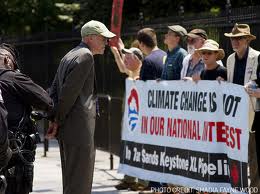
Calling all Occupiers: Join the Deep Green Resistance of the Earth, before it’s too late

Occupy the Machine – Stop the 1%, Literally | Deep Green Resistance.

I had a feeling that the Deep Green Resistance movement would have something interesting to say about the Occupy movement, and I wasn’t disappointed.

As might be expected from a radical environmental group, they are envisioning a massive escalation of the movement, swelling the numbers and multiplying the targets so as to overwhelm the police who will be called in to maintain order.

DGR is imagining an occupation at the sites of worst destruction of the environment, like the boreal forest of Alberta, known to the energy mafia as the tar sands; the coal-burning power plants; the pipelines and the shipping routes.

I might add factory farms to the list, like the beef and hog farms out West that generate the toxic runoff that is poisoning the ocean for miles around the outlet of the Mississippi River.

Naming targets is one thing, but what’s really important is being clear on what the occupations are for. I don’t think the Occupy movement is especially focused on the environment.  It seems to be focused on social inequality–excessive wealth that has destabilized our economy, and the lack of jobs for the middle class.

These are all worthy issues.  But as I’ve said before, it won’t matter a rat’s ass if you have a job–or if you’re dripping in gold or starving and naked–if the climate changes decisively due to global warming.

To turn global warming around will require a movement like the Occupy movement, filled with idealistic, dedicated, thoughtful people who are willing to give it their all.  This struggle has to be linked with a critical rethinking of the industrial capitalist economic model of ruthless extraction and production in the name of profit.

That is the model that has driven our planet to the brink of systemic correction.

Not collapse.  The planet will be fine, she will regenerate.  She has time.  But to do it she will need to effect a serious correction of a species gone haywire, the human species, which in a very short time has altered the planetary environment to such an extent that millions of other species have gone extinct, and supplies of the basic life support systems like oxygen and water are threatened.

The Earth has survived such challenges before, and she will survive this time again.  But human beings, and most of the countless other beautiful life forms that share the planet with us at this time, will be doomed if industrial civilization is not rebooted and recreated as an ecologically sustainable system.

That is where the pressure of the Occupy movement needs to be applied.

Will the Occupiers step up to such an enormous challenge, much bigger than the one they initially envisioned?  Hard to say.  But at the moment they seem to be the best hope of deep change of our society and our terribly destructive economic system.

It’s in the Liberty Parks all across the world that the conversations are beginning that might have the potential to lead to real change.

All the money in the world is not going to buy safety or plenty once the Earth herself begins her own form of Deep Green Resistance.

But what can we DO?

It’s not enough to simply lament the disappearance of species, or the poisoning of the air, water and soil of the planet.  The urgent question of our time is WHAT TO DO ABOUT IT?  How can any of us–how can I–act to staunch the hemorrhage and resuscitate this dying patient, our planet, before it’s too late?

Let’s review the options.

There is political reform, through various channels: appealing to our duly elected representatives and/or supporting environmental groups that lobby these politicians and try to pressure the relevant federal and state agencies charged with protecting the “natural resources” of our country.

I have to say that I am quite skeptical of this approach, which doesn’t seem to have worked at all in the 40 years or so since I first became a Ranger Rick reader and aware of the environmental movement.

Things have gotten much worse for the natural world in my lifetime, despite all the efforts of big, well-funded groups like the National Wildlife Federation, the Sierra Club, the Nature Conservancy, or even Greenpeace, the most radical of them all. Greenpeace is the most willing to go out on a limb to protect species and habitat, but its actions have failed to make the kind of global difference we need.

There is international peer pressure to do the right thing–conventions, treaties and protocols.  Even as I type these words, I inwardly despair.  From Kyoto onward, the U.S. has been the bully who refused to play nice in the community of nations whenever it’s come to putting the common good before the holy Free Market.

There is actually going around the blowing up the worst aspects of civilization, like dams, power plants, cell towers and chemical plants, as the proponents of Deep Green Resistance advocate.  Eco-terrorism, anyone?

Or there’s crowd power of the Occupy Wall Street variety, which certainly seems right now to hold the most promise.  ‘Never doubt that a small group of thoughtful, committed citizens can change the world. Indeed, it is the only thing that ever has,” Margaret Mead said.

But how to convince those crowds that the fate of seals, bees and goldfinches–not to mention the oceans and the boreal forests of North America–is actually more important than the injustices of economic inequality here in the U.S.?

Of course, it’s all important.  I have several friends who are on unemployment now and having serious trouble finding jobs.  If the Tea Party had their way, unemployment itself would be a thing of the past, a quaint relic of the old New Deal.  We can’t let these radical conservatives shred our social safety net, and we do need to start creating jobs again–green jobs, of course.

But there is no single issue more urgent than climate and environmental health, because if our climate goes haywire and our life support systems here on Earth fail, folks, we are all going down with the ship.

How to convey this to the crowds who are willing to turn out to protest economic injustice, but give it a miss when the issue is global warming?  How to convince people that what we should be demanding as we flood the squares and Main Streets of our country are well- subsidized options to reduce our energy consumption?

Doesn’t sound very glamorous, but the truth is that there’s nothing more important to be fighting for right now than subsidies to install solar roof tiles, like they’ve been doing in Europe for a decade already; and solar hot water heaters; and geothermal ducts for large buildings; and affordable green tech cars.

As Mark Hertsgaard and others have been saying, it’s not enough to make individual green lifestyle decisions, like recycling or composting or turning out the lights when you leave the room.  These individual actions are all well and good, but they’re not going to make the dramatic change we need to get our climate back into shape.

For the kind of change that will save the polar bears and the walruses and the coral, we need our government to step up and protect the interests of its people.  Not the interests of the corporations which have collectively driven our planet to the brink of ruin with their shortsighted greedy ethos of extraction and exploitation.

Government by the people, for the people.  And for the environment that sustains these people in a web of life that includes all living beings on this planet.

How to say this in a way that will light up the imaginations of the 99% and ignite an unstoppable movement for change?

I will keep trying.  What more can I do?

An urgent message for the global elites: change is coming, like it or not!

America’s ‘Primal Scream’ – NYTimes.com.

It’s always nice to wake up and see the very thoughts I was writing last night trumpeted in the Sunday Review of the NY Times.  Nick Kristof cites many of the same statistics I did to make his case that income inequality is not only real, but “a cancer on our national well-being.”  

But where he ends his column wondering whether the movement will persist “once Zuccotti Park fills with snow and the novelty wears off,” I believe things are only going to get more intense as we move into this winter of discontent.

For one thing, there’s climate change looming over us.  Check out today’s big story on the fact that this imperative issue has lost traction in the U.S., even as most of the rest of the world is moving aggressively to regulate carbon emissions and develop more sustainable technologies.

It seems that the elites driving our economy believe that we can continue our comfortable insulated ride in the plush American Caddy, and let the plebes outside the walls of our national gated community deal with the unpleasantness.

How quickly we forget the major blizzard in New York City last year, or Hurricane Irene bearing down on the whole East Coast.  Climate change is only going to intensify in the coming years unless we get serious about it fast.  The natural disasters it will cause will cost far more than action to curb emissions proactively.

Unlike Nick Kristof, I don’t believe our society has a choice about whether or not to change.  We will be changing, like it or not.  The question is, will we change in an orderly fashion, through regulation and innovation that puts the common good ahead of the greedy goals of the men behind the tinted windows of those chauffeured limousines?

To me, this is what the Occupy protests are about.  The 99% are sick and tired of shouldering all the costs of our industrial capitalist way of life–the debt bondage, the toxic chemicals making us sick, the decimation of our environment wreaking havoc with our climate, the fading of the American dream–while a few fat cats sit pretty on top of the heap and enjoy the spoils.

I have news for you, global elites.  You can’t escape the impartial justice of climate change.  You should have realized by now that you will reap what you sow: if you seed our agriculture, air and water with toxic chemicals, you and your children will get cancer just like the rest of us.  If you continue to deforest the Earth at the current rate, you too will be gasping for oxygen along with the poorest inhabitants of what used to be a boreal forest.


Hiding behind police barricades in your plate-glass towers will only get you so far.  In the long run, it’s no way to live.

Come on out into Liberty Plaza with the rest of us, and let’s work together for a better life for all–while there’s still time.

Much to protest…and much work to be done to make it right

Riots in Rome, a huge protest in Times Square, New York, and rolling protests from New Zealand to London to L.A. Things haven’t been this globally lively since the 2003 protests against the imminent U.S. invasion of Iraq.  Where is it all leading?

None of us know.  But the police are getting out their riot gear, and it is very possible that there are going to be more violent clashes, as there were in Rome today.

As the protests gain momentum, it’s important to keep our eye on just what all the anger is about.

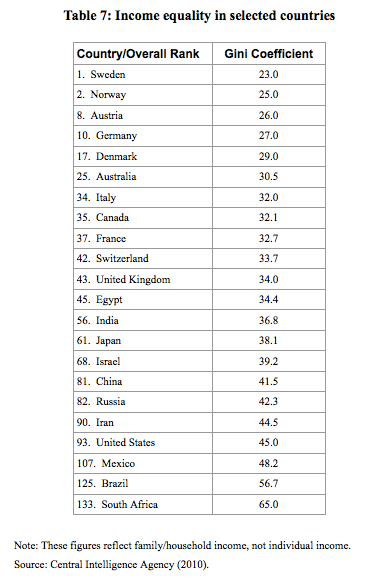
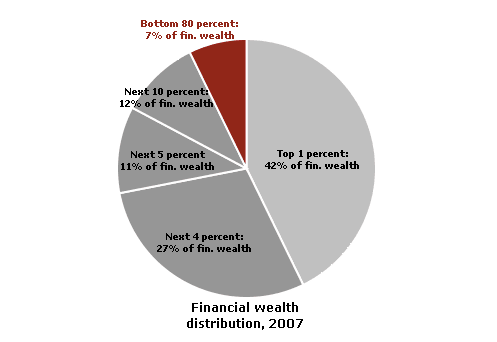
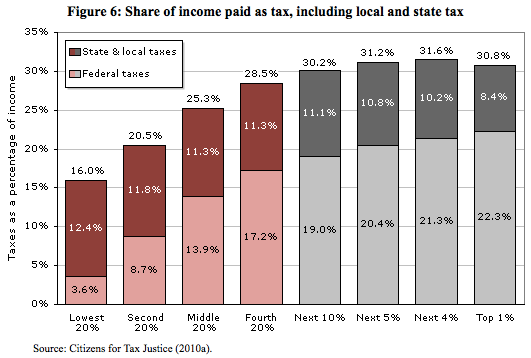
Business Insider, of all sites, published a very interesting set of charts and commentary last week promising to explain just what all the fuss was about down in Liberty Plaza.  Check it out, you won’t be disappointed.

Here are a few of the most damning charts:

The U.S. ranks below China, Iran and India in terms of income INEQUALITY.

Five percent of Americans own 69% of financial wealth.  The top 1% own 42% of this country’s financial wealth.

And the tax rate of these fabulously wealthy people is about the same as everyone else’s. That’s why they continue to get richer and richer, and everyone else slides inexorably downward.

While CEO pay is up nearly 300% since 1990, average workers’ pay is up 4%.  I don’t know about you, but the modest increases in my salary over the past decade have been totally absorbed by higher expenses, from food to gas to health insurance premiums and everything else.

So hell yes, there is something to be angry about!  There is a lot to protest!  There is a lot of work to be done to turn this country and this world around. The question is, how far will we go to rock the comfortable cruise ship of the one percenters?  And how far will they go to keep the status quo the way it is?

Police forces have always done the bidding of the wealthy in capitalist societies; is there any chance this could change?  The police are workers just like the protesters; is there any chance they will break their indoctrination and side with their own class interest?

Seems unlikely, but let’s not underestimate the forces of change.  Who would have believed, even six weeks ago, that people would be turning out in the thousands across the world to protest corporate greed and social inequality?

Look at this crowd.  It’s pretty clean cut, isn’t it?  This doesn’t look like a case for the riot police.  By and large, these people don’t want revolution. They just want to be able to live decent lives in a country they can be proud of.

Is this too much to ask?

No.  But, and this is a BIG BUT: what we’ve come to consider “a decent life” is going to have to change in the 21st century, given peak oil, the impending collapse of industrial agriculture, and the climate crisis.

So much will depend on our being smart enough to put these pieces together with the economic injustice we perceive so clearly, and see our way clear to a new, sustainably grounded society.

This is not too much to ask either.  But it will be a challenge to move from the fist-in-the-air stage to the creative visioning, and most of all to the implementation of a more just and sustainable economic system.

We have no choice but to meet this challenge.  Our global future as a species depends on it. This is the central task of our time.

Bill McKibben: The Sky Does Not Belong to Wall Street!


Thanks to the magic of You-Tube, we can see a terrific 6-minute speech by Bill McKibben today, linking the fight to save the climate to the fight against the Wall Street tycoons.

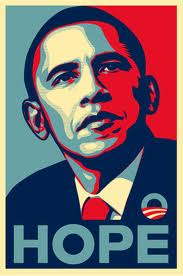
He’s planning another big action in D.C. next month: setting up a ring of protesters around the White House, standing siege until the real Barack Obama comes out–not the zombie who’s actually considering letting the oil industry raze the boreal forest in Alberta and run a leaky pipeline all the way to the Gulf.

We need our Obama to stand up to those guys and remind us why we elected him!

Let’s hope Bill McKibben and company can free the real Obama from the stranglehold of Big Oil, so he can be our champion in the White House, as we so hoped he would be.

“The sky does not belong to Exxon.  They cannot keep using it as a sewer into which to dump their carbon,” Bill reminds us.

Barack, are you listening?

Nobel Peace Prize honorees: why not Vandana Shiva?

How can I complain when the Nobel committee saw fit to grace not one but three women, two from Liberia and one from Yemen, with the annual Peace prize?

After all, I’ve been working for years now to help the women of the two-thirds world gain more power and recognition, and these three women–the towering elder and current President of Liberia, Ellen Johnson Sirleaf; Leymah Gbowee, the Liberian peace activist familiar to many from the portrait of her in the powerful documentary film “Pray the Devil Back to Hell”; and the young Yemeni human rights activist Tawakkol Karman– are certainly very deserving.

In fact, for our anthology African Women Writing Resistance: Contemporary Voices, my co-editors and I chose a quote from President Johnson Sirleaf as one of our epigraphs.  “Listening to the hopes and dreams of our people,” she said in a speech to the American Congress in 2006, “I recall the words of a Mozambican poet, who said ‘Our dream has the size of freedom.’ My people, like your people, believe deeply in freedom–and, in their dreams, they reach for the heavens.”

All three of this year’s Nobel Peace Prize winners have been channels for the hopes and dreams of their people, seeking political empowerment, social stability and security, and a sustainable path forward out of chaos (in Liberia’s case) and stagnation (in Yemen).  Ellen Johnson Sirleaf, who holds a Master’s degree in Public Administration from the Kennedy School of Government at Harvard, has done a lot of good things for her people in her tenure as President, including many development programs aimed specifically at empowering women.  She has succeeded in gaining major debt relief from Liberia’s creditors, as well as brokering deals with big transnational energy companies to extract Liberia’s oil.

The other two Nobel Peace Prize honorees are equally deserving.

But I wish the Nobel Committee had been a bit more forward-thinking, and seen fit to honor another woman from the two-thirds world, Vandana Shiva of India.  A Ph.D. in particle physics, Shiva has been way ahead of her time for most of her life.

Instead of taking her place comfortably in the ranks of the Indian elite, Shiva became aware as a young woman of the danger of the industrialization of agriculture in India. She founded an organization, Navdanya, dedicated to saving heirloom seeds and preserving the knowledge of how to farm using ancient, local, sustainable methods.

When Monsanto began moving aggressively into the Indian market, luring in farmers with fertilizers and GMO seed on credit, Vandana Shiva was just about the only one who seemed to perceive the huge risk they were taking.  When these same farmers began committing suicide in droves as their reliance on foreign seed, fertilizer and pesticide drove them inexorably into debt, Vandana Shiva was the one who went to court to defend their lands and the rights of their widows.

She has been a veritable David fighting the Goliath of Monsanto for the past twenty years or so.  And in many cases, she has won!

While I also honor Ellen Johnson Sirleaf and her younger co-awardees this year, I have to say that I would like to see them follow more in Vandana Shiva’s footsteps in the future.

Take Liberia, for instance, which in 2010 ranked 162 out of 169 countries on the United Nations Human Development Index.  Ellen Johnson Sirleaf is busy signing agreements with Chevron to extract the country’s oil, and hoping that some of the oil wealth will trickle down to ordinary Liberians, who are still hungry and poor today.

I’d like to respectfully suggest that instead of selling her soul to Big Oil, President Sirleaf follow the example of Vandana Shiva, and look to local, sustainable agriculture and manufacturing to build her country’s economy.

In a time of rapid climate change, it’s the countries and regions that are most self-sufficient and least plugged into the fossil-fuel-driven global economy that are going to be able to ride out the coming maelstrom.

It is clear that the corporate and political leaders of the world have no intention of acting decisively to stop global warming.  Last week’s major climate change story was about a report issued by a Washington D.C. think tank calling for more research into bioengineering of the climate, or “climate remediation.”  Specifically, they’re interested in getting the federal government to fund research into two major approaches:

  • Carbon Dioxide Removal (CDR): CDR strategies aim to remove greenhouse gases from the atmosphere, thereby addressing the root causes of climate change.
  • Solar Radiation Management (SRM): SRM strategies aim to counteract or mask the effect of rising greenhouse gas concentrations in the atmosphere by increasing the amount of solar energy that is reflected back into space.
The first method involves working with plants that will absorb more carbon dioxide, or finding ways to sequester the CO2 we produce back underground.  One could hardly argue with an aggressive tree-planting and conservation campaign, particularly in light of the appalling reality of deforestation across the world today (see this very cool interactive map for the gruesome details).
The second method is the environmental equivalent of Ronald Reagan’s infamous Star Wars missile defense system: a sci-fi-esque plan to install giant mirrors in space, or to seed the atmosphere with reflective particles that will deflect solar rays from Earth.  One can just imagine the military industrial complex salivating at the thought of such a project, particularly at a time when there is so little support for continuing the wars that are this industry’s usual diet.
The problem, of course, is that both of these approaches miss the central most important fact about climate change, which is that nothing will stop it other than aggressive changes to our carbon-based lifestyle.
Will that happen?  Can it happen in time?  Maybe the Occupy Wall Street movement can bring the necessary energy to this fight, and I certainly hope they do.  Recently Bill McKibben’s 350.org, a leader in climate change activism, became one of the many larger national organizations seeking to ally themselves with this young juggernaut of political action.

Meanwhile, so-called “less developed nations” like Liberia and Yemen and all the rest should seriously re-evaluate their acceptance of this designation, which means rethinking the whole rationale behind Western-style “development.”  Development, Western-imperialist style, has benefited a few people mightily but brought suffering to the vast majority of people on Earth, especially those in the areas of greatest resource extraction, which are, paradoxically, the “less-developed” nations.
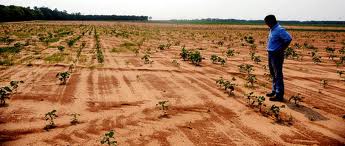
Now the time has come for us here in the heart of Empire to feel the blowback from our aggressive policies of development.  Climate change is upon us.  And in this new era, it is precisely those with the least reliance on oil, electricity and industrial agriculture that will have the best chance of adapting to the new realities of life on Earth.

President Johnson Sirleaf and all the other leaders of “less-developed nations” should stop and reconsider their friendships with the global corporate elite.  The urgent task now is to build resilient communities and economies based on the exchange and consumption of local resources–just like it was for the tens of thousands of years of human existence before the industrial revolution started us off on a different path.

It is people like Vandana Shiva, who are still in touch with older ways of living in harmony with the Earth, who may be able to lead us through the current crisis into a sustainable future.  Let us take heed while there’s still time.

American-style debt bondage–how much longer can we go on this way?

A propos of this question of what the Occupy Wall Street protest is all about, I would like to raise the issue of debt bondage.

Usually when someone says “debt bondage,” we flash to images of Indian rice farmers or child brick carriers or trafficked women from Southeast Asia.

There is horrendous debt slavery in South and Southeast Asia, and the conditions under which men, women and children labor there are far worse than anything we face here in the U.S.

But at the same time, I don’t think it’s far-fetched to call the average American middle-class lifestyle a form of debt bondage.

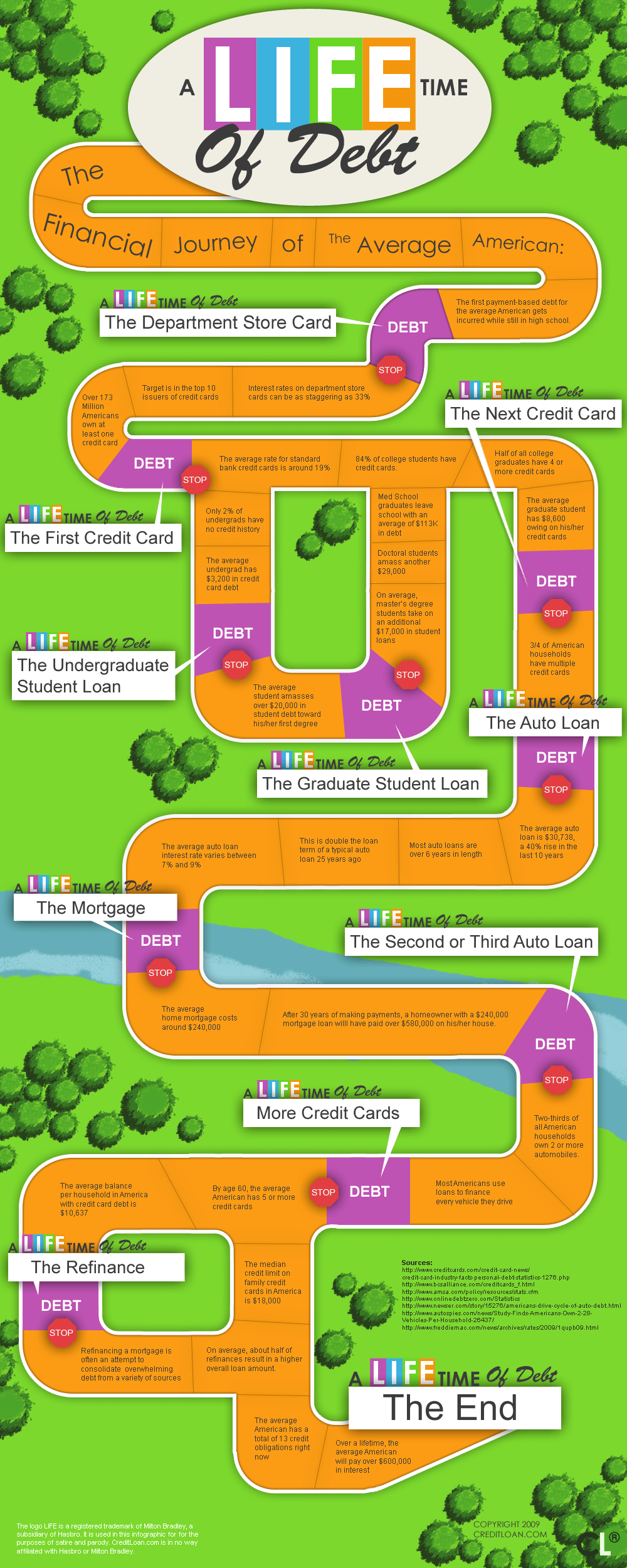
This graphic does a good job at giving us the picture:

In case you can’t read the fine print, the end of the “game” shows that Americans will pay about $600,000 in interest alone during their lifetimes.  [Source: Visual Economics.]

Working to pay off debt has become so commonplace that we scarcely even notice it anymore.  But it’s a relatively new phenomenon.  And all that interest, plus all those fees, are among the prime ways that the Wall Street bankers have gotten so phenomenally rich in the past 50 years or so.

What can be done about this?  For starters, a quality education should not so expensive that a middle-class student has to go into debt to attain it.

And we have to think much more deeply as a society about the job question.  We should not make it so easy for corporations to outsource jobs to cheaper labor markets.  Just as we are beginning to think about localizing agriculture and energy, we need to think about localizing jobs.

That’s the way human beings have made their livings for the past millennia, after all.  Only in the last 30 years or so has the world become so small (thanks to cheap fossil fuels) that it was conceivable to export manufacturing and other basic services to the other side of the globe.

Is outsourcing really more cost-effective, when you add in the costs of social welfare for all these displaced workers?  And the costs of millions of foreclosed homes?  And the costs of warehousing millions of poorly educated young people in jail? Not to mention the costs of global climate change?

Well, it depends on who is footing the bill, doesn’t it.  The Occupy Wall Street protesters are speaking for all American taxpayers in declaring that we should not have to pay for the greedy, short-sighted mistakes of the global corporate elite.

If they had to pay the true costs of the agendas they’ve pursued since World War II, well–it would be quite a different world we were living in, friends.  Maybe we would still be able to make a living that didn’t involve constantly adding more links to the chains of our debt bondage.

Unthinkable, you say?

Think again!

Facebook vs. Dead Space 2: which 21st century geo-political model will win?

This week I am teaching Darwin again, Darwin being a staple of the Simon’s Rock Sophomore Seminar, required of all students.  I have always found The Origin of Species difficult to read, but lately I am realizing why: because Darwin seems so sure that aggressive competition, the infamous “survival of the fittest,” is THE biological paradigm on our planet. All species are locked in a relentless “battle for life,” from which only the strongest and best adapted (which often means the most ruthless) will emerge evolutionarily victorious.

However, there have been some persistent voices in the past few years arguing that Darwin understated the case for altruism and empathy as an evolutionary advantage for human beings.  Jeremy Rifkin, in The Empathic Civilization, argues that cognitive neuroscience is now proving that we are in fact at least as empathetic, as a species, as we are aggressive.  He believes that the linking potential of the internet age has the power to help us overcome the divisiveness that marred the past 500 years or so of human history, and make a great leap forward in our social evolution.

“The information communication technologies (ICT) revolution is quickly extending the central nervous system of billions of human beings and connecting the human race across time and space, allowing empathy to flourish on a global scale, for the first time in history,” he says.

“If we can harness our empathic sensibility to establish a new global ethic that recognizes and acts to harmonize the many relationships that make up the life-sustaining forces of the planet, we will have moved beyond the detached, self-interested and utilitarian philosophical assumptions that accompanied national markets and nation state governance and into a new era of biosphere consciousness. We leave the old world of geopolitics behind and enter into a new world of biosphere politics, with new forms of governance emerging to accompany our new biosphere awareness.”

Human beings’ amazing use of technology has always been both our blessing and our curse.  Technology is enabling me to send these ideas out into the ocean of the Web, a digital message in a bottle that could potentially reach millions of people across the globe.  Amazing!

But my reliance on electricity generated by oil and coal to perform this technological wonder is the Achilles heel of the whole enterprise, since collectively we as a species are overloading the biosphere with our wastes and driving the planet to the brink of what Darwin would call an “extinction event.”  Our own.

Will we make that great leap forward that Rifkin is foretelling, waking up to the necessity of moving from global competition to global collaboration in a new, more localized model?

Rifkin imagines a future global society based on the localization of energy sources like solar, wind, tidal and geo-thermal, as well as the re-localization of agricultural and manufacturing economies.

“In this new era of distributed energy,” he says, “governing institutions will more resemble the workings of the ecosystems they manage. Just as habitats function within ecosystems, and ecosystems within the biosphere in a web of interrelationships, governing institutions will similarly function in a collaborative network of relationships with localities, regions, and nations all embedded within the continent as a whole. This new complex political organism operates like the biosphere it attends, synergistically and reciprocally. This is biosphere politics.”

I believe that this rosy vision is theoretically possible, but I sure don’t see anything like it on the horizon today.  Rifkin puts his faith in the upcoming generation, who have grown up as “digital natives” and are more likely, he thinks, to be collaborative across traditional national and political boundaries. Facebook Nation!

Maybe so, if the young can be roused from their entertainment media trance and made to see the urgency of the mission.

I read with dismay yesterday that the U.S. video-game industry is one of the most highly subsidized sectors of our economy, rewarding, for example, the makers of “Dead Space 2, which challenges players to advance through an apocalyptic battlefield by killing space zombies.”  Dead Space 2 shipped 2 million copies in its first week of sales.

How can we expect young people to focus on serious, urgent issues like global climate change when they’re so busy chatting with friends on Facebook and killing zombies on Wii?

If this is the best we can do as a society, then I’m sorry, folks, but maybe an extinction event is not only on the horizon, but, as Darwin would say, “for the good of all.”


California Black-out: Eco-terrorist Strike? Wake-up Call?

Last night, while all the pundits and news editors were focused on President Obama’s jobs speech to Congress, a small news item at the bottom of the page caught my eye: blackout in southern California.  1.4 million without power, from Arizona to Baja California, including San Diego and Tijuana. No explanation.

This morning, the blackout is still on, and there is still no explanation.

With a strange blend of fear and hope, I find myself wondering whether it could possibly be the result of a Deep Green Resistance strike.  According to the DGR website, the mission of the underground resistance movement is to “dismantle the strategic infrastructure of power” that has brought our planet to “the brink of complete biotic collapse.”

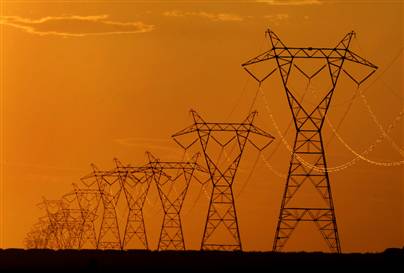
What could be more critical to the continued functioning of industrial civilization than electricity?

Really, folks, all of this dithering about tax cuts, monetary policy and jobs creation would instantly be totally beside the point if the energy that fuels our society were to sputter and die.  To say this is not to be alarmist, it’s simply to be real.

As anyone who has had to go through a power blackout of more than a few hours knows, we 20th-21st century Americans are uber-dependent on our electric juice.  We are so addicted that we no longer know how to live without it, in a literal sense: our food and water supplies are almost completely reliant on fossil fuel-based energy.

No gas, no ATMs, no refrigeration, no supermarkets, no water pumps, and for many of us, no heat in the winter, never mind AC in the summer.  Oh, and did I mention no internet?  No video games?  No email, voice mail or cell service?

Science fiction has tried to imagine what the collapse of civilization as we know it would look like.  We have all seen films like The Day After Tomorrow, or read books like Margaret Atwood’s chilling Handmaid’s Tale.  Mostly, our imagination of this kind of future seems pretty grim.

But it doesn’t have to be that way.

Just as there is already a guerilla movement bent on taking down industrial civilization, there is also an aboveground movement looking to put in place the building blocks for a new, sustainable civilization.  It’s called the Transition Town movement.  It started in the UK, and is now gathering steam in the US as well as around the world.

While the Deep Green Resistance folks seek an aggressive approach to dismantling what is, the Transition Town movement is more about working with what is to create something better.

It’s a bit tamer, but will be far more digestible to the majority of Americans.  It has a role for everyone, and a focus on the positive: on what can be done if we work together in the service of a strong vision of positive change to a sustainable future.

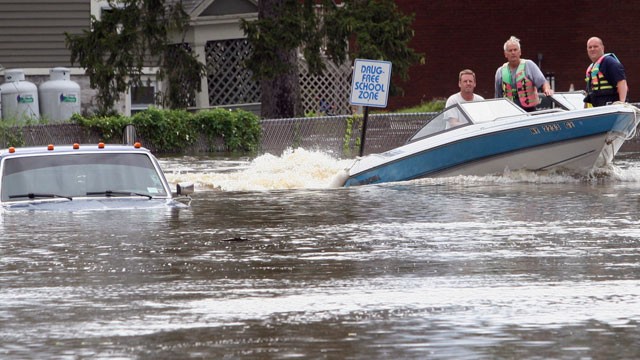
There is no doubt that the climate crisis is upon us.  The signs are apparent on a daily basis.  Wildfires out of control in Texas; flooding in the Northeast; blackouts in California; droughts in the Midwest.

Fear, panic or depression will get us nowhere.  Anger is useless unless channelled into positive action.

The most important thing you can do to prepare for what’s coming is to strengthen your relationships with your local friends, neighbors and community.  We are going to need each other in the months and years ahead.  We’re going to need all the love, resilience and solidarity we can muster.

The time to start is now.


Eco-terrorist from Park Avenue?

The tenth anniversary of 9/11 approaches…

the fateful year of 2012 is on the horizon…

a hurricane rips up the East Coast, leaving 5 million without power, and billions of dollars worth of damage in its wake;

riots in London are quelled by force;

and dictators who have held sway for 30 years or more in the Middle East are run out of town.

As the debt crisis of the Western world continues, Exxon Mobil opens up new drilling potential in the Russian Arctic worth 500 billion dollars, of which almost nothing will be taxed, while schools lay off teachers, states lay off workers, and municipalities have trouble paying for basic services like road maintenance.

At least we have our iPads and iPhones!

For those able to connect the dots, it is no accident that a major hurricane hit the East Coast this week–given that the ocean is hotter than it’s ever been, thanks to global warming.  More storms like that, and worse, are on the way!  The question is, WILL WE CONNECT THE DOTS????

And more: Can we have a world in which we continue to enjoy our luxuries–a hot shower in the morning, easy internet access, refrigeration and supermarkets full of food–without having to pay any price?

Like anyone of my generation (I was born in 1962) I want to believe that the world I’ve always known will always be here for me.

But I am not so blind as to see that the very luxuries I have taken for granted as necessities are what has driven our entire ecosystem to its current precarious state.
I know this.

What am I going to do about it?

Mark Hertsgaard and others have said very clearly that individual sacrifice or change is not the answer for the planet.  The planet needs us to stand up and agitate for her, to take risks, to be bold.

Getting arrested in front of the White House is not a bad idea.

Lately I’ve been reading about even more radical steps one might take.  Our government might call these steps eco-terrorism.  I might call them standing up for what is right.

In Deep Green Resistance, Aric McBay, Derrick Jensen and Lierre Keith outline a full spectrum of productive resistance to the planet-killing powers that be, from “propaganda”–ie, what I’m doing now–to actually going out and blowing up dams or cell towers.  

I am reading on, taking it in.  Do I have it in me to become an eco-terrorist?  Me, a sheltered girl from Park Avenue?

We’ll see!  Tune in next week…..