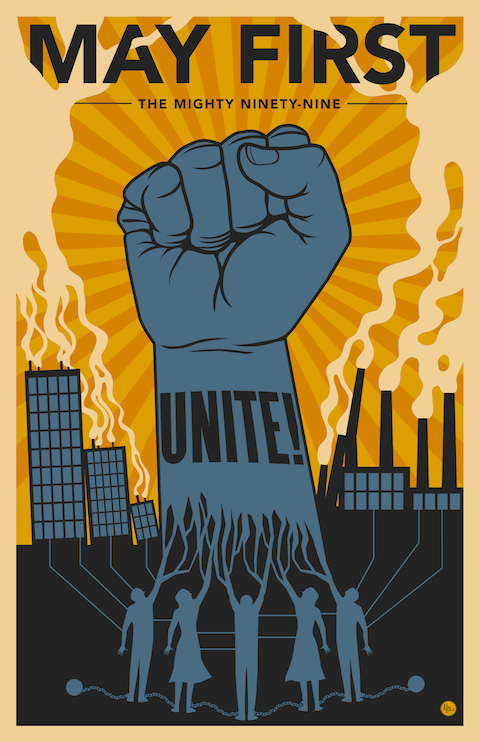
The question your grandchildren will ask: Where were you on May Day 2012?

Although you’d never know it from following the mainstream media, there are big plans afoot for this year’s May Day.

The global General Strike of the 99% called for May 1 is gaining steam as we move into the final days of preparation.

It’s going to be big.  It’s going to be loud.  It is meant to be an unsettling reminder to the 1% of how much their privilege depends on the cooperation and docility of the 99%.

What if everyone just decided to go on strike with their credit card interest payments?  Their student loan interest payments?  Their mortgage interest payments?

What if everyone decided to redirect their energies to revitalizing local economies, forming their own credit cooperatives, issuing their own currencies, reinstating barter and time banks, growing their own food?

What if everyone just opted out of the huge, unwieldy and oppressive structures that corporate globalization has imposed on us?


I am reminded of the Leo Lionni story about the snail who was so entranced with his creative power to build an ever bigger and more intricate shell that eventually he was pinned down by the enormous, gaudy fruits of his labors and had to abandon that monster shell and start anew, humbly admitting that bigger was not better.

Collectively, and with Americans in the lead, human civilization has created a monster that now holds us captive.

Collectively, we can work together to shift course and rebuild a more humane society where the wealth we generate with our creativity and hard work is shared fairly and is not used to destroy our beautiful planetary home.

It is true that the Obama administration has tried to move things in this direction, in important areas like health care and finance reform.  I believe Obama’s heart is in the right place, but he is held captive like all the rest of us by a rigid system created by the 1% to pander to the 1%.

When even our Supreme Court has been coopted to represent the super-elite above the vast majority of Americans, as was quite evident in the Citizens United decision, it becomes clear that working through the system is like swimming in place, swimming against an overwhelming tide.

So we need to try something different.  We are essentially at the same breaking point our American founding fathers were at back in the 1770s, when they knew that the only way they could move forward was to get the King’s boot off their necks—and the only way to do that was to fight.

I don’t want to see another armed revolution or civil war on American soil.  I am a pacifist through and through.

That’s why I support the concept of the General Strike as a peaceful way to withdraw from the system and remind the elites that the gears of their privilege won’t turn without the grease of our labor and cooperation.

This May Day, wherever you are, whatever you’re doing, take up the gauntlet Thoreau threw down back in 1849 in his famous essay on civil disobedience: “Let your life be a counter-friction to stop the machine.”

Give mothers the respect–and the financial compensation–they deserve

Hilary Rosen

It truly is disheartening to hear a supposedly progressive woman proclaim that a fulltime mother “never worked a day in her life.” Democratic strategist Hilary Rosen deserves all the flack she’s been getting since she made that statement yesterday on national media.

On the other hand, it’s also disheartening to see how the male-dominated Democratic and Republican campaigns have wasted no time in turning Motherhood into a political football.

The truth is that American motherhood has never been more demanding, or more complicated.

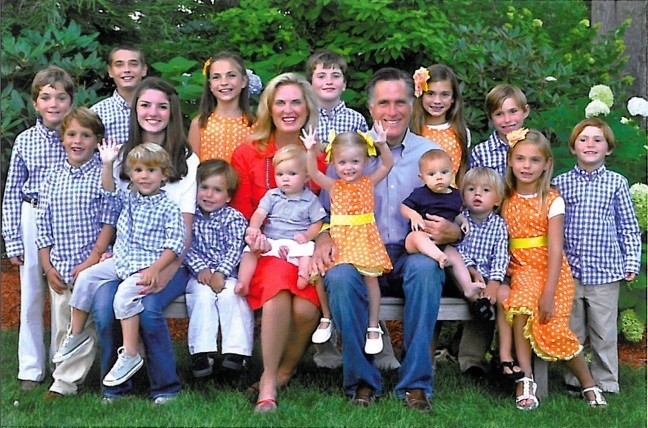
Romney married a rich man and settled in to raise five sons. She had the enormous privilege of not also having the responsibility of earning money to put food on the table.

Today there are fewer and fewer women who can afford to stay at home as fulltime moms, especially if they have big families.

More kids mean more housework—but also mean more mouths to feed, shoes to buy, college tuitions to pay for.

Mitt and Ann Romney with their 16 grandchildren

As part of the 1%, Ann Romney got to choose to stay home with her children.  For the rest of us, this is just not an option.

Especially the many of us who are single moms, or whose husbands have been out of work for months and years.

But the firestorm over Hilary Rosen’s miscalculated remark speaks to an even deeper issue that remains unaddressed in our society.

Mothers still do more housework and child care than fathers.  Housework and childcare still remains not only unpaid labor, but labor that is not recognized as having any monetary value in our very commercially oriented society.

A recent NY Times article interviewed some nannies who work for the 1%, whose labor is valued in the high six figures.

But the labor of a mother who stays home is not even deemed worthy of accruing social security.

At minimum, all mothers, whether they stay at home fulltime or struggle doing the second shift at home after the day job, should be entitled to accrue social security and expect some retirement compensation from the nation in their old age.

At minimum, all mothers should have the right to subsidized maternal health care.

At minimum, in a rich country like ours, no mother should have to worry about whether her children are going to have enough to eat.

Instead, our country is going in the opposite direction.

We are making it harder and harder for mothers to qualify for welfare assistance.  We are cutting back on public education, and failing to create incentives for doctors to work in public health clinics.

And many, many states are actively working to curb women’s access to contraception, while at the same time demonizing abortion.

So what’s a poor woman to do?

The media controversy over the non-issue of whether Ann Romney’s “work” as a fulltime mother qualifies as such is entirely misplaced.

What we need to get worked up about are the circumstances of the millions of American mothers who work hard, both in and out of the home, without the household help that the Romneys undoubtedly enjoyed, and who are not fairly compensated or recognized for their efforts.

It may sound corny, but it’s true: without the hard work of mothers to bear and care for children, our great nation would simply cease to be.

We need to cut the political chicanery and not only give Motherhood the respect it deserves, but put our money where our mouths are, too.

Occupying Leadership: What will it take to accomplish real change?

Environmental activist Tim DeChristopher and Jamphel Yeshi, the young Tibetan monk who set himself on fire last week, are more alike than might first meet the eye.

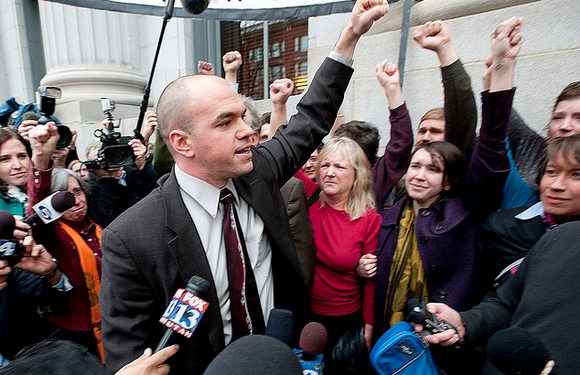
Tim DeChristopher outside a Salt Lake City, UT Federal Court

DeChristopher, one of the founders of the group Peaceful Uprising, took direct action to disrupt the sale of wilderness to mining companies in a closed Federal auction.  He ended up in prison, but he also did a tremendous amount to raise public awareness about the issue of land sales to corporate industry, and inspired the PeaceUp folks to greater activism.

Jamphel Yeshi also took a dramatic personal action at huge cost to himself—he lost not just his liberty, but his life. He and the 30 other monks who have taken this drastic step in the past have succeeded in letting the world know how deeply the Tibetan people are suffering under Chinese repression, and how passionately they yearn for autonomy to practice their religion and preserve their culture.

A monk looks at posters of Jamphel Yeshi in Dharamsala, India

Dramatic personal action is definitely a good tool to use in raising public awareness about an issue.

The problem with it is that one leader standing alone is an easy target—and if the action is a suicide, that heroic action is always going to be a one-time event.

That the Occupy movement has so far eschewed the single, high-profile leader model is a sign of the solidity of this nascent social movement.

Despite demands from the media and others for a leader to step out of the shadows and announce himself (the leader is always presumed to be male), Occupy has held firm to its founding principle of being a “leaderless movement.”

Occupy Oakland GA

This is true in the way the different “chapters” of Occupy, springing up at will anywhere in the world, are completely autonomous from the Occupy Wall Street folks who initially launched the movement last August; and it is true in the way that any passerby can join a General Assembly and have a chance to speak and influence or inspire the group. It’s true in the various Occupy online platforms that give anyone with an internet connection the ability to communicate with the world, and it’s true with the Occupy media, which are collective and often anonymous publications of strategies, theories and praxes of resistance.

I feel a tremendous sense of loss and rage that obvious, powerful leaders like Tim DeChristopher and Jamphel Yeshi are driven by frustration with the system and anger at injustice to commit acts of activist resistance that are either outright suicidal, or land them swiftly behind bars.

We in the West howl about human rights violations every time the Chinese throw another idealistic young activist in jail.

But we do the same thing here.

We reward the best and brightest of our young people as long as they play by the rules of the game and never question the wisdom of their elders in setting up those rules.

The Ivy league grads who will go on to become Goldman Sachs executives or corporate CEOs or weapons systems engineers—they are our golden children who can do no wrong.

But those young people who look out at what is and see the waste, the greed, the desecration of the planet, the horrendous danger in which the old game has placed us, as we cross the threshold of the 21st century into the new era of global heating, overpopulation, extreme inequality, toxic chemical poisoning, militarization…those young people are considered by the power elites to be annoying, pie-in-the-sky, unreasonable idealists who need to grow up and get a job.

In other words, they need to shut up and join the system.

The reason the Occupy movement is gaining steam is because the system no longer has enough places for all the smart, talented young people we are producing.

We can’t all join Goldman Sachs, now can we?

We can’t all join Greenpeace either.

When young people can’t pay off their student loans and can’t find jobs, and their parents can’t help them because they themselves can barely keep up with the mortgage payments…these young people are naturally going to be much more open to the possibility that something is quite wrong with the established system.

That’s where we are now.  That’s why suddenly we have not one or two extraordinary young leaders like Tim DeChristopher or Jamphel Yeshi stepping up, but a whole tide of young people who have the time, the talent and the energy to tackle the problems of our American society, and our global human civilization, head on.

One General Assembly at a time, they are creating a new vision of society and a new model of leadership.

It couldn’t be more different from the corrupt talking heads they grew up watching on TV.

It is, as Tom Hayden shared with us eloquently this week in The Nation, a return to the SDS and SNCC vision of true participatory democracy in action.

This spring and summer, it’s the numbers that will make all the difference.  They can’t lock up a million idealistic Americans whose only crime was to want to change our country for the better.

Did I say a million?  Let’s make it 10 million, all across the country, coming out and taking a stand for new rules to the game of life that are based above all on respect for the planet and her creatures.

Do unto others as you would have them do unto you, says the Scripture.

No wiser words have ever been spoken.  Let’s stop the hypocrisy and start practicing what we preach.  Let’s do it soon, before any more brave young leaders have to martyr themselves on our account, trying so desperately to wake us up.

Burning for change

Sometimes an image just leaves me speechless.  Here’s one like that:

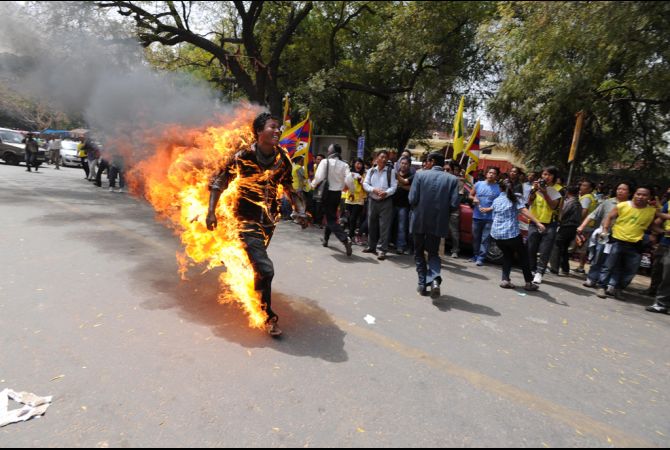
Tibetan monk self-immolates

Here’s another view of the same scene:

Jamphel Yeshi, a Tibetan exile, set himself afire in New Delhi, India, this week to protest China's repression of Tibet

The smile on the face of the burning man continues to haunt me.  It is like the beatific smile of an angel–or of a martyr who goes happily to his death hoping to advance a worthy cause.

Jamphel, who died of his burns, is one of 30 Tibetans who have set themselves on fire to protest China’s brutal treatment of Tibet, and to call for the return of the Dalai Lama to his homeland. Twenty of those incidents occurred in the past year, and of those 18 of the victims have died of their wounds.

As Melinda Liu reports in The Daily Beast, “Committing suicide is a last-resort measure in any society, but it’s seen as especially extreme for Tibetan Buddhists. Because their religion reveres all living beings, many Tibetans believe those who take their own lives will not be reincarnated. That’s a grim fate for religious devotees who aspire to be reborn, again and again, in more enlightened forms. “But what else can people do? We don’t have guns. We don’t want to harm other human beings. Yet we can’t stand to see our religion and culture being crushed,” lamented one Tibetan man from Lhasa, who requested anonymity because he feared China’s massive security crackdown.”

Hana Shalabi

There are other examples around the world of people taking drastic stands to protest brutality and stand up for civil liberties and human rights.  In Israel, several Palestinian prisoners who are being held without trial have begun hunger strikes, the most extreme of which has been carried out by Hana Shalabi, who just today agreed to end her 44-day hunger strike in exchange for being released to the Gaza Strip.

In the U.S., such extreme tactics are very rare, probably because we are led to believe that we have other avenues of protest open to us.

It’s true, we do have other avenues of protest open to us.  We can rally in the streets, we can sign online petitions, we can call our elected representatives, we can pressure the media into reporting on issues we deem important.

We can write blogs like this one, without fear of being summarily arrested and imprisoned for criticizing the powers that be, as happens routinely in many other countries.

But when it comes right down to it, I wonder whether all these various forms of protest really get us anywhere, or whether they are so many steam valves, designed to allow us to vent our frustrations without really rocking the boat.

What do we have to do to accomplish the big changes we want to see in the world? How far do we have to go?  To what degree to we have to put our own security and well-being on the line?

Tim DeChristopher

Tim DeChristopher, the environmentalist activist who disrupted a federal mining auction to protest the sale of public lands to corporate interests, made his point, but landed swiftly behind bars.  He emerged into the news again this week when prison authorities, for some unknown reason, transferred him from minimum security to a lockdown cell.  His friends and allies went ballistic, beseiged Congress with calls and online petitions, and got him transferred back to more comfortable quarters.

But he’s still behind bars.

And the mining companies are still out there digging up the wilderness as we speak.

Obviously his action, however noble, was not enough to truly change the rules of the game.

If we want to see deep, systemic change in the way governments and corporations do business, especially in regards to human rights and environmental justice, we may need to take a giant leap forward in our radicalism.

I am not saying we should set ourselves afire.  Heaven forbid!  But it’s going to take more than weekend protests or online petitions to drive a wedge into the status quo power structures and open up new pathways that will lead us to real transformation.

What will it take? I wish I had the answers; I don’t.  All I know is that enough of us have to get deeply dissatisfied and fed up with the way things are, and be willing to run the serious risk of undertaking revolutionary action for change.

It happened back in 1776; it happened in 1865; it happened in 1968; and it may very well happen again in this magical year of 2012, the prophesied beginning of the Age of Aquarius.

We know we are at a transition time; every indicator points to it, whether social, financial, political, scientific, astrological, astronomical…you name it.

We know where we’re coming from.  The question of the moment remains: where are we going?

Occupy Health–Our Planet’s, Our Own–this May Day

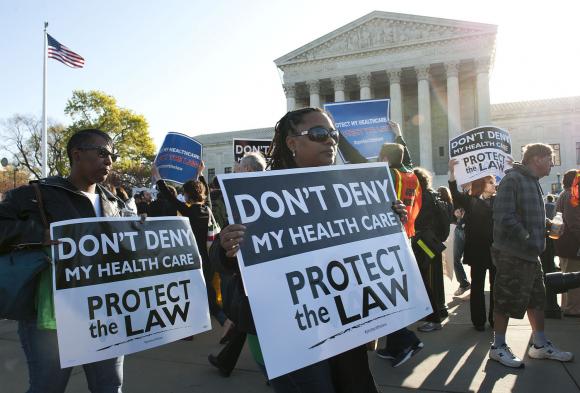
It doesn’t take a genius to understand the premise of the new health care law, which is that all Americans should buy health insurance so that the healthy can help subsidize the sick.

I don’t hear anyone whining about the fact that we are all required to buy car insurance, even though many of us, like me, hardly ever have cause to use it.

Health insurance could and should operate under the same principle. If everyone pays their share, the costs will also be shared.

And the so-called individual health insurance mandate will most likely be much less expensive for society in the long run, since it will result in increased preventive care and far fewer expensive emergency room visits.

Of course a universal single-payer system—Medicare for all—would be much better than the “free-market” insurance system that is under discussion today.  But at least having everyone insured, with subsidies to help those who can’t afford to pay, is a good step in the right direction.

The new law also prevents insurance companies from denying people health care because they’re sick, a truly barbaric Americanism, and allows families to continue to cover their children’s insurance up to age 26.  Who could argue with that?

The truth is that our nation could easily afford to cover all its citizens’ health care, and then some, if we took several crucial steps:

  • Properly tax the rich: close tax loopholes, tax financial transactions, make a genuine commitment to closing the abyss between the 10% at the top and everyone else.
  • Shut down the war machine; spend money on butter, not guns—or better yet, on organic vegetables that will keep people healthy.  It’s insane to put so many trillions into weapons aimed at blowing people up, and then throw a hissy fit about government spending on keeping people healthy.
  • Raise the minimum wage substantially, so that people can afford to eat healthy food, live a healthy lifestyle, and buy own their health insurance policies.

We live in a nation besieged with ill health.  From cancer to diabetes to heart disease and asthma, not to mention depression, ADHD and autism, we are a country of chronically ill people.  I blame much of this on the toxic food that has been sold to us over the past 60 years, since the end of World War II, by the industrial agriculture and food packaging giants, which have irresponsibly poisoned our waters, air, soil—and our bodies.

The powers that be want us to believe that the solutions are very, very complicated. So much so that we should just leave it to the experts—go back home and eat some more antibiotic-laced hamburgers, why don’t you, and watch some more mind-numbing reality TV.

Actually, it’s just the opposite. It is not complicated at all, it’s very simple.

We the people pay our taxes so that our government will work for us.  We have a right to healthy food, water and air.  We have a right to health care.  We have a right to expect that our elected representatives, as well as our Supreme Court Justices, will act in our best interests.

Since the Citizens United decision, it has become starkly apparent that corporations, not people, get preference when it comes to rights.  Money talks: they have the billions to buy the politicians and the media, and the rest of us be damned.

Well, enough is enough.  This is exactly where the Occupy movement has to step in and show that Americans have not become the catatonic stooges that the media giants aimed to produce.

We know what’s going on.

We have been so, so patient. So law-abiding.  So earnestly hopeful, with each election, that things would get better.

Things have only gotten worse, and there is no end in sight.

President Obama has done far better than a President McCain would have done, but he is no knight in shining armor.

No one politician can do this on his or her own.

It’s going to take the collective will of a great coalition of ordinary folks to get this nation to focus on what’s really important in this new century.

And let me tell you, it does not have to do with health insurance.

It has to do with climate.

Tonight in New England a bitter wind is blowing, and the temperature is expected to drop to the single digits, with a wind chill below zero Farenheit.  After a week of balmy summery temperatures in the 80s, the blooming trees and flowers are going to get a harsh night of frost.

This is apparently the new normal as regards our climate.  Even if we were to immediately do everything possible to slow down carbon emissions, a ship the size of our planet would take several of our little lifetimes to rectify itself.

So we need to get used to it.  And if we don’t want it to get worse—that is, absolutely uninhabitable for most current life forms—we need to roll up our sleeves and put all our intelligence to work at creating new, sustainable forms of agriculture, industry and lifestyle.

It can be done.

But not while we fritter away our precious time in begging the entrenched powers to give us some crumbs.

No, we need to unseat those powers and dramatically reorganize our social priorities.

It can be done.

May Day is coming.  It must be a day of reckoning, the gateway to a hot summer of the hard work needed to provoke serious, transformative change.

Living on the trigger’s edge

I am always worrying about our vulnerability as individuals living in a contaminated environment, or about the instability of our planetary ecosystem now that global heating is underway.

But one thing I don’t usually worry about is whether my son will be shot and killed on his way to buy candy at the corner store.

This is a mark of my privilege as a white person living in a predominantly white neighborhood in a small, relatively wealthy town in New England.

My sons are in fact half Hispanic—their father is of Mexican heritage—but they “look white.”

It would never have occurred to me, before learning of Trayvon Martin’s recent murder at the hands of a neighborhood vigilante, that one of my kids, coming home from the local convenience store wearing his hoodie up because of the rain, could be accused of robbery and fatally shot by one of my neighbors.

There is so much that is wrong about this scenario that I hardly know where to start.

I deplore the racial profiling that turned an innocent kid into a moving target.  I abhor the despicable behavior of the local police department, which chose to let the killer go free—with his gun!—without even holding an investigation.

But there is a more fundamental issue here that we as a society need to confront.

Why are there so many civilians with guns in our country?

This is at the heart of all the school shootings that have been occurring with alarming regularity in recent years.

It is of deep concern to the millions of victims of domestic violence in our country, who must live in fear of the gun in the drawer.

It is certainly at issue in the Trayvon Martin case, where a young man lost his life because of a trigger-happy “neighborhood watch” patrolman gone bonkers.

It is high time we as a nation stood up to the NRA “right to bear arms” folks and began a serious national conversation about gun violence in our country, and around the world.

***

I spend quite a bit of my professional life teaching and writing about violence that happens in other countries.

When you teach college classes in literature and human rights, you are often reading accounts of genocide, civil war and ethnic cleansing in places like Africa, in Asia, Central and South America, the Middle East.

My students and I regularly read horrifying stories of how civilians are caught in the crossfire between heavily armed warring groups.

One side is usually the state-funded military and police, the other side an oppositional force, labeled “terrorists,” “subversives,” “rebels,” or “freedom fighters” depending on your ideological viewpoint.

In between are the ordinary civilians who are generally just trying to keep their heads down and survive.  Women are especially at risk in these situations: vulnerable to rape themselves, they are often forced to watch their children raped and tortured, their husbands executed.

It’s easy for us to think about this kind of violence as something that only happens far away, and to feel that we here in the U.S. are morally superior and righteous.

Easy, that is, until we stop to consider two important aspects of these faraway conflicts that are almost never discussed in the news media or in college classrooms.

One, in virtually all cases of civil conflict worldwide in the past 50 years, the guns and other weapons have been supplied by U.S. arms manufacturers and dealers, or their European counterparts.

Two, in many cases, the folks on the ground in hot spots like Iraq, Afghanistan, or Congo are fighting proxy wars for First World corporate control of resources. In other words, they’re fighting Wall Street’s wars.

So we here in the U.S., despite our self-righteous sense of moral purity, are in fact deeply implicated in every violent confrontation taking place over there in other parts of the world.

***

What does this have to do with Trayvon Martin?

Let me spell it out.

The same gun manufacturers and dealers who are arming, say, the Syrian Army and the “opposition forces,” or the Ugandan Army and the Kony “rebels,” are also supplying guns to American servicemen like Sergeant Bales, who flipped out and massacred innocent Afghan civilians in their beds last week; to American police officers who regularly appear in the headlines for unwarranted use of lethal force; and to American civilians like George Zimmerman, who shot an unarmed teenager walking home through his own neighborhood—a supposedly safe gated community in Florida.

And this doesn’t even begin to touch on gang violence worldwide, or narco-violence, all of which is carried out at gunpoint.

With so many guns floating around in our society, it is inevitable that innocent people are going to get shot, all the time, every day.

Here in the U.S., and around the world, we need to rethink the heedless way we have given gun manufacturers and dealers such freedom to operate.

Giving anyone and everyone access to a semiautomatic weapon is just asking for violent confrontations among civilians, and between civilians and police.

As a global civilization, we have put too much emphasis for too long on unbridled freedom to create, even when what we are creating leads to destruction and mayhem.

Chemical companies are given a free hand to churn out thousands of new chemicals and put them into the market without sufficient testing for longterm effects on humans and the environment.

Car manufacturers are given a free hand to drive national transportation policy, prioritizing highways over mass transit at great cost to the environment.

Oil and gas companies are allowed to drill ever deeper, their profits pushing our entire political system into a status-quo paralysis just at the time when we need to be vigorously mounting a huge R&D effort in renewable energy sources.

Shooting a kid, bulldozing a rainforest, poisoning an aquifer…these are just differences in degree.

Next time it could be my kid, or yours—at the hands of a crazy civilian, or an enraged policeman.  It could be your tap water catching fire from gas fumes, or a tornado spawned by global heating running amok in your neighborhood.

I’m tired of living under the constant threat of violence.  I say it’s time to hold the gun manufacturers and dealers, the oil and chemical companies, the car manufacturers and all the other agents of destructive technologies accountable, and tell them in no uncertain terms that enough is enough.

Let’s use our prodigious technological capabilities to make our lives better, not to create ever more sophisticated means to take lives away.

Women Must Stand Up For Peace & Security

A deranged soldier, armed with gun and knife, walks off the base into the nearby small town, and massacres 16 people, including 9 children.

No, it’s not the plot of the latest Schwarzenegger movie.

It’s real life in Afghanistan.

Or Oslo, Norway.

Or Homs, Syria.

Or the local high school or university in Anytown, USA.

What happened in Afghanistan this week is part of an ever-escalating pattern of violence visited on innocent civilians by armed men.

Janjaweed

Whether the men are sponsored by a state (ie, they’re soldiers), are part of armed militias (think Taliban or Janjaweed or Kony’s Lord’s Resistance Army) or individual “rogue” psychopaths is immaterial to the victims of the violence.

The larger point that must be reckoned with is that we cannot expect to live in a global society dripping with arms and saturated with constant virtual and real instances of violence, and come away unscathed.

Americans are always so shocked when the violence happens in our backyard, as in school shootings or Timothy McVeigh-style bombings or police brutality against unarmed Occupy protesters.

We’re shocked when our soldiers, “our boys,” commit atrocities while serving in the armed forces abroad.

But how can we expect our boys to be immune to the general atmosphere of violence that we all live and breathe—young boys and men in particular?

People like to argue about whether playing countless hours of shoot-em-up video games results in more violent youth.

All I can tell you is that the military now uses video game technology to teach warfare to young soldiers, and one of the goals is precisely to overcome the natural human aversion to killing, especially killing those who haven’t done you any harm.

Lt. Col. David Grossman

In the class I teach periodically on gendered violence in military culture and war, we read excerpts from the work of Lt. Col. David Grossman, who maintains a website called “Killology.com.

Grossman, a psychologist who has become one of the most sought-after military and police trainers in the U.S., if not the world, defines “killology” as “the study of the reactions of healthy people in killing circumstances (such as police and military in combat) and the factors that enable and restrain killing in these situations.”

Grossman began his career teaching soldiers and police officers “the psychological techniques needed to develop Mental Toughness, a Survival Mindset, and a Hardened Focus,” integrating “psychological skills with physical and tactical training… to achieve maximal performance excellence as a modern warrior.”

Interestingly, now he not only offers training in the psychological “hardening” necessary to become a socially sanctioned killer—ie, a soldier–but also has begun to write and speak out against media violence, which, he says, teaches children to kill.

I think he would agree that what happened at Abu Ghraib a few years back, or in Afghanistan this week, when ordinary American soldiers go haywire and start torturing and killing civilians, is not just a case of a few bad apples.

If we allow our kids to grow up playing “harmless” violent games that are ever more realistic, gripping their imaginations and giving them access to the bloodthirsty, adrenalin high of killing, we can’t expect them to be agents of peace, especially when, as soldiers, they are further trained for war and given real weapons and the authority to use them.

My heart bleeds for the victims of this latest massacre in Afghanistan.  I can hardly imagine the pain of the survivors of the family of nine children and their mother annihilated all in one foul blow.

They aren’t the first, and they won’t be the last innocent bystanders to be caught in the crossfire of a senseless war.

I think of the many other places in the world where civilians have been caught in the crossfire of baleful enemies: Central and South America in the 1970s and 80s, when the US and USSR funded proxy wars that wreaked havoc with innocent local communities; current conflicts in Africa and the Middle East that are really about the control—by outsiders, the same old Great Powers–of ever-shrinking resources; the list goes on.

Like the Russians before them, the American military is preparing to throw up its hands and give Afghanistan back to the warlords.

It will be a disaster for the women and girls there, who had begun to hope that a more liberal mindset might prevail and help them shake off the bonds of radical Islamic gender-based oppression.

Perhaps it is up to the women of the world to rise up together to insist that our men and boys stop pouring so much time, energy and money into creating and using lethal weapons, and representations of violence.

We have seen what happens when we let boys be boys and play with their guns, real or virtual.

Can we afford to stand by and watch the endless replay of rapes, homicides, massacres, the endless parade of crippled bombing victims, the burned, the sightless, the psychologically damaged for life?

I am losing faith in the ability of the men in charge to solve this problem.

Back to Lysistrata!

If we want life, we women have to walk boldly forward and manifest our visions of peace, security and cooperation.

We need to create a procession of the world’s women, those who will stand up for peace and nonviolence—a procession so long, so wide and so loud that it cannot be ignored.

Women of the world, the future is in your hands.  What will you do with it?


IWD 2012: If not you, who? If not now, when?

Is it coincidence that on International Women’s Day 2012, Earth was bombarded by one of the most intense solar flares ever?

I can’t see them from my window, but apparently Northern Lights are visible way further south than normal tonight, thanks to the extra radiation from the Sun.

Could it be that the Sun is urging us on, sending us the pulse of a solar storm to motivate us to action?

What do I wish for women, this IWD? What do I want from women today?

I am tired of women being held hostage on the basis of their reproductive capabilities.

Yes, we are the ones who bear the babies after sex.

Sex happens and we love it.

Babies happen, too.

If a woman doesn’t want to bear the baby that takes root after sex, she has every right to decide what to do about it.

Period, end of statement.

Women have the right to be educated about their reproductive options.

Women have the right to have access to contraception, no matter their age.

Insurance companies have no right to treat contraception differently than they would treat any other drug.

Men are very happy to have insurance cover their Viagra so they can screw to their heart’s delight.

Fine.  But don’t deny women the same right to manage our reproductive capabilities as we see fit.

***

Today in class, when we briefly discussed IWD and women’s equality, it was inevitable that one young woman present had to tell the group how much she enjoyed cleaning house, so that she couldn’t imagine that the “second shift” would be a burden.

I just let it go.  Honey, let’s talk again in another 15 years, I wanted to say (my students are generally under 20 years old).

I would like you to come back to me in 15 or 20 years, when you have a toddler and an infant and are working fulltime, and tell me that you love cleaning and it’s perfectly OK that you do more of it than your so-called partner.

***

Yeah, OK, a little bit of anger there.

I was glad to see an article on Common Dreams today entitled “That’s Enough Politeness – Women Need to Rise Up in Anger.”

Hell yeah.

Women like me have been trained to be oh-so-polite.

We don’t rock the boat.

We are grateful for our jobs.

We are grateful for our mates.

We are grateful for our home and our children.

We don’t talk about the personal sacrifices needed to maintain all of the above.

As Laurie Penny puts it, “Women, like everyone else, have been duped. We have been persuaded over the past 50 years to settle for a bland, neoliberal vision of what liberation should mean. Life may have become a little easier in that time for white women who can afford to hire a nanny, but the rest of us have settled for a cheap, knock-off version of gender revolution. Instead of equality at work and in the home, we settled for “choice”, “flexibility” and an exciting array of badly paid part-time work to fit around childcare and chores. Instead of sexual liberation and reproductive freedom, we settled for mitigated rights to abortion and contraception that are constantly under attack, and a deeply misogynist culture that shames us if we’re not sexually attractive, dismisses us if we are, and blames us if we are raped or assaulted, as one in five of us will be in our lifetime….

“Politeness is a habit that what’s left of the women’s movement needs to grow out of. Most women grow up learning, directly or indirectly, how to be polite, how to defer, how to be good employees, mothers and wives, how to shop sensibly and get a great bikini body. We are taught to stay off the streets, because it’s dangerous after dark. Politeness, however, has bought even the luckiest of us little more than terminal exhaustion, a great shoe collection, and the right to be raped by the state if we need an abortion. If we want real equality, we’re going to have to fight for it.”

***

This International Women’s Day 2012, I want women to dare to take some risks. Dare to get angry!  Dare to think outside the box!  Dare to want more than whatever you think you should have!

Women of the world, you are needed as never before.

The Earth Mother herself lies bleeding, prostrate, raped and pillaged and on the edge of complete surrender—which will mean the death and destruction of all of us , her children.

She needs us to stand up for her, to stand up for ourselves, to insist that the old conquistador’s model of forced rape will not cut it in the 21st century.

This International Women’s Day, I want American women to stand with our sisters all over the world to insist that we are more than the sum of our reproductive organs.  We are more than house slaves.  We are more than corporate slaves.  We are not reducible to any of the ciphers by which some of us are regularly netted and ensnared.

Women of the world, there has never been a time when your input, your perspectives, your influence has been more important.

Don’t assume that someone else will take care of it for you.

We are depending on you now.

The Earth herself is depending on you now.

This International Women’s Day, I say to the world’s women: there has never been a more crucial time to step into your power and act to protect your communities and our planetary home.

If not now, when?

If not you, who?

Now.  You.  And us, together.  Men and women, all over the world.   Now, you.  Now.

Starving women, American chic style

Barely have the baubles of the Oscars faded into Hollywood history, when the bleak news of the real world comes flooding back in.

School shooting in a high school cafeteria in Ohio.

Keystone XL pipeline permit back on the table.

Rick Santorum is arguing against the separation of church and state, and thumbing his nose at the idea that young people should go to college.

And in case you haven’t noticed, the snowdrops are blooming now in New England–about a month ahead of schedule.

But you know what I found most truly disturbing in my cursory glance at the NY Times homepage today?

The prominent Giorgio Armani ad campaign, depicting two different women, each one more pitifully emaciated than the other.

Look at those protruding collar bones!  The jutting cheek and jawbones!  The stick-thin arms and legs!

If this young woman was in Darfur or Ethiopia, we’d be wondering, with compassion, when she last had a meal.

But because she’s a highly paid model, we relax that compassionate muscle and not only don’t worry about her, but actively admire her beauty.

What kind of beauty standard is it when a young woman has to be literally wasting away to make the grade of approbation?

It would be one thing if the male models were similarly emaciated.

But no.  Look at the male Armani models and you find something else entirely.

These guys are solid, well-muscled, athletic hunks.  Nothing underfed or waiflike about them.

In fact, they’re star athletes!  That’s David Beckham on the left, and a couple of tennis stars below.

The point is that attractive men are strong, athletic and powerful, while attractive women are starvation-thin, and even if they’ve got some attitude, their jutting collarbones give them away.

You know they go and gag themselves to throw up their breakfasts every day.

When they eat breakfast, that is.

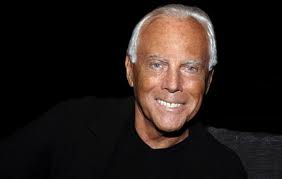
Meanwhile, Giorgio Armani himself looks quite hale and hearty.

Does he have a clue of the kinds of destructive stereotypes he is reinforcing by presenting his models the way he does?

There is nothing beautiful about skin and bones. Ask any concentration camp or famine victim.

It would be one thing if our society projected its thin beauty fetish equally on both men and women.

By presenting women as vanishingly thin, weak, waiflike creatures, while men are robust and muscular, the fashion industry sends an unmistakeable message: beautiful women are weak, admirable men are strong.

Don’t like it?  Who cares, you’re ugly anyway!

Well, Mr. Bones and Sixpacks Armani, since when are you the arbiter of beauty and strength on this planet?  I’ll take a strong woman over a waif any day, and I hope those hunky athletes would do the same.

Taking responsibility for the violence

Marie Colvin

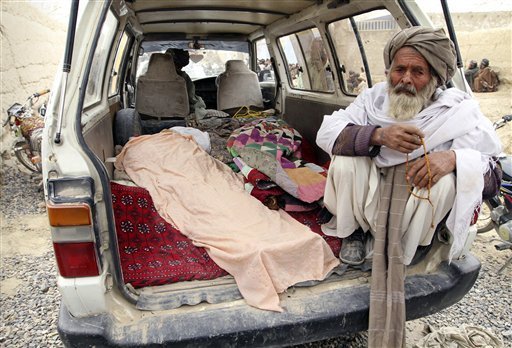
I have to admit that I was not paying much attention to the bombardment of the city of Homs, Syria—now in its 20th day—before the deaths of two Western journalists there this week.

That is completely typical of me as a Western observer sitting comfortably at my desk, far from the tumult and terror of war.

I sat complacently at my desk during the bombardments of Sarajevo in the 1990s, and Baghdad in 2003-4.  I was hardly aware of what was going on in Rwanda during the genocide there in 1994.  Glimmers of awareness come and go about the current violence in the Congo, or in Burma.

For the most part, I go about my business like any animal would, focusing on what’s in front of me.  As long as my belly is full and my personal security is not threatened, I can give a big yawn at the evening news, and go peacefully to sleep.

The attitude of the Western public—especially among Americans—rides the border between ignorance and indifference.  We’d rather not know—so we focus our attention elsewhere, on news that either appears to concern us more directly, or has a more soporific effect.

Oscars, anyone?

Death of Whitney Houston—OMG what a tragedy!

And let’s check in with the Republican horse race, shall we?  Will it be Santorum or Romney this week?  Ho-hum….

Sarajevo, 1994

Meanwhile, innocent civilians, many of them women, children and elders, are dying every day in Syria, just as they did in Sarajevo, Baghdad, Sudan, Libya…the list goes on and on.

This list concerns us Americans for one very good reason: our country is the biggest arms supplier in the world.

That means we enable all these bloody wars.  We build up dictators by selling them arms.  Then when they misbehave and start killing civilians, we wring our hands and act as if we had nothing to do with their rise to power, hence no responsibility for their misdeeds.

If Americans were serious about wanting a peaceful world, we would start by converting our weapons manufacturing plants to peaceful purposes.

Instead of machine guns, let’s make solar panels and sell them to world leaders.  Instead of tanks and jets, let’s export educational software and lightening-fast hardware.

Instead of sending military personnel to deal with civilians in other countries (as they did so ably this week, burning Korans in Afghanistan), let’s send teachers and doctors and enthusiastic, open-minded young people in every profession.

Americans need to understand that we bear a responsibility for the death of every child who dies as a result of a US-made weapon, no matter who wields it.

Giving up violence has to start with giving up the weapons that enable it.

Let’s dare to think outside the box, and put our hearts, minds and bodies in the service of peace.