The Problem of the Color Line Persists

A Grievous Wrong on Georgia’s Death Row – NYTimes.com.

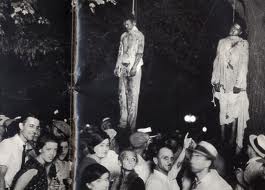
A moment of silence this morning for Troy Davis, unjustly sentenced to be executed today in Georgia for the alleged killing of a police officer in 1989.  There is no doubt in my mind that if Mr. Davis were white, he would be in a very different place in his life right now.

His predicament hangs over me as I prepare to discuss W.E.B. DuBois this morning with my students–The Souls of Black Folk (1903), which is where DuBois famously and prophetically announced not only that “the problem of the 20th century is the problem of the color line,” but also formulated his theory of double-consciousness, the idea that the African American has to look at him/herself through white eyes.

“It is a peculiar sensation, this double-consciousness, this sense of always looking at one’s self through the eyes of others, of measuring one’s soul by the tape of a world that looks on in amused contempt and pity.  One ever feels his two-ness–an American, a Negro; two souls, two thoughts, two unreconciled strivings; two warring ideals in one dark body, whose dogged strength alone keeps it from being torn asunder.”

DuBois goes on to say that he wants neither to “Africanize America,” nor to “bleach his Negro soul in a flood of white Americanism,” but to “make it possible for a man to be both a Negro and an American, without being cursed and spit upon by his fellows, without having the doors of Opportunity closed roughly in his face.”

These words were written at the turn of the 20th century.  How sad it is that after a century of struggle for equality and full citizenship for African Americans, DuBois’s insights still ring true today!
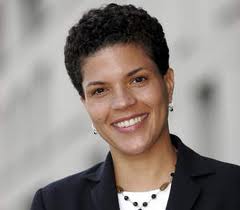
According to legal scholar Michelle Alexander, “More African American men are in prison or jail, on probation or parole than were enslaved in 1850, before the Civil War began.”  In her book on this topic, Alexander calls this “the new Jim Crow,” in which racial segregation and increased police presence in African American communities, combined with poorer schools and lack of economic opportunities have led to a straighter road to prison for young African Americans than to college.

Yes, things have improved since the time of THE HELP, but the road to equality still runs uphill–the playing field is hardly level for blacks and whites in our society, or anywhere in the world.

Troy Davis is yet another victim in the on-going low-level war against people of color in this country.  When are we going to stand up against racial discrimination?  When are we going to say no to the unjust tying of school funding to property taxes, a holdover from colonial times that is holding so many in our nation back? When are we going to insist that the prison-industrial complex stop profiting on the broken lives of young people who never had any chances in life, and start do the job it should be all about: rehabilitation?

Let’s not let the problem of the color line be the problem of the 21st century too.  We have too many other problems to deal with, and we need the creativity and energy of every citizen to remake our civilization into the just and sustainable global society it has always dimly aspired to be.

On Becoming a Statistic

I have never felt like such a statistic as I do now.

As of the past few months, I have lost a job, and the health insurance that went with it; gotten divorced and become a single mom; and so suddenly found myself the proud possessor of a mortgage I can no longer afford.

The full catastrophe.

I take some small measure of comfort from the knowledge that it is not just me.  Women have been hit harder in this recession than men, and single women, especially single moms, worst of all.

“In today’s economic and political climate, women are being dealt a triple blow,” says Anika Rahman, President and CEO of the Ms. Foundation for Women. “Indeed, what was once termed a ‘mancession’ is now a ‘womancession.’ Women are losing jobs faster than men because of drastic cuts in areas like education and health care where they make up the majority of the workforce. As the majority of state and local public-sector workers, women are affected most by attacks on public-sector unions. And women suffer most from cuts to social services because they’re more likely to be poor and care for children and the elderly.”

As a matter of fact, the job I lost was in the public education sector. I taught for nine years at SUNY Albany as a Lecturer in Humanities (ie, a salaried professor on a three-year renewable contract), and I was a member of the union, United University Professionals (UUP).  Because it is very difficult for the university to fire individual union members who have been performing well in their jobs, the administration decided, in the interests of saving money, to terminate my entire program, an innovative first year “living & learning” community that had just been shown by external reviewers to have positively impacted students’ success rate at the university.

The administrators I talked with about the program termination made no bones about the fact that it made better financial sense for them to fire a salaried worker like me and hire a few adjunct professors instead.  Why would you pay someone a living wage and benefits when you can get away with paying someone else a pittance with no benefits?

Sadly this is the state of our higher education system these days.  At least 50% of college and university teachers are now adjunct; at many places, including Harvard and my alma mater, New York University, some 70% of the professors are employed on an adjunct basis.

And we’re not talking about graduate students; we’re talking about people with doctorates, who have worked very hard and spent a lot of time and money to attain the highest degree in their discipline, now reduced to working on a semester-to-semester contract, generally for about $4,000 a course (much less at community colleges), with no benefits.  And no end in sight.

So here I am, living in a house I love bought just before the housing bubble burst, when I was married to a man with a decent job, and working two jobs myself–a house that my current income will not cover.  I am lucky that I have the other job to fall back on; but because I worked two jobs all those years, I am still only part-time at Bard College at Simon’s Rock.  I have two teenage children to support, financially and emotionally, at a time when I myself feel like the one needing support.

There is no doubt that I am one of the lucky ones.  Coming even this close to the edge makes me empathize all the more with the millions of Americans, especially women, who are having to roll with the punches of unemployment and economic contraction.

The stresses on the family are huge.  How many men and women are turning up at the doctors’ office begging for anti-depressants to help them get through the day, or drinking too much, or simply zoning out in front of the TV set in order to escape a crushing reality?  Domestic violence is on the rise; so is suicide.

Listening to the political debate over jobs infuriates me because the whole discussion is so superficial.  We need more than a “stimulus” in our society.  We need more than “shovel-ready” jobs.  We need more than an extension of unemployment benefits, or even a restructuring of our tax system.

What we need is to put the soul back into our social relations.  We need to think deeply, as a society, about our priorities and goals.  Do we really want to become a society where the elite managers live in luxury and ease behind heavily guarded gates, while the masses toil miserably on the edge of ruin, and the prison populations grow ever larger, serving the function of Scrooge’s infamous “workhouses”?

We live in a country, and a world, that is rich in natural resources and talented people.  With proper stewardship, there could be enough for everyone to enjoy a decent existence on this planet, a life lived in dignity, with meaning and reward found in service to the common good.

Where is the social movement that will mobilize people like me to stand up and insist on a better future?  Who will throw the spark that ignites the fire for change?

Labor Day 2011: in which we watch capitalism dig its own grave, and plant the seeds for a better world

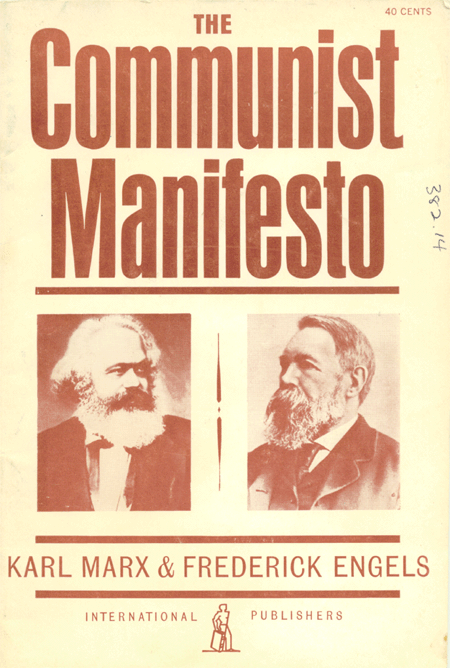
On Labor Day, my students and I discussed “The Communist Manifesto” by Marx & Engels.  We found the Manifesto remarkably prophetic, describing corporate globalization to a T long before either word had been invented, as well as the recurring, ever-more-destructive cycles of boom and bust that Marx predicted would cause capitalism to “dig its own grave.”

We talked about how Marx didn’t envision the final limit to growth being the carrying capacity of our planet, and how the climate crisis may be what finally does the job of sending capitalism over the edge.

But no one could muster much enthusiasm for Marx’s conviction that the proletariat–ie, working folks–would then rise, take over, and make the world a better place.

Looking at the disastrous social experiments in the USSR, China and Cuba, it’s hard to put much credence in Communism as a viable alternative.

It’s also hard to imagine that a social system led by the working class would automatically be any better than the one we have now, dominated by the technocrats and financiers. We’re all human, after all.

Human in our failings–but also human in our creative power to envision new possibilities.

We finished off Labor Day at Simon’s Rock yesterday by having the whole Sophomore class gather to watch “Metropolis,” a visionary film that shows how a young man from the ruling elite is moved by love to become the “heart” that joins the “head”–the technocratic elite–and the “hands,” the workers who actually do the physical labor that makes the vision a reality.

In the allegory of the film, this young, well-educated man provides the missing link, compassion, that can heal a society that has become terribly unhappy in its alienation–the coddled rulers as unhappy, apparently, as the oppressed workers.

It has always been the case that the educated elite have a powerful role to play in social change, if our action springs from the heart.  To survive the coming cataclysms of the 21st century, humanity is going to need all its technological prowess, joined with the age-old wisdom of the peoples who have never embraced western “civilization,” who still know how to make subsistence a happy and healthy way of life.

Head, hands and heart, joining in the common goal of survival.

There are groups now who are forming these kinds of alliances and working actively to create the path towards a sustainable future.  For instance, the Pachamama Alliance, and all the groups who worked on creating the Earth Charter.

The only way capitalism is likely to survive climate change is if the economic elites crack down on the masses with military power–mind controlling hands in heartless fashion. We’re seeing that happen now in various smaller countries in the world.

As a strategy for global domination, I don’t think it will work–it just takes too much in the way of resources.

How much better it would be to have a blueprint for planetary survival based on heart, growing out of our deep love for the natural world that created us and continues to sustain us, despite all we have done and continue to do to destabilize and destroy her.

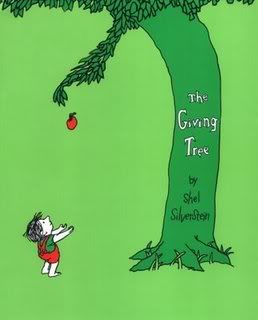
The Giving Tree is my least favorite book in the world, and I can’t imagine why parents continue to buy it for their children.  Let’s write a new book in which instead of destroying our giving tree, our planet, we nourish her and watch her grow with delight.

Let capitalism step off into the grave.  And let a new world be born, in love, light and laughter.

What happened to the Obama we elected?

If you won’t do it, Mr. President, we will!

Pretty Ugly

“If this guy prints more money between now and the election, I don’t know what y’all would do to him in Iowa but we would treat him pretty ugly down in Texas. Printing more money to play politics at this particular time in American history is almost treacherous — er, treasonous, in my opinion.

Governor Rick Perry of Texas, speaking about Federal Reserve Chairman Ben Bernanke’s efforts to prevent deflation

When I think about Texans “treating someone ugly,” what leaps to my mind is lynching.  Even so conservative a group as the Texas Historical Association is unable to whitewash the truth of white Texan oppression and brutalization of the Mexican Americans (“Tejanos”) and African Americans throughout the 19th and 20th centuries.

To be heading into a Presidential election year with this kind of hateful invective being thrown around, especially in a contest where a Black man is involved, is truly frightening.

We who are watching the slow-motion political lynching of Barack Obama unfold cannot afford to be silent bystanders.

The Rick Perrys of our country are treating our President “pretty ugly” every single day.

Although I share many progressives’ disappointment with Obama’s reluctance to call out these ugly folks and fight fire with fire, I recognize the bind he’s in, and I cannot stand by silently while he’s symbolically dragged through the mud (as happened to the victim of one of the most recent Texas lynchings, Brandon McClelland, in 2008).

I’ve spent a lot of time this past month wishing I could just move to Canada and be done with the ugliness here in the U.S.

But this is my country, at least for now, and I must do my best to make it a better place, a country I can be proud of.

My ancestors left Russia, Poland and Germany in the 19th century precisely because of the kind of slimy and dangerous hatred that we heard come out of Governor Perry’s mouth this week.  They believed they would find a more welcoming and ethical society here in shadow of the Lady of Liberty.

Of course, America they knew in the early 20th century had terrible problems of racism, elitism and sexism. People fought for change throughout the 20th century, and they won big victories.

We can’t let the clocks be turned back now.  We must fight on, now more than ever!

A great example of ordinary heroism at work….

It can be as simple as this: a group of Israeli women making the effort–and taking the risk–of taking a group of Palestinian women to the beach.

How sad is it that these Palestinian women, living so close yet so far from the coast, had never tasted the salty delight of the ocean before?

And how wonderful that their more privileged Israeli sisters broke ranks to make it happen….

This story is worth the read–