Joining Humanity’s Immune System: In the Body, in the Classroom, in the World

I had a tough day today in the classroom. I guess I brought it on myself by daring to raise unmentionable issues like violence against women and cancer….daring to follow Eve Ensler’s lead by assigning my students to read her remarkable cancer/incest survivor memoir, In the Body of the World. Unknown I assigned it for my class on “Media Strategies for Social and Environmental Justice.” The first book we read was Bill McKibben’s activist memoir Oil and Honey, about how he founded 350.org in a college classroom and how it grew to be a hugely successful global movement aimed at raising awareness about climate change and pressing for swift transition to renewable energy models.

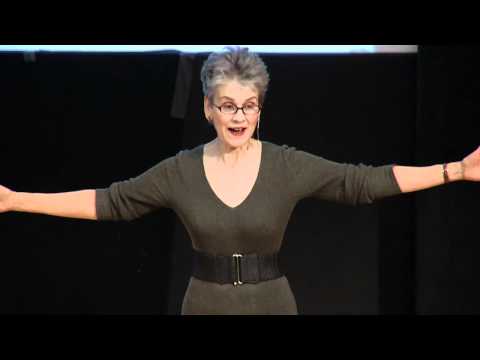
This week we’ve been looking at Eve Ensler’s trajectory from a theater artist interviewing women about their vaginas and creating the series of monologues that would become “The Vagina Monologues,” to founding the V-Day movement to end violence against women, and now the One Billion Rising for Justice global phenomenon. Eve Ensler TED

But along the way, Eve Ensler got cancer. It arrived, she says in her viral TED Talk “Suddenly My Body,” with the force of a bird smashing into a plate glass window.

Her cancer memoir, In the Body of the World, is remarkable in its fearless interweaving of the personal and the political, the individual and the global, the violent rape of a daughter (Eve herself) with the violent rape of our Mother Earth by Western capitalist culture.

 ***

My plan for the class was to focus mostly on the cancer issue…to look at the horrifying statistics of cancer in the U.S., to name it as the runaway pandemic it is, and to think with the students about how we might most effectively employ media tactics and tools to raise awareness and push for social change. But I didn’t realize how deeply Eve Ensler’s description of violence against women, as related the violence of our chemical assault on Mother Earth, would resonate with these young people. Some of them were deeply troubled, even to the point of having to leave the class.

With the students who stayed, I had a good discussion about cancer itself. We looked at the most recent statistics of cancer in the U.S. (1.6 million NEW cases projected for 2014 by the American Cancer Society) and discussed the most common media strategies for dealing with the issue of cancer in the U.S.: walks, runs and galas “for the cure.” LivingDownstream_Portrait1
It took some pushing, but eventually I got the students to begin to discuss how activism that only focuses on “the cure” is missing the huge point: we need to focus on preventing cancer, not just curing it once it’s appeared. In Sandra Steingraber’s famous formulation in her cancer memoir Living Downstream, we need to start looking upstream.

What would looking upstream really mean? Buried deep in the American Cancer Society report is a short section on the environmental causes of cancer. This is what it says: “Environmental factors (as opposed to hereditary factors) account for an estimated 75%-80% of cancer cases and deaths in the U.S.”

Let me say that again.

“Environmental factors (as opposed to hereditary factors) account for an estimated 75%-80% of cancer cases and deaths in the U.S.” Environmental factors in the context of this report mean manmade chemicals and toxins present in our environment, from water to air to soils to our bloodstreams and mothers’ milk.

So what would it mean, I asked the students, to really probe this issue with the intent of stopping cancer before it begins—going to the source of the problem? It would mean, of course, we agreed after some discussion, pursuing the mining, chemical, pharmaceutical, atomic energy, fossil fuel and industrial agriculture companies. Oh yes, those—the ones that rule the world. It’s a tall order. Just like stopping violence against women, or reining in the carbon polluters and shifting to renewable energy. These are the major issues of our time, though. If we’re not stepping up to work on these issues, what are we doing with our brief, precious lifetimes?

***

In my next class, “Islamic Women Writing Resistance,” we were talking about violence against women, this time in the geographical context of Afghanistan.

Malalai Joya

Malalai Joya

Since we were reading the autobiography of Malalai Joya, the young woman who was elected a member of the Afghan Loya Jirga and famously called out the mullahs on their oppression of women, I steered the conversation into a discussion of leadership. How was it that despite the horrifically violent Afghan society under the Taliban and the warlords, where 90% of women are subjectd to physical, mental and sexual abuse, Malalai had managed to retain her confidence and bravado, her sense of herself as a leader?

And more importantly, what are the costs to a society that not only doesn’t respect and include the talents of 50% of the population, but actively works to suppress these gifts?

The answer to the first question has everything to do with Malalai’s father, who encouraged her to go to school, to become a teacher, and eventually to become an activist politician. Without his support, she could never have succeeded as she did. Chalk one up to the power of allies.

The second question is the one that really interests me. It seems to me that it takes tremendous energy to oppress half the population. Eventually so much is going into terrorizing the women and their potential male allies that there is nothing left over, in terms of psychic energy, to build a healthy, vibrant society.

It’s a true zombie society, with the powerful preying on the weak and the whole social fabric fraying into oblivion.

Is it an accident that the societies where women are being most savagely oppressed are also the societies that are poorest, most chaotic and most violent? Think Somalia, Afghanistan, Democratic Republic of Congo, Bosnia….

There are some countries where wealth has made it possible for strict patriarchal control of women to proceed without terrible violence and disorder: Saudi Arabia and the other Emirates, Iran, Iraq, Egypt. Even, maybe, the U.S., Russia and the E.U., where women tend to self-regulate their own subservience to the patriarchy, conditioned by high doses of media and peer education.

In every case, though, what we’re talking about is the same. We’re losing millions of bright, talented, gifted people to cancer every year. We’re losing millions of bright, talented, gifted women to violence and self-sabotage every year. And at the same time, this is happening against the backdrop that Eve Ensler describes so movingly in her book: the interweaving of the violence against women, the violence against individual bodies, and the violence human civilization is perpetuating against the Earth.

“Cancer is essentially built into our DNA, our self-destruction programmed into our original design—biologically, psychologically,” she says. “We spend our days, most of us consciously or unconsciously doing ourselves in. Think building a nuclear power plant on a fault line close to the water. Think poisoning the Earth that feeds us, the air that lets us breathe. Think smoking, drugging. Think abusing our children who are meant to care for us in old age, think mass raping women who carry the future in their bodies, think overeating or starving ourselves to look a certain way, think unprotected sex in the age of AIDS. We are a suicidal lot, propelled toward self-eradication” (194).
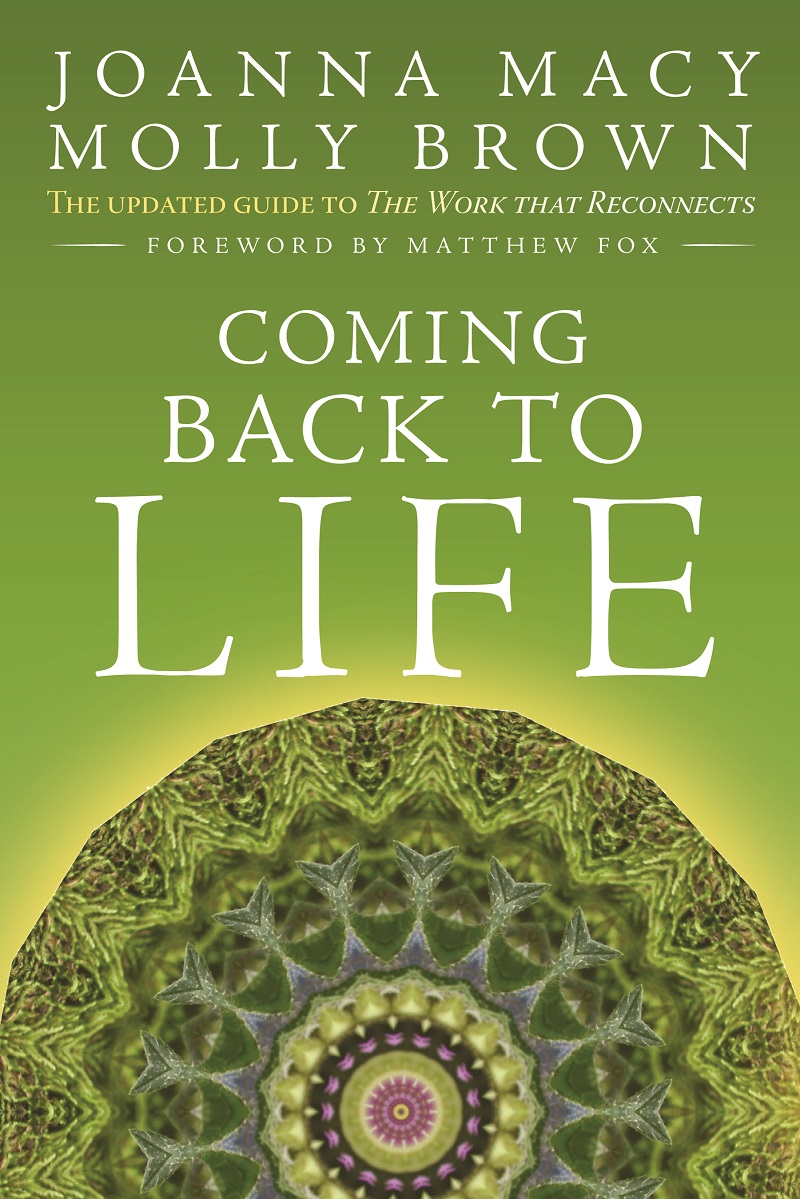
??????????????????????It doesn’t have to be this way. I am so glad to be reading the new edition of Joanna Macy’s classic work Coming Back to Life, as an antidote to the darkness described by Ensler and Joya. Macy quotes Paul Hawken, who refers to activists and activist organizations as “humanity’s immune system to toxins like political corruption, economic disease and ecological degradation.”

This immune system, Hawken continues, “can best be understood as intelligence, a living, learning, self-regulating system—almost another mind. Its function does not depend on its firepower but on the quality of its connectedness….The immune system depends on its diversity to maintain resiliency, with which it can maintain homeostasis, respond to surprises, learn from pathogens and adapt to sudden changes” (qtd in Macy, 55).

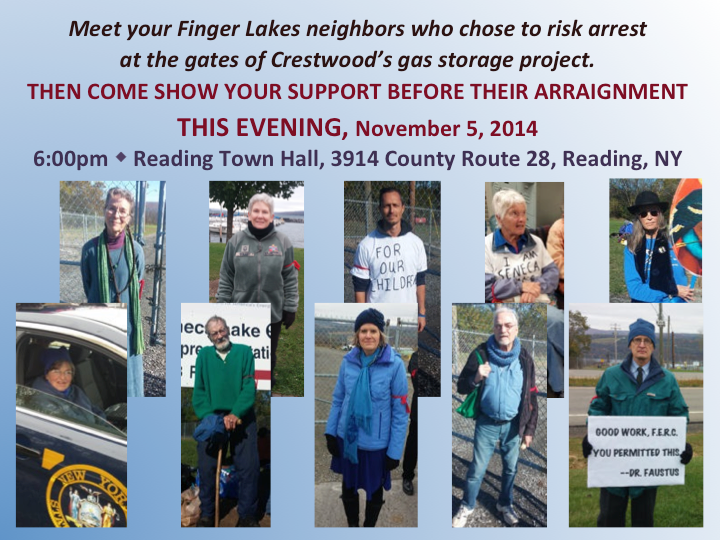
A current example of such an immune system in action is Sandra Steingraber’s anti-fracking movement in upstate New York. She and her Seneca Lake defenders have come to the rescue of the fragile environment of the Finger Lake region and its jewel, Seneca Lake, putting their own bodies on the line just like Eve Ensler did when she allied herself with the women of the Congo, vowing to stop the violence. 10470955_854714074549076_2405675760464249402_n Any one of us has the power to become a defender of life. All we have to do is to pay attention to what’s happening, start asking the hard questions, stop going along with the flow. We need to do this is in a proactive way. We’re not looking for a cure to violence against women/against the Earth—we want to address the underlying causes of the violence, to look upstream and stop it at the source.
This necessitates a willingness to spend some time outside of our own comfort zones of denial and voluntary blindness. It involves looking at painful, messy, upsetting aspects of human existence, and taking responsibility for the ways in which each of us contribute to the status quo, if only by looking away. It will be personal as well as political in ways that will often hit entirely too close to home.

We need to open our eyes and really look at what our Industrial Growth Economy and the society it has created is doing to our bodies and the body of the world. We need to look at the way women’s bodies, in particular, are forced to bear the brunt of the pain, even though women account for just a fraction of inflicted violence in the world.

Don’t look away. Take it in. And then think about what you can do to join “humanity’s immune system.” Look for me on the front lines—I’ll meet you there. Dandelion_seeds_Computer_backgrounds
Finding Hope in Hard Times

Amid all the darkness and chaos overtaking our world—the beheadings of journalists and the enslavement of women, the bloody flux of Ebola, the melting of the poles and the relentless advance of the bulldozers and chain saws into the forests—amid and despite all that, I am still seeing the frail but determined light of hope burning.

And the best thing is, I see this light growing in places that surprise me.

In recent weeks some huge financial players have announced their intention to fight the stranglehold of fossil fuel companies over our political economy.

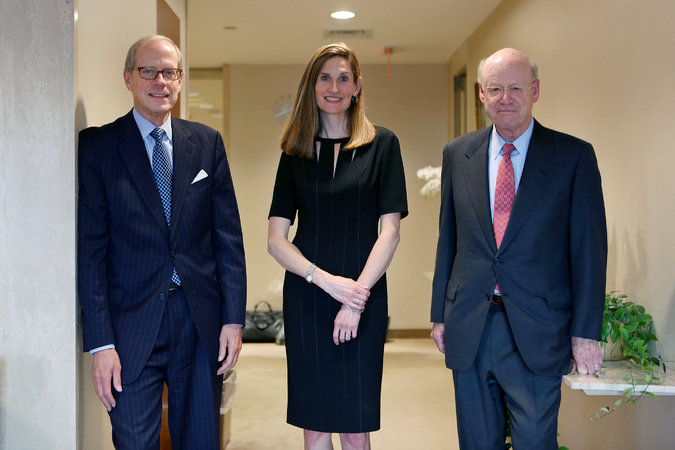
Stephen Heintz, left, with Valerie Rockefeller Wayne and Steven Rockefeller.  Photo: Hiroko Masuike/The New York Times

Stephen Heintz, left, with Valerie Rockefeller Wayne and Steven Rockefeller. Photo: Hiroko Masuike/The New York Times

Right after the dramatically successful People’s Climate March in September 2014, the Rockefeller family declared it would join forces with the nascent fossil fuel divestment movement. John D. Rockefeller built a vast fortune on oil. Now his heirs are abandoning fossil fuels,” trumpeted the lede in the New York Times article by John Schwartz.

“The family whose legendary wealth flowed from Standard Oil… [announced] that its $860 million philanthropic organization, the Rockefeller Brothers Fund, is joining the divestment movement that began a couple years ago on college campuses.”

This is big news indeed! In a society where money rules, the people with the most privilege are the ones with the most social power to create change, and the Rockefeller family can catalyze other wealthy philanthropists to start to think outside their parents’ box.

Not that the rest of us have no power. It’s only because college students and their adult mentors dreamed up the divestment movement and pushed vigorously for it that the Rockefellers made this move.

Student divestment activists at Tufts University

Student divestment activists at Tufts University

We ordinary folks—those of us who are awake to the critical state of our planet and human civilization today—can and must apply pressure to the rich and powerful in our society to shift their resources from our current death-dealing economic model to a life-giving, ecologically sound human relationship to the planet that sustains us.

timthumb.phpWhen current economic top dogs start to pay attention at last, we know we’re making progress. It was heartening to hear that the Women Donors Network is focusing its 2014 annual conference on strategic visioning of future scenarios for the year 2030.

At this year’s annual conference, the organizers state, “we will get the chance to step out of the urgent demands of the present to think big and strategize for the long term. What kind of future do we want to create? How can we work with the major trends we know are going to shape the future? And what can a powerful group of progressive women philanthropists do together to make the most of this critical moment?”

I find hope in the fact that this big group of wealthy women will be spending their valuable time not at a spa or a vacation in Paris, but at a conference where they’ll be, according to the conference Program, “’transported’ to 2030 to experience what our collective future could look like based on the decisions we make now, in this critical moment….We will participate in three “future scenarios” that are designed to help us clarify the role we hope WDN and all of us as individual philanthropists can play in helping strengthen the progressive social change movement.”

Go women go! The more of us become aware of the extent to which our choices today affect the futures that await us, the more we can act to create the green and glowing future we want.

Chief Oren Lyons

Chief Oren Lyons

I find hope too in the news that Chief Oren Lyons of the Onondaga Nation will be making a special visit to the Bioneers conference this month to talk about the new international initiative, the Plantagon urban agriculture system. A joint venture of the Onondaga Nation, Sweden and several East Asian investors, the Plantagon aims to revolutionize urban agriculture by making it possible for cities to feed themselves locally—a shift that will have enormous benefits in relieving pressure on rural water and land, reducing dependence on fossil-fuel transportation of produce, and also reducing or eliminating the need for harmful chemical inputs.

Artists' rendering of the Plantagon

Artists’ rendering of the Plantagon

To me, the word “Plantagon” summons up a word that has very different connotations, “Pentagon.” When we Americans hear the word Pentagon, we think immediately of military force and the way American military might has most often been called upon to defend “American interests”—politico-speak for access to resources, principally oil and precious minerals, often at great cost to local people and environments.

The U.S. Pentagon

The U.S. Pentagon

Although it may seem counter-intuitive, I find hope in the recent announcement that the Pentagon is now taking climate change into account in its strategic planning, not just for the distant future, but for next week.

In a new report, the Pentagon asserts unequivocally that “climate change poses an immediate threat to national security, with increased risks from terrorism, infectious disease, global poverty and food shortages,” reported Coral Davenport in The New York Times. Whereas “before, the Pentagon’s response to climate change focused chiefly on preparing military installations to adapt to its effects, like protecting coastal naval bases from rising sea levels,” Davenport writes, “the new report…calls on the military to incorporate climate change into broader strategic thinking about high-risk regions — for example, the ways in which drought and food shortages might set off political unrest in the Middle East and Africa.

“Experts said that the broadened approach would include considering the role that climate change might have played in contributing to the rise of extremist groups like the Islamic State.”

Well hallelujah! At last the most powerful force in the world is recognizing that climate change is here, it’s real, and it’s already a major destabilizing factor in world politics.

The challenge now will be to see if civil society can exert enough pressure on the military to get them thinking in proactive ways, rather than being a reactionary, often highly destabilizing force in the world.

Why can’t we use the wealth and resources of the U.S. military-industrial complex to support and sustain life on the planet?

Let’s get those military planners, along with the big boys at the World Bank, IMF and the U.S. Congress to understand that building schools and investing in sustainable agriculture and distributed energy networks is a far smarter and saner use of funds than blowing things up and rebuilding them (which has been our strategy in the Middle East over the past decade).

I see glimmers of hopeful light behind many of the dire stories in the news right now. We need to focus on those flickers of consciousness, blow on them gently and encourage them to grow brighter and stronger.

Hope is a verb, and we do it together. I’m working on it; how about you?

images-1

Reconnecting with the Earth…with Joanna Macy

images

Joanna Macy

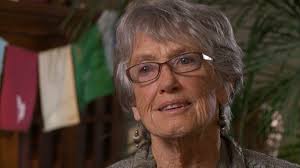
At 85, Joanna Macy is still a beautiful tiger of a woman: fierce, focused, passionate. At a recent weekend workshop at Rowe on her signature Work That Reconnects, she was a keen and generous leader, with an impeccable sense of when to speak and when to be silent, when to share the microphone with younger leaders, when to get out in front and show the way.

Joanna has been refining the Work That Reconnects since the 1980s, when it grew out of her engaged Buddhist practice and her anti-nuclear activism. Its premise is simple: that we are integral parts of the Earth, having emerged out of carbon and water billions of years ago just like everything else on the planet; but we humans, having caused the near-collapse of the current epoch with our fixation on industrial growth run on chemicals and fossil fuels, have a special role to play in shifting our civilization to a sustainable footing.

To step into our power as change agents, we must first undo the social conditioning that has alienated us from our primary relationship with the Earth. The Work That Reconnects accomplishes this through a series of exercises and meditations, which can take a day or a week or much longer to accomplish, depending on how much time you have and how deep you want to go.

In the weekend version of the workshop, we spent a three-hour session on each of the three stations on Joanna’s Spiral of the Great Turning, led through a series of interactive activities designed to get us thinking about ourselves as bodhisattvas, awakened ones willing to give our lives in service to the higher good of all life.

tree

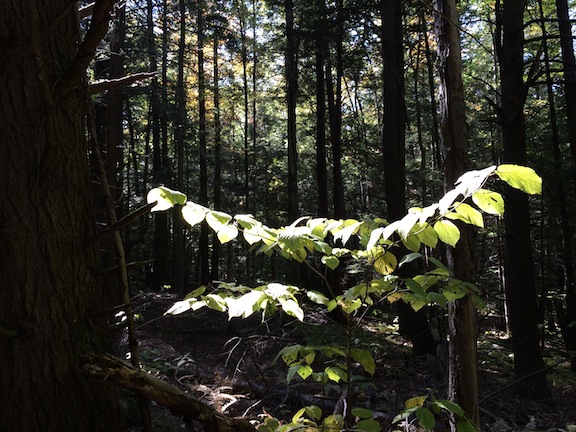
In the forest at Rowe. Photo by J. Browdy

First came Gratitude: appreciating and giving thanks for being alive in this beautiful place, alongside myriad other complex and beautiful creatures who call the Earth home; and also giving thanks for our own strengths and capacities to become active warriors on behalf of the planet.

Then there was the grief and despair work for which Joanna is justly famous: she calls it Honoring Our Pain for the World, and it is a radical, counter-cultural push to sit with and confront all the sadness, despair, anger and pain we feel when we allow ourselves to become fully conscious of the destruction and devastation human beings are wreaking on the planet. Grief for individual loved ones lost to cancer mingles with grief and anger at the loss of the Great Blue Herons and the paved-over forests, in a powerful and galvanizing outpouring of rage and pain.

After an evening break that featured song and dance around the warmth of community, we turned the next morning to the last two stations on the spiral: Seeing with New Eyes and Going Forth.

Joanna talked about the necessary shift from the alienated form of seeing our relationship to the Earth as “our supply house and our sewer” to a new form of seeing, an understanding that we are embedded in the sacred living body of the Earth, and what we do to her we do to ourselves.

leaves

A closer look. Photo by J. Browdy

One of the reasons I love Joanna’s approach to activism is because she is unafraid to call on the imagination as one of our primary tools for social change. In a powerful closing exercise, she arranged us in pairs and asked one person to take the role of a descendant seven generations in the future—about 200 years hence, in 2214. The other person remained herself, in 2014.

The future being, prompted by Joanna, asked a series of questions of the ancestor, and then listened to the answers—this was not a conversation or a dialogue, but a witnessing of the struggles of this ancestor—you and me, in our time—to bequeath a livable world to our children, grandchildren, and on down the line.

After listening to three different present-day people talk about their work for the planet—what makes it hard, what makes it rewarding, what keeps them going day to day—the future being had a chance to respond, and it was an incredibly powerful experience to imaginatively inhabit the spirit of the future encouraging us embattled ones in today’s world to find the strength to persevere.

Joanna at Rowe

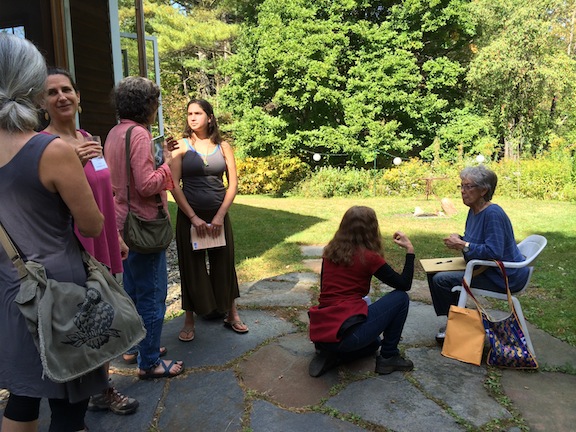
Joanna signs books and talks with workshop participants. Photo by J. Browdy

In the call to Go Forth, the final turn on the spiral, Joanna reminded the gathering that this work is impossible to do alone—“it’s impossible to even take it in alone,” she said. We need to create communities of “Shambala warriors for the planet,” who can function like “the immune system of the Earth,” a potent metaphor she attributed to Paul Hawken.

In the Shambala prophecy that Joanna has been sharing ever since she heard it from one of her Tibetan Buddhist teachers back in the 1970s, it is said that great courage is required of those who work for the good of the world, because we must go right to the heart of the “barbarian empire,” armed only with two critical weapons: compassion for all living beings, and the radical insight of interbeing—that everything in this biosphere is intricately and integrally interdependent and connected.

And of course the truth is that the “barbarians” who inhabit this destructive empire are not strangers. They are, quite simply, us.

At the very end of the workshop, Joanna led us through a series of affirmations honoring our perceived enemies as our most important teachers.

Through our awareness of what we don’t want, we learn what we care about most. And through our caring—what Joanna calls the awakening of our “heart-mind”—we find the courage, passion and commitment to do the most important work of our time: transitioning from our current dead-end, greed-based, exploitative society to a society that honors the sacred in all life and works respectfully for the well-being of each participant in the dance of planetary life.

old tree

An elder maple in the forest at Rowe. Photo by J. Browdy

As I walked out under the ancient maples and hemlocks in the forests around Rowe, lit up in all their autumnal glory on this beautiful September weekend, I could feel the warrior spirit rising in me and in all of us who came from near and far to learn from Joanna.

Now is our time, and time is precious: there is none to waste as the forces unleashed by the industrial growth of the past 300 years threaten so many life forms on the planet with extinction.

Will we succeed in transitioning to a sustainable future? Will we humans grow into our potential as stewards and nurturers of our beautiful garden, this Earth? Or will we all slip away into the history of the planet, as the march of evolution and transformation continues on to the next era?

All we can do is go forth with good heart and brave spirit into our own communities and carry on the work that reconnects in our own spheres. I am so grateful to Joanna Macy for continuing to lead the way and for so generously sharing the powerful tools and practices she has developed over a lifetime, for others to take up and carry forward into the Great Turning.

JB & Joanna Macy

Joanna and Jennifer

N.B. Joanna’s classic book Coming Back to Life, a guidebook for doing the Work That Reconects by yourself or (preferably) with groups, has just been re-issued by New Society Publishers in a revised and updated edition. Joanna is hoping that people will gather in schools and church basements, in Transition Towns and activist organizations, to do the inner work that can sustain and fuel the outer work we must all undertake to transition to a life-enhancing human relationship to Earth.

The People’s Climate March: Taking the Evolutionary Leap of Radical Democracy

The People’s Climate March in New York City is just one manifestation of a huge sea-change sweeping through our culture. Or perhaps “seeping” would be a better verb—this shift in awareness is not happening with the tsunami force of a revolution, but more with the steady, determined drip-drip-drip of water undermining rock.

Humans are paradoxical. On the one hand, we love everything that’s new and innovative, we all want to be out ahead of the curve when it comes to technological breakthroughs and new ideas. On the other hand, we hold tight to the received wisdom of our forebears, living by enshrined writings thousands of years old (the Bible, the Koran, the Mahabharata, Confucius, etc.) or hundreds of years old (the Declaration of Independence, the Constitution, the Bill of Rights).

We have established elaborate educational, political and legal systems designed to hold us to a particular form of society, permitting free, innovative thinking only along narrow channels carefully defined by the interests of business and commerce.

The arts and humanities, traditionally the realm of creative, imaginative exploration, have been steadily starved in this brave new world, which can only imagine creativity in the service of profit.

What happens to a society that can only envision creative energy in an instrumental, utilitarian light?

We become a society of robots. We lose our connection to the soul of the world, the anima mundi that sustains us humans along with all other living beings on the planet.

http---pbs.twimg.com-media-ByDzJSPIYAA_RHcThe People’s Climate March, which is happening not only in New York City but worldwide, with 2,808 marches and events in 166 countries, bears welcome witness to the fact that the sparks of creative, independent thinking have not totally gone out.

There are many, many people worldwide who are aware, and aghast, at the failure of our political and business leaders to act in the best interests of the people and all the beautiful, innocent creatures who are slipping away into the night of extinction day by day due to the relentless human assault on our shared planet.

We are here, we are aware, and we are engaged. We are not going to stand by silently and let corporate greed and shortsightedness overwhelm us.

It is true that business and government have a stranglehold on official channels of communication, education and social change.

They control the curricula taught in our schools, what appears on our major media channels, and what projects and areas of creative exploration are funded. They keep us in line with the debt bondage of school loans, mortgages, car payments and the fear of not having enough money in the bank for a comfortable old age. We’re so busy running on the treadmills they’ve set up we have no time or energy to think about changing the system.

Or do we?

So far, the one social area that has not been overtaken by corporate/governmental control is the World Wide Web. It’s still a Wild West space, a place where you can find everything and everyone, from dangerous sadists to beneficent spiritual leaders. There’s room for every kind of idea out there to percolate through our collective consciousness. And make no mistake: the energy we’re seeing in the People’s Climate March is fueled in large part by the distribution power of the Web, the ability to get the word out and get people fired up to come together to take a stand.

We saw it happen in the Arab Spring, where people used cell phones and texts to organize themselves to resist oppression.

We saw those people get beaten back, the promise of their revolution squashed by the entrenched power of men with guns and tear gas.

The rise of the Islamic State, like the rise of Al Quaeda and the Taliban, is all about conservative forces resisting change.

I am just as afraid of men with guns and tear gas as the next woman. I am happier making revolution on my laptop than in the streets. But at some point we have to come out from behind our screens, get off the treadmills of debt bondage, look around us at the beauty of the world, and say: this is what I want to live for, and this is what I’m willing to die for.

Terry Tempest Williams.  Photo by Cheryl Himmelstein

Terry Tempest Williams. Photo by Cheryl Himmelstein

Environmental activist and writer Terry Tempest Williams, in her book The Open Space of Democracy, says that the time has come to “move beyond what is comfortable” (81) in pursuit of what she calls a “spiritual democracy.”

“We have made the mistake of confusing democracy with capitalism and have mistaken political engagement with a political machinery we all understand to be corrupt,” she says.

“It is time to resist the simplistic, utilitarian view that what is good for business is good for humanity in all its complex web of relationships. A spiritual democracy is inspired by our own sense of what we can accomplish together, honoring an integrated society where the social, intellectual, physical and economic well-being of all is considered, not just the wealth and health of the corporate few” (87)

Williams calls for a radical recognition of the interdependence of all life on Earth. “The time has come to demand an end to the wholesale dismissal of the sacredness of life in all its variety and forms,” she says. “At what point do we finally lay our bodies down to say this blatant disregard for biology and wild lives is no longer acceptable?” (86)

If we humans could step into our destiny as the stewards of our planet, the loving gardeners and caretakers of all other living beings, we would harness our incredible intelligence and creativity to re-stabilize our climate and do what needs to be done to ensure the well-being of all.

Williams calls this “the next evolutionary leap” for humanity: “to recognize the restoration of democracy as the restoration of liberty and justice for all species, not just our own” (89).

DSC_2200WIf we are able to take this leap, we will not only avert climate-related disaster on a Biblical scale, we will also overcome many of the social problems that we currently struggle with. “To be in the service of something beyond ourselves—to be in the presence of something other than ourselves, together—this is where we can begin to craft a meaningful life where personal isolation and despair disappear through the shared engagement of a vibrant citizenry,” says Williams (89).

Williams’ small gem of a book grew out of a speech she gave at her alma mater, the University of Utah, in the spring of 2003, as America was rushing into its ill-conceived War on Terror in Iraq. She describes her heart pounding as she got up to make a speech advocating a different form of democracy than that embraced and espoused by all the conservative friends and family sitting in the audience before her.

Challenging one’s own friends and family, betraying one’s own tribe, is the hardest aspect of being a social revolutionary. You have to question the very people you love most, who have given you so much and made your whole life possible.

But if we become aware that the social systems that gave birth to us are the very social systems that are undermining the possibility of a livable future on this planet, can we continue to just go with the flow, to avoid asking the difficult questions?

Or will we become change agents who work slowly and steadily, drip by drip, to awaken those around us, those we love most, to the necessity of undertaking “the next evolutionary leap” in the human saga on the planet?

1604741_560811498264_7010113564277153021_n

Are We Going to Stand By Silently in the Face of Ecocide? Hell no!

In my talk the other night, “The Personal is Planetary,” which I gave as the opening lecture of the Berkshire Human Rights Speaker Series, I set out to point to climate stabilization as the most important issue of our time, the one that dwarfs all the other social and environmental struggles we may be engaged with.

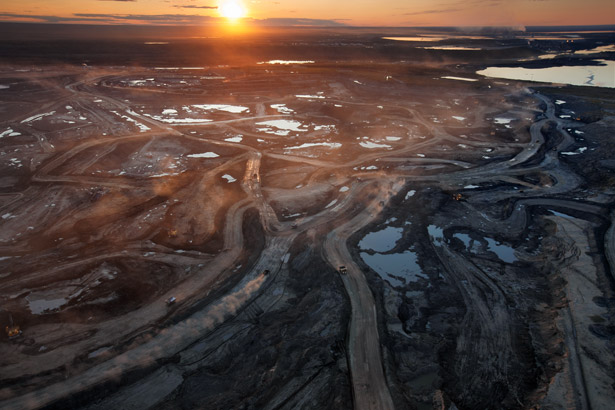
candian-oil-sands-615Most people know by now that if we don’t shift to renewable sources of energy like solar and wind, the greenhouse gases caused by the profligate burning of fossil fuels are going to wreck our planetary environment so badly that our beautiful Earth will become unlivable for most of her current inhabitants, including humans.

“We know and we don’t know,” I told the audience. “We know but we see no role for ourselves as change agents. We know but we’re afraid of the consequences of protest. We know but we don’t want to know. Life is comfortable; why rock the boat?”

I wondered aloud how bad things would have to get before we sunpower_maincomfortable Americans finally understand that it is past time for our active engagement in forcing our government and our corporations to do what needs to be done to ensure a livable future for us all.

Shocks can be necessary, and we’ve already had a few: Hurricanes Katrina, Irene and Sandy, along with regional droughts, floods and wildfires in many parts of the country, all weather-related events exacerbated by global warming.

But Americans are still pretty cushioned from the full effects of climate change. Around the world, for people of other nationalities and for millions of non-human species, things are already reaching a tipping point beyond which recovery will be difficult, even impossible.

We Americans, privileged and coddled as we are, need to open up our eyes and take in the full enormity of the crisis that confronts us.

This is bigger than any individual war, even against evil empires like the Islamic State. It’s bigger than any individual social justice issue, even the ones I’ve spent a good part of my life fighting for, like women’s equality and anti-racism.

As I said in my talk, “I don’t think it’s an exaggeration to compare our role as bystanders to the destruction of the forests and oceans and all their inhabitants to the role of the ‘good Germans’ who watched the trains full of Jews roll into the concentration camps and professed to not know what was going on behind those walls.”

Six million Jews died in the Holocaust, some of them my distant relatives. I’ve been taught all my life that we must remember this genocide, and others like it, so that it will never happen again.

And yet all of us are willing to stand by, deaf, blind and mute, as millions upon millions of innocent living beings on the planet are sacrificed to the maw of human industry in its current greedy, profit-driven guise.

Tens of thousands of albatross are dying from eating plastic out of the Pacific Ocean

Tens of thousands of albatross are dying from eating plastic out of the Pacific Ocean

Fossil fuel extraction, from fracking to tar sands to deep-sea drilling; industrialized agriculture, with its chemical poisoning of the earth and waters; mining and deforestation; plastic garbage on land and sea; endless urban and suburban sprawl—all this is driving what scientists now refer to as the Sixth Great Extinction, which will only intensify as the planet continues to heat up.

Eventually, if we stand by and do nothing, we humans too will join the long death march to extinction, or at least to a total collapse of our ruinous global civilization.

Are we going to stand by and do nothing while the planet burns? Are we going to allow our government and our corporations to commit planetary ecocide? Are we going to continue to pretend that we don’t know what’s going on?

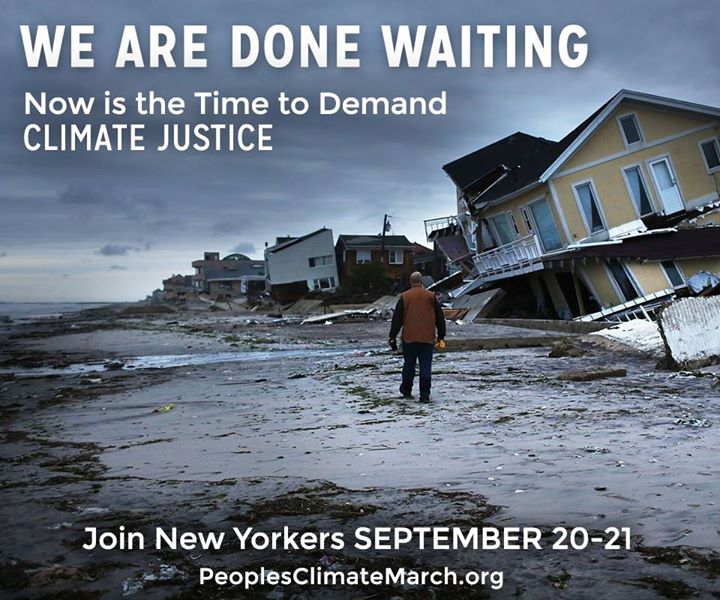
10453020_1454513064799672_5914704337046021387_oThis Sunday there will be an opportunity to take to the streets to demand effective action on climate change. Tens of thousands of Americans from all over the country will be converging on midtown Manhattan for the People’s Climate March to show the world that we care about our future and we know that our destiny is bound up in the health and welfare of the entire planetary ecosystem.

It is truly a legendary moment in the history of humanity. We have the grand opportunity to be the generation that succeeds in abandoning the deadly playbook of industrialized capitalism, and opens up a new epoch based on caring, balance and good stewardship of the Earth.

Endless growth of human industry is not possible on our finite planet—not without driving us all to ruin. The sooner we can adjust our economies and industries to this new worldview, the sooner we will all begin to learn how to recalibrate human activity accordingly, and redistribute the current massive imbalances of wealth so that everyone has enough—including all the non-human species that we must also learn to value and protect.

As I concluded in my talk the other night, “The future of so many living beings on this planet depends on our ability to overcome our fear, move beyond our silences and step into the power of our own transformative visions. Opportunities to work for positive change will open up as we begin to look for them. Now is the time for action, and we are the ones we’ve been waiting for. Let’s not wait any longer.”

10516849_1457572994493679_8105942018734494795_n

PS: I was glad to see an excellent op-ed piece by Mark Bittman in The New York Times about the importance of the People’s Climate March. The Times is also providing a “Countdown to the Climate March” this week: here’s a story that goes behind the scenes with the organizers, featuring an interview with Bill McKibben.

Also, if you haven’t seen the new film DISRUPTION yet, here is the You-Tube link.  It begins with a quote: “Power concedes nothing without a demand. It never did and it never will.” –Frederick Douglass.  Check it out!

Will All The Good Fathers Please Stand Up?!

It’s Father’s Day 2014, and I am distraught when I look out into the world and see the ascendancy of the kind of distorted, testosterone-driven style of masculinity that is antithetical to good fatherhood.

A good father, in my book, uses his strength, wisdom and social capital to protect and empower his own and others’ children. He is rational and clear-thinking, but also not afraid to own his emotional side, to display his loving, nurturing nature. He is constructive in his social engagements, and tries to think ahead to ensure that his family, and by extension his society, will be as safe and prosperous in the future as they are currently, under his wing.

A good father uses his physical strength, or picks up weapons, only in defense of himself and his loved ones.

A good father would never harm a defenseless child, or send one deliberately into harm’s way.

So who are these men and boys who are gang-raping innocent women in Egypt; gang-raping and then lynching teen girls in India; going on mass-murder sprees in the United States; and sending yet another generation of boys into ideologically driven wars in the Middle East?

Who are these men who are kidnapping and brutalizing whole schools full of young girls in Nigeria; shooting in the head girls whose only crime is to want an education; kidnapping and holding as sex slaves innocent teenagers who comply out of terror?

I know, and you know, that there are a lot of good men out there. We all know many good fathers, brothers, husbands, friends.
These good men are the ones who, as New York Times columnist Charles Blow wrote recently, need to stand up and insist that the aggressive, punishing, domineering style of masculinity has no place in the 21st century.

Masculine strength, absolutely. But it should be the strength of a benevolent patriarch, using his power to nourish and strengthen others.

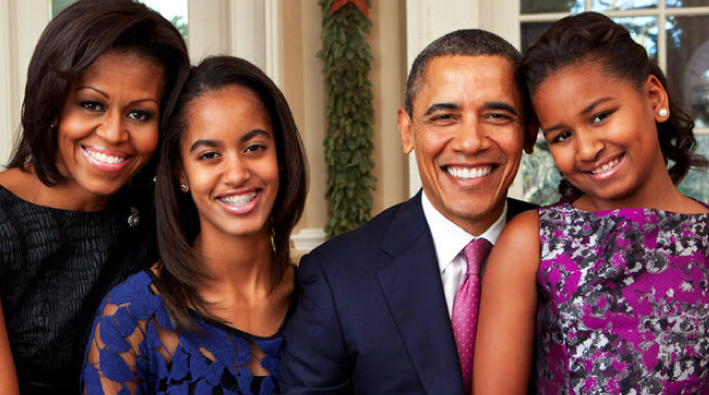
Screen-shot-2013-12-16-at-4.18.49-PMAlthough I know President Obama has disappointed many, I still hold him up as an example of a good man: a good father, who works tirelessly to improve the world that his young daughters will be entering in the coming years, and a good leader, who has been doing the best he can to reach out a helping hand to those who need it—students, the elderly, immigrants, women. I doubt any one of us who landed in his shoes in Washington D.C. could do it better, so who are we to criticize?

On this Father’s Day, I salute all the good dads out there, including my own, and I implore you: use your social capital and power to condemn violence and destructiveness; to model and promote the peaceful, nurturing, kind human relations that the world needs now.

Taking the risk to feel the pain of the world, and the love that can change it

Sometimes I wish I just taught math or physics—something dry and formulaic that would not require wading publicly into the messy, unclear, painful areas of life and interpersonal relations. My current mantra is “the personal is planetary.” If this is so, what does it mean for the planet that such a high percentage of my students over the years have revealed such terrible pain and suffering in the classroom over and over again?

Lately I’ve been reading Bill Plotkin’s magisterial work Nature and the Human Soul, in which he argues that human civilization has been stuck for too long (since Gilgamesh, I’d say) in an adolescent stage of development, where young men are encouraged in their shallow enjoyment of violence, sex and glory, and young women are encouraged to be pretty, compliant and deferent to authority.

The students at my institution are generally trying very hard to resist this overwhelming cultural message.  They try to think outside the box.  They have an earnest desire to be politically correct and intellectually sophisticated. It’s all very well on the purely academic front.  But what happens when the cracks in that academic façade appear and reveal deep emotions—anger, grief, fear, desire—that go way beyond the bounds of the merely academic?

Sometimes these emotions can be so frightening that the only sane response seems to be to numb out on drugs (licit & illicit) or get distracted by media entertainment & competition & the race to keep one’s economic head above water. Somehow in my classes these tumultuous, unruly emotions often come leaping into the foreground.  I allow and sometimes even encourage our class discussions to “go there,” to go into that dangerous gray zone between the purely intellectual/theoretical and the deeply personal lived experience. I believe that this is the zone where the most productive new thinking happens, the kind that can shift paradigms and change worlds.  So I’m willing to risk the discomfort of venturing outside our collective comfort zones, in the hopes that a spark set off in one of our class discussions or activities will ignite a fiery passion that goes well beyond the narrow confines of this class, this semester, or any one student’s career.

But in the aftermath, as I think back on the tears shed, the furrowed brows of the listeners, the potential for aftershocks to occur outside the relatively safe space of the classroom, I can’t rest easy.  I feel deeply, myself, the responsibility of leadership, even in the relatively small scale of the classroom.  The ripples of our conversations on any given day may spread out for many years, affecting those of us who listened and bore witness to his pain in ways we cannot yet imagine.

Some believe that we human beings are the consciousness of the planet. If the personal is planetary and vice versa, then it could be that these young people are in some sense channeling the pain of our planet itself. We owe it to our youth, to ourselves, and to the great planet we call home, to—at minimum—listen with respect, try to understand, and consider how our choices and actions can contribute to or lessen the pain.

It’s risky to do this active listening and thinking aloud, in the moment, rather than waiting until we are sure we “have it right,” “understand it all,” or “know what to do.”  But we don’t have the luxury of time now to get it all perfect.  The best we can do is continually check in with our own emotions, and try to be sure that whatever we say or do is rooted in compassion, concern and a sincere desire to make things better.

“In a voiced community we all flourish,” says Terry Tempest Williams.  Blowing with love on the shaky fires of these suffering voices, bringing them into a nourishing, respectful community, will help ease not only human suffering, but also, potentially, as the ripples spread out, the suffering of so many living beings on the planet.

LOVE—the one emotion that trumps all others, on both the personal and the planetary scale.  The one emotion we can never have too much of, and the one out of which new potentialities continually spring. 6a00d83451c79e69e2015432a3f0e2970c-253x300May the tears we shed as we think about the pain of the world water the dry, numbed-out hearts of those who profess not to care about the links between the health of humans and of the natural world.

May we take the pain born of love, and channel it into personal and planetary healing.  May we be wise enough to see the connections between our actions and their ripple effects in human society and the planet writ large. May we learn to feel all the love we’re capable of as humans and to act out of that deep wellspring of emotion. Let it be so.  Let’s make it so.

Battle Hymn from the Archaic Future: Mary Daly leads the way

Mary Daly

Mary Daly

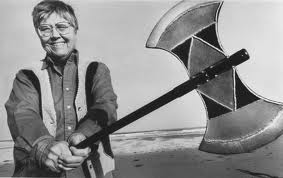
Next week we are reading the fierce, lusty, self-proclaimed Pirate Crone Mary Daly in my Women Write the World class. It’s actually the first time I’ve ever dared to share Daly with students, partly because it took me a long time to get myself up on to her energetic wavelength. She talks about how important it is that “radical feminists” like her “magnetize” other women, in order to grow a movement for change—but unfortunately, until recently I felt so repelled by her Wild Woman energy that I could not bring myself to actually read her.

Then, at the end of last summer, something changed in me. I think it had to do with finishing my memoir and allowing myself to feel the rage (Daly would call it Righteous Rage) that I had suppressed over the past 20 years as my life rolled along with what have come to seem like entirely normal frustrations and disappointments: the mommy tracking at work, the lack of respect at home, the endlessly deferred pleasures that could have been mine if I had been properly compensated for my hard and excellent work as a scholar and teacher.

No one besides Daly, in my experience, had had the courage to call out our culture itself as a perpetrator in the on-going inequality and undermining of women like me. And she could do so using the Master’s Tools—no less than three doctorates (in religion, theology and philosophy) and decades of experience as a Boston College professor and scholar working in the heart of what she called the phallocracy. She chose to stay on at Boston College despite the administration’s repeated attempts to oust her, because she felt that her message was especially needed there. The problems she saw throughout her 33-year tenure there have only gotten worse as we’ve advanced into the 21st century.

Unknown-1It’s fascinating to read through Daly’s oeuvre and see how, over the years, she transformed the master’s tools of language and rhetoric to make them uniquely her own. She even created her own dictionary, the Wickedary, in which she retooled old words to make them serve her radical feminist purpose.

And what would that radical feminist purpose be? While Daly says that each of us will find our own path, what “radical feminists” have in common is that we serve as conduits for the creative energy of the universe, the life force she calls “biophilia.” Biophilia is the opposite of necrophilia, which preys violently on the planet and its denizens, sucking out and destroying life on Earth.

Daly’s cardinal crime is to Name (capitalization hers) patriarchal culture as the perpetrators of the ongoing violence against women, animals and other life forms on the planet, and to single out Wild Women (again, capitalization hers) as heroic resisters.

This stance has gotten her into a lot of trouble. Men don’t like to be called out on their patriarchal privilege, and excluded by virtue of their biological and cultural baggage from the ranks of heroic resisters that Daly is trying to conjure. I am curious to see how the young men in my class respond to Daly.

When I read her closely, it seems to me that although she does elevate Woman as a category, she is actually reinventing that word too. Not all women would deserve to be included in her radical feminist confederacy of Wild Women. And it’s possible that some men—feminist men—would be welcomed, although Daly herself remained a firm lesbian separatist to the end of her life (in one of her last books, Quintessence, she imagined herself traveling to a utopian “Lost and Found Continent” in the year 2048, which was fiercely and proudly all-female).

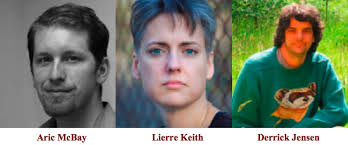
I think Daly, who died at the age of 81 in 2010, would have been pleased to see the militant environmental group Deep Green Resistance proclaiming itself a “radical feminist” organization. DGR was founded by two men and a woman (Derrick Jensen, Aric McBay and Lierre Keith) and in their guiding principles, right up there with respect for all life, is respect for women.

Unknown-2

Here is DGR’s fifth guiding principle, in full:

  • Deep Green Resistance is a radical feminist organization. Men as a class are waging a war against women. Rape, battering, incest, prostitution, pornography, poverty, and gynocide are both the main weapons in this war and the conditions that create the sex-class women. Gender is not natural, not a choice, and not a feeling: it is the structure of women’s oppression. Attempts to create more “choices” within the sex-caste system only serve to reinforce the brutal realities of male power. As radicals, we intend to dismantle gender and the entire system of patriarchy which it embodies. The freedom of women as a class cannot be separated from the resistance to the dominant culture as a whole.

And here are principles one through four:

  • The soil, the air, the water, the climate, and the food we eat are created by complex communities of living creatures. The needs of those living communities are primary; individual and social morality must emerge from a humble relationship with the web of life.
  • Civilization, especially industrial civilization, is fundamentally destructive to life on earth. Our task is to create a life-centered resistance movement that will dismantle industrial civilization by any means necessary. Organized political resistance is the only hope for our planet.
  • Deep Green Resistance works to end abuse at the personal, organizational, and cultural levels. We also strive to eradicate domination and subordination from our private lives and sexual practices. Deep Green Resistance aligns itself with feminists and others who seek to eradicate all social domination and to promote solidarity between oppressed peoples.
  • When civilization ends, the living world will rejoice. We must be biophilic people in order to survive. Those of us who have forgotten how must learn again to live with the land and air and water and creatures around us in communities built on respect and thanksgiving. We welcome this future.

I can just hear the spirit of Mary Daly rejoicing at these fierce words from what she would call the “Archaic Future.”

She herself called for “even more than the ‘subversion’ of the present order and more than ‘dissolution’ of the whole existing social compact.” Truly changing the world, she said, “requires the Courage to participate Positively in bringing forth…many New Forms (political, social, philosophical, aesthetic) by multitudes of creators who do not necessarily know each other consciously” (Quintessence, 103).

It is this subterranean radical network of grassroots co-creators that I hope to tap into with blog posts like these.  Are you there?  Shall we create that joyous Archaic Future together?

21st Century Leadership: On Overcoming Fear and Negativity to Work for a Livable Future

This week, coming off the exhilarating high of the 2014 Berkshire Festival of Women Writers, I started teaching a brand-new class at Bard College at Simon’s Rock, “Leadership and Public Speaking for Social and Environmental Justice.”

We spent the first day just working with the concept of Leadership—thinking about great leaders and what qualities they possessed that helped them achieve their goals and bring so many others along with them.

And then we thought about what might hold us back from stepping into our own potential as leaders.

The number one obstacle to becoming a great leader, at least from the perspective of the dozen or so students in the room that day, is FEAR.

They quickly generated a long list of very specific paralyzing fears, and as each fear was voiced, the nodding and comments in the room made it clear that it was widely shared.

I certainly recognized many of my own fears on their list, which I will append at the bottom of this post, along with our list of the qualities necessary for great leadership.

A big part of my motivation for offering this class is simply to help students face and learn to work with their fears and insecurities, rather than doing what I did at their age, which was to allow my fears to push me back onto the sidelines, an observer rather than someone who felt empowered to be out in front leading others.

It’s been a long journey for me to learn that, as Frances Moore Lappé and Jeffrey Perkins put it in their excellent little book You Have the Power: Choosing Courage in a Culture of Fear, “Fear is pure energy. It’s a signal. It might mean stop. It could mean go.”

Frances Moore Lappe

Frances Moore Lappe

I remember when I invited Frances Moore Lappé to speak at Simon’s Rock a few years ago, she began her talk acknowledging that being up alone on the stage, in the spotlight, made her nervous. But, she said, she has learned to recognize that fluttery, jittery feeling as a sign that she is doing something important, something that matters—and to let the nerves (what some might call the adrenaline rush) work for her rather than against her.

As someone who for many years was overcome with stage fright every time I had to speak in front of an audience, I knew exactly what she was talking about.

JBH 2014 Photo by Christina Rahr Lane

JBH 2014
Photo by Christina Rahr Lane

It wasn’t until I was nearly 50 that the multitudinous fears I had been carrying around with me all those years began to melt away, and I can’t say I know for sure what did it, other than forcing myself, over and over again, to get up there in front of audiences and DO IT ANYWAY, because I knew that a) the work I was being called to do was important, and not just for myself; b) if I didn’t speak about the issues I wanted to focus on in that particular time and place, no one else would; and c) there was absolutely no good rational reason for me to be afraid of speaking to the audiences I was addressing.

Clearly, one necessary ingredient of leadership is a willingness to walk with the fears, risking encounters with whatever devils those fears represent.

We’re out of time: climate change demands extraordinary leadership, now

If I am propelled now into doing all I can to catalyze leadership in my community, whether in the classroom or through the Berkshire Festival of Women Writers, it is because I know that we no longer have the luxury of time to stand silently on the sidelines observing, as I did for a good part of my life.

There is simply too much at stake now, and things are happening too fast.

There are some signs that the American political and intellectual establishment is finally shaking off its lethargy and beginning to at least recognize that yes, Houston, we’ve got a problem.

The most recent United Nations Intergovernmental Panel on Climate Change (IPCC) report pulled no punches in documenting and describing just how dire our immediate global future looks, thanks to human-induced climate change. And for a change, this “old news” was immediately carried on the front page of The New York Times, which has been ignoring and downplaying the climate change issue for years—and strongly echoed by its editorial page as well.

melting-polar-ice-caps

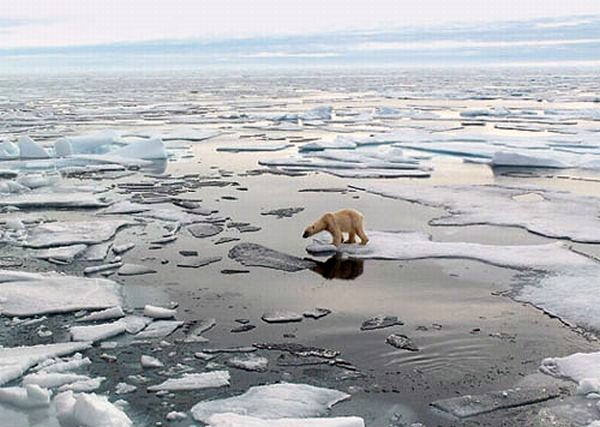
Yes, it’s true—climate change is real, it’s already happening, and there is no telling where it will lead us. If governments immediately start to act with furious speed and concentration, there is a chance we could backpedal our way into a precarious new normal, keeping our climate about as it is now.

If this kind of leadership is not shown, then all bets are off for the future—and we’re not talking about a hundred years from now, we’re talking about the future we and our children and grandchildren will be living through in the coming decades.

In short, we are living through extraordinary times, times that demand extraordinary leadership. And not just from politicians and heads of state, but from each and every one of us.

As global citizens with a stake in our future, each one of us is now being called to turn off the TV, get up off the couch, step out of the shadows, and SHOW UP to do whatever we can do, to offer our skills and talents to the greater good.

For some that will mean showing up at the 350.org climate change rally in Washington DC this month, demanding that our Congress and President represent the interests of we the people, not just the fossil fuel industry.

Teachers like me can start to offer students the tools and skills they will need to become the 21st century leaders humanity needs—leaders who see the big picture, respond empathetically to the plight not just of humans but of all living beings on the planet, and have the resolve, drive and courage to stand up and lead the way towards implementing the solutions that already exist, and innovating the solutions that have not yet been imagined.

Our media likes to bombard us daily with all the bad news on the planet: wars and random violence, natural disasters, corruption and greed, unemployment and health crises, environmental degradation…the list goes on and on. The cumulative effect of this constant negative litany is a feeling of hopelessness, despair, powerlessness and paralysis—the antithesis of what is needed for energetic, forward-looking, positive leadership.

Simply becoming aware of the extent to which your daily absorption of bad news depresses your spirit is a step on the road to switching the channel, metaphorically speaking, and beginning to focus on what can be done to make things better.

This is not pie-in-the-sky rainbow thinking, this is about doing what is necessary to ensure a livable future. One of the most important qualities of good leaders, my students and I agreed, is positive thinking and a can-do spirit.

If there was ever a time these qualities were needed, it is now—and in each and every one of us.


NOTES FROM Leaderhip & Public Speaking class, Day One

Great leaders are:

Charismatic / magnetic

Trustworthy

Change agents

Have something to say that resonates with others

Have a unique/original/relatable idea

Tenacious

Resilient

Creative

Empathetic/loving/caring

Passionate

Fearlessness/being able to embrace your fears

Engaging

Good organizers of people

Able to motivate & energize people

Good collaborators

Good at building teams; good team captains

Good at delegating

Synergizers

Convincing & persuasive

Unswayed by negative feedback & challenges

Self-confident

Able to overcome adversity

Able to share vulnerabilities

Focused/single-minded

Evangelical

Able to attract other strong people

Able to withstand criticism; thick-skinned

Good models: “be the change you want to see”

Articulate

Able to communicate with different groups of people & in different forms of media

Chameleons–able to get along with different kinds of people

Diligent/hardworking

Initiative-takers

Visionary innovators

Able to be humble and stay strategically under the radar

Good at self-promotion

Have good decision-making skills; decisiveness

Understanding of sacrifice/self-sacrifice

Generous

Assertive; firm but not attacking—“real power doesn’t need to attack”

Clear on what they want; clear goals

Intuitive

Considerate

Have common sense

Have a strong moral compass

Have a sense of justice

Want to be of service to the greater good

Want to build merit

Cautious when necessary/ not impulsive

Thoughtful

Resistant to corruption


JBH rainbow treeWhat holds us back from becoming leaders?

Fear

Fear of responsibility

Fear of judgment

Fear of failure

Shyness

Fear of being seen/heard

Fear of not being seen/heard

Fear of letting people down

Fear of being replaceable

Fear of fulfilling certain negative stereotypes (“Ban Bossy”)

Fear of being perceived as manly (if you’re a woman)

Fear of not being “man enough” (if you’re a man)

Fear of not being feminine enough

Fear of not being a good role model

Fear of having the minority opinion (saying something unpopular, not being able to

convince people)

Fear of being part of a marginalized group & expecting not to be heard/respected

Fear of leaving someone behind / a voice behind / not hearing other issues (ranking & hierarchy)

Fear of neglecting other issues

Fear of not being taken seriously

Fear of being too passionate

Fear of creating conflict

Fear of wading into controversy

Fear of taking a stand

Fear of changing your opinion/selling out for success

Fear of losing your authenticity

Fear of being politically incorrect

Fear of being perceived incompetent

Fear of not having what it takes

Fear of not being ready / not knowing what your “issue” is

Fear of being seen


Negative Qualities that may hold us back

Closemindedness

Righteousness

Malleability

Empathy—taking things too personally

Numbness/alienation

Staying under the radar

Aggression

Defensiveness

Being gullible, believing what you hear, not being discerning


What Systemic/Structural Circumstances Hold Us Back?

Acting to save others instead of trying to achieve your own goals/authentic mission

Youth

Education

Social upbringing

Poverty

Not having access to audience—tools to connect

Race/class/gender/sexuality/etc—social categories

Location (geographic)

Language

Filial piety—not wanting to go against expectations & will of family & society

Influence of media on self-esteem


Sharing and Seeking New Stories, Moving from Silence to Language, Action and Hope

Jennifer Browdy de Hernandez; photo by L. Najimy

Jennifer Browdy de Hernandez; photo by L. Najimy

Yesterday, for the first time, I gave a public reading from my memoir, What I Forgot…and Why I Remembered.  It was a powerful experience, offering me a personal taste of what the Berkshire Festival of Women Writers has been giving to other women writers all month.

We met at the Friends Meeting House in Great Barrington, in a meeting room imbued with incredibly peaceful energy and beautiful light, with big windows opening up to the trees, mountains and sky off to the West.  I stood with my back to the view, wanting the audience to see me as I see myself, a small human nestling up to the flank of our great Mother Earth.  The reading started at 4 p.m., so as I talked and read the sun sank slowly behind me, and I was told afterwards that hawks cruised by casually a few times, riding the strong March winds.

Earth, water, fire and air…those are the elements that compose each of us, literally and figuratively.  We are simply emanations of our planet, like the flowers of the field and the fish of the sea.  Remembering that, it becomes easier to see how insane it is to poison and destroy our planet.  It is, quite simply, suicidal.

Last week a beloved member of my local community, a young woman, took her own life and set off a storm of grief.

How powerful it would be if that kind of deeply felt emotional response could be aroused in relation to the slow-moving suicidal ecocide that we are all currently participating in!

Of course, first we have to recognize what’s happening.  As I say in my memoir, most of us are still sleep-walking when it comes to seeing the great tragedy of our times.  We’ll still be sleep-walking, mumbling numbly that “everything is fine,” right off that cliff, unless we can be woken up in time and aroused to channel our emotions into positive change.

It’s not scientific facts and figures that will wake people up to the reality of the Sixth Great Extinction and the human-induced ending of the stable climate we’ve enjoyed for many thousands of years.

It’s hearts, not minds, that must be moved. And for that, it’s stories, not charts, that are called for.

It’s in this spirit that I offer my story in my memoir. Here is a quote that I read yesterday:

“My story is the story of a generation of Americans who grew up with tremendous privilege, so comfortable and coddled that we were not even aware of how very privileged we were.  It is the story of many generations of people who grew up believing that they had the right to take endlessly from the natural world, without fear of exhausting the planet’s resources, and without ever giving anything back. It is the story of my generation’s tremendous alienation from Nature, our reliance on technology and engineering to solve all problems, to the point where we could delude ourselves that we did not need the natural world to make us happy, only our own representations of her, and the resources we could extract at the push of a button.

“My story is the story of how finally, at midlife, I came back to my senses and woke up to the impending disaster that my generation had presided over unthinkingly.  I could share this story in the hopes that the very ordinariness of it would help my peers to wake up as well, and join the great struggle of our time, the struggle to turn our tremendous intelligence to the good work of creating a livable future for ourselves, our children and the billions of innocents condemned to extinction by our thoughtlessness.”

I also read a quote from Audre Lorde, who has been so important in encouraging me to overcome my social conditioning to be quiet, to be polite, to go with the flow, to suck it up, to keep my head down…which women, in particular, get a heavy dose of all our lives.

This is what Lorde has to say about that conditioning, from her essay “The Transformation of Silence into Language and Action, in the Sister Outsider collection:

“My silences had not protected me. Your silence will not protect you….What are the words you do not yet have?  What do you need to say?  What are the tyrannies you swallow day by day and attempt to make your own, until you will sicken and die of them, still in silence?…

“In the cause of silence, each one of us draws the face of her own fear—fear of contempt, of censure, or some judgment, or recognition, of challenge, of annihilation.  But most of all, I think, we fear the visibility without which we cannot truly live….

“And that visibility which makes us most vulnerable is that which is also the source of our greatest strength. Because the machine will try to grind you into dust anyway, whether or not we speak.  We can sit in our corners mute forever while our sisters and ourselves are wasted, while our children are distorted and destroyed, while our Earth is poisoned; we can sit in our safe corners mute as bottles, and we will still be no less afraid….

“We can learn to work and speak when we are afraid in the same way that we have learned to work and speak when we are tired. For we have been socialized to respect fear more than our own needs for language and definition, and while we wait in silence for that final luxury of fearlessness, the weight of that silence will choke us.”

Truly we no longer have the luxury of waiting for the time to be right to speak up, to take action, to admit to ourselves and others that everything is NOT FINE, not at all.

All of our stories are important. The more we open up and share with one another, the greater the potential that we’ll be able to find the connecting points that will enable us to work together to create a new story, a bridge of a story to carry us forward into the future and help us create the structures we will need to weather the storms that are coming.