Grassroots heroism: what we need now

The image that stays with me most from the blockbuster superhero action film The Avengers is not the thrilling climax when the hero uses all his power to wrest a nuclear missile away from its collision course with Manhattan and up into space, where it explodes a waiting battleship of nasty intergalactic invaders—although that was pretty thrilling I have to admit, especially in 3-D!  Man, that movie packs some powerful special effects!

But no, what really struck me were the scenes of ordinary human beings on the ground, dressed in their regular 21st century civilian clothing, sipping their lattes and strolling about midtown Manhattan one moment, and the next moment being terrorized from above by sinister alien rampaging monsters and soldiers.

Without Captain America, the Black Widow, the Incredible Hulk and the other heroes, all those people would certainly have been totally destroyed within minutes—and not just by the aliens, but by “friendly fire” as well.

This scene resonates with me on two levels.

On the one hand, it goes to show yet again how quickly an apparently normal, peaceful morning can turn to nightmare when militarized violence shows up unexpectedly.

And on the other hand, it underlines how deeply dependent we human beings are on the idea of the charismatic leader, the savior, the hero who will leap into action and save the day for us.

This has been true since ancient times, and it appears to be cross-cultural: every culture has its heroic myths and legends, in which men and women with superhuman strengths and powers do battle with dark forces on behalf of the rest of humanity.

Watching politicians of The Avengers decide to send a nuclear missile to destroy the entire city in order to kill off these alien soldiers, an order that their general resists but an ordinary pilot obeys, I am uncomfortably reminded of how much danger we are probably all in, every day, thanks to decisions made by the men in charge, who sit in remote splendor in faraway bunkers like the gods on Mount Olympus of old.

I want to see a movie made that points the way to a different model of heroism.

Instead of the superhero, David against Goliath type tale, I want to see, on the big 3-D screen with all the lavish special effects and brilliant actors, a tale that celebrates the ordinary heroism of people on the ground, who—understanding the danger of militarism and the mechanized violence that pervades human civilization, from agriculture to energy to education and entertainment—come together to offer whatever skills, talents and gifts they have to the common pool of resistance.

In this movie, the human beings would not cower on the ground while the battle of the titans raged overhead; they would not sink to their knees before the might of an alien invader; they would not follow blindly wherever the men with guns and uniforms told them to go.

Instead they would use the power of their collective will and determination to demand a change of course, and insist that it happen.

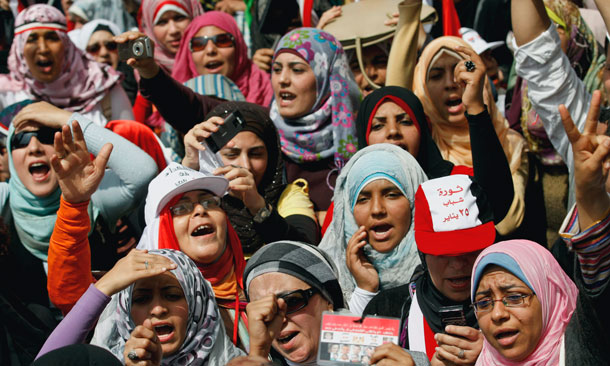
What I want to see celebrated on the big screen is the kind of grassroots resistance that we saw on the ground this past year in Egypt and other Arab Spring hotspots, or in the General Assemblies and protests of the Occupy movement.

Egyptian women protest in Cairo, April 2011

It is happening already in real life.  Hollywood and Marvel Comics, maybe it’s time to break with the fixation on the past and try a new story.

Occupy Earth

In the week since the Occupy May Day General Strike, I’ve been thinking a lot about the impact of the event.

Friends who were in New York City that day say it was tremendously exciting, especially the permitted march from Union Square to Wall Street, which apparently stretched out strong over some 30 blocks.

As far as I could tell, mainstream media reported only the arrests that occurred, and that fairly grudgingly.  There has been little effort to explain or explore the anger and frustration that propelled hundreds of thousands worldwide out into the streets on May Day.

Maybe that’s because it’s an old story.  Yesterday’s news!  We know that students are unhappy about being $1 trillion in debt; we know that millions of homeowners are unhappy about being “underwater” with their mortgages, or losing their homes due to foreclosures.  We know that there aren’t enough jobs to lift our economy out of the doldrums.  It’s old news, people!  Tell us something we don’t know!

So the question becomes, is a protest effective if it is ignored by the mainstream media?

I would say yes: the fact that the MSM treated May Day as unimportant is more revealing of how out of touch the editors are than of whether or not the protest was real and meaningful.

On social media, May Day was well covered, especially at interactive, citizen journalism-type venues like Livestream and Twitter.

And if you go on the Occupy Wall Street site now, you’ll find that the organizers are already bounding on to the next action.

May Day was just one in a whole series of protests planned. It was an opening volley of what promises to be an intense, engaging spring.

But it opened up a question that is not likely to go away any time soon.

How important is it to actually show up, in the flesh, for a protest?

I was berated by one reader for choosing to stay in my classroom on May Day rather than joining the protests.

Other readers expressed their support for my decision to “occupy my classroom,” where my individual presence was perhaps more important than it would have been as an anonymous member of the crowd on Broadway.

I have been pondering this question in the past week.  As someone who is deeply involved with new media, I have to say that I believe that what happens in cyberspace is at least as important as what happens in physical space.

Maybe it’s even more important.

It is no exaggeration to say that millions of people participated in the May Day protests online, via Facebook, Twitter, Livestream and so many other interactive platforms.

The protests spread around the world, just like the May 5 “Connect the Dots” climate change awareness events.

Through the magic of cyberspace, we were all united in a common goal: expressing our outrage over the cynical manipulation and impoverishment of the 99% by the 1%, and demanding that the interests of the 99% be taken into account in matters of political and economic policy.

Although I have no doubt that face-to-face General Assemblies and marches are important, it is ridiculous to discount the impact of what goes around and comes around in cyberspace.

Are we approaching the weird tipping point when our cyber-selves will be more important than our physical selves?

As I keep reminding people, cyberspace is totally dependent on electricity for its existence.

So if we want to preserve cyberspace as a place of radical openness, communitarianism and oppositionality, it behooves us to pay attention to the real 99% in the current equation: the natural world that has been providing us with the means to create the current that runs the virtual world.

I might be tempted to buck my agoraphobia (fear of crowds) and make the leap from cyber-protest to physical protest if the goal were defending not just jobs or homes or social equality, but the underpinning of it all, the great mother herself, our beloved community, our Earth.

Webizens Unite!

The fuss over the SOPA/PIPA legislation last week is the marker of a generational shift in our understanding of the media: we’re at the transition point between 20th century media models, which rely on centralized, profit-driven control over production and consumption, and 21st century media models, which are all about open access and the free circulation of ideas.

While I’m generally a strong supporter of the open-access model, I do see some dangers to it.

For one thing, when we operate on a distributed intelligence model, information is so widely available that none of us really has to feel responsible about knowing anything.  We can just look it up, after all.

But when we rely so much on others to be the keepers of our collective intelligence, we become vulnerable on at least two crucial levels:

  • Vulnerable to being manipulated by the producers of that knowledge—think Fox News, for example, with its so-called “fair and balanced” reporting.  As long as we are aware that Fox News is reporting from a distinctly biased point of view, we can take their information under advisement, and balance it ourselves with other sources.  As long as there are other sources.  And as long as we have the education to be able to sift through it all and form our own informed opinions.
  • Vulnerable to loss of access—as in the one-day blackout on Wikipedia last week. It’s like kids who rely so completely on the calculator that they never learn their multiplication tables.  All well and good, until the day when they don’t have a machine available to make the calculations, and they’re left helpless.

Our society has become so totally tuned in to media that we would be lost without it.  And that kind of dependency is dangerous.

I think about the big push now to digitize libraries.  Of course, I love the idea of being able to carry 4,000 volumes around with me on one slim little e-reader.  It’s awesome!  But on the other hand, a little voice in the back of my head worries: what would happen if we lost ready access to electricity?  What would happen if there were shortages, so only the elites were able to power up their notebooks and Kindles?  Where would our libraries be then?

We’re already living in a society where social class, access to the Web and social influence form a tight, circular web.  Privileged kids today are growing up totally plugged in and able to make the best use of the amazing collective intelligence of the Web, while kids from poor backgrounds, worldwide, are growing up on the other side of the digital tracks, out there with the garbage and the weeds.

As the big media companies work ever more aggressively to stake their claim in the wild west of the Web, fencing off bigger and bigger areas of the digital commons, we need to become more vigilant about guarding our freedom of speech and our free access to the Web, and making sure that more and more of us really do have that access and the knowledge needed to make good use of it.

WordPress blogging platforms like the one I’m writing on are like little free information lanes alongside what are becoming ever more hulking, fenced and patrolled toll highways.  The fact that anyone can start up a blog or a Twitter feed or a Facebook page for free and get their voice out to the public immediately, with no censors, is a 21st century version of a time-tested Constitutional right that we need to make sure we defend.

Corporations don’t like the free circulation of “media content” because it escapes their profit-driven model.  That’s what they were trying to accomplish with their anti-piracy legislation—a way to shut down any website that did not pay its toll.

Looking into the brave new future that awaits us, I see increasing conflict over these basic issues of access to and control over the media.  I also see that unless we are successful in making the shift to renewable energy sources, it is conceivable that basic access to electricity, which we in the West now take for granted, may become less easily obtained.

As a blogger who relies on platforms and hardware that I could not possibly produce myself, I feel my vulnerability keenly.  I need Apple and WordPress to get me going, and the electric company to power me up, or I’d be dead in the water.

If I ever woke up and found the power out and my web browser blank, well…I could always go back to zining! But I would miss the incredible distribution powers of the World Wide Web.

Last week some 7 million webizens barraged Congress with protests of the proposed SOPA/PIPA legislation, and we won the battle!  We have to maintain our stations though.  As with the Keystone XL pipeline, it’s going to be a long siege.

1% > 99%: Don’t Mess with the Rich, and Leave Inequality Alone

Why does it not surprise me that no comments were allowed on this op-ed piece from Sunday’s NY Times, which has been rankling at me for the past couple of days?

The authors, one a prof of law at Yale, the other UC Berkeley professor of law and economics, pose as compassionate conservatives who are concerned about the growing gap between the fabulously wealthy 1% and the rest of us 99%.

Their solution?  Impose a new, automatic tax on 1-percenters whose income exceeds $330,000—currently 36 times the median American household income.

“This new tax…would apply only to income in excess of the poorest 1-percenter — currently about $330,000 per year,” the authors (who admit to being part of this bracket) say. Their aim is not to “reverse the gains of the wealthy in the last 30 years,” but just to “assure that things don’t get worse.”

Ahem.  How about making things better???

A stark picture of the lives of those in the median (full disclosure: you’ll find me in this social landscape) was painted in today’s NYT editorial on the middle class: 

“Recent government data show that 100 million Americans, or about one in three, are living in poverty or very close to it. Of 13.3 million unemployed Americans now searching for work, 5.7 million have been looking for more than six months, while millions more have given up altogether. Even a job is no guarantee of middle-class security. The real median income of working-age households has declined, from $61,600 in 2000 to $55,300 in 2010 — the result of abysmally slow job growth even before the onset of the recession.”

You would think that our elected representatives in Congress would be concerned about this dismal state of affairs, and would be doing everything in their power to make things better for those hundreds of millions of troubled Americans, wouldn’t you?

Hah!  No, our reps in the House couldn’t be bothered to pass a bill giving us a very modest payroll tax cut, amounting to about $1,000 per year per median paycheck…because they’re holding out for strings attached that will, for example, fast-track the construction of the Keystone XL pipeline.

Let’s connect more dots here.  According to a recent report by the non-partisan group Public Campaign, “30 multi-million dollar American corporations expended more money lobbying Congress than they paid in federal income taxes between 2008 and 2010, ultimately spending approximately $400,000 every day — including weekends — during that three-year period to lobby lawmakers and influence political elections.”

You know, there would be nothing so wrong with corporations lobbying Congress IF they had the best interests of society as a whole at heart.  But we all know that’s not true. While 2010 was a “record year for executive compensation,” it was also a record year for lay-offs. And don’t even get me started about corporate sins against the environment.

It all comes back to the greed of the 1%.

In an unusual personal aside, the Yale and Berkeley profs confess that their “grandparents would be shocked to learn that the average income of the 1-percent club has skyrocketed to more than 30 times the median income — just as we will be shocked if 20 years from now 1-percenters make 80 times the median, which is where we will be if inequality continues to grow at the current rate unabated.”

So they want to hold inequality to its current levels.  That’s like saying let’s hold global warming to where it is now.  Hello-o?  Both inequality and global warming are at deadly levels right now.  Maintaining the status quo is like setting the throttle in full gear and leaving the wheel to have a drink, while the bus rolls off the cliff.

Professors, you should be ashamed of not having had the courage to enable the comments on your brilliant proposal.

Let me just put a little spin on your title, may I?  Instead of “Don’t Tax the Rich, Tax Inequality Itself,” how about: “Don’t Mess with the Rich, and Leave Inequality Alone.”  Let’s call a spade a spade–and let the debate begin!

Challenging rape culture

In my Gender Studies class this week, we’ve been talking about “rape culture.”  It’s a term that’s bandied about somewhat cavalierly on college campuses, and is probably much less familiar out in the ordinary workaday world.

Well, wake up world.  Rape culture is here.  And it doesn’t need the ironic scare quotes.  It’s real, and it’s not funny at all.

You know you’re living in a rape culture when women’s bodies are suggestively displayed, commodified, in sexually enticing poses obviously intended for the male gaze.

In the culture of rape, “no” means “try harder” and it’s always the woman’s fault if she doesn’t like what’s going on.  Stupid bitch, if she didn’t want it, she shouldn’t have worn those heels/had that drink/come to the party.

Rape culture sanctions violence when necessary to overcome resistance.  She was asking for it, anyway.

Rape culture oppresses dissenting men, too.  Men who fail to conform to the code of dominant masculinity are “faggots,” and being called out as anything akin to feminine–pussy, for example–is the worst insult you can throw at a guy.

Lately I’ve been realizing that rape culture extends a lot further than women’s bodies.  It’s also responsible for the prevailing attitudes towards our environment–our Mother Earth.

Not for nothing are both Mother Earth and Mother Nature gendered female.

Some patriarchal cultures manage to respect Mother Nature while still maintaining a stranglehold on her female children.  For instance, in Chinua Achebe’s Things Fall Apart, which I’m re-reading now for another class, the all-powerful Oracle of the Hills, a goddess, is interpreted by a priestess whose pronouncements no men dare question.  This doesn’t stop the protagonist, Okonkwo, from beating up his wives on a regular basis.

In Judeo-Christian and Islamic cultures, the patriarchy dispenses with goddesses.  Or at least, goddesses of the truly powerful, fearsome kind.

In Euramerican cultures, we have sex goddesses, who exist to pleasure their men.  Islamic cultures shroud their women in veils, but towards the same end: women exist to please their men.

The explosive growth of the international pornography industry, in which it is still rare for women’s pleasure to be of any interest at all, bears testimony to the extent to which rape culture rules.

In 2006, the pornography industry had larger revenues than Microsoft, Google, Amazon, eBay, Yahoo, Apple and Netflix combined–and it’s only grown in the past five years.

Porn is a vast unregulated jungle.  It’s not all bad.  But some of it is really terrible.  Some of it is sexualized violence–rape–thinly veiled as entertainment.

Yes, the girls get paid.  But many studies have shown that female porn stars often come from sexually abusive childhoods, or are teen runaways, or are lured into the trade through drug addiction and prostitution.

In Euramerican porn, women exist to give men pleasure.  Doesn’t matter if they get fucked over in the process.  Doesn’t matter if all that’s left in the end is a hollow shell.  There’s always another slut waiting in line.

Yeah.  It hurts me to talk like this, but I want to convey the mind-set of this industry.

And then I want you to think about how this mind-set translates to the Euramerican assault on the environment, our Mother Earth.

Or the sub-prime loan scandal (it’s Occupy Foreclosures Day, after all).  Fuck’em over, make a profit and move on.  All that matters is the bottom line, baby.

Sometimes it seems as though the more powerful actual women become in real life–ie, successful at playing the formerly all-male games of education and career–the more frantically obsessive men’s consumption of pornography becomes.  The power they miss in real life, they can find acted out for them in porn fantasies.

But the environment is another story.  Mother Earth is not going to play men’s games–that is, she doesn’t care to beat them at their own game.  When she starts to resist, the game will be over.

In porn, women go along with the game for a variety of reasons.  Generally speaking, women do it to survive.

Likewise, women collude with the patriarchy in the rape of the Earth because it’s just easier to go along than to resist.  And the lifestyle has been pretty comfortable over the last 50 years, hasn’t it.

I would like to see a frank discussion of the connections between rape culture as played out in porn and rape culture as played out between humans and the environment.

We need to acknowledge that there is a serious problem in both the private and the public realms (along these lines, we are just beginning to see confessions of “sex addiction” hit the media.  How about “fossil fuel addiction”?).

The problem is a symptom of much deeper ills in human social relations, which transgress the usual boundaries of race, class, gender & nation.

Why are porn and energy extraction biggest, the fastest growing industries in the world?

What does it mean to live in a rape culture?  Who benefits, and who loses?

Most importantly, how can a rape culture be transformed?  And what is our alternative vision?

My vision is this:

The one-sided model of domination and extraction (“getting some”) needs to shift to a dialogic model of sustainable mutual pleasure.

Human beings should serve in a steward relation to our Mother Earth, tending and enriching her in exchange for the nourishment and pleasure she can afford us.

Likewise, sex should not be about domination and debasement, but about mutual pleasure and uplift.

In these transition times, such a transformative shift should be possible, if each of us begins with our own selves, our own backyards, and lets the ripples of range move outward.

Let it be so.

Outsourced pollution rides the trade winds home

How timely, that just as the U.N.-sponsored climate talks are going on in Durban, a new report comes out  from the Global Carbon Project informing us that global greenhouse gas emissions grew by a whopping 5.9 percent last year, the largest leap in any year since the Industrial Revolution began.

The U.S. remains the world’s second-largest greenhouse gas emitter, trailing only China.  But as we all know, China has become a factory state of the U.S. and Europe–isn’t virtually every manufactured thing you own “made in China”?

As I hear all the time from travelers to China, air quality is noticeably bad there.  Most cities seem to be in a permanent miasma of smog, sometimes approaching the sooty fog Charles Dickens used to describe as veiling London in the coal-burning 19th century.

Here in the U.S., air quality has improved since I was a kid in New York, when smog was a daily occurrence and you just learned to live with noxious blue bus fumes blown in your face on every street corner.

But apparently what we’ve done is simply outsource our pollution to China.  Let them deal with the smog over there; we’re paying for the goods they produce aren’t we?  If they can’t figure out how to manufacture cleanly, that’s not our problem.

So goes the smug line of American entitlement.

But welcome to the new century.

First of all, the great American credit bubble has burst, and the middle class is having trouble affording those imported manufactured goods, no matter how “cheap” they are.

Second, it’s obvious that the trade winds are blowing Chinese smog our way, in the form of global climate change that will affect us here as much as it affects them over there.

Politicians the world over continue to take a short-sighted view of both of these issues, imagining that a little re-tooling is going to get us past the bumps in the road.

The media isn’t helping matters–you will have to peer deeply into the New York Times this morning to find the small buried news story about the biggest leap in global carbon emissions on record.

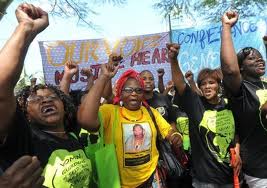
People who are already living on the edge understand the stakes.  Thousands of African women farmers have been marching in Durban, along with indigenous forest defenders from around the globe.  They’ve been kept away from the politicians inside the gates by riot police.

Guess what?  All the riot police in the world cannot keep climate change havoc from our doorstep.  Here in the U.S., in China, in Africa, and all over the world.

It’s time to deal with it.

Is Anybody Listening?

Just curious: why is it that today’s NY Times front page features social protest in Egypt, Yemen and Hamas, but nothing about California?

Way below the digital “fold,” in small print, there’s a piece with the bland headline “From Crowd Control to Mocking Images,” but it’s more about pepper spray itself than about the serious issues raised by the UC Davis incident.

The opinion pages are similarly focused on Egypt and Israel–nothing on the Occupy movement.

Somehow it reminds me of the classic situation where a kid is trying to get her parents’ attention, and Dad is buried behind his newspaper, Mom is talking away on the phone, and NOBODY IS LISTENING!

What does that kid have to do to get the adults’ attention?

Something outrageous. And even then, the focus will most likely be more on returning things to the status quo as fast as possible, rather than on talking through the issues deeply and seriously considering change.

That seems to be the posture of the UC system officials, who are in the current hot seat of the Occupy movement.  They want this whole mess to just go away, so that students will return to their classrooms and dorm rooms and keep paying their ever-higher tuition to earn degrees for jobs that don’t exist.

Things turned violent in the Middle East when people had enough of leaders who refused to listen.  There, soldiers and tanks were called in against civilians.  Here, we have armed riot police called in against students who were doing nothing more challenging than sitting cross-legged in a quad.

 Imagine what could happen here if protesters stopped being so polite and nonviolent and began demanding attention in a no-nonsense way.

How far would our leaders–from university chancellors to mayors to governors and the politicians in Washington DC–go in choosing to repress and stifle dissent rather than listening and engaging in thoughtful dialogue about the best way forward for all?

A couple of decades ago, when people took to the streets to protest working conditions and lack of freedom in Latin America, the U.S. demonized “the Communists” and sent military aid to the dictators to maintain order in the banana republics.  The civil wars there claimed hundreds of thousands of lives.

It is impossible to blame “the Communists” this time, and the unrest is not far away in some other country, it’s right here in our own heartland.

It’s our own sons and daughters who are feeling the crack of the police baton, the burn of the chemical sprays.

What are we going to do about it?

First of all, we’d better start listening.

Bloomberg the Grinch vs. Occupy: This movement is not going away

The question in the air this morning is obvious: what comes next for the Occupy movement now that the tents and tarps in Liberty Park have been trashed by the NYPD?

The New York Times is giving way more coverage to the eviction than it ever did to the occupation, proving once again whose side those folks are on.

This protest movement is not going to go away.  It’s not going to go into hibernation for the winter.

City officials who see the movement as an expensive civil nuisance will learn the hard way that their heavy-fisted efforts at intimidation are going to backfire.

If anything, such tactics only strengthen the resistance of the core groups on the street, and draw the attention of the virtual spectators in cyberspace, who may now become more engaged.

Whither the Occupation now?  Occupy Wall Street said last night that the protesters have “the feeling of a movement that is rising, building, and making headway.”

Their statement is worth “reblogging” in full:

“They showed us their power. And we’re showing them ours.

“We are here because we believe a better world is possible. We are willing to endure mistreatment, if by doing so we can help re-enfranchise the 99% and reclaim our democracy from the stranglehold of Wall Street and the top one percent.

“We will push back against billionaire Michael Bloomberg and any politician who wantonly tramples on proud American freedoms: freedom of the press, freedom of speech, and the freedom of Americans to peaceably assemble and petition for change.

“We will overcome the obstacles placed before us. We will not be deterred. We will persevere. Our message is resonating across America, and our cause is shared by millions around the world. We are the 99%, and we want to live in a world that is for all of us — not just for those who have amassed great wealth and power.

“You cannot evict an idea whose time has come.”

Hmm, that does not sound like the voice of a group ready to pack it up and go home.  Those are stirring words and sentiments, in the tradition of our most heroic American freedom fighters, from Thomas Jefferson to Martin Luther King.

If you can’t beat them, Bloomberg and Co., you might just have to figure out how to join them.  And I don’t mean infiltrate or co-opt.  I mean open your hearts and hear the justice in their ideals and goals.

Like the Grinch who Stole Christmas, the hearts of the 1% are several sizes too small.  They would find the world to be a much warmer, happier place, if they would allow themselves to feel again.

Watch out, Grey Lady! We’re watching you….

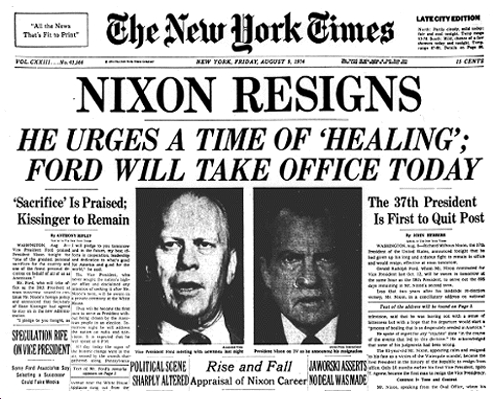
Maybe I should just do the right thing and swear off reading The New York Times. 

I’ve been reading The Times more or less every day since the time I could read–going on forty years now, give or take.

Never have I felt less confident that I can rely on the editors there for solid, unbiased information.  Never has it been more obvious to me that The Times represents the viewpoint of the 1%.  The liberal 1%, perhaps, but the 1% after all.

Why am I ranting about this today?  I just got around to reading a piece from the Sunday Magazine section, “It’s Not Just About the Millionaires,” in which author Adam Davidson, co-founder of NPR’s Planet Money show, argues that to solve our financial crisis in this country, “we have to go to where the money is — the middle class.”

Davidson constructs a cockamamie story about how it makes more financial sense to raise taxes on the middle class–families earning less than $68,000 a year–as well as close “despised loopholes (or beloved incentives)” for these middle class folks (we’re talking about the mortgage interest deduction, for example) than to raise taxes and close loopholes for corporations and those making more than $1 million a year.

Excuse me?

Has Mr. Davidson and his family ever tried to live on $68,000 a year?

As someone who is struggling as a single mom in this tax bracket right now myself–in a home that is now worth less than its mortgage–I can say with personal conviction that raising my taxes would have a huge impact on my life.  For most people in my position, it would mean the difference between starting a life of permanent credit card debt bondage, or staying very precariously in the black.

But that’s not all.  Mr. Davidson proposes that the middle class should also “give up some benefits (Social Security, Medicare).”

So not only are you proposing to raise my taxes, Mr. Planet Money, you’re also going to shrink the paltry benefits I may receive when I’m old and worn out and expecting at least some support from the society to which I’ve given all the best years of my life?

What’s wrong with this picture?

In Mr. Davidson’s scenario, a middle-class worker like me works hard every day, both in the public arena and at home (and remember, no benefits accrue for the years and years of unpaid home labor I’ve put in since I married and had children), and because of a downturn that I had nothing to do with, I am now going to be squeezed harder through taxes, and then hung out to dry in my old age with reduced Social Security and Medicare benefits.

This kind of attitude is EXACTLY what the Occupy America movements are protesting.

Hell no, we are not going to take this kind of B.S. anymore.

If you want to raise taxes, Mr. Planet Money, it will have to be on the wealthy and the corporations who are making out like bandits while the rest of us tighten our belts and do the best we can.

If that’s not enough money to make our national ends meet, then how about reducing the military budget?  How about reducing the billions we spent on the nuclear arms program?  How about directing more taxpayer funds into programs that actually benefit taxpayers?

I am beyond frustrated with the one-sided reporting of The New York Times.

I know statistics can be manipulated to support any side of an argument.  But I expect the most respected source of news on the planet to do a better job at being truly even-handed.  Sure, give Mr. Davidson and his monied folks some space.  But his should not be the only voice we hear.

Fortunately, in the internet age, there are plenty of alternatives to The New York Times.  

Watch out, Grey Lady, or even longterm devoted readers like me may be simply switching the channel.

Resisting the Energy Vultures

Today’s New York Times Sunday Review piece by White House correspondent Mark Landler, “A New Era of Gunboat Diplomacy,” gives disturbing insight into the mindset not only of the men and women who preside over national foreign policies, but also into the media lapdogs who cover them.

Landler reports that China and the U.S., along with practically every other country in possession of a serviceable Navy fleet, are entering into “a new type of maritime conflict — one that is playing out from the Mediterranean Sea to the Arctic Ocean, where fuel-hungry economic powers, newly accessible undersea energy riches and even changes in the earth’s climate are conspiring to create a 21st-century contest for the seas.”

Secretary of State Hillary Rodham Clinton, one of Landler’s sources, explains blandly that “This hunt for resources is going to consume large bodies of water around the world for at least the next couple of decades.”

Clinton has got the right metaphor there.  What Landler describes all too flippantly as “a watery Great Game” could well indeed “consume large bodies of water around the world.”

What neither Clinton nor anyone else interviewed for Landler’s article bring up is the cardinal question:  When the game is over, what will be left of the living beings that used to populate those waters in unimaginably vast numbers?

Landler describes the navies and drill ships of countries from China and the U.S. to Turkey and Israel jockeying for control of huge troves of oil and natural gas deposits that have been discovered beneath the sea.

Of especial interest to these circling energy vultures are the deposits beneath the Arctic ice.  Landler reports that “melting ice has opened up the fabled Northwest Passage,” making resource extraction in the Arctic more viable than before.

This offhand and veiled reference to climate change provides a window into the sociopathic mindsets of the men who rule the Energy Kingdoms.  The cowboys of global fossil fuel extraction are essentially warlords, relying on the national armies of their nominal countries of origin to clear the way of opposition to their reckless drilling.

From their warped point of view, global warming can be seen as a bonus.

If the Arctic ice melts, so much the better–it’ll make it easier to get those billions of barrels of oil out of the sea and into the global market.

No matter that deep sea drilling has been proven to be highly risky and lethal to the environment.  Hello, does anyone remember BP in the Gulf of Mexico?
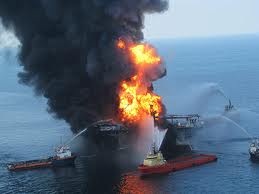
Imagine a spill like that going on in frigid northern waters.

Imagine billions of barrels worth of oil or gas gushing into the Arctic Ocean, to be picked up by the currents and spread all over the world.

Imagine the destruction of marine wildlife, and indeed the entire marine food chain, that this would entail.

NY Times reporter Landler doesn’t waste time contemplating such grim scenarios.  The focus of his article is “gunboat diplomacy,” a glamorous new competition among national navies to dominate the oceans, seen strictly in utilitarian terms.  His only mention of fish, or indeed any maritime creature, is a brief aside that icebreakers are being sent into the Arctic circle by countries like China and Korea, “to explore weather patterns and fish migration.”

Landler’s article, which is billed as “news analysis,” reveals the extent to which the chillingly disturbing values of the Energy Kings have permeated not only the governments who are supposed to be regulating their industry and safeguarding the natural world, but also the media “watchdogs,” who are obviously sitting cozily in the laps of Big Oil.

Questions of environmental sustainability and health are simply outside the picture for these folks.  It’s not relevant to them whether or not the polar bears survive.  They don’t care about the coral reefs, or the plankton.  They don’t care about whales.  Their only concern is the bottom line.

What is the most effective opposition to such monomania?

Trying to think of persuasive strategies gives me a touch of hysteria.  We could appeal to their love of seafood!  Wouldn’t they miss their caviar and oysters?

They will figure out how to grow these in tanks.

We could appeal to them as property owners: what’s going to happen to their beachfront homes, not to mention their office towers in coastal cities around the world, when the waters begin to rise?
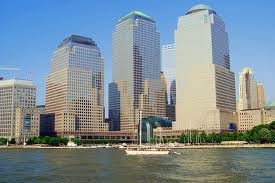
They will have armies of lawyers figuring out ways to make the taxpayers bear the burden of their lost properties.

We could appeal to their brand image.  Does Exxon-Mobil really want to go down in history as the biggest perpetrator of maritime omnicide in world history?

They will throw this back at us, and rightly so: they were just doing their job of giving the consumer what she wants, a steady supply of affordable energy.

It’s true that we all share the blame for this tragedy unfolding in front of our eyes. It’s also true that we have the power to stop it.

How? We need to demand that the rights of the denizens of the natural world be respected.  A new Declaration of the Rights of Nature has been written–it needs to be circulated, popularized and upheld.

We need to insist that our politicians report to the people, the taxpayers, not to the corporations. Yes, people want energy; we want cars, we want electricity.  But we want to direct our tax dollars into R&D of renewable sources of energy–solar, geothermal, wind–not into dangerous oil and gas extraction or nuclear fission, and not into dirty coal mining either.

We need to call the mainstream media on its dereliction of duty when it presents one-sided reports like Landler’s industry white paper today.

Extracting those billions of barrels of oil buried below the earth’s surface miles beneath the sea would not just be a death sentence for marine life.  It would drive the nails on the human coffin as well, along with all the other species on this planet who will not be able to adapt to the erratic climate extremes of floods, droughts and storms that will inevitably ramp up once the planet heats beyond the point of no return.

Under these circumstances, if the governments won’t listen, radical action may prove a necessity.  The French Resistance to the Nazis were considered criminals in their own time and place, but look like heroes to us today, with the power of hindsight.

We are in the midst of a new, much larger Holocaust now, one that threatens not just one group of people, but all of us, and our natural world as well.

Each of us has a choice to make.  You can go along with the crowd, watching impassively as the train leaves the station for the gas chambers, or you can dare to raise your voice in opposition, and maybe even to throw a wrench in the gears of power.

Each of us is going to die sooner or later.  Wouldn’t you rather die knowing you had done your utmost to make a difference, to safeguard the world for your children and all life on this planet?