Activists circle the White House; Obama plays golf

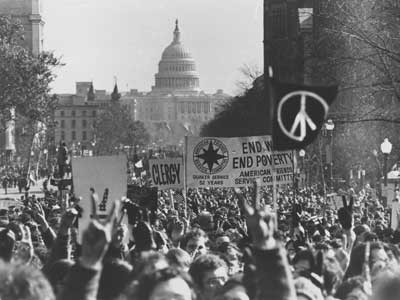
Mainstream media reports that some 8,000 people showed up in Washington D.C. today to link hands around the White House to protest the Keystone XL pipeline and the development of the Alberta boreal forest (aka “tar sands”).

The energy and determination of this crowd is wonderful. But It’s heartbreaking to learn that President Obama “missed most of the protest while he played golf at Fort Belvoir in Virginia.”

Last week I went for a walk on a golf course near my home, and was reminded again of how terrible these private parks are for the environment.

If lawns are destructive monocultures, just imagine the exponential scale of the golf mono-lanscape: acres and acres of closely cropped, artificially bright green  turf, with not a single broad-leaved plant to be seen.

Golf parks are anathema to butterflies and other insects, of course, since they are regularly treated with pesticides and herbicides.  They suck up precious water for a use that is 100% non-necessary: a pleasant game for the 1%.

I admit it, golf courses are one of my pet peeves.  I have never liked them, and never will.  So I suppose it was a sort of trigger to hear that Obama was off golfing this afternoon, instead of paying his respects to the thousands of activists streaming into Washington to communicate with him–the man we sent to represent us in the White House.

He is not the first American President to dodge attempts by the citizenry to communicate our wishes.  I think of President Bush off on his ranch while activists like Cindy Sheehan, whose son Casey died in the Iraq War, tried to send him an anti-war message.

Mr. President, if your citizens make the effort to go all the way to Washington DC to speak with you, I think the least you could do is show up.  We are depending on you to make the right decision on the tar sands/pipeline issue, which is clearly NO PIPELINE, and no development of the boreal forest.

We expect you to make a decision in favor of the health and well-being of your citizens.  Instead of investing in tired, dirty old energy platforms like oil and pipelines, we should be investing in solar and geothermal.  We need an Apollo Project for renewable energy, and we need it now!

Sure, you deserve your R&R on a Sunday afternoon, Mr. President.  But if you make the wrong call on this issue, those luxurious golf courses you enjoy may soon be relics of the wasteful bygone days.

Future social historians might point to golf as one of the many foolish 20th century habits that left us crouching bewildered in the 21st century in the midst of a full-blown climate crisis.

You’re the Decider now, Mr. President.  We are expecting you to make the right decision–for your precious children, and ours.

Sweet stirrings of a new world: fringe politics overturning the barricades

The venerable social critic Hendrik Hertzberg of The New Yorker contrasts the Tea Party with the Occupy movement in this week’s magazine, and finds the Occupy movement lacking in precisely what has made the Tea Party so strong: a willingness to get involved in (and take money from) the established American political parties.

“Occupy Wall Street and the Tea Party are both protest movements, not interest groups,” Hertzberg says, “and while both are wary, or claim to be, of established political figures and organizations, each welcomes their praise, if not their direction. Both have already earned places in the long, raucous history of American populism. But only one, so far, has earned a place in the history of American government.”

Are we supposed to be proud that the Tea Party has “earned” an infamous place as the launching pad for the new cadre of rightwing Republican zealots who have spent their time in Congress obstinately shooting down and stampeding every effort by President Obama and the Democrats to steer this nation towards a more compassionate and forward-looking political stance?

In its few years of existence, the Tea Party has happily wormed its way into the main arteries of American political power.  Hertzberg offers an apt metaphor of this tea as a new wonder drug, “injected into the scarred veins” of the GOP, which has quickly become addicted to this mainlined source of entranced, stupified frenzy.

“Now the Democrats are hoping the drug might be available as a generic,” Hertzberg continues, eying the Occupy movement as a way to enliven its own moribund political base.

I firmly hope that the Occupy movement does not allow itself to be used in this way by the political establishment, and I think it’s a reasonable, if remarkable, hope.

Remarkable because for so long Americans have been asleep, indifferent or unaware of what Hertzberg calls “the astounding growth of what can fairly be called plutocracy.”

Why it took so long for the sleeping giant of American popular opinion to wake up is a question for historians of the turn of the 21st century to ponder.

Why is it that Americans have been voting against their own class interests so long?  Why is the persistent myth of American equality, liberty and justice for all so teflon-coated?

We all want to believe that our country represents the moral high ground in the world, and that our leaders in government are as invested in upholding our idealism as we are.

Our public education system, which is responsible for the education of a great portion of the 99%, aids and abets this self-delusion by giving students the most doctrinaire and uncritical version of American history and civics, and teaching docility and proficiency at standardized testing above all.

Our media doesn’t help much; with the exception of a few poorly funded but stalwart independent outlets, the vast social landscape of contemporary media is focused at best on distraction, and very often on outright deception.

Under the pressures of this kind of social conditioning, it’s remarkable that the young idealists in the Occupy movement have had such success in galvanizing the country to wake up, shake ourselves, and stare around us with new eyes.

Hertzberg obviously intends his column as a signpost for the Occupy movement, pointing towards Washington D.C. as a more important battleground than Wall Street.  “Ultimately, inevitably, the route to real change has to run through politics,” he concludes; “the politics of America’s broken, god-awful, immutably two-party electoral system, the only one we have.”

Here is a glaring example of the kind of civics mis-education that has made our country so hard to reform over the years.

Who says our political system is limited to two parties?  Or at least, to the two parties we have now?

The Republicans and the Democrats have shown themselves to be chronically unable to lead this country out of the morass of special interests and ruthless corporate-driven capitalism that has bulldozed right over our cherished ideals of equality, not to mention the sacred ecological web that forms the real foundation of all our wealth and prosperity.

The Occupy movements are showing their intelligence in shying away from engagement with the established political system.  If anything, their political allies are more likely to be found in those perennial political organizations that have always camped out on the fringes of our electoral parks: the Green Parties or the Rainbow Coalitions.

Remember Ralph Nader, for example?  Remember how Big Media colluded with the established parties in denying so-called “outside” candidates a seat at the table at the televised Presidential debates?

This year the Ralph Naders of the political world have suddenly swelled their ranks dramatically, but without the figurehead of a single leader at the head of the crowd.  As Nader knows only too well, one man at the head of a true opposition movement is open to all the slings and arrows that the establishment can muster.  Even Gore and Kerry have felt the force of the muddy vomit pitched their way out of the far-right Republican swampland.

Far better for the Occupy movements to stay plural and collective, strong in the anonymity of the multitudes.  Those of us who are serious about doing more than simply rearranging the deck chairs on the great hulking Titanic of American politics realize that “America’s broken, god-awful, immutably two-party electoral system” is exactly what has to go.

OK, Hendrik, it may be the only one we HAVE HAD, but now the veil has been torn down, the people are awake, and we realize that another world is possible.  As Arundhati Roy famously put it, “on a clear day, I can hear her breathing.”

That clear day has dawned.

Never underestimate the value of JUST SHOWING UP

In response to “Beyond Occupy” in today’s NY Times:

Dear Bill Keller,

I was surprised and pleased to see that on your recent trip to India, you made time to talk with the social activist Anna Hazare–or at least, with a member of his team, since the great man himself, “exhausted by his latest hunger strike and weary of the media melodramas that have bedeviled his team,” had just “announced that he had taken an indefinite ‘vow of silence.’”

Obviously you didn’t think much of this as a tactic for activism, but you went ahead and talked to his associate, a woman, “Kiran Bedi, who battled for reforms as India’s first policewoman before joining Hazare.”

Despite this conversation, and despite the name of Hazare’s organization, Team Anna, you came away from this encounter with the impression that the movement is dependent on the personal charismatic leadership of Mr. Hazare.  You also noted approvingly that Hazare is “always very explicit about his objectives”–he makes specific, winnable demands.

You used this information to criticize the American Occupy movement for its “consensus-oriented and resolutely leaderless” character, and its stance as a “composite of idealistic causes, many of them vague.”

You also took the occasion to contrast the Occupy Wall Street movement, which you say is “scornful of both parties and generally disdainful of electoral politics,” with Team Anna, which “uses Indian democracy shrewdly” to advance its aims.  And while you say that the Occupy movement “has at least a strong undercurrent of anticapitalism,” the Indian movement of Hazare is, according to spokeswoman Bedi, “not anticapitalist,” but rather “pro-integrity.”

You ended your column by sticking it to the Occupy Wall Street crowd with a pithy zinger that I’m sure had you chuckling to yourself:

“I’m prepared to celebrate when the Occupiers…accomplish something more than organizing their own campsite cleanup, demonstrating their tolerance for tear gas, and distracting the conversation a little from the Tea Party. So far, the main achievement of Occupy Wall Street is showing up.”

Well, Mr. Former Executive Editor of the New York Times, I think you need to get over yourself and wipe that self-congratulatory smirk from your face.

You are among the 1% who “showed up” to be crucial cogs in the capitalist and electoral wheel that cranked us inexorably to where we are now, mired in an economic and political system so corrupt and so destructive that it has effectively locked out the millions of young people in this country who might have wanted to give American-style democracy and capitalism a chance.

Despite having covered the news for the past thirty years or so, you don’t seem to have realized that there are very few American dissenters today who can evade capture and imprisonment or even worse, assassination.  Noam Chomsky and the late Howard Zinn got away with it.  Malcolm X, Martin Luther King, Mumia, Peltier and even Tim DeChristopher have not.

The strength of the Occupy movement is precisely in its “resolutely leaderless” quality.  It’s also, as Slavoj Zizek perceptively noted recently, being strategic in not coming up with a unified “platform,” with planks that can be shot down by snipers from all sides.

Yes, the Occupy movement is suspicious of electoral politics.  That’s because it’s smart enough to figure out that if even someone as apparently idealistic and populist as Barack Obama enters the maw of American “democracy” and comes out zombified, the system itself is not worth trying to win. It has to be changed from the ground up.

And that’s what those resolute, leaderless people on the ground at Liberty Parks all over the country are out to do.  By just showing up, day after day, they slowly pull the Bill Kellers of the world out of their insulated comfort zones and into the conversation.

I may not like what Keller has to say, but I’m glad he’s talking about these issues, and I’m glad to have the opportunity to engage him in dialogue about what’s wrong with our society, and how we might go about making it better.

Never underestimate the power of a company of dedicated activists who JUST SHOW UP, day after day, to change the world. They just might be able to do it.

Let’s give them credit, let’s give them a chance, and let’s give them a hand!

Help Wanted: Obama the Community Organizer, Please Come Back!

Here’s another video of unwarranted police brutality against peaceful protesters, this time in Oakland CA, that’s sure to go viral on the Web today:

How do you think the NY Times is covering this story? Not surprisingly, the Times presents the story largely from the establishment point of view, focusing on how cities are “losing patience” with the Occupy movement, with “officials…grappling with growing concerns about crime, sanitation and homelessness at the encampments.”

Well yes, we do need to be worrying about “crime, sanitation and homelessness.”  But not especially at the Occupy encampments.

The Occupy Wall Street folks have shown themselves able to handle these issues very well themselves, without any help from city officials or police, and we can expect that their example will be followed by other protesters across the country.

However, there are other, far more serious instances of crime, sanitation and homelessness on which city officials should be focusing.

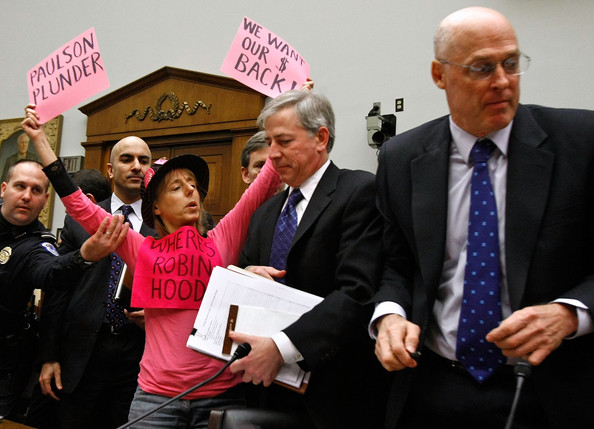
For instance, the criminal behavior of the major American banks, which, as Nick Kristof observed in his column yesterday on American crony capitalism, “privatize profits while socializing risk.”

Or the criminal behavior of the U.S. military establishment, which, in a heinous disregard for the health of U.S. Marines and their families, ignored the fact that the water at Camp Lejeune was highly unsanitary–in fact, totally toxic–for years, until the undeniable incidence of cancer and birth defects, including the biggest cluster of male breast cancer victims in the nation, forced officials there to acknowledge the problem.

Then there’s the issue of homelessness.  Not the kind represented by the tents and sleeping bags that have sprung up in cities and towns across the country in a deliberate effort to draw attention to soaring American inequality.

No, what officials should be concerned about is actual homelessness caused by record numbers of home foreclosures by the very banks that manufactured this crisis to begin with.

I don’t think it’s any coincidence that President Obama has lately snapped out of the zombified sleepwalking he’s been stuck in for the past year or so.

The Occupy movement can and should claim the credit for waking him up and giving him the inspiration and courage to start fighting back again. These young people may be his salvation in the next election, too, if he can break the chains that have bound him to Wall Street and take up a more populist stance.

According to the U.S. Census Bureau, in 2010 there were 26.1 million Americans ages 18-23.  A good portion of those–say, 90% or so–have every right to be upset with the dismal state of the economy they’re about to enter as working adults.

Many of them have crushing student loans, and come from families that have been struggling to keep up with their mortgage payments in a flat-lining middle-class economic environment.

And seriously, do you know ANYONE who has not been touched by cancer at least indirectly, having to watch friends, neighbors and family members fight the good fight against this manufactured scourge?

Do you know anyone who doesn’t think we in the 99% need access to affordable health care, and better governmental protection from toxic chemicals in our food, water and air?

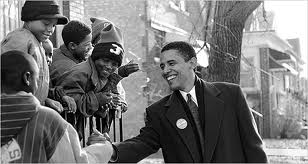
President Obama needs to get back to his community organizer roots, and come out as the man we thought we were electing, the defender of the 99%.

We need to hear from the youthful idealist Obama who worked so hard to improve conditions in Chicago’s ghettos.  I know he’s in there somewhere.

Maybe these young people in the nation’s streets, standing firm against the onslaught of the riot police, will rekindle the fire that’s been all but extinguished in the White House lately.

In this wet, gloomy autumn, there’s nothing we need more.

Hey Boston? Remember your roots! The world is watching you…and so are we!

Have you noticed that there hasn’t been any more pepper spray lately down on Liberty Square in New York?  If that gratuitous act of police brutality hadn’t been caught on videotape by an alert citizen journalist, the pepper-spray impunity might have continued.  Such is the power of the public sphere.

What’s different about this 21st century protest movement is that the public square has expanded to be as big as the whole networked world.

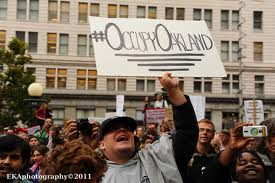
Even if we’re not physically present,we’re watching, we care, and, as Medea Benjamin of Code Pink said yesterday on Democracy Now, “We are here to stay….It really doesn’t matter to us that our permit has run out. We feel like this is a public square, we are the public, and we are occupying this square, so we will stay here.”

Last night the Boston PD unceremoniously removed Occupy Boston protesters from a park that turned out not to be public.  They manhandled Veterans for Peace representatives who were peacefully protesting under the banner of the American flag, and threw the protesters’ tents and belongings into a municipal garbage truck.  Check out this report in the Harvard Crimson, or watch this video and see for yourself.

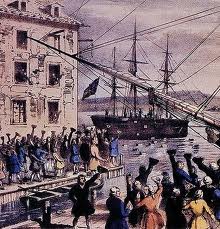
Bad move, Boston.  Aren’t you the home of the original Tea Partiers, the ones we celebrate as patriotic resisters of British oppression?  Do you really want to trample on American citizens’ right to the peaceful expression of dissent?  How un-American is that??

There was no way the Boston Tea Partiers could have predicted that their action in the harbor would spark the American Revolution.  All major watersheds in human history have unfolded in the same way, set off by the actions of a few dedicated individuals who are willing to stand up for their rights and their principles.

Why should our historical moment be any different? The truth is that every hundred protesters arrested will bring another thousand to the movement for change.  Get used to it, Boston–and Chicago, New York, Atlanta, San Francisco….This movement is just getting going.

Bill McKibben: The Sky Does Not Belong to Wall Street!


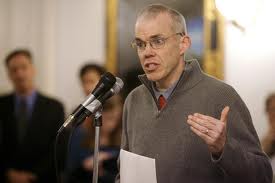
Thanks to the magic of You-Tube, we can see a terrific 6-minute speech by Bill McKibben today, linking the fight to save the climate to the fight against the Wall Street tycoons.

He’s planning another big action in D.C. next month: setting up a ring of protesters around the White House, standing siege until the real Barack Obama comes out–not the zombie who’s actually considering letting the oil industry raze the boreal forest in Alberta and run a leaky pipeline all the way to the Gulf.

We need our Obama to stand up to those guys and remind us why we elected him!

Let’s hope Bill McKibben and company can free the real Obama from the stranglehold of Big Oil, so he can be our champion in the White House, as we so hoped he would be.

“The sky does not belong to Exxon.  They cannot keep using it as a sewer into which to dump their carbon,” Bill reminds us.

Barack, are you listening?

Occupy Wall Street: Finally, the New York Times Gets It!! Now, how about Obama?

Protesters Against Wall Street – NYTimes.com.

This is a big victory for the Occupy Wall Street movement.  To move the staid NY Times from complete indifference to disdainful incomprehension to vigorous approval in the space of just three weeks is truly remarkable!

Haven’t I been saying that the young people today are the sleeping giant that needs to awaken, stretch and roar?  Any subordinate class (and make no mistake, the young ARE a subordinate class) is only kept down through ignorance of the true extent of their power.

In the past, it’s usually been a charismatic leader who has seized the microphone and shaken the masses out of their beaten-down stupor.  Think Frederick Douglass or Martin Luther King Jr., for example.

With Occupy Wall Street, we’re onto something new: a “leaderless movement,” without microphones, but with the extraordinary amplifying power of the World Wide Web.

Social media couldn’t have done it alone–we need the resolute presence of those flesh and blood people down at Liberty Square and in parks and street corners all across America.  But their resistance is exponentially strengthened by the social network around them, spreading like wildfire throughout the country and the world.

President Obama responded at least obliquely in last week’s press conference, showing at least a glimmer of understanding of what the movement is about.

If he had a shred of political sense, he’d be looking for ways to harness the intelligence, social commitment and determination of these young people to stand up to the Tea Party crowd and the drill-and-kill Republicans who have shown themselves again and again to be against social equality in any way, shape or form.

This could turn into the political juggernaut needed to push the Republicans back into their holes, and give the Democrats some much-needed backbone.

One thing is certain: these kids are not backing down, and they’re not going to be fobbed off with half-hearted gestures of appeasement.  They are after real social change, from the ground up.

What was it Arundhati Roy used to say?   “Another world is not only possible, she is on her way.  On a quiet day, I can hear her breathing.”

Yes.

Resisting the Zombies: At what point will we stop bearing witness to ecocide and begin to act?

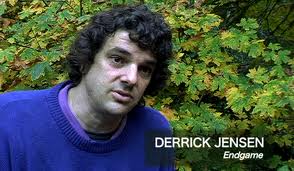
My favorite chapter in Derrick Jensen’s new book Dreams is entitled “Zombies.”  Jensen describes the corporate elite as zombies, that is, as “flesh-eating…mindless monsters who are not only to be feared for their insatiability and ferocity, but because their sickness is highly contagious….Zombies eat human flesh, but they are also as relentlessly omnicidal as corporations.  They destroy forests, grasslands, rivers, oceans, mountain tops, and the mountains themselves.  They consume everything, and they shit out plastic” (367).

For Jensen, “zombie capitalists” are especially terrifying, because “on the one hand, they pursue their prey–I mean, profits–with an unfeeling, unrelenting, insatiable mindlessness, unheeding of all the pain and suffering they cause in their victims–I mean, in the resources they exploit (I mean, develop).  On the other hand, they fabricate extraordinarily complicated rationales for their zombie economics (or zombinomics) and for the further zombification of the world and all its inhabitants” (368).

Jensen imagines a “realistic zombie film” being made, in which “the remaining humans”–the ones who haven’t been consumed or infected yet by the zombies–are “refusing to resist, but instead hoping against reason that the zombies will stop on their own, that the zombies will undergo a miraculous awakening…or that if they personally could just live sustainably, then their shining examples will cause the zombies to suddenly stop, look at the torn flesh all around them, and say, ‘What have I done?  I need to make this right!’….In a realistic zombie movie,” Jensen says, “too many humans would try to stop the zombies by gardening, taking shorter showers, recycling, petitioning.  In a realistic zombie movie…many of those humans who opposed resistance would be revealed near the end to not really be on the side of the living but rather, unbeknownst even to them, already among the living dead” (369).

Unfortunately, all too often, even those who profess to be on the side of justice and environmental sanity are eventually shown to be soulless creatures of the corporate capitalist zombie machine.

It seems that the minute an authentic human leader arises who has the possibility of successfully resisting the zombies and making real change, s/he is either smeared and discredited; corrupted with financial payoffs; driven mad with frustration by repeated, humiliating obstructions; or simply imprisoned or killed off.

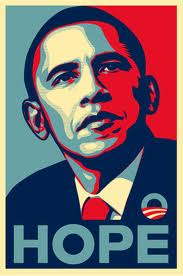
Thus we have watched with horror as our beloved Barack Obama, the young man we came to know and love in Dreams from my Father and The Audacity of Hope, has slowly had the soul sucked out of him by the zombification crucible of politics and media.  The face remains the same, but the eyes are hollow, and the spirit is clearly guttering.

Bill McKibben is still holding out valiantly against the zombies–maybe it’s that pure Vermont air that is keeping his head clear of contagion so far.  Derrick Jensen has some harsh questions for Bill, though, which I think are entirely reasonable.  Given the steady destruction of the planet by the zombie forces of corporate capitalism, Jensen asks, “Would McKibben ever countenance the physical dismantling of infrastructure in order to stop civilization from killing the planet?” Jensen’s question, “for McKibben and for everyone,” is: “What is your threshold?”  At what point will we stop bearing silent witness to ecocide, and begin to seriously resist?

The reason the Occupy Wall Street protests have so seized the American imagination is because the young people out there on the street are so clearly NOT ZOMBIES.  Not yet, anyway.  They have not been corrupted; their souls are intact.  That’s why they can see so clearly that what the zombie nation accepts as normal–the enrichment of the few on the backs of the masses–is not normal at all, and is neither just nor sustainable.

There is another up-and-coming activist who is right now wavering on the border between zombie and human.  His name is Van Jones, and he’s the man behind the Rebuild the American Dream movement.  Jones is all about developing “green-collar jobs”; in other words, rebooting the old American Dream in a new, more sustainable version.  Unlike Occupy Wall Street, Jones comes armed with a nice bullet-pointed list of “demands.”

Nothing wrong with his list.  But it’s just not radical or visionary enough to ignite the minds and hearts of the young people out in Liberty Park Plaza.  Even the way his website is presented, with red-white-and-blue stars and flashy campaign-style graphics, is very likely to turn a lot of the Occupy Wall Streeters off.  It reeks of zombification.

When you look into Jones’ bio, you see why: “Jones served as the green jobs advisor in the Obama White House in 2009 and is currently a senior policy advisor at Green For All. He also holds a joint appointment at Princeton University as a distinguished visiting fellow in both the Center for African American Studies and in the Program in Science, Technology and Environmental Policy at the Woodrow Wilson School of Public and International Affairs.”

I’m sorry, but once Princeton and the Woodrow Wilson School get their hands on you, zombie contagion is almost assured.  You may not want to become one of them–the elite, the 1%–but like it or not, you will be beholden to them, and they will begin to mold you in ways you won’t even be aware of.

For example, contrast that slick Rebuild the Dream website, completely cleansed of its grassroots origins, to the Occupy Wall Street website, with its livestream coverage of the chaotic goings-on down on Liberty Square.  The livestream may be focusing on a dark corner, but you can hear people in the background singing together and talking in real human-speak–not the carefully crafted politician-speak of Rebuild the Dream’s “demands.”

I don’t like to dis Van Jones, any more than Derrick Jensen likes to dis Bill McKibben.  All of these men, including the old Barack Obama, are heroes for our time for having dared to at least try to resist.  Bill McKibben is still holding out, and we need to applaud him for it and help him in any way possible.

But most of all, we need to help those kids out in Liberty Square.  We need to make sure they know that what is best and most powerful about their nascent movement is the fact that it is not slick, not uber-organized, not hyper-networked.  It’s human, and I still dare to hope it will stay that way.  I still dare to hope that a real resistance to the zombie elite might just be getting underway.

Real reporting from Liberty Square

Thank you, Sarah Jaffe of Alternet, for giving us some good, well-linked, on-the-ground reporting from Liberty Square!  If you only read one article about Occupy Wall Street today, it should be this one.

(Photo by Michael Whitney)


Can’t you just play nice?

It’s one of the most popular NY Times articles on Facebook this morning.  Yes, a bonafide Times columnist, Nick Kristof, finally went down to Liberty Plaza to interview the Occupy Wall Street protesters.

But what does he come back with?  A strong personal defense of capitalism as a philosophy (“I don’t share the antimarket sentiments of many of the protesters”), and a condescending pat on the head for the demonstrators, who, he says, don’t really know why they’re there (“Where the movement falters is in its demands: It doesn’t really have any”).

Let me help, Kristof suggests.  His advice, listed in neat bullet points in his column today, is nothing you haven’t heard before from various left-of-center sources.  Tax financial transactions, close tax loopholes, regulate banks more carefully.  Nothing wrong with these ideas for reform–though they’re not exactly galvanizing.

But what’s infuriating is the way the establishment, from reporters to editors to cops & the Mayor, is treating the protests as child’s play: a source of amused wink-winks, not to be taken too seriously.  Give them some finger-wags, accompanied if necessary by some wrist-slaps (or pepper-spray, or tricky mass-arrest scenarios), and they’ll go home.  Let’s all just play nice.

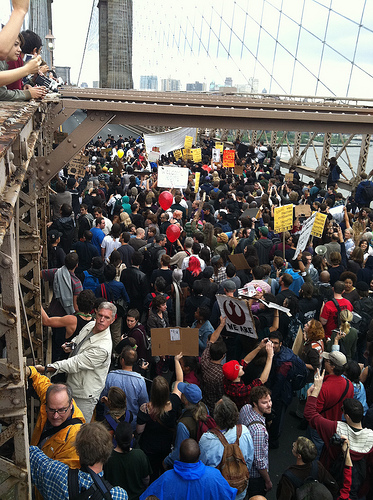
Well, was it playing nice to “allow” hundreds of protesters to gain access to the Brooklyn Bridge roadway, and then round them up like cattle and haul them off to jail?

Is it nice to continuously infantilize the movement by pretending that the people in Liberty Square don’t know why they’re there or what they stand for?

Why are they there? The 99% says it all. To protest the ever-widening income disparity in this country, and the lack of political or ideological support for change.

A protest song from the 1960s has been running around in my brain this week.  It’s called “It isn’t nice,” and it goes like this:

It isn’t nice to block the doorways/It isn’t nice to go to jail/There are nicer ways to do it/But the nice ways always fail/It isn’t nice, it isn’t nice/Well thank you buddy for your advice/But if that’s freedom’s price/We don’t mind, no no no, we don’t mind!

Give it a listen, and pass it along.