SlutWalk, Occupy Wall Street and other sparks of resistance: let’s fan the flames!

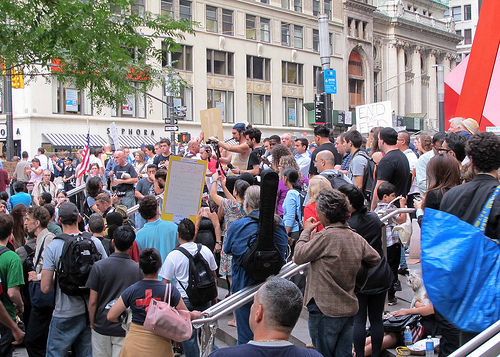
Finally this morning The NYTimes.com is paying some attention to the Occupy Wall Street protests.  But the tone is still highbrow and dismissive–Charles Blow, who really should know better, labels the protesters “hippies and hipsters” and the movement overall as “a spark set down on wet grass,” with “no where to go.”

He also finds space to inform us that “a New York Times/CBS News poll released two weeks ago found that a third of those who make $30,000 a year or less don’t believe that the government should raise taxes on the wealthy to lower the budget deficit.”

Could that be because those who are living on the edge are so beaten down by a variety of forces, including lousy education and the constant scorn this country shows the poor, that they could care less about “lowering the budget deficit”?

I bet that the pollsters would get quite a different response if the question were worded more directly, as in: Should the government raise taxes on the wealthy to help the poor get a better education, promote job growth and tighten the social safety net?  Hell yes! they’d say.
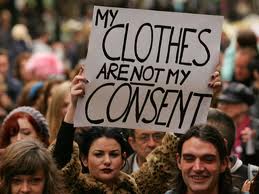
Meanwhile, up in Union Square, another protest is brewing today: SlutWalk, a new, international protest movement against “rape culture.”  In a rape culture like ours, the SlutWalkNYC site informs us, “sexual violence is made to be both invisible and inevitable; and these two practices are what normalizes rape, harassment and assault….The forces that normalize rape culture are not examined; rape is not seen as a culture or “practice” and if it is ever discussed, sexual violence is seen as an isolated act that occurs between individuals.”

SlutWalk began in Toronto last year, in response to an incident where a police officer told a rape victim that she had been “asking for it” because of the way she was dressed.  That the movement has caught on so quickly, especially among young women, is testament to the validity of its argument that no woman, no matter how she is dressed, is ever “asking” to be raped.

Both Occupy Wall Street and SlutWalk are driven by young people who are frustrated with the status quo and know that a better world is possible.  Their elders should know better than to dismiss these young folks as idealistic dreamers.  Hasn’t all change in human society, both positive and negative, been driven by those who dare to dream differently?

Lately I’ve been reading Derrick Jensen‘s latest book, a huge tome called simply, Dreams.  In it he argues that one of Western civilization’s crucial fallacies is our collective tendency to ignore and dismiss our dreams, as well as the possibility that through our dreams we may connect with “supernatural” forces that we don’t understand and cannot control.

Derrick sides with indigenous cultures who believe that the natural world is alive (“animism”) and can communicate with us.  His big question in Dreams is a weighty one: why hasn’t the natural world fought back harder in the face of the sustained murderous onslaught of humanity?

I would not presume to speak for the natural world.  But this question can be applied to a lot of other contexts today.

Why has it taken so long for Americans to get out and protest the takeover of our country by the corporate elite?  Why has it taken two weeks for the New York Times to deign to notice this gadfly protest on the flanks of the giant Wall Street bull?  The New York unions are finally stirring and considering joining the protesters–why has it taken so long for the American working class to awaken?
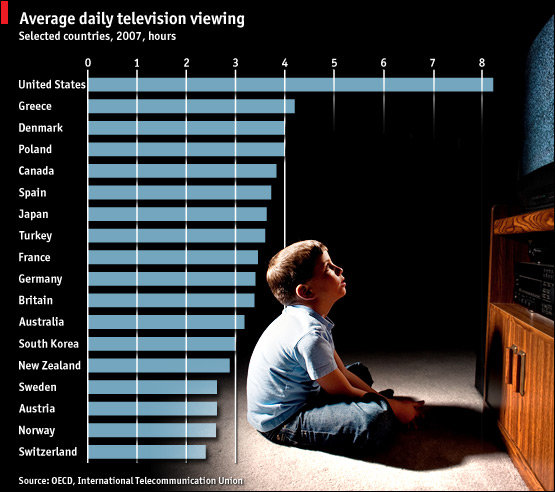
I think it might have something to do with the way we in the U.S. are caught up in a media-induced waking dream/nightmare, with a storyline that repeats over and over the following all-pervasive mantra: c’est la vie, there’s nothing to be done about it.  No fundamental change is possible.  The contamination of our environment is inevitable, and necessary if we want to maintain our comfortable fossil-fuel-driven lifestyle. The ever-growing gap between rich and poor is inevitable, as natural and normal as rape culture–boys will be boys, and you can’t expect rich boys to care about the poor.

Etc.

Someday analysts may look back on this period as one of remarkably successful mass indoctrination.  That is, if there are any shreds and shards left of our culture to examine after climate change is done with us.
To answer Derrick’s question, climate change is Nature fighting back.  Has anyone noticed that it’s been raining practically non-stop in New England for weeks now?  Here we are almost in leaf season, and our once-glorious maple trees are barely able to muster some mustardy brown color.  If this rain were snow, we’d be buried.  It may be an interesting winter season, to say the least.

However, resistance movements, both human and natural, are stirring all over the planet.  Like Occupy Wall Street, they may seem small, fragmented and disorganized to people who are accustomed to watching the huge, well-funded, tightly organized spectacles of mainstream political parties, or even mainstream-funded resistance movements like the Tea Party.
But it’s possible that dispersed, small-scale resistance may just what is called for under the present circumstances, when anything more obvious would simply be crushed by the iron fist of the corporate capitalist ruling class.

Resistance is happening when people take the time to relearn ancient human practices like small-scale biodynamic agriculture, bee-keeping, and storing food for the winter.  Resistance is happening when people refuse to let the dominant narratives ride rough-shod over their dreams of positive change.

Resistance is happening!  Let’s prove Charles Blow and the other naysayers wrong. It may be a rainy season, but let’s be the dry tinder for the spark of protest to fall on. It just takes one spark to start a wildfire, after all.

Don’t Pepper-Spray Our Dreams

New York Times reporter Ginia Bellafante has totally missed the mark in her coverage of the Occupy Wall Street movement.

Where I see a vibrant grassroots movement unfolding organically, she sees a disorganized group, marred by a “lack of cohesion” and an “intellectual vaccuum.”

Where I see a clever use of street theater to get across messages that might be too threatening to convey in a more direct, hard-driving tone, she sees an “apparent wish to pantomime progressivism rather than practice it knowledgably.”

Where she sees the cause of the protesters as “impossible to decipher” because of the “diffuse and leaderless” nature of this movement, I see the cause as rather starkly clear, if expressed in a multitude of colorful ways by the individual protesters.

It’s summed up in the movement’s use of the concept of 99% to identify themselves. Last week there were protesters who wore placards saying “I am Troy Davis.”  This week, almost all Americans could don similar placards proclaiming: “I am one of the 99%”–that is, the majority of citizens who are receiving almost nothing in the way of benefits from the vast wealth generated by Wall Street.

Even the disdainful Ginia Bellafante noted the growing economic inequality of America in her article on the protest:

Last week, she said, “The Forbes 400 list of wealthiest Americans, which included more than 50 New Yorkers whose combined net worth totaled $211 billion, arrived at the same moment as census data showing that the percentage of the city’s population living in poverty had risen to 20.1 percent. And yet the revolution did not appear to be brewing.”


Well look again, Ms. Bellafante and you Wall Street billionaires. The revolution is at your doorstep.  It may be young, motley and impulsive, but have’t revolutions always been started by the young, idealistic and passionate of any society?

They may not be arguing from any one intellectual vantage point, but they don’t need to be quoting Marx or Dewey or John Maynard Keynes to be able to pinpoint the source of the problem in our society: that the rich own our political system, and they are more interested in personal gain than in a healthy society where young people who work hard will know that they can look forward to a secure future.

We’ve seen the same kinds of protests from young people living under dictatorships in the Middle East; and in London; and now in New York and other American cities.  They all want the same thing: a social system that prioritizes the well-being of ordinary people over the need of the wealthy elite to accumulate ever more billions in personal property.

Is this too much to ask?

I don’t think so.  And it’s not “communism,” either. It’s what used to be called the American Dream, a dream that has faded for too many of us as cost of living has soared, wages have stagnated, housing values have fallen, and jobs have disappeared.

In today’s harsh world, idealist visions are often met with pepper spray.

That’s no way to treat the dreams and aspirations of our young people.

Mayor Bloomberg, you should be ashamed.

Occupy Wall Street: Time to Tell Bloomberg to Call Off the Goon Squad

Finally, the alternative media is coming alive!  Alternet is leaping on the Occupy Wall Street bandwagon, and urging its readers to do the same.

Arun Gupta issues “a clarion call to join the protests,” and a longer story by Sarah Jaffe shows how the heavy-handed police techniques and lack of attention from the press have not dampened the protesters’ determination, and if anything have drawn more people to the cause.

Truthout.org doesn’t have the protest on the front page, but they did reproduce a very disturbing video from msnbc, with anchor Lawrence O’Donnell, certainly no radical, standing up for the protesters in the strongest terms.

It’s the people wearing the badges that are the troublemakers, O’Donnell says, accusing the police of “unprovoked police brutality.”  The provocation, he observes, was having a video camera running.

There is NOTHING illegal in recording a peaceful protest.

Americans, we have to stand up for our freedom of speech.

It’s time to tell Mayor Bloomberg, a Wall Street type if there ever was one, that this is TOTALLY UNACCEPTABLE.

If you want to send the Mayor a letter, this is how.  And protesters, maybe it’s time to send a contingent over to the new Tammany Hall.

Occupy Wall Street, Day 10: Never doubt that a small group of thoughtful, committed citizens can change the world

One of Wangari Maathai’s most powerful political actions was when she and a group of women occupied Uhuru (Freedom) Park in downtown Nairobi, to protest government plans to turn the tree-lined public park into a giant private office complex.

At first it was just twenty women with hand-painted signs, sitting down together in the center of the park in protest.  But as word spread, the protest grew, until soon hundreds of people, men and women, were sitting down in the park with Wangari, demanding the right to hold on to one of the last remaining green spaces in their city.

And you know what?  They won!

I’m thinking of that story tonight as I watch the coverage of the Occupy Wall Street protests in Liberty Plaza Park, NYC.  Protesters have been sitting down there for the past ten days, and despite nasty police pressure and arrests, they are not moving–and the crowd is growing.

Their demands are simple: they want the Masters of the Universe who run Wall Street, and through Wall Street, the world, to pay attention to the ordinary folks at the bottom of the heap.

There are all kinds of people down in Liberty Park–students, housewives, journalists, activists, the unemployed.  What they have in common is a deep and abiding belief that the corporate capitalist system symbolized by Wall Street is not serving Americans well–other than the narrow top layer of financiers and their creatures, the politicians and corporate business types.

I am disappointed to see that my hometown newspaper, The New York Times, has treated the protest like a minor disturbance, not worthy of front-page attention.  Of course, the Times can’t risk angering its corporate advertisers and sponsors…so they have to tread carefully.

But it’s surprising to see that even more progressive publications like The Nation, the Huffington Post and Moveon.org are also largely ignoring the significance of this protest.

Maybe it’s because there’s no one famous in charge–although some celebs have started dropping by and addressing the crowd now, including Michael Moore, Cornel West and Susan Sarandon.

The truth is that this is a REAL grassroots protest movement.  There is no charismatic leader calling the shots and getting the glory. There is no fancy media kit or PR person fielding questions.

There’s just “a small group of thoughtful, committed citizens,” seeking by their persistent accusatory presence to change the world.  As Margaret Mead said, we shouldn’t doubt their ability to do just that.

More than that–we should get out there and join them!

Facebook vs. Dead Space 2: which 21st century geo-political model will win?

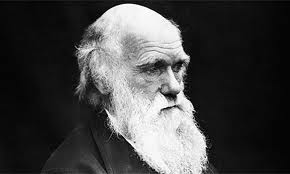
This week I am teaching Darwin again, Darwin being a staple of the Simon’s Rock Sophomore Seminar, required of all students.  I have always found The Origin of Species difficult to read, but lately I am realizing why: because Darwin seems so sure that aggressive competition, the infamous “survival of the fittest,” is THE biological paradigm on our planet. All species are locked in a relentless “battle for life,” from which only the strongest and best adapted (which often means the most ruthless) will emerge evolutionarily victorious.

However, there have been some persistent voices in the past few years arguing that Darwin understated the case for altruism and empathy as an evolutionary advantage for human beings.  Jeremy Rifkin, in The Empathic Civilization, argues that cognitive neuroscience is now proving that we are in fact at least as empathetic, as a species, as we are aggressive.  He believes that the linking potential of the internet age has the power to help us overcome the divisiveness that marred the past 500 years or so of human history, and make a great leap forward in our social evolution.

“The information communication technologies (ICT) revolution is quickly extending the central nervous system of billions of human beings and connecting the human race across time and space, allowing empathy to flourish on a global scale, for the first time in history,” he says.

“If we can harness our empathic sensibility to establish a new global ethic that recognizes and acts to harmonize the many relationships that make up the life-sustaining forces of the planet, we will have moved beyond the detached, self-interested and utilitarian philosophical assumptions that accompanied national markets and nation state governance and into a new era of biosphere consciousness. We leave the old world of geopolitics behind and enter into a new world of biosphere politics, with new forms of governance emerging to accompany our new biosphere awareness.”

Human beings’ amazing use of technology has always been both our blessing and our curse.  Technology is enabling me to send these ideas out into the ocean of the Web, a digital message in a bottle that could potentially reach millions of people across the globe.  Amazing!

But my reliance on electricity generated by oil and coal to perform this technological wonder is the Achilles heel of the whole enterprise, since collectively we as a species are overloading the biosphere with our wastes and driving the planet to the brink of what Darwin would call an “extinction event.”  Our own.

Will we make that great leap forward that Rifkin is foretelling, waking up to the necessity of moving from global competition to global collaboration in a new, more localized model?

Rifkin imagines a future global society based on the localization of energy sources like solar, wind, tidal and geo-thermal, as well as the re-localization of agricultural and manufacturing economies.

“In this new era of distributed energy,” he says, “governing institutions will more resemble the workings of the ecosystems they manage. Just as habitats function within ecosystems, and ecosystems within the biosphere in a web of interrelationships, governing institutions will similarly function in a collaborative network of relationships with localities, regions, and nations all embedded within the continent as a whole. This new complex political organism operates like the biosphere it attends, synergistically and reciprocally. This is biosphere politics.”

I believe that this rosy vision is theoretically possible, but I sure don’t see anything like it on the horizon today.  Rifkin puts his faith in the upcoming generation, who have grown up as “digital natives” and are more likely, he thinks, to be collaborative across traditional national and political boundaries. Facebook Nation!

Maybe so, if the young can be roused from their entertainment media trance and made to see the urgency of the mission.

I read with dismay yesterday that the U.S. video-game industry is one of the most highly subsidized sectors of our economy, rewarding, for example, the makers of “Dead Space 2, which challenges players to advance through an apocalyptic battlefield by killing space zombies.”  Dead Space 2 shipped 2 million copies in its first week of sales.

How can we expect young people to focus on serious, urgent issues like global climate change when they’re so busy chatting with friends on Facebook and killing zombies on Wii?

If this is the best we can do as a society, then I’m sorry, folks, but maybe an extinction event is not only on the horizon, but, as Darwin would say, “for the good of all.”


9/11–Let’s Get Real!

All right, I have to say it.  I find the coverage of the 9/11 10-year anniversary nauseating.

The way we are collectively wallowing in our victimhood, while at the same time celebrating our oh-so-macho response to being attacked.

The way so few voices are talking about the reasons for the anger that launched those pilots at the US; the money that funded them; the horrendous aftermath of the attack, in which we rattled our sabers, swore vengeance against the “axis of evil,” and started a war in Iraq that cost hundreds of thousands of people their lives.

The way we aren’t talking about the corporate capitalist policies of exploitation and greed that led to widespread misery in the places where Al Qaeda operatives like to hide, places where starving parents opt to send their sons to the madrassa so they can eat, not knowing or caring what kind of indoctrination may be occurring between bites.

The way we aren’t talking about the indoctrination our children are getting here in our schools, through the sanitized version of the 9/11 story, in which the U.S. is always the good cop, policing the rest of the world in a superior and politically correct manner.

No one ever mentions anything about our status as the largest military operation in the world and the largest exporter of guns and military hardware—the biggest fomenter, therefore of violence on the planet.  How could we naively expect that this violence would not come home to roost?

And now those same policies of profit-seeking callousness have reached their limit in the natural world, and the violence we have wreaked on our environment can and will return to bite us—in fact, it is already visible in the erratic weather patterns of global warming, leading to natural disasters and food instability even here in the heart of Empire.

Instead of the obsessive repetition of schizophrenic patriotic self-congratulation alongside whining victimhood, we aren’t we talking about what really matters: moving forward in a way that radically changes the culture, both national and international, that produced 9/11?

Until we begin to have this forward-looking conversation, in which all the cards are put on the table and no credible way out of the morass of violence, greed and destructive exploitation is ignored, we will be stuck in a sick Groundhog Day of our own making, with no way to stop the repetitive madness.

I don’t know about you, but I want to wake up to a new day.

Psst–did someone say…CLIMATE CHANGE???

A Year Full of Weather Disasters and an Economic Toll to Match – NYTimes.com.

Here is yet another example of the way the mainstream press reports on climate change without actually using that oh-so-loaded term.

“Normally, three or four weather disasters a year in the United States will cause at least $1 billion in damages each. This year, there were nine such disasters… These nine billion-dollar disasters tie the record set in 2008, according to a report by the National Oceanic and Atmospheric Administration.”

The article goes on to say that the NOAA “is taking several steps to try to make the nation more “weather ready,” including making more precise forecasts, improving the ability to alert local authorities about risks and developing specialized mobile-ready emergency response teams.”

But not a word about what really needs to be done to slow down this destructive trend, saving lives and livelihoods, not to mention the environment itself–REDUCE CARBON EMISSIONS!!!!

I wonder how the Times is going to cover the big climate change action coming up on Sept 24?  Check out Moving Planet for more info and to get involved.

Information warriors, we need you!

Kids and Media…at wits’ end

So what’s wrong with this picture?  Here we are, perched on rocky cliffs above the ocean, it’s a beautiful sunny day, full of possibilities…and all four kids, ages 7 – 19, are sitting on the couches, each plugged in to their own little screen.  DSI (what does that stand for?) i-pad, i-touch and laptop….each fixated on the screens, ignoring each other and the incredibly beautiful outdoor scene that beckons right in front of them.

This scene was repeated scores of times in the week that I spent with my two sons and their two cousins at the seaside in Nova Scotia.  Repeatedly, it took the focused attention of the adults present to divert the kids from their virtual reality, forcing them to engage with each other and the outside world.

I find it frightening.

Two of these kids spent their formative early childhood years in a Waldorf environment (my older son went to a Steiner school through 8th grade, the younger one through 5th grade).  The other two are going to a private school that values reading, art and performance.  Yet nothing is more compelling to any of them than the games offered by their devices.  They howl in protest if detached from their digital umbilical cord.

Once re-engaged with the real world, they are happy to climb the rocks, make sand castles on the beach, play chess, or read.  But it takes real work on the part of us adults to make this happen.  The only way to ease that burden would be to cut the wireless completely.  But then we adults couldn’t check our email or read the New York Times or consult Google.  Can’t have it both ways.

Seriously, folks, what is going to happen to the next few generations, if the current trajectory of digitization remains unchanged?

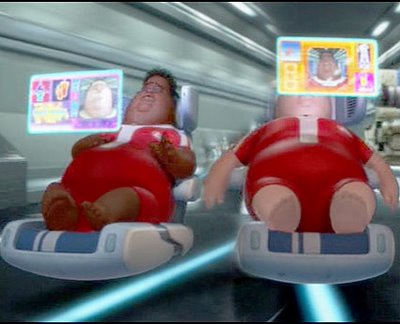
 If the children of today don’t understand the importance of connecting with the real world, will we all become like the humans of Wall-E, couch dwellers totally fixated on our screens?

The problem with media technology today is that it’s totally seductive, and kids don’t get “moderation.”

What’s a parent to do?  If you have any good ideas, please share them….

signed,

At wits’ end

I mean, who wants to look at pictures of skinned baby seals?

Doing Battle with the Blob

I had a moment of eerie and upsetting disjunction this morning while listening to the CBC (that is, Canadian Broadcasting Co) radio news.

The announcer says that humanitarian aid organizations believe that 29,000 children under the age of 5 have died in past 90 days as a result of the famine now afflicting southern Somalia.  He goes on to say that nearly half a million young children are expected to die during this latest Somalian disaster.  Then, his voice shifting to an almost chirpy tone, he says, “Sports is next, after this break.”  And an ad for furniture begins blaring, and I change the channel.

The most upsetting thing about this is that I might not even have noticed it had I not stayed up past my bedtime last night reading Thomas de Zengotita’s fascinating new book Mediated: How the Media Shapes Your World and the Way You Live in It.  De Zengotita (yes, that is his real name, apparently), argues that because of the way we are all supersaturated by the media now, we are forced to adapt by mentally “surfing” what we take in, on a generally unconscious level.

“The moreness of everything ascends inevitably to a threshold in psychic life. A change of state takes place…[as] the mind is forced to certain adaptations, if it is to cohere at all.  So, for example, when you hear statistics about AIDS in Africa for the 349th time, or see your 927th picture of a weeping fireman or an oil-drenched seabird, you can’t help but become fundamentally indifferent–unless it happens to be “your issue,” of course, one you “identify with,” a social responsibility option you have chosen.  Otherwise, you glide on, you have to, because you are exposed to things like this all the time.  All the time. Over breakfast.  In the waiting room.  Driving to work.  At the checkout counter.  All the time” (24).

De Zengotita says that as a result, we are cocooned inside what he calls a “Blob,” or others might call a bubble, which “mediates” between us and the outside world.

“Once in a while, in the public realm, some eruption of fate or evil–9/11, obviously, but also, say, a school shooting, the abuse at Abu Ghraib, the hostage beheadings, something like that–will feel as if it…might pierce the membrane and…at least interrupt the Blob’s progress through the universe.

“But no.  Watch as the media antibodies swarm to the scene of those nascent interruptions.  These are the junctures that require the most coverage–and the latent meaning, the ironic dialectic implicit in that word emerges.  What must be covered is any event or person or deed that might challenge the Blob with something like a limit, something the Blob cannot absorb, something that could, in resistance or escape, become the one thing the omni-tolerant Blob cannot allow, something outside it, something unmediated–something real.

“But not to worry.  The Blob may have to devote some extra time and energy to these challenges, but in the end it prevails.  And how is the moment of its victory marked?  By your indifference….That’s when the original being of the real thing has been fully mediated.  It becomes representational, and that means optional.  You can turn it off, or on.  It’s up to you again (27).

I have of course noticed this indifference in myself and others–this ability to ignore anything disturbing that we learn of through the media.  I knew it was related to being overly saturated with bad news, to the point where our ability to empathize becomes numbed and disabled.

But I hadn’t really considered the extent to which this mediation process is alienating and impairing our fundamental ability to connect to the real.  We are so used to seeing emotion and action happening onscreen that even when it is happening to us directly, de Zengotita says, we “perform” as if we are acting in our own personal movie. And it becomes harder and harder for us to “turn off” this performative state.

De Zengotita gives several caveats about how the mediated public he’s talking about are the wealthy First World types like you and me, the ones who spend half their waking hours online, and are more at home with a keyboard than any other tool.  We do not represent the majority of humans yet, by any means, though our ranks grow every day.

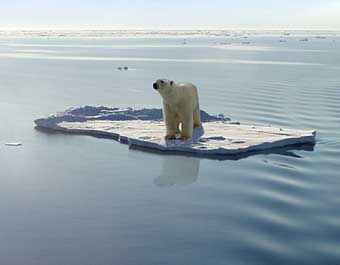
Because we are so globally connected via the media, we know about the thousands of Haitians still living without permanent shelter 19 months after the big hurricane hit, and now going into yet another hurricane season.  We know about the famine in Somalia, and the polar bears swimming to death as the Arctic ice melts.

That’s part of the eeriness of this–we know about them, but they don’t know about us.  We have an almost godlike power to look down on the globe, Google-Earth-style, and watch what is going on everywhere.

And then we have the power to click another link and move on.

Hence the huge challenge for activist movements today to arouse  the masses to action–especially, it seems, young people.  We saw what happened in the so-called “Arab Spring” when the youth there texted their way to revolution.  But here in the US, our kids seem to be too busy enjoying life, playing video games and going to the mall, to worry about difficult issues like climate change or economic meltdown.

De Zengotita observes how activist organizations spend millions of dollars to create “hard-hitting films” that will break through the Blob/bubble and galvanize people to political action.  “Kids today have been subjected to thousands and thousands of high-impact images of misery and injustice in every corner of the globe before their are old enough to drive,” he says.  “The producers of these images compete with each other to arouse as much horror and pity and outrage as possible, hoping that this encounter with a person dying of AIDS or that documentary about sweatshop labor or these photographs of recently skinned baby seals will mobilize commitment.

“But what the cumulative experience has actually mobilized, in the majority, is that characteristic ironic distance that aging activists mistook for apathy.  But it wasn’t apathy as much as it was psychological numbness, a general defense against representational intrusions of all kinds–especially painful ones.  I mean, who wants to look at pictures of skinned baby seals?” (135).

True that.  And perhaps we mediated folk are doing the only healthy thing we can do faced with such a barrage of psychically inflicted pain–tuning out.  But there seems to me to be something profoundly immoral about all of us sitting pretty in front of our screens here in the heart of Empire, knowing about and ignoring the suffering that our lifestyles have done so much to cause.

So the question becomes: how to do battle with that Blob?