Survival is not an academic skill

Yesterday I wrote that I intend to devote my second half of life (OK, let’s be real, we’re talking about  more like my last third of life at this point) to parenting and trying to change our global social systems to be sustainable and non-exploitative.  That intention rolled around in my head overnight, and I began to wonder how my role as a college teacher fits into this scenario.

Can I use my vocation as a teacher of comparative literature, media studies & gender studies/human rights to change the world?
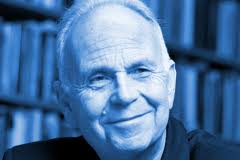
As if in response to my unvoiced question, the inimitable professor Stanley Fish published an op-ed on the NY Times website last night, in which he used the occasion of the upcoming Modern Language Association annual convention to reflect on the state of the higher-ed humanities profession.

I’ve participated in many an MLA convention in my 25 years or so of professional involvement in the field of comparative literature, but this year I am not attending because my panel proposal, entitled “Strategies of Resistance: Women’s Writing and Social Activism in Iran, South Africa and the United States,” was not accepted.

Professor Fish’s analysis of the 2012 conference Program gave me a good insight into why my proposal, which I thought was comprised of excellent papers by well-qualified scholars, was rejected.

“Absent or sparsely represented,” he says, “are the topics that in previous years dominated the meeting and identified the avant garde — multiculturalism, postmodernism, deconstruction, post-colonialism, neo-colonialism, racism, racialism, feminism, queer theory, theory in general.”  My panel would have fit nicely into at least three or four of these categories.

The new hot topics at the convention this year, says Prof. Fish, can be lumped under the umbrella term “digital humanities,” which covers “new and fast-moving developments across a range of topics: the organization and administration of libraries, the rethinking of peer review, the study of social networks, the expansion of digital archives, the refining of search engines, the production of scholarly editions, the restructuring of undergraduate instruction, the transformation of scholarly publishing, the re-conception of the doctoral dissertation, the teaching of foreign languages, the proliferation of online journals, the redefinition of what it means to be a text, the changing face of tenure — in short, everything.”

Everything?

The problem with this brave new direction in literary studies is that even while it reaches out to the world through digital portals, it seems to have lost all interest in the real world beyond its own narrow and insular ivory halls.  Other than “the changing face of tenure,” which is certainly a meaningful labor issue for the small percentage of Americans who are college/university professors, there is no indication that the young literary Turks all fired up about the digital humanities care at all about material conditions for people, animals or the environment.  Politics becomes cyber-politics; people become avatars; electricity simply flows, and food appears like magic in supermarkets or restaurant dishes.

Let me be clear: I am no Luddite when it comes to digital technologies.  I’m writing a blog, after all, and I regularly teach a class in digital media studies, which changes radically every time I offer it because I try to keep up with the rapidly transforming media landscape.

But to me, digital technology is a vehicle, not an end in itself.  I want to involve myself in digital media and the digital humanities to further my material, political goals of remaking the world.  Otherwise it’s just so much more mental masturbation.  We don’t have time for that now, if indeed we ever did.

And here’s where I come back around to my starting question of whether my role as a teacher will be useful to my larger political goals of transitioning to a safer, kinder, happier human and inter-species landscape.

It depends what I teach, doesn’t it?

For years now I have been teaching a series of classes on “women writing resistance” in various areas of the world–Latin America, the Caribbean, Africa, the Middle East, the U.S.  The political writings of strong women who have successfully resisted both private and public oppression have taught me and my students so much about what it takes to stand up for one’s principles and put one’s visions of positive social change into action.  We’ve also learned a lot about the price activists often pay.

In the years ahead, I want to continue to use my vocation as a teacher to explore literature that is not afraid to speak truth to power.  I want to seek out visionary texts that look ahead fearlessly into the future and light the way for those who are following more slowly and cautiously down the path.  I want to amplify the voices of authors who advocate for those who do not have the same privileged access to the literary stage.  I want to become one of those authors myself.

I should not be surprised that this direction is of little interest to the crowd inside the insular tower represented by the MLA.  What was it that Audre Lorde said at another academic conference, long ago?
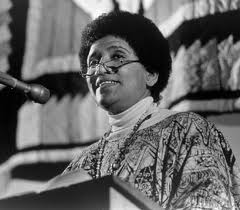
Survival is not an academic skill. It is learning how to stand alone, unpopular and sometimes reviled, and how to make common cause with others identified as outside the established structures in order to define and seek a world in which we can all flourish.”

Yes, Audre.  I’m with you.

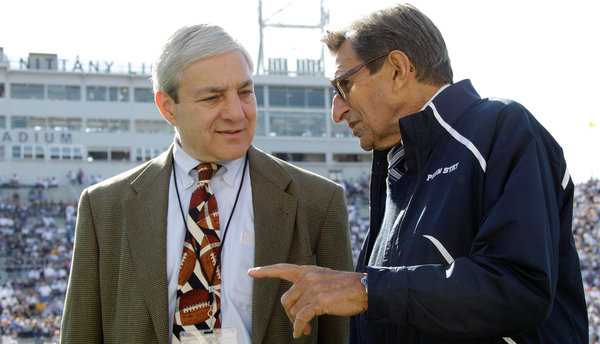
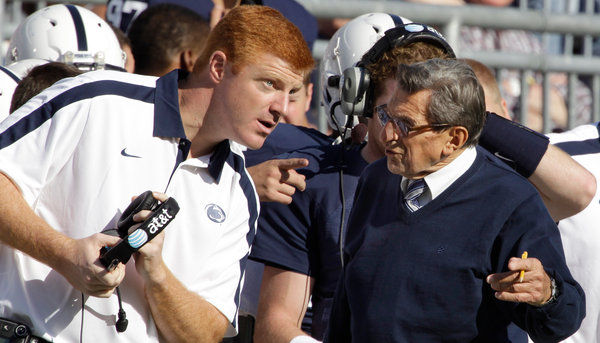
A teachable moment at Penn State?

What is most shocking to me about the current scandal at Penn State (sports and sexual abuse of boys, in case you hadn’t heard) is the response of the students to the announcement last night that longtime head football coach Joe Paterno was fired.

Do the hundreds of students who poured into the streets to smash car windows and pull down lamp posts believe that it was OK that the coach turned a blind eye to the repeated rape of boys, some as young as 10 years old, in the university’s football locker room showers?

Do they want to be part of an institution that condones this kind of behavior?

If anything, the students should have taken to the streets to demand Paterno’s resignation, along with that of his boss, Penn State president Graham Spanier.

But no.  To these rampaging students, what happened in those showers with the pedophile assistant coach Jerry Sandusky was less important than hanging on to their beloved head coach.

This is reminiscent of so many other, similar scandals, in which men’s loyalty to social groups, whether it’s the military, a fraternity, a gang, or a football team, is so strong that it completely skews their independent moral compasses.

If you presented a group of unaffiliated students with a scenario like what we’ve just witnessed at Penn State, and asked them whether assistant coach Mike McQueary was right to blow the whistle on Sandusky after witnessing him rape a 10-year-old boy in the football locker room shower late one night in 2002, I think most of those students would say McQueary was in the right.  They would also most likely come to the conclusion that it was the duty of McQueary and Sandusky’s boss, Joe Paterno, to report the crime.

But obviously things don’t look so clearcut when various conflicting loyalties come into play.  When McQueary realized that Paterno and other school officials were not going to report Sandusky, should he have pursued the matter independently–even when it might very well have cost him his job?

Of course, the answer is yes.  How could McQueary and Paterno sleep at night knowing that Sandusky was using university facilities to lure in boys?  Boys, who, by the way, he met through a charity he belonged to, the Second Mile Foundation, which purports to help disadvantaged children in Pennsylvania.

It saddens but does not surprise me that the students at Penn State who protested the firing of Coach Paterno are willing to put their team loyalty ahead of the pursuit of justice and integrity in this case.

It’s very similar to the loyalty of the Catholic priesthood, which chose to protect its own rather than stand up for the rights of the young children, mostly boys, who were being molested by pedophile priests for years and years.

Or like the loyalty of fraternity boys who would never rat out a “brother” who raped a girl during a party.

I’m sorry, guys, but this is not brotherhood.  It’s bullying: one person taking advantage of someone with less social power or physical strength, and a whole bunch of bystanders letting it happen.

This is what the Penn State students are proud of?  They should be ashamed.

At least Joe Paterno, at 84, does seem to be showing some signs of moral rectitude.  “This is a tragedy,” he said yesterday. “It is one of the great sorrows of my life. With the benefit of hindsight, I wish I had done more.”

Yeah, Joe.  You may have had more football game victories than any other college coach, but you sure could have done more.

Student-driven learning: Diversity Day at Simon’s Rock

Tomorrow is Diversity Day at Bard College at Simon’s Rock, a day when regular classes are cancelled so that the whole student body can attend workshops prepared by students, with some faculty guidance, on a range of topics related to social difference.

I am participating in three workshops: “Bros Before Hoes: When Male Loyalty Becomes Oppressive,” which comes out of my Explorations in Gender, Culture & Society class, in which we recently read Michael Kimmel’s Guyland; “Sex in the Media,” about the objectification of women (and men) in the media; and “The Green Belt Movement: Planting Trees, Saving Lives” about the life and legacy of environmental activist Wangari Maathai.

There are a whole host of workshops I wish I could attend, if only I could clone myself!  For instance, “The Prison Industrial Complex,” “Occupy Wall Street: A Discussion on Political Engagement,” “I Don’t Do Black Girls,” and many more.

As someone who regularly teaches classes in world literature, human rights, gender studies and related topics, I sometimes have mixed feelings about trying to cram so much politically charged information into a single day.  The danger is that we stir up a whole host of raw, unprocessed ideas, emotions and opinions, and then go back to business as usual, leaving many loose ends and open questions dangling.

The hope is that students who would not otherwise be drawn to explore issues of social class, race, ethnicity, gender, etc. in an academic class will at least get some exposure through these workshops to what their peers are thinking about or experiencing, and may be inspired to continue the conversations outside the classroom, or even to take a class in sociology or gender studies in a future semester.

What’s most positive about this annual event at Simon’s Rock is how it encourages the student workshop leaders to put to good use all the pedagogical modeling we’ve done for them in our classes. I am always so impressed at how carefully student leaders prepare for their 90-minute sessions, and how easily they are able to use the tools and skills we’ve been working on since Day One at Simon’s Rock: focused freewriting, small group discussion, coming to consensus, reporting back to the big group, sharing ideas in a thoughtful, respectful manner.

Once in a while things I’ve seen things get out of hand at a Diversity Day workshop, if a group is too big and rowdy, or the chemistry between the session leaders and some of the students in the class just clashes.  But that is very rare.  Most of the time students are respectful and kind, appreciative of each other’s efforts in sharing their knowledge and experiences.

Andrew Revkin of The New York Times blogged recently about progressive secondary education, citing with approval a Long Island high school student’s call for “project-based learning,” which is “designed to put students in the driver seat.

“No longer is the teacher the only hub of information,” writes student Nikhil Goyal. “No longer do kids work in silos, isolated from their peers and the community around them….Projects drive the curriculum, rather than the reverse. And they incorporate a wide range of interdisciplinary subjects to achieve real-world relevance. Learning isn’t supposed to be boring and a process of nailing facts in students’ heads. It’s hands-on, it’s practical, and it’s creative. And project-based learning offers constant feedback and revision to develop higher quality work.”

So true!  Diversity Day at Simon’s Rock is a great example of just this kind of student-driven, project based learning, as the student workshop leaders define the topics that interest them, work on structuring the class time, put together audio-visual aids, and then go in to lead their sessions.

Could there be any better hands-on training for life in the real world?

The minefield of unearned privilege: tread carefully!

It was not surprising when in a discussion of privilege in class the other day, we spent more time talking about affirmative action in higher education than we did about, say, white or male privilege.

When I paused the conversation to point this out, some students suggested it might be due to their firsthand knowledge of the inequities of the affirmative action system.  Many in the room had conflicted feelings and ideas about the question of merit vs. need-based scholarships.  Why should a student who can afford to pay for college, they asked, be granted a scholarship on the basis of merit, thus denying a place and funds to a student who may be less well-prepared, but is far more needy?

One can argue these issues for a long time without coming anywhere near the deeper issues that lie buried under the surface, like mines just waiting to go off.

Why are white students more likely to be both better-prepared and less needy than students of color?

WHITE PRIVILEGE.  It’s the elephant in the room that no one really wants to deal with, because it doesn’t feel good to admit that if your skin is pinkish beige in color, it’s given you systematic unearned advantages your whole life long.

There are also students—generally white male–who will complain that women now get unfair preferential treatment in higher education admissions.  This may have been true a decade ago, but in fact what’s happened of late is that affirmative action for women has been so successful that now it is men, especially men of color but white men too, who are sought after by college recruiters.

Does this mean that MALE PRVILEGE is all over and done with?  Hell no.  Men still earn at least 20% more than women doing the same job, whether blue collar, white collar or CEO.  Women still have a tougher time rising to leadership positions, and are judged much more harshly if and when they do succeed.  Women still have disproportionate responsibility for keeping the home fires burning and the children taken care of, even when they’re happily married and earning the same as or more than their husbands.

Male privilege is alive and well—but no one really wants to talk about it, not even women.

At least at the college level, students seem more comfortable talking about HETEROSEXUAL PRIVILEGE than about race/class/gender privilege.  It seems trendy to be aware of how queer folk are bullied and discriminated against, and to be sympathetic about it.  But there’s a lot less sympathy when it comes to women who point to male privilege, or people of color pointing to white privilege, or poor folks pointing to elite privilege.

Why is that?

For one thing, if the complaint comes from someone who belongs to the subordinate group, there is an immediate perception that they are speaking in self-interest, and overt action on behalf of one’s self-interest is never well-received by dominant groups when it comes from subordinates, particularly from women.  It’s labeled as “strident” or “whining.”

All the while, dominant groups–say, men, or white people–may be acting in their own self-interest, but it’s just accepted as normal striving, part of the great American way.

For people in subordinate groups and their allies, it can be a difficult challenge to raise the issue of dominant groups’ unearned privilege without setting off all kinds of defensive reactions or tricky deflections, as when a whole class is spent talking about affirmative action instead of about unearned privilege.

If I knew the answer to this conundrum, I would be a much better teacher than I am.  All I can do is keep trying to pull students’ attention back to that minefield of privilege and oppression, and tread carefully–but without turning back.

Empathy: Igniting Force for Social Action

Now that the mainstream media has finally caught on to the importance of the Occupy Wall Street protests, I feel like I can go back to using this space to explore some other questions that have been niggling at me lately.

Last week there were not one but TWO op-ed pieces in the NY Times about empathy–both responding to Harvard Professor of Psychology Steven Pinker’s new book The Better Angels of Our Nature: Why Violence Has Declined.  I haven’t read Pinker’s book yet, but I gather that he argues that humans have become more empathetic of late, and thus less violently aggressive towards one another.

Honestly, I haven’t noticed any decline in violence recently, have you? We still haven’t had a year go by without war erupting somewhere on the planet, and usually in many places at once. Men are still raping and battering women in alarming numbers all over the globe.  Suicides are up, and that deadly malaise I’ve talked about before subjects many of us to a constant low-level form of self-directed aggression.

But what I really want to think about are the two reactions to Pinker’s book, published last week in the Times by columnists David Brooks (conservative political pundit) and Benedict Carey (science reporter).  Both were extremely negative about the potential for empathy to be a positive force for social change.

Brooks argues that “Empathy makes you more aware of other people’s suffering, but it’s not clear that it actually motivates you to take moral action or prevents you from taking immoral action….

“Nobody is against empathy,” he says. “Nonetheless, it’s insufficient. These days empathy has become a shortcut. It has become a way to experience delicious moral emotions without confronting the weaknesses in our nature that prevent us from actually acting upon them. It has become a way to experience the illusion of moral progress without having to do the nasty work of making moral judgments.”

Brooks ends his column by proffering “sacred codes” as an alternative to mere empathy.  “Think of anybody you admire,” he says. “They probably have some talent for fellow-feeling, but it is overshadowed by their sense of obligation to some religious, military, social or philosophic code. They would feel a sense of shame or guilt if they didn’t live up to the code. The code tells them when they deserve public admiration or dishonor. The code helps them evaluate other people’s feelings, not just share them.”

The problem with this formula is obvious.  Sacred codes are all very well, as long as they don’t direct their adherents to, say, “exterminate the cockroaches,” as was the cry both in Nazi Germany and in Hutu Rwanda.

Benedict Carey comes up with another objection to empathy as a trigger for social action: people are much more likely to feel for and want to help a single victim whose story is well-told, than to reach out to help in a major disaster involving millions of unnamed victims.  We get “compassion fatigue” pretty quickly, and if we are fed enough sad stories, we begin to get “psychic numbing,” where we lose our ability to feel any empathy at all.

Carey ends his piece by suggesting that psychic numbing may actually serve a useful purpose.  People charged with trying to help victims of disaster or tragedy are better able to function, he says, if they are not wallowing in empathy.

“In his book “Death in Life: Survivors of Hiroshima,” the psychiatrist Robert Jay Lifton argued that rescue workers at Hiroshima were able to function at all only because they succeeded in “turning off” their feelings of compassion. He called that process “psychic numbing,” too, and it’s a reminder that empathy may be a limited resource for a reason.  Real action, when it’s called for, often requires a cool heart, if not a cold one.”

So here we have, within the space of a single week, two well-respected intellectuals arguing that empathy may be overrated. Both maintain that empathy can actually get in the way of constructive action.

I have thought quite a bit about this very issue, since so much of my teaching over the years has involved exposing young people to narratives of political struggle with the goal of awakening their empathy as a first step on the road to positive social action.

Very rarely have students complained to me that the narratives of testifiers like Ismael Beah, Fadumo Korn or Rigoberta Menchu have caused their circuits to bust into “psychic numbing” mode.

And while it may be true that the experience of empathy is not enough in itself to produce the kind of social change called for by the testifiers in these narratives, it is still an important and necessary first step for potential allies from outside the given cultural context of the narrative.

In her closing essay to my first anthology, Women Writing Resistance: Essays on Latin America and the Caribbean, Julia Alvarez invoked the simple, hopeful expression of human connection exemplified in the phrase, “Here, let me help you with that.”

Gloria Anzaldua also wrote about the importance of situating oneself in the liminal space between self and other, which she named “nepantla,” the space of the borderland.

Those of us who have been blessed with privilege may never venture into that borderland space of connection and social change unless we are jarred into awareness by a jolt of empathy.  It may just never occur to us to reach out a helping hand.

I teach literature because I believe in the power of stories to provide this crucial explosive charge of understanding, which Simona Sharoni, who visited the Simon’s Rock Junior Proseminar today, calls “compassionate resistance.”

It’s true that this is a starting point, not an end in itself.  But it’s a critical ignition stage, not to be under-estimated.

I wonder about the subtexts of these two Times columns this week, both putting down the value of empathy a means towards social change.  Just what are these guys afraid of?

Whatever it is, Rachel Corrie found out how dangerous that fear–or lack of empathy–can be.