Across the Gonad Divide

I’m getting tired of seeing the gender card being played as a veiled excuse for ideological dominance.

David Brooks

Conservative critic David Brooks predictably pines for the good ol’ days when boys were boys and men were men, and schools catered exclusively to the values and needs of these scions of masculinity.

The problem, as Brooks sees it, is that our schools have become feminized and namby-pamby, with anyone who isn’t able to play by the rules liable to be rushed to the school nurse’s office for ADD drugs.

In a recent column, he calls for “more cultural diversity in school: not just teachers who celebrate cooperation, but other teachers who celebrate competition; not just teachers who honor environmental virtues, but teachers who honor military virtues; not just curriculums that teach how to share, but curriculums that teach how to win and how to lose; not just programs that work like friendship circles, but programs that work like boot camp.”

Feminist pundit Caryl Rivers retorts that schools are appropriately training kids—both male and female—to “succeed in the new workplace in which communication, focus, determination and teamwork are key ingredients.”

Brooks wants to see teachers celebrate and honor “competition” and  “military virtues” in a “boot camp” type of school environment.

I would hope that “communication, focus, determination and teamwork are key ingredients” of military training as well as ordinary schooling.

So what’s the real difference here?

There have always been men who communicated well, who enjoyed sitting in classrooms and paying attention to the teacher without the need for psychotropic medications, just as there have always been women who enjoyed competitive sports and the top-down hierarchical approach of the military.

The problem comes when we view gender difference as a black-and-white either/or issue, rather than more properly as a spectrum of behaviors and characteristics.

Rivers is right that the past decade of funded research on brain physiology and neuroscience has largely come up with nothing: “The alleged great differences between the brains of boys and girls are a myth.”

That’s because boys and girls are not Martians and Venusians—they’re humans, and the human brain of girls and boys is more alike than it is dissimilar.

We should not impose our out-dated gender stereotypes on either boys or girls.  Instead, we should learn to see our children as humans first, and then—somewhat incidentally–as gendered.

We don’t have time to be tilting at the windmills of gender stereotypes right now.

We need all hands on deck—boys and girls, teachers and school administrators, and media pundits too—to focus on the most important challenge of our time: transitioning to a sustainable society.

If gender is a spectrum from female to male, on which we each locate ourselves somewhere, we will need the entire spectrum’s wisdom and strengths to carry us into the next great era of human existence on the planet, the Anthropocene.

The question to be asking ourselves as we move forward is: what do we want the Anthropocene to be known for?

Bloodthirsty violence and competition, military-style?  Or mutual aid and cooperation, diplomacy-style?

I know what I prefer.  And I don’t think the fact that I have ovaries instead of testicles has a damned thing to do with it.

Having it all: my own story

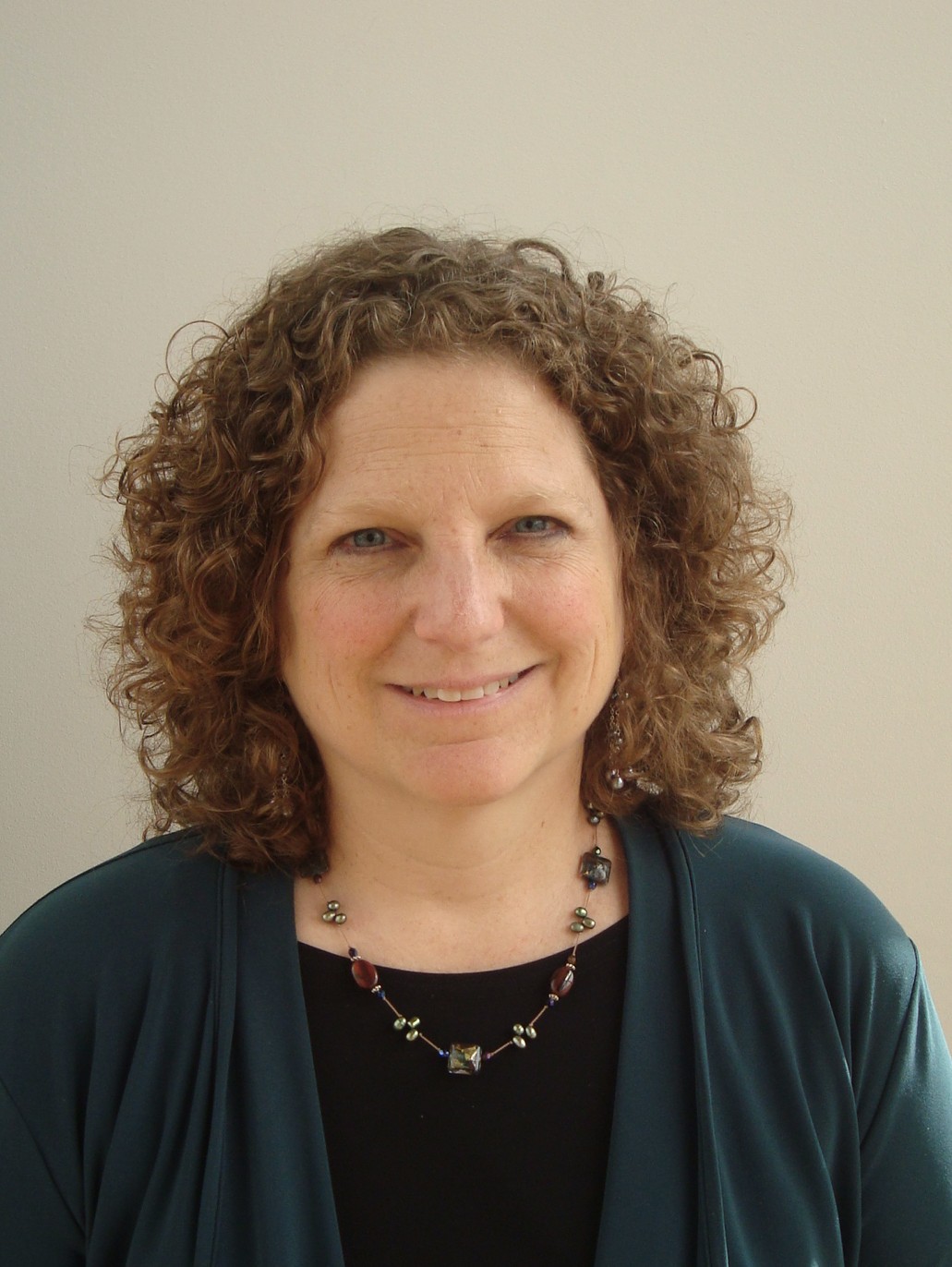
Jennifer Browdy de Hernandez

Today marks a milestone for me professionally: 18 years after earning my doctorate in Comparative Literature, after a demanding year-long evaluation process, I have finally been granted a ten-year contract, the closest thing to tenure at my institution.

Why did it take me so long, despite the fact that I had all the requisite publishing and service work and teaching excellence?

Two reasons.

One, I stepped off the tenure track right out of grad school to prioritize the needs of my two sons, the first born two years before I finished my Ph.D., the second six years later.   I chose to work part-time in those early parenting years, not realizing how hard it would be to get back on the fulltime track.

Two, once it became apparent to me that simply moving from part-time to fulltime at my home institution would be difficult, I accepted a lucrative lecturer position at a nearby state university, and did both—two-thirds time at the small liberal arts college, half time at the university—for nine years, while also raising my sons, publishing two edited collections, and directing various major conferences.

Last year the state funding dried up so I lost my second job; and at the same time I finally got a green light to go for that ten-year contract at my primary institution.

It’s still officially only two-thirds time, a fact that may surprise many who work with me, as I have actually taught fulltime every semester for the past three years, and often in the years before that, in addition to carrying a more than full load of committee and service work of all kinds.

If I were a man, would things be different?

Yes, I think so. I would probably have let my kids’ mother make the professional sacrifices, allowing me to go full throttle towards a tenure track position right out of grad school.  As a man, I would probably have been a better negotiator, able to make a persuasive case for why I should be earning a fulltime salary for the important work I put in for my institution.  I might have spent less time cooking dinners and reading bedtime stories, and more time writing that Important Book.

I don’t want this to be true.  I want parents of both genders to be equally likely to intensively parent, write great books or play the cut-throat negotiator.

But in my own case, I know that my gender did matter.  I was raised by a mother who put her parenting role first, and a father who focused primarily on professional success.  Put together, they made for a stellar parenting team.  But I certainly did absorb the gendered messages from them: a mother’s first obligation is to her children, while fathers are out bringing home the bacon.

The problem is that I have needed to be both mother and father to my children, in the sense of parenting AND bringing home the bacon, and there are only so many hours in the day, only so much of me to go around.

I feel fortunate to have chosen a field that gave me enough flex-time to approach something like “having it all”: doing a good job at home as well as at work.  I do not take it for granted, and firmly believe that this precious scenario should be the norm rather than the exception–for the health of our kids, their parents and our society as a whole.

Work-life balance is not just a women’s issue

Anne Marie Slaughter

I decided to bite my tongue and wait to see the reaction to the recent Atlantic Monthly cover story by Anne Marie Slaughter on women and the work-life balance—I knew as soon as I started reading it that it would set off a firestorm of commentary, and I have not been disappointed.

Slaughter, in case you have not been following this story, is a Princeton University professor and dean, who was drafted into the State Department by Hillary Clinton and worked there for two stressful years.  She wrote the article after returning to the snug harbor of Princeton, where, thanks to the flex time allowed by the higher ranks of academia, she is far better able to manage her professional and family commitments.

Slaughter’s main point in writing seems to be that our society needs to adapt itself better to the needs of working women. She calls for more women to get into leadership positions in business and government, and make workplace and policy changes that will make parenting and working outside the home more manageable.

Lori Gottleib, in a blog post on the Atlantic site, has little patience for Slaughter’s hand-wringing over the travails of long hours outside the home.

“The real problem here isn’t about women and their options,” she says. “The real problem is that technology has made it possible to work 24/7, so that the boundary between work and our personal lives has disappeared. Our cubicles are in our pockets, at the dinner table, next to our beds and even next to our children’s beds as we’re tucking them in. In many households, one income isn’t enough, and both men and women have to work long hours — longer hours than ever before — to make ends meet…. The problem here is that many people work too much — not just women, and not just parents.”

Hallelujah and amen to that, Lori!

For myself, I know the only way I can give myself some true down time is to get myself to a place where there is no wireless and no way to plug in my computer—ie, camping, hiking or at the beach—although even there I’ve caught myself using my iPhone to check messages or text people on the fly.  It’s been years—YEARS—since I’ve been unplugged for more than a day.

I can imagine a scenario where our society benevolently decides to use technology to allow more people to work from home, which will make things easier for parents in some ways, but will result in all of us becoming wired-in cogs in the capitalist machine, never really getting any time to ourselves unless we are able to set our own firm boundaries, something that most of us have trouble doing.

I agree with Professor Slaughter that family-friendly workplace policies are needed. I especially appreciated her anecdote about how when she was Dean at Princeton she always made a point of announcing at faculty meetings that she had to go home to have dinner with her family, to give other women permission to do the same without guilt or embarrassment.

But I share Lori Gottlieb’s sense that for most of us parents, the pressures of making a living are simply getting to be inhuman.

At the Strategies for a New Economy conference I attended a few weeks ago, several sessions dealt with the possibility of transitioning to a shorter work week.  This was the focus of a 2010 report by the New Economics Foundation, which argues for a 21-hour work week.  “There is nothing natural or inevitable about what’s considered ‘normal’” working hours today,” the authors write. “Time, like work, has become commodified – a recent legacy of industrial capitalism. Yet the logic of industrial time is out of step with today’s conditions, where instant communications and mobile technologies bring new risks and pressures, as well as opportunities. The challenge is to break the power of the old industrial clock without adding new pressures, and to free up time to live sustainable lives.”

The report’s authors suggest that “to meet the challenge, we must change the way we value paid and unpaid work. For example, if the average time devoted to unpaid housework and childcare in Britain in 2005 were valued in terms of the minimum wage, it would be worth the equivalent of 21 per cent of the UK’s gross domestic product.”

Imagine if we could invent a society where housework and childcare actually “counted” for something in real economic terms?

Imagine if parents were actually rewarded for spending quality time with their children, for doing all the time-intensive work it takes to raise healthy, productive, happy kids who will become healthy, productive, happy adults?

What if we spent less money on anti-depressants, stimulants and treadmills, and instead gave ourselves room to breathe, and time to relax?

No society can hope to survive without the good work being done by mothers and fathers, unpaid and unsung, day and after day and year after year.

This should not be just a women’s issue.  If more fathers got involved in the day-to-day nitty-gritty of parenting—unglamorous and tedious as it sometimes can be—there would be twice as much impetus to make the changes Slaughter is calling for.

How about it, Dads?

Time to Meet Your Maker

OK, I admit it.  I love my air conditioners.  I have two window units, one upstairs and one downstairs, and they cool my whole house to a comfortable 70 degrees, no problem.

On a day like today, 95 degrees Farenheit and humid, you’ll find me huddled around the AC, whether it’s in my home, car or office, or out to the movies or a restaurant.

Even though I know full well that my AC addiction is part of the problem of global warming, am I going to go without?

Hell no!

Why should I swelter while everyone else who can afford it, and especially the fat cats who got us into this global warming mess, are sitting cool as cucumbers and pretty as you please?!

Thus you have the tragedy of the commons playing out all over again, all the time.

It will take a crash—a blackout, a total system collapse—to make us give up our creature comforts here in the heart of Empire.

Some people say that crash can’t come soon enough, and I guess I agree with them.

Certainly for the rest of the life forms on the planet, the sooner human beings get lost, and take our asphalt and our AC and our combustion engines with us, the more chance there will be for the planet to recover without turning back the clocks to zero and starting all over again with bacteria and plankton and the other very basic building blocks of life.

But am I going to commit hari-kari right now to speed this process along, playing martyr for the benefit of the songbirds and the orangutans?

No, I am not.

I am going to keep living, keep cranking up my AC and bopping around in my car, until there’s no juice in the wires and no gas in the tank.

***

Trying to keep cool, I just went to see PROMETHEUS, a bizarre movie if there ever was one.

In it, human beings go to meet their Maker, and discover that their alien progenitor is an impatient, violent, sadistic psychopath—at least by human standards—who, immediately upon being revived from an eons-long sleep, greets his human rescuers  with murderous fury and sets course for Earth with a full payload of biological weapons.

As I complained to my son afterwards, why is the human imagination always so dark and destructive?

Why couldn’t the screenwriters have imagined a happier scene, where the Maker showers the Earthlings with stardust and thanks them for waking him up?

No.

We are, it seems, an irredeemably violent species.

We deserve whatever violent end awaits us.

When it comes, we should bow our heads and acknowledge that we totally brought it upon ourselves.

In the meantime, it’s getting hot in here.  Time to crank up the AC.

Grassroots heroism: what we need now

The image that stays with me most from the blockbuster superhero action film The Avengers is not the thrilling climax when the hero uses all his power to wrest a nuclear missile away from its collision course with Manhattan and up into space, where it explodes a waiting battleship of nasty intergalactic invaders—although that was pretty thrilling I have to admit, especially in 3-D!  Man, that movie packs some powerful special effects!

But no, what really struck me were the scenes of ordinary human beings on the ground, dressed in their regular 21st century civilian clothing, sipping their lattes and strolling about midtown Manhattan one moment, and the next moment being terrorized from above by sinister alien rampaging monsters and soldiers.

Without Captain America, the Black Widow, the Incredible Hulk and the other heroes, all those people would certainly have been totally destroyed within minutes—and not just by the aliens, but by “friendly fire” as well.

This scene resonates with me on two levels.

On the one hand, it goes to show yet again how quickly an apparently normal, peaceful morning can turn to nightmare when militarized violence shows up unexpectedly.

And on the other hand, it underlines how deeply dependent we human beings are on the idea of the charismatic leader, the savior, the hero who will leap into action and save the day for us.

This has been true since ancient times, and it appears to be cross-cultural: every culture has its heroic myths and legends, in which men and women with superhuman strengths and powers do battle with dark forces on behalf of the rest of humanity.

Watching politicians of The Avengers decide to send a nuclear missile to destroy the entire city in order to kill off these alien soldiers, an order that their general resists but an ordinary pilot obeys, I am uncomfortably reminded of how much danger we are probably all in, every day, thanks to decisions made by the men in charge, who sit in remote splendor in faraway bunkers like the gods on Mount Olympus of old.

I want to see a movie made that points the way to a different model of heroism.

Instead of the superhero, David against Goliath type tale, I want to see, on the big 3-D screen with all the lavish special effects and brilliant actors, a tale that celebrates the ordinary heroism of people on the ground, who—understanding the danger of militarism and the mechanized violence that pervades human civilization, from agriculture to energy to education and entertainment—come together to offer whatever skills, talents and gifts they have to the common pool of resistance.

In this movie, the human beings would not cower on the ground while the battle of the titans raged overhead; they would not sink to their knees before the might of an alien invader; they would not follow blindly wherever the men with guns and uniforms told them to go.

Instead they would use the power of their collective will and determination to demand a change of course, and insist that it happen.

What I want to see celebrated on the big screen is the kind of grassroots resistance that we saw on the ground this past year in Egypt and other Arab Spring hotspots, or in the General Assemblies and protests of the Occupy movement.

Egyptian women protest in Cairo, April 2011

It is happening already in real life.  Hollywood and Marvel Comics, maybe it’s time to break with the fixation on the past and try a new story.

No More Leave it to Beaver

In the lively “Room for Debate” series in this week’s New York Times, provocatively entitled “Motherhood vs. Feminism,” the piece I like best is the one by Annie Urban, who reminds us that “it’s about parenting, not mothering.”

“Too often the discussion about women’s choices (stay at home, go back to work) ignores the role of fathers. To achieve meaningful equality, we need to push for a society that values fathers who strike a balance between their career and their family life too. Women shouldn’t have to be equally uninvolved parents to reach their goals; they should be able to ask their spouses to step up too.”

Hear hear, Annie!

Amazingly, she was the only one of the seven women columnists commenting on Elisabeth Badinter’s slamming indictment of “attachment mothering” who thought to look to the fathers.

Is it because for the six other women, the fathers are so absent from the parenting landscape that their input is immaterial?

Erica Jong, who describes herself as a “zipless gran,” is the only one to point out that the intensive, at-home parenting required of the “attachment” model “takes resources”: “An affluent mom who doesn’t need to earn can afford co-sleeping, making pure food, using cloth diapers and being perfectly ecological,” Jong rightly observes.

She doesn’t say, but it’s easy to assume, that such a mom is supported by a hardworking spouse.  The unspoken assumption about fathers, unchanged since the Leave it to Beaver days, rears its head: the primary function of a father is to pull in the bucks.

But times have changed. For mothers who must work to keep our kids in food and shelter, short-cuts are necessary, and juggling too many responsibilities becomes a fine art. Should I miss the cocktail party after work today, where all the important networking takes place, or should I pick my kid up from day care in time for dinner and a relaxed bedtime story?

How about calling dad to pitch in here? Why can’t he do the bedtime story so mom can go to her cocktail party and chat up the boss?

In my experience, the answer to such a query is too often a flat no—you handle it, honey.  And so she will, making those tough choices day after day, doing the best she can.

It is no accident that women still earn 77 cents on the male dollar.  The other 23 cents go to our unpaid, unsung attention to mothering and family care of all kinds.

Elisabeth Badinter says we should get over our obsession with the “voluntary servitude” of mothering and go play the career game with the boys, giving it all we’ve got.

I’d rather see a kinder, gentler scenario, in which parents, both male and female, work together to balance the conflicting demands of work and child care.

As a society, we could encourage this in a material way by acknowledging the value of parenting via Social Security and other benefits.

By dint of hard struggle we have enshrined the concept of family leave and parental leave in law, but we could do a lot more to support parents through the difficult years when so much is demanded of them on the home front while they are also in their prime career-building years.

Instead, our society seems to be pushing women back into the unpaid homemaker roles, by sinking our efforts to balance career and mothering under the weight of guilt, frustration and sheer exhaustion.

Do we really want to focus the bright minds and creative spirits of 50% of our population exclusively on issues of breast-feeding, diaper rash and what to have for dinner?

Do young men really want to return to the good old days of being the sole provider for a houseful of dependents?

Feminism needs to demand that fathers fully engage in the struggle to make parenting a joyful, cooperative stage of life, rather than a gendered minefield.

And mothers and fathers need to insist on the social support they deserve for the valuable labor they perform every day, both in the home and outside of it.

Give mothers the respect–and the financial compensation–they deserve

Hilary Rosen

It truly is disheartening to hear a supposedly progressive woman proclaim that a fulltime mother “never worked a day in her life.” Democratic strategist Hilary Rosen deserves all the flack she’s been getting since she made that statement yesterday on national media.

On the other hand, it’s also disheartening to see how the male-dominated Democratic and Republican campaigns have wasted no time in turning Motherhood into a political football.

The truth is that American motherhood has never been more demanding, or more complicated.

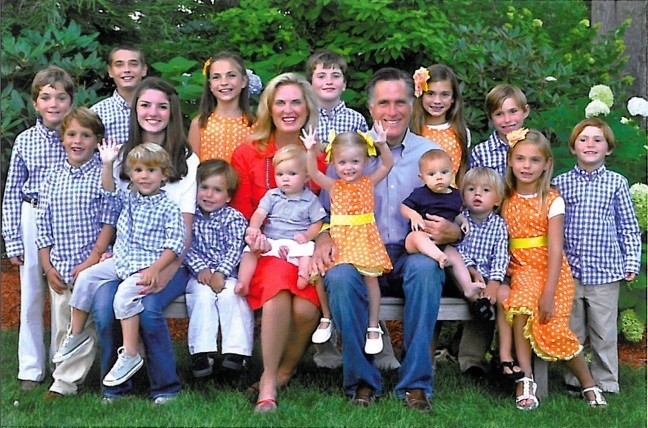
Romney married a rich man and settled in to raise five sons. She had the enormous privilege of not also having the responsibility of earning money to put food on the table.

Today there are fewer and fewer women who can afford to stay at home as fulltime moms, especially if they have big families.

More kids mean more housework—but also mean more mouths to feed, shoes to buy, college tuitions to pay for.

Mitt and Ann Romney with their 16 grandchildren

As part of the 1%, Ann Romney got to choose to stay home with her children.  For the rest of us, this is just not an option.

Especially the many of us who are single moms, or whose husbands have been out of work for months and years.

But the firestorm over Hilary Rosen’s miscalculated remark speaks to an even deeper issue that remains unaddressed in our society.

Mothers still do more housework and child care than fathers.  Housework and childcare still remains not only unpaid labor, but labor that is not recognized as having any monetary value in our very commercially oriented society.

A recent NY Times article interviewed some nannies who work for the 1%, whose labor is valued in the high six figures.

But the labor of a mother who stays home is not even deemed worthy of accruing social security.

At minimum, all mothers, whether they stay at home fulltime or struggle doing the second shift at home after the day job, should be entitled to accrue social security and expect some retirement compensation from the nation in their old age.

At minimum, all mothers should have the right to subsidized maternal health care.

At minimum, in a rich country like ours, no mother should have to worry about whether her children are going to have enough to eat.

Instead, our country is going in the opposite direction.

We are making it harder and harder for mothers to qualify for welfare assistance.  We are cutting back on public education, and failing to create incentives for doctors to work in public health clinics.

And many, many states are actively working to curb women’s access to contraception, while at the same time demonizing abortion.

So what’s a poor woman to do?

The media controversy over the non-issue of whether Ann Romney’s “work” as a fulltime mother qualifies as such is entirely misplaced.

What we need to get worked up about are the circumstances of the millions of American mothers who work hard, both in and out of the home, without the household help that the Romneys undoubtedly enjoyed, and who are not fairly compensated or recognized for their efforts.

It may sound corny, but it’s true: without the hard work of mothers to bear and care for children, our great nation would simply cease to be.

We need to cut the political chicanery and not only give Motherhood the respect it deserves, but put our money where our mouths are, too.

Homage to Adrienne Rich

Adrienne Rich

Adrienne Rich has just died at 82 years of age.  That is a good long life, and it is truly inspiring how active she remained until the end, publishing and mentoring so many of us who follow in her path.

Although she was primarily a poet, there is an essay of hers that has remained very powerful for me, being the autobiography junkie that I am.  It’s “Notes Towards a Politics of Location,” the one where she talks about growing up as a Jew in the American South, and how she always felt like such an outsider.  It connects very much with her general recommendation for women, that we consider our outsider status a blessing, rather than a curse.  That we continue to see things with outsider’s eyes, rather than assimilating to the dominant mode of seeing and being.

This message has resonated strongly with me because I have always felt myself to be an outsider.  It doesn’t seem to matter which group I am with, or how long I have been affiliated with them, or even if I am, in name at least, the principal of that group.

I am the perennial outsider.

And thanks to Adrienne Rich, I no longer feel that as a handicap or a slur.  Rather, I wear it as a badge of pride.

Rich was someone who could have chosen to take her privileged status as a white American Jew and spend her life comfortably at the country club.

Instead, she chose to ally herself with Black Americans (notably Audre Lorde), gay Americans, and anyone who needed a powerful and articulate ally.

Alliance is a tricky business. A would-be ally from a more powerful social class needs to be very careful to offer help without coming on too strong; to use one’s power to open up spaces for one’s allies to speak and act independently. It’s not about us—it’s about them. Adrienne Rich made it look easy, but it’s not.

Three of my most important mentors have now passed on: Audre Lorde, Gloria Anzaldua and now Adrienne Rich.

Such a huge legacy to try to continue and move forward.

Sisters, I promise each of you that I will do my best to keep your spirits alive.

Women Must Stand Up For Peace & Security

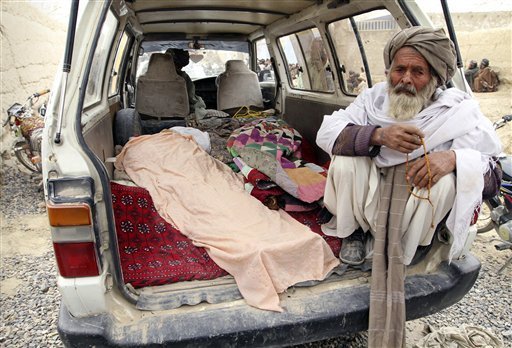
A deranged soldier, armed with gun and knife, walks off the base into the nearby small town, and massacres 16 people, including 9 children.

No, it’s not the plot of the latest Schwarzenegger movie.

It’s real life in Afghanistan.

Or Oslo, Norway.

Or Homs, Syria.

Or the local high school or university in Anytown, USA.

What happened in Afghanistan this week is part of an ever-escalating pattern of violence visited on innocent civilians by armed men.

Janjaweed

Whether the men are sponsored by a state (ie, they’re soldiers), are part of armed militias (think Taliban or Janjaweed or Kony’s Lord’s Resistance Army) or individual “rogue” psychopaths is immaterial to the victims of the violence.

The larger point that must be reckoned with is that we cannot expect to live in a global society dripping with arms and saturated with constant virtual and real instances of violence, and come away unscathed.

Americans are always so shocked when the violence happens in our backyard, as in school shootings or Timothy McVeigh-style bombings or police brutality against unarmed Occupy protesters.

We’re shocked when our soldiers, “our boys,” commit atrocities while serving in the armed forces abroad.

But how can we expect our boys to be immune to the general atmosphere of violence that we all live and breathe—young boys and men in particular?

People like to argue about whether playing countless hours of shoot-em-up video games results in more violent youth.

All I can tell you is that the military now uses video game technology to teach warfare to young soldiers, and one of the goals is precisely to overcome the natural human aversion to killing, especially killing those who haven’t done you any harm.

Lt. Col. David Grossman

In the class I teach periodically on gendered violence in military culture and war, we read excerpts from the work of Lt. Col. David Grossman, who maintains a website called “Killology.com.

Grossman, a psychologist who has become one of the most sought-after military and police trainers in the U.S., if not the world, defines “killology” as “the study of the reactions of healthy people in killing circumstances (such as police and military in combat) and the factors that enable and restrain killing in these situations.”

Grossman began his career teaching soldiers and police officers “the psychological techniques needed to develop Mental Toughness, a Survival Mindset, and a Hardened Focus,” integrating “psychological skills with physical and tactical training… to achieve maximal performance excellence as a modern warrior.”

Interestingly, now he not only offers training in the psychological “hardening” necessary to become a socially sanctioned killer—ie, a soldier–but also has begun to write and speak out against media violence, which, he says, teaches children to kill.

I think he would agree that what happened at Abu Ghraib a few years back, or in Afghanistan this week, when ordinary American soldiers go haywire and start torturing and killing civilians, is not just a case of a few bad apples.

If we allow our kids to grow up playing “harmless” violent games that are ever more realistic, gripping their imaginations and giving them access to the bloodthirsty, adrenalin high of killing, we can’t expect them to be agents of peace, especially when, as soldiers, they are further trained for war and given real weapons and the authority to use them.

My heart bleeds for the victims of this latest massacre in Afghanistan.  I can hardly imagine the pain of the survivors of the family of nine children and their mother annihilated all in one foul blow.

They aren’t the first, and they won’t be the last innocent bystanders to be caught in the crossfire of a senseless war.

I think of the many other places in the world where civilians have been caught in the crossfire of baleful enemies: Central and South America in the 1970s and 80s, when the US and USSR funded proxy wars that wreaked havoc with innocent local communities; current conflicts in Africa and the Middle East that are really about the control—by outsiders, the same old Great Powers–of ever-shrinking resources; the list goes on.

Like the Russians before them, the American military is preparing to throw up its hands and give Afghanistan back to the warlords.

It will be a disaster for the women and girls there, who had begun to hope that a more liberal mindset might prevail and help them shake off the bonds of radical Islamic gender-based oppression.

Perhaps it is up to the women of the world to rise up together to insist that our men and boys stop pouring so much time, energy and money into creating and using lethal weapons, and representations of violence.

We have seen what happens when we let boys be boys and play with their guns, real or virtual.

Can we afford to stand by and watch the endless replay of rapes, homicides, massacres, the endless parade of crippled bombing victims, the burned, the sightless, the psychologically damaged for life?

I am losing faith in the ability of the men in charge to solve this problem.

Back to Lysistrata!

If we want life, we women have to walk boldly forward and manifest our visions of peace, security and cooperation.

We need to create a procession of the world’s women, those who will stand up for peace and nonviolence—a procession so long, so wide and so loud that it cannot be ignored.

Women of the world, the future is in your hands.  What will you do with it?


Cupid, go home!

It’s fascinating to me that the Transition Times blog post that has gotten the most attention, by far, is “There’s more to love than Cupid and his arrows,” my Valentine’s Day 2012 post, which has been read hundreds of times since February 14.

Of course, people are always interested in love and romance.  And this is a positive, peaceful essay about being very thankful for the love I have in my life through my parents and children, to the point where I’m not missing romantic engagement.

Truly, I’m not.

There has been a spate of articles lately about so-called “singletons,” men and women who choose to remain happily single.

Some of the articles fret that such people may have troubles as they age, since they have no companions to help care for them.  A recent New York Times Room for Debate series, “Being Alone Together,” explored both sides of the issue, with many of the writers arguing that solitude has significant benefits.

I am not living alone; I am living with my two teenage sons at the moment.  I have to say that I do enjoy the rare times when I have the house to myself, and have no one but myself to please.

When I was in my early twenties, before I married, I lived on my own in Greenwich Village while I studied as a graduate student at NYU.  Although I had never felt confined or fettered while I lived with my parents, the freedom of living alone was fantastic, as was the convenience of living so close to the NYU campus and the stimulation of the Village.

But nevertheless, during those years I felt a tremendous pressure to marry, to have children—to paraphrase Mrs. Ramsay in Virginia Woolf’s To the Lighthouse.

Did it come straight from my ovaries?

It wasn’t like my parents were pushing me at all. But I felt a kind of insecurity about being single, like I was lacking or missing something. I was incomplete.

In those days, the 1980s, there was a lot of talk about how if you didn’t find a mate in your twenties or early thirties, you’d be over the hill and never find one.  Believe it or not!  Stories of unhappy women in their forties abounded—women who had never been married, and were totally, miserably fixated on finding the ever-elusive Mr. Right.

Although I was living alone and perfectly content with my life, I still felt like it was temporary, and I’d better be constantly on the look-out for the man who would come along to complete me and open the door to my real adult life, which could only begin with those wedding vows.

Now, on the other side of two decades of marriage and a divorce, I am once again single and enjoying the freedom, this time without that little Cupidlike imp sitting on my shoulder warning me that I’d better focus on love and get myself hitched.

I have young friends getting married now and of course I wish them much happiness and fervently hope that they will be better marriage partners than my ex and I were for each other.

But I have to say, from my current vantage point it seems rather miraculous that one’s chosen mate at age 25 could still be the perfect partner at age 50.  What an amazing feat to grow together so harmoniously that you still complement and satisfy each other after so many years of married life.

I know it happens; I have witnessed it for myself with others.

I just suspect it’s the exception, not the norm.

I have no illusions about finding—or being–such an exceptional partner in the next chapter of my life.

And you know what?  That’s just fine.