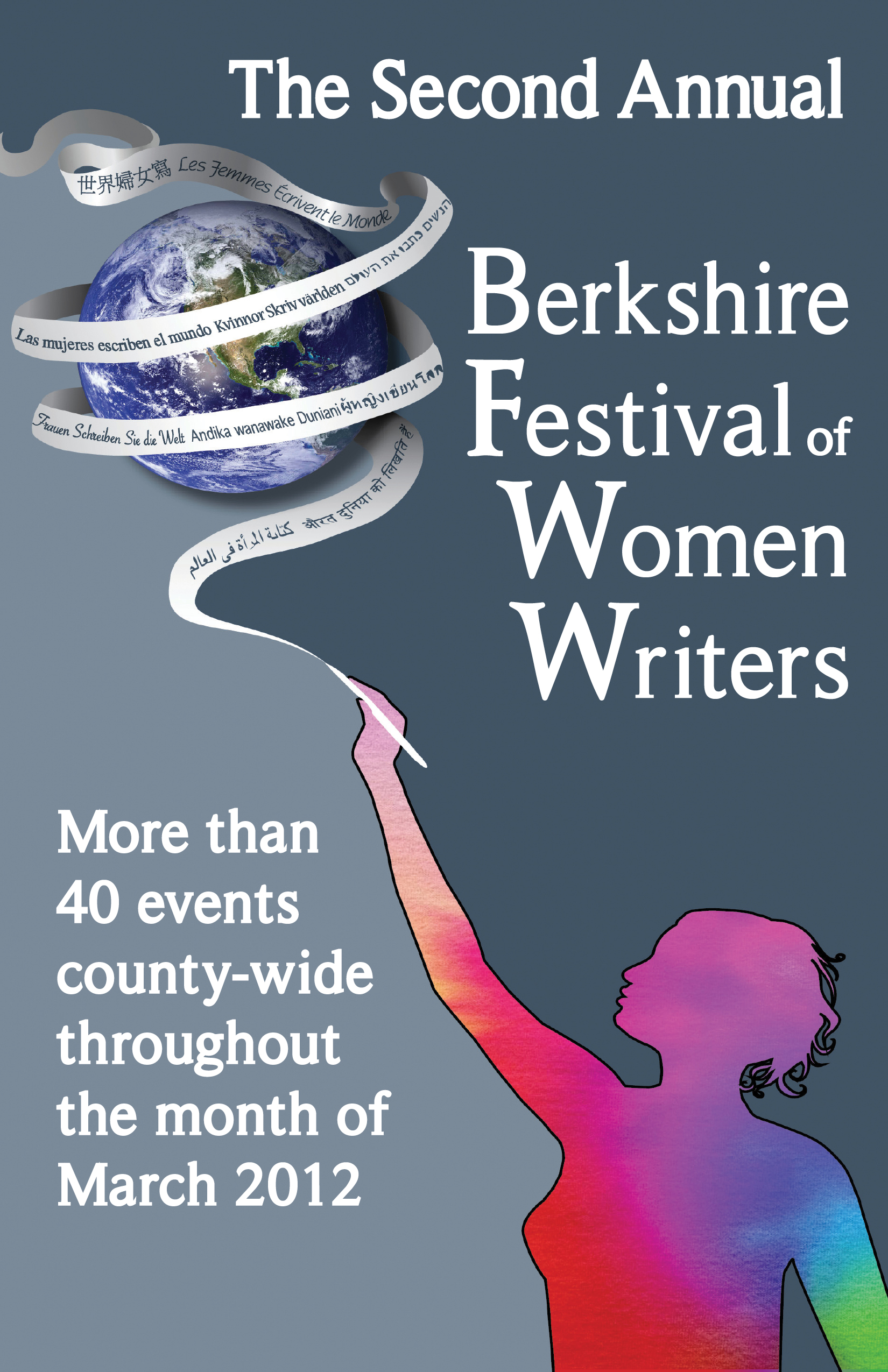
Sparking Creativity at the 2012 Berkshire Festival of Women Writers

It’s finally snowing in Massachusetts!  My afternoon meetings were cancelled, and I can settle in by the fire and enjoy the peaceful quiet that always descends when we hunker down under a good New England snowfall.

This gives me a welcome chance to share something positive for a change with my blog readers.

Tomorrow is the opening of the 2012 Berkshire Festival of Women Writers, a month-long celebration of the talents of local and regional women writers, taking place at venues from one end of Berkshire County to the other, with nearly 100 women participating.

I’ve been working over the past year with a dedicated local committee on planning and organizing this event, which is sponsored by Bard College at Simon’s Rock with the generous support of 11 Local Cultural Councils and many other donors, businesses and individuals, all listed on our website under “sponsors.”

This will be our second annual Festival, but it’s an event that grows out of the decade of annual conferences I organized at Bard College at Simon’s Rock in observance of International Women’s Day, co-sponsored by Berkshire Women for Women Worldwide, the Women’s Fund of Western Massachusetts, the Women’s Interfaith Institute and many other collaborators.

I’ve been at this a while.

Organizing events like these takes an extraordinary amount of energy, focus and commitment.  If you’ve ever organized a wedding, you have some idea of what’s involved–although for our conferences and Festivals, we’ve also had to do a fair amount of fundraising, which hopefully is not the case for wedding planners!

There always comes a point in the process where I bury my face in my hands and feel like crying, out of sheer exhaustion, “Why am I doing this to myself?!!”

After all, no one ever asked me to take on this extra commitment, year after year.

And sometimes I wonder whether anyone would notice if I stopped.

But then that low point passes, the brochure or Program comes back from the printers and starts to make its way in the world, the press inquiries pick up and I start hearing the oohs and ahhs of appreciation from participants and audience members, and I remember what it’s all about.

For women writers, in particular, it can be hard to find opportunities to come together and share our talents and achievements with each other and the larger world.

Hannah Fries

This weekend is the big AWP (Association of Writers and Writing Programs) conference in Chicago, and many women writers will be in attendance there, including one of our Festival organizers and participants, Orion Magazine editor Hannah Fries.  But that is a big, competitive event, which can be overwhelming for writers who are just starting out, or who just write for the personal satisfaction of it.

The Berkshire Festival of Women Writers is purposefully low-key and non-competitive.  We organizers wanted to create a broad, inclusive platform for all kinds of women writers, of all ages, backgrounds, and stages in their writing careers.  If you browse the Festival listings, you’ll see a few names you’ll probably recognize, like Francine Prose and Ruth Reichl, but many more whose fresh, innovative voices might not be heard publicly this year without the space provided by our Festival.

I also sometimes ask myself why I continue to focus on women writers in my classes, events organizing and in my own writing.

Lately I have been moving from a longstanding focus on global women’s rights to a broader human rights perspective, still with a strong interest in gendered human rights issues.  Although the goal for any social justice activist is to put herself out of business, it still seems important to me to draw attention to voices who might not otherwise be heard–and the 50% of us who are women are disproportionately represented among those quieter voices.

The participants and audiences who will be gathering at the 40 Festival events scheduled daily throughout the month of March will  together generate a host of collaborative creative sparks that will go shooting out like fireworks, energizing all of us and giving us new strength and determination to meet the challenges of the coming year, whether at our writing desks or in other areas of our lives.

I certainly hope that just as women always turn out to listen to and learn from writers who happen to be men, men will also be among the audiences at all of our Festival events.

In these sobering times, we need all the chances we can get to come together and fan the flames of our community and our creativity.  Let the Festival begin!

Starving women, American chic style

Barely have the baubles of the Oscars faded into Hollywood history, when the bleak news of the real world comes flooding back in.

School shooting in a high school cafeteria in Ohio.

Keystone XL pipeline permit back on the table.

Rick Santorum is arguing against the separation of church and state, and thumbing his nose at the idea that young people should go to college.

And in case you haven’t noticed, the snowdrops are blooming now in New England–about a month ahead of schedule.

But you know what I found most truly disturbing in my cursory glance at the NY Times homepage today?

The prominent Giorgio Armani ad campaign, depicting two different women, each one more pitifully emaciated than the other.

Look at those protruding collar bones!  The jutting cheek and jawbones!  The stick-thin arms and legs!

If this young woman was in Darfur or Ethiopia, we’d be wondering, with compassion, when she last had a meal.

But because she’s a highly paid model, we relax that compassionate muscle and not only don’t worry about her, but actively admire her beauty.

What kind of beauty standard is it when a young woman has to be literally wasting away to make the grade of approbation?

It would be one thing if the male models were similarly emaciated.

But no.  Look at the male Armani models and you find something else entirely.

These guys are solid, well-muscled, athletic hunks.  Nothing underfed or waiflike about them.

In fact, they’re star athletes!  That’s David Beckham on the left, and a couple of tennis stars below.

The point is that attractive men are strong, athletic and powerful, while attractive women are starvation-thin, and even if they’ve got some attitude, their jutting collarbones give them away.

You know they go and gag themselves to throw up their breakfasts every day.

When they eat breakfast, that is.

Meanwhile, Giorgio Armani himself looks quite hale and hearty.

Does he have a clue of the kinds of destructive stereotypes he is reinforcing by presenting his models the way he does?

There is nothing beautiful about skin and bones. Ask any concentration camp or famine victim.

It would be one thing if our society projected its thin beauty fetish equally on both men and women.

By presenting women as vanishingly thin, weak, waiflike creatures, while men are robust and muscular, the fashion industry sends an unmistakeable message: beautiful women are weak, admirable men are strong.

Don’t like it?  Who cares, you’re ugly anyway!

Well, Mr. Bones and Sixpacks Armani, since when are you the arbiter of beauty and strength on this planet?  I’ll take a strong woman over a waif any day, and I hope those hunky athletes would do the same.

Coming to Voice, Saving the Planet

Yesterday acclaimed psychologist Carol Gilligan paid a visit to the class I am currently co-teaching at Bard College at Simon’s Rock with theater professor Karen Beaumont, “Human Rights, Activism and the Arts.”

Gilligan’s ground-breaking book, In A Different Voice, was the first to examine the psychological development of girls.

Yes, you read that right.  Before Carol Gilligan, American psychologists who studied child development based their model of the stages of human psychological development on their studies of boys.  Not until Carol came along in the early 1980s did anyone think to point out that girls and boys develop differently.

In her new book, Joining the Resistance, Gilligan explains that while girls start to silence their own voices in their early teen years, in conformity with social dictates about proper behavior for “good girls,” boys go through this self-regulation much earlier, around 5 or 6, when they learn that “crying is for sissies.”

Boys learn to suppress their caring, nurturing side because it’s too “feminine,” while girls learn to suppress their active, aggressive side because it’s too “masculine.”  In the process, both genders lose something crucial to their humanity, and our society as a whole is impoverished as a result.

Lately, Gilligan has been relating boys’ and girls’ resistance to the suppression of their natural androgynous voices to adults’ resistance to what she sees as a very destructive patriarchal culture.

She defines patriarchy as “those attitudes and values, moral codes and institutions, that separate men from men as well as from women and divide women into the good and the bad,” and argues that “as long as human qualities are divided into masculine and feminine, we will be alienated from one another and from ourselves.  The aspirations we hold in common, for love and for freedom, will continue to elude us.”

So much depends on whether we can come to voice.  And how we do so.  In the context of my human rights seminar, coming to voice may mean being able to speak out in an informed, passionate way about justice and injustice in specific circumstances, both here in the U.S. and abroad.

In the personal sphere too, we need to learn to express our needs clearly, without apology.  We women need to learn to value ourselves and insist on being treated fairly and with respect whether in the home or in the workplace.  Men need to demand that their emotional, nurturing sides be honored.

If it is hard for men to express emotions, it is hard for women to speak with authority.  As sociologist Michael Kimmel has shown, boys and men tend to over-estimate their own abilities while girls and women tend to have less self-confidence than their skills and talents warrant.

Boys and men need to learn to listen, to others and to their own innermost voices, the voices of compassion that were shut down when they were just little guys and learned that boys don’t cry.

Girls need to learn to speak up, to let their innermost voices out, to share freely what they know and what they imagine with the world.

My mother reminded me recently that when I was a young girl of 9 or 10, she considered me a “know-it-all.”  I used to read Ranger Rick and the National Wildlife magazines with voracious attention, and apparently I had a lot to say about the natural world and human beings’ role in it.

As I shared with my class yesterday, sometime around age 14, just as Carol Gilligan saw with her research subjects, I lost my voice.  I became the quiet girl in class.  I earned A’s on every literature paper I wrote, straight through grad school; but it was so hard for me to say out loud what I knew.  It’s taken me years to overcome that self-silencing and begin to recover the spunky, feisty voice that came pouring out of me naturally when I was a child.

As adults, knowing what we now know about the importance of voice to healthy psychological development, we should be working hard to encourage the boys in our lives to stay in touch with their emotional, caring, listening side; and the girls in our lives to continue to speak their truths even when they enter the maelstrom of puberty.

As Audre Lorde wrote long ago, “My silences had not protected me.  Your silence will not protect you…. We can sit in our corners mute forever while our sisters and ourselves are wasted, while our children are distorted and destroyed, while our earth is poisoned; we can sit in our safe corners mute as bottles, and we will still be no less afraid….

“We can learn to work and speak when we are afraid the same way we have learned to work and speak when we are tired.  For we have been socialized to respect fear more than our own needs for language and definition, and while we wait in silence for that final luxury of fearlessness, the weight of that silence will choke us.”

You got that right, Audre.  If anything, the dangers that you perceived back then–before you, like so many others, succumbed to cancer–have gotten worse.

If we care about our children, if we care about our Earth, we cannot afford to stay silent.  Indeed, there is more risk to staying quiet than to speaking out, with all the passion, emotion and authority we can muster as men and as women.

Cat got your tongue? Not mine.  Not any longer.

Planetary Superbowl

So it’s Superbowl Sunday in the US, a day that millions of Americans look forward to for months.  I am always amazed at the passion with which sports fans engage in following teams, and I often think: if only we could harness that energy, dedication and drive and put it towards more important things like saving the planet, why, we’d do just that, right away!

If even a fraction of the money spent on sports teams, sports telecasting, sports advertising and sports merchandise were put towards improving children’s education, nutrition and health worldwide, we’d make giant strides towards achieving the Millennium Development Goals.

If we could get fans to analyze climate and biodiversity statistics the way they analyze the minutia of sports wins and losses, what a brain trust we could call upon to solve the pressing environmental problems of our time!

In the 21st century, the same goes for video game aficionados.  When I hear teenage boys talking with such enthusiasm about the latest iteration of World of War or Grand Theft Auto, I think wistfully that if only they were as engaged with the real, natural world as they are with these violent artificial environments, their incredible warrior energy could be channeled to such positive purposes.

No amount of wishful thinking is going to change the fact that testosterone and aggressive energy go together.  But aggressive energy does not have to be used to hurt people or destroy animals and the environment. Aggressive energy does not have to be hierarchical, meaning that I can only raise myself up by pushing you down.

The truth is that the multiple crises that are staring us in the face right now need aggressive, bold tactics to solve.  Putting the brakes on global heating, shifting to renewable energy, ending our romance with biochemically engineered agriculture and halting the deforestation of the great lungs of our planet will take all the creativity, ingenuity and yes, aggressive, take-charge energy that we can muster as a species.

It will also take something that the testosterone-fueled among us are less proficient at: collaboration, negotiation, cooperation.  That’s where we women come in.

I recently noticed a tweet from Desmond Tutu to Nick Kristof, two men for whom I have the highest admiration, in which the archbishop said to the journalist that if women were given more political power, the world would be a safer, more peaceful place.

Absolutely.  But what is really needed is an androgynous fusion of the best of masculine and feminine attributes.

We need our menfolk to fight for our species, and indeed our entire planetary ecosystem, with the same kind of enthusiastic passion that they lavish on sports and video games.

And we need our womenfolk to insist on getting engaged at every level of politics, business and education, not as token men, but true to our own deepest, estrogen-driven instincts for nurturing communities and societies.

On this Superbowl Sunday, I call on Americans to think about the bigger picture.  How important will it be which team wins or loses once climate change starts taking us all down?

Reproductive Rights Redux

Americans hate to be told what to do–even when it’s in our own best interests.

Today’s brouhaha over the Obama Administration’s decision to require employers to provide insurance fully covering birth control is a case in point.

Catholic employers are protesting that “It’s not the issue of contraception, but religious freedom,” according to today’s Washington Post, which quoted one Sister Carol Keehan as saying: “It’s not about preventing women from buying anything themselves, but telling the church what it has to buy, and the potential for that to go further.”

Let’s remember that no one is making women go out and buy contraception.  The ruling is simply intended to make contraception, including the morning-after pill, available to all employees free of charge through normal employer health coverage.

Excuse me, isn’t this a great thing?

I remember when Viagra was first introduced commercially, women were outraged over the fact that insurance companies were willing to give men coverage to maintain their erections, but women who wanted to prevent pregnancy had to pay for it out of pocket.

And women’s contraception isn’t cheap!  Whether it’s a diaphragm, an IUD, or hormone pills and implants, it’s expensive for women to opt out of reproduction.  It’s not equivalent to a man picking up a condom over the counter at the drug store.  All of the methods I’ve listed above involve visits to a prescribing doctor, which significantly ups the price.

Although men may beg to differ, I’d maintain that the question of reproductive freedom is of far more importance to women than erections are to men.  An erection may come and go, but a child is here to stay.  And a child has a far more powerful repercussion on her mother’s life than she does on her father’s life.
Both of my pregnancies were undertaken intentionally and with joy.  I am not complaining, but it’s undeniable that having children has impacted my life much more than it affected my ex-husband (even when we were still together).  I know this is not true for every couple, but it’s true for a lot of us women.  Our gender still gives us a special extra role to play in bringing the next generation along.
And that’s a pretty important role!  So why shouldn’t society help us to ensure that when we bring children into the world, it’s with our eyes wide open and every intention of taking our parenting seriously?
Making it more affordable for women to obtain birth control will increase the likelihood that more children will be born to mothers–and families–that are ready and able to support them.  In this day and age, with 7 billion human beings crowding our Earth, that is an important goal in itself.
No one is advocating that we actually limit reproduction, as the Chinese have done, but at least let’s make it easy and affordable for women who want to postpone or avoid childbirth to do so.
The Obama Administration deserves our gratitude and applause for having the courage to turn the corner on this contentious issue.  President Obama should hold his ground.

The power of words for a world in crisis

So what am I, a Ph.D. in comparative literature with years of teaching experience in global women’s literature, gender studies and media studies, doing writing and thinking so much about the environment?

Why am I spending time blogging rather than diligently writing research-based articles for peer-reviewed academic journals?

I entered grad school part-time in 1984, first in English, and then in Comparative Literature.  Why those fields?

As an undergraduate, I started out wanting to major in environmental studies, but was soon turned off by the level of statistical empiricism required by my biology professors.  Having always loved to read and write, I gravitated towards English, and ended up interning for the local newspaper and becoming somewhat of a prodigy cub reporter.  I went on to work as a reporter for a daily newspaper, then a staff writer and editor for trade publications in New York City.

After a while, I missed the excitement of the classroom, began taking a class or two at night, and was soon drawn into the orbit of the comparative literature department at NYU, where things were really hopping in the late 1980s and early ’90s.  It was the time of the culture wars; of deconstruction and post-structuralist theory; of post-colonialism and eco-criticism and Marxist feminism.  It was an exciting time to be a budding scholar, learning to talk the talk and walk the walk.

And now here I am at mid-career, looking back and wishing that I hadn’t allowed myself to be discouraged from environmental studies so easily.

These reflections are spurred by the lead article in today’s Chronicle of Higher Education, about the Modern Language Association convention, which starts today in Seattle.  I’ve already written about why I’m not there, and reading today’s Chronicle article, I don’t feel too sorry to be missing this year’s conference.

The article, by Stacey Patton, presents a pretty bleak picture of the field of languages and literature–a picture I recognize only too well.  Enrollments in literature classes are at record lows, and many leading voices in the field are being called upon to explain just why an education in the humanities is of continued value in the 21st century.

The Chronicle article quotes James Donelan, a lecturer in English at the University of California at Santa Barbara: “We have been going about our business as if the study of literature were self-justifying, and that making an overt case for its relevance to society was somehow too mundane a task for us….The immediate consequence of this attitude is that we’re losing undergraduate majors and financial support at a terrifying rate, and the far-reaching consequence is that anti-intellectualism and a general lack of empathy are running rampant in civic life.”

Meanwhile, as many as 70% of English department faculty nationwide are so-called “contingent” faculty–hired as adjuncts, on a semester-to-semester basis, often earning minimum wage or less despite their doctorates and their publications.  As one angry commenter (evidently an adjunct English teacher) put it, “I for one will not encourage ANYONE to be an English major.  I will teach them their required composition classes for their OTHER majors because I know those majors will actually change their financial lives and allow them to support their families and move out of poverty.  This IS an elitist profession filled with elitist ivory tower ‘folks.’  Everybody knows it; that’s why the numbers in this field are dropping so much.  Get real.  Stop b.s.ing and face what is really going on.”

Yeah.  So we have an anti-intellectual student body, most of whom are highly resistant to reading books at all; combined with a demoralized and exploited faculty.  Although things are somewhat different at my college, it’s impossible to ignore what’s going on in the field as a whole.

And although some literature professors may be willing to put time and energy into justifying why it’s essential that we continue to study so-called “high literature,” like Shakespeare, Milton, Dante,  and Joyce–or even Pynchon, Rushdie, and Roth–I am not.

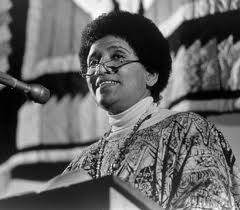
Egyptian author, doctor and activist Nawal El Saadawi

My whole career has been dedicated to the kind of literature that provides windows into the real material conditions of people living on the margins of society–people outside of the ivory tower, whose voices are rarely heard in the American classroom.  My own personal canon includes Rigoberta Menchu, Wangari Maathai, Buchi Emecheta, Gloria Anzaldua, Audre Lorde, Paula Gunn Allen, Shirin Ebadi, Nawal El Saadawi, Mahasweta Devi, Malalai Joya, Vandana Shiva, and many others, few of whom would be familiar to most of the scholars gathered at the MLA this year.

These writers have taught me, above all, to listen.  They’ve taught me to be aware of the intractability of my own privileged social conditioning, and to work hard at overcoming the elitist worldview into which I was born and raised.  And many of them have shown me again and again how in a patriarchal culture women are lumped together with Nature as commodified resources to be managed and controlled.

I never wanted to be a scientist.  My interest in environmental studies sprang from my love and reverence for the natural world, which was so strong in me as a child, and my horror at learning what human beings were doing to the flora and fauna of our planet.

Knowing what I know now about the dire urgency of the manmade threats to our ecological systems on Earth, I cannot sit by and write yet another academic essay on literary theory and disembodied “texts.”

Yes, I care about the sad state of English and literary studies in the academy.  But we’ve doomed ourselves, each of us, by the short-sighted and self-centered decisions we’ve made as individuals and as institutions.  If students today see reading books as irrelevant, and if administrators see English professors as expendable, well…who should we blame but ourselves?

As we hurtle into the 21st century with its multiple crises of climate, ecology and economics, I find myself  still reading, still writing, and circling back around to where I began, in environmental studies, where I will do all I can to use the power of the written word to ignite the social changes we so desperately need.

In narratives of women and the natural world, I have found my home–and my voice.

Solstice reflections: Women as Victims of Violence and as Peace Agents

Winter solstice eve, 2011.

The darkest day of the year, and yet presaging the return to light.  The stars and planets continue to wheel overhead, taking little notice of all the sturm und drang here on Earth.

Tonight there is one image that keeps calling out to me for comment.  It goes by the Web shorthand “woman with the blue bra, Cairo.”

Did you see that one?

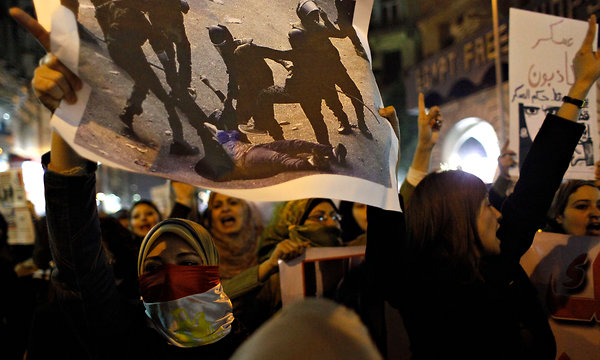
Someone captured on camera a brief two minutes of violence in Cairo, Egypt, when an unnamed protester was dragged by military forces in the street, then stripped of her abaya, under which she wore only a blue bra–and then beaten up some more.

WordPress has taken away my ability to post video, so you can watch it here.

It goes right up there with the video from New York City, towards the beginning of the OWS protests, of a police officer spraying peaceful, captive girls in the face with pepper spray.  This video has apparently been watched on You-Tube more than 1.5 million times.

There is something about seeing women being beaten up by masked, uniformed security forces that sets off particular triggers in most of us.  It’s certainly no accident that the Occupy protests swelled dramatically in numbers after that pepper-spray incident, or that more than 10,000 protesters, mostly women, turned out in Cairo following the posting of this image on the Web.

Part of me wants to question why it is that we get so upset when women protesters are attacked.  After all, they knew the risks they were running when they went out into the street.  And what’s the big difference between a man and a woman being beat up by goons, anyway?

But there is a difference.

The difference is that it’s always men doing the beating.

Yes, we have some women in police and military uniforms.  And yes, women can be violent.  But you will have to look long and hard to find cases where women bore the responsibility for killing or attacking civilians, in any circumstances.  It may happen, but it’s pretty rare.

So when we see a mob of men stripping and beating a woman–in a society where nudity is absolutely taboo, to boot–it’s impossible to ignore the full impact of the insult intended.  And in a society where women are forcibly kept out of leadership roles, the message is all the clearer.

Stay at home where you belong, or we’ll do this to you, too.

I’m so glad that the women of Cairo did not take this attempt at intimidation lying down. Just like the women in New York, who took the unwarranted police brutality as a gauntlet thrown down to test their protest mettle.

The question of whether men are in fact more aggressive than women is still a matter for debate in academic circles, but taking a look around the world, it’s pretty clear that men commit almost all the violence in every context.  When women murder or assault, it’s almost always in self-defense.

And yet women are still held back from leadership roles in most societies, and even held back from the peace-making negotiating tables in post-conflict regions.  A big exception is Rwanda, where women have taken a leadership role in rebuilding that shattered society–mostly because the men had succeeded so well in killing each other off.

We have moved past the point in the intellectual history of gender studies where feminists were striving to be “the same as” men.  Women don’t want to be the same as men if it means repeating the same old history of violence and abusiveness.

What we need is to move, as men and women, beyond the violence that has continually plagued human society.

Violence towards each other; violence towards other species and the rest of the world.

The only way to move forward as a species is to disable that aggressive switch, and become the consensus-seeking conciliators we have always been in our finest moments as human beings.

As we return to light this solstice night, this is my fervent prayer: that the aggressive, masculine energy that has dominated this planet for the past 5,000-plus years will begin to shift to a more peaceful, creative, feminine energy, from which both men and women–and the planet as a whole–will benefit.

Let it be so.

Sex 101: From Plan B to Pleasure

I have mixed feelings about the decision of Secretary of Health Kathleen Sebelius to overrule the FDA’s recommendation to allow over-the-counter sales of Plan B, without any age restrictions.

On the one hand, the knee-jerk liberal in me says wait a minute–access to contraception in any form should not be restricted.

On the other hand, it makes me a little nervous to think about young kids–say, 12-year-old girls–being able to buy morning-after pills as casually as they might buy cold medicine.

Our society is already sexualizing young girls way more than I think is healthy.  If Plan B were widely available, it might be used as just another reason why girls should open themselves up to sex at a younger age.

Another part of my hesitation comes from knowing full well that Big Pharma is pushing over-the-counter (OTC) sales just to make more profits on the drug.  I don’t think they are really that concerned with the welfare of young women.

Rather than simply making Plan B available OTC, I would like to see a national conversation (let’s call it a national general assembly) on the issue of the hypersexualization of youth, on the one hand, and the with-holding of sex education and contraception, on the other.

It saddens me that students in my gender studies classes are still reporting that sex education in their high schools consisted mainly of scare tactics ranging from “have sex before marriage and you’ll go to hell” (Catholic school) to “have sex and you’ll get disgusting STDs” (public school) to abstinence-only “just say no” programs.

In an age where the answer to any question is readily available on the Web, we owe it to our teenagers to present these issues in much more depth.  We should be discussing sexuality in all its multivalent nuances, from issues of sexualized violence (what happens if you say no and he doesn’t listen?) to the pros and cons of each of the many contraceptive options, to what I see as very often the missing link in contemporary discussions of sexual relations: pleasure.

Sex isn’t just about contraception, it’s not just about STDs, it’s not just about violence, it’s not just about worrying over drawing limits of one kind or another.

It’s about pleasure.

Her pleasure as much as his.  Mutual pleasure.  Mutual desire, mutual satisfaction.

Any sex ed worth its salt needs to be honest with young people, both boys and girls, about why sex makes the world go round.  It shouldn’t just be discussed in terms of threats, warnings and prohibitions.

Sex for pleasure is one of those defining human characteristics that too often gets lost in discussions of Plan B, abortion rights, and HIV-AIDS prevention.  These are all important issues, but let’s not lose sight, along the way, of what it’s all about.

The drug companies have not yet figured out how to package pleasure.  Let’s hope they never will.

Challenging rape culture

In my Gender Studies class this week, we’ve been talking about “rape culture.”  It’s a term that’s bandied about somewhat cavalierly on college campuses, and is probably much less familiar out in the ordinary workaday world.

Well, wake up world.  Rape culture is here.  And it doesn’t need the ironic scare quotes.  It’s real, and it’s not funny at all.

You know you’re living in a rape culture when women’s bodies are suggestively displayed, commodified, in sexually enticing poses obviously intended for the male gaze.

In the culture of rape, “no” means “try harder” and it’s always the woman’s fault if she doesn’t like what’s going on.  Stupid bitch, if she didn’t want it, she shouldn’t have worn those heels/had that drink/come to the party.

Rape culture sanctions violence when necessary to overcome resistance.  She was asking for it, anyway.

Rape culture oppresses dissenting men, too.  Men who fail to conform to the code of dominant masculinity are “faggots,” and being called out as anything akin to feminine–pussy, for example–is the worst insult you can throw at a guy.

Lately I’ve been realizing that rape culture extends a lot further than women’s bodies.  It’s also responsible for the prevailing attitudes towards our environment–our Mother Earth.

Not for nothing are both Mother Earth and Mother Nature gendered female.

Some patriarchal cultures manage to respect Mother Nature while still maintaining a stranglehold on her female children.  For instance, in Chinua Achebe’s Things Fall Apart, which I’m re-reading now for another class, the all-powerful Oracle of the Hills, a goddess, is interpreted by a priestess whose pronouncements no men dare question.  This doesn’t stop the protagonist, Okonkwo, from beating up his wives on a regular basis.

In Judeo-Christian and Islamic cultures, the patriarchy dispenses with goddesses.  Or at least, goddesses of the truly powerful, fearsome kind.

In Euramerican cultures, we have sex goddesses, who exist to pleasure their men.  Islamic cultures shroud their women in veils, but towards the same end: women exist to please their men.

The explosive growth of the international pornography industry, in which it is still rare for women’s pleasure to be of any interest at all, bears testimony to the extent to which rape culture rules.

In 2006, the pornography industry had larger revenues than Microsoft, Google, Amazon, eBay, Yahoo, Apple and Netflix combined–and it’s only grown in the past five years.

Porn is a vast unregulated jungle.  It’s not all bad.  But some of it is really terrible.  Some of it is sexualized violence–rape–thinly veiled as entertainment.

Yes, the girls get paid.  But many studies have shown that female porn stars often come from sexually abusive childhoods, or are teen runaways, or are lured into the trade through drug addiction and prostitution.

In Euramerican porn, women exist to give men pleasure.  Doesn’t matter if they get fucked over in the process.  Doesn’t matter if all that’s left in the end is a hollow shell.  There’s always another slut waiting in line.

Yeah.  It hurts me to talk like this, but I want to convey the mind-set of this industry.

And then I want you to think about how this mind-set translates to the Euramerican assault on the environment, our Mother Earth.

Or the sub-prime loan scandal (it’s Occupy Foreclosures Day, after all).  Fuck’em over, make a profit and move on.  All that matters is the bottom line, baby.

Sometimes it seems as though the more powerful actual women become in real life–ie, successful at playing the formerly all-male games of education and career–the more frantically obsessive men’s consumption of pornography becomes.  The power they miss in real life, they can find acted out for them in porn fantasies.

But the environment is another story.  Mother Earth is not going to play men’s games–that is, she doesn’t care to beat them at their own game.  When she starts to resist, the game will be over.

In porn, women go along with the game for a variety of reasons.  Generally speaking, women do it to survive.

Likewise, women collude with the patriarchy in the rape of the Earth because it’s just easier to go along than to resist.  And the lifestyle has been pretty comfortable over the last 50 years, hasn’t it.

I would like to see a frank discussion of the connections between rape culture as played out in porn and rape culture as played out between humans and the environment.

We need to acknowledge that there is a serious problem in both the private and the public realms (along these lines, we are just beginning to see confessions of “sex addiction” hit the media.  How about “fossil fuel addiction”?).

The problem is a symptom of much deeper ills in human social relations, which transgress the usual boundaries of race, class, gender & nation.

Why are porn and energy extraction biggest, the fastest growing industries in the world?

What does it mean to live in a rape culture?  Who benefits, and who loses?

Most importantly, how can a rape culture be transformed?  And what is our alternative vision?

My vision is this:

The one-sided model of domination and extraction (“getting some”) needs to shift to a dialogic model of sustainable mutual pleasure.

Human beings should serve in a steward relation to our Mother Earth, tending and enriching her in exchange for the nourishment and pleasure she can afford us.

Likewise, sex should not be about domination and debasement, but about mutual pleasure and uplift.

In these transition times, such a transformative shift should be possible, if each of us begins with our own selves, our own backyards, and lets the ripples of range move outward.

Let it be so.

Who’s Afraid of Women’s Writing?

Last night I participated in a panel discussion on Virginia Woolf and Margaret Mead called “Who’s Afraid of Women(‘s) Writing,” with Bard College of Simon’s Rock colleagues Maryann Tebben and Asma Abbas.

We were talking about how women’s writing is often oppositional, representing an outsider’s point of view to male-dominated mainstream discourse, whatever the discipline.

One of the students in the audience asked whether women’s writing would therefore always be reactionary, simply responding to the dominant rather than staking new ground.

I have been thinking about that question all day, off and on.

What I answered at the time was that while women’s writing is often a response to the dominant discourse, it also goes off in its own directions, which are not simply reactions to the mainstream, but rather true departures.

Of course, all writing occurs in dialogue with other writers, so even a departure is part of a larger conversation.  But I do believe that women, as outsiders, have something unique to contribute to any conversation.

Indeed, it is staggering to think of how impoverished literature, philosophy, history and all the other disciplines have been (and still are) in cultures where women have not been allowed to add our voices to the chorus.

Worst of all is that so few people (read: men) even noticed our absence.

I can recall so many times when have I had to fight for the inclusion of texts by women in our General Education curriculum at Simon’s Rock, arguing with colleagues who could say, with a sad shake of the head, that it was just too bad that women had never written any great, canonical literature.  For the past 20 years, out of the 16 required texts in our Gen Ed canon, which stretches from Gilgamesh to Achebe, only three are by women–though as of this year, after much lobbying, the ratio has finally improved slightly.

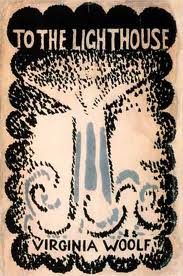
First deny women literacy and keep those few who do manage to become literate tightly locked in the private realm.  Then look back over history and note complacently that, as Woolf has the “odious Mr. Tansley” tell the artist Lily Briscoe in To The Lighthouse, “women can’t write, women can’t paint.”

In our time and place, young women now outnumber young men in higher education, and no one would dare to argue that women are innately less intelligent and talented than men.

But still, women in the U.S. earn 78 cents on the male dollar, for a variety of reasons, including the fact that we still shoulder more responsibility for housework and child care even when we work fulltime.

Women are still valued more highly as ornaments and service workers than as autonomous creative agents, and we still have to struggle harder to make our voices heard, especially if what we have to say is not what the mainstream wants to hear.

In To the Lighthouse, Lily Briscoe worries that her painting will be rolled up and thrown under a couch to gather dust.  Today, women still seem to have less self-confidence than men, perhaps because we’ve absorbed the prevailing ethos that considers a strong woman to be a “ball-breaker” or a “bitch on wheels.”

As MaryAnn Baenninger, President of the College of St. Benedict, wrote in a recent piece in The Chronicle of Higher Education, studies continue to show thatwomen underestimate their abilities and express lower levels of self-confidence than their abilities suggest. Men overestimate their abilities and express higher levels of confidence than their abilities warrant. This difference arrives with them as first-year students and leaves with them as seniors. When I talk about this, or I hear researchers describe this finding, the audience always chuckles (boys will be boys, after all).”

Baenninger concludes that while American women “have access to just about every educational opportunity and every career…access doesn’t guarantee outcomes. A gendered culture, mostly in unconscious ways, limits women’s expectations for themselves and our expectations for them.”

In other words, our gender role conditioning as women too often tends to silence us, while amplifying the voices of our brothers.

Soon after the great poet Audre Lorde was diagnosed with the cancer than would eventually kill her, she gave an address at the 1977 Modern Language Association annual convention in Chicago, called “The Transformation of Silence into Language and Action,” later published in the collection Sister Outsider.

In thinking back over her life, she said, “what I most regretted were my silences.”

“In the cause of silence,” she continued, “each of us draws the face of her own fear–fear of contempt, of censure, or some judgment….But most of all we fear the visibility without which we cannot truly live….That visibility which makes us most vulnerable…is also the source of our greatest strength.

“Because the machine will try to grind us into dust anyway, whether or not we speak.  We can sit in our corners mute forever while our sisters and our selves are wasted, while our children are distorted and destroyed, while our earth is poisoned; we can sit in our safe corners mute as bottles, and we will still be no less afraid.”

What we need to do, she said, is to “learn to work and speak when we are afraid in the same way we have learned to work and speak when we are tired.  For we have been socialized to respect fear more than our own needs for language and definition, and while we wait in silence for that final luxury of fearlessness, the weight of that silence will choke us.”

So many women today are still feeling the same fear and insecurity Lorde wrote about in 1977.  So many of us will go through our entire lives not daring to utter the truths we can hardly bring ourselves to acknowledge even in our most private thoughts.

In the same way that the richness of the Earth is diminished every time a species is lost, no matter how small and seemingly insignificant to the bigger ecological tapestry, the great canvases of literature, philosophy, science and all the other disciplines are impoverished and dulled when 50% of the population is not enthusiastically welcomed into the conversation.

Yes, we women can have our own conversations, outside the male-dominated mainstream.  There’s always “women’s writing.”  But what we should really be striving for is what Virginia Woolf called “androgynous writing,” where the masculine and feminine energies are brought together in a fecund explosion of cross-pollinating difference.

As Lorde put it so memorably in another of her important essays, “The Master’s Tools Will Never Dismantle the Master’s House,” “Difference must not be merely tolerated, but seen as a fund of necessary polarities between which our creativity can spark like a dialectic.  Only then does the necessity for interdependency become unthreatening.”

Maybe there will come a time when interdependency and androgyny will be the accepted standard of gender relations.  Until then, we still need to meet periodically and consider questions like “Who’s Afraid of Women’s Writing?” and why? and at what cost?