A teachable moment at Penn State?

What is most shocking to me about the current scandal at Penn State (sports and sexual abuse of boys, in case you hadn’t heard) is the response of the students to the announcement last night that longtime head football coach Joe Paterno was fired.

Do the hundreds of students who poured into the streets to smash car windows and pull down lamp posts believe that it was OK that the coach turned a blind eye to the repeated rape of boys, some as young as 10 years old, in the university’s football locker room showers?

Do they want to be part of an institution that condones this kind of behavior?

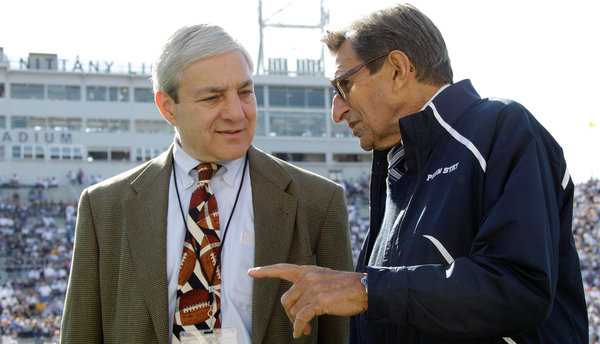
If anything, the students should have taken to the streets to demand Paterno’s resignation, along with that of his boss, Penn State president Graham Spanier.

But no.  To these rampaging students, what happened in those showers with the pedophile assistant coach Jerry Sandusky was less important than hanging on to their beloved head coach.

This is reminiscent of so many other, similar scandals, in which men’s loyalty to social groups, whether it’s the military, a fraternity, a gang, or a football team, is so strong that it completely skews their independent moral compasses.

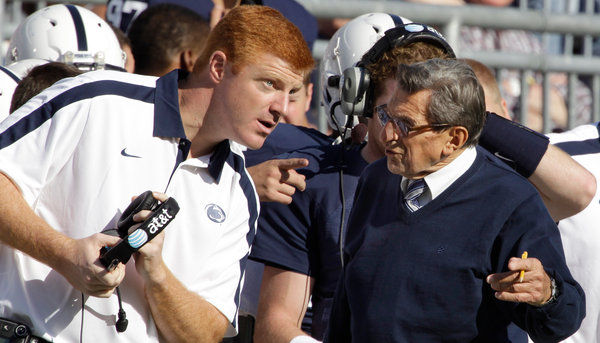
If you presented a group of unaffiliated students with a scenario like what we’ve just witnessed at Penn State, and asked them whether assistant coach Mike McQueary was right to blow the whistle on Sandusky after witnessing him rape a 10-year-old boy in the football locker room shower late one night in 2002, I think most of those students would say McQueary was in the right.  They would also most likely come to the conclusion that it was the duty of McQueary and Sandusky’s boss, Joe Paterno, to report the crime.

But obviously things don’t look so clearcut when various conflicting loyalties come into play.  When McQueary realized that Paterno and other school officials were not going to report Sandusky, should he have pursued the matter independently–even when it might very well have cost him his job?

Of course, the answer is yes.  How could McQueary and Paterno sleep at night knowing that Sandusky was using university facilities to lure in boys?  Boys, who, by the way, he met through a charity he belonged to, the Second Mile Foundation, which purports to help disadvantaged children in Pennsylvania.

It saddens but does not surprise me that the students at Penn State who protested the firing of Coach Paterno are willing to put their team loyalty ahead of the pursuit of justice and integrity in this case.

It’s very similar to the loyalty of the Catholic priesthood, which chose to protect its own rather than stand up for the rights of the young children, mostly boys, who were being molested by pedophile priests for years and years.

Or like the loyalty of fraternity boys who would never rat out a “brother” who raped a girl during a party.

I’m sorry, guys, but this is not brotherhood.  It’s bullying: one person taking advantage of someone with less social power or physical strength, and a whole bunch of bystanders letting it happen.

This is what the Penn State students are proud of?  They should be ashamed.

At least Joe Paterno, at 84, does seem to be showing some signs of moral rectitude.  “This is a tragedy,” he said yesterday. “It is one of the great sorrows of my life. With the benefit of hindsight, I wish I had done more.”

Yeah, Joe.  You may have had more football game victories than any other college coach, but you sure could have done more.

Student-driven learning: Diversity Day at Simon’s Rock

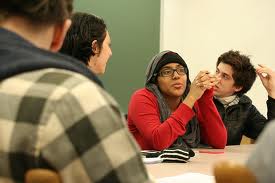
Tomorrow is Diversity Day at Bard College at Simon’s Rock, a day when regular classes are cancelled so that the whole student body can attend workshops prepared by students, with some faculty guidance, on a range of topics related to social difference.

I am participating in three workshops: “Bros Before Hoes: When Male Loyalty Becomes Oppressive,” which comes out of my Explorations in Gender, Culture & Society class, in which we recently read Michael Kimmel’s Guyland; “Sex in the Media,” about the objectification of women (and men) in the media; and “The Green Belt Movement: Planting Trees, Saving Lives” about the life and legacy of environmental activist Wangari Maathai.

There are a whole host of workshops I wish I could attend, if only I could clone myself!  For instance, “The Prison Industrial Complex,” “Occupy Wall Street: A Discussion on Political Engagement,” “I Don’t Do Black Girls,” and many more.

As someone who regularly teaches classes in world literature, human rights, gender studies and related topics, I sometimes have mixed feelings about trying to cram so much politically charged information into a single day.  The danger is that we stir up a whole host of raw, unprocessed ideas, emotions and opinions, and then go back to business as usual, leaving many loose ends and open questions dangling.

The hope is that students who would not otherwise be drawn to explore issues of social class, race, ethnicity, gender, etc. in an academic class will at least get some exposure through these workshops to what their peers are thinking about or experiencing, and may be inspired to continue the conversations outside the classroom, or even to take a class in sociology or gender studies in a future semester.

What’s most positive about this annual event at Simon’s Rock is how it encourages the student workshop leaders to put to good use all the pedagogical modeling we’ve done for them in our classes. I am always so impressed at how carefully student leaders prepare for their 90-minute sessions, and how easily they are able to use the tools and skills we’ve been working on since Day One at Simon’s Rock: focused freewriting, small group discussion, coming to consensus, reporting back to the big group, sharing ideas in a thoughtful, respectful manner.

Once in a while things I’ve seen things get out of hand at a Diversity Day workshop, if a group is too big and rowdy, or the chemistry between the session leaders and some of the students in the class just clashes.  But that is very rare.  Most of the time students are respectful and kind, appreciative of each other’s efforts in sharing their knowledge and experiences.

Andrew Revkin of The New York Times blogged recently about progressive secondary education, citing with approval a Long Island high school student’s call for “project-based learning,” which is “designed to put students in the driver seat.

“No longer is the teacher the only hub of information,” writes student Nikhil Goyal. “No longer do kids work in silos, isolated from their peers and the community around them….Projects drive the curriculum, rather than the reverse. And they incorporate a wide range of interdisciplinary subjects to achieve real-world relevance. Learning isn’t supposed to be boring and a process of nailing facts in students’ heads. It’s hands-on, it’s practical, and it’s creative. And project-based learning offers constant feedback and revision to develop higher quality work.”

So true!  Diversity Day at Simon’s Rock is a great example of just this kind of student-driven, project based learning, as the student workshop leaders define the topics that interest them, work on structuring the class time, put together audio-visual aids, and then go in to lead their sessions.

Could there be any better hands-on training for life in the real world?

Sexual harassment, from 7th grade to Herman Cain

Observing my total lack of interest in Herman Cain’s sexual peccadilloes, I find myself amused, in a sad, resigned sort of way.  Another wanna-be politician trips himself up in his own boxer shorts.  Ho hum. What’s for dinner?

Something far more upsetting than the image of Herman Cain groping under a woman’s skirt while forcing her head in his lap was the recent report that more than half of American girls in 7th to 12th grades were sexually harassed in person–as opposed to online–in the past school year.

“The report documents many forms of harassment. The most common was unwelcome sexual comments, gestures or jokes, which was experienced by 46 percent of girls and 22 percent of boys. Separately, 13 percent of girls reported being touched in an unwelcome way, compared with 3 percent of boys; 3.5 percent of girls said they were forced to do something sexual, as did 0.2 percent of boys. About 18 percent of both boys and girls reported being called gay or lesbian in a negative way.”

Should it surprise anyone that a culture that tolerates these kinds of conditions in public schools gives rise to politicians, from Bill Clinton to Elliot Spitzer to Herman Cain, who feel entitled by their power and success to indulge themselves sexually with subordinate women?

Sexual harassment of women by men is remarkably constant across cultures–it varies only in degree.  Some cultures deal with it by demanding that women cover themselves from head to toe; others pressure women to go around half-naked and inure themselves to the catcalls and feel-ups.

What few, if any, cultures do is demand that men be accountable for their own behavior and keep their hands and their whistles to themselves.

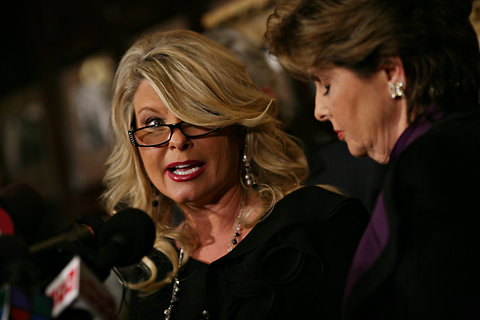
I admire women like the defendant in the DSK incident, or the Cain accuser who had the guts today to come forward on the record and in front of the cameras to tell her story.

Why should women make it easy for men to get away with blatant sexist bullying?

More to the point, why does our society make it so easy for men–all men, not just the rich and powerful, though those are the ones we hear about most frequently–to shrug off incidents of sexual harassment, or even assault, as minor, unimportant issues, hardly worthy of mention?

That was certainly Herman Cain’s position, until the tenacity of the women he had abused made it impossible for him to continue to play innocent.  The same playbook was used by countless politicians before him–which is why it’s so hard to get excited about any of it today.

I’m just relieved that the swampy pit of Republican contenders for President will almost certainly be shrinking by the end of tomorrow’s news cycle.

Or maybe I shouldn’t take that for granted.  Look at Clarence Thomas, after all–our Supreme Court Justice, for crying out loud!

Women of the world, unite!  Our silence on sexual harassment and assault will get us absolutely nowhere.  If you care about the mental and physical well-being of your daughters, your sisters, and yourselves, you need to condemn this destructive social norm in the strongest possible terms.

And then let’s get on with that dinner.

Challenging the culture of (white male) entitlement: Come on, Occupy, let’s do it!

I spent several hours today listening to a friend tell me, with much anger, sadness and frustration, the story of how her marriage of more than 20 years has crumbled.

Then I went up to see my son’s soccer game, and could not bring myself to say more than “hello” to my own ex-husband, who chose freedom and autonomy over his 25-year relationship with me, and the satisfaction of living in the same house as our children.

When I got home, I checked the Occupy Wall Street website and found a statement from the “sexual assault survivors team,” describing and condemning the recent attack on a female protester by a man who apparently already had a record of sexual assault.

I also got a blog post from a student in my gender studies class, about an organization called About Face, which strives to get viewers to question the fashion industry norm of presenting emaciated women as “beautiful.”

What connects these dots?

A culture in which men feel more interested in following their own selfish desires for personal fulfillment (aka, sexual fulfillment) than in upholding their roles as fathers and husbands.A society that makes it easy for them to choose this route: why struggle to please a demanding wife when you can have sex with someone else with no strings attached?

A society that tells women that the more pale, limp and weak-looking they appear, the more beautiful they are in the eyes of men.

A society where women have to be guarded, even at protests that supposedly entertain no gender disparity, because there could be sexual predators around any corner.

A society that makes it terribly difficult for women to find independent means to self-respect.

Too often, in previous revolutions, women have supported the movement but found that the men in charge were not willing to give women’s issues equal footing with class issues.

If the young men and women of the Occupy movements are serious about creating true social change, they must put the issue of entitlement squarely on the table.

Not just the entitlement of the 1%, but specifically male entitlement, and white entitlement.

We will not be able to bring a new social structure into being unless we hit these areas of privilege and entitlement head on.

And no, we are not substituting women’s empowerment for men’s.

We are after another world entirely, in which gender, class and race are not the arbiters of power.  In which power flows from the collective wisdom of the group, rather than top-down in hierarchical fashion.

The Occupy movements are on to this shift with the general assemblies and the consensual mode of decision-making.  Breaking with the gendered conditioning of Western society, which gives men all the power, all the time, is not going to be easy.  But if anyone could achieve it, it’s the young men and women of the Occupy movements.

I want to see these young people make this an explicit focus of their movements.  Because otherwise, on a certain level, it’s just business as usual, no matter if the masters of Goldman Sachs come out to lick your boots.

Change the disrespectful attitude of men towards women, and you REALLY change the world.

Let’s give it a try, and see what happens.  Things could not get much worse, and they could get a whole lot better if men and women worked together for the good of ALL.

Scary Halloween Statistic: 7 Billion People on the Earth by Oct 31, 2011

If you’ve never seen the Worldomters clock ticking, it’s worth a click.

Watching those numbers spin by brings home how very fast the human species is multiplying, especially when you consider the following chart, which shows how recent this population explosion really is.

No wonder we’ve got a sustainability problem!

Population control has gotten a bad name in recent years, and justifiably so.  It cannot and should not be imposed upon women by force, as it has too often in the past.

But study after study has shown that when women are educated and respected in society, birth rates go down.

Want to slow down that worldometer population clock?  Start by educating girls and opening up career opportunities for them after graduation.

Educate a girl and save the planet?  Might not be hyperbole after all.

The minefield of unearned privilege: tread carefully!

It was not surprising when in a discussion of privilege in class the other day, we spent more time talking about affirmative action in higher education than we did about, say, white or male privilege.

When I paused the conversation to point this out, some students suggested it might be due to their firsthand knowledge of the inequities of the affirmative action system.  Many in the room had conflicted feelings and ideas about the question of merit vs. need-based scholarships.  Why should a student who can afford to pay for college, they asked, be granted a scholarship on the basis of merit, thus denying a place and funds to a student who may be less well-prepared, but is far more needy?

One can argue these issues for a long time without coming anywhere near the deeper issues that lie buried under the surface, like mines just waiting to go off.

Why are white students more likely to be both better-prepared and less needy than students of color?

WHITE PRIVILEGE.  It’s the elephant in the room that no one really wants to deal with, because it doesn’t feel good to admit that if your skin is pinkish beige in color, it’s given you systematic unearned advantages your whole life long.

There are also students—generally white male–who will complain that women now get unfair preferential treatment in higher education admissions.  This may have been true a decade ago, but in fact what’s happened of late is that affirmative action for women has been so successful that now it is men, especially men of color but white men too, who are sought after by college recruiters.

Does this mean that MALE PRVILEGE is all over and done with?  Hell no.  Men still earn at least 20% more than women doing the same job, whether blue collar, white collar or CEO.  Women still have a tougher time rising to leadership positions, and are judged much more harshly if and when they do succeed.  Women still have disproportionate responsibility for keeping the home fires burning and the children taken care of, even when they’re happily married and earning the same as or more than their husbands.

Male privilege is alive and well—but no one really wants to talk about it, not even women.

At least at the college level, students seem more comfortable talking about HETEROSEXUAL PRIVILEGE than about race/class/gender privilege.  It seems trendy to be aware of how queer folk are bullied and discriminated against, and to be sympathetic about it.  But there’s a lot less sympathy when it comes to women who point to male privilege, or people of color pointing to white privilege, or poor folks pointing to elite privilege.

Why is that?

For one thing, if the complaint comes from someone who belongs to the subordinate group, there is an immediate perception that they are speaking in self-interest, and overt action on behalf of one’s self-interest is never well-received by dominant groups when it comes from subordinates, particularly from women.  It’s labeled as “strident” or “whining.”

All the while, dominant groups–say, men, or white people–may be acting in their own self-interest, but it’s just accepted as normal striving, part of the great American way.

For people in subordinate groups and their allies, it can be a difficult challenge to raise the issue of dominant groups’ unearned privilege without setting off all kinds of defensive reactions or tricky deflections, as when a whole class is spent talking about affirmative action instead of about unearned privilege.

If I knew the answer to this conundrum, I would be a much better teacher than I am.  All I can do is keep trying to pull students’ attention back to that minefield of privilege and oppression, and tread carefully–but without turning back.

What President Obama and Eve Ensler have in common

President Obama did something really, really good this week.  He sent 100 Special Ops military “advisors” to Central Africa to help local government forces get rid of the Lord’s Resistance Army, a group of crazed, vicious thugs who have been terrorizing people in four countries for as long as many in the region can remember.

The New York Times reports: “For more than two decades, the Lord’s Resistance Army (LRA) has murdered, raped and kidnapped tens of thousands of men, women and children in central Africa,” Mr. Obama wrote in a letter to Congress announcing the military deployment. “The LRA continues to commit atrocities across the Central African Republic, the Democratic Republic of the Congo and South Sudan that have a disproportionate impact on regional security.”

You don’t even want to know what kind of atrocities he’s talking about.  Joseph Kony and his men are depraved, sick torturers, rapists and murderers who have been at it so long that I doubt they can ever be rehabilitated.  They are part of a long cycle of violence in Africa that begins with the kidnapping or luring in of young children, boys and girls, who are then drugged, beaten and raped into total submission to the authority of the adults, and grow up indoctrinated into the lifestyle of terror.

For an inside story, read Ismael Beah’s memoir A Long Way Gone, or the chapter in my anthology African Women Writing Resistance by former girl child soldier China Keitetsi, whose memoir Child Soldier is available in an e-book edition.

I can’t help but think that there is an element of racism in the fact that it’s taken so long for the international community to unite behind the mission of bringing true security to Central Africa (including the Democratic Republic of Congo, where some of the worst human rights violations in the world are taking place daily, with women and girls disproportionately targeted.)

When Bosnian men were massacred, people thrown out of their homes, and women and girls imprisoned in rape camps by the Serbs, the Clinton Administration waged an all-out war to stop it.  All that and more has been happening in the DRC and neighboring countries for decades.  Decades.

Eve Ensler has done a tremendous amount to get the word out about the impact of all this violence on women, not just in Africa but throughout the world.  I particularly admire her because she has used art as the medium for her outspoken calls for solidarity and resistance with victims of rape and violence–starting with “The Vagina Monologues,” and moving on through a host of books and plays.

She’s also used digital media to get her word out and build a global movement to end violence against women, and I don’t think anyone does it better–check out her website, vday.org, to see for yourself.

Eve Ensler is a great example of a woman of privilege who has used all of her talents and gifts to reach out and help others–and not through begging, cajoling or guilt-tripping, either, but through the sheer power of her spoken and written word.

President Obama has the power to send in the military, and it’s good he’s at least taken the first step in that direction.

We ordinary people have power too, more than we often realize.  We can open our eyes to what’s really happening in our towns, our country and our world, and then allow our hearts to show us the way to action for positive social change.

There is no more urgent task for each of us in our lifetimes.  This is what we came here to do.

SlutWalk, Occupy Wall Street and other sparks of resistance: let’s fan the flames!

Finally this morning The NYTimes.com is paying some attention to the Occupy Wall Street protests.  But the tone is still highbrow and dismissive–Charles Blow, who really should know better, labels the protesters “hippies and hipsters” and the movement overall as “a spark set down on wet grass,” with “no where to go.”

He also finds space to inform us that “a New York Times/CBS News poll released two weeks ago found that a third of those who make $30,000 a year or less don’t believe that the government should raise taxes on the wealthy to lower the budget deficit.”

Could that be because those who are living on the edge are so beaten down by a variety of forces, including lousy education and the constant scorn this country shows the poor, that they could care less about “lowering the budget deficit”?

I bet that the pollsters would get quite a different response if the question were worded more directly, as in: Should the government raise taxes on the wealthy to help the poor get a better education, promote job growth and tighten the social safety net?  Hell yes! they’d say.

Meanwhile, up in Union Square, another protest is brewing today: SlutWalk, a new, international protest movement against “rape culture.”  In a rape culture like ours, the SlutWalkNYC site informs us, “sexual violence is made to be both invisible and inevitable; and these two practices are what normalizes rape, harassment and assault….The forces that normalize rape culture are not examined; rape is not seen as a culture or “practice” and if it is ever discussed, sexual violence is seen as an isolated act that occurs between individuals.”

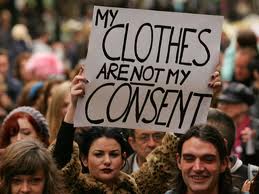
SlutWalk began in Toronto last year, in response to an incident where a police officer told a rape victim that she had been “asking for it” because of the way she was dressed.  That the movement has caught on so quickly, especially among young women, is testament to the validity of its argument that no woman, no matter how she is dressed, is ever “asking” to be raped.

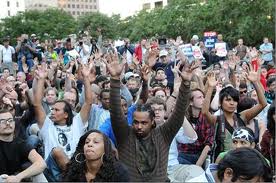
Both Occupy Wall Street and SlutWalk are driven by young people who are frustrated with the status quo and know that a better world is possible.  Their elders should know better than to dismiss these young folks as idealistic dreamers.  Hasn’t all change in human society, both positive and negative, been driven by those who dare to dream differently?

Lately I’ve been reading Derrick Jensen‘s latest book, a huge tome called simply, Dreams.  In it he argues that one of Western civilization’s crucial fallacies is our collective tendency to ignore and dismiss our dreams, as well as the possibility that through our dreams we may connect with “supernatural” forces that we don’t understand and cannot control.

Derrick sides with indigenous cultures who believe that the natural world is alive (“animism”) and can communicate with us.  His big question in Dreams is a weighty one: why hasn’t the natural world fought back harder in the face of the sustained murderous onslaught of humanity?

I would not presume to speak for the natural world.  But this question can be applied to a lot of other contexts today.

Why has it taken so long for Americans to get out and protest the takeover of our country by the corporate elite?  Why has it taken two weeks for the New York Times to deign to notice this gadfly protest on the flanks of the giant Wall Street bull?  The New York unions are finally stirring and considering joining the protesters–why has it taken so long for the American working class to awaken?

I think it might have something to do with the way we in the U.S. are caught up in a media-induced waking dream/nightmare, with a storyline that repeats over and over the following all-pervasive mantra: c’est la vie, there’s nothing to be done about it.  No fundamental change is possible.  The contamination of our environment is inevitable, and necessary if we want to maintain our comfortable fossil-fuel-driven lifestyle. The ever-growing gap between rich and poor is inevitable, as natural and normal as rape culture–boys will be boys, and you can’t expect rich boys to care about the poor.

Etc.

Someday analysts may look back on this period as one of remarkably successful mass indoctrination.  That is, if there are any shreds and shards left of our culture to examine after climate change is done with us.

To answer Derrick’s question, climate change is Nature fighting back.  Has anyone noticed that it’s been raining practically non-stop in New England for weeks now?  Here we are almost in leaf season, and our once-glorious maple trees are barely able to muster some mustardy brown color.  If this rain were snow, we’d be buried.  It may be an interesting winter season, to say the least.

However, resistance movements, both human and natural, are stirring all over the planet.  Like Occupy Wall Street, they may seem small, fragmented and disorganized to people who are accustomed to watching the huge, well-funded, tightly organized spectacles of mainstream political parties, or even mainstream-funded resistance movements like the Tea Party.

But it’s possible that dispersed, small-scale resistance may just what is called for under the present circumstances, when anything more obvious would simply be crushed by the iron fist of the corporate capitalist ruling class.

Resistance is happening when people take the time to relearn ancient human practices like small-scale biodynamic agriculture, bee-keeping, and storing food for the winter.  Resistance is happening when people refuse to let the dominant narratives ride rough-shod over their dreams of positive change.

Resistance is happening!  Let’s prove Charles Blow and the other naysayers wrong. It may be a rainy season, but let’s be the dry tinder for the spark of protest to fall on. It just takes one spark to start a wildfire, after all.

Occupy Wall Street: Time to Tell Bloomberg to Call Off the Goon Squad

Finally, the alternative media is coming alive!  Alternet is leaping on the Occupy Wall Street bandwagon, and urging its readers to do the same.

Arun Gupta issues “a clarion call to join the protests,” and a longer story by Sarah Jaffe shows how the heavy-handed police techniques and lack of attention from the press have not dampened the protesters’ determination, and if anything have drawn more people to the cause.

Truthout.org doesn’t have the protest on the front page, but they did reproduce a very disturbing video from msnbc, with anchor Lawrence O’Donnell, certainly no radical, standing up for the protesters in the strongest terms.

It’s the people wearing the badges that are the troublemakers, O’Donnell says, accusing the police of “unprovoked police brutality.”  The provocation, he observes, was having a video camera running.

There is NOTHING illegal in recording a peaceful protest.

Americans, we have to stand up for our freedom of speech.

It’s time to tell Mayor Bloomberg, a Wall Street type if there ever was one, that this is TOTALLY UNACCEPTABLE.

If you want to send the Mayor a letter, this is how.  And protesters, maybe it’s time to send a contingent over to the new Tammany Hall.

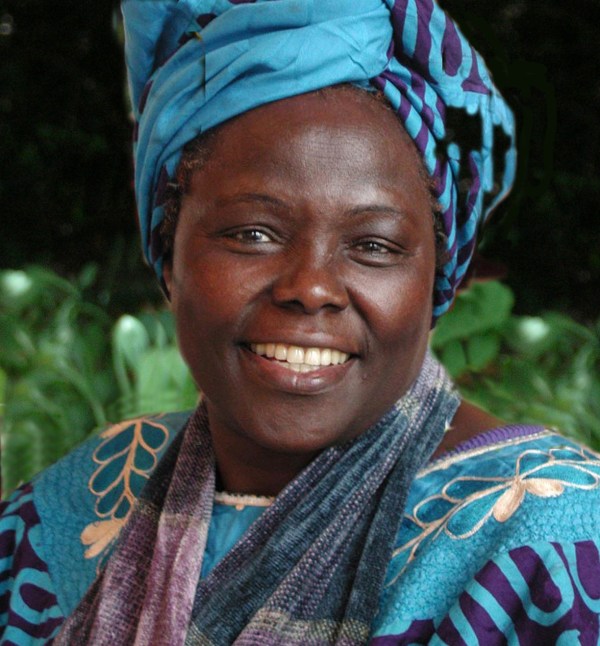
Wangari Maathai’s Canopy of Hope: remembering a warrior woman for the planet and role model for us all

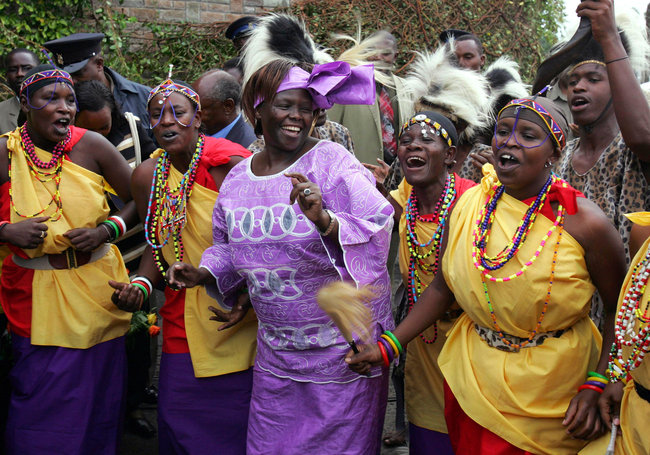
Kenyan Wangari Maathai, who died last night of ovarian cancer, was a woman who took everything she learned and used it for the benefit of her local community and the planetary community as a whole.

As a girl, she used to sit by a certain fig tree that grew near her family village.  Beside the fig tree a clear, sparkling stream flowed, planted with arrowroots and hopping with small frogs.  Her mother told her that this was a “tree of God,” which wasn’t to be harvested for firewood.

Later, Wangari realized that “there was a connection between the fig tree’s root system and the underground water reservoirs.  The roots burrowed deep into the ground, breaking through the rocks beneath the surface soil and diving into the underground water table.  The water traveled up along the roots until it hit a depression or weak place in the ground and fushed out as a spring.  Indeed, wherever these trees stood, there were likely to be streams.  The reverence the community had for the fig tree helped preserve the stream and the tadpoles that so captivated me.  The trees also held the soil together, reducing erosion and landslides.  In such ways, without conscious or deliberate effort, these cultural and spiritual practices contributed to the conservation of biodiversity” (Unbowed, 46).
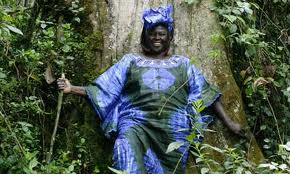
Wangari came of age as the traditional wisdom of the village people was giving way before the onslaught of Western epistemologies.  A girl who excelled in her schooling, she educated by Catholic nuns, and was fortunate enough to be chosen for the so-called Kennedy airlift of 1960, under which the Joseph P. Kennedy Foundation provided scholarships for promising young African students to study in America—the same program that brought Barack Obama’s father to the U.S. to study.

Wangari ended up at Mount St. Scholastica, a Benedictine women’s college in Kansas, where she majored in science, and she went on to earn a Master’s in biology at the University of Pittsburgh. She continued her studies in Germany, and in 1971 earned a Ph.D. in biology from the University College of Nairobi—the first women in East and Central Africa to earn a doctoral degree.

Like so many other highly educated women who join the workforce, Wangari experienced plenty of gender discrimination as she tried to advance her career. Frustrated with her lack of advancement within the university, she joined the National Council of Women of Kenya, which was a group of educated women who sought to improve the living conditions of all Kenyan women.

“We could either sit in an ivory tower wondering how so many people could be so poor and not be working to change their situation, or we could try to help them escape the vicious cycle they found themselves in,” she said.  “This was not a remote problem for us.  The rural areas were where our mothers and sisters still lived.  We owed it to them to do all we could” (124).

For Wangari, the problems were clear:

“The connection between the symptoms of environmental degradation and their causes—deforestation, devegetation, unsustainable agriculture and soil loss—were self-evident.  Something had to be done.  We could not just deal with the manifestations of the problems.  We had to get to the root causes of those problems.

“Now, it is one thing to understand the issues.  It is quite another to do something about them.  But I have always been interested in finding solutions.  This is, I believe, the result of my education as well as my time in America: to think of what can be done rather than worrying about what cannot.  I didn’t sit down and ask myself, ‘Now let me see, what shall I do?’ It just came to me: Why not plant trees?’ The trees would provide a supply of wood that would enable women to cook nutritious foods.  They would also have wood for fencing and fodder for cattle and goals.  The trees would offer shade for humans and animals, protect watersheds and bind the soil, and, if they were fruit trees, provide food.  They would also heal the land by bringing back birds and small animals and regenerate the vitality of the earth.

“That is how the Green Belt Movement began” (125).

 The Green Belt Movement mobilized thousands of ordinary women in Kenya to start tree nurseries, and to plant trees near their homes.  It also became a forest conservation movement, with Wangari leading women in protecting Kenya’s remaining forests against the loggers hired by giant transnational conglomerates.  She made plenty of enemies in the government when her agenda threw a wrench in their greedy plans, and she was often afraid for her life.  She was thrown in jail many times, and frequently confronted violence at the hands of police and goon squads.
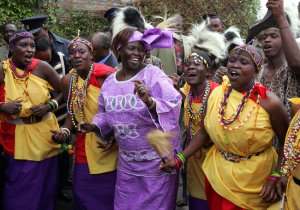

 Through it all, she remained, as the title of her memoir suggests, UNBOWED. She would not be browbeaten into submission to authority.  She knew that her cause was not only righteous but right for Kenyans and for the planet she loved, and this gave her the courage to stand firm against intimidation.

Wangari’s activism cost her her marriage: her husband, a Kenyan Member of Parliament, divorced her after she earned her Ph.D. and became more financially successful.  She could have chosen the easy way and lived a very privileged, comfortable existence in Nairobi, if she had been willing to bow her head and put her husband’s needs and career before her own.  Instead, she went through a humiliating public divorce trial:

“It became clear that I was being turned into a sacrificial lamb.  Anybody who had a grudge against modern, educated and independent women was being given an opportunity to spit on me.  I decided to hold my head up high, put my shoulders back, and suffer with dignity: I would give every woman and girl reasons to be proud and never regret being educated, successful and talented.  ‘What I have,’ I told myself, ‘is something to celebrate and not to ridicule or dishonor’” (146).

The divorce trial ended, incredibly enough, with Wangari being sentenced to six months in prison for “contempt of court”; she was hauled off to prison without even having the time to say goodbye to her children. It was clearly an attempt to put this uppity woman in her place, but it did not work: Wangari would not be intimidated, and emerged from prison determined to put her talents to work for her people, come what might for herself personally.

Her Green Belt Movement became a model for sustainable, grassroots-driven development throughout Africa and beyond, which worked not only for environmental sustainability, but also for women’s rights, human rights and participatory democracy.  Wangari consistently provided an upright model of honest, steadfast leadership, leading by example in speaking truth to power and and refusing to be cowed.

“What I have learned over the years,” she said, “is that we must be patient, persistent and committed.  When we are planting trees sometimes people will say to me, “I don’t want to plant this tree, because it will not grow fast enough.” I have to keep reminding them that the trees they are cutting today were not planted by them, but by those who came before.  So they must plant the trees that will benefit communities in the future.  I remind them that like a seedling, with sun, good soil, and abundant rain, the roots of our future will bury themselves in the ground and a canopy of hope will reach into the sky” (289).

Wangari Maathai herself grew that “canopy of hope” for all of us.  May the seedlings she planted be nourished with care by those of us who aspire to walk in her footsteps, for all those who deserve a better world in the future here on our precious planetary home.