Taking responsibility for the violence

Marie Colvin

I have to admit that I was not paying much attention to the bombardment of the city of Homs, Syria—now in its 20th day—before the deaths of two Western journalists there this week.

That is completely typical of me as a Western observer sitting comfortably at my desk, far from the tumult and terror of war.

I sat complacently at my desk during the bombardments of Sarajevo in the 1990s, and Baghdad in 2003-4.  I was hardly aware of what was going on in Rwanda during the genocide there in 1994.  Glimmers of awareness come and go about the current violence in the Congo, or in Burma.

For the most part, I go about my business like any animal would, focusing on what’s in front of me.  As long as my belly is full and my personal security is not threatened, I can give a big yawn at the evening news, and go peacefully to sleep.

The attitude of the Western public—especially among Americans—rides the border between ignorance and indifference.  We’d rather not know—so we focus our attention elsewhere, on news that either appears to concern us more directly, or has a more soporific effect.

Oscars, anyone?

Death of Whitney Houston—OMG what a tragedy!

And let’s check in with the Republican horse race, shall we?  Will it be Santorum or Romney this week?  Ho-hum….

Sarajevo, 1994

Meanwhile, innocent civilians, many of them women, children and elders, are dying every day in Syria, just as they did in Sarajevo, Baghdad, Sudan, Libya…the list goes on and on.

This list concerns us Americans for one very good reason: our country is the biggest arms supplier in the world.

That means we enable all these bloody wars.  We build up dictators by selling them arms.  Then when they misbehave and start killing civilians, we wring our hands and act as if we had nothing to do with their rise to power, hence no responsibility for their misdeeds.

If Americans were serious about wanting a peaceful world, we would start by converting our weapons manufacturing plants to peaceful purposes.

Instead of machine guns, let’s make solar panels and sell them to world leaders.  Instead of tanks and jets, let’s export educational software and lightening-fast hardware.

Instead of sending military personnel to deal with civilians in other countries (as they did so ably this week, burning Korans in Afghanistan), let’s send teachers and doctors and enthusiastic, open-minded young people in every profession.

Americans need to understand that we bear a responsibility for the death of every child who dies as a result of a US-made weapon, no matter who wields it.

Giving up violence has to start with giving up the weapons that enable it.

Let’s dare to think outside the box, and put our hearts, minds and bodies in the service of peace.

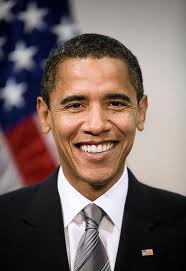
Calling on President Obama: Be Our Warrior for Peace

Although most Americans think of Presidents’ Day mainly in terms of sales on home appliances and electronics, as well as a welcome mid-winter day off, it’s worth stopping to think for a moment about what we are actually celebrating on this day.

Why take a day out of the national calendar to honor Washington and Lincoln?  What is there about these two heroic figures to inspire us today?

Both Washington and Lincoln were warriors.  They took our nation into bloody wars fought on idealistic principles.

Washington led an insurgency against British troops, an outrageous act of treason against the powerful British Crown.

Lincoln led American troops into battle against our own Southern states, which were threatening to secede from the Union.

In both cases, wars were fought and many lives were lost but survivors agreed that the cause had been just, and the sacrifices necessary.

Both Washington and Lincoln were able to build political coalitions and persuade Americans of the rightness of the course of action they were about to undertake.  They did not lie to the people about the dangers or the costs; they appealed to Americans to support the Revolutionary and Civil Wars on the basis of the moral justice of the cause.

What a contrast this presents to the most recent time America mobilized for war, in 2002-03, when our president relied on smoke, mirrors, propaganda and outright lies to manipulate Americans to support the invasions of Iraq and Afghanistan.

A president should never lie to the people, especially when lives are at stake.

On Presidents’ Day, 2012, we face another round of saber-rattling, this time with Iran.  The regional politics of this conflict are deep, complex and ancient, dating back to pre-modern quarrels among the Jews, Sunnis and Shias.  They are of concern to us, way over here in America, mainly because of our reliance on Middle East oil, and secondarily because of our ideological support of the state of Israel.

Today, our President is weighing the possibility of an escalation of this conflict. Pakistan has just made a defiant announcement that it will stand with Iran in the event of war.  Pakistan is a nuclear power; Iran may be too.

We have not teetered so close to the brink of nuclear war since the scary days of the 1980s, before the Berlin Wall came down and the Soviet Union was revealed as just a small Wizard projecting a big image from behind a screen.  Unlike the harmless Wizard of Oz, however, these generals are armed with nuclear warheads, and they may be prepared to use them.

When nuclear weapons are used, civilians suffer.  Innocent civilians; innocent animals, birds and flora.  Surely the recent release of radiation in Japan should serve as a reminder of just how obscenely dangerous even peaceful applications of nuclear technology can be.

What we need in our President today is that he be a warrior, yes, but a warrior for peace, not war.

Just as Washington had the courage to risk treason to break away from the established bond with Britain, and Lincoln had the courage to stand up to the South to end the established reliance on slave labor, today we need our President to take a stand against the addiction to fossil fuels that is proving so destabilizing to human  civilization and our entire planetary environment.

On Presidents’ Day 2012 I call on President Obama to restore America’s role in the world as a beacon of “liberty and justice for all,” but now with a new, 21st century inflection.

When Washington thought of liberty and justice for all, he did not include women or enslaved Africans in that “all.”  Lincoln turned a corner, demanding liberty and justice for the slaves, but ignoring the disenfranchisement of women.

As we enter the 21st century, we need to again rethink the “all” for whom we intend liberty and justice.  Every living being on this planet deserves to live its life peacefully, without undue suffering.

It is now abundantly clear that the path America has laid down since the 1940s—a path littered with spent shells and warheads, paved with an oily slick of asphalt, and reeking with pesticides, herbicides, and chemical treatments of all kinds—has proven to be a disaster for us, and for the world that has followed along behind us.

Industrial civilization and a consumer-based society has proven to be a disaster to every living being on this planet, and the planetary ecosystem as a whole.

We need our President to stand up to the oil barons, the merchant princes and the corporate bankers and insist that they now funnel all of their resources into creating a new path into a different kind of future.

We need our President to rally the sick, bewildered, overburdened populace and lead us not into another insane war, but into a vast new Americorps project to restore education and health to our communities.  We need America to become once again a model and a support for the rest of the world.

President Obama, when we elected you we believed you would be a different kind of president. Yes we can was your motto, and we believed you would be able to lead us out of the nightmares of the 20th century, into a cleaner, healthier, kinder  21st century.

There is still time for you to make this vision a reality, Mr. President. On Presidents’ Day, I challenge you to live up to the best aspects of Washington and Lincoln, and lead us out of danger…lead us home.

An Unlikely Environmental Evangelist

There were two reasons, many years ago, why I ended up choosing literature as my field of study rather than environmental studies or law.

I was turned off from environmental studies, my initial choice for an undergraduate major, by a scary required statistics class and no options for getting remedial help to bring my weak math skills up to speed.  I ended up with a B.A. in English and Journalism.

I briefly flirted with the idea of law school after college, but could not fathom spending the rest of my life reading and writing legalese.

So I gravitated towards literature, comparative literature, literature of the world, and my dissertation focused on testimonials and political personal narratives of the Americas.  I knew early on that what interested me most about literature was opportunity it presents for passionate narratives about the intersections of the personal and the political.

That has remained my interest all these years later.  But it has finally become clear to me, over the longer arc of my life, that my early, instinctive connection to the natural world, my recognition of the importance of law, and my duck-in-water ease with the discourses of both journalism and personal narrative, are all finally coming together in what I see as the imperative task to which I must dedicate the last third of my life: awakening my fellow and sister human beings to the urgency of heading off climate catastrophe.

If this sounds like a moral crusade, well, so be it.

I was not raised in any religion, nor do I follow any religious practices now.  I don’t believe in God as a benevolent white man in the sky, nor do I believe that one needs to sit in a particular building, listening to a particular preacher, to reach out to the divine.

But I have always felt a deep spiritual connection to the natural world.  When I was 8 or 9, I used to go out into the woods and sit alone in my “spot,” which was a circle of mossy stones at the top of a big stone ridge, ringed by maples and centered around a grassy glade.  It was a small circle, no bigger than 10 feet in diameter.  I would just sit there and look and listen to the birds in the trees above me, the small insects on patrol in the grass, feeling the wind ruffling against my face and a kind of inner exultation and delight that I can only describe as religious ecstasy.

No one taught me to do this, and it wasn’t until much later, reading personal narratives by indigenous elders, that I was able to put this early spiritual connection with nature into a broader polytheistic cultural framework.

I believe that everything in our world is tinged with spiritual significance.  And I believe that human beings, because we are unique among animals in being able to see the effects of our actions on the larger landscape of the planet, and to both predict and alter the future, have a special moral imperative to do what we can to be the responsible stewards of the natural world of which we are a part.

I have never said that out loud.

But thanks to environmental activist educator Eban Goodstein, I now recognize that this is exactly what I should be doing, whenever I can, as urgently and passionately as possible.

Goodstein, who founded the national organization Focus the Nation and now heads up the Center for Environmental Policy at Bard College, writes in his 2007 book Fighting for Love in the Century of Extinction that it is crucial that people who understand the seriousness of the pivotal moment at which we stand begin to speak up—not in legalese or scientific jargon, but in the clear, ringing tones of moral conviction.

“The real problem that nontheistic environmentaists face is not a depth of passion, but a failure of moral language with which to cultivate and nuture that passion,” Goodstein says.  “Unless passion about life on Earth is nurtured, and mass extinction is understood clearly in terms of good and evil, then political opposition to the great extinction wave of our generation will be weak and it will sweep across the next century unabated.”

Goodstein recommends that each of us “develop a thirty-second ‘elevator speech’ that is a response to the question: ‘Why do you care about global heating?’” What you say won’t be convincing or memorable to people unless you can quickly tell them why this issue is deeply important to you, and why they should also care.

It can’t be a laundry list of words that have been so often used they’ve become clichés: sustainability, clean energy, even droughts or wildfires.  Goodstein suggests that when it comes right down to it, we should care about global heating because it is “just plain MORALLY WRONG” to ignore the prospect of the sixth great extinction of life on Earth, when we not only know it’s coming, but have a pretty good idea of how to head it off.

Given my non-religious upbringing, I’m not that comfortable with the language of good and evil or moral righteousness.  And yet it is no accident that all human religions do codify a moral code that seems to be hardwired into our species.

Goodstein refers to Harvard biologist E.O. Wilson’s 1984 book Biophilia, which set the stage for evolutionary psychology in arguing that human beings have evolved to love life and work to extend life by interacting positively with our environment.

Whether we come at the issue of climate change from a religious perspective (God made us the stewards of life on Earth, we have a moral injunction to protect all God’s creatures) or a nontheistic but nevertheless spiritual reverence for the natural world, or even a simple scientific recognition that the current fabric of our ecosystem will live or die depending on human choices now, there is no doubt at all that each of us needs to get our elevator speech nailed down and go out to become evangelists for the natural world.

I don’t use the term evangelist lightly.  Christian evangelists have a reputation for single-mindedness bordering on fanaticism.  They believe deeply, and they are willing to take the risk of expressing their beliefs out loud, and actively trying to convert others.

I am someone who has been known to hide in my own house when the Jehovah’s Witnesses knocked at the door.  I have never followed any preacher or religious dictate, nor have I ever considered trying to persuade others to any given point of view.

But the situation we face now is unprecedented in my lifetime, or human history as a whole.  It demands an unprecedented degree of commitment.  It demands taking the risk of climbing up on a soapbox and speaking out loudly and passionately enough to draw a crowd.

Those of us who are awake to the gravity of the coming environmental catastrophe need to be getting out there trying to instigate change through every possible channel: electoral politics, grassroots activism, legal challenges, moral persuasion, standing on our heads–whatever it takes to wake people up and get them moving.

So what’s your elevator speech about?  Mine, I think, is about love.

Whether we call it love for God’s green earth, or the love for the natural world, what we mean is the same: love for our children and future generations, who should not be denied the pleasure of listening to birdsong in the trees on a peaceful spring morning, knowing that their world is stable and secure.

Climate Change Denial at the NY Times

I opened up Joe Nocera’s column in today’s NY Times, “The Poisoned Politics of the Keystone XL,” with anticipation, thinking that at last the Times was going to deliver a column roundly critiquing the pipeline and the oil-drenched politics from which it sprang.

My expectations could not have been more disappointed.

To put it mildly, Joe Nocera does not know what the hell he is talking about.  And I have to wonder whether some clumps of sticky tar-sandy dollars might have found their way into his pockets in return for the little PR gift he just gave, with flourishes, to the Canadian oil industry.

You will have to read Nocera’s column for yourself–I really can’t bear to summarize it.  Suffice it to say that he believes that:

  • 1) extracting the Canadian tar sands will make the US, and North America generally, “energy secure”;
  •  2) there is no point in pushing for energy conservation or a shift to renewable energy;
  • 3) Canadian tar sand oil “may be a little dirtier than the crude that pours forth from the Saudi Arabian desert…but is hardly the environmental disaster many suppose”;
  • 4) the US is foolish to cede our interest in this oil to the Chinese.

To which I (and some 300 other respondents to his column on NYT.com, as of this writing) have to say, Joe, are you out of your mind????  Or are you just being willfully blind?

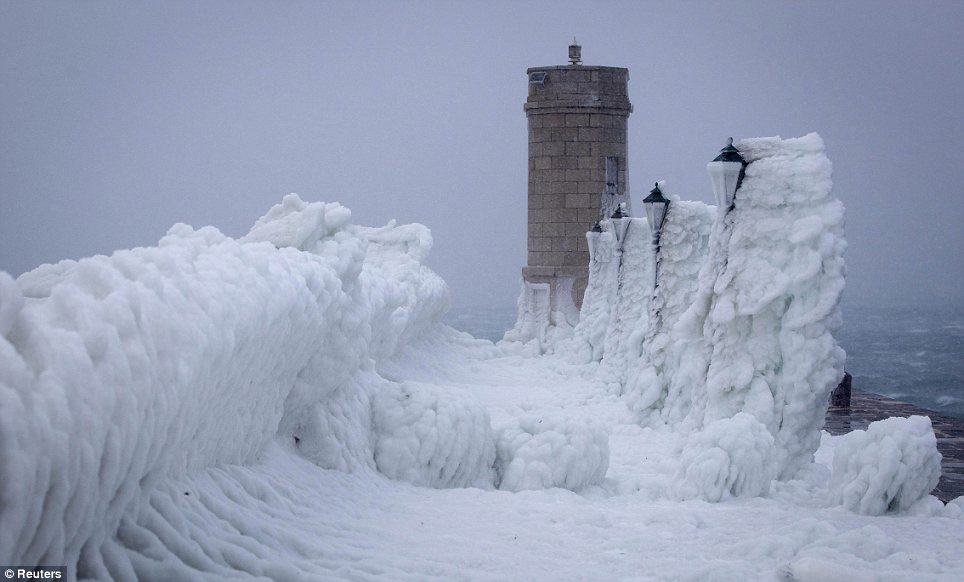
Yesterday I was writing about the holocaust of harp seals in the Gulf of St. Lawrence, where for the past decade global heating has been melting the ice at an alarming rate, leaving newly born seal pups at the mercy of thin, fragile ice floes.  I have also been thinking a great deal about the Little Ice Age that seems to be occurring in Europe this winter.  While we here in New England are enjoying springlike temperatures and a total lack of snowfall, Europe is getting dumped on with snow, and frigid temperatures to boot.

You’ll be hard-pressed to find solid information about this in the NY Times or other mainstream press outlets, but if you look hard enough, it’s there.  Climate scientists are pointing to the steadily melting Arctic ice cap as the culprit in the change in wind and weather patterns that are bringing more extreme weather to Europe–remember the 2010 hot spells that cost hundreds of lives?  This severe cold is also to blame for hundreds of deaths.

Let’s connect the dots.  Tar sands extraction can only be done by burning lots more fossil fuels.  That’s why environmentalists oppose it.  Not so much because of the destruction of millions of acres of pristine wildlife habitat, though that is generally acknowledged as sad collateral damage.

No, the main problem with extracting the Alberta tar sands is that doing so will speed the heating of the planet.  Heating the planet will lead to melting polar ice, rising sea levels, and ever more bizarre and destructive weather patterns.

Heating the planet will lead to death and destruction on a vast scale.

As the authors of a recent Royal Society special issue on climate change put it, if temperatures rise 4°C , “the limits for human adaptation are likely to be exceeded in many parts of the world, while the limits for adaptation for natural systems would largely be exceeded throughout the world. Hence, the ecosystem services upon which human livelihoods depend would not be preserved.”

This is science-speak for a basic premise I think anyone could understand: if the temperatures continue to rise, human beings, and the ecosystems that have evolved alongside us, are TOAST (expletive deleted).

Going full-bore at the Alberta tar sands is signing the final death sentence for millions and millions of living beings on this planet, including millions of human beings.

Humans in heretofore privileged spots on the globe, like Europe and the USA, will not be excepted from the general ecocide.

Do you have any children or grandchildren, Joe?

Can you really in good conscience assure them that selling the Alberta tar sands, to the US or the Chinese, will contribute to their “energy security”?

If you answer yes, then my original hypothesis is confirmed.

You are out of your (expletive deleted) mind.

State of the Union or State of the Planet?

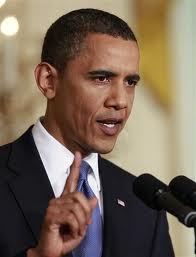
Tonight is President Obama’s State of the Union.  I love to watch that man orate, but I just can’t summon much enthusiasm this time.  It’s so obvious that he will be reciting lines that have been scripted for him, after much vetting by all the stakeholders.  So I don’t expect any surprises or delights in tonight’s speech.

Like a racehorse, Obama has many owners, and he has to answer to all of them.  The only thing they care about is that he wins.

The problem is that winning, in today’s terms, means ignoring what’s really important.  If we were going to focus on what is urgently needed right now, we would start with a massive push to shift from fossil-fuel energy to renewable energy.

This is starting to sound so old-news, and yet—hello!  It’s not being done!  Instead we’re still expending energy on fighting over the Keystone XL pipeline, which is so clearly a 20th century dinosaur that SHOULD NOT BE BUILT.

Rather than pour billions of dollars into thousands of miles of pipeline for dirty crude, we need to be drastically ramping up our manufacturing output of solar panels.  I have mixed feelings about wind power, but solar seems to be a no-brainer.  Put solar panels on rooftops across the USA, as so many in Europe are doing, and away we go to a brave new world of energy autonomy.

President Obama is not going to talk about solar power tonight.  His handlers won’t let him.

And so, he will continue to lead us down the daisy path of delusion—what David Selby and Fumiyo Kagawa, the editors of the new volume Education and Climate Change  (Routledge, 2010), call the  “eyes wide shut” approach to “global heating.”

If we were bring truthful, Selby and Kagaway say, we would admit that “future scenarios look grim: a mix of ubiquitous environmental disaster (including a huge loss of biodiversity), ongoing and massive internal and external population displacement as a result of sea incursions, seasonally recurring wildfires and desertification (and resultant social dislocation), hunger, starvation, internecine strife, violent conflict, tribalism, aggressively defensive localism, as well as the ever-lurking danger of genocide.”

Do you think Obama is going to address this stark scenario?

Not on your life!

He will talk about jobs creation and economic improvement as though we were living in a world divorced from our planetary base.

Most of us exist in this delusional sphere.  Plugged in, it’s hard for us to imagine that there could come a time when the physical disruptions of the planet could actually interfere with our digitized lifestyles.

Could there be a time when food from all the corners of the globe is not available in our grocery store?  Could there come a time when electricity is not either flowing freely, or about to be restored?

No one wants to hear this, but I have to say it anyway.  It is very possible, even probable, that there will be interruptions of food supplies and electricity  in the foreseeable future.

You won’t find any politician willing to talk about this.

For all politicians, and for most of us ordinary citizens, it is akin to heresy to suggest that sometime in the near future, the corporate capitalist economic model, based on endless growth and endless extraction of resources, is going to take a nosedive off the nearest cliff.

Neither the State of the Union, nor any political speech that will make prime time in the next year, will honestly engage with the reality of climate change.

Birmingham, Alabama, Jan. 24, 2012

That means that when storms hit, as they did just this week in Alabama, we will still be interpreting them through the conventional frame of “freak storms,” rather than as the steadily advancing harbingers of a future we don’t want to see.

We have such a limited window to prepare for the deep systemic planetary changes that are heading our way.  The difference between us and the dinosaurs is that we know what’s coming.

Are we going to squander this knowledge with shortsighted power struggles motivated by greed? Or are we going to use our superior intelligence to help our species, and countless others, avoid the fate of the dinosaurs?

It remains to be seen, but this much is certain: tonight’s State of the Union address, being just so much more smoke and mirrors, is not going to provide any answers.

Webizens Unite!

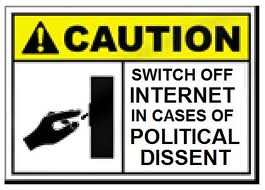
The fuss over the SOPA/PIPA legislation last week is the marker of a generational shift in our understanding of the media: we’re at the transition point between 20th century media models, which rely on centralized, profit-driven control over production and consumption, and 21st century media models, which are all about open access and the free circulation of ideas.

While I’m generally a strong supporter of the open-access model, I do see some dangers to it.

For one thing, when we operate on a distributed intelligence model, information is so widely available that none of us really has to feel responsible about knowing anything.  We can just look it up, after all.

But when we rely so much on others to be the keepers of our collective intelligence, we become vulnerable on at least two crucial levels:

  • Vulnerable to being manipulated by the producers of that knowledge—think Fox News, for example, with its so-called “fair and balanced” reporting.  As long as we are aware that Fox News is reporting from a distinctly biased point of view, we can take their information under advisement, and balance it ourselves with other sources.  As long as there are other sources.  And as long as we have the education to be able to sift through it all and form our own informed opinions.
  • Vulnerable to loss of access—as in the one-day blackout on Wikipedia last week. It’s like kids who rely so completely on the calculator that they never learn their multiplication tables.  All well and good, until the day when they don’t have a machine available to make the calculations, and they’re left helpless.

Our society has become so totally tuned in to media that we would be lost without it.  And that kind of dependency is dangerous.

I think about the big push now to digitize libraries.  Of course, I love the idea of being able to carry 4,000 volumes around with me on one slim little e-reader.  It’s awesome!  But on the other hand, a little voice in the back of my head worries: what would happen if we lost ready access to electricity?  What would happen if there were shortages, so only the elites were able to power up their notebooks and Kindles?  Where would our libraries be then?

We’re already living in a society where social class, access to the Web and social influence form a tight, circular web.  Privileged kids today are growing up totally plugged in and able to make the best use of the amazing collective intelligence of the Web, while kids from poor backgrounds, worldwide, are growing up on the other side of the digital tracks, out there with the garbage and the weeds.

As the big media companies work ever more aggressively to stake their claim in the wild west of the Web, fencing off bigger and bigger areas of the digital commons, we need to become more vigilant about guarding our freedom of speech and our free access to the Web, and making sure that more and more of us really do have that access and the knowledge needed to make good use of it.

WordPress blogging platforms like the one I’m writing on are like little free information lanes alongside what are becoming ever more hulking, fenced and patrolled toll highways.  The fact that anyone can start up a blog or a Twitter feed or a Facebook page for free and get their voice out to the public immediately, with no censors, is a 21st century version of a time-tested Constitutional right that we need to make sure we defend.

Corporations don’t like the free circulation of “media content” because it escapes their profit-driven model.  That’s what they were trying to accomplish with their anti-piracy legislation—a way to shut down any website that did not pay its toll.

Looking into the brave new future that awaits us, I see increasing conflict over these basic issues of access to and control over the media.  I also see that unless we are successful in making the shift to renewable energy sources, it is conceivable that basic access to electricity, which we in the West now take for granted, may become less easily obtained.

As a blogger who relies on platforms and hardware that I could not possibly produce myself, I feel my vulnerability keenly.  I need Apple and WordPress to get me going, and the electric company to power me up, or I’d be dead in the water.

If I ever woke up and found the power out and my web browser blank, well…I could always go back to zining! But I would miss the incredible distribution powers of the World Wide Web.

Last week some 7 million webizens barraged Congress with protests of the proposed SOPA/PIPA legislation, and we won the battle!  We have to maintain our stations though.  As with the Keystone XL pipeline, it’s going to be a long siege.

Censorship in Academe, 21st century style

Unfortunately, the banning of books by Mexican Americans in Tucson last week was not an isolated incident.  It’s part of a larger pattern in American education.

At the elementary school level, it takes the form of resisting bilingual education for students whose family language is not English, and—for example—still teaching “Thanksgiving” as though it were the happy, peaceful start of a triumphant positive march towards a shining, splendid American empire.

At the middle school level, it’s about teaching Egyptian history—mummies, anyone?—instead of Native American or Mexican history.  Mummies are safe—there’s no politics left in them, they’ve been dead too long.

In high school, students are asked to stand and pledge allegiance by rote to the American flag representing “one nation, under God, indivisible, with liberty and justice for all,” but not asked to interrogate the proposition that liberty and justice really are available to all in our great land.

In undergraduate education, after a brief, highly contested period in the 1980s and 90s when the gates guarding the required curricula were wrenched open to let literature by ethnic minorities and women in, the tides have turned again.

Just as in middle school it’s safer to teach about the ancient Egyptians, in college the safest route is towards ancient Greece.  “After all,” I was once told blandly by a senior (white male) colleague in the course of a heated meeting on the core curriculum, “the Greeks are a minority too.”

The modern Greeks may be struggling, but the ancient Greeks are alive and well and generously represented in curricula throughout the Western world, where ancient figures like Plato, Sophocles and Aristotle still exert remarkable influence.

Meanwhile, graduate schools in the humanities are focused on jazzing up the study of history and literature through fancy digital applications.

I’m as digitally oriented as the next prof, but I won’t support “digital humanities” if it means that we no longer have the time or resources to engage in what I see as the most important functions of the humanities: teaching students how to analyze and wield the tools of narrative and argument; giving them the time and space to explore complex ethical issues; and most of all, empowering them to become informed, autonomous individuals who can research and think for themselves.

In theory, this could be done within a digital framework.  But the problem is that much of the push towards “digital humanities” is coming from the great surge towards online education as a business model for universities.  Of course you can do online education much better if you have high-tech online tools.  No argument there.

The problem is the bigger picture of online education, where tenured professors are being replaced with adjunct faculty who can teach in their pajamas from home, at a fraction of the salary or responsibility and no influence at all over what gets taught.  If you have an army of part-time online instructors working with students from remote locations all over the world, it’s pretty hard to have the kind of discussions that I’m remembering from my department’s deliberations over the core curriculum.

Most decisions over what gets taught in those burgeoning online courses are made by administrators who remain faceless to the instructors, with the result that professors become paid employees rather than professionals who are not only engaged in the process of teaching, but also in the process of deciding what gets taught.

It’s as easy as the push of a button for some administrator to decide that HUM 26X, Chicano/a History, will not be taught, while HUM 25X, History of Ancient Greece, will. And for the most part, no one will even notice.

This is going on all the time.  The incident in Tucson last week, when administrators were so sloppy as to order physical books pulled from the shelves, was a rare slip-up that brought the insidious practice of censorship into the public eye.

Most of the time it’s going on invisibly, under the radar, and so subtly that most of us won’t notice it until all of a sudden we look up and find that there are only a handful of Ethnic Studies Departments or Women’s Studies Departments left in the country, so there are hardly any graduate degrees being offered in those fields, so within a generation the whole hard-won movement to open the curriculum will be gone.

No, I am not over-reacting.  I am not hysterical.  I am not crazy.  Open your eyes, people, and you will see what I’m talking about.  Open your eyes, before it’s too late.

A new generation rises, and with them, our hopes

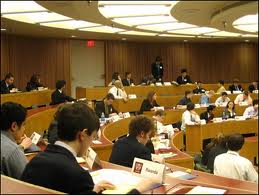
Today I gave the keynote address at the regional Model UN student conference sponsored by Bard College at Simon’s Rock.

On the one hand, it was heart-warming to look out and see that crowded lecture hall filled with bright, eager young faces, ready to step on to the world stage, if only in theory, and play leadership roles.

On the other hand, it was sobering to have to be the bearer of such grim tidings.

I started out by taking them back to a choral Ode in the Antigone that has always haunted me, the one where the Chorus sings the praises of human technological prowess, while at the same time sounding a warning note about how mankind’s “cunning…is the fertile skill which brings him, now to evil, now to good.

“When he honors the laws of the land, and that justice which he has sworn by the gods to uphold, proudly stands his city: no city has he who, for his rashness, dwells with sin.”

In other words, I told the students, we humans can do all kinds of amazing things with our great intelligence, but we will only prosper if we keep our moral compass and use our powers for good.

The Ode is basically a list of areas in which human beings have excelled, and that list is as valid today as it was in the 5th century B.C.: our power of navigation and transportation; agriculture; our dominion over other animals, wild and domestic; our ability to withstand the elements by building shelter and creating fire; our medical arts; our facility with language and “wind-swift thought.”

Truly we are a “wondrous” species.  And yet the fact that this list is recited in the tragedy of Antigone bears witness to the fact that our great “cunning” does not always guide us well.

In Antigone, Creon is a proud, vindictive tyrant who demands absolute allegiance from his subjects, including his niece Antigone.  When Antigone defies his order to let her brother’s remains be left in the open for the crows to feast on, and goes out alone to bury him, Creon goes into a fury and orders her arrested and sentenced to death.

It’s clear that the Chorus in this play believes Creon’s action is wrong.  Antigone was obeying her own moral judgement, putting her filial and religious obligations before her allegiance to the King. And just as the Chorus predicted in the initial Ode, because he is not using his power wisely and ethically, in the end Creon’s house will fall.

In our time, I told the students, the same kinds of battles rage, of good people standing up for their beliefs against oppressive tyrants, who don’t hesitate to imprison and even execute any who defy their power.

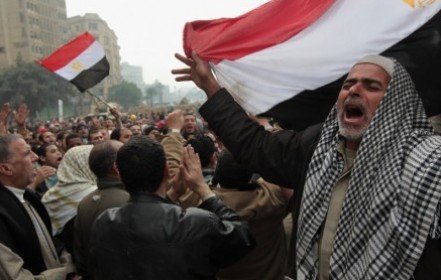
The Arab Spring showed us what can happen when enough people dare to speak truth to power and defy an authoritarian state  In the United States, the Occupy movements are now standing up, not so much against the state, as against the corporate capitalist elites—who often are the power behind the thrones of the various nations.

Even in our own country, the price of defying the status quo can be high.

But, I told the students, given the perilous state of the world today, the price of staying quiet and going along with the flow is inevitably going to be much higher.

I reminded them of the many dangers that face us today, including:

  • the homogenization of media and the reduction of education to multiple choice tests, instead of a media that stands strong in its watchdog role and an educational system that focuses on teaching students how to think creatively and question authority;
  • the tremendous militarization of police and national forces, with most countries fairly bristling with lethal weapons, from handguns to bombs;
  • environmental degradation and loss of biodiversity, including the contamination of our air, soils and waters with toxic chemicals caused by the very agriculture celebrated in the Antigone Ode;
  • serious health problems caused by environmental toxins and chemical additives in our food supply;
  • and above all, the looming menace of anthropogenic global warming.

These will be familiar themes to anyone who has been reading my blog these past few months.  But it was good to speak these ideas out loud this time, to the young people who are going to have to bear the brunt of the problems.
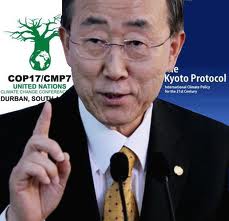
I quoted U.N. Secretary General Ban Ki-Moon, who told negotiators from 200 nations gathered at the recent COP17 climate conference in Durban that the situation was so urgent that they could not afford to wait for unified global action.

“Don’t wait for a binding agreement,” he said. “It could take years. All member states should take their own measures,” before it’s too late.

“Last year we saw the highest emissions ever,” Mr. Ban said. “If we carry on as though it is business as usual we will be out of business.”

Those are pretty stark, unequivocal words from the leader of the closest thing we have to a global government.

Given the need for drastic change in the way we do business as a civilization, I challenged the students to dare to think outside the box.

I encouraged them to let Antigone be their guide as they began their Model UN negotiations. “If you know that a policy is wrong, don’t be afraid to say so, and to fight for what you believe,” I told them.

I urged them not to let artificial boundaries like nation, race, class, religion or gender cloud their vision of what is needed to succeed in the goal of making human society safer, more nurturing, and more sustainable for us all.

“It is a deeply flawed, damaged world you will all soon be stepping out into as young adults,” I said.  “We live in a time of accelerated change and unprecedented transition.  None of us knows what lies around the bend.  But we do know that no matter what, we will be better off if we work proactively to overcome narrow national self-interests and begin to think in planetary terms—and not just about human interests, but in terms of the good of the entire web of life of which we are a part.”

Our only chance at changing the way we do business as a civilization, I said,  rests with our ability to successfully communicate with one another–to use the powers of “speech and wind-swift thought” commended by the Chorus of Antigone. 

What we need are not the stylized battles of debate, but the true, open-hearted communication of consensus building, where all viewpoints are listened to respectfully, and all positions are judged both on their own merits and on how well they’ll contribute to the collective goal of making the world a better place.

As I stepped away from the podium, I felt sad that I had to lay such a heavy burden on these bright young people, who through no fault of their own have inherited a planet in such disarray.

But I also felt the surge of hope that always rises again with each new generation.  Maybe this generation will be the one to turn off the beaten path and forge a new relationship with our planetary home.  Perhaps they will be able to resist the centripetal pull towards conformity.

As they all filed out of the room to take up their places at the Model UN negotiating tables, my heart went with them.  They are our last best hope.


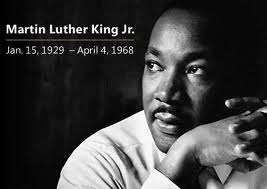
On MLK Day, Opening the Hearts of the Privileged

When I first heard the phrase “privilege is invisible to those who have it,” it seemed like the answer to a question I didn’t even know to ask:

How can people who are so nice, who would never hurt a fly, be so oblivious to the ways in which their lifestyles are deeply hurting others?

Oblivious is the operative word here.  Most privileged people really don’t have a clue as to how “the other half lives”–or make that, the other 90% or so. Just as I don’t understand how it is to be a child slave working on a cocoa farm in Africa, or for that matter a honeybee bringing poisoned pollen back to the hive and dying of it myself, people way up on the class ladder in the US can’t understand what deprivation feels like–and if you can’t get to that feeling place, it will be very hard to arrive at any sort of comprehension or even curiosity.

There are so many examples of what I’m talking about, but having just signed a petition to President Obama calling attention to the issue of contingent faculty, my mind is going to a memory I can’t shake, from my days of adjunct teaching.

I had been teaching as an adjunct at my alma mater for a couple of years, having decided to forgo a serious tenure-track search while my first son was an infant.  In the spring, after a busy year of adjunct teaching, I went to talk to the Dean, to see whether it would be possible to improve my status at the college so my salary would not be cut off during the summer.  I don’t remember the exact words of her response, but her attitude was plain: what happens to you over the summer, when we don’t need you, is none of our concern.  Next!

I was naive, I guess, to imagine that she would care that she was not paying me a living wage.  But I had grown up among the privileged, for whom it was really unfathomable, the idea of not making a living wage.  If you weren’t making enough to live on, then something must be wrong with you.  You’re not trying hard enough, you’re not talking to the right people, you just don’t have what it takes.

In this situation, I felt the duality of on the one hand being outraged, as any privileged person would be, at being treated in such an unfair, exploitative fashion, and on the other hand, feeling shamed and inadequate because of course it must be true, it must be my fault that I’m being treated so badly.

For people from a different background than mine, it would be quite easy to internalize those feelings of shame and self-doubt, to the point where one would begin to believe them.  I have studied many autobiographies by people who were marginalized and disadvantaged from birth by their race, ethnicity, gender, etc, and this self-loathing is a common feature of what W.E.B. DuBois called “double-consciousness,” seeing oneself through the eyes of another.

But I grew up with every advantage, and was always a star in the academic realm, a child prodigy in reading and writing who received a BA magna cum laude at 19 (it would have been summa if I hadn’t had to take those damned statistics classes!), a straight A student through grad school who excelled at jumping through every hoop set out for me.

Thus my amazement at finally attaining my goal of teaching at the college level, and being told that while I was doing a great job, there was no chance of being paid fairly for it.

My point in relating this story is that most people who grew up like me would never have such a story to tell.  For us the red carpet rolls out automatically wherever we go; people bow and beckon, smiling; life is easy and delightful. And when you live that kind of existence 24/7, when it’s your whole life from earliest childhood, it’s just inconceivable that it could be otherwise.  Or if it is, then as I said, there must be something wrong with you personally.  It’s not the system that’s at fault if things aren’t going your way, it’s your own personal inadequacies.

That seems to be the explanation that many among the 99% accept when they fall upon hard times.  Home foreclosed? What a fool you were for signing that mortgage!  Lost your job?  Why didn’t you go into a more stable field?  Single mom?  Honey, don’t you know how to keep a man?  And so on and so forth.

Both sides of the class divide need reminding that we are all born into a pre-existing social structure, some with gold spoons, and some with plastic spoons in our mouths.  The playing field is most assuredly not level.  Those who are living well need to realize that they owe their good fortune as much to their favorable placement in the Game of Life as to their own smarts and hard work; and those who are struggling need to realize that it’s not all their fault.

Pointing fingers at individuals is not going to lead to a fruitful discussion.

Was it the Dean’s fault that it was standard practice at the college to pay adjuncts by the semester?  She was just going along with the flow, wasn’t she?  Was it the mortgage lender’s fault that people took on more debt than they could repay?  The mortgage officer was bending over backwards trying to give that family the house of their dreams, wasn’t she?

Right. Rather than seeking to cast blame, we need to be looking for ways to make the system fairer for all the new children being born into it every minute.  One of the most basic steps we can take is making privilege visible to those who have it.  The privileged, who have more social power than the disadvantaged, need to know and understand how their complacency with a warped social system impacts the less well-placed.

Knowledge is the first step towards compassion, and from compassion comes the desire to make what’s wrong right.

It’s not about casting stones.  It’s about sharing experiences, and hoping that those in power will listen with open minds and hearts.

On the eve of MLK Day, that is my fervent wish and prayer.


Follow the Money–Somewhere New!

People in the know always advise us to “follow the money.”

Thanks to the Occupy movement, it’s become plain to a lot more of us that huge amounts of money are concentrated in a very few, very influential hands.  Big business interests control politics at every level, and the name of the game is profit for the top managers and owners, with the bare minimum allowed to “trickle down” through taxes and philanthropy.

Nothing new in that picture.  But there are some provocative new ideas arising about how to change a system that seems so entirely entrenched that most of us don’t even bother to think too hard about alternatives.

Last night I had dinner with some folks who are working on an alternative local finance program, called Common Good Finance.  The idea is somewhat similar to local currencies like, for example, our homegrown BerkShares.  But instead of paper money, Common Good will be an electronic credit system, based on R-credits.

One R-credit will equal $1 US, but the use of R-credits will be incentivized: if I spend R-credits rather than dollars, I’ll get a 5% rebate on every purchase, and even better, the merchant will get a 10% kickback for accepting my R-credits.  That sure sounds win-win!  What’s the catch?

There doesn’t seem to be a catch as far as the ordinary consumer and local vendor is concerned.  The ultimate goal of Common Good Finance is to create a local, democratically governed credit union, to which businesses and individuals in a community could apply for low-interest loans and grants.  The main criteria for approval would be: would extending this credit line be in the interests of the common good?

Forget about bankers getting rich on those exorbitant interest rates attached to every debt.  Forget about too-big-to-fail banks preying on consumers in every town and city in the nation.  Forget about municipalities cutting back on social services, including health care, education and affordable housing, because there simply isn’t enough money.

The people behind Common Good Finance believe that scarcity is a convenient fiction created and upheld by the central bankers who control the Federal Reserve.  It’s convenient because it keeps the pace of debt constantly accelerating, and it’s the interest on all these debts that provides the profits that line the bankers’ pockets.

Common Good would create a monetary system where money circulates locally, and any surplus in the form of interest is plowed right back into the local community in the form of loans and grants to worthy individuals and causes.  The local members of the R-credit system would be the ones to decide democratically, by facilitated consensus-building, who would get what.

As we talked about these intriguing ideas over dinner, the question came up of cronyism and conflict in this collective decision-making process.  But as John G. Root Jr., one of the founders of the Common Good initiative, put it, “We know the system we have now is not working well for the majority of Americans.  Why not try something new?”

In making his case for the R-credit system, John referred often to the American revolutionaries who decided to throw off the yoke of British tyranny and strike off on their own, founding a new country.  Now, going on 300 years later, Americans find ourselves under a new yoke: multinational corporate interests that may make judicious grants to communities and non-profits through their well-heeled foundations, but would not want to see communities empowered to divorce themselves from the thrall of big business.

Having R-credits would encourage people to shop local, and it would encourage businesses to source locally too, since they could keep their R-credits in circulation that way and keep earning those 10% kickbacks on every R-credit exchange.  Pricechopper and WalMart wouldn’t like this–but who knows, maybe they could be drawn into this network too!  Maybe the idea of democratically controlled local finance is an idea whose time has come, an idea could even go global!

As an example, take the Grameen Bank, which was founded in one of the poorest countries in the world to provide poor women with low-interest micro-loans to start local businesses.  It has grown exponentially; its founder, Muhammad Yunus, won a Nobel Prize in 2006; and its model is being replicated in many other parts of the world.  Why not in the U.S.?

Common Good Finance is not alone in searching for outside-the-box answers to our current financial predicament.  Economist David Korten has been working on what he calls “living economies” for about twenty years now; he is one of the leaders of the New Economy Working Group, which includes free thinkers like Gus Speth and Gar Alperovitz.  The New Economy mission statement sums up the vision quite well:

“Effective action will shift the economic system’s defining value from money to life, its locus of decision making from global to local, its favored dynamic from competition to cooperation, its defining ethic from externalizing costs to embracing responsibility, and its primary purpose from growing individual financial fortunes for a few to building living community wealth to enhance the health and well-being of everyone. We humans face an epic choice between the certain outcome of continuing business as usual and the possible future it is within our means to create through conscious collective action.”

It does feel like an epic moment, a transition time pregnant with the possibility for positive change.

Let’s follow the money and let the revolution begin!