Scary Halloween Statistic: 7 Billion People on the Earth by Oct 31, 2011

If you’ve never seen the Worldomters clock ticking, it’s worth a click.

Watching those numbers spin by brings home how very fast the human species is multiplying, especially when you consider the following chart, which shows how recent this population explosion really is.

No wonder we’ve got a sustainability problem!

Population control has gotten a bad name in recent years, and justifiably so.  It cannot and should not be imposed upon women by force, as it has too often in the past.

But study after study has shown that when women are educated and respected in society, birth rates go down.

Want to slow down that worldometer population clock?  Start by educating girls and opening up career opportunities for them after graduation.

Educate a girl and save the planet?  Might not be hyperbole after all.

Climate Change Blues: The one thing the 100% of us have in common is that we can’t afford to ignore the weather!

President Obama, venturing outside during last night’s storm, called the weather “less than ideal” for trick-or-treating.

What an understatetment.

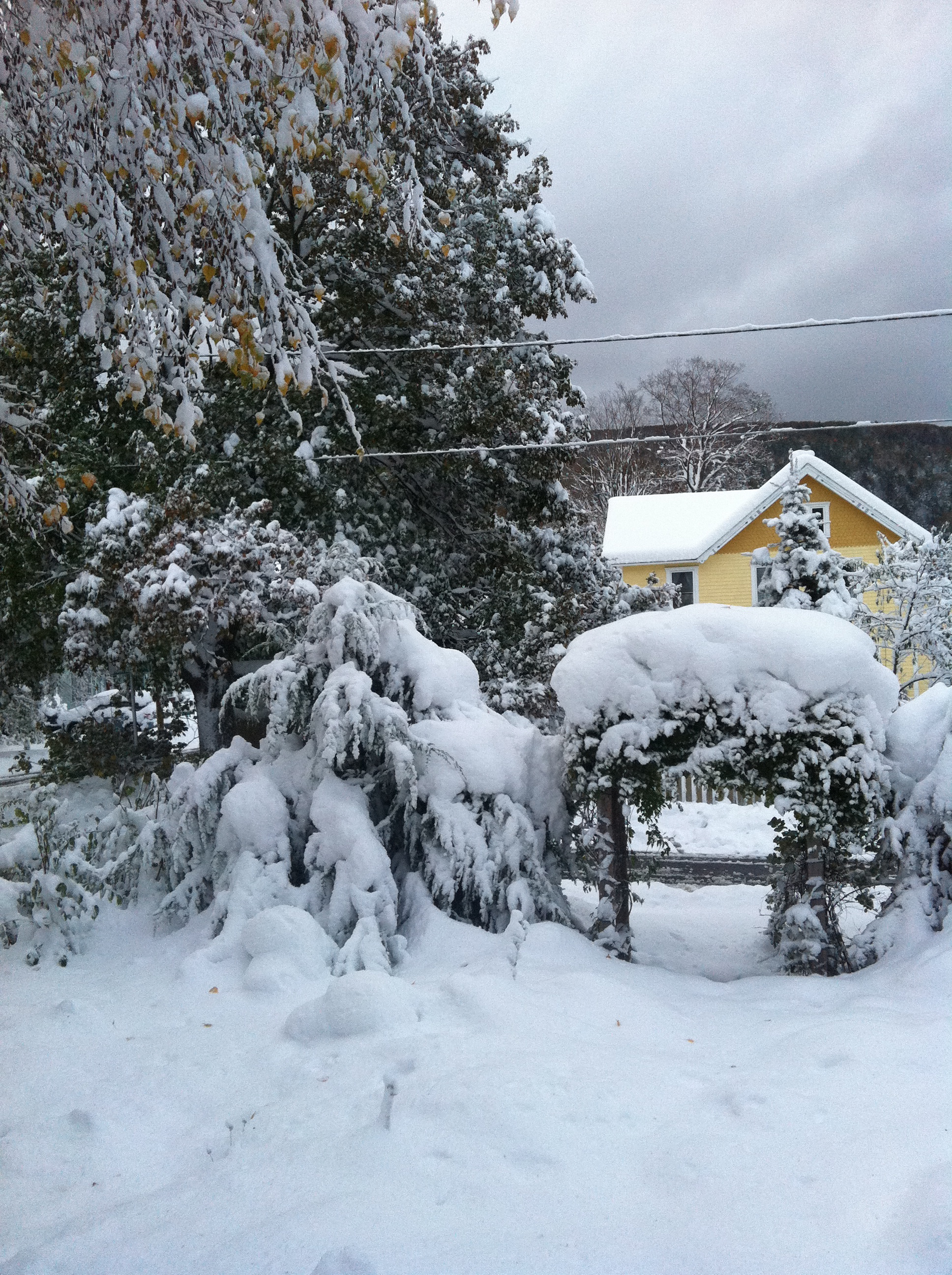
Here’s what it looks like at my house in western Massachusetts this morning:

All those trees in the background are tall maples, bent over with the weight of snow on their leaves.  So far no big limbs have snapped, but that could change any moment, and many of them are hanging over an outbuilding and my car….

So the question we should all be asking this morning is whether this freak October snowstorm is just an aberration, or if it’s part of a developing and accelerating pattern of climate change.

Yes, there have been October snowstorms before.  But has there been a three-month period before with record high temperatures (August), record rainfall (September), a hurricane hit to the entire East Coast (Irene) AND a record-breaking snowstorm?

Not being a meterologist, I can’t answer this question, but I’d sure like to know.

One thing I do know is that if we don’t start reducing carbon emissions, weather events like this are going to become more frequent and more severe.  This is not “Day After Tomorrow” hysteria, this is scientific truth.

So again, the question becomes, what can we DO?

Well, next weekend in Washington DC there will be an action at the White House; the plan is to assemble enough people to make a linked-arms ring around the White House, in the hopes of persuading President Obama to stand with the people on the anti-tar sands extraction, anti-Keystone pipeline issue, rather than with the energy corporations.

You can hear actor Mark Ruffalo explain it here:

My hope is that weather events like last night’s “freak” snowstorm will raise people’s awareness about the reality of climate change, and how it will affect all of us–our food supply, our physical security, our ability not just to carry on as usual, but to carry on at all.

All of us–the rich, the poor, the inbetween–the 100% of us, and not just in the US but in the world, are already feeling the effects of manmade climate change.  We’ll be feeling it increase exponentially in the coming months and years.

So all of us need to step off the path of least resistance and start demanding government support for a huge Apollo Project-style transition to sustainable energy and a serious commitment to energy conservation.

If you can’t get to Washington DC next Sunday for the demonstration at the White House, you can be part of the virtual ring that will surround the people on the ground there, and build support wherever you are for the movement for responsible and caring stewardship of our Earth.

We cannot afford to ignore these issues any longer.

A Realist Assessment of Where We Are Now

Human beings are like crows.  We are attracted to glitter.  We make a lot of noise.  We are social and travel in flocks. We are not terribly sensitive.

It has taken us a long, long time to realize how our presence here on Earth has been harming the planet.  You would think, with our tremendous intelligence, that we would have realized it sooner.  But we are masters at denial.  200 species a day go extinct because of human activity, and we just shrug and go about our business, focusing on the glitter at hand.  Perhaps it’s the animal in us, that refuses to recognize peril as long as, in a material way, we ourselves are OK.

Well, that long period of denial is coming to an end.  Or at least, it’s coming to a head.  We can no longer deny that it makes no difference to us if the ocean acidifies to the point where it can no longer support life.  Or the deforestation of the planet begins to interfere with oxygen production and the sequestration of CO2.  Or that the fresh waters that sustain us are increasingly toxic.

Yes, this affects every one of us. At some point, not very far in the future, it could be the case that our local supermarket will no longer be able to supply our nutritional needs, because the agri-socio-economic system that supplies the supermarket will be totally disrupted by climate change.

No, I am not being alarmist.  I am being realist.

We need to focus on this with all the amazing intelligence of our species.  We have brought the Earth to the brink of catastrophe, and alone among all the species on the planet we have the power to turn things around.

Will we seize this opportunity?  Will the current upswelling of activism associated with the Occupy movement get that the issues go far beyond the little hopes, dreams and disappointments of the middle class individual?

I refuse to give up hope.  I refuse to give up hope.  I refuse to give up hope.

Stand with me.  Let’s turn things around, before it’s too late.

Calling all Occupiers: Join the Deep Green Resistance of the Earth, before it’s too late

Occupy the Machine – Stop the 1%, Literally | Deep Green Resistance.

I had a feeling that the Deep Green Resistance movement would have something interesting to say about the Occupy movement, and I wasn’t disappointed.

As might be expected from a radical environmental group, they are envisioning a massive escalation of the movement, swelling the numbers and multiplying the targets so as to overwhelm the police who will be called in to maintain order.

DGR is imagining an occupation at the sites of worst destruction of the environment, like the boreal forest of Alberta, known to the energy mafia as the tar sands; the coal-burning power plants; the pipelines and the shipping routes.

I might add factory farms to the list, like the beef and hog farms out West that generate the toxic runoff that is poisoning the ocean for miles around the outlet of the Mississippi River.

Naming targets is one thing, but what’s really important is being clear on what the occupations are for. I don’t think the Occupy movement is especially focused on the environment.  It seems to be focused on social inequality–excessive wealth that has destabilized our economy, and the lack of jobs for the middle class.

These are all worthy issues.  But as I’ve said before, it won’t matter a rat’s ass if you have a job–or if you’re dripping in gold or starving and naked–if the climate changes decisively due to global warming.

To turn global warming around will require a movement like the Occupy movement, filled with idealistic, dedicated, thoughtful people who are willing to give it their all.  This struggle has to be linked with a critical rethinking of the industrial capitalist economic model of ruthless extraction and production in the name of profit.

That is the model that has driven our planet to the brink of systemic correction.

Not collapse.  The planet will be fine, she will regenerate.  She has time.  But to do it she will need to effect a serious correction of a species gone haywire, the human species, which in a very short time has altered the planetary environment to such an extent that millions of other species have gone extinct, and supplies of the basic life support systems like oxygen and water are threatened.

The Earth has survived such challenges before, and she will survive this time again.  But human beings, and most of the countless other beautiful life forms that share the planet with us at this time, will be doomed if industrial civilization is not rebooted and recreated as an ecologically sustainable system.

That is where the pressure of the Occupy movement needs to be applied.

Will the Occupiers step up to such an enormous challenge, much bigger than the one they initially envisioned?  Hard to say.  But at the moment they seem to be the best hope of deep change of our society and our terribly destructive economic system.

It’s in the Liberty Parks all across the world that the conversations are beginning that might have the potential to lead to real change.

All the money in the world is not going to buy safety or plenty once the Earth herself begins her own form of Deep Green Resistance.

Help Wanted: Obama the Community Organizer, Please Come Back!

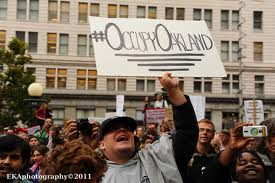
Here’s another video of unwarranted police brutality against peaceful protesters, this time in Oakland CA, that’s sure to go viral on the Web today:

How do you think the NY Times is covering this story? Not surprisingly, the Times presents the story largely from the establishment point of view, focusing on how cities are “losing patience” with the Occupy movement, with “officials…grappling with growing concerns about crime, sanitation and homelessness at the encampments.”

Well yes, we do need to be worrying about “crime, sanitation and homelessness.”  But not especially at the Occupy encampments.

The Occupy Wall Street folks have shown themselves able to handle these issues very well themselves, without any help from city officials or police, and we can expect that their example will be followed by other protesters across the country.

However, there are other, far more serious instances of crime, sanitation and homelessness on which city officials should be focusing.

For instance, the criminal behavior of the major American banks, which, as Nick Kristof observed in his column yesterday on American crony capitalism, “privatize profits while socializing risk.”

Or the criminal behavior of the U.S. military establishment, which, in a heinous disregard for the health of U.S. Marines and their families, ignored the fact that the water at Camp Lejeune was highly unsanitary–in fact, totally toxic–for years, until the undeniable incidence of cancer and birth defects, including the biggest cluster of male breast cancer victims in the nation, forced officials there to acknowledge the problem.

Then there’s the issue of homelessness.  Not the kind represented by the tents and sleeping bags that have sprung up in cities and towns across the country in a deliberate effort to draw attention to soaring American inequality.

No, what officials should be concerned about is actual homelessness caused by record numbers of home foreclosures by the very banks that manufactured this crisis to begin with.

I don’t think it’s any coincidence that President Obama has lately snapped out of the zombified sleepwalking he’s been stuck in for the past year or so.

The Occupy movement can and should claim the credit for waking him up and giving him the inspiration and courage to start fighting back again. These young people may be his salvation in the next election, too, if he can break the chains that have bound him to Wall Street and take up a more populist stance.

According to the U.S. Census Bureau, in 2010 there were 26.1 million Americans ages 18-23.  A good portion of those–say, 90% or so–have every right to be upset with the dismal state of the economy they’re about to enter as working adults.

Many of them have crushing student loans, and come from families that have been struggling to keep up with their mortgage payments in a flat-lining middle-class economic environment.

And seriously, do you know ANYONE who has not been touched by cancer at least indirectly, having to watch friends, neighbors and family members fight the good fight against this manufactured scourge?

Do you know anyone who doesn’t think we in the 99% need access to affordable health care, and better governmental protection from toxic chemicals in our food, water and air?

President Obama needs to get back to his community organizer roots, and come out as the man we thought we were electing, the defender of the 99%.

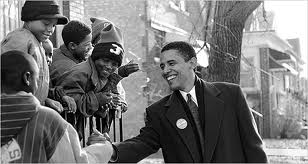
We need to hear from the youthful idealist Obama who worked so hard to improve conditions in Chicago’s ghettos.  I know he’s in there somewhere.

Maybe these young people in the nation’s streets, standing firm against the onslaught of the riot police, will rekindle the fire that’s been all but extinguished in the White House lately.

In this wet, gloomy autumn, there’s nothing we need more.

Is there an “American Spring” around the corner?

You have to admit my blog is aptly named.  Each day brings new evidence that we are living through a speeded-up period of rapid change.

Was it only a few short months ago that we were stuck in the August doldrums of Congressional gridlock, in which the Republicans seemed to have a total stranglehold on the nation’s very lifeblood, our Treasury?

Was it only a few short weeks ago that the first Occupy Wall Street protesters arrived on the scene, the vanguard of what has now become an international political movement that just might have the power to challenge the two-party American oligarchy?

The deep distrust and disappointment Americans feel in our government is represented in a new NY Times/CBS News poll published tonight.

Get this: only 9% of those polled approve of the way Congress is doing its job.

Only 10% say they trust the American government to do what’s right for its people.

 These are dreadful numbers, especially when compared with the 46% of those polled who said they believe the views of the Occupy Wall Street protesters reflect the views of most Americans.

The urgent question becomes, will this dissatisfaction with our government and strong identification with the protest movement lead to actual sociopolitical change?

In one of my classes we are reading Allan G. Johnson’s book Privilege, Power & Difference, which seeks to understand why those with social privilege so rarely lend their support to any movement that might upset the status quo, even when they profess to be sympathetic with the goals of social equality.

Johnson says that all of us, but especially the privileged, tend to follow the path of least resistance.  Our society is set up in such a way that the paths of least resistance all favor the privileged, making it very hard for anyone to rock the boat.

But, he says, if we are aware of the ills of social inequality and do nothing about it, we will become “like the person who loses the ability to feel pain and risks bleeding to death from a thousand tiny cuts that go unnoticed, untreated and unhealed” (124).

I think that many of us privileged folks have indeed become numb to the harsh realities of our social system, which we have come to accept as natural, like the weather or the usual background noise of civilization.

That this callousness is wounding in ways we are hardly aware of is less obvious, but it comes out in the deep malaise of privileged American society: our tendency to depression, self-destructive behaviors, and underlying rage.

We are living through a moment in time when it is just possible that the privileged will wake up and decide that enough is enough.  That is the hope and the lure of the 99% movement.

There are a lot of privileged people in that 99%: educated, wealthy people, who have a lot to gain, in material terms, by not rocking the boat–but who, it seems, are doing some real soul-searching right now about taking the right path, instead of the path of least resistance.

Think about it: only 10% of Americans think Congress is doing a good job.  If that isn’t a mandate for change, I don’t know what would be.

Everything is speeded up these days.  Even last night’s solar storm, which caused spectacular aurora borealis displays all over North America, apparently hit Earth eight hours faster than predicted, and spread out much further over the U.S. than usual–visible all the way down in the Deep South.

Could it be that we will have our own “American Spring” in 2012?

WHY NOT???

Resisting the Vampires

This morning in class we were talking about the third essay in Nietzsche’s The Genealogy of Morals, in which one of the dominant metaphors is that of sickness and health.

Nietzsche argues that an “ascetic priest”, who tends the masses through religion, science, politics or any kind of dogmatism, acts as physician to the sufferer, but “he first has to wound; when he then stills the pain of the wound he at the same time infects the wound–for that is what he knows to do best of all, this sorcerer and animal-tamer, in whose presence everything healthy necessarily grows sick, and everything sick tame” (Kaufman, 1989, 126).

In other words, those who try to manipulate the masses (or the herd, in Nietzsche’s terminology), do so by wounding, and then claiming to have the cure–but the cure perpetuates the wound.

As with so much of Nietzsche, this seems remarkably prescient to me.  Take cancer, for example.  I have received many requests from people who are “walking for the cure” or “running for the cure.”  I never support these efforts, because I don’t believe we should be looking to cure to cancer through technological research.  The cure for most cancers lies upstream, as Sandra Steingraber pointed out more than a decade ago in her book Living Downstream.  In other words, we should be looking for ways to prevent cancer, not to cure it.

Preventing cancer doesn’t require a sorcerer or a physician.  It requires resisting the agro-industrial complex, which has saturated our food supply with synthetic chemicals.

The makers of chemical fertilizers, pesticides, fungicides and GMO seeds, all of which make us sick, are in cahoots with the medical industrial complex that now seeks our help in funding “the cure.”  Not to mention the pharmaceutical industry and the insurance companies, which have also been making out like bandits on the sickness of the masses.

Nietzsche wasn’t necessarily talking about literal sickness, but his model can be applied to our contemporary situation, in which social leaders, be they in advertising or the food industry, first lead us into sickness, and then claim (through pharmaceuticals and technology) to have the cure–but the cure is only a further sickness (radiation or chemotherapy, anyone?) that continues to make us dependent on the master, the physician/scientist, for life itself.

There is a way out of this.  Call it biodynamic farming, or permaculture, or localized organic farming, or what have you…the idea is to liberate ourselves from the tyranny of industrial agriculture, and go back to a simpler time, not very long ago, when the journey from farm to table did not involve chemical additives, feedlots or genetic modification.

Standing up for the cure may seem like a noble endeavor, but I’d like to propose something even better: standing up for health.  If we look further upstream and get at the root problems of the sickness, we won’t need to be looking for a cure.

Sad news for the pharmaceutical industry, but too bad!  Those vampires have fed on our blood long enough.

The inimitable Pete Seeger, always out in front….

Here’s something bound to give you goose bumps: Pete Seeger, the great man himself, leading a huge spontaneous crowd at Columbus Circle in singing “We Shall Overcome!” last night. Listen:

Pete apparently left Symphony Space and starting walking downtown, accompanied by a big crowd that quickly got bigger, and sang along with something like reverence, and a deep sense of longing.  Shall we overcome?

The stakes seem even higher now than when Pete sang this song for the Civil Rights and Vietnam War protesters of the 1960s.  It’s really the same struggle, though: for peace and social justice, against the militarized forces of capitalist greed.

Thank you, Pete Seeger, for always being there out in front of us, leading the way.  Thanks to you I am a little more hopeful tonight that yes, we shall overcome, someday….

The minefield of unearned privilege: tread carefully!

It was not surprising when in a discussion of privilege in class the other day, we spent more time talking about affirmative action in higher education than we did about, say, white or male privilege.

When I paused the conversation to point this out, some students suggested it might be due to their firsthand knowledge of the inequities of the affirmative action system.  Many in the room had conflicted feelings and ideas about the question of merit vs. need-based scholarships.  Why should a student who can afford to pay for college, they asked, be granted a scholarship on the basis of merit, thus denying a place and funds to a student who may be less well-prepared, but is far more needy?

One can argue these issues for a long time without coming anywhere near the deeper issues that lie buried under the surface, like mines just waiting to go off.

Why are white students more likely to be both better-prepared and less needy than students of color?

WHITE PRIVILEGE.  It’s the elephant in the room that no one really wants to deal with, because it doesn’t feel good to admit that if your skin is pinkish beige in color, it’s given you systematic unearned advantages your whole life long.

There are also students—generally white male–who will complain that women now get unfair preferential treatment in higher education admissions.  This may have been true a decade ago, but in fact what’s happened of late is that affirmative action for women has been so successful that now it is men, especially men of color but white men too, who are sought after by college recruiters.

Does this mean that MALE PRVILEGE is all over and done with?  Hell no.  Men still earn at least 20% more than women doing the same job, whether blue collar, white collar or CEO.  Women still have a tougher time rising to leadership positions, and are judged much more harshly if and when they do succeed.  Women still have disproportionate responsibility for keeping the home fires burning and the children taken care of, even when they’re happily married and earning the same as or more than their husbands.

Male privilege is alive and well—but no one really wants to talk about it, not even women.

At least at the college level, students seem more comfortable talking about HETEROSEXUAL PRIVILEGE than about race/class/gender privilege.  It seems trendy to be aware of how queer folk are bullied and discriminated against, and to be sympathetic about it.  But there’s a lot less sympathy when it comes to women who point to male privilege, or people of color pointing to white privilege, or poor folks pointing to elite privilege.

Why is that?

For one thing, if the complaint comes from someone who belongs to the subordinate group, there is an immediate perception that they are speaking in self-interest, and overt action on behalf of one’s self-interest is never well-received by dominant groups when it comes from subordinates, particularly from women.  It’s labeled as “strident” or “whining.”

All the while, dominant groups–say, men, or white people–may be acting in their own self-interest, but it’s just accepted as normal striving, part of the great American way.

For people in subordinate groups and their allies, it can be a difficult challenge to raise the issue of dominant groups’ unearned privilege without setting off all kinds of defensive reactions or tricky deflections, as when a whole class is spent talking about affirmative action instead of about unearned privilege.

If I knew the answer to this conundrum, I would be a much better teacher than I am.  All I can do is keep trying to pull students’ attention back to that minefield of privilege and oppression, and tread carefully–but without turning back.

But what can we DO?

It’s not enough to simply lament the disappearance of species, or the poisoning of the air, water and soil of the planet.  The urgent question of our time is WHAT TO DO ABOUT IT?  How can any of us–how can I–act to staunch the hemorrhage and resuscitate this dying patient, our planet, before it’s too late?

Let’s review the options.

There is political reform, through various channels: appealing to our duly elected representatives and/or supporting environmental groups that lobby these politicians and try to pressure the relevant federal and state agencies charged with protecting the “natural resources” of our country.

I have to say that I am quite skeptical of this approach, which doesn’t seem to have worked at all in the 40 years or so since I first became a Ranger Rick reader and aware of the environmental movement.

Things have gotten much worse for the natural world in my lifetime, despite all the efforts of big, well-funded groups like the National Wildlife Federation, the Sierra Club, the Nature Conservancy, or even Greenpeace, the most radical of them all. Greenpeace is the most willing to go out on a limb to protect species and habitat, but its actions have failed to make the kind of global difference we need.

There is international peer pressure to do the right thing–conventions, treaties and protocols.  Even as I type these words, I inwardly despair.  From Kyoto onward, the U.S. has been the bully who refused to play nice in the community of nations whenever it’s come to putting the common good before the holy Free Market.

There is actually going around the blowing up the worst aspects of civilization, like dams, power plants, cell towers and chemical plants, as the proponents of Deep Green Resistance advocate.  Eco-terrorism, anyone?
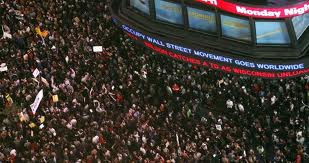
Or there’s crowd power of the Occupy Wall Street variety, which certainly seems right now to hold the most promise.  ‘Never doubt that a small group of thoughtful, committed citizens can change the world. Indeed, it is the only thing that ever has,” Margaret Mead said.

But how to convince those crowds that the fate of seals, bees and goldfinches–not to mention the oceans and the boreal forests of North America–is actually more important than the injustices of economic inequality here in the U.S.?

Of course, it’s all important.  I have several friends who are on unemployment now and having serious trouble finding jobs.  If the Tea Party had their way, unemployment itself would be a thing of the past, a quaint relic of the old New Deal.  We can’t let these radical conservatives shred our social safety net, and we do need to start creating jobs again–green jobs, of course.

But there is no single issue more urgent than climate and environmental health, because if our climate goes haywire and our life support systems here on Earth fail, folks, we are all going down with the ship.

How to convey this to the crowds who are willing to turn out to protest economic injustice, but give it a miss when the issue is global warming?  How to convince people that what we should be demanding as we flood the squares and Main Streets of our country are well- subsidized options to reduce our energy consumption?

Doesn’t sound very glamorous, but the truth is that there’s nothing more important to be fighting for right now than subsidies to install solar roof tiles, like they’ve been doing in Europe for a decade already; and solar hot water heaters; and geothermal ducts for large buildings; and affordable green tech cars.

As Mark Hertsgaard and others have been saying, it’s not enough to make individual green lifestyle decisions, like recycling or composting or turning out the lights when you leave the room.  These individual actions are all well and good, but they’re not going to make the dramatic change we need to get our climate back into shape.
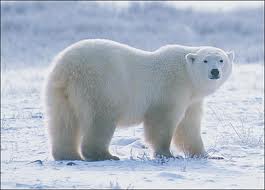
For the kind of change that will save the polar bears and the walruses and the coral, we need our government to step up and protect the interests of its people.  Not the interests of the corporations which have collectively driven our planet to the brink of ruin with their shortsighted greedy ethos of extraction and exploitation.

Government by the people, for the people.  And for the environment that sustains these people in a web of life that includes all living beings on this planet.

How to say this in a way that will light up the imaginations of the 99% and ignite an unstoppable movement for change?

I will keep trying.  What more can I do?