Playing hardball with the fossil fuel industry: if not now, when? if not us, who?

Bittersweet sadness fills me this morning as I read an excerpt at Women’s E-News from Eve Ensler’s new memoir, In the Body of the World, about her long, determined, agonizing battle with uterine cancer.

Eve Ensler

Eve Ensler

Her TED talk, “Suddenly, My Body” is one that I have returned to watch several times over, and have recommended to many friends as a pulsating, powerful performance that makes perfectly clear what many of us are coming to realize: that there is no separation between our bodies and the world around us.

Eve Ensler

Eve Ensler

Not only is it true, as Joanna Macy and Brian Swimme tell us, that we are the most recent emanations of the stardust that created the life on our planet eons ago, it is also true that our fragile bodies are porous and open, made of the air, earth and water that we move through each day.

If we poison our environment, we poison ourselves.

So many of us are learning that the hard way.

Warrior lionesses like Rachel Carson, Audre Lorde, Wangari Maathai and Eve Ensler—each one snared by her own body’s encounter with the internal malignancy of cancer.

How many powerful, active, full-of-life people do you know who are no longer with us, felled by cancer?

A quick look at the cancer statistics kept by the Centers for Disease Control shows cancer rates soaring, especially for Americans 50 and older, and especially in the South, Midwest and Northeast of the country.

In the South and Midwest, they make and use those toxic chemicals—the ones that lace our food supply and flow into our waters, creating a dead zone the size of the state of New Jersey at the mouth of the Mississippi River; the ones that ride the prevailing winds east to fill the skies of the eastern United States and Canada with sooty particulates and airborne toxins.

None of us is immune from this.  No matter how careful we are to buy organic produce or grow our own, to keep BPA plastics out of our kitchens, even to pull up stakes and move to an area of the country that appears to be cleaner—we cannot hide from the reality that we live in a contaminated country, on a planet that is crazily out of balance and on the verge of a major correction.

When the colonizers came to the Americas, they were careful to try to pick off the leaders among the native peoples they encountered, knowing that if you deprive people of their most charismatic, powerful leaders, you will demoralize them and leave them open to takeover.

Although there is no devilish intelligence at work in the cancer epidemic, this dynamic still applies: when cancer takes from us leaders like Rachel Carson, Audre Lorde, Eve Ensler or Wangari Maathai, it leaves the rest of us stricken and reeling, spinning like a rudderless boat.

Sandra Steingraber

Sandra Steingraber

There are those, like Sandra Steingraber, who have been fighting cancer for a long, long time, and using it as a spur to work harder to save our planet/ourselves.

Steingraber was recently put behind bars for two weeks as punishment for her protest of the fossil fuel companies’ plan to hydrofrack for gas in her home territory of upstate New York.

She wrote from prison that it was her love, for her children and for all livings beings on the planet, that drove her to civil disobedience:

“It was love that brought me to this jail cell.

“My children need a world with pollinators and plankton stocks and a stable climate. “They need lake shores that do not have explosive hydrocarbon gases buried underneath.

“The fossil fuel party must come to an end. I am shouting at an iron door. Can you hear me now?”

Yes, we hear you Sandra, and we’re with you!

And yet, so many of us do not act on what we hear and know.

A low-level depression seems to afflict a great swath of the American public, and I would wager that the feelings of powerlessness that come with being unable to control the health of our environment or our selves may have something to do with it.

No matter how many times we go down to Washington D.C. to protest, it seems that the fossil fuel and chemical industries have the U.S. Congress sewn up tight.

Even someone like me, living in what appears to be a clean, leafy rural place, has to contend with farmers who still spray Roundup on their cornfields every spring, or rivers, including the Housatonic, just blocks from my home, heavily contaminated with PCBs from the upstream General Electric plant.

Since there is no way to play it safe, what we need to do is forget about safety now, in these end times, and play hard.

It’s time to give everything we’ve got to the fight to preserve the capacity of our planet to support life on down the generations into the future.

If humans are to be part of that future, we have to rise to the challenges we face now.

Like Eve Ensler, wracked with cancer and yet still leading the charge of One Billion Rising to fight violence against women this spring, we cannot afford to take time out.

Wangari Maathai

Wangari Maathai

Like Kenyan Wangari Maathai, felled so quickly by cancer even as she received the Nobel Peace Prize for her work in preventing the desertification of her country by teaching ordinary women to raise and plant trees, we have to be creative in our approaches, working at the grassroots when those at the top won’t listen.

Like Sandra Steingraber and so many other activists, we have to be willing to face the consequences of our disobedience to those in power.

Playing nice, following the rules, being polite—where has that gotten us?  When the polluters of the planet are playing hardball, we have to respond in kind—although our life-affirming version of hardball might involve planting trees, or raising flash mobs of dancers, or forming human chains of resistance at the boundaries of old-growth forests.

Rachel, Audre, Wangari, Eve, Sandra…we’re right behind you.  Fighting all the way.
Learning from mass murder: we must pay attention to our young men

If this past week had been written up as a movie script, I would have rejected it as totally over-the-top, beyond belief.

Two young Chechen immigrants successfully wreak mayhem and turn a city upside down with their improvised explosive devices, in the very same week that the U.S. Senate Republicans successfully beat back a bill designed to stiffen background checks for gun purchases.

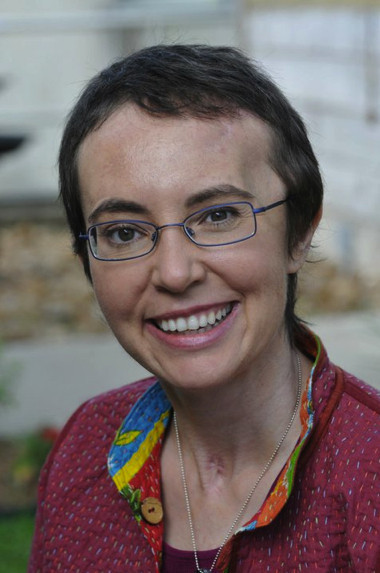
Gabrielle Giffords

Gabrielle Giffords

The beautiful, brave Gabrielle Giffords publishes an impassioned piece in The New York Times, condemning the cowardly Senators who put the interests of the National Rifle Association over and above the interests of the American people.

Meanwhile, down in Texas, an explosion in a chemical fertilizer factory flattened a whole neighborhood, killing at least 15 people and injuring more than 200.  The cause of the blast is still unknown.

And the whole middle section of the country was inundated by heavy rains, storms and severe floods.

Fire, air, earth and water, all the elements seem to be drawn into an intensified dance these days, speeded up along with the 24-hour news cycle.

As the bizarre manhunt for the two Chechen bombers unfolded, and the whole country went into virtual “lockdown” in sympathy with the people of Boston and eastern Massachusetts, it felt like we were suddenly waking up to find ourselves in Baghdad.  Things like that don’t happen here.

Until they do.

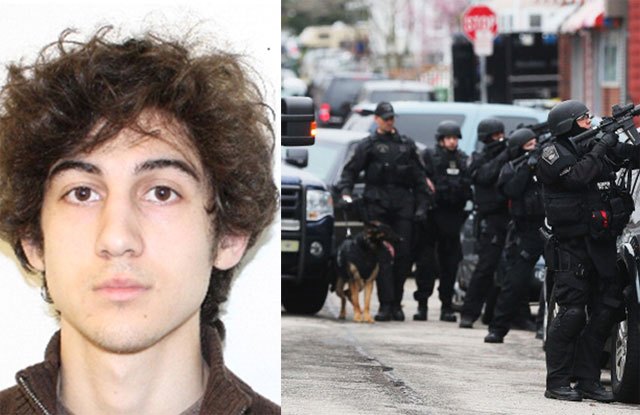
boston-bomber-suspect-dzhokhar-tsarnaev I don’t have TV in the house, so I got most of my information on the situation in Boston from print media and radio.  But even the few pictures I saw were enough to convey the sense that the official response to these boys’ stupid act of random violence was hugely disproportionate.

Against a lone 19-year-old kid, thousands of law enforcement officers of every stripe were deployed, in full riot gear, toting rifles, traveling around the deserted streets in armored vehicles.

The kid was presumed to be “extremely dangerous.”

How dangerous could one kid be?

I understand that the concern was that he might have had a bomb or a suicide vest that he could detonate at the very end.

But that is not the way the story went.  In the end, he came out with his hands up, just one stupid, confused kid who surrendered to the police without a peep.

His life is over.

Ours will go on.

In the wake of this latest act of violence within our own borders, we need to take a good hard look at the role of the U.S. as a fomenter of violence, both at home and abroad.

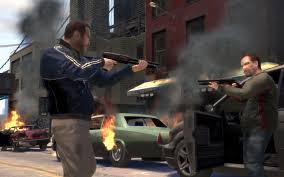
Unknown-1 Not only is the U.S. the largest exporter of arms and weaponry in the world, but we are also the biggest developer of violent video games worldwide, the ones I am betting those Chechen boys loved to play.

Why should we expect that we can promote violence by all kinds of channels, and remain immune to it within our own borders?

What goes around comes around.

If we were serious about wanting peace and security, we would start by radically shifting our focus from creating implements of destruction—be they chemical fertilizers, assault weapons or games that encourage violence—to waging peace.

Waging peace—what would that look like?

One of the most urgent tasks is to change the way young men are socialized.

Let us not for a moment forget that every single act of mass violence that has taken place here in the U.S.—every single mass shooting, every single bombing—has been the work of young men.

Young men are do-ers.  They have heroic dreams—and in Western culture, it’s the young men who can slay the dragon or vanquish the ogre who are considered heroic.

We can honor and nourish that warrior spirit in our young men in ways that celebrate heroes who use their strength and talents productively, to safeguard ordinary people.

I suspect that Dzhokhar Tsarnaev is someone who would have made an excellent warrior for good.  He was obviously smart, resourceful and could handle himself well under great pressure.

For reasons as yet unknown, he–like Newtown gunman Adam Lanza, Norway gunman Anders Breivik, Aurora, Colorado gunman James Holmes and so many other young men whose names stand for infamous mass murders—chose to walk on the dark side.

We need to be paying attention to the accelerating rate of these crimes.  They are a sign of the dark times we are living through.

Those of us who believe in peace must recommit ourselves to raising our own internal lights higher, beacons for others to rally around.  Those of us who have the great responsibility of raising the next generation of young men—parents, teachers, employers, mentors—must recognize the tremendous importance of our task.

In the past thirty years, there has been a great deal of attention paid to rethinking the way we socialize young women.  This is definitely essential work.  But we forget about our young men at our own peril.

Taking up arms against a sea of troubles

marathon-explosion-people-on-sidewalkIn the wake of the Boston Marathon bombing this week, like everyone else I’ve been thinking again about violence.

I am not a total pacifist. I do think that there are some situations in which violence is the only sane route to follow.

I could never be one of those Buddhists who try to send loving-kindness to their torturer.  Sometimes I even have trouble “turning the other cheek” if someone has offended me.

I am a Scorpio: I hold grudges, I brood, I sometimes lash out (though mostly in fantasy, very rarely in real life).

I am very sensitive to oppression, injustice and abuse—although sometimes this sensitivity manifests as a willed numbness, a deliberate refusal to see, because if I allowed myself to really take in all the oppression, injustice and abuse that saturates our planet daily, I would drown in my own howling depression and the guilt of not doing enough to combat it.

To combat it.  The verb choice there, which came out instinctively, is not innocent.

Is it possible to combat the violence of oppression, injustice and abuse without using violence?

What does sending tong-len or turning the other cheek accomplish besides emboldening one’s opponent to ever more impunity?

I believe there are times and occasions where violence is the only answer and the right answer to oppression, injustice and abuse.

But that is quite a different kind of violence from what happened in Boston this week.

Random violence that breaks into a festive, sunny day and kills and maims innocent bystanders is a totally different form of violence than the measured, carefully aimed violence of righteous resistance.

0415-boston-marathon-bomb-13Bombs loaded with nails and bb pellets, set off low in a dense crowd, are calculated to inflict maximum damage on soft exposed flesh and limbs.

Did whoever set those bombs enjoy the panic that ensued, the blood in the streets, the shock, the horror?

I can only imagine this perpetrator as a sadist, because unlike with the 9/11 attack or even the bombing of the Federal Building in Oklahoma City, there isn’t any apparent symbolism in this attack that makes any sense.

I can understand rage against the U.S. Government, and against the World Trade Center.  Although I could never condone killing innocent people in the service of that rage, I can at least see and comprehend the mindset that saw such collateral damage as instrumental in making a larger statement.

But what possible message could be sent through killing athletes and sports enthusiasts on the streets of an ordinary American city like Boston?

I wish the perpetrator would come forward and stand behind this act of violence.  I want to try to understand the motive, the fury that could have prompted such a carefully calculated crime.

I am not naïve; I know there are many very good reasons that people all over the world hate the U.S. and Americans.

And there are good reasons for Americans ourselves to be angry at our society and government, with its ever-increasing inequality, its investment in environmentally destructive policies and products, its build-up of weapons at the expense of the services that citizens have a right to expect and demand.

There is a staggering amount of oppression, injustice and abuse in the world, not just by people against people, but also by people against the natural world—and thus there is a hell of a lot to be angry about—and even to take up arms about.

But setting off bombs on a street crowded with families and athletes?

That is just more senseless violence–meaningless, useless, a squandering of lives and of anger that could be much more appropriately focused and channeled.

Yes, sometimes violence is necessary, sometimes it’s a good thing.

But the violence we are seeing on at ever-increasing rate here in the U.S. is an empty, hollow kind of violence; the violence of a sadist kid who likes to pull the wings off flies.

And worst part of it is, we seem to be on a roll with it.  Our young people entertain themselves with violent movies and video games; our military-industrial complex continues to grow with ever more sophisticated means to inflict violence abroad; our chemical and industrial destruction of the environment continues unabated.

We live in a violent world of our own making.

Can we who believe in peace, harmony and justice make things right without taking up arms ourselves?

I wish I knew the answer.

We need new stories to help us imagine a new, brighter future

Will someone please do the math on how adding thousands of Americans to the unemployment rolls, thanks to the new “sequester,” is going to save the country money?

Not only will we (as in, we the taxpayers supporting the Federal government) be paying unemployment compensation for those folks, but their communities will also be suffering as they cut back on personal spending…perhaps lose their cars or their homes…and end up needing a lot more in the way of social services.

Sometimes when I check in with American politics, I have to wonder who is writing the scripts.

President Obama sailed into office in 2008 promising that as an outsider to Beltway machinations, he would champion the ordinary American and set the country on a kinder, more humane path.

The Republicans, perhaps rightly, read his conciliatory gestures as weakness, and have taken the bully’s path of stonewalling, denunciation and manipulation of the truth.

Presidential Inauguration, 2013

Presidential Inauguration, 2013

Speaker Boehner’s sour face as he sat behind the President on Inauguration Day this year said it all.  He would not—could not—cooperate in any way with our country’s popularly elected leader.  Not even if his obstinacy brought America to its knees.

The whole scenario was eerily reminiscent of the script from the one-season TV show Commander in Chief, starring Geena Davis as the first woman President of the United States.

She too was pitted against a demonic Speaker, who would stop at nothing to discredit, provoke and undermine her, even if his reckless bullying endangered the welfare of the country overall.

Interestingly, Commander in Chief was cancelled after just one season, just as Ms. Davis’s character, President Mackenzie Allen, was gearing up to run for re-election against—of course—her nemesis, the Speaker of the House.

At the time the explanation given for the cancellation was that audiences were not yet ready for a woman President (the show ran in 2005-06).

But watching the first 18 episodes again recently, it was clear that what really did it in was the daring script, which showed a powerful woman POTUS who was a popular Independent determined to stand up for ordinary Americans and to keep her hands clean of the usual muck of party politics.

Geena Davis as Mackenzie Allen, President of the United States

Geena Davis as Mackenzie Allen, President of the United States

In the last couple of episodes, President Allen decides to champion the Equal Rights Amendment for women, which still to this day has not been ratified by enough states to make it federal law.

Her political advisor tells her it’s suicidal to touch that hot potato if she’s seriously thinking about running for a second term, but she’ll have none of his cynical advice, and indeed ends up summarily firing him.

Could it be that the TV Gods cancelled Commander in Chief precisely because the show demonstrated that there is no reason why our country has to be held hostage to the Republicans—or the Democrats?

11-geena-davis-commander-in-chief-2005-2006Did they cancel the show because it showed that there is no reason why a woman can’t govern with equal or greater smarts, decisiveness and wisdom as a man—even as she remains a loving mother, wife and daughter?

President Allen was shown in every episode facing down stereotypes, garnering the respect of even her crustiest generals and most ruthless homeland security czars.

And the more she succeeds, the more ordinary people applaud and support her, the more determined her political adversaries become to take her down.

The show didn’t end with a bullet to her head; it didn’t have to.  It just got struck from the airwaves by one wave of a TV executive’s red pen.

So ended the daring career of the nation’s first television representation of a woman President of the United States.

***

Cronogram-BFWW-ad-webThis week I have been busy preparing for the opening of the Berkshire Festival of Women Writers, a month-long, grassroots, homegrown Festival that I founded three years ago to give women writers more opportunities to raise our voices in the public sphere.

My whole professional career has been dedicated to this mission of amplifying the voices of women writers, bringing them into classrooms and conference halls, into print and on to stages, because I firmly believe that if women had more power in the world, we would change human society for the better.

Gender is a spectrum: all men and women have both estrogen and testosterone pumping through our hearts, and all of us need to call on both the warrior energy of testosterone and the nurturing energy of estrogen to heal our damaged planet and create a stronger, wiser, more sustainable human civilization.

We cannot afford to wait for our political leaders to grow up and stop playing games with our future, and the future of our children.

We have to each do what we can, in our own spheres, to balance out the bullying and the guns and the lack of compassionate imagination with new stories, different voices speaking a different truth into being.

For me this means shutting out the cacophony of political heckling and sniping and tuning into the voices of the women of my community and our invited guests during this Festival month, as together we change the tenor of public discourse by daring to step out on stage and speak our truths to power.

No matter what happens down in Washington D.C.—no matter if our political representatives continue to lick the boots of the oil and gas industries, build billion-dollar fighter planes instead of mass transit, kick our veterans and young people to the gutter, deny women equal pay for equal work and make young women fight for the right to say no to pregnancy—we still have something they cannot take away from us.

We have our capacity for independent thought and we have our voices.

We must rise to the occasion and write our own scripts, bridges of words and dreams that will carry us into a livable future.

Great Barrington Select Board representative and author Alana Chernila reads her work--an open letter to Fox News anchor Bill O'Reilly--on opening night of the Berkshire Festival of Women Writers (3-1-13)

Great Barrington Select Board representative and author Alana Chernila reads her work–an open letter to Fox News anchor Bill O’Reilly–on opening night of the Berkshire Festival of Women Writers (3-1-13). Author Janet Reich Elsbach looks on.

Holding the Fort for the Humanities

Michael Berube

Michael Berube

In a recent address to the American Council on Graduate Schools, out-going Modern Language Association president Michael Bérubé argues trenchantly that American graduate education in the humanities is in a state of crisis, and in urgent need of structural revision.

But to my mind, he does not go nearly far enough in his thinking.

“Graduate programs in the humanities have been designed precisely to replenish the ranks of the professoriate; that is why they have such a strong research component, also known as the dissertation,” Bérubé says.

But “the overall job system in the humanities has been in a state of more or less permanent distress for more than 40 years,” with doctoral programs “producing many more job candidates than there are jobs; and yet this is not entirely a supply-side problem, because over those 40 years, academic jobs themselves have changed radically. Of the 1.5 million people now employed in the profession of college teaching, more than one million are teaching off the tenure track, with no hope or expectation of ever winding up on the tenure track.”

So, he asks, how can we, in good conscience, continue to encourage students to enter graduate programs in the humanities, knowing the grim future that awaits most of them?

Bérubé reminds us that “the study of the humanities is more vibrant, more exciting, and (dare I say it) more important than it was a generation ago….The sheer intellectual excitement of the work, whether it is on globalization or subjectivity or translation or sustainability or disability, is one thing. This work is so valuable—and it offers such sophisticated and necessary accounts of what “value” is.

“And yet when we look at the public reputation of the humanities; when we compare the dilapidated Humanities Cottage on campus with the new $225-million Millennium Science Complex (that’s a real example, from my home institution); when we look at the academic job market for humanists, we can’t avoid the conclusion that the value of the work we do, and the way we theorize value, simply isn’t valued by very many people, on campus or off.”

Unfortunately, Bérubé doesn’t bring up the deeper questions about why our society currently values science and business so much more highly than the humanities.

Why is it that professors in the humanities make a fraction of what professors in business, law or science earn?

Why is it that academic programs in the humanities are under constant threat of the budget ax, while programs in business and science continue to attract huge inputs of resources?

Is it any surprise that students take a look at the depressed adjunct faculty in their dingy offices and take the nearest exit for the shiny new science building?

To me it’s pretty obvious: in our capitalist society, the academic fields that are most highly valued are those that create the possibility of more profit—with profit crudely conceived of as dollars in the bank.

My work in the field of comparative literature over the past 20 years, for example, has little to show for it in terms of money in the bank.

I’ve been focused on bringing the voices of marginalized or lesser-known women writers and activists to wider audiences within and outside of the Ivory Tower, because I believe that the perspectives offered by these women writers bring important, under-recognized and certainly under-valued ideas to the intellectual table.

For example, writers I study, like Rigoberta Menchu (technically not a “writer,” as her texts are transcriptions of her oral testimony), Vandana Shiva, Audre Lorde and Gloria Anzaldua, have been arguing for many years that human society must begin to honor our differences and value our interconnections with each other and with the natural world, in order to create a just and sustainable society.

Lorde, long ago, recognized that the “masters” are interested in keeping the oppressed divided, competitive, fighting with each other for the crumbs.  She urged us to think outside the box, “for the master’s tools will never dismantle the master’s house.”

The truth is that the humanities are dangerous ground for the “masters” of Euramerican society, because it is in the various academic terrains of the humanities that moral and human values are debated and interrogated.

It is no accident that critiques of capitalism itself, along with capitalist tools like elitism, militarism and globalization, have found their strongest purchase in the humanities.

Humanists who follow the lines of intellectual inquiry stretching back to the dawn of human written traditions and forward into the speculative reaches of science fiction and futurism, often find ourselves thinking outside the box of the current capitalist structures into which we have been born and indoctrinated to accept.

The moral questions raised in many humanities classrooms are themselves alternatives to “the master’s tools,” and they have the potential to dismantle the master’s house.

That is why, I believe, the humanities are currently being starved and derided by the masters.

That is why adjuncts in the humanities are being paid less than a living wage, discouraging the best and brightest from choosing that educational and career path—unless they are independently wealthy.

Bérubé ends his speech by suggesting that graduate programs in the humanities need to begin to combine the traditional focus on research, writing and teaching with the development of skills and connections that can help Ph.D.s secure good jobs outside of the professoriate, since he does not foresee any change to the current trend of an overwhelmingly low-paid, adjunct humanities workforce.

He points to the “digital humanities” as a prospect, since highly trained academics who can translate their knowledge into digital formats are more likely to find work in business, publishing or media.

I wish he would think a bit more radically.

As one of the humanities thought leaders of our time, I would like to see him come out and say that the deep questions of the humanities–questions about society, ethics and social and ecological justice–are precisely the ones that we need to be asking most urgently today, whether the masters like it and support it or not.

I know, up close and personal, how hard it is to wage this lonely battle, watching all the honors and riches going to colleagues who are willing to do the masters’ bidding more compliantly.

Sure, biotechnologists and creative financiers are going to get more funding and more accolades than someone like me, who studies ethics via personal narratives by little-known women writers.

But in the long run—or what is increasingly, in our era of climate change, seeming like the short run!—I believe that the wisdom these women have to offer will be more important than the latest patent on bio-engineered corn, or the most ingenious restructuring of debt derivatives.

Humanities education is one of the last outposts of oppositional thinking within the Academy.

Let’s hold our positions with honor, knowing that even if the material rewards are scant, we do get to keep our integrity, and do our best on behalf of the planet and all its denizens.

Climate change is no joke

What a totally spurious pro-Keystone pipeline column from Joe Nocera in the New York Times today!  He doesn’t even bother to mention the 35,000-plus people who turned out in Washington to protest, focusing instead on “boneheaded” Bill McKibben and James Hansen and others who got themselves arrested at the White House last week as though that were the end of the story of citizen protest of this issue.

He dismisses the idea of a carbon tax on fossil fuel companies as ineffective, arguing, inexplicably, that this would “make expensive tar sands more viable.”  Huh?  Is anyone fact-checking this columnist, NYT?

“If you really want to eliminate expensive new fossil fuel sources, the best way is to lower the price of oil, which would render them uneconomical.”  Anyone follow that logic?

Nocera does not once mention the real reason for the protest against the tar sands extraction, which is the environmental hazards, from toxic waterways to exponential increase in the greenhouse gases causing global heating.  If that isn’t an insidious, dishonest omission, I don’t know what would be.

His only mention of climate change is dismissive: “Like it or not, fossil fuels are going to remain the dominant energy source for the foreseeable future, and we are far better off getting our oil from Canada than, say, Venezuela.  And the climate change effects of tar sands oil are, all in all, pretty small.”

There are so many things wrong in this sentence I hardly know where to start, and most of my readers probably can do the parsing themselves anyway.

The truth is that if, as Joe would have it, “fossil fuels are going to remain the dominant energy source for the foreseeable future,” then our foreseeable future is going to be very brief.

Yesterday while in DC I went back to the Smithsonian Museum of Natural History to see the Human Origins exhibit, which is, strangely enough, funded by the climate-change denying billionaire Koch brothers.

Once again I lingered at the opening display, a huge poster depicting the changes in Earth’s climate over the past few hundred thousand years, showing how the swings between extremes of hot and cold forced our ancestors to adapt or die.

The last inch or so of the immense timeline (I’m guessing it’s 12 feet wide) shows the last 10,000 years, the era of homo sapiens.  The swings between hot and cold get more jagged as we get closer to the present, with the last hundred years–a mere quarter-inch of the vast scale of human history–showing aggressive upward spikes of heat.

There is no mistaking the message of this chart.  We are now in a period of rapidly escalating climate change.  If we don’t adapt just as rapidly, a major correction to our population will ensue. Millions, even billions of humans may die off, very much in the “foreseeable future.”

For those left to tell the tale, one thing is for sure: the Keystone Pipeline, rusting and derelict on the western plains, will be a less-than-useless monument to the immense folly of men like Joe Nocera, who thought climate change was just a joke.

Women in Combat: Honoring the Androgynous in Human Nature

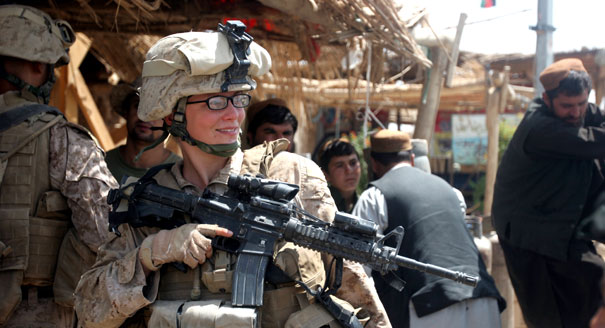
U.S. Marine Corps soldier

U.S. Marine Corps soldier

Hearing that the U.S. military is finally going to allow women in combat is something akin to hearing that the Berlin Wall came down.  Something that had seemed so fixed and immovable is all of a sudden just…not…there.

The military led the way in racial integration back in the 1970s, and it is finally showing its willingness to get with the times and become a leader on gender equality as well.

That’s good!

So why don’t I feel like celebrating?

It’s true that women were already on the frontlines, doing dangerous work without the training or the equipment, and, importantly, without earning the credit.

And it’s no secret that the quickest way to advance in the military is to be recognized as a brilliant combat veteran.

Women who never officially saw combat were always held back at promotion time.

So in that regard, this is going to be very positive change that will help put many more fine women soldiers into the promotion pipeline.

In terms of wanting to do everything possible to generally increase women’s equality of opportunity and compensation, the broad example of the military, with its huge payroll, will make a difference.

So why am I feeling ambivalent?

I guess this just feels like one more example of women joining the male-dominated status quo and living up to patriarchal models and expectations, rather than women being able to bring our own different-but-equal perspectives to bear on the playing field.

Does “equality” mean that women have to conform to the social structures into which we were born and bred, which have always been, at least as far as any of us can remember, male-dominated?

This question has been the subject of extensive, impassioned debate among feminists over the past 20 years or so, ever since I entered the fray in the late 1980s.

Are women “essentially” different from men, or are we all humans, the same inside, just with different bodily accessories?

It is dangerous, assert many feminists, to argue that there is something essentially different about men and women, especially if you want to argue that men are essentially more aggressive and competitive, while women are essentially more nurturing and collaborative.

To assert this puts us just one step away from saying that women make better teachers and nurses and mothers, while men make better soldiers and stockbrokers and lawyers.

No feminist would want to say that, at least not while we live in a patriarchal society that puts a much greater value on soldiers, stockbrokers and lawyers than on people in the caretaking, nurturing professions.

Having pondered this long and hard over many years, I am convinced that gender identity is not an either/or proposition, but rather a spectrum.

That is, we are not 100% women or 100% men, but have some of the characteristics of both, to differing degrees. Depending on our social context, we move ourselves along the spectrum, seeking approval and rewards.

We all have it in us to call on whichever side of our nature, the masculine or the feminine, is most needed in the moment.

Women can be socialized to become tough soldiers, just as men can be socialized to become tender, loving fathers.

It’s no accident that mama bears have the reputation of being the most fearsome creature on earth if their cubs are endangered; I know as a mother I have felt an incredible level of aggression rising in me when I’ve felt my little ones threatened.

Yes, women can fight.

We can kill.

We can take orders, and we can dish them out, too.

But I hope that by fully integrating the military, from top to bottom, we will begin to have a subtle effect on the culture.

I hope that just as women in the military are encouraged to cultivate their masculine sides, they may also begin to allow and encourage men to let their feminine sides show up for duty a little more often.

We are learning slowly that winning wars is not just about overwhelming force, shock and awe; it’s more importantly about winning hearts and minds, about making a lasting positive impact in a territory that we are forced to occupy militarily.

Without this crucial component to war-making, the peace will never last.

As someone who is deeply non-violent, I believe that the purpose of war should  always be to create the conditions for long-lasting and productive peace.

Women and men in military service who honor the full spectrum of their gendered natures, from masculine warrior to feminine peacemaker, will best be able to make this vision a reality.

Time to grow up, America: from the quest for independence to the recognition of interdependence

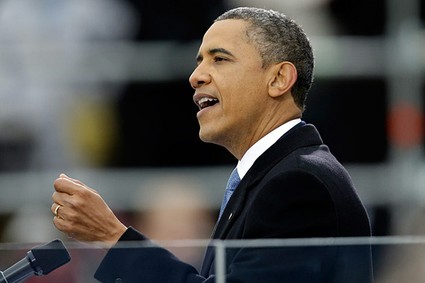
FE_DA_130121obama-inaug425x283In his second Inaugural speech, President Obama gestured back to other great and trying times in American history—“Seneca Falls, Selma and Stonewall”—and even further back, to the Civil War period and the War of Independence.

In all of these historical eras, freedom was the watchword, and first slavery, then inequality, the great evil that had to be eradicated in order for us to move forward as a nation.

Now we’re in a different period, unlike any we have yet lived through as Americans or as global citizens.

What we need now is not more freedom, but more connection.  If there are battles to be fought today—and there are!—they must be in the name not of liberty, but of interdependence.

It is hard to make a stirring speech out of complex concepts like interconnection, collaboration and sustainability, and President Obama’s gestures in this direction were, at best, oblique.

He spent a lot of his time echoing many of the enduring pieties of American history, including the Declaration of Independence, those famous lines that every American schoolchild studies: “We hold these truths to be self-evident, that all men are created equal, that they are endowed by their Creator with certain unalienable Rights, that among these are Life, Liberty and the pursuit of Happiness.”

This is “our generation’s task,” Obama said;  “to make these words, these rights, these values – of Life, and Liberty, and the Pursuit of Happiness – real for every American.”

There is a fundamental dilemma built into this founding creed, because of course one person’s pursuit of happiness may very well impede or encroach upon another person’s life and liberty.

For instance, is it OK that corporate “persons,” in their single-minded pursuit of short-term gains, ie, financial happiness, cut short people’s lives by poisoning our air, water and food supply with toxic chemicals?

Is it OK that your friendly neighborhood billionaire pays a lower tax rate than his secretary, considering that fact that this makes him very, very happy?

President Obama made no secret of his progressive agenda for social equality, ticking off social issues such as equal pay for women, gay marriage, and a more generous immigration approach as “our generation’s task to carry on.”

It was a surprise to many to find him also taking up the hot-button issue of climate change in this speech.

Echoing the Preamble to the Constitution, he insisted that “We, the people, still believe that our obligations as Americans are not just to ourselves, but to all posterity.  We will respond to the threat of climate change, knowing that the failure to do so would betray our children and future generations.  Some may still deny the overwhelming judgment of science, but none can avoid the devastating impact of raging fires, and crippling drought, and more powerful storms.

“The path towards sustainable energy sources will be long and sometimes difficult.  But America cannot resist this transition; we must lead it.  We cannot cede to other nations the technology that will power new jobs and new industries – we must claim its promise.  That is how we will maintain our economic vitality and our national treasure – our forests and waterways; our croplands and snowcapped peaks.  That is how we will preserve our planet, commanded to our care by God.  That’s what will lend meaning to the creed our fathers once declared.”

In the days of Wilberforce and Lincoln, a political leader who dared to speak out against slavery risked the wrath of the richest, most powerful men on Earth.

Today, a politician who dares to speak out against climate change runs the same kind of risk.

We know that the pockets of the huge energy conglomerates like Exxon-Mobil, Shell, Chevron and the rest are way deeper than the puny resources of the American government.

Those guys can buy themselves the best lawyers, the best lobbyists, the best media workers, the best researchers and scientists…and if short-term profit is their only motive, then they have no incentive to desist from continuing their pell-mell push to extract every last ounce of usable oil, gas and coal from the Earth’s crust.

President Obama indicated in his speech that he understands the ethical and scientific implications of allowing the fossil fuel industry to ride roughshod over the possibility of a sustainable future for our children and future generations.

“We, the people, still believe that our obligations as Americans are not just to ourselves, but to all posterity,” he said.

As a parent, I know that my responsibility to my children is greater than any claim I could make to personal freedom.

I cannot blindly pursue my own happiness at the expense of theirs.

No more can we as a nation and as a human civilization continue to pretend that we don’t understand how our permissiveness towards corporate freedom, with its myopic focus on next-quarter profits, is undermining our obligation to future generations—and not just future generations of humans, but of all the creatures and plants who grew up with us on this planet.

If the President truly believes what he said, that “our obligations as Americans are not just to ourselves, but to all posterity,” then he must act boldly to uphold a new creed for the 21st century, based not on freedom and liberty, but on responsibility and interdependence.  And we need to be right by his side, giving him the courage to act on his best convictions.

President Obama ended his speech by affirming that “You and I, as citizens, have the power to set this country’s course.

“You and I, as citizens, have the obligation to shape the debates of our time – not only with the votes we cast, but with the voices we lift,” he said, concluding:

“Let each of us now embrace, with solemn duty and awesome joy, what is our lasting birthright. With common effort and common purpose, with passion and dedication, let us answer the call of history, and carry into an uncertain future that precious light of freedom.”

Wait! No, that’s not right!  It’s not “that precious light of freedom” we need to embrace now; it’s “that precious recognition of interdependence.”

What he should have said in closing was this:

“With common effort and common purpose, with passion and dedication, let us answer the call of history, and work together to create a sustainable, global socio-economic framework, manifested on the local level by caring, collaborative communities who understand that now is no longer the time of independence, or of freedom, but the dawn of a new era of responsibility and interdependence.”

In short, it’s time for us humans to grow up.

If you need more convincing, check out Tiffany Schlain’s marvelous 10-minute “cloud film” INTERDEPENDENCE and read her “Declaration of Interdependence.

For a heartbreaking take on  the urgency of our mission to shift to renewable energy and put a lid on global warming, watch Nikki Craft’s film RESIST DO NOT COMPLY, made with Derrick Jensen and Lierre Keith.

And then join your fellow grown-up citizens in doing the work that it is, as the president said, our generation’s greatest task.

I have a dream…for President Obama and our nation

There is a fair amount of speculation today over what President Obama will say at tomorrow’s Inauguration speech, which coincides with Martin Luther King Jr. Day.

Obama, like King, is a great orator, especially when he allows himself to lose his cool and display the inner fire that animates him.

President Obama arriving in Newtown last month

President Obama arriving in Newtown last month

I hope that tomorrow he will allow us to see his human, emotional side, as he did when he shed unscripted tears the night he visited the bereaved parents in Newtown last month.

It’s true that many of his followers have lost the starry-eyed sense of possibility that made his first Inauguration such a joyful affair.

The romance of our first Black president, an outsider who dodged all the slings and arrows lobbed at him by his opponents to sprint his way to victory, has settled into a more realistic relationship.

We know he’s not superhuman.  He’s not infallible, and he cannot please all of us all the time.

But I hope that in this second term he will be bolder in his governance of the country.  Now that he doesn’t have to worry about running for office again, he can afford to take more risks to get his agenda through.

We’re seeing him do this with gun control, as—to give him due credit—he did in the first term with the Affordable Health Care Act.

It looks like he’s poised to make a positive move on immigration.

These are all important issues.

But they pale by contrast with the single most important issue of our time, restabilizing our climate.

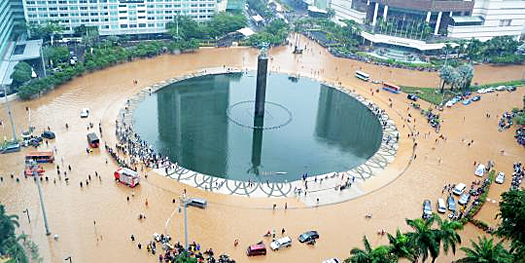
Severe flooding in Jakarta this week from unusually heavy monsoon rains

Severe flooding in Jakarta this week from unusually heavy monsoon rains

An image shot in Jakarta this week gives a snapshot into what is ahead for us, as a nation and as a global human civilization, as the oceans warm, the glaciers and poles melt and release trapped methane and the climate becomes more extreme and erratic.

Scientists tell us that the die has already been cast; the planet is set on a warming course that cannot be reversed.  But it can be mitigated.  We can still keep the average rise in temperature to 4C rather than the 10C that is the current worst-case scenario for the next hundred years.

I have a dream that President Obama surprises the nation and the world on Inauguration Day by announcing a plan to divert current government subsidies to the fossil fuel industry into a new federal fund to promote:

  • a shift to distributed energy (rooftop solar arrays, town wind turbines, local geothermal, etc);
  • new incentives for the manufacturers and installers of renewable energy components;
  • a new R&D push to improve batteries and design data centers and other industrial plants that use less energy;
  • an initiative in urban planning and architectural design to begin the arduous, expensive but necessary process of refitting our cities, towns and individual dwellings for our new climate reality;
  • a strong push to improve the environmental component of our education at every level and in every subject—not just science and technology, but medicine, philosophy, history, sociology, literature and of course economics and business.

This is my dream for the Inauguration speech, but I will not be holding my breath waiting for it.

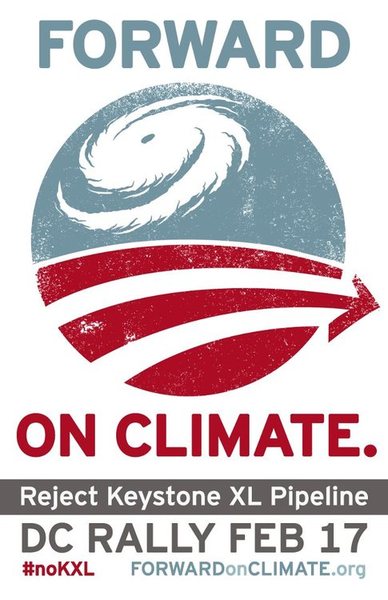
tumblr_mguif6Qltd1qzsjkco1_400I won’t be in Washington for the Inauguration, but I want to be there for the Presidents’ Day (Feb. 17) climate change rally in DC, sponsored by 350.org and the Sierra Club, to pressure our politicians to do the right thing for us and for our children.

President Obama, I know the tears you shed in Newtown were real—I know you are a feeling, caring human being who does not like to see innocent people suffer.

You have an opportunity in this second term to make a historic difference in our nation’s stance on climate change.

Instead of being one of the world’s biggest polluters and consumers of energy, we can become one of the world’s biggest innovators in renewable energy and energy conservation.

We can once again resume our historic position in the world as a moral and practical leader, doing what’s right for our planet and its beleaguered denizens.

The people elected you, Mr. President, not the corporations.

Do it for us.  Now.

Seeking solidarity in the environmental justice movement

Source: BBC

Source: BBC

It’s hard to wrap my mind around 129 degrees Farenheit, a temperature so hot that meteorologists have had to add a new color to the heat spectrum to represent it.

The pictures coming out of Australia this week have been nightmarish.

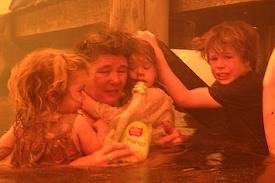
You’ve probably seen them too: the charred sheep, the family taking desperate shelter under a dock while ash and sparks fly around them, the huge red sandstorm wall looming over the ocean.

This is the push-back of Mother Earth.

There is only so far you can push her, and 2012 seems to have been the threshold beyond which there can be no further illusion of business as usual continuing.


Family in Tasmania seek shelter from wildfires

Family in Tasmania seek shelter from wildfires

Even some of the most hard-nose politicians are getting it now: I was heartened to hear Governor Andrew Cuomo of New York speak of the urgent need to plan for climate change disasters in his State of the State speech this week.

But he is still on the fence as far as fracking New York goes, which shows he has yet to fully put two and two together.

Two and two cannot equal two, Mr. Cuomo.

In other words, you can’t continue to expand the fossil fuel industry and not expect the blowback of climate change to worsen.

A lot of people are getting this now.

Not the ones who have their heads so deeply buried in the technology sands that all they can think about is the excitement of the next app, MOOC or tablet.

Not the ones who are riding the current stock market wave to scary new heights, buoyed by who knows what fictitious understanding of the relationships between real people and real goods—referred to in finance-speak as “market shares” and “bundled securities.”

Not the 1%, still sitting comfortably above it all, looking down on the disturbances below like vultures surveying the activities of scurrying mice.

But down here at ground level, people are starting to look at each other and know, even without speaking, not only that things are wrong, but that we cannot rely on others to make it right.

Wildfires are killing thousands of sheep in Australia

Wildfires are killing thousands of sheep in Australia

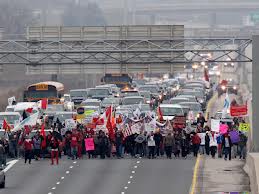
That can be the only explanation for the sudden groundswell of support for the Idle No More movement, which, just like Occupy, tapped into the resistance of ordinary people to the bulldozers of global capitalism, now coming to a forest or a farm field near you.

The lure of short-term gains has led many a politician, businessman, landowner or Native tribe down the daisy path of signing off on legislation and leases giving Big Fossil Fuel the right to do whatever the hell they want.

But we’re wising up now.

Toxic wastes from Texaco-Chevron are poisoning people and animals alike in Ecuador

Toxic wastes from Texaco-Chevron are poisoning people and animals alike in Ecuador

We look at the way Chevron left Ecuador when it was done extracting all the oil it could, and we listen to the story of how relentlessly their lawyers fought against giving even the least amount of their vast profits towards reparations for the toxic environment they created, and we know we could be next.

Now they’re coming right here in the Northeast—in the watersheds of New York and Pennsylvania, buying up those fallow farm fields and bringing in their huge fracking drills.

They’re down in Texas, building the first leg of the proposed transAmerican oil pipeline that will bring the dirty sludge of tar sands oil down to the Gulf of Mexico refineries, crossing over aquifers and farmland, by cities and pristine national parks.

And they’re up in Alberta with their giant bulldozers and dump trucks, razing the fragile boreal forest to get at the oozing tar underneath.

But in all these places, people are stirring.  People are rising in protest.  People are seeing that the short-term gains from these destructive fossil-fuel driven industries are going to quickly burn up, driving the stock market temporarily higher only to set up an even bigger crash in the future; keeping our homes warm and light today, only to set up bigger and worse climate-related disasters down the road.

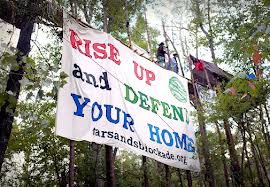
Tree-sitters in Texas

Tree-sitters in Texas

A few brave souls have been sitting in the trees in Texas to block the pipeline, a resistance strategy pioneered in the 1990s when Julia Butterfly Hill sat in Luna, a giant California redwood, for more than a year to keep the loggers from cutting her and her neighbors down.

The First Nations are on the march in Canada in a movement that is spreading like wildfire across the world, protesting the poisoning of the environment by the fat cats in boardrooms who arrogantly believe that they exist on another plane, a modern-day Mount Olympus that is impervious to the environmental destabilization they are wreaking on the world.

Students are rolling out an urgent campaign to get their college and university trustees to divest their portfolios from the fossil fuel industry.

Thanks to the World Wide Web, these efforts can be beamed across the globe instantly, refracted and amplified through the networks of hundreds of millions of kindred spirits worldwide.

The dissenting power of the many that Hannah Arendt wrote of back in the late 20th century has never been more powerful, in part because resistance can now take place virtually.

We don’t have to go out and brave the guns and tear-gas, although probably in the end it will have to come to that.

We can build our networks at home, working quietly but steadily until they are so big that to arrest us all would be, as Marx predicted, to undermine the capitalist structure itself—throw all the workers in jail, and who’s going to do the work?

Idle No More protesters on Highway 401 in London, Ont., in December.  THE CANADIAN PRESS/Dave Chidley

Idle No More protesters on Highway 401 in London, Ont., in December.
THE CANADIAN PRESS/Dave Chidley

Right now all of these protest movements are disparate, each working on their own perceived goals.  What I hope to see in the coming year is more solidarity, more recognition that we’re all really fighting the same grand battle to keep our planet from being so devastated that it can no longer support life as we know it.

Life will continue on Earth, there is no doubt of that.  But whether humans, elephants, songbirds and frogs will be able to persist on a super-heated planet is quite uncertain.

It is imperative that we build an unstoppable grassroots movement to prevail on our elected representatives to represent the people rather than the corporations, and do what’s right.

How many catastrophic hurricanes, out-of-control wildfires, drought-stricken fields, bleached out corals will it take before we make use of our power as denizens of the world and say NO MORE?

images-1