Waiting for Sandy

As the Scorpio Full Moon slowly grows during these closing weeks of 2012, we are waiting for what forecasters are calling a “perfect storm”: a hurricane coming ashore from the Caribbean, going up the Atlantic seaboard and hitting a burst of cold air from the northwest.

Tonight, coastal cities are already in emergency mode: canceling school, closing public transportation, ordering evacuations, and preparing for power outages that may last days or even weeks.

Against this dramatic natural backdrop, we are watching the most artificial of scenarios: the unfolding of the closing chapters of the 2012 Presidential race.

What should be an easy sweep for the Democrats is seeming less secure, perhaps just through the clever manipulation of the Republican political marketing team.

We are at the late stage in politics when it becomes increasingly impossible to tell where reality ends and show business begins, and it almost doesn’t matter—it’s all show business, really.  Except that when the curtain comes down and it’s time for us to go home, we have to live with the real, often uncomfortable effects of the show.

Personally, I just keep feeling a tremendous sense of foreboding.  I can’t tell if it’s just part of the show—in other words, me being influenced by the heavy barometer of both the natural and the political climates—or if I might be picking up a legitimate sixth sense warning that I should be paying attention to.

Well, I am paying attention—I can’t not pay attention, the feeling of dread is too strong to ignore—but I have no idea what I should be doing in response.  So I am just going along from day to day, trying to keep my eyes on the road and ignore the looming threat that seems to be lurking just outside of my line of vision.

There are two kinds of people I feel envious of: those who have absolutely no clue of the larger forces at play in the fate of human civilization on the planet today, and those who are so consumed by their own manic determination to “win” that they are able to focus on their own narrow goals without admitting the least shred of doubt as to the correctness of their path.

Me, I am like a sea plant tossed in the tides, or a palm tree bending in the wind.  I can feel the strong currents of change sweeping through, but I lack the will or the conviction to strike out in the direction of some kind of focused action.

I bend, I toss, I wait, I dream.

I stoke the coals of my deep love for the planet, and know, as I stare into the glowing embers of humanity’s time on our beloved Earth, that though we may leave our current physical form, we remain bound into the dance of energy and matter cycling endlessly between our Sun and the molecules that compose us.

So much is at stake, and yet in the larger scheme of things, how inconsequential are our tiny concerns.

All things must pass…and what will be will be.

The future’s not ours to see.  Que sera, sera.

Barefoot and pregnant in the kitchen? Hell no!

Parsing the memes dealing with women in this election season is almost dizzying.

From “binders full of women” to the insinuation that if women get pregnant from a rape, it’s “something that God intended,” Republicans seem determined to put their feet their mouths over and over again.

There are signs now that women are getting the message, and getting more politically active as a result.

Yesterday I received the new Lesley Gore video, “You Don’t Own Me,” from several sources; if you have’t seen it yet, it’s worth a look: it’s a composite of many different women (most of them young) telling the politicians to get their f**king hands off our bodies (emphasis mine).

The specter of Roe v. Wade being reversed has a lot of women frightened.

We seem to be heading eerily towards the scenario imagined by Margaret Atwood some thirty years ago in The Handmaid’s Tale: a nightmare landscape of environmental devastation and societal breakdown, where the elite, safe in their gated communities, feel righteously justified in considering forced childbearing the only function of fertile young women.

I am still trying to wrap my head around the reality of the fact that we live in a country where Viagra is fully covered by insurance, but contraception often is not.

We live in a world where powerful men can get away with assaulting women and boys repeatedly, with the collusion of those around them. Sandusky and DSK, I’m looking at YOU—but these just the most scandalous recent cases, there are so many more in their club.

And if we move over to the virtual world, the violence against women’s bodies grows exponentially.  People always tell me that there’s all kinds of porn out there, from the soft & cuddly to the whips and chains, but from what I know, there are an awful lot of men jerking off to women’s pain.

I really don’t like calling men out like this.  I believe that many–probably most—men are fine upstanding citizens who would never hurt a woman.

But the truth is that we women need all those fine upstanding men to stand up for us now.

I was shocked at the statistics released last week showing that if only men voted in the Presidential election, Romney would win.

That means that an awful lot men support the kind of patriarchal social structure Romney indisputably stands for.

When is the last time you heard of a Mormon woman running a big company, or holding political office, or doing much of anything outside of doing the admittedly fulltime work of raising a big brood of children?

And then there’s the other half of the ticket, Paul Ryan—a Roman Catholic who seems to be Scrooge re-issued in a virile young package.

These two are the front men for a huge back-to-the-future wave of religious conservatism that employs much more subtle means than the Islamic Brotherhood, but with the same ends: to uphold male privilege and keep women securely ensconced in the private sphere.

A Romney might take a look at those “binders of women,” but in the end he’ll choose a nice young white man as the “most qualified” of the lot.

A Ryan might approve of a married woman leaving the home to earn some extra bread for her husband’s table, but if her daughter was raped while mom was out and got pregnant, too bad—suck it up, have the child, life goes on, and it’s just too bad that rapists are so rarely punished.  After all, boys will be boys, and girls ask for it.

If all American women voted in this election, President Obama would win by a landslide.

Obama has been good to women where it counts: he’s drastically improved health care and fought off the insurance dragons who want to label even pregnancy a “re-existing condition”; he’s stood up for women’s ownership of our reproductive health; the stimulus he put into place in his first year has kept our economy limping along,despite the repeated and concerted efforts of Republican Congressmen to sabotage it; and his government showcases a number of powerful, strong women who provide excellent leadership models for all Americans.

Shortly after he was sworn in as President of the United States, Barack Obama wrote a public letter to his two daughters, Malia and Sasha, in which he says:

“These are the things I want for you—to grow up in a world with no limits on your dreams and no achievements beyond your reach, and to grow into compassionate, committed women who will help build that world. And I want every child to have the same chances to learn and dream and grow and thrive that you girls have. That’s why I’ve taken our family on this great adventure.”

The historic election of the nation’s first African American President represented a giant step forward for this country.  A racial barrier that had seemed insurmountable fell, just as suddenly as the Berlin Wall fell two decades ago, ending what had seemed to be an everlasting Cold War.

We need the gender barriers to fall too. I know there are young women in the political pipeline today who have the dream of breaking through all the glass ceilings and reaching the sky, and we should be doing all we can to support them.

Today, what we need to do is prevent the takeover of this nation by rightwing religious conservatives.  We need to vote President Obama back into office.

And then we need to keep going, to make this a nation where all our children—no matter their gender, their race, their class, their religion or their ethnicity—can soar.

Surmounting the challenges facing us not just as a country, but as a planet, will take every ounce of creative, innovation and intelligence we can muster.

We need all our children to turn their minds to this task.  We can’t afford to leave half the population—our women—barefoot and pregnant in the kitchen.

The Cabal Behind the Curtain

It’s hard to understand the kind of person who would be taken in by Mitt Romney’s absolutely unsubstantiated claims that he’ll be able to magically produce 23 million new jobs in the next four years, and raise take-home pay while he’s at it.

Do people really think Mitt is a magician?

Watching him struggle to appear mild-mannered and fangless during the debates—an effort that translated into a zombie-like smirk—I began to understand him as the puppet he is, a marionette whose strings are pulled by the cabal behind the curtain: the Koch brothers and their ilk, along with Big Fossil Fuel, Big Pharma, Big Chemical, Big Ag, Big Free Trade, Big Finance, you name it.

Now, it’s true that that gang has their tentacles in Obama too.  You can see the strain the President is under, trying to please his popular base while also keeping his pockets open for the big under-the-table donations that keep his campaign afloat.

Guys like the Kochs hedge their bets.  Whichever of the two parties wins, they’ll carry on just fine.

But if it’s Romney/Ryan, their agenda will take a great leap forward.

We’ll automate and outsource jobs like crazy, to satisfy Wall Street—the hell with Main Street.

We’ll drill and frack and mine and bulldoze our way to oblivion, and call it Kingdom Come.

We’ll appoint more social conservatives to the Supreme Court, and put women back where they belong: barefoot and pregnant in the kitchen.

We’ll drastically increase our military spending, at the expense of social welfare programs.  Those who dare to ask for help with affording health care, education, or retirement, not to mention simply being able to eat regularly and keep a roof overhead, will be asked coldly: Can’t you borrow from your parents?  Or, are there no workhouses?

Not only that, but the first thing we’ll do in office—day one!—is pick a fight with the Chinese over currency manipulation.

Yes, Obama is the better of the two choices, for all the reasons he has laid out himself during the Presidential debates.

We must re-elect him, and continue to work to strengthen the progressive movement over the next four years, so we don’t backslide in 2016.

But part of this work must be to stand up for true democracy in our supposedly democratic nation.

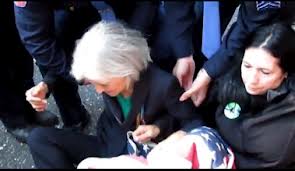
Stein and Honkala arrested outside Hofstra U on Oct 16

The detention of Jill Stein and Cheri Honkala last week was reprehensible, and I am glad to see they are filing suit—at least that way more people will know what happened to them when they tried to enter Hofstra University to participate in the presidential debate there.

You wouldn’t know from reading the mainstream media that Stein and Honkala were taken by police to a secret detention facility and handcuffed tightly to metal chairs for eight hours, without being allowed to consult their lawyers or staff.

Thank goodness for Amy Goodman, who broke this story and has refused to let it die, broadcasting “alternative debates” on Democracy Now that give the other three candidates on the November ballot a chance to have their views heard on national television.

Goodman is a model for the kind of alert, engaged and impassioned citizenry we desperately need in the coming decade, when the economic and environmental challenges we face are going to be increasingly dire.

We don’t need more goon cops in riot gear to maintain order, we need more ordinary people taking the time and energy and yes, the risk, to stand up for our rights to a safe, sustainable future.

After we re-elect Obama, those of us who understand what is at stake need to get to work with redoubled energy on building a broad coalition of people who care about our future and are willing to lead the way in making the necessary changes to ensure that human civilization survives on this planet.

This is a struggle that concerns all of us: we need to work across ethnicities, across gender, and across nationalities to engage the young and the old, the faith-based groups, centrists and leftists, the elites and the working class.

We can’t let a few shortsighted, greedy, impossibly foolish billionaires hijack our future.  It’s ours to save—or to lose.

Earth to Obama: Come in please! Or do we have to take to the trees to get your attention?

Of course I knew it would be too much to expect President Obama, during the second Presidential debate on Tuesday, to actually break the great taboo of contemporary American politics and mention—Shhhh—climate change.

But I didn’t expect him to come out pandering so shamelessly to Big Fossil Fuel.

Yes, he managed to create a mild distinction between his position and his opponent’s.

Romney is 100% for exploiting fossil fuels as fast as we can possibly get them up out of the ground.

Obama, on the other hand, is 100% for exploiting fossil fuels as fast as we can possibly get them up out of the ground.

And oh yeah, he’s not against throwing a little money at solar, wind and biofuels (let’s not even talk about how destructive existing biofuels like ethanol have actually been on multiple levels—let’s give the guy a break).

While Romney just wants to hammer home the assertion that his Administration will bring us lower gas prices (no doubt as a result of all the frantic drilling he intends to support), Obama is interested in encouraging conservation by raising fuel economy standards, an idea right out of the late 1970s if I ever heard one.

A 21st century idea would be to get rid of oil subsidies and insist that the price of gas and oil reflect the true costs of its production and consumption, which are actually way higher than whatever the current price of a gallon of crude might be.

Then there’s coal, which both of these guys are apparently in favor of continuing to exploit.  Did someone say “mountaintop removal”?  Just point Romney/Obama at the mountain, and let’s go!

The nadir of the whole energy discussion of the second Presidential debate came when, in response to a little goading from Romney, Obama said he was “all for pipelines.”

In nearly the same breath, he proudly proclaimed that his Administration has supported lots of oil and gas drilling on public lands—how many leases, and what percentage of increase or decrease they may represent from the Bush years, may be a bit fuzzy, but the gist is clear: both Romney and Obama are all for opening up our public lands to drilling, in the name of energy independence from foreign fuel sources.

Oh Lord. The truth is that our dependence on so-called foreign fuel suppliers (who are mostly multinational corporations anyway) is the least of our worries.

The one thing we most need to be focusing on is the one thing that no one wants to deal with at all.

The effect of global heating, caused by the ever-escalating burning of fossil fuels worldwide.

And instead of working soberly and swiftly to turn the climate juggernaut around, our politicians are acting like easy-going traffic cops, just waving those bulldozers and oil rigs right on through.

***

Take the Keystone pipeline, which both Romney and Obama were unabashed in supporting.

Did you know that right at this moment, there are dedicated Earth defenders sitting in trees in Texas, trying to block the construction of the southern leg of the Keystone XL Pipeline?

Daryl Hannah at Keystone XL Pipeline protest, October 2012

Why?

Well, you probably realize that the bitumen that pipeline is designed to carry is so thick and sludgy that it has to be mixed with toxic chemicals in order to make it flow.

You’ve probably heard about the damage that could be caused by a spill from a pipeline like this, if the chemicals leaked into the major aquifers that are along the way.

This on top of the destruction of the forests that is already happening on a vast scale to get those “tar sands” out.

On top of the chemical contamination of our aquifers from hydro-fracking for gas.

On top of mountain-top removal and strip-mining for coal.

On top of the whole lousy cap and trade system, by which dirty Northern-hemisphere commercial polluters can continue to pollute as long as they buy credits in Southern hemisphere forest preserves—except that what’s actually been happening is that first they buy the preserves, then they log them, then they replant with palm oil trees, heavily sprayed with pesticide, herbicide and fungicide to keep the rainforest from returning, and then they proudly collect their credits for having maintained some semblance of soylent green!

All this is the reality behind the puffery that passed for politics at the debate last night.

What is our national energy policy?  For both the Republicans and the Democrats, it’s drill faster!  Drill harder!  Drill everywhere possible!

President Obama chided his opponent at one point for thinking only of short-term prospects.

“We have to think about what’s coming in 10, 20, 30 years,” he said, the implication being that we shouldn’t entirely neglect the prospects of wind and solar energy.

But the truth is that if we continue drilling at the rate both candidates support, there won’t be a stable environment left to build an alternative energy future for our grandchildren and future generations.

They won’t be building wind turbines and solar panels in 2050, they’ll be building underground shelters and modern-day Noah’s arks.

***

Still, yes, I am going to go grumbling to the polls on Nov. 6 and pull the lever for Obama.  There is no question in my mind that he is the better man.

I understand that right now he is trying to walk the centrist line and please as many American constituencies as he can.

But once re-elected, he must be pushed to take a stronger stand on environmental policy, including energy policy.

If that means that more of us have to take to the trees in protest, well, so be it.  I always did love climbing trees!

Malala Yousafzai Stands Up for Us All

There are a couple of old saws that I was taught as a young journalist, which I continue to pass on to my media studies students now.

One is: if it bleeds, it leads.

And another: one powerful human interest story is worth a million statistics.

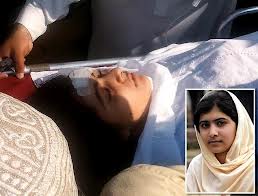
We saw both of these principles in action with this week’s news of Malala Yousafzai, a 14-year-old Pakistan girl who New York Times columnist Nicholas Kristof calls “one of the world’s most persuasive advocates for girls’ education.”

Everyone probably knows by now of how the Taliban viciously shot Malala in the neck as punishment for her outspoken insistence that girls should be allowed—and indeed, encouraged—to go to school, just like boys.

She is now the face of millions of girls worldwide who are denied the chance to get an education and empower themselves and their communities.

This week the Times also reports that in Africa, unprecedented wealth is being generated by the efforts of a rising tide of entrepreneurs—many of them women.

UN Women, formerly known as UNIFEM, has argued for years that by educating a girl, you help her whole family, including the children she will one day bear.

After all, as the Chinese say, “Women hold up half the sky.”

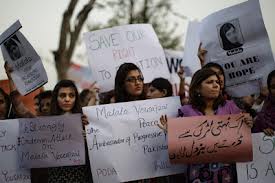
I am glad to see that Pakistanis have come together to reject the extremist politics of the gunmen who shot Malala.

We should all light a candle for her today as she is flown to the West for more treatment, and pray that this brave girl survives the attack and returns to the fray to serve as a defiant model for all girls, whose instinctive human desire for education will not be extinguished so easily.

In the Christian tradition, Eve takes the blame for the fall from Paradise, and here in the U.S., too, we can see many examples of strong women being sharply checked: for instance, in the shooting of U.S. Representative Gabby Giffords or the mocking of Hillary Clinton for wearing pants suits and acting tough.

The story of Malala Yousafzai is one particularly emblematic story among many that could be told, of women and girls who dare to stand up to patriarchal power, and learn quickly that such defiance has its price.

Lately we’ve been seeing a steady drumbeat of reports—most of them disapproving—of how women are becoming more successful in school and in careers, threatening traditional male dominance in the public sphere.

Maybe it’s time for a reminder that feminism was never about dominance—it was and is about equality.

What’s so threatening about that?

I’m sorry, but real men don’t shoot 14-year-old girls under any circumstances.

To me a real man is the one who encourages his children, regardless of their gender, to stay in school and work hard to be prepared to step out into a future that is sure to be challenging.

A real man applauds his wife’s successes, and stands by her side when things are rough.

Real women do the same.

The truth is that gender is just another one of those culturally conditioned differences, like eye shape or skin tone, that fade to irrelevance before the profound reality of our human similarities.

Having unlocked the secrets of the genome, we now know that human beings are genetically 99% the same as field mice.

Isn’t that enough to convince us that men and women are only different in the most superficial ways?

Sure, women can bear children; men are more muscular.  But our brains are close to identical, and our hearts are the same.

Our spirits, freed of our physical bodies, know no differences.

It’s time to soar above the petty in-fighting of gender, and work together for the good of all.


Finding the fire in the belly to combat climate change

OK, I admit it, I fell asleep during the Presidential debate.

I got the lay of the land: the sober, restrained President; the overly aggressive, bulldog-style challenger; and poor Jim Lehrer, looking overly made up and rather frantic, trying to maintain order.

The truth is, I don’t like debates as a form of political discourse, especially not when we’re talking about something as important as who gets to hold the American presidency for the next four years.

This shouldn’t be decided on the basis of who is more aggressive at sniping at the opponent.

Pundits were quick to fault President Obama for not displaying sufficient fire in the belly, and I have to agree, I would have liked to see him put his rapier wit to better use.

But can we say that Mitt Romney “won” the debate simply because he showed more aplomb at throwing around inaccurate statistics?

Who do you want as your President, the man who can keep his cool and who believes in telling the truth, or the man who is all bombast and blather, and is quite comfortable with stretching the truth as need be?


The elephant in the room of this debate, and I suspect in the next debates as well, is climate change.

Neither candidate wants to talk about it, although it’s true that Romney is Mr. Fossil Fuel, while Obama is a tad more amenable to alternative energy.

All the projections about deficits and economic growth, etc etc ad nauseum, will be totally moot when and if the earth’s atmosphere goes way out of balance.  And all indications are that this is already happening, faster than anyone expected.

What we should be doing now is preparing for a brave new world that we have brought upon ourselves.  A world of violent storms, droughts, floods and wildfires, a world of acidified, dying oceans and rainforests turned to deserts.


No, this is not science fiction, this is real, and it’s already happening.

What we desperately need is a politician who will dare to stand up and tell the truth about where we’re heading, and the truth about what needs to be done to head off total catastrophe.

Obviously, neither Romney nor Obama is that leader.

Are we going to simply follow them over the cliff of climate change?


Although it may be hard to recognize, we do have other choices.

All involve taking the risk of stepping further off the beaten path. The lifestyle that most of us Americans were raised to see as normal is, in fact, a big part of what has brought the entire world to the brink of disaster.

We have to change.

And if we can’t find any leaders to show us the way, we have to do it ourselves.

Look into your heart and try to hear the deep, wise voice that lives there.

We know what to do.  It’s just a matter of summoning the courage to actually take those first baby steps into a new world.

Responding to Racism or Sexism: The Transformation of Silence into Language and Action, Again and Again

I shouldn’t be surprised that once again the ugly specter of racism and unacknowledged privilege is raising its head on my own little campus community.

It happens almost every year like clockwork, generally in the fall semester around this time, and usually involving freshmen who are still in the process of adjusting to the new, often more racially/ethnically/socially diverse culture in which they have suddenly landed.

Understandably, people of color who have had to put up with racism and white privilege all their lives get angry when it turns up, in all its crude arrogance, here in our campus home as well.

One angry response leads to another angry retort, onlookers begin to take sides, and before you know it the campus is in an uproar, with some calling for apologies, others calling for calm, and the majority just plain mad and not willing to take it anymore.

I want to talk about anger.

As a woman, albeit a white woman, I know something about how members of subordinate groups are not supposed to respond with anger to actions by members of dominant groups.  We are supposed to keep our cool, to turn the other cheek, seek the higher ground, not stoop to their level.

So we pretend we didn’t hear that cutting remark, muttered just loud enough to be audible.  We pretend we didn’t want to go to that party anyway—the one to which our invitation somehow got lost in the mail. Above all, we don’t respond directly to provocation, because that will just give them an excuse to keep going, and make the whole situation worse—not for them, but for us.

So the anger, unexpressed, gnaws at us, sitting in the pit of our stomachs as unmetabolized bitterness that threatens to choke us when, at unexpected moments, its bile rises into our throats.
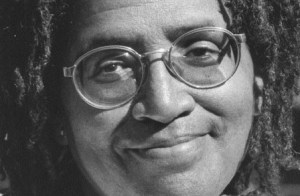
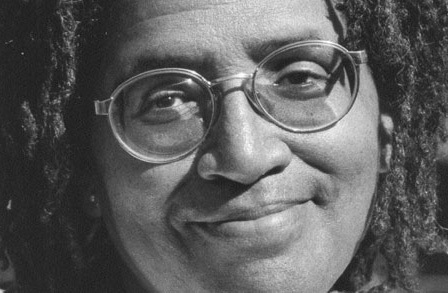
Audre Lorde

As a woman, I have felt this bitter resentment.  And yet as a white woman, I have also felt the other side, the ignorant innocence of privilege.  Growing up in a racist society, I did, as Audre Lorde famously put it, accept racism “as an immutable given in the fabric of [our] society, like eveningtime or the common cold” (“The Uses of Anger,” Sister Outsider, 128).

I didn’t think to question why there were no African American families living in my apartment building on the Upper East Side of Manhattan—other than, of course, the live-in maids who could be seen going in and out of the service entrance or trundling laundry down the service elevator. None of the doormen or elevator men were people of color either—most were Irish, like our superintendent, or perhaps German or Scandinavian.

I didn’t think to question why there were hardly any African Americans or Latinos in my public elementary school, or in the selective public high school I attended, Hunter College High School.  When I got to college, it was the same, and again, I was incurious, complacent.

When you grow up this way, in an insular environment of privilege, it is possible to be deluded into thinking that this is just the way the world is.  No one in my whole upbringing encouraged me to ask the kinds of questions that might have made me see the how the fabric of my existence was shot through with deep-seated, longstanding racism.  No one talked about it.  It just was, and since for me that privileged life was very comfortable, I had no incentive to rebel against it.

It was reading that eventually opened my eyes to how the other half (or, globally speaking, two-thirds) lives.

When I happened upon Lorde’s autobiography, Zami: A New Spelling of My Name, and read about how she too had gone to Hunter College High School, the only Black girl in a sea of white, and how hard that was for her in so many ways, I began to see my experience there through her outsider’s eyes.  I began to question the way I had lived in a vacuum of privileged blindness for so long.

Lorde’s essay on “The Uses of Anger” is one I go back to again and again.  The sentence that continues to resonate powerfully with me is this:

“I am not free while any woman is unfree, even when her shackles are very different from my own” (132).

Listening to Audre Lorde with an open heart, I understood why she was angry at the racist structures into which she was born and bred.  I knew I was not responsible for creating those structures, into which I too had been born and bred, but I did have the power to question them, and to ally myself with those who were working to change them.

When it comes to racism and other forms of identity-based oppression, it really is true that ‘you’re either with us or against us.”  There’s no way to hide behind a façade of neutrality.  To say nothing when someone drops a racial slur or pinches a woman’s behind is to become an accomplice to that act.  In these situations, silence is itself a form of tacit consent.

Audre wrote about that too, in an essay called “The Transformation of Silence into Language and Action.”

I often reread these lines when I am feeling fearful of speaking out on an issue I care about:

“We can sit in our corners mute forever while our sisters and our selves are wasted, while our children are distorted and destroyed, while our earth is poisoned; we can sit in our safe corners as mute as bottles, and we will still be no less afraid….We can learn to work and speak when we are afraid in the same way we have learned to work and speak when we are tired.  For we have been socialized to respect fear more than our own needs for language and definition, and while we wait in silence for that final luxury of fearlessness, the weight of that silence will choke us….it is not difference which immobilizes us, but silence.  And there are so many silences to be broken” (42-44).

As an ally with some measure of privilege, one of the best things I can do to advance the goal of a just society is to speak up when I see racism or sexism or any other form of discrimination taking place.  And not just speaking to my friends, but speaking up in public, inviting and sometimes even provoking a sustained conversation, with the aim of promoting greater awareness and understanding.

The flashpoint for the current unrest on my campus was a white male student challenging the validity of the school holding a campus-wide teach-in known as “Diversity Day,” in which students, staff and faculty organize workshops around issues related to the politics of identity.  Originally, Diversity Day was entirely a student-organized event, held on an extracurricular basis to compensate for a perceived lack of attention to non-white-western-male culture and experience in the curriculum.  The founding students lobbied hard, and ultimately successfully, to have their effort institutionalized by having classes cancelled, with all students required to attend at least two workshops during the day.

Whenever a revolutionary gesture becomes institutionalized, it loses some of its spark, and maybe this is an event that needs to continue to evolve.

But only someone who was ignorant of the extent to which discrimination and structural identity-based limitations continue to affect women and people of color in this country could argue in good faith that it was not worthwhile to spend some time discussing these issues one day out of the school year.

Of course, many students will take classes in sociology, anthropology, gender studies or ethnic studies and go a lot deeper. But those are often the students who already have an inkling that all is not well for subordinate groups.

It is the most privileged who are often the least aware of how systems of privilege operate, and therefore the least likely to elect to take classes in these topics.  These are the students who are most likely to benefit from being required to attend two eye-opening workshops on Diversity Day.

At many of these workshops, people of privilege will be asked to confront W.E.B. Dubois’s famous question in The Souls of Black Folk, “How does it feel to be a problem?”

Robert Jensen

Robert Jensen, one of the finest anti-racist, anti-sexist writers and educators I know, says that in the 21st century, “the new White People’s Burden is to understand that we are the problem, to come to terms with what that really means, and act based on that understanding.  Our burden is to do something that doesn’t seem to come naturally to people in positions of unearned power and privilege: Look in the mirror honestly and concede that we live in an unjust society and have no right to some of what we have” (Jensen, The Heart of Whiteness: Confronting Race, Racism and White Privilege, 92).

The next step, he says, is to “commit to dismantling white supremacy as an ideology and a lived reality”—not because it’s hurting other people, but because, as Lorde recognized, “none of us is free while some of us are still shackled.”

Or, as Alice Walker put it, “We care because we know this: The life we save is our own.”

Politicos beware: the citizen journalists are coming!

Mitt Romney really hit the jackpot this time, caught on video tape callously dismissing half the population of America as not worth his time because they don’t pay taxes.

As “The Caucus” blog in The New York Times pointed out today, in fact it’s only 18% of Americans who pay no federal or payroll taxes.  And of those, “more than half were elderly and more than a third were not elderly but had income under $20,000.”

What a way to make a winning pitch to potential donors in the 1%.  Let’s just throw all those poor old folks under a bus, shall we?  Are there no workhouses?

Ripostes like this have been coming in fast and heavy for the past 24 hours, since the incriminating video clip first appeared on the Mother Jones website, and thence made its way virally around the Web.

What I think has been insufficiently analyzed so far is the provenance of this video.

Today in my media studies class, we were talking about how the old media model, what the textbooks call “legacy media,” is crumbling, to be replaced by myriads of web-based information producers, often referred to as “citizen journalists.”

The guy who released that covert video of Mitt Romney talking up a GOP horse’s ass was a citizen journalist of a sort.

We still don’t know exactly who shot the film, but we do know that it was sent to Mother Jones by James Carter, a grandson of former President Jimmy Carter.

The point is, these are obviously very different channels of information flow than scripted “press conferences,” or even the kind of access granted to card-carrying members of the mainstream media.

The video has so captured the attention of America because it affords us a ringside seat in the inner echelons of political power.  Next thing you know, someone will be shooting video (or at least making a covert audio recording) of the proceedings of a closed-door Goldman Sachs board meeting.

Hey, Richard Nixon was the master of this kind of bugging.  Let us not forget Watergate, or the Oval Office recordings.

But now the tables are turned, and the technology genie is out of the brass lamp and running gleefully through the land.

No longer are wiretaps and tiny voice recorders the provenance of James Bond and the FBI.  Now anyone with a bit of tech smarts and some fortuitous access to the workings of power can record what goes on there, and send it out for the masses to interpret as they see fit.

Last week it was the crazy anti-Muslim film, cheaply and poorly produced but sent out like a message in a bottle on the high seas of the internet, which washed ashore in the Middle East and provided the spark for a new round of anti-American violence.

This week it’s a citizen journalist with a Flip cam in his pocket, pulling back the screen in the GOP Emerald (cash-green, that is) Palace to reveal the true face of the mean-spirited man who would be the Republican President.

As a teacher of media studies in the 21st century, I am excited by the possibilities that my students will enjoy of leaping past the old gatekeepers and getting their investigative work out to the public.

I’m also not quite sure how they are going to make a living doing it—that’s one small detail that remains to be worked out.

But one thing is sure: in this day and age, it is going to be a lot harder for a politician to maintain a public image that is at odds with who he really is when he’s at home.

I hope that means that the next generation of politicians is going to have to be—gasp!—sincere.


Internet Rage

Protests against the US this week, responding to the “Innocence of Muslims” trailer

That a boorish, crude, poorly made video could set a whole region on fire with righteous rage and cause the death of a highly respected American diplomat and his staff is a sign of the dangerous new world we live in.

I asked my media studies class yesterday to think about whether we are better off now than we were before the internet age, or whether the amount of time we all spend on the Web is dumbing us down by making us restless, superficial consumers of so much raw information and half-truths that we no longer have the time or inclination to sift through it all and figure out what really matters.

My students, digital natives all, were enthusiastic about the interactivity of the internet, the unparalleled opportunities it offers for entertainment and lightspeed communication.

But we all sobered down some when we contemplated the dark side of the internet promise, given form this week in the jump from You-Tube to Muslim Main Street.

We watched a few minutes of “Innocence of Muslims,” the purported “trailer” for a full-length movie that may very well not exist.  Actually we watched less than two minutes of the film, all that we needed to understand why it has angered religious Muslims.

The film makes a mockery of the Prophet Muhammed, and presents the religion he founded as bloody and uncouth.

I’d like to see how evangelical Christians would feel if a similar film was made about Jesus Christ and his religion.

The Egyptian government issued a statement today recognizing that American filmmakers have the right to freedom of speech, and therefore cannot be prosecuted for their insulting production.

But they can certainly be condemned.  Hate speech is not allowed in the U.S., and this film walks a fine line; it is certainly insulting and intolerant, if not outright hateful.

The film only made waves in the Middle East when someone translated it into Arabic, and then reposted it on You-Tube.

Maybe they thought Muslims would think it was funny.

No one is laughing, not at all.  And the rage comes out against America and all Americans, even though the majority of Americans would be just as turned off by this film as anyone in the Muslim world.

Even as I write that familiar phrase, “the Muslim world,” I know it’s false.  The internet has shrunk our globe so much that the old boundaries between cultures and nations no longer hold.

Out there on the internet, we’re all part of a vast interconnected universe of humanity, a distributed digital brain hosted by the global Cloud.

We have the capacity to send images and words around the world at lightening speed, but on the ground we’re still the same old people we have been for hundreds of years, weighed down by our enmities and prejudices, our pettiness and our greed.

The freedom of communication facilitated by the internet is marvelous, and few of us would want to see it censored.

But we need to understand the power of words and images to manipulate and twist our perceptions of the truth.

We need to learn how to become responsible producers and informed, discerning consumers of all the representations we send up to the Web.

That ugly film does not represent America, any more than the savage reprisal on the Libyan Embassy represents the Muslim community.

The internet should be used to connect us, not tear us apart. We need to be smarter than that.

Why are we punishing America’s schoolchildren and their teachers?

Jonathan Kozol in action

Every stakeholder in the current Chicago teachers’ strike who has not visited an inner city Chicago public school should take the time to read Jonathan Kozol’s powerful book Savage Inequalities, which chronicles the author’s explorations of conditions in schools in poor and rich neighborhoods in a series of American cities.

“One would not have thought that children in America would ever have to choose between a teacher or a playground or sufficient toilet paper,” wrote Kozol back in 1991.  “Like grain in a time of famine, the immense resources which the nation does in fact possess go not to the child in the greatest need but to the child of the highest bidder—the child of parents who, more frequently than not, have also enjoyed the same abundance when they were schoolchildren.

“’A caste society,’ wrote U.S. Commissioner of Education Francis Keppel 25 years ago, ‘violates the style of American democracy….The nation in effect does not have a truly public school system in a large part of its communities; it has permitted what is in effect a private school system to develop under public auspices….Equality of educational opportunity throughout the nation continues today for many to be more a myth than a reality.’  This statement is as true today as it was at the time when it was written.”

And it remains true twenty years later.

The bedrock issue here is one of inequality, which is measured along multigenerational racial and class lines.  As long as we continue to link public school funding to local property taxes we are going to be perpetuating an entrenched system of race and class segregation, from which there is little chance for escape.

Kozol observed that kids in suburban schools, no matter what state, already have what the CPS teachers are begging for in the urban schools, and then some.

Is it right that kids from wealthy neighborhoods go to college while kids from poor neighborhoods go to jail?

Kids in poor districts need more help from the state, not less, than kids in wealthy districts.

Chicago is not the only place in America where our schools are failing our neediest children, it is just the only place in America right now where the teachers have been pushed so far that they are taking to the streets in protest.

The Chicago teachers’ strike is being presented in the media as a case of selfish, whining teachers walking out on their students because they are greedy for more money, or afraid of being held to high standards.

But when you listen to the teachers, parents and students who have managed to penetrate the media gatekeepers and make their voices heard, what you hear is not greed or shortsightedness, but deep concern for the health of the school system and the welfare of the children.

The teachers are asking for smaller class sizes (would you want your child in a kindergarten class of 45?); improvements in the crumbling physical plants of their schools, including libraries and playgrounds; and support staff for troubled students, including nurses and social workers.  They don’t want their evaluations tied so tightly to how their students perform on standardized tests, and they want to be given seniority preference if they are laid off because of a school closing.

I don’t hear anything unreasonable in these demands.

Has anyone on the editorial boards of the newspapers who have condemned the Chicago teachers’ strike, which include the Chicago Tribune, the New York Times and the Washington Post, ever set foot in a Chicago public school?

I know for a fact that Mayor Emmanuel’s children attend private school, as did the Obama girls when they lived in Chicago.

President Obama and business leaders like to exhort American children to study hard and close the achievement gap between our country and others like China and India.

They need to put their money where their mouth is, and give our dedicated teachers the support they need to do the job right.