Ripples of change, from kitchen tables to public parks

This morning, in my parents’ house, a scene took place that underscored for me the extent to which the Occupy movement has entered the collective consciousness.

The man who has taken care of my parents’ property for the past 30 years or so had come by to say hello, and was standing in the kitchen complaining about how the oil companies are making billions while the price of fuel oil and gasoline goes ever higher for ordinary consumers.

He is a lifelong Republican, but voted for Obama in the last presidential election, having had enough of the Bush crowd with their lies and their wars.

Listening to his critique of the mega-oil companies, my mother turned to him and said teasingly, “So who should we occupy now?”

We all laughed and the conversation moved on, but there is an underlying element of seriousness there that amazes me when I think about it.

A few months ago, we might have complained, but without any thought of actually doing something to bring about change.

Now, suddenly, options are open to us.  We could go down and occupy the local gas station with some homemade signs, and probably get a lot of support from people filling their tanks.

Yes, we all do fill our tanks.  But instead of holding the resentment inside, there is now an outlet for it, a way to talk about it together that is not about the two parties and their endless childish jockeying for power, but about something deeper: the longing for and the pull to real change.

I have to admit I was disappointed that apparently Black Friday consumer shopping was more vigorous than ever this year. But it’s surely no accident that fights broke out at WalMarts across the country, where people who have precious few dollars to spend on their holiday shopping turned out on Black Friday to try to get some bargains.

What’s fascinating, and under-reported, is that on Black Friday, thousands of Chinese factory workers went out on strike to demand living wages and job security.  These are the workers who are supplying the products being sold as “bargains” in America, mostly to workers whose jobs have been outsourced–to China!

Marx’s dream of an international uprising of the proletariat has never been more possible, thanks to be magic of the internet.

And somehow the barriers between American consumers and Chinese producers–or between professional-class employers like my parents and blue collar workers like their property caretaker–are coming down.
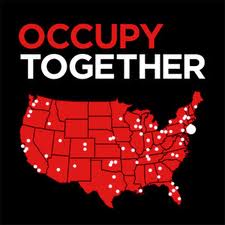
There seems to be a new zeitgeist stirring the stagnant air of American social relations.  Is it the age of Aquarius?  The alignment of the planets?  The infamous Mayan 2012?

Whatever it is, let’s seize the moment and make the most of it.  Let’s talk up a storm, sharing ideas and encouragement with everyone we meet.

If a butterfly in Brazil can cause a hurricane in Texas, then maybe a casual conversation in your kitchen can be the catalyst for a change that will sweep the nation, and the world.  It’s certainly worth a try.
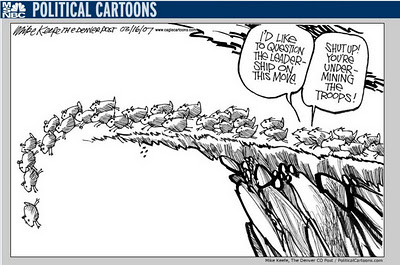
Human beings are not lemmings–so let’s get organized and get away from that cliff!

This happens to be my 100th post on Transition Times, and to mark the occasion I want to reflect on where I’ve come with this blog project, and what themes have emerged along the way.

When I started Transition Times, back in mid-July, I was away in Nova Scotia, trying not to think about the crazy shenanigans going on back home, where the Republicans were threatening to shut down the U.S. government and destroy our credit rating in the world, rather than negotiate reasonably towards consensus with the Democrats (otherwise known as “the debt-ceiling crisis”).

I was also reading Mark Hertsgaard’s Hot: Living Through the Next Fifty Years On Earth, along with Bill McKibben’s Eaarth: Making a Life on a Tough New Planet, both of which paint a stark portrait of how the climate change crisis will be affecting our lives in the foreseeable future.

All in all, I was in a pretty gloomy state of mind.

But then surprising things started to happen.

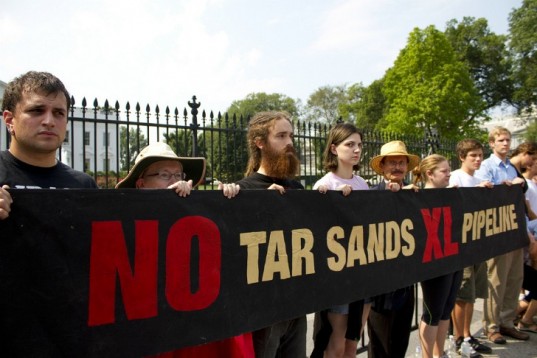
In the middle of the dog days of August, Bill McKibben and 350.org began a sit-in next to the White House, protesting the Keystone XL Pipeline and the development of the boreal forests of Alberta (otherwise known as “the tar sands”).

A month later, the Occupy Wall Street movement sprang up seemingly out of nowhere, protesting the government’s collusion with the super-wealthy (otherwise known as “the 1%”) and abandonment of ordinary Americans (otherwise known as “the 99%”).

The Occupy movement spread like wildfire, and the Keystone XL protest succeeded in at least postponing the pipeline and American support of Alberta tar sands extraction, giving the nascent climate change movement a boost and more of a chance to grow.

Along the way a historic hurricane ripped across the Eastern Seaboard, and a freak snowstorm dumped a good two feet of heavy wet snow on leafy trees in southern New England, knocking out power for some folks for days, and even weeks, and reinforcing the unavoidable reality of climate change.

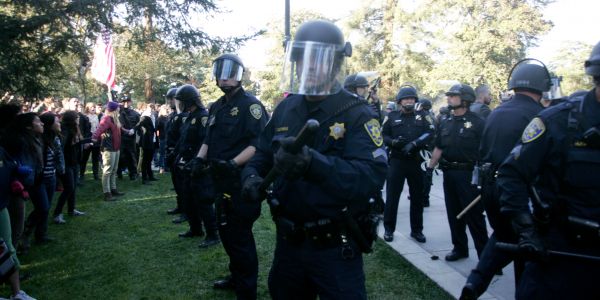
Most recently, public awareness of the militarization of American policing has suddenly taken a giant leap forward, thanks to images of police brutality inflicted on old and young white people of the well-dressed, college-educated variety.  Over in Europe, the debt crisis threatens the dissolution of the euro zone, something unthinkable just a few months ago.

All in all, it’s been a dramatic few months, and blogging my reactions to and thoughts about all this has been a rewarding experience.

I’ve been struck by the power of the World Wide Web as a vehicle for social communication and movement-building.  Just as the Arab Spring showed us how cell phone texting technology could be used to ignite and build, at lightening speed, an effective resistance movement, the Occupy movement has demonstrated the extent to which Americans are plugged into the vast collective consciousness we call the Web.

While the captains of industry sold us smart phones and tablet computers intending to make us more agile shoppers and financial traders, they unwittingly put into our hands the tools of our liberation from the capitalist machine that has dominated us for the past 50 years or so.

Marx predicted long ago that the very instruments that enabled capitalism–globalization and technological prowess–would also be the instruments with which the bourgeoisie would dig their own graves.

In the age of global warming and climate change, this has never seemed more prescient.

But Marx also imagined that out of the ashes of the old world a new order would arise.  He believed that it would be possible for the proletariat, the working class, to create a better world, based on collaboration and compassion rather than ruthless competition.

It seems like Americans are finally awakening out of a long, dark sleep of obliviousness to the ways in which our corporate capitalist economic and governmental system has been leading us down a blind alley, at the end of which, it turns out, is a steep cliff.

Are we waking up in time to back ourselves out of that alley, away from that fearsome cliff?

It is too soon to tell. But those of us who are aware of the gravity of the situation today not just for our society, but for our species and the planet as a whole, need to be out there on the frontlines, both physical and virtual, making the connections that may enable us to successfully build a movement for change and avert disaster.

Human beings are not lemmings, but we are indeed susceptible to being led.  We want to believe that our leaders are competent and have our best interests at heart.  We hold on to this belief even when all evidence points to the contrary.

It’s time now to stop putting our faith in our elected officials and their paid enforcers, and listen instead to our own hearts and minds.  We know what needs to be done to bring the ecological web of life on this planet back into balance.  It is time to reach out to each other and find the determination to get the job done.

Honoring Native Americans on Thanksgiving

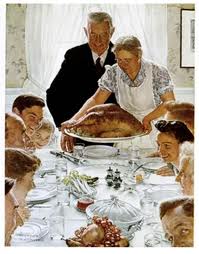
Thanksgiving in the U.S. is about gathering together with friends and family and giving thanks for being able to stuff oneself with a huge meal.

It’s one of the most important holidays of the American capitalist religion, second only to “Christmas.”

Its founding myth is the fateful meal shared by the indigenous peoples of Massachusetts with the starving English Pilgrims.  The Pilgrims “gave thanks” at that meal for the generosity of their hosts, and thus was born the tradition of a November Thanksgiving feast.

To my way of thinking, Thanksgiving should actually be a day of atonement marked by fasting, in the spirit of Yom Kippur, Lent or Ramadan.

We Euramericans should be reflecting and repenting on this day for the way our ancestors turned on their Native hosts, once the time of starvation was past.

We repaid their kind welcome with a shameful record of stealing, swindling, enslavement, displacement and deliberate infection.

We waged vicious war that slaughtered children and old people along with warriors both male and female.

We occupied their lands without a second thought, and proceeded to cut the primeval forests to make room for our livestock, roads and cities.

This pattern started with the Puritan Pilgrims in Massachusetts, and spread inexorably West, all the way to California and Texas, where indeed the brutal work had already been begun by the Spanish.

I don’t really expect Americans to give up the tradition of the jolly Thanksgiving feast.

But we do need to be mindful of the real historical background behind the custom of gathering to celebrate with family and friends.

American Thanksgiving is a holiday that honors the spirit of sharing the bounty.  When we dig into that heaped plate today, we should be giving thanks to the rich Earth that has nourished human beings for millennia, and for the Native peoples of this continent, who learned how to live in harmony with the flora and fauna of this place, cultivating the first corn, beans and squash, and craftily culling the abundant indigenous turkeys.

And we should pause in our feast to reflect on the ignoble history that unfolded after that original Thanksgiving in Plymouth MA, where America repaid her hosts not with honor, but with persecution, scorn and hate.

In the act of repentance springs redemption.  The indigenous people of this continent are not gone–they are alive and well and living among us.  Let us raise a glass to them today and give them the honor and thanks they deserve.

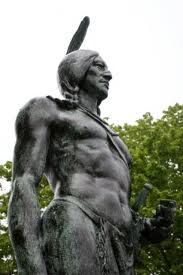
Wamponoag leader Massasoit

This Thanksgiving, Imagine Another World…

The idea of Occupying the Malls on Black Friday, which I first posted about here, is gaining momentum day by day.

Occupy Seattle and other Occupations in various cities will be protesting WalMart this Friday, and I have a feeling that between now and Nov. 25, Black Friday, the idea will continue to gain traction.

The movement is not just protesting against what it objects to (in this case, excessive consumerism); it’s also offering positive alternatives, like the massive Occupy Thanksgiving that will take place in Liberty Square tomorrow, offering free Thanksgiving meals to all comers.

On Thanksgiving, it’s traditional for the privileged to donate food to the needy, so that they can celebrate this foodie holiday too.

This Thanksgiving we need to be thinking about more than turkey, stuffing and cranberry sauce, and simply extending charity is not going to make the grade.

We should be asking why it is that some people have so much, and others nothing at all.  It’s not about laziness or inherent intelligence, as some social analysts have tried to suggest.  It’s about a society in which the playing field is sharply tilted from the beginning in the favor of those who already have certain characteristics.

People who are tall, thin, fair-skinned, attractive, Judeo-Christian, male and born into educated families are far more likely to succeed in America than anyone else (with attractive white women a close second).

For these privileged people, extending charity on Thanksgiving or Christmas may make make them feel better about themselves, but it does nothing to change the circumstances for those born on the other side of the playing field–the other side of the tracks.

In 2010, 46.9 million people were in poverty, up from 37.3 million in 2007 — the fourth consecutive annual increase in the number of people in poverty .  This is the largest number in the 52 years for which poverty rates have been published (USDA Economic Research Service, 2011). 

In 2010, 17.2 million households, 14.5 percent of households (approximately one in seven), were food insecure, the highest number ever recorded in the United States (US Census, 2010). 

These numbers are unconscionable for the wealthiest nation on earth.

We’re often reminded that the U.S. spends more on its military than the next FOURTEEN military powers combined–seven times more than China, the nearest competitor.

Imagine if even a portion of those billions of dollars being spent on bombs, mines, drones, fighter planes and tanks were redirected to civil society.

Imagine if we thought not in terms of charity and “food aid” but restructuring social systems so as to stitch together a global safety net.

Imagine if the U.S. really got behind the United Nations Millennium Development Goals, announced in 2000, calling for an end to world poverty by 2015.

This Thanksgiving, let’s usher in a new era, in which competition and consumerism give way to collaboration and a focus on using the wealth of our nation–and our planet–for positive, life-enhancing purposes.

Whether we occupy the malls this holiday season or serve soup in a food kitchen, we should be thinking seriously about how to reshape our society to bring our national spending in line with our ideals.

Occupy Democracy! Reich is listening….


Is Anybody Listening?

Just curious: why is it that today’s NY Times front page features social protest in Egypt, Yemen and Hamas, but nothing about California?

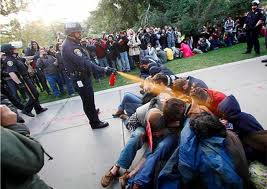
Way below the digital “fold,” in small print, there’s a piece with the bland headline “From Crowd Control to Mocking Images,” but it’s more about pepper spray itself than about the serious issues raised by the UC Davis incident.

The opinion pages are similarly focused on Egypt and Israel–nothing on the Occupy movement.

Somehow it reminds me of the classic situation where a kid is trying to get her parents’ attention, and Dad is buried behind his newspaper, Mom is talking away on the phone, and NOBODY IS LISTENING!

What does that kid have to do to get the adults’ attention?

Something outrageous. And even then, the focus will most likely be more on returning things to the status quo as fast as possible, rather than on talking through the issues deeply and seriously considering change.

That seems to be the posture of the UC system officials, who are in the current hot seat of the Occupy movement.  They want this whole mess to just go away, so that students will return to their classrooms and dorm rooms and keep paying their ever-higher tuition to earn degrees for jobs that don’t exist.

Things turned violent in the Middle East when people had enough of leaders who refused to listen.  There, soldiers and tanks were called in against civilians.  Here, we have armed riot police called in against students who were doing nothing more challenging than sitting cross-legged in a quad.

 Imagine what could happen here if protesters stopped being so polite and nonviolent and began demanding attention in a no-nonsense way.

How far would our leaders–from university chancellors to mayors to governors and the politicians in Washington DC–go in choosing to repress and stifle dissent rather than listening and engaging in thoughtful dialogue about the best way forward for all?

A couple of decades ago, when people took to the streets to protest working conditions and lack of freedom in Latin America, the U.S. demonized “the Communists” and sent military aid to the dictators to maintain order in the banana republics.  The civil wars there claimed hundreds of thousands of lives.

It is impossible to blame “the Communists” this time, and the unrest is not far away in some other country, it’s right here in our own heartland.

It’s our own sons and daughters who are feeling the crack of the police baton, the burn of the chemical sprays.

What are we going to do about it?

First of all, we’d better start listening.

Shades of Kent State?

Coast to coast, the Occupy movement is shaking things up, demanding engagement and accountability from those in power.

A contingent of Occupy Wall Streeters arrived in Washington DC today, with plans to set up a “temporary occupation” in front of Capitol Hill and “discuss the failure of the U.S. Government to be accountable to its people.”

In California, a huge General Assembly at UC Davis–the site of the criminal attack on students by a police officer–has called for a general strike on all of the University of California campuses in order to “reclaim the UC” from its corporate Board of Regents.

According to the strike motion:

“The continued destruction of higher education in California, and the repressive forms of police violence that sustain it, cannot be viewed apart from larger economic and political systems that concentrate wealth and political power in the hands of the few.

“Since the university has long served as one of the few means of social mobility and for the proliferation of knowledge critical to and outside of existing structures of power, the vital role it plays as one of the few truly public resources is beyond question.”

Interestingly, a prominent tenured UC Davis professor, Cynthia Carter Ching, has chosen to stand with the students against the administration, blaming “the people running this campus” for thinking of students as “data points and dollar signs, rather than as whole human beings.”  Had the administrators seen the students as human beings, she says, they would never “have called in armed riot police to deal with a peaceful protest, tents or no tents.”

Professor Ching also blames the faculty of UC Davis for being “too busy” with teaching and research to pay much attention to how the university as a whole was being run.

“You know, it wasn’t malicious,” she says. “We thought it would be fine, better even. We’d handle the teaching and the research, and we’d have administrators in charge of administrative things. But it’s not fine. It’s so completely not fine. There’s a sickening sort of clarity that comes from seeing, on the chemically burned faces of our students, how obviously it’s not fine.

“So, to all of you, my students, I’m so sorry. I’m sorry we didn’t protect you. And I’m sorry we left the wrong people in charge.

“And to my colleagues, I ask you, no, I implore you, to join with me in rolling up our sleeves, gritting our teeth, and getting back to the business of running this place the way it ought to be run. Because while our students have been bravely chanting for a while now that it’s their university (and they’re right), it’s also ours. It’s our university. And as such, let’s make sure that the inhuman brutality that occurred on this campus last Friday can never happen again. Not to our students. And not at our university.”

It should surprise no one that the students in the UC system are unwilling to entrust their welfare to the “busy busy” faculty or the stone-faced administrators.

And it’s not just the University of California.  There were arrests at Baruch College in New York today, and an open letter from a Yale philosophy professor has gone viral on the Web, with over 1,200 faculty signatories calling on university and college presidents to enforce “campus safe zones” for student protest.

It seems to me that the spirits of the four students killed by police at the Kent State protests a generation ago, back in 1970, are hovering over us these days.

Could it happen again?

Yes, in a heartbeat.  If anything police training has only gotten tougher in the new millennium, with less and less tolerance for any public “disorder.”

Those of us who work with college students know that if they have gone out into the quads and commons to protest, it is because there are very serious issues afoot that must be addressed now.

Generally speaking, college students would much rather be focusing on either their studies or their parties.

If they are participating in general assemblies and sit-ins, it is because the system in which they were raised, and in which they expected to find comfortable berths, has been shredded to the point where they can clearly see the gaping holes in the framework.

No longer can students expect to find jobs that will help them dutifully pay off their exorbitant student loans.  Can we blame them for glaring balefully at the administrators and politicians running the show, and asking angrily, “So what is it all for?”

The sad truth is that California now spends more on its prisons than on its universities, despite the fact that crime rates have fallen steadily since the 1990s.

As Juan Cole puts it in his excellent Truthdig column today,”the defunding of higher education in favor of an enormous gulag dovetails with a rise in the paramilitary repression of the population as one of America’s premier industries.

“Not only are UC Davis students being hit with massive tuition increases to pay for the penitentiaries and their policing, they are also being treated like unruly inmates by a militarizing police force.”

This is not the America we want to be, or to become.  It is time to stand with the Occupy movement and demand the demilitarization of our society, and the redirecting of resources towards education, innovation, creativity and social well-being.

The students are leading the way.  We older folk, who bear the responsibility for the current national and international crisis, must break the dark spell of conformity and accompany  them.  Now.

On Black Friday, a New Target: Occupy the Malls!

What’s so effective about the Occupy movement is how it makes creative use of public space to get its message across.

For instance, the terrific techno-graffitti unleashed last night in New York, where protesters projected their message on to the Verizon Building without leaving a trace.

I have a idea for continuing this strategy, but with a new target: the great American MALL.

As you know, it’s just one week until Black Friday, the day after Thanksgiving, when all good patriotic Americans are supposed to line up at the big box stores at dawn, credit cards in hand, ready to start the mad Christmas shopping rush.

This year it seems that the whole capitalist enterprise that fueled those crazy Christmas shopping binges has started to crack and sway.

I dimly remember why Christmas is associated with gift-giving–it had something to do with the Three Wise Men bearing gifts to the baby Jesus, right?  But this American tradition of giving mountains of gifts to one another, competing with each other to buy the biggest, shiniest, best gift of all–that has nothing to do with the spirit of Christmas.

Myself, I prefer to celebrate the winter Solstice in this season, the day when the deepening darkness turns the corner of the equinox and we begin the long slow return to light and warmth.

I propose that this Black Friday, Americans should link arms with our family and friends and Occupy the malls of America.  Instead of driving ourselves ever deeper into debt with those credit cards, we should protest the corporate policies of outsourcing that have made it so unusual to see American-made products for sale in American stores.

If we want to put America back to work, we are going to have to reinvent the whole economic model of globalization. It had a nice ring to it, back in the 1980s and 90s when it was being implemented, but it has turned out to be a catastrophic failure on more levels than I can count.

What’s needed now is a re-locallization: a return to locally based economies, all over the world.  Let the Chinese manufacture goods for themselves while we get American factories humming again.

But this time, let those factories be worker-owned cooperatives rather than top-down corporations–just like Gore-Tex or Clif Bar or Eileen Fisher, all big brands that are actually owned by their employees.

Let’s gather in malls and shopping centers all across the U.S. on Black Friday and use the Thanksgiving holiday to push the corporations represented there to do what’s right for America.

When they start listening to us, we’ll all be giving thanks.

Month Three of Occupy Begins: From Class Warfare to Civil War?

Yesterday, the day of the big Occupy protests in New York, I sat in a train most of the day, on the way to Washington D.C.

I’m here for the African Studies Association annual conference, but of course I’m going to head over to the National Mall too, and see what’s cooking with Occupy DC.

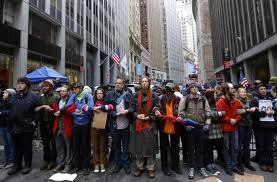
The dramatic and powerful protests in New York yesterday, captured magnificently in this NY Times slide show, can’t help but energize the movement around the country, and indeed the world.


I am struck again by how diverse this movement is–the people in these photos are old and young, of every ethnicity, most looking solidly middle-class.  There is really very little of the “anarchist hippie fringe” that Americans tend to associate with protests, at least since the 1960s.

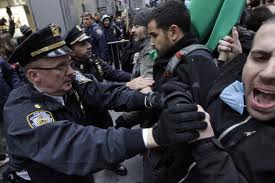
It must be hard for the cops, who are so solidly middle-class themselves, to have to play the bad guys day after day. They must know that their salaries have been shrinking against the cost of living just like everyone else’s, while the Bloombergs and the Buffets and all those Washington politicians have been getting fabulously wealthy.

Economically speaking, the cops are squarely within the 99% and should not be the enemies of the Occupy movement.  But it’s very rarely been the case that police or soldiers break with their indoctrination in submission to authority, and side with the insurgents.

I pause as I type that word–insurgent–because it’s most often used to describe people in other countries who oppose the status quo, and turn to violent means to achieve their goals.  It’s one of those words– “rebels” is another–that treads carefully between the poles of “freedom fighter” (a good thing) and “terrorist” (obviously bad).

The Occupy movement bills itself as a determinedly non-violent movement.  All the violence that has occurred so far has been provoked or perpetrated by the police.

Dorli Rainey, 84, led away from the Occupy Seattle protest after being pepper-sprayed in the face by police on Nov. 15

But for the first time, yesterday, I found myself thinking about the possibility of civil war breaking out again in this country.

 Maybe it’s because of the refusal of anyone in Washington to take the protests seriously, starting with the President.

No one wants violence in this country. We are a nation of shoppers, not fighters.

The Occupy movement has been galvanized mostly by young people whose expectations of joining the ranks of contented shopper-workers, like their parents and grandparents before them, have been frustrated by the economic downturn and the substitution of debt bondage for living wages.

These are very real concerns that are not going to go away because winter is coming.  What we’re seeing here is, as others have noted, class warfare.  Just like in the 1930s, when workers stood firm in picket lines despite the factory owners’ efforts to break them, these protesters are motivated by the absolute knowledge that the current system is unjust and insupportable.

If politicians from Bloomberg to Obama continue to ignore the idealism and the frustration represented by the nascent Occupy movement, it will only continue to grow in numbers and conviction.

Yes, the rich appear to have all the power in this country neatly sewed up.  But never doubt the power of the people to break down barricades and triumph when they know that Justice is on their side.

It’s happened before in this country.  It could very well happen again.

Bloomberg the Grinch vs. Occupy: This movement is not going away

The question in the air this morning is obvious: what comes next for the Occupy movement now that the tents and tarps in Liberty Park have been trashed by the NYPD?

The New York Times is giving way more coverage to the eviction than it ever did to the occupation, proving once again whose side those folks are on.

This protest movement is not going to go away.  It’s not going to go into hibernation for the winter.

City officials who see the movement as an expensive civil nuisance will learn the hard way that their heavy-fisted efforts at intimidation are going to backfire.

If anything, such tactics only strengthen the resistance of the core groups on the street, and draw the attention of the virtual spectators in cyberspace, who may now become more engaged.

Whither the Occupation now?  Occupy Wall Street said last night that the protesters have “the feeling of a movement that is rising, building, and making headway.”

Their statement is worth “reblogging” in full:

“They showed us their power. And we’re showing them ours.

“We are here because we believe a better world is possible. We are willing to endure mistreatment, if by doing so we can help re-enfranchise the 99% and reclaim our democracy from the stranglehold of Wall Street and the top one percent.

“We will push back against billionaire Michael Bloomberg and any politician who wantonly tramples on proud American freedoms: freedom of the press, freedom of speech, and the freedom of Americans to peaceably assemble and petition for change.

“We will overcome the obstacles placed before us. We will not be deterred. We will persevere. Our message is resonating across America, and our cause is shared by millions around the world. We are the 99%, and we want to live in a world that is for all of us — not just for those who have amassed great wealth and power.

“You cannot evict an idea whose time has come.”

Hmm, that does not sound like the voice of a group ready to pack it up and go home.  Those are stirring words and sentiments, in the tradition of our most heroic American freedom fighters, from Thomas Jefferson to Martin Luther King.

If you can’t beat them, Bloomberg and Co., you might just have to figure out how to join them.  And I don’t mean infiltrate or co-opt.  I mean open your hearts and hear the justice in their ideals and goals.

Like the Grinch who Stole Christmas, the hearts of the 1% are several sizes too small.  They would find the world to be a much warmer, happier place, if they would allow themselves to feel again.