
 Tomorrow is Diversity Day at Bard College at Simon’s Rock, a day when regular classes are cancelled so that the whole student body can attend workshops prepared by students, with some faculty guidance, on a range of topics related to social difference.
I am participating in three workshops: “Bros Before Hoes: When Male Loyalty Becomes Oppressive,” which comes out of my Explorations in Gender, Culture & Society class, in which we recently read Michael Kimmel’s Guyland; “Sex in the Media,” about the objectification of women (and men) in the media; and “The Green Belt Movement: Planting Trees, Saving Lives” about the life and legacy of environmental activist Wangari Maathai.
There are a whole host of workshops I wish I could attend, if only I could clone myself! For instance, “The Prison Industrial Complex,” “Occupy Wall Street: A Discussion on Political Engagement,” “I Don’t Do Black Girls,” and many more.
 As someone who regularly teaches classes in world literature, human rights, gender studies and related topics, I sometimes have mixed feelings about trying to cram so much politically charged information into a single day. The danger is that we stir up a whole host of raw, unprocessed ideas, emotions and opinions, and then go back to business as usual, leaving many loose ends and open questions dangling.
The hope is that students who would not otherwise be drawn to explore issues of social class, race, ethnicity, gender, etc. in an academic class will at least get some exposure through these workshops to what their peers are thinking about or experiencing, and may be inspired to continue the conversations outside the classroom, or even to take a class in sociology or gender studies in a future semester.
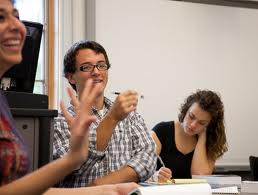 What’s most positive about this annual event at Simon’s Rock is how it encourages the student workshop leaders to put to good use all the pedagogical modeling we’ve done for them in our classes. I am always so impressed at how carefully student leaders prepare for their 90-minute sessions, and how easily they are able to use the tools and skills we’ve been working on since Day One at Simon’s Rock: focused freewriting, small group discussion, coming to consensus, reporting back to the big group, sharing ideas in a thoughtful, respectful manner.
Once in a while things I’ve seen things get out of hand at a Diversity Day workshop, if a group is too big and rowdy, or the chemistry between the session leaders and some of the students in the class just clashes. But that is very rare. Most of the time students are respectful and kind, appreciative of each other’s efforts in sharing their knowledge and experiences.
Andrew Revkin of The New York Times blogged recently about progressive secondary education, citing with approval a Long Island high school student’s call for “project-based learning,” which is “designed to put students in the driver seat.
“No longer is the teacher the only hub of information,” writes student Nikhil Goyal. “No longer do kids work in silos, isolated from their peers and the community around them….Projects drive the curriculum, rather than the reverse. And they incorporate a wide range of interdisciplinary subjects to achieve real-world relevance. Learning isn’t supposed to be boring and a process of nailing facts in students’ heads. It’s hands-on, it’s practical, and it’s creative. And project-based learning offers constant feedback and revision to develop higher quality work.”
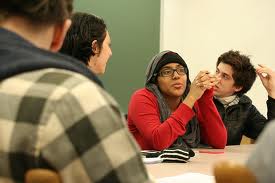 So true! Diversity Day at Simon’s Rock is a great example of just this kind of student-driven, project based learning, as the student workshop leaders define the topics that interest them, work on structuring the class time, put together audio-visual aids, and then go in to lead their sessions.
Could there be any better hands-on training for life in the real world?




 Transition Times