The Audacity of Hope, c. 2012

For those of us who supported President Obama, the last 24 hours or so have been positively giddy.

There were the nail-biting first few hours of the election results…followed by the glad tidings of more and more of the big electoral states turning a glorious blue…capped by the wonderful thrill of seeing the President stride out onto the stage in Chicago to give the most rousing acceptance speech most of us have ever heard.
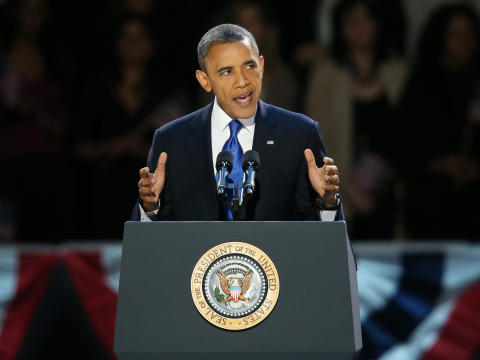
What a big heart this man has, to include in his acceptance speech itself the invitation to his opponents to meet him in the aisle and try to seek common ground!

In the very first words of his speech, before he even thanked his running mate, he reached out to Mitt Romney, offering to work with him to move the country forward onto a better, firmer footing:

I just spoke with Governor Romney and I congratulated him and Paul Ryan on a hard-fought campaign. 

We may have battled fiercely, but it’s only because we love this country deeply and we care so strongly about its future. From George to Lenore to their son Mitt, the Romney family has chosen to give back to America through public service and that is the legacy that we honor and applaud tonight.

In the weeks ahead, I also look forward to sitting down with Governor Romney to talk about where we can work together to move this country forward.

And then, towards the end of the speech, he said so memorably:

America, I believe we can build on the progress we’ve made and continue to fight for new jobs and new opportunity and new security for the middle class. I believe we can keep the promise of our founders, the idea that if you’re willing to work hard, it doesn’t matter who you are or where you come from or what you look like or where you love. It doesn’t matter whether you’re black or white or Hispanic or Asian or Native American or young or old or rich or poor, able, disabled, gay or straight, you can make it here in America if you’re willing to try.

I believe we can seize this future together because we are not as divided as our politics suggests. We’re not as cynical as the pundits believe. We are greater than the sum of our individual ambitions, and we remain more than a collection of red states and blue states. We are and forever will be the United States of America.

This audacity of optimism is why we elected Barack Obama back in 2008, and why we continue to love him.

Whatever his personal or political failings, Barack Obama stands for the best hope of the USA: the raw immigrant passion and drive that founded this country and still makes it great.

He also represents, in his very skin, the polyglot future of the USA, the inexorable movement away from the European aristocracy of our founders to the broad multicultural diversity of our descendants.

Mitt Romney’s concession speech 2012

The Republicans are still stuck back in the good old days of the good old guys’ party.  As one commentator aptly noted, Republican political rallies look suspiciously like Ku Klux Klan rallies of the early 20th century.

For those who might rather not recall, let us remember that the Klan not only hated and lynched African Americans; they also hated and lynched Jews.  And they didn’t liked the Irish or the Italians much either!

Let’s not even talk about gay folk.  And women?  For the Klan and many contemporary conservatives, they belong in the kitchen or in the bed.

This is not the country we want to be as we move into the 21st century.

Although I thought the Obama campaign’s slogan “Forward, not back” was a little hokey when I heard it trotted out at various rallies, it does have the ring of truth to it.

We do not want to go back to the intolerance and violent hatred of our past.

We need to move forward, and we will need all hands on deck to confront the deeply unstable, uncertain future that awaits us in the age of climate change.

I want to see Barack Obama rise to the challenges of our time with all the power of his big heart.

I want to see him not just think about jobs, but think about green jobs, about jobs that will move our country forward into a longterm, sustainable future.

Enough kow-towing to Big Oil, Big Agriculture and Big Chemical.  It’s time to force these industries to bend to the winds of change, to adapt to the new paradigm of sustainability sweeping our country and our planet.
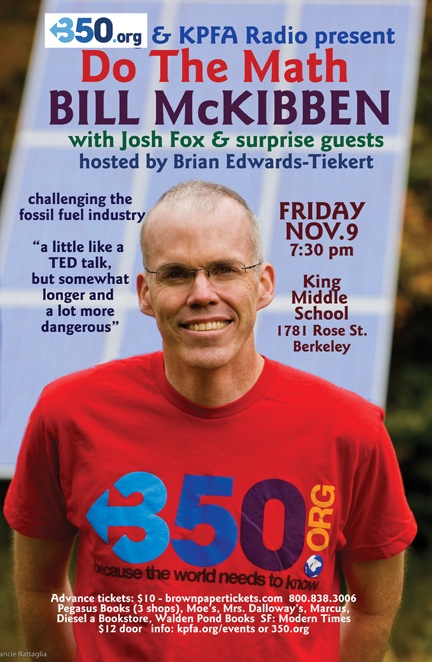
I applaud Bill McKibben for waiting until the election was over to come out swinging—and I applaud his continuing efforts to get the climate change issue into the center of political discourse.

Those who are still suffering from the after-effects of Hurricane Sandy, along with their insurers, should be his best allies.

We need to face the truth that all the matters of social justice that concern us will be moot if we don’t face the pressing need to get our planetary civilization onto a sustainable footing.

We need to convince our President of this, post-haste.

But let’s take a moment to breathe a big sigh of relief that it is Barack Obama we’re dealing with, and not Mitt Romney!

This election proves that Big Money is not infallible.

Democracy still matters; individual votes still matter; as a country, we are not as corrupt as many of us feared.

Now is the time for all of us to embrace the President’s big heart and let it reach out even further to encompass our entire beautiful planet and all of her creatures.

This is the task we humans were born to undertake: to become the thoughtful, compassionate stewards of our planet, and the collaborative leaders of our own multifarious tribes.

It is so good to see more and more women stepping up to the plate now.  We are sorely needed, but we can’t do it alone.

Men and women of all heritages must work together as never before to reestablish the equilibrium needed to move our civilization forward sustainably into the 21st century.

These are not just words.  This is our urgent reality.

Barack Obama has answered the call.

Will you?
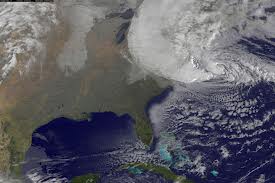
Thank you, Hurricane Sandy

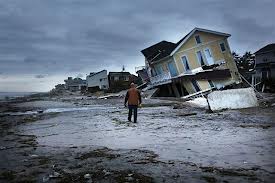
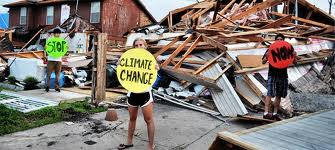
Hurricane Sandy did the planet a favor by hitting hard right at some of our most elite enclaves.

This time it’s not the poor residents of the Ninth Ward facing the horror of flooding, it’s the wealthy owners of some of the most valuable coastal property in the country.

When I heard Mayor Bloomberg of New York, one of the richest men on the planet, finally come and out say the words “climate change” with urgency, I had to smile despite the seriousness of the context, because it meant that at last the rich and powerful are getting the message that the status quo cannot go on—at least, not if we expect to survive as a civilization into the 22nd century.

The truth is that Americans in the ruling class—the business owners, the politicians, the finance and computer wizards, the media producers, the educators, even the artists–have been living in a luxurious gated community our whole lives.

We have been watching the travails of those outside, including the accelerating extinction of other species and the poisoning of the environment, from what has seemed like a safe, secure vantage point, behind several layers of bullet-proof glass.

Americans have watched impassively as people in other parts of the world have been forced to deal with terrible storms, flooding, and droughts with increasing regularity over the past decade.

As long as the electricity stays on and the supermarkets and gas stations are full and open for business, we just don’t pay much attention to what’s going on with the weather.  As long as our homes are heated in the winter and cooled in the summer, what’s the problem?

People like James Hansen, Bill McKibben, and Elizabeth Kolbert have been knocking futilely on the windows for years, trying to get the ruling class to wake up and pay attention to the looming threat of climate change before it’s too late.

They’ve made little progress up to now.

But Hurricane Sandy is a game changer.  Blowing into town the week before the Presidential elections, she put climate change on to the front page of the New York Times at last.  She forced her way into the bland discourse of Presidential politics.

She tossed her windy head and in just a few hours paralyzed the “greatest city on Earth,” creating $50 billion of damage that will take weeks if not months to clean up.

All of a sudden, city planners are talking seriously about flood gates, and some are saying it might be foolish to rebuild in the same way, right down along the coast.

I don’t hear many in our ruling class yet saying what needs to be said, which is that our entire lifestyle has been built up in an unsustainable way, and must be changed if we are to leave a livable legacy to our children and grandchildren.

We must wean ourselves from the addiction to fossil fuels.  We must shift from highways and cars to mass transit.  We must immediately start reducing emissions in every way possible, with special attention to the agriculture sector, which has to be completely redesigned with sustainability and health—our own, and that of the animals and plants we cultivate—in mind.

We must build a much more resilient, collaborative culture.  Competition and aggression may have been the watchwords of the capitalist and imperialist 19th and 20th century, but following their star has landed us in our current grave circumstances. We can’t go any further down that path.

For thousands of years prior to the Christian era, human beings lived tribally and cooperatively in harmony with the land.  Our population has now grown so large that we are reduced to fighting each other for increasingly scarce resources.

Going forward, if we are to survive, we must transcend the pettiness of national boundaries and ethnic differences, recognize our common goals as humans, and start to work together to provide strategically for the good of all.

This may seem like an impossibly idealistic goal, but if there is one thing that I believe can unite human beings, it is the awareness now dawning about how interconnected we are through our dependence on the life support of our planet.

It is sad that the Earth has had to sink to such an unbalanced, depleted state before we began to pay attention.  I would not wish a Hurricane Sandy on anyone.  But it seems that we need wake-up calls of her magnitude to get us up and out of the stupor of denial and inaction.

As I step over the threshold into my sixth decade today, I can feel a new resoluteness building in me; a new determination to use my time in a more focused way.

I vow to give the best of myself to the struggle for a sustainable future, and to encourage others to join me in this effort.  There is nothing more important any of us can be doing now.

Climate Change: What do we tell our children?

This has been a big week for change agents in the U.S.

First Annie Leonard came out with her new movie, The Story of Change.

Annie Leonard

Then David Brancaccio released his new movie, “ Fixing the Future,” with a two-day nationwide roll-out starting on July 18.

David Brancaccio

And today Bill McKibben made the cover of Rolling Stone, confirming him, at least in my eyes, as the true rock star of the environmental movement.

In the same week, radical economist Gar Alperovitz gave a historic keynote address to the Green Party National Convention, arguing that you can’t have a democratic society unless you democratize the ownership of wealth as well.

The big question is, will the best efforts of all these good folks make a difference in what is happening to our precious planet?

Or is it just so much more hot air, to add to an already too-hot summer?

This week I am teaching a class in media studies for middle schoolers.  While I’m amazed and delighted at the facility of the students with the technology of digital communications, I am also struck by the narrow focus of their concerns.

Three of the students have started blogs about fashion trends.  Another has started a blog about anime and manga characters.  Of the three others in the class, one is using her blog to do movie reviews, another is talking about hard science issues (the Higgs Boson discovery), and the third is writing about the stock market and the technological age we live in.

Absolutely nothing wrong with any of that.

Except that if we don’t solve the climate crisis, it will all be completely moot.

Runway fashions, movie stars, cartoons and stocks will all be swept away before the onslaught of food insecurity, economic instability and violently unpredictable storms.

No, this is not the stuff of Hollywood fantasy.  It is real, and as McKibben points out in the intro to his Rolling Stone article, it’s already happening.

As a teacher, what am I supposed to do?  If I remind my students (and my own children, for that matter) just how grave and portentous a time we are living through, aren’t I placing an enormous burden on them?  And isn’t it true that it is my generation, not theirs, that bears the brunt of the responsibility for where we are now?

And yet, if I say nothing and let them proceed as if fashion and anime were the most compelling topics of the moment, am I not being dishonest?

It really is quite a dilemma, for any parent and every teacher who is aware of what is really at stake in the times we live in.

I imagine it must have been similar for principled people in other times of crisis.  Do we try to shelter the children, keep their lives as normal as possible, for as long as we can?  Or do we let them know what is going on, and enlist them in the urgent struggle for positive change?

I don’t believe in lying to young people, and I have never been very good at lying, anyway.

The truth is that we are living through times unlike any faced by human beings before, in the 10,000 years of our history on the planet.

What we do in the next decade will make the difference between our continued existence on the planet, or the extinction or radical reduction of human civilizations on Earth.

I love Bill McKibben because so far, at least, he never gives up.

He’s got a true fighting spirit that refuses to take no for an answer.

Still, eventually even Bill may have to concede that the fossil fuel industry, with the politicians in their back pockets, is simply not going to give.

When that moment occurs, it will be game over for human beings on the planet, and so many other of our fellow Holocene travelers too—birds, fish, plants, and mammals.

But it’s not over til it’s over.    And I, at least, will never give up hope that people of all ages, from every corner of the world, will see the crucial urgency of this moment; that they will act upon their new awareness;  that the politicians will be compelled to listen; and that we will be able to turn this great climate change juggernaut around.

Looking Forward with Orion Magazine

The spirit of Henry David Thoreau was in the air last week at a gathering at his old stomping grounds at the top of Mount Greylock, the tallest mountain in Massachusetts, hosted by Orion Magazine to celebrate the launch of its new anthology, The Thirty Year Plan.

Keynote speakers at the event were Orion contributing writers Ginger Strand, Elizabeth Kolbert and Bill McKibben, all of whom seemed to have a common concern on their minds as they looked into the future: climate change.

Thoreau’s legacy of using writing as a vehicle for civil disobedience is a mantle that all three writers have already assumed, particularly McKibben, who is very much following in Thoreau’s footsteps in going beyond simply writing about activism to actually standing at the forefront of a growing activist movement.

Characteristically, McKibben wasted no time in reminding his listeners that it’s high time for decisive action in the quest to transition our global economy off fossil fuels.

“It’s not enough to go around changing lightbulbs or even buying hybrid vehicles,” he said.  “Individual change won’t do it, the math doesn’t add up.  We have to change the price of carbon to reflect its true cost to our environment.

“We will never be able to match ExxonMobil and the other fossil fuel corporations in money, but we do have people power, and we have to use it.  A lot of you are going to have to come down to Washington DC and get arrested with me!” he said to applause.

McKibben also suggested using the shareholder pressure that was successfully applied against apartheid in South Africa back in the 1980s, but this time putting pressure on the fossil fuel industry to reinvent itself as a renewable energy industry based on wind, solar, hydropower and geothermal.

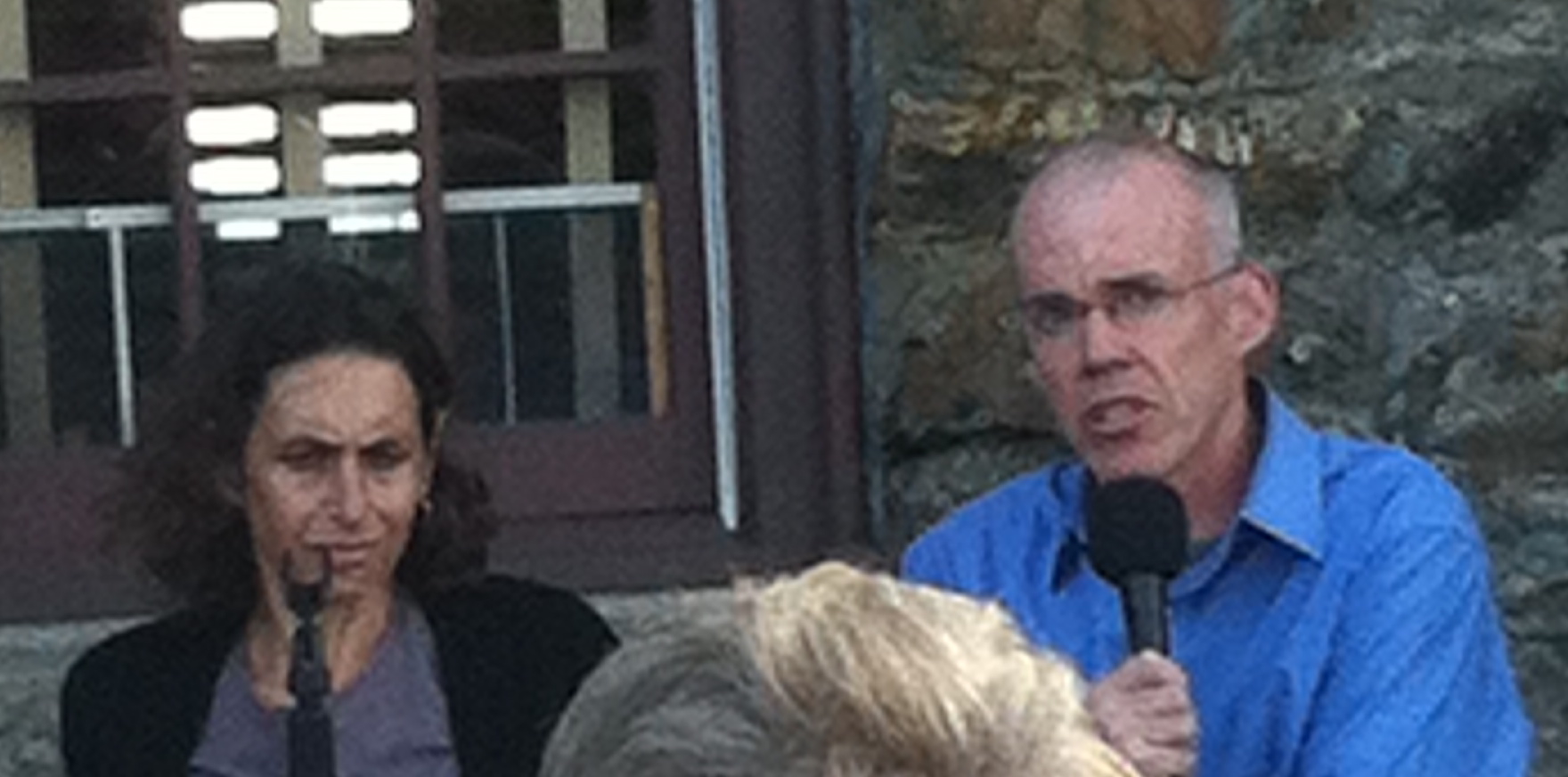
Elizabeth Kolbert and Bill McKibben speaking at Bascom Lodge, Mount Greylock, mA

The Beauty of Renewable Power

 From the top of Mount Greylock there is a striking view of eight huge spinning wind turbines on a ridge not far away, over by Jiminy Peak.  Wind power has become controversial in New England, with some towns and neighborhoods arguing vociferously against the location of wind turbines in their backyards.

In Massachusetts there has been great opposition to the proposal to build a windfarm out in Nantucket Sound, and here in the Berkshire hills we have also had many people of the NIMBY mindset.

When asked to comment on the prospect of wind turbines being set up on mountaintops in wilderness areas, Bill McKibben was unequivocal.

“I love the wilderness as much as anyone, and I’ve spent a lot of time out in the Adirondacks, as far away from it all as you can get.  But I’d have absolutely no problem with a wind turbine being set up overlooking my favorite patch of forest,” he said.

“The real threat to the places we love is fossil fuels, not wind towers,” McKibben said, adding that he has little sympathy for Americans who complain about wind towers being unattractive.

“Our sense of what’s beautiful is going to have to change,” he said.  Wind turbines located in Vermont or Massachusetts force people living in these exclusive areas to see the results of our impact on the climate, McKibben said, unlike our usual practice of making people in other parts of the planet—the Maldives, or Bangladesh, or the mountaintops of Virginia, for example—do all the suffering.

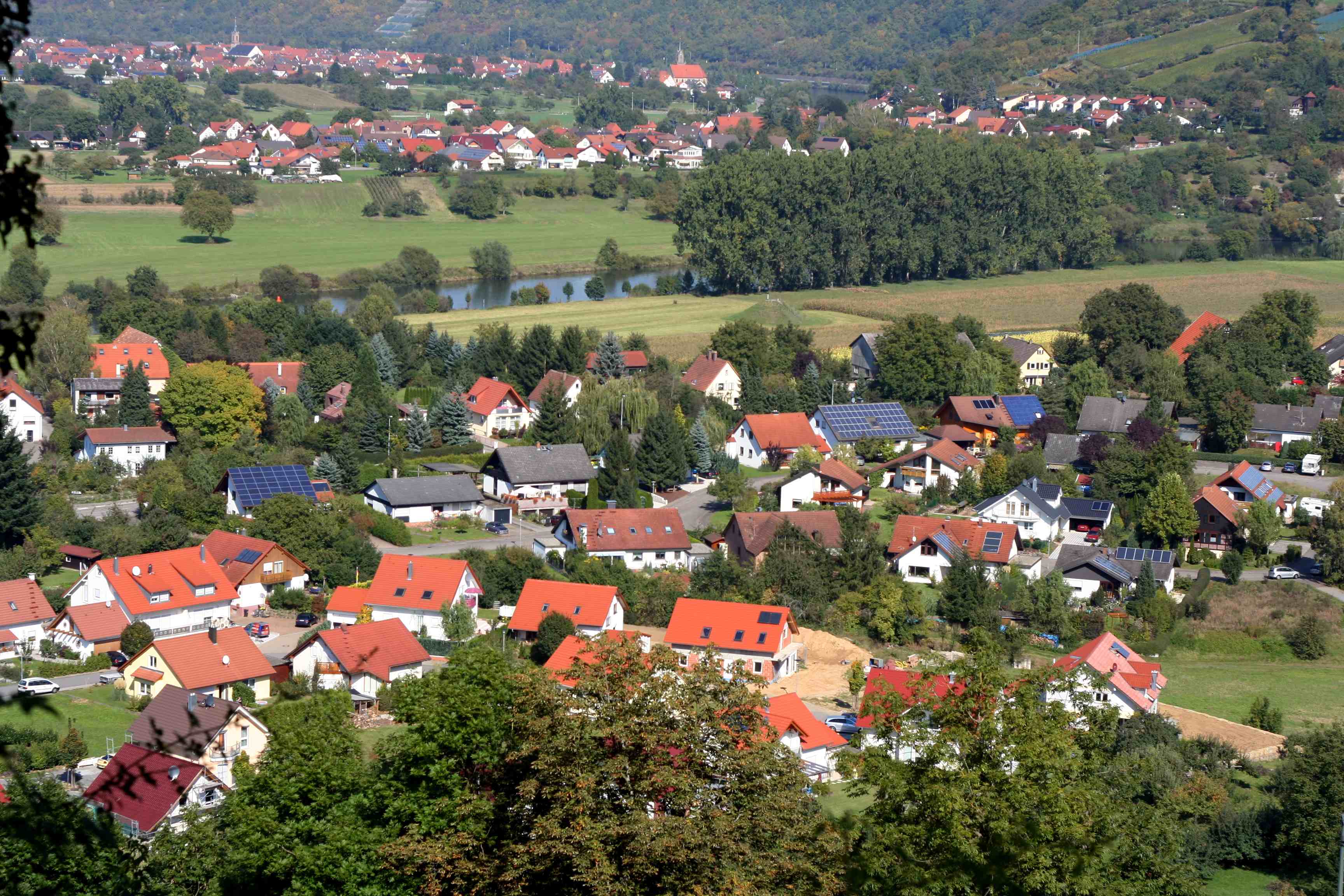
Emphasizing that the technology already exists to shift to renewable energy, McKibben pointed to the fact that Germany is already breaking records with its distributed solar energy model.

In May, German solar plants produced a record 22 gigawatts of electricity in two days, equal to the output of 20 nuclear power plants.

According to a recent Reuters article, “Germany has nearly as much installed solar power generation capacity as the rest of the world combined and gets about four percent of its overall annual electricity needs from the sun alone. It aims to cut its greenhouse gas emissions by 40 percent from 1990 levels by 2020.”

Solar panels sprout on roofs in Heidelberg, Germany

The Challenge of Getting People’s Attention

The contributors to the Orion Thirty Year Plan vision agree that the challenges we face in getting off fossil fuels are much more socio-political than they are technical.

One of the questions that remains intractable is how to get the public fully engaged with the issue of climate change, so that more people are willing to try Thoreau-style civil disobedience to force the politicians to do the right thing when it comes to regulating Big Oil—ending the subsidies on fossil fuels and giving incentives for the shift to renewable energy sources.

Elizabeth Kolbert said she was perplexed at the fact that she got a far greater response to a recent New Yorker article on child rearing than she generally gets on her much longer, more meticulously researched pieces on global heating.

“It’s something I think about a lot,” Kolbert said; “how to get people as interested in climate change as they are in raising their kids.”

Kolbert agreed with writers like Mark Hertsgaard, who suggested in his book Hot: Living Through the Next Fifty Years on Earth that it’s pathological to do the kind of intensive parenting Americans are known for while at the same time ignoring the biggest danger of all looming over our kids and grandkids: anthropogenic global warming.

Sunset from Mount Greylock

As the sun began its spectacular descent towards the west side of the Greylock summit, and the assembled group went in to dinner and animated discussion at Bascom Lodge, it seemed to me that our charge was clear: to join leaders like Kolbert and McKibben in becoming change agents in our own spheres and out in the public eye.  We need to build a movement with a broad enough base of committed supporters to seriously challenge the entrenched power of the fossil fuel industry, as well as the massive inertia of the American public, which still has a tendency to imagine that life as we knew it growing up can go on for the next thirty years virtually unchanged.

Life will go on, with or without us humans.  But the story of our species does not have to end in disaster.  There is still time to write a new ending to our 10,000-year adventure on this planet, if we get up the courage and the dedication to get moving now.

Bill McKibben: Stand up to the fossil fuel industry, or start growing some gills!

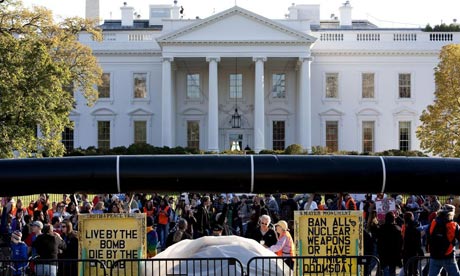
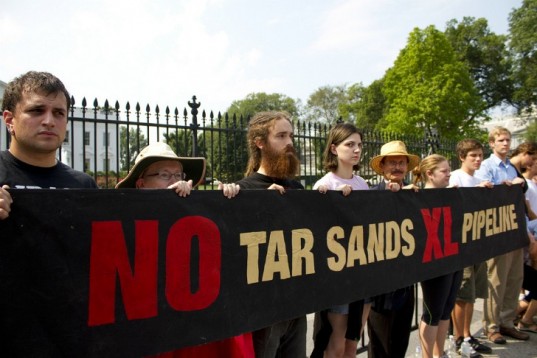
Last summer Bill McKibben and 350.org, the organization he and a group of Middlebury College seniors founded in 2006 to fight global heating, brought thousands of protesters to Washington DC to protest the Keystone XL Pipeline. As you’ll recall, they circled the White House in a ring five people deep; thousands were arrested over the course of two weeks; and the construction of the Keystone was at least delayed, if not entirely crushed.

This summer Bill will be at it again, taking on the fossil fuel companies even more directly. As he told us last night during his keynote address to the Strategies for a New Economy conference, put on by the New Economics Foundation and hosted by Bard College, the focus of this summer’s activism will be joining Sen. Bernie Sanders (I-VT) and Rep. Keith Ellison (D-MN) in pressing for the removal of some $113 billion in annual federal subsidies for American fossil fuel companies.

Bill reminded us that Exxon Mobil and the other big oil, coal and gas companies are by far the richest in the world.  Why should they be getting subsidies for doing business when those funds are sorely needed by citizens for basic services like education, health care and retirement?

And why should we be rewarding companies that not only pollute the environment, but also are responsible for spewing the greenhouse emissions that are rapidly making our planet uninhabitable for many current species, including humans?

“No other industry is allowed to dump its garbage in the streets,” Bill declared.  “Why should it not only be allowed, but subsidized, for the industry that is responsible for the most dangerous product of all, the CO2 that could totally destabilize our planet?”

Bill began his speech by noting apologetically that he has become known as a “professional bummer-outer,” and it was true: it was impossible to come away from his hour-long talk without feeling shaken by the severity of the future he laid out for us.

He gave several hard-hitting statistics and anecdotes of the gathering steamroller of global heating: the melting of the Arctic ice pack, the acidification of the ocean, the increase of floods, droughts, storms and disease.

Bill laid the blame squarely in the laps of the fossil fuel industry, which, he said, has been using its vast wealth to forestall political action on moving to renewable energy.

“Their business model is the problem,” he said.  “It’s either wreck their business model or wreck the planet.”

He’s not talking about destroying Exxon-Mobil and the other oil giants; just about forcing them to re-invent themselves as clean energy companies, and start putting their great resources behind the swift transition to renewable energy technologies.

How to accomplish this sea change?

“We’ll never match their money, so we need to deal in a different currency,” he said, “the currency of movements: passion, spirit, and creativity.”

Bill showed pictures from around the world of climate activists, most of whom, as he observed drily, “do not look like Sierra Club environmentalists, but they care just as passionately about saving our planet.” The movement he envisions must be international, but since Americans and Europeans bear most of the blame for the dramatic rise in greenhouse gases we have a special responsibility to work hard to make things right.

“I’m a writer,” Bill said.  “I’d rather be sitting home in Vermont typing.” Instead, he’s on the road much of the time now, addressing groups and working behind the scenes to build a climate movement powerful enough to take on the fossil fuel lobbies and head off disaster.

At this conference of economists, there were many gray heads in the hall, and many people wearing conservative professional clothing.  Bill called on the older folks, in particular, to join the movement to head off global heating, because “once you’re past a certain age, it doesn’t matter so much if you have an arrest record.”

“We have to get more confrontational,” he said, recalling the civil disobedience campaigns of Dr. Martin Luther King Jr.

Among the confrontational tactics we can look forward to this summer are “Nascar-style” blue blazers for members of Congress, with the logos of all the corporations from which they’ve accepted cash blazoned on their backs. 350.org will also be hosting an online Congressional scoreboard, so that citizens can easily see how each  senator or congressional representative has voted with regard to climate stabilization and environmental health.

“We’re not radicals or militants,” Bill insisted. “We’re actually quite conservative.  We want the planet to stay the way it is, or go back to the way it was when we were born.  The radicals work at the oil companies,” he declared to applause.

Bill ended by reminding the audience that the U.S. Chamber of Commerce recently issued a statement saying that there was no cause for alarm about climate change, because human beings will be able to adapt our behavior and physiology as the planet warms.

“What are they imagining?” Bill asked indignantly. “Are we going to start growing gills?”

It’s not gills we need, but guts—to follow Bill McKibben’s lead and force the politicians to represent the will of the people, rather than the will of the industries that are destroying our planet in the name of the next quarter’s profits.

Something tells me it’s going to be a hot summer.

To Avert Climate Change Disaster, Connecting the Dots Must Go Viral

As of 8:30 a.m. EST this morning, 10,000 Facebook folks had already “liked” the new 350.org “Connect the Dots” campaign, which encourages people around the world to connect the dots between climate change and extreme weather.

That’s a good number of “likes.” But what we really need is for the concept to go viral, the way the Kony 2012 campaign did a few weeks back.

It will require the attention of millions of people, particularly those in the driver’s seat of climate change—that’s you and me, my fellow Americans—to turn this global heating juggernaut around.

Lately I can’t seem to stop asking myself why it is that so few people I know are willing to focus their attention on the crucial issues of our time: climate change, the chemical poisoning of our environment, the steadily accelerating wave towards what scientists call “the sixth great extinction event on Earth.”

I often feel like Cassandra of Troy, who was able to see disaster in the future of her beloved community, but was under a curse, imposed by the god Apollo, of never being believed or listened to.

It’s not so much that people don’t believe what’s coming (although we certainly have our share of climate change deniers in the U.S.)—it’s that they just don’t want to hear it.  They don’t want to know.

Maybe this is simply the animal in us coming out.  Like my peaceful dog, who sleeps by my side without any thought or concern for the future, we humans focus on the immediate tasks at hand—making a living, bringing up children, keeping the house clean, exercising, shopping, planning birthday parties, you name it—and we get so wrapped up in all that busyness that we are able to blot out the daily dying screams of millions of birds and animals, the rip and tear of millions of acres of forest going down before the chain saw and bulldozer, the sobbing of millions of children who go to bed hungry every night, the ever-increasing militarization of our world civilization, and the sinking knowledge that those in control of all those weapons and surveillance systems do not stand for good.

Sometimes I really envy my friends and neighbors who are able to cheerfully ignore what’s going on in the background, and focus on making the best of each day they’re given.

Sometimes I think that’s what I should be doing too.

Why torment myself with the constant awareness of spiraling crisis, especially if I can’t do anything about it anyway?

But there’s the rub.  I do have something to offer to the fight to connect the dots and raise the necessary momentum to push Americans, potentially the most powerfully innovative, can-do people on earth, off their couches and out into the trenches of turning this crisis around.

I have my voice, which thanks to the internet can be amplified around the world and swelled into a great chorus that cannot be ignored.

Over the last few years, I have made a study of change agents—otherwise known as activists.  I know full well that every single one began as I am beginning, just sitting with the burning knowledge that things are not right, and that change is possible.

The great Bill McKibben began his climate change work in his classroom, working with a group of tech-savvy college students who realized that the Web could be used to raise awareness about the necessity of keeping carbon emissions to under 350 ppm in order to head off extreme and irrevocable climate change.

In 2007, Bill and his students launched the first iteration of 350.org and were off and running, using the incredible tools of social media to connect people, places and events all over the world.

This is the thing.  We have the ability, as never before, to see the Earth as a whole system; to understand that every creature and community on the planet is vital to the functioning of the whole and has the right to a peaceful, prosperous life.

We as humans have the ability to distinguish between right and wrong, and we know full well that the damage we are causing with our reckless, destructive, indifferent ways is wrong.

We need people from all over the world, but especially Americans and Europeans, who have been responsible for so much of the damage, to come down on the side of right, on the side of life, on the side of justice.

Yes, it’s going to mean making lifestyle changes.

Yes, it’s going to take some focused attention on the local, national and international levels.

But if we do nothing—if we continue in our unconcerned merry ways, too busy and distracted to get involved—then we will wake up one morning facing some much more severe lifestyle changes.

One morning it will be us waking up to a howling tornado flattening our town, or a raging flood sweeping away our Main Street, or an oil slick blackening our local beach, or a spike in food prices that makes even the basics no longer affordable.

It’s time to connect the dots, people, and pay attention.  Add your voice to mine, and let’s go viral with a campaign for a sustainable planetary future that cannot be ignored.

Bill McKibben, our environmental Pied Piper, is at it again

Bill McKibben

You gotta admire Bill McKibben. And you gotta wonder, where the frack does the guy get his indefatigable energy??

Off he goes again this week, starting a new campaign to protest hydraulic fracking in Ohio—you know, the state where natural gas drill rigs caused manmade earthquakes.

I think we all have a pretty good idea of how bad it is to have flammable toxic fumes coming out of your water faucets, earthquakes rumbling in your backyard, and tons of toxic waste building up above and below ground level.

Fracking sucks and we know it. It must be stopped. The question is, are we going to follow Pied Piper Bill to Ohio to occupy the Statehouse and make our demands known?

No doubt there will be plenty of Ohioans and even ardent out-of-state environmentalists who rally to the call, just as they did last summer when Bill led them down to Washington DC for sit-ins to protest the Keystone XL.

That battle did score some points, although more recently it seems that the southern portion of the titanic pipeline is going to be built after all, another huge investment in 20th century thinking and technology that can lead us in one direction only: over the nearest cliff.

***

In the Grimm fairytale, “The Pied Piper of Hamelin,” the town suffers from a plague of rats, which only the Pied Piper can solve.  When the town councilmen refuse to give the Piper his just reward for destroying all the rats, he takes his revenge, leading all the children of the town into a mountain cave, from which they are never recovered.  The moral of the story: don’t cheat the Piper!

Today the rats we suffer from are precisely the fossil fuel industry and their military-industrial, Big Ag, Big Finance brethren, which are, as in the Grimm story, destroying our homeland and eating us alive.

Even if Bill McKibben could lead all those rats into the river, we would still be left with the greedy councilmen, our politicians, who would very likely continue playing by the old rules, and would bring further disasters upon us.

When the Piper wanted to punish the town fathers, he did so not by attacking them directly, but by attacking their children.

Truly, there can be nothing worse than being forced to watch your children suffer and die.

Sometimes I think that the only way the rich and privileged are going to listen to reason and stop their destructive, world-killing ways is if they are forced to confront the reality of what their children will have to live with in the future, because of the lifestyles they themselves are living now.

I say “they” but I should be saying “we,” because I certainly have participated in this destructive lifestyle my whole life.  We humans, especially privileged Americans and Europeans, have been the rats that have been destroying the global village for decades now.

Unlike rats, though, we humans generally respond to reason.  We can be persuaded to change our ways, especially if we can be made to understand that the future survival of our precious children is at stake.

What sort of tune would the Piper need to play to change the hearts and minds of the frackers, for example?  Or the loggers, or the tar sands extractors, or the nuclear power plant engineers?

Bill McKibben has been tireless in his efforts to hit the right notes to attract enough people to follow him—not over a cliff or into a mountain tomb, but into a sustainable future.

You gotta admire the guy.  You gotta think—maybe I should get on that bus for Ohio.

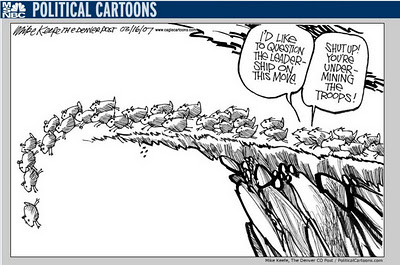
Human beings are not lemmings–so let’s get organized and get away from that cliff!

This happens to be my 100th post on Transition Times, and to mark the occasion I want to reflect on where I’ve come with this blog project, and what themes have emerged along the way.

When I started Transition Times, back in mid-July, I was away in Nova Scotia, trying not to think about the crazy shenanigans going on back home, where the Republicans were threatening to shut down the U.S. government and destroy our credit rating in the world, rather than negotiate reasonably towards consensus with the Democrats (otherwise known as “the debt-ceiling crisis”).

I was also reading Mark Hertsgaard’s Hot: Living Through the Next Fifty Years On Earth, along with Bill McKibben’s Eaarth: Making a Life on a Tough New Planet, both of which paint a stark portrait of how the climate change crisis will be affecting our lives in the foreseeable future.

All in all, I was in a pretty gloomy state of mind.

But then surprising things started to happen.

In the middle of the dog days of August, Bill McKibben and 350.org began a sit-in next to the White House, protesting the Keystone XL Pipeline and the development of the boreal forests of Alberta (otherwise known as “the tar sands”).

A month later, the Occupy Wall Street movement sprang up seemingly out of nowhere, protesting the government’s collusion with the super-wealthy (otherwise known as “the 1%”) and abandonment of ordinary Americans (otherwise known as “the 99%”).

The Occupy movement spread like wildfire, and the Keystone XL protest succeeded in at least postponing the pipeline and American support of Alberta tar sands extraction, giving the nascent climate change movement a boost and more of a chance to grow.

Along the way a historic hurricane ripped across the Eastern Seaboard, and a freak snowstorm dumped a good two feet of heavy wet snow on leafy trees in southern New England, knocking out power for some folks for days, and even weeks, and reinforcing the unavoidable reality of climate change.

Most recently, public awareness of the militarization of American policing has suddenly taken a giant leap forward, thanks to images of police brutality inflicted on old and young white people of the well-dressed, college-educated variety.  Over in Europe, the debt crisis threatens the dissolution of the euro zone, something unthinkable just a few months ago.

All in all, it’s been a dramatic few months, and blogging my reactions to and thoughts about all this has been a rewarding experience.

I’ve been struck by the power of the World Wide Web as a vehicle for social communication and movement-building.  Just as the Arab Spring showed us how cell phone texting technology could be used to ignite and build, at lightening speed, an effective resistance movement, the Occupy movement has demonstrated the extent to which Americans are plugged into the vast collective consciousness we call the Web.

While the captains of industry sold us smart phones and tablet computers intending to make us more agile shoppers and financial traders, they unwittingly put into our hands the tools of our liberation from the capitalist machine that has dominated us for the past 50 years or so.

Marx predicted long ago that the very instruments that enabled capitalism–globalization and technological prowess–would also be the instruments with which the bourgeoisie would dig their own graves.

In the age of global warming and climate change, this has never seemed more prescient.

But Marx also imagined that out of the ashes of the old world a new order would arise.  He believed that it would be possible for the proletariat, the working class, to create a better world, based on collaboration and compassion rather than ruthless competition.

It seems like Americans are finally awakening out of a long, dark sleep of obliviousness to the ways in which our corporate capitalist economic and governmental system has been leading us down a blind alley, at the end of which, it turns out, is a steep cliff.

Are we waking up in time to back ourselves out of that alley, away from that fearsome cliff?

It is too soon to tell. But those of us who are aware of the gravity of the situation today not just for our society, but for our species and the planet as a whole, need to be out there on the frontlines, both physical and virtual, making the connections that may enable us to successfully build a movement for change and avert disaster.

Human beings are not lemmings, but we are indeed susceptible to being led.  We want to believe that our leaders are competent and have our best interests at heart.  We hold on to this belief even when all evidence points to the contrary.

It’s time now to stop putting our faith in our elected officials and their paid enforcers, and listen instead to our own hearts and minds.  We know what needs to be done to bring the ecological web of life on this planet back into balance.  It is time to reach out to each other and find the determination to get the job done.

Pipeline put off, but I’m not celebrating, are you?

Bill MicKibben: We won a temporary victory on Keystone XL, but the fight goes on | Grist.

It’s hard to feel elated about President Obama’s decision this week to kick the can of the Alberta tar sands extraction down the road a ways, until after the 2012 election.

Yes, any victory is a good victory, and the environmentalists who took the trouble to go to Washington and raise a ruckus in opposition to the proposed pipeline deserve our accolades and thanks.

The cranes who use the Nebraska Sand Hills refuge will have another year or two of peace.  The Ogllala aquifer is protected for the moment.

But it’s discouraging to see how the Administration is trying to limit discussion to the pipeline, as if it, in itself, were the problem.

No, the pipeline is just a symptom of a much larger problem: the potential destruction of the Canadian boreal forests, with their countless species of flora and fauna, and their tremendous carbon-trapping properties.

Without the Alberta forests, global warming is a done deal.

Does anyone there in Washington understand what that means?

Earth to Washington: do you copy?

Go ahead, Earth.

We haven’t got much time left.  The temperature is rising.  Once the climate destabilizes, we won’t be able to turn things around for a long, long time.  We’re talking geological time here.

Copy that, Earth.

So can we get some serious action there, Washington?  Can we light a fire under those politicians and get going with solar energy already?

Copy that, Earth.

Like–now?

Washington to Earth, connection is down.  Can you repeat?  Over.

Yes, that’s right.  Over.

Bill McKibben: The Sky Does Not Belong to Wall Street!


Thanks to the magic of You-Tube, we can see a terrific 6-minute speech by Bill McKibben today, linking the fight to save the climate to the fight against the Wall Street tycoons.

He’s planning another big action in D.C. next month: setting up a ring of protesters around the White House, standing siege until the real Barack Obama comes out–not the zombie who’s actually considering letting the oil industry raze the boreal forest in Alberta and run a leaky pipeline all the way to the Gulf.

We need our Obama to stand up to those guys and remind us why we elected him!

Let’s hope Bill McKibben and company can free the real Obama from the stranglehold of Big Oil, so he can be our champion in the White House, as we so hoped he would be.

“The sky does not belong to Exxon.  They cannot keep using it as a sewer into which to dump their carbon,” Bill reminds us.

Barack, are you listening?