Looking catastrophe in the eye

Denial of climate change is deep and it is wide.

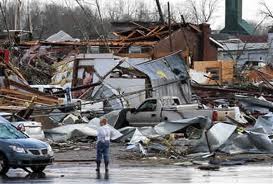
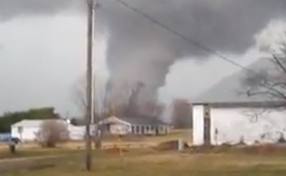
We woke up this morning to news of record-breaking tornadoes touching down across a wide swath of the American Midwest, flattening entire townships and leaving behind multiple trails of devastation.

Reading the mainstream media reports, the focus was all on the damage; very little was said about the cause.

Again, a case of focusing on symptoms rather than on the motivating problems.  The news media focuses on the “what” but ignores the “why.”

And they are even further away from what’s most important: looking for solutions.

Senator Bernie Sanders

Yesterday, thanks to the ever-impressive leadership of Senator Bernie Sanders, representatives of the national and international insurance industry came together in Washington to discuss the business implications of climate change.

Co-sponsored by the Ceres Foundation, which has been working to bring business into the sustainable future fold, the meeting was unequivocal in its acknowledgement that climate change is here, it is real, and it must be dealt with head on, before it runs right over us like a tornado.

The reinsurance industry reps were pretty blunt.

“We need a national policy related to climate change and weather,” said Franklin Nutter, president of the Reinsurance Association of America.

Pete Thomas of Willis Re, a global reinsurance broker, cited an alarming statistic: 4 out of 5 Americans now live in federally declared disaster areas.  “”Demographics and coastal urbanization are catastrophic force multipliers, making weather events increasingly costly,” he said.

In case you didn’t know, reinsurance companies are the ones that insure the insurers.

A difficult industry, in the age of climate change.

If I were an economist, I would be doing the math to figure out whether we are really coming out ahead as a society when we fight to pay less than $5 a gallon for oil.

What may seem cheap up front is often outrageously expensive in the long run.

Like eating cheap food laced with chemicals to keep costs down, to find yourself paying the exorbitant bills for chemotherapy in midlife.

It just doesn’t make sense.

There has never been a more important time to come forward and demand that government and industry work together to ensure (not insure!) our future.

Indiana Tornado, March 2, 2012

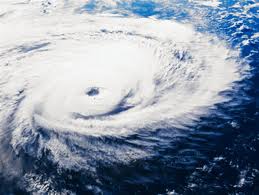
Let’s stop hiding our heads in the sand and pretending that everything will be all right–until the next tornado, hurricane, wildfire or drought rides roughshod over our house and town.

Sitting at home worrying is of no use at all.

If you want to be of use to your grandchildren and all future generations, you should be out on the frontlines, insisting that:

a) the media does its job as a watchdog and reports the whole story;

b) our elected representatives do their job and create policy aimed at saving lives by mitigating and adapting to the effects of climate change; and

c) our fellow citizens get off their butts and start taking responsibility for our collective future.

Get going now, before “catastrophic force multipliers” blow us all away.

From war games to peace games, it’s time to stop playing games

I am having an uncomfortable feeling of déjà-vu as the winds of March come up, blowing us headlong into an uncertain spring.

Ten years ago we were reeling in the aftermath of the 9/11 attacks.  Governments and the media were howling for retaliation, and the massive U.S./NATO war machine was gearing up for a fight, first with Iraq, and then with Afghanistan.

Now it’s an Iranian president who is talking tough and daring the U.S. and Israel to bring it on.

Have we learned anything from our misadventures in Iraq and Afghanistan?

We have a different, much more cautious and diplomatically-minded president minding the store.

But what can he do when American troops are so stupid—even ten years after being embroiled in on-going nation-building efforts in the Islamic world—as to defame the holy Koran?

How can he possibly convince potential Islamic allies that the US means well when it’s so glaringly obvious that we are insensitive, boorish bullies?

It’s shocking that the troops were so mismanaged that such a huge mistake could have been made.

First there was a report from some remote province in Afghanistan that a few Marines had urinated on dead Taliban fighters.  That was bad enough, but no—the US military had to take it further and actually start BURNING A WHOLE TRUCKLOAD of Korans.

WTF?

I mean really!  How would we like it if a bunch of Muslim soldiers came to one of our states and starting burning Bibles and Torahs?  It smacks of unbelievable cultural arrogance, coupled with unbelievable tactical stupidity.

So now two American officers have died in the ensuing protests in Kabul, along with two other American soldiers killed in one of the outlying provinces.

Killing an American military officer in Afghanistan is like killing a police lieutenant in New York City.  Do that and you’re asking for it.

Sparks are flying everywhere these days, and there’s way too much dry tinder sitting around.  It’s impossible to see exactly where all this is heading, but it sure isn’t in a “and they all lived happily ever after” kind of direction.

Once again, it’s necessary for ordinary American citizens to stand up and be the friction that stops this war machine from advancing.

Occupy has gone underground for the winter, it seems, but it’s time for all of us Americans to start sending messages to our leaders, in no uncertain terms.

We do not want war.  We want peace.  We want to live harmoniously with our neighbors and fellow global citizens on this planet and we demand that our military representatives respect other cultures, as we would want to be respected ourselves.

I know I will be patted on the head and told that it’s more complicated than this.

But it’s not.  It’s very simple.  This is how it is:

Human beings have over-populated the planet.  We are now fighting over limited resources like water, arable land, fossil fuels and natural resources.  That is what the fuss over Afghanistan, Iraq and Iran has been about.  That is what is going on with Syria, Sudan and Libya as well.

It’s all about the dangerous and difficult demise of the premise of unlimited growth and a globalized economy.

We now face the prospect of more war for two reasons:

1) so that we can burn up a lot more resources and have to rebuild them, thus cranking up our military-industrial complex and giving a boost to the economy in an election year;

2) so that we or our allies can gain control of valuable and strategic resources.

High-minded ideals like democracy, human rights and humanitarian aid have nothing to do with it.  They are what you bring in to mop up when the resisters are lying belly-up in despair.

And meanwhile climate change looms over us all.  All these little diversions are just so many more irrelevant goose chases that keep us from focusing on what’s really important: working feverishly to mitigate and adapt to climate change before we are swept away.

World leaders are playing a dangerously, devilishly simple zero sum game.  But we need to change the rules of the game now so that all of us can win.  Because if we don’t, one thing is certain: we will all lose, even those who currently seem invincible.

It’s that simple.

Climate Change Denial at the NY Times

I opened up Joe Nocera’s column in today’s NY Times, “The Poisoned Politics of the Keystone XL,” with anticipation, thinking that at last the Times was going to deliver a column roundly critiquing the pipeline and the oil-drenched politics from which it sprang.

My expectations could not have been more disappointed.

To put it mildly, Joe Nocera does not know what the hell he is talking about.  And I have to wonder whether some clumps of sticky tar-sandy dollars might have found their way into his pockets in return for the little PR gift he just gave, with flourishes, to the Canadian oil industry.

You will have to read Nocera’s column for yourself–I really can’t bear to summarize it.  Suffice it to say that he believes that:

  • 1) extracting the Canadian tar sands will make the US, and North America generally, “energy secure”;
  •  2) there is no point in pushing for energy conservation or a shift to renewable energy;
  • 3) Canadian tar sand oil “may be a little dirtier than the crude that pours forth from the Saudi Arabian desert…but is hardly the environmental disaster many suppose”;
  • 4) the US is foolish to cede our interest in this oil to the Chinese.

To which I (and some 300 other respondents to his column on NYT.com, as of this writing) have to say, Joe, are you out of your mind????  Or are you just being willfully blind?

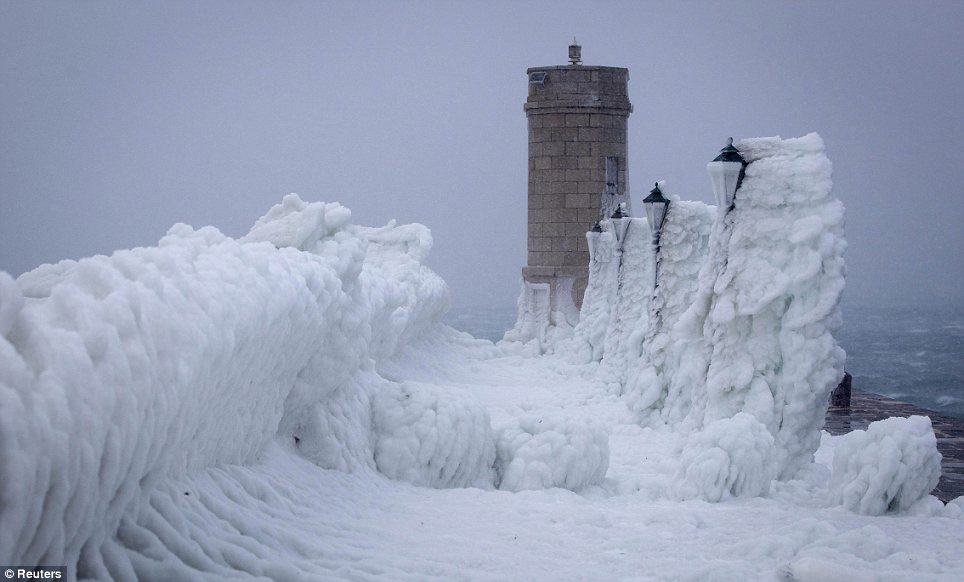
Yesterday I was writing about the holocaust of harp seals in the Gulf of St. Lawrence, where for the past decade global heating has been melting the ice at an alarming rate, leaving newly born seal pups at the mercy of thin, fragile ice floes.  I have also been thinking a great deal about the Little Ice Age that seems to be occurring in Europe this winter.  While we here in New England are enjoying springlike temperatures and a total lack of snowfall, Europe is getting dumped on with snow, and frigid temperatures to boot.

You’ll be hard-pressed to find solid information about this in the NY Times or other mainstream press outlets, but if you look hard enough, it’s there.  Climate scientists are pointing to the steadily melting Arctic ice cap as the culprit in the change in wind and weather patterns that are bringing more extreme weather to Europe–remember the 2010 hot spells that cost hundreds of lives?  This severe cold is also to blame for hundreds of deaths.

Let’s connect the dots.  Tar sands extraction can only be done by burning lots more fossil fuels.  That’s why environmentalists oppose it.  Not so much because of the destruction of millions of acres of pristine wildlife habitat, though that is generally acknowledged as sad collateral damage.

No, the main problem with extracting the Alberta tar sands is that doing so will speed the heating of the planet.  Heating the planet will lead to melting polar ice, rising sea levels, and ever more bizarre and destructive weather patterns.

Heating the planet will lead to death and destruction on a vast scale.

As the authors of a recent Royal Society special issue on climate change put it, if temperatures rise 4°C , “the limits for human adaptation are likely to be exceeded in many parts of the world, while the limits for adaptation for natural systems would largely be exceeded throughout the world. Hence, the ecosystem services upon which human livelihoods depend would not be preserved.”

This is science-speak for a basic premise I think anyone could understand: if the temperatures continue to rise, human beings, and the ecosystems that have evolved alongside us, are TOAST (expletive deleted).

Going full-bore at the Alberta tar sands is signing the final death sentence for millions and millions of living beings on this planet, including millions of human beings.

Humans in heretofore privileged spots on the globe, like Europe and the USA, will not be excepted from the general ecocide.

Do you have any children or grandchildren, Joe?

Can you really in good conscience assure them that selling the Alberta tar sands, to the US or the Chinese, will contribute to their “energy security”?

If you answer yes, then my original hypothesis is confirmed.

You are out of your (expletive deleted) mind.

Planetary Superbowl

So it’s Superbowl Sunday in the US, a day that millions of Americans look forward to for months.  I am always amazed at the passion with which sports fans engage in following teams, and I often think: if only we could harness that energy, dedication and drive and put it towards more important things like saving the planet, why, we’d do just that, right away!

If even a fraction of the money spent on sports teams, sports telecasting, sports advertising and sports merchandise were put towards improving children’s education, nutrition and health worldwide, we’d make giant strides towards achieving the Millennium Development Goals.

If we could get fans to analyze climate and biodiversity statistics the way they analyze the minutia of sports wins and losses, what a brain trust we could call upon to solve the pressing environmental problems of our time!

In the 21st century, the same goes for video game aficionados.  When I hear teenage boys talking with such enthusiasm about the latest iteration of World of War or Grand Theft Auto, I think wistfully that if only they were as engaged with the real, natural world as they are with these violent artificial environments, their incredible warrior energy could be channeled to such positive purposes.

No amount of wishful thinking is going to change the fact that testosterone and aggressive energy go together.  But aggressive energy does not have to be used to hurt people or destroy animals and the environment. Aggressive energy does not have to be hierarchical, meaning that I can only raise myself up by pushing you down.

The truth is that the multiple crises that are staring us in the face right now need aggressive, bold tactics to solve.  Putting the brakes on global heating, shifting to renewable energy, ending our romance with biochemically engineered agriculture and halting the deforestation of the great lungs of our planet will take all the creativity, ingenuity and yes, aggressive, take-charge energy that we can muster as a species.

It will also take something that the testosterone-fueled among us are less proficient at: collaboration, negotiation, cooperation.  That’s where we women come in.

I recently noticed a tweet from Desmond Tutu to Nick Kristof, two men for whom I have the highest admiration, in which the archbishop said to the journalist that if women were given more political power, the world would be a safer, more peaceful place.

Absolutely.  But what is really needed is an androgynous fusion of the best of masculine and feminine attributes.

We need our menfolk to fight for our species, and indeed our entire planetary ecosystem, with the same kind of enthusiastic passion that they lavish on sports and video games.

And we need our womenfolk to insist on getting engaged at every level of politics, business and education, not as token men, but true to our own deepest, estrogen-driven instincts for nurturing communities and societies.

On this Superbowl Sunday, I call on Americans to think about the bigger picture.  How important will it be which team wins or loses once climate change starts taking us all down?

Climate refugees–who’s next?

This week it was reported that thousands of people of the Tarahumara indigenous group, who live in the Sierra Madre range in northwest Mexico, have been coming down out of the mountains to seek food aid, because after two years of severe drought, coupled with unusual cold this winter, they are reaching their breaking point.  Faced with starvation, they have become climate refugees.

The Tarahumara are known in Mexico for their incredible endurance in long-distance running.  They are a proud people who have held themselves aloof from modernized Mexican culture, still keeping their ancient traditions of weaving, hunting and farming.  They still speak their ancestral language, and they have always been able to take care of themselves.

Until now.

In what is sure to be a trend in the coming years, it is the people who live furthest out on the margins of Empire who are affected first and most harshly by climate change.  People living on South Sea atoll islands or on the Arctic tundra are already seeing the effects of the rising seas and thawing permafrost.  Mountain people who depend on glacial melt for their freshwater are coming up dry.

We here in the heart of modern Western civilization are still feeling no pain.  In fact, I can’t count how many people have grinned at me this week as they celebrated the lovely spring weather we’re having in January—in the fifties, Farenheit, in midwinter.

Yes, it’s just grand—until summer comes and we’re still 40 degrees above normal, roasting at 120 degrees F on a typical August day.

In Mexico, the severe drought has left some two million people without access to potable water and basic food supplies, and authorities say they expect the situation to worsen.

This is bad enough, but it gets worse:

“The drought, which has been compounded by freezing temperatures, has already pushed up the cost of some produce, including corn and beans….But government officials have said they do not expect the price of exports to be affected.”

I am sure all readers of that NY Times article were reassured to hear that the cost of their imported avocados, tomatoes and other vegetables will be unaffected.  Who cares that corn and beans, the staff of life for millions of Mexicans, will cost poor people more?  That’s their problem!

Until it becomes ours.  If corn and beans become unaffordable in Mexico, and sustenance farming is no longer an option in a drought-stricken landscape, what comes next?  You guessed it, illegal emigration al Norte.  What other choice do these people have but to take the risk of trying to cross the border?

Up here, anti-immigrant fervor continues to burn.  Just this week House Republicans passed a law seeking to deny cash refunds under the child tax credit to anyone filing tax returns using “individual taxpayer identification numbers” rather than Social Security numbers.

Most of the people filing taxes without Social Security numbers are hardworking Latino immigrants who are paying taxes even though their earnings are at or below the poverty level.  Their children, many of whom are American-born citizens, will pay the brunt of their parents’ loss of the child care tax credit.

But really–who cares? Who gives a good goddamn if the poor can eat?  Just so long as we can still buy gleaming fresh produce year-round, and no one messes with our electricity or gasoline, let the rest of the world go to hell.

In case you couldn’t tell, I’m being sarcastic.  Seriously, this arrogant attitude is only going to be able to go so far.  Today’s climate refugees, tomorrow’s undocumented workers, are the harbinger of what may very well befall all of us as the climate keeps spinning out of control.

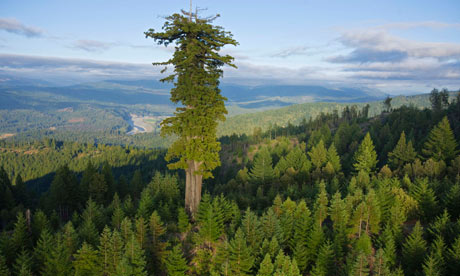
Just as in our forests, it is often the oldest, most majestic trees that are under the greatest strain from climate change, our oldest, proudest ethnic groups are also under tremendous strain now.  The Tarahumara managed to survive the Spanish Conquest, the Mexican Revolutionary War and the Industrial Revolution…but if they can no longer grow crops in their homeland, they must move or die.

Indigenous people like the Tarahumara have the best chance of actually surviving a catastrophic climate shift, because they still know how to live a low-consumption lifestyle, close to the earth.  We would do well to learn from them, and other indigenous groups worldwide, while their cultural traditions are still intact.

Those of us still enjoying the luxuries of Empire should be cognizant that for us too, it’s only a matter of time.

State of the Union or State of the Planet?

Tonight is President Obama’s State of the Union.  I love to watch that man orate, but I just can’t summon much enthusiasm this time.  It’s so obvious that he will be reciting lines that have been scripted for him, after much vetting by all the stakeholders.  So I don’t expect any surprises or delights in tonight’s speech.

Like a racehorse, Obama has many owners, and he has to answer to all of them.  The only thing they care about is that he wins.

The problem is that winning, in today’s terms, means ignoring what’s really important.  If we were going to focus on what is urgently needed right now, we would start with a massive push to shift from fossil-fuel energy to renewable energy.

This is starting to sound so old-news, and yet—hello!  It’s not being done!  Instead we’re still expending energy on fighting over the Keystone XL pipeline, which is so clearly a 20th century dinosaur that SHOULD NOT BE BUILT.

Rather than pour billions of dollars into thousands of miles of pipeline for dirty crude, we need to be drastically ramping up our manufacturing output of solar panels.  I have mixed feelings about wind power, but solar seems to be a no-brainer.  Put solar panels on rooftops across the USA, as so many in Europe are doing, and away we go to a brave new world of energy autonomy.

President Obama is not going to talk about solar power tonight.  His handlers won’t let him.

And so, he will continue to lead us down the daisy path of delusion—what David Selby and Fumiyo Kagawa, the editors of the new volume Education and Climate Change  (Routledge, 2010), call the  “eyes wide shut” approach to “global heating.”

If we were bring truthful, Selby and Kagaway say, we would admit that “future scenarios look grim: a mix of ubiquitous environmental disaster (including a huge loss of biodiversity), ongoing and massive internal and external population displacement as a result of sea incursions, seasonally recurring wildfires and desertification (and resultant social dislocation), hunger, starvation, internecine strife, violent conflict, tribalism, aggressively defensive localism, as well as the ever-lurking danger of genocide.”

Do you think Obama is going to address this stark scenario?

Not on your life!

He will talk about jobs creation and economic improvement as though we were living in a world divorced from our planetary base.

Most of us exist in this delusional sphere.  Plugged in, it’s hard for us to imagine that there could come a time when the physical disruptions of the planet could actually interfere with our digitized lifestyles.

Could there be a time when food from all the corners of the globe is not available in our grocery store?  Could there come a time when electricity is not either flowing freely, or about to be restored?

No one wants to hear this, but I have to say it anyway.  It is very possible, even probable, that there will be interruptions of food supplies and electricity  in the foreseeable future.

You won’t find any politician willing to talk about this.

For all politicians, and for most of us ordinary citizens, it is akin to heresy to suggest that sometime in the near future, the corporate capitalist economic model, based on endless growth and endless extraction of resources, is going to take a nosedive off the nearest cliff.

Neither the State of the Union, nor any political speech that will make prime time in the next year, will honestly engage with the reality of climate change.

Birmingham, Alabama, Jan. 24, 2012

That means that when storms hit, as they did just this week in Alabama, we will still be interpreting them through the conventional frame of “freak storms,” rather than as the steadily advancing harbingers of a future we don’t want to see.

We have such a limited window to prepare for the deep systemic planetary changes that are heading our way.  The difference between us and the dinosaurs is that we know what’s coming.

Are we going to squander this knowledge with shortsighted power struggles motivated by greed? Or are we going to use our superior intelligence to help our species, and countless others, avoid the fate of the dinosaurs?

It remains to be seen, but this much is certain: tonight’s State of the Union address, being just so much more smoke and mirrors, is not going to provide any answers.

Moving beyond fear and denial, or: Whither Environmentalism?

I have been hearing two forms of gentle criticism from some of my readers.

One is: omigod, this is so depressing, can’t you write about something else???

The other is: okay, we get it, enough with the exhortations, start telling us WHAT TO DO about all this scary stuff you’re laying on us.

I have been pondering both these responses, wondering how use my time and energy in this blog most effectively.

My major goal is to awaken more people to:

a) the realities of climate change bearing down on us all;

b) the incredibly fast, harsh and irrevocable impact that human over-population and careless industry has been having on the flora & fauna of our world–the real 99%;

c) the way big corporate interests have a stranglehold on crucial areas of our political system, our media, and our food supply, and thus on our political, mental and physical health, as well as the ability to control what we see, what we think and how we think it;

d) the way our education system is falling into line and failing to rise to the challenges of educating young citizens who will be forces for positive change in this dismal scenario;

e) and yes, depressing as it may be to contemplate, the dire consequences that will ensue if enough of us fail to wake up and act now to shift human society and our interactions with the natural world (of which we are a part) in a very different, more life-enhancing direction.

So that brings us back around to this key question: what should we do?

Believe you me, if I knew, I’d be trumpeting it loud and clear on this blog.  I wish I could claim to be the next Messiah!

Times have changed since the Biblical days when Moses could part the waters and lead everyone to safety–although I do find myself thinking more, as the sea levels rise worldwide, about good old Noah and his ark.

Moses drew on metaphysical powers to help him through dark times, while Noah got out his hammer and used technology to weather the storm.

In our own time and place, we are busy looking for technological fixes; those who believe in divine intervention seem to be resigned to Apocalypse, preparing themselves for Armageddon and the ascent to another, nonphysical realm of existence.

I think I am beginning to get glimmers of a middle path.

Yes, we need to be applying ourselves to the collective task of using technology to enable us to survive climate change, but our technological efforts need to be driven by a new reverence for all life on this planet, out of which a new ethics can grow that will replace greed and selfishness as the driving forces of human industry.

***

In the latest issue of Orion Magazine, environmental activists Derrick Jensen and Paul Kingsnorth both express their frustrations with the current environmental movement.

Jensen takes movement organizers to task for their drift towards actions that are “fun and sexy.”  “The fact that so many people routinely call for environmentalism to be more fun and more sexy reveals not only the weakness of our movement but also the utter lack of seriousness with which even many activists approach the problems we face.  When it comes to stopping the murder of the planet, too many environmentalists act more like they’re planning a party than building a movement,” Jensen says bitterly.

This criticism speaks to the first category of comments about my blog–the “oh it’s too depressing to think about” crowd.  Let’s face it, this is a big crowd!  The environmentalist party-planners are trying to reach these folks, who were suckled from birth on cheery feel-good media, by presenting environmental action as fun and sexy, rather than as scary and angst-ridden.  It’s environmentalism on anti-depressants, and it fits a big swath of our population, who don’t want to dwell on anything sad or depressing, unless maybe it’s a movie that you know will ultimately have a happy ending.

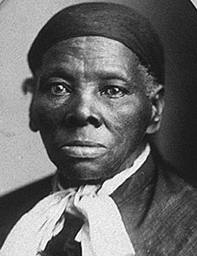
Harriet Tubman

Jensen ends his column by invoking the spirits of Harriet Tubman, Tecumseh and the Jews of the Warsaw Ghetto, who were deadly serious in their resistance, and willing to do whatever it took to succeed.

People like to be inspired by memories of heroes past; one of my most popular blog posts has been “Let Your Life Be a Counter-Friction to Stop the Machine,” which recalled Thoreau’s famous refusal to pay taxes to support a government whose policies he did not believe in.

In all these cases individuals were inspired by moral outrage to stand up and resist the powers that be in order to change the status quo.

That is certainly what each of us needs to be doing, in our own spheres, in our daily lives.  We need to become more aware of what is going on around us; of our place in the ecological web, and how the small actions we take each day contribute to a huge assault on the natural world that will soon lead to a climate crisis that will force us, willy-nilly, to change.

***

It is January, 2012, and when I look out my window I see brown grass, not a speck of snow.  It was 54 degrees Fahrenheit yesterday, for crying out loud!  You won’t find this story in the New York Times, but Brad Johnson’s recent report in  Alternet paints an unmistakeable portrait of serious climate change, not in the future, but right now:

“Fueled by billions of tons of greenhouse pollution, a surge of record warmth has flooded the United States, shattering records from southern California to North Dakota. “Temperatures have reached up to 40 degrees above early January averages in North Dakota,” the Weather Channel reports. Cities are seeing late-April temperatures at the start of January — Minot, ND hit 61 degrees, Aberdeen, SD hit 63 degrees, and Williston, ND hit 58 degrees, all-time record highs for the month of January.”

All very nice in midwinter, but what happens next summer, when temperatures are suddenly 40 degrees above average?  We won’t be laughing then, will we?

Which brings us back to the second criticism of my blog, that I only talk endlessly about the bad news, and exhort people to act, without giving any concrete suggestions for what to do.
Paul Kingsnorth

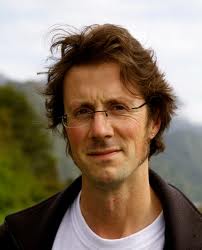
It also brings me to Paul Kingsnorth, whose long article in Orion, “Confessions of Recovering Environmentalist,” will be the subject of an open conference phone call on January 18.

Like Jensen, Kingsnorth is critical of the environmental movement–not for being too party-oriented, but for being too “utilitarian.”  Kingsnorth deplores environmentalists who have happily jumped on the technological fix bandwagon–the solar farm, wind farm, sustainable energy crowd–who are fixated on finding new ways to continue our same old depredation of the environment–just more sustainably.

“Today’s environmentalism,” he says,  “is…an adjunct to hypercapitalism: the catalytic converter on the silver SUV of the global economy. It is an engineering challenge: a problem-solving device for people to whom the sight of a wild Pennine hilltop on a clear winter day brings not feelings of transcendence but thoughts about the wasted potential for renewable energy. It is about saving civilization from the results of its own actions: a desperate attempt to prevent Gaia from hiccupping and wiping out our coffee shops and broadband connections. It is our last hope.”

Kingsnorth declares he wants nothing of this “soulless” form of environmentalism.  “What is to be done about this? Probably nothing. It was, perhaps, inevitable that a utilitarian society would generate a utilitarian environmentalism….But for me—well, this is no longer mine, that’s all. I can’t make my peace with people who cannibalize the land in the name of saving it. I can’t speak the language of science without a corresponding poetry. I can’t speak with a straight face about saving the planet when what I really mean is saving myself from what is coming.”

Disturbingly, Kingsnorth ends his article by telling us he’s turning his back on the environmental movement, and striking off on his own.  “I am leaving. I am going to go out walking.”

What he means is that he’s going to go and quietly reconnect with the land herself.  That’s important for all of us to do.  But I can’t advocate “going out walking” as a strategy for the urgent task of changing human relations with our planet.

More positively, Kingsnorth calls for a renewed “ecocentrism,” as opposed to the environmentalism that he sees as having become hollow and “plastic.”

“The “environment”—that distancing word, that empty concept—does not exist. It is the air, the waters, the creatures we make homeless or lifeless in flocks and legions, and it is us too. We are it; we are in it and of it, we make it and live it, we are fruit and soil and tree, and the things done to the roots and the leaves come back to us.”

That is indeed the central message I have been trying to send in my blog posts about “the environment.”  We are part of the web of life on this planet, and every tree that falls, every bird that is poisoned, every tree frog that goes extinct, is a leaf on the great tree of life that includes us humans too.  Kill all the leaves, and the great tree will die.

Tree of Life--Guadalupe, by Jane Lafazio

***

What to do?  Don’t stand there asking what to do!  Look around, roll up your sleeves and get busy!  Offer your talents to the task.  If you can write, start writing and share your thoughts with ever wider circles of readers.  If you can farm, start an organic CSA.  If you are an engineer, you should be focusing on renewable energy.  If you are a chemical engineer, you should be calling out the Monsantos and the Dows, even if it costs you your job.

We all need to be working on overcoming our media addictions and our socially reinforced tendencies to pull the covers over our heads.  We need to be engaging, Occupy-style, with our political system, and sending a clear message that business as usual is no longer acceptable.

There is so much to do, and so little time.  Let’s get out there, each bearing our own gifts and energies, and turn this earthship around.

Parents, listen up! You need to know, and you need to act–now.

We raise our children so carefully, so thoughtfully.  We make them eat their vegetables, organic if possible.  We send them to the best schools we can find and afford.  We screen their friends and text them anxiously if they’re late coming home.  We worry about their careers, their futures. Will there be any jobs for our precious children when we finally, with great effort and care, get them through high school and college?

Jobs are important, sure.  But why is it easier for us to think about the economy than about the biggest issue confronting our children, and all of us, in the next few years?  I’m talking about the climate crisis and the degradation of the environment. The loss of species, the toxifying of the air, soil and water.  The fact that the planet our children are inheriting is not the planet we were born on to.

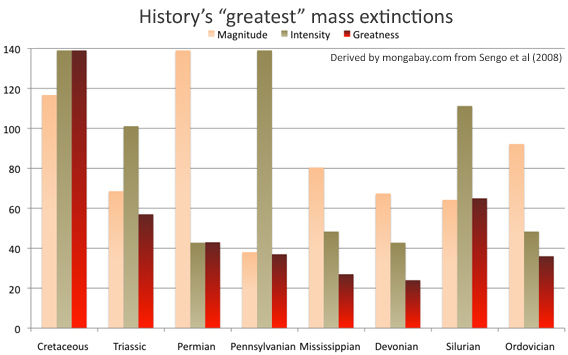
Of course, that’s always been true.  The planet has always been changing, evolving, sometimes in violent increments.  But it’s different now.  It’s different because never before, in the history of homo sapiens, have we been so close to the brink of a major, fast shift in our climate.  Never before, at least since we humans have been on the planetary stage, have we come so close to a global extinction event.

Global extinction event.  Where did I get a phrase like that?  It’s surely not my own language.  It’s one of those memes making the rounds of the Web.  But it’s not part of the lexicon of any of the parents I know.  They don’t want to think about it.  They don’t want to talk about it.  They don’t want to know.

How irresponsible is that, and how surprising, for parents who have been so conscientious, so completely invested in their role as primary caretakers and nurturers of their children.

It’s the privileged parents to whom I address myself most fervently. Parents who put so much time, energy and money into the task of raising their children, and do so with all their intelligence, responsibility and good will.  Parents who often have extra money to put towards a winter vacation someplace warm, or a summertime break by the beach.  Parents who are happy to send their kids to specialty camps in the summer, and who come up with the cash for school trips, afterschool lessons, an educational weekend in the city, a junior year abroad.

Privileged parents, listen up!  If you continue to turn a blind eye to the intertwined issues of environmental degradation and climate change, both of which are caused above all by enforced, ruthless economic growth based on the heedless consumption of fossil fuels and distribution of chemicals in the water, earth and air, your beloved children will face a future in which they cannot thrive.

A future in which none of us can thrive, unless it be perhaps the cockroaches, the ants and—for a while at least—scavengers like vultures and crows.

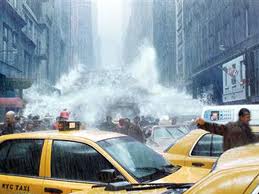
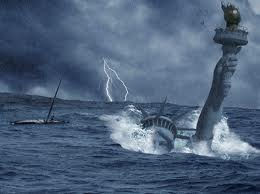
There have been so many disaster movies produced in the past few years—The Day After Tomorrow, 2012, WALL-E—putting out on the big screen our fears about what kind of future awaits us in an age of climate crisis and ecological collapse.  These movies represent our collective unconscious talking to us, presenting worse-case scenarios so that we can prepare ourselves for what may come.

We seem to like these movies because they give us the pleasure of stepping back afterwards and reassuring ourselves that it was just fantasy, not real.

The reports of the International Panel on Climate Change have none of the glamour of the big screen.  But they are saying the same thing as those disaster pictures.  They paint the same picture in different language.

It turns out that those disaster scenarios are real.

Sit with that knowledge for a bit, and then check in with yourself as a parent.  Once you accept that the looming environmental crisis is real, how can you continue to live your life blithely as though everything is OK?

Parents above all have a responsibility not just to take this knowledge seriously, but to act on what we know.  And parents of privilege–the 10%, the 25%–most of all.

We should be vehemently protesting the poisoning of our food, air and water.  We should be doing our utmost to stop the corporations who are wreaking this havoc, to change our own participation in the system, and to envision and manifest a better society that engages sustainably with the planetary ecological systems upon which we all depend.
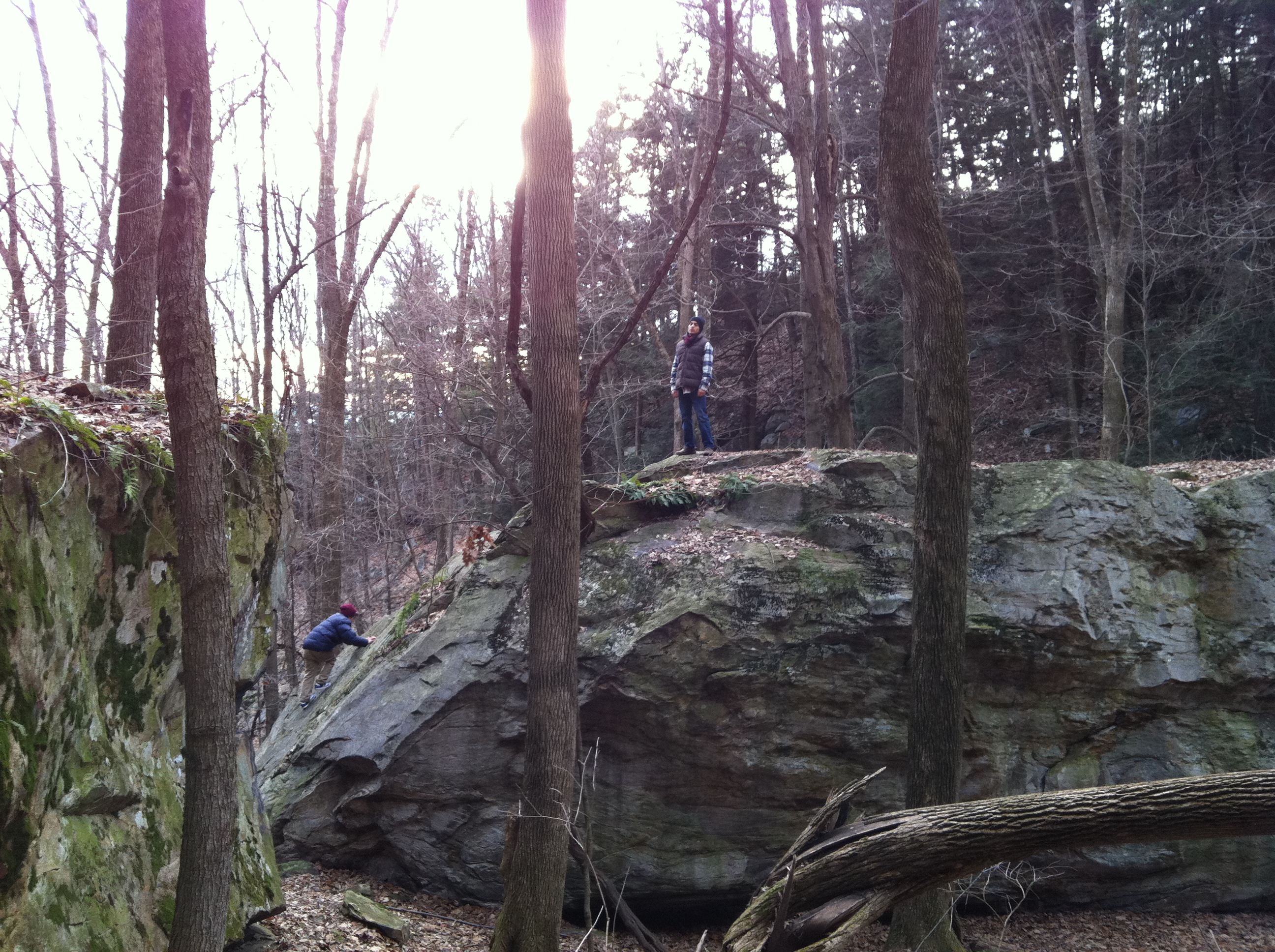
Never before have we stood at such a juncture as a species.  Now is the tipping point.  Now is the time for us to stand up and be counted.  Now is the time for us to dare to take a path less traveled, to think for ourselves, to do what’s right for us and our children and the world we live in, before it’s too late.
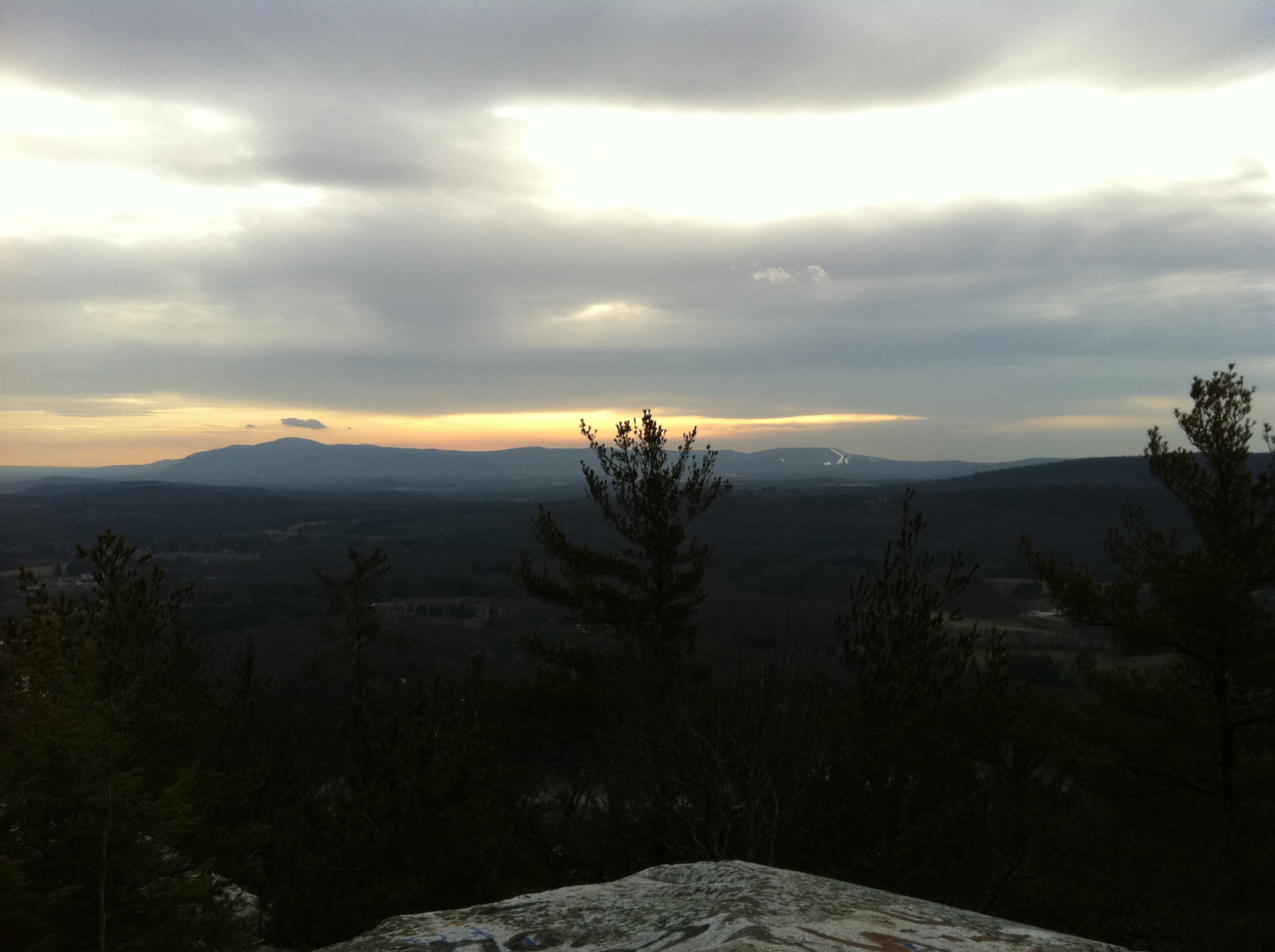
It will not be easy, the road ahead.  There is so much to be done to turn this environmental train wreck around, and so little time.  We may not succeed.

But we cannot continue to play dumb any more.  We cannot continue to keep playing the game as if nothing were wrong, as if the biggest crisis of the past 10,000 years of human history were not on the horizon.  We cannot keep dancing to the band on deck as the iceberg looms before us.

There is too much at stake, for ourselves and especially for our children, whose lives—with any luck, and a lot of hard work—will reach further into the 21st century than ours.  If we care about our world—if we care about our children—we must act decisively, do whatever it takes.  Now.

They don’t play nice. Should we?

So manifestoes are all very well, in the visionary department, but things get harder when you get down into the nitty-gritty of making transformative change happen.  I thought I might take some time this New Year’s season, 2012, to reflect more deeply on what it would mean to turn my dreams into reality.

Let’s start with the first point in my recently penned Manifesto for a Sustainable Future, which is:

1. Move from a top-down hierarchical system to a horizontal, egalitarian model of social relations based on inclusivity across all of the traditional boundaries used to keep different groups apart, and also opening up the possibility for cross-species collaboration based on respect and stewardship.

People have been talking about coalition across artificial differences between humans for a long, long time, and in some cases it has worked: for instance, the privileged white folks who believed in “equality, fraternity and liberty for all” played a huge role in freeing the enslaved Africans during the 19th century, and then a later generation of freedom-loving people from various heritages worked together again in the 1960s to extend the earlier gains through civil rights, women’s rights, decolonization, etc.

It’s not that hard to get people to agree in principle that all human beings deserve equal treatment before the law, or that children should have equal access to quality education, good food and health care.  The Universal Declaration of Human Rights is based on just such agreement.  The problem is that principles and declarations are one thing–like manifestoes–while actions on the ground are quite another.

In practice, we know full well that people of color, poor people and immigrants are not treated equally before the law in the U.S. We also know that there are millions of children in this country whose public schooling is inadequate, sometimes terribly so, and who do not have access to healthy food or good quality health care.

We know this, and yet we choose to ignore what we know.

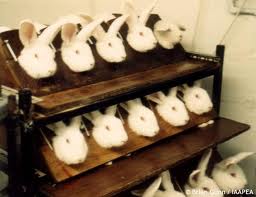
It’s the same thing with what is happening to animals in this country.  We know that scientific research, aka torture, is conducted on thousands, if not millions of defenseless animals every year.  We know that millions of pigs, cows and poultry are treated with total disregard for their well-being, as if they were machines being assembled for market, instead of living, sentient beings.  We know that millions of wild mammals, birds and marine life are relentlessly being pushed into extinction by the pitiless advances of human “civilization.”

We know this, but we choose to pretend we don’t know it.

Maybe that’s because if we really took this information in, the knowledge would be unbearable.  How could we live with ourselves, knowing that just by conforming to the status quo, we are responsible for so much suffering of others on this planet?

But we need to stop pretending and closing our eyes and turning away.

Because it is out of this deep knowledge of our connection with other living beings on this planet, and the inescapable awareness of the suffering we humans are causing, that a movement of solidarity, resistance and change will grow.

To bring up the term “movement” is to be clear that the kind of transformative change I’m envisioning could not possibly be the work of one person, or even a few people.  It has to be an unstoppable wave, demanding change and taking nothing less for an answer.

In the 19th century, the abolition movement ended up sparking a civil war in the United States.

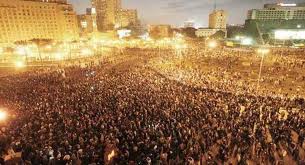
A second American civil war seems rather unthinkable to most of us now, even as we watch with amazement as regimes fall to enraged mobs all across the Middle East and North Africa.

In the US, free expression is tolerated far more widely than, say, in China, where journalists and bloggers are regularly beaten up and thrown in prison for daring to speak an unpopular truth.  The U.S. was shocked–shocked!–when the government called out the military and tanks began firing into the crowds at Tiananmen Square back in 1989.

But you have to wonder, watching the ruthless way city police are now trained to deal with street protests, how much it would take to provoke a similarly harsh response from our federal government.

What if there were a real movement of people united in their demands for “equality, liberty and justice for all,” as schoolchildren in the US are still trained to recite piously every morning, hands over hearts, when the Pledge of Allegiance is played over the PA system?

What if people got fed up enough with our bungling and corrupt national leaders, our deeply unfair and wildly overpriced medical system, the outrageous skewing of entitlements of all kinds to the wealthy, the militarization of our relations with other countries, the poisoning of our environment, the killing off of the natural world–fed up enough that we were willing to take to the streets and demand change, and not back down even when they brought out the tear gas, the tanks and the guns?

Then we might just have a Civil War II on our hands.  And like the first Civil War, it would be bloody, chaotic and uncertain in outcome.  But if the vision that guided it was sure and true, it might just lead to a whole new country arising out of the ashes of the old.

In this globalized age, such a civil war might easily turn into a global war, as the 99% the world over rose up against the tyranny of the rich corporate interests that are ruining the welfare of humans and the planet as a whole.

And here’s where I need to get back to the Manifesto, where I imagined a new social order based on a horizontal, inclusive, respectful, egalitarian model of social relations, with the welfare of the poor as important as the welfare of the rich; the welfare of the coral reef as valued as the welfare of the watershed feeding a city; the welfare of a livestock animal as important as the welfare of a cherished pet.

Not to say that everyone would necessarily be treated exactly the same–a cow wouldn’t want the same treatment as a dog, after all.  But whatever it takes to give a cow a comfortable, dignified life, should be undertaken.  Whatever it takes to give every child access to a high-quality education, should be done.  Decisions should be made in truly representative fashion, with no possibility of wealthy interests buying votes, no PAC lobbies or media manipulation allowed.

The devil is in the details in putting such a new world order in place, I know.  Many smart people maintain that human beings are irredeemably aggressive, competitive and greedy, and so we are incapable of creating such an ideal world.

But many other smart people say the opposite: that human beings are naturally empathic creatures, whose first instinct as infants is to love, not to hate.  Very few children are instinctively cruel to others.  The majority of us seem to be naturally good-natured, though easily swayed and corrupted by our social conditioning.

As Jeremy Rifkin has argued, “What is required now is nothing less than a leap to global empathic consciousness and in less than a generation if we are to resurrect the global economy and revitalize the biosphere. The question becomes this: what is the mechanism that allows empathic sensitivity to mature and consciousness to expand through history?”

Rifkin’s own answer to this question has to do with what he calls the “distributed Internet revolution,” which is “changing human consciousness” by “extending the central nervous system of billions of human beings and connecting the human race across time and space, allowing empathy to flourish on a global scale, for the first time in history.”

Rifkin envisions just the kind of transformation in social relations that I have also been dreaming of.  His description of a new human relation to what he calls our “biosphere” is worth quoting in full:

“The biosphere is the narrow band that extends some forty miles from the ocean floor to outer space where living creatures and the Earth’s geochemical processes interact to sustain each other. We are learning that the biosphere functions like an indivisible organism. It is the continuous symbiotic relationships between every living creature and between living creatures and the geochemical processes that ensure the survival of the planetary organism and the individual species that live within its biospheric envelope. If every human life, the species as a whole, and all other life-forms are entwined with one another and with the geochemistry of the planet in a rich and complex choreography that sustains life itself, then we are all dependent on and responsible for the health of the whole organism. Carrying out that responsibility means living out our individual lives in our neighborhoods and communities in ways that promote the general well-being of the larger biosphere within which we dwell.”

It would be nice if we could simply persuade the 1% corporate types of the necessity of this shift in human consciousness. But these people don’t play nice.

That’s why we dreamers who share this kind of transformative vision may have to toughen up, if we want to achieve our goals.

As Derrick Jensen keeps saying, how long will we wait until we realize that action is necessary to avoid annihilation?  It’s the birds, the bees and the bats who are dying now, but these creatures form the base of the pyramid on which current hierarchical human society rests.  If their populations crash, can ours be far behind?

Can we afford to wait and see?

Seeking balance in a bipolar holiday season

I have felt quite bipolar this Christmas season.

On the one hand, I have been going through all the familiar routines and patterns that I have observed at this time of year since earliest childhood: the planning, the extra shopping and cooking, the merry-making with friends and family, the sharing of gifts, especially for the children.  This is the way my parents always celebrated the winter solstice–not with any religious context, but simply as a festive time to light candles and keep a warm hearth against the winter dark and chill, bringing friends and family into the circle of friendship and good cheer, and exchanging gifts almost as a way of symbolizing the abundance accomplished in the previous year, and hoped for in the future.

On the other hand, I can’t escape the awareness of how well this playbook suits the capitalist economic model, which is relentlessly undermining the very abundance it seeks to enshrine, by pushing both the social system and the environment so hard that both are threatened with collapse.

The social conditioning that has made Christmas such a huge secular orgy of buying and exchanging gifts is very hard to break. If you don’t participate, you castigate yourself as a Scrooge, a boring wet blanket.  And you get depressed, too, because everyone else seems to be celebrating and having fun, while you–through your own perverse insistence on non-conformance–are off in a corner, worrying about the end of the world.

Yesterday, after opening presents by the tree and eating a cheery holiday brunch, my kids and I went for a long walk up the mountain that I can see from my front porch, the one over which the sun rises every morning.  Almost at our destination, we came through a narrow ravine in which several huge, craggy, beautifully colored boulders were scattered.

One presented one of those  classic overhangs that we know were used as sheltered campsites by indigenous hunters for millennia before the arrival of the Europeans.  Others were balanced with amazing precision, creating deep caves that we dared not explore in this season of hibernating bears.

There was an unmistakeable sense of age in that gathering of stones. Squinting my eyes, I could imagine the great glacier that had retreated down the mountainside, gouging out the flat ravine through which we now walked, and leaving the huge boulders scattered in its wake.  I could also imagine an even earlier time, when the rocks had been home to myriads of fish, with giant squid sleeping in the caves, instead of snoring bears.  Those great rocks have seen so much earthly history, standing majestically on their mountainside, unmoved by the shallower destinies of the flora and fauna that root on them or pass them by.

For a moment, putting my hand on the cold rough stone, my inner turmoil was calmed by a strong apprehension of the longer view of life on Earth.

It’s true that our current way of life, complete with its winking strings of colored lights powered by huge, dirty, out-of-sight mines, will not persist much longer.  Not with 7 billion people ravaging the globe like a swarm of ravenous locusts.

But these ancient stones have seen upheavals far more intense than what is currently on the horizon.  They have survived as silent witnesses to many cycles of destruction and regeneration.  They will be there, still silently bearing witness, after homo sapiens has become just another level on the fossil record of the planet.

There is strange comfort in this.

I still have every intention of trying to save our species–and so many other current inhabitants of Earth–by advocating for a transition from fossil fuels to renewables, and a shift from a civilization based on endless competitive growth to one based on collaborative stewardship of a steady state economy and a healthy, fully bio-diverse ecosystem. In my second half of life, this is the cause to which I will dedicate myself, second only to seeing through my job as a parent and giving my kids as strong a start as possible with which to face our uncertain future.

But somehow it helps to stave off despair, knowing that no matter how badly we may fail as a species, the planet will endure, and find new ways of prospering, new ways of combining the building blocks of creation into wondrous, miraculously beautiful and clever forms.

That knowledge forms a peaceful ledge on which to perch, between the bipolar swings of the season.  You’ll find me on this perch for the next week or so, quietly collecting my energy and my will for the struggles ahead.