Climate change is no joke

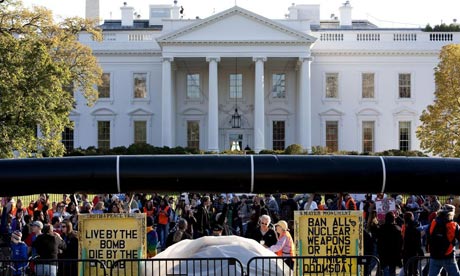
What a totally spurious pro-Keystone pipeline column from Joe Nocera in the New York Times today!  He doesn’t even bother to mention the 35,000-plus people who turned out in Washington to protest, focusing instead on “boneheaded” Bill McKibben and James Hansen and others who got themselves arrested at the White House last week as though that were the end of the story of citizen protest of this issue.

He dismisses the idea of a carbon tax on fossil fuel companies as ineffective, arguing, inexplicably, that this would “make expensive tar sands more viable.”  Huh?  Is anyone fact-checking this columnist, NYT?

“If you really want to eliminate expensive new fossil fuel sources, the best way is to lower the price of oil, which would render them uneconomical.”  Anyone follow that logic?

Nocera does not once mention the real reason for the protest against the tar sands extraction, which is the environmental hazards, from toxic waterways to exponential increase in the greenhouse gases causing global heating.  If that isn’t an insidious, dishonest omission, I don’t know what would be.

His only mention of climate change is dismissive: “Like it or not, fossil fuels are going to remain the dominant energy source for the foreseeable future, and we are far better off getting our oil from Canada than, say, Venezuela.  And the climate change effects of tar sands oil are, all in all, pretty small.”

There are so many things wrong in this sentence I hardly know where to start, and most of my readers probably can do the parsing themselves anyway.

The truth is that if, as Joe would have it, “fossil fuels are going to remain the dominant energy source for the foreseeable future,” then our foreseeable future is going to be very brief.

Yesterday while in DC I went back to the Smithsonian Museum of Natural History to see the Human Origins exhibit, which is, strangely enough, funded by the climate-change denying billionaire Koch brothers.

Once again I lingered at the opening display, a huge poster depicting the changes in Earth’s climate over the past few hundred thousand years, showing how the swings between extremes of hot and cold forced our ancestors to adapt or die.

The last inch or so of the immense timeline (I’m guessing it’s 12 feet wide) shows the last 10,000 years, the era of homo sapiens.  The swings between hot and cold get more jagged as we get closer to the present, with the last hundred years–a mere quarter-inch of the vast scale of human history–showing aggressive upward spikes of heat.

There is no mistaking the message of this chart.  We are now in a period of rapidly escalating climate change.  If we don’t adapt just as rapidly, a major correction to our population will ensue. Millions, even billions of humans may die off, very much in the “foreseeable future.”

For those left to tell the tale, one thing is for sure: the Keystone Pipeline, rusting and derelict on the western plains, will be a less-than-useless monument to the immense folly of men like Joe Nocera, who thought climate change was just a joke.

I have a dream…for President Obama and our nation

There is a fair amount of speculation today over what President Obama will say at tomorrow’s Inauguration speech, which coincides with Martin Luther King Jr. Day.

Obama, like King, is a great orator, especially when he allows himself to lose his cool and display the inner fire that animates him.

President Obama arriving in Newtown last month

President Obama arriving in Newtown last month

I hope that tomorrow he will allow us to see his human, emotional side, as he did when he shed unscripted tears the night he visited the bereaved parents in Newtown last month.

It’s true that many of his followers have lost the starry-eyed sense of possibility that made his first Inauguration such a joyful affair.

The romance of our first Black president, an outsider who dodged all the slings and arrows lobbed at him by his opponents to sprint his way to victory, has settled into a more realistic relationship.

We know he’s not superhuman.  He’s not infallible, and he cannot please all of us all the time.

But I hope that in this second term he will be bolder in his governance of the country.  Now that he doesn’t have to worry about running for office again, he can afford to take more risks to get his agenda through.

We’re seeing him do this with gun control, as—to give him due credit—he did in the first term with the Affordable Health Care Act.

It looks like he’s poised to make a positive move on immigration.

These are all important issues.

But they pale by contrast with the single most important issue of our time, restabilizing our climate.

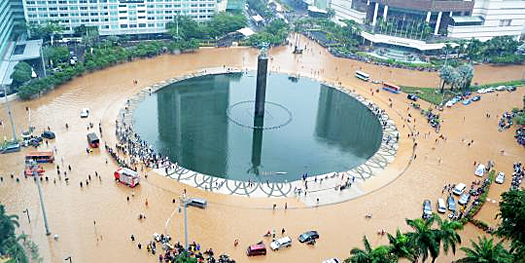
Severe flooding in Jakarta this week from unusually heavy monsoon rains

Severe flooding in Jakarta this week from unusually heavy monsoon rains

An image shot in Jakarta this week gives a snapshot into what is ahead for us, as a nation and as a global human civilization, as the oceans warm, the glaciers and poles melt and release trapped methane and the climate becomes more extreme and erratic.

Scientists tell us that the die has already been cast; the planet is set on a warming course that cannot be reversed.  But it can be mitigated.  We can still keep the average rise in temperature to 4C rather than the 10C that is the current worst-case scenario for the next hundred years.

I have a dream that President Obama surprises the nation and the world on Inauguration Day by announcing a plan to divert current government subsidies to the fossil fuel industry into a new federal fund to promote:

  • a shift to distributed energy (rooftop solar arrays, town wind turbines, local geothermal, etc);
  • new incentives for the manufacturers and installers of renewable energy components;
  • a new R&D push to improve batteries and design data centers and other industrial plants that use less energy;
  • an initiative in urban planning and architectural design to begin the arduous, expensive but necessary process of refitting our cities, towns and individual dwellings for our new climate reality;
  • a strong push to improve the environmental component of our education at every level and in every subject—not just science and technology, but medicine, philosophy, history, sociology, literature and of course economics and business.

This is my dream for the Inauguration speech, but I will not be holding my breath waiting for it.

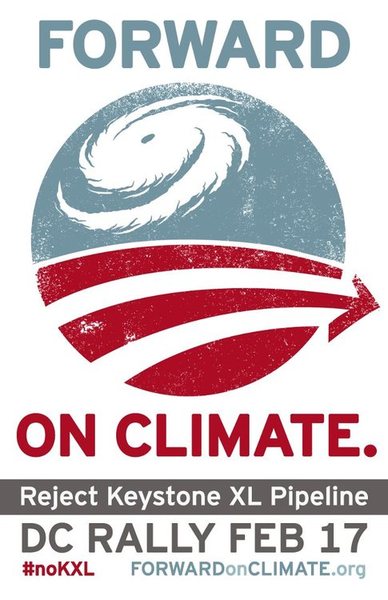
tumblr_mguif6Qltd1qzsjkco1_400I won’t be in Washington for the Inauguration, but I want to be there for the Presidents’ Day (Feb. 17) climate change rally in DC, sponsored by 350.org and the Sierra Club, to pressure our politicians to do the right thing for us and for our children.

President Obama, I know the tears you shed in Newtown were real—I know you are a feeling, caring human being who does not like to see innocent people suffer.

You have an opportunity in this second term to make a historic difference in our nation’s stance on climate change.

Instead of being one of the world’s biggest polluters and consumers of energy, we can become one of the world’s biggest innovators in renewable energy and energy conservation.

We can once again resume our historic position in the world as a moral and practical leader, doing what’s right for our planet and its beleaguered denizens.

The people elected you, Mr. President, not the corporations.

Do it for us.  Now.

Telling the story of climate change: a call to action

You probably didn’t notice, but this past week another round of major international climate talks were held in Doha, Qatar, surely one of the least “green” locations on the globe.

The mainstream press barely bothered to give a nod to what has come to be a mind-numbing ritual of bait, switch and dodge.

The alternative press knew better than to look to the assembled ministers in Doha for any real news, focusing instead on the grim report released early last week by the Potsdam Institute for Climate Impact Research and Climate Analytics.

The 84-page report, titled “Turn Down the Heat” and funded by that radical fringe group known as the World Bank, demonstrates that if we continue our reckless heating of the planet at the present rate, all the scenarios of which readers of this blog are well aware—sea level rise, droughts and floods leading to severe food shortages, more frequent and more severe storms, loss of biodiversity and loss of human life on a biblical scale—will come to pass.

The executive summary of the report concludes with a measure of urgency:

“A 4C world is likely to be in which communities, cities and countries would experience severe disruptions, damage and dislocation, with many of these risks spread unequally.  It is likely that the poor will suffer most and the global community could become more fractured and unequal than today.  The projected 4C warming simply must not be allowed to occur–the heat must be turned down.  Only early, cooperative, international actions can make that happen.”

But this takes us in circular fashion back to Doha, where as we know, nothing substantive is going on.

Those of us who are aware of what’s happening on the climate front—and let’s face it, there aren’t that many of us, we probably form our own little 1% club—find it frustrating and frightening to have to sit by and watch as our beloved planet goes into drastic human-induced traumatic shock while our leaders bicker and fiddle and run down the clock.

I find myself constantly pulled between A) wanting to support political efforts like Bill McKibben’s “Do the Math” tour, which aims to educate and inspire action (specifically, divestment from fossil fuel companies to pressure them to reinvent themselves as bonafide green energy companies) and B) wanting to simply hunker down and build resilience at the local level, perhaps enrolling myself and my sons in a crash course in how to survive a disaster.

For the moment, I am focusing on doing what I can within my purview as a teacher to help the upcoming generation of young adults get a handle on what’s happening to our climate, and do their own productive thinking about how to engage in the struggle to turn things around.

Yesterday I was fortunate to have had a chance to participate in a small way in my colleague Eban Goodstein’s C2C Fellows Workshop, a national program based at Bard College that seeks to give young people the skills and understanding to become successful leaders in the global effort to stabilize our climate and create a sustainable economy.
Eban Goodstein

Eban Goodstein

This is an ambitious undertaking, and Goodstein is going at it full tilt, holding weekend workshops several times a year at college campuses across the country, and bringing graduate students to Bard, with generous funding, to undertake Master’s degree programs in environmental policy with a special emphasis on climate-related policy and advocacy.

As Goodstein puts it, “Stabilizing the climate is not the work of a year, of a presidential term, or of a decade. It is the work of a generation.”

I see it as an essential commitment and responsibility to use my skills as a writer, scholar and teacher to help equip the upcoming generation for this great work we must all undertake now.

Goodstein is a unique blend of science policy wonk and communications guru, and I’m convinced that it’s at this very nexus that real change on the climate front will be forged.

All the dire scientific reports in the world won’t get people to wake up and change their daily habits, or insist that policy changes are made at the local, state, national and international levels, if the information is not presented in clear, compelling language.

A significant portion of the C2C Workshop, therefore, is spent in developing students’ storytelling skills.

It was interesting, and somewhat disheartening, to watch the students’ puzzled reaction when asked by Goodstein to talk about a favorite storyteller in their family.  Very few hands went up.

This is because most Americans today are reared listening to the TV tell us stories, not cherished individuals in our actual lives.  We are avid but passive consumers of prepackaged stories, and as a result most of us—unless we have the ambition to become stand-up comedians—don’t see storytelling as a skill we need to master.

Goodstein’s important insight is that storytelling is key to getting people’s attention, and telling a good story is essential to success in environmental advocacy and politics.

Good persuasive communication, he said, starts with a personal story, and then moves into the political.  Hook your audience with a personal anecdote, keep their attention with a strong narrative, and then finish up with a call to action.  And once you’ve got a strong story developed, practice telling it, over and over again, until you can do it in your sleep.

Armed with this advice, the group of some 80 students broke into smaller groups of five, each accompanied by a faculty or graduate student facilitator, for a two-hour intensive storytelling workshop.  Our task was to each come up with a short story about an inspiring person or event, write it up and tell it three times, to three different partners, then refine it and tell it again to the whole group.

The stories would be refined further the next day, told again to new audiences, and several would be singled out for telling to the entire big group, and given awards.

This is the kind of work for which I have been preparing my whole life.  There is nothing I would rather do than facilitate a writing workshop on inspiring stories!  And it gives me special joy to do it as part of a program aimed at giving young people the skills and mojo to tell the climate change story in a way that galvanizes action.

It may be that in the end, I would have been better served by spending my time learning survival tactics in the woods, but the truth is that even in the most dire circumstances, human beings have always needed their storytellers.  A good story well told can keep us warm in ways that may not be measurable, but that are profound nevertheless.

Here is the story that I wrote and told the students yesterday in our workshop.  I offered it to them—and now to you—with love and an earnest desire that it may inspire us all to each get to work on the climate change issue—in our own ways and spheres—before it’s too late.

My friend Pauline tells the story of how she came home from work one day and discovered that a civil war had started in her country, Congo-Brazzaville.  Suddenly she had ten people, mostly women and children, sheltering in her house as gunfire and bombs shook the streets of the city. 

When a bomb hit the house, she and her family and friends knew they needed to make a run for it.  They gathered what food and supplies they could carry, and left the house in the middle of the night, heading for the countryside. 

What followed was weeks of deprivation and terror as they huddled in the forest waiting for the conflict to die down so that it would be safe to return home.

I tell this story because it is emblematic of the many stories I have studied over the years, in which women and children are disproportionately affected as victims of social conflict and war. 

I tell it because I fear that in the age of climate change this is a story that will be repeated over and over again. Whether the violence is human—men with guns—or natural—hurricanes or droughts—the effects will be the same: women and children on the run, vulnerable and afraid.

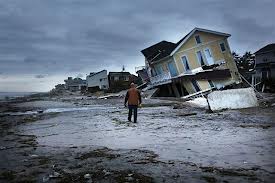
Recent studies indicate that hundreds of millions of people will become climate refugees in the next half-century.  And they won’t all be in Bangladesh or the Maldives, either.  Just ask a former resident of Breezy Point in New York City, devastated by Hurricane Sandy, how it feels.

In our lifetimes we will all witness–and many of us will likely experience—the kind of fear and hardship that Pauline lived through, when the social order disintegrated and violence became the norm. 

There are many, many guns in America.  It would not take much in the way of food and energy shortages to trigger violence.

Sometimes I find myself wondering whether I should be learning and then teaching others survival skills, instead of critical thinking and writing. 

What good will my PhD in literature do me in an age of relentless, recurring Hurricane Sandys?  What good will a vaunted college degree do my students?

But I do continue to believe that the stories of survivors like Pauline matter, and increasingly these are the stories I offer students in my classes on human rights, environmental justice, politics and literature.

We all need to learn from Pauline and other survivors about the amazing resilience of the human spirit.  Even in the face of terror and chaos, people can choose to be compassionate, generous and respectful of one another. We don’t all choose the violent path. 

It will not help any of us to focus on fear right now, as the climate change crisis gains momentum and threatens to engulf us.  What we must concentrate on instead is hope, resilience and solidarity.  That’s what the world needs from us now.

Thank you, Hurricane Sandy

Hurricane Sandy did the planet a favor by hitting hard right at some of our most elite enclaves.

This time it’s not the poor residents of the Ninth Ward facing the horror of flooding, it’s the wealthy owners of some of the most valuable coastal property in the country.

When I heard Mayor Bloomberg of New York, one of the richest men on the planet, finally come and out say the words “climate change” with urgency, I had to smile despite the seriousness of the context, because it meant that at last the rich and powerful are getting the message that the status quo cannot go on—at least, not if we expect to survive as a civilization into the 22nd century.

The truth is that Americans in the ruling class—the business owners, the politicians, the finance and computer wizards, the media producers, the educators, even the artists–have been living in a luxurious gated community our whole lives.

We have been watching the travails of those outside, including the accelerating extinction of other species and the poisoning of the environment, from what has seemed like a safe, secure vantage point, behind several layers of bullet-proof glass.

Americans have watched impassively as people in other parts of the world have been forced to deal with terrible storms, flooding, and droughts with increasing regularity over the past decade.

As long as the electricity stays on and the supermarkets and gas stations are full and open for business, we just don’t pay much attention to what’s going on with the weather.  As long as our homes are heated in the winter and cooled in the summer, what’s the problem?

People like James Hansen, Bill McKibben, and Elizabeth Kolbert have been knocking futilely on the windows for years, trying to get the ruling class to wake up and pay attention to the looming threat of climate change before it’s too late.

They’ve made little progress up to now.

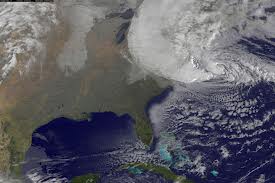
But Hurricane Sandy is a game changer.  Blowing into town the week before the Presidential elections, she put climate change on to the front page of the New York Times at last.  She forced her way into the bland discourse of Presidential politics.

She tossed her windy head and in just a few hours paralyzed the “greatest city on Earth,” creating $50 billion of damage that will take weeks if not months to clean up.

All of a sudden, city planners are talking seriously about flood gates, and some are saying it might be foolish to rebuild in the same way, right down along the coast.

I don’t hear many in our ruling class yet saying what needs to be said, which is that our entire lifestyle has been built up in an unsustainable way, and must be changed if we are to leave a livable legacy to our children and grandchildren.

We must wean ourselves from the addiction to fossil fuels.  We must shift from highways and cars to mass transit.  We must immediately start reducing emissions in every way possible, with special attention to the agriculture sector, which has to be completely redesigned with sustainability and health—our own, and that of the animals and plants we cultivate—in mind.

We must build a much more resilient, collaborative culture.  Competition and aggression may have been the watchwords of the capitalist and imperialist 19th and 20th century, but following their star has landed us in our current grave circumstances. We can’t go any further down that path.

For thousands of years prior to the Christian era, human beings lived tribally and cooperatively in harmony with the land.  Our population has now grown so large that we are reduced to fighting each other for increasingly scarce resources.

Going forward, if we are to survive, we must transcend the pettiness of national boundaries and ethnic differences, recognize our common goals as humans, and start to work together to provide strategically for the good of all.

This may seem like an impossibly idealistic goal, but if there is one thing that I believe can unite human beings, it is the awareness now dawning about how interconnected we are through our dependence on the life support of our planet.

It is sad that the Earth has had to sink to such an unbalanced, depleted state before we began to pay attention.  I would not wish a Hurricane Sandy on anyone.  But it seems that we need wake-up calls of her magnitude to get us up and out of the stupor of denial and inaction.

As I step over the threshold into my sixth decade today, I can feel a new resoluteness building in me; a new determination to use my time in a more focused way.

I vow to give the best of myself to the struggle for a sustainable future, and to encourage others to join me in this effort.  There is nothing more important any of us can be doing now.

Climate Change: What do we tell our children?

This has been a big week for change agents in the U.S.

First Annie Leonard came out with her new movie, The Story of Change.

Annie Leonard

Then David Brancaccio released his new movie, “ Fixing the Future,” with a two-day nationwide roll-out starting on July 18.

David Brancaccio

And today Bill McKibben made the cover of Rolling Stone, confirming him, at least in my eyes, as the true rock star of the environmental movement.

In the same week, radical economist Gar Alperovitz gave a historic keynote address to the Green Party National Convention, arguing that you can’t have a democratic society unless you democratize the ownership of wealth as well.

The big question is, will the best efforts of all these good folks make a difference in what is happening to our precious planet?

Or is it just so much more hot air, to add to an already too-hot summer?

This week I am teaching a class in media studies for middle schoolers.  While I’m amazed and delighted at the facility of the students with the technology of digital communications, I am also struck by the narrow focus of their concerns.

Three of the students have started blogs about fashion trends.  Another has started a blog about anime and manga characters.  Of the three others in the class, one is using her blog to do movie reviews, another is talking about hard science issues (the Higgs Boson discovery), and the third is writing about the stock market and the technological age we live in.

Absolutely nothing wrong with any of that.

Except that if we don’t solve the climate crisis, it will all be completely moot.

Runway fashions, movie stars, cartoons and stocks will all be swept away before the onslaught of food insecurity, economic instability and violently unpredictable storms.

No, this is not the stuff of Hollywood fantasy.  It is real, and as McKibben points out in the intro to his Rolling Stone article, it’s already happening.

As a teacher, what am I supposed to do?  If I remind my students (and my own children, for that matter) just how grave and portentous a time we are living through, aren’t I placing an enormous burden on them?  And isn’t it true that it is my generation, not theirs, that bears the brunt of the responsibility for where we are now?

And yet, if I say nothing and let them proceed as if fashion and anime were the most compelling topics of the moment, am I not being dishonest?

It really is quite a dilemma, for any parent and every teacher who is aware of what is really at stake in the times we live in.

I imagine it must have been similar for principled people in other times of crisis.  Do we try to shelter the children, keep their lives as normal as possible, for as long as we can?  Or do we let them know what is going on, and enlist them in the urgent struggle for positive change?

I don’t believe in lying to young people, and I have never been very good at lying, anyway.

The truth is that we are living through times unlike any faced by human beings before, in the 10,000 years of our history on the planet.

What we do in the next decade will make the difference between our continued existence on the planet, or the extinction or radical reduction of human civilizations on Earth.

I love Bill McKibben because so far, at least, he never gives up.

He’s got a true fighting spirit that refuses to take no for an answer.

Still, eventually even Bill may have to concede that the fossil fuel industry, with the politicians in their back pockets, is simply not going to give.

When that moment occurs, it will be game over for human beings on the planet, and so many other of our fellow Holocene travelers too—birds, fish, plants, and mammals.

But it’s not over til it’s over.    And I, at least, will never give up hope that people of all ages, from every corner of the world, will see the crucial urgency of this moment; that they will act upon their new awareness;  that the politicians will be compelled to listen; and that we will be able to turn this great climate change juggernaut around.

Looking Forward with Orion Magazine

The spirit of Henry David Thoreau was in the air last week at a gathering at his old stomping grounds at the top of Mount Greylock, the tallest mountain in Massachusetts, hosted by Orion Magazine to celebrate the launch of its new anthology, The Thirty Year Plan.

Keynote speakers at the event were Orion contributing writers Ginger Strand, Elizabeth Kolbert and Bill McKibben, all of whom seemed to have a common concern on their minds as they looked into the future: climate change.

Thoreau’s legacy of using writing as a vehicle for civil disobedience is a mantle that all three writers have already assumed, particularly McKibben, who is very much following in Thoreau’s footsteps in going beyond simply writing about activism to actually standing at the forefront of a growing activist movement.

Characteristically, McKibben wasted no time in reminding his listeners that it’s high time for decisive action in the quest to transition our global economy off fossil fuels.

“It’s not enough to go around changing lightbulbs or even buying hybrid vehicles,” he said.  “Individual change won’t do it, the math doesn’t add up.  We have to change the price of carbon to reflect its true cost to our environment.

“We will never be able to match ExxonMobil and the other fossil fuel corporations in money, but we do have people power, and we have to use it.  A lot of you are going to have to come down to Washington DC and get arrested with me!” he said to applause.

McKibben also suggested using the shareholder pressure that was successfully applied against apartheid in South Africa back in the 1980s, but this time putting pressure on the fossil fuel industry to reinvent itself as a renewable energy industry based on wind, solar, hydropower and geothermal.

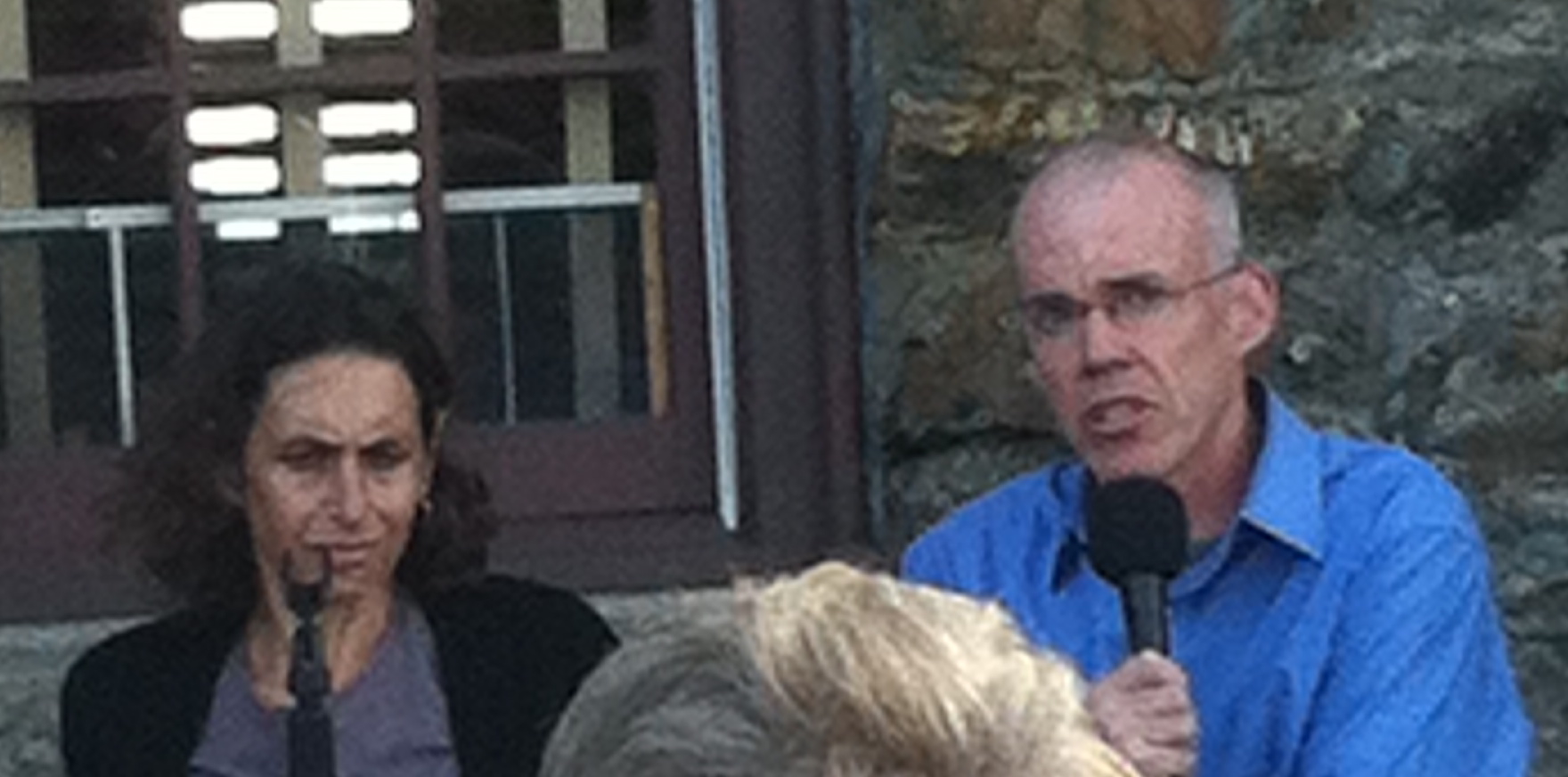
Elizabeth Kolbert and Bill McKibben speaking at Bascom Lodge, Mount Greylock, mA

The Beauty of Renewable Power

 From the top of Mount Greylock there is a striking view of eight huge spinning wind turbines on a ridge not far away, over by Jiminy Peak.  Wind power has become controversial in New England, with some towns and neighborhoods arguing vociferously against the location of wind turbines in their backyards.

In Massachusetts there has been great opposition to the proposal to build a windfarm out in Nantucket Sound, and here in the Berkshire hills we have also had many people of the NIMBY mindset.

When asked to comment on the prospect of wind turbines being set up on mountaintops in wilderness areas, Bill McKibben was unequivocal.

“I love the wilderness as much as anyone, and I’ve spent a lot of time out in the Adirondacks, as far away from it all as you can get.  But I’d have absolutely no problem with a wind turbine being set up overlooking my favorite patch of forest,” he said.

“The real threat to the places we love is fossil fuels, not wind towers,” McKibben said, adding that he has little sympathy for Americans who complain about wind towers being unattractive.

“Our sense of what’s beautiful is going to have to change,” he said.  Wind turbines located in Vermont or Massachusetts force people living in these exclusive areas to see the results of our impact on the climate, McKibben said, unlike our usual practice of making people in other parts of the planet—the Maldives, or Bangladesh, or the mountaintops of Virginia, for example—do all the suffering.

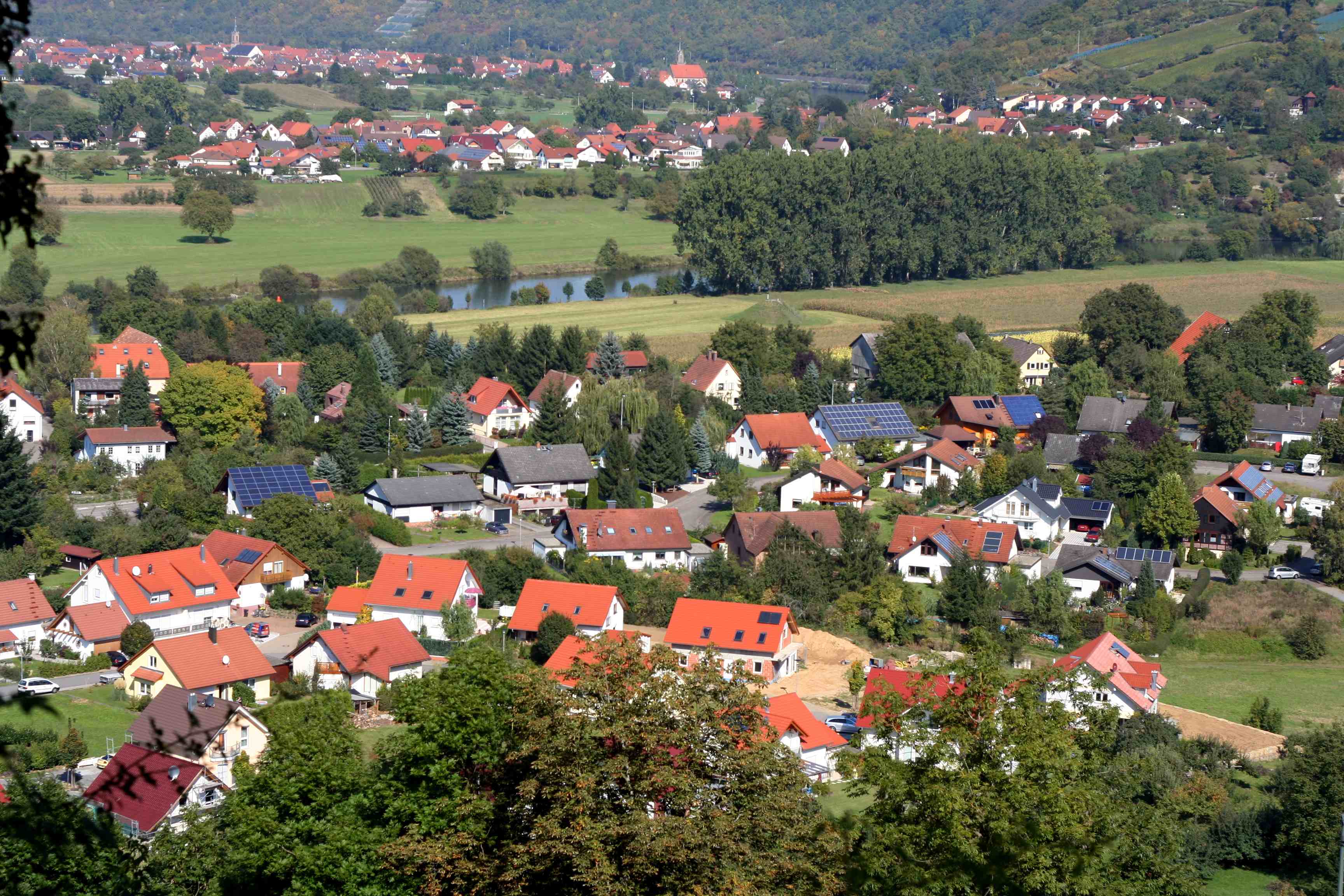
Emphasizing that the technology already exists to shift to renewable energy, McKibben pointed to the fact that Germany is already breaking records with its distributed solar energy model.

In May, German solar plants produced a record 22 gigawatts of electricity in two days, equal to the output of 20 nuclear power plants.

According to a recent Reuters article, “Germany has nearly as much installed solar power generation capacity as the rest of the world combined and gets about four percent of its overall annual electricity needs from the sun alone. It aims to cut its greenhouse gas emissions by 40 percent from 1990 levels by 2020.”

Solar panels sprout on roofs in Heidelberg, Germany

The Challenge of Getting People’s Attention

The contributors to the Orion Thirty Year Plan vision agree that the challenges we face in getting off fossil fuels are much more socio-political than they are technical.

One of the questions that remains intractable is how to get the public fully engaged with the issue of climate change, so that more people are willing to try Thoreau-style civil disobedience to force the politicians to do the right thing when it comes to regulating Big Oil—ending the subsidies on fossil fuels and giving incentives for the shift to renewable energy sources.

Elizabeth Kolbert said she was perplexed at the fact that she got a far greater response to a recent New Yorker article on child rearing than she generally gets on her much longer, more meticulously researched pieces on global heating.

“It’s something I think about a lot,” Kolbert said; “how to get people as interested in climate change as they are in raising their kids.”

Kolbert agreed with writers like Mark Hertsgaard, who suggested in his book Hot: Living Through the Next Fifty Years on Earth that it’s pathological to do the kind of intensive parenting Americans are known for while at the same time ignoring the biggest danger of all looming over our kids and grandkids: anthropogenic global warming.

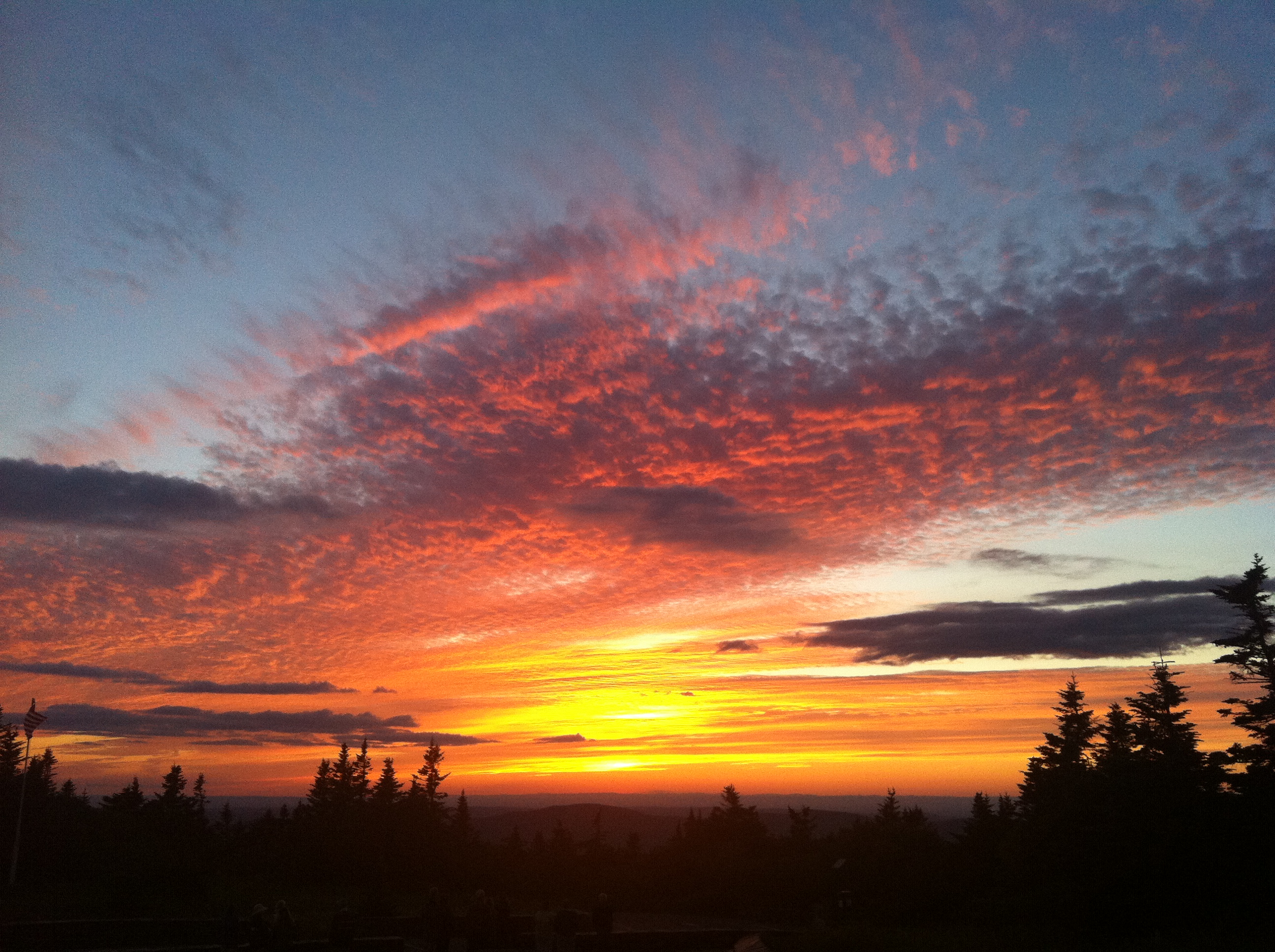
Sunset from Mount Greylock

As the sun began its spectacular descent towards the west side of the Greylock summit, and the assembled group went in to dinner and animated discussion at Bascom Lodge, it seemed to me that our charge was clear: to join leaders like Kolbert and McKibben in becoming change agents in our own spheres and out in the public eye.  We need to build a movement with a broad enough base of committed supporters to seriously challenge the entrenched power of the fossil fuel industry, as well as the massive inertia of the American public, which still has a tendency to imagine that life as we knew it growing up can go on for the next thirty years virtually unchanged.

Life will go on, with or without us humans.  But the story of our species does not have to end in disaster.  There is still time to write a new ending to our 10,000-year adventure on this planet, if we get up the courage and the dedication to get moving now.

What Good is a Higgs Boson When the Planet is Burning?

Call me sour, but I really can’t find much to get excited about by the news that physicists have moved one step closer to figuring out how the universe began.

Yes, the Higgs Boson is an amazing phenomenon.  “Without it,” writes Dennis Overbye in The New York Times, “all the elementary forms of matter would zoom around at the speed of light, flowing through our hands like moonlight. There would be neither atoms nor life.”

Yes, it’s an amazing feat, to which hundreds of scientists have dedicated their lives, to have actually nailed the elusive Higgs Boson in the giant particle accelerator built for that purpose.

But while the champagne corks are popping at the physicists’ convention in Melbourne Australia today, all the myriad problems confronting us physical beings still fester unchecked.

What good will it do us to understand how matter formed back at the beginning of the universe while we are succumbing to drought, wildfires, violent storms and floods?

What good will that marvelous particle accelerator do us when the climate is so disrupted that we can no longer rely on a steady stream of electricity, or a steady food supply to keep us going?

We really need all those super-smart people to pull their heads out of the air and start focusing much closer to our own time and place.

We need more scientists like Lonnie Thompson, who has spent the past forty years traveling to remote glaciers and mountain peaks all over the world to collect ice core samples that give us insight into climate change in the much more recent past—the last 10,000 years or so.

“Dr. Thompson,” writes Justin Gillis in The New York Times, “became one of the first scientists to witness and record a broad global melting of land ice. And his ice cores proved that this sudden, coordinated melting had no parallel, at least not in the last several thousand years.

“To some climate scientists, the Thompson ice core record became the most convincing piece of evidence that the rapid planetary warming now going on was a result of a rise in greenhouse gases caused by human activity.”

Do we really need any more convincing?

The latest storms to hit the U.S. struck the wealthy suburbs of Washington D.C., and surprise surprise, those Beltway folks were just as susceptible to power loss as the rest of us out in the hinterlands.  Forced to cope with triple-digit heat with no air conditioners, their sweat smells no sweeter than ours.

Likewise, the wildfires out West are burning up the homes of the wealthy as fast as they’re burning the millions of acres of dead trees decimated by the surge in the pine bark beetle population, another gift of warmer weather.

Wealth is not going to protect us from climate change.

Abstract particle physics is not going to mean a damn once the extreme weather really sets in, just a few short years from now at our current pace of greenhouse gas emissions.

We have the technology now to engineer a rapid shift to renewable energy sources that will immediately curb the pace of global heating to keep our planet livable.

If the greatest minds of our time trained their attention on this fundamental issue, I have absolutely no doubt that we could solve it.

And if the rest of us not only went along with the technological changes, but actively pressured our political representatives to enact policies that would force big business to do the same, worldwide, we could make sure that the new technology was broadly implemented, quickly.

Hell, it will be good for business! We are potentially at the start of a whole new age, where demand for brand new products like solar panels and geothermal pumps could keep factories running for decades.

We don’t need any more oil rigs or gas wells.  That way lies suicide, on a species-wide scale.

We cannot afford to waste any more time, or to allow ourselves to be distracted by anything less important than the urgent question of survival—our own, and that of all the beautiful life forms on this planet we love.

Time to Meet Your Maker

OK, I admit it.  I love my air conditioners.  I have two window units, one upstairs and one downstairs, and they cool my whole house to a comfortable 70 degrees, no problem.

On a day like today, 95 degrees Farenheit and humid, you’ll find me huddled around the AC, whether it’s in my home, car or office, or out to the movies or a restaurant.

Even though I know full well that my AC addiction is part of the problem of global warming, am I going to go without?

Hell no!

Why should I swelter while everyone else who can afford it, and especially the fat cats who got us into this global warming mess, are sitting cool as cucumbers and pretty as you please?!

Thus you have the tragedy of the commons playing out all over again, all the time.

It will take a crash—a blackout, a total system collapse—to make us give up our creature comforts here in the heart of Empire.

Some people say that crash can’t come soon enough, and I guess I agree with them.

Certainly for the rest of the life forms on the planet, the sooner human beings get lost, and take our asphalt and our AC and our combustion engines with us, the more chance there will be for the planet to recover without turning back the clocks to zero and starting all over again with bacteria and plankton and the other very basic building blocks of life.

But am I going to commit hari-kari right now to speed this process along, playing martyr for the benefit of the songbirds and the orangutans?

No, I am not.

I am going to keep living, keep cranking up my AC and bopping around in my car, until there’s no juice in the wires and no gas in the tank.

***

Trying to keep cool, I just went to see PROMETHEUS, a bizarre movie if there ever was one.

In it, human beings go to meet their Maker, and discover that their alien progenitor is an impatient, violent, sadistic psychopath—at least by human standards—who, immediately upon being revived from an eons-long sleep, greets his human rescuers  with murderous fury and sets course for Earth with a full payload of biological weapons.

As I complained to my son afterwards, why is the human imagination always so dark and destructive?

Why couldn’t the screenwriters have imagined a happier scene, where the Maker showers the Earthlings with stardust and thanks them for waking him up?

No.

We are, it seems, an irredeemably violent species.

We deserve whatever violent end awaits us.

When it comes, we should bow our heads and acknowledge that we totally brought it upon ourselves.

In the meantime, it’s getting hot in here.  Time to crank up the AC.

Bill McKibben: Stand up to the fossil fuel industry, or start growing some gills!

Last summer Bill McKibben and 350.org, the organization he and a group of Middlebury College seniors founded in 2006 to fight global heating, brought thousands of protesters to Washington DC to protest the Keystone XL Pipeline. As you’ll recall, they circled the White House in a ring five people deep; thousands were arrested over the course of two weeks; and the construction of the Keystone was at least delayed, if not entirely crushed.

This summer Bill will be at it again, taking on the fossil fuel companies even more directly. As he told us last night during his keynote address to the Strategies for a New Economy conference, put on by the New Economics Foundation and hosted by Bard College, the focus of this summer’s activism will be joining Sen. Bernie Sanders (I-VT) and Rep. Keith Ellison (D-MN) in pressing for the removal of some $113 billion in annual federal subsidies for American fossil fuel companies.

Bill reminded us that Exxon Mobil and the other big oil, coal and gas companies are by far the richest in the world.  Why should they be getting subsidies for doing business when those funds are sorely needed by citizens for basic services like education, health care and retirement?

And why should we be rewarding companies that not only pollute the environment, but also are responsible for spewing the greenhouse emissions that are rapidly making our planet uninhabitable for many current species, including humans?

“No other industry is allowed to dump its garbage in the streets,” Bill declared.  “Why should it not only be allowed, but subsidized, for the industry that is responsible for the most dangerous product of all, the CO2 that could totally destabilize our planet?”

Bill began his speech by noting apologetically that he has become known as a “professional bummer-outer,” and it was true: it was impossible to come away from his hour-long talk without feeling shaken by the severity of the future he laid out for us.

He gave several hard-hitting statistics and anecdotes of the gathering steamroller of global heating: the melting of the Arctic ice pack, the acidification of the ocean, the increase of floods, droughts, storms and disease.

Bill laid the blame squarely in the laps of the fossil fuel industry, which, he said, has been using its vast wealth to forestall political action on moving to renewable energy.

“Their business model is the problem,” he said.  “It’s either wreck their business model or wreck the planet.”

He’s not talking about destroying Exxon-Mobil and the other oil giants; just about forcing them to re-invent themselves as clean energy companies, and start putting their great resources behind the swift transition to renewable energy technologies.

How to accomplish this sea change?

“We’ll never match their money, so we need to deal in a different currency,” he said, “the currency of movements: passion, spirit, and creativity.”

Bill showed pictures from around the world of climate activists, most of whom, as he observed drily, “do not look like Sierra Club environmentalists, but they care just as passionately about saving our planet.” The movement he envisions must be international, but since Americans and Europeans bear most of the blame for the dramatic rise in greenhouse gases we have a special responsibility to work hard to make things right.

“I’m a writer,” Bill said.  “I’d rather be sitting home in Vermont typing.” Instead, he’s on the road much of the time now, addressing groups and working behind the scenes to build a climate movement powerful enough to take on the fossil fuel lobbies and head off disaster.

At this conference of economists, there were many gray heads in the hall, and many people wearing conservative professional clothing.  Bill called on the older folks, in particular, to join the movement to head off global heating, because “once you’re past a certain age, it doesn’t matter so much if you have an arrest record.”

“We have to get more confrontational,” he said, recalling the civil disobedience campaigns of Dr. Martin Luther King Jr.

Among the confrontational tactics we can look forward to this summer are “Nascar-style” blue blazers for members of Congress, with the logos of all the corporations from which they’ve accepted cash blazoned on their backs. 350.org will also be hosting an online Congressional scoreboard, so that citizens can easily see how each  senator or congressional representative has voted with regard to climate stabilization and environmental health.

“We’re not radicals or militants,” Bill insisted. “We’re actually quite conservative.  We want the planet to stay the way it is, or go back to the way it was when we were born.  The radicals work at the oil companies,” he declared to applause.

Bill ended by reminding the audience that the U.S. Chamber of Commerce recently issued a statement saying that there was no cause for alarm about climate change, because human beings will be able to adapt our behavior and physiology as the planet warms.

“What are they imagining?” Bill asked indignantly. “Are we going to start growing gills?”

It’s not gills we need, but guts—to follow Bill McKibben’s lead and force the politicians to represent the will of the people, rather than the will of the industries that are destroying our planet in the name of the next quarter’s profits.

Something tells me it’s going to be a hot summer.

To Avert Climate Change Disaster, Connecting the Dots Must Go Viral

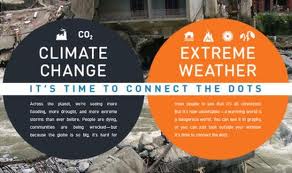
As of 8:30 a.m. EST this morning, 10,000 Facebook folks had already “liked” the new 350.org “Connect the Dots” campaign, which encourages people around the world to connect the dots between climate change and extreme weather.

That’s a good number of “likes.” But what we really need is for the concept to go viral, the way the Kony 2012 campaign did a few weeks back.

It will require the attention of millions of people, particularly those in the driver’s seat of climate change—that’s you and me, my fellow Americans—to turn this global heating juggernaut around.

Lately I can’t seem to stop asking myself why it is that so few people I know are willing to focus their attention on the crucial issues of our time: climate change, the chemical poisoning of our environment, the steadily accelerating wave towards what scientists call “the sixth great extinction event on Earth.”

I often feel like Cassandra of Troy, who was able to see disaster in the future of her beloved community, but was under a curse, imposed by the god Apollo, of never being believed or listened to.

It’s not so much that people don’t believe what’s coming (although we certainly have our share of climate change deniers in the U.S.)—it’s that they just don’t want to hear it.  They don’t want to know.

Maybe this is simply the animal in us coming out.  Like my peaceful dog, who sleeps by my side without any thought or concern for the future, we humans focus on the immediate tasks at hand—making a living, bringing up children, keeping the house clean, exercising, shopping, planning birthday parties, you name it—and we get so wrapped up in all that busyness that we are able to blot out the daily dying screams of millions of birds and animals, the rip and tear of millions of acres of forest going down before the chain saw and bulldozer, the sobbing of millions of children who go to bed hungry every night, the ever-increasing militarization of our world civilization, and the sinking knowledge that those in control of all those weapons and surveillance systems do not stand for good.

Sometimes I really envy my friends and neighbors who are able to cheerfully ignore what’s going on in the background, and focus on making the best of each day they’re given.

Sometimes I think that’s what I should be doing too.

Why torment myself with the constant awareness of spiraling crisis, especially if I can’t do anything about it anyway?

But there’s the rub.  I do have something to offer to the fight to connect the dots and raise the necessary momentum to push Americans, potentially the most powerfully innovative, can-do people on earth, off their couches and out into the trenches of turning this crisis around.

I have my voice, which thanks to the internet can be amplified around the world and swelled into a great chorus that cannot be ignored.

Over the last few years, I have made a study of change agents—otherwise known as activists.  I know full well that every single one began as I am beginning, just sitting with the burning knowledge that things are not right, and that change is possible.

The great Bill McKibben began his climate change work in his classroom, working with a group of tech-savvy college students who realized that the Web could be used to raise awareness about the necessity of keeping carbon emissions to under 350 ppm in order to head off extreme and irrevocable climate change.

In 2007, Bill and his students launched the first iteration of 350.org and were off and running, using the incredible tools of social media to connect people, places and events all over the world.

This is the thing.  We have the ability, as never before, to see the Earth as a whole system; to understand that every creature and community on the planet is vital to the functioning of the whole and has the right to a peaceful, prosperous life.

We as humans have the ability to distinguish between right and wrong, and we know full well that the damage we are causing with our reckless, destructive, indifferent ways is wrong.

We need people from all over the world, but especially Americans and Europeans, who have been responsible for so much of the damage, to come down on the side of right, on the side of life, on the side of justice.

Yes, it’s going to mean making lifestyle changes.

Yes, it’s going to take some focused attention on the local, national and international levels.

But if we do nothing—if we continue in our unconcerned merry ways, too busy and distracted to get involved—then we will wake up one morning facing some much more severe lifestyle changes.

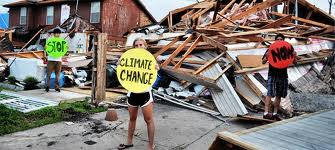
One morning it will be us waking up to a howling tornado flattening our town, or a raging flood sweeping away our Main Street, or an oil slick blackening our local beach, or a spike in food prices that makes even the basics no longer affordable.

It’s time to connect the dots, people, and pay attention.  Add your voice to mine, and let’s go viral with a campaign for a sustainable planetary future that cannot be ignored.