Women Must Stand Up For Peace & Security

A deranged soldier, armed with gun and knife, walks off the base into the nearby small town, and massacres 16 people, including 9 children.

No, it’s not the plot of the latest Schwarzenegger movie.

It’s real life in Afghanistan.

Or Oslo, Norway.

Or Homs, Syria.

Or the local high school or university in Anytown, USA.

What happened in Afghanistan this week is part of an ever-escalating pattern of violence visited on innocent civilians by armed men.
Janjaweed

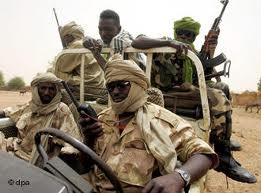
Whether the men are sponsored by a state (ie, they’re soldiers), are part of armed militias (think Taliban or Janjaweed or Kony’s Lord’s Resistance Army) or individual “rogue” psychopaths is immaterial to the victims of the violence.

The larger point that must be reckoned with is that we cannot expect to live in a global society dripping with arms and saturated with constant virtual and real instances of violence, and come away unscathed.

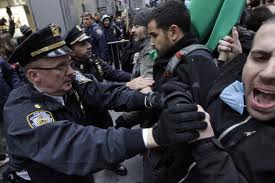
Americans are always so shocked when the violence happens in our backyard, as in school shootings or Timothy McVeigh-style bombings or police brutality against unarmed Occupy protesters.

We’re shocked when our soldiers, “our boys,” commit atrocities while serving in the armed forces abroad.

But how can we expect our boys to be immune to the general atmosphere of violence that we all live and breathe—young boys and men in particular?

People like to argue about whether playing countless hours of shoot-em-up video games results in more violent youth.

All I can tell you is that the military now uses video game technology to teach warfare to young soldiers, and one of the goals is precisely to overcome the natural human aversion to killing, especially killing those who haven’t done you any harm.

Lt. Col. David Grossman

In the class I teach periodically on gendered violence in military culture and war, we read excerpts from the work of Lt. Col. David Grossman, who maintains a website called “Killology.com.

Grossman, a psychologist who has become one of the most sought-after military and police trainers in the U.S., if not the world, defines “killology” as “the study of the reactions of healthy people in killing circumstances (such as police and military in combat) and the factors that enable and restrain killing in these situations.”

Grossman began his career teaching soldiers and police officers “the psychological techniques needed to develop Mental Toughness, a Survival Mindset, and a Hardened Focus,” integrating “psychological skills with physical and tactical training… to achieve maximal performance excellence as a modern warrior.”

Interestingly, now he not only offers training in the psychological “hardening” necessary to become a socially sanctioned killer—ie, a soldier–but also has begun to write and speak out against media violence, which, he says, teaches children to kill.

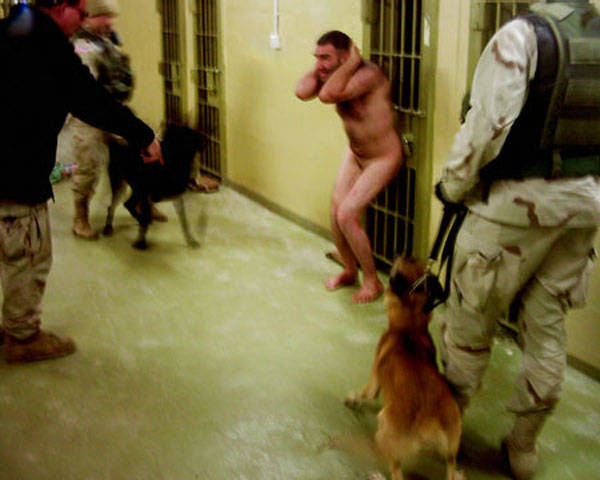
I think he would agree that what happened at Abu Ghraib a few years back, or in Afghanistan this week, when ordinary American soldiers go haywire and start torturing and killing civilians, is not just a case of a few bad apples.

If we allow our kids to grow up playing “harmless” violent games that are ever more realistic, gripping their imaginations and giving them access to the bloodthirsty, adrenalin high of killing, we can’t expect them to be agents of peace, especially when, as soldiers, they are further trained for war and given real weapons and the authority to use them.
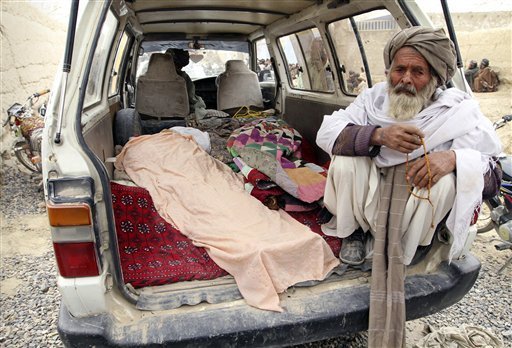
My heart bleeds for the victims of this latest massacre in Afghanistan.  I can hardly imagine the pain of the survivors of the family of nine children and their mother annihilated all in one foul blow.

They aren’t the first, and they won’t be the last innocent bystanders to be caught in the crossfire of a senseless war.

I think of the many other places in the world where civilians have been caught in the crossfire of baleful enemies: Central and South America in the 1970s and 80s, when the US and USSR funded proxy wars that wreaked havoc with innocent local communities; current conflicts in Africa and the Middle East that are really about the control—by outsiders, the same old Great Powers–of ever-shrinking resources; the list goes on.

Like the Russians before them, the American military is preparing to throw up its hands and give Afghanistan back to the warlords.

It will be a disaster for the women and girls there, who had begun to hope that a more liberal mindset might prevail and help them shake off the bonds of radical Islamic gender-based oppression.

Perhaps it is up to the women of the world to rise up together to insist that our men and boys stop pouring so much time, energy and money into creating and using lethal weapons, and representations of violence.

We have seen what happens when we let boys be boys and play with their guns, real or virtual.

Can we afford to stand by and watch the endless replay of rapes, homicides, massacres, the endless parade of crippled bombing victims, the burned, the sightless, the psychologically damaged for life?

I am losing faith in the ability of the men in charge to solve this problem.

Back to Lysistrata!

If we want life, we women have to walk boldly forward and manifest our visions of peace, security and cooperation.

We need to create a procession of the world’s women, those who will stand up for peace and nonviolence—a procession so long, so wide and so loud that it cannot be ignored.

Women of the world, the future is in your hands.  What will you do with it?


Taking responsibility for the violence

Marie Colvin

I have to admit that I was not paying much attention to the bombardment of the city of Homs, Syria—now in its 20th day—before the deaths of two Western journalists there this week.

That is completely typical of me as a Western observer sitting comfortably at my desk, far from the tumult and terror of war.

I sat complacently at my desk during the bombardments of Sarajevo in the 1990s, and Baghdad in 2003-4.  I was hardly aware of what was going on in Rwanda during the genocide there in 1994.  Glimmers of awareness come and go about the current violence in the Congo, or in Burma.

For the most part, I go about my business like any animal would, focusing on what’s in front of me.  As long as my belly is full and my personal security is not threatened, I can give a big yawn at the evening news, and go peacefully to sleep.

The attitude of the Western public—especially among Americans—rides the border between ignorance and indifference.  We’d rather not know—so we focus our attention elsewhere, on news that either appears to concern us more directly, or has a more soporific effect.

Oscars, anyone?

Death of Whitney Houston—OMG what a tragedy!

And let’s check in with the Republican horse race, shall we?  Will it be Santorum or Romney this week?  Ho-hum….

Sarajevo, 1994

Meanwhile, innocent civilians, many of them women, children and elders, are dying every day in Syria, just as they did in Sarajevo, Baghdad, Sudan, Libya…the list goes on and on.

This list concerns us Americans for one very good reason: our country is the biggest arms supplier in the world.

That means we enable all these bloody wars.  We build up dictators by selling them arms.  Then when they misbehave and start killing civilians, we wring our hands and act as if we had nothing to do with their rise to power, hence no responsibility for their misdeeds.

If Americans were serious about wanting a peaceful world, we would start by converting our weapons manufacturing plants to peaceful purposes.

Instead of machine guns, let’s make solar panels and sell them to world leaders.  Instead of tanks and jets, let’s export educational software and lightening-fast hardware.

Instead of sending military personnel to deal with civilians in other countries (as they did so ably this week, burning Korans in Afghanistan), let’s send teachers and doctors and enthusiastic, open-minded young people in every profession.

Americans need to understand that we bear a responsibility for the death of every child who dies as a result of a US-made weapon, no matter who wields it.

Giving up violence has to start with giving up the weapons that enable it.

Let’s dare to think outside the box, and put our hearts, minds and bodies in the service of peace.

Shaking the crystal ball: the future is what we make it

As I slept on my last post, the ominous words “civil war” kept resounding discordantly in my mind.

Am I really advocating for civil war?  Me?  I’m so non-violent I won’t even let my kids bring an x-box or a Wii into the house, for fear they might play violent video games.  I’m so non-confrontational that when I get angry I get quiet, not loud.  I find violence of all kinds so abhorrent that probably the only thing that would get me enraged enough to fight back is, precisely, violence, especially if visited on the defenseless: animals, children, trees.

But leavergirl‘s comment this morning has got me thinking again.

She says: “We don’t have to toughen up, but we do have to get more cunning. No street demonstrations will bring a better world. Such things force surface changes with more or less the same problems underneath. The system knows how to coopt, and knows it very well. What will bring about a better world? Living the changes at the local level.

“It’s mindboggling that people think they can “force” changes via demonstrations and protests. After all, the people in power don’t know how, even if they wanted to. We all have to invent it as we go!”

Just as it doesn’t make sense to try to fight big money with more money, it doesn’t make sense to fight violence with more violence.  And she’s right that change has to happen at the local level–that is the whole “be the change” idea.

But can we afford, in this age of globalized capital and planetary climate change, to focus locally and ignore what’s happening on the national and global scale?

It seems to me that we have to do both.  We have to do our utmost in our own homes and backyards and town centers to push for the principles we believe in.  But we also have to keep an eye on the big picture, and add our voices to the chorus calling for a change in the grand narratives that drive social policy in boardrooms and legislative chambers.

Standing up and being counted in a protest does matter.  Voicing public dissent to master narratives, as I’ve been doing in this blog, also matters.  Practicing non-violence and respect in one’s home and community is also important.  That’s what the fourth point in my Manifesto is about:

4. Model egalitarian, collaborative, respectful social relations in the private sphere of the family as well as the public spheres of education, the profession, government and law.

Thoreau’s model of civil disobedience, like Gandhi’s and Martin Luther King’s high-minded non-violence, were effective tactics of resistance that had real, tangible results.

So no, I am not advocating for civil war.  I don’t want to see it come to that.  I am, however, saying that we cannot afford to sit back and hope for the best, or wait and see, or let others worry about it.  We just don’t have that luxury anymore.

I look around me and see so many of my friends who are parents investing so much time, energy, thought and care in the raising of their children.  We worry over every test score, we make sure they eat their organic vegetables, we carefully shield them from violence and pain.

How can we be so focused on the local care of our children that we miss the big picture, which is that the world we will soon be sending them out into is in crisis? How can we not take it as part of our parental duty to do all we can to ensure that when our children grow up, their planet will be intact and able to support them?

On New Year’s Day I had a conversation with my son that keeps ringing in my ears this week.  He expressed his anger at previous generations (including me, of course) who have so degraded our environment that as he now looks out into his own future, he cannot be sure that he will have any chance of realizing his dreams.

We talked about possible future scenarios, including one that seems to be coming up in various conversations lately: conditions of scarcity leading to armed gangs marauding in the streets and taking whatever they can find.  “We would be fucked,” he said bitterly.  “We don’t even have a gun in the house!”

There it is again.  Would having a gun in the house make us any safer?  Isn’t the problem precisely that there are too many guns in too many houses?

And is it inevitable that conditions of scarcity would lead to violence? Maybe it’s likely, but are there steps we can take now to promote a different outcome?

Back to the importance of the local.  Strengthening local communities can head off a dog-eat-dog mentality.  We are all in this together.  Together, we created the present moment we now stand on; and together we will create the future.

What future do we want?  We all want abundance; peace; stability; security.  I don’t think anyone in the world would argue with those general goals.

We have the knowledge and the technology, right now, to achieve these goals, worldwide.

We do!  If we turned our best and brightest minds to the task, we could drastically reduce our carbon emissions within a decade, while still enjoying electricity and heat through solar, geothermal and wind.  We could drastically improve energy efficiency and get rid of our wasteful consumerist mindset.  We could stop making bombs and missiles, and instead refocus those trillions of dollars into education and social welfare, including intensive sustainability efforts on all fronts.

We could do this.  But again, we need that unstoppable groundswell of demand for change. Locally and globally.  NOW.


“Let your life be a counter-friction to stop the machine”

I believe that we are coming to a crossroads as a nation.

Since 9/11, we’ve been traveling down a road bristling with guns, military technology, paranoia and fear.  Though most of our aggressive energy has been aimed outside our borders, there has also been a steady preparation for mass violence within the U.S. as well.  In the decade since 9/11, our national police forces have been armed with military hardware, and have trained extensively in riot control, with the results that we saw for the first time during the recent Occupy protests.

In the peaceful town of Fargo, North Dakota, report Andrew Becker and G.W. Schulz of the Center for Investigative Reporting, “Every city squad car is equipped today with a military-style assault rifle, and officers can don Kevlar helmets able to withstand incoming fire from battlefield-grade ammunition. And for that epic confrontation—if it ever occurs—officers can now summon a new $256,643 armored truck, complete with a rotating turret.”

Billions of federal tax dollars have been spent nationwide on this kind of military hardware for police, in the name of Homeland Security.

Security from what?  Security for whom?

Short of an all-out military invasion by a foreign force, which seems hugely unlikely, these weapons can only be meant to confront an insurgency within our own borders.

Are we thinking about a civil war, then?

Are these police being armed and trained to protect the interests of the 1% against the raging anger of the 99%?

A year ago it would not have occurred to me to ask these questions.  But obviously the Homeland Security crowd was already thinking ahead and planning for a time when such armor and weapons would be necessary to “maintain security” and “uphold law and order” on the home front.

Yes, they must have been aware, even as they were cashing in on our ignorance, that there would come a time when no more could be squeezed from the bottom two-thirds of American society.  When there would be so many homeless, so many poor, so many disenfranchised, that these people would feel they had no other recourse than violence, and nothing left to lose.


A new report by the National Center on Family Homelessness found that “more than 1.6 million children – or one in 45 children – are homeless annually in America. This represents an increase of 38% during the years impacted by the economic recession.”

I’m sorry, but that is just unacceptable in this country, which likes to think of itself as the wealthiest and most enlightened society on earth.

When you add up all the trials and tribulations being visited on the poor in this country–and “the poor” is a vast category that gets bigger day by day–and you weigh billions in Homeland Security anti-terrorism outfits for police against dwindling food and shelter for children–well, something just isn’t right here.  There’s something rotten in the state of America.

And yes, we are at a crossroads.

It may seem to some that I am over-reacting, but this is the way it feels to me: if we continue following along docilely on this daisy path that we’ve been led down by the architects of corporate capitalism, we are like the Jews of Germany in 1940, peacefully gathering our belongings and getting on that train to Auschwitz, or marching cooperatively out to the forest to be mowed down by machine guns into the mass grave.

We know enough now to know that the powers that be do not have our best interests at heart.

We’ve been sickened by their chemicals, and our health care system seems geared to treat sickness (at a profit) rather than to promote wellness.  Our oceans, air, soils and drinking water have been contaminated and rendered toxic. Our taxes have been used for guns and landmines instead of schools and social welfare.  Those who have gotten rich in this system have done so on the backs of the poor and those who cannot defend themselves: the natural world above all.

Are we going to continue down this path?

Or are we going to gather our courage at this crossroads, and strike off in a new direction?

A lot of people are asking this question now.  Over on the New Clear Vision blog, Charles Imboden suggests that the Occupy movement has ignited a renewed “commitment to direct democracy and shunning of ‘representative,’ republican forms of decision-making (so often susceptible to corruption and corporate influence) [which] can be further strengthened as the foundation of the egalitarian, ecological society.”

As one of my readers commented today, what would happen if they held an election and we just didn’t show up?

I don’t know if there is a way to cut ourselves loose from the federal government and its taxpayer-supported state terror apparatus.  Thoreau tried, back in the 19th century, and was promptly thrown in jail.

His letter from prison is worth re-reading today.

“Unjust laws exist: shall we be content to obey them, or shall we endeavor to amend them, and obey them until we have succeeded, or shall we transgress them at once? Men, generally, under such a government as this, think that they ought to wait until they have persuaded the majority to alter them. They think that, if they should resist, the remedy would be worse than the evil. But it is the fault of the government itself that the remedy is worse than the evil. It makes it worse. Why is it not more apt to anticipate and provide for reform? Why does it not cherish its wise minority?

“If the injustice is part of the necessary friction of the machine of government, let it go, let it go: perchance it will wear smooth—certainly the machine will wear out. If the injustice …is of such a nature that it requires you to be the agent of injustice to another, then I say, break the law. Let your life be a counter-friction to stop the machine. What I have to do is to see, at any rate, that I do not lend myself to the wrong which I condemn.”

Let your life be a counter-friction to stop the machine.

As we gear up for next year’s Presidential elections, we must take these wise words of Thoreau’s to heart.

But we must also be aware, as Thoreau certainly was, that there are other paths to take, outside of the machine.

We stand at a crossroads.  Each of us must make up our own minds, in our own time.

How much longer will we continue to docilely feed the machine our tax dollars, and march peacefully where they lead us?

Violence against peaceful protesters–a federal crime?

So far I have not been able to get past the still image of the latest shocking example of police violence inflicted on unresisting young people.

I don’t need to watch the students begin to writhe and cry out in pain, I don’t have to hear the gasps of the onlookers or the shouts of the cops as the situation shifts suddenly from quiet resistance to chaotic disarray.  My imagination can set it all in motion, without the aid of video.

But the video was shot, and is now making its viral way around the Web, just like those shocking images, from not very long ago, of the abused prisoners in Abu Ghraib.

There too, what was striking was the imbalance of power–the heavily armed and aggressively clothed military police, against unarmed, and, in the case of Abu Ghraib, naked civilians, whose only crime, in most cases, was being in the wrong place at the wrong time.

At both UC Davis and Abu Ghraib, the victims may have lacked firepower, but they have something even more potent on their side: the moral outrage of the onlookers.  Once those moments of violation are caught on film and sent out into cyberspace, it doesn’t take long for public opinion to rise up against such an obvious abuse of power.

I am always curious, in a morbid sort of way, about the mentality of the perpetrators of this kind of violence.  Are they the grown-up version of the 7th grade bully, who takes pleasure in making other kids squirm?  Has their capacity for empathy been dulled or extinguished?  Are they simply sick, psychopathic sadists?

If any of these are the case, how could we have entrusted the crucial job of maintaining social order–otherwise known as policing–to such people?

The same old boys’ club that protected Jerry Sandusky and the Catholic priest pedophiles all those years is a strong force in the military and the police forces.  But at some point an individual will push things too far, and the club will no longer be able to protect him.  Thus Charles Graner, the mastermind behind the Abu Ghraib abuses, was eventually thrown in prison himself, and the officer who took it upon himself to casually pepper-spray those innocent UC Davis students has been suspended.

Nobody in the U.S. wants to see an eruption here of the kind of civil violence that overtook Egypt, Yemen, Libya, and so many other countries where civilians have been pitted against police or soldiers deployed by government officials who cared more about their own power than about the rights of their citizens.

Here in the U.S., we simply want to be able to exercise our constitutional right to peaceably gather in public places to express our political views.

Any city, state or federal government official who inflicts violence on such a peaceful gathering is guilty not only of a serious human rights violation, but also of violating the U.S. Constitution.

Last time I looked, this was a federal crime.

Month Three of Occupy Begins: From Class Warfare to Civil War?

Yesterday, the day of the big Occupy protests in New York, I sat in a train most of the day, on the way to Washington D.C.

I’m here for the African Studies Association annual conference, but of course I’m going to head over to the National Mall too, and see what’s cooking with Occupy DC.

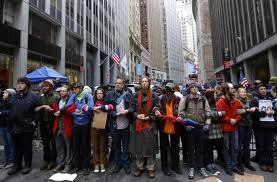
The dramatic and powerful protests in New York yesterday, captured magnificently in this NY Times slide show, can’t help but energize the movement around the country, and indeed the world.


I am struck again by how diverse this movement is–the people in these photos are old and young, of every ethnicity, most looking solidly middle-class.  There is really very little of the “anarchist hippie fringe” that Americans tend to associate with protests, at least since the 1960s.

It must be hard for the cops, who are so solidly middle-class themselves, to have to play the bad guys day after day. They must know that their salaries have been shrinking against the cost of living just like everyone else’s, while the Bloombergs and the Buffets and all those Washington politicians have been getting fabulously wealthy.

Economically speaking, the cops are squarely within the 99% and should not be the enemies of the Occupy movement.  But it’s very rarely been the case that police or soldiers break with their indoctrination in submission to authority, and side with the insurgents.

I pause as I type that word–insurgent–because it’s most often used to describe people in other countries who oppose the status quo, and turn to violent means to achieve their goals.  It’s one of those words– “rebels” is another–that treads carefully between the poles of “freedom fighter” (a good thing) and “terrorist” (obviously bad).

The Occupy movement bills itself as a determinedly non-violent movement.  All the violence that has occurred so far has been provoked or perpetrated by the police.

Dorli Rainey, 84, led away from the Occupy Seattle protest after being pepper-sprayed in the face by police on Nov. 15

But for the first time, yesterday, I found myself thinking about the possibility of civil war breaking out again in this country.

 Maybe it’s because of the refusal of anyone in Washington to take the protests seriously, starting with the President.

No one wants violence in this country. We are a nation of shoppers, not fighters.

The Occupy movement has been galvanized mostly by young people whose expectations of joining the ranks of contented shopper-workers, like their parents and grandparents before them, have been frustrated by the economic downturn and the substitution of debt bondage for living wages.

These are very real concerns that are not going to go away because winter is coming.  What we’re seeing here is, as others have noted, class warfare.  Just like in the 1930s, when workers stood firm in picket lines despite the factory owners’ efforts to break them, these protesters are motivated by the absolute knowledge that the current system is unjust and insupportable.

If politicians from Bloomberg to Obama continue to ignore the idealism and the frustration represented by the nascent Occupy movement, it will only continue to grow in numbers and conviction.

Yes, the rich appear to have all the power in this country neatly sewed up.  But never doubt the power of the people to break down barricades and triumph when they know that Justice is on their side.

It’s happened before in this country.  It could very well happen again.

9/11–Let’s Get Real!

All right, I have to say it.  I find the coverage of the 9/11 10-year anniversary nauseating.

The way we are collectively wallowing in our victimhood, while at the same time celebrating our oh-so-macho response to being attacked.

The way so few voices are talking about the reasons for the anger that launched those pilots at the US; the money that funded them; the horrendous aftermath of the attack, in which we rattled our sabers, swore vengeance against the “axis of evil,” and started a war in Iraq that cost hundreds of thousands of people their lives.

The way we aren’t talking about the corporate capitalist policies of exploitation and greed that led to widespread misery in the places where Al Qaeda operatives like to hide, places where starving parents opt to send their sons to the madrassa so they can eat, not knowing or caring what kind of indoctrination may be occurring between bites.

The way we aren’t talking about the indoctrination our children are getting here in our schools, through the sanitized version of the 9/11 story, in which the U.S. is always the good cop, policing the rest of the world in a superior and politically correct manner.

No one ever mentions anything about our status as the largest military operation in the world and the largest exporter of guns and military hardware—the biggest fomenter, therefore of violence on the planet.  How could we naively expect that this violence would not come home to roost?

And now those same policies of profit-seeking callousness have reached their limit in the natural world, and the violence we have wreaked on our environment can and will return to bite us—in fact, it is already visible in the erratic weather patterns of global warming, leading to natural disasters and food instability even here in the heart of Empire.

Instead of the obsessive repetition of schizophrenic patriotic self-congratulation alongside whining victimhood, we aren’t we talking about what really matters: moving forward in a way that radically changes the culture, both national and international, that produced 9/11?

Until we begin to have this forward-looking conversation, in which all the cards are put on the table and no credible way out of the morass of violence, greed and destructive exploitation is ignored, we will be stuck in a sick Groundhog Day of our own making, with no way to stop the repetitive madness.

I don’t know about you, but I want to wake up to a new day.

Paradigm Shift: From Competition and Destruction to Nurturance & Collaboration

I am almost 50 years old, and in my current lifetime I have lived through one of the most intense, rapidly changing periods of human civilization on this planet.  The technological discoveries of the 19th and 20th centuries were steadily gaining steam when I was born in the early 1960s; “progress” seemed infinite, and infinitely exciting.  Advances in medical understanding and treatment, the speed of computing, the mechanization of every aspect of our economic systems, and the explosion in information technologies, all made our civilization seem powerful—even invincible.  The blip of failure that registered when we “lost” the Vietnam War was quickly swallowed up in a huge wave of optimism as the economy surged in the 1980s, and the collapse of Soviet Communism, as well as the softening of Chinese Communism, made Euramerican Capitalism seem like a global Manifest Destiny.

And yet there was always the dark underbelly of the beast, clear to anyone who had the will to see it.  Rachel Carson sounded the first alarm on the dangers of synthetic chemicals, released haphazardly into the environment.  Chernobyl was the first major indicator of the serious dangers of “clean” nuclear power.  The slow epidemic of cancers (in the wealthy countries) and AIDS (in the poorer countries), and a myriad of antibiotic-resistant bacterial infections, have begun to make clear how we have poisoned our environment even for ourselves.  And now, in the first decade of the 21st century, it has finally become apparent even to the most resolute deniers that climate change is a dangerous reality to which we must adapt or perish.

So these are the transition times we live in.  I don’t think it’s too dramatic to compare our times to the last years of other great human civilizations in the past: the Romans, the Mayans, the Inca, the Ming.  All of these civilizations were based on the possibility of exploiting resources—human and natural—to such a great extent that tremendous wealth could be amassed for the rulers.  This was the same model followed by the English, French and Spanish during their colonial periods (16th-19th centuries, roughly), and the U.S. is playing by the same rules with the rise of corporate capitalism backed by the biggest, most deadly military the world has ever known.  The U.S. has become the political center of a global Empire that any feudal European would recognize, the only difference being the advantages that the contemporary wizards of technology afford our leaders.  King Arthur would have been lost without Merlin, and our leaders today would be lost without the magic of electricity.  Truly, our civilization would entirely grind to a halt were we to lose power for even a short period of time.

This is why the frantic quest for energy sources has turned so ugly in recent years.  To the average household, losing power is an inconvenience—but we know the power company will come out and fix it sooner or later, we don’t get too bent out of shape about it.  As worldwide demand for electric power grows, along with demand for easy, cheap means of moving people and goods through space, the question becomes one of supply.  Our scientists are telling us that the Earth is finite, that she has reached her carrying capacity in terms of sustainable growth.  And yet the human population keeps growing exponentially, and the global reach of corporate capitalism keeps creating more and more demand for modern conveniences: cars, refrigerators, air conditioning, computers.

Clever leaders manipulate the demand of the populace for the luxuries on display through every TV set.  We have become familiar, in the late 20th, early 21st century, with the term “debt bondage,” now not just applying to serfs in feudal Asia, but common in any American suburb, where it takes two adults working more than fulltime to support the average mortgage, car loans and consumer loans, not to mention the school loans and home equity loans.

In the 1960s and ‘70s, when I was a kid, people who opted out of all this, who chose a simpler life, perhaps even living “off the grid,” without running water, were derogatively termed “hippies,” weird fringe folks who spent their time smoking too much dope and having too much sex.  Some joined cults, and some of these cults were headed up by dangerous psychotics who led entire communities into suicide.  The media effectively demonized anyone who tried to resist the prevailing forces of modernity.  The most powerful dissenters were silenced by the oldest method in the book: assassination.  Since the 1960s, there has been an ever-growing list of charismatic leaders, educators and journalists who have been assassinated by the political elites, all over the world.  In the old days, the colonists would come into an indigenous community and immediately pick out the smartest ones, the ones who looked like the leaders.  Those who proved incorruptible would be enslaved or simply killed.

This is still going on, but now, in addition to the old-fashioned methods of violence, there are subtler ways to neutralize dissent and channel resistance.  Antidepressants, anyone?  Addictive media games?  Above all, educational systems that teach obedience to authority from earliest childhood, backed by drug therapy (think Ritalin or Adderall) and indoctrination into an acceptance of inequality and environmental destruction.

There are still pockets of clear thinking and resistance to be found, even in the heart of Empire where I live.  I don’t claim to have answers or to know the “right” way forward.  But I do have a fierce desire to explore our present reality in all its dimensions, even some of those that many people would find too “out there” for comfort—the spiritual realms, the astrological and the psychic.  Nothing should be off limits to inquiry; in many ways I still feel as curious as a young child, open to every nuance the world has to show me.

Just before a baby is born, the laboring mother is said to be “in transition.”  This is what happens when the birth canal is dilating enough to allow the child’s big head to drop down into the free air.  Our world is in transition now.  Something new and different is about to be born.  Whether we humans will still have a role to play remains to be seen.  But it certainly is an interesting time to observe, and I believe there is still time to try to intervene and create a more positive outcome, not just for us but for all the species we will take with us if there is a major environmental cataclysm.

We must be both the midwife and the laboring mother, in this case.  And the baby about to be born.  Our job above all is to nurture, to love, to stroke, to build a deep resilience so that we can survive whatever may be thrown at us.  This is the work of my second half of life.  And this is what I’ll be exploring and documenting in this blog.