The Problem of the Color Line Persists

A Grievous Wrong on Georgia’s Death Row – NYTimes.com.

A moment of silence this morning for Troy Davis, unjustly sentenced to be executed today in Georgia for the alleged killing of a police officer in 1989.  There is no doubt in my mind that if Mr. Davis were white, he would be in a very different place in his life right now.

His predicament hangs over me as I prepare to discuss W.E.B. DuBois this morning with my students–The Souls of Black Folk (1903), which is where DuBois famously and prophetically announced not only that “the problem of the 20th century is the problem of the color line,” but also formulated his theory of double-consciousness, the idea that the African American has to look at him/herself through white eyes.

“It is a peculiar sensation, this double-consciousness, this sense of always looking at one’s self through the eyes of others, of measuring one’s soul by the tape of a world that looks on in amused contempt and pity.  One ever feels his two-ness–an American, a Negro; two souls, two thoughts, two unreconciled strivings; two warring ideals in one dark body, whose dogged strength alone keeps it from being torn asunder.”

DuBois goes on to say that he wants neither to “Africanize America,” nor to “bleach his Negro soul in a flood of white Americanism,” but to “make it possible for a man to be both a Negro and an American, without being cursed and spit upon by his fellows, without having the doors of Opportunity closed roughly in his face.”

These words were written at the turn of the 20th century.  How sad it is that after a century of struggle for equality and full citizenship for African Americans, DuBois’s insights still ring true today!
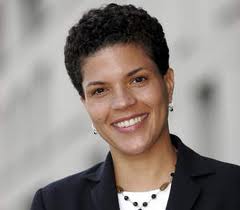
According to legal scholar Michelle Alexander, “More African American men are in prison or jail, on probation or parole than were enslaved in 1850, before the Civil War began.”  In her book on this topic, Alexander calls this “the new Jim Crow,” in which racial segregation and increased police presence in African American communities, combined with poorer schools and lack of economic opportunities have led to a straighter road to prison for young African Americans than to college.

Yes, things have improved since the time of THE HELP, but the road to equality still runs uphill–the playing field is hardly level for blacks and whites in our society, or anywhere in the world.

Troy Davis is yet another victim in the on-going low-level war against people of color in this country.  When are we going to stand up against racial discrimination?  When are we going to say no to the unjust tying of school funding to property taxes, a holdover from colonial times that is holding so many in our nation back? When are we going to insist that the prison-industrial complex stop profiting on the broken lives of young people who never had any chances in life, and start do the job it should be all about: rehabilitation?

Let’s not let the problem of the color line be the problem of the 21st century too.  We have too many other problems to deal with, and we need the creativity and energy of every citizen to remake our civilization into the just and sustainable global society it has always dimly aspired to be.


Is College Worth Its Salt? Hint: It’s Worth More For Men…

My friend Audrey (with whom, it should be noted, I went to college) raises an interesting question.  Is college worthwhile at all?  Particularly for families for whom it’s a huge financial stretch, often involving bigtime loans that take many years to pay off–is it really worth it?

For most of us, I think the answer would be yes.  College is not just about a nice shiny credential to paste at the top of your resume, although I have seen many students, especially during my time at SUNY Albany, for whom the goal seemed to be little more than that.  For these students, the B.A. might prove to be simply a rubber stamp, a certification of having successfully jumped some hoops, scored some goals and not messed up too badly.

That is not the kind of education that’s worth much in the way of sacrifice and effort.

The kind of college education that is worth a young person’s time, effort and financial investment is the kind that opens up new pathways which they might very well never have found any other way.  For instance, I don’t think I would have ever sat down and read all of the novels of Virginia Woolf if Jamie Hutchinson hadn’t led me with passion and enthusiasm through my first one, To the Lighthouse.  His obvious delight at Woolf’s language and the way she structured her novel inspired me to go down into the musty stacks of the library and find some more of her books, and I’ll never forget the magic I felt reading Mrs. Dalloway, The Waves and Orlando for the first time.  Her books cast a spell on me from which I never wanted to wake up.

For my son, now a senior at Simon’s Rock, it was the world of science that opened up for him in college.  He had been bored in all his classes in the 10th grade, and had no idea what he was interested in focusing on for a potential career path, other than his original dream, first expressed when he was two years old, of being “an underwater photographer.”  A college class in marine biology showed him that his dream could become a reality, and started him off on a scientific journey that led him to study eels in the Hudson River as an intern on a faculty summer project; take a junior semester in Baja California studying octopi and other marine life there; win a summer fellowship to work as a paid intern at the Virginia Institute of Marine Science, working on a faculty project on eelgrass habitat; and now to do his senior thesis project on a major riverfront restoration project.  None of these doors would have been open to him, or would even have been visible to him, had he not been enrolled in college.

And of course, there’s the social side of college too.  From the social networking with like-minded peers to the ecstatic meeting of kindred souls, the late teens/early twenties are when the most sparks fly, socially speaking, and college is the best place to meet the kind of people who are likely to be focused, goal-oriented and at least relatively stable.  This is not to say that there aren’t all kinds of flakes and basket cases in college.  But even those people are there because their families care enough to make sure they have the best chances in life, and are willing to make whatever sacrifices are necessary to help them over the difficult shoals of early adulthood.  Having a peer group like that counts for a lot.

Much is always made of the value of a college degree in terms of increased earnings.  Interestingly, in looking at the census data, earnings still remain skewed by gender.

Even though more women are now finishing college than men, still, college-educated women earn significantly less than college-educated men:  “women earned 67 percent of what men earned overall and earned 76 percent of what men earned when working full-time, year-round. At the lowest attainment level (not a high school graduate), the difference was 63 percent overall and 75 percent within the full-time, year-round worker population. At the highest attainment level (advanced degree), the difference was 66 percent for the total worker population and 69 percent for the full-time, year-round worker population.”

Is it worth it to go to college? Yes.  But we women have got to learn to be more forceful in advocating for ourselves with our bosses!  There is no reason why in this day and age women should still be earning only 70 cents on the man’s dollar.  Could it be that our vaunted education has the subtle effect of making us reluctant to question authority and speak up for ourselves?  Why doesn’t it have the same effect on men?

Dr. Leonard Sax has proposed some interesting hypotheses in answer to these questions, namely that boys are socialized to show off and act aggressive in school, while girls are socialized to be demure and wait for recognition.  These behavior patterns can get boys into a lot of trouble in the early years of school, and may turn some off from school entirely.  But at the higher levels of schooling, being aggressive is often rewarded, just as it is in the marketplace.  Boys and men tend to exaggerate their strengths, while girls and women tend to exaggerate their own weaknesses.

These are complex socialization processes for which there is no quick fix.  We’re all only human.  But it’s important, particularly for young women, to be aware of the likelihood that we will not receive equal pay for equal work unless we step up and demand it.

If their college education was worth its salt, it would give young women the skills and confidence to do just that.  And it might just teach young men some humility along the way too.

Education at the crossroads: cookie cutter or cutting edge?

“Education has to be at the forefront of restoring this country,” said Bard College President Leon Botstein today, at a ceremony formally welcoming incoming Simon’s Rock provost Peter Laipson to his new post.

“The problem with America is an absence of discipline and an unwillingness to confront unpleasant truths,” Leon continued, elegantly making the case for liberal arts education as a crucial piece of the on-going struggle to bring our country back to its core values of democracy, tolerance and creativity.

Most importantly, he said, “young people need the tools to be able to think for themselves.”

So true–and yet this kind of active learning has to start long before the college level!  I contrast Leon’s remarks today with the parents’ open house I attended last week at my son’s middle school, where all of the teachers made reference to how their lesson plans included preparation for the MCAS exams (the Massachusetts version of the No Child Left Behind federally mandated standardized tests), which the 7th graders will be taking next spring.

The middle school principal, in his welcoming remarks, talked about school as a place to ignite students’ passions, but once the teachers took the stage there wasn’t much talk of passion, nor of the kind of student-centered learning that helps kids find out what they’re interested in.

In today’s networked world, kids don’t need to memorize information or formulas.  They need to be turned on to the excitement of learning; they need to be encouraged to develop their creativity, to take the risk of venturing into unexplored conceptual territory, to become the innovators our society so desperately needs.

It was good to hear Leon Botstein and Peter Laipson affirm Elizabeth Blodgett Hall, the founder of Simon’s Rock, as a social entrepreneur who wasn’t afraid to take risks, and who dreamed big and had the staying power to manifest her vision of an early college–a completely new idea back in 1966, and still quite unorthodox today.

Betty Hall realized that some high school students have the intellectual and social maturity to start college after the 10th grade, and she took the risk of actually trying it out.  The rest is history–the history of Simon’s Rock, now known as Bard College at Simon’s Rock.

As a Simon’s Rock alum (I earned my B.A. in English and journalism there in 1982) I can attest to the excitement of switching from the dull routine of high school to the much more intense small-group discussions that characterized Simon’s Rock classes then, and still do today.

I went to an excellent high school, Hunter College High School–and yet once I got to Simon’s Rock, in part because of the interesting, stimulating peer group, I was clearly in a whole new ballgame.  I was indeed encouraged to explore my passions, which at the time were reading and writing.  Under the guidance of outstanding mentors, I wrote a B.A. thesis on androgyny in the novels of Virginia Woolf, while working part-time as a reporter for The Berkshire Courier, the Great Barrington weekly newspaper.  I credit those two experiences with the whole unfolding of my subsequent career, from the Ph.D. in literature to the on-going interest in and practice of journalism and media studies.

Leon is right that education has a key role to play in turning our country around.  Unfortunately, as I wrote in an earlier post, even at the college level things are not what they used to be, as the tenured faculty gives way to legions of adjuncts–freelancers with Ph.Ds–who now are frequently not even on campus, but rather teaching through distance learning platforms from their homes.

It’s too soon to weigh the pros and cons of distance learning.  It has the potential to be emancipatory, accessible to far more students, including those who could not afford the luxury of a four-year residential liberal arts education of the kind Leon Botstein was talking about today.  It could also turn into the worst kind of cookie-cutter education, MCAS on steroids.

One of the tasks of educators today has to be to enter with spirit into the unfolding of the distance learning revolution, making sure the technology is being used to promote active learning and critical thinking, not rote learning or multiple choice testing.  We also have to make sure that networked computer technology actually connects young people, rather than alienating them from each other and from potential mentors.

As Leon said, it’s not a question of teaching students to believe any particular truths or ways of seeing the world, it’s a question of enabling them to make their own informed observations, and giving them the tools to act on what they see and know.  We’re not talking about education as indoctrination, but about education as the constant opening of new doors to further understanding–a never-ending process that should not, and cannot be confined merely to the classroom.

Communicating the excitement of learning is the single most important role of a teacher at any grade level.  Once we teachers become jaded or bored with what we’re offering, it’s all over.  We have to find ways of making it new, by constantly leaving ourselves open to new ideas and viewpoints.  Often for me, it’s the students themselves who lead the way into new ways of seeing familiar texts or concepts.

It can be hard for a teacher to give up the powerful illusion of being the one who knows all the answers.   The truth is, we’re here to enable the next generation of thinkers to imagine questions that have not yet been asked or even thought of.

What could be more exciting than that?

Activist strategies for the times we live in: Flying under the radar

Josh Haner/The New York Times)

Some good old-fashioned protesting went on in lower Manhattan today, with folks coming out to tell the Wall Street tycoons and corporate elite that they do not rule unopposed.

Protests like these are a good thing, like online petitions and letters to Congressmen or to the editor.  But they’d have to get a lot bigger and fiercer to really create change–as they did in Egypt and other parts of the Middle East in the past year.  Things have to get ugly.  People have to get hurt.  It’s so much easier to just stay home and try to make the best of it.

I am really doing a lot of puzzling lately over what kind of protest movement would be most effective for the times we live in.  On a spectrum from the riots in London to the dignified sitdowns in front of the White House this fall, it seems like something inbetween is likely to get the most attention.

But it has to be a BIG movement.  The powers that be will not listen to a few hundred protesters, or even a few thousand.  It has to be big and national and coordinated, like the Civil Rights protests were.  Although there are a few movements going on now that are national, or even international–for example, Moving Planet, scheduled for next Saturday–there’s still nothing on the horizon that has anywhere near the draw power of, say, Monday night football.

So maybe protests are not the way to go, at least not until people are really hungry and desperate, at which point it might be much too late for any kind of harmonious transition to a new planetary paradigm.

Margaret Wheatley, whose work with the Berkana Institute I admire greatly, thinks that we need to think about leadership in a different way than we’re used to.  Instead of waiting for a charismatic leader–say, the next Martin Luther King Jr.–to step up and lead us all to sweeping changes, we need to think smaller and more locally, focusing on what we ourselves can accomplish within our own spheres.

“The process that creates change in the world is quite straightforward,” she says. “We notice something that needs to be changed. We keep noticing it. The problem keeps getting our attention, even though most people don’t notice that there’s even a problem. We start to act, we try something. If that doesn’t work, we try a different approach. We learn as we go. We become very engaged with the issue, spending more and more time on it. We become exhausted by our efforts, but still we keep going. The issue keeps calling to us. Any time we succeed, no matter how small the success, we gain new energy and resolve. We become smarter as we learn more about the issue and understand it better. We become more skillful at tactics and strategies. As we persevere, and if we are successful, more people join us. Sometimes we remain as just a small group, sometimes we give birth to a movement that involves tens of thousands, perhaps millions, of people.

“This is how the world always changes. Even great and famous change initiatives begin this way, with the actions of just a few people, when “some friends and I started talking.” Including those efforts that win the Nobel Peace Prize.”

So maybe each of the few hundred protesters gathered in New York City should go home to their own communities and continue to agitate locally against corporate monopolies and the stranglehold of Wall Street on Main Street.

Maybe someone decides to find out more about local currencies like BerkShares, and starts a movement to create a local currency or a time bank in her town.

Someone else decides to work with young people in his town to create a community garden that will bring fresh produce into the elementary school cafeteria.  Another group goes home and decides to file for a license for a low-power radio station, like WBCR-LP here in the Berkshires.

What we need now are a million local actions, all animated by the desire for community resilience, collaboration and service to the common good.  Put together, they’d make up a mighty movement for change.  But for now, I think they’ll be more effective staying small, local and under the radar.

Who needs those riot police coming around anyway?

How Did I Get Here?

Letting the days go by….

If there’s one thing that I can point to that landed me where I am today, it’s the fact that I chose to put my parenting ahead of my career.

Should I be feeling guilty about this?

What does it say about our society that I have to even ask myself that question?

I had my first child when I was 30 and two years away from finishing my doctorate. I wrote my dissertation while he napped as an infant.  When I finished, I half-heartedly went on the job market, but knew, even as I made the rounds of MLA interviews, that I was not willing to subject myself to the rigors of the tenure clock while also caring for a small child.

I ended up at my undergraduate alma mater, Simon’s Rock, teaching as an adjunct.  I thought it would be temporary, a way of “keeping my hand in,” and that when I was ready I would be able to get back on to the tenure track.

If I had known then what I know now–that making the leap from adjunct to tenured faculty is incredibly difficult, even if you have everything going for you–would I have chosen differently?

I don’t think so.  I wanted to work part-time so I would have time to mother my sons the way I myself had been mothered–carefully, tenderly, in a relaxed and open-hearted way.  I did not want to subject them to long hours at day care.  I didn’t want to have to commute long distances, making family dinners impossible.  I didn’t want to have to move far from their grandparents, my parents, who sustained our growing family in so many ways.

Still.  I didn’t realize how much of a stigma would be attached to a professional like me making a decision like that. I didn’t realize how even at Simon’s Rock, moving from adjunct to regular fulltime (the school has no tenure track) would be difficult, to say the least–notwithstanding my impressive publication record, teaching prowess and evident commitment to the institution.

And so I took on a second job, working two-thirds time at Simon’s Rock and half-time at SUNY.  Finally I was making a real living.

But over the nine years that I did both jobs, while also parenting, publishing, making the rounds of professional conferences and organizing my own major annual conference and now month-long festival, my marriage deteriorated.  I thought that as I made more income and had more responsibilities outside the home, my partner would step up and do more parenting.

If anything, he did less.  The more successful I appeared, the more insecure and irritable he became.  This is apparently a common pattern among husbands who are less professionally successful than their wives.

And so I got more and more burnt out.  I remember coming home one day after a full day of teaching, with a car full of groceries, and just being in tears carrying the heavy bags into the house while the boys and their dad looked on, apparently unmoved. It was too much.

Eventually my body said NO MORE and I had a major back spasm, forcing me to do less, and the boys to do more.  Not long after, my husband checked out.

I would never have chosen to give up my second job, but one month into this situation, I have to say that it feels like a blessing.  What a luxury it is to have time to properly prepare my classes, instead of being constantly on the run, playing catch up!  What a pleasure to have more time to visit with family and friends!

Apparently I’m not alone in feeling this way.  As Juliet Schor reports in this month’s YES Magazine, “people who voluntarily start working less are generally pleased. In the New Dream survey, 23 percent said they were not only happier, but they didn’t miss the money. Sixty percent reported being happier, but missed the money to varying degrees. Only 10 percent regretted the change. And I’ve also found downshifters who began with a job loss or an involuntary reduction in pay or hours, but came to prefer having a wealth of time.”

It’s been nine years since I’ve had this kind of luxury of time.  I want to use it wisely–making new networks of friends, being a kinder, less snappish mom, putting time into pleasures that cost nothing, like writing, weeding my garden, walking my dog.  Or just sitting still in the slanting afternoon sunshine, dreaming up another world.

On Becoming a Statistic

I have never felt like such a statistic as I do now.

As of the past few months, I have lost a job, and the health insurance that went with it; gotten divorced and become a single mom; and so suddenly found myself the proud possessor of a mortgage I can no longer afford.

The full catastrophe.

I take some small measure of comfort from the knowledge that it is not just me.  Women have been hit harder in this recession than men, and single women, especially single moms, worst of all.

“In today’s economic and political climate, women are being dealt a triple blow,” says Anika Rahman, President and CEO of the Ms. Foundation for Women. “Indeed, what was once termed a ‘mancession’ is now a ‘womancession.’ Women are losing jobs faster than men because of drastic cuts in areas like education and health care where they make up the majority of the workforce. As the majority of state and local public-sector workers, women are affected most by attacks on public-sector unions. And women suffer most from cuts to social services because they’re more likely to be poor and care for children and the elderly.”

As a matter of fact, the job I lost was in the public education sector. I taught for nine years at SUNY Albany as a Lecturer in Humanities (ie, a salaried professor on a three-year renewable contract), and I was a member of the union, United University Professionals (UUP).  Because it is very difficult for the university to fire individual union members who have been performing well in their jobs, the administration decided, in the interests of saving money, to terminate my entire program, an innovative first year “living & learning” community that had just been shown by external reviewers to have positively impacted students’ success rate at the university.

The administrators I talked with about the program termination made no bones about the fact that it made better financial sense for them to fire a salaried worker like me and hire a few adjunct professors instead.  Why would you pay someone a living wage and benefits when you can get away with paying someone else a pittance with no benefits?

Sadly this is the state of our higher education system these days.  At least 50% of college and university teachers are now adjunct; at many places, including Harvard and my alma mater, New York University, some 70% of the professors are employed on an adjunct basis.

And we’re not talking about graduate students; we’re talking about people with doctorates, who have worked very hard and spent a lot of time and money to attain the highest degree in their discipline, now reduced to working on a semester-to-semester contract, generally for about $4,000 a course (much less at community colleges), with no benefits.  And no end in sight.

So here I am, living in a house I love bought just before the housing bubble burst, when I was married to a man with a decent job, and working two jobs myself–a house that my current income will not cover.  I am lucky that I have the other job to fall back on; but because I worked two jobs all those years, I am still only part-time at Bard College at Simon’s Rock.  I have two teenage children to support, financially and emotionally, at a time when I myself feel like the one needing support.

There is no doubt that I am one of the lucky ones.  Coming even this close to the edge makes me empathize all the more with the millions of Americans, especially women, who are having to roll with the punches of unemployment and economic contraction.

The stresses on the family are huge.  How many men and women are turning up at the doctors’ office begging for anti-depressants to help them get through the day, or drinking too much, or simply zoning out in front of the TV set in order to escape a crushing reality?  Domestic violence is on the rise; so is suicide.

Listening to the political debate over jobs infuriates me because the whole discussion is so superficial.  We need more than a “stimulus” in our society.  We need more than “shovel-ready” jobs.  We need more than an extension of unemployment benefits, or even a restructuring of our tax system.

What we need is to put the soul back into our social relations.  We need to think deeply, as a society, about our priorities and goals.  Do we really want to become a society where the elite managers live in luxury and ease behind heavily guarded gates, while the masses toil miserably on the edge of ruin, and the prison populations grow ever larger, serving the function of Scrooge’s infamous “workhouses”?

We live in a country, and a world, that is rich in natural resources and talented people.  With proper stewardship, there could be enough for everyone to enjoy a decent existence on this planet, a life lived in dignity, with meaning and reward found in service to the common good.

Where is the social movement that will mobilize people like me to stand up and insist on a better future?  Who will throw the spark that ignites the fire for change?

Facebook vs. Dead Space 2: which 21st century geo-political model will win?

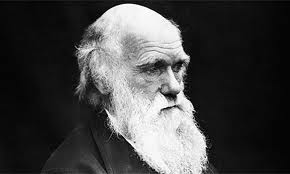
This week I am teaching Darwin again, Darwin being a staple of the Simon’s Rock Sophomore Seminar, required of all students.  I have always found The Origin of Species difficult to read, but lately I am realizing why: because Darwin seems so sure that aggressive competition, the infamous “survival of the fittest,” is THE biological paradigm on our planet. All species are locked in a relentless “battle for life,” from which only the strongest and best adapted (which often means the most ruthless) will emerge evolutionarily victorious.

However, there have been some persistent voices in the past few years arguing that Darwin understated the case for altruism and empathy as an evolutionary advantage for human beings.  Jeremy Rifkin, in The Empathic Civilization, argues that cognitive neuroscience is now proving that we are in fact at least as empathetic, as a species, as we are aggressive.  He believes that the linking potential of the internet age has the power to help us overcome the divisiveness that marred the past 500 years or so of human history, and make a great leap forward in our social evolution.

“The information communication technologies (ICT) revolution is quickly extending the central nervous system of billions of human beings and connecting the human race across time and space, allowing empathy to flourish on a global scale, for the first time in history,” he says.

“If we can harness our empathic sensibility to establish a new global ethic that recognizes and acts to harmonize the many relationships that make up the life-sustaining forces of the planet, we will have moved beyond the detached, self-interested and utilitarian philosophical assumptions that accompanied national markets and nation state governance and into a new era of biosphere consciousness. We leave the old world of geopolitics behind and enter into a new world of biosphere politics, with new forms of governance emerging to accompany our new biosphere awareness.”

Human beings’ amazing use of technology has always been both our blessing and our curse.  Technology is enabling me to send these ideas out into the ocean of the Web, a digital message in a bottle that could potentially reach millions of people across the globe.  Amazing!

But my reliance on electricity generated by oil and coal to perform this technological wonder is the Achilles heel of the whole enterprise, since collectively we as a species are overloading the biosphere with our wastes and driving the planet to the brink of what Darwin would call an “extinction event.”  Our own.

Will we make that great leap forward that Rifkin is foretelling, waking up to the necessity of moving from global competition to global collaboration in a new, more localized model?

Rifkin imagines a future global society based on the localization of energy sources like solar, wind, tidal and geo-thermal, as well as the re-localization of agricultural and manufacturing economies.

“In this new era of distributed energy,” he says, “governing institutions will more resemble the workings of the ecosystems they manage. Just as habitats function within ecosystems, and ecosystems within the biosphere in a web of interrelationships, governing institutions will similarly function in a collaborative network of relationships with localities, regions, and nations all embedded within the continent as a whole. This new complex political organism operates like the biosphere it attends, synergistically and reciprocally. This is biosphere politics.”

I believe that this rosy vision is theoretically possible, but I sure don’t see anything like it on the horizon today.  Rifkin puts his faith in the upcoming generation, who have grown up as “digital natives” and are more likely, he thinks, to be collaborative across traditional national and political boundaries. Facebook Nation!

Maybe so, if the young can be roused from their entertainment media trance and made to see the urgency of the mission.

I read with dismay yesterday that the U.S. video-game industry is one of the most highly subsidized sectors of our economy, rewarding, for example, the makers of “Dead Space 2, which challenges players to advance through an apocalyptic battlefield by killing space zombies.”  Dead Space 2 shipped 2 million copies in its first week of sales.

How can we expect young people to focus on serious, urgent issues like global climate change when they’re so busy chatting with friends on Facebook and killing zombies on Wii?

If this is the best we can do as a society, then I’m sorry, folks, but maybe an extinction event is not only on the horizon, but, as Darwin would say, “for the good of all.”


Counter-Memory and the Politics of Loss After 9/11 | Truthout

Counter-Memory and the Politics of Loss After 9/11 | Truthout.

Excellent analysis by social critic Henry Giroux.  At least he still has the heart to end his tirade on a positive note!

“Within the last decade, America has taken a dire turn to the dark side and embraced a ruthless kind of moral Darwinism in which a survival-of-the-fittest logic and a cult-of-the-winner mentality legitimate a war of all against all and pernicious cynicism as the prevailing attitude toward everyday life.  We now live in a society driven by a hyped-up market fundamentalism that thrives on a culture of hardness to the point of cruelty. How else to explain the lack of public response over a Republican Congress that wants to tax the poor while refusing to raise taxes on the exorbitantly rich and hedge fund millionaires?”

9/11–Let’s Get Real!

All right, I have to say it.  I find the coverage of the 9/11 10-year anniversary nauseating.

The way we are collectively wallowing in our victimhood, while at the same time celebrating our oh-so-macho response to being attacked.

The way so few voices are talking about the reasons for the anger that launched those pilots at the US; the money that funded them; the horrendous aftermath of the attack, in which we rattled our sabers, swore vengeance against the “axis of evil,” and started a war in Iraq that cost hundreds of thousands of people their lives.

The way we aren’t talking about the corporate capitalist policies of exploitation and greed that led to widespread misery in the places where Al Qaeda operatives like to hide, places where starving parents opt to send their sons to the madrassa so they can eat, not knowing or caring what kind of indoctrination may be occurring between bites.

The way we aren’t talking about the indoctrination our children are getting here in our schools, through the sanitized version of the 9/11 story, in which the U.S. is always the good cop, policing the rest of the world in a superior and politically correct manner.

No one ever mentions anything about our status as the largest military operation in the world and the largest exporter of guns and military hardware—the biggest fomenter, therefore of violence on the planet.  How could we naively expect that this violence would not come home to roost?

And now those same policies of profit-seeking callousness have reached their limit in the natural world, and the violence we have wreaked on our environment can and will return to bite us—in fact, it is already visible in the erratic weather patterns of global warming, leading to natural disasters and food instability even here in the heart of Empire.

Instead of the obsessive repetition of schizophrenic patriotic self-congratulation alongside whining victimhood, we aren’t we talking about what really matters: moving forward in a way that radically changes the culture, both national and international, that produced 9/11?

Until we begin to have this forward-looking conversation, in which all the cards are put on the table and no credible way out of the morass of violence, greed and destructive exploitation is ignored, we will be stuck in a sick Groundhog Day of our own making, with no way to stop the repetitive madness.

I don’t know about you, but I want to wake up to a new day.

California Black-out: Eco-terrorist Strike? Wake-up Call?

Last night, while all the pundits and news editors were focused on President Obama’s jobs speech to Congress, a small news item at the bottom of the page caught my eye: blackout in southern California.  1.4 million without power, from Arizona to Baja California, including San Diego and Tijuana. No explanation.

This morning, the blackout is still on, and there is still no explanation.

With a strange blend of fear and hope, I find myself wondering whether it could possibly be the result of a Deep Green Resistance strike.  According to the DGR website, the mission of the underground resistance movement is to “dismantle the strategic infrastructure of power” that has brought our planet to “the brink of complete biotic collapse.”

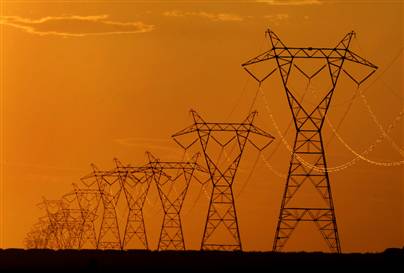
What could be more critical to the continued functioning of industrial civilization than electricity?

Really, folks, all of this dithering about tax cuts, monetary policy and jobs creation would instantly be totally beside the point if the energy that fuels our society were to sputter and die.  To say this is not to be alarmist, it’s simply to be real.

As anyone who has had to go through a power blackout of more than a few hours knows, we 20th-21st century Americans are uber-dependent on our electric juice.  We are so addicted that we no longer know how to live without it, in a literal sense: our food and water supplies are almost completely reliant on fossil fuel-based energy.

No gas, no ATMs, no refrigeration, no supermarkets, no water pumps, and for many of us, no heat in the winter, never mind AC in the summer.  Oh, and did I mention no internet?  No video games?  No email, voice mail or cell service?

Science fiction has tried to imagine what the collapse of civilization as we know it would look like.  We have all seen films like The Day After Tomorrow, or read books like Margaret Atwood’s chilling Handmaid’s Tale.  Mostly, our imagination of this kind of future seems pretty grim.

But it doesn’t have to be that way.

Just as there is already a guerilla movement bent on taking down industrial civilization, there is also an aboveground movement looking to put in place the building blocks for a new, sustainable civilization.  It’s called the Transition Town movement.  It started in the UK, and is now gathering steam in the US as well as around the world.

While the Deep Green Resistance folks seek an aggressive approach to dismantling what is, the Transition Town movement is more about working with what is to create something better.

It’s a bit tamer, but will be far more digestible to the majority of Americans.  It has a role for everyone, and a focus on the positive: on what can be done if we work together in the service of a strong vision of positive change to a sustainable future.

There is no doubt that the climate crisis is upon us.  The signs are apparent on a daily basis.  Wildfires out of control in Texas; flooding in the Northeast; blackouts in California; droughts in the Midwest.

Fear, panic or depression will get us nowhere.  Anger is useless unless channelled into positive action.

The most important thing you can do to prepare for what’s coming is to strengthen your relationships with your local friends, neighbors and community.  We are going to need each other in the months and years ahead.  We’re going to need all the love, resilience and solidarity we can muster.

The time to start is now.