
Someone asked me today, What do you remember about 9/11?
I remember that at the moment the Twin Towers were hit, I was walking down to the Simon’s Rock College Center from the parking lot, on my way to my morning class—Sophomore Seminar. It was a gorgeous September day, cool and bright.
My first indication something was wrong was inside the College Center, where there was a strange aura of people scurrying around, consulting with each other in the halls. I quickly caught on to what at first seemed like a malicious rumor: a plane had hit the World Trade Center. An accident?
 But then no—a second plane had hit. And the building was on fire. People were jumping out of windows. It was a terrorist attack. Another plane had been hijacked.
And so, within an hour, the whole ghastly event unfolded. The world that had seemed so safe, predictable and sane to me just minutes earlier, rocked crazily on its axis.
I met my students in the classroom, told them the news, and we all went over to the Lecture Center to watch CNN on the big screen. The beautiful sunny day faded into the darkness and virtual screenlight. The towers, falling over and over. The people, jumping out of the flames to their deaths.
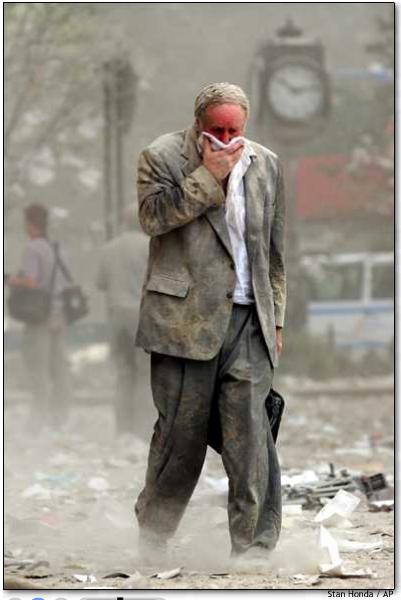 The firefighters, covered with eerie white ash. The streams of people walking uptown, away from the Towers, like refugees leaving the scene of a genocide.
Manhattan is my hometown. I have many memories of visiting the Twin Towers.
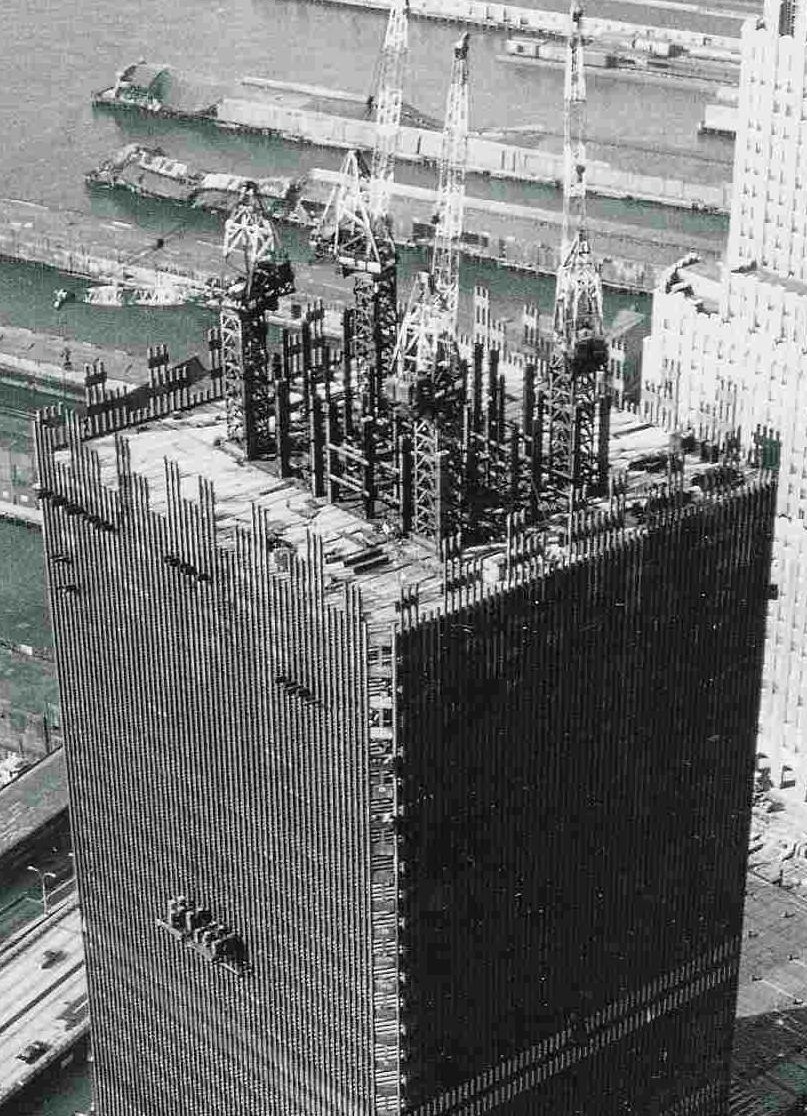 As a child, I remember when they were built, two identical towers rising on the skyline, bristling with huge cranes rendered tiny by distance. I remember riding the elevator to the observation deck, the sick, scary feeling in my stomach as the elevators accelerated to a speed I didn’t want to fully imagine.
 The wind up there, laden with the faint salty tang of the nearby sea; the tourists pointing cameras at the Statue of Liberty, or uptown at the rows of orderly buildings broken up by the green oasis of Central Park.
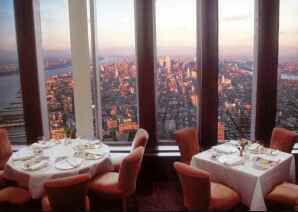
I have very fond memories, too, of eating dinner at Windows on the World, and the even more exclusive Cellar in the Sky, restaurants that my parents took me to for special occasions, like my 20th birthday. At Cellar in the Sky, in addition to the fabulous food, you would get a different exclusive wine for each of seven prix fixe courses, ending up with a deep snifter of fine cognac with dessert. We would leave the restaurant tipsy and glowing with a sense of well-being, the animal satisfaction of being relaxed and truly well-fed.
All gone, after 9/11.
What I lost on 9/11 was far more than just a physical place holding pleasant memories. I lost my naïve belief that bombings and terrorist attacks only happened somewhere else in the world, never in my hometown. I lost my sense of privileged aloofness from the rest of the world.
Mind you, by 2001 I was already a college professor, had already finished a dissertation that focused on personal narratives by human rights survivors from Latin America and the Caribbean, as well as North America. I should not have been so naïve.
But somehow, until the Towers crumbled, it did not fully hit home to me how inevitable it was that the arrogance of American imperialism abroad would boomerang back around to hit us.
 And it certainly did not occur to me that this strike would be used to initiate a regime of “homeland security” that brought our country closer to fascism than we had ever come before.
Ten years later, I am still feeling the pain that spread out from Ground Zero like the low ringing of a gong. It is the pain of all of the peoples exploited by American-led capitalist imperialism, for whom World Trade is synonymous with oppression. It is the pain of the widows, widowers and orphans, left not only by the terrorist strikes, but also by the ensuing vengeful wars in Iraq and Afghanistan.
The pain only deepens as I begin to understand the extent to which the effects of Western imperialism have hurt the natural world, and destabilized the delicate ecological balance that has made our planet so fruitful.
9/11 hurt America, yes. But America has been a leader in a global assault on our planet, on a scale that dwarfs the Al Qaeda strike.
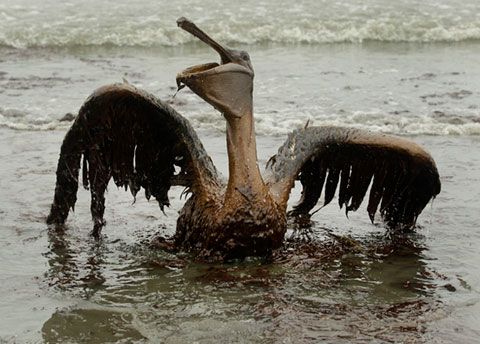 I would never support Al Qaeda, or its methods. But neither can I support American-led corporate capitalism, with its chemicals and clear-cutting, its cowboy swagger as regards regulation, that has inflicted us with BP-style disasters replaying again and again in excruciating, devastating slow-motion.
What I lost on 9/11 was the sense that none of this had anything to do with me as an individual.
9/11 launched me on a difficult period of self-reflection, in which I realized the extent to which my own privilege as a member of the ruling elites had blinded me to my complicity in the oppressive system that spawned the anger that led to the World Trade Center attacks.
Once you realize your own complicity, you can either wallow in unproductive guilt, or you can roll up your sleeves and resolve to do whatever you can to make a change for the better.
History has shown us that it is the insiders–the wives, sisters and daughters of the masters of the universe—who have tremendous power over the men who love them. In our day and age, women too can be “masters”—that is, members of the ruling class who control our society.
I think the question for us, ten years after 9/11, is a simple one. What are you going to do about it? Are you going to support the status quo, which may benefit you and your family greatly, but which ultimately leads to greater social instability, through political and environmental vulnerability?
Or are you going to be a change agent, someone who is not afraid to speak truth to power and insist on positive change?
On 9/11, there is no more important question to be asking ourselves.






 Transition Times