Who’s Got the Balls to Take the Porn Industry On?

Could it be that the pornography industry has something to do with women’s continuing struggle for equality and respect?

Brig. General Jeffrey Sinclair

Brig. General Jeffrey Sinclair

So it would seem from the case of Brig. General Jeffrey Sinclair.

It was not surprising to learn that a military judge accepted General Sinclair’s strategy of pleading guilty to lesser charges in exchange for the dismissal of far more serious counts, including violent sexual assault, that could have put him behind bars for life.

According to the New York Times,  “General Sinclair formally pleaded guilty to mistreating his former mistress — an Army captain — as well as disobeying a commander’s order not to contact her, misusing his government charge card, and using demeaning and derogatory language about female staff officers.”

In exchange, military prosecutors dropped the more serious charges that “General Sinclair twice sexually assaulted his former mistress by forcing her to have oral sex, threatened to kill her and her family if she revealed their affair, and engaged in consensual but “open and notorious” sex with her in a parking lot in Germany and on a hotel balcony in Arizona. Those charges could have led to life in prison for and registration as a sex offender, if convicted.”

You have to dig deeper into this unsavory story to discover that General Sinclair learned his technique for violent fellatio from the thousands of violent pornographic photographs and videos he had stored—against military orders—on his computers and other devices in Afghanistan.

Prosecutors initially tried to get that nasty porn admitted as evidence in court, but the judge refused to allow it, saying it could “taint the jury’s outlook on the trial.”  The jury, let it be noted, consisted of five generals.  All men.

In the Army, it’s illegal to possess pornography while on deployment.  It’s illegal to engage in adultery.  It’s certainly illegal for a superior officer to force a soldier to have sex.  According to the Captain, whose identity is being withheld, General Sinclair “grabbed her by her neck and shoulder and forced her to perform fellatio….It happened again some days later, she said. This time, he stopped only when she threatened to scream.”

This is precisely the kind of case that Senator Kirsten Gillibrand’s landmark legislation, which aimed to take the trying of sexual assault cases out of the hands of the military, was designed to address.

Imagine how this case would be different if instead of a colonel as judge and five generals as jury (judge and jury all-male), the court case was tried by a civilian judge and a jury composed of 12 men and women who were not in any way beholden to the military.

Illustration by Jerry McJunkins; fayobserver.com

Illustration by Jerry McJunkins; fayobserver.com

Of course, even civilian rape and sexual assault cases are notoriously hard to successfully prosecute.  Men still get away with minimal sentences as victims are blamed with “leading him on” or “asking for it.”  Some 97% of rapists never even spend a day in jail.

In the Sinclair case, the Captain is being caricatured as a typical “jealous mistress” who blew the whistle on the General as revenge for his inability to make any commitment to her.

But really—would any woman, let alone an Army Captain, put herself through the torments of a sexual assault trial merely for revenge?

She may not realize it now, but in refusing to be browbeaten into silence she is standing up for every military woman and every civilian woman who has had to bite her tongue and comply with abusive behavior from men with greater social status and privilege.

But the deeper question that deserves to be asked here is why it’s OK for violence againt women to be represented through violent pornography, such as that possessed by the General.

Defenders of the porn industry insist that: a) a penchant for watching violent porn doesn’t imply a desire to carry it out in real life and b) porn is just acting—it’s not real.

Tell that to the porn starlet whose throat has been bruised and battered through violent fellatio.  Tell that to the girl who is forced to have sex from behind while her head is dunked repeatedly in a toilet.  Tell that to the girl whose anus is torn apart as three men gang-bang her—“only acting,” of course.

Is this too harsh for you to read?  Does it offend your sensibilities?

I’m sorry, but I am of the opinion that if something is too horrible for us to read about, it’s too horrible for us to permit to go on in actuality.

From violent porn to factory farming, from mountaintop removal to sex slavery and lab animal torture—if it’s so bad we have to avert our eyes, then it’s so bad we have to do something about it.

I salute the tearful Captain who testified valiantly in that military courtroom, knowing that every man in the room hated her for daring to tell the truth.

Our military women deserve better.  All women deserve better!  The violent porn industry is a pus-filled abscess seething below the sight lines of society.

If we want to get a handle on why women continue to be disrespected, the multi-billion dollar porn industry would be a good place to start an inquiry.  Who’s got the balls to take those bastards on?

**The upshot, 3-20-14: the General got a very gentle slap on the wrist.  Are we surprised?  Hell no!  It is almost impossible to convict on sexual assault, at least as long as the judges and juries are all-male, with the opinion that “boys will be boys” and “she led him on….”  GRRRR!!!!!
Bypassing the Old Boys’ Club

As we move exuberantly into the second half of the 2014 Berkshire Festival of Women Writers, my mind is sparkling with memories of the powerful, indeed heart-stopping moments that have already taken place at Festival events this season.

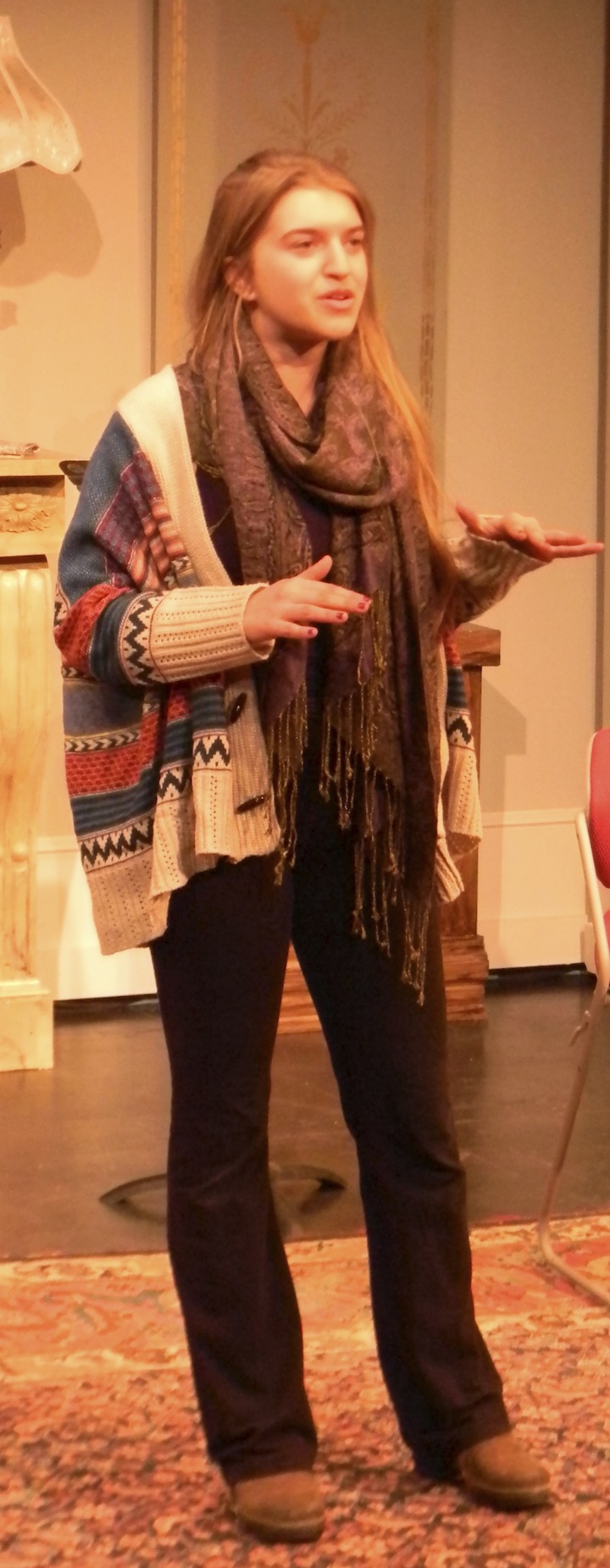
DSCN4609Grace Rossman extending a powerful poetic hand to the drowning Ophelia in so many girls today; Ruth Sanabria impersonating both her mother and the fascist regime that unjustly imprisoned her in a fierce poem about the impossibility of stamping out the love between mother and daughter; Kate Abbott celebrating the cultural diversity of the Berkshire hills as she works quietly and steadily to make it more visible; Barbara Bonner eloquently describing the spirit of generosity that seeks and needs no recompense.

The list could go on, and it will, as the Festival continues to unfold day by day this month, and throughout the year in the on-going readings, workshops and writers’ circles that will be taking place under the Festival banner.

This is important work we’re doing together at the Festival—creating multiple entry points and platforms for women writers to step into the spotlight and shine.

The truth is, such opportunities are still all too rare for women writers, and creative women more generally.

Overall17-316x173At the end of February, just in time for Women’s History Month, the non-profit, all-volunteer group VIDA published its annual Count, revealing the continuing disparity between men’s and women’s voices in literary and upscale magazines and journals.

Overall14-316x173I invite you to take a look for yourself: the results show clearly that in literary circles (think The New Yorker, the Times Literary Supplement, The New Republic, The Atlantic, the London Review of Books, The Nation and the New York Review of Books), the old boys’ club is alive, well and holding steady at an average of 75% male voices represented in their pages over the past year.

The same is true in the film industry, the theater industry, and in the television industry. 

It’s the same in book publishing, which may be one reason why women are so interested in exploring new opportunities for self-publishing and self-promotion.

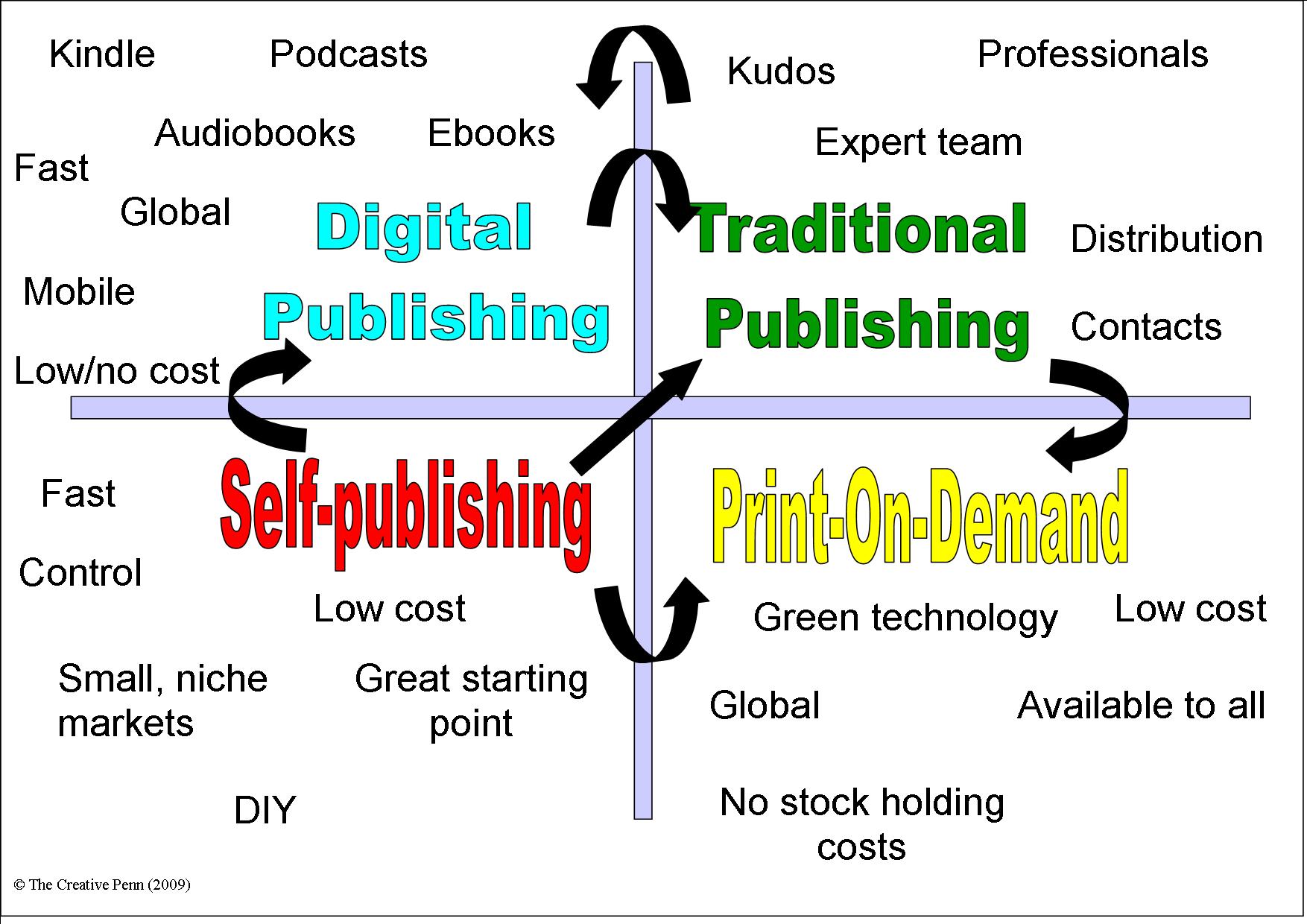
publishing_quadrant1222These days in publishing, it’s like the Berlin wall coming down—gates thought to be invincible are simply crumbling away, with their keepers revealed in all their flabby ordinariness.

Having spent far too much of my life not even trying to take myself seriously as a writer because I knew exactly how high the odds were stacked against my success, I’m excited about the DIY spirit of the new publishing landscape.

I’ve got a book that’s almost ready to launch, and buoyed by the lively, can-do spirit of the Berkshire Festival of Women Writers, I’m thinking seriously about bypassing the old boys’ club entirely and taking responsibility myself for getting my words out into the world.

No more sitting on the sidelines complaining that “they won’t let us in!”  No more waiting to be asked to dance.  No more hiding my light for fear it won’t be appreciated.

BFWW-square-logo-2014If all of us women started supporting each other and working collaboratively to create the opportunities we all need to shine, we could change the creative cultural landscape for the better, turning those red and blue pie charts a lovely shade of purple.

What a beautiful world it would be!

Seize the Day…

Tonight, as my two sons fly down to Mexico for a spring break visit with their Mexican family, I am haunted by the thought of Malaysian Air Flight 370.

images

It’s been a week since that plane took off on a routine flight from Kuala Lumpur to Beijing. In a Google Earth world, with spy satellites monitoring every sector of the planet, it is hard to believe that a fully loaded Boeing 777 jet could simply DISAPPEAR.

Apparently the spymasters are not as in control as they would have us believe.

may1153067-Search-underway-for-missing-Flight-370Theories are circulating wildly on the Internet.  The plane was hijacked and landed on some island in the Indian Ocean, a la the TV series LOST.   The plane was taken by aliens.  This afternoon we began to hear that the plane flew for at least 5 hours after the air traffic controllers lost contact, veering wildly in altitude.

This is the stuff of a thousand episodes of the X-Files or, further back, Twilight Zone.  If we do finally find the wreckage of the plane, we’ll be breathing a sigh of relief because at least we’ll know it wasn’t taken by the mythical aliens that no one officially believes in, but we all fear might be real.

Events like these—along with droughts, floods and storms—remind us that we human beings are not invincible like the superheroes we love to watch on TV or at the movies.

Our incredible technological prowess cannot protect us, and indeed sometimes it can lead us into great peril.

My heart is with the passengers of Flight 370, and every airline passenger who daily puts themselves in the hands of the crew who flies their plane.  Going down over the ocean is a collective nightmare of our time.  Next time, it could be any one of us.

As the ancient poet said, what can we do but Carpe Diem, live life to the fullest day by day?

Daring to imagine a brave new post-patriarchal world

When was the last time you uttered the dreaded P-Word?

Patriarchy, that is.

Somehow the word itself comes out sounding like a challenge, even when it’s not meant as one.  Calling attention to the fact that men still rule the world is considered poor taste.

Women who dare to use the P-word in conversation run the risk of being labeled as strident femi-nazi ballbusters, resentful unfortunates to be avoided if at all possible.

Am I exaggerating?  I don’t think so!

What happens when we all agree to participate in the collective delusion that gender equality has been achieved?  Who loses and who gains?  What opportunities are lost and forfeited?

I’m tired of living in a society that calls strong men “leaders” and strong women “bossy.”

I want to encourage more girls and women to step into leadership roles in every public arena, and be applauded for it by both men and women.

I want to see all leaders supported by excellent child care, fabulous schools and reasonable flex time at work.

When women and men take time off to focus on their families, I want to see that time recognized as valuable—indeed, essential—to maintaining a healthy society, and rewarded by Social Security accrual down the road in retirement.

Last week I spent time with two young mother-writers who came to present their work at the Berkshire Festival of Women Writers.  Both spoke of how hard it is to keep their professional lives going strong while also nurturing their families.  I certainly remember that struggle myself, and it’s not all in the past tense!

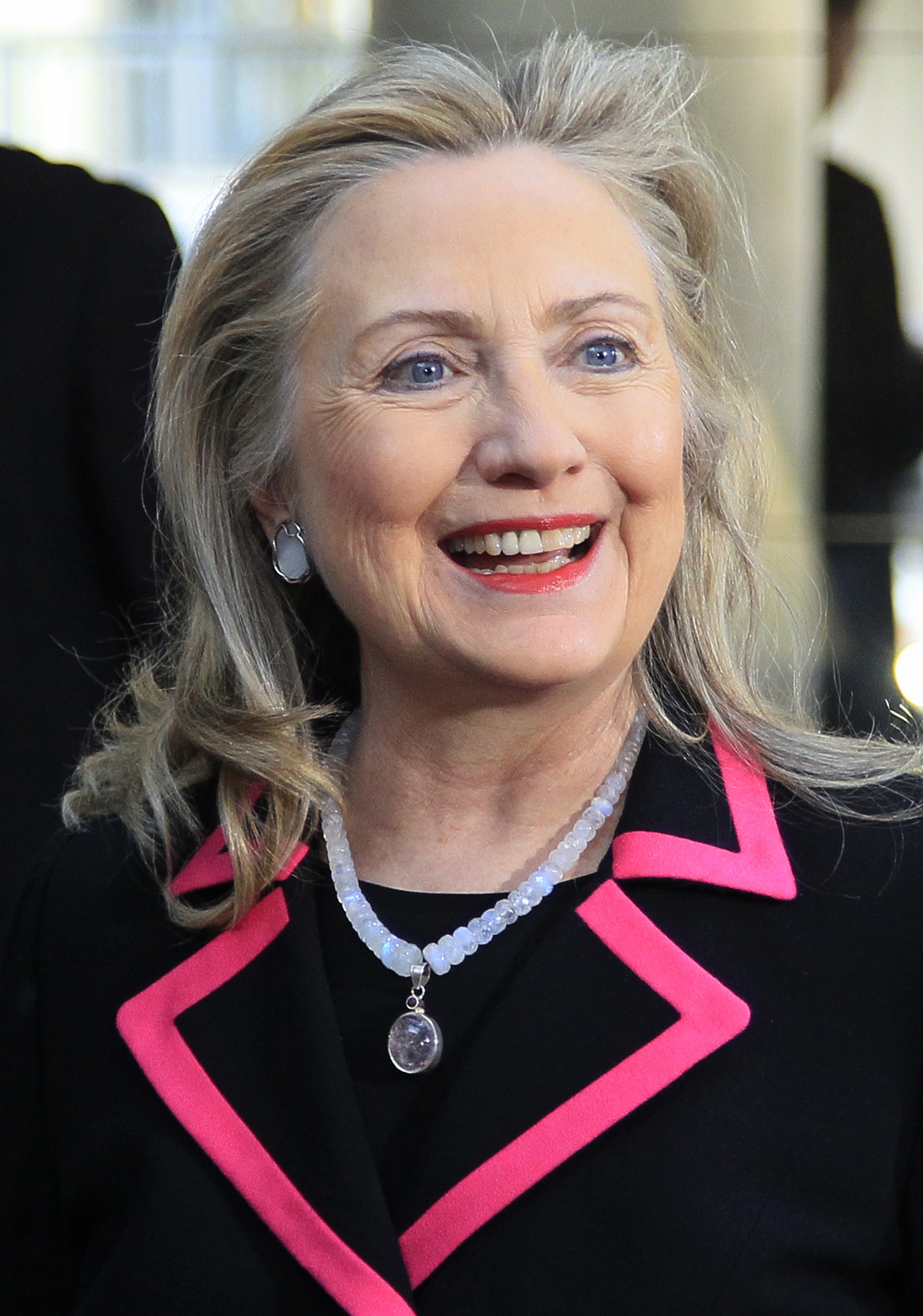
Hillary Rodham Clinton, late bloomer?

Hillary Rodham Clinton, late bloomer?

Is there any wonder that women are so often late bloomers when it comes to our professions?

But actually, let’s do away with the term “late bloomer” too, at least when it comes to women who do what makes perfect sense: focus on their families during their 20s and 30s, and get back to their careers when the childcare pressures ease up.

Those women have been blooming all along, or at least they would be if they lived in a society that supported and applauded their efforts, and encouraged men to share the burden of housework and childcare equally.

The patriarchy locked women in the domestic sphere for many long centuries, while devaluing “women’s work” as lower-paid and lower-status.

It’s time for us to celebrate women’s work as essential and invaluable, while also insisting that the whole category of “women’s work” has to be dismantled. We don’t need a gendered division of labor anymore, in the public or the private spheres.

What we need are strong, capable leaders to step up and help us evolve quickly into the resilient, collaborative, respectful human society we know we can be.

Bringing home the bacon and frying it up too: homage to mother-work

Jenny Laird reading on opening night of the 2014 Berkshire Festival of Women Writers

Jenny Laird reading on opening night of the 2014 Berkshire Festival of Women Writers

The theme of last Saturday’s opening night event at the Berkshire Festival of Women Writers, Out of the Mouths of Babes: An Evening of Mothers Reading to Others, was “What do mothers make?”

The answers provided by the evening’s presenters–all women at various stages of their lives–were various, but there was a common theme: mothers make families, mothers make relationships, mothers make community.

Historically, in most societies this has been the primary role given to women—to serve as the emotional heart of families, to make the meals and make the homes that lead to strong, centered communities.

These days, in American society at least, women are expected to do all this and also be successful in their professional lives.  Only the wealthiest American families can afford to have a stay-at-home parent.

In most households I know, especially among people at mid-life or younger, both parents are working hard at their jobs and also trying to sustain a healthy home life.  And in most families I know, it still falls disproportionately to women to keep those home fires banked and burning bright.

We live in a society that measures personal success by income, but puts no monetary value on homemaking, parenting and elder care.

So all those hours that women put in to keeping our families and communities strong and healthy “don’t count.”  The nation sends a pretty clear message through our Social Security retirement system, for example, telling parents and caregivers that the work we do in our homes is an unacknowledged and unrewarded second shift.

Erika Nelson, Nichole Dupont and Michelle Gillett were among those who read work responding to the question posed by host Suzi Banks Baum, "What do mothers make?"

Erika Nelson, Nichole Dupont and Michelle Gillett were among those who read work responding to the question posed by host Suzi Banks Baum, “What do mothers make?”

A recent Pew study showed that 40% of all American households with children under 18 are now headed by women who are the sole or primary breadwinners for the family.  These women are bringing home the bacon and frying it up for their families—and arranging childcare, helping with homework, and doing all the regular home maintenance too, after their “work day” is done.

And then we wonder why so many children and teenagers are struggling with mental health, including ADD, eating disorders, addictions of all kinds, depression and lack of motivation.  We wonder why women are still not gaining equal representation at the highest levels of politics and business.  We wonder why so many women step off the leadership track in their thirties, when the mothering pressure is greatest, or “opt” to choose career paths that give them some precious flex-time.

It’s time to take a clear-eyed look at a society that squeezes everything it can out of mothers as workers and doesn’t recognize or value parenting and homemaking as the essential work it is.  Is this really the kind of society we want to call home?

I end with a quote from one of my favorite writers, Aurora Levins Morales:

“Ours was the work they decided to call unwork.”

The Solutions are Hidden in Plain Sight–if you look through 21st century eyes

IMG_4806A lot of us in the Northeast are doing our share of grumbling this year about the Arctic air that just won’t go away.  Usually March is the time when the winds start to blow, the sap starts to rise, the snow melts into the thawing earth and our thoughts turn to snowdrops and crocus.

This year, we’re still in the deep freeze with a hardpack of snow on the ground, and no end in sight.

It’s all part of the erratic weather of our climate change era.  The question for all of us now is, how, beyond bitching and moaning, are we going to respond?

Most of us just shrug and turn the dial on the heater up a little higher, not thinking about what that very small, ordinary act really entails.

If your thermostat is wired into an oil burner or a natural gas furnace, like most homes and apartment buildings in the Northeast, then when you turn up the dial in response to the bitter cold you are, perhaps unwittingly, enabling, supporting and becoming an integral part of the very industry that is relentlessly destroying our climate.

The fossil fuel industry is not some demonic force outside of our control.  It’s just a human business that is responding to human needs for energy—lots and lots of energy.

We Americans are used to getting what we want, and what we’ve wanted, in the 50 years I’ve been on the planet, is ease.  What could be easier than turning a dial to make your house warmer in the winter or cooler in the summer, or gassing up your comfy car before you get on the freeway?

1_RussetLikewise in terms of agricultural production—we like to get our vegetables pre-washed and sometimes even pre-cut, all even-sized, no blemishes, laid out attractively in faux crates under spotlights in our upscale grocery stores.

When we buy that bag of potatoes or carrots, we’re not thinking about the tons of pesticide, herbicide, fungicide and fossil fuels that went into making it easy for us to throw these items in our shopping cart.

We’re not thinking about the bees, butterflies and other valuable insects that have been driven to population collapse by industrial agricultural practices; or the huge dead zones in the ocean at the mouth of the Mississippi River, where fertilizer and chemical run-off from the Midwest runs down to the sea; or the millions of birds that are affected each year by the toxic chemicals we spread over the landscape.

We’re just throwing that bag of veggies into the cart, or turning up that dial.

Well, the time of such oblivious innocence is over.

The curtain has been pulled back, and the Wizard of Industrial Capitalism has been revealed—and lo and behold, he wears the ordinary face of each one of us.

Every step we take on this beautiful, battered planet of ours matters.

Eric and me at the February 2013 Forward on Climate rally in DC

Eric and me at the February 2013 Forward on Climate rally in DC

I am heartened to know that this very weekend, one year after the big climate change rally in Washington DC that I attended in the hopes of pressuring the Obama Administration to block the Keystone XL pipeline, thousands of activists, most of them college students, will be raising a ruckus at the White House gates to insist that the politicians stop gambling away their future.

Here in my backyard, in the Massachusetts-New York region, people have woken up to the fact that mile-long trains of crude oil and gas are being run through heavily populated neighborhoods.

We’re moving to block gas fracking in western Massachusetts as the sight of contaminated tap water in fracking regions brings the dangers right home.

We’re also starting to get serious about making solar energy accessible to homeowners and businesses.

UnknownThis week’s New Yorker magazine has a fascinating article about a little-known scientific program to create a controlled thermonuclear fusion power plant.  Unlike the current fission plants, which burn radioactive fuel and generate dangerous waste, the fusion plant, if it were successful, would run indefinitely on seawater and lithium, with no waste.  It would be ten times hotter than the core of the Sun.

Talk about an audacious plan!  You have to hand it to human beings, we are nothing if not hubristic.  It is our greatest strength and our most glaring weakness.

Why spend billions on creating an artificial sun here on earth?  Why not just learn from our cousins the plants, and start to use the sunlight we have more efficiently?

It’s time to take off our grimy 20th century glasses and start looking at the world and ourselves through 21st century eyes.  When we do, we’re going to find that the solutions to all the problems that beset us have been hidden in plain sight all along.

Passionate Selfies

Why is it that girls are still being encouraged to take up less space, while boys are encouraged to bulk themselves up?

In my gender studies courses at Bard College at Simon’s Rock, we inevitably spend a fair amount of time talking about the insidious influence of the media on both girls’ and boys’ self-image.

Girls receive the message that the ideal girl is thin and pale, with long blonde hair and big blue eyes.  She’s sexy but not threatening—if she’s smart, she doesn’t flaunt it the way she does her big boobs and shapely legs.

Boys, on the other hand, are rewarded for being assertive and athletic.  It’s a good thing if they take up a lot of space in the room as well as a lot of airtime in any social context.

It is no coincidence that girls are disproportionately affected by eating disorders like anorexia and bulimia—psycho-somatic illnesses marked by a distortion of one’s self-image and a manic desire to become smaller.

Girls with these eating disorders imagine themselves to be fat, a horrible three-letter word, no matter how waif-thin they starve themselves into becoming.  Bulimics binge-eat and then purge, vomiting up their meal before it can be converted to the dreaded fat on their bodies.

Anorexics just starve themselves, and often add demanding exercise regimens to the mix to make good and sure they won’t be fat.

Meanwhile, boys abuse protein powders loaded with steroids to make themselves bigger and more muscular.

Yesterday I went to see a screening of the new short film “Selfie,” made right here in Great Barrington MA by filmmaker Cynthia Wade and photographer Michael Crook, who spent a week in our local high school talking about body image and self esteem with teenage girls.

Unknown-3The girls were encouraged to take “selfies” (ie, smart-phone pictures) of themselves, daring to focus in on the parts of their faces that they liked the least.

One girl complained of the roundness of her face, another of her bushy hair, another of her red cheeks, another of her prominent nose.

But through guided discussions about body image and beauty, and the process of creating a photo show of their “selfies” and video-taped interviews of themselves and their mothers for the film, they were made more aware of how superficial it is to obsess over the places where their own human faces fall short of the air-brushed ideal.

Obviously many agree, since the film is in the process of going viral on You-Tube, with nearly a million views in the past few weeks.  The 3-minute version is up to nearly 5 million views!

Unknown-4Beauty is so much more than what we can see, the girls and the film audience concluded.  It is not about conforming to some pre-established, often totally unrealistic ideal.  How boring would it be if every girl looked like Barbie, and every boy looked like Ken?

Yesterday’s New York Times discussed the “Selfie” film, along with a new trend among adolescent girls to share “uglies,” that is, selfies that are deliberately staged to portray the self-photographer as “ugly.”

The Times seemed to think this was an advance—that girls who were unafraid to show themselves making “ugly faces” into the camera were more liberated, less browbeaten by media stereotypes.

To me, a much more profound advance would be represented by girls whose “selfies” were not about their physical appearance at all.

What if women and girls channeled all that nervous energy over how we look into our work in the world instead?

Following the screening of “Selfies,” Berkshire International Film Festival Director Kelley Vickery presented the short film SEPIDEH, which created quite a buzz at the 2014 Sundance Film Festival.  Made by Danish director Berit Madsen, the film is a documentary that follows the life of the titular teenager, an Iranian girl who grows from a young girl obsessed with Albert Einstein into a woman engaged to be married and heading to university to study astronomy.

Unknown-2In the film, Sepideh wears a hijab and no make-up.  She’s much more interested in studying and star-gazing than in making herself attractive in conformity with some pre-established ideal.

Her passion for learning and her determination to achieve her goals are paramount.  And in the end, these shining characteristics succeed in attracting to her a suitor who has every intention of helping her become the outstanding woman she is meant to be.

So should it be for every young woman.  Teenage girls should be focused on zeroing in on their passions, defining their goals, and going after them.

What could be more beautiful than a girl who knows what she wants, is fully ignited with a sense of purpose, and is pursuing her dreams at full tilt?

Ronan Farrow’s Beacon of Hope

“One of the most difficult things to do is to infuse in young people a sense of empathy and a larger world…to give them a perspective that is more macro and less narcissistic,” Jon Stewart said in his recent interview with Ronan Farrow.

Ronan Farrow

Ronan Farrow

Farrow, when asked how he came by his desire to make a positive difference in the world, replied that it was growing up in a “mini-United Nations” sort of family (many of his 13 siblings were adopted from all over the world, some with serious physical or mental disabilities) that gave him the desire to become an agent for positive change on a worldwide scale.

Mia did something right to have set such a force in motion!

Ronan Farrow was a prodigy, going to college at my home institution, Bard College at Simon’s Rock, at the tender age of 11.  Although I never had him in class, I remember seeing him on campus, his bright blond hair always a stand-out, his small frame bent beneath a heavy backpack of books.

He went on to Yale Law School at 18, after serving a two-year stint as a youth ambassador at the United Nations; then became a Rhodes Scholar, worked at the State Department, and is now about to launch his own cable news show.

At 26, he’s done more than most of us will ever do.

I am quite impressed by the agenda he’s set for his show.  It will be news aimed at a youth audience, specifically designed to spark the empathy Stewart referred to, and not only that but to give his audience concrete options for taking action on the issues and situations presented.

Every show will have a “call to action,” Farrow said, and “a menu of things to do”; ways “to move the needle” on important issues.

I have noticed from my years of working with young people on social and environmental justice issues that they get very impatient and turned-off by discussions of problems that don’t also include solutions, preferably along with ways that they can get involved in moving the solutions forward.

It must be his twenty-something instinct that is prompting Ronan Farrow to put his talents and connections to work in creating just the kind of show his own generation is longing for.

It will have the celebrity pizzazz that his handsome face and famous name brings; the erudition and seriousness of purpose that his education and professional experience has provided; and with any luck, it will be a real beacon of active hope for millions of potential young change agents.

Go Ronan!  It is great to see a young person who is so clearly in the flow of living his purpose.

Infectious Hope

One of the things we are thinking about in my classes on social and environmental justice is whether it’s better, as an activist, to put your energies into a top-down or a bottom-up strategy.

Should we be trying to pressure governments, politicians and international organizations to do the right thing when it comes to, say, climate change policies?

Or should we be trying to ignite a whole series of grassroots, local, community-based changes?

Obviously it’s not an either-or proposition—it’s important to work at all levels.

But I notice that when I think about the big picture, I feel impotent and despairing.  Who is going to stop the massive deforestation of the planet?  How are we going to get the fat cats in corporations, governments and the United Nations to understand how critical it is to maintain forests and healthy agricultural soils so that they can function as the effective carbon sinks they are meant to be in our delicately balanced terrestrial eco-system?

It’s remarkable to note how my despair turns to hope when I turn my attention to the many local initiatives that I know are going on all over the globe.

When I think about how my hometown, Great Barrington MA, will be one of the first in the world to actually BAN PLASTIC BAGS in stores, my heart swells with pride.

Hope fills me to learn that Seattle is creating an innovative “Food Forest” in a city park, aiming to improve public health by regenerating public land into an edible forest ecosystem created using permaculture principles to reduce agricultural climate impact, improve local food security, provide educational opportunities, and celebrate growing food for the benefit of all species.

And when I hear that some of the incredibly powerful billionaires on the planet are using their money to try to turn the climate change juggernaut around—for example, Tom Steyer, Michael Bloomberg and Richard Branson—it makes me believe that all is not lost.

Both despair and hope are highly contagious.

It is easy to pay attention to the constant stream of depressing news and believe that the game is over, so there’s no point in trying anymore.

In fact, nothing could be further from the truth.

imagesJust as green plants poke their way stubbornly through asphalt and even the most blighted landscapes are always striving to regenerate, our Earth always tends towards life.

Every single species alive on the planet today, from humans to microbes, has survived many cataclysms and tough times in the past.  Just as we have before, we can rise to the challenges that face us today.

It really doesn’t matter whether your preferred approach is lobbying Washington DC or starting a Transition movement in your town.

The important thing is to stay alert, stay active and engage with others who understand that the choices we make day by day can, cumulatively, have a critical impact on our planetary future.

We cannot afford to be complacent or ignorant, and neither can we afford the luxury of despair.

Put your hope into action, one day at a time.  I truly believe that the bridge of hope we build together can take us over these dangerous times, into a future bright with promise.

Love is all we need

Most people I know don’t pay a whole lot of attention to Valentine’s Day.

In its pop culture guise, it’s pretty trite, after all—candy, flowers, champagne perhaps, aimed at seducing the beloved into bed at the end of the evening….

Eve Ensler has tried hard to put a harder, more political edge on V-Day.  She’s got thousands of women dancing for freedom—rejecting the pervasive violence against women that forms the backdrop of so many of our lives.

Unknown-3

But for most of us, well, we’re just here in the trenches, and we may or may not have a loved one to honor as a Valentine this year.

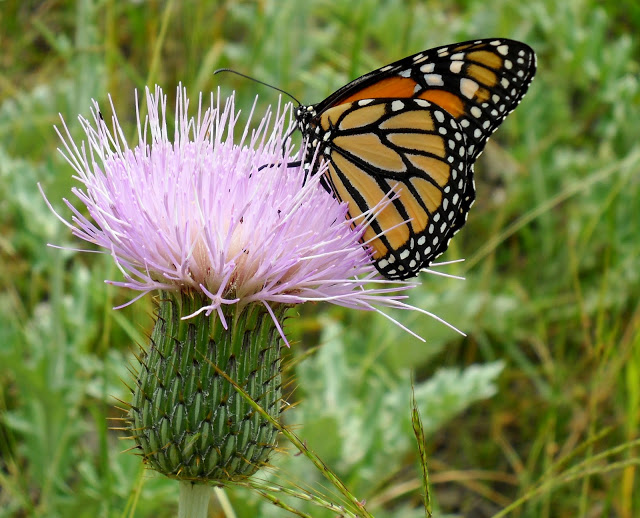
Me, I’ve got no particular human Valentine at present. Such love as I have to give, I want to dedicate to the forests and the birds, the butterflies and the flowers that are, to me, the most beautiful manifestations of LOVE on this planet.

DSCN2252

Any expression of love is far and away more potent than expressions of hatred and violence.

If you love someone, you should, by all means, shower them with kisses and caresses.  You should be extravagant in your appreciation.

Likewise, if the object of your affection is a tree or a landscape or a bright, joyful living thing—say, a tadpole or a fish or a magnificent coral—go ahead and shower that being with the love it deserves.

The only meaningful counter to the hatred, disrespect and violence that has become the norm in Western culture is the intentional distribution of LOVE.

Love is all you need, crooned the Beatles.  Maybe they were on to something.