Help Wanted: Strong Leadership on Climate Change, Starting Immediately

Now if only President Obama could show the same leadership on climate change as he has just demonstrated on the divisive same- sex-marriage issue.

The same narrow-minded interests that made same-sex marriage such a boogeyman for the President are also controlling the GOP-dominated boardrooms of Big Oil, from Mr. Cheney on down.

These people seem to be motivated by one thing only: the bottom line.  And they seem to be able to think only as far as a quarter or two ahead.

They don’t see that they are driving us as fast as possible over a cliff from which there will be no recovery.  Or maybe they see, but just don’t care.

It was with great appreciation that I opened up The New York Times Opinion pages today and saw the indefatigable James Hansen offering the lead op-ed, once more displaying his vision and leadership in 1) insisting that the comfortable NYT readers pay attention to the imminent and grave threat of climate change, and 2) offering a practical solution for bringing about the swift change of course we need to avert disaster.

Those of us who have been thrown into gloom by the prospect of Canada scraping down the boreal forest to exploit their tar sands will be somewhat heartened by the strong language Hansen uses to condemn this approach to “solving” the peak oil crisis.

Alberta, Canada: from boreal forest to tar sand devastation

“Canada’s tar sands, deposits of sand saturated with bitumen, contain twice the amount of carbon dioxide emitted by global oil use in our entire history. If we were to fully exploit this new oil source, and continue to burn our conventional oil, gas and coal supplies, concentrations of carbon dioxide in the atmosphere eventually would reach levels higher than in the Pliocene era, more than 2.5 million years ago, when sea level was at least 50 feet higher than it is now. That level of heat-trapping gases would assure that the disintegration of the ice sheets would accelerate out of control. Sea levels would rise and destroy coastal cities. Global temperatures would become intolerable. Twenty to 50 percent of the planet’s species would be driven to extinction. Civilization would be at risk.”

This is not some crazy Armageddon-spouting evangelical talking here.  This is James Hansen, senior scientist and director of the NASA Goddard Institute for Space Studies.

The way to head off this catastrophic scenario, as Hansen and many other scientists have been telling us now for at least a decade, is to reduce our use of fossil fuels.

It’s not rocket science, it’s common sense, and Hansen has an easy, no-nonsense solution for forcing Americans to change our ways and start doing what we have to do to save our planet and our civilization.

“We should impose a gradually rising carbon fee, collected from fossil fuel companies, then distribute 100 percent of the collections to all Americans on a per-capita basis every month. The government would not get a penny,” Hansen says. “This market-based approach would stimulate innovation, jobs and economic growth, avoid enlarging government or having it pick winners or losers. Most Americans, except the heaviest energy users, would get more back than they paid in increased prices. Not only that, the reduction in oil use resulting from the carbon price would be nearly six times as great as the oil supply from the proposed pipeline from Canada, rendering the pipeline superfluous, according to economic models driven by a slowly rising carbon price.”

As Hansen observes, in practice what we have been doing is just the opposite: “instead of placing a rising fee on carbon emissions to make fossil fuels pay their true costs, leveling the energy playing field, the world’s governments are forcing the public to subsidize fossil fuels with hundreds of billions of dollars per year. This encourages a frantic stampede to extract every fossil fuel through mountaintop removal, longwall mining, hydraulic fracturing, tar sands and tar shale extraction, and deep ocean and Arctic drilling.”

These subsidies must stop.

Canada and the US must stop playing poker with the future of our children and our planetary epoch.

All of us, from President Obama and Prime Minister Harper right on down to each one of us ordinary folks who drive cars, heat our houses and run our air conditioning, need to stop pretending that business-as-usual can continue any longer.

Welcome to the Knowledge Factory

The lead article in this week’s Chronicle of Higher Education Review is titled “The Ph.D. Now Comes With Food Stamps.”

More than 350,000 Americans with advanced degrees applied for food stamps in 2010, part of “an often overlooked, and growing, subgroup of Ph.D. recipients, adjunct professors, and other Americans with advanced degrees who have had to apply for food stamps or some other form of government aid since late 2007.

“Some are struggling to pay back student loans and cover basic living expenses as they submit scores of applications for a limited pool of full-time academic positions. Others are trying to raise families or pay for their children’s college expenses on the low and fluctuating pay they receive as professors off the tenure track, a group that now makes up 70 percent of faculties. Many bounce on and off unemployment or welfare during semester breaks. And some adjuncts have found themselves trying to make ends meet by waiting tables or bagging groceries alongside their students.”

And the numbers of impoverished Ph.D.s may actually be much higher than this.

“Leaders of organizations that represent adjunct faculty members think that the number of people counted by the government does not represent the full picture of academics on welfare because many do not report their reliance on federal aid.

“Even as the number of highly educated aid recipients grows, shame has helped to keep the problem hidden.”

Yes, I know that shame well.

How could it be that a highly educated, well-groomed, extremely intelligent individual with everything going for her is so embarrassingly poor?

Why is it that after more than 20 years of teaching college—and doing a very good job of it, I might add—I  still make only $10,000 more now than I did as a freshly minted B.A. starting out in publishing in New York back in the 1980s?

It is very hard to earn a Ph.D., in case you didn’t realize.  It takes many years of study, great determination and self-motivation, the ability to see a major, high-quality independent research project through to its conclusion, generally a book-length manuscript.  It also takes a lot of money, especially in the poorly funded humanities.

By the time one finishes the intense slo-mo marathon of the Ph.D. program, one feels like someone of consequence: someone who has jumped through every hoop, earned lots of accolades, managed to accumulate a great deal of social capital.

And yet all that evaporates in the face of the reality of American higher education today.

Except for a very few lucky ones with good connections or true star quality, most of us discover that it’s a buyer’s market out there in higher ed, and whatever we’ve got to sell is a dime a dozen.

You take that first adjunct job telling yourself it’s going to be temporary, only to find five years later that you’re still doing the same frantic shuffle of trying to teach enough courses, at something like $4,000 apiece, to make ends meet.

If you want to get on with your life and have a child, good luck!  You’d better have a spouse working a real job—because adjunct pay and adjunct uncertainty is not what a family needs as its bedrock.

This is what 70% of American faculty—70%!!—are doing now.

And I am afraid it’s going to get worse.

Just as American manufacturing turned belly-up in the face of the out-sourcing of labor in the globalized market in the 1990s, higher ed is now poised to do exactly the same thing with the professoriate.

Distance learning, the fastest growing segment of the higher education market, will make it possible for a Ph.D. in New Delhi to teach that big section of Chemistry 100 to students from all over the world.  And in New Delhi, $4,000 will probably seem like pretty good money.

Within a few years, I will not be surprised to find that American Ph.D.s are competing with academics from all over the world for the same few positions.

What does it say about us as a society that we not only force our students into deep debt to buy their educations, but also refuse to pay their teachers a living wage?

***

There are some alternatives on the horizon, such as the free, online University of the People, a start-up that is attracting a fair amount of attention right now.

Maybe in the future education will be free, entirely online, and totally globalized.  I am not so enamored of bricks and mortar to cast this shift in a wholly negative light.

Perhaps the end result will be that American professors will simply have to up and move to cheaper locales…teaching their classes from an internet cafe in Central America, let’s say, or East Asia.

But we need to be careful, as the transition to online education shifts the sands beneath our feet at lightening speed, that we continue to focus on the most important aspect of any education: the shared excitement over common interests and new ideas that is the hallmark of a good student-teacher relationship.

This excitement can be transmitted just as easily over the internet as in the classroom, as long as the ratio of students to teacher remains humane, and as long as neither student nor teacher is driven to distraction by the bank creditors slavering in the background.

To tell the truth, I am more interested in strengthening local education, rather than following the dangerous globalized outsourcing model.  But I’m willing to play the game, as long as we, the players, are treated with respect as human beings, not wage slaves and pawns.

Occupy Earth

In the week since the Occupy May Day General Strike, I’ve been thinking a lot about the impact of the event.

Friends who were in New York City that day say it was tremendously exciting, especially the permitted march from Union Square to Wall Street, which apparently stretched out strong over some 30 blocks.

As far as I could tell, mainstream media reported only the arrests that occurred, and that fairly grudgingly.  There has been little effort to explain or explore the anger and frustration that propelled hundreds of thousands worldwide out into the streets on May Day.

Maybe that’s because it’s an old story.  Yesterday’s news!  We know that students are unhappy about being $1 trillion in debt; we know that millions of homeowners are unhappy about being “underwater” with their mortgages, or losing their homes due to foreclosures.  We know that there aren’t enough jobs to lift our economy out of the doldrums.  It’s old news, people!  Tell us something we don’t know!

So the question becomes, is a protest effective if it is ignored by the mainstream media?

I would say yes: the fact that the MSM treated May Day as unimportant is more revealing of how out of touch the editors are than of whether or not the protest was real and meaningful.

On social media, May Day was well covered, especially at interactive, citizen journalism-type venues like Livestream and Twitter.

And if you go on the Occupy Wall Street site now, you’ll find that the organizers are already bounding on to the next action.

May Day was just one in a whole series of protests planned. It was an opening volley of what promises to be an intense, engaging spring.

But it opened up a question that is not likely to go away any time soon.

How important is it to actually show up, in the flesh, for a protest?

I was berated by one reader for choosing to stay in my classroom on May Day rather than joining the protests.

Other readers expressed their support for my decision to “occupy my classroom,” where my individual presence was perhaps more important than it would have been as an anonymous member of the crowd on Broadway.

I have been pondering this question in the past week.  As someone who is deeply involved with new media, I have to say that I believe that what happens in cyberspace is at least as important as what happens in physical space.

Maybe it’s even more important.

It is no exaggeration to say that millions of people participated in the May Day protests online, via Facebook, Twitter, Livestream and so many other interactive platforms.

The protests spread around the world, just like the May 5 “Connect the Dots” climate change awareness events.

Through the magic of cyberspace, we were all united in a common goal: expressing our outrage over the cynical manipulation and impoverishment of the 99% by the 1%, and demanding that the interests of the 99% be taken into account in matters of political and economic policy.

Although I have no doubt that face-to-face General Assemblies and marches are important, it is ridiculous to discount the impact of what goes around and comes around in cyberspace.

Are we approaching the weird tipping point when our cyber-selves will be more important than our physical selves?

As I keep reminding people, cyberspace is totally dependent on electricity for its existence.

So if we want to preserve cyberspace as a place of radical openness, communitarianism and oppositionality, it behooves us to pay attention to the real 99% in the current equation: the natural world that has been providing us with the means to create the current that runs the virtual world.

I might be tempted to buck my agoraphobia (fear of crowds) and make the leap from cyber-protest to physical protest if the goal were defending not just jobs or homes or social equality, but the underpinning of it all, the great mother herself, our beloved community, our Earth.

To Avert Climate Change Disaster, Connecting the Dots Must Go Viral

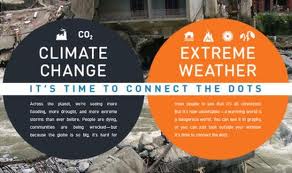
As of 8:30 a.m. EST this morning, 10,000 Facebook folks had already “liked” the new 350.org “Connect the Dots” campaign, which encourages people around the world to connect the dots between climate change and extreme weather.

That’s a good number of “likes.” But what we really need is for the concept to go viral, the way the Kony 2012 campaign did a few weeks back.

It will require the attention of millions of people, particularly those in the driver’s seat of climate change—that’s you and me, my fellow Americans—to turn this global heating juggernaut around.

Lately I can’t seem to stop asking myself why it is that so few people I know are willing to focus their attention on the crucial issues of our time: climate change, the chemical poisoning of our environment, the steadily accelerating wave towards what scientists call “the sixth great extinction event on Earth.”

I often feel like Cassandra of Troy, who was able to see disaster in the future of her beloved community, but was under a curse, imposed by the god Apollo, of never being believed or listened to.

It’s not so much that people don’t believe what’s coming (although we certainly have our share of climate change deniers in the U.S.)—it’s that they just don’t want to hear it.  They don’t want to know.

Maybe this is simply the animal in us coming out.  Like my peaceful dog, who sleeps by my side without any thought or concern for the future, we humans focus on the immediate tasks at hand—making a living, bringing up children, keeping the house clean, exercising, shopping, planning birthday parties, you name it—and we get so wrapped up in all that busyness that we are able to blot out the daily dying screams of millions of birds and animals, the rip and tear of millions of acres of forest going down before the chain saw and bulldozer, the sobbing of millions of children who go to bed hungry every night, the ever-increasing militarization of our world civilization, and the sinking knowledge that those in control of all those weapons and surveillance systems do not stand for good.

Sometimes I really envy my friends and neighbors who are able to cheerfully ignore what’s going on in the background, and focus on making the best of each day they’re given.

Sometimes I think that’s what I should be doing too.

Why torment myself with the constant awareness of spiraling crisis, especially if I can’t do anything about it anyway?

But there’s the rub.  I do have something to offer to the fight to connect the dots and raise the necessary momentum to push Americans, potentially the most powerfully innovative, can-do people on earth, off their couches and out into the trenches of turning this crisis around.

I have my voice, which thanks to the internet can be amplified around the world and swelled into a great chorus that cannot be ignored.

Over the last few years, I have made a study of change agents—otherwise known as activists.  I know full well that every single one began as I am beginning, just sitting with the burning knowledge that things are not right, and that change is possible.

The great Bill McKibben began his climate change work in his classroom, working with a group of tech-savvy college students who realized that the Web could be used to raise awareness about the necessity of keeping carbon emissions to under 350 ppm in order to head off extreme and irrevocable climate change.

In 2007, Bill and his students launched the first iteration of 350.org and were off and running, using the incredible tools of social media to connect people, places and events all over the world.

This is the thing.  We have the ability, as never before, to see the Earth as a whole system; to understand that every creature and community on the planet is vital to the functioning of the whole and has the right to a peaceful, prosperous life.

We as humans have the ability to distinguish between right and wrong, and we know full well that the damage we are causing with our reckless, destructive, indifferent ways is wrong.

We need people from all over the world, but especially Americans and Europeans, who have been responsible for so much of the damage, to come down on the side of right, on the side of life, on the side of justice.

Yes, it’s going to mean making lifestyle changes.

Yes, it’s going to take some focused attention on the local, national and international levels.

But if we do nothing—if we continue in our unconcerned merry ways, too busy and distracted to get involved—then we will wake up one morning facing some much more severe lifestyle changes.

One morning it will be us waking up to a howling tornado flattening our town, or a raging flood sweeping away our Main Street, or an oil slick blackening our local beach, or a spike in food prices that makes even the basics no longer affordable.

It’s time to connect the dots, people, and pay attention.  Add your voice to mine, and let’s go viral with a campaign for a sustainable planetary future that cannot be ignored.

Staring down the crystal ball

I really want to believe it’s all a hoax.

Why else would not one mainstream media outlet be reporting on the massive danger posed by the unused fuel rods in Fukushima Reactor 4?

Today I learned (through a link posted by on Facebook by my friend, the author Susan Griffin) that a group of high-level scientists, diplomats and civil society organizations has issued an urgent call to U.N. Secretary General Ban Ki-Moon, requesting U.N. leadership in an international effort to stabilize the fuel the wrecked Fukushima plant.

This call has been endorsed by U.S. Senator Roy Wyden, who visited the plant in April and reiterated the call for urgent international action.

If the fuel in the plant were released into the atmosphere, which would be almost inevitable in the event of another earthquake, “this could result in a catastrophic radiological fire involving nearly 10 times the amount of Cesium-137 released by the Chernobyl accident,” according to the letter to Secretary Ban.

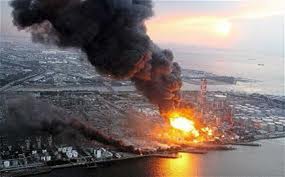
Fukushima burning

Given the climatological realities of wind and ocean currents, this could potentially put hundreds of millions of people at risk of radiation poisoning—not to mention the devastating effects on flora and fauna.

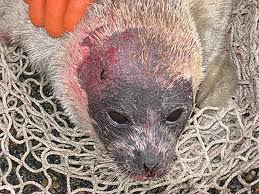
Remember the reports of thousands seals with fatal skin lesions washing up in the Arctic? Apparently polar bears and whales are also known to be affected.

Imagine that multiplied tenfold, and affecting not just marine life, but humans as well.

And then ask yourself, why is only one U.S. Senator engaged with this issue?

Why are we frittering away our precious time on White House Correspondents Dinners and sports events, when in so many ways our future hangs in the balance, connected by a very short fuse to multiple forms of total catastrophe?

Sometimes I look down at my peacefully sleeping dog and think, maybe he has the right idea.

Why fret and worry about the future?  It will come soon enough…might as well enjoy life while it lasts.

But that is what separates us humans from other species.  We can see into the future.  We can spin out possible future scenarios based on how we act today.

And given these crystal balls of ours, can we really in good conscience shrug our shoulders and head off peacefully to bed?

No More Leave it to Beaver

In the lively “Room for Debate” series in this week’s New York Times, provocatively entitled “Motherhood vs. Feminism,” the piece I like best is the one by Annie Urban, who reminds us that “it’s about parenting, not mothering.”

“Too often the discussion about women’s choices (stay at home, go back to work) ignores the role of fathers. To achieve meaningful equality, we need to push for a society that values fathers who strike a balance between their career and their family life too. Women shouldn’t have to be equally uninvolved parents to reach their goals; they should be able to ask their spouses to step up too.”

Hear hear, Annie!

Amazingly, she was the only one of the seven women columnists commenting on Elisabeth Badinter’s slamming indictment of “attachment mothering” who thought to look to the fathers.

Is it because for the six other women, the fathers are so absent from the parenting landscape that their input is immaterial?

Erica Jong, who describes herself as a “zipless gran,” is the only one to point out that the intensive, at-home parenting required of the “attachment” model “takes resources”: “An affluent mom who doesn’t need to earn can afford co-sleeping, making pure food, using cloth diapers and being perfectly ecological,” Jong rightly observes.

She doesn’t say, but it’s easy to assume, that such a mom is supported by a hardworking spouse.  The unspoken assumption about fathers, unchanged since the Leave it to Beaver days, rears its head: the primary function of a father is to pull in the bucks.

But times have changed. For mothers who must work to keep our kids in food and shelter, short-cuts are necessary, and juggling too many responsibilities becomes a fine art. Should I miss the cocktail party after work today, where all the important networking takes place, or should I pick my kid up from day care in time for dinner and a relaxed bedtime story?

How about calling dad to pitch in here? Why can’t he do the bedtime story so mom can go to her cocktail party and chat up the boss?

In my experience, the answer to such a query is too often a flat no—you handle it, honey.  And so she will, making those tough choices day after day, doing the best she can.

It is no accident that women still earn 77 cents on the male dollar.  The other 23 cents go to our unpaid, unsung attention to mothering and family care of all kinds.

Elisabeth Badinter says we should get over our obsession with the “voluntary servitude” of mothering and go play the career game with the boys, giving it all we’ve got.

I’d rather see a kinder, gentler scenario, in which parents, both male and female, work together to balance the conflicting demands of work and child care.

As a society, we could encourage this in a material way by acknowledging the value of parenting via Social Security and other benefits.

By dint of hard struggle we have enshrined the concept of family leave and parental leave in law, but we could do a lot more to support parents through the difficult years when so much is demanded of them on the home front while they are also in their prime career-building years.

Instead, our society seems to be pushing women back into the unpaid homemaker roles, by sinking our efforts to balance career and mothering under the weight of guilt, frustration and sheer exhaustion.

Do we really want to focus the bright minds and creative spirits of 50% of our population exclusively on issues of breast-feeding, diaper rash and what to have for dinner?

Do young men really want to return to the good old days of being the sole provider for a houseful of dependents?

Feminism needs to demand that fathers fully engage in the struggle to make parenting a joyful, cooperative stage of life, rather than a gendered minefield.

And mothers and fathers need to insist on the social support they deserve for the valuable labor they perform every day, both in the home and outside of it.

May Day: Here, There and Everywhere

A reader asks why I did not stay home from work and join the May Day protests today, and I feel like this question deserves a serious response.

Partly, I have always had a phobia about crowds, and never willingly put myself into a crowd situation.  I don’t even like to go to an agricultural fair, or a peaceful parade.  In my Manhattan youth, crowds and violence often went together, or at least crowds and the fear of violence.  I am a wimp.

Partly, I felt like I could do more good in my classroom today than anonymously out on the streets.  It is the last full week of classes at my institution; students are finishing up projects that need response and guidance.  If I didn’t show up to work today, it would throw a monkey wrench in the plans I made for a graceful and productive ending to our semester together.

Partly, I don’t have any beef against my own employer, so not showing up for work today would affect the wrong target, while making no difference at all to the intended target, the 1%.

I guess the biggest reason I felt like my presence was expendable to today’s protest is because no one would notice if I was or was not out there on the street, but I would definitely be missed from my classroom.

However, in at least one of my two classes today, I did spend some time talking about May Day and the reasons for the protest.

I was surprised to learn that very few of my students had any clue as to what May Day signified to the labor movement, or why the protests today were taking place.

I don’t know why I assumed that my students would be more politically aware than I was at their age.

Turns out, few of them even realized there were going to be significant protests today, much less what they were all about.  Some also had their doubts as to whether the Occupy approach was likely to be effective.

Well, I pressed them, if occupying public spaces is not an effective means of protest, what would be more effective?  Joining a political campaign?  Writing a letter to the editor?

No one had an answer to that, but I could see the wheels turning.

And that’s why I am glad I decided to stay at work today.  At least with this one small group of students, I was able to foreground these historic May Day protests in their minds, and ask some questions that no one else probably would have asked them today.

Maybe as a result they will be paying attention to the news in a different way, and thinking more concretely about how the issues blazoned across all those posters and banners are relevant to their own particular lives.

Whether working on the small canvas, in the classroom, or the big canvas, out in the street, we are working together to build up the necessary momentum to blast our way to a better world.


Which Side Are You On?

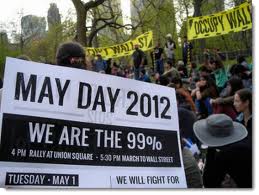
So here we sit on the eve of May Day 2012, and there is an eerie calm-before-the-storm kind of feeling.

The mainstream media is still doing its best to pretend that nothing out of the ordinary is going on.

The only May-Day related event reported in the NY Times today was that a lawsuit was filed in federal court to keep police from using “pen” barricades to hold demonstrators against their will.

Apparently news of the remarkable energy, creativity and defiant spirit showed by the Occupy movement in the countdown to May Day is not fit to print, ie, not important to the intended audience of The Times.

But if you move over to Twitter and search #Occupy, #OccupyWallSt, or #MayDay, you get a whole different picture of what’s going on.

Instead of the nose-in-the-air ho-hum of the fat-cat NY Times, suddenly you’re plunged into a hum of activity, down on the ground with a million twittering mice running around energetically, purposefully and thoughtfully.

There is @OccupyColleges calling for a student strike to protest the debt-bondage of student loans.

#OWS is trumpeting the latest total of 135 U.S. cities where general strikes have been organized for tomorrow.

The Nation, Democracy Now, and Truthout are publishing advance stories preparing for what’s coming.

The media landscape itself bears evidence of the huge and widening gap between the 1%-dominated old guard, napping on its laurels, and the feisty up-and-at-‘em new media webizens, who are vigilant and unafraid to welcome in something new and different.

For make no mistake, the General Strike planned for tomorrow is something new.

International Workers Day has not been celebrated in the U.S. for a long time.  In fact, during most of my lifetime it was demonized as a Communist holiday, which you’d be unpatriotic–unAmerican!–to take seriously.

We’ve come a long way in a very short time.

Thanks to the Occupy movement, being a worker, rather than a boss, is no longer a sign of personal shortcomings, as in: what’s wrong with you, that you’re still only earning minimum wage, bub?  You dumb or something?

Likewise, the Occupy Foreclosures movement has taught us that it’s not that we were stupid to apply for that tempting mortgage, it’s that the banks were predatory and sleazy to talk us into it.

Thanks to the Occupy movement, the onus has shifted to the 1% to prove that what they’re doing is responsible and for the good of all, rather than motivated by naked greed and self-interest.

The rapacious vulture Capitalism that has dominated the U.S., and hence the world, since the end of World War II has been exposed, and there is no going back.

It may be true that many of the strikers are motivated by self-interest rather than pure altruism.  They want jobs, along with affordable housing, education and health care.

But it’s also true that the Capitalist masters of the universe have lost control of the ship and can no longer pull levers to make jobs and other social benefits magically appear.

Unless, that is, the ultra-rich 1% can be persuaded to part with a fair portion of their loot.

History shows that when the gap between the haves and have-nots widens too far, something snaps and the mob takes over to reset the balance.  Think the American, French and Haitian Revolutions.  Think the Communist takeovers of Russia and China.

When it happens, it isn’t pretty.  Haven’t those in power learned their lesson?  Don’t they realize that they can only push the 99% so far before all the police barricades in the world won’t be able to hold us back?

I don’t think we’ve hit that snapping point yet.  But May Day 2012 is going to be something to watch, and something to participate in, too, if the spirit moves you.

Me, I’ll be teaching my classes this May Day, but with a tip of my hat to what’s going on down at the barricades in New York and all across the country.

And you?  Where will you be on this historic International Worker’s Day?

“Which side are you on, boys, which side are you on?”

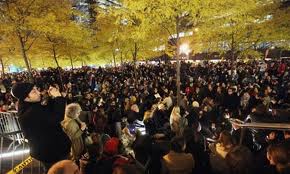
(AP Photo/John Minchillo)

Stop the holocaust of migrating birds

Lately I have been sitting with the brooding knowledge that at least 7 million migrating songbirds were killed this spring running the gauntlet of 84,000 American communication towers that rise as high as 2,000 feet into the sky, braced by invisible guy wires that garotte the birds right out of the air.

This is actually just a fraction of the number of birds killed each year by running a collision course with human activity.

This spring has been more silent than ever. The traditional dawn chorus of birdsong has ebbed to a few lonely little souls, most belonging to non-migratory species like cardinals, bluejays, chickadees and sparrows.

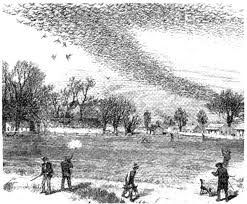
They say that when Europeans first arrived on this continent, the migration of the passenger pigeons would literally darken the sky for minutes on end.

I have never seen a living passenger pigeon, and it seems that my grandchildren will not know what I mean when I talk about the dawn chorus of riotously busy, happy birdsong, any more than they will be able to imagine an apple orchard in full bloom buzzing with the diligent harvest of a million droning bees.

Knowledge like this makes me sick at heart.  My rational side is aware that mourning is not productive, but another side of me knows that it is one of the special gifts of us humans to feel grief; to locate particular sadnesses in the larger landscape of suffering; and to use our sadness and anger at injustice as a lightening rod for change.

Other animals and birds feel grief as well, but you won’t find the great community of birds gathering together to make plans to topple all the communication towers in North America.

No, the birds will go quietly, one by one, into the endless night of extinction.

Just as it was our ingenuity that created those needle-like structures, held up by steel deathwires, it is our job as humans to recognize the destruction we are causing and make sure it changes.

I am not suggesting that we give up our communications towers—that would truly be a quixotic quest!

I am suggesting that we place value on the lives of 7 million birds—the number that scientists estimate are killed annually by communications towers taller than 180 feet.

What can be done?  Well, there must be some way to make those wires visible to the birds.  We could drape them with some kind of fabric, or coat them with a glittering reflective paint.  We could emit some kind of sound signal that would alert the birds to avoid the tower area.

The scientists studying this issue noted that simply changing the lights on the towers from solid red lights, which apparently mesmerize the birds in bad weather, to blinking lights, “could reduce mortality about 45 percent, or about 2.5 million birds. The study also recommended that businesses share towers to reduce their number and build more freestanding towers to reduce the need for guy wires.”

As we saw when Rachel Carson succeeded in getting DDT banned, bird populations can and do rebound if given the chance.

But not once they’re extinct.

We must act now, before the songbirds follow the passenger pigeons into permanent silence.

From Big Tobacco to Big Corn: the time to stand up for the right to health is NOW

Two years ago, I was taking multiple steroid inhalers every day for asthma, which began in the aftermath of a couple of bouts of pneumonia, and was always accompanied by typical seasonable allergy issues—coughing, sneezing, runny nose.

In the summer of 2010, in addition to the usual asthma and allergy symptoms, I also came down with a severe intestinal infection, requiring antibiotics to overcome.

When, in the wake of the course of antibiotics, my digestion was still troubled, I decided to experiment and see if removing gluten from my diet made any difference.

Lo and behold!  After just a month without gluten, my intestinal issues made huge progress.  And even more impressively–and completely unexpectedly–my asthma and allergies also disappeared.

When, after a while, I also decided to give up meat, except for the occasional small portion of chicken, the results were nothing short of miraculous.

Longstanding feelings of intestinal bloating disappeared overnight.  Bleeding hemorrhoids totally cleared up.  And the asthma and allergies, which had sometimes been so severe that I ended up in the ER begging for more drugs, were gone for good.

This remarkable shift in my own personal health, as a result of giving up meat and gluten, really makes me wonder.

Why is it that the gluten-free market is one of the fastest growing packaged food sectors right now?

Why are so many of us getting sick from our food supply?

Could it have something to do with the fact that most of our nation’s food supply is produced by industrial agriculture, relying on GMO seeds, as well as herbicides, fungicides, and pesticides in the growing process, not to mention all kinds of preservatives once the corn and wheat is on its way to the table?

I am heartened by the news that hundreds of thousands of farmers and consumers are pressuring the USDA to reject Dow AgroScience’s 2,4,D-resistant corn.

It is high time that all of us stood up to Big Ag and said enough is enough!  Why should we have to spend top dollar to buy organic, when the truth is that all food should be produced in an organic and sustainable manner?

Big Ag will reply that it would be too expensive to produce tons of corn, wheat and soybeans–not to mention beef and pork– organically.

But you know what?  Being sick is very expensive.  Health care is a huge drain on our national economy, as anyone who has been paying attention knows.

Could it be that the industrial agriculture/pharmaceutical/insurance conglomerates actually want a sick populace?

Imagine the outrage if that story were to break.

Imagine if it were proven that the incredible spike in autistic children is due to pesticide poisoning.

Imagine if we could prove that the asthma epidemic in this country is due to auto-immune problems generated by toxic food.

Imagine if we could nail the chemical companies for the explosive growth in cancers, diabetes and heart disease!

I don’t think this is far-fetched at all.

In fact, it’s low-hanging fruit for a cadre of well-trained lawyers with the guts to go up against the big bad guys.

In our parents’ generation, it happened with Big Tobacco.

The evidence is staring us in the face.

What are we waiting for?