Living on the trigger’s edge

I am always worrying about our vulnerability as individuals living in a contaminated environment, or about the instability of our planetary ecosystem now that global heating is underway.

But one thing I don’t usually worry about is whether my son will be shot and killed on his way to buy candy at the corner store.

This is a mark of my privilege as a white person living in a predominantly white neighborhood in a small, relatively wealthy town in New England.

My sons are in fact half Hispanic—their father is of Mexican heritage—but they “look white.”

It would never have occurred to me, before learning of Trayvon Martin’s recent murder at the hands of a neighborhood vigilante, that one of my kids, coming home from the local convenience store wearing his hoodie up because of the rain, could be accused of robbery and fatally shot by one of my neighbors.

There is so much that is wrong about this scenario that I hardly know where to start.

I deplore the racial profiling that turned an innocent kid into a moving target.  I abhor the despicable behavior of the local police department, which chose to let the killer go free—with his gun!—without even holding an investigation.

But there is a more fundamental issue here that we as a society need to confront.

Why are there so many civilians with guns in our country?

This is at the heart of all the school shootings that have been occurring with alarming regularity in recent years.

It is of deep concern to the millions of victims of domestic violence in our country, who must live in fear of the gun in the drawer.

It is certainly at issue in the Trayvon Martin case, where a young man lost his life because of a trigger-happy “neighborhood watch” patrolman gone bonkers.

It is high time we as a nation stood up to the NRA “right to bear arms” folks and began a serious national conversation about gun violence in our country, and around the world.

***

I spend quite a bit of my professional life teaching and writing about violence that happens in other countries.

When you teach college classes in literature and human rights, you are often reading accounts of genocide, civil war and ethnic cleansing in places like Africa, in Asia, Central and South America, the Middle East.

My students and I regularly read horrifying stories of how civilians are caught in the crossfire between heavily armed warring groups.

One side is usually the state-funded military and police, the other side an oppositional force, labeled “terrorists,” “subversives,” “rebels,” or “freedom fighters” depending on your ideological viewpoint.

In between are the ordinary civilians who are generally just trying to keep their heads down and survive.  Women are especially at risk in these situations: vulnerable to rape themselves, they are often forced to watch their children raped and tortured, their husbands executed.

It’s easy for us to think about this kind of violence as something that only happens far away, and to feel that we here in the U.S. are morally superior and righteous.

Easy, that is, until we stop to consider two important aspects of these faraway conflicts that are almost never discussed in the news media or in college classrooms.

One, in virtually all cases of civil conflict worldwide in the past 50 years, the guns and other weapons have been supplied by U.S. arms manufacturers and dealers, or their European counterparts.

Two, in many cases, the folks on the ground in hot spots like Iraq, Afghanistan, or Congo are fighting proxy wars for First World corporate control of resources. In other words, they’re fighting Wall Street’s wars.

So we here in the U.S., despite our self-righteous sense of moral purity, are in fact deeply implicated in every violent confrontation taking place over there in other parts of the world.

***

What does this have to do with Trayvon Martin?

Let me spell it out.

The same gun manufacturers and dealers who are arming, say, the Syrian Army and the “opposition forces,” or the Ugandan Army and the Kony “rebels,” are also supplying guns to American servicemen like Sergeant Bales, who flipped out and massacred innocent Afghan civilians in their beds last week; to American police officers who regularly appear in the headlines for unwarranted use of lethal force; and to American civilians like George Zimmerman, who shot an unarmed teenager walking home through his own neighborhood—a supposedly safe gated community in Florida.

And this doesn’t even begin to touch on gang violence worldwide, or narco-violence, all of which is carried out at gunpoint.

With so many guns floating around in our society, it is inevitable that innocent people are going to get shot, all the time, every day.

Here in the U.S., and around the world, we need to rethink the heedless way we have given gun manufacturers and dealers such freedom to operate.

Giving anyone and everyone access to a semiautomatic weapon is just asking for violent confrontations among civilians, and between civilians and police.

As a global civilization, we have put too much emphasis for too long on unbridled freedom to create, even when what we are creating leads to destruction and mayhem.

Chemical companies are given a free hand to churn out thousands of new chemicals and put them into the market without sufficient testing for longterm effects on humans and the environment.

Car manufacturers are given a free hand to drive national transportation policy, prioritizing highways over mass transit at great cost to the environment.

Oil and gas companies are allowed to drill ever deeper, their profits pushing our entire political system into a status-quo paralysis just at the time when we need to be vigorously mounting a huge R&D effort in renewable energy sources.

Shooting a kid, bulldozing a rainforest, poisoning an aquifer…these are just differences in degree.

Next time it could be my kid, or yours—at the hands of a crazy civilian, or an enraged policeman.  It could be your tap water catching fire from gas fumes, or a tornado spawned by global heating running amok in your neighborhood.

I’m tired of living under the constant threat of violence.  I say it’s time to hold the gun manufacturers and dealers, the oil and chemical companies, the car manufacturers and all the other agents of destructive technologies accountable, and tell them in no uncertain terms that enough is enough.

Let’s use our prodigious technological capabilities to make our lives better, not to create ever more sophisticated means to take lives away.

Silent Spring Dawns Hot, Dry and Merciless

This week, turning the corner into the astronomical Spring, we have gone abruptly from warm winter to hot summer.  And I mean hot: it was 84 degrees Farenheit in western Massachusetts today, brightly sunny, with puffy white cumulus clouds against a brilliant blue sky, unobstructed by any leaves.  No shade.

Today reminded me of a wax model: beautiful but blank.  The façade of beauty, with the crucial vital spark missing.

When I went for a walk up the mountain early this morning, the woods were eerily silent.  I remembered mournfully the spring mornings of my childhood, where I would be awakened by the joyful singing of the dawn chorus of thousands of birds each happily greeting each other and the new day.  Reaching the top of the mountain having heard only the distant cry of a single phoebe, I stopped to sit on a rock and listen for a few minutes.  All I heard was the dim rushing of the traffic on the road far below me, and the drone of an airplane churning its way across the sky.

Coming down again, a few chipmunks hurried out of sight along the path, and I was keenly aware that there were no acorns underfoot, despite the oak trees towering overhead. Last fall was a terrible year for acorns, so all the animals that depend on them for overwintering must be very hungry now.  I know the bears are on the move, as one came and pulled down my bird feeder yesterday. I am thinking of bringing some sunflower seeds along on my walk tomorrow, to spread by the path as an offering of atonement.

While no one of us can shoulder personal responsibility for this tragedy of the commons, all of us who have benefited from the heedless extraction of oil and relentless destruction of the forests and the oceans must be aware of the extent to which we have brought this on ourselves, and taken the rest of the natural world along with us.

Will there come a day when the sun rises in the brilliant blue sky and looks down on a hot, dry planet, silent except for the hardiest of species, like the cockroaches and the ants, who survived previous major extinction events, and will once again continue about their business single-mindedly, able to wait out the eons while life reboots and resurges again anew?

***

Rigoberta Menchu Tum, who bore witness to genocide in Guatemala, and won the Nobel Peace Prize in 1992

This weekend filmmaker Pamela Yates came to Bard College at Simon’s Rock to screen her film GRANITO: HOW TO NAIL A DICTATOR, as part of the Berkshire Festival of Women Writers.

This powerful film makes quite clear how the genocide in Guatemala was about land rights, with U.S.-backed military juntas working for the landowners and the corporations to clear the land of indigenous people and peasants so that big internationally funded projects like dams and mines could proceed unobstructed.

Two hundred thousand people, mostly indigenous Mayans, were massacred in the 1970s and 1980s in the service of American-fueled greed, in Guatemala alone.

It strikes me that this story is repeating now—if indeed it ever stopped—as we continue to fight over resources and land on our finite planet.

It is happening now in the forests of Indonesia, where on the island of Sumatra plantations the size of the United Kingdom, the size of Belgium—unimaginably huge tracts of magnificent rain forest with some of the richest stores of biodiversity on the planet—are being bulldozed and replanted with palms to feed international demand for palm oil.

The indigenous people who made the forest their home for millennia are being mercilessly deprived of their natural habitat just as surely as the rest of the flora and fauna there.

Endangered Sumatran Orangutan

The loss of biodiversity, including the loss of ancient indigenous human cultures, is a tragedy that cannot be quantified.  What is being lost is priceless.

It may seem like it’s all very sad, but all very far away, too.

But our summer temperatures in March have everything to do with the destruction of the last remaining old-growth forests in Indonesia, in Africa, in South America, in Canada.

Once the forest is gone, the topsoil will begin to erode.

Desert will prowl the borders of what used to be forest.

When, as in the Indonesian palm oil plantations, diverse ecosystems are replaced with monocultures, those monocultures more vulnerable to pest and climate disruption.

And then?

***

Lately I have been having recurring waking nightmares about food shortages.  Already I am concerned, as a backyard gardener, that these hot, dry spring days will not provide the proper growing conditions for spring crops like peas and lettuce.

Imagine conditions like these being replicated across the globe.

Imagine a growing season where all over the planet we lurched from heat and drought to torrential rains and tornadoes.

In the US we have become accustomed to thinking of food insecurity as something that happens in other parts of the world.

Famine stalks Asia and Africa.  It doesn’t come near us.

Or it hasn’t come near us for a very long time.

This year, as I see how the natural world around me is struggling to provide for the chipmunks, the bear and the turkeys; as I greet the arrival of the few straggling migrant birds who have managed to run the gauntlet of a landscape devastated by chemical warfare and industrial agriculture; as I gaze out at the bare trees shimmering in the unnatural midday heat, I know in my heart that it is only a matter of time before our turn comes.

Today it is the indigenous people of Indonesia who are going down with their forests.

It is the desert people of North Africa who are starving, and the teeming masses of Asia who are fleeing the floods of torrential rains.

We in the huge, pampered gated communities of North America and Europe will be insulated from these shocks for much longer than those on the outside.

But our time will come.

And when it comes, it will be with the full force of every violent futuristic film we’ve ever dreamed up.

Waterworld, anyone?  Mad Max?

***

Usually I try to stay positive and keep the flame of hope burning brightly, a beacon for myself and for others.

But today this stark, in-your-face, first-day-of-spring evidence of the coming train wreck of climate change has guttered my hope.

Time is running short for us, just as it is for the bears and the birds and the native peoples of the forest.

We are coming inexorably into Rachel Carson’s Silent Spring.

Leadership revisited: from ruthless and reckless to thoughtful and wise

This week I finally had a chance to see the new documentary film that has a lot of people buzzing, MISSREPRESENTATION, written and produced by Jennifer Siebel Newsom.  The film clearly and graphically makes the argument that women are systematically objectified and dumbed down in the media, and that this is connected to the on-going gender disparity between men and women professionals.

Having taught women’s and gender studies classes for more than a decade, the film didn’t tell me anything I didn’t already know. But it presented the information in a slick, well-argued way that had the audience gasping, nodding and cringing by turns.

I was somewhat disappointed with the conclusion of the film, however, which mostly urged the audience to take personal action to challenge the misrepresentation of women in the media and in business and politics, and to personally resist social pressure on women to focus on how they look rather than how smart they are and what they do.

Yes, raising personal awareness and mounting personal resistance is important.  But what’s really needed is systemic change.

A great illustration of what I mean by systemic change came my way this morning through a New York Times reprint of a Reuters piece by Chrystia Freeland, “Cultural Constraints on Women Leaders.”

Freeland discusses a new study by University of Toronto business professors Soo Min Toh and Geoffrey Leonardelli, who asked a simple question: Why aren’t there more female leaders?

You can read the article yourself to find out more about how they answered the question.  What interested me most was the author’s conclusion: that even in societies that have been relatively open to women’s advancement, “the one thing women around the world have failed to do is create paradigm-shifting companies.

“None of the great technology start-ups — for example, Google, Apple and Facebook — were founded by a woman. Nor were any of the leading hedge funds, the innovators in the world of money, established by a women. Women are not just underrepresented in this space of transformative entrepreneurs — they are entirely absent.”

Freeland concludes that “the final frontier for women, even in societies that allow them to lead established institutions, is to be ruthless and to take big risks, essential qualities in world-changing entrepreneurs. Instead, as the authors found of female entrepreneurs in Malaysia, women often have to “lead as if they were mothers or teachers.”

This conclusion just demonstrates the extent to which even a very intelligent woman like Chrystia Freeland is still a prisoner of her social indoctrination.

Because the point is that it’s those risk-taking, world-changing entrepreneurs–all men–whose reckless leadership has so endangered our planet that we live in constant fear of the “sixth great extinction event.

It would be a profoundly GOOD THING for our planet and human civilization if our leaders guided us “as if they were mothers or teachers.”

Yes, I am writing this on an Apple laptop which I love, with my iphone on the desk beside me. Yes, I use Google and visit Facebook daily.

But is my attachment to these gadgets and conveniences more important to me, or the world, than our very survival as a species?

What good will my iphone do me when global heating goes out of control, leading to food shortages, storms of biblical proportion, and general lawlessness and fear?

The mother and teacher in me knows that those who look to me for guidance depend on me to choose a safe, wise path.  I will not lead them over a cliff.  I will weigh the risks and benefits and make the decision that benefits the group as a whole.

That is not true of the risk-taking cowboys who have led us to the brink of environmental, financial and social collapse as the 21st century dawns.

We need more men and women to come forward as responsible leaders and tell old-school folks like Freeland, in no uncertain terms, that her ideas of leadership are profoundly flawed.

It will do us no good if women achieve leadership success in the same old masculine terms.  If we are to survive the challenges that await us in the coming years, we need to change the paradigm of successful leadership.

Lead as if you were a mother or a teacher.  Let’s try that on for size.

Women Must Stand Up For Peace & Security

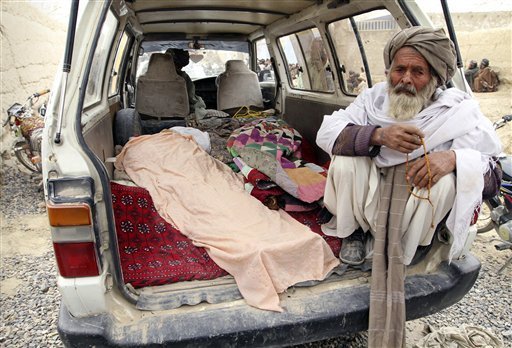
A deranged soldier, armed with gun and knife, walks off the base into the nearby small town, and massacres 16 people, including 9 children.

No, it’s not the plot of the latest Schwarzenegger movie.

It’s real life in Afghanistan.

Or Oslo, Norway.

Or Homs, Syria.

Or the local high school or university in Anytown, USA.

What happened in Afghanistan this week is part of an ever-escalating pattern of violence visited on innocent civilians by armed men.

Janjaweed

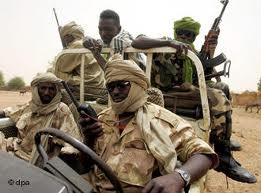
Whether the men are sponsored by a state (ie, they’re soldiers), are part of armed militias (think Taliban or Janjaweed or Kony’s Lord’s Resistance Army) or individual “rogue” psychopaths is immaterial to the victims of the violence.

The larger point that must be reckoned with is that we cannot expect to live in a global society dripping with arms and saturated with constant virtual and real instances of violence, and come away unscathed.

Americans are always so shocked when the violence happens in our backyard, as in school shootings or Timothy McVeigh-style bombings or police brutality against unarmed Occupy protesters.

We’re shocked when our soldiers, “our boys,” commit atrocities while serving in the armed forces abroad.

But how can we expect our boys to be immune to the general atmosphere of violence that we all live and breathe—young boys and men in particular?

People like to argue about whether playing countless hours of shoot-em-up video games results in more violent youth.

All I can tell you is that the military now uses video game technology to teach warfare to young soldiers, and one of the goals is precisely to overcome the natural human aversion to killing, especially killing those who haven’t done you any harm.

Lt. Col. David Grossman

In the class I teach periodically on gendered violence in military culture and war, we read excerpts from the work of Lt. Col. David Grossman, who maintains a website called “Killology.com.

Grossman, a psychologist who has become one of the most sought-after military and police trainers in the U.S., if not the world, defines “killology” as “the study of the reactions of healthy people in killing circumstances (such as police and military in combat) and the factors that enable and restrain killing in these situations.”

Grossman began his career teaching soldiers and police officers “the psychological techniques needed to develop Mental Toughness, a Survival Mindset, and a Hardened Focus,” integrating “psychological skills with physical and tactical training… to achieve maximal performance excellence as a modern warrior.”

Interestingly, now he not only offers training in the psychological “hardening” necessary to become a socially sanctioned killer—ie, a soldier–but also has begun to write and speak out against media violence, which, he says, teaches children to kill.

I think he would agree that what happened at Abu Ghraib a few years back, or in Afghanistan this week, when ordinary American soldiers go haywire and start torturing and killing civilians, is not just a case of a few bad apples.

If we allow our kids to grow up playing “harmless” violent games that are ever more realistic, gripping their imaginations and giving them access to the bloodthirsty, adrenalin high of killing, we can’t expect them to be agents of peace, especially when, as soldiers, they are further trained for war and given real weapons and the authority to use them.

My heart bleeds for the victims of this latest massacre in Afghanistan.  I can hardly imagine the pain of the survivors of the family of nine children and their mother annihilated all in one foul blow.

They aren’t the first, and they won’t be the last innocent bystanders to be caught in the crossfire of a senseless war.

I think of the many other places in the world where civilians have been caught in the crossfire of baleful enemies: Central and South America in the 1970s and 80s, when the US and USSR funded proxy wars that wreaked havoc with innocent local communities; current conflicts in Africa and the Middle East that are really about the control—by outsiders, the same old Great Powers–of ever-shrinking resources; the list goes on.

Like the Russians before them, the American military is preparing to throw up its hands and give Afghanistan back to the warlords.

It will be a disaster for the women and girls there, who had begun to hope that a more liberal mindset might prevail and help them shake off the bonds of radical Islamic gender-based oppression.

Perhaps it is up to the women of the world to rise up together to insist that our men and boys stop pouring so much time, energy and money into creating and using lethal weapons, and representations of violence.

We have seen what happens when we let boys be boys and play with their guns, real or virtual.

Can we afford to stand by and watch the endless replay of rapes, homicides, massacres, the endless parade of crippled bombing victims, the burned, the sightless, the psychologically damaged for life?

I am losing faith in the ability of the men in charge to solve this problem.

Back to Lysistrata!

If we want life, we women have to walk boldly forward and manifest our visions of peace, security and cooperation.

We need to create a procession of the world’s women, those who will stand up for peace and nonviolence—a procession so long, so wide and so loud that it cannot be ignored.

Women of the world, the future is in your hands.  What will you do with it?


May Day Mutiny: Radical Transformation Rises

Today is our “spring forward” day in the U.S., when we move the clocks forward an hour thus “losing an hour” in the morning, but gaining an additional hour of light at the end of the day.

It’s a beautiful sunny day here in Massachusetts, with birds singing their love songs in the trees, and the sap rising steadily in the thick sugar maple forests.

It’s hard to feel gloomy or pessimistic on a day like today, with our great source energy, the Sun, shining so brilliantly and steadily down on us.

Even contemplating the social landscape, it seems that there are reasons to be hopeful.

Last night I attended a brilliant one-act play by a Bard College at Simon’s Rock senior, sensitively and with almost painful honesty focusing on the relationship between a pair of best friends, 15-year-old girls, as one of them goes through a secretive, excruciating home abortion.

At the talk-back after the play, the author, who also played the lead, said she wrote the play because it was so clear to her that young women’s voices need to be heard more broadly in the theatrical world—not just as love objects written by men.

To me this is a hopeful sign, because as more women’s voices find their way into the great collective unconscious of the human public sphere, they will have an impact on the way we think and act as a social body.

The shame, secrecy and psychic anguish felt by the lead character of the play is so unnecessary, as is the fact that although it took two to implant that fetus, the other teen parent, the guy, was entirely absent from the drama that followed.

If young men were more aware of what an abortion entails, I dare say that many of them would be more responsible in doing their part to avoid pregnancy until they were ready to assume the mantle of fatherhood.

If high school sex ed included sessions on abortion the way drivers’ ed includes sessions on the consequences of driving drunk, complete with graphic images and re-enactments, abortion might become a rarity, and having teen sex without contraception as stigmatized as driving a bunch of friends home from a party dead drunk.

***

I am feeling hopeful today too because yesterday I read Tidal 2, the second journal put out by a group calling itself Occupy Theory.

The journal, entirely web-based, includes articles by Judith Butler and Gayatri Spivak, written in as accessible a voice as I have ever heard those two formidable theorists muster.

It also includes articles by unnamed CUNY Graduate Center students on a variety of issues, as well as a wealth of other interesting short pieces and vivid photos and artwork of the Occupy movement.

Judith Butler

Butler makes the excellent point, in reference to the call by the political/media establishment for “a list of demands,” that “the appeal or demand that sought to be satisfied by the existing state, global monetary institutions, or corporations, national or transnational, would be giving more power to the very sources of inequality, and in that way aiding and abetting the reproduction of inequality itself.”

Instead, Butler calls for a movement for “radical equality,” the achievement of which would require “the making of new institutions,” rather than trying to push existing institutions to change radically while still maintaining their social dominance.

She also envisions an Occupy strategy that would be strategically “episodic and targeted,” rather than the sitting-duck encampment strategy of last fall.

Gayatri Chakravorty Spivak

Such a strategy might build on the historical model of the General Strike, as Gayatri Spivak discusses in her contribution to Tidal 2.

The General Strike, as undertaken by Gandhi against the British, “has always been special because it is undertaken by those who suffer, not by morally outraged ideologues,” Spivak says.  “It is by definition non-violent…though the repressive apparatus of the state has used great violence against the strikers. Although the results are transformative, the demands are usually focused on laws….If one sees the connection between the General Strike and the Law, one realizes that this is not legal reformism, but a will to social justice….Unlike a party, a general strike refuses to cooperate until things change.”

Tidal 2 ends with a bold call for a General Strike on the symbolically important day of May 1, 2012, May Day.

I have no doubt that it will happen, and that it will be big.

I am sure police forces across the world are already planning their own strategies.

The truth is that if the 99%, “those who suffer” from the structural inequality of globalized capitalism, were to come out in large enough numbers on May Day, and refuse to go home until those in power began a serious dialogue on transformative, institutional change that included the retooling of our political, social and environmental systems for 21st century realities—the truth is that we might actually get somewhere.

Somewhere new, somewhere joyful, somewhere beyond the bruising, gridlocked, decrepit and corrupt politics that currently has our entire planet in a stranglehold.

The social and political elites who have inherited the 20th century reins of power and do not want to let go need to be made aware that they are driving us all over a cliff with their refusal to summon the political will and the technological know-how to adapt to anthropogenic global heating.

They must be made to understand that they and their children will go down with the rest of us!

That is the one blind spot in this issue of Tidal 2: there is very little mention of the impact of climate change and human overpopulation on the carrying capacity of the planet.

This awareness shows up more in metaphor than head-on, but metaphor is powerful too.

At one point, the anonymous authors of Tidal 2 describe the 1% as the captain of a ship “who steers while we shovel coal and  swab decks.  He seems to have us headed towards a typhoon.

“The captain stares at the impending doom on the horizon and grins ecstatically.  He’s clearly thrilled to be captain.  He faces down a storm that we can only wincingly glance at with one squinting eye, and he jabbers incessantly about hope and destiny.  We realize that he does not see as a normal person, by passively receiving light through his pupils.  Rather he uses his eyes offensively to project what he wants to see on the world.  He has become so practiced at his fantasia that he can no longer recognize what we, cringing on deck, see as certain catastrophe.”

Well, my friends, it is time to stop cringing on deck.

Mutiny is justified if the captain is a raving maniac and the alternative to mutiny is catastrophe.

On this sunny day, let’s pledge to take a great leap forward this spring, take charge and steer ourselves into safer waters.

See you on May Day.

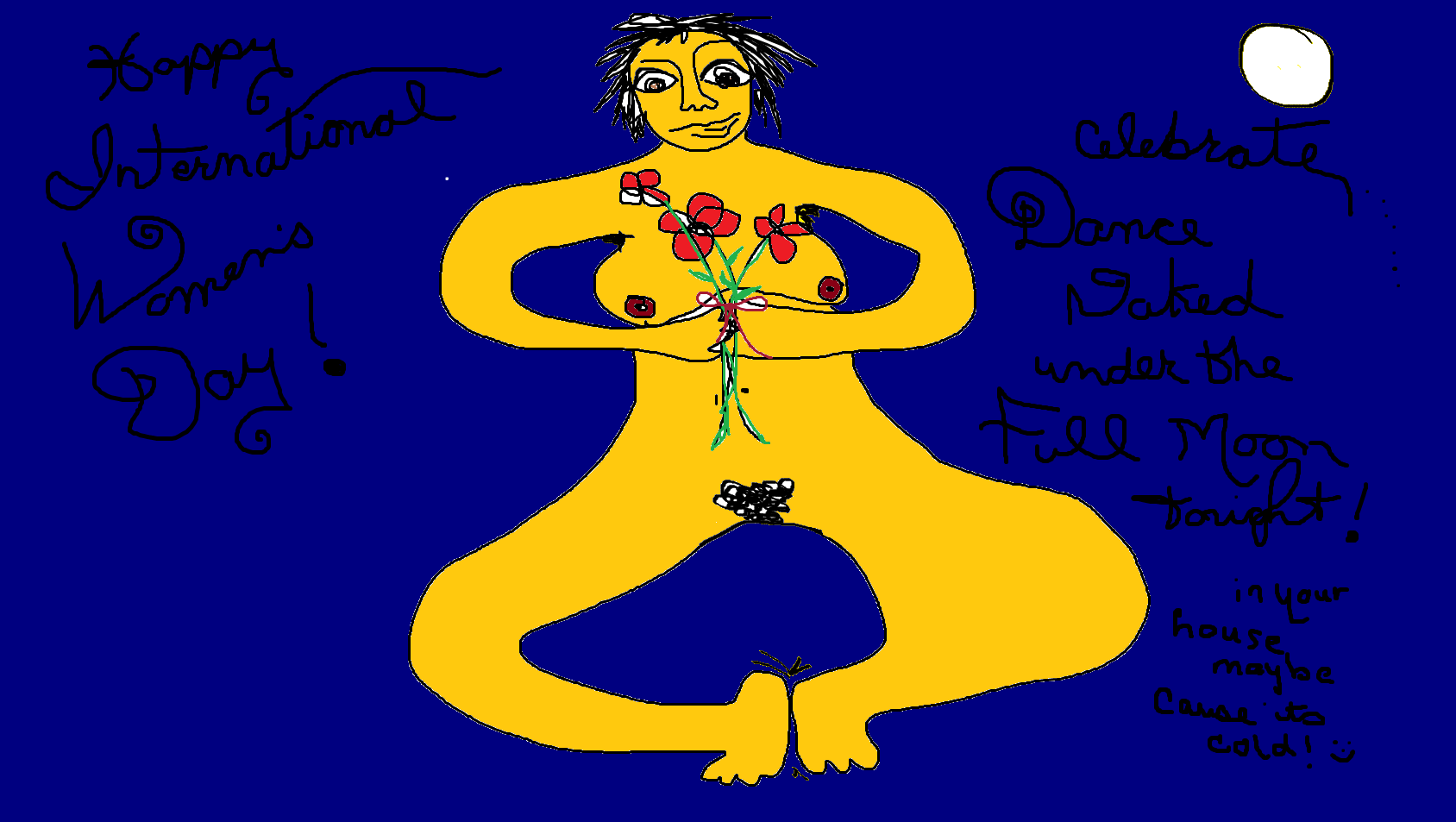
IWD 2012: If not you, who? If not now, when?

Is it coincidence that on International Women’s Day 2012, Earth was bombarded by one of the most intense solar flares ever?

I can’t see them from my window, but apparently Northern Lights are visible way further south than normal tonight, thanks to the extra radiation from the Sun.

Could it be that the Sun is urging us on, sending us the pulse of a solar storm to motivate us to action?

What do I wish for women, this IWD? What do I want from women today?

I am tired of women being held hostage on the basis of their reproductive capabilities.

Yes, we are the ones who bear the babies after sex.

Sex happens and we love it.

Babies happen, too.

If a woman doesn’t want to bear the baby that takes root after sex, she has every right to decide what to do about it.

Period, end of statement.

Women have the right to be educated about their reproductive options.

Women have the right to have access to contraception, no matter their age.

Insurance companies have no right to treat contraception differently than they would treat any other drug.

Men are very happy to have insurance cover their Viagra so they can screw to their heart’s delight.

Fine.  But don’t deny women the same right to manage our reproductive capabilities as we see fit.

***

Today in class, when we briefly discussed IWD and women’s equality, it was inevitable that one young woman present had to tell the group how much she enjoyed cleaning house, so that she couldn’t imagine that the “second shift” would be a burden.

I just let it go.  Honey, let’s talk again in another 15 years, I wanted to say (my students are generally under 20 years old).

I would like you to come back to me in 15 or 20 years, when you have a toddler and an infant and are working fulltime, and tell me that you love cleaning and it’s perfectly OK that you do more of it than your so-called partner.

***

Yeah, OK, a little bit of anger there.

I was glad to see an article on Common Dreams today entitled “That’s Enough Politeness – Women Need to Rise Up in Anger.”

Hell yeah.

Women like me have been trained to be oh-so-polite.

We don’t rock the boat.

We are grateful for our jobs.

We are grateful for our mates.

We are grateful for our home and our children.

We don’t talk about the personal sacrifices needed to maintain all of the above.

As Laurie Penny puts it, “Women, like everyone else, have been duped. We have been persuaded over the past 50 years to settle for a bland, neoliberal vision of what liberation should mean. Life may have become a little easier in that time for white women who can afford to hire a nanny, but the rest of us have settled for a cheap, knock-off version of gender revolution. Instead of equality at work and in the home, we settled for “choice”, “flexibility” and an exciting array of badly paid part-time work to fit around childcare and chores. Instead of sexual liberation and reproductive freedom, we settled for mitigated rights to abortion and contraception that are constantly under attack, and a deeply misogynist culture that shames us if we’re not sexually attractive, dismisses us if we are, and blames us if we are raped or assaulted, as one in five of us will be in our lifetime….

“Politeness is a habit that what’s left of the women’s movement needs to grow out of. Most women grow up learning, directly or indirectly, how to be polite, how to defer, how to be good employees, mothers and wives, how to shop sensibly and get a great bikini body. We are taught to stay off the streets, because it’s dangerous after dark. Politeness, however, has bought even the luckiest of us little more than terminal exhaustion, a great shoe collection, and the right to be raped by the state if we need an abortion. If we want real equality, we’re going to have to fight for it.”

***

This International Women’s Day 2012, I want women to dare to take some risks. Dare to get angry!  Dare to think outside the box!  Dare to want more than whatever you think you should have!

Women of the world, you are needed as never before.

The Earth Mother herself lies bleeding, prostrate, raped and pillaged and on the edge of complete surrender—which will mean the death and destruction of all of us , her children.

She needs us to stand up for her, to stand up for ourselves, to insist that the old conquistador’s model of forced rape will not cut it in the 21st century.

This International Women’s Day, I want American women to stand with our sisters all over the world to insist that we are more than the sum of our reproductive organs.  We are more than house slaves.  We are more than corporate slaves.  We are not reducible to any of the ciphers by which some of us are regularly netted and ensnared.

Women of the world, there has never been a time when your input, your perspectives, your influence has been more important.

Don’t assume that someone else will take care of it for you.

We are depending on you now.

The Earth herself is depending on you now.

This International Women’s Day, I say to the world’s women: there has never been a more crucial time to step into your power and act to protect your communities and our planetary home.

If not now, when?

If not you, who?

Now.  You.  And us, together.  Men and women, all over the world.   Now, you.  Now.

Cupid, go home!

It’s fascinating to me that the Transition Times blog post that has gotten the most attention, by far, is “There’s more to love than Cupid and his arrows,” my Valentine’s Day 2012 post, which has been read hundreds of times since February 14.

Of course, people are always interested in love and romance.  And this is a positive, peaceful essay about being very thankful for the love I have in my life through my parents and children, to the point where I’m not missing romantic engagement.

Truly, I’m not.

There has been a spate of articles lately about so-called “singletons,” men and women who choose to remain happily single.

Some of the articles fret that such people may have troubles as they age, since they have no companions to help care for them.  A recent New York Times Room for Debate series, “Being Alone Together,” explored both sides of the issue, with many of the writers arguing that solitude has significant benefits.

I am not living alone; I am living with my two teenage sons at the moment.  I have to say that I do enjoy the rare times when I have the house to myself, and have no one but myself to please.

When I was in my early twenties, before I married, I lived on my own in Greenwich Village while I studied as a graduate student at NYU.  Although I had never felt confined or fettered while I lived with my parents, the freedom of living alone was fantastic, as was the convenience of living so close to the NYU campus and the stimulation of the Village.

But nevertheless, during those years I felt a tremendous pressure to marry, to have children—to paraphrase Mrs. Ramsay in Virginia Woolf’s To the Lighthouse.

Did it come straight from my ovaries?

It wasn’t like my parents were pushing me at all. But I felt a kind of insecurity about being single, like I was lacking or missing something. I was incomplete.

In those days, the 1980s, there was a lot of talk about how if you didn’t find a mate in your twenties or early thirties, you’d be over the hill and never find one.  Believe it or not!  Stories of unhappy women in their forties abounded—women who had never been married, and were totally, miserably fixated on finding the ever-elusive Mr. Right.

Although I was living alone and perfectly content with my life, I still felt like it was temporary, and I’d better be constantly on the look-out for the man who would come along to complete me and open the door to my real adult life, which could only begin with those wedding vows.

Now, on the other side of two decades of marriage and a divorce, I am once again single and enjoying the freedom, this time without that little Cupidlike imp sitting on my shoulder warning me that I’d better focus on love and get myself hitched.

I have young friends getting married now and of course I wish them much happiness and fervently hope that they will be better marriage partners than my ex and I were for each other.

But I have to say, from my current vantage point it seems rather miraculous that one’s chosen mate at age 25 could still be the perfect partner at age 50.  What an amazing feat to grow together so harmoniously that you still complement and satisfy each other after so many years of married life.

I know it happens; I have witnessed it for myself with others.

I just suspect it’s the exception, not the norm.

I have no illusions about finding—or being–such an exceptional partner in the next chapter of my life.

And you know what?  That’s just fine.

Pleasure plus meaning equals happiness: homage to my mom

Maria Sirois

Yesterday I went to a Berkshire Festival of Women Writers workshop facilitated by psychologist and inspirational speaker Maria Sirois.  The workshop was called “Happiness: Writing as a Path to Positive Transformation,” and since I am always looking for ways to link all those terms—happiness, writing, path, positive, transformation—I was eager to see how Maria would lay it out for us.

I was not disappointed.  She quickly got the group writing about happiness, and not surprisingly, when I started freewriting about joy, it wasn’t long before I began writing about my childhood summers spent at my family’s country house…long, endless, happy weeks where my brother and I seemed to be perfectly in synch with our mother’s rhythm, where life was peaceful, idyllic and beautiful…the epitome of joy.

Later, when we went around the room and everyone shared a short bit of their freewriting, I was struck by how many of the women present (we were all women that day) associated joy with childhood, and with nature.

Many people shared moments of joy connected with childhood memories of trees—climbing trees, wandering in the forest, listening to the wind in the trees.  Others had written about communion with animals, or remembered ecstatic time spent by the ocean in childhood.

A small corner of my mother's garden

What I remembered was watching my mother dig a rock garden out of the cow pasture in which she and my father had built their small country house when I was 5 years old.  Here are the two sentences I wrote during the workshop, and shared aloud:

“My mother would be quietly exultant as her shovel and trowel revealed new curves or deep, smooth walls of rock, and at the end of a hot morning’s work she would stand, sweaty and red-faced with a fine layer of black earth coating her bare shoulders, drinking iced tea out of a tall green glass and surveying her landscape with a squinted sculptor’s eye.  The work progressed slowly, since it was all done by hand, just one small, determined woman with a strong back and great patience, tracing out the rock with hand tools and as much love as if she were carving out the sweet, benevolent face and voluptuous body of the Earth Mother herself.”

***

Later in the workshop, Maria shared with us a memorable formula for happiness.

Happiness, she said, is the balance of pleasure and meaning.

If life is all pleasure, it can feel empty and meaningless.  If it’s all meaning, then you’re working too hard.

But if you can find the right balance of pleasure and meaning, you can hit that sweet spot of joy, in which you thrive and grow like a well-cultivated garden.

Maria suggested that there is something about creativity itself that brings us to this sweet spot.

My mother, spending her summers relaxing with her children and turning her surroundings into a beautiful landscape sculpture, was drinking from that creative well.

For me there are various creative taps I draw from: writing, teaching, creating programs like the Festival, bringing people together in harmonious, productive alliances.

Platter and dinner by my mom!

My brother recently observed that our mother has always been a wonderful model of someone who is completely focused, passionate about and committed to her art—whether that art is tonight’s dinner, or her magnificent pottery, or her lovingly tended garden.

Since earliest childhood, it has always been clear to me that she put every ounce of creativity she possessed into everything she did—not for external recognition or praise, but just because it was the right way—the most pleasurable way—to approach any task at hand.

Pleasure plus meaning equals happiness.

It strikes me that although my mom has had her share of ups and downs, hers has been by and large a very happy life.

No wonder when Maria asked me to write about joy, I went straight to my primary teacher: Sue Browdy, my mom.

Looking catastrophe in the eye

Denial of climate change is deep and it is wide.

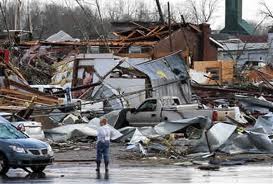
We woke up this morning to news of record-breaking tornadoes touching down across a wide swath of the American Midwest, flattening entire townships and leaving behind multiple trails of devastation.

Reading the mainstream media reports, the focus was all on the damage; very little was said about the cause.

Again, a case of focusing on symptoms rather than on the motivating problems.  The news media focuses on the “what” but ignores the “why.”

And they are even further away from what’s most important: looking for solutions.

Senator Bernie Sanders

Yesterday, thanks to the ever-impressive leadership of Senator Bernie Sanders, representatives of the national and international insurance industry came together in Washington to discuss the business implications of climate change.

Co-sponsored by the Ceres Foundation, which has been working to bring business into the sustainable future fold, the meeting was unequivocal in its acknowledgement that climate change is here, it is real, and it must be dealt with head on, before it runs right over us like a tornado.

The reinsurance industry reps were pretty blunt.

“We need a national policy related to climate change and weather,” said Franklin Nutter, president of the Reinsurance Association of America.

Pete Thomas of Willis Re, a global reinsurance broker, cited an alarming statistic: 4 out of 5 Americans now live in federally declared disaster areas.  “”Demographics and coastal urbanization are catastrophic force multipliers, making weather events increasingly costly,” he said.

In case you didn’t know, reinsurance companies are the ones that insure the insurers.

A difficult industry, in the age of climate change.

If I were an economist, I would be doing the math to figure out whether we are really coming out ahead as a society when we fight to pay less than $5 a gallon for oil.

What may seem cheap up front is often outrageously expensive in the long run.

Like eating cheap food laced with chemicals to keep costs down, to find yourself paying the exorbitant bills for chemotherapy in midlife.

It just doesn’t make sense.

There has never been a more important time to come forward and demand that government and industry work together to ensure (not insure!) our future.

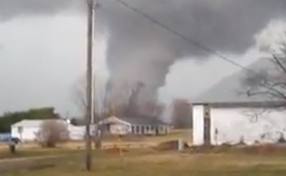
Indiana Tornado, March 2, 2012

Let’s stop hiding our heads in the sand and pretending that everything will be all right–until the next tornado, hurricane, wildfire or drought rides roughshod over our house and town.

Sitting at home worrying is of no use at all.

If you want to be of use to your grandchildren and all future generations, you should be out on the frontlines, insisting that:

a) the media does its job as a watchdog and reports the whole story;

b) our elected representatives do their job and create policy aimed at saving lives by mitigating and adapting to the effects of climate change; and

c) our fellow citizens get off their butts and start taking responsibility for our collective future.

Get going now, before “catastrophic force multipliers” blow us all away.

Sparking Creativity at the 2012 Berkshire Festival of Women Writers

It’s finally snowing in Massachusetts!  My afternoon meetings were cancelled, and I can settle in by the fire and enjoy the peaceful quiet that always descends when we hunker down under a good New England snowfall.

This gives me a welcome chance to share something positive for a change with my blog readers.

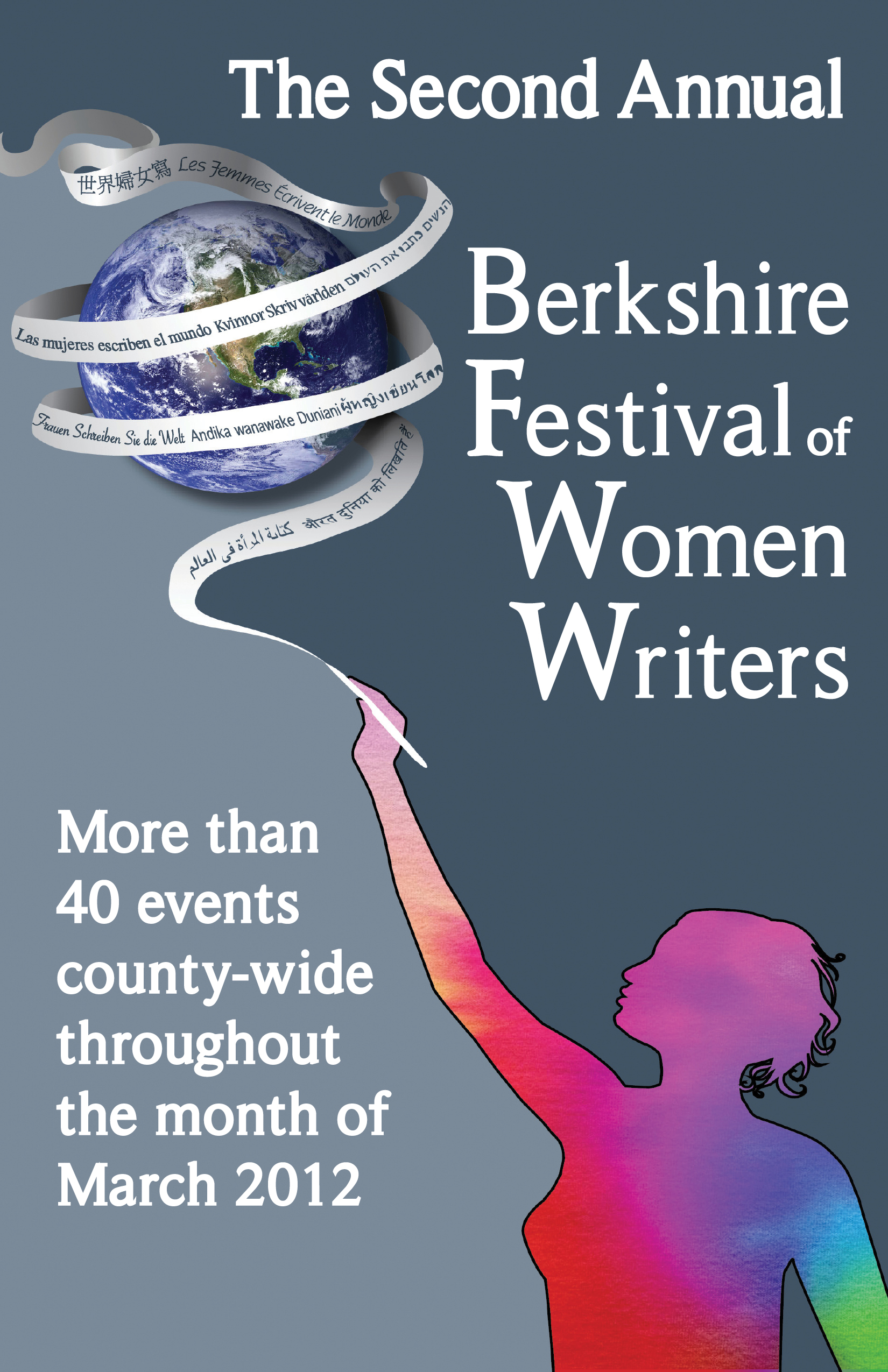
Tomorrow is the opening of the 2012 Berkshire Festival of Women Writers, a month-long celebration of the talents of local and regional women writers, taking place at venues from one end of Berkshire County to the other, with nearly 100 women participating.

I’ve been working over the past year with a dedicated local committee on planning and organizing this event, which is sponsored by Bard College at Simon’s Rock with the generous support of 11 Local Cultural Councils and many other donors, businesses and individuals, all listed on our website under “sponsors.”

This will be our second annual Festival, but it’s an event that grows out of the decade of annual conferences I organized at Bard College at Simon’s Rock in observance of International Women’s Day, co-sponsored by Berkshire Women for Women Worldwide, the Women’s Fund of Western Massachusetts, the Women’s Interfaith Institute and many other collaborators.

I’ve been at this a while.

Organizing events like these takes an extraordinary amount of energy, focus and commitment.  If you’ve ever organized a wedding, you have some idea of what’s involved–although for our conferences and Festivals, we’ve also had to do a fair amount of fundraising, which hopefully is not the case for wedding planners!

There always comes a point in the process where I bury my face in my hands and feel like crying, out of sheer exhaustion, “Why am I doing this to myself?!!”

After all, no one ever asked me to take on this extra commitment, year after year.

And sometimes I wonder whether anyone would notice if I stopped.

But then that low point passes, the brochure or Program comes back from the printers and starts to make its way in the world, the press inquiries pick up and I start hearing the oohs and ahhs of appreciation from participants and audience members, and I remember what it’s all about.

For women writers, in particular, it can be hard to find opportunities to come together and share our talents and achievements with each other and the larger world.

Hannah Fries

This weekend is the big AWP (Association of Writers and Writing Programs) conference in Chicago, and many women writers will be in attendance there, including one of our Festival organizers and participants, Orion Magazine editor Hannah Fries.  But that is a big, competitive event, which can be overwhelming for writers who are just starting out, or who just write for the personal satisfaction of it.

The Berkshire Festival of Women Writers is purposefully low-key and non-competitive.  We organizers wanted to create a broad, inclusive platform for all kinds of women writers, of all ages, backgrounds, and stages in their writing careers.  If you browse the Festival listings, you’ll see a few names you’ll probably recognize, like Francine Prose and Ruth Reichl, but many more whose fresh, innovative voices might not be heard publicly this year without the space provided by our Festival.

I also sometimes ask myself why I continue to focus on women writers in my classes, events organizing and in my own writing.

Lately I have been moving from a longstanding focus on global women’s rights to a broader human rights perspective, still with a strong interest in gendered human rights issues.  Although the goal for any social justice activist is to put herself out of business, it still seems important to me to draw attention to voices who might not otherwise be heard–and the 50% of us who are women are disproportionately represented among those quieter voices.

The participants and audiences who will be gathering at the 40 Festival events scheduled daily throughout the month of March will  together generate a host of collaborative creative sparks that will go shooting out like fireworks, energizing all of us and giving us new strength and determination to meet the challenges of the coming year, whether at our writing desks or in other areas of our lives.

I certainly hope that just as women always turn out to listen to and learn from writers who happen to be men, men will also be among the audiences at all of our Festival events.

In these sobering times, we need all the chances we can get to come together and fan the flames of our community and our creativity.  Let the Festival begin!