Malala Yousafzai Stands Up for Us All

There are a couple of old saws that I was taught as a young journalist, which I continue to pass on to my media studies students now.

One is: if it bleeds, it leads.

And another: one powerful human interest story is worth a million statistics.

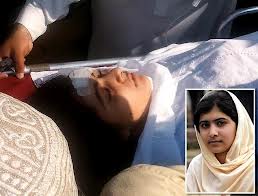
We saw both of these principles in action with this week’s news of Malala Yousafzai, a 14-year-old Pakistan girl who New York Times columnist Nicholas Kristof calls “one of the world’s most persuasive advocates for girls’ education.”

Everyone probably knows by now of how the Taliban viciously shot Malala in the neck as punishment for her outspoken insistence that girls should be allowed—and indeed, encouraged—to go to school, just like boys.

She is now the face of millions of girls worldwide who are denied the chance to get an education and empower themselves and their communities.

This week the Times also reports that in Africa, unprecedented wealth is being generated by the efforts of a rising tide of entrepreneurs—many of them women.

UN Women, formerly known as UNIFEM, has argued for years that by educating a girl, you help her whole family, including the children she will one day bear.

After all, as the Chinese say, “Women hold up half the sky.”

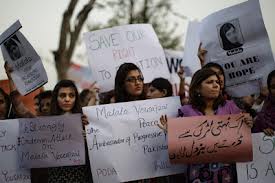
I am glad to see that Pakistanis have come together to reject the extremist politics of the gunmen who shot Malala.

We should all light a candle for her today as she is flown to the West for more treatment, and pray that this brave girl survives the attack and returns to the fray to serve as a defiant model for all girls, whose instinctive human desire for education will not be extinguished so easily.

In the Christian tradition, Eve takes the blame for the fall from Paradise, and here in the U.S., too, we can see many examples of strong women being sharply checked: for instance, in the shooting of U.S. Representative Gabby Giffords or the mocking of Hillary Clinton for wearing pants suits and acting tough.

The story of Malala Yousafzai is one particularly emblematic story among many that could be told, of women and girls who dare to stand up to patriarchal power, and learn quickly that such defiance has its price.

Lately we’ve been seeing a steady drumbeat of reports—most of them disapproving—of how women are becoming more successful in school and in careers, threatening traditional male dominance in the public sphere.

Maybe it’s time for a reminder that feminism was never about dominance—it was and is about equality.

What’s so threatening about that?

I’m sorry, but real men don’t shoot 14-year-old girls under any circumstances.

To me a real man is the one who encourages his children, regardless of their gender, to stay in school and work hard to be prepared to step out into a future that is sure to be challenging.

A real man applauds his wife’s successes, and stands by her side when things are rough.

Real women do the same.

The truth is that gender is just another one of those culturally conditioned differences, like eye shape or skin tone, that fade to irrelevance before the profound reality of our human similarities.

Having unlocked the secrets of the genome, we now know that human beings are genetically 99% the same as field mice.

Isn’t that enough to convince us that men and women are only different in the most superficial ways?

Sure, women can bear children; men are more muscular.  But our brains are close to identical, and our hearts are the same.

Our spirits, freed of our physical bodies, know no differences.

It’s time to soar above the petty in-fighting of gender, and work together for the good of all.


Will the Eagle and the Condor Land Together in the New Millennium?

At the Peace and Justice Studies Association annual conference, held this week at Tufts University with the theme “Anticipating Climate Disruption: Sustaining Justice, Greening Peace,” I presented a paper entitled “Changing the narrative and crafting alliances between Western and indigenous worldviews to create a sustainable global future.”

In it, I sketched out the standard Western triumphalist narrative of technological domination of Nature and the New World, starting with the voyages of Columbus and Darwin, continuing with the Manifest Destiny doctrine of the takeover of North America, and on into the present, where we continue to tell ourselves the story of living happily ever after in the brave new world established by the subduing and harnessing of the natural world, the routing of resistance, and the triumph of a technologically advanced global civilization.

Given that the premise of the conference theme anticipates serious climate disruption that will take the story to a very different, and much less rosy kind of conclusion, it’s clear that we need to start telling ourselves stories that reflect a different kind of understanding of our relation as humans to the natural world.

The kinds of stories we need to embrace are not new; in fact, they are ancient. I believe that the indigenous peoples left on the planet, who have survived the intense onslaught of Western culture over the past 500 years, are in the best position to survive the coming cataclysms, and to teach us how we can survive too. We just need to start listening to the stories they tell, rather than remaining spellbound by our own Western narratives.

I shared with the audience the voices and visions of two indigenous elders, Rigoberta Menchu Tum of Guatemala and Malidoma Some of Burkina Faso, who have both spent much of their adult lives reaching out to Westerners, trying to get us to see our relation to the natural world in a more holistic, less destructive way.

Rigoberta Menchu

Menchu, who won the Nobel Peace Prize in 1992 and ran for President of Guatemala in 2007, was a leader in the pan-indigenous drive to get the Declaration of the Rights of Indigenous Peoples ratified by the General Assembly of the United Nations, which it finally was in 2007.  She has worked tirelessly to promote the rights and improve the living conditions of the indigenous peoples in Guatemala, who are a majority in that country, but have little national political representation or power.

Central to Menchu’s political activism is her Mayan understanding of the importance of ecological balance.  “An indigenous people’s cosmovision is centered on their relationship with Mother Earth and Mother Nature,” Menchu says.  “In contrast, the majority of the world doesn’t give it a thought, doesn’t know what the source of life is.  They pollute the earth and do more and more damage.  One day the earth will exact a price for this disdain and destruction. When this happens, we will see that the earth is not just good and bountiful, it can also be vengeful.

“Indigenous people see Nature as a living mother, not as an inert organism that would allow itself to be destroyed,” she continues.  “All those who violate its laws must accept the consequences, because it is alive and will react. My grandfather always used to say that the day human beings violate our universe, they will receive signs and messages.  These messages will be very forceful, and will bring severe punishment.”

These words of Menchu’s come from her second book, Crossing Borders, in which she tried to reach out to the non-indigenous world with a challenge to the dominant narrative of “development,” which has been so terribly damaging not only to indigenous peoples, but to the ecological web of life itself. As she remarks bitterly in the book, “I often wonder why people criticize the Aztecs for offering human sacrifices to their gods while they never mention how many sons of this America…have been sacrificed over the past 500 years to the god Capital.”

These biting words would no doubt resonate with Dagara shaman Malidoma Somé, who was taken as a child by Catholic missionaries to be educated at their school some hundred miles from his village, and was not allowed to go home to visit his family or village for 20 years.

Malidoma Some

On the point of being sent to France to finish his Catholic education, he rebelled and ran away from the missionary school, somehow finding his way back to his village on foot, unaided.  Once there, he insisted that he be given the initiation he had missed out on, and he started on the path to becoming a traditional shaman, or healer.

His healing practice has taken the form of trying to reconnect Westerners with the indigenous knowledge that our culture long ago left behind and rejected as “primitive.”  Malidoma, whose name means  “he who makes friends with the stranger/enemy,” spends much of his time in the U.S. and traveling around the world, guiding groups of Westerners into a different kind of understanding of self, community, and natural world.

Both Menchu and Malidoma stress that they do not reject all of Western technology —just the way it has been used, and the narrative vision that guides and undergirds it.  “What indigenous and Western peoples have in common is the desire to understand the intricacies and complexities of the world we live in, and to harness the power of nature for certain practical purposes,” Malidoma says in his book The Healing Wisdom of Africa.

“Where we have taken different routes, however, is the context within which we have developed our technologies and the purposes for which we have used them.  In the West, technology is oriented toward industrial, commercial and military uses; among indigenous people, it serves to heal and help people remember and fulfill their purpose in life.”

Malidoma continues, “Individuals, as extensions of Spirit, come into the world with a purpose. At its core, the purpose of an individual is to bring beauty, harmony and communion to Earth.  Individuals live out their purpose through their work.  Thus the human work of maintaining the world, to indigenous people, is an extension of the work that Spirit does to maintain the pulse of nature.  The villager’s quest for wholeness is an extension of nature’s wholeness.”

Both Malidoma and Menchu describe a human relationship to the earth rooted not in dominion and conquest, but in a cyclical give and take that takes ecological balance as a core value.

I believe that theirs is the vision that must animate the narrative arc of our future as a species on the planet, if we are to survive the environmental challenges that are speeding towards us now.

The good news is that though you won’t find much about this in the mainstream media, there is a quiet but forceful movement building on several fronts that is heeding the call to craft a different kind of human life story.

There is the Transition Town movement, which is imagining communities that are less dependent on multinational corporations, and more interdependent as individuals and cooperatives working together to meet needs on the local level.  And there is the Pachamama Alliance, which I talked about in my Tufts presentation, which has been partnering with indigenous peoples to, as they put it, “change the dream” of Western-style domination, development and destruction.

The Pachamama Alliance is quite remarkable in that it sees itself as a solidarity movement guided by its indigenous partners, the Achuar and Shuar peoples of the Amazon rainforest in Ecuador.  It grew out of the connection with indigenous shamans established by John Perkins, who began in the 1990s to bring small groups of Americans and Europeans into the Andes and the rainforest to meet with indigenous shamans to learn a different way of understanding our relationship to the natural world.

Ecuador is one of the most beautiful places on earth, but is also one of the places that has been most devastated by the plundering of oil companies, specifically Texaco and Chevron.  Millions of acres of rainforest have been polluted by oil spills and the byproducts of unregulated drilling—and a landmark case has just been won against Chevron, ordering the company to pay $18 billion in damages to Ecuador for a clean-up.  The case is still in litigation, and meanwhile the people there are coming down with cancers and birth defects in astronomical numbers.  It is truly a place where you can see the worst conclusion of the Western narrative of development in action.

But it is also a place where another story is being told, and broadcast out into the world with increasing urgency.  It is a story that has been told by indigenous peoples of South America and beyond for hundreds of years.

According to the ancient prophecy of the Eagle and the Condor, which animates the work of the Pachamama Alliance, we are at a moment in history when the Eagle – representing intellect and the mind – and the Condor – representing wisdom and the heart – must come together to ensure the continued existence of humankind.

The human intellect and heart must realize that without the natural world we are nothing.  All the computers and synthetic chemicals and megawatts of electricity in the world will not enable us to survive in a world without plants and insects and animals.

It is that simple, and we know it scientifically, but we have not yet absorbed it in our hearts, and put our knowledge into practice in a different way of relating to the natural world.

So the question going forward, as Menchu so pointedly asked, is:

Will we sacrifice ourselves and most of the life forms currently on the planet to the great god Capital?

Or will we begin to understand wealth in a more balanced, ecologically sound way?

Will we have the strength to build a groundswell of resistance to the top-down hierarchies that hold such sway over our lives and the narratives we live by?

I believe we can do it.  I want to believe that we will.

Finding the fire in the belly to combat climate change

OK, I admit it, I fell asleep during the Presidential debate.

I got the lay of the land: the sober, restrained President; the overly aggressive, bulldog-style challenger; and poor Jim Lehrer, looking overly made up and rather frantic, trying to maintain order.

The truth is, I don’t like debates as a form of political discourse, especially not when we’re talking about something as important as who gets to hold the American presidency for the next four years.

This shouldn’t be decided on the basis of who is more aggressive at sniping at the opponent.

Pundits were quick to fault President Obama for not displaying sufficient fire in the belly, and I have to agree, I would have liked to see him put his rapier wit to better use.

But can we say that Mitt Romney “won” the debate simply because he showed more aplomb at throwing around inaccurate statistics?

Who do you want as your President, the man who can keep his cool and who believes in telling the truth, or the man who is all bombast and blather, and is quite comfortable with stretching the truth as need be?


The elephant in the room of this debate, and I suspect in the next debates as well, is climate change.

Neither candidate wants to talk about it, although it’s true that Romney is Mr. Fossil Fuel, while Obama is a tad more amenable to alternative energy.

All the projections about deficits and economic growth, etc etc ad nauseum, will be totally moot when and if the earth’s atmosphere goes way out of balance.  And all indications are that this is already happening, faster than anyone expected.

What we should be doing now is preparing for a brave new world that we have brought upon ourselves.  A world of violent storms, droughts, floods and wildfires, a world of acidified, dying oceans and rainforests turned to deserts.


No, this is not science fiction, this is real, and it’s already happening.

What we desperately need is a politician who will dare to stand up and tell the truth about where we’re heading, and the truth about what needs to be done to head off total catastrophe.

Obviously, neither Romney nor Obama is that leader.

Are we going to simply follow them over the cliff of climate change?


Although it may be hard to recognize, we do have other choices.

All involve taking the risk of stepping further off the beaten path. The lifestyle that most of us Americans were raised to see as normal is, in fact, a big part of what has brought the entire world to the brink of disaster.

We have to change.

And if we can’t find any leaders to show us the way, we have to do it ourselves.

Look into your heart and try to hear the deep, wise voice that lives there.

We know what to do.  It’s just a matter of summoning the courage to actually take those first baby steps into a new world.

Responding to Racism or Sexism: The Transformation of Silence into Language and Action, Again and Again

I shouldn’t be surprised that once again the ugly specter of racism and unacknowledged privilege is raising its head on my own little campus community.

It happens almost every year like clockwork, generally in the fall semester around this time, and usually involving freshmen who are still in the process of adjusting to the new, often more racially/ethnically/socially diverse culture in which they have suddenly landed.

Understandably, people of color who have had to put up with racism and white privilege all their lives get angry when it turns up, in all its crude arrogance, here in our campus home as well.

One angry response leads to another angry retort, onlookers begin to take sides, and before you know it the campus is in an uproar, with some calling for apologies, others calling for calm, and the majority just plain mad and not willing to take it anymore.

I want to talk about anger.

As a woman, albeit a white woman, I know something about how members of subordinate groups are not supposed to respond with anger to actions by members of dominant groups.  We are supposed to keep our cool, to turn the other cheek, seek the higher ground, not stoop to their level.

So we pretend we didn’t hear that cutting remark, muttered just loud enough to be audible.  We pretend we didn’t want to go to that party anyway—the one to which our invitation somehow got lost in the mail. Above all, we don’t respond directly to provocation, because that will just give them an excuse to keep going, and make the whole situation worse—not for them, but for us.

So the anger, unexpressed, gnaws at us, sitting in the pit of our stomachs as unmetabolized bitterness that threatens to choke us when, at unexpected moments, its bile rises into our throats.
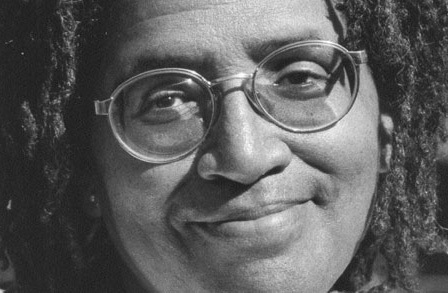
Audre Lorde

As a woman, I have felt this bitter resentment.  And yet as a white woman, I have also felt the other side, the ignorant innocence of privilege.  Growing up in a racist society, I did, as Audre Lorde famously put it, accept racism “as an immutable given in the fabric of [our] society, like eveningtime or the common cold” (“The Uses of Anger,” Sister Outsider, 128).

I didn’t think to question why there were no African American families living in my apartment building on the Upper East Side of Manhattan—other than, of course, the live-in maids who could be seen going in and out of the service entrance or trundling laundry down the service elevator. None of the doormen or elevator men were people of color either—most were Irish, like our superintendent, or perhaps German or Scandinavian.

I didn’t think to question why there were hardly any African Americans or Latinos in my public elementary school, or in the selective public high school I attended, Hunter College High School.  When I got to college, it was the same, and again, I was incurious, complacent.

When you grow up this way, in an insular environment of privilege, it is possible to be deluded into thinking that this is just the way the world is.  No one in my whole upbringing encouraged me to ask the kinds of questions that might have made me see the how the fabric of my existence was shot through with deep-seated, longstanding racism.  No one talked about it.  It just was, and since for me that privileged life was very comfortable, I had no incentive to rebel against it.

It was reading that eventually opened my eyes to how the other half (or, globally speaking, two-thirds) lives.

When I happened upon Lorde’s autobiography, Zami: A New Spelling of My Name, and read about how she too had gone to Hunter College High School, the only Black girl in a sea of white, and how hard that was for her in so many ways, I began to see my experience there through her outsider’s eyes.  I began to question the way I had lived in a vacuum of privileged blindness for so long.

Lorde’s essay on “The Uses of Anger” is one I go back to again and again.  The sentence that continues to resonate powerfully with me is this:

“I am not free while any woman is unfree, even when her shackles are very different from my own” (132).

Listening to Audre Lorde with an open heart, I understood why she was angry at the racist structures into which she was born and bred.  I knew I was not responsible for creating those structures, into which I too had been born and bred, but I did have the power to question them, and to ally myself with those who were working to change them.

When it comes to racism and other forms of identity-based oppression, it really is true that ‘you’re either with us or against us.”  There’s no way to hide behind a façade of neutrality.  To say nothing when someone drops a racial slur or pinches a woman’s behind is to become an accomplice to that act.  In these situations, silence is itself a form of tacit consent.

Audre wrote about that too, in an essay called “The Transformation of Silence into Language and Action.”

I often reread these lines when I am feeling fearful of speaking out on an issue I care about:

“We can sit in our corners mute forever while our sisters and our selves are wasted, while our children are distorted and destroyed, while our earth is poisoned; we can sit in our safe corners as mute as bottles, and we will still be no less afraid….We can learn to work and speak when we are afraid in the same way we have learned to work and speak when we are tired.  For we have been socialized to respect fear more than our own needs for language and definition, and while we wait in silence for that final luxury of fearlessness, the weight of that silence will choke us….it is not difference which immobilizes us, but silence.  And there are so many silences to be broken” (42-44).

As an ally with some measure of privilege, one of the best things I can do to advance the goal of a just society is to speak up when I see racism or sexism or any other form of discrimination taking place.  And not just speaking to my friends, but speaking up in public, inviting and sometimes even provoking a sustained conversation, with the aim of promoting greater awareness and understanding.

The flashpoint for the current unrest on my campus was a white male student challenging the validity of the school holding a campus-wide teach-in known as “Diversity Day,” in which students, staff and faculty organize workshops around issues related to the politics of identity.  Originally, Diversity Day was entirely a student-organized event, held on an extracurricular basis to compensate for a perceived lack of attention to non-white-western-male culture and experience in the curriculum.  The founding students lobbied hard, and ultimately successfully, to have their effort institutionalized by having classes cancelled, with all students required to attend at least two workshops during the day.

Whenever a revolutionary gesture becomes institutionalized, it loses some of its spark, and maybe this is an event that needs to continue to evolve.

But only someone who was ignorant of the extent to which discrimination and structural identity-based limitations continue to affect women and people of color in this country could argue in good faith that it was not worthwhile to spend some time discussing these issues one day out of the school year.

Of course, many students will take classes in sociology, anthropology, gender studies or ethnic studies and go a lot deeper. But those are often the students who already have an inkling that all is not well for subordinate groups.

It is the most privileged who are often the least aware of how systems of privilege operate, and therefore the least likely to elect to take classes in these topics.  These are the students who are most likely to benefit from being required to attend two eye-opening workshops on Diversity Day.

At many of these workshops, people of privilege will be asked to confront W.E.B. Dubois’s famous question in The Souls of Black Folk, “How does it feel to be a problem?”

Robert Jensen

Robert Jensen, one of the finest anti-racist, anti-sexist writers and educators I know, says that in the 21st century, “the new White People’s Burden is to understand that we are the problem, to come to terms with what that really means, and act based on that understanding.  Our burden is to do something that doesn’t seem to come naturally to people in positions of unearned power and privilege: Look in the mirror honestly and concede that we live in an unjust society and have no right to some of what we have” (Jensen, The Heart of Whiteness: Confronting Race, Racism and White Privilege, 92).

The next step, he says, is to “commit to dismantling white supremacy as an ideology and a lived reality”—not because it’s hurting other people, but because, as Lorde recognized, “none of us is free while some of us are still shackled.”

Or, as Alice Walker put it, “We care because we know this: The life we save is our own.”

Moving from suffering to pain to resistance

“Pain is an event, an experience that must be recognized, named and then used in some way in order for the experience…to be transformed into…strength or knowledge or action.  Suffering, on the other hand, is the nightmare reliving of unscrutinized and unmetabolized pain.  When I live through pain without recognizing it…I rob myself of the power that can come from using that pain, the power to fuel some movement beyond it.”

Audre Lorde,  Sister Outsider, 171

Too much of the time, we who are sensitive, aware human beings on the planet feel the burden of suffering, the “nightmare reliving of unscrutinized and unmetabolized pain.”

For example, when I read in the current National Geographic Magazine that 25,000 elephants have been killed this year in East Africa by poachers and even government soldiers who want to make money on their tusks, the nightmare of suffering descends upon me.  When I hear that the president of Kenya has declared that “elephants must pay for their room and board with ivory,” I begin to feel physically sick.

The same kind of nausea descends on me when I hear about the melting of the ice in the Arctic or the permafrost in Greenland—even more so when the loudest response to this calamity comes in the form of rapacious, competitive cheering and jostling for position to be the one to extract the greatest amount of riches now revealed beneath the ice.

Or when I read about the ongoing sexual abuse that is occurring rampantly on the Spirit Lake Indian Reservation in North Dakota, a kind of externalization, upon the defenseless bodies of small children, of the unmetabolized suffering of generations of Native peoples trying to survive in unspeakable conditions.

Brooding over all the news of suffering that comes my way each time I take a look at the daily news, I can quickly feel myself overwhelmed with a sense of my own powerlessness.

That is where I need Audre Lorde’s fierce courage to pick me up, dust me off and send me on my way again.

The challenge is to remain open to the suffering, in order to, as she says, recognize, name and use it “to fuel some movement beyond it.”

For many of us right now, the greatest challenge is the awareness that we don’t know what to do. And maybe, even, that there is nothing we can do.

I cannot heroically save the elephants, any more than I can refreeze the polar ice caps or swoop in to rescue the frightened child who is being raped right at this moment.

No.  But what I can do is to try to leave myself open to the suffering—in other words, to not turn away, not deliberately turn off my empathy in order to try to hide from a reality that is hard to confront.

It is my belief that if more of us were to commit to recognizing and naming suffering when we see it, we would find the strength and the right channels to collectively metabolize suffering into the kind of pain that leads to action.

Each of us needs to become a vortex through which the pain can be transmuted first into resistance, and then into an active seeking for alternative paths.

It is not necessary that tens of thousands of elephants die.  It is not necessary that we see the melting of the Arctic as an opportunity to extract more fossil fuels and heat up the atmosphere still more.  It is far from necessary that the children of Spirit Lake are tormented by their elders.

Do not turn away from this suffering.  See it, name it, and turn the pain that these events awaken in you to a righteous force for change.

You don’t need to have all the answers or know what to do with the pain.  Just allow yourself to feel.  Allow empathy to flow.  And then see what happens next.

Hats Off to the Central Park Rape Victim

The gutsy 73-year-old woman who was raped by a drifter in Central Park last week has been on my mind since I first heard about her.

The assailant has been caught, and it turns out he has a history of raping and murdering elderly women, going back to the 1980s.

The mystery is why a man like that was let out of jail.  We keep kids in prison for minor drug infractions, but we let a psycho rapist and murderer out on parole and allow him to drift across state lines without supervision?

Like so many other homeless people, he ended up drifting around in Central Park, and according to the victim, whose name is being withheld to protect her privacy, he had it in for her because a couple of weeks earlier she photographed him masturbating in a lonely section of the park.

The Ramble, Central Park

She was a birder who wandered the park with her binoculars and camera around her neck, in the wooded section known as “the Ramble,” which I remember well from my own youthful ramblings.  I would never set foot in the park alone without my big dog beside me, though.  I knew better than that.  And if I ever saw anyone looking suspicious, I made a beeline for the nearest police officer.  Growing up in Manhattan, you knew you always had to be on guard.

The birdwatcher probably took his picture to identify him to the police, because she did report his obscene public activity to a park ranger.  Unfortunately, her warning was ignored.

Now, after she was pushed down in the bushes and raped in broad daylight, the police aren’t ignoring her anymore.  Thanks to her alert vigilance, she was able to pick her assailant out of a police line-up just a day or so after the crime occurred.

Knowing as much as I do about sexual assault and its psychological effects (I teach a course in Gender & Violence) I have to say I am very impressed with the cool demeanor of this victim.

No hysterics or undue shame—this woman is speaking out, and in the process setting a model for other women to follow.

Rape statistics in the US are pretty ugly.

  • Every two minutes, someone in the US is being sexually assaulted.  Each year there are nearly 208,000 sexual assault in the US
  • 54% of rapes are never reported, and 97% of rapists will never spend a night in jail
  • 80% of victims are under 30, 44% under 18
  • 38% of rapists are a friend of acquaintance of the victim

So the most recent Central Park rape was unusual on every score: the victim was an elder, the rapist was unknown to her, and most important, she marched right out of the shrubbery where she’d been raped and reported it to the police.

In your more typical rape case, a young woman may not want to report the crime because a) it’s embarrassing; b) she would have to undergo invasive evidence-gathering; c) she might be afraid that the rapist, if not arrested, would retaliate against her; d) it’s common knowledge that rape trials are long and intense, and rarely result in conviction.

All this is true.  But it’s also true that if more than half of rape victims do not report the crime or press charges, then that allows the assailants to proceed with cocky impunity.

I don’t think that was part of the picture with David Albert Mitchell, the Central Park birder’s assailant.

He was just a dangerously unbalanced, violent man who has obviously been failed by the criminal justice system.  He should never have been granted parole.

But many rapists circulate in our society much more suavely, preying on young women and girls without necessarily even realizing that what they’re doing is wrong.

In a culture where violent pornographic videos are easily available on the internet, and violence against women is a common ingredient in music videos and Hollywood films as well, it is not hard to see how a young man could get the impression that violating a woman is just another way to prove one’s manhood.

More of us older women have to stand up and say no to this violence.

For quite some time, my heroine in this work has been Eve Ensler, whose V-Day organization has been incredibly successful in channeling women’s creativity and righteous passions into educational anti-violence work.

I don’t yet have a name or a face to put on the 73-year-old Central Park rape victim, but I want her to know she’s my heroine too.

All we’ve seen of the victim so far

Why are we punishing America’s schoolchildren and their teachers?

Jonathan Kozol in action

Every stakeholder in the current Chicago teachers’ strike who has not visited an inner city Chicago public school should take the time to read Jonathan Kozol’s powerful book Savage Inequalities, which chronicles the author’s explorations of conditions in schools in poor and rich neighborhoods in a series of American cities.

“One would not have thought that children in America would ever have to choose between a teacher or a playground or sufficient toilet paper,” wrote Kozol back in 1991.  “Like grain in a time of famine, the immense resources which the nation does in fact possess go not to the child in the greatest need but to the child of the highest bidder—the child of parents who, more frequently than not, have also enjoyed the same abundance when they were schoolchildren.

“’A caste society,’ wrote U.S. Commissioner of Education Francis Keppel 25 years ago, ‘violates the style of American democracy….The nation in effect does not have a truly public school system in a large part of its communities; it has permitted what is in effect a private school system to develop under public auspices….Equality of educational opportunity throughout the nation continues today for many to be more a myth than a reality.’  This statement is as true today as it was at the time when it was written.”

And it remains true twenty years later.

The bedrock issue here is one of inequality, which is measured along multigenerational racial and class lines.  As long as we continue to link public school funding to local property taxes we are going to be perpetuating an entrenched system of race and class segregation, from which there is little chance for escape.

Kozol observed that kids in suburban schools, no matter what state, already have what the CPS teachers are begging for in the urban schools, and then some.

Is it right that kids from wealthy neighborhoods go to college while kids from poor neighborhoods go to jail?

Kids in poor districts need more help from the state, not less, than kids in wealthy districts.

Chicago is not the only place in America where our schools are failing our neediest children, it is just the only place in America right now where the teachers have been pushed so far that they are taking to the streets in protest.

The Chicago teachers’ strike is being presented in the media as a case of selfish, whining teachers walking out on their students because they are greedy for more money, or afraid of being held to high standards.

But when you listen to the teachers, parents and students who have managed to penetrate the media gatekeepers and make their voices heard, what you hear is not greed or shortsightedness, but deep concern for the health of the school system and the welfare of the children.

The teachers are asking for smaller class sizes (would you want your child in a kindergarten class of 45?); improvements in the crumbling physical plants of their schools, including libraries and playgrounds; and support staff for troubled students, including nurses and social workers.  They don’t want their evaluations tied so tightly to how their students perform on standardized tests, and they want to be given seniority preference if they are laid off because of a school closing.

I don’t hear anything unreasonable in these demands.

Has anyone on the editorial boards of the newspapers who have condemned the Chicago teachers’ strike, which include the Chicago Tribune, the New York Times and the Washington Post, ever set foot in a Chicago public school?

I know for a fact that Mayor Emmanuel’s children attend private school, as did the Obama girls when they lived in Chicago.

President Obama and business leaders like to exhort American children to study hard and close the achievement gap between our country and others like China and India.

They need to put their money where their mouth is, and give our dedicated teachers the support they need to do the job right.

We eat by the grace of Nature, not by the grace of Monsanto

“Organic, schmorganic,” fumes New York Times columnist Roger Cohen sarcastically in an article entitled “The Organic Fable.”

He bases his sweeping dismissal of the organic foods movement on a new Stanford University study claiming that “fruits and vegetables labeled organic are, on average, no more nutritious than their cheaper conventional counterparts.”

Cohen does grant that “organic farming is probably better for the environment because less soil, flora and fauna are contaminated by chemicals…. So this is food that is better ecologically even if it is not better nutritionally.”

But he goes on to smear the organic movement as “an elitist, pseudoscientific indulgence shot through with hype.

“To feed a planet of 9 billion people,” he says, “we are going to need high yields not low yields; we are going to need genetically modified crops; we are going to need pesticides and fertilizers and other elements of the industrialized food processes that have led mankind to be better fed and live longer than at any time in history.

“I’d rather be against nature and have more people better fed. I’d rather be serious about the world’s needs. And I trust the monitoring agencies that ensure pesticides are used at safe levels — a trust the Stanford study found to be justified.”

Cohen ends by calling the organic movement “a fable of the pampered parts of the planet — romantic and comforting.”

But the truth is that his own, science-driven Industrial Agriculture mythology is far more delusional.

Let me count the ways that his take on the organic foods movement is off the mark:

  • Organic food may not be more “nutritious,” but it is healthier because it is not saturated with pesticides, herbicides, fungicides and preservatives, not to mention antibiotics, growth hormones and who knows what other chemicals.  There are obvious “health advantages” in this, since we know—though Cohen doesn’t mention—that synthetic chemicals and poor health, from asthma to cancer, go hand in hand.
  • Organic food is only elitist if it comes from Whole Foods—the one source Cohen mentions.  I grow organic vegetables in my backyard, and they save me money every summer.  We don’t need the corporatization of organic foods, we need local cooperatives (like the CSAs in my region) to provide affordable organic produce that doesn’t require expensive and wasteful transport thousands of miles from field to table.
  • About feeding 9 billion people: first of all, we should be working hard to curb population growth, for all kinds of good reasons.  We know we’ve gone beyond the carrying capacity of our planet, and we shouldn’t be deluding ourselves that we can techno-fix our way out of the problem.  Industrial agriculture is a big part of the problem.  It will never be part of the solution.  Agriculture must be relocalized and brought back into harmony with the natural, organic cycles of the planet.  If this doesn’t happen, and soon, all the GMO seed and fertilizers in the world won’t help us survive the climate cataclysm that awaits.
  • Mankind is better fed and longer lived now than any time in history?  Here Cohen reveals his own elitist, Whole-Foods myopia.  Surely he must know that some billion people go to bed hungry every night, with no relief in sight?  Mortality statistics are also skewed heavily in favor of wealthy countries.  So yes, those of us in the industrialized nations are—again, depending on our class standing—living longer and eating better than in the past, but only at the cost of tremendous draining of resources from other parts of the world, and at increasing costs in terms of our own health. Just as HIV/AIDS is the scourge of the less developed world, cancer, asthma, heart disease and diabetes are the bane of the developed world, and all are related to the toxic chemicals we ingest, along with too much highly processed, sugary, fatty foods.
  • For someone who is calling the organic movement “romantic,” Cohen seems to have an almost childlike confidence in authority figures.  He says he trusts “the monitoring agencies that ensure pesticides are used at safe levels — a trust the Stanford study found to be justified.” And I suppose he also still believes in Santa Claus?  We cannot trust that the “safe levels” established by the EPA or FDA are in fact safe, given the fact that we operate in an environment where thousands of chemicals enter the market without sufficient testing, presumed innocent unless proven guilty—but to win the case against them, first people must get sick and die.
  • Cohen’s zinger, “I’d rather be against nature and have more people better fed,” displays his own breathtaking blind spot as regards the human relation to the natural world.  Human beings cannot be “against nature” without being “against ourselves.”  We are a part of the natural world just like every other life form on this planet.  Our fantasy that we can use our technological prowess to completely divorce ourselves from our material, physical reality is just that—a fantasy.  We eat by the grace of nature, not by the grace of Monsanto.

For the entire history of homo sapiens, we have always eaten organic.  It’s only been in the last 50-odd years, post World War II, that wartime chemicals and technologies have found new uses in agriculture.

The result has been the rapid and wholesale devastation of vast swaths of our planet—biodiversity giving way to monoculture, killer weeds and pesticide-resistant superbugs going wild, the weakening and sickening of every strand of the ecological web of our planet.

The relevant fable to invoke might be the tale of Jack and the Beanstalk.  We might be able to grow a fantastically huge beanstalk if we fed it with enough chemical fertilizers, and we might even be able to climb it and bring back a goose that lays golden eggs.

But in the end, that beanstalk will prove to be more dangerous to us than it’s worth—we’ll have to chop it down, and go back to the slow but solid organic way of life that has sustained us unfailingly for thousands of years.

Enough Political Reality TV: Time to tune in to the planet

I tuned into the Democratic National Convention (DNC), thinking I’d catch a few minutes of the action before going to bed, and I was quickly entranced by the spectacle.

This, of course, is what political conventions are all about.  They’re a great primetime opportunity to dazzle the video-feed audience, and energize the base.

Deval Patrick

I enjoyed watching Deval Patrick, governor of my home state of Massachusetts, give a moving speech focusing on the right of all children to a good education.

I loved meeting a rising political star, Mayor Julian Castro of San Antonio, Texas, who was winningly introduced by his identical twin brother, state Representative Joachin Castro, currently running for a seat in the U.S. House of Representatives.

The Castro brothers are handsome, talented, and are buoyed by a classic American success story, coming from a poor background, working hard in school, winning scholarships to Stanford and Harvard Law, and moving on and up into politics.

Julian and Joaquin Castro

Who wouldn’t be charmed?

Michelle Obama

And then there was the woman we were all waiting for, First Lady Michelle Obama, looking tall, muscular, vigorous—and very beautiful.

Mrs. Obama was introduced not by a politico, but by an “ordinary woman,” a military mom with four sons serving in four different branches of the U.S. military, and a fifth still in high school, bound for the U.S. Coast Guard.  It was moving to hear her tell of how she had written to Michelle and been invited with her husband to the White House, to receive the Obamas’ thanks for the service their family provides to our country.

And it was moving to hear Michelle roll out the by-now familiar story of her humble family background, and how her parents’ hard work enabled her and her brother to go to college and on to graduate school, where she met Barack—himself a scholarship boy who chose to work as a community organizer in Chicago rather than take a high-paying job as a corporate lawyer in New York right out of law school.

Who wouldn’t enjoy hearing Michelle praise her husband as a father, a partner, and a dedicated professional, who truly cares about his country and ran for office not for the glory but because he believed he could make a positive difference?

I came away from the couple of hours of speeches with just the feel-good sensation the scriptwriters had worked so hard to achieve.

But that’s the problem.  It all felt too scripted.  Too perfect.  Too much like entertainment—maybe some kind of weird political reality TV show.

I didn’t watch the Republican National Convention, so I can’t compare and contrast the two, but from all I’ve read about it, it was more or less the same in form, if not in content.

The DNC emphasized the multicultural, hardworking, can-do ethos of the 99%, while the RNC emphasized the white-skinned, inherited-wealth, party-animal ethos of the 1%.

If those are my choices, I clearly belong with the Democrats.

But I can’t help but wonder what I’d see if the Green Party were able to have a  primetime convention opportunity like this.

Of course, the Greens probably wouldn’t even want to put on a big expensive consumerist circus typical of our American political conventions, so wasteful of energy and resources.

Stein and Honkala

Looking at the Green Party platform of Presidential hopeful Jill Stein and her running mate Cheri Honkala, it’s clear that  the Green Party would not just talk about personal rags-to-riches stories of success, but about the structural barriers that keep the 99%–or at least, let’s say, the bottom 50% of our population—locked in generational cycles of poverty and unfulfilled promise.

They would not just repeat the monotonous mantra of jobs creation, but would talk about the most daunting issues facing us today.

The tsunami of climate change that is like the elephant in the room of American politics.

What good will a better K-12 education or the promise of a job be if our climate becomes so compromised that food shortages become rampant?

I want to hear a politician talk candidly about the stranglehold that the chemical companies and the fossil fuel industry currently has on our children’s future on this planet.

I want to hear a politician who is not afraid to talk about the effects we can expect from the rapid melting of the ice packs at the poles.

A politician who is committed to building local resiliency, rather than continuing the death march down the road to globalization, which benefits only the corporate elite and the finance wizards who serve them.

Is Jill Stein that politician?

I wish I knew.  The problem is that I have to work pretty hard to find out what she’s all about.  And that makes me worry that she, and the party behind her, just don’t have the strength to compete in our political gladiators’ ring.

Perhaps it’s time to acknowledge that we are not going to find a political messiah who can part the seas and lead us to safety.

No one person, or even one party, can do that.

We individuals have to assume responsibility for our collective, interdependent future, and begin working harder in our own spheres, where we can have the most impact.

It matters who sits in the White House.  I believe the Obamas should get another four years, and hopefully a saner Congress to work with as well.

But it matters just as much what we do in our own states, cities and towns, with or without federal aid.

Mayor Castro and the Governor Patrick and Michelle Obama have been remarkable for working hard to make a difference at the local level.

Thanks to Michelle’s efforts, my son now has a mandated healthier lunch, with no sugary drinks or white bread allowed.

Governor Patrick continues to stand by our Massachusetts state health care program, one of the best in the nation (instituted under Mitt Romney, who now, to please his billionaire buddies, disavows it).

Massachusetts is working on alternative energy sources like wind and solar, with incentives for local municipalities and individuals to convert.

We need to continue to build community resilience and mutual support as we move into the brave new world that awaits us.

It is the only way we are going to make it through the coming climate-driven catastrophes.

We’ve got two more nights of DNC speeches ahead.  Is anyone going to acknowledge the climate elephant in the room, move us out of the polished entertainment arena and speak frankly to us about what’s ahead, and how to pull together to get through it?

No, we’re not crying wolf

I gain a shred of hope for the future when I read about the heroic efforts of Kumi Naidoo, Executive Director of Greenpeace International, to draw attention to the criminal exploitation of the Arctic by fossil fuel prospectors.

Last week Naidoo braved hosing with cold water in the frigid temperatures of the North to take a stand on a huge Russian oil platform.

It was a publicity stunt, yes.  But how else are we going to attract the attention of the multitudes who need to know what is being done under the radar in the new Arctic Oil Rush?

As the pack ice melts at a historic pace, the fossil fuel industry is moving in.  Never mind the fact that oil spills in these waters will be almost impossible to stop.  Never mind the fact that this is the last refuge for so many endangered species, from polar bears and seals to whales and seabirds. Never mind that the more oil we pump out of the bowels of the earth, the faster we’ll wreck our fragile climate.

I am doing a lot of pondering lately about tactics.

The Occupy movement here in the States seems to have largely fizzled.  Oh yes, a couple of busloads of protestors did go down from NYC to Tampa to protest at the RNC—and it’s true that the hurricane warnings put a damper on people’s enthusiasm to venture forth.

But if Kumi Naidoo and his team can brave the Arctic to climb the side of an oil rig, it seems to me that we ought to be able to mount a better protest at our Stateside behemoth, the Republican National Convention.

But no.  The mainstream media is reporting on the Convention in level terms, as though it weren’t a circus aimed at gutting what is left of the social contract that, at least since FDR’s time, Americans have come to consider a birthright. It reminds me of how reporters went along with the “WMD mushroom cloud” nonsense in the build-up to the invasion of Baghdad, or how they all but waved American flags in our faces when publishing the photos of the American soldiers killed in Iraq.

Hardly anyone has bothered to remark on the fact that we just passed our two-thousandth dead American soldier in Afghanistan this summer.

These deaths just creep upon us, the same way that oil rigs spring up like weeds in previously pristine waters, along with aquaculture farms, chemical runoff, GMO seeds and fracking wells.

It all happens so quietly and so deftly, while we are busy trying to pay our bills, or getting in a little vacation, or saying farewell to another loved one who has succumbed to cancer.

The Kumi Naidoos and the Tim DeChristophers and the Rachel Corries of the world jerk us back to reality and remind us that while we weren’t paying attention, the thieves got in and began “minding the store.”  In their own fashion.

Their tactics are always the same.  Catch people unawares; get them to sign documents ceding their rights; then systematically go about the business of resource extraction as quickly as possible, with as high a profit margin as possible.  Get it done before the sleeping populace awakes, before the regulators notice anything amiss, before people and animals begin to sicken and the lawsuits begin.  After all, the legal process can be held up in appeals for generations, and meanwhile how many fortunes can be made?

What should our countering tactics be?

Visibility is important: hence the merit of the Greenpeace approach.

Building a movement is important—not just among those willing to camp out in city parks, but among senior citizens and the middle class, unemployed white collar workers and soccer moms, as well as the marching band kids.

People need to realize that this is deadly serious.  No one is crying wolf here.

If we don’t act now to break our fossil fuel addiction, our time on this planet is almost over.

Maybe if we’re lucky, we can come back as bacteria or cockroaches.  But humans?  We’re just about done.