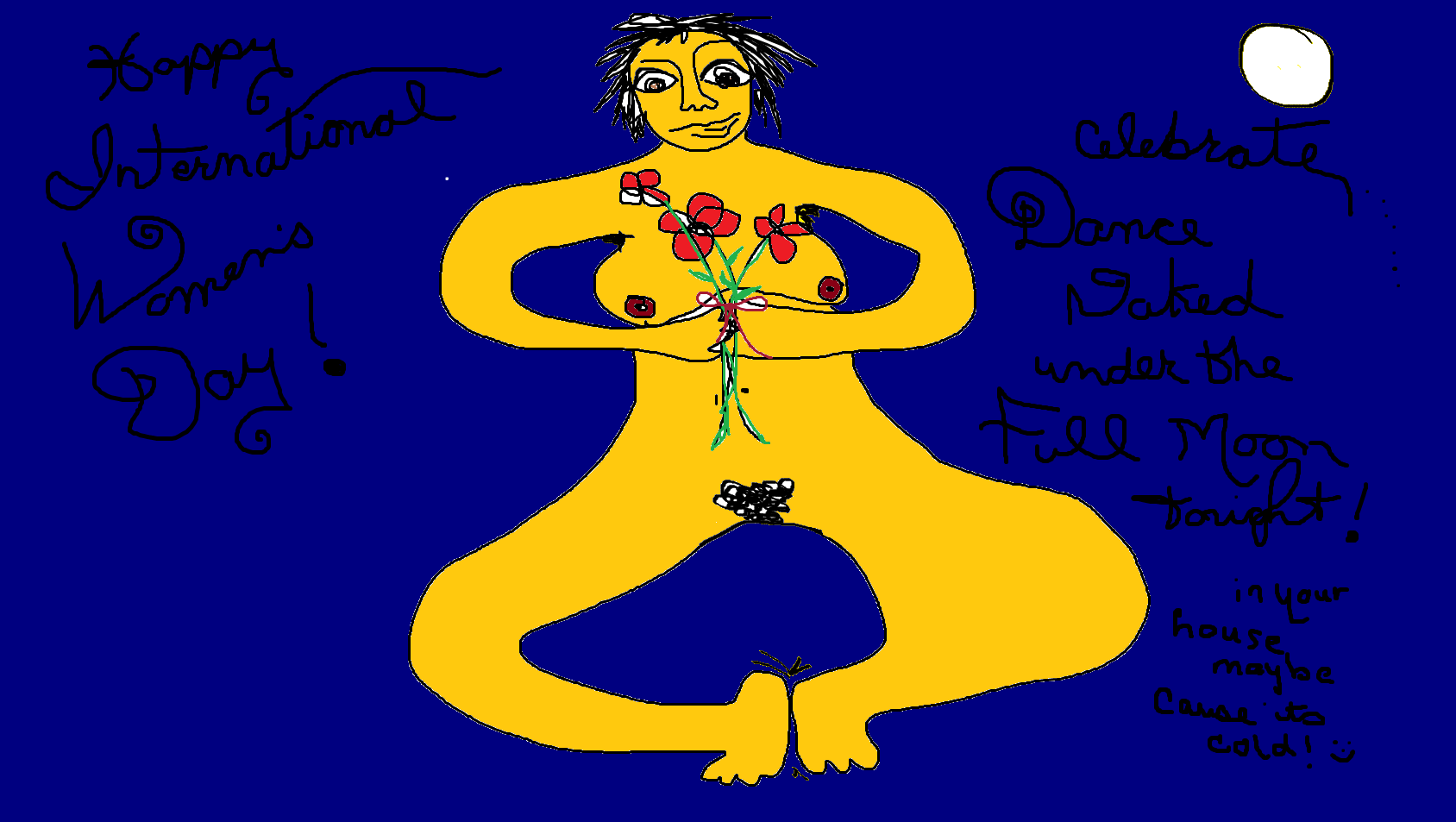
IWD 2012: If not you, who? If not now, when?

Is it coincidence that on International Women’s Day 2012, Earth was bombarded by one of the most intense solar flares ever?

I can’t see them from my window, but apparently Northern Lights are visible way further south than normal tonight, thanks to the extra radiation from the Sun.

Could it be that the Sun is urging us on, sending us the pulse of a solar storm to motivate us to action?

What do I wish for women, this IWD? What do I want from women today?

I am tired of women being held hostage on the basis of their reproductive capabilities.

Yes, we are the ones who bear the babies after sex.

Sex happens and we love it.

Babies happen, too.

If a woman doesn’t want to bear the baby that takes root after sex, she has every right to decide what to do about it.

Period, end of statement.

Women have the right to be educated about their reproductive options.

Women have the right to have access to contraception, no matter their age.

Insurance companies have no right to treat contraception differently than they would treat any other drug.

Men are very happy to have insurance cover their Viagra so they can screw to their heart’s delight.

Fine.  But don’t deny women the same right to manage our reproductive capabilities as we see fit.
***

Today in class, when we briefly discussed IWD and women’s equality, it was inevitable that one young woman present had to tell the group how much she enjoyed cleaning house, so that she couldn’t imagine that the “second shift” would be a burden.

I just let it go.  Honey, let’s talk again in another 15 years, I wanted to say (my students are generally under 20 years old).

I would like you to come back to me in 15 or 20 years, when you have a toddler and an infant and are working fulltime, and tell me that you love cleaning and it’s perfectly OK that you do more of it than your so-called partner.

***

Yeah, OK, a little bit of anger there.

I was glad to see an article on Common Dreams today entitled “That’s Enough Politeness – Women Need to Rise Up in Anger.”

Hell yeah.

Women like me have been trained to be oh-so-polite.

We don’t rock the boat.

We are grateful for our jobs.

We are grateful for our mates.

We are grateful for our home and our children.

We don’t talk about the personal sacrifices needed to maintain all of the above.

As Laurie Penny puts it, “Women, like everyone else, have been duped. We have been persuaded over the past 50 years to settle for a bland, neoliberal vision of what liberation should mean. Life may have become a little easier in that time for white women who can afford to hire a nanny, but the rest of us have settled for a cheap, knock-off version of gender revolution. Instead of equality at work and in the home, we settled for “choice”, “flexibility” and an exciting array of badly paid part-time work to fit around childcare and chores. Instead of sexual liberation and reproductive freedom, we settled for mitigated rights to abortion and contraception that are constantly under attack, and a deeply misogynist culture that shames us if we’re not sexually attractive, dismisses us if we are, and blames us if we are raped or assaulted, as one in five of us will be in our lifetime….

“Politeness is a habit that what’s left of the women’s movement needs to grow out of. Most women grow up learning, directly or indirectly, how to be polite, how to defer, how to be good employees, mothers and wives, how to shop sensibly and get a great bikini body. We are taught to stay off the streets, because it’s dangerous after dark. Politeness, however, has bought even the luckiest of us little more than terminal exhaustion, a great shoe collection, and the right to be raped by the state if we need an abortion. If we want real equality, we’re going to have to fight for it.”

***

This International Women’s Day 2012, I want women to dare to take some risks. Dare to get angry!  Dare to think outside the box!  Dare to want more than whatever you think you should have!

Women of the world, you are needed as never before.

The Earth Mother herself lies bleeding, prostrate, raped and pillaged and on the edge of complete surrender—which will mean the death and destruction of all of us , her children.

She needs us to stand up for her, to stand up for ourselves, to insist that the old conquistador’s model of forced rape will not cut it in the 21st century.

This International Women’s Day, I want American women to stand with our sisters all over the world to insist that we are more than the sum of our reproductive organs.  We are more than house slaves.  We are more than corporate slaves.  We are not reducible to any of the ciphers by which some of us are regularly netted and ensnared.

Women of the world, there has never been a time when your input, your perspectives, your influence has been more important.

Don’t assume that someone else will take care of it for you.

We are depending on you now.

The Earth herself is depending on you now.

This International Women’s Day, I say to the world’s women: there has never been a more crucial time to step into your power and act to protect your communities and our planetary home.

If not now, when?

If not you, who?

Now.  You.  And us, together.  Men and women, all over the world.   Now, you.  Now.
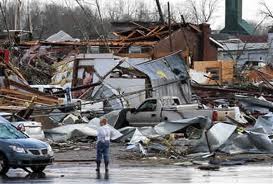
Looking catastrophe in the eye

Denial of climate change is deep and it is wide.

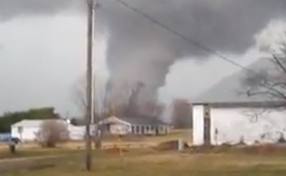
We woke up this morning to news of record-breaking tornadoes touching down across a wide swath of the American Midwest, flattening entire townships and leaving behind multiple trails of devastation.

Reading the mainstream media reports, the focus was all on the damage; very little was said about the cause.

Again, a case of focusing on symptoms rather than on the motivating problems.  The news media focuses on the “what” but ignores the “why.”

And they are even further away from what’s most important: looking for solutions.

Senator Bernie Sanders

Yesterday, thanks to the ever-impressive leadership of Senator Bernie Sanders, representatives of the national and international insurance industry came together in Washington to discuss the business implications of climate change.

Co-sponsored by the Ceres Foundation, which has been working to bring business into the sustainable future fold, the meeting was unequivocal in its acknowledgement that climate change is here, it is real, and it must be dealt with head on, before it runs right over us like a tornado.

The reinsurance industry reps were pretty blunt.

“We need a national policy related to climate change and weather,” said Franklin Nutter, president of the Reinsurance Association of America.

Pete Thomas of Willis Re, a global reinsurance broker, cited an alarming statistic: 4 out of 5 Americans now live in federally declared disaster areas.  “”Demographics and coastal urbanization are catastrophic force multipliers, making weather events increasingly costly,” he said.

In case you didn’t know, reinsurance companies are the ones that insure the insurers.

A difficult industry, in the age of climate change.

If I were an economist, I would be doing the math to figure out whether we are really coming out ahead as a society when we fight to pay less than $5 a gallon for oil.

What may seem cheap up front is often outrageously expensive in the long run.

Like eating cheap food laced with chemicals to keep costs down, to find yourself paying the exorbitant bills for chemotherapy in midlife.

It just doesn’t make sense.

There has never been a more important time to come forward and demand that government and industry work together to ensure (not insure!) our future.

Indiana Tornado, March 2, 2012

Let’s stop hiding our heads in the sand and pretending that everything will be all right–until the next tornado, hurricane, wildfire or drought rides roughshod over our house and town.

Sitting at home worrying is of no use at all.

If you want to be of use to your grandchildren and all future generations, you should be out on the frontlines, insisting that:

a) the media does its job as a watchdog and reports the whole story;

b) our elected representatives do their job and create policy aimed at saving lives by mitigating and adapting to the effects of climate change; and

c) our fellow citizens get off their butts and start taking responsibility for our collective future.

Get going now, before “catastrophic force multipliers” blow us all away.

From war games to peace games, it’s time to stop playing games

I am having an uncomfortable feeling of déjà-vu as the winds of March come up, blowing us headlong into an uncertain spring.

Ten years ago we were reeling in the aftermath of the 9/11 attacks.  Governments and the media were howling for retaliation, and the massive U.S./NATO war machine was gearing up for a fight, first with Iraq, and then with Afghanistan.

Now it’s an Iranian president who is talking tough and daring the U.S. and Israel to bring it on.

Have we learned anything from our misadventures in Iraq and Afghanistan?

We have a different, much more cautious and diplomatically-minded president minding the store.

But what can he do when American troops are so stupid—even ten years after being embroiled in on-going nation-building efforts in the Islamic world—as to defame the holy Koran?

How can he possibly convince potential Islamic allies that the US means well when it’s so glaringly obvious that we are insensitive, boorish bullies?

It’s shocking that the troops were so mismanaged that such a huge mistake could have been made.

First there was a report from some remote province in Afghanistan that a few Marines had urinated on dead Taliban fighters.  That was bad enough, but no—the US military had to take it further and actually start BURNING A WHOLE TRUCKLOAD of Korans.

WTF?

I mean really!  How would we like it if a bunch of Muslim soldiers came to one of our states and starting burning Bibles and Torahs?  It smacks of unbelievable cultural arrogance, coupled with unbelievable tactical stupidity.

So now two American officers have died in the ensuing protests in Kabul, along with two other American soldiers killed in one of the outlying provinces.

Killing an American military officer in Afghanistan is like killing a police lieutenant in New York City.  Do that and you’re asking for it.

Sparks are flying everywhere these days, and there’s way too much dry tinder sitting around.  It’s impossible to see exactly where all this is heading, but it sure isn’t in a “and they all lived happily ever after” kind of direction.

Once again, it’s necessary for ordinary American citizens to stand up and be the friction that stops this war machine from advancing.

Occupy has gone underground for the winter, it seems, but it’s time for all of us Americans to start sending messages to our leaders, in no uncertain terms.

We do not want war.  We want peace.  We want to live harmoniously with our neighbors and fellow global citizens on this planet and we demand that our military representatives respect other cultures, as we would want to be respected ourselves.

I know I will be patted on the head and told that it’s more complicated than this.

But it’s not.  It’s very simple.  This is how it is:

Human beings have over-populated the planet.  We are now fighting over limited resources like water, arable land, fossil fuels and natural resources.  That is what the fuss over Afghanistan, Iraq and Iran has been about.  That is what is going on with Syria, Sudan and Libya as well.

It’s all about the dangerous and difficult demise of the premise of unlimited growth and a globalized economy.

We now face the prospect of more war for two reasons:

1) so that we can burn up a lot more resources and have to rebuild them, thus cranking up our military-industrial complex and giving a boost to the economy in an election year;

2) so that we or our allies can gain control of valuable and strategic resources.

High-minded ideals like democracy, human rights and humanitarian aid have nothing to do with it.  They are what you bring in to mop up when the resisters are lying belly-up in despair.

And meanwhile climate change looms over us all.  All these little diversions are just so many more irrelevant goose chases that keep us from focusing on what’s really important: working feverishly to mitigate and adapt to climate change before we are swept away.

World leaders are playing a dangerously, devilishly simple zero sum game.  But we need to change the rules of the game now so that all of us can win.  Because if we don’t, one thing is certain: we will all lose, even those who currently seem invincible.

It’s that simple.

Taking responsibility for the violence

Marie Colvin

I have to admit that I was not paying much attention to the bombardment of the city of Homs, Syria—now in its 20th day—before the deaths of two Western journalists there this week.

That is completely typical of me as a Western observer sitting comfortably at my desk, far from the tumult and terror of war.

I sat complacently at my desk during the bombardments of Sarajevo in the 1990s, and Baghdad in 2003-4.  I was hardly aware of what was going on in Rwanda during the genocide there in 1994.  Glimmers of awareness come and go about the current violence in the Congo, or in Burma.

For the most part, I go about my business like any animal would, focusing on what’s in front of me.  As long as my belly is full and my personal security is not threatened, I can give a big yawn at the evening news, and go peacefully to sleep.

The attitude of the Western public—especially among Americans—rides the border between ignorance and indifference.  We’d rather not know—so we focus our attention elsewhere, on news that either appears to concern us more directly, or has a more soporific effect.

Oscars, anyone?

Death of Whitney Houston—OMG what a tragedy!

And let’s check in with the Republican horse race, shall we?  Will it be Santorum or Romney this week?  Ho-hum….

Sarajevo, 1994

Meanwhile, innocent civilians, many of them women, children and elders, are dying every day in Syria, just as they did in Sarajevo, Baghdad, Sudan, Libya…the list goes on and on.

This list concerns us Americans for one very good reason: our country is the biggest arms supplier in the world.

That means we enable all these bloody wars.  We build up dictators by selling them arms.  Then when they misbehave and start killing civilians, we wring our hands and act as if we had nothing to do with their rise to power, hence no responsibility for their misdeeds.

If Americans were serious about wanting a peaceful world, we would start by converting our weapons manufacturing plants to peaceful purposes.

Instead of machine guns, let’s make solar panels and sell them to world leaders.  Instead of tanks and jets, let’s export educational software and lightening-fast hardware.

Instead of sending military personnel to deal with civilians in other countries (as they did so ably this week, burning Korans in Afghanistan), let’s send teachers and doctors and enthusiastic, open-minded young people in every profession.

Americans need to understand that we bear a responsibility for the death of every child who dies as a result of a US-made weapon, no matter who wields it.

Giving up violence has to start with giving up the weapons that enable it.

Let’s dare to think outside the box, and put our hearts, minds and bodies in the service of peace.

Cancer blues

This is a post about cancer.

This is a post in honor of all the men, women and children who have died from cancer in the post-industrial age.

This is a post that acknowledges, fully, the extent to which American society has led the way in the extermination of these people–these cancer victims.

How many cancer victims do you know?  According to the World Health Organization, cancer accounts for millions of deaths worldwide each year (7.6 million deaths in 2008, more than died from the Nazi Holocaust).

Cancer is a Holocaust.  It is a disease, or disorder, that cuts across every economic boundary.  It is just as prevalent among the 1% as among the 99%.  It is just as prevalent among the highly educated as among the working class, although of course certain professions are more risky: industrial agriculture, factory work, anything involving radiation.

The truth is that most of the technologies we Americans love the most–cell phones, smart phones, wireless, for starters–are hazardous to our health.  Just like junk food, which we also love.  Or the wanton burning of fossil fuels in our beloved SUVs.

When climate change activists tell us we have to give up our fossil fuels to save the planet, we act like spoiled toddlers.  NO! We will NOT give up our toys!  NO!  We will NOT turn down our themostats, or buy smaller cars, or make a concerted effort to switch to solar.

As parents, we Americans are generally pretty permissive.  We let our kids have what they want, unless it is dangerous for them, or detrimental to their health.

I never let my kids drink Kool-Aid or eat Cheetos, because I knew very well that the junky chemicals in those products were harmful.

But I have let them have cell phones. We have wireless throughout our house.  From what I understand, smart meters, which communicate wirelessly, via electro-magnetic radio frequencies, are in the process of being installed on every home in America.

We can’t afford to eat exclusively organic in my home.  We live near a river polluted with PCBs by GE.  We breathe air labeled “hazardous” on many summer days.

And as a result, we are at risk for cancer, just like everyone else in the developed world.  Everywhere that chemicals are dumped into the environment, everywhere that the ozone layer is thinning, everywhere that the winds blow radiation around, living organisms, including human beings, are dying of cancer at elevated rates.

Last week my Human Rights, Activism and the Arts class at Bard College at Simon’s Rock watched a TED Talk by Eve Ensler, who has (so far) survived a run-in with cancer.  Eve brilliantly makes the point that the inner landscape of cancer mirrors the outer landscape.  What we do to the environment comes back to haunt us in our own bodies.

If we humans, of every class background, are now falling sick in record numbers, it’s a reflection of our sick our environment is.  How sick we have made our environment.

Heal our world, heal ourselves.

Eve Ensler has spent years fighting against the violence that men perpetrate on women’s bodies.  A survivor of an abusive father herself, she has waged a heroic battle against her own demons, and the demons that beset patriarchal cultures worldwide.

She is gearing up now for her biggest effort ever, One Billion Rising, a campaign by V-Day to galvanize men and women to stand up against violence, especially violence against women.

I salute Eve Ensler’s ground-breaking efforts to put her art in the service of social justice, and to link the quest for social justice to environmental health.

If we can’t heal our planet, we will not be able to heal ourselves.

We are the cancer on our planet.

Our own treatment approaches would dictate our eradication.  Radiation therapy: burn it out.  Chemotherapy: poison it to death.

But there is another way.

Look upstream, as Sandra Steingraber has been telling us for the past 20 years.

Find out what is causing the cancer, and CHANGE IT.

Find out why so many women are suffering from violence, and CHANGE IT.

CHANGE.

Where there is a will there is a way.  How sick do we have to become, how sick does our world have to become, before we find the will to change our ways?

Coming to Voice, Saving the Planet

Yesterday acclaimed psychologist Carol Gilligan paid a visit to the class I am currently co-teaching at Bard College at Simon’s Rock with theater professor Karen Beaumont, “Human Rights, Activism and the Arts.”

Gilligan’s ground-breaking book, In A Different Voice, was the first to examine the psychological development of girls.

Yes, you read that right.  Before Carol Gilligan, American psychologists who studied child development based their model of the stages of human psychological development on their studies of boys.  Not until Carol came along in the early 1980s did anyone think to point out that girls and boys develop differently.

In her new book, Joining the Resistance, Gilligan explains that while girls start to silence their own voices in their early teen years, in conformity with social dictates about proper behavior for “good girls,” boys go through this self-regulation much earlier, around 5 or 6, when they learn that “crying is for sissies.”

Boys learn to suppress their caring, nurturing side because it’s too “feminine,” while girls learn to suppress their active, aggressive side because it’s too “masculine.”  In the process, both genders lose something crucial to their humanity, and our society as a whole is impoverished as a result.

Lately, Gilligan has been relating boys’ and girls’ resistance to the suppression of their natural androgynous voices to adults’ resistance to what she sees as a very destructive patriarchal culture.

She defines patriarchy as “those attitudes and values, moral codes and institutions, that separate men from men as well as from women and divide women into the good and the bad,” and argues that “as long as human qualities are divided into masculine and feminine, we will be alienated from one another and from ourselves.  The aspirations we hold in common, for love and for freedom, will continue to elude us.”

So much depends on whether we can come to voice.  And how we do so.  In the context of my human rights seminar, coming to voice may mean being able to speak out in an informed, passionate way about justice and injustice in specific circumstances, both here in the U.S. and abroad.

In the personal sphere too, we need to learn to express our needs clearly, without apology.  We women need to learn to value ourselves and insist on being treated fairly and with respect whether in the home or in the workplace.  Men need to demand that their emotional, nurturing sides be honored.

If it is hard for men to express emotions, it is hard for women to speak with authority.  As sociologist Michael Kimmel has shown, boys and men tend to over-estimate their own abilities while girls and women tend to have less self-confidence than their skills and talents warrant.

Boys and men need to learn to listen, to others and to their own innermost voices, the voices of compassion that were shut down when they were just little guys and learned that boys don’t cry.

Girls need to learn to speak up, to let their innermost voices out, to share freely what they know and what they imagine with the world.

My mother reminded me recently that when I was a young girl of 9 or 10, she considered me a “know-it-all.”  I used to read Ranger Rick and the National Wildlife magazines with voracious attention, and apparently I had a lot to say about the natural world and human beings’ role in it.

As I shared with my class yesterday, sometime around age 14, just as Carol Gilligan saw with her research subjects, I lost my voice.  I became the quiet girl in class.  I earned A’s on every literature paper I wrote, straight through grad school; but it was so hard for me to say out loud what I knew.  It’s taken me years to overcome that self-silencing and begin to recover the spunky, feisty voice that came pouring out of me naturally when I was a child.

As adults, knowing what we now know about the importance of voice to healthy psychological development, we should be working hard to encourage the boys in our lives to stay in touch with their emotional, caring, listening side; and the girls in our lives to continue to speak their truths even when they enter the maelstrom of puberty.

As Audre Lorde wrote long ago, “My silences had not protected me.  Your silence will not protect you…. We can sit in our corners mute forever while our sisters and ourselves are wasted, while our children are distorted and destroyed, while our earth is poisoned; we can sit in our safe corners mute as bottles, and we will still be no less afraid….

“We can learn to work and speak when we are afraid the same way we have learned to work and speak when we are tired.  For we have been socialized to respect fear more than our own needs for language and definition, and while we wait in silence for that final luxury of fearlessness, the weight of that silence will choke us.”

You got that right, Audre.  If anything, the dangers that you perceived back then–before you, like so many others, succumbed to cancer–have gotten worse.

If we care about our children, if we care about our Earth, we cannot afford to stay silent.  Indeed, there is more risk to staying quiet than to speaking out, with all the passion, emotion and authority we can muster as men and as women.

Cat got your tongue? Not mine.  Not any longer.

An Unlikely Environmental Evangelist

There were two reasons, many years ago, why I ended up choosing literature as my field of study rather than environmental studies or law.

I was turned off from environmental studies, my initial choice for an undergraduate major, by a scary required statistics class and no options for getting remedial help to bring my weak math skills up to speed.  I ended up with a B.A. in English and Journalism.

I briefly flirted with the idea of law school after college, but could not fathom spending the rest of my life reading and writing legalese.

So I gravitated towards literature, comparative literature, literature of the world, and my dissertation focused on testimonials and political personal narratives of the Americas.  I knew early on that what interested me most about literature was opportunity it presents for passionate narratives about the intersections of the personal and the political.

That has remained my interest all these years later.  But it has finally become clear to me, over the longer arc of my life, that my early, instinctive connection to the natural world, my recognition of the importance of law, and my duck-in-water ease with the discourses of both journalism and personal narrative, are all finally coming together in what I see as the imperative task to which I must dedicate the last third of my life: awakening my fellow and sister human beings to the urgency of heading off climate catastrophe.

If this sounds like a moral crusade, well, so be it.

I was not raised in any religion, nor do I follow any religious practices now.  I don’t believe in God as a benevolent white man in the sky, nor do I believe that one needs to sit in a particular building, listening to a particular preacher, to reach out to the divine.

But I have always felt a deep spiritual connection to the natural world.  When I was 8 or 9, I used to go out into the woods and sit alone in my “spot,” which was a circle of mossy stones at the top of a big stone ridge, ringed by maples and centered around a grassy glade.  It was a small circle, no bigger than 10 feet in diameter.  I would just sit there and look and listen to the birds in the trees above me, the small insects on patrol in the grass, feeling the wind ruffling against my face and a kind of inner exultation and delight that I can only describe as religious ecstasy.

No one taught me to do this, and it wasn’t until much later, reading personal narratives by indigenous elders, that I was able to put this early spiritual connection with nature into a broader polytheistic cultural framework.

I believe that everything in our world is tinged with spiritual significance.  And I believe that human beings, because we are unique among animals in being able to see the effects of our actions on the larger landscape of the planet, and to both predict and alter the future, have a special moral imperative to do what we can to be the responsible stewards of the natural world of which we are a part.

I have never said that out loud.

But thanks to environmental activist educator Eban Goodstein, I now recognize that this is exactly what I should be doing, whenever I can, as urgently and passionately as possible.

Goodstein, who founded the national organization Focus the Nation and now heads up the Center for Environmental Policy at Bard College, writes in his 2007 book Fighting for Love in the Century of Extinction that it is crucial that people who understand the seriousness of the pivotal moment at which we stand begin to speak up—not in legalese or scientific jargon, but in the clear, ringing tones of moral conviction.

“The real problem that nontheistic environmentaists face is not a depth of passion, but a failure of moral language with which to cultivate and nuture that passion,” Goodstein says.  “Unless passion about life on Earth is nurtured, and mass extinction is understood clearly in terms of good and evil, then political opposition to the great extinction wave of our generation will be weak and it will sweep across the next century unabated.”

Goodstein recommends that each of us “develop a thirty-second ‘elevator speech’ that is a response to the question: ‘Why do you care about global heating?’” What you say won’t be convincing or memorable to people unless you can quickly tell them why this issue is deeply important to you, and why they should also care.

It can’t be a laundry list of words that have been so often used they’ve become clichés: sustainability, clean energy, even droughts or wildfires.  Goodstein suggests that when it comes right down to it, we should care about global heating because it is “just plain MORALLY WRONG” to ignore the prospect of the sixth great extinction of life on Earth, when we not only know it’s coming, but have a pretty good idea of how to head it off.

Given my non-religious upbringing, I’m not that comfortable with the language of good and evil or moral righteousness.  And yet it is no accident that all human religions do codify a moral code that seems to be hardwired into our species.

Goodstein refers to Harvard biologist E.O. Wilson’s 1984 book Biophilia, which set the stage for evolutionary psychology in arguing that human beings have evolved to love life and work to extend life by interacting positively with our environment.

Whether we come at the issue of climate change from a religious perspective (God made us the stewards of life on Earth, we have a moral injunction to protect all God’s creatures) or a nontheistic but nevertheless spiritual reverence for the natural world, or even a simple scientific recognition that the current fabric of our ecosystem will live or die depending on human choices now, there is no doubt at all that each of us needs to get our elevator speech nailed down and go out to become evangelists for the natural world.

I don’t use the term evangelist lightly.  Christian evangelists have a reputation for single-mindedness bordering on fanaticism.  They believe deeply, and they are willing to take the risk of expressing their beliefs out loud, and actively trying to convert others.

I am someone who has been known to hide in my own house when the Jehovah’s Witnesses knocked at the door.  I have never followed any preacher or religious dictate, nor have I ever considered trying to persuade others to any given point of view.

But the situation we face now is unprecedented in my lifetime, or human history as a whole.  It demands an unprecedented degree of commitment.  It demands taking the risk of climbing up on a soapbox and speaking out loudly and passionately enough to draw a crowd.

Those of us who are awake to the gravity of the coming environmental catastrophe need to be getting out there trying to instigate change through every possible channel: electoral politics, grassroots activism, legal challenges, moral persuasion, standing on our heads–whatever it takes to wake people up and get them moving.

So what’s your elevator speech about?  Mine, I think, is about love.

Whether we call it love for God’s green earth, or the love for the natural world, what we mean is the same: love for our children and future generations, who should not be denied the pleasure of listening to birdsong in the trees on a peaceful spring morning, knowing that their world is stable and secure.

Coming to you live from the studios of WBCR-LP, 97.7 FM, Great Barrington….

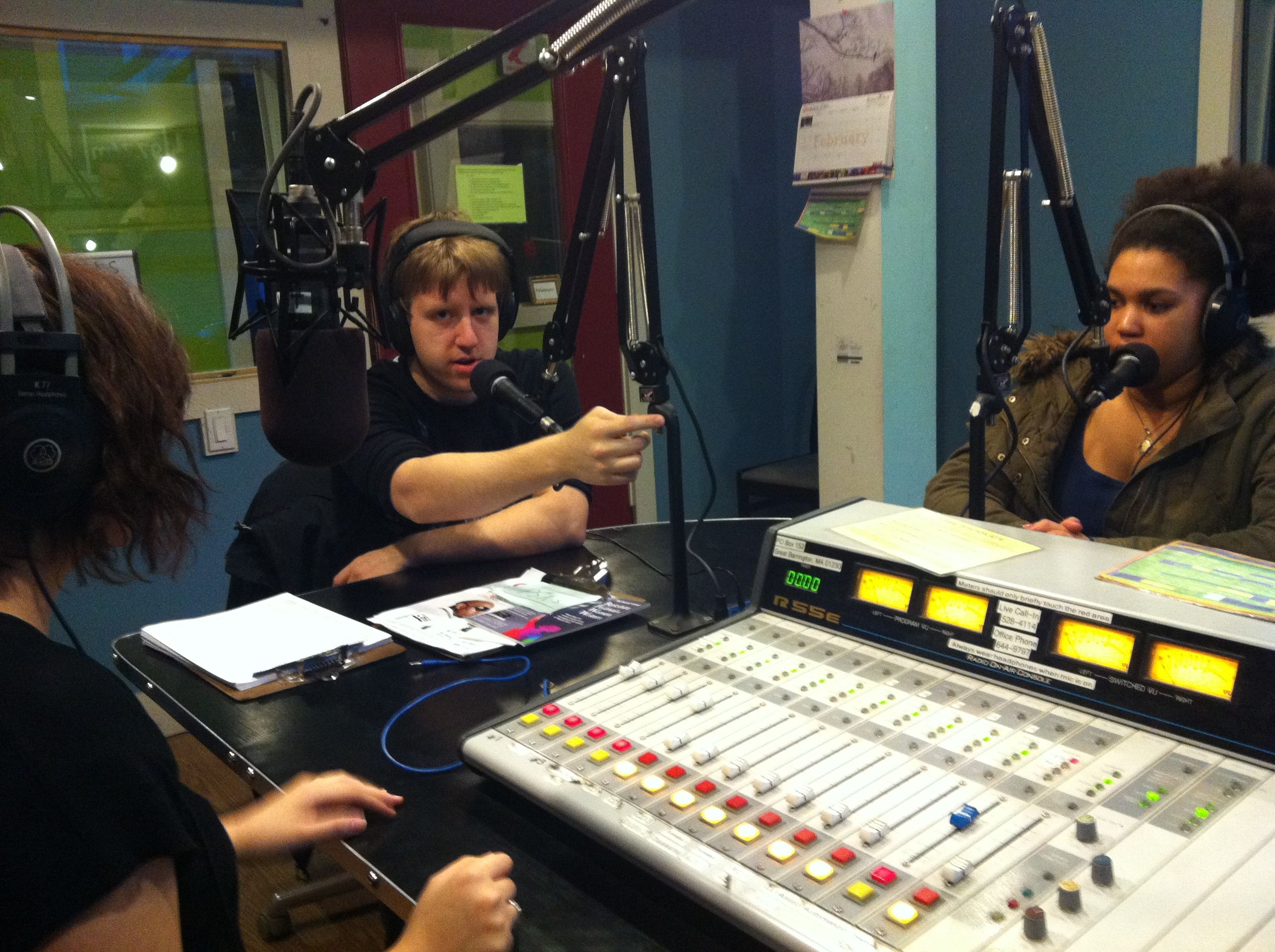
This spring, students from Bard College at Simon’s Rock and Monument Mountain Regional High School are getting ready to go on the air with a series of Citizen Journalism Project news shows, broadcasting stories of local, national and even international interest from the intimate studios of WBCR-LP in Great Barrington MA.

Bard College at Simon's Rock students in radio board training

In preparation, students in my digital media studies class have been listening to great radio from NPR affiliates, Pacifica and other serious news radio outlets, as well as to homegrown shows on 97.7 FM, WBCR-LP.

We’re not sure yet how polished our programs are going to sound this spring, but in this first go-round, it’s really all about learning the process, from conceptualizing and pitching interesting stories, to interviewing and structuring the script, to recording, editing and putting it all together live on the air.

What could be more fun?

But also, what could be more important for young people than to hone their civic engagement skills through becoming not just consumers, but also producers of informational media on topics that really matter?

In keeping with the state of the profession of journalism, my class will also be working on student-produced video and online print stories, recognizing that in today’s media environment, it’s essential to be able to move fluidly across a variety of platforms.

When I came up with the Citizen Journalism Project initiative, combining my service on the WBCR-LP Board with my media studies teaching and my interest in getting Simon’s Rock students out into the local community and collaborating productively with their peers, it was one of those moments when you get into the flow and know the universe is with you.

Everyone I talked to about the idea loved it, from students to school administrators and the WBCR-LP programming committee staff, all volunteer, who are contributing their time and talents to getting the students trained and on the air in just a few short weeks.

When internet radio burst on to the media scene a few years back, some predicted the end of old-fashioned broadcast radio.

But there’s still something very special about being part of a community radio station grounded in the heart of a particular dot on the planet, where the people who live there are the ones running the board, conceiving and hosting the shows, and pumping out the music–not for money, but for the sheer joy of it.

When you drive through Great Barrington and tune in to 97.7 FM, it’s your friends and neighbors you’ll be hearing on the radio. And now, some cheerful, intelligent and very media-savvy students, too!

If you miss the live broadcasts, or you live far away, we’ll be archiving our shows at WBCR-LP later this spring.  Come by and check us out!


Dare to love

Like most people I know, I have just a very narrow sphere of knowledge that I’m willing to let penetrate my consciousness at any given time.

There’s so much I know but don’t want to know. So much I choose not to acknowledge.

It’s a form of self-preservation, because if I were to allow myself to really feel the unnecessary pain and suffering that floods our world like an endless terrorized scream into the night wind, all the time…I could not bear it.  I would go insane.

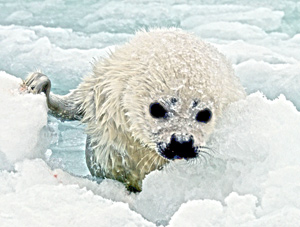
What prompts these reflections today is the news that hundreds of thousands of seal pups are drowning in the Gulf of St. Lawrence this season, after a straight run of disastrously warm winters where the pack ice on which harp seal moms give birth has been too thin to provide the shelter the pups need to survive.

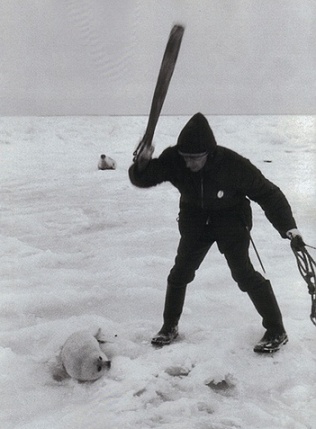
Add to this the fact that the Canadian government, knowing full well that the harp seal populations are in dramatic decline due to global heating, is still going ahead with the annual seal pup hunt, allowing as many as 330,000 pups to be clubbed to death by hunters this season.

This despite the fact that Russia and the European Union, the principal clientele for seal fur, have banned imports this year.  Despite the fact, too, that a huge backlog of seal pelts is sitting in warehouses.

It’s one thing to kill animals for food. Human beings are carnivores, after all.  But killing for sport…killing for unnecessary furs…killing for no good reason makes me feel deeply ashamed of my species, and heartsick for the loss of life.

I don’t know what to do with these feelings.  Signing yet another online petition or sending yet another contribution to a Save the Seals campaign does not seem anywhere near adequate.

I am not capable of practicing tonglen, taking in the suffering and sending out lovingkindness to both the victims and the perpetrators, as Buddhists like Pema Chodrun recommend.  I can neither bear to take in the suffering, nor stomach sending anything akin to kindness to the perpetrators.

So I do what most people do.  I close my eyes.  I grow some kind of hard shell around my heart.  I choose, without even consciously realizing what I’m doing, to ignore news and information that will upset me.

I remember clearly that as a child, I was not yet capable of this degree of callousness.  I very rarely was exposed to any suffering, since I grew up in a very sheltered environment, but every so often something would manage to get through into my sweetly padded cocoon, and leave me gasping in empathetic pain.

Once I was standing outside on the lawn in front of the house, and a bird whizzed by me and flew straight into a window.  It fell to the ground, stunned.  I ran to it and picked it up, cradling its trembling body in my arms.  Its neck was probably broken…it died within an hour.  I held it and cried over it and mourned it so deeply that even now, so many years later, I still tear up thinking about the sorrow that small death called up in me.

I can’t live with that kind of sorrow all the time; I would be paralyzed with grief.  And so I compartmentalize.  I go about my business and actively avoid thinking about the thousands of seal pups dying today.  Or the wolf pups being poisoned by the Canadian government to clear out the boreal forest in preparation to extract oil.  Or the millions of songbirds and waterfowl killed each year by US federal government agencies because they get in the way of industrial agriculture or airplanes or golf courses.

Just for a moment, let’s dare to imagine what the world could be like if adults like me did not deliberately silence and smother our empathy for the creatures who need our help to survive.

Love might just be the most radical gift we could bring to the world.

What could be more potent than action fueled by love?  Do we dare?  Can we afford not to?

Turn those pink ribbons green

I’m going to make a confession.  I never could stand those pink ribbons.  I’ve never done a “Walk for the Cure” or bought daffodils for cancer victims or even picked a cancer-cure-themed postage stamp.

I’m glad to hear that the Komen Foundation has bowed to pressure and is restoring funding to Planned Parenthood, a worthwhile organization if there ever was one.

But in general, the idea of putting the energy and effort of well-meaning citizens behind “the search for a cure for cancer” just irritates me, because let’s face it, we know what causes cancer, and therefore we can do better than cure it, we can prevent it!  Maybe not 100%, but we can take it back to the modest rates that previous generations of human beings enjoyed.

For my grandparents’ generation, a diagnosis of cancer was frightening because it was so often a death sentence, but it was rare. Not one of my four grandparents came down with cancer, and I don’t believe their parents did either.  This isn’t due to some genetic serendipity, it’s just a fact that cancer rates in the first half of the 20th century (and every century before that) were way lower than they are now.

Cancer rates are skyrocketing now thanks to the environmental toxins that humans have introduced into our air, soil and water, and thus our agricultural crops, drinking water and the very air we breathe.  Rachel Carson saw the effects of DDT on birds, and gave the warning just before she succumbed to cancer.  

We may have removed DDT from the US market, but it’s still being used in other countries, and here it has been replaced by a whole host of alphabet-soup chemicals, each one more potent and carcinogenic than the last.

If you really want to make a difference in the war against cancer, forget about those ridiculous pink ribbons.  Use the power of your wallet and your ballot to insist that the government step up and do its job in regulating the industrial agriculture sector.

Or better yet, let’s allow the specter of industrial agriculture to fade away into the dustbin of the 20th century, and start a real “green revolution,” dedicated to the health and well-being of our planet and all her denizens.

What color is your ribbon?  Mine is green.