A Prayer to Mother Earth

Amazon rain forest

Amazon rain forest

In an emotional speech this week, the President Rafael Correa of Ecuador announced that he would be opening more of the country’s pristine Amazon rain forest to oil drilling, cancelling an earlier initiative to have wealthy countries fund the maintenance of a huge natural reserve.

The money simply did not come through, and Correa felt he had no other choice but to start selling oil drilling permits to the highest bidder, to keep his small country afloat.

This is terrible news for the planet.

Once again, short-term gain is being put over longterm health.

My mind immediately leaps to all the animals and people who live in that green and glowing forest, who will soon be hearing the whine of the chain saw and the roar of the bulldozer, and smelling the bitter odor of ancient oil fouling land and water.

Species we have not even met yet will perish.

Of course, this is happening every day, all over the planet.  But when you hear about yet another safety wall being breached, opening up a brand new, as-yet-untouched area to drilling, you have to stop and say a silent prayer.

A prayer to what, to whom?  What power can stop the relentless spread of our destructive species over this globe?

To me it seems clear that only Gaia herself can do it, by her usual methods—fire, flood, famine, great shaking of land and sea.  Epidemics of viruses and bacteria.  It has happened before and it will—it must—happen again.

I know I sound apocalyptic here, but apocalypse is in the air.

I don’t believe in a conventional form of afterlife, but I do believe that when we die our bodies return to the earth, and our spirits return to the energetic field of the planet.

We will return to the great dance of life in this biosphere.  Time is different there—fluid, stretched, endlessly long.  Our little human lifetimes are no more than brief flashes, like the shooting of stars against the August night sky.

Human beings do represent a great leap from the last dominant species on the planet, the dinosaurs.  But unlike the dinosaurs, when we perish it will be by our own hands—by our drills, our combustion engines and our inability to curb our own numbers.

My prayer is to our great Mother Earth, that she welcome us back into her bosom when we fall, and bring us back into the fold of endless regeneration.  If some of us humans survive the cataclysms that await, I pray we become wiser in our use of our tremendous, tragic intelligence.

We are the Albatross

Lately I have been wondering how on earth it was possible to live without plastic.

I’m not even talking about marvelous inventions like disposable contact lenses, PVC piping, or neoprene wetsuits.

I’m just thinking about my kitchen routine, and how much I rely on—and take for granted—a never-ending stream of plastic wrap, plastic bags, and plastic containers as I go about my daily business.

I am so habituated to using plastic that I really had to ponder a while on the question of alternatives, until finally I remembered glass.  Of course, my grandmothers must have had a big shelf full of glass jars that they washed and re-used to store food in.

I also remembered that back in the 1980s, when I visited my in-laws in Mexico, I was surprised to see that they did not have any plastic wrap or boxed plastic bags in their kitchen.  They put things like cold cuts on plates, covered with another plate.  They left their leftover soups, stews and rice in the cooking pots, and placed them in the refrigerator with the lids on.

It also astounded me to see that in that household of seven, with numerous friends and relatives always dropping in for a meal, there was no trash container in the kitchen.  My mother-in-law saved plastic bags that she got when she went, once every couple of weeks, to the supermarket, and used these to collect the small amount of garbage that accumulated day to day.  Their little dog ate most of the food scraps, and they just didn’t generate that much of any other kind of garbage.

Why?

Because they bought their meat and produce from the little market down the street, carrying it home in their heavy-duty mesh bags (once made of straw, by the 1980s these were made of plastic threads).  My mother-in-law had a round wire egg basket that she’d bring to the market to refill.  The poultry would come from the butcher stand wrapped in paper, and rice or beans would come in brown paper bags.

There was just hardly any packaging.  And packaging, I’ve come to realize, is what generates most of the kitchen garbage in an ordinary American household like mine.

Here in Canada, we are mandated to separate our garbage carefully.  The bottles, cans and plasticized paper containers go in one bin, the paper and cardboard in another, and the compostable items in a small bin under the sink.  Then there’s the “trash.”  That’s the one where all the miscellaneous plastic packaging and used plastic bags go, and it tends to be the most bulky.

Since I watched the marvelously poignant and persuasive film BAG IT a few weeks ago (shout out to my friend and neighbor Anni Crofut for making us dinner and sitting us down to watch the film!), I have not been able to look at plastic trash in the same way.

The film starts from a simple question: why on earth would we use as our primary disposable material an indestructible synthetic chemical known to be an endrocrine disrupter and carcinogen?

And yet we do, over and over, in vast quantities.  We buy our drinks in plastic bottles and toss the empties in the trash.  We walk out of the superstore with carts piled high with groceries packed into small plastic bags.  We bring home our carrots in one plastic bag, our potatoes in another, and if they don’t come pre-bagged, we pull off a plastic bag from the conveniently placed roll and fill it ourselves.

Most of these bags will be dumped into the trash bin by the next day, and we’ll put them out of our houses in bigger plastic trash bags, and not give another thought to what may become of them next.

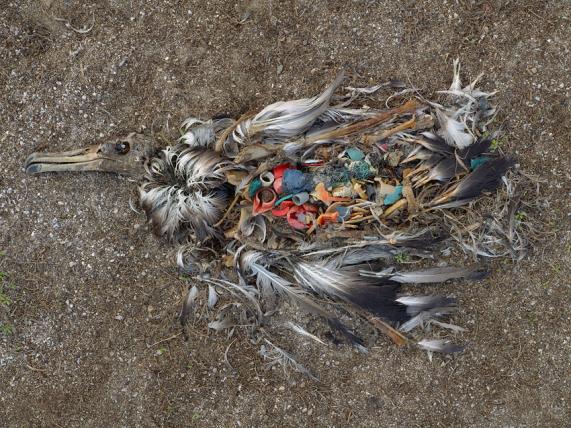
Some of our plasticized culture is being used to build huge land-fill mountains visible from space.  But a lot more of it is ending up in the oceans, where it becomes an indigestible, non-degradable part of the food chain.

These photographs by artist Chris Jordan, of dead albatross on Midway Atoll, near Hawaii, tell a tragic story.

 chrisjordan7

chrisjordan2

chrisjordan1

Look a little deeper into what’s happening to our thoughtless use and disposal of plastic, and you’ll learn about the vast gyres of rotating plastic trash out in the oceans, some as big as the state of Texas.

You’ll discover that the chemicals that compose plastic are gyrating around in human blood streams and fat as well, causing cancer and hormonal malfunction. 

American plastics are exported all over the world.  My Mexican mother-in-law now has plastic wrap and plastic bags in her kitchen, and if the plastics industry had its way, so would households from Azerbaijan to Zimbabwe and beyond.

Plastic is a fabulous, miraculous material and of course it’s not something we can imagine of doing without.  But there is such a thing as compostable plastic, made of  plant-derived chemicals that do break down again.

IMG_2956IMG_2954Once the Canadian government mandated that compost had to be disposed of in compostable bags, manufacturers like Glad stepped right up and began producing the necessary product.

It’s not even much more expensive than petroleum-based plastic bags—this box of 20 bags sells for $2.99 here in Nova Scotia, and I bet if I shopped around I could find them for less.

This is an issue where ordinary consumers can have a big impact.

We can remember to bring our reusable bags to the grocery store, including the small bags or containers for produce and bulk foods.

We can wean ourselves off plastic bottles for drinks, except on those unavoidable occasions, like in airports where we’re not allowed to bring in our own bottles of water or other liquids.

We can be much more thoughtful about our use of plastic wrap and other disposable plastics in the kitchen.

We can talk with our friends and families like my friend Anni did with me, trying to gently raise awareness.  We can even bring it up with our local government officials and see if we can get local ordinances passed banning plastic bags in supermarkets.

I am proud to say that the little town of Great Barrington, MA, where I live, is one of the first towns in the country to do just that.

The plastics industry would like nothing better than for everyone to use as much plastic as we possibly can, and throw it away just as fast.  What happens to the trash is not their concern.

But if we care about the health of our oceans, airs and land, as well as the very chemistry of our bodies, it is our concern.

And we have more power than we realize.  The fossil fuel industry depends on the docile cooperation of all of us fossil fuel addicts.  Sometimes I really think that there’s some kind of conspiracy going on between the fossil fuel, agri-chemical, pharmaceutical and insurance industries, who act as a giant many-tentacled cabal that sucks us in, addicts us to their products, and then watches complacently as we become sick and dependent on expensive tests and treatments.

We do not have to fall for this any longer!  It’s not hard to eat healthy, it’s not hard to bring your own bags to the supermarket, it’s not hard to ride your bike or at least decide to purchase a hybrid car next time around.

IMG_3145 copyWhat is hard is to isolate yourself from a contaminated natural world.  It simply can’t be done.  Our land, oceans and air are an extension of us.  We are the world, the world is us, as Joanna Macy recognized long ago.  That’s why we have to be concerned about what’s happening with the plastic trash in the oceans, or the greenhouse gases in the air, or the toxic chemicals in the soil.

The bottle caps and syringes that the poor albatross is carrying around may be bigger and easier to see, but the truth is that each of us carries an unbearable burden of toxins in our own bodies every day.

And we’re doing it to ourselves, by our own unconscious collaboration with the industries that are sickening us and our world.

It’s time to say ENOUGH, disengage ourselves from the herd, and stand up for what we know is right.  Be the change.  Be the change.

R.O.I.—From Mother Earth’s P.O.V.

imagesPeter Buffett, one of billionaire Warren Buffett’s sons, published a brave, thoughtful op-ed piece in the New York Times the other day.  In it, Buffett takes to task what he calls “the Charitable-Industrial Complex,” the philanthropic crowd who piously seek to save the world, as long as the R.O.I. is sufficiently rosy and the status quo is not upset.

Buffett knows he sounds like a class traitor here as he proffers this description of “Philanthropic Colonialism” (his term):

“As more lives and communities are destroyed by the system that creates vast amounts of wealth for the few, the more heroic it sounds to “give back.” It’s what I would call “conscience laundering” — feeling better about accumulating more than any one person could possibly need to live on by sprinkling a little around as an act of charity.

“But this just keeps the existing structure of inequality in place. The rich sleep better at night, while others get just enough to keep the pot from boiling over. Nearly every time someone feels better by doing good, on the other side of the world (or street), someone else is further locked into a system that will not allow the true flourishing of his or her nature or the opportunity to live a joyful and fulfilled life.”

Buffett says he’s “really not calling for an end to capitalism; I’m calling for humanism…. It’s time for a new operating system,” he declares. “Not a 2.0 or a 3.0, but something built from the ground up. New code.”

Buffett says that philanthropy should be dedicated to  “trying out concepts that shatter current structures and systems that have turned much of the world into one vast market. Is progress really Wi-Fi on every street corner? No. It’s when no 13-year-old girl on the planet gets sold for sex. But as long as most folks are patting themselves on the back for charitable acts, we’ve got a perpetual poverty machine.

“It’s an old story,” he concludes; “we really need a new one.”

Yes.  And philanthropy is not the only sector of our society that needs to reinvent itself.

Although I respect Buffett for his willingness to sound what will be taken as a heretical note in his own social circles (at one point he adds self-consciously “now I’m going to upset people who are wonderful folks and a few dear friends”), I don’t think he goes far enough.

I don’t want to see a merely “humanist” social system, I want to see humans develop an ecological understanding of our place and role on the planet.

I want us to repudiate our colonialist mindset, which persists not only in our tendency to give “humanitarian aid” with one hand while seizing economic control of a country’s most valuable resources with the other, but also in predatory capitalism at home and abroad—the debt bondage that the majority of people on the planet who buy into the system find themselves lashed to, laboring to pay the bank without ever being able to accumulate enough capital, social or financial, to buy their way into the promised land of security and ease.

The “new story” I’d like to see us live by would rewrite human attitudes towards other animals, insisting on the rights of every living being on this planet to a decent life.

That doesn’t mean a pig needs a condo with a swimming pool, but she does need enough space to breathe and move around in, healthy food and a clean, sanitary living environment.  Her wastes need to be disposed of the same way human wastes are—not sent into the rivers to create dead zones the size of states out in the sea.

100_2435Every aspect of the planet, from trees to minerals to water to fossil fuels, should be seen as precious resources to be safeguarded and cherished for the good of all who rely on them, not merely as sources of income for the few who sit on the boards or own stock in the mega-companies that develop, extract, exploit, and sell before moving on, leaving the devastated land as “collateral damage”— someone else’s problem.

The question is, how to get through to the corporate titans who are very happy with the status quo?

These are the folks who live their whole lives in such a fabulous cocoon of wealth and privilege that they have the illusion that they and their families can remain entirely insulated from the shocks of our poisoned, over-populated, over-heated planet.

If even in their philanthropy these people are thinking in terms of R.O.I., it must be a totally foreign concept to them to imagine conducting business in terms of gross social gain rather than gross individual profit.

Andrew Harvey, in his book The Hope: A Guide to Sacred Activism, recounts a lunch conversation he had with one such business tycoon, “the head of a major agribusiness corporation.”  The businessman chews Harvey out for being a “naïve do-gooder” who does not understand how the real world functions.

“Most of you that I have met truly believe that if the CEOs—like me, for instance—really knew what harm their corporate policies were doing, they would rend their Armani suits, fling out their Rolex-wreathed arms, burst into tears and change.  This is madness and shows how little you dare to know about what is really going on.  And how can you even begin to be effective until you understand what you are up against?

Of course, the businessman then enlightens Harvey on what he and other “naïve do-gooders” are up against in the quest to change the world for the better.

“You are up against people like me,” the man says.  “I know exactly what my company is doing and what devastation it is causing to thousands of lives.  I should know; I am running it.  I know and I do not care.  I have decided I want a grand gold-plated lifestyle and the perks and jets and houses that go with it and I will do anything—bend the law, have people ‘removed,’ bribe local governmental officials, you name it—to get what I want.  I know, too, that none of my shareholders care a rat’s ass what I do or how I do it, providing I keep them swimming in cash.”

I thought of this blunt, self-satisfied description of the view from the top of the capitalist heap when I read recently about how the American electricity industry is responding to the rising popularity of home-based solar panels.

images-1Rooftop solar panels are being compared to cell phones, which, if you remember, created a major sea change in the telecom industry.  In the end, the telecom giants made out like bandits, after initially having spent a lot of money and political capital to try to put the brakes on what was perceived as a threat to the traditional landline phone system.

Today it’s the turn of the electricity industry, which is terrified of losing market share if every homeowner can make their own energy on their own roof.

If homeowners are no longer paying the fees that subsidize the public grid, industry officials argue sanctimoniously, how will this public system be maintained?

No where in the New York Times article about this, which appeared in the Business section, was there any mention of the broader social, global benefits of distributed solar electric generation as compared to fossil fuels or nuclear electric sources.

No mention of the many reasons why every government on the planet should be encouraging homeowners and businesses to convert their energy sources to solar, along with wind, hydro and geothermal, just as fast as they possibly can.

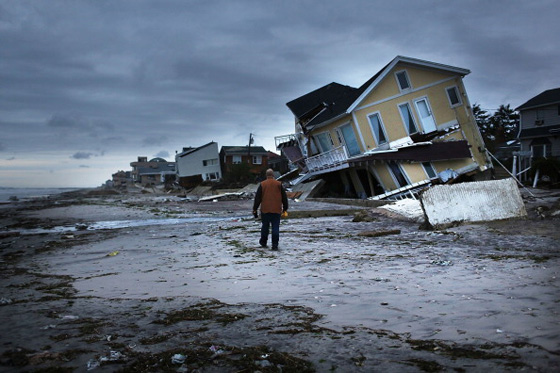
When are the CEOs who are so busy buying off Congressional delegations and creating expensive self-advertising campaigns going to realize that what they really need to be worrying about is not thrifty homeowners taking advantage of tax incentives to install solar panels, but the mega-storms, wildfires and floods that will be coming our way every year, increasing in intensity the longer we wait to make up our minds, as a global society, to give up our addiction to fossil fuels?

hurricane-sandy-damage

Apparently most human beings can only be swayed by self-interest.

OK—we can work with that.  It’s quite clear that it’s in the interests of every human being on the planet to develop a sustainable relationship with our Mother Earth.

If we don’t, she will just give a great shrug of her climatic shoulders and be done with us.

Where will the R.O.I. be then?

Time for change

Jen light 3 copyIf my blog posts have been a bit few and far between lately, it’s because I’ve been focusing my writing efforts this summer on the bigger project I have underway, the personal/political memoir I’ve been working on for some years now.

The political subtext will be somewhat familiar to followers of my blog these past two years: the necessity for more ordinary folks like me to wake up to the realities of climate change and environmental destruction, and begin to take action in both the personal and the political spheres.

The personal narrative will be somewhat familiar to friends and family who have followed my life, or pieces of my journey, these past 50 years.  Good moments and bad, easy stretches when everything seemed to be going right, followed by inevitable patches of heartache and turmoil.

In the course of charting my experiences in depth through this memoir project, I’ve realized that I have two qualities that have often led me into troubled waters.

One, probably because I grew up in a family with strong values of caring, respect and integrity, I have tended to be very trusting—to believe that people mean well and want to do the right thing by others.

And two, I have been slow to respond to situations that make me unhappy.  I tend to try to stick with whatever I’ve started or gotten myself into, to try make it work even when it’s become quite obvious—even to me!—that things are never going to change for the better.

I’m trying to make some connections between these personal traits of mine, and the larger social landscape that I inhabit.

For example, it seems to me that we have all tended to be too trusting of authority figures like politicians and business leaders, expecting that they have our best interests at heart.

As a kid growing up, it would never have occurred to me that corporations would produce, package and market products aimed to appeal to children, that would, over time at least, make us seriously sick.

I remember begging my mom to buy me Froot Loops and Lucky Charms breakfast cereal, which looked so yummy and appealing on TV.

I wanted Ring Dings, too, and Yodels, and Twinkies.  I wanted Coke, of course, and Dr. Pepper.  I wanted McDonald’s hamburgers, fries, and McMuffins.

I was lucky that my mom was not swayed by the seductive advertising, and went her own way with food, raising my brother and me on fresh fruits and vegetables (often grown in our own garden), premium meats, and homemade, preservative-free desserts.

Others, who bought the advertising and fell for the products, are finding themselves now, at midlife, with diabetes, cancer, asthma, arthritis and all the rest of our common American ailments.  To some degree at least, the explosion of health problems in the developed world can be directly traced back to our societal trust that Big Business, Big Agriculture and Big Government were doing their best to safeguard our health.

Turns out we needed to be more discerning—a theme that runs through both my private and public spheres.

Likewise, I can relate my own slowness to realize and respond to untenable situations in my personal life to our broader social reluctance, as human beings, to go against the flow.

Let’s face it, we humans are herd animals, as Nietzsche saw clearly more than a century ago. We run in packs, and we fear nothing so much as social isolation and disapproval.

For me personally, the kinds of situations that I’ve been slow to wake up to and act upon have been ones in which taking action means going against the grain of social expectations.

For example, my marriage.  It was very hard for me to let go of my own attachment to being married.  There are so many positive perceptions surrounding married people, while divorced people, on the other hand, are perceived as unstable, difficult, dissatisfied, disloyal, probably neurotic, bad parents, bad partners, bad lovers—in short, failures overall.

Even though some 50% of marriages in the U.S. end in divorce, these stigmas still hold a great deal of power, and for me it was hard to finally concede that I could go no further in my marriage.  After more than 20 years, I had to cry uncle and admit that yes, I had failed.  I could not make it work.

The thing is that once I got to that nadir, I didn’t care anymore what people thought, and I came to see the major life change of divorce as a positive liberation, not a failure at all.

Once I’d made the leap and let go of my inertia and fear of change, I discovered that it wasn’t nearly as hard as I’d imagined, nor were the repercussions as severe.

It turns out that most of the fears I’d had around becoming single—and a single parent—at midlife had much more to do with my own perceptions than with any reality out there in the world.

I believe that these kinds of fears in the personal realm apply just as much in the political realm.

CWindmillhome

Wind turbines on the Bay of Fundy, Nova Scotia

For instance, we know that our longterm relationship to fossil fuels is, in the words of JT, “driving us down the road to ruin,” but so many of us feel stuck, afraid to go against the tribe in seeking out new, more positive relations to energy use on the planet.

We tend to just go with the flow, running our AC on hot days, driving our cars, using our oil furnaces for heat in the winter.  Even though we’re beginning to see that this makes us unhappy—who, after all, enjoys prolonged heat waves, out-of-control wildfires, destructive storms and raging floods?—we still stick to what’s familiar, what appears to be socially acceptable, what everyone else is doing.

It’s time for each one of us to stiffen our backbones and be honest with ourselves about the situation we’re in now.

Climate change is upon us.  It’s past time to start working hard to cut carbon emissions by reducing use and switching to cleaner energy like wind, solar and geothermal.  We need to stand with 350.org and other environmental groups to pressure our government to do the right thing—to put the health and welfare of we, the people, ahead of the profits of them, the corporations.

On a personal level, too, we can also make changes.  We can use bicycles more, and AC less.  We can hang out our laundry to dry.  We can start weaning ourselves off disposable plastics, and put some raised beds in our backyards or on our rooftops.

It used to be that only “granola people” did things like this—“granola people” pronounced with a dismissive smirk.

It turns out that those crunchy folks had it right, and we’re the ones who have stayed in our unhappy fossil fuel-based relationship too long.

We may imagine that breaking with the herd and striking out alone on the path of ecological sanity is going to earn us smirks and sneers.  But a) this is probably just in our heads; and b) who cares, if it makes us happier in the long run?

Here’s what I’ve finally realized, at midlife, on both the personal and the political levels: life is way too short to waste time being unhappy if a path toward happiness is available.

Letting go of our attachment to the status quo is the crucial first step on that path, and it’s not easy.  But it is necessary now, given the critical juncture we’re at as a planet and a human civilization.

Think about it.  And then—act.

Being the change–beyond hope, beyond fear

Every time I write an exhortatory post like the last one, I imagine my readers getting to the end and clucking their tongues in frustration.

“OK, we get it, now the is time to act—but what does she want us to DO?  Doesn’t she have any practical suggestions on what to do in this terrible transition time?  Isn’t she going to lead by example?”

Well, yeah.  In relentlessly focusing my attention, and by extension my readers’ attention, on the frightening facts of environmental degradation–from climate change to toxic pollution to the precipitous decline of millions of species—I am doing something.  It may not be much, but at least it’s better than sticking my head in the sand and ignoring the gathering storm, or selfishly trying to live it up as long as possible—let the band play on!

There are many things I dream of doing, but right now simply cannot.

I cannot build myself an environmentally sustainable, off-the-grid house, nor can I pick myself up and move to an eco-village at this time.

I cannot spend all my time sitting in trees to protest logging or marching on Washington D.C. to protest inaction on climate change.

I cannot devote myself 100% to environmental communications work.

And I can’t wave my wand and stop the poles from melting, or make all the toxic chemicals just go away.

What I can do is take the strengths I’ve been given, in writing and communicating, and use them to try to spread awareness among others, in the hope that the little ripple I may be able to start will grow to a mighty wave of positive change.

***

I need to think more about this question of hope, though.

Margaret Wheatley

Margaret Wheatley

Lately I’ve been reading and re-reading Margaret Wheatley’s latest book, So Far From Home, in which she talks, rather surprisingly, about the need for activists to move beyond hope.

The problem with hoping for change, she says, is that “fear is the constant, unavoidable companion of hope. What this simply means is that I hope for a certain outcome and I’m afraid I won’t get it. I hope for a certain result and I’m fearful it won’t happen. This is the way that hope and fear are wedded together….So, it might be that the road to fearlessness is only found by giving up hope. By giving up outcomes, by giving up goals.”

This is a challenging idea.  If we give up on goals, doesn’t it mean that we give up, period?  That we just bow our heads in resignation and accept the anthropogenic destruction of our planet as inevitable?

Not according to Wheatley.

Quoting from Thomas Merton, who says that we need to “concentrate not on the results but on the value, the rightness, the truth of the work itself,” Wheatley gently asks:

“What if we could offer our work as a gift so lightly, and with so much love, that that’s really the source of fearlessness? We don’t need it to be accepted in any one way. We don’t need it to create any certain outcome. We don’t need it to be any one thing. It is in the way we offer it, that the work transforms us. It is in the way we offer our work as a gift to those we love, to those we care about, to the issues we care about. It is in the way we offer the work that we find fearlessness. Beyond hope and fear, I think, is the possibility of love.”

Could this be a kind of answer to those skeptics who would take me to task for writing about environmental issues without doing enough to be the change I want to see?

By giving myself to this work of raising the alarm, motivated by my deep love for the planet and my awareness of the inter-being of all her denizens, am I doing the work I came here to do in this lifetime?

The truth is that I don’t have much hope, anymore, that we will be able to “save the world.”  Nevertheless, I keep on writing, because writing is my way of working through and releasing myself from fear.

Having spent a lot of my life in fear, and having come to know it intimately, I can say with some authority that fear is a useless, paralyzing emotion.  Fear holds us back, it pinions our wings, it pushes us to do things we will later regret.

What we need, Wheatley says, is the clarity that resides beyond fear and its twin sister, hope.  The clarity that comes with knowing that since our time is going to come sooner or later, what’s important is how we spend each one of our days.

We need to do the work we came here to do, as well as we can, without expecting reward or recognition, without depending on external acclaim or tangible, material successes.

Beyond hope, beyond fear, I will keep going on, day to day, raising my children, doing my teaching and writing, enjoying beauty, pleasure and loving-kindness as they cross my path, and conjuring them myself in the way I live my life.  In that sense, yes, I will be the change.

100_2487 copy

World on fire

I had to dig deep into the New York Times, my usual go-to source for “all the news that’s fit to print,” to find any mention of this weekend’s train explosion in the province of Quebec, not far from the Maine border.

canada-floater-articleLarge

Lac-Megantic on fire July 6, 2013

I knew about it only because here in Canada it’s at the top of the headlines, with Prime Minister Stephen Harper taking the time this Sunday to journey to the small town of Lac-Megantic, where the disaster occurred, to size up the situation and offer his condolences.

Officially, so far, five have been confirmed dead, with scores still missing; Lac-Megantic, pop. 6,000, is said to look like a war zone, with black fumes rising from the burning crude oil carried by the 73-car train.

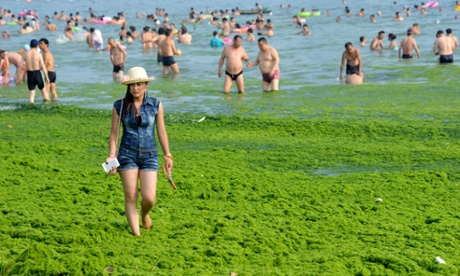
This on a weekend when temperatures in the Canadian Maritimes soared to record-breaking heights, and harmful algal blooms worldwide choked out marine life along all the coasts.

91fb3c94-086c-4470-a98e-23ec4ff993d8-460x276

Algae bloom on the Yellow Sea in China, July 2013

Astoundingly, at least one Canadian pundit responded to the burning crude and the smoldering township by calling for increased building of pipelines!

Another columnist, in the very same newspaper that reported on Nova Scotia’s unprecedented heat wave, had the nerve to call for more drilling and fracking for oil and natural gas on land and sea in the province.

If there are no more fish in the sea, we can at least extract the last of the fossil fuels, eh?

It’s time to get a grip, people.

What we need is not more oil and gas, but more wind and solar.

We need clean sources of energy, and we need to lower our consumption dramatically.

The window of possibility is smaller and tighter than most of us care to realize.

The tipping point is upon us.

This is not another action movie, a “White House Down”-style disaster flick, ending with the good guys reliably saving the day.

As we saw with the Arizona fires the other day, even the most hot-shot of heroes can go down in a blaze of glory when the fires burn out of control.

Do we really want to wait until the entire world is going up in flames, literally and figuratively speaking, before we act?

This is not a rhetorical question.  And the answer, I believe, is NO.  We can’t afford to sit on our hands any longer.

The time to act is NOW.

Which side are you on?

This past week was a perfect illustration of how many compelling distractions there are to the main business at hand.

After all, it’s much more interesting to focus on the good news of a Supreme Court blessing for gay marriage, or to follow the spy-novel intrigue of the Edward Snowden case, or to watch President Obama set foot in the tiny prison cell that kept Nelson Mandela captive for 18 years—much more fun than thinking seriously about the elephant in the room, climate change.

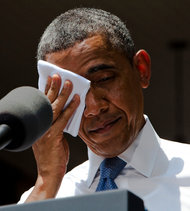
I was happy, and somewhat astonished, to see Obama finally seize that elephant by the tusks and deliver a speech that acknowledged how important climate change will be to our collective, planetary future.

Christopher Gregory/The New York Times

Christopher Gregory/The New York Times

In the speech, Obama declared that “the question is not whether we need to act. The overwhelming judgment of science — of chemistry and physics and millions of measurements — has put all that to rest. Ninety-seven percent of scientists…have now…acknowledged the planet is warming and human activity is contributing to it.

“So the question now is whether we will have the courage to act before it’s too late. And how we answer will have a profound impact on the world that we leave behind not just to you, but to your children and to your grandchildren.

“As a President, as a father, and as an American, I’m here to say we need to act.

“I refuse to condemn your generation and future generations to a planet that’s beyond fixing. And that’s why, today, I’m announcing a new national climate action plan, and I’m here to enlist your generation’s help in keeping the United States of America a leader — a global leader — in the fight against climate change.”

To me what’s most important in this speech is that way that the President is appealing to the country as a father. 

Those of us who are parents know that there is no higher priority for us than the welfare of our children.

We practically kill ourselves to provide for our children.  We go into debt to buy them high-quality food, medical care and education.  We go without so that they can have whatever it is that they need.

We would never knowingly feed them poison.  We would never knowingly do something that would undermine their future.

And yet, let’s be honest: most of us are doing just that, all the time, every day.

If you buy your kid a fast-food meal, you are contributing to the Monsantification of the world.

If you drive your car, heat your house with fossil fuels, or run your air conditioner, you are contributing to the super-heating of the atmosphere.

The vaunted American lifestyle is the problem.  President Obama didn’t quite come out and say so in his speech, but it’s not hard to read between his carefully calibrated lines and see what he is implying.

“Someday, our children, and our children’s children, will look at us in the eye and they’ll ask us, did we do all that we could when we had the chance to deal with this problem and leave them a cleaner, safer, more stable world? And I want to be able to say, yes, we did. Don’t you want that?”

Yes, of course we all want that.

We don’t want to end up shivering and starving in a blighted, devastated world, knowing that it was our own greed and short-sighted stupidity that brought us to this point of no return.

If we care about our own dear children, we need to make improving our relationship with the planet a priority.

That means no more poisons, no more GMO food, no more fossil fuel extraction at the expense of the natural environment, no more heedless burning our way to kingdom come.

As the President said, “those of us in positions of responsibility, we’ll need to be less concerned with the judgment of special interests and well-connected donors, and more concerned with the judgment of posterity. Because you and your children, and your children’s children, will have to live with the consequences of our decisions.”

Will have to live or die with the consequences of our decisions, that is.

Are you willing to condemn your grandson or granddaughter to a short, miserable existence on Earth, brought to a rapid end by climate-induced super-storms or famine?

I’m sorry to be so bald about it, but these are the stakes.

Which side are you on?  And what are you willing to do to ensure that future generations on this planet have a chance to enjoy the abundance and beauty that we and our parents have taken for granted?

100_2435

No more fish in the sea?

Last summer when I was in Nova Scotia, I wrote about how startled I was to struggle, in the local supermarket, to find anything but frozen fish with origin stamps of China and Southeast Asia.  The fresh fish offerings were meager, taking up just a small portion of the case allotted to them, and besides the lobsters, only the ocean trout and small haddock filets were wild caught.

product-lg-seafoodLast week, in a Puerto Rican supermarket, I had an unhappy feeling of déjà vu as I searched in vain for any locally caught seafood at all.  There was no fresh fish counter there, just a case of packaged frozen filets and shellfish, every one of them with their label pointing to China or India.

When I asked the locals about whether it was possible to get fresh fish on the island, they shook their heads.  “Maybe if you meet the fishing boats at the dock, they might sell you something,” one man told me.  “But it all goes to the restaurants and resorts.”

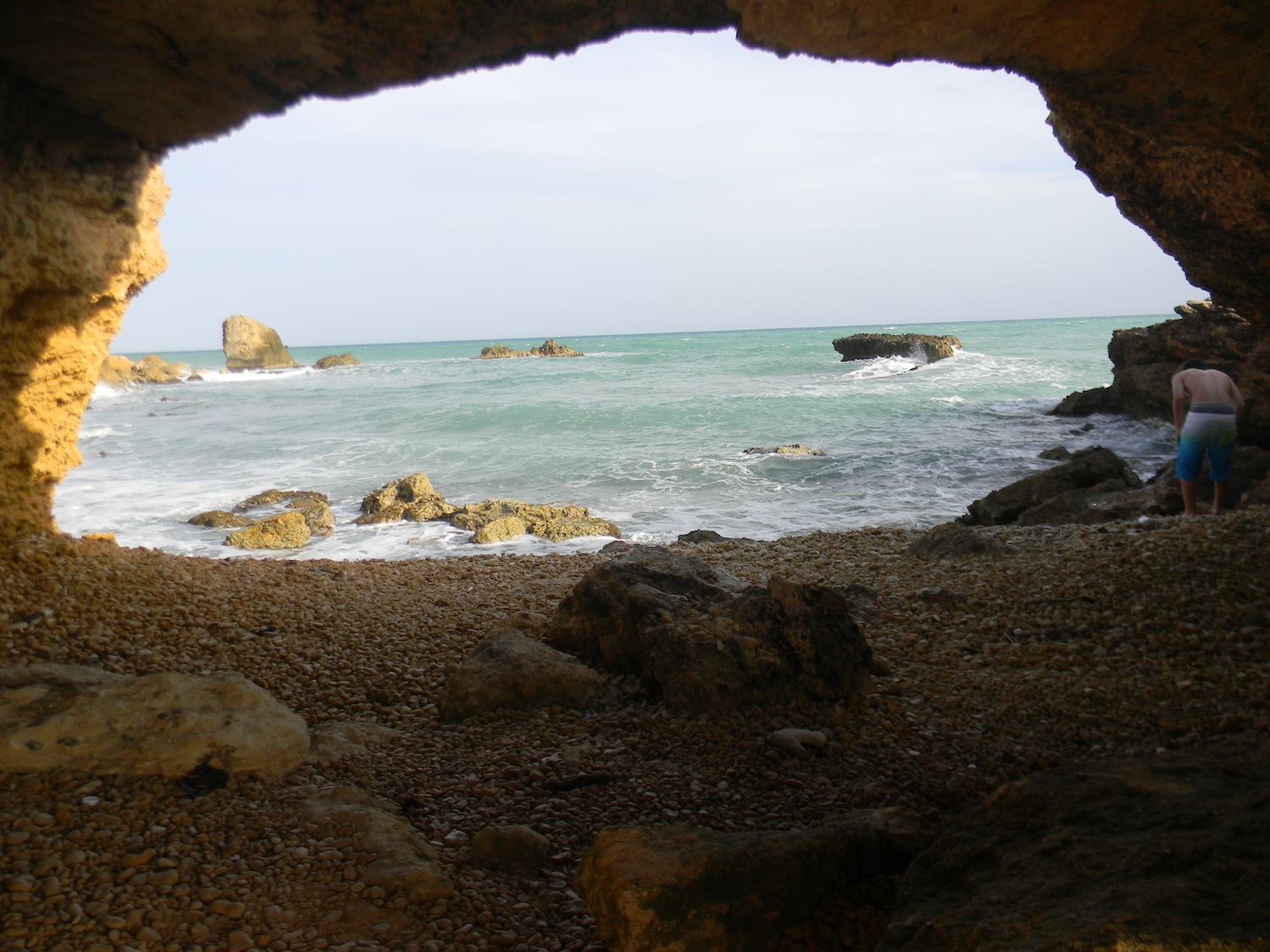
Other than crabs, there were few sea creatures to be seen on the beach, either.  One morning we watched a local man with snorkel gear and a fishing spear go back and forth in front of the beach collecting lobsters—undoubtedly illegally.

The only coral we saw was bleached and dead.

The amount of plastic garbage on the beach and in the coastal waters was depressing.

And although there was some bird life, it was thin, even in the beautiful coastal land designated as a “national wildlife refuge”: a single frigate bird, a couple of pelicans, a handful of herons and sandpipers.

DSCN3856

What frightens me is how quickly we normalize whatever situation we live in.

It’s normal now to live on an island surrounded by magnificent turquoise waters and not be able to find fresh local seafood to eat.

DSCN3895

It’s normal to buy water in plastic bottles and throw them casually away, without any clue of what happens to them once they’re deposited on the curb for the garbage men to pick up, and it’s normal to find those bottles washing up at the beach.

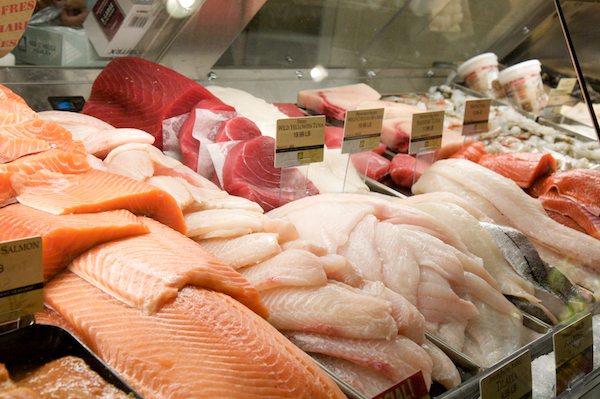
I_Fresh_Market_FishIt’s normal to return to the U.S. and find, in the local gourmet food store, a big gleaming fresh fish counter, with huge slabs of “sustainably farmed” salmon, leaner wild-caught Alaskan salmon ($25 a pound!), swordfish steaks, flounder filets, sea bass from Chile, fresh shellfish of every description.

Here in the heart of Empire, it’s normal to remain ignorant of the fact that this kind of abundance is rare, and carefully manufactured.

And when those who can afford that $25 a pound fish go abroad, they travel in bubbles of luxury that keep them cushioned in the comfortable delusion that all is well.

After all, in the restaurants at the resorts, there’s fresh salmon on the menu.  Never mind that it arrived on this Caribbean island packed in ice, on a flight from a fish farm in New Brunswick, New Zealand, or Scotland.

It’s normal, now, to feel sad but resigned to the fact that fish and seafood is becoming a rarity.

As omnivorous human beings, we have other choices. No seafood available?  Eat chicken then, or vegetables.

But what about the shorebirds and the ocean food chains that have evolved in tight symbiosis over millions of years?

Try telling a pelican or a seal to go eat some chicken.

DSCN3836

On the southern California coast this spring, there has been a wave of emaciated, starving sea lion pups washing up on the beaches.

baby-sea-lion-2edit

Starving sea lion pup being transferred to a rescue center for rehabilitation.

They’re starving because the fish their parents and grandparents caught so easily have been trawled up by factory fish vessels, frozen in plastic pouches and sent around the world on ice.

This is the new normal.

I am not resigned, and I will never get used to it.

Which Side Are You On?

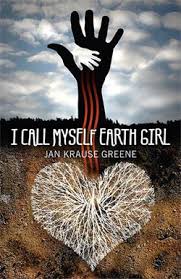
imagesFor the past few nights I have been putting myself to sleep by reading an advance copy of my friend Jan Krause Greene’s new novel, I Call Myself Earth Girl.

It’s not exactly a feel-good bedtime story, dealing as it does with rape, environmental disaster, death and bereavement.

But it’s also about empathy and love, between family members and also on a worldwide scale.

In Greene’s vision, the Earth and its denizens can be saved from catastrophe by mindful attention to what really matters: affirming life, both our own and that of the unborn generations to come.

Not since Starhawk’s 1994 masterpiece The Fifth Sacred Thing have I come across a book that so clearly matches my own waking nightmare of the terrible times that await us in the future, if we do not succeed in changing our ways now.

Let’s face it: it is possible that the kind of violence afflicting resource-starved places like Afghanistan, Syria and Somalia will become the norm in much more of the world, as climate instability creates food shortages and accelerates the pace of natural disasters beyond our capacity to recover.

America is a tinderbox just waiting to go off.  Imagine what would happen if suddenly it was not possible to go down to the supermarket and get your week’s worth of groceries?

Such a scenario is more or less unthinkable to people like me, who have grown up cradled by the richest breadbasket in the world.

We are only beginning to realize the costs that have come with our cornucopia: the destruction of the virgin prairies in the Midwest, the poisoning of the earth, water and air with chemical fertilizers, pesticides and herbicides; the grotesque factory farms of livestock and fish; the genetic alteration of seeds; the destruction of local farming by the huge predatory monster of American-style factory farms.

We have grown fat on these practices.  And now it’s time for us to accept responsibility for the outcomes of our heedlessness.

Those of us alive today have the privilege, and the responsibility, of presiding over what could very well be the end times for human civilization.

It’s somewhat analogous to the end times of specific human cultures, like the Greeks, the Romans, the Egyptians, the Ottomans, the great Chinese dynasties….except that this time, we’re not just talking about the end of a single culture, we’re talking about the demise of humanity as a species.

It is possible to imagine, as Jan Krause Greene did, that our lush green planet could turn brown from environmental disaster, provoking a culture of armed militias surviving by means of ruthless violence—with women, as always, at the bottom of the heap.

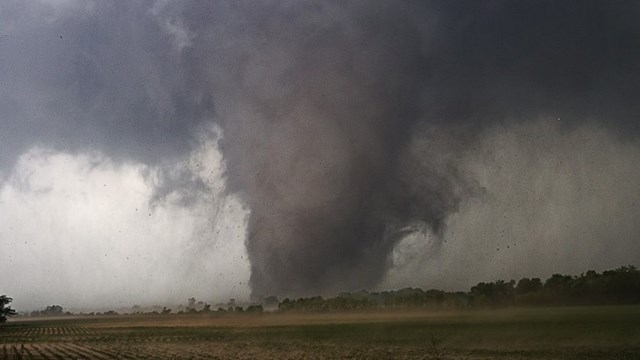
Tornado bearing down on Moore, OK; May 21, 2013

Tornado bearing down on Moore, OK; May 21, 2013

It is already happening—just not yet here, in the gated community we call America.

Can we wake up in time to forestall total, worldwide environmental melt-down?

In the past week we had a deadly two-mile-wide tornado in Oklahoma, and the Russian science station in the Arctic Circle had to be evacuated because the ice was melting at an unprecedented rate.

Here in New England we are expecting temperatures in the 30s Farenheit this weekend—way below normal for what should be the start of the growing season.

What’s next?

We don’t know.  But I take heart from local initiatives like the rehabilitation of the long-dormant Great Barrington Fairgrounds into a vibrant community-supported agriculture site.

We are going to have to re-localize agriculture if we want to survive the shocks of the 21st century.  We need to re-imagine not just agriculture, but community along with it.

As I Call Myself Earth Girl shows well, the antidote to violence and fear is love and empathy.

We still have a choice. Which way will you turn?  Which side are you on?  How far will you go to protect the planet and the generations to come?

fifth-sacred-thing

Commencement 2013: Questions for Ben Bernanke

Tis the season of college Commencement ceremonies, where speakers are invited to address the graduates, giving them some advice and words of wisdom for this major transition time in their lives.

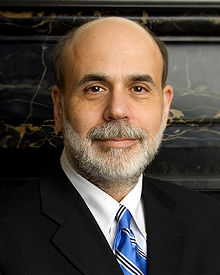
Ben Bernanke

Ben Bernanke

At my institution, Bard College at Simon’s Rock, the Class of 2013 will be addressed by none other than Ben Bernanke, chairman of the Federal Reserve, whose son and daughter-in-law met as Simon’s Rock students.

Of course I am curious to hear what Mr. Bernanke will tell these spanking-new A.A. and B.A. graduates.

I wonder if he will mention the touchy issue of student debt, which the eminent economist Joseph Stiglitz just called a contemporary crisis on the same order of magnitude as the housing bubble crisis of 2008.

Stiglitz doesn’t mince his words in responding to the news that “total student debt, around $1 trillion, surpassed total credit-card debt last year.”  While it’s possible to learn to control credit card spending, he says, “curbing student debt is tantamount to curbing social and economic opportunity. College graduates earn $12,000 more per year than those without college degrees; the gap has almost tripled just since 1980. Our economy is increasingly reliant on knowledge-related industries.”

In other words, young Americans and their families can’t afford not to do whatever it takes—including going into debt—to get that college degree, and beyond that graduate degrees as well.

The students I know are increasingly aware of their place in the big picture of American society.

Those who must take out loans to afford their college educations do so with eyes open, knowing that these loans will form a ball and chain around their ankles for many years to come.

I wonder if Ben Bernanke will talk about this?

Will he talk to this year’s graduating class about how, unlike with credit card or mortgage debt, it is almost impossible to discharge a student loan in bankruptcy court?

Will he explain why interest rates on Federal student loans are so much higher than the interest rates on the loans the Federal Reserve has made to the banks that caused the financial crisis of 2008?

As Mr. Stiglitz observes, “if the Federal Reserve is willing to lend to the banks that caused the crisis at just 0.75 percent, shouldn’t it be willing to lend to students, who will be crucial to our long-term recovery, at an appropriately low rate? The government shouldn’t be profiting from our poorest while subsidizing our richest.”

Besides the $1 trillion in student debt, there have been other major records broken in the past few weeks that Mr. Bernanke could address.  The Dow Jones has climbed above 15,000 this spring, a benchmark many thought would never be reached; and the carbon emissions rate has climbed above 400 parts per million, causing polar sea ice melt at rates and levels not seen in human history.

Will Mr. Bernanke talk about how and why it is that in a time when wealth disparity between the 1% and the rest is growing ever vaster, while the planet heats up and becomes ever more unstable and vulnerable, the stock market is soaring as never before?

I would be quite interested to hear his take on that.

Generally Commencement addresses are exhortatory in style.  Go forth, ye graduates, and conquer the world!  Or make it a better place!  Or do well for yourselves at least!

Today’s graduates need all the encouragement they can get as they make their way out into a society, a world and a planet where only the richest can feel secure—and even for those folks, climate change may make a mockery of that sense of stability.

The qualities most needed today are collaboration, creativity and resilience, along with a willingness to think outside the box and go for the roads less traveled.

Students at Simon’s Rock, a non-traditional early college for brilliant non-conformists, have all of these qualities and more.

I am proud to have accompanied some of them on a piece of their journey, and look to them to lead the way into the future we must all confront.

I hope that Ben Bernanke, who well knows the school and the type of students it attracts, will speak to them frankly and in good faith about the challenges ahead and how best to be not part of the problem, but cutting-edge leaders in the quest for solutions.