The jig is up for military sexual assault

No fewer than 26,000 sexual assaults were reported by U.S. military service men and women in the year 2012 alone.

You read that right.

According to The New York Times, “Pentagon officials said nearly 26,000 active-duty men and women had responded to the sexual assault survey. Of those, 6.1 percent of women and 1.2 percent of men said they had experienced sexual assault in the past year, which the survey defined as everything from rape to “unwanted sexual touching” of genitalia, breasts, buttocks or inner thighs.

“From those percentages, the Pentagon extrapolated that 12,100 of the 203,000 women on active duty and 13,900 of the 1.2 million men on active duty had experienced some form of sexual assault.”

These numbers are simply unacceptable, especially when contrasted with the small number of sexual assault cases that were officially reported (ie, not via anonymous survey)–3,374—and the abysmal rate of actual conviction: only 238 assailants were convicted in 2012.

Lt. Col. Krusinski; booking photo

Lt. Col. Krusinski; booking photo

Most embarrassing for the military brass was the arrest last Sunday of the officer in charge of sexual assault prevention programs for the Air Force, Lt. Col. Jeffrey Krusinski, who was accused of having sexually assaulted a woman he did not know in a parking lot.

Way to lead, Air Force!  Just when we thought the Tailhook scandal was becoming a distant memory.

I’m glad to see that some members of Congress—especially the women—are hopping mad and on the case, as today’s column from Maureen Dowd details.

Women who put their lives on the line to serve in the U.S. military deserve nothing but respect from their superiors and peers.

The question is, how is the military going to re-program its entire culture, from raw recruit to brigadier general, who have been raised to believe that “all women (and all gay men) want it,” that might makes right, and that superior officers can act with impunity towards those under their command?

How is the military—and, indeed, American culture at large—going to counter the billion-dollar American porn industry, that thrives on presenting women as objects of desire, yes, but also as objects of violence?

The truth is that what we’re seeing in military culture is just the tip of the iceberg of a much more deeply-rooted cultural problem.

Just as the military stood up to become the model for racial integration in the 1970s, it must now trailblaze the path to gender equality for us in the second decade of the 21st century.

Women who are now going to serve in combat, just the same as men, should not have to worry about “friendly fire” from male supervisors and peers.

To be honest, the idea of women breaking glass ceilings in the military does not thrill me.

I’d rather women work to create and broker non-violent institutions and solutions to problems.

But there is no excuse, ever, for sexualized violence against women or men.

The Lt. Col. Krusinskis of the world need to get their rocks off some other way, and the old-boy networks that have stood in the way of change on this issue have got to go.

Senator Kirsten Gillibrand, Democrat of New York, plans to introduce legislation that would take the adjudication of sexual assault cases outside of a victim’s chain of command. According to the New York Times editorial board, which supports the measure, “It would end the power of senior officers with no legal training but lots of conflicts of interest to decide whether courts-martial can be brought against subordinates and to toss out a jury verdict once it is rendered.”

President Obama said the right thing in response to the Krusinski arrest scandal, but it remains to be seen whether he can follow up his words with actions.

“If we find out somebody’s engaging in this stuff, they’ve got to be held accountable, prosecuted, stripped of their positions, court-martialed, fired, dishonorably discharged — period,” Mr. Obama said.

Got that, all 26,000 of you who committed sexual assault last year?

The jig is up.

Playing hardball with the fossil fuel industry: if not now, when? if not us, who?

Bittersweet sadness fills me this morning as I read an excerpt at Women’s E-News from Eve Ensler’s new memoir, In the Body of the World, about her long, determined, agonizing battle with uterine cancer.

Eve Ensler

Eve Ensler

Her TED talk, “Suddenly, My Body” is one that I have returned to watch several times over, and have recommended to many friends as a pulsating, powerful performance that makes perfectly clear what many of us are coming to realize: that there is no separation between our bodies and the world around us.

Eve Ensler

Eve Ensler

Not only is it true, as Joanna Macy and Brian Swimme tell us, that we are the most recent emanations of the stardust that created the life on our planet eons ago, it is also true that our fragile bodies are porous and open, made of the air, earth and water that we move through each day.

If we poison our environment, we poison ourselves.

So many of us are learning that the hard way.

Warrior lionesses like Rachel Carson, Audre Lorde, Wangari Maathai and Eve Ensler—each one snared by her own body’s encounter with the internal malignancy of cancer.

How many powerful, active, full-of-life people do you know who are no longer with us, felled by cancer?

A quick look at the cancer statistics kept by the Centers for Disease Control shows cancer rates soaring, especially for Americans 50 and older, and especially in the South, Midwest and Northeast of the country.

In the South and Midwest, they make and use those toxic chemicals—the ones that lace our food supply and flow into our waters, creating a dead zone the size of the state of New Jersey at the mouth of the Mississippi River; the ones that ride the prevailing winds east to fill the skies of the eastern United States and Canada with sooty particulates and airborne toxins.

None of us is immune from this.  No matter how careful we are to buy organic produce or grow our own, to keep BPA plastics out of our kitchens, even to pull up stakes and move to an area of the country that appears to be cleaner—we cannot hide from the reality that we live in a contaminated country, on a planet that is crazily out of balance and on the verge of a major correction.

When the colonizers came to the Americas, they were careful to try to pick off the leaders among the native peoples they encountered, knowing that if you deprive people of their most charismatic, powerful leaders, you will demoralize them and leave them open to takeover.

Although there is no devilish intelligence at work in the cancer epidemic, this dynamic still applies: when cancer takes from us leaders like Rachel Carson, Audre Lorde, Eve Ensler or Wangari Maathai, it leaves the rest of us stricken and reeling, spinning like a rudderless boat.

Sandra Steingraber

Sandra Steingraber

There are those, like Sandra Steingraber, who have been fighting cancer for a long, long time, and using it as a spur to work harder to save our planet/ourselves.

Steingraber was recently put behind bars for two weeks as punishment for her protest of the fossil fuel companies’ plan to hydrofrack for gas in her home territory of upstate New York.

She wrote from prison that it was her love, for her children and for all livings beings on the planet, that drove her to civil disobedience:

“It was love that brought me to this jail cell.

“My children need a world with pollinators and plankton stocks and a stable climate. “They need lake shores that do not have explosive hydrocarbon gases buried underneath.

“The fossil fuel party must come to an end. I am shouting at an iron door. Can you hear me now?”

Yes, we hear you Sandra, and we’re with you!

And yet, so many of us do not act on what we hear and know.

A low-level depression seems to afflict a great swath of the American public, and I would wager that the feelings of powerlessness that come with being unable to control the health of our environment or our selves may have something to do with it.

No matter how many times we go down to Washington D.C. to protest, it seems that the fossil fuel and chemical industries have the U.S. Congress sewn up tight.

Even someone like me, living in what appears to be a clean, leafy rural place, has to contend with farmers who still spray Roundup on their cornfields every spring, or rivers, including the Housatonic, just blocks from my home, heavily contaminated with PCBs from the upstream General Electric plant.

Since there is no way to play it safe, what we need to do is forget about safety now, in these end times, and play hard.

It’s time to give everything we’ve got to the fight to preserve the capacity of our planet to support life on down the generations into the future.

If humans are to be part of that future, we have to rise to the challenges we face now.

Like Eve Ensler, wracked with cancer and yet still leading the charge of One Billion Rising to fight violence against women this spring, we cannot afford to take time out.

Wangari Maathai

Wangari Maathai

Like Kenyan Wangari Maathai, felled so quickly by cancer even as she received the Nobel Peace Prize for her work in preventing the desertification of her country by teaching ordinary women to raise and plant trees, we have to be creative in our approaches, working at the grassroots when those at the top won’t listen.

Like Sandra Steingraber and so many other activists, we have to be willing to face the consequences of our disobedience to those in power.

Playing nice, following the rules, being polite—where has that gotten us?  When the polluters of the planet are playing hardball, we have to respond in kind—although our life-affirming version of hardball might involve planting trees, or raising flash mobs of dancers, or forming human chains of resistance at the boundaries of old-growth forests.

Rachel, Audre, Wangari, Eve, Sandra…we’re right behind you.  Fighting all the way.

Is the time ever right for suicide?

dsdepression_550pxWhat does it say about American society that more middle-aged people now die of suicide than of car accidents?

While I wouldn’t say that suicide rates are soaring–the suicide rate for middle-age men was 27.3 deaths per 100,000, while for women it was 8.1 deaths per 100,000, according to the most recent report from the Centers for Disease Control (CDC)—these numbers do represent a dramatic increase from previous norms.

For men in their 50s, suicide rates jumped by nearly 50 percent in the decade from 1999 to 2010. For women, the largest increase was seen in those ages 60 to 64, among whom rates increased by nearly 60 percent during that decade.

A few weeks ago I was stunned to hear that an old friend of mine, a woman in her 50s, had committed suicide by hanging.

I have bad days too, when I just want to lay down my load and become a lily in the field.  We all do.  But to actually plan and execute a self-hanging?  That I find hard to fathom.

Apparently most men commit suicide by self-inflicted gunshot wounds, while women are more likely to take their lives through overdoses of prescription medication.

According to the CDC report, poisoning deaths were up 24 percent overall from 1999-2010, while hangings were up 81 percent.

Whenever I find myself feeling too despairing, I remind myself that I have to hang on at least until my two children are independent and self-sufficient.

The truth is that if you have children, there can never be a right time to commit suicide.

Your children are always going to be counting on you to be blazing the trail ahead, setting the example, holding the fort.

It would be terribly selfish of me to give up and take my own life.

I believe that people should have the right to make their own end-of-life decisions.  If I were diagnosed with a terminal disease, I would want the ability to dictate the circumstances of my death.

And it’s true that in some ways, we are all living with a death sentence.  All of us will die sooner or later—of that we can rest assured.

For some people—for instance, the hunger-strikers at Guantanamo—courage wears a suicidal face.

All in all, it’s what we do with this short, precious lifetime that matters.  What do we want to be remembered for?  What do we want to leave behind?

I want to be remembered as a woman who confronted the challenges of my individual life, and my zeitgeist, head on.  Who did not give up, ever.  Who looked on the bright side and tried to see the glass as half-full.  Who blazed a trail for those behind me to follow.

There are some desperately serious situations to which suicide is a rational response.  If I were to come to such an impasse, I hope I would have the courage to do the right thing.

But in the meantime, I will continue to embrace all the challenges life throws at me, and meet my own expectations for being a stalwart mother, daughter, sister, friend and teacher.  It’s the least–and the best–that I can do.

Earth Day 2013: Looking Disaster in the Eye

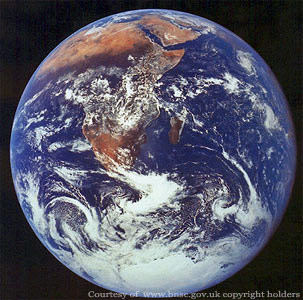
earthI was consumed with a great yearning when I heard last week, amidst all the sturm und drang of the Boston Marathon bombing and manhunt, that a twin sister of our lovely Earth had been discovered on the other side of the cosmos.

She is so far away—1,200 light years—that it is very unlikely any earthlings will ever visit her.  Not unless we can figure out how to bend time and space, like the tesseract imagined by Madeleine L’Engle in A Wrinkle in Time.

But just knowing she’s there—and that there may be many more planets like her, like us, out there in the universe—is comforting somehow, as we watch our own Earth being consumed by paroxysms of manmade violence and natural destruction.

It has been hard to focus on Earth Day 2013 with all the crazy human disasters going on.

But as the sun rises this morning on yet another day on Earth, I want to salute our battered, beautiful planet, our ever-giving Mother who asks nothing in return from her children, other than that they fulfill their own destinies.

It remains to be seen whether human beings—particularly of the male variety—can overcome our tendency to aggression and change the course of our destiny from its current suicidal path.

We are smart enough to know what is going wrong with our relationship to our Mother Earth, and we also know how to fix it.

Can we summon the moral imperative and the will to stop the violence, stabilize the climate, control our population growth, and enter a peaceful, prosperous New Age on Earth?

I wonder how the inhabitants of Earth’s distant sister have managed.  Perhaps if there are highly evolved inhabitants there they are even smarter than humans.  Perhaps they never fell from their Garden of Eden.

How much easier it is to do things right the first time, rather than deal with the mess of making them right again after catastrophe.

On this Earth Day, we must look disaster in the eye, and vow to overcome it.  Our Mother deserves no less.

IMG_1974 copy

Learning from mass murder: we must pay attention to our young men

If this past week had been written up as a movie script, I would have rejected it as totally over-the-top, beyond belief.

Two young Chechen immigrants successfully wreak mayhem and turn a city upside down with their improvised explosive devices, in the very same week that the U.S. Senate Republicans successfully beat back a bill designed to stiffen background checks for gun purchases.

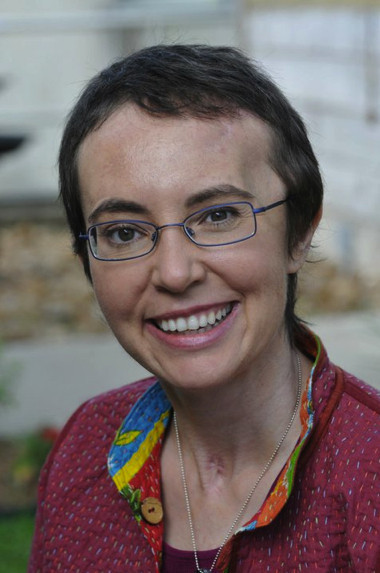
Gabrielle Giffords

Gabrielle Giffords

The beautiful, brave Gabrielle Giffords publishes an impassioned piece in The New York Times, condemning the cowardly Senators who put the interests of the National Rifle Association over and above the interests of the American people.

Meanwhile, down in Texas, an explosion in a chemical fertilizer factory flattened a whole neighborhood, killing at least 15 people and injuring more than 200.  The cause of the blast is still unknown.

And the whole middle section of the country was inundated by heavy rains, storms and severe floods.

Fire, air, earth and water, all the elements seem to be drawn into an intensified dance these days, speeded up along with the 24-hour news cycle.

As the bizarre manhunt for the two Chechen bombers unfolded, and the whole country went into virtual “lockdown” in sympathy with the people of Boston and eastern Massachusetts, it felt like we were suddenly waking up to find ourselves in Baghdad.  Things like that don’t happen here.

Until they do.

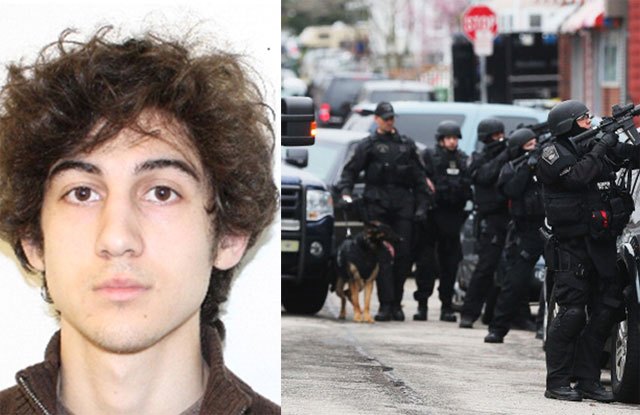
boston-bomber-suspect-dzhokhar-tsarnaev I don’t have TV in the house, so I got most of my information on the situation in Boston from print media and radio.  But even the few pictures I saw were enough to convey the sense that the official response to these boys’ stupid act of random violence was hugely disproportionate.

Against a lone 19-year-old kid, thousands of law enforcement officers of every stripe were deployed, in full riot gear, toting rifles, traveling around the deserted streets in armored vehicles.

The kid was presumed to be “extremely dangerous.”

How dangerous could one kid be?

I understand that the concern was that he might have had a bomb or a suicide vest that he could detonate at the very end.

But that is not the way the story went.  In the end, he came out with his hands up, just one stupid, confused kid who surrendered to the police without a peep.

His life is over.

Ours will go on.

In the wake of this latest act of violence within our own borders, we need to take a good hard look at the role of the U.S. as a fomenter of violence, both at home and abroad.

Unknown-1 Not only is the U.S. the largest exporter of arms and weaponry in the world, but we are also the biggest developer of violent video games worldwide, the ones I am betting those Chechen boys loved to play.

Why should we expect that we can promote violence by all kinds of channels, and remain immune to it within our own borders?

What goes around comes around.

If we were serious about wanting peace and security, we would start by radically shifting our focus from creating implements of destruction—be they chemical fertilizers, assault weapons or games that encourage violence—to waging peace.

Waging peace—what would that look like?

One of the most urgent tasks is to change the way young men are socialized.

Let us not for a moment forget that every single act of mass violence that has taken place here in the U.S.—every single mass shooting, every single bombing—has been the work of young men.

Young men are do-ers.  They have heroic dreams—and in Western culture, it’s the young men who can slay the dragon or vanquish the ogre who are considered heroic.

We can honor and nourish that warrior spirit in our young men in ways that celebrate heroes who use their strength and talents productively, to safeguard ordinary people.

I suspect that Dzhokhar Tsarnaev is someone who would have made an excellent warrior for good.  He was obviously smart, resourceful and could handle himself well under great pressure.

For reasons as yet unknown, he–like Newtown gunman Adam Lanza, Norway gunman Anders Breivik, Aurora, Colorado gunman James Holmes and so many other young men whose names stand for infamous mass murders—chose to walk on the dark side.

We need to be paying attention to the accelerating rate of these crimes.  They are a sign of the dark times we are living through.

Those of us who believe in peace must recommit ourselves to raising our own internal lights higher, beacons for others to rally around.  Those of us who have the great responsibility of raising the next generation of young men—parents, teachers, employers, mentors—must recognize the tremendous importance of our task.

In the past thirty years, there has been a great deal of attention paid to rethinking the way we socialize young women.  This is definitely essential work.  But we forget about our young men at our own peril.

Intentional communities for the 21st century

Most of us today are living in in houses, villages or cities built in and for an earlier time.  Having become more resigned, in recent months, to the inevitability of climate change, with its attendant disruptions of life as we have known it, I am also now more aware of how essential it is that we begin to adapt if we wish to survive the coming cataclysms.

And that is a big IF.

I am not entirely sure that I have the will to survive, if surviving means living in deprivation with the constant threat of violence, as so many science fiction visions of our future have presaged.

That is why I have lately become so fascinated with questions of the hereafter, trying to peer beyond the transition of life into death, to see whether it might be true that some spiritual essence of us might persist beyond the loss of our physical body.

That remains an unanswered question for me, and for that reason it is still hard for me to go easily into the night of death.  Although I don’t want to live through the hard times that will come with climate change, I do have a desire, which grows stronger by the day, to do what I can to prepare for what is coming.

What does this mean, in a practical sense?

It means that I am thinking seriously about trying to connect with kindred spirits with whom to build a resilient community that is designed to meet the challenges of what will become our reality as the 21st century moves forward.

I should admit that I have always been leery of intentional communities, and my limited experience with them has not been very positive.

I was a member of a Waldorf educational community, as a parent, for more than a decade, and that chapter of my life ended badly—I had to pull my son out mid-stream, at the end of fifth grade, because his teacher was making him (and other classmates) miserable, and the school provided absolutely no framework for setting this bad situation right.  As parents, we were told to suck it up or leave, and many of us left.

Today, in my home here in the Berkshire mountains of western Massachusetts, I am a member of various communities, but none with whom I have developed the deep shared bonds of purpose and passion that I imagine would be necessary for a successful intentional community of the kind I am beginning to dimly envision.

What am I looking for?

IFIn some ways, it starts with dwelling.  We need to begin to dwell on the Earth in a sustainable way.  To do this right means we need to change the form of the houses we construct, the energy we siphon from planet and Sun, and the way we produce the food we consume.

The intentional community I imagine will have small, low-energy buildings set harmoniously into the landscape.  Energy will be supplied by geothermal, solar and wind or water, depending on the setting.  As much as possible of the community’s needs will be satisfied locally, using permaculture techniques and the cultivation of fruit and nut trees adapted to the environment.  I imagine chickens, goats, sheep and cows kept mainly for their milk products, and draft horses to plow and fertilize the fields.

I suppose I am envisioning something like what the Amish have held on to all these years, much to the derision of “modern” Americans.

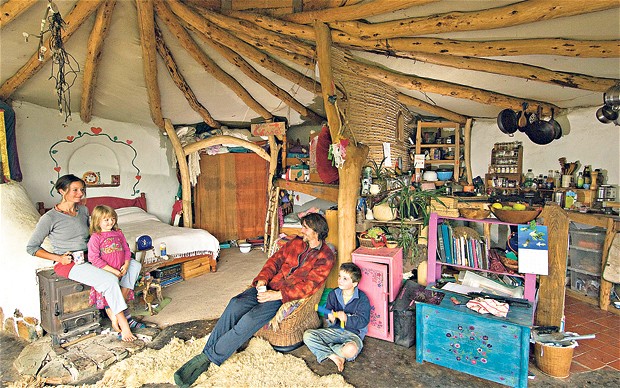
eco-homes-1_1926535b

Might it be possible to adopt the low-tech subsistence model of the Amish (like subsistence farmers worldwide) without necessarily forgoing a) the connectivity of the World Wide Web and b) the freedom of thought and expression encouraged in modern society?

My fear about intentional communities, as they have so far been established, is that they tend to demand strict loyalty and conformism, to such a degree that creativity and growth is suppressed.

I am not willing to give up creative freedom in exchange for material security.

So I am wondering whether it might be possible to form an intentional community based on principles of energy sustainability and a subsistence (as opposed to accumulating or growth) economy, which did not at the same time limit its members creative freedom and growth?

If any models exist, I would appreciate it if readers would point me to them.

OLYMPUS DIGITAL CAMERAOne I have been thinking about recently is the Lammas Community, in Wales, which I especially love for its marvelous hobbit-style homes.  There are eco-villages throughout EuropeFindhorn is probably the best known—but I am less familiar with similar experiments here in the U.S.

Americans, here is our challenge: to create environmentally sustainable eco-villages that are explicitly designed to weather the climate and social shocks of the coming years, while also allowing for the social and creative free thinking that we have come to cherish at the turn of this century.


Can we achieve this?  Do we have time?  Do we have the will?  Can we afford not to?

“Our lives begin to end the day we become silent about things that matter.”

So OK, having slept fitfully and woken up resigned to accepting the basic premise that it is unlikely that the world as I have always known it will continue into the foreseeable future…what then?

How do I spend my one wild and precious life on the planet?

I am quite clear that I want to put my time, talents and energies into doing my best to head off catastrophe for the natural world.

But this often feels like trying to stick my finger in a huge roaring dyke of bad news—how can I, a small and ordinary person, make a difference for the trees and animals and birds and bees that I so want to protect?

All I can say is that making the attempt is better than giving up.

My gift has always been writing, and so I am using that gift to try to reach out to others, in the hope that if many of us, in our small, ordinary lives, can join our voices together, the resulting chorus could indeed change the world.

I am continually amazed at how the technological innovation of the World Wide Web has facilitated the meeting of minds and the catalyzing of movements.  There has never been a better moment for human progress and connected intellectual growth.

I wake up with a new thought, write it down and send it out into the gushing waters of the internet, where, within the hour, it will be read by someone living on the other side of the planet, who will bat it back to me with comments that will cause me to see the idea from a whole new perspective.  All within the space of an hour! How remarkable is that?

But sadly, it is precisely our reliance on and success with technology that is causing our demise, from simple overpopulation to the poisoning of our environment.

This is the challenge of our time: to very quickly learn to adapt to our rapidly changing climate, and to find environmentally sustainable ways to hang on to our positive technological inventions.

I believe it can be done, which is why I am totally invested in the challenge of waking people up and getting them engaged in fighting the good fight to make our epoch, which many call the Anthropocene, a positive transition to a better human relationship with the Earth, rather than a nightmare ending in the dark night of extinction.

If we were to shift our resources from weapons of destruction–guns, bombs and missiles, chemical poisons, and ever-bigger drills, earth-movers and chain saws—to implements of cultivation and the harmless harvesting of the bounty of our natural world, what a huge difference that would make!

People say that over-population will continue no matter what, but I know from years of studying women’s issues worldwide that when women are educated and respected in a society, they have fewer children.

Between fewer children in the developing world, a lower rate of consumption in the developed world, and the invention of new technologies that act in harmony with nature rather than against her, we could transform our planet within a generation or two.

J.R.R. Tolkien’s classic fantasy The Lord of the Rings is looking more and more prophetic, and it’s surely no accident that the films have come out now, to appeal to the current generation of young people.

We are the ones who must enter the fight to hold off the dark forces of Mordor, in order to preserve the happy, healthy lives in the Shire that all humans are meant to live.

tumblr_m9hm5vDG2h1qzhkvho1_500Today is the anniversary of Dr. Martin Luther King Jr.’s assassination, and I invoke his memory to remind us that although it is true that by ourselves each one of us is puny and limited, it is also true that if we pool our resources and act together we have tremendous power.

We must each start by determining what gifts we can bring to the table of this new movement, and then start where we are, doing what we can, and sharing our insights and passions by all the channels of communication that are open to us, from talking face to face with friends and neighbors to sending our ideas out into the World Wide Web.

Now is the time, and we are the ones we’ve been waiting for.

I will close with two quotes from Dr. King:

“Our lives begin to end the day we become silent about things that matter.”

“If you can’t fly then run, if you can’t run then walk, if you can’t walk then crawl, but whatever you do you have to keep moving forward.”

Amen, brother.

Confronting taboos: death and the afterlife, American-style

It is one of those unspoken social contracts that Americans won’t say anything to each other that might indicate any doubt that life as we know it will continue.

If you dare to bring up the subject of climate change, with its attendant erratic weather, major storms, sea-level rises, wildfires and crop losses, people roll their eyes and change the subject.

If you voice any doubt that the economy—local, national and global—will recover, you are dismissed as a negative Pollyanna, and again, the subject is changed.

If you were, just hypothetically, to express the opinion that our increasing reliance on digital technology might have the quality of an unhealthy addiction, and to worry aloud at the effect that all that unrelenting screen time is having on the current generation of tiny tots, you are dismissed as a raving Luddite.

Nobody talks about the fact that both of our political parties are thoroughly corrupt, and our Supreme Court even more so.

No one mentions the disappointment so many of us feel with President Obama, who has proven himself incapable of effectively standing up to Beltway politics—if indeed that was ever his goal.

We are living through a massive period of collective denial of social and physical reality, with no exit in sight from the crazy funhouse we inhabit, with its motto, “Everything is going to be OK” blazoned on every door.

It’s about time we accepted the fact that everything is not going to be OK.

Not by a long shot.

I have been a little bit quieter than usual this past month, with my attention turned to the Berkshire Festival of Women Writers, but I have been paying attention nonetheless to what’s going on in the world.

The elephants of Africa are under siege and conservationists are now using the E-word to describe their future.

American bees are dying off at record rates due to pesticide poisoning, which is now not only killing the adults, but also the larva of the bee colonies.

The ice at the poles continues to melt at an accelerated rate, while down in Australia it was by far the hottest summer on record.

Just this week, record rainfall brought flooding to Argentina that killed scores of people.

There will be no escape from the severe weather that our degenerating climate system will wreak upon all of us.

As retiring climate scientist James Hansen has testified over and over, we are already at the tipping point from which there will be no return to what was “normal” for the past 10,000 years.

I totally understand the impetus to denial, because really, what can any of us do about all this?

What should we be doing?

Marching on Washington DC?  Setting up survivalist camps in the wilderness?  Sabotaging pipelines and coal-fired power plants?  Buying hybrid vehicles and solar panels?

Damned if I know.

I am on a list-serve that broadcasts a newsletter written by Alex Kochkin, who focuses more on the spiritual side of our current crisis on Earth.  Kochkin insists that we should not be wasting time worrying about the physical issues here on the planet, but instead should be focusing our attention on getting ready for our transition into the spiritual realm—in other words, for death.

Kochkin predicts that there will be a massive die-off of humanity in the coming years, but he casts this in positive terms, as a necessary cleansing that will enable the Earth to reboot and start on yet another spiritual and evolutionary journey.

Believing firmly in a nonphysical afterlife, he is unafraid of death.

This is so counter-cultural that it gives me pause.

Unafraid of death?  Really?

Our culture is so fixated on avoiding death at all costs that it is hard to wrench my mind around to another way of seeing things.

11857232-life-after-death-religious-concept-illustrationWhat if death were just a transition to another (non-physical) stage of existence?

What if it were in fact the best thing that could happen to our planet if the majority of human beings transitioned out of physical existence?

What if the tenacity with which we Americans hold on to our lives was entirely misplaced?

What if instead of focusing all of our technical and intellectual know-how on physical survival, we began to focus on learning more about the non-physical realms that we have so far relegated to the backward precincts of religion, New Age quackery, and woo-woo tales of near-death experiences?

There is a noticeable trend in popular culture reflecting an uptick in interest in explorations of the spiritual/non-physical dimensions.  From Harry Potter to Twilight and beyond, we have a fascination with stories that can take us beyond the bounds of ordinary physical reality.

So strong is the cultural taboo on discussing this seriously that it is hard for me to push the “publish” button and let this blog post out in the world.

But another part of me rebels and is just done with listening to the soothing murmur of the mainstream: don’t worry, dear, everything is going to be OK….

No, everything is not going to be OK.  Just like the elephants and the bees and the polar bears, human beings are going to face a massive die-off due to the changes in our climate system, and soon.

It is that, above all else, that we should be preparing ourselves for.  How? I am not sure.  But one thing is certain: insisting that all will be well, despite all the evidence to the contrary, is just silly and delusional.

It’s time to wake up.

The Alchemy of Privilege

Nancy Slonim Aronie

Nancy Slonim Aronie

At the Berkshire Festival of Women Writers last night, Nancy Slonim Aronie, author of Writing from the Heart: Tapping into the Power of Your Inner Voice, declared that every powerful writer must be an alchemist: “every writer must turn shit into gold.”

She told the story of the life and death of her angry, terminally ill son, Dan, as an example of how the bad stuff that happens to you can be turned into gold—in her case, a documentary film about her son, whose death, she says, taught her so much about life.

Aronie said that the video editor working with her on the movie decided at one point to cut out a scene where Dan’s girlfriend struggles with his urine bag, which had gotten snagged on a bedpost.

“No!” she roared.  “Don’t cut out the urine bag!  Don’t try to protect us from the tough stuff!  Go ahead and make us uncomfortable!  That’s the stuff we most need to hear and learn from.”

She led a short writing exercise, in which she told the group to “start with your brain, drop into your heart, then your gut, and let it out onto the page.”  Writing from your brain alone, she said, will not get you into the zone of authentic, powerful expression that every writer seeks.

She gave us the starting prompt: “Dinner at our house was…” and told us to go back to our childhood dinner table.

When people stood up to read their pieces afterwards, I was astonished how most of them reported dinner tables that were frightening and painful.  One woman remembered how no one listened to her at the dinner table, leading to a lifetime of wondering whether she had anything valuable to say.  Another wrote about how she couldn’t wait for dinner to be over so she could get away from her threatening, angry father.

Nancy Aronie applauded them all, and kept insisting that powerful writing needs to write out of that “core wound.”

But what if you don’t have a core wound?

What if you grew up in a happy, peaceful household, with kind, productive, harmonious parents who did not wound you in any way?

Can your writing still be powerful?

In the memoir that I am working on, I recognize that I had an almost magically privileged childhood.  No, it wasn’t perfect, but it was pretty damned good, and my good fortune continued well into my adulthood.  I sum it up in the memoir by describing the feeling I got in my twenties, when I was working as a journalist in Manhattan, of a “red carpet rolling out in front of me wherever I went.”

It didn’t last forever, of course, but it is that early experience of privilege that I am interrogating in my book, not just in my own personal experience, but also in our general culture as Americans in my lifespan of the past 50 years.

For all the bumps in the road we’ve had, we have still been extraordinarily privileged and comfortable as Americans, relative to so many of the other billions on the planet.  While we’ve been riding around in our air-conditioned Cadillacs, figuratively speaking at least, so many others have been living and dying precariously on the garbage heaps and slums, the brothels and the prisons of tough, violent cities.

As a scholar of comparative literature, I’ve made a career of studying texts by women from all over the world that tell stories of suffering and oppression in order shine a light in dark corners, raise awareness among the more privileged, and act as catalysts for political action and positive change.

In introducing these stories to generations of students, and editing the related anthologies that have made their way out into the world, I have felt myself to be working on the side of justice, doing my small part to help make things right.

Now, in my memoir, I want to shine the light in a different direction: back at myself, as someone who grew up in privilege yet did not become inured and deaf to the suffering cries of others.

I am certainly not alone. I believe that most people of privilege do have a social conscience; do care about how the other half live; and are willing to be part of a movement for positive change if they can see a clear, trustworthy channel through which to pour their energies.

The “shit” that I need to alchemize in my memoir is precisely the lovely bubble of privilege itself, which protected me–and others who grew up like me–from setting foot outside of our comfort zones.

We enjoyed ourselves poolside and planned our next vacation; got married and had children; bought houses and cars and ever-faster computers and gadgets; and had no clue at all how our lifestyles were contributing to the accelerating disaster of global heating and climate change.

In my case, the “shit” I need to write about is as squeaky clean and wide-eyed as my own innocence as a young woman seeing Third World poverty for the first time and having no clue, none at all, of the role of my country in creating and sustaining it.

That cluelessness seems to be the “core wound” that I have to interrogate in my memoir, recognizing how very comfortable it has been to be so protected, and yet how destructive it has been too, as generations of elite young people like me have been raised to take our place in established social frameworks without questioning the underpinnings of social and environmental injustice on which we stand.

It is not easy to call out your tribe, to criticize a way of life that has been so easy and sweet. I have only gratitude for the gentle, loving upbringing my parents gave me, and the support they provided that made it possible for me to step out into the world on a strong footing. I am not being glib when I say that everyone should be so lucky.

It’s the bigger picture that I am questioning: how all of us privileged Americans, without realizing it, have contributed to the twin crises of social inequality and environmental holocaust that we now must face today.

It’s not about casting blame; it’s about accepting responsibility and putting our shoulders to the wheel of the enormous task of making things right again on our planet.

That is the alchemy I seek as a writer in these dark transition times.

Becoming part of Gaia’s cure, instead of what ails her

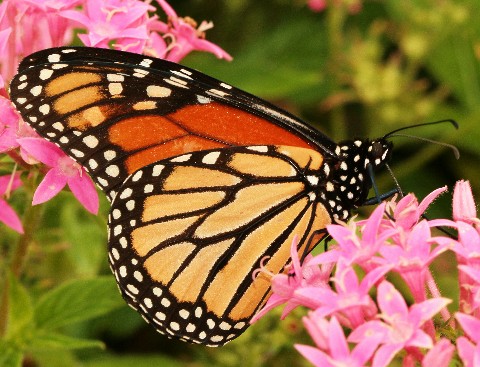
Milkweed-with-Monarch-ButterflyI will never forget one hot summer day when I was about eight years old, and a Monarch butterfly took it into its head to land on my arm and delicately lick up my sweat with its long, probing tongue.

I froze, wanting the Monarch to stay with me as long as possible, and watched with total fascination and delight as it balanced on my warm brown skin and enjoyed the salty treat I had to offer.

Eventually, with a graceful swish of its elegant wings, it rose up in the air and twirled off to land on a nearby stand of sweet-smelling pink milkweed flowers.

I felt blessed by the encounter, and ever after, when I see a Monarch I approach cautiously and respectfully proffer my arm, hoping to feel again the light touch of those fragile black legs and tiny tongue.

My childhood connection with Monarchs came to mind this week as I read the deeply disturbing news that “the number of monarch butterflies that completed an annual migration to their winter home in a Mexican forest sank this year to its lowest level in at least two decades, due mostly to extreme weather and changed farming practices in North America.”

Mexican conservation authorities report that “The area of forest occupied by the butterflies, once as high at 50 acres, dwindled to 2.94 acres in the annual census conducted in December,” which is “a 59 percent decline from the 7.14 acres of butterflies measured in December 2011.”

So now, along with the bats and the goldfinches and so many other species that I have known and loved in my 50 years on the planet, I must bid farewell to the Monarch butterflies too?

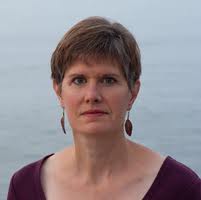
Carolyn Baker

Carolyn Baker

Trying to find a way to cope with the pervasive sense of grief I feel on a daily basis, I turned this week to the works of Carolyn Baker, who has self-published two books that have been striking a chord with thousands of people.

In 2009, she published Sacred Demise: Walking the Spiritual Path of Industrial Civilization’s Collapse, followed in 2011 by Navigating the Coming Chaos: A Handbook for Inner Transition.

Baker comes out of a psychology background, having served as a consulting psychotherapist for many years, but she draws on a wide range of sources that I too have been poring over in recent years, from Joanna Macy to Derrick Jensen to James Lovelock and many more.  Andrew Harvey, author of two books on “spiritual activism,” wrote the forward to her second book.

What all these folks have in common is the strong, level-headed recognition that human civilization is headed for a collapse.

The butterflies and the bats may be going first into the void, but we will not be far behind.

The current noise and controversy over questions like “to frack or not to frack,” “to build wind turbine generators or deep-sea oil rigs in the Arctic,” or “to erect solar arrays or thousand-mile oil pipelines” are just that—so much noise, which obscures our ability to focus on what is driving the debate on all these issues: the fact that our planet cannot and will not support 7 billion people at current levels of consumption.

James Lovelock

James Lovelock

The eminent eco-scientist James Lovelock, who, with Lynne Margulis, developed the theory of Earth as a complex living system he calls Gaia, has just published what may be his final book (he was born in 1919, making him now just seven years short of 100 years old).

Grimly titled The Vanishing Face of Gaia, Lovelock sadly predicts that global heating will force the die-off of much of humanity, and a retreat of the survivors to “lifeboat” places on the planet that will remain habitable on a subsistence basis for those able to live close to the land.

Lovelock uses the metaphor of disease to describe what is happening to our planet these days.  This passage is worth quoting in full:

“When we are first infected by fatal disease organisms, they grow in our bodies without our noticing.  We call this the incubation period, and it can be as long as several weeks.  Then at some stage in their growth, or in our bodily reaction to it, we feel unwell, with fever and pain.  Soon, a matter of hours with the most virulent influenza, homeostasis starts to fail and we collapse and die.  This is when physicians speak of massive organ failure.  In the whole course of fatal disease there is no tipping point but instead a downslide that starts imperceptibly and then grows ever steeper until we fall.

“We became the Earth’s infection a long and uncertain time ago when we first used fire and tools purposefully.  But it was not until about two hundred years ago that the long incubation period ended and the Industrial Revolution began; then the infection of the Earth became irreversible….

“The disease that afflicts the Earth is not just climate change—manifest by drought, heat, and an ever-rising sea.  Added to this there is the changing chemistry of the air and the oceans, and the way the sea grows acidic.  Then there is the shortage of food for all consumers of the animal kingdom.  As important is the loss of that vital biodiversity that enables the working of an ecosystem.  All these affect the working of the Earth’s operating system and are the consequences of too many people.  Individuals occasionally suffer a disease called polycythanemia, an overpopulation of red blood cells.  By analogy, Gaia’s illness could be called polyanthroponemia, where humans overpopulate until they do more harm than good” (232-33).

Lovelock sees the demise of the current terrestrial epoch as inevitable.  But he also reminds us that Gaia is a tough old planet, who has survived many other total collapses of biodiversity in her past.  “After every one of these catastrophes Gaia recovered, taking her own time—sometimes as long as millions of years,” Lovelock says.  “During these periods of convalescence there was always somewhere on Earth a refuge for living organisms, a place where the climate and the chemistry still favored life.  And so it surely will be when polyanthroponemia resolves” (235).

Lovelock faults our human tribalism and the selfish, competitive shortsightedness of a predator species for our current predicament, quoting the biologist E.O. Wilson, who said towards the end of his life, “How unfortunate that the Earth’s first intelligent social animal is a tribal carnivore” (239).

This is “our agonizing condition,” Lovelock says; “we have the intelligence to begin to expand our minds to understand life, the universe and ourselves; we can communicate and exchange our deep thoughts and keep them outside our minds as a permanent record.  We have all this but are quite unable to live with one another or with our living planet.  Our inherited urge to be fruitful and multiply and to ensure that our own tribe rules the Earth thwarts our best intentions” (240).

Lovelock ends his book by looking ahead to a mythical time in the future, when the survivors of the collapse of human civilization “evolve to become as beneficial a part of Gaia as were the photosynthesizers and the methanogens,” who “might serve within her as our brains do in each of us.  We would be an important part of what had become in effect an intelligent planet better able to sustain habitability” (248).

It is our duty, he says, as human beings living through these great Transition Times to ensure that enough of us survive to pass on our genes to the future, in the hopes that future iterations of human beings will overcome our tribalism and selfishness and put our remarkable creative intelligence to work for the good of the planet and all her denizens.

The question becomes then, what should we be doing now to prepare for the future that awaits?

This is where Carolyn Baker’s work becomes so important.  Navigating the Coming Chaos is nothing less than a workbook for inner and outer transition where the focus is on strengthening one’s resilience and connection with a sense of purpose and meaning in a world gone increasingly mad.

“I am not a survivalist,” Baker says.  “I have never believed that the prime objective in preparing for the Long Emergency is to remain alive.  None of us is enthusiastic about death, but we will all die.  To deny this fact and focus primarily on survival is to embrace the heroic perspective and, in my opinion, to miss the point….

“I believe that navigating a collapsing world will entail constant observation of various forms of death—the death of infrastructure, the death of abundance, the increasing absence of goods and services that we now take for granted, the death of institutions, the disappearance of employment and shelter, the increased scarcity of food and water, the death of landscapes and yes, the literal deaths of people and animals.  The collapse of industrial civilization and the lifestyle it has provided is a catastrophic death of a paradigm and a way of life.  While we may look ahead to the ultimate blessings unleashed by this death, it will nevertheless be traumatic to live through the magnitude of losses it will manifest.

“If, however, we can begin now to make friends with death, as the Buddhist tradition has taught for thousands of years, we may be better prepared emotionally and spiritually to navigate a civilization dying on myriad levels….

“Simply put, the essential question is not: How can I survive the collapse of industrial civilization?  But rather: Why am I here, right now, in this place, at this time, experiencing the end of the world as I and my species have known it? (166).

Much of Baker’s book, like Starhawk’s most recent book The Empowerment Manual, is dedicated to prompting self-reflection leading to the recognition of what we are here on this Earth to do—and how we can successfully work with other awakened humans to accomplish our purpose.

The biggest challenge seems to be how to learn to work together harmoniously with each other and with the other living elements of our planetary home.

Gaia callingFor me, it seems clear that what I need to be doing now is to rekindle the instinctive sense of kinship I had with the natural world as a little girl; to find ways to become a channel for the love I felt, and still feel, for the gaudy Monarch butterflies who sailed regally through the fields of my childhood.

Sooner or later I will be following them into oblivion. But let it not be before I’ve had a chance to do my utmost to wake up my fellow travelers on this planet to the state of emergency we now face, and to help create the community structures that will enable at least a critical few of us to survive into the distant future.