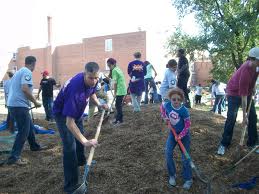
Love Letter to Great Barrington MA

Just this morning in the shower, I was mulling over what I would like to write about for my submission to this year’s Made in the Berkshires Festival, and it came to me that I want to write a kind of love letter to Great Barrington, the dear little town that I call home.

What a surprise to get to my media studies class today and learn from my students that dear little Great Barrington was just named the number one small town in America by no less than Smithsonian Magazine!
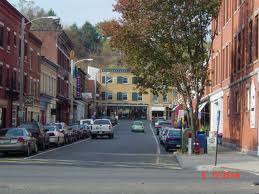
Railroad Street, Great Barrington MA

In justifying their choice, Smithsonian writers Susan Spano and Aviva Shen cite the town’s hip cultural scene, its local foodie economy, complete with CSAs and farmers’ markets, denizens of note like W.E.B. DuBois, Arlo Guthrie and Alan Chartock, and the fact that we have our own printed currency, the BerkShare.

Even my own alma mater and current employer, Bard College at Simon’s Rock, gets a mention!  We are, after all, the first and still the only residential four-year college dedicated exclusively to highly motivated students who choose to leave high school early, after 10th or 11th grade, to begin their undergraduate studies.

In my dreamy early-morning shower reflections, I was thinking about celebrating other aspects of Great Barrington.

For instance, the incredible camaraderie of the cultural community here, especially, in my experience, the community of women artists.
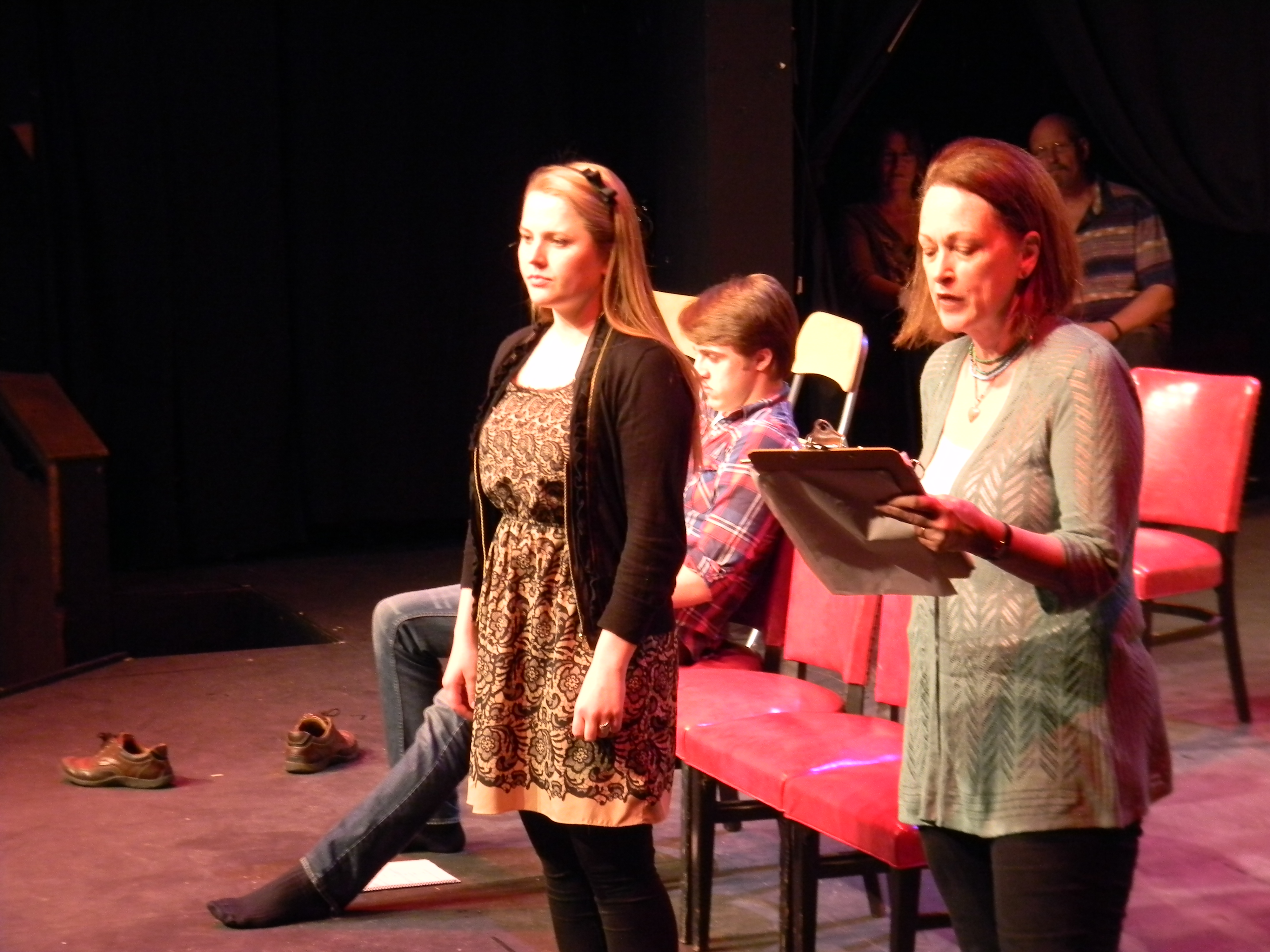
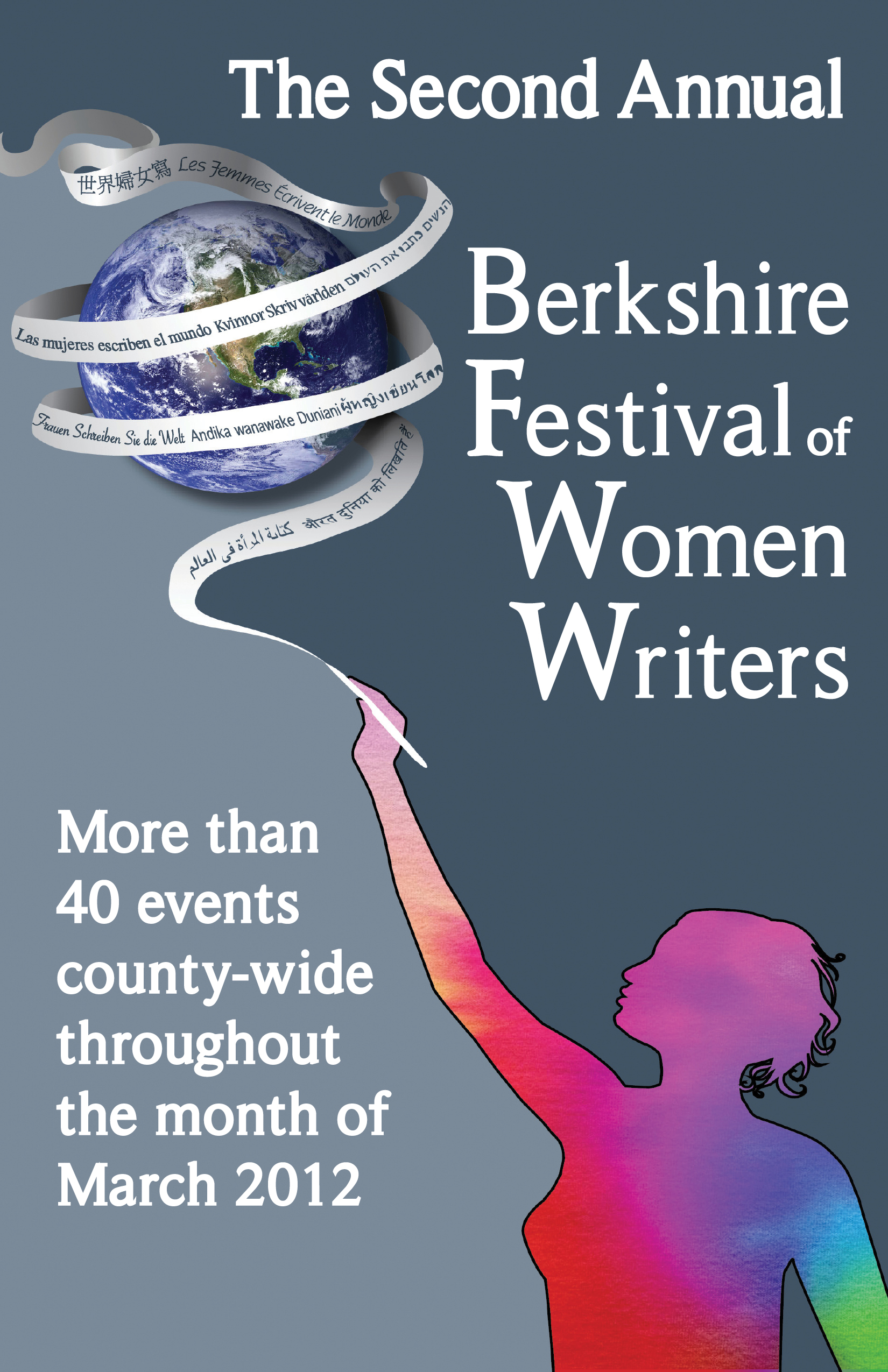
Berkshire Festival of Women Writers special presentation of Made in the Berkshires, co-curated by Hilary Somers Deely and Barbara Sims

I have led, participated in and witnessed so many outstanding cultural events here in the Berkshires, many of them centered in Great Barrington, where artists, writers and other creative types have collaborated with such grace and panache, with such incredible generosity and unusual willingness to leave their own personal ego at home.

This doesn’t happen everywhere.  In fact, I’d venture to guess it’s pretty rare.

For instance, almost everyone who participated in this year’s Second Annual Berkshire Festival of Women Writers did so pro bono, offering free events at which they shared their passions and talents with all comers.

As one of nearly 100 women who gave a Festival workshop for free, I can tell you that there is tremendous satisfaction to be gained from simply sharing one’s talents and knowledge with an appreciative, receptive audience, without expecting financial reward.

That spirit of generosity is one of the many reasons I love living in Great Barrington.

The Smithsonian article also failed to mention a few other aspects of Great Barrington that I really love.

One: having town leaders, our elected Select Board, who are vibrant creative folks in their own right.  Check out Selectperson Alana Chernila, who just published a wonderful cookbook, or Selectperson Andrew Blechman, editor at our homegrown national environmental publication Orion Magazine, or Selectperson Sean Stanton, part of an extraordinary local family of sustainable farmers and foodie entrepreneurs—and you will see what I mean.

Atop Monument Mountain

Two: the wonderful natural resources at our doorstep in Great Barrington.  The Housatonic River winds through the town, and polluted with PCBs as it may be (thank you General Electric), the Housatonic is still visually beautiful and a lovely, peaceful river to walk beside on our very own Riverwalk.  The town is shadowed by East Mountain, the north side of which houses our ski area, Butternut Basin.  On the north side we are bounded by Monument Mountain, a steep, wooded reserve that got its name from the Mohicans who used to live here, who left their signature on the mountain in piles of stones.  All over town there are beautiful places to walk, hike and meditate.  This kind of open space is quickly vanishing in so much of our country, and should not be taken for granted.

Three: Having a community that truly cares about its young people, and its disadvantaged folks.  The support for wonderful local organizations like Railroad Street Youth ProjectCommunity Access to the Arts, and Volunteers in Medicine is truly heartwarming.  We also have a lively Senior Center, and a weekly Occupy Great Barrington protest and meet-up.  A town that doesn’t forget its kids, its old folks, its most vulnerable citizens and its radical fringe is the kind of town I want to live in.

And not only that, but we have our very own community radio station, WBCR-LP, 97.7 FM, where anyone who makes the effort to get the requisite training can become an autonomous radio broadcaster, subject only to FCC regulations as to what they can or cannot announce.  This year I started a new Citizen Journalism Project, seeking to get local teens involved in producing news for the radio–and it’s been a great success.  We also still have a homegrown local weekly newspaper in Great Barrington, the Berkshire Record–which is pretty rare in the US, as more and more local newspapers are swallowed up by big media clones.

The Smithsonian Magazine description of Great Barrington was right on target, but there is also so much more that goes into being part of a truly outstanding small town.

I will write a longer love letter to Great Barrington in the future, but for today, let me just end with a big smacking kiss.  GB, I am proud to call you home.
Give mothers the respect–and the financial compensation–they deserve

Hilary Rosen

It truly is disheartening to hear a supposedly progressive woman proclaim that a fulltime mother “never worked a day in her life.” Democratic strategist Hilary Rosen deserves all the flack she’s been getting since she made that statement yesterday on national media.

On the other hand, it’s also disheartening to see how the male-dominated Democratic and Republican campaigns have wasted no time in turning Motherhood into a political football.

The truth is that American motherhood has never been more demanding, or more complicated.

Romney married a rich man and settled in to raise five sons. She had the enormous privilege of not also having the responsibility of earning money to put food on the table.

Today there are fewer and fewer women who can afford to stay at home as fulltime moms, especially if they have big families.

More kids mean more housework—but also mean more mouths to feed, shoes to buy, college tuitions to pay for.

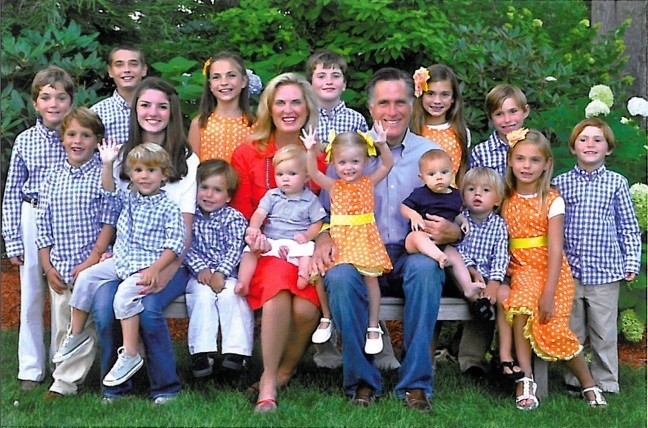
Mitt and Ann Romney with their 16 grandchildren

As part of the 1%, Ann Romney got to choose to stay home with her children.  For the rest of us, this is just not an option.

Especially the many of us who are single moms, or whose husbands have been out of work for months and years.

But the firestorm over Hilary Rosen’s miscalculated remark speaks to an even deeper issue that remains unaddressed in our society.

Mothers still do more housework and child care than fathers.  Housework and childcare still remains not only unpaid labor, but labor that is not recognized as having any monetary value in our very commercially oriented society.

A recent NY Times article interviewed some nannies who work for the 1%, whose labor is valued in the high six figures.

But the labor of a mother who stays home is not even deemed worthy of accruing social security.

At minimum, all mothers, whether they stay at home fulltime or struggle doing the second shift at home after the day job, should be entitled to accrue social security and expect some retirement compensation from the nation in their old age.

At minimum, all mothers should have the right to subsidized maternal health care.

At minimum, in a rich country like ours, no mother should have to worry about whether her children are going to have enough to eat.

Instead, our country is going in the opposite direction.

We are making it harder and harder for mothers to qualify for welfare assistance.  We are cutting back on public education, and failing to create incentives for doctors to work in public health clinics.

And many, many states are actively working to curb women’s access to contraception, while at the same time demonizing abortion.

So what’s a poor woman to do?

The media controversy over the non-issue of whether Ann Romney’s “work” as a fulltime mother qualifies as such is entirely misplaced.

What we need to get worked up about are the circumstances of the millions of American mothers who work hard, both in and out of the home, without the household help that the Romneys undoubtedly enjoyed, and who are not fairly compensated or recognized for their efforts.

It may sound corny, but it’s true: without the hard work of mothers to bear and care for children, our great nation would simply cease to be.

We need to cut the political chicanery and not only give Motherhood the respect it deserves, but put our money where our mouths are, too.

L’Chaim! This spring, let us commit ourselves to Life

Both Passover and Easter “celebrate” truly horrendous acts committed by men against men.

Passover commemorates how the Jews were spared by the grace of God from the Pharaoh’s evil plan to kill all first-born sons.  Easter celebrates the Resurrection of Christ after he was brutally martyred on the cross—a not-uncommon practice at the time.

Of course, both the Christian and the Jewish holidays also build on the much earlier pagan rites of Spring, the welcoming of warmth and rebirth after a season of winter.

I have to wonder why dominant human civilization has moved away from the earlier, simpler pagan celebrations, keyed to the natural world rather than to human doings and misdeeds.

Both Passover and Easter celebrate life—the lives of Jewish children, the miraculous resurrection of Christ, who gave his life in sacrifice for humanity.  Hence all the eggs, chicks and bunnies that populate the secular reinterpretations of these holidays, especially the American secular Easter.

Life is indeed something to be celebrated, as the Jewish cheer “L’Chaim!” proclaims.

Celebrated and protected.

As we move forward into the 21st century, into the auspicious year of 2012, let our aim be to reconnect with our prehistoric roots, to the simpler ages when we instinctively celebrated the return of the Light, the annual swing of our planet back towards the Sun.

For much too long, we have allowed religious politics to push us into conflicts and cruelties that do not serve the purpose of Life.  In claiming to worship the Divine, we actually find ourselves serving the dark side, the side of Death and Destruction.

I use these capital letters advisedly, to emphasize the symbolism inherent in all these word-concepts.

Beyond the symbolic realm there is the literal bedrock of reality.  We are hitting up against that reality now, as the patterns of power-hungry conflict, fueled by greed and a willingness to press on with destruction of the living world no matter the cost to systemic ecological health, play out with relentless precision.

This Easter and Passover season, let us do more than just toast to life.  Let us commit ourselves to the service of the divine spark animating our planet, which circulates without distinction through every blade of grass, every insect, and every human being.

It is only in our positive reciprocal commitment to Life that we can consider ourselves truly blessed.


Living on the trigger’s edge

I am always worrying about our vulnerability as individuals living in a contaminated environment, or about the instability of our planetary ecosystem now that global heating is underway.

But one thing I don’t usually worry about is whether my son will be shot and killed on his way to buy candy at the corner store.

This is a mark of my privilege as a white person living in a predominantly white neighborhood in a small, relatively wealthy town in New England.

My sons are in fact half Hispanic—their father is of Mexican heritage—but they “look white.”

It would never have occurred to me, before learning of Trayvon Martin’s recent murder at the hands of a neighborhood vigilante, that one of my kids, coming home from the local convenience store wearing his hoodie up because of the rain, could be accused of robbery and fatally shot by one of my neighbors.

There is so much that is wrong about this scenario that I hardly know where to start.

I deplore the racial profiling that turned an innocent kid into a moving target.  I abhor the despicable behavior of the local police department, which chose to let the killer go free—with his gun!—without even holding an investigation.

But there is a more fundamental issue here that we as a society need to confront.

Why are there so many civilians with guns in our country?

This is at the heart of all the school shootings that have been occurring with alarming regularity in recent years.

It is of deep concern to the millions of victims of domestic violence in our country, who must live in fear of the gun in the drawer.

It is certainly at issue in the Trayvon Martin case, where a young man lost his life because of a trigger-happy “neighborhood watch” patrolman gone bonkers.

It is high time we as a nation stood up to the NRA “right to bear arms” folks and began a serious national conversation about gun violence in our country, and around the world.

***

I spend quite a bit of my professional life teaching and writing about violence that happens in other countries.

When you teach college classes in literature and human rights, you are often reading accounts of genocide, civil war and ethnic cleansing in places like Africa, in Asia, Central and South America, the Middle East.

My students and I regularly read horrifying stories of how civilians are caught in the crossfire between heavily armed warring groups.

One side is usually the state-funded military and police, the other side an oppositional force, labeled “terrorists,” “subversives,” “rebels,” or “freedom fighters” depending on your ideological viewpoint.

In between are the ordinary civilians who are generally just trying to keep their heads down and survive.  Women are especially at risk in these situations: vulnerable to rape themselves, they are often forced to watch their children raped and tortured, their husbands executed.

It’s easy for us to think about this kind of violence as something that only happens far away, and to feel that we here in the U.S. are morally superior and righteous.

Easy, that is, until we stop to consider two important aspects of these faraway conflicts that are almost never discussed in the news media or in college classrooms.

One, in virtually all cases of civil conflict worldwide in the past 50 years, the guns and other weapons have been supplied by U.S. arms manufacturers and dealers, or their European counterparts.

Two, in many cases, the folks on the ground in hot spots like Iraq, Afghanistan, or Congo are fighting proxy wars for First World corporate control of resources. In other words, they’re fighting Wall Street’s wars.

So we here in the U.S., despite our self-righteous sense of moral purity, are in fact deeply implicated in every violent confrontation taking place over there in other parts of the world.

***

What does this have to do with Trayvon Martin?

Let me spell it out.

The same gun manufacturers and dealers who are arming, say, the Syrian Army and the “opposition forces,” or the Ugandan Army and the Kony “rebels,” are also supplying guns to American servicemen like Sergeant Bales, who flipped out and massacred innocent Afghan civilians in their beds last week; to American police officers who regularly appear in the headlines for unwarranted use of lethal force; and to American civilians like George Zimmerman, who shot an unarmed teenager walking home through his own neighborhood—a supposedly safe gated community in Florida.

And this doesn’t even begin to touch on gang violence worldwide, or narco-violence, all of which is carried out at gunpoint.

With so many guns floating around in our society, it is inevitable that innocent people are going to get shot, all the time, every day.

Here in the U.S., and around the world, we need to rethink the heedless way we have given gun manufacturers and dealers such freedom to operate.

Giving anyone and everyone access to a semiautomatic weapon is just asking for violent confrontations among civilians, and between civilians and police.

As a global civilization, we have put too much emphasis for too long on unbridled freedom to create, even when what we are creating leads to destruction and mayhem.

Chemical companies are given a free hand to churn out thousands of new chemicals and put them into the market without sufficient testing for longterm effects on humans and the environment.

Car manufacturers are given a free hand to drive national transportation policy, prioritizing highways over mass transit at great cost to the environment.

Oil and gas companies are allowed to drill ever deeper, their profits pushing our entire political system into a status-quo paralysis just at the time when we need to be vigorously mounting a huge R&D effort in renewable energy sources.

Shooting a kid, bulldozing a rainforest, poisoning an aquifer…these are just differences in degree.

Next time it could be my kid, or yours—at the hands of a crazy civilian, or an enraged policeman.  It could be your tap water catching fire from gas fumes, or a tornado spawned by global heating running amok in your neighborhood.

I’m tired of living under the constant threat of violence.  I say it’s time to hold the gun manufacturers and dealers, the oil and chemical companies, the car manufacturers and all the other agents of destructive technologies accountable, and tell them in no uncertain terms that enough is enough.

Let’s use our prodigious technological capabilities to make our lives better, not to create ever more sophisticated means to take lives away.

Cupid, go home!

It’s fascinating to me that the Transition Times blog post that has gotten the most attention, by far, is “There’s more to love than Cupid and his arrows,” my Valentine’s Day 2012 post, which has been read hundreds of times since February 14.

Of course, people are always interested in love and romance.  And this is a positive, peaceful essay about being very thankful for the love I have in my life through my parents and children, to the point where I’m not missing romantic engagement.

Truly, I’m not.

There has been a spate of articles lately about so-called “singletons,” men and women who choose to remain happily single.

Some of the articles fret that such people may have troubles as they age, since they have no companions to help care for them.  A recent New York Times Room for Debate series, “Being Alone Together,” explored both sides of the issue, with many of the writers arguing that solitude has significant benefits.

I am not living alone; I am living with my two teenage sons at the moment.  I have to say that I do enjoy the rare times when I have the house to myself, and have no one but myself to please.

When I was in my early twenties, before I married, I lived on my own in Greenwich Village while I studied as a graduate student at NYU.  Although I had never felt confined or fettered while I lived with my parents, the freedom of living alone was fantastic, as was the convenience of living so close to the NYU campus and the stimulation of the Village.

But nevertheless, during those years I felt a tremendous pressure to marry, to have children—to paraphrase Mrs. Ramsay in Virginia Woolf’s To the Lighthouse.

Did it come straight from my ovaries?

It wasn’t like my parents were pushing me at all. But I felt a kind of insecurity about being single, like I was lacking or missing something. I was incomplete.

In those days, the 1980s, there was a lot of talk about how if you didn’t find a mate in your twenties or early thirties, you’d be over the hill and never find one.  Believe it or not!  Stories of unhappy women in their forties abounded—women who had never been married, and were totally, miserably fixated on finding the ever-elusive Mr. Right.

Although I was living alone and perfectly content with my life, I still felt like it was temporary, and I’d better be constantly on the look-out for the man who would come along to complete me and open the door to my real adult life, which could only begin with those wedding vows.

Now, on the other side of two decades of marriage and a divorce, I am once again single and enjoying the freedom, this time without that little Cupidlike imp sitting on my shoulder warning me that I’d better focus on love and get myself hitched.

I have young friends getting married now and of course I wish them much happiness and fervently hope that they will be better marriage partners than my ex and I were for each other.

But I have to say, from my current vantage point it seems rather miraculous that one’s chosen mate at age 25 could still be the perfect partner at age 50.  What an amazing feat to grow together so harmoniously that you still complement and satisfy each other after so many years of married life.

I know it happens; I have witnessed it for myself with others.

I just suspect it’s the exception, not the norm.

I have no illusions about finding—or being–such an exceptional partner in the next chapter of my life.

And you know what?  That’s just fine.

Sparking Creativity at the 2012 Berkshire Festival of Women Writers

It’s finally snowing in Massachusetts!  My afternoon meetings were cancelled, and I can settle in by the fire and enjoy the peaceful quiet that always descends when we hunker down under a good New England snowfall.

This gives me a welcome chance to share something positive for a change with my blog readers.

Tomorrow is the opening of the 2012 Berkshire Festival of Women Writers, a month-long celebration of the talents of local and regional women writers, taking place at venues from one end of Berkshire County to the other, with nearly 100 women participating.

I’ve been working over the past year with a dedicated local committee on planning and organizing this event, which is sponsored by Bard College at Simon’s Rock with the generous support of 11 Local Cultural Councils and many other donors, businesses and individuals, all listed on our website under “sponsors.”

This will be our second annual Festival, but it’s an event that grows out of the decade of annual conferences I organized at Bard College at Simon’s Rock in observance of International Women’s Day, co-sponsored by Berkshire Women for Women Worldwide, the Women’s Fund of Western Massachusetts, the Women’s Interfaith Institute and many other collaborators.

I’ve been at this a while.

Organizing events like these takes an extraordinary amount of energy, focus and commitment.  If you’ve ever organized a wedding, you have some idea of what’s involved–although for our conferences and Festivals, we’ve also had to do a fair amount of fundraising, which hopefully is not the case for wedding planners!

There always comes a point in the process where I bury my face in my hands and feel like crying, out of sheer exhaustion, “Why am I doing this to myself?!!”

After all, no one ever asked me to take on this extra commitment, year after year.

And sometimes I wonder whether anyone would notice if I stopped.

But then that low point passes, the brochure or Program comes back from the printers and starts to make its way in the world, the press inquiries pick up and I start hearing the oohs and ahhs of appreciation from participants and audience members, and I remember what it’s all about.

For women writers, in particular, it can be hard to find opportunities to come together and share our talents and achievements with each other and the larger world.

Hannah Fries

This weekend is the big AWP (Association of Writers and Writing Programs) conference in Chicago, and many women writers will be in attendance there, including one of our Festival organizers and participants, Orion Magazine editor Hannah Fries.  But that is a big, competitive event, which can be overwhelming for writers who are just starting out, or who just write for the personal satisfaction of it.

The Berkshire Festival of Women Writers is purposefully low-key and non-competitive.  We organizers wanted to create a broad, inclusive platform for all kinds of women writers, of all ages, backgrounds, and stages in their writing careers.  If you browse the Festival listings, you’ll see a few names you’ll probably recognize, like Francine Prose and Ruth Reichl, but many more whose fresh, innovative voices might not be heard publicly this year without the space provided by our Festival.

I also sometimes ask myself why I continue to focus on women writers in my classes, events organizing and in my own writing.

Lately I have been moving from a longstanding focus on global women’s rights to a broader human rights perspective, still with a strong interest in gendered human rights issues.  Although the goal for any social justice activist is to put herself out of business, it still seems important to me to draw attention to voices who might not otherwise be heard–and the 50% of us who are women are disproportionately represented among those quieter voices.

The participants and audiences who will be gathering at the 40 Festival events scheduled daily throughout the month of March will  together generate a host of collaborative creative sparks that will go shooting out like fireworks, energizing all of us and giving us new strength and determination to meet the challenges of the coming year, whether at our writing desks or in other areas of our lives.

I certainly hope that just as women always turn out to listen to and learn from writers who happen to be men, men will also be among the audiences at all of our Festival events.

In these sobering times, we need all the chances we can get to come together and fan the flames of our community and our creativity.  Let the Festival begin!

There’s More to Love Than Cupid and his Arrows

One of the reasons I was unhappy in the last five years or so of my marriage—which lasted 21 years—was because my husband, who had been so apparently social and outgoing when I fell in love with him, had become taciturn and isolationist.  He scorned Valentine’s Day as a commercial holiday, and considered buying me flowers or taking me out to dinner on February 14 as a distasteful concession to marketing pressure.

While I can’t deny that Valentine’s Day is seized upon as a marketing ploy by all kinds of industries, I also think that it’s wonderful that we take a day of the year to celebrate love.  It doesn’t have to be romantic love between sexual partners, or would-be sexual partners—that’s where I think our American capitalist version of Love Day has taken a wrong turn.

Valentine’s Day should be a time to celebrate love in all its guises.

Today I celebrate the great love I feel for my parents, who gave me life and have always been so thoughtful and unreserved in their nurturing, from the time when I was an infant to right now, as I contemplate my 50th year.   My parents have taught me so much about being loving as a parent—which is not the same thing at all as being permissive or indulgent.

Today I celebrate the love that flows both ways between parents and children.  After my parents, it is my sons who have taught me at every step along the road about what they needed from me as a loving parent.

Sometimes they needed to be enfolded in my arms, and sometimes they needed me to step back and pretend we were strangers, but always they needed that firm, unbreakable assurance that no matter what they did, I would always be there for them.  That is the bottom line love that I learned from my parents, and no doubt they learned from theirs.

Today in my Art of Autobiography class we wrote and talked about the legacies of love that are passed down through generations in a family.  Even though there are other, less positive legacies that are also passed down, I asked the students to focus on the positive, loving side today, in honor of Valentine’s Day, and to think about how each generation gives a loving gift to those who come next.

It may not always be a gift parents or grandparents recognize that they’re giving, because it may come from such a place of automatic second nature.  For instance, I wrote in class about how my father’s family placed such a high value on education, and that is certainly a legacy that I received, put to good use, and am in the process of handing down to my children.

Who knows how long into the past that chain of valuing education goes, or how far into the future it will penetrate as my sons begin to have children of their own?

I come from loving people who have always wanted the best for their children, even if they didn’t always know how to make it happen.  Even the most loving parents don’t always succeed in doing right by our children. For example, my older son will always regret that he did not have a chance to play soccer earlier in his childhood—his father and I did not realize how important that was to him and did not make it happen for him.  But I have no doubt that he will correct that failing when it comes his turn to parent.

Each generation is imprinted by their parents and grandparents, and then goes on to add a few new tricks of their own, often responding to the exigencies of the time or to what they’ve learned in their own process of coming to maturity.

But what runs through, like molten gold at the core of a happy family like mine, is love.  Deep, abiding love, untainted by self-interest or vanity.

This Valentine’s Day, I celebrate family love.  Maybe another year I’ll be beckoning to Cupid and his arrows, but right now that bright red heart, ancient symbol of the yoni that welcomes us all into life on this planet, needs no romantic glitz or glitter.  It’s calling me home.

Coming to you live from the studios of WBCR-LP, 97.7 FM, Great Barrington….

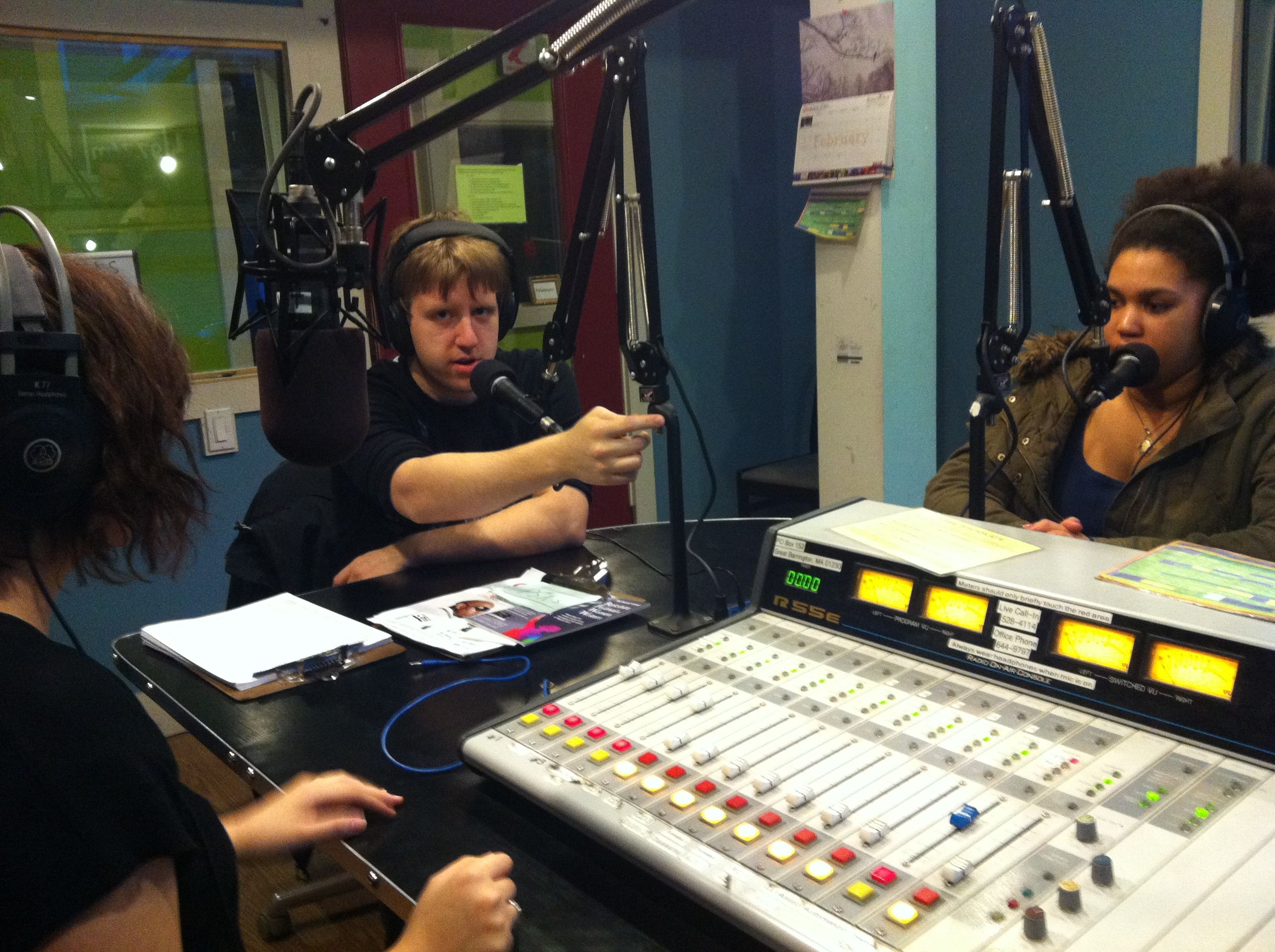
This spring, students from Bard College at Simon’s Rock and Monument Mountain Regional High School are getting ready to go on the air with a series of Citizen Journalism Project news shows, broadcasting stories of local, national and even international interest from the intimate studios of WBCR-LP in Great Barrington MA.

Bard College at Simon's Rock students in radio board training

In preparation, students in my digital media studies class have been listening to great radio from NPR affiliates, Pacifica and other serious news radio outlets, as well as to homegrown shows on 97.7 FM, WBCR-LP.

We’re not sure yet how polished our programs are going to sound this spring, but in this first go-round, it’s really all about learning the process, from conceptualizing and pitching interesting stories, to interviewing and structuring the script, to recording, editing and putting it all together live on the air.

What could be more fun?

But also, what could be more important for young people than to hone their civic engagement skills through becoming not just consumers, but also producers of informational media on topics that really matter?

In keeping with the state of the profession of journalism, my class will also be working on student-produced video and online print stories, recognizing that in today’s media environment, it’s essential to be able to move fluidly across a variety of platforms.

When I came up with the Citizen Journalism Project initiative, combining my service on the WBCR-LP Board with my media studies teaching and my interest in getting Simon’s Rock students out into the local community and collaborating productively with their peers, it was one of those moments when you get into the flow and know the universe is with you.

Everyone I talked to about the idea loved it, from students to school administrators and the WBCR-LP programming committee staff, all volunteer, who are contributing their time and talents to getting the students trained and on the air in just a few short weeks.

When internet radio burst on to the media scene a few years back, some predicted the end of old-fashioned broadcast radio.

But there’s still something very special about being part of a community radio station grounded in the heart of a particular dot on the planet, where the people who live there are the ones running the board, conceiving and hosting the shows, and pumping out the music–not for money, but for the sheer joy of it.

When you drive through Great Barrington and tune in to 97.7 FM, it’s your friends and neighbors you’ll be hearing on the radio. And now, some cheerful, intelligent and very media-savvy students, too!

If you miss the live broadcasts, or you live far away, we’ll be archiving our shows at WBCR-LP later this spring.  Come by and check us out!


A Crucible Moment in Education

There was some rolling of eyes in my community when President Obama announced he would like to see high school mandatory until age 18.  That’s because at Bard College of Simon’s Rock, my alma mater, where I’ve been teaching for the past 17 years, the standard procedure for students is to leave high school at about age 16, generally after 10th grade, and shift into our early college program.

Most Simon’s Rock students are motivated to step off the beaten path and try a different approach to college because they’re high achievers who are bored in high school.  A few come to us because they’ve been so socially mauled in high school that Simon’s Rock becomes not only an academic, but also a social refuge for them.

In any case, for my students, being compelled to stay in high school until they were 18 years old would have been torturous, and would not have improved their future chances of success any more than “dropping out” to try a more innovative form of education—early college.

President Obama’s instinct that staying in school is better than dropping out altogether is absolutely correct.  It’s just that if we’re going to compel kids to stay in school, we need to make their schooling compelling.

Lots of great minds have already weighed in on the question of how to make learning fun and meaningful, but somehow we do not seem to have made a dent in the great battleship Education, which is still plowing its way implacably through the cold waters of Teaching to the Test.

It’s true that there is a certain amount of knowledge that you simply have to be taught, in that passive sense of receiving information and committing it to memory.  For instance, the alphabet.  The multiplication tables.

And having got these basic tools, you need to be taught how to use them: how to read, how to manipulate numbers.  If you’re going to be a doctor, you need to be taught how human systems work, just the way an engineer learns how a mechanical system works, or a mechanic learns how a car works.  OK.

But beyond mastering these kinds of basics in any field, there are two things students most need to get out of their education: learning how to figure things out for themselves, and learning how important their educated selves are to their communities and the larger society as a whole.

In today’s networked world, we no longer need to have kids waste their time memorizing all the state capitols, or learning by rote anything that can be measured in a multiple-choice test.  What kids need to learn is how to find the information they need to answer the questions they have about the world.  They need to learn how to frame their questions, understanding that the way a question is asked will often guide or predetermine its answer.

Reading is still a fundamentally important skill, but what we need to be teaching kids is how to read between the lines.  How to see through propaganda that passes for “fair and balanced” journalism, for instance.  How to sift through multiple sources of information on a given topic, and understand the criteria for determining which source is most credible.

But even that is not enough. Students not only need to become active readers, but also nimble thinkers, capable of taking in a spread of ideas on a given topic, and responding with their own original thinking.  A society where kids only learn how to feed back to their elders old, predigested ideas is a stagnant society, and we can’t afford that kind of stagnation at this time.

And here we get to my second point: kids not only need to learn to think for themselves, they need to understand how important this activity is for our rapidly changing society.  And that means taking the skills they’ve gained through their education out of the school and the academy into the street.

Students at every level, even the littlest ones, will benefit from a much more active engagement with the social and natural environment beyond the walls of their classrooms.  Little kids should be planting gardens in their schoolyards and composting the remains of their lunch. In Waldorf kindergartens like the one my sons attended, kids partake in preparing their mid-morning snack, and in keeping their classroom clean and neat.

What kids learn through activities like these is the importance of collaboration to community—an invaluable life lesson that needs to start early and be reinforced in different ways as they grow older.

Instead of our current competitive test-based system, we need collaborative learning that anticipates the kind of team-based environments of the most successful communities and businesses.  Instead of seeing kids hunched on their own behind raised folders taking a test—no cheating!—we should see groups of kids assembled around a problem, working collaboratively, noisily, joyfully to solve it.

The task of the teacher in this kind of learning environment would be to set the kids ever more challenging and interesting problems, with clearly visible and defined real-world applications, and guide the kids to the tools they need to solve the problems and evaluate their successes or setbacks.

Lord knows there is no shortage of serious problems in our world today, problems that demand every ounce of our most focused attention to surmount.  We need to get kids out of their classrooms and into their communities, bringing their creativity, their intelligence, their caring and their wonderful energy to bear on the challenges that lie just outside their classroom doors.

The Obama administration has just released a major new report, A Crucible Moment: College Learning and Democracy’s Future, prepared by the National Task Force on Civic Learning and Democratic Engagement, which brought together leaders in higher education from around the country to come up with recommendations for ways that education can help students become engaged, responsible local and global citizens.

The report concludes that given all the “pressing issues” facing us today—“growing global economic inequalities, climate change and environmental degradation, lack of access to quality health care, economic volatility, and more,” educators need to focus on “expanding students’ capacities to be civic problem-solvers using all their powers of intellect and inventiveness.

“The kind of graduates we need at this moment in history,” the authors say, “need to possess a strong propensity for wading into an intensely interdependent, pluralist world. They need to be agile, creative problem solvers who draw their knowledge from multiple perspectives both domestic and global, who approach the world with empathy, and who are ready to act with others to improve the quality of life for all.”

The report “urges every college and university to foster a civic ethos that governs campus life, make civic literacy a goal for every graduate, integrate civic inquiry within majors and general education, and advance civic action as lifelong practice.”

Specifically, the task force advocates developing service learning and community engagement programs that move beyond simple volunteerism to actually involving young people as active participants and innovators in making their social environments more vibrant, more responsible, and more equitable.

Sounds good, and sounds simple to implement, but as I know from trying to develop community engagement structures for students at my home institution, it takes staffing—and therefore funding—to provide the channels students need to quickly jump into productive off-campus programs.  Commitment to this kind of active learning environment needs to come from the top, and that’s why I am excited to see such an array of distinguished leaders in education come together as the signatories of this new National Task Force report.

Let’s hope some of that energy and enthusiasm will trickle down to schools and campuses all over the country, and soon.  The tone of urgency evident in the title of this report, A Crucible Moment, and in the President’s remarks about education this past week, is not exaggerated.

We are in a crucible moment in so many ways, and we desperately need to equip our young people with the skills and outlook they will require to bring us safely through the turbulence that awaits us in the foreseeable future as the globe heats up and pressures on human society increase.

Keeping our kids in high school until they’re 18 is only a good idea if high school becomes a meaningful, active learning environment.  Let’s do what needs to be done to make that so—or let’s come up with another model.  Early college, for example—a good idea whose time may finally have come.

Follow the Money–Somewhere New!

People in the know always advise us to “follow the money.”

Thanks to the Occupy movement, it’s become plain to a lot more of us that huge amounts of money are concentrated in a very few, very influential hands.  Big business interests control politics at every level, and the name of the game is profit for the top managers and owners, with the bare minimum allowed to “trickle down” through taxes and philanthropy.

Nothing new in that picture.  But there are some provocative new ideas arising about how to change a system that seems so entirely entrenched that most of us don’t even bother to think too hard about alternatives.

Last night I had dinner with some folks who are working on an alternative local finance program, called Common Good Finance.  The idea is somewhat similar to local currencies like, for example, our homegrown BerkShares.  But instead of paper money, Common Good will be an electronic credit system, based on R-credits.

One R-credit will equal $1 US, but the use of R-credits will be incentivized: if I spend R-credits rather than dollars, I’ll get a 5% rebate on every purchase, and even better, the merchant will get a 10% kickback for accepting my R-credits.  That sure sounds win-win!  What’s the catch?

There doesn’t seem to be a catch as far as the ordinary consumer and local vendor is concerned.  The ultimate goal of Common Good Finance is to create a local, democratically governed credit union, to which businesses and individuals in a community could apply for low-interest loans and grants.  The main criteria for approval would be: would extending this credit line be in the interests of the common good?

Forget about bankers getting rich on those exorbitant interest rates attached to every debt.  Forget about too-big-to-fail banks preying on consumers in every town and city in the nation.  Forget about municipalities cutting back on social services, including health care, education and affordable housing, because there simply isn’t enough money.

The people behind Common Good Finance believe that scarcity is a convenient fiction created and upheld by the central bankers who control the Federal Reserve.  It’s convenient because it keeps the pace of debt constantly accelerating, and it’s the interest on all these debts that provides the profits that line the bankers’ pockets.

Common Good would create a monetary system where money circulates locally, and any surplus in the form of interest is plowed right back into the local community in the form of loans and grants to worthy individuals and causes.  The local members of the R-credit system would be the ones to decide democratically, by facilitated consensus-building, who would get what.

As we talked about these intriguing ideas over dinner, the question came up of cronyism and conflict in this collective decision-making process.  But as John G. Root Jr., one of the founders of the Common Good initiative, put it, “We know the system we have now is not working well for the majority of Americans.  Why not try something new?”

In making his case for the R-credit system, John referred often to the American revolutionaries who decided to throw off the yoke of British tyranny and strike off on their own, founding a new country.  Now, going on 300 years later, Americans find ourselves under a new yoke: multinational corporate interests that may make judicious grants to communities and non-profits through their well-heeled foundations, but would not want to see communities empowered to divorce themselves from the thrall of big business.

Having R-credits would encourage people to shop local, and it would encourage businesses to source locally too, since they could keep their R-credits in circulation that way and keep earning those 10% kickbacks on every R-credit exchange.  Pricechopper and WalMart wouldn’t like this–but who knows, maybe they could be drawn into this network too!  Maybe the idea of democratically controlled local finance is an idea whose time has come, an idea could even go global!

As an example, take the Grameen Bank, which was founded in one of the poorest countries in the world to provide poor women with low-interest micro-loans to start local businesses.  It has grown exponentially; its founder, Muhammad Yunus, won a Nobel Prize in 2006; and its model is being replicated in many other parts of the world.  Why not in the U.S.?

Common Good Finance is not alone in searching for outside-the-box answers to our current financial predicament.  Economist David Korten has been working on what he calls “living economies” for about twenty years now; he is one of the leaders of the New Economy Working Group, which includes free thinkers like Gus Speth and Gar Alperovitz.  The New Economy mission statement sums up the vision quite well:

“Effective action will shift the economic system’s defining value from money to life, its locus of decision making from global to local, its favored dynamic from competition to cooperation, its defining ethic from externalizing costs to embracing responsibility, and its primary purpose from growing individual financial fortunes for a few to building living community wealth to enhance the health and well-being of everyone. We humans face an epic choice between the certain outcome of continuing business as usual and the possible future it is within our means to create through conscious collective action.”

It does feel like an epic moment, a transition time pregnant with the possibility for positive change.

Let’s follow the money and let the revolution begin!