The Kids Are Not All Right

Corporate Interests Threaten Children’s Welfare – NYTimes.com.

I agree with much of what this author says about the damaging effect of corporate media and social media on not only the kids themselves, but on family dynamics.

He makes a kind of modified plea for “family values,” which he identifies with the 20th century’s focus on prioritizing the well-being of children (at least, in middle-class white North American families).

I’d like to suggest that we don’t need to look backward to find our way out of the morass of childhood media addiction…we need to look forward.  The digital media is here to stay, at least as long as civilization as we know it holds up.

How can we learn to navigate through it, for ourselves and our children, in a way that feels healthy, balanced and nourishing?

If we can’t figure this out, I fear the computers–and the corporations that are behind them–will suck our souls dry.

Pretty Ugly

“If this guy prints more money between now and the election, I don’t know what y’all would do to him in Iowa but we would treat him pretty ugly down in Texas. Printing more money to play politics at this particular time in American history is almost treacherous — er, treasonous, in my opinion.

Governor Rick Perry of Texas, speaking about Federal Reserve Chairman Ben Bernanke’s efforts to prevent deflation

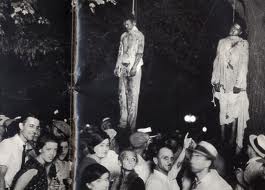
When I think about Texans “treating someone ugly,” what leaps to my mind is lynching.  Even so conservative a group as the Texas Historical Association is unable to whitewash the truth of white Texan oppression and brutalization of the Mexican Americans (“Tejanos”) and African Americans throughout the 19th and 20th centuries.

To be heading into a Presidential election year with this kind of hateful invective being thrown around, especially in a contest where a Black man is involved, is truly frightening.

We who are watching the slow-motion political lynching of Barack Obama unfold cannot afford to be silent bystanders.

The Rick Perrys of our country are treating our President “pretty ugly” every single day.

Although I share many progressives’ disappointment with Obama’s reluctance to call out these ugly folks and fight fire with fire, I recognize the bind he’s in, and I cannot stand by silently while he’s symbolically dragged through the mud (as happened to the victim of one of the most recent Texas lynchings, Brandon McClelland, in 2008).

I’ve spent a lot of time this past month wishing I could just move to Canada and be done with the ugliness here in the U.S.

But this is my country, at least for now, and I must do my best to make it a better place, a country I can be proud of.

My ancestors left Russia, Poland and Germany in the 19th century precisely because of the kind of slimy and dangerous hatred that we heard come out of Governor Perry’s mouth this week.  They believed they would find a more welcoming and ethical society here in shadow of the Lady of Liberty.

Of course, America they knew in the early 20th century had terrible problems of racism, elitism and sexism. People fought for change throughout the 20th century, and they won big victories.

We can’t let the clocks be turned back now.  We must fight on, now more than ever!

Women + Men = Change

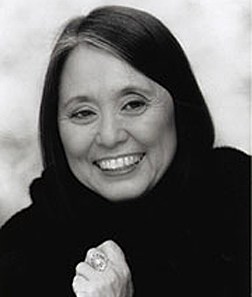
The other day I, along with many thousands of others I’m sure, got an email from Jean Shinoda Bolen, the psychologist and activist–author of Goddesses in Everywoman, Urgent Message from the Mother, The Millionth Circle and many other books, most of them arguing that women have a special role to play in healing the world, and urging us to get busy.

This recent email said precisely that, but with a concrete focus: Jean is advocating that the United Nations support a Fifth World Conference on Women, as a follow-up to the Fourth World Conference held back in 1995, in Beijing.  Activists have been calling for another conference since 2004–when the hope was to mark the decade in 2005 with another big event by and for the women of the world.

At this point, we’ll be lucky to get the 5WCW, as insiders call it, in 2015.  But Jean’s letter brought up some deeper questions for me.

As I dutifully signed the online petition, I wondered whether it was really worth the time, effort and money it would take to create another major world conference on women again, UN-style.  Of course, now we have UNWomen, the new and much more powerful agency for women, headed up by the fabulous Michelle Bachelet.

But still–here come the deeper questions.

  • Do women really have some special role to play in peace-making and nurturing civil society, which would be strengthened for us by getting together in a symbolic–and also very real, remember the mud in Beijing?–conference on this scale?
  • If the men aren’t there in the meeting halls with us, will they be fully invested in whatever resolutions are brought forth?
  • Can women accomplish profound, lasting social change on our own, without bringing the men along with us?

Back to Eckhart Tolle for a moment.  I was struck while reading A New Earth that he, like so many other philosophers, seems to see women as fundamentally different from men.  He’s pretty unequivocal about it:

“Although women have egos, of course, the ego can take root and grow more easily in the male form than in the female.  This is because women are less mind-identified than men.  They are more in touch with the inner body and the intelligence of the organism where the intuitive faculties originate.  The female form is less rigidly encapsulated than the male, has greater openness and sensitivity toward other life-forms, and is more attuned to the natural world.

“If the balance between male and female energies had not been destroyed on our planet, the ego’s growth would have been greatly curtailed.  We would not have declared war on nature, and we would not be so completely alienated from our Being” (155).

He goes on to talk about the Inquisition and witch-burnings, and the ways in which, in all the major world religions, “women’s status was reduced to being child bearers and men’s property.  Males who denied the feminine even within themselves were now running the world, a world that was totally out of balance.  The rest is history or rather a case history of insanity….In time, the ego also took over most women, although it could never become as deeply entrenched in them as in men” (156-57).

The post-structuralist feminist in me says “whoa, Eckhart!  You’re claiming essentialism here, that women are essentially, that is, really and fundamentally different than men. Feminist philosophers have resisted this because so much oppression happened because women were said to be fundamentally different than (and lesser than) men. Do we really want to go there again?”

But then there are many older feminist camps, including the “goddess within” folks like Jean Bolen–and Audre Lorde, and Alice Walker, and Gloria Anzaldua, my heroines–who would be greatly cheered to hear this kind of admission coming out of a man like Eckhart.  He only talks about it for a couple of pages, and he makes a curious move of deflecting guilt onto “the ego,” which is oddly personified–see for yourself:

“Who was responsible for this fear of the feminine that could only be described as acute collective paranoia?  We could say: of course, men were responsible. But then why in many ancient pre-Christian civilizations such as the Sumerian, Egyptian and Celtic were women respected and the feminine principle not feared but revered?  What is it that suddenly made men feel threatened by the female?  The evolving ego in them.  It knew it could gain full control of our planet only through the male form, and to do so, it had to render the female powerless” (156).

This almost sounds like an angels and demons scenario, with demons, acting through “the ego” in each one of us, working to gain ascendancy, and being more successful in “the male form” than in women–because we women are more intuitive?  Or at least, we used to be, before the ego got to us too?

Eckhart finishes up his brief discussion of the differences between men and women on an upbeat note, saying that “because the ego was never as deeply rooted in woman, it is losing its hold on women more quickly than on men” (157).

And presumably, that means that he’d agree that women should step up and take a leadership role in helping humanity out of its current crises (environmental, economic, social) into “a new Earth.”

I think I’d have to agree.  But is convening thousands of women from all over the world in a physical place on Earth the way to go?  Or would it be a better strategy to focus on empowering women where we are, and maybe trying to do more with technology to link us so we can share strategies and become collectively empowered?

Just thinking about the amount of paper that would have to be shuffled at the United Nations to make a big women’s conference happen; and the amount of jet fuel and other resources that would have to be spent to get everyone into that one physical arena, makes me wince.

I’d rather see a series of smaller conferences, all happening simultaneously all over the world, linked by teleconferencing, with extensive, easily accessible video archives produced for later consultation.

And although these conferences would be led by women, I’d like to see men there in the audience too–and even at the podium, if they come to the microphone with their feminine half fully engaged.

Women do have something special to offer the world, but just as we need to activate our masculine side to become warrior leaders for change, we need men at our sides with their nurturing, peacemaking sides ascendant.

If we could manifest this vision, we could change the world.  For the better.

Did someone say young people are apathetic?

Well, not in Chile!  We Americans could learn a thing from the student movement there, which has been pressuring the right-wing government to move in a more social-democratic direction.

What are their tactics?

How about a kiss-in, for example?

Or a mass “suicide” to make the point that young people are “dead” without accessible education?

Or a downtown dance-in, complete with super-hero costumes?

Others are jogging in relays around the presidential palace, carrying flags that proclaim “Free Education Now.”  They’re trying to complete 1,800 laps to symbolize the $1.8 billion a year that protesters are demanding for Chile’s public education system.

The students are protesting the neo-liberal policies of the government, which are, as they do everywhere, creating greater income disparity and putting good education beyond the reach of big sectors of the society.

Remember, this is Chile we’re talking about, where many of the parents of these students were imprisoned and tortured by the Pinochet government for daring to speak out.

This new generation is taking a creative approach to protest, and it will be interesting to watch how it plays out.  Will the government actually stoop to breaking up those kiss-ins with water guns and tanks?

Or will they do the smart thing, which would be to learn a thing or two from these courageous student leaders?

Building resilience: the time to start is now

What we need to weather these tough times is resilience, and that seems to be a buzzword for this decade; many people I know are talking about strategies for building resilience these days–my friends Maria Sirois  and Amber Chand are both working on workshops to help people build resilience in troubled times.

Resilience is about taking what comes in life, good and bad, with equanimity.  Eckhart Tolle talks about this a lot–the importance of acceptance.  That is all very well for me to think about while sitting in a beautiful place on a beautiful sunny day with my family around me.  Much harder for someone in pain to be asked to simply accept what is.

Tolle and Buddhist teachers like Pema Chodron and so many others teach us that we need to practice acceptance in the good times, so that when hardship occurs, we’ll have the mental discipline and habit of being accepting–by which I think they mean not freaking out and panicking when things go wrong, focusing on the present moment through the breath, and finding the light that lives within us, no matter how dark our external circumstances may be.

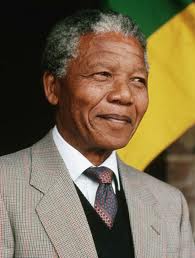
When you think of someone like Nelson Mandela, who managed to survive almost three decades in prison with his spirit, courage, and wisdom intact, you have to realize that this is more than just spiritual mumbo-jumbo.  How else could he have made it through unless he was able to access some deep inner well of equanimity and peace, an inner resilience that helped him get through each day of those terrible times, and emerge not only mentally sound, but ready to lead his country sanely and sagely.

Few of us will face the challenges that people like Nelson Mandela, Aung Sang Suu Kyi, or Mumia Abu Jamal have faced.  But every life has its dark periods, and right now humanity seems to be entering collectively into times that will test each one of us, and all of us as a society.

We shouldn’t wait until things turn rough to start building our own inner reserves of resilience and strength, and to reach out to others who are doing the same.  The time to start is now.


Some good news, for a change….

In a week when everyone seemed mesmerized by the spectacle of the USS Congress ramming right up against that proverbial iceberg, there was actually some good news for the planet.

1. American car-makers backed the new federally mandated emissions standards, requiring cars to get 54 mpg by 2025.  Of course, 2025 seems very far away, but given that longterm target, car manufacturers may very well start tooling up to reach that goal even sooner.  We could still do better, but it’s certainly a step in the right direction.

2. Mark Bittman, the chef and food writer, publishing in the very mainstream New York Times, advocated that Americans skip meat and cheese one day a week, which would be “the equivalent of taking 7.6 million cars off the road.”  He made this suggestion based on a new report released by the Environmental Working Group, entitled “Meat-eater’s Guide to Climate Change and Health.”

Among many other points that document makes, Bittman pointed to one that made me sit up and take note: “A 2009 National Cancer Institute study of 500,000 Americans found that the people who ate the most red meat were 20 percent more likely to die of cancer and at least 27 percent more likely to die of heart disease than those who ate the least.”

3. Dam removal to restore river habitat for spawning salmon has begun in Washington State on the Elwha River!  Hopefully the Klamath River in Oregon will be next. When I read Derrick Jensen’s Endgame earlier this summer, I was struck by how fervently he talked about taking out dams as an environmental goal (along with felling cell towers).

I didn’t think American agricultural interests in the West would ever allow this willingly, making Derrick’s proposal to actually go out and blow up dams seem entirely reasonable as a strategy for getting the job done.  But lo and behold, it is happening this summer on the Elwha River, and maybe once people see those salmon heading upstream again, they’ll open their eyes to what needs to be done on other, larger rivers as well.

It’s not easy to sit by helplessly as the Tea Party makes a mockery of the American bedrock of bipartisan government.  So much is at stake; so many lives, my own included, will be negatively impacted by the economic ripples that come of this summer’s political gamesmanship.  But it does help to remember that it was America in boom mode that wreaked such havoc on our environment to begin with.

Maybe America in bust mode will become more sober, more efficient, less wasteful, and more focused on what really matters: strengthening our connections with each other, and with the natural world.  I don’t think that’s what the Tea Party has in mind for a moment, but who ever said they knew what they were doing?

A great example of ordinary heroism at work….

It can be as simple as this: a group of Israeli women making the effort–and taking the risk–of taking a group of Palestinian women to the beach.

How sad is it that these Palestinian women, living so close yet so far from the coast, had never tasted the salty delight of the ocean before?

And how wonderful that their more privileged Israeli sisters broke ranks to make it happen….

This story is worth the read–


Let a billion ordinary heroes bloom!

Mark Hertsgaard dedicates his book Hot: Living Through the Next Fifty Years on Earth to his young daughter, Chiara, born in 2005 as the snowball of climate change began picking up momentum.  Perhaps because he has her constantly in mind as he’s working on the book, he does something science writers rarely do: he begins his book by invoking fairy tales, and returns to them several times as he goes along.

Science writers are usually at great pains to be empirical—that is, to convince us, by their impeccable sources and detailed documentation, that what they’re telling us is true.  Hertsgaard does this, of course: there are the usual obligatory paragraphs of statistics, drawn from unimpeachable sources like the Intergovernmental Panel on Climate Change, or the various climate experts he interviews.  But for me some of the strongest, most memorable passages in the book are the ones where he relies on the imaginative power of fairy tales to get his message across.

In his very first chapter, he goes back to the psychologist Bruno Bettelheim, who analyzed fairy tales in his book The Uses of Enchantment, concluding that children learn from fairy tales that “’a struggle against severe difficulties in life is unavoidable, is an intrinsic part of human existence.’ But, Bettelheim  continues, ‘if one does not shy away, but steadfastly meets unexpected and often unjust hardships, one masters all obstacles and at the end emerges victorious’” (Hertsgaard, 16).

The first fairy tale Hertsgaard writes about is E.T.A. Hoffman’s “The Nutcracker,” with which his daughter Chiara fell in love as a young toddler.  “After seeing The Nutcracker ballet onstage, Chaira began acting out the story at home.  She invariably cast herself as Clara; her mother or I was assigned to play the godfather, the prince, or both.  One day, after she and I had played the game for about the three hundreth time, I got distracted.  To my half-listening ears, the music seemed to indicate the start of the battle scene, so as the prince I began to brandish my sword.  A puzzled look appeared on Chiara’s face.  It took her a moment to realize that her father was confused.  She looked up and carefully explained, ‘No, Daddy.  It is still the party.  The danger is not here yet.’”

Hertsgaard tells this charming personal story to illustrate his point that “the party, so long and pleasurable, that gave rise to global warming is…still underway.”  For most of us, the danger does not yet seem real, so it’s hard to feel the urgency to change our lifestyles, which are after all so comfortable, familiar and, let’s face it, fun, at least for the upper crust.  Hertsgaard goes back again to the fairy tale model some pages later to put out a call for “thousands of ordinary heroes to step forward and fight for our future,” to tame the many-headed hydra of climate change.

This call echoes that of Philip Zimbardo, the Stanford psychologist who gained prominence as a young professor in the 1970s by conducting the infamous Stanford prison experiment, where he showed that if put into the right circumstances, the most ordinary young men will become fascist torturers.  After the Abu Ghraib scandal broke, Zimbardo was called upon to explain how those ordinary American soldiers could have engaged in such horrific sadistic acts.  But by then his own focus had shifted.  Zimbardo is now much more interested in examining how it is that ordinary folks step up and become heroes, because he too is convinced that our society is gravely in need of “thousands of ordinary heroes” to turn things around.

When I was about eight years old, a very powerful revelation of the destructiveness of humanity prompted me to start writing my first story.  It happened like this. We always arrived at our country house at night, and the next morning I would always get up around sunrise and go out, with great excitement, to see what was happening in the natural landscape I loved so much.

On this May morning, I was shocked to see, at the bottom of the driveway, piles of maple branches, their small, bright green, new leaves withering on the ground, sap oozing out of the cut branches—a holocaust of new life.  Shocked and upset, I raced back home to tell my mother what had happened.  I expected that she would be upset too, but instead she calmly explained, “The power company must have come to trim branches along the lines.” That was all there was to it; there was nothing to be done and it wasn’t worth getting upset over.  Her response just infuriated me more, and out of that fury my first story was born.

It was about a wood nymph named Estrella, who set out on a quest to save her forest from human destruction.  I wrote about the council of animals and forest spirits that decided that such a quest must be undertaken, and I wrote about Estrella setting off with two animal companions.  But beyond that the story petered out, because I could not imagine a solution to the problem; I couldn’t think of how a wood nymph and some animals could stop humans with chain saws.  At that age I was reading my way through all of the Lang fairytale collection, so you’d think I would have been able to invent some powerful magic to do the trick.  But I wanted a “real” solution.  I knew that the problem I was dealing with was no fairytale, it was very much of this world, and I wanted to solve it…I just didn’t know how.

Now I am realizing that in order to accomplish the deep changes necessary to create a human society that values life and harmony more than domination and destruction, the old heroic quest model will not suffice.  Like Hertsgaard and Zimbardo, I know now that we can’t wait for a hero or a charismatic leader to take up the challenge and make everything right.  We need the kind of small-scale, unheralded acts, made daily by people all over the world, not because they expect to become famous and marry into royalty at the end, but because they are committed to living harmoniously with the ecological world of which we humans are a part; because they value life, and want to live their values.

Towards the end of Hot, Hertsgaard invents his own fairytale, which I hope he actually produces as an illustrated children’s book—it’s wonderful!  I won’t give it away here, other than to observe that it’s about how a whole village worked together to throw off tyranny and create a more sustainable, joyful place to live.  There is no clever young boy outwitting the giant; no princess standing fast in the face of a dragon.  Just ordinary people—in this case, ordinary young people, since  the children lead the way—standing up to do what’s right.

Fairytales may be fiction, but as Bettelheim and so many other analysts have realized, they point the way to deep truths.  I’ll have more to say on the importance of telling new stories in future posts.  For now, let a billion ordinary heroes bloom!

Finding Community at the Lunenburg Farmer’s Market

This morning I went to the Lunenburg Farmer’s Market, held every Thursday morning during the summer.  Although we arrived early, there was already a sizeable crowd, with long lines of people patiently waiting at some of the booths, especially for the raspberries (first of the season) and the fresh fish.  At one end of the market, a guitar and fiddler played some merry Nova Scotia folk tunes, while people sat at the small open-air tables drinking the locally roasted coffee and munching on freshly baked croissants and muffins.

I was struck by how happy, friendly and relaxed everyone looked.  Is it just that most of these people are here on Nova Scotia’s South Shore for vacation?  Is it Canada?  I think it must be some combination.  People are different here.  There simply isn’t any of the abrasiveness, arrogance or hyped-up pace that we see frequently among the summer people who flood into the Berkshires, coming mostly from New York and New Jersey.  Even the locals here seem more laid back than the Berkshire folk at home.  There is less glamour here: there are hardly any of the “beautiful people,” and it’s rare to see anyone stylishly dressed.  You don’t see women checking each other out competitively the way we do at home.  You can tell that no one is running to the gym or the yoga class (are there any yoga classes here?); there are no flashily dressed long-distance bikers, no troupes of Harley-Davidsons roaring through town, very few fancy cars or signs of conspicuous consumption.

Indeed, if shopping is your thing, this is not the place to be—there simply isn’t much to buy here.  But if you take the time to get to know people, what you’ll find are a lot of creative, individualistic people, all busy and happy doing their own thing.  When they come together, as at the Thursday Farmer’s Market in Lunenburg, there is a hum of joyful camaraderie that is infectious, almost like a the hum of a contented, productive bee hive, where everyone is working alongside each other in a supportive, collaborative manner.  People stop to help each other here all the time—it seems to be a reflex.  They’ll smile and stop to chat at any opportunity, just to exchange friendly vibes, the way bees stroke each other with their antennae as they go about their busy days.

Something tells me I could be very happy as part of this Nova Scotia hive….