Lessons of the Wreck of the Bounty

Although it is a small tragedy compared with the multifarious disasters occurring in the New York region in the wake of Hurricane Sandy, I can’t get the wreck of the tall ship Bounty out of my mind.

As someone who has written about 18th century pirates quite a bit over the past decade, I have an abiding fascination with sailing ships of that era.

HMS Bounty at Lunenburg, NS, August 2012

Last summer, when I heard the Bounty was docked for a few days at the Maritime Museum wharf in Lunenburg, Nova Scotia, I made sure I was at the head of the line at the gangplank.

The crew welcomed us aboard, and we had the vessel nearly to ourselves to explore at leisure.

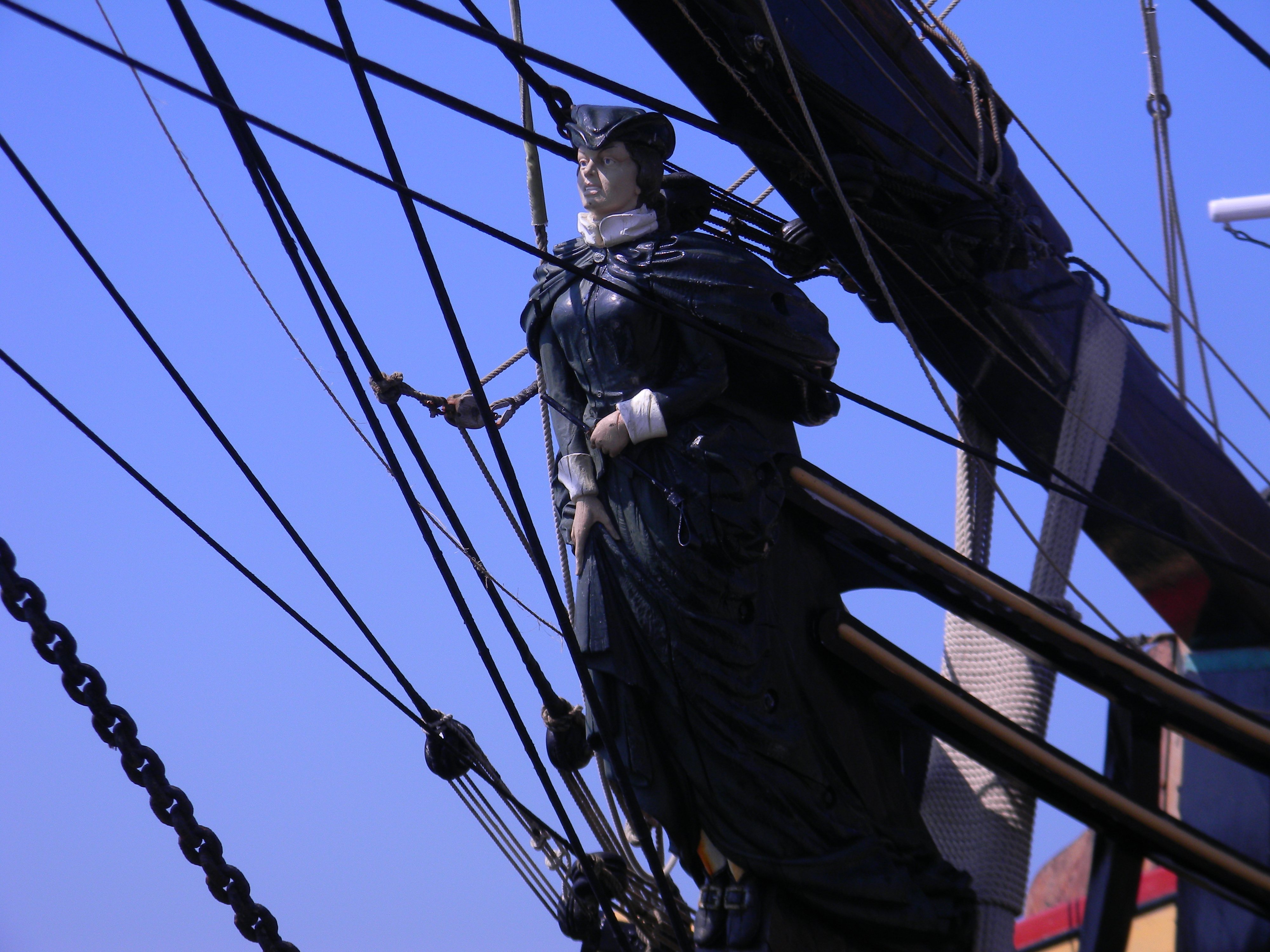
The Bounty, a 1962 replica of the original 18th century British ship, was obviously built with great attention to authenticity of detail.  The timbers above and below looked rough-hewn and weathered, the sails dingy and hardworking, the masthead newly painted and resolute.

She was a solid piece of work, and her captain, Robin Walbridge, had steered her well for 17 years.


But last week something went badly awry in his thinking.

Lunenburg photos by Eric Hernandez

He decided to take the Bounty out to sea knowing full well that Hurricane Sandy was making directly for his route from New London, CT to St. Petersburg, Fla.

Bounty masthead on a clear day

It seems that Captain Walbridge decided to try to “skirt” the storm, heading far out to sea in an effort to miss the brunt of it.

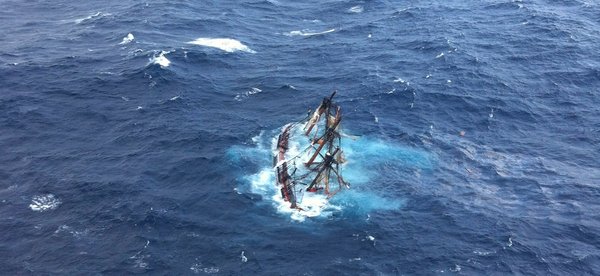
Sandy proved far to big to avoid, and by the night of Sunday, Oct. 28, the Bounty was facing 10 to 30-foot seas about 90 miles off the coast of North Carolina.  A first distress call put out to the Coast Guard at about sundown that evening was rescinded, as the crew must have been frantically working the pumps and still hoping to save the ship.

Not until 4 a.m. did the crew receive the order to abandon ship, and by then the deck was awash.

Fourteen of the fifteen crew members made it into the life rafts and were rescued by the Coast Guard  within a few hours.  A fifteenth crew member, Claudene Christian, was found floating nearby, and was pronounced dead at the scene.

Claudene Christian

Captain Walbridge’s body has not been recovered as of this writing.  The last one to abandon ship, he may simply have not made it out in time.

Captain Robin Walbridge

Here is a tragedy that could easily have been avoided if the captain had been more respectful of the forces of nature.  Apparently he thought the ship would be safer out at sea than docked during the hurricane; but in trying to save the ship he endangered the crew, and two lives were lost, one of them his own.

The story reminds me of the tale of Moby Dick, where the recklessness of the captain resulted, ultimately, in his being dragged to his death by the great white whale.

There is a lesson here for all of us.

We cannot underestimate the forces of nature.  We cannot “skirt” the climate change disaster that is staring us in the face.  We cannot outrun the storm, and we cannot hide from her.

As people in the wealthy enclaves of New Jersey and Long Island are finding out now, we are all equal before the awesome might of the natural world.

True, the plight of New Yorkers in dark, cold public housing is far more serious than that of coastal Long Islanders who have had to seek shelter with inland friends and family.

Class still matters.

But on the Bounty, the captain’s quarters were swamped just like those of the sailors.

So it will be with us all, if we fail to heed Sandy’s warning.

The Bounty sinking on Oct 29; Coast Guard photo

This is not a movie, and it’s not child’s play.  It’s real, and we’d better be paying attention, because next time it could be my turn, or yours.

We need to be taking measures now to make sure that the next time the winds start to blow, we will be prepared.

First things first: we need to go to the polls to defeat Mitt Romney and his fossil fuel masters on Tuesday.

And then on Wednesday, it will be time to start making plans to pressure President Obama to do the right thing when it comes to climate change.

Some say he’ll be a lame duck in his second term, but I think he’ll have more leeway to be his own man.  We have to prevail on his intelligence and good sense to use the power of the executive office to stand up to Big Oil on behalf of ordinary folks the world over, who trust their leaders to make the right decisions to keep them out of harm’s way.

And if he can’t or won’t do the right thing, well…there may have to be yet another “mutiny on the Bounty….”

Malala Yousafzai Stands Up for Us All

There are a couple of old saws that I was taught as a young journalist, which I continue to pass on to my media studies students now.

One is: if it bleeds, it leads.

And another: one powerful human interest story is worth a million statistics.

We saw both of these principles in action with this week’s news of Malala Yousafzai, a 14-year-old Pakistan girl who New York Times columnist Nicholas Kristof calls “one of the world’s most persuasive advocates for girls’ education.”

Everyone probably knows by now of how the Taliban viciously shot Malala in the neck as punishment for her outspoken insistence that girls should be allowed—and indeed, encouraged—to go to school, just like boys.

She is now the face of millions of girls worldwide who are denied the chance to get an education and empower themselves and their communities.

This week the Times also reports that in Africa, unprecedented wealth is being generated by the efforts of a rising tide of entrepreneurs—many of them women.

UN Women, formerly known as UNIFEM, has argued for years that by educating a girl, you help her whole family, including the children she will one day bear.

After all, as the Chinese say, “Women hold up half the sky.”

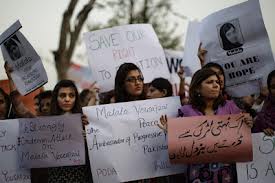
I am glad to see that Pakistanis have come together to reject the extremist politics of the gunmen who shot Malala.

We should all light a candle for her today as she is flown to the West for more treatment, and pray that this brave girl survives the attack and returns to the fray to serve as a defiant model for all girls, whose instinctive human desire for education will not be extinguished so easily.

In the Christian tradition, Eve takes the blame for the fall from Paradise, and here in the U.S., too, we can see many examples of strong women being sharply checked: for instance, in the shooting of U.S. Representative Gabby Giffords or the mocking of Hillary Clinton for wearing pants suits and acting tough.

The story of Malala Yousafzai is one particularly emblematic story among many that could be told, of women and girls who dare to stand up to patriarchal power, and learn quickly that such defiance has its price.

Lately we’ve been seeing a steady drumbeat of reports—most of them disapproving—of how women are becoming more successful in school and in careers, threatening traditional male dominance in the public sphere.

Maybe it’s time for a reminder that feminism was never about dominance—it was and is about equality.

What’s so threatening about that?

I’m sorry, but real men don’t shoot 14-year-old girls under any circumstances.

To me a real man is the one who encourages his children, regardless of their gender, to stay in school and work hard to be prepared to step out into a future that is sure to be challenging.

A real man applauds his wife’s successes, and stands by her side when things are rough.

Real women do the same.

The truth is that gender is just another one of those culturally conditioned differences, like eye shape or skin tone, that fade to irrelevance before the profound reality of our human similarities.

Having unlocked the secrets of the genome, we now know that human beings are genetically 99% the same as field mice.

Isn’t that enough to convince us that men and women are only different in the most superficial ways?

Sure, women can bear children; men are more muscular.  But our brains are close to identical, and our hearts are the same.

Our spirits, freed of our physical bodies, know no differences.

It’s time to soar above the petty in-fighting of gender, and work together for the good of all.


Moving from suffering to pain to resistance

“Pain is an event, an experience that must be recognized, named and then used in some way in order for the experience…to be transformed into…strength or knowledge or action.  Suffering, on the other hand, is the nightmare reliving of unscrutinized and unmetabolized pain.  When I live through pain without recognizing it…I rob myself of the power that can come from using that pain, the power to fuel some movement beyond it.”

Audre Lorde,  Sister Outsider, 171

Too much of the time, we who are sensitive, aware human beings on the planet feel the burden of suffering, the “nightmare reliving of unscrutinized and unmetabolized pain.”

For example, when I read in the current National Geographic Magazine that 25,000 elephants have been killed this year in East Africa by poachers and even government soldiers who want to make money on their tusks, the nightmare of suffering descends upon me.  When I hear that the president of Kenya has declared that “elephants must pay for their room and board with ivory,” I begin to feel physically sick.

The same kind of nausea descends on me when I hear about the melting of the ice in the Arctic or the permafrost in Greenland—even more so when the loudest response to this calamity comes in the form of rapacious, competitive cheering and jostling for position to be the one to extract the greatest amount of riches now revealed beneath the ice.

Or when I read about the ongoing sexual abuse that is occurring rampantly on the Spirit Lake Indian Reservation in North Dakota, a kind of externalization, upon the defenseless bodies of small children, of the unmetabolized suffering of generations of Native peoples trying to survive in unspeakable conditions.

Brooding over all the news of suffering that comes my way each time I take a look at the daily news, I can quickly feel myself overwhelmed with a sense of my own powerlessness.

That is where I need Audre Lorde’s fierce courage to pick me up, dust me off and send me on my way again.

The challenge is to remain open to the suffering, in order to, as she says, recognize, name and use it “to fuel some movement beyond it.”

For many of us right now, the greatest challenge is the awareness that we don’t know what to do. And maybe, even, that there is nothing we can do.

I cannot heroically save the elephants, any more than I can refreeze the polar ice caps or swoop in to rescue the frightened child who is being raped right at this moment.

No.  But what I can do is to try to leave myself open to the suffering—in other words, to not turn away, not deliberately turn off my empathy in order to try to hide from a reality that is hard to confront.

It is my belief that if more of us were to commit to recognizing and naming suffering when we see it, we would find the strength and the right channels to collectively metabolize suffering into the kind of pain that leads to action.

Each of us needs to become a vortex through which the pain can be transmuted first into resistance, and then into an active seeking for alternative paths.

It is not necessary that tens of thousands of elephants die.  It is not necessary that we see the melting of the Arctic as an opportunity to extract more fossil fuels and heat up the atmosphere still more.  It is far from necessary that the children of Spirit Lake are tormented by their elders.

Do not turn away from this suffering.  See it, name it, and turn the pain that these events awaken in you to a righteous force for change.

You don’t need to have all the answers or know what to do with the pain.  Just allow yourself to feel.  Allow empathy to flow.  And then see what happens next.

Hats Off to the Central Park Rape Victim

The gutsy 73-year-old woman who was raped by a drifter in Central Park last week has been on my mind since I first heard about her.

The assailant has been caught, and it turns out he has a history of raping and murdering elderly women, going back to the 1980s.

The mystery is why a man like that was let out of jail.  We keep kids in prison for minor drug infractions, but we let a psycho rapist and murderer out on parole and allow him to drift across state lines without supervision?

Like so many other homeless people, he ended up drifting around in Central Park, and according to the victim, whose name is being withheld to protect her privacy, he had it in for her because a couple of weeks earlier she photographed him masturbating in a lonely section of the park.

The Ramble, Central Park

She was a birder who wandered the park with her binoculars and camera around her neck, in the wooded section known as “the Ramble,” which I remember well from my own youthful ramblings.  I would never set foot in the park alone without my big dog beside me, though.  I knew better than that.  And if I ever saw anyone looking suspicious, I made a beeline for the nearest police officer.  Growing up in Manhattan, you knew you always had to be on guard.

The birdwatcher probably took his picture to identify him to the police, because she did report his obscene public activity to a park ranger.  Unfortunately, her warning was ignored.

Now, after she was pushed down in the bushes and raped in broad daylight, the police aren’t ignoring her anymore.  Thanks to her alert vigilance, she was able to pick her assailant out of a police line-up just a day or so after the crime occurred.

Knowing as much as I do about sexual assault and its psychological effects (I teach a course in Gender & Violence) I have to say I am very impressed with the cool demeanor of this victim.

No hysterics or undue shame—this woman is speaking out, and in the process setting a model for other women to follow.

Rape statistics in the US are pretty ugly.

  • Every two minutes, someone in the US is being sexually assaulted.  Each year there are nearly 208,000 sexual assault in the US
  • 54% of rapes are never reported, and 97% of rapists will never spend a night in jail
  • 80% of victims are under 30, 44% under 18
  • 38% of rapists are a friend of acquaintance of the victim

So the most recent Central Park rape was unusual on every score: the victim was an elder, the rapist was unknown to her, and most important, she marched right out of the shrubbery where she’d been raped and reported it to the police.

In your more typical rape case, a young woman may not want to report the crime because a) it’s embarrassing; b) she would have to undergo invasive evidence-gathering; c) she might be afraid that the rapist, if not arrested, would retaliate against her; d) it’s common knowledge that rape trials are long and intense, and rarely result in conviction.

All this is true.  But it’s also true that if more than half of rape victims do not report the crime or press charges, then that allows the assailants to proceed with cocky impunity.

I don’t think that was part of the picture with David Albert Mitchell, the Central Park birder’s assailant.

He was just a dangerously unbalanced, violent man who has obviously been failed by the criminal justice system.  He should never have been granted parole.

But many rapists circulate in our society much more suavely, preying on young women and girls without necessarily even realizing that what they’re doing is wrong.

In a culture where violent pornographic videos are easily available on the internet, and violence against women is a common ingredient in music videos and Hollywood films as well, it is not hard to see how a young man could get the impression that violating a woman is just another way to prove one’s manhood.

More of us older women have to stand up and say no to this violence.

For quite some time, my heroine in this work has been Eve Ensler, whose V-Day organization has been incredibly successful in channeling women’s creativity and righteous passions into educational anti-violence work.

I don’t yet have a name or a face to put on the 73-year-old Central Park rape victim, but I want her to know she’s my heroine too.

All we’ve seen of the victim so far

Internet Rage

Protests against the US this week, responding to the “Innocence of Muslims” trailer

That a boorish, crude, poorly made video could set a whole region on fire with righteous rage and cause the death of a highly respected American diplomat and his staff is a sign of the dangerous new world we live in.

I asked my media studies class yesterday to think about whether we are better off now than we were before the internet age, or whether the amount of time we all spend on the Web is dumbing us down by making us restless, superficial consumers of so much raw information and half-truths that we no longer have the time or inclination to sift through it all and figure out what really matters.

My students, digital natives all, were enthusiastic about the interactivity of the internet, the unparalleled opportunities it offers for entertainment and lightspeed communication.

But we all sobered down some when we contemplated the dark side of the internet promise, given form this week in the jump from You-Tube to Muslim Main Street.

We watched a few minutes of “Innocence of Muslims,” the purported “trailer” for a full-length movie that may very well not exist.  Actually we watched less than two minutes of the film, all that we needed to understand why it has angered religious Muslims.

The film makes a mockery of the Prophet Muhammed, and presents the religion he founded as bloody and uncouth.

I’d like to see how evangelical Christians would feel if a similar film was made about Jesus Christ and his religion.

The Egyptian government issued a statement today recognizing that American filmmakers have the right to freedom of speech, and therefore cannot be prosecuted for their insulting production.

But they can certainly be condemned.  Hate speech is not allowed in the U.S., and this film walks a fine line; it is certainly insulting and intolerant, if not outright hateful.

The film only made waves in the Middle East when someone translated it into Arabic, and then reposted it on You-Tube.

Maybe they thought Muslims would think it was funny.

No one is laughing, not at all.  And the rage comes out against America and all Americans, even though the majority of Americans would be just as turned off by this film as anyone in the Muslim world.

Even as I write that familiar phrase, “the Muslim world,” I know it’s false.  The internet has shrunk our globe so much that the old boundaries between cultures and nations no longer hold.

Out there on the internet, we’re all part of a vast interconnected universe of humanity, a distributed digital brain hosted by the global Cloud.

We have the capacity to send images and words around the world at lightening speed, but on the ground we’re still the same old people we have been for hundreds of years, weighed down by our enmities and prejudices, our pettiness and our greed.

The freedom of communication facilitated by the internet is marvelous, and few of us would want to see it censored.

But we need to understand the power of words and images to manipulate and twist our perceptions of the truth.

We need to learn how to become responsible producers and informed, discerning consumers of all the representations we send up to the Web.

That ugly film does not represent America, any more than the savage reprisal on the Libyan Embassy represents the Muslim community.

The internet should be used to connect us, not tear us apart. We need to be smarter than that.

All that solid melts in air: Labor Day reflections on Marx, Darwin and the need for new paradigms

As always around Labor Day, I am getting ready to talk with young people about some old, dead people: Darwin, Marx, Nietzsche, Freud, all of whom loom large in the curriculum of the General Education seminar required of sophomores at my college.

Rereading Darwin and Marx, who we’ll be discussing this week, it’s not hard at all to find ways to make these old thinkers, whose ideas are more than 100 years old now, relevant for our times.

Darwin

Darwin believed that life is a constant battle for limited resources, with the “struggle for existence” being entirely material, rather than spiritual.  When a dominant species overruns a weaker species, it is always for the best:

“It may be said that natural selection is daily and hourly scrutinizing, throughout the world, every variation, even the slightest; rejecting that which is bad, preserving and adding up that which is good; silently and insensibly working, whenever and wherever opportunity offers, at the improvement of each organic being in relation to its organic and inorganic conditions of life.”

He believed that humans are the highest, most important species, and that within the species men are higher than women, and white-skinned, “civilized” people are better than dark-skinned “savages.”  And implicit in his theory of natural selection is the ideology of Manifest Destiny: that strong, rich people got that way because they were “better” than poor, weak people.

It’s the logic that paved the way for the ruthless capitalist paradigm that presided over the industrial revolution of the late 19th and 20th centuries, along with the relentless search for new markets and new sources of raw materials: colonialism, imperialism, globalization.

Marx

Writing back in the mid-19th century, Marx was incredibly prescient.  His description, in “The Communist Manifesto,” of the process of colonial globalization could have been written last week:

The bourgeoisie has through its exploitation of the world market given a cosmopolitan character to production and consumption in every country…. All old-established national industries have been destroyed or are daily being destroyed. They are dislodged by new industries, whose introduction becomes a life and death question for all civilized nations, by industries that no longer work up indigenous raw material, but raw material drawn from the remotest zones; industries whose products are consumed, not only at home, but in every quarter of the globe. In place of the old wants, satisfied by the production of the country, we find new wants, requiring for their satisfaction the products of distant lands and climes. In place of the old local and national seclusion and self-sufficiency, we have intercourse in every direction, universal inter-dependence of nations. And as in material, so also in intellectual production. The intellectual creations of individual nations become common property. National one-sidedness and narrow-mindedness become more and more impossible, and from the numerous national and local literatures, there arises a world literature.

This actually doesn’t sound like much of a critique—Marx describes the positive side of capitalist globalization first.  But then he shows, with remarkable foresight, how the capitalists are unable to control the economic system they have created:

Modern bourgeois society, with its relations of production, of exchange and of property, a society that has conjured up such gigantic means of production and of exchange, is like the sorcerer who is no longer able to control the powers of the nether world whom he has called up by his spells….It is enough to mention the commercial crises that by their periodical return put the existence of the entire bourgeois society on its trial, each time more threateningly. In these crises, a great part not only of the existing products, but also of the previously created productive forces, are periodically destroyed. In these crises, there breaks out an epidemic that, in all earlier epochs, would have seemed an absurdity — the epidemic of over-production. Society suddenly finds itself put back into a state of momentary barbarism; it appears as if a famine, a universal war of devastation, had cut off the supply of every means of subsistence; industry and commerce seem to be destroyed; and why? Because there is too much civilization, too much means of subsistence, too much industry, too much commerce. The productive forces at the disposal of society no longer tend to further the development of the conditions of bourgeois property; on the contrary, they have become too powerful for these conditions, by which they are fettered, and so soon as they overcome these fetters, they bring disorder into the whole of bourgeois society, endanger the existence of bourgeois property. The conditions of bourgeois society are too narrow to comprise the wealth created by them. And how does the bourgeoisie get over these crises? On the one hand by enforced destruction of a mass of productive forces; on the other, by the conquest of new markets, and by the more thorough exploitation of the old ones. That is to say, by paving the way for more extensive and more destructive crises, and by diminishing the means whereby crises are prevented.

We have just lived through one of these episodic crises that Marx is talking about here—the bursting of the housing bubble, and the broad financial crisis that was generated by an over-reliance on debt.

The “enforced destruction of a mass of productive forces” is a nice way of saying “war”; and indeed, our adventures in Iraq and Afghanistan have kept the military-industrial complex humming, along with companies like Halliburton that snapped up all the rebuilding contracts.

Marx believed that the capitalist system would fail because it is structurally unable to support the needs of the masses.  It is built on inequality—on the Darwinian framework of the “struggle for existence” where might makes right, the strong survive and the weak perish, and the spoils of industry are concentrated tightly in the hands of a small dominant class, the bourgeoisie.

The modern laborer… instead of rising with the process of industry, sinks deeper and deeper below the conditions of existence of his own class. He becomes a pauper, and pauperism develops more rapidly than population and wealth. And here it becomes evident, that the bourgeoisie is unfit any longer to be the ruling class in society, and to impose its conditions of existence upon society as an over-riding law. It is unfit to rule because it is incompetent to assure an existence to its slave within his slavery, because it cannot help letting him sink into such a state that it has to feed him, instead of being fed by him. Society can no longer live under this bourgeoisie, in other words, its existence is no longer compatible with society.

Marx thought it inevitable that the middle class would sink into the proletariat as wealth became more and more concentrated in the hands of the few capitalists controlling government and industry.  And the proletariat, having nothing left to lose, would eventually rise up and seize power, overthrowing the capitalist system and instituting a new economic system, more truly “by the people, for the people.”

However, Marx was still a prisoner of his time as regards his understanding of humans’ relation to our natural environment.  He was not able to foresee that industrial growth, whether under the leadership of the bourgeoisie or the proletariat, would bump up against the carrying capacity of the planet, providing a natural (in Darwin’s terms) limit to growth.

Darwin would look out at what’s happening to our planet today, in the age of climate change, and see it quite dispassionately, as part of the process of natural selection. People in low-lying areas will have to migrate or die. We will figure out ways to adapt to our new climate reality, or we will be swept away.  The strong will survive, the weak will perish.

Marx, on the other hand, would be ranting about how the bourgeoisie have, in his own words, “dug their own graves,” and taken everyone along with them.  He would be calling for the international proletariat to rise up and fight for a better social system, in which labor is rewarded with well-being and the profits circulate among the many, rather than being concentrated in the hands of the few at the top.

We know with the power of hindsight that no Communist system has ever actually been successful at making people happy.

This is because the old hierarchical structures that have pervaded human civilizations for thousands of years still tend to creep back, no matter what name we give our socio-economic structure.

The challenge of our time is to envision a social structure that is horizontal, circular and interdependent, rather than vertical, linear and unidirectional.

A social structure in a harmonious give and take with the natural world, rather than one that only takes and takes to feed the maw of human industry.

Darwin may be right that the strong will survive and the weak will perish, but our concept of strength needs to change to meet our new reality.

Strength is not about domination and the ability to force others to bend, it is about cooperation and the ability to bring people and the natural world into productive harmony.
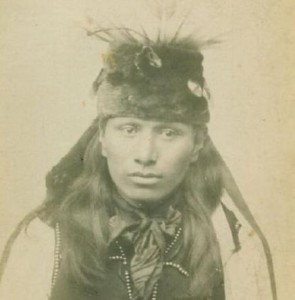
Black Elk

What we need now is a renaissance of indigenous tribal social systems, based on reverence for the natural world, and respect for one another.

Those people Darwin dismissed as “savages” may turn out to be the only ones who are able to survive in our new planetary epoch, as “All that is solid melts into air, all that is holy is profaned, and man is at last compelled to face with sober senses his real conditions of life, and his relations with his kind.”


Penn State Sexual Assault Verdict: Victory of the Homophobes?

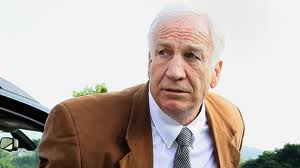
Jerry Sandusky

You have to wonder how much of the hoop-la over the Penn State sanctions can be attributed to simple homophobia.

Is it because the NCAA was totally grossed out at the thought of a football coach making out with a boy in the showers that they were moved to actually impose a sanction with some teeth?

After all, how many cases have we had nationwide of football and other athletic teams being involved with sexual assault of young women?  Can you think of any such cases where the top dogs actually took the victims’ side?

Penn State is different because it was a coach preying on underage boys. But how different is that, really, from team athletes preying on young women?

Certainly in both cases we have had many scenarios where administrators chose to turn a blind eye rather than discipline the offenders.

Generally speaking, sexual assault of young women is just boys being boys or men being men.

But sexual assault of boys by men is unmanly, and therefore deserving of major fines and sanctions.

What does it mean that the slide show published by The Huffington Post focuses especially on the horrified reactions of young women to the news that Penn State will be fined and have to forego its wins for more than the past decade?

Is the silent subtext that if women think this is over-the-top reaction to Sandusky’s sodomy, then it really is?

The truth is that American sports culture celebrates the cult of the male at the same time as it is rife with homophobia.

Clearly, Jerry Sandusky crossed the line and committed an unforgiveable crime against boys who trusted him.

Clearly no coach should be allowed to abuse his position of authority with either boys or girls.

But why is it that when girls are abused at the hands of sports teams, they face a tremendously difficult, uphill battle to get their claims recognized as legitimate in court, while when boys are victims, it’s really a crisis?

At its most basic, sexual assault is about the domination of the weak by the strong.  It really doesn’t matter so much what gender the underdog is.  I am as disgusted by the sexual assault of boys as I am by the sexual assault of girls.

I just wish I could say the same for our nation’s sports leadership.

It’s past time to clean up our act.

Taking the Leap into a Better World

Lately I’ve been feeling like I am straddling two banks that are rapidly moving away from each other, leaving me performing ever more of a balancing act in the middle of a rushing stream.

One foot is still hanging on to the familiar dry land on which I was born and bred: the safe, predictable world of a privileged existence within the capitalist empire, where every problem has a technological solution, all needs are met, and there is nothing really to worry about, beyond what to have for dinner, or where to go on the next vacation.

This is the world in which I am a true-blue Democrat, I pay my taxes without question, and I work hard in expectation of an eventual pleasant retirement.

But I also have a foot in quite another realm, one that is still quite foreign to most of my peers.

In this other, parallel universe, security and predictability are rapidly becoming a thing of the past, as the weather turns ever more erratic, leading to food shortages and a survivalist mentality.  Clashes between unarmed protesters and heavily armed police are common, with the protests mainly concerning lack of basic food and supplies.

No one knows where this is all heading, but it does not appear to be anywhere positive. The elites have hidden themselves away in their own privately funded strongholds, and other than the military folks it does not seem that anyone is really in charge.

Most people I know are clinging to the first bank, even though it’s beginning to seem ever more unstable, as if beset by internal tremors that are slowly but surely breaking it up. They are positioned like Walter Benjamin’s Angel of History, looking resolutely backward, away from the chaos of the future.

I don’t know why I am unable to join them in their denialist party.  It sure looks like a good time.

But having become aware of the crisis through which we’re living, I can’t just turn a switch and pretend I don’t know what’s going on. The second bank is like a mirage that is slowly coming into focus, no matter how much I try to turn away and not look.

I’ve spent long enough studying narratives of social upheaval and moments of violent crisis to know one when I see it coming.

A recent article in the New York Times Sunday Review provided an unusual window into the curious calm before the storm of all-out societal dissolution—in this case, the unfolding Syrian civil war.

The author, Janine di Giovanni, begins with a series of questions: “What does it feel like when a war begins? When does life as you know it implode? How do you know when it is time to pack up your home and your family and leave your country? Or if you decide not to, why?”

When does life as you know it implode?

When is it time to pack up and leave?

Where can we go to find safety?

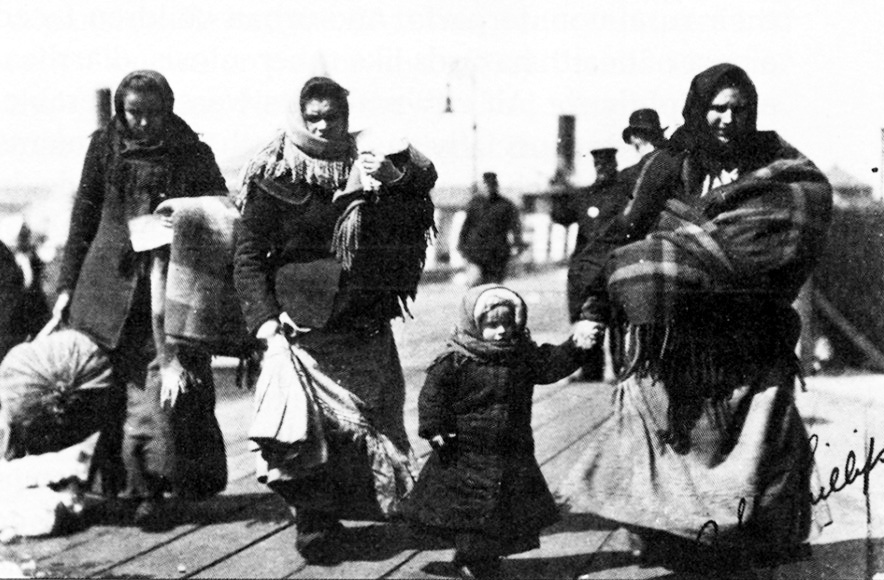
Eastern European immigrants entering New York

These are questions that my ancestors asked, back in the 19th century Europe of ever-narrowing restrictions and ever-more-violent pogroms.  I am here because they had the courage and the foresight to get away to safety before it was too late.

But now the safely cushioned existence that so many of us have enjoyed here in the U.S. and other privileged enclaves on the planet is threatened by a crisis of our own making.

We didn’t realize that everything about our lifestyle, politics and ideology would contribute to the downfall not just of American empire, but of human civilization itself.

We didn’t realize what a deadly game we were playing.

But we can no longer plead ignorance.

Unlike our predecessors, we 21st century folk are going to have a very hard time finding any place to go that is safe, where we can ride out the climate shocks unscathed.

We can’t run, we can’t hide from the environmental shocks that are only just beginning to hit. 

We have to stay and see this through.

What that will mean I am not sure.  In part it depends on how many of us wake up now and begin to take some proactive steps towards reorganizing our society, before we’re reduced to reactive crisis control.

Our political system is locked in a kind of stasis from which there does not seem to be any forward movement possible—just endless round and round and round.

We must move forward—grow, evolve, adapt—if we are to survive.

Today I caught a glimmer of something new that may be the early stages of the kind of change we need to successfully weather the coming storms.

The International Organization for a Participatory Society (IOPS) is an emergent (or is it insurgent?) movement to create a decentralized, highly participatory catalyst for urgent social change.

It’s not clear yet whether it will be a flash in the pan or an idea whose time has come.

So far it has just over 2,000 members worldwide.

Including me.

Maybe it’s time to stop straddling both banks.  Time to take the leap and jump fully into new territory, both feet on the ground.

Time to show some backbone on gun control!

Another summer, another mass shooting of innocent civilians.

Another round of media feeding frenzy on the tragedy, another collective outpouring of sympathy and outrage from the public, another set of poses and postures from politicians for and against increased regulation of weapons in this country.

It’s gotten to be so predictable, it’s hard to get that engaged, although of course one has to pause and reflect on the horror of being mowed down in one’s seat in a suburban movie theater.

The truth is, it’s amazing that this sort of thing doesn’t happen more often in America.

After all, we are the largest gun manufacturer in the world.  We’re also the largest producer of violent entertainment in the world, from BATMAN to video games to pornography.

Barring countries actively engaged in civil war—Syria, anyone?  Israel/Palestine? Congo?—we sport the most heavily armed civilian population in the world.

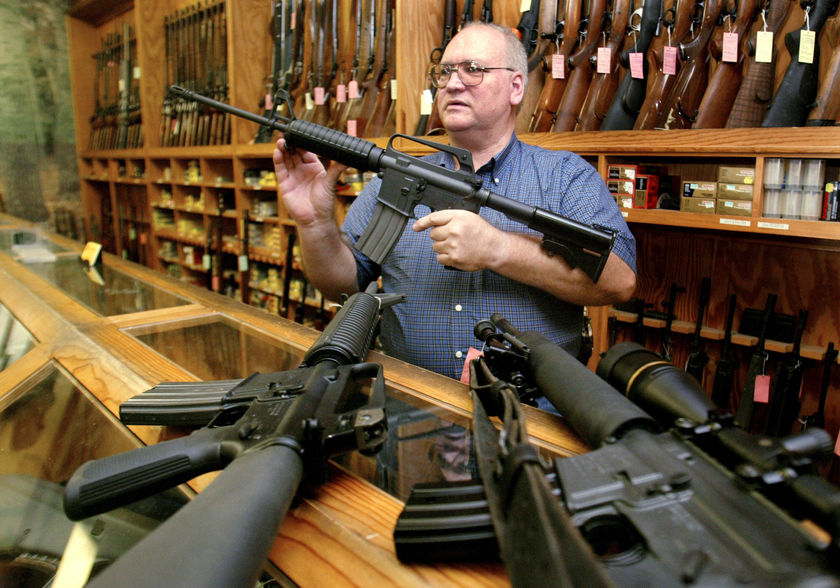
As the pundits have been saying repeatedly all day, states like Colorado have no regulation at all over who can buy assault weapons.  Any Joe can walk in to a gunshop and walk out with an AK-47, no questions asked.

With policies like that, is it any wonder lethal weapons end up in the hands of loonies and psychopaths?

Everyone knows what needs to be done: we need to make it much harder to obtain weapons, especially assault weapons.

After all, we don’t let kids get into cars and drive them without training and licensing, because we know cars can be easily turned into lethal weapons.

But actual guns, whose sole purpose is killing, we sell over the counter without screening or comment.

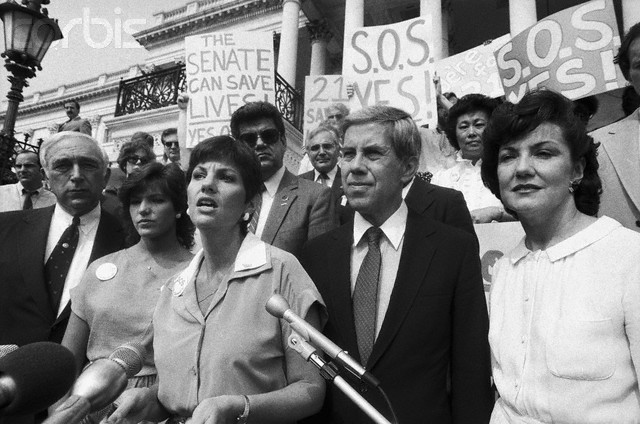
Back in the 1980s, it took a coalition of furious mothers to start the movement that eventually led to much stricter punishments for driving drunk, as well as greatly improved education for teens on the dangers of drunk driving.

Remember MADD, Mothers Against Drunk Driving?

Candy Lightner, founder of MADD

Those grieving mothers had lost their children to our nation’s lax drunk driving enforcement, coupled with a permissive, boys-will-be-boys culture, and they weren’t going to take their personal tragedies lying down.

Neither should we.

I want to see rallies in every state capital, demanding gun control legislation effective immediately!

I want to see Gabrielle Giffords at the head of a march on Washington, insisting that our nation’s leaders do more than put the flags at half-mast and shed some crocodile tears over the loss of innocent lives today.

Gabrielle Giffords


Gabrielle Giffords after being shot in the head

I want our society to show some backbone!

Not just on this issue, but on all the difficult issues that face us nationally and internationally today.

Enough sitting back and waiting for the next tragedy to strike.  Time to put down the remote, get off the couch, and get down to the business of making ourselves a better world.

Work-life balance is not just a women’s issue

Anne Marie Slaughter

I decided to bite my tongue and wait to see the reaction to the recent Atlantic Monthly cover story by Anne Marie Slaughter on women and the work-life balance—I knew as soon as I started reading it that it would set off a firestorm of commentary, and I have not been disappointed.

Slaughter, in case you have not been following this story, is a Princeton University professor and dean, who was drafted into the State Department by Hillary Clinton and worked there for two stressful years.  She wrote the article after returning to the snug harbor of Princeton, where, thanks to the flex time allowed by the higher ranks of academia, she is far better able to manage her professional and family commitments.

Slaughter’s main point in writing seems to be that our society needs to adapt itself better to the needs of working women. She calls for more women to get into leadership positions in business and government, and make workplace and policy changes that will make parenting and working outside the home more manageable.

Lori Gottleib, in a blog post on the Atlantic site, has little patience for Slaughter’s hand-wringing over the travails of long hours outside the home.

“The real problem here isn’t about women and their options,” she says. “The real problem is that technology has made it possible to work 24/7, so that the boundary between work and our personal lives has disappeared. Our cubicles are in our pockets, at the dinner table, next to our beds and even next to our children’s beds as we’re tucking them in. In many households, one income isn’t enough, and both men and women have to work long hours — longer hours than ever before — to make ends meet…. The problem here is that many people work too much — not just women, and not just parents.”

Hallelujah and amen to that, Lori!

For myself, I know the only way I can give myself some true down time is to get myself to a place where there is no wireless and no way to plug in my computer—ie, camping, hiking or at the beach—although even there I’ve caught myself using my iPhone to check messages or text people on the fly.  It’s been years—YEARS—since I’ve been unplugged for more than a day.

I can imagine a scenario where our society benevolently decides to use technology to allow more people to work from home, which will make things easier for parents in some ways, but will result in all of us becoming wired-in cogs in the capitalist machine, never really getting any time to ourselves unless we are able to set our own firm boundaries, something that most of us have trouble doing.

I agree with Professor Slaughter that family-friendly workplace policies are needed. I especially appreciated her anecdote about how when she was Dean at Princeton she always made a point of announcing at faculty meetings that she had to go home to have dinner with her family, to give other women permission to do the same without guilt or embarrassment.

But I share Lori Gottlieb’s sense that for most of us parents, the pressures of making a living are simply getting to be inhuman.

At the Strategies for a New Economy conference I attended a few weeks ago, several sessions dealt with the possibility of transitioning to a shorter work week.  This was the focus of a 2010 report by the New Economics Foundation, which argues for a 21-hour work week.  “There is nothing natural or inevitable about what’s considered ‘normal’” working hours today,” the authors write. “Time, like work, has become commodified – a recent legacy of industrial capitalism. Yet the logic of industrial time is out of step with today’s conditions, where instant communications and mobile technologies bring new risks and pressures, as well as opportunities. The challenge is to break the power of the old industrial clock without adding new pressures, and to free up time to live sustainable lives.”

The report’s authors suggest that “to meet the challenge, we must change the way we value paid and unpaid work. For example, if the average time devoted to unpaid housework and childcare in Britain in 2005 were valued in terms of the minimum wage, it would be worth the equivalent of 21 per cent of the UK’s gross domestic product.”

Imagine if we could invent a society where housework and childcare actually “counted” for something in real economic terms?

Imagine if parents were actually rewarded for spending quality time with their children, for doing all the time-intensive work it takes to raise healthy, productive, happy kids who will become healthy, productive, happy adults?

What if we spent less money on anti-depressants, stimulants and treadmills, and instead gave ourselves room to breathe, and time to relax?

No society can hope to survive without the good work being done by mothers and fathers, unpaid and unsung, day and after day and year after year.

This should not be just a women’s issue.  If more fathers got involved in the day-to-day nitty-gritty of parenting—unglamorous and tedious as it sometimes can be—there would be twice as much impetus to make the changes Slaughter is calling for.

How about it, Dads?