Embracing the Monster of Climate Change

Finally, a mainstream media reporter has the courage to bring up the elephant in the newsroom: CLIMATE CHANGE!!!

In a blog post—not a front page or prime time news story, alas–ABC News reporter Bill Blakemore writes candidly of the fear that a realistic assessment of the threat of climate change must raise in anyone who cares about the future of human civilization on this planet.

“Established scientists, community and government leaders and journalists, as they describe the disruptions, suffering and destruction that manmade global warming is already producing, with far worse in the offing if humanity doesn’t somehow control it, are starting to allow themselves publicly to use terms like “calamity,” “catastrophe”, and “risk to the collective civilization,” Blakemore writes.

“Sooner or later, everyone who learns about the rapid advance of manmade global warming must deal with the question of fear.”

Blakemore advises us to take a page out of the U.S. Air Force playbook and learn to “hug the monster” of climate change, rather than recoiling into fearful paralysis.

“If you freeze or panic — if you go into merely reactive “brainlock” — you’re lost,” he says.

“But if your mind has been prepared in advance to recognize the psychological grip of fear, focus on it, and then transform its intense energy into action — sometimes even by changing it into anger — and by also engaging the thinking part of your brain to work the problem, your chances of survival go way up.”

It is absolutely clear that we stand on the edge of the greatest crisis ever to confront human civilization.

It is also quite clear that almost NO ONE WANTS TO TALK ABOUT IT.

Sometimes when I bring up the reality of impending climate change I really feel like the drip, the drone, the total wet blanket in the room.  People actually give me dirty looks and do their best to change the topic ASAP.

Okay, people.  You go your way and I’ll go mine.

I don’t know whether it’s possible for humanity to survive the coming catastrophe of global heating.

If we survive, it will only be through a drastic change in our ethos and way of life.

We cannot continue to treat the planet as our private killing field, burning and hacking at all other life forms as if they did not matter a damn.

We in the Western world cannot continue to pretend that our wasteful, profligate lifestyles are a given that cannot be questioned, touched or changed.

To me the monster in the room is not so much global heating itself, as the destructive, predatory mindset that has brought it about.

If we are going to embrace the monster, as the Air Force suggests, and even employ anger as a tool of resistance, than we need to start getting angry at ourselves.

We Americans and Europeans have brought the planet to the brink of the next “global extinction event”—aka, the brink of total annihilation for the majority of current life forms on Earth.

Where is the anger? Where is the outrage?  Where is the will to change?

First step: acknowledge that the problem exists.

Thanks, Bill Blakemore, for getting us just a little bit closer to taking that first baby step.

Help Wanted: Strong Leadership on Climate Change, Starting Immediately

Now if only President Obama could show the same leadership on climate change as he has just demonstrated on the divisive same- sex-marriage issue.

The same narrow-minded interests that made same-sex marriage such a boogeyman for the President are also controlling the GOP-dominated boardrooms of Big Oil, from Mr. Cheney on down.

These people seem to be motivated by one thing only: the bottom line.  And they seem to be able to think only as far as a quarter or two ahead.

They don’t see that they are driving us as fast as possible over a cliff from which there will be no recovery.  Or maybe they see, but just don’t care.

It was with great appreciation that I opened up The New York Times Opinion pages today and saw the indefatigable James Hansen offering the lead op-ed, once more displaying his vision and leadership in 1) insisting that the comfortable NYT readers pay attention to the imminent and grave threat of climate change, and 2) offering a practical solution for bringing about the swift change of course we need to avert disaster.

Those of us who have been thrown into gloom by the prospect of Canada scraping down the boreal forest to exploit their tar sands will be somewhat heartened by the strong language Hansen uses to condemn this approach to “solving” the peak oil crisis.

Alberta, Canada: from boreal forest to tar sand devastation

“Canada’s tar sands, deposits of sand saturated with bitumen, contain twice the amount of carbon dioxide emitted by global oil use in our entire history. If we were to fully exploit this new oil source, and continue to burn our conventional oil, gas and coal supplies, concentrations of carbon dioxide in the atmosphere eventually would reach levels higher than in the Pliocene era, more than 2.5 million years ago, when sea level was at least 50 feet higher than it is now. That level of heat-trapping gases would assure that the disintegration of the ice sheets would accelerate out of control. Sea levels would rise and destroy coastal cities. Global temperatures would become intolerable. Twenty to 50 percent of the planet’s species would be driven to extinction. Civilization would be at risk.”

This is not some crazy Armageddon-spouting evangelical talking here.  This is James Hansen, senior scientist and director of the NASA Goddard Institute for Space Studies.

The way to head off this catastrophic scenario, as Hansen and many other scientists have been telling us now for at least a decade, is to reduce our use of fossil fuels.

It’s not rocket science, it’s common sense, and Hansen has an easy, no-nonsense solution for forcing Americans to change our ways and start doing what we have to do to save our planet and our civilization.

“We should impose a gradually rising carbon fee, collected from fossil fuel companies, then distribute 100 percent of the collections to all Americans on a per-capita basis every month. The government would not get a penny,” Hansen says. “This market-based approach would stimulate innovation, jobs and economic growth, avoid enlarging government or having it pick winners or losers. Most Americans, except the heaviest energy users, would get more back than they paid in increased prices. Not only that, the reduction in oil use resulting from the carbon price would be nearly six times as great as the oil supply from the proposed pipeline from Canada, rendering the pipeline superfluous, according to economic models driven by a slowly rising carbon price.”

As Hansen observes, in practice what we have been doing is just the opposite: “instead of placing a rising fee on carbon emissions to make fossil fuels pay their true costs, leveling the energy playing field, the world’s governments are forcing the public to subsidize fossil fuels with hundreds of billions of dollars per year. This encourages a frantic stampede to extract every fossil fuel through mountaintop removal, longwall mining, hydraulic fracturing, tar sands and tar shale extraction, and deep ocean and Arctic drilling.”

These subsidies must stop.

Canada and the US must stop playing poker with the future of our children and our planetary epoch.

All of us, from President Obama and Prime Minister Harper right on down to each one of us ordinary folks who drive cars, heat our houses and run our air conditioning, need to stop pretending that business-as-usual can continue any longer.

Occupy Earth

In the week since the Occupy May Day General Strike, I’ve been thinking a lot about the impact of the event.

Friends who were in New York City that day say it was tremendously exciting, especially the permitted march from Union Square to Wall Street, which apparently stretched out strong over some 30 blocks.

As far as I could tell, mainstream media reported only the arrests that occurred, and that fairly grudgingly.  There has been little effort to explain or explore the anger and frustration that propelled hundreds of thousands worldwide out into the streets on May Day.

Maybe that’s because it’s an old story.  Yesterday’s news!  We know that students are unhappy about being $1 trillion in debt; we know that millions of homeowners are unhappy about being “underwater” with their mortgages, or losing their homes due to foreclosures.  We know that there aren’t enough jobs to lift our economy out of the doldrums.  It’s old news, people!  Tell us something we don’t know!

So the question becomes, is a protest effective if it is ignored by the mainstream media?

I would say yes: the fact that the MSM treated May Day as unimportant is more revealing of how out of touch the editors are than of whether or not the protest was real and meaningful.

On social media, May Day was well covered, especially at interactive, citizen journalism-type venues like Livestream and Twitter.

And if you go on the Occupy Wall Street site now, you’ll find that the organizers are already bounding on to the next action.

May Day was just one in a whole series of protests planned. It was an opening volley of what promises to be an intense, engaging spring.

But it opened up a question that is not likely to go away any time soon.

How important is it to actually show up, in the flesh, for a protest?

I was berated by one reader for choosing to stay in my classroom on May Day rather than joining the protests.

Other readers expressed their support for my decision to “occupy my classroom,” where my individual presence was perhaps more important than it would have been as an anonymous member of the crowd on Broadway.

I have been pondering this question in the past week.  As someone who is deeply involved with new media, I have to say that I believe that what happens in cyberspace is at least as important as what happens in physical space.

Maybe it’s even more important.

It is no exaggeration to say that millions of people participated in the May Day protests online, via Facebook, Twitter, Livestream and so many other interactive platforms.

The protests spread around the world, just like the May 5 “Connect the Dots” climate change awareness events.

Through the magic of cyberspace, we were all united in a common goal: expressing our outrage over the cynical manipulation and impoverishment of the 99% by the 1%, and demanding that the interests of the 99% be taken into account in matters of political and economic policy.

Although I have no doubt that face-to-face General Assemblies and marches are important, it is ridiculous to discount the impact of what goes around and comes around in cyberspace.

Are we approaching the weird tipping point when our cyber-selves will be more important than our physical selves?

As I keep reminding people, cyberspace is totally dependent on electricity for its existence.

So if we want to preserve cyberspace as a place of radical openness, communitarianism and oppositionality, it behooves us to pay attention to the real 99% in the current equation: the natural world that has been providing us with the means to create the current that runs the virtual world.

I might be tempted to buck my agoraphobia (fear of crowds) and make the leap from cyber-protest to physical protest if the goal were defending not just jobs or homes or social equality, but the underpinning of it all, the great mother herself, our beloved community, our Earth.

To Avert Climate Change Disaster, Connecting the Dots Must Go Viral

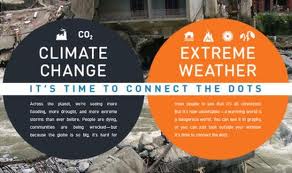
As of 8:30 a.m. EST this morning, 10,000 Facebook folks had already “liked” the new 350.org “Connect the Dots” campaign, which encourages people around the world to connect the dots between climate change and extreme weather.

That’s a good number of “likes.” But what we really need is for the concept to go viral, the way the Kony 2012 campaign did a few weeks back.

It will require the attention of millions of people, particularly those in the driver’s seat of climate change—that’s you and me, my fellow Americans—to turn this global heating juggernaut around.

Lately I can’t seem to stop asking myself why it is that so few people I know are willing to focus their attention on the crucial issues of our time: climate change, the chemical poisoning of our environment, the steadily accelerating wave towards what scientists call “the sixth great extinction event on Earth.”

I often feel like Cassandra of Troy, who was able to see disaster in the future of her beloved community, but was under a curse, imposed by the god Apollo, of never being believed or listened to.

It’s not so much that people don’t believe what’s coming (although we certainly have our share of climate change deniers in the U.S.)—it’s that they just don’t want to hear it.  They don’t want to know.

Maybe this is simply the animal in us coming out.  Like my peaceful dog, who sleeps by my side without any thought or concern for the future, we humans focus on the immediate tasks at hand—making a living, bringing up children, keeping the house clean, exercising, shopping, planning birthday parties, you name it—and we get so wrapped up in all that busyness that we are able to blot out the daily dying screams of millions of birds and animals, the rip and tear of millions of acres of forest going down before the chain saw and bulldozer, the sobbing of millions of children who go to bed hungry every night, the ever-increasing militarization of our world civilization, and the sinking knowledge that those in control of all those weapons and surveillance systems do not stand for good.

Sometimes I really envy my friends and neighbors who are able to cheerfully ignore what’s going on in the background, and focus on making the best of each day they’re given.

Sometimes I think that’s what I should be doing too.

Why torment myself with the constant awareness of spiraling crisis, especially if I can’t do anything about it anyway?

But there’s the rub.  I do have something to offer to the fight to connect the dots and raise the necessary momentum to push Americans, potentially the most powerfully innovative, can-do people on earth, off their couches and out into the trenches of turning this crisis around.

I have my voice, which thanks to the internet can be amplified around the world and swelled into a great chorus that cannot be ignored.

Over the last few years, I have made a study of change agents—otherwise known as activists.  I know full well that every single one began as I am beginning, just sitting with the burning knowledge that things are not right, and that change is possible.

The great Bill McKibben began his climate change work in his classroom, working with a group of tech-savvy college students who realized that the Web could be used to raise awareness about the necessity of keeping carbon emissions to under 350 ppm in order to head off extreme and irrevocable climate change.

In 2007, Bill and his students launched the first iteration of 350.org and were off and running, using the incredible tools of social media to connect people, places and events all over the world.

This is the thing.  We have the ability, as never before, to see the Earth as a whole system; to understand that every creature and community on the planet is vital to the functioning of the whole and has the right to a peaceful, prosperous life.

We as humans have the ability to distinguish between right and wrong, and we know full well that the damage we are causing with our reckless, destructive, indifferent ways is wrong.

We need people from all over the world, but especially Americans and Europeans, who have been responsible for so much of the damage, to come down on the side of right, on the side of life, on the side of justice.

Yes, it’s going to mean making lifestyle changes.

Yes, it’s going to take some focused attention on the local, national and international levels.

But if we do nothing—if we continue in our unconcerned merry ways, too busy and distracted to get involved—then we will wake up one morning facing some much more severe lifestyle changes.

One morning it will be us waking up to a howling tornado flattening our town, or a raging flood sweeping away our Main Street, or an oil slick blackening our local beach, or a spike in food prices that makes even the basics no longer affordable.

It’s time to connect the dots, people, and pay attention.  Add your voice to mine, and let’s go viral with a campaign for a sustainable planetary future that cannot be ignored.

Staring down the crystal ball

I really want to believe it’s all a hoax.

Why else would not one mainstream media outlet be reporting on the massive danger posed by the unused fuel rods in Fukushima Reactor 4?

Today I learned (through a link posted by on Facebook by my friend, the author Susan Griffin) that a group of high-level scientists, diplomats and civil society organizations has issued an urgent call to U.N. Secretary General Ban Ki-Moon, requesting U.N. leadership in an international effort to stabilize the fuel the wrecked Fukushima plant.

This call has been endorsed by U.S. Senator Roy Wyden, who visited the plant in April and reiterated the call for urgent international action.

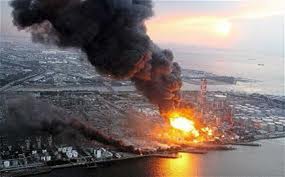
If the fuel in the plant were released into the atmosphere, which would be almost inevitable in the event of another earthquake, “this could result in a catastrophic radiological fire involving nearly 10 times the amount of Cesium-137 released by the Chernobyl accident,” according to the letter to Secretary Ban.

Fukushima burning

Given the climatological realities of wind and ocean currents, this could potentially put hundreds of millions of people at risk of radiation poisoning—not to mention the devastating effects on flora and fauna.

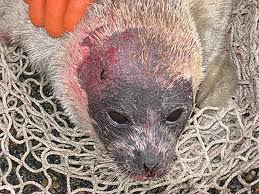
Remember the reports of thousands seals with fatal skin lesions washing up in the Arctic? Apparently polar bears and whales are also known to be affected.

Imagine that multiplied tenfold, and affecting not just marine life, but humans as well.

And then ask yourself, why is only one U.S. Senator engaged with this issue?

Why are we frittering away our precious time on White House Correspondents Dinners and sports events, when in so many ways our future hangs in the balance, connected by a very short fuse to multiple forms of total catastrophe?

Sometimes I look down at my peacefully sleeping dog and think, maybe he has the right idea.

Why fret and worry about the future?  It will come soon enough…might as well enjoy life while it lasts.

But that is what separates us humans from other species.  We can see into the future.  We can spin out possible future scenarios based on how we act today.

And given these crystal balls of ours, can we really in good conscience shrug our shoulders and head off peacefully to bed?

Stop the holocaust of migrating birds

Lately I have been sitting with the brooding knowledge that at least 7 million migrating songbirds were killed this spring running the gauntlet of 84,000 American communication towers that rise as high as 2,000 feet into the sky, braced by invisible guy wires that garotte the birds right out of the air.

This is actually just a fraction of the number of birds killed each year by running a collision course with human activity.

This spring has been more silent than ever. The traditional dawn chorus of birdsong has ebbed to a few lonely little souls, most belonging to non-migratory species like cardinals, bluejays, chickadees and sparrows.

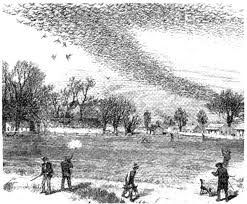
They say that when Europeans first arrived on this continent, the migration of the passenger pigeons would literally darken the sky for minutes on end.

I have never seen a living passenger pigeon, and it seems that my grandchildren will not know what I mean when I talk about the dawn chorus of riotously busy, happy birdsong, any more than they will be able to imagine an apple orchard in full bloom buzzing with the diligent harvest of a million droning bees.

Knowledge like this makes me sick at heart.  My rational side is aware that mourning is not productive, but another side of me knows that it is one of the special gifts of us humans to feel grief; to locate particular sadnesses in the larger landscape of suffering; and to use our sadness and anger at injustice as a lightening rod for change.

Other animals and birds feel grief as well, but you won’t find the great community of birds gathering together to make plans to topple all the communication towers in North America.

No, the birds will go quietly, one by one, into the endless night of extinction.

Just as it was our ingenuity that created those needle-like structures, held up by steel deathwires, it is our job as humans to recognize the destruction we are causing and make sure it changes.

I am not suggesting that we give up our communications towers—that would truly be a quixotic quest!

I am suggesting that we place value on the lives of 7 million birds—the number that scientists estimate are killed annually by communications towers taller than 180 feet.

What can be done?  Well, there must be some way to make those wires visible to the birds.  We could drape them with some kind of fabric, or coat them with a glittering reflective paint.  We could emit some kind of sound signal that would alert the birds to avoid the tower area.

The scientists studying this issue noted that simply changing the lights on the towers from solid red lights, which apparently mesmerize the birds in bad weather, to blinking lights, “could reduce mortality about 45 percent, or about 2.5 million birds. The study also recommended that businesses share towers to reduce their number and build more freestanding towers to reduce the need for guy wires.”

As we saw when Rachel Carson succeeded in getting DDT banned, bird populations can and do rebound if given the chance.

But not once they’re extinct.

We must act now, before the songbirds follow the passenger pigeons into permanent silence.

From Big Tobacco to Big Corn: the time to stand up for the right to health is NOW

Two years ago, I was taking multiple steroid inhalers every day for asthma, which began in the aftermath of a couple of bouts of pneumonia, and was always accompanied by typical seasonable allergy issues—coughing, sneezing, runny nose.

In the summer of 2010, in addition to the usual asthma and allergy symptoms, I also came down with a severe intestinal infection, requiring antibiotics to overcome.

When, in the wake of the course of antibiotics, my digestion was still troubled, I decided to experiment and see if removing gluten from my diet made any difference.

Lo and behold!  After just a month without gluten, my intestinal issues made huge progress.  And even more impressively–and completely unexpectedly–my asthma and allergies also disappeared.

When, after a while, I also decided to give up meat, except for the occasional small portion of chicken, the results were nothing short of miraculous.

Longstanding feelings of intestinal bloating disappeared overnight.  Bleeding hemorrhoids totally cleared up.  And the asthma and allergies, which had sometimes been so severe that I ended up in the ER begging for more drugs, were gone for good.

This remarkable shift in my own personal health, as a result of giving up meat and gluten, really makes me wonder.

Why is it that the gluten-free market is one of the fastest growing packaged food sectors right now?

Why are so many of us getting sick from our food supply?

Could it have something to do with the fact that most of our nation’s food supply is produced by industrial agriculture, relying on GMO seeds, as well as herbicides, fungicides, and pesticides in the growing process, not to mention all kinds of preservatives once the corn and wheat is on its way to the table?

I am heartened by the news that hundreds of thousands of farmers and consumers are pressuring the USDA to reject Dow AgroScience’s 2,4,D-resistant corn.

It is high time that all of us stood up to Big Ag and said enough is enough!  Why should we have to spend top dollar to buy organic, when the truth is that all food should be produced in an organic and sustainable manner?

Big Ag will reply that it would be too expensive to produce tons of corn, wheat and soybeans–not to mention beef and pork– organically.

But you know what?  Being sick is very expensive.  Health care is a huge drain on our national economy, as anyone who has been paying attention knows.

Could it be that the industrial agriculture/pharmaceutical/insurance conglomerates actually want a sick populace?

Imagine the outrage if that story were to break.

Imagine if it were proven that the incredible spike in autistic children is due to pesticide poisoning.

Imagine if we could prove that the asthma epidemic in this country is due to auto-immune problems generated by toxic food.

Imagine if we could nail the chemical companies for the explosive growth in cancers, diabetes and heart disease!

I don’t think this is far-fetched at all.

In fact, it’s low-hanging fruit for a cadre of well-trained lawyers with the guts to go up against the big bad guys.

In our parents’ generation, it happened with Big Tobacco.

The evidence is staring us in the face.

What are we waiting for?

Nuclear famine: the future that must never happen

“I am convinced that nuclear weapons must be abolished. Their use in a military conflict is unthinkable; using them to achieve political objectives is immoral.”

Who said this?  Not your average peacenik hippie.  Not even a pie-in-the-sky anti-war activist.

No, it was Mikhail Gorbachev who called for the total abolishment of nuclear weapons, in a recently released report by the renowned International Physicians for the Prevention of Nuclear War (IPPNW) and its US affiliate, Physicians for Social Responsibility (PSR).

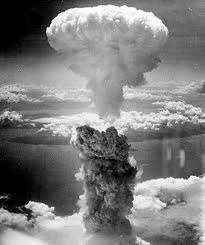
A-bomb on Nagasaki

The report is grimly entitled “Nuclear Famine: A Billion People at Risk—Global Impacts of Limited Nuclear War on Agriculture, Food Supplies, and Human Nutrition.” Its lead author, Dr. Ira Helfand, draws upon new modeling evidence showing that  “even the relatively small nuclear arsenals of countries such as India and Pakistan could cause long lasting, global damage to the Earth’s ecosystems andthreaten hundreds of millions of people….It would not cause the extinction of the human race, but it would bring an end to modern civilization as we know it.”

Even a limited nuclear exchange would affect the production of staple foods like corn and rice worldwide. “Significant agricultural shortfalls over an extended period would almost certainly lead to panic and hoarding on an international scale, further reducing accessible food,” the report says.

It is hard to get a handle on how to stop the steam roller of global carbon consumption, which in itself is a recipe for disaster.

Nuclear weapons, by contrast, are controlled by nation states, and can be precisely counted.

Nuclear weapons can be disabled and destroyed.

There is no sane reason for the U.S. and the U.S.S.R. to maintain hundreds of nuclear warheads ready to go at a moment’s notice.

That 20th century Cold War mentality has to be consigned to the dustbin of a very dangerous, outmoded and counterproductive history.

Imagine what would be possible if instead of investing billions of dollars in nuclear weapons each year, those funds were invested in renewable energy sources, sustainable agriculture, and devising methods of increasing human health and welfare while also creating a sustainable human footprint on the planet.

There is so much to protest these days, and nuclear weapons seem beyond the ken of most ordinary citizens.

But these are our lives the generals are gambling with.

We need a concerted people’s movement to insist that the time of nuclear weaponry has come and gone.

We vote for peace and life. Tell me, Mr. Politician, are you going to vote against us?

Loving Earth

To save the Earth, we must fall in love with her, writes Robert Koehler, taking his inspiration from the work of Charles Eisenstein, author of Sacred Economics.

Koehler and Eisenstein say that in the trajectory of human evolution, we have been locked in the selfish adolescent phase for a long, long time, just seeking to take what we need from our Earth mother, without thought of giving much in return, or of the reality of finite limits.

When we fall in love, Eisenstein says, “perfect selfishness falls apart as the self expands to include the beloved within its bounds.”

I remember falling in love like that as an adolescent, and as a young adult too.

It’s true that when you’re in love, the boundaries between the self and other dissolve, and you exist in a harmonious utopia of mutual beneficence.

But at least for most of us fallen humans, that kind of all-encompassing love doesn’t last forever.

It can’t.  It’s too intense.  Eventually the first ecstatic glow fades and the angelic beloved assumes normal, human proportions, with all the associated warts and odors and quirks of behavior and thought that our human bodies and minds possess.

What happens to love then?

If we are compatible for the longterm, the initial heady crush transforms into a much more solid platform of respect, shared interests, and deep concern for each other.  We care about each other, we enjoy being together no matter what we’re doing, and we respect each other’s views, goals, and talents.

We become partners in the truest sense of the word.

Is it necessary to go through the romantic, boundary-dissolving “falling in love” stage to get to the mature relationship of partnership?

In our culture, we believe it to be.  Our young people, tutored by every aspect of media and pop culture, assume that being swept away with love is a pre-requisite to successful marriage.

And yet how many of their parents, who followed that same script, ended up in bitter divorce fights?

Although I understand the intent behind Koehler’s and Eisenstein’s valorization of “falling in love” as a model for the depth of passion needed to fuel successful environmental action on behalf of the Earth, I am not convinced that this is the right message to be sending.

Young people today may still harbor romantic dreams, but they live day-to-day in a casual hook-up culture that prides itself on separating sexual enjoyment from commitment.

Fifty percent of their parents have made the journey from early romance to disillusioned divorce.

Another 25% or so of adults are either unhappily married, or unhappily single.

The “falling in love” model thus hits home with too few Americans to be effective as a rallying call for environmental action, and it is too limited a metaphor for the depth and breadth of passion that we must summon now to be effective Earth stewards and activists.

Instead we must love with the unconditional devotion of a mother for her child, with the sincere, selfless wish to see that new life grow and prosper and move forward beyond us.

We must love the Earth with the intensity of devotion that recognizes that for her to thrive, it may be necessary for us to part.

Earth has loved us with this kind of pure altruism all these many years of human emergence.  Now, as in the terrifying story of The Giving Tree, she has given so much that she has practically sacrificed herself entirely.

Nothing we can do to the Earth will wreck her forever.  Forever is a long, long time, in geologic terms.

But there is still time to shift from heedless destruction to the kind of loving tending that the Earth herself has modeled for us all these years.

There is still time to develop the kind of deeply caring reciprocal partnership that will last a lifetime, and beyond.

Bill McKibben, our environmental Pied Piper, is at it again

Bill McKibben

You gotta admire Bill McKibben. And you gotta wonder, where the frack does the guy get his indefatigable energy??

Off he goes again this week, starting a new campaign to protest hydraulic fracking in Ohio—you know, the state where natural gas drill rigs caused manmade earthquakes.

I think we all have a pretty good idea of how bad it is to have flammable toxic fumes coming out of your water faucets, earthquakes rumbling in your backyard, and tons of toxic waste building up above and below ground level.

Fracking sucks and we know it. It must be stopped. The question is, are we going to follow Pied Piper Bill to Ohio to occupy the Statehouse and make our demands known?

No doubt there will be plenty of Ohioans and even ardent out-of-state environmentalists who rally to the call, just as they did last summer when Bill led them down to Washington DC for sit-ins to protest the Keystone XL.

That battle did score some points, although more recently it seems that the southern portion of the titanic pipeline is going to be built after all, another huge investment in 20th century thinking and technology that can lead us in one direction only: over the nearest cliff.

***

In the Grimm fairytale, “The Pied Piper of Hamelin,” the town suffers from a plague of rats, which only the Pied Piper can solve.  When the town councilmen refuse to give the Piper his just reward for destroying all the rats, he takes his revenge, leading all the children of the town into a mountain cave, from which they are never recovered.  The moral of the story: don’t cheat the Piper!

Today the rats we suffer from are precisely the fossil fuel industry and their military-industrial, Big Ag, Big Finance brethren, which are, as in the Grimm story, destroying our homeland and eating us alive.

Even if Bill McKibben could lead all those rats into the river, we would still be left with the greedy councilmen, our politicians, who would very likely continue playing by the old rules, and would bring further disasters upon us.

When the Piper wanted to punish the town fathers, he did so not by attacking them directly, but by attacking their children.

Truly, there can be nothing worse than being forced to watch your children suffer and die.

Sometimes I think that the only way the rich and privileged are going to listen to reason and stop their destructive, world-killing ways is if they are forced to confront the reality of what their children will have to live with in the future, because of the lifestyles they themselves are living now.

I say “they” but I should be saying “we,” because I certainly have participated in this destructive lifestyle my whole life.  We humans, especially privileged Americans and Europeans, have been the rats that have been destroying the global village for decades now.

Unlike rats, though, we humans generally respond to reason.  We can be persuaded to change our ways, especially if we can be made to understand that the future survival of our precious children is at stake.

What sort of tune would the Piper need to play to change the hearts and minds of the frackers, for example?  Or the loggers, or the tar sands extractors, or the nuclear power plant engineers?

Bill McKibben has been tireless in his efforts to hit the right notes to attract enough people to follow him—not over a cliff or into a mountain tomb, but into a sustainable future.

You gotta admire the guy.  You gotta think—maybe I should get on that bus for Ohio.