Round up the chemicals–for our children’s sake

When I was pregnant with my second son, born in 1998, I was living out in the country in a small house next to my parents’ bigger house.  My son was born in late August, and all through that third trimester I spent a lot of time outside.

In those years, my mother had the habit of having her pebble driveway sprayed with Round-up a few times during the summer to keep the grass and weeds at bay.  Since the pebbles came right up by the front door of our little house, the Round-up was there too.  I complained to her that it was toxic, bad for our pets, not to mention us, but it took many years for her to pay enough attention to this issue to rate health more highly than a neat appearance for the driveway.

I was thinking about this today as I read the news that finally, at long last, the medical research establishment is beginning to go public in announcing the link between the use of Round-up, skyrocketing rates of autism among children, and colony collapse disorder among bees.

My mother will remember that when my second son was born, we began to worry about him when, by his second and third month of life, he was still not making eye contact, and not returning a smile. He was a sweet, calm baby who slept and ate well, and loved to be cuddled…but unlike his older brother, who was laughing and smiling in his first month, he had a curious detachment about him that was unsettling.

Just like everyone knows someone with cancer, everyone knows someone who has had the hardship of bringing up an autistic child.  It’s a heartbreaker, and in those early months with my second son I was truly frightened that I might be in for that kind of ride with him.

And then, just like that, he started to smile, make eye contact, and all was well.

Could it be that his development was delayed because of the local spraying of Round-up during the last months of my pregnancy with him?

Recent research suggests that this is quite possible indeed.

It’s common knowledge that the Monsantos and Dows of the world use their immense fortune to suppress negative research when at all possible.

Source: U.S. Center for Disease Control

But at this point, with our bee population in serious crisis and the U.S. Center for Disease Control (CDC) telling us that 1 in 88 children is now diagnosed with autism (a figure that does not include all the many, many children who are diagnosed “on the spectrum” with some form of mental impairment), it is impossible for the corporate honchos to keep the lid on this story any longer.

It is an international scandal, bigger even than the Big Tobacco scandals of a generation ago, because in this case there is no way that a defense team could argue that it is a child’s choice to expose herself to toxic chemicals.

France, Germany, Italy and other European countries have already taken steps to ban these harmful pesticides and herbicidesThe U.S. Environmental Protection Agency, finally acting under extreme pressure from concerned citizens, is in the process of “reconsidering” its approval for “Poncho,” one of the most dangerous pesticides, proven to have a negative impact on bees.

Dr. Brian Moench, President of Utah Physicians for a Healthy Environment and a member of the Union of Concerned Scientists this week had the courage to defy Big Ag and describe—I believe for the first time—the missing link between bee colony collapse disorder, human autism, and widespread toxic chemical use in agriculture.

In an article published Monday on Common Dreams, Dr. Moench wrote: “The brain of insects is the intended target of these insecticides.  They disrupt the bees homing behavior and their ability to return to the hive, kind of like “bee autism.”   But insects are different than humans, right?   Human and insect nerve cells share the same basic biologic infrastructure.  Chemicals that interrupt electrical impulses in insect nerves will do the same to humans.  But humans are much bigger than insects and the doses to humans are  miniscule, right?

“During critical first trimester development a human is no bigger than an insect so there is every reason to believe that pesticides could wreak havoc with the developing brain of a human embryo.   But human embryos aren’t out in corn fields being sprayed with insecticides, are they?  A recent study showed that every human tested had the world’s best selling pesticide, Roundup, detectable in their urine at concentrations between five and twenty times the level considered safe for drinking water.”

Just down the road from the house where I lived while pregnant with my second son are fields of corn that are maintained by a local farmer.  It’s nowhere near the scale of agriculture in the Midwest or California, but still, if the wind was blowing while they were spraying the herbicides and pesticides in the spring, or while they were harvesting the corn in the fall, we would certainly be inhaling a toxic brew, that undoubtedly found its way into our well water.

And that’s beside the voluntary Round-up spraying of the driveway, and the fact that in those days I was not aware enough to be making a strong effort to buy organic fruits and vegetables, and avoid commercial meat.

So all in all I must consider myself and my family very lucky to have so far avoided autism or cancer.

This should not be left to luck.  Allowing Monsanto, Dow and the other agricultural chemical companies to continue to profit from poisoning our land and our food supply is absolutely unconscionable.

It’s even worse than allowing the cigarette industry to advertise to young people, which we no longer permit.

The bees are the canaries in the gold mine, and they’re dropping fast.

Are we going to delay until the statistics tell us that 1 in 50 children in the U.S. are born autistic?

This is a national and international outrage that must be addressed now.

Opening to the energy that can change the world

In the course of any given day, I swing from hope to despair and back again at least three or four times.

On the one hand, it’s such an amazingly hopeful and alive time in terms of communication and discovery.  We are constantly learning so much more about our relationship with the natural world and with each other.  Every day brings fresh evidence of the myriad ways in which we are deeply interconnected with all Earth systems and with other Earth-based creatures.

On the other hand, that knowledge does not seem to be adding up to practical change in the real world.  Every day thousands of acres of virgin forests are cut and bulldozed.  Every day drills open up new spigots for deeply buried oil and gas deposits, which can only be extracted at great risk to the surrounding environment. Every day more chemicals are wantonly spread over the landscape and taken up in the bodies of mammals like us, as well as birds, fish and all the other creatures of the land and sea.  Every day hundreds of species, including us humans, move inexorably closer to extinction.

Why is it that despite all we know about the crucial importance of protecting our planetary home, we continue to desecrate and destroy it at ever-increasing speed?

Maybe the answer has something to do with that “we.”  Maybe the “we” who know that our survival as a species depends entirely on our responsible stewardship of the environment just isn’t the same “we” that is out there with the chain saws and the bulldozers.

Maybe the great challenge of our time is getting through to those other people, the destructive ones, the violent ones, the ones who do not seem to be able to perceive the bigger picture and how urgent it is now that we—as a global human civilization, united in our desire to survive and thrive on our finite planet—begin to practice radical sustainability at an accelerated pace.

The stakes are huge.  At this week’s international “Planet Under Pressure” conference in London, the stark statistics were rehearsed yet again.  They’ve gotten so familiar to me that I probably mumble them in my sleep every night.  The new video “Welcome to the Anthropocene” does an excellent 3-minute job at summarizing what we’re up against.

Still image from "Welcome to the Anthropocene"

But knowing the statistics and seeing what’s wrong is not at all the same as knowing what to do to make things right.

It’s so hard to know where to put one’s energies.

Do I go full-bore at the sustainable energy issue, following Bill McKibben?  Maybe a hunger strike in front of the White House would be an effective protest against the Keystone XL pipeline?

Do I go chain myself to a tree in the Amazon or in the rainforest of Indonesia, to protest the deforestation that is depriving us of the vital lungs of our planet?

Should I use my skills as a teacher to try to rouse the young people from their media stupor, using whatever scare tactics are necessary to get their attention and galvanize them to action?

Should I just be out there practicing “re-skilling,” in the Transition Town vernacular: relearning the old skills of surviving off the grid, living leaner and closer to the land that sustains us? Is it time to learn to keep chickens and pigs in my backyard, and finally set up the bee hives I’ve always wanted?

Or maybe I should be up on a mountaintop meditating and communing with the natural world, seeking the vision that will eventually show me the light?

What is it that I should be doing with this one wild and precious life I’ve been granted, in this fast-moving, tumultuous, unpredictable time in our planetary history?

Asking these questions is all I can do right now, just keep asking them and pondering and feeling my way towards my role in what lies ahead of us all.

I want to make an offering of my life.  I want to be a channel through which the positive, loving energy of the universe can flow out and make things right again with our world.

Occupy Health–Our Planet’s, Our Own–this May Day

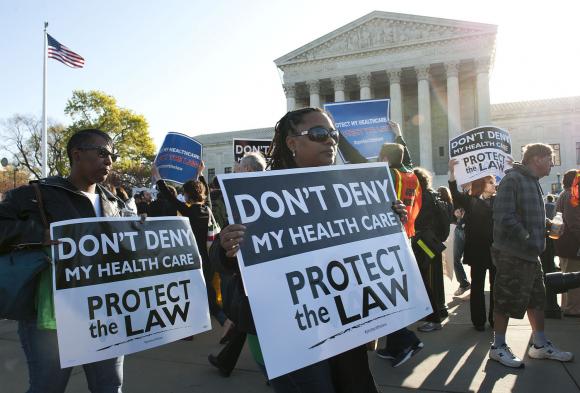
It doesn’t take a genius to understand the premise of the new health care law, which is that all Americans should buy health insurance so that the healthy can help subsidize the sick.

I don’t hear anyone whining about the fact that we are all required to buy car insurance, even though many of us, like me, hardly ever have cause to use it.

Health insurance could and should operate under the same principle. If everyone pays their share, the costs will also be shared.

And the so-called individual health insurance mandate will most likely be much less expensive for society in the long run, since it will result in increased preventive care and far fewer expensive emergency room visits.

Of course a universal single-payer system—Medicare for all—would be much better than the “free-market” insurance system that is under discussion today.  But at least having everyone insured, with subsidies to help those who can’t afford to pay, is a good step in the right direction.

The new law also prevents insurance companies from denying people health care because they’re sick, a truly barbaric Americanism, and allows families to continue to cover their children’s insurance up to age 26.  Who could argue with that?

The truth is that our nation could easily afford to cover all its citizens’ health care, and then some, if we took several crucial steps:

  • Properly tax the rich: close tax loopholes, tax financial transactions, make a genuine commitment to closing the abyss between the 10% at the top and everyone else.
  • Shut down the war machine; spend money on butter, not guns—or better yet, on organic vegetables that will keep people healthy.  It’s insane to put so many trillions into weapons aimed at blowing people up, and then throw a hissy fit about government spending on keeping people healthy.
  • Raise the minimum wage substantially, so that people can afford to eat healthy food, live a healthy lifestyle, and buy own their health insurance policies.

We live in a nation besieged with ill health.  From cancer to diabetes to heart disease and asthma, not to mention depression, ADHD and autism, we are a country of chronically ill people.  I blame much of this on the toxic food that has been sold to us over the past 60 years, since the end of World War II, by the industrial agriculture and food packaging giants, which have irresponsibly poisoned our waters, air, soil—and our bodies.

The powers that be want us to believe that the solutions are very, very complicated. So much so that we should just leave it to the experts—go back home and eat some more antibiotic-laced hamburgers, why don’t you, and watch some more mind-numbing reality TV.

Actually, it’s just the opposite. It is not complicated at all, it’s very simple.

We the people pay our taxes so that our government will work for us.  We have a right to healthy food, water and air.  We have a right to health care.  We have a right to expect that our elected representatives, as well as our Supreme Court Justices, will act in our best interests.

Since the Citizens United decision, it has become starkly apparent that corporations, not people, get preference when it comes to rights.  Money talks: they have the billions to buy the politicians and the media, and the rest of us be damned.

Well, enough is enough.  This is exactly where the Occupy movement has to step in and show that Americans have not become the catatonic stooges that the media giants aimed to produce.

We know what’s going on.

We have been so, so patient. So law-abiding.  So earnestly hopeful, with each election, that things would get better.

Things have only gotten worse, and there is no end in sight.

President Obama has done far better than a President McCain would have done, but he is no knight in shining armor.

No one politician can do this on his or her own.

It’s going to take the collective will of a great coalition of ordinary folks to get this nation to focus on what’s really important in this new century.

And let me tell you, it does not have to do with health insurance.

It has to do with climate.

Tonight in New England a bitter wind is blowing, and the temperature is expected to drop to the single digits, with a wind chill below zero Farenheit.  After a week of balmy summery temperatures in the 80s, the blooming trees and flowers are going to get a harsh night of frost.

This is apparently the new normal as regards our climate.  Even if we were to immediately do everything possible to slow down carbon emissions, a ship the size of our planet would take several of our little lifetimes to rectify itself.

So we need to get used to it.  And if we don’t want it to get worse—that is, absolutely uninhabitable for most current life forms—we need to roll up our sleeves and put all our intelligence to work at creating new, sustainable forms of agriculture, industry and lifestyle.

It can be done.

But not while we fritter away our precious time in begging the entrenched powers to give us some crumbs.

No, we need to unseat those powers and dramatically reorganize our social priorities.

It can be done.

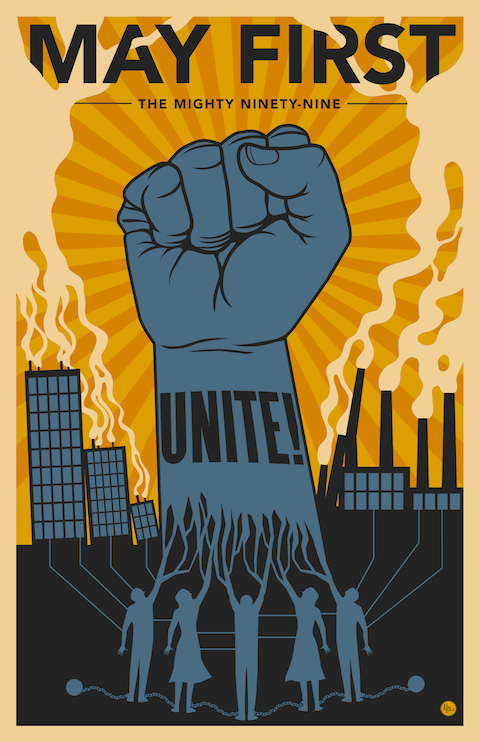
May Day is coming.  It must be a day of reckoning, the gateway to a hot summer of the hard work needed to provoke serious, transformative change.

Silent Spring Dawns Hot, Dry and Merciless

This week, turning the corner into the astronomical Spring, we have gone abruptly from warm winter to hot summer.  And I mean hot: it was 84 degrees Farenheit in western Massachusetts today, brightly sunny, with puffy white cumulus clouds against a brilliant blue sky, unobstructed by any leaves.  No shade.

Today reminded me of a wax model: beautiful but blank.  The façade of beauty, with the crucial vital spark missing.

When I went for a walk up the mountain early this morning, the woods were eerily silent.  I remembered mournfully the spring mornings of my childhood, where I would be awakened by the joyful singing of the dawn chorus of thousands of birds each happily greeting each other and the new day.  Reaching the top of the mountain having heard only the distant cry of a single phoebe, I stopped to sit on a rock and listen for a few minutes.  All I heard was the dim rushing of the traffic on the road far below me, and the drone of an airplane churning its way across the sky.

Coming down again, a few chipmunks hurried out of sight along the path, and I was keenly aware that there were no acorns underfoot, despite the oak trees towering overhead. Last fall was a terrible year for acorns, so all the animals that depend on them for overwintering must be very hungry now.  I know the bears are on the move, as one came and pulled down my bird feeder yesterday. I am thinking of bringing some sunflower seeds along on my walk tomorrow, to spread by the path as an offering of atonement.

While no one of us can shoulder personal responsibility for this tragedy of the commons, all of us who have benefited from the heedless extraction of oil and relentless destruction of the forests and the oceans must be aware of the extent to which we have brought this on ourselves, and taken the rest of the natural world along with us.

Will there come a day when the sun rises in the brilliant blue sky and looks down on a hot, dry planet, silent except for the hardiest of species, like the cockroaches and the ants, who survived previous major extinction events, and will once again continue about their business single-mindedly, able to wait out the eons while life reboots and resurges again anew?

***

Rigoberta Menchu Tum, who bore witness to genocide in Guatemala, and won the Nobel Peace Prize in 1992

This weekend filmmaker Pamela Yates came to Bard College at Simon’s Rock to screen her film GRANITO: HOW TO NAIL A DICTATOR, as part of the Berkshire Festival of Women Writers.

This powerful film makes quite clear how the genocide in Guatemala was about land rights, with U.S.-backed military juntas working for the landowners and the corporations to clear the land of indigenous people and peasants so that big internationally funded projects like dams and mines could proceed unobstructed.

Two hundred thousand people, mostly indigenous Mayans, were massacred in the 1970s and 1980s in the service of American-fueled greed, in Guatemala alone.

It strikes me that this story is repeating now—if indeed it ever stopped—as we continue to fight over resources and land on our finite planet.

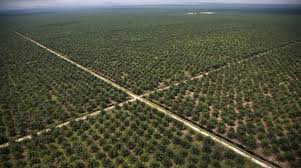
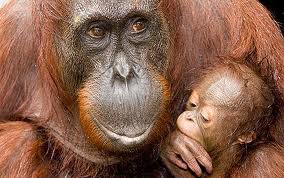
It is happening now in the forests of Indonesia, where on the island of Sumatra plantations the size of the United Kingdom, the size of Belgium—unimaginably huge tracts of magnificent rain forest with some of the richest stores of biodiversity on the planet—are being bulldozed and replanted with palms to feed international demand for palm oil.

The indigenous people who made the forest their home for millennia are being mercilessly deprived of their natural habitat just as surely as the rest of the flora and fauna there.

Endangered Sumatran Orangutan

The loss of biodiversity, including the loss of ancient indigenous human cultures, is a tragedy that cannot be quantified.  What is being lost is priceless.

It may seem like it’s all very sad, but all very far away, too.

But our summer temperatures in March have everything to do with the destruction of the last remaining old-growth forests in Indonesia, in Africa, in South America, in Canada.

Once the forest is gone, the topsoil will begin to erode.

Desert will prowl the borders of what used to be forest.

When, as in the Indonesian palm oil plantations, diverse ecosystems are replaced with monocultures, those monocultures more vulnerable to pest and climate disruption.

And then?

***

Lately I have been having recurring waking nightmares about food shortages.  Already I am concerned, as a backyard gardener, that these hot, dry spring days will not provide the proper growing conditions for spring crops like peas and lettuce.

Imagine conditions like these being replicated across the globe.

Imagine a growing season where all over the planet we lurched from heat and drought to torrential rains and tornadoes.

In the US we have become accustomed to thinking of food insecurity as something that happens in other parts of the world.

Famine stalks Asia and Africa.  It doesn’t come near us.

Or it hasn’t come near us for a very long time.

This year, as I see how the natural world around me is struggling to provide for the chipmunks, the bear and the turkeys; as I greet the arrival of the few straggling migrant birds who have managed to run the gauntlet of a landscape devastated by chemical warfare and industrial agriculture; as I gaze out at the bare trees shimmering in the unnatural midday heat, I know in my heart that it is only a matter of time before our turn comes.

Today it is the indigenous people of Indonesia who are going down with their forests.

It is the desert people of North Africa who are starving, and the teeming masses of Asia who are fleeing the floods of torrential rains.

We in the huge, pampered gated communities of North America and Europe will be insulated from these shocks for much longer than those on the outside.

But our time will come.

And when it comes, it will be with the full force of every violent futuristic film we’ve ever dreamed up.

Waterworld, anyone?  Mad Max?

***

Usually I try to stay positive and keep the flame of hope burning brightly, a beacon for myself and for others.

But today this stark, in-your-face, first-day-of-spring evidence of the coming train wreck of climate change has guttered my hope.

Time is running short for us, just as it is for the bears and the birds and the native peoples of the forest.

We are coming inexorably into Rachel Carson’s Silent Spring.

Looking catastrophe in the eye

Denial of climate change is deep and it is wide.

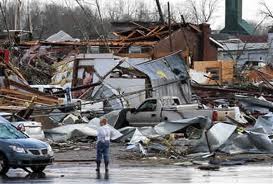
We woke up this morning to news of record-breaking tornadoes touching down across a wide swath of the American Midwest, flattening entire townships and leaving behind multiple trails of devastation.

Reading the mainstream media reports, the focus was all on the damage; very little was said about the cause.

Again, a case of focusing on symptoms rather than on the motivating problems.  The news media focuses on the “what” but ignores the “why.”

And they are even further away from what’s most important: looking for solutions.

Senator Bernie Sanders

Yesterday, thanks to the ever-impressive leadership of Senator Bernie Sanders, representatives of the national and international insurance industry came together in Washington to discuss the business implications of climate change.

Co-sponsored by the Ceres Foundation, which has been working to bring business into the sustainable future fold, the meeting was unequivocal in its acknowledgement that climate change is here, it is real, and it must be dealt with head on, before it runs right over us like a tornado.

The reinsurance industry reps were pretty blunt.

“We need a national policy related to climate change and weather,” said Franklin Nutter, president of the Reinsurance Association of America.

Pete Thomas of Willis Re, a global reinsurance broker, cited an alarming statistic: 4 out of 5 Americans now live in federally declared disaster areas.  “”Demographics and coastal urbanization are catastrophic force multipliers, making weather events increasingly costly,” he said.

In case you didn’t know, reinsurance companies are the ones that insure the insurers.

A difficult industry, in the age of climate change.

If I were an economist, I would be doing the math to figure out whether we are really coming out ahead as a society when we fight to pay less than $5 a gallon for oil.

What may seem cheap up front is often outrageously expensive in the long run.

Like eating cheap food laced with chemicals to keep costs down, to find yourself paying the exorbitant bills for chemotherapy in midlife.

It just doesn’t make sense.

There has never been a more important time to come forward and demand that government and industry work together to ensure (not insure!) our future.

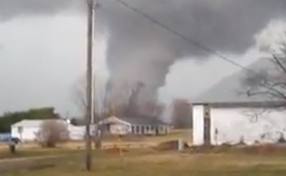
Indiana Tornado, March 2, 2012

Let’s stop hiding our heads in the sand and pretending that everything will be all right–until the next tornado, hurricane, wildfire or drought rides roughshod over our house and town.

Sitting at home worrying is of no use at all.

If you want to be of use to your grandchildren and all future generations, you should be out on the frontlines, insisting that:

a) the media does its job as a watchdog and reports the whole story;

b) our elected representatives do their job and create policy aimed at saving lives by mitigating and adapting to the effects of climate change; and

c) our fellow citizens get off their butts and start taking responsibility for our collective future.

Get going now, before “catastrophic force multipliers” blow us all away.

Calling on President Obama: Be Our Warrior for Peace

Although most Americans think of Presidents’ Day mainly in terms of sales on home appliances and electronics, as well as a welcome mid-winter day off, it’s worth stopping to think for a moment about what we are actually celebrating on this day.

Why take a day out of the national calendar to honor Washington and Lincoln?  What is there about these two heroic figures to inspire us today?

Both Washington and Lincoln were warriors.  They took our nation into bloody wars fought on idealistic principles.

Washington led an insurgency against British troops, an outrageous act of treason against the powerful British Crown.

Lincoln led American troops into battle against our own Southern states, which were threatening to secede from the Union.

In both cases, wars were fought and many lives were lost but survivors agreed that the cause had been just, and the sacrifices necessary.

Both Washington and Lincoln were able to build political coalitions and persuade Americans of the rightness of the course of action they were about to undertake.  They did not lie to the people about the dangers or the costs; they appealed to Americans to support the Revolutionary and Civil Wars on the basis of the moral justice of the cause.

What a contrast this presents to the most recent time America mobilized for war, in 2002-03, when our president relied on smoke, mirrors, propaganda and outright lies to manipulate Americans to support the invasions of Iraq and Afghanistan.

A president should never lie to the people, especially when lives are at stake.

On Presidents’ Day, 2012, we face another round of saber-rattling, this time with Iran.  The regional politics of this conflict are deep, complex and ancient, dating back to pre-modern quarrels among the Jews, Sunnis and Shias.  They are of concern to us, way over here in America, mainly because of our reliance on Middle East oil, and secondarily because of our ideological support of the state of Israel.

Today, our President is weighing the possibility of an escalation of this conflict. Pakistan has just made a defiant announcement that it will stand with Iran in the event of war.  Pakistan is a nuclear power; Iran may be too.

We have not teetered so close to the brink of nuclear war since the scary days of the 1980s, before the Berlin Wall came down and the Soviet Union was revealed as just a small Wizard projecting a big image from behind a screen.  Unlike the harmless Wizard of Oz, however, these generals are armed with nuclear warheads, and they may be prepared to use them.

When nuclear weapons are used, civilians suffer.  Innocent civilians; innocent animals, birds and flora.  Surely the recent release of radiation in Japan should serve as a reminder of just how obscenely dangerous even peaceful applications of nuclear technology can be.

What we need in our President today is that he be a warrior, yes, but a warrior for peace, not war.

Just as Washington had the courage to risk treason to break away from the established bond with Britain, and Lincoln had the courage to stand up to the South to end the established reliance on slave labor, today we need our President to take a stand against the addiction to fossil fuels that is proving so destabilizing to human  civilization and our entire planetary environment.

On Presidents’ Day 2012 I call on President Obama to restore America’s role in the world as a beacon of “liberty and justice for all,” but now with a new, 21st century inflection.

When Washington thought of liberty and justice for all, he did not include women or enslaved Africans in that “all.”  Lincoln turned a corner, demanding liberty and justice for the slaves, but ignoring the disenfranchisement of women.

As we enter the 21st century, we need to again rethink the “all” for whom we intend liberty and justice.  Every living being on this planet deserves to live its life peacefully, without undue suffering.

It is now abundantly clear that the path America has laid down since the 1940s—a path littered with spent shells and warheads, paved with an oily slick of asphalt, and reeking with pesticides, herbicides, and chemical treatments of all kinds—has proven to be a disaster for us, and for the world that has followed along behind us.

Industrial civilization and a consumer-based society has proven to be a disaster to every living being on this planet, and the planetary ecosystem as a whole.

We need our President to stand up to the oil barons, the merchant princes and the corporate bankers and insist that they now funnel all of their resources into creating a new path into a different kind of future.

We need our President to rally the sick, bewildered, overburdened populace and lead us not into another insane war, but into a vast new Americorps project to restore education and health to our communities.  We need America to become once again a model and a support for the rest of the world.

President Obama, when we elected you we believed you would be a different kind of president. Yes we can was your motto, and we believed you would be able to lead us out of the nightmares of the 20th century, into a cleaner, healthier, kinder  21st century.

There is still time for you to make this vision a reality, Mr. President. On Presidents’ Day, I challenge you to live up to the best aspects of Washington and Lincoln, and lead us out of danger…lead us home.

Cancer blues

This is a post about cancer.

This is a post in honor of all the men, women and children who have died from cancer in the post-industrial age.

This is a post that acknowledges, fully, the extent to which American society has led the way in the extermination of these people–these cancer victims.

How many cancer victims do you know?  According to the World Health Organization, cancer accounts for millions of deaths worldwide each year (7.6 million deaths in 2008, more than died from the Nazi Holocaust).

Cancer is a Holocaust.  It is a disease, or disorder, that cuts across every economic boundary.  It is just as prevalent among the 1% as among the 99%.  It is just as prevalent among the highly educated as among the working class, although of course certain professions are more risky: industrial agriculture, factory work, anything involving radiation.

The truth is that most of the technologies we Americans love the most–cell phones, smart phones, wireless, for starters–are hazardous to our health.  Just like junk food, which we also love.  Or the wanton burning of fossil fuels in our beloved SUVs.

When climate change activists tell us we have to give up our fossil fuels to save the planet, we act like spoiled toddlers.  NO! We will NOT give up our toys!  NO!  We will NOT turn down our themostats, or buy smaller cars, or make a concerted effort to switch to solar.

As parents, we Americans are generally pretty permissive.  We let our kids have what they want, unless it is dangerous for them, or detrimental to their health.

I never let my kids drink Kool-Aid or eat Cheetos, because I knew very well that the junky chemicals in those products were harmful.

But I have let them have cell phones. We have wireless throughout our house.  From what I understand, smart meters, which communicate wirelessly, via electro-magnetic radio frequencies, are in the process of being installed on every home in America.

We can’t afford to eat exclusively organic in my home.  We live near a river polluted with PCBs by GE.  We breathe air labeled “hazardous” on many summer days.

And as a result, we are at risk for cancer, just like everyone else in the developed world.  Everywhere that chemicals are dumped into the environment, everywhere that the ozone layer is thinning, everywhere that the winds blow radiation around, living organisms, including human beings, are dying of cancer at elevated rates.

Last week my Human Rights, Activism and the Arts class at Bard College at Simon’s Rock watched a TED Talk by Eve Ensler, who has (so far) survived a run-in with cancer.  Eve brilliantly makes the point that the inner landscape of cancer mirrors the outer landscape.  What we do to the environment comes back to haunt us in our own bodies.

If we humans, of every class background, are now falling sick in record numbers, it’s a reflection of our sick our environment is.  How sick we have made our environment.

Heal our world, heal ourselves.

Eve Ensler has spent years fighting against the violence that men perpetrate on women’s bodies.  A survivor of an abusive father herself, she has waged a heroic battle against her own demons, and the demons that beset patriarchal cultures worldwide.

She is gearing up now for her biggest effort ever, One Billion Rising, a campaign by V-Day to galvanize men and women to stand up against violence, especially violence against women.

I salute Eve Ensler’s ground-breaking efforts to put her art in the service of social justice, and to link the quest for social justice to environmental health.

If we can’t heal our planet, we will not be able to heal ourselves.

We are the cancer on our planet.

Our own treatment approaches would dictate our eradication.  Radiation therapy: burn it out.  Chemotherapy: poison it to death.

But there is another way.

Look upstream, as Sandra Steingraber has been telling us for the past 20 years.

Find out what is causing the cancer, and CHANGE IT.

Find out why so many women are suffering from violence, and CHANGE IT.

CHANGE.

Where there is a will there is a way.  How sick do we have to become, how sick does our world have to become, before we find the will to change our ways?

Out of the mouths of babes….

One of the most interesting aspects to me of Carol Gilligan’s research on childhood psychological development is her finding that as girls and boys mature, they lose touch with the instinctive, joyful, totally honest voice they were born with.

To some extent, this is necessary.  No one would want to live in a chaotic society of adult two-year-olds all shouting and crying and singing at the top of their lungs whenever they felt like it!

But it’s the loss of honesty that I find troubling, because it appears that when we lose touch with our own honest assessment of people and situations, we also lose the belief in our power to effect change.

***

When I was a young girl I was very sensitive to others’ pain, and it didn’t matter to me whether I was witnessing a tree being cut or a seal being tortured by a fishing net, I felt the pain so deeply that it became a wound in the innermost recesses of my own soul.

I’ll never forget one beautiful spring morning, when I was about nine years old. My family lived in the city, and we always arrived at our country house on Friday nights, in the dark.  On Saturday mornings it was my habit to get up early and go out for a walk by myself, reveling in the woods and fields and birdsong that I had missed during the week in the concrete canyons of New York.

On this particular May morning, full of sunshine and the fresh, moist air of spring, my buoyant good cheer was suddenly shattered by a shocking sight by the side of our driveway.  The telephone company had come during the week while we were away and cut down a big swath of young trees underneath the cables that ran along the road, leaving behind heaps of dying limbs and saplings, heavy with oozing sap and shriveling new leaves.

A gut-wrenching feeling of horror clutched at me; I began crying, crooning to the trees, overwhelmed with a feeling of shame and guilt—why were my people, humans, so destructive, so wanton, so careless and thoughtless? I was outraged, upset, furious, and went running back up the driveway to tell my parents, assuming they would share my reaction.

But instead they shrugged, resigned—it was too bad, but there was nothing to be done about it.

***

And of course now, as an adult, my reaction would be the same.  I witness road crews cutting back perfectly healthy trees all the time, and think nothing of it.

As we grow up, we get inured to the pain and suffering we visit on the natural world day after day.  We learn to tolerate injustice with casual lack of attention.  We lose the moral sensitivity with which we are born, and with it the fire within that impels little children to speak their truths and demand that the adults in their lives listen.

Told that it doesn’t matter whether some trees are cut, or a cell tower goes up, or a dam is built, or that there is so much artificial light at night that we can no longer see the stars, we are gradually lulled, as adults, into complacency, from which it takes a lot to dislodge us.

This is no accident.  Most educational practices consist of training the young to conform to authority and feed back the right answers to the questions asked.

It’s not about learning how to ask the questions that haven’t yet been formulated; the questions that come from one’s deepest reservoirs of knowledge.

Socrates believed that human beings enter the world already knowing everything we need to know, but we forget it in the first weeks of life.  We spend the rest of our lives, he believed, trying to remember.

As children, we know that we humans were born to live in harmony with the other living beings on this planet; to be a productive and positive part of the web of life that surrounds and sustains us.

Adults, I’m speaking to you: this is crucial knowledge that we need to remember, and act upon.

Coming to Voice, Saving the Planet

Yesterday acclaimed psychologist Carol Gilligan paid a visit to the class I am currently co-teaching at Bard College at Simon’s Rock with theater professor Karen Beaumont, “Human Rights, Activism and the Arts.”

Gilligan’s ground-breaking book, In A Different Voice, was the first to examine the psychological development of girls.

Yes, you read that right.  Before Carol Gilligan, American psychologists who studied child development based their model of the stages of human psychological development on their studies of boys.  Not until Carol came along in the early 1980s did anyone think to point out that girls and boys develop differently.

In her new book, Joining the Resistance, Gilligan explains that while girls start to silence their own voices in their early teen years, in conformity with social dictates about proper behavior for “good girls,” boys go through this self-regulation much earlier, around 5 or 6, when they learn that “crying is for sissies.”

Boys learn to suppress their caring, nurturing side because it’s too “feminine,” while girls learn to suppress their active, aggressive side because it’s too “masculine.”  In the process, both genders lose something crucial to their humanity, and our society as a whole is impoverished as a result.

Lately, Gilligan has been relating boys’ and girls’ resistance to the suppression of their natural androgynous voices to adults’ resistance to what she sees as a very destructive patriarchal culture.

She defines patriarchy as “those attitudes and values, moral codes and institutions, that separate men from men as well as from women and divide women into the good and the bad,” and argues that “as long as human qualities are divided into masculine and feminine, we will be alienated from one another and from ourselves.  The aspirations we hold in common, for love and for freedom, will continue to elude us.”

So much depends on whether we can come to voice.  And how we do so.  In the context of my human rights seminar, coming to voice may mean being able to speak out in an informed, passionate way about justice and injustice in specific circumstances, both here in the U.S. and abroad.

In the personal sphere too, we need to learn to express our needs clearly, without apology.  We women need to learn to value ourselves and insist on being treated fairly and with respect whether in the home or in the workplace.  Men need to demand that their emotional, nurturing sides be honored.

If it is hard for men to express emotions, it is hard for women to speak with authority.  As sociologist Michael Kimmel has shown, boys and men tend to over-estimate their own abilities while girls and women tend to have less self-confidence than their skills and talents warrant.

Boys and men need to learn to listen, to others and to their own innermost voices, the voices of compassion that were shut down when they were just little guys and learned that boys don’t cry.

Girls need to learn to speak up, to let their innermost voices out, to share freely what they know and what they imagine with the world.

My mother reminded me recently that when I was a young girl of 9 or 10, she considered me a “know-it-all.”  I used to read Ranger Rick and the National Wildlife magazines with voracious attention, and apparently I had a lot to say about the natural world and human beings’ role in it.

As I shared with my class yesterday, sometime around age 14, just as Carol Gilligan saw with her research subjects, I lost my voice.  I became the quiet girl in class.  I earned A’s on every literature paper I wrote, straight through grad school; but it was so hard for me to say out loud what I knew.  It’s taken me years to overcome that self-silencing and begin to recover the spunky, feisty voice that came pouring out of me naturally when I was a child.

As adults, knowing what we now know about the importance of voice to healthy psychological development, we should be working hard to encourage the boys in our lives to stay in touch with their emotional, caring, listening side; and the girls in our lives to continue to speak their truths even when they enter the maelstrom of puberty.

As Audre Lorde wrote long ago, “My silences had not protected me.  Your silence will not protect you…. We can sit in our corners mute forever while our sisters and ourselves are wasted, while our children are distorted and destroyed, while our earth is poisoned; we can sit in our safe corners mute as bottles, and we will still be no less afraid….

“We can learn to work and speak when we are afraid the same way we have learned to work and speak when we are tired.  For we have been socialized to respect fear more than our own needs for language and definition, and while we wait in silence for that final luxury of fearlessness, the weight of that silence will choke us.”

You got that right, Audre.  If anything, the dangers that you perceived back then–before you, like so many others, succumbed to cancer–have gotten worse.

If we care about our children, if we care about our Earth, we cannot afford to stay silent.  Indeed, there is more risk to staying quiet than to speaking out, with all the passion, emotion and authority we can muster as men and as women.

Cat got your tongue? Not mine.  Not any longer.

An Unlikely Environmental Evangelist

There were two reasons, many years ago, why I ended up choosing literature as my field of study rather than environmental studies or law.

I was turned off from environmental studies, my initial choice for an undergraduate major, by a scary required statistics class and no options for getting remedial help to bring my weak math skills up to speed.  I ended up with a B.A. in English and Journalism.

I briefly flirted with the idea of law school after college, but could not fathom spending the rest of my life reading and writing legalese.

So I gravitated towards literature, comparative literature, literature of the world, and my dissertation focused on testimonials and political personal narratives of the Americas.  I knew early on that what interested me most about literature was opportunity it presents for passionate narratives about the intersections of the personal and the political.

That has remained my interest all these years later.  But it has finally become clear to me, over the longer arc of my life, that my early, instinctive connection to the natural world, my recognition of the importance of law, and my duck-in-water ease with the discourses of both journalism and personal narrative, are all finally coming together in what I see as the imperative task to which I must dedicate the last third of my life: awakening my fellow and sister human beings to the urgency of heading off climate catastrophe.

If this sounds like a moral crusade, well, so be it.

I was not raised in any religion, nor do I follow any religious practices now.  I don’t believe in God as a benevolent white man in the sky, nor do I believe that one needs to sit in a particular building, listening to a particular preacher, to reach out to the divine.

But I have always felt a deep spiritual connection to the natural world.  When I was 8 or 9, I used to go out into the woods and sit alone in my “spot,” which was a circle of mossy stones at the top of a big stone ridge, ringed by maples and centered around a grassy glade.  It was a small circle, no bigger than 10 feet in diameter.  I would just sit there and look and listen to the birds in the trees above me, the small insects on patrol in the grass, feeling the wind ruffling against my face and a kind of inner exultation and delight that I can only describe as religious ecstasy.

No one taught me to do this, and it wasn’t until much later, reading personal narratives by indigenous elders, that I was able to put this early spiritual connection with nature into a broader polytheistic cultural framework.

I believe that everything in our world is tinged with spiritual significance.  And I believe that human beings, because we are unique among animals in being able to see the effects of our actions on the larger landscape of the planet, and to both predict and alter the future, have a special moral imperative to do what we can to be the responsible stewards of the natural world of which we are a part.

I have never said that out loud.

But thanks to environmental activist educator Eban Goodstein, I now recognize that this is exactly what I should be doing, whenever I can, as urgently and passionately as possible.

Goodstein, who founded the national organization Focus the Nation and now heads up the Center for Environmental Policy at Bard College, writes in his 2007 book Fighting for Love in the Century of Extinction that it is crucial that people who understand the seriousness of the pivotal moment at which we stand begin to speak up—not in legalese or scientific jargon, but in the clear, ringing tones of moral conviction.

“The real problem that nontheistic environmentaists face is not a depth of passion, but a failure of moral language with which to cultivate and nuture that passion,” Goodstein says.  “Unless passion about life on Earth is nurtured, and mass extinction is understood clearly in terms of good and evil, then political opposition to the great extinction wave of our generation will be weak and it will sweep across the next century unabated.”

Goodstein recommends that each of us “develop a thirty-second ‘elevator speech’ that is a response to the question: ‘Why do you care about global heating?’” What you say won’t be convincing or memorable to people unless you can quickly tell them why this issue is deeply important to you, and why they should also care.

It can’t be a laundry list of words that have been so often used they’ve become clichés: sustainability, clean energy, even droughts or wildfires.  Goodstein suggests that when it comes right down to it, we should care about global heating because it is “just plain MORALLY WRONG” to ignore the prospect of the sixth great extinction of life on Earth, when we not only know it’s coming, but have a pretty good idea of how to head it off.

Given my non-religious upbringing, I’m not that comfortable with the language of good and evil or moral righteousness.  And yet it is no accident that all human religions do codify a moral code that seems to be hardwired into our species.

Goodstein refers to Harvard biologist E.O. Wilson’s 1984 book Biophilia, which set the stage for evolutionary psychology in arguing that human beings have evolved to love life and work to extend life by interacting positively with our environment.

Whether we come at the issue of climate change from a religious perspective (God made us the stewards of life on Earth, we have a moral injunction to protect all God’s creatures) or a nontheistic but nevertheless spiritual reverence for the natural world, or even a simple scientific recognition that the current fabric of our ecosystem will live or die depending on human choices now, there is no doubt at all that each of us needs to get our elevator speech nailed down and go out to become evangelists for the natural world.

I don’t use the term evangelist lightly.  Christian evangelists have a reputation for single-mindedness bordering on fanaticism.  They believe deeply, and they are willing to take the risk of expressing their beliefs out loud, and actively trying to convert others.

I am someone who has been known to hide in my own house when the Jehovah’s Witnesses knocked at the door.  I have never followed any preacher or religious dictate, nor have I ever considered trying to persuade others to any given point of view.

But the situation we face now is unprecedented in my lifetime, or human history as a whole.  It demands an unprecedented degree of commitment.  It demands taking the risk of climbing up on a soapbox and speaking out loudly and passionately enough to draw a crowd.

Those of us who are awake to the gravity of the coming environmental catastrophe need to be getting out there trying to instigate change through every possible channel: electoral politics, grassroots activism, legal challenges, moral persuasion, standing on our heads–whatever it takes to wake people up and get them moving.

So what’s your elevator speech about?  Mine, I think, is about love.

Whether we call it love for God’s green earth, or the love for the natural world, what we mean is the same: love for our children and future generations, who should not be denied the pleasure of listening to birdsong in the trees on a peaceful spring morning, knowing that their world is stable and secure.