Storytelling and Resistance: Whose Narratives Are You Listening To? What Stories Are You Telling?

Generally when I turn on the radio or open up The New York Times or other media sources, I am immediately assaulted by the SAME OLD BAD NEWS.

Another hundred children gunned down by fundamentalist militants.

Another police brutality case.

Another round of insane Republican shenanigans in Congress, hijacking the taxpayers, the environment or the nation itself with greedy, mean, shortsighted policies.

The list goes on and you know it as well as I do. We live in a time when stories do not have happy endings and even the heroes get shafted.

Although I think it’s still pretty clear who’s right and who’s wrong, being wrong doesn’t mean you are necessarily unsuccessful. Mysteriously, the bad guys often win in contemporary news narratives. Even when a scapegoat is chosen to die on his sword, the game goes on, and since the media loves to cover the most powerful, most colorful players, it can often seem like there’s no glory in being good or right. Only in being powerful.

President Obama announces policy shift on Cuba

President Obama announces policy shift on Cuba

I’m happy to see our quiet, serious President finally starting to flex his muscles a little and learn how to play this game.

Re-establish diplomatic relations with Cuba, well it’s about time! So what if the Cold Warriors complain, let them grumble into their mothballed cups.

Shake hands with China’s President and make some progress on global climate treaties, hell yeah! Where I come from, that’s called leadership—the kind of leadership that’s aimed at the future, not digging in its heels and trying to hold us all back in a carbon age that has outlived its usefulness.

Now I want to see President Obama reject that Keystone XL pipeline once and for all. Falling oil prices are the perfect excuse for saying what we all know to be true: tar sands oil is an abomination that, if extracted, will incinerate our planet. For the sake of all our children and the generations to come, we must leave that dirty oil in the ground and move on to a clean energy future.

Yes, this means that the bad-guy oil moguls must reinvent themselves as good-guy renewable energy czars. We’ll keep giving them our money…if they show themselves to be the planetary stewards we’ve been waiting for.

I keep thinking about the slogan I read somewhere (I believe it is a Chinese proverb): Crisis = Danger + Opportunity.

There is no doubt that these early years of the 21st century are a dangerous, crisis-ridden time. But they are also a time of great opportunity.

We have the chance to wake up and start telling some new stories, in which Good and Right actually do prevail; in which Greed and Vindictiveness are punished; in which deeds are measured not in dollars generated, but by how much they will benefit the greater good of the planet and all her denizens.

I suggest you pay attention to the stories you’re hearing; to who’s telling them; and who benefits from the version that hits the media fan.

Me, I like to pay attention to some of the storytellers who may not make it into prime time (as in, the front page of The New York Times), but surely merit a place there.

Bill McKibben

Bill McKibben

For example, Bill McKibben, winner of the 2014 Right Livelihood Award for inventing 350.org and working tirelessly to raise awareness about climate change; Vandana Shiva, a relentless opponent of Monsanto’s assault on biodiversity and a champion of small farmers and their heirloom seeds and organic farming practices; and Sandra Steingraber, who is leading a most inspiring movement against a huge corporate conglomerate seeking to store pressurized natural gas beneath the floor of Seneca Lake in upstate New York.

These are the heroes and heroines of our time. In these cold, dark days of the Winter Equinox, human beings have always gathered around the fire to listen to stories. I say, don’t waste your time listening to the canned stories our news media prepare. Find and tell your own stories, and make sure they’re stories that inspire hope.

Here’s a good story, if you’re looking for one: how the citizen resistance to tracking gas in New York State triumphed, with Governor Andrew Cuomo backing away from this highly risky practice in the wake of intense negative pressure.

Stories matter. Words have power. Let’s make sure we are telling each other stories that will serve as bridges into the future we want to live.

11-02_story_telling

#LifeMatters: On Die-Ins as a Path to Social Change

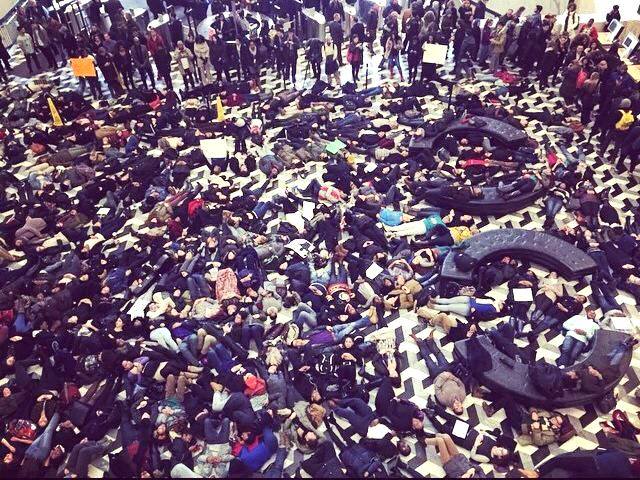
Die-in at NYU Bobst Library, December 2014

Die-in at NYU Bobst Library, December 2014

There’s something weird and macabre about the current spate of “die-ins” occurring across the country.

The logic seems to be that we register our very live protest by pretending to be dead, and blocking normal business as usual in the process.

The message: you must stop killing us and people we care about!

This season’s die-ins have mostly taken place in the name of racial justice.

I’d like to see the struggle broadened to include species justice as well.

Imagine if we protested on behalf of the coral reefs, the migrating birds and butterflies, and the small-animal roadkill?

Imagine if we staged die-ins on behalf of the sea turtles and the whales and the polar bears?

What about the tortured factory-farm animals and lab animals and the forest creatures whose habitats are being destroyed daily?

Imagine if we didn’t relent, but kept dying and dying and dying, swooning over and over again in public places until those in power were compelled to pay attention?

One thing is for sure, the powers that be in our uber-capitalist society want us alive and kicking, doing what’s expected of us as productive citizens: to keep consuming at a steadily increasing rate of purchase.

Buy, buy buy! Don’t worry about tomorrow, think about consuming today!

This is the constantly trumpeted message of countless advertising campaigns, and it’s the general ethos of American society, which admires those who can indulge in consumer wish-fulfillment, and disdains those who choose a different, less self-indulgent path.

Die-in for racial justice at Harvard Medical School, December 2014

Die-in for racial justice at Harvard Medical School, December 2014

Whether we choose to physically represent the “death” of our consumer selves, or to simply make a personal decision to refrain from participating in the excessive spending that is pushed on us from Black Friday through Christmas Eve…it is time to recognize our own power as consumers.

We can choose to support or starve the fossil fuel monster. We can decide to keep the factory farms humming or to put our purchasing power behind local farms where animals are allowed to live happier lives. Or even to go further, and eliminate meat consumption altogether!

In this age of Congressional gridlock and the stranglehold of big money on politics, we ordinary little guys must remember that we do have power if we come together to wield it.

One person staging a “die-in” is just a weirdo who can easily be removed.

A hundred or a thousand people refusing to go along with business as usual is something different: it’s a social movement, a force for social change.

The first step toward social change is awareness. I thank the die-in protestors for leading the way in raising our awareness and stopping the mad rush of business-as-usual.

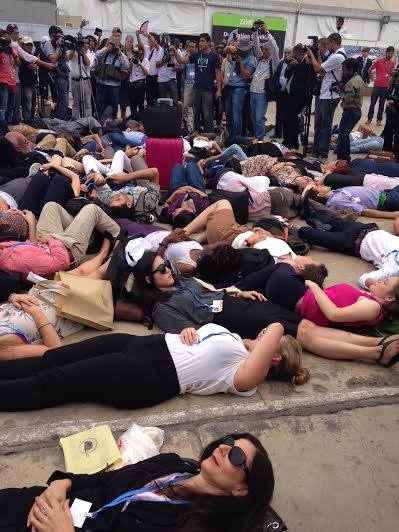
Die-In at the COP 20 climate talks in Lima, Peru, December 2014

Die-In at the COP 20 climate talks in Lima, Peru, December 2014

I’m no Grinch; I’m going to be buying presents for my children and celebrating the holidays with friends and family.

But as I do, I will be trying to limit my participation in practices and policies I know to be harmful.

#LifeMatters. Yes, it does.

Moving From Human Rights Day to Earth Rights Day

UnknownWas there some kind of intentional bitter irony in this week’s avalanche of bad news about human rights, released just in time for Human Rights Day (December 10)?

Leading the list is the so-called Torture Report, about CIA human rights abuses during interrogations. I’m sorry, but I can’t muster up much shock about this supposed “news.”

Anyone who has been following Latin American news for the past thirty years or so knows that the CIA has not only been routinely torturing its prisoners, but also teaching its particularly vicious brand of torture techniques to the repressive dictatorships the U.S. has found it to be in our “strategic interests” to support.

Doesn’t anyone remember the infamous School of the Americas? That was the testing ground for the interrogation manual used at Abu Ghraib, Guantanamo and other detention sites, some so secret we don’t even know where they were located.

To me, the fact that detainees have been savagely tortured by American CIA and special forces is old news. What’s new is that there is at least a little bit of official shame over it.

In the past week we’ve had “revelations” about fraternity gang rape, rape in the U.S. military, and fatal police brutality against people of color, specifically Black men.

Again, this is nothing new. What’s new is the sense of outrage.

Not since the Occupy Wall Street movement have ordinary Americans taken to the streets the way they have this week to protest the failure of our criminal justice system, exposed in the cases of Michael Brown and Eric Garner.

The response to the violations of women’s human rights has been less vigorous. I’d like to see the same kind of multiracial, cross-gender coalitions building to counter the systematic abuse of women’s bodies through forced sex—whether on college campuses, in the military, through sex trafficking and sex slavery, or rape as a weapon of war.

Again, this is an old story. Women have been raped since the beginning of time. We’ve discarded old, worn-out cultural narratives before and we can do it again.

On this Human Rights Day, I declare that the Age of Impunity is over.

The flip side of the surveillance state we all live under is that we the people are watching those in power too.

Not only are we watching, but we have the power to share information and mobilize ourselves for resistance as never before.

Flash mobs anyone? Whose streets/our streets?!

The new story I’m waiting for, which still seems like a distant mirage on the horizon, is the one that argues not just for human rights, but for the rights of all life on Earth.

Humans have been so arrogant in our conception of “rights.”

We do not have the right to destroy the forests, prairies and savannahs of our planet. We do not have the right to kill the coral reefs and drive marine life to extinction.

Coral-reef-near-Fiji-007

We do not have the right to poison our rivers, lakes and aquifers with toxic chemicals, or to wreck the balance of our earthly climate with our unrestrained burning of fossil fuels and destruction of carbon-sinking greenery and soil.

To me there is a clear continuum between the torture of captives, the killing of unarmed citizens, the rape of girls, and the razing of forests and on-going extinction of millions of species.

The question I would like to pose on Human Rights Day is this: when are we humans going to step into our role as the ethical stewards of life that we have evolved to become?

Many wise people today say that it must be women who lead the way into this new ethical age. It must be women who write the new story.

I believe that every human being can access masculine and feminine strengths and characteristics, no matter the biology of the body we’ve been born into.

I believe that both women and men need to fight our patriarchal culture’s glorification of the masculine by tapping into our nurturing, life-giving feminine side.

Women and men, the Earth needs you now. We’re not just talking about Human Rights anymore, we’re talking about Species Rights, about Plant Rights, about the right of the living biosphere of our planet to flourish and continue its million-year progression into a thriving future.

We need to move from Human Rights Day to Earth Rights Day, and we don’t need to wait for the United Nations to get its act together to do it.

Let’s make every day Earth Rights Day, starting with—tomorrow.

Moving from Anger and Cynicism to Gratitude: Thanksgiving in Dark Times

It’s Thanksgiving time, the time when we’re supposed to be counting our blessings and giving thanks. Given the current bombardment of bad news, it’s hard not to feel cynical.

Do I give thanks for the American justice system, which once again has valued the rights of a white man over the rights of a (dead) Black man?

Should I give thanks that a growing roster of universities are finally being pushed to take fraternity gang rape seriously, after years of turning a blind eye?

Maybe I should be giving thanks that the Kinder Morgan fossil fuel group, responding to public outcry, is thinking about routing its gas pipeline through “an existing utility corridor” rather than through backyards and recreational areas in the heart of Berkshire County, the tourist-friendly resort area where I live.

It’s easy to get angry about the injustice and casual brutality of our world. And one of the problems of modern existence is that when something bad happens, we know about it almost instantaneously, and have to grapple in our own hearts and minds with its disturbing reverberations.

Any wonder why so many people in media-saturated modern societies turn to drugs (prescription and recreational) or alcohol to get some relief?

I don’t think we should insulate ourselves from the reality of what’s happening in our world, even when the news is very bad. But we do need to find ways to retain our own sense of balance and inner resilience in the face of the constant heartbreak that characterizes contemporary life.

I try to remind myself, at Thanksgiving time and all year round, of all the things I do truly have to be thankful for.

I give thanks for the protesters who have been standing up to the fracking and drilling industry giants all over North America, and indeed all over the world. I am thankful that Sandra Steingraber has been released early from jail, so she can spend Thanksgiving with her family.

Sandra Steingraber by Seneca Lake

Sandra Steingraber by Seneca Lake

I give thanks for the many innovative scientists who are working hard to develop viable alternative forms of energy, from better solar panels to clean battery cells to geothermal, tidal and wind generators. I am thankful for entrepreneurs like Elon Musk of Tesla, leading the way towards a clean-energy future.

I give thanks for the health workers who are at this very moment risking their own lives in order to bring the Ebola epidemic under control. I thank all the health workers, worldwide, who give so much to others day in and day out.

I give thanks for my family, friends and comrades—for all the good people who are working in their own spheres to be sources of love and compassion.

On dark days like this one, it can be hard to feel confident that the human capacity for love and empathy will prevail over the less admirable side of our nature; that our ethical intelligence and social creativity will succeed in tempering our greedy self-interest and destructiveness.

Every day presents opportunities to live in ways that elevate the human condition and spirit. Even the greatest events in human history always depend on the actions of individuals, each within our own sphere. All we can do, as human beings alive on the planet in these frightening transition times, is strive to embody love.

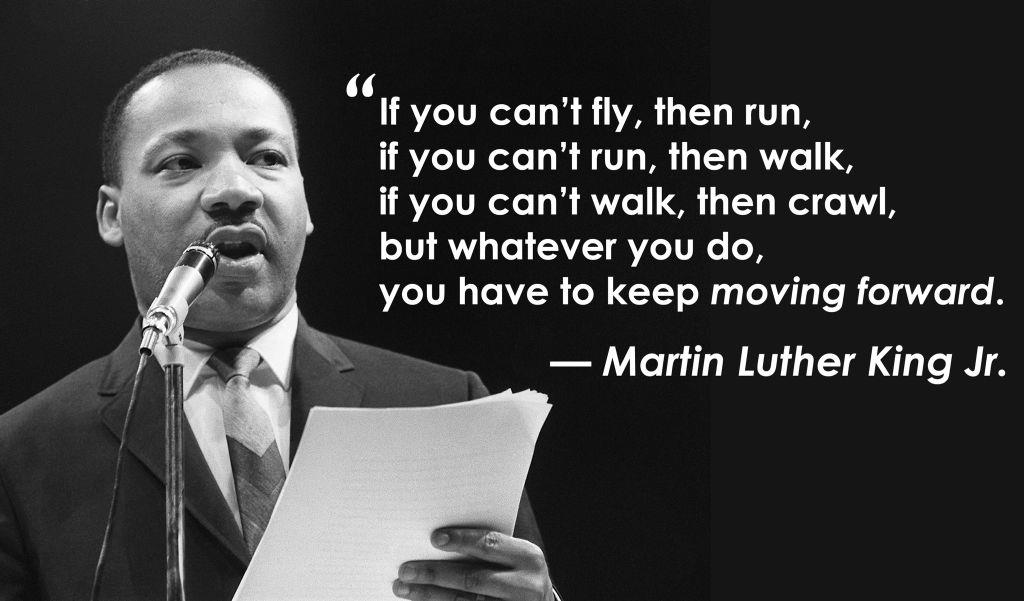
We won’t always succeed; no one of us is perfect. But as Martin Luther King Jr. famously said, “The arc of the moral universe is long, but it bends towards justice.” Let us place ourselves on that arc, with gratitude for being able to help it bend towards justice now, in our own time.

martinlutherkingjr

Letter to Sandra Steingraber: Civil Disobedience and the Fossil Fuel Monster

Dear Sandra,

I have been thinking about you for days now, ever since I heard the news that you were leading the peaceful protests defending Seneca Lake. Now you’re sitting in jail, taking your turn along with several others who also chose to serve jail time as an extension of the protest, rather than taking the “get out easy” card of paying a fine.

Sandra Steingraber going to jail

Sandra Steingraber going to jail

Thoreau would be proud of you! You are a living example of his famous injunction on civil disobedience, written from the jail cell that served as his bastion of protest against slavery and a war he knew was wrong: “Let your life be a counter friction to stop the machine.”

The machine of our time is the fossil fuel industry. It is an industrial monster, with mining claw arms, a drill bit mouth and a huge bloated body belching stinking carbon smoke. It has no eyes to see the destruction it causes, nor ears to hear the screams and wails of the innocent creatures—including human beings—mown down in its path or sickened beyond recovery.

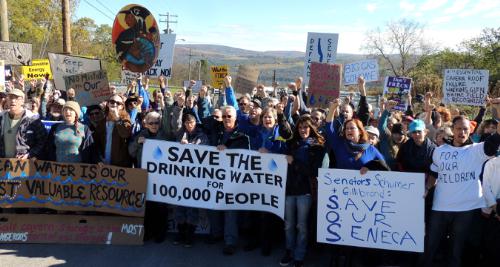
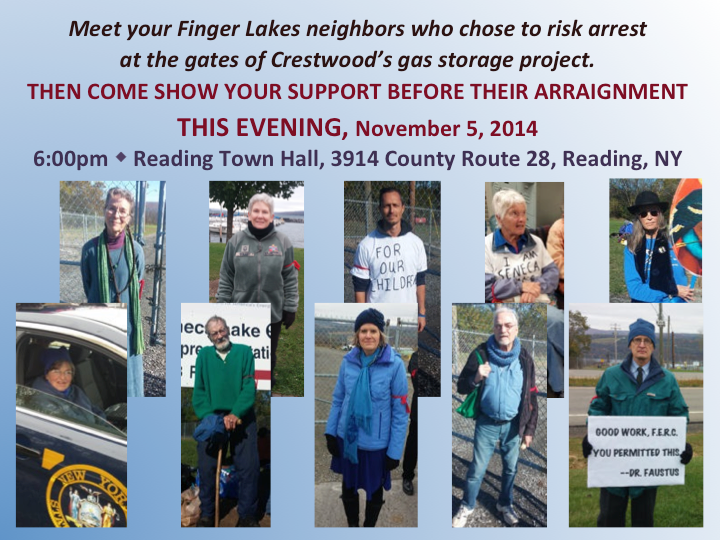
Over four hundred members of We Are Seneca Lake blockade the gates of Crestwood Midstream and stand up to the expansion of dangerous gas storage in the crumbling salt caverns next to Seneca Lake and under the beautiful wine country of the Finger Lakes. Lead by renown biologist, author, Sandra Steingraber. Pictured; Yvonne Taylor, Gas Free Seneca, Doug Couchon, People for a Healthy Environment, Members of Finger Lakes CleanWaters Initiative, Seneca Lake Pure Waters, ShaleShock, DJ Astro Hawk. (PRNewsFoto/We Are Seneca Lake)

Over four hundred members of We Are Seneca Lake blockade the gates of Crestwood Midstream and stand up to the expansion of dangerous gas storage in the crumbling salt caverns next to Seneca Lake and under the beautiful wine country of the Finger Lakes. Lead by renown biologist, author, Sandra Steingraber. Pictured; Yvonne Taylor, Gas Free Seneca, Doug Couchon, People for a Healthy Environment, Members of Finger Lakes CleanWaters Initiative, Seneca Lake Pure Waters, ShaleShock, DJ Astro Hawk. (PRNewsFoto/We Are Seneca Lake)

You and a handful of courageous resisters have gathered on the shores of the mighty Seneca Lake, to put your bodies on the line to stop this monster at all costs, before it can carry out its federally sanctioned intention of making the fragile salt caverns beneath the water into a volatile gas depot.

Did we learn nothing from the tragedy of the BP gas spill in the Gulf of Mexico? Haven’t we learned that fossil fuels and pristine waters do not mix?

Drinking water is a finite and precious resource on this planet. We can find other ways to create energy—solar, wind, tidal, geothermal, hydrogen—but if we pollute the precious aquifers and freshwater reservoirs upon which our very life depends, there will be no return.

I know you of all people know this well, Sandra. Your first book, Living Downstream, tells the story of how you uncovered a serious cancer cluster in your own hometown, caused by the toxic runoff of chemicals into the groundwater.

‘Look upstream,’ you admonished us then. ‘What we need more than a cure for cancer,’ you said (still recovering from cancer yourself) ‘is strong action to prevent cancer, which means strong regulation against environmental pollution.’

Now one of the magnificent Finger Lakes is under direct threat of contamination. A gas rupture there would ruin the drinking water for tens of thousands of people; destroy the aquatic environment for millions of fish and other lake creatures; and severely impact the recreational use of the lake.

Seneca Lake

Seneca Lake

Is it really worth the risk? Can’t a safer place be found to store gas, away from the fragile ecosystem of the lake?

It’s beyond disappointing that our government caved to the fossil fuel monster in granting a permit to put a gas storage chamber beneath the floor of Seneca Lake. The people can do for ourselves what our craven politicians could not. We can make our lives “a counter friction to stop the machine.”

You are showing us the way, and I am with you in spirit, helping to spread the word and extend the protest into the potent realm of cyberspace.  It’s time to banish the fossil fuel monster once and for all.

In solidarity,

Jennifer

NOTE TO READERS:  Please read the comment below which gives more ideas for taking action in solidarity with Sandra and the other Seneca Lake defenders.  For starters, visit this site and voice your support: http://www.wearesenecalake.com/pledge-protect-seneca-lake/

Envisioning a Cosmic Religion, Rooted in Mother Earth: Homage to Thich Nhat Hanh

It must have something to do with reaching midlife. The beat of elders moving on out of this lifetime has picked up for me, and it’s so hard to let them go, knowing that as each life ends, those of us remaining are called ever more strongly to step into their shoes and become the elders leading our society.

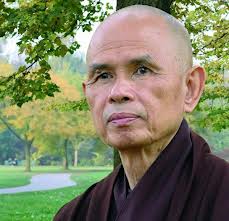
Thich Nhat Hanh

Thich Nhat Hanh

Few people alive today could step easily into the humble, powerful shoes of Thich Nhat Hanh. Like the Dalai Lama, he is a Buddhist monk who has been so generous and warm in inviting others into his orbit. Whether or not you practice Buddhism, whether or not you follow any religious tradition at all, there is so much wisdom and guidance in Thich Nhat Hanh’s writings, so much to learn and gain from listening to him.

I regret that I never had the chance to be physically in his presence, but as with so many of the other great leaders I admire, I know him through the writings he has shared and through his public persona and the good works he has accomplished.

At 88 years old, Thich Nhat Hanh is in the hospital with a brain hemorrhage from which he may still recover. He is still with us today but even after he is gone, I know his spirit will be showering us with the lovingkindness he knows we need to overcome the negativity that besets so many of us as individuals and as societies.

Today, in homage to Thay (as his students call him lovingly), I want to quote at some length from one of his last books, the beautiful Love Letter to the Earth. I urge you to buy a copy of this small bright gem of a book, and use it as a guide and inspiration—maybe you will be moved to write some love letters of your own to our dear battered planet.

“Dear Mother Earth,

“The human species is but one of your many children. Unfortunately, many of us have been blinded by greed, pride, and delusion, and only a few of us have been able to recognize you as our Mother. Not realizing this, we have done you great harm, compromising both your health and your beauty. Our deluded minds push us to exploit you and create more and more discord, putting you and all your forms of life under stress and strain. Looking deeply, we also recognize that you have enough patience, endurance and energy to embrace and transform all the damage we have caused, even if it takes you hundreds of millions of years.

“When greed and pride overtake our basic survival needs, the result is always violence and unnecessary devastation. We know that whenever one species develops too rapidly, exceeding its natural limit, there is great loss and damage, and the lives of other species are endangered. For equilibrium to be restored, causes and conditions naturally arise to bring about the destruction and annihilation of that species. Often these causes and conditions originate from within the destructive species itself. We have learned that when we perpetrate violence toward our own and other species, we are violent toward ourselves. When we know how to protect all beings, we are protecting ourselves.

“We understand that all things are impermanent and without a separate self-nature. You and Father Sun, like everything else in the cosmos, are constantly changing, and you are only made of non-you elements. That is why we know that, in the ultimate dimension, you transcend birth and death, being and nonbeing. Nonetheless, we need to protect you and restore balance, so that you can continue for a long time in this beautiful and precious form, not just for our children and their children but for five hundred million years and beyond. We want to protect you so you can remain a glorious jewel within our solar system for eons to come.

Northern lights, photographed from space

Northern lights, photographed from space

We know that you want us to live in such a way that in each moment of our daily lives we can cherish life and generate the energies of mindfulness, peace, solidity, compassion and love. We vow to fulfill your wish and respond to your love. We have the deep conviction that generating these wholesome energies, we will help reduce the suffering on Earth and contribute to alleviating the suffering caused by violence, war, hunger and illness. In alleviating our suffering, we alleviate yours.

“Dear Mother, there have been times when we suffered greatly as a result of natural disasters. We know that whenever we suffer, you suffer through us. The floods, tornadoes, earthquakes and tsunamis aren’t punishments or manifestations of your anger, but are phenomena that must occur on occasion, so that balance can be restored. The same is true of a shooting star. For balance in nature to be achieved, at times some species have to endure loss. In those moments, we have turned to you, dear Mother, and asked whether or not we could count on you, on your stability and compassion. You didn’t answer us right away. Then, beholding us with great compassion, you replied, “Yes, of course you can count on your Mother. I will always be here for you.” But then you said, “Dear children, you must ask yourselves, can your Mother Earth count on you?”

“Dear Mother, today we offer you our solemn reply, “Yes, Mother, you can count on us.””

Love Letter to the Earth concludes on a vision of a new kind of spirituality, a new kind of religion, founded on the Buddhist principle of interbeing—which, like deep ecology, understands that every form of life on earth, and indeed every element of our planetary biosphere is profoundly interconnected and interdependent, not in a hierarchy but in a rhizomatic web. Every strand in that web must be honored and tended, and this is the work that human beings, especially, are called upon to take up.

If Thich Nhat Hanh’s vision of a new religion for the 21st century could be realized, what a wonderful world it could be. Listen:

“We can build a deep spiritual practice based not on dogmas or beliefs in things we can’t verify, but entirely on evidence. To say that the Earth is a great being is not just an idea; each of us can see this for ourselves. Each of us can see that the Earth has the qualities of endurance, stability and inclusiveness. We can observe the Earth embracing everyone and everything without discrimination. When we say that the Earth has given birth to many great beings, including buddhas, bodhisattvas and saints, we are not exaggerating. The Buddha, Jesus Christ, Moses and Mohammed are all children of the Earth. How can we describe the Earth as mere matter when she has given birth to so many great beings?

“When we say the Earth has created life, we know it’s only possible because she contains within herself the whole cosmos. Just as the Earth is not only the Earth, so too are we not only humans. We have the Earth and the whole cosmos within us. We are made of the sun. We are made of stars. Touching the true nature of reality, we can transcend the dualistic view that the cosmos is something greater than ourselves or different from ourselves. Getting deeply in touch with the phenomenal realm, the historical dimension, we can realize our true nature of no-birth and no-death. We can transcend all fear and touch eternity.

Orionid-shooting-star

“Every advance in our understanding of ourselves, our nature and our place in the cosmos deepens our reverence and love. To understand and to love are fundamental desires. Understanding has some kind of connection with love. Understanding can take us in the direction of love. When we understand and become aware of the great harmony, elegance and beauty of the cosmos, we may feel great admiration and love. This is the most basic kind of religious feeling: it is based on evidence and our own experience. Humanity needs a kind of spirituality that we can all practice together.

“Dogmatism and fanaticism have been the cause of great separation and war. Misunderstanding and irreverence have been the cause of enormous injustice and destruction. In the twenty-first century it should be possible for us to come together and offer ourselves the kind of religion that can help unite all peoples and all nations, and remove all separation and discrimination. If existing religions and philosophies, as well as science, can make an effort to go in this direction, it will be possible to establish a cosmic religion based not on myth, belief or dogma, but on evidence and the insights of interbeing. And that would be a giant leap for humankind.”

Amen, Thay. Go lightly.  We will carry on.

Quotes from Thich Nhat Hanh, Love Letter to the Earth

Parallax Press, 2013

Joining Humanity’s Immune System: In the Body, in the Classroom, in the World

I had a tough day today in the classroom. I guess I brought it on myself by daring to raise unmentionable issues like violence against women and cancer….daring to follow Eve Ensler’s lead by assigning my students to read her remarkable cancer/incest survivor memoir, In the Body of the World. Unknown I assigned it for my class on “Media Strategies for Social and Environmental Justice.” The first book we read was Bill McKibben’s activist memoir Oil and Honey, about how he founded 350.org in a college classroom and how it grew to be a hugely successful global movement aimed at raising awareness about climate change and pressing for swift transition to renewable energy models.
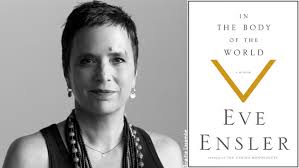
This week we’ve been looking at Eve Ensler’s trajectory from a theater artist interviewing women about their vaginas and creating the series of monologues that would become “The Vagina Monologues,” to founding the V-Day movement to end violence against women, and now the One Billion Rising for Justice global phenomenon. Eve Ensler TED

But along the way, Eve Ensler got cancer. It arrived, she says in her viral TED Talk “Suddenly My Body,” with the force of a bird smashing into a plate glass window.

Her cancer memoir, In the Body of the World, is remarkable in its fearless interweaving of the personal and the political, the individual and the global, the violent rape of a daughter (Eve herself) with the violent rape of our Mother Earth by Western capitalist culture.

 ***

My plan for the class was to focus mostly on the cancer issue…to look at the horrifying statistics of cancer in the U.S., to name it as the runaway pandemic it is, and to think with the students about how we might most effectively employ media tactics and tools to raise awareness and push for social change. But I didn’t realize how deeply Eve Ensler’s description of violence against women, as related the violence of our chemical assault on Mother Earth, would resonate with these young people. Some of them were deeply troubled, even to the point of having to leave the class.

With the students who stayed, I had a good discussion about cancer itself. We looked at the most recent statistics of cancer in the U.S. (1.6 million NEW cases projected for 2014 by the American Cancer Society) and discussed the most common media strategies for dealing with the issue of cancer in the U.S.: walks, runs and galas “for the cure.” LivingDownstream_Portrait1

It took some pushing, but eventually I got the students to begin to discuss how activism that only focuses on “the cure” is missing the huge point: we need to focus on preventing cancer, not just curing it once it’s appeared. In Sandra Steingraber’s famous formulation in her cancer memoir Living Downstream, we need to start looking upstream.

What would looking upstream really mean? Buried deep in the American Cancer Society report is a short section on the environmental causes of cancer. This is what it says: “Environmental factors (as opposed to hereditary factors) account for an estimated 75%-80% of cancer cases and deaths in the U.S.”

Let me say that again.

“Environmental factors (as opposed to hereditary factors) account for an estimated 75%-80% of cancer cases and deaths in the U.S.” Environmental factors in the context of this report mean manmade chemicals and toxins present in our environment, from water to air to soils to our bloodstreams and mothers’ milk.

So what would it mean, I asked the students, to really probe this issue with the intent of stopping cancer before it begins—going to the source of the problem? It would mean, of course, we agreed after some discussion, pursuing the mining, chemical, pharmaceutical, atomic energy, fossil fuel and industrial agriculture companies. Oh yes, those—the ones that rule the world. It’s a tall order. Just like stopping violence against women, or reining in the carbon polluters and shifting to renewable energy. These are the major issues of our time, though. If we’re not stepping up to work on these issues, what are we doing with our brief, precious lifetimes?

***

In my next class, “Islamic Women Writing Resistance,” we were talking about violence against women, this time in the geographical context of Afghanistan.
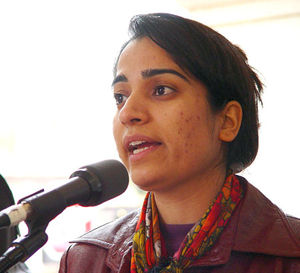
Malalai Joya

Malalai Joya

Since we were reading the autobiography of Malalai Joya, the young woman who was elected a member of the Afghan Loya Jirga and famously called out the mullahs on their oppression of women, I steered the conversation into a discussion of leadership. How was it that despite the horrifically violent Afghan society under the Taliban and the warlords, where 90% of women are subjectd to physical, mental and sexual abuse, Malalai had managed to retain her confidence and bravado, her sense of herself as a leader?

And more importantly, what are the costs to a society that not only doesn’t respect and include the talents of 50% of the population, but actively works to suppress these gifts?

The answer to the first question has everything to do with Malalai’s father, who encouraged her to go to school, to become a teacher, and eventually to become an activist politician. Without his support, she could never have succeeded as she did. Chalk one up to the power of allies.

The second question is the one that really interests me. It seems to me that it takes tremendous energy to oppress half the population. Eventually so much is going into terrorizing the women and their potential male allies that there is nothing left over, in terms of psychic energy, to build a healthy, vibrant society.

It’s a true zombie society, with the powerful preying on the weak and the whole social fabric fraying into oblivion.

Is it an accident that the societies where women are being most savagely oppressed are also the societies that are poorest, most chaotic and most violent? Think Somalia, Afghanistan, Democratic Republic of Congo, Bosnia….

There are some countries where wealth has made it possible for strict patriarchal control of women to proceed without terrible violence and disorder: Saudi Arabia and the other Emirates, Iran, Iraq, Egypt. Even, maybe, the U.S., Russia and the E.U., where women tend to self-regulate their own subservience to the patriarchy, conditioned by high doses of media and peer education.

In every case, though, what we’re talking about is the same. We’re losing millions of bright, talented, gifted people to cancer every year. We’re losing millions of bright, talented, gifted women to violence and self-sabotage every year. And at the same time, this is happening against the backdrop that Eve Ensler describes so movingly in her book: the interweaving of the violence against women, the violence against individual bodies, and the violence human civilization is perpetuating against the Earth.

“Cancer is essentially built into our DNA, our self-destruction programmed into our original design—biologically, psychologically,” she says. “We spend our days, most of us consciously or unconsciously doing ourselves in. Think building a nuclear power plant on a fault line close to the water. Think poisoning the Earth that feeds us, the air that lets us breathe. Think smoking, drugging. Think abusing our children who are meant to care for us in old age, think mass raping women who carry the future in their bodies, think overeating or starving ourselves to look a certain way, think unprotected sex in the age of AIDS. We are a suicidal lot, propelled toward self-eradication” (194).

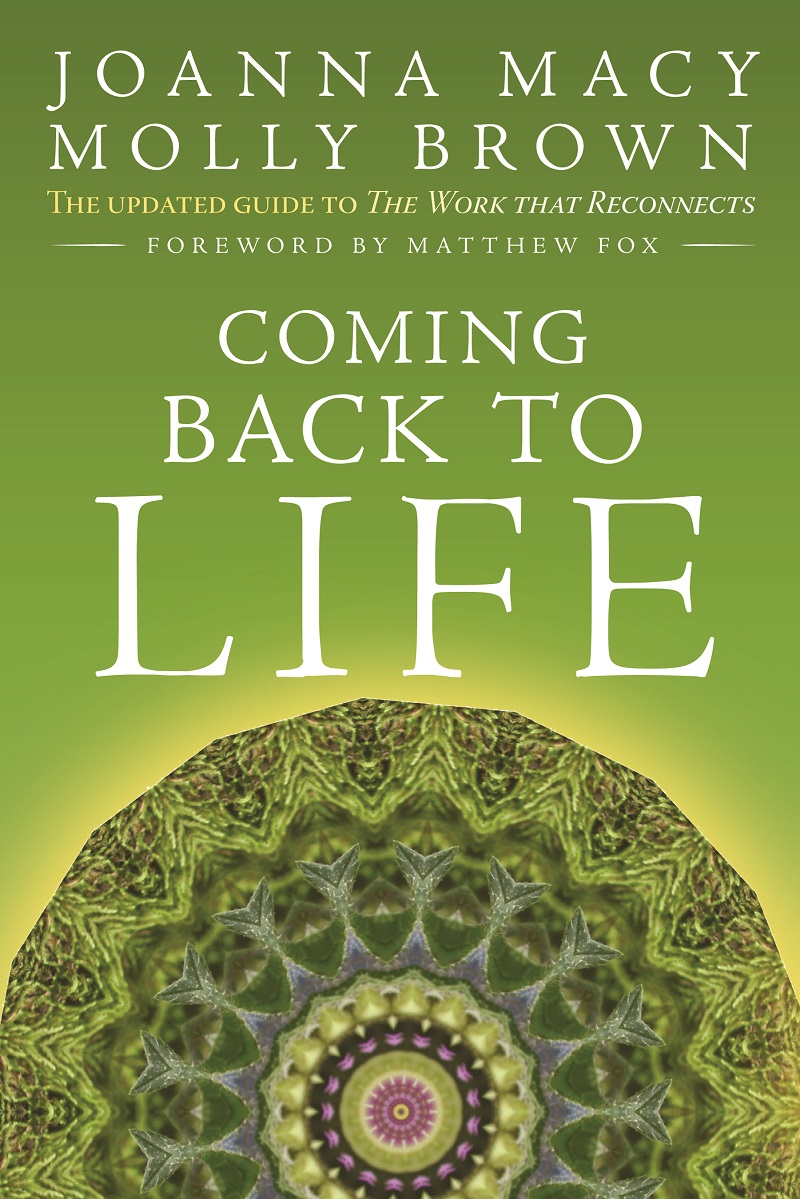
??????????????????????It doesn’t have to be this way. I am so glad to be reading the new edition of Joanna Macy’s classic work Coming Back to Life, as an antidote to the darkness described by Ensler and Joya. Macy quotes Paul Hawken, who refers to activists and activist organizations as “humanity’s immune system to toxins like political corruption, economic disease and ecological degradation.”

This immune system, Hawken continues, “can best be understood as intelligence, a living, learning, self-regulating system—almost another mind. Its function does not depend on its firepower but on the quality of its connectedness….The immune system depends on its diversity to maintain resiliency, with which it can maintain homeostasis, respond to surprises, learn from pathogens and adapt to sudden changes” (qtd in Macy, 55).

A current example of such an immune system in action is Sandra Steingraber’s anti-fracking movement in upstate New York. She and her Seneca Lake defenders have come to the rescue of the fragile environment of the Finger Lake region and its jewel, Seneca Lake, putting their own bodies on the line just like Eve Ensler did when she allied herself with the women of the Congo, vowing to stop the violence. 10470955_854714074549076_2405675760464249402_n Any one of us has the power to become a defender of life. All we have to do is to pay attention to what’s happening, start asking the hard questions, stop going along with the flow. We need to do this is in a proactive way. We’re not looking for a cure to violence against women/against the Earth—we want to address the underlying causes of the violence, to look upstream and stop it at the source.

This necessitates a willingness to spend some time outside of our own comfort zones of denial and voluntary blindness. It involves looking at painful, messy, upsetting aspects of human existence, and taking responsibility for the ways in which each of us contribute to the status quo, if only by looking away. It will be personal as well as political in ways that will often hit entirely too close to home.

We need to open our eyes and really look at what our Industrial Growth Economy and the society it has created is doing to our bodies and the body of the world. We need to look at the way women’s bodies, in particular, are forced to bear the brunt of the pain, even though women account for just a fraction of inflicted violence in the world.

Don’t look away. Take it in. And then think about what you can do to join “humanity’s immune system.” Look for me on the front lines—I’ll meet you there. Dandelion_seeds_Computer_backgrounds

As We Dance the Spiral Dance of Life, Death and Rebirth, We Build Bridges to the Future Every Step of the Way; What Future Do You Choose?

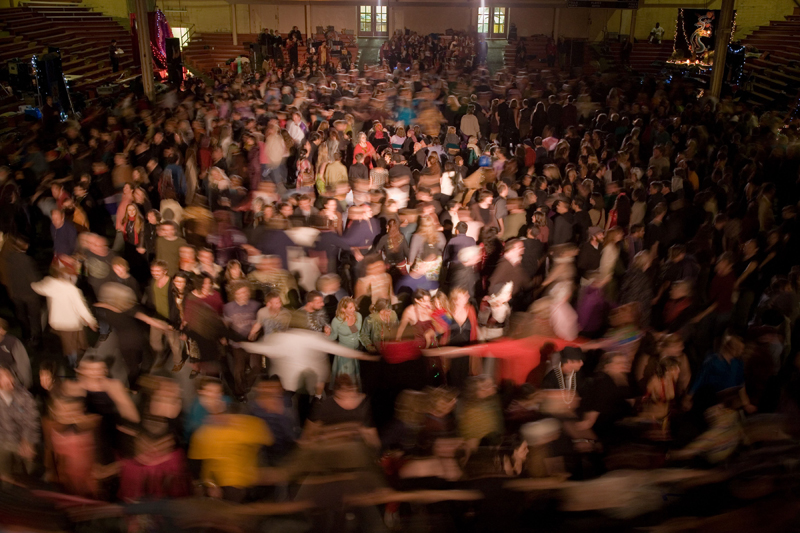
We’re now going into the darkest time of the year, the time when many cultural traditions contend that the veils between the living and the dead grow thinnest, most penetrable.

In San Francisco tonight, Starhawk and her Reclaiming coven will be dancing a grand spiral dance with thousands of people, all united under this banner: “2014 Intention: With the help of ancestors, descendants, and the great powers of nature, we weave magic and action to save our home! A ritual to honor our beloved dead and dance the spiral of rebirth.”

M_R_spiral_126800x800

Having participated in one of Starhawk’s circle dances, focused on raising energy through the power of collective intention, I can begin to imagine what a spiral dance on this scale will accomplish.

We Americans too often ignore the significance of energetics in our lives.

We imagine that it doesn’t matter that we spend more and more of our time bathed in low-level radiation from all our electronic devices, from computers to cell phones to electric meters and on.

We don’t pay attention to the way we are similarly taking in steady doses of negative information day after day, from Ebola and cancer to corruption, violence and poverty.

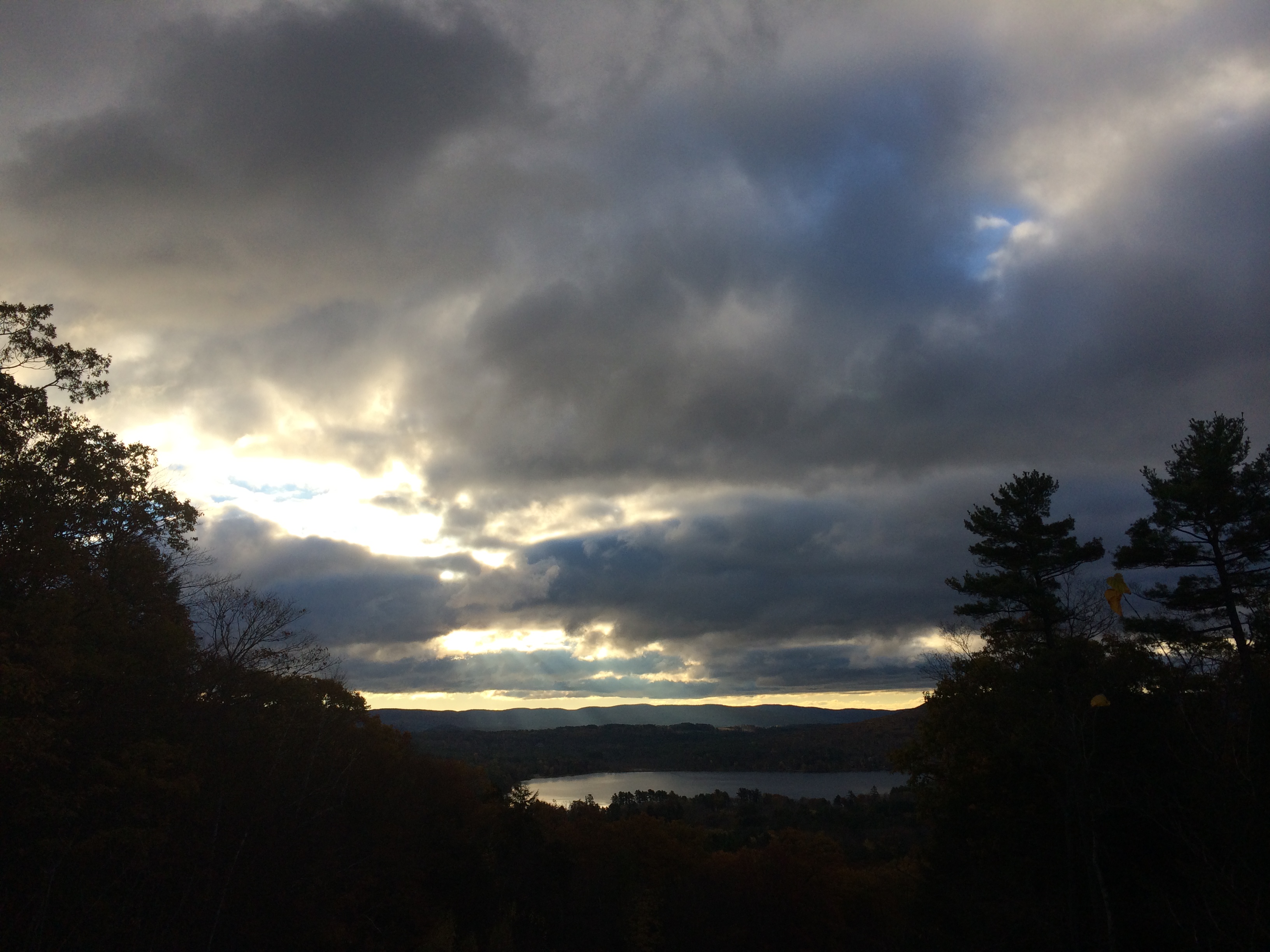
In these dark days of the year, at least in my gloomy northern corner of the world, I can feel my own energy levels sinking, my will to rise and dance on behalf of my ancestors, descendants and Nature wavering.

Morning clouds over Stockbridge Bowl. Photo J. Browdy, 2014

Morning clouds over Stockbridge Bowl. Photo J. Browdy, 2014

So I give myself pep talks. I remind myself that the dark days of the year are among the most powerful times for focusing inward and setting new intentions for what will be accomplished with the return of the light.

I get out the photos of my grandparents and my children and remind myself that I must be a strong link on the hereditary chain that stretches back untold generations, if my descendants are to have the good fortune of enjoying the kind of safe, happy, fulfilled lives on Earth that I have had.

Fannie Ashe Browdy and Philip Browdy, my paternal grandparents, around the time of their marriage.

Fannie Ashe Browdy and Philip Browdy, my paternal grandparents, around the time of their marriage.

I remember that I came to this lifetime full of the rising sap of positive energy, loving nothing more than to rise early to watch the dawn, and stay up late to look for shooting stars.

Rooted like the trees that shelter and inspire me

Rooted like the trees that shelter and inspire me

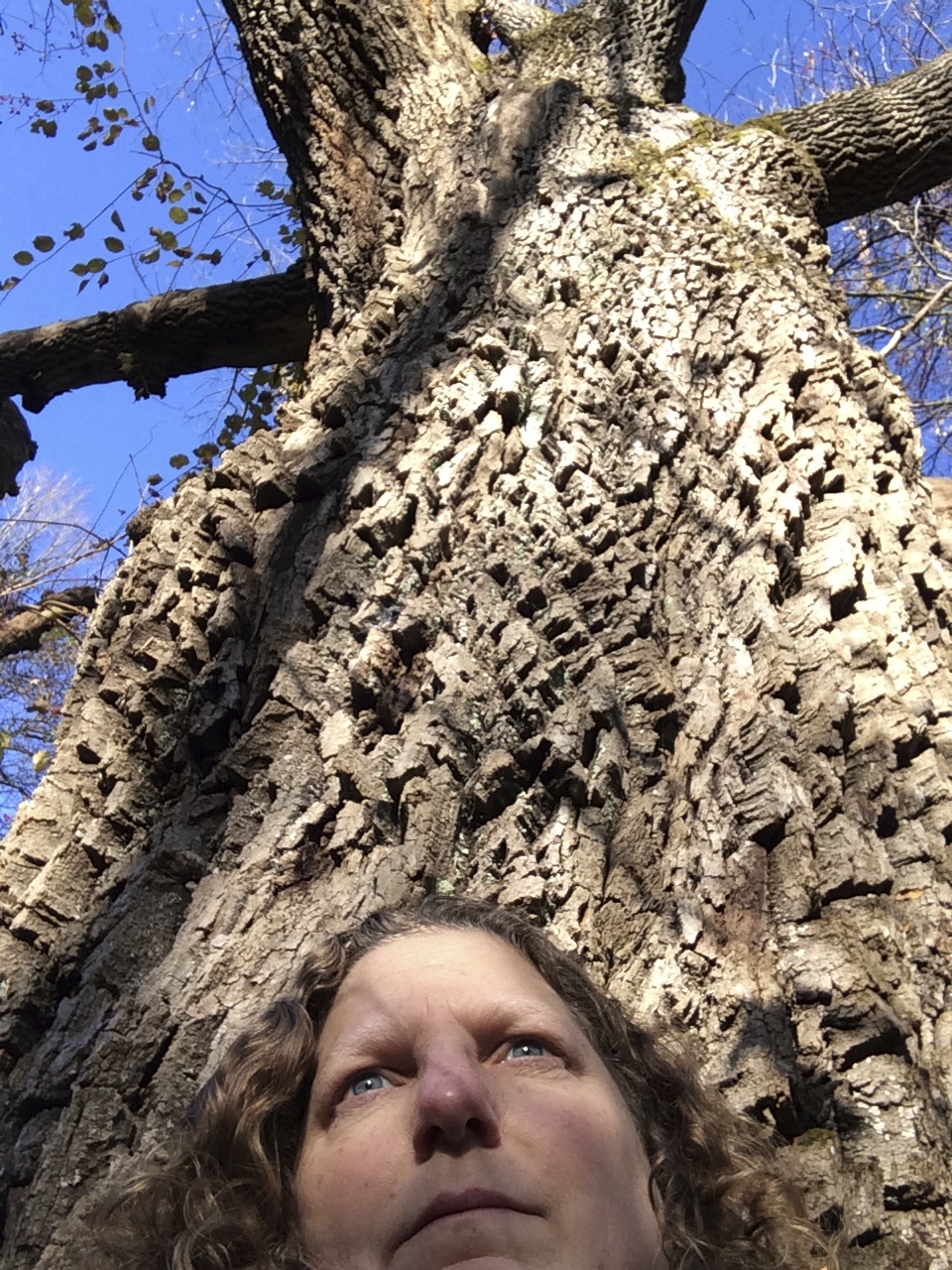
Like the great old trees I love, I have rooted myself deeply in the glacial rocks and rich soil of my life, and now have a wide network of students, friends, colleagues and relatives that I help to nourish with my ideas and initiatives.

And I am not only connected to human friends and relatives, but also to the intricately woven biosphere, with which I interact on a cellular level with every breath I take, every ray of sunshine I absorb, every drop of water I drink.

We are all dancing a great spiral dance together on this planet, weaving our intentions and our gifts into the actions that will build a bridge into our collective future.

Every step we take matters. Will we work day by day towards aligning our love for the planet with our individual actions?

For example, will we invest in fossil fuels or solar panels this year? Will we support local farmers, or buy packaged food that’s trucked in from far away? Will we take a break from eating fish to allow the wild fish stocks to recover? Will we lend our political and financial support to those working to make the human relationship to the planet life-enhancing, rather than destructive?

Reminding ourselves that literally or metaphorically speaking, our ancestors and descendants are relying on us to do the best we can to keep the chain of life strong and unbroken into the future, can help us to make decisions that are forward-looking and mature.

My maternal grandmother, Mildred Louis Rubenstein, with my younger son, Eric

My maternal grandmother, Mildred Louis Rubenstein, with my younger son, Eric

The dance we weave today and every day is about much more than just our own individual lives. We can be and do much more than we imagine, if we resist the downward pressures of negative thinking, and keep the channels of positive energy open to the cosmic flow.

Remember that the Earth and the Cosmos are one and the same, and we humans are just another manifestation of that endlessly circulating energy.  Photo J. Browdy 2014

Remember that the Earth and the Cosmos are one and the same, and we humans are just another manifestation of that endlessly circulating energy. Photo J. Browdy 2014

Finding Hope in Hard Times

Amid all the darkness and chaos overtaking our world—the beheadings of journalists and the enslavement of women, the bloody flux of Ebola, the melting of the poles and the relentless advance of the bulldozers and chain saws into the forests—amid and despite all that, I am still seeing the frail but determined light of hope burning.

And the best thing is, I see this light growing in places that surprise me.

In recent weeks some huge financial players have announced their intention to fight the stranglehold of fossil fuel companies over our political economy.

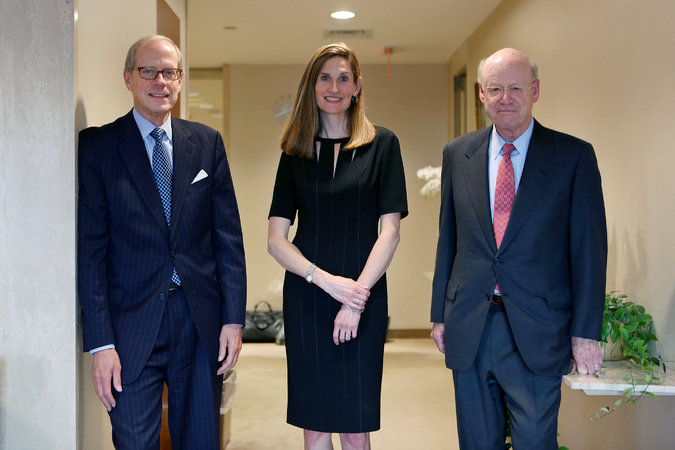
Stephen Heintz, left, with Valerie Rockefeller Wayne and Steven Rockefeller.  Photo: Hiroko Masuike/The New York Times

Stephen Heintz, left, with Valerie Rockefeller Wayne and Steven Rockefeller. Photo: Hiroko Masuike/The New York Times

Right after the dramatically successful People’s Climate March in September 2014, the Rockefeller family declared it would join forces with the nascent fossil fuel divestment movement. John D. Rockefeller built a vast fortune on oil. Now his heirs are abandoning fossil fuels,” trumpeted the lede in the New York Times article by John Schwartz.

“The family whose legendary wealth flowed from Standard Oil… [announced] that its $860 million philanthropic organization, the Rockefeller Brothers Fund, is joining the divestment movement that began a couple years ago on college campuses.”

This is big news indeed! In a society where money rules, the people with the most privilege are the ones with the most social power to create change, and the Rockefeller family can catalyze other wealthy philanthropists to start to think outside their parents’ box.

Not that the rest of us have no power. It’s only because college students and their adult mentors dreamed up the divestment movement and pushed vigorously for it that the Rockefellers made this move.

Student divestment activists at Tufts University

Student divestment activists at Tufts University

We ordinary folks—those of us who are awake to the critical state of our planet and human civilization today—can and must apply pressure to the rich and powerful in our society to shift their resources from our current death-dealing economic model to a life-giving, ecologically sound human relationship to the planet that sustains us.

timthumb.phpWhen current economic top dogs start to pay attention at last, we know we’re making progress. It was heartening to hear that the Women Donors Network is focusing its 2014 annual conference on strategic visioning of future scenarios for the year 2030.

At this year’s annual conference, the organizers state, “we will get the chance to step out of the urgent demands of the present to think big and strategize for the long term. What kind of future do we want to create? How can we work with the major trends we know are going to shape the future? And what can a powerful group of progressive women philanthropists do together to make the most of this critical moment?”

I find hope in the fact that this big group of wealthy women will be spending their valuable time not at a spa or a vacation in Paris, but at a conference where they’ll be, according to the conference Program, “’transported’ to 2030 to experience what our collective future could look like based on the decisions we make now, in this critical moment….We will participate in three “future scenarios” that are designed to help us clarify the role we hope WDN and all of us as individual philanthropists can play in helping strengthen the progressive social change movement.”

Go women go! The more of us become aware of the extent to which our choices today affect the futures that await us, the more we can act to create the green and glowing future we want.

Chief Oren Lyons

Chief Oren Lyons

I find hope too in the news that Chief Oren Lyons of the Onondaga Nation will be making a special visit to the Bioneers conference this month to talk about the new international initiative, the Plantagon urban agriculture system. A joint venture of the Onondaga Nation, Sweden and several East Asian investors, the Plantagon aims to revolutionize urban agriculture by making it possible for cities to feed themselves locally—a shift that will have enormous benefits in relieving pressure on rural water and land, reducing dependence on fossil-fuel transportation of produce, and also reducing or eliminating the need for harmful chemical inputs.

Artists' rendering of the Plantagon

Artists’ rendering of the Plantagon

To me, the word “Plantagon” summons up a word that has very different connotations, “Pentagon.” When we Americans hear the word Pentagon, we think immediately of military force and the way American military might has most often been called upon to defend “American interests”—politico-speak for access to resources, principally oil and precious minerals, often at great cost to local people and environments.

The U.S. Pentagon

The U.S. Pentagon

Although it may seem counter-intuitive, I find hope in the recent announcement that the Pentagon is now taking climate change into account in its strategic planning, not just for the distant future, but for next week.

In a new report, the Pentagon asserts unequivocally that “climate change poses an immediate threat to national security, with increased risks from terrorism, infectious disease, global poverty and food shortages,” reported Coral Davenport in The New York Times. Whereas “before, the Pentagon’s response to climate change focused chiefly on preparing military installations to adapt to its effects, like protecting coastal naval bases from rising sea levels,” Davenport writes, “the new report…calls on the military to incorporate climate change into broader strategic thinking about high-risk regions — for example, the ways in which drought and food shortages might set off political unrest in the Middle East and Africa.

“Experts said that the broadened approach would include considering the role that climate change might have played in contributing to the rise of extremist groups like the Islamic State.”

Well hallelujah! At last the most powerful force in the world is recognizing that climate change is here, it’s real, and it’s already a major destabilizing factor in world politics.

The challenge now will be to see if civil society can exert enough pressure on the military to get them thinking in proactive ways, rather than being a reactionary, often highly destabilizing force in the world.

Why can’t we use the wealth and resources of the U.S. military-industrial complex to support and sustain life on the planet?

Let’s get those military planners, along with the big boys at the World Bank, IMF and the U.S. Congress to understand that building schools and investing in sustainable agriculture and distributed energy networks is a far smarter and saner use of funds than blowing things up and rebuilding them (which has been our strategy in the Middle East over the past decade).

I see glimmers of hopeful light behind many of the dire stories in the news right now. We need to focus on those flickers of consciousness, blow on them gently and encourage them to grow brighter and stronger.

Hope is a verb, and we do it together. I’m working on it; how about you?

images-1

Reconnecting with the Earth…with Joanna Macy

images

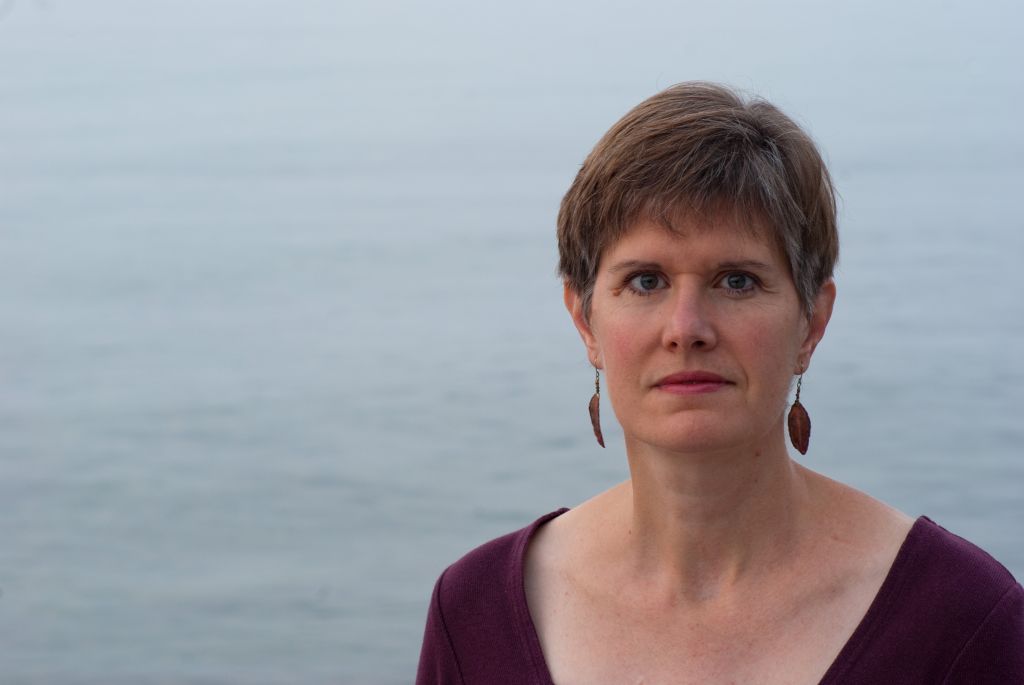
Joanna Macy

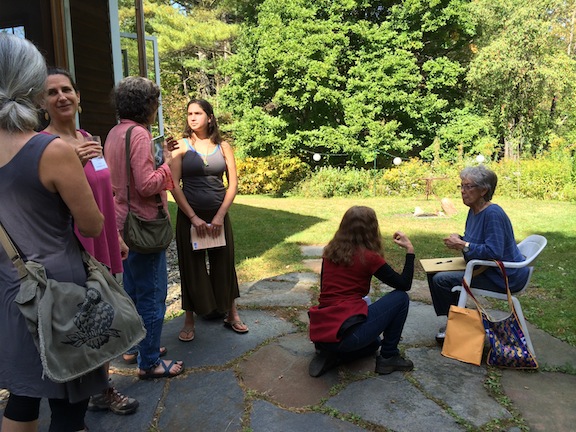
At 85, Joanna Macy is still a beautiful tiger of a woman: fierce, focused, passionate. At a recent weekend workshop at Rowe on her signature Work That Reconnects, she was a keen and generous leader, with an impeccable sense of when to speak and when to be silent, when to share the microphone with younger leaders, when to get out in front and show the way.

Joanna has been refining the Work That Reconnects since the 1980s, when it grew out of her engaged Buddhist practice and her anti-nuclear activism. Its premise is simple: that we are integral parts of the Earth, having emerged out of carbon and water billions of years ago just like everything else on the planet; but we humans, having caused the near-collapse of the current epoch with our fixation on industrial growth run on chemicals and fossil fuels, have a special role to play in shifting our civilization to a sustainable footing.

To step into our power as change agents, we must first undo the social conditioning that has alienated us from our primary relationship with the Earth. The Work That Reconnects accomplishes this through a series of exercises and meditations, which can take a day or a week or much longer to accomplish, depending on how much time you have and how deep you want to go.

In the weekend version of the workshop, we spent a three-hour session on each of the three stations on Joanna’s Spiral of the Great Turning, led through a series of interactive activities designed to get us thinking about ourselves as bodhisattvas, awakened ones willing to give our lives in service to the higher good of all life.

tree

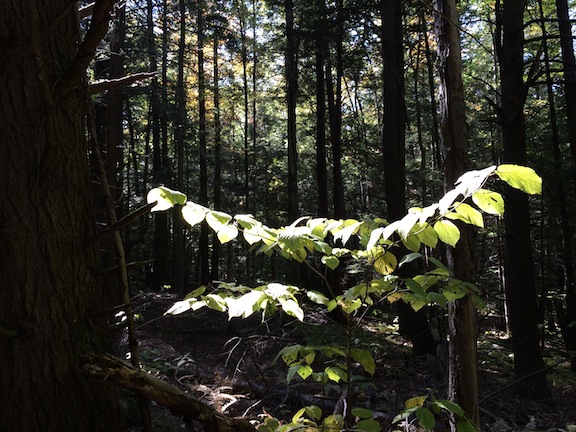
In the forest at Rowe. Photo by J. Browdy

First came Gratitude: appreciating and giving thanks for being alive in this beautiful place, alongside myriad other complex and beautiful creatures who call the Earth home; and also giving thanks for our own strengths and capacities to become active warriors on behalf of the planet.

Then there was the grief and despair work for which Joanna is justly famous: she calls it Honoring Our Pain for the World, and it is a radical, counter-cultural push to sit with and confront all the sadness, despair, anger and pain we feel when we allow ourselves to become fully conscious of the destruction and devastation human beings are wreaking on the planet. Grief for individual loved ones lost to cancer mingles with grief and anger at the loss of the Great Blue Herons and the paved-over forests, in a powerful and galvanizing outpouring of rage and pain.

After an evening break that featured song and dance around the warmth of community, we turned the next morning to the last two stations on the spiral: Seeing with New Eyes and Going Forth.

Joanna talked about the necessary shift from the alienated form of seeing our relationship to the Earth as “our supply house and our sewer” to a new form of seeing, an understanding that we are embedded in the sacred living body of the Earth, and what we do to her we do to ourselves.

leaves

A closer look. Photo by J. Browdy

One of the reasons I love Joanna’s approach to activism is because she is unafraid to call on the imagination as one of our primary tools for social change. In a powerful closing exercise, she arranged us in pairs and asked one person to take the role of a descendant seven generations in the future—about 200 years hence, in 2214. The other person remained herself, in 2014.

The future being, prompted by Joanna, asked a series of questions of the ancestor, and then listened to the answers—this was not a conversation or a dialogue, but a witnessing of the struggles of this ancestor—you and me, in our time—to bequeath a livable world to our children, grandchildren, and on down the line.

After listening to three different present-day people talk about their work for the planet—what makes it hard, what makes it rewarding, what keeps them going day to day—the future being had a chance to respond, and it was an incredibly powerful experience to imaginatively inhabit the spirit of the future encouraging us embattled ones in today’s world to find the strength to persevere.

Joanna at Rowe

Joanna signs books and talks with workshop participants. Photo by J. Browdy

In the call to Go Forth, the final turn on the spiral, Joanna reminded the gathering that this work is impossible to do alone—“it’s impossible to even take it in alone,” she said. We need to create communities of “Shambala warriors for the planet,” who can function like “the immune system of the Earth,” a potent metaphor she attributed to Paul Hawken.

In the Shambala prophecy that Joanna has been sharing ever since she heard it from one of her Tibetan Buddhist teachers back in the 1970s, it is said that great courage is required of those who work for the good of the world, because we must go right to the heart of the “barbarian empire,” armed only with two critical weapons: compassion for all living beings, and the radical insight of interbeing—that everything in this biosphere is intricately and integrally interdependent and connected.

And of course the truth is that the “barbarians” who inhabit this destructive empire are not strangers. They are, quite simply, us.

At the very end of the workshop, Joanna led us through a series of affirmations honoring our perceived enemies as our most important teachers.

Through our awareness of what we don’t want, we learn what we care about most. And through our caring—what Joanna calls the awakening of our “heart-mind”—we find the courage, passion and commitment to do the most important work of our time: transitioning from our current dead-end, greed-based, exploitative society to a society that honors the sacred in all life and works respectfully for the well-being of each participant in the dance of planetary life.

old tree

An elder maple in the forest at Rowe. Photo by J. Browdy
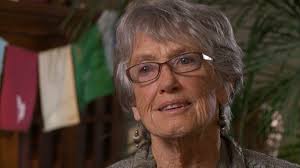
As I walked out under the ancient maples and hemlocks in the forests around Rowe, lit up in all their autumnal glory on this beautiful September weekend, I could feel the warrior spirit rising in me and in all of us who came from near and far to learn from Joanna.

Now is our time, and time is precious: there is none to waste as the forces unleashed by the industrial growth of the past 300 years threaten so many life forms on the planet with extinction.

Will we succeed in transitioning to a sustainable future? Will we humans grow into our potential as stewards and nurturers of our beautiful garden, this Earth? Or will we all slip away into the history of the planet, as the march of evolution and transformation continues on to the next era?

All we can do is go forth with good heart and brave spirit into our own communities and carry on the work that reconnects in our own spheres. I am so grateful to Joanna Macy for continuing to lead the way and for so generously sharing the powerful tools and practices she has developed over a lifetime, for others to take up and carry forward into the Great Turning.

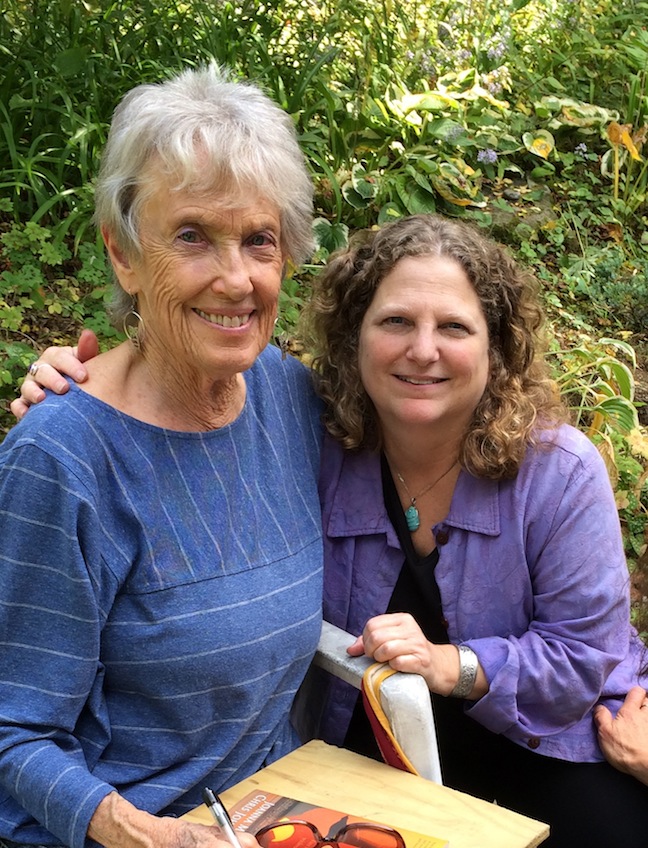
JB & Joanna Macy

Joanna and Jennifer

N.B. Joanna’s classic book Coming Back to Life, a guidebook for doing the Work That Reconects by yourself or (preferably) with groups, has just been re-issued by New Society Publishers in a revised and updated edition. Joanna is hoping that people will gather in schools and church basements, in Transition Towns and activist organizations, to do the inner work that can sustain and fuel the outer work we must all undertake to transition to a life-enhancing human relationship to Earth.